Textile Fragments from History

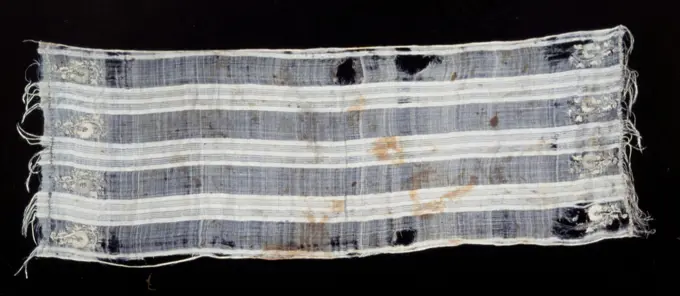
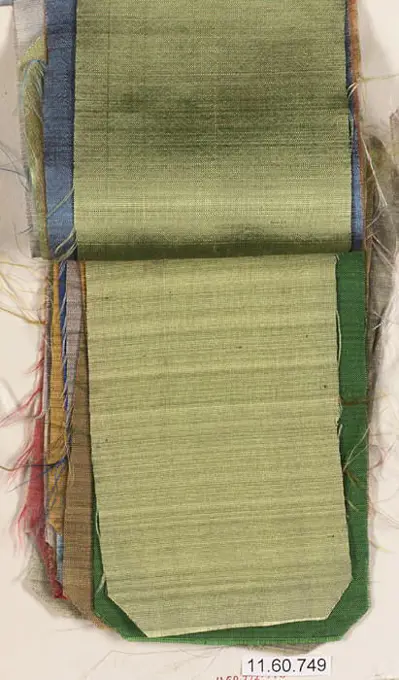
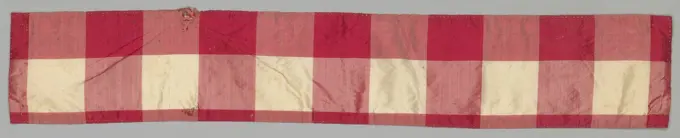
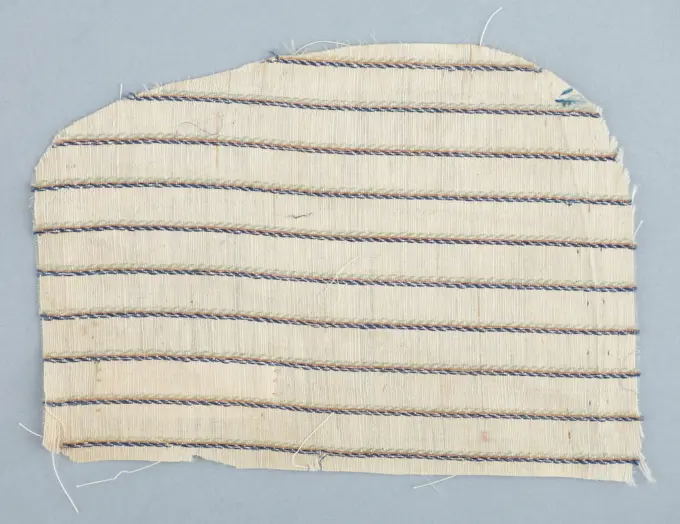
Historical fabric pieces, including silk and lace, showcasing intricate patterns and textures, preserving craftsmanship from different eras.

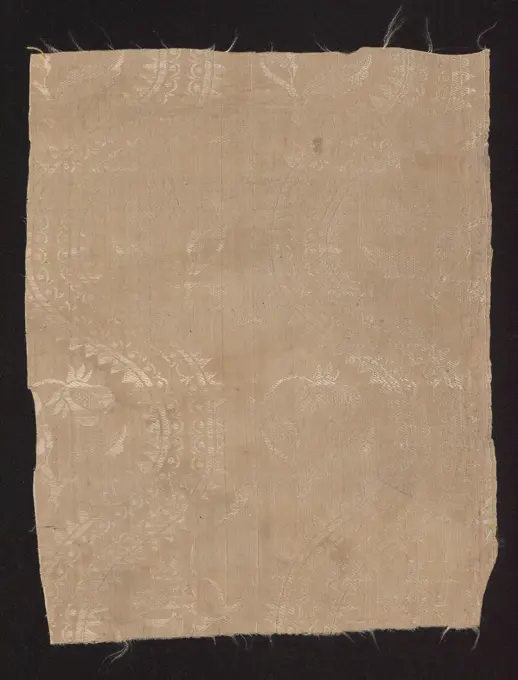
Fragment, Medium; silk Technique: 4&1 satin damask, Large scale pattern with heart-shaped leaves and Tudor rose in ivory, 16th-17th century, woven textiles, Fragment
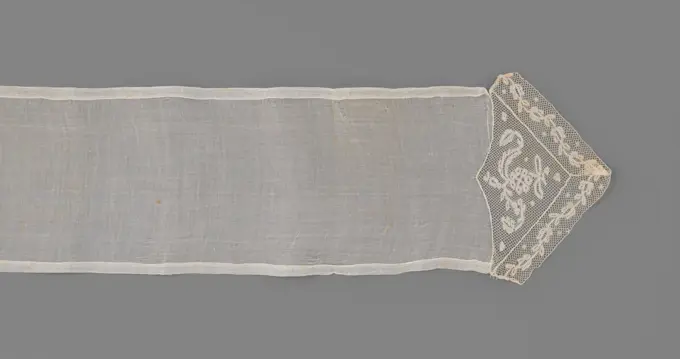
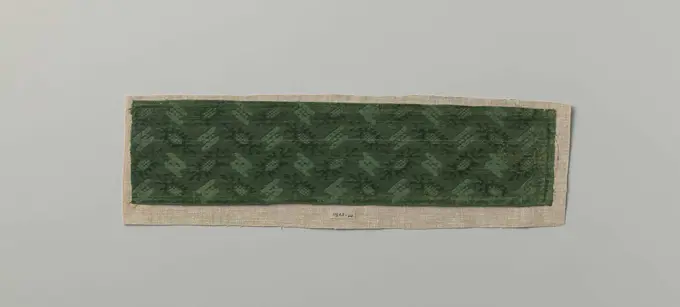
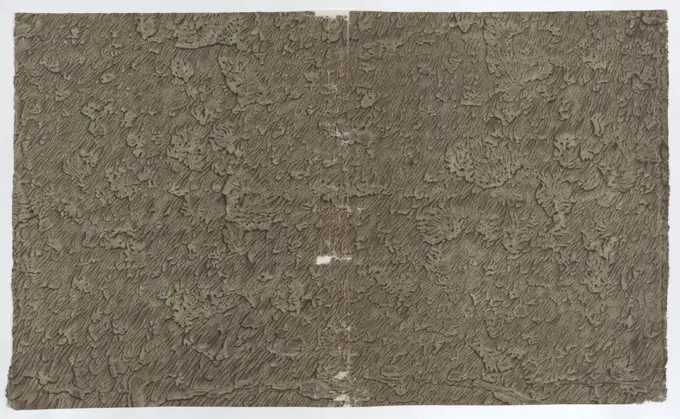
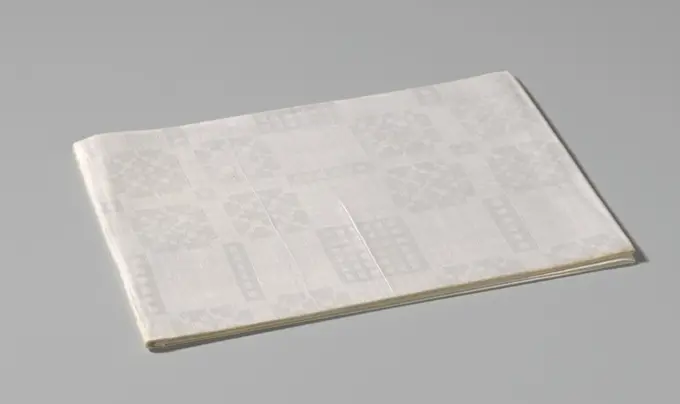
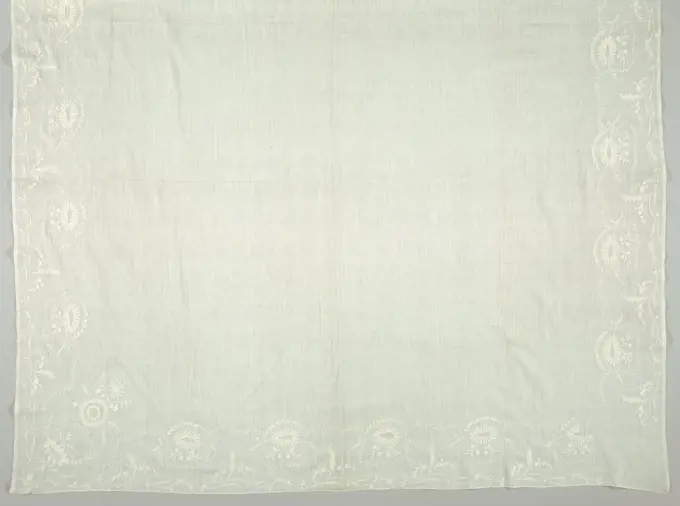
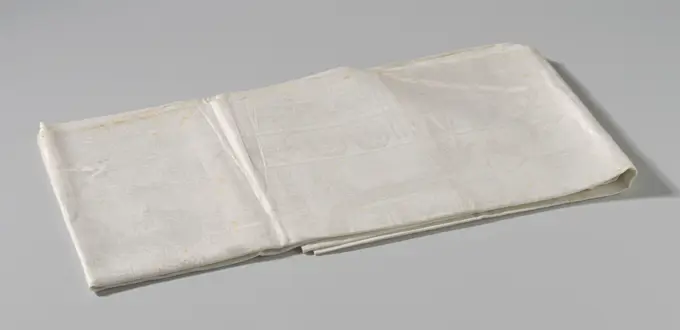
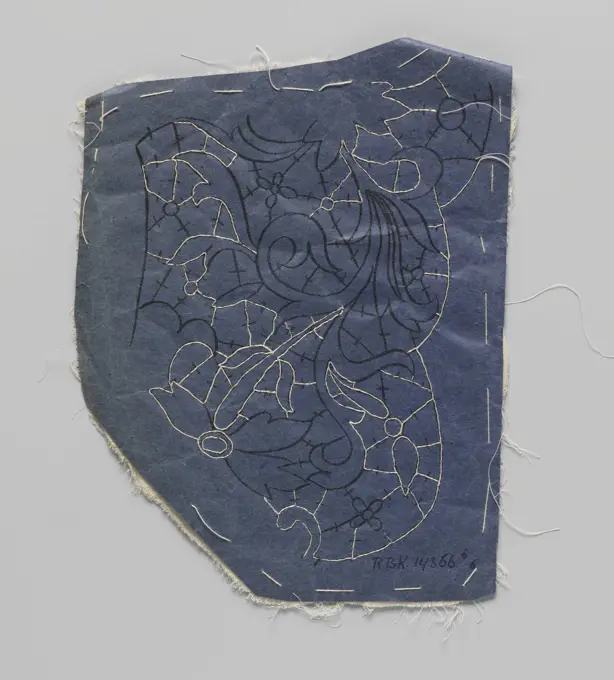
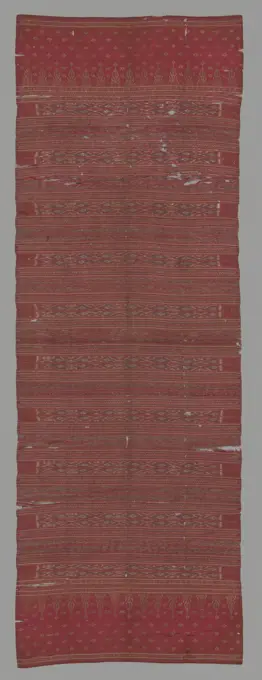
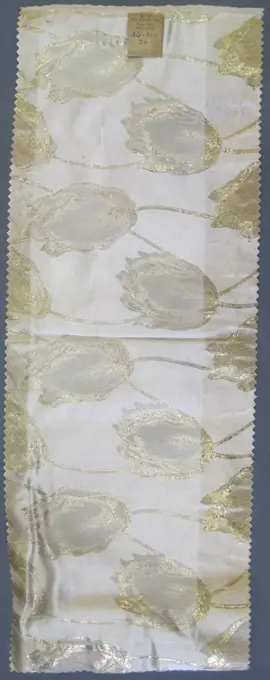
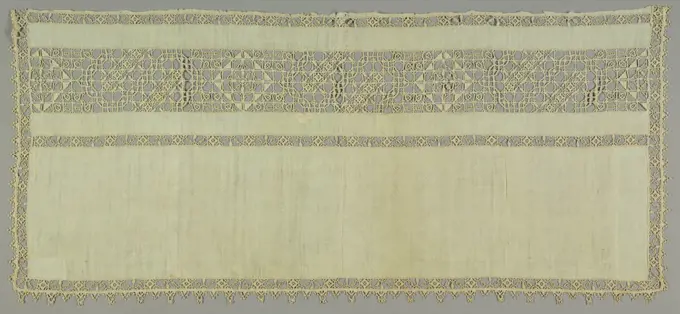
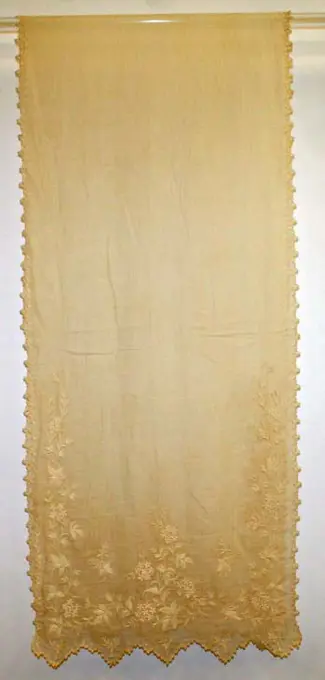
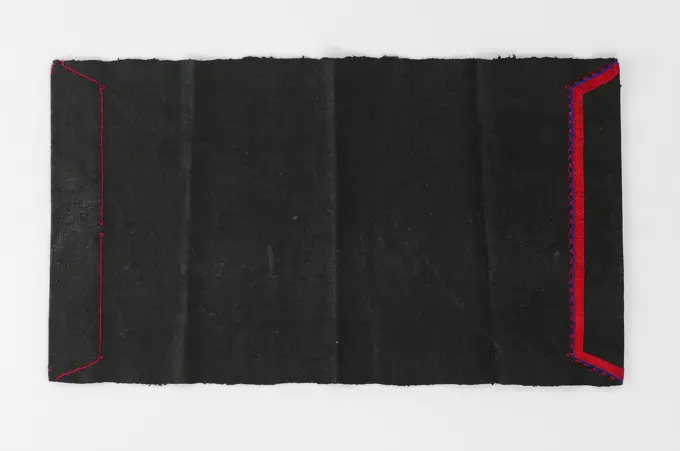
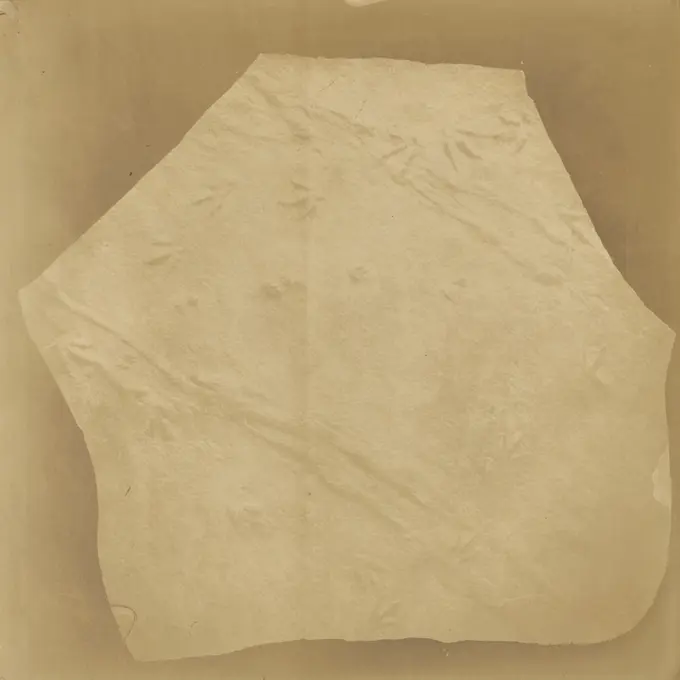
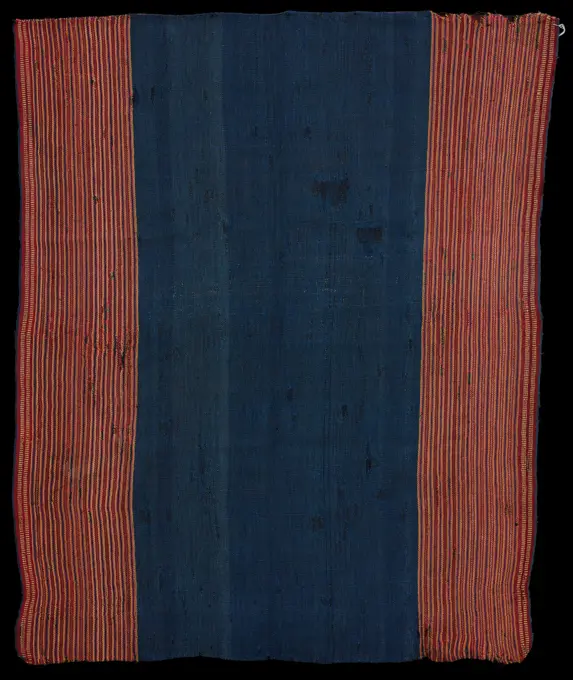
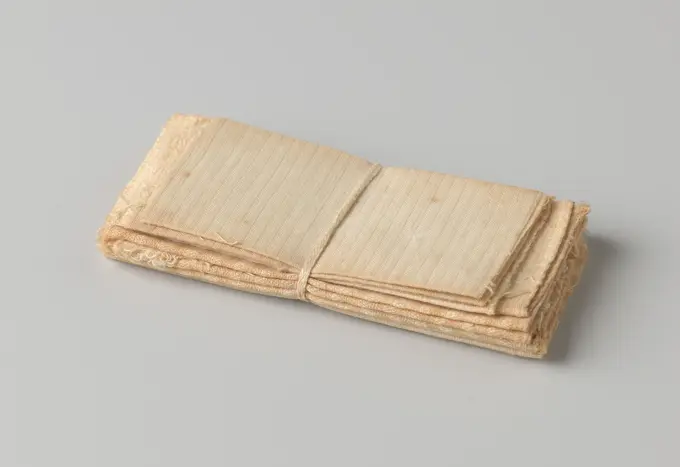
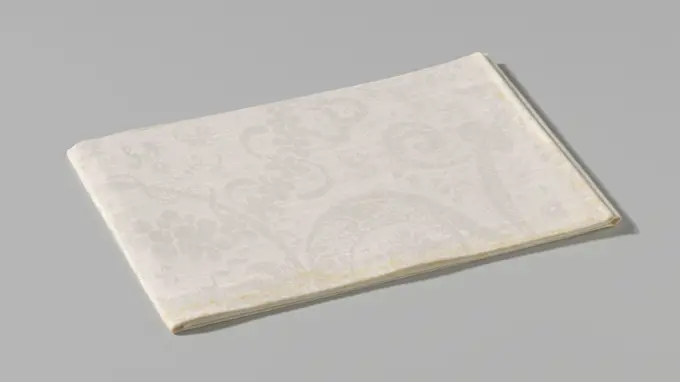
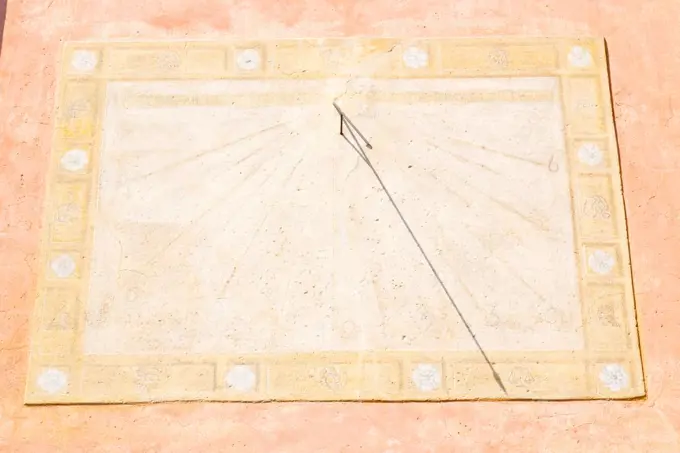
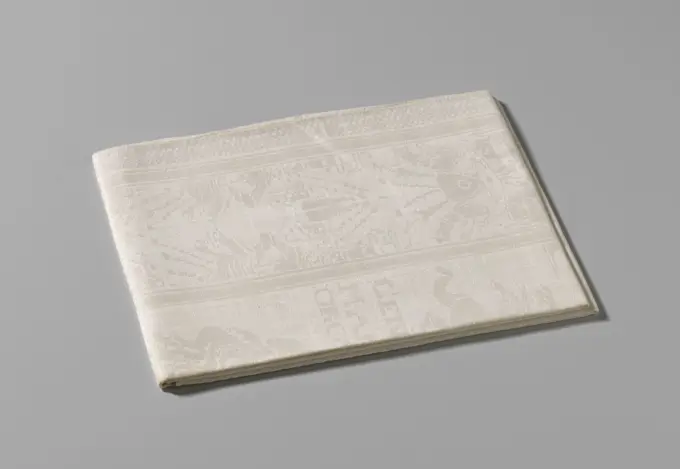
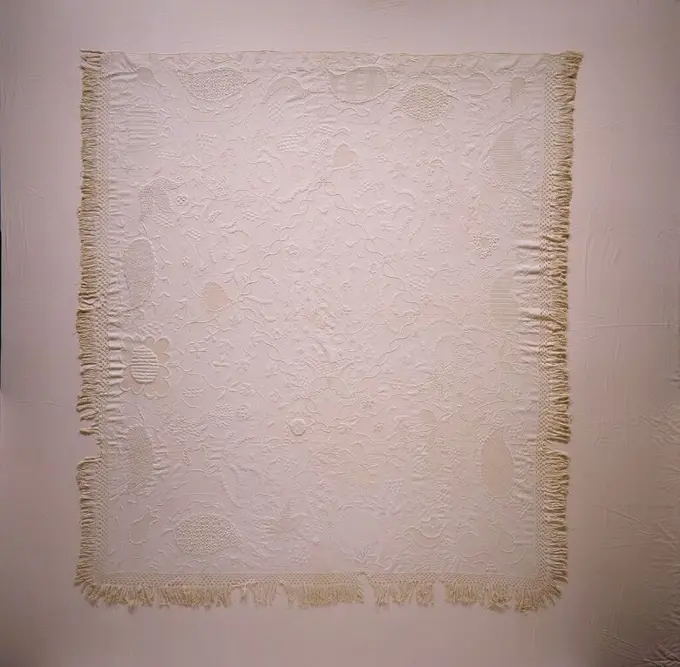
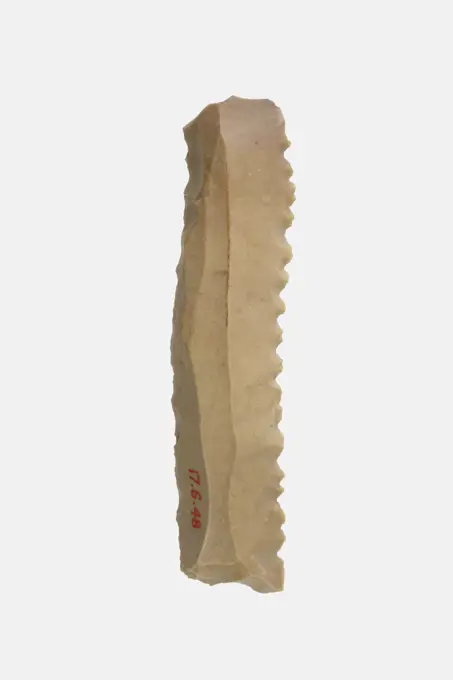
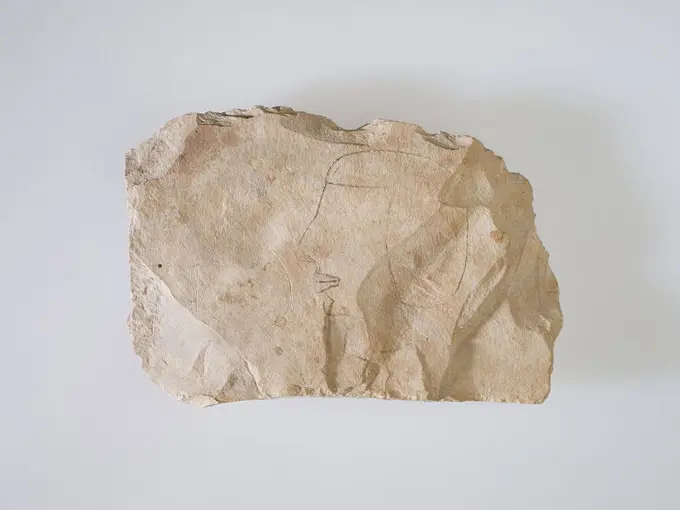
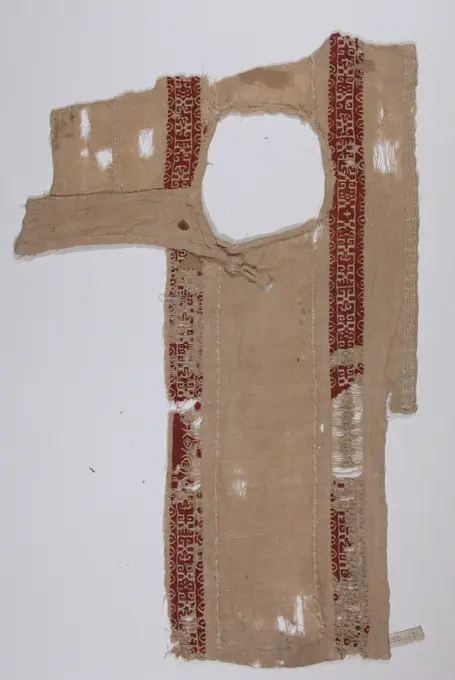
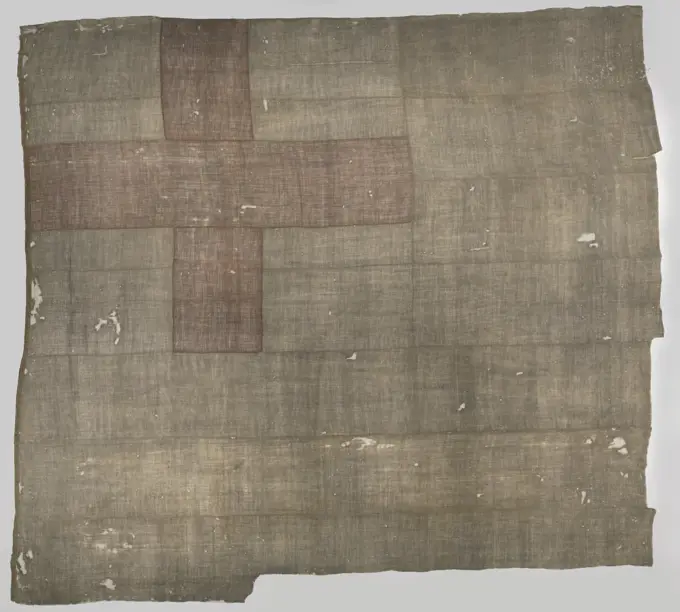
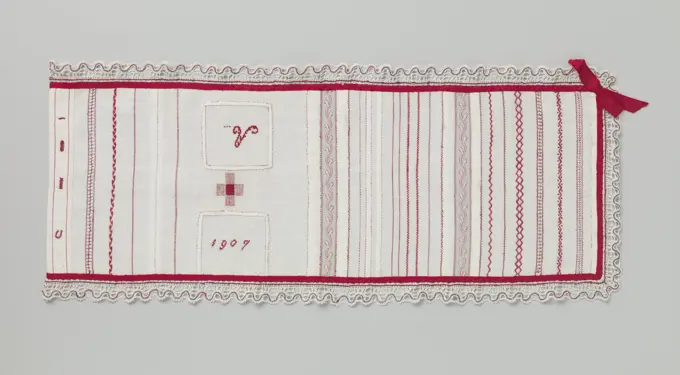
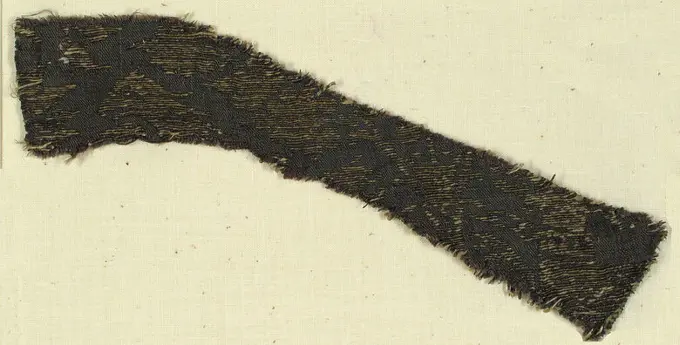
Fragment (Italy); silk, metallic threadPillowcase, 1663 Pillowcase of linen with a Dutch side on three sides. Marked Kroon LVK 1663. North Netherlands linen (material) Pillowcase of linen with a Dutch side on three sides. Marked Kroon LVK 1663. North Netherlands linen (material)Glass batist (linen) with pointed ends of Valenciennes side, anonymous, c. 1860 - c. 1880 Glass batist (linen) with triangular ends of Valenciennes side with a floral motif. West-Europa linen (material) Valenciennes lace Glass batist (linen) with triangular ends of Valenciennes side with a floral motif. West-Europa linen (material) Valenciennes laceFragment 18th century Italian. Fragment 230403Fragment rode fluweel, anonymous, c. 1500 - c. 1799 Fragment red silk fluble. Italy silk. velvet (fabric weave) Fragment red silk fluble. Italy silk. velvet (fabric weave)Fragment groene zijdefluweel met uitsparingen.Fragment green silk velvet with horizontal rows of beams and blocks, interspersed with hexagons surrounded by palmets. Italy, 16th century.Fragment, Medium; silk Technique: 4&1 satin damask, Large scale pattern with heart-shaped leaves and Tudor rose in ivory, 16th-17th century, woven textiles, FragmentTextile Fragment 5th-6th century. Textile Fragment 443651Tablecloth with homage to the pretendent of the Spanish crown Karel van Habsburg, Anonymous, 1707 White Linen Damas Tablecloth with Homage on the pretendent of the Spanish Crown with the "Vive Hisaniarvm Rex" inscription, around it crowned coat of arms with fifteen Spanish provinces and names "Cicilias", "Castil", "Aragon", "Navar", "Toledo "," Granada "," Valencia "," Galici "," Mallorcas "," Cordv "," Cerdena "," Mvrcia "," Corsa "and" Ianen "," Anno 1707 ", DBP. Flanders linen (material) damask White Linen Damas Tablecloth with Homage on the pretendent of the Spanish Crown with the "Vive Hisaniarvm Rex" inscription, around it crowned coat of arms with fifteen Spanish provinces and names "Cicilias", "Castil", "Aragon", "Navar", "Toledo "," Granada "," Valencia "," Galici "," Mallorcas "," Cordv "," Cerdena "," Mvrcia "," Corsa "and" Ianen "," Anno 1707 ", DBP. Flanders linen (material) damaskTabernakelvelum or apron with border bobbin with stylized flour between leaf voltuits, anonymous, c. 1650 - c. 1699 Tabernakelvelum or apron of linen that is finished on one short side with a ribbon in plain binding and on the other side with a strip of natural -colored bobbin: Dutch bobbin side. Rectangular model with rounded corners where the strip of side with two folds around the bend. The repeating and symmetrical pattern consists of a stylized flower, left and right flanked by a lying volute leaf with a bending blower button above it. The motifs are made in linen battle with openwork edges. A kind of dense traly land has been realized between the successive flowers. Top and bottom of the strip side are straight finished with the bottom (outside) of the strip with picots. In one of the corners, linen is marked: '6*' embroidered with pink wire. Antwerp (possibly) linen (material) bobbin lace Tabernakelvelum or apron of linen that is finished on one short side with a ribbon in plainFragment covering fabric of printed Trijp with black tires with chain pattern on an olive green soil, anonymous, c. 1910 - c. 1920 Fragment covering fabric from printed Trijp. Black tires with chain pattern run on an olive green soil. Trijp woven with a V-binding. Netherlands (possibly) Pool layer: mohair. Ground tissue: Cotton (textile) printing Fragment covering fabric from printed Trijp. Black tires with chain pattern run on an olive green soil. Trijp woven with a V-binding. Netherlands (possibly) Pool layer: mohair. Ground tissue: Cotton (textile) printingBacking from Thanka (Religious Picture) Made 1701-1800 China. Cotton, plain weave; roller printed . ManchuTextile Swatches Onondaga Silk Company, Inc. (1925-1981). , 1948-1959. Silk, 24 x 9 in. (61 x 22.9 cm).    1948-1959Fragment 17th century Italian. Fragment 230613Green paste paper book cover 19th century Anonymous. Green paste paper book cover. Anonymous , 19th century. 19th century. Relief print (wood or metal). PrintsPiece 18th-19th century Japan. Piece 67380Bed sheet. Brand Kroon TG5., Anonymous, 1729 - 1761 Cloths of White Linen, Brand Kroon TG 5 Northern Netherlands (Possible) linen (material) Cloths of White Linen, Brand Kroon TG 5 Northern Netherlands (Possible) linen (material)Napkin made of linen with peel pattern, c. 1400 - c. 1950 White linen napkin with peel pattern, brand is and 47 Northern Netherlands (Possible) linen (material) White linen napkin with peel pattern, brand is and 47 Northern Netherlands (Possible) linen (material)Cloth with Entredeux. Date 1690., Anonymous, 1690 - 1700 Bedslaken with Entredeux and date 1690. Netherlands linen (material) Bedslaken with Entredeux and date 1690. Netherlands linen (material)Fragment of the fabric;  18th century (1701-00-00-1800-00-00);Bobińska, Jadwiga (1862 - 1940) - collection, gift (provenance), fabricsEmbossed wool, Medium: wool Technique: embossed (stamped) plain weave, Plant forms with large flowers. In off-white., 16th-17th century, woven textiles, Embossed woolPanel (Egypt); warp; s-spun, teo ply z-twist. wefts; s-spun linen, s-spun woolTwo clean-up fragments Multicolor brocheted silk. Five Fragments or Pink Satin, in Which Flowers and Houses Are Arere. Note: Self Side; 0.6 cm 4 Coarse Self-Board Wires, Multicolored.Fichu, Medium: cotton Technique: chain stitch embroidery made with a tambour hook and areas of deflected element wotk on cotton plain weave, Square with an embroidered border on all four sides. But the embroidery is done with two borders righting on one side and two borders righting on the other so that the square could be folded and used as a fichu., Switzerland, Germany or France, late 18th-early 19th century, costume & accessories, FichuFragment of a Ship Flag. Two fragments of the stleing side of a ship flag, blue with a yellow Scandinavian cross and in the upper neck presumably a crown. With double notch to flight side.Flag. Damaged flag, red flight with a blue course along the top and bottom; Along the blue pants a vertical white job decorated with five rosettes. The pants have been folded back to form a sleeve for the stick.Excerpt Eastern textile, c. 1800 - c. 1850 Fragment Eastern textile from white and gold on red. The pattern has a network of diamond -shaped fields in which an ornament. In the silk. cotton (textile). Fragment Eastern textile from white and gold on red. The pattern has a network of diamond -shaped fields in which an ornament. In the silk. cotton (textile).Tablecloth with scenes from the Spanish Succession War, Anonymous, c. 1700 - c. 1724 Tablecloth from Linnamast with scenes from the Spanish Succession War. The symmetrically doubled, three times repeated pattern in width, shows four scenes: 1 Four fortresses shot by guns: Tournay, Berghe, Meenen, and Lille, 2 a troubling rider with Marshal staff, Allon -Berk, plumed hat, and inscription: Dux Marlboroug; Trophy in the middle, around which the names Brusel, Loven, Anvers, Gand, Courtry and Bruges. 3 On a crowned double eagle, the weapon of Marlborough has been installed, surrounded by a round band: celebrated, 1 and 4 a climbing lion, 2 baily beam, a shield head and tilted crossbar with three crosses (swords). Heart shield with beam loaded with three shells (). 4 scene 1 is repeated. Lying edges: a symmetrical edge of weapon trophies shared by a straight line; Outside of that: blocking edge. Kortrijk linen (material) damask  Tour. Lille. Brussels. Louvain. Antwerp. Ghent. Bruges. Bergen Irrit to incentive on a double piece of cotton and with trace wires for making a part of a collar of needle side, Belgian interned (Village Elisabeth, Amersfoort), c. 1915 - c. 1924  Property for a part of a collar of Venetian needle side. The needle side pattern is drawn with ink on blue paper and holes were then stung along the pattern lines. A trace wire is sewn through this 'incentive' and the double layer of cotton. If the needle side stitches are made over and between the trace wires, the incentive and the cotton surface can be cut and removed. Then you only have a needle side, in this case a part of the collar that can then be processed with the other parts and the edge into a collar. The design of the collar was made by a person from Belgium who was interned in the 'Elisabeth-Dorp' camp in Amersfoort in the First World War. Mrs. Van Nierop started making the collar and has donated the unfinished parts to the Rijksmuseum as a study material. Designer: AmersfoortAmsterdam Pick: PFragments (England); cottonShoulder Cloth(Limar)Textile Swatches Onondaga Silk Company, Inc. (1925-1981). , 1948-1959. silk; metal, 22 1/2 x 8 1/2 in. (57.2 x 21.6 cm).    1948-1959Fragment, Medium: silk Technique: supplementary warp forming raised pile in plain weave foundation (velvet), Diamond grid containing quatrefoils in tan., 17th century, woven textiles, FragmentTablecover, Medium: linen Technique: grid of withdrawn element work with needle lace, reticella style, Tablecloth edged by lace triangles. Cloth is divided into bands of insertion and solid cloth. Insertions are small-scale squares of reticella., Italy, late 16th century, lace, TablecoverTextile Swatch , 1950s to 1960s. Silk, 21 1/2 x 8 1/4 in. (54.6 x 21 cm).    1950s to 1960sFichu ca. 1800 American. Fichu 118952Fragment, Medium: silk Technique: cut and uncut pile velvet, Small-scale pattern in cut and uncut pile in red., 17th century, woven textiles, FragmentNeckerchief, Medium: silk Technique: twill weave with supplementary warps and wefts, Costume accessory with bordered design of paisley botehs along two adjacent right angle edges. Scarf was to be folded diagonally and wrapped over the shoulders., Switzerland or Germany, late 19th century, woven textiles, NeckerchiefHat, 20th century, 21 5/8 x 12 1/4 in. (54.9 x 31.1 cm), Cotton, China, 20th centuryFragment, Medium: silk Technique: cut and uncut voided supplementary warp pile (velvet) in a plain weave foundation, Fragment with dark brown cut and uncut voided pile on a light brown ground. At top is a repeating pattern of a curved band of flowers in cut pile on a uncut voided ground. Below are triangular shapes with alternate curved stripes of cut and uncut voided velvet in diamond and flower shapes. Just below is a scalloped edge with a flower garland in cut and uncut pile., France, 19th century, woven textiles, FragmentTowel or Napkin Made 1801-1900 Turkey. embroidered .Tissue fragment in tapestry. Natural linen tissue fragment with two dark purple decorative tires with central windows with triangles and circles with a four-pass. The outer edges have a pearl pattern. There is a seam with a large strip along one long side. In addition, two parallel dark blue were walking.Fragment; silk, metallic threadFossilized bird tracks. George M. Silsbee (American, 1830 - 1900)Fragment of the lace;  2. PO. 19th century (1851-00-00-1900-00-00);Man's llacoto (mantle), 18th century, 46 7/8 x 39 in. (119.06 x 99.06 cm), Alpaca, Bolivia, 18th centuryRep Cloth, 3rd century. Syria, 3rd century. Rep cloth: wool; average: 14 x 9.3 cm (5 1/2 x 3 11/16 in.).Fragment (England); cotton; Warp x Weft: 48 x 56 cm (18 7/8 x 22 1/16 in.); Bequest of Elinor Merrell; 1995-50-109Fragment (Egypt); cottonOld photo album isolated on white. Pile of ten pieces, tied together with tape. A pile of ten folded and with cotton bands tied together from cotton with stripe pattern of different widths (two with narrow and eight with wide stripes).Man's shawl, mid 20th century, 124 5/8 x 55 1/8 in. (316.55 x 140.02 cm) (without fringe), Wool, India, 20th centuryLinnamast napkin with a flower pattern, c. 1680 - c. 1700 Linnamast napkin with volutes and stripped flowers. The napkin belongs to seven napkins (BK-1973-162-A to BK-1973-162-H) and a tablecloth (BK-1973-161).  linen (material) damask Linnamast napkin with volutes and stripped flowers. The napkin belongs to seven napkins (BK-1973-162-A to BK-1973-162-H) and a tablecloth (BK-1973-161).  linen (material) damaskPiece 18th-19th century Japan. Piece 67053in italy sundial and gnomon antique historical medieval decoration wallMetrage ribbon of black silk mesh, with woven horizontal lines, Gustav Schnitzler, c. 1900 Metrage ribbon of black silk mesh, with woven horizontal lines NijmegenFrance (possibly) whole: Silk Metrage ribbon of black silk mesh, with woven horizontal lines NijmegenFrance (possibly) whole: SilkFragment. Spain. Date: 1201-1300. Dimensions: b: 10.1 x 12 cm (4 x 4 3/4 in.). Origin: Spain. Museum: The Chicago Art Institute, Chicago, USA.Portrait of Leonardo de Vaux; Knüpfer, C. (Fl. Ca 1848); 1848 (1848-00-00-1848-00-00);Men's portraitsLinnamast napkin with a weapon, brothers Rath (firm), c. 1867 Linnamast napkin with the weapon of Schimmelpenninck. The napkin is part of eleven napkins (BK-1973-216-A to BK-1973-216-L) and a tablecloth (BK-1973-215). Veghel linen (material) damask Linnamast napkin with the weapon of Schimmelpenninck. The napkin is part of eleven napkins (BK-1973-216-A to BK-1973-216-L) and a tablecloth (BK-1973-215). Veghel linen (material) damaskFront wrapper. Photographs, Photograms, Book covers. 1844. Spencer Collection. Plants in artSilk Weave 18th century. Silk Weave 447413Old tattered book coverFragment; linen, silkTowel scarf, 19th century, 50 1/2 x 17 3/4 in. (128.27 x 45.1 cm), Cotton, silk, gilt; needlework, Turkey, 19th centuryTextile Swatches Onondaga Silk Company, Inc. (1925-1981). Textile Swatches, 1948-1959. 70 silk, 30 acrylic fibers, 43 x 17 3/4 in. (109.2 x 45.1 cm).    1948-1959Sample early 19th century French. Sample 219324Fragment of Coptic fabric unknownVelvet Fragment, 1700s. Italy, 18th century. Velvet; overall: 20.5 x 14.5 cm (8 1/16 x 5 11/16 in.).Canopian urn;  around 1550 1069 BC; New PAReserve,, c. 1752 - c. 1783 White linen napkin with peel pattern, brand Kroon H 21 and P. Northern Netherlands (Possible) linen (material) White linen napkin with peel pattern, brand Kroon H 21 and P. Northern Netherlands (Possible) linen (material)Leather old frame nails brown old leather with frame made of upholstery copyright: xzoonar.com/axelxkillianx 5482621Embrasse of red -white checkered silk, anonymous, 1776 - 1800 Embrasse of red-white checkered silk, lined with white linen and with two set metal hooks and eyes. Northern Netherlands silk. linen (material) Embrasse of red-white checkered silk, lined with white linen and with two set metal hooks and eyes. Northern Netherlands silk. linen (material)Fragment of fabric unknownPillow Cover 13th century China. Pillow Cover 64392Fragment, Medium: silk Technique: supplementary warp pile (velvet) in a woven foundation, Unpatterned, long pile red fragment., Italy, 16th-17th century, woven textiles, FragmentRibbon French 19th centuryFragment (India); cotton, silkNapkin with the Battle of Malplaquet and the bridle portrait and weapon of John Churchill Hertog of Marlborough, Anonymous, in or after 1709 Napkin van Linnamast with the Battle of Malplaquet and the equestrian portrait and weapon of John Churchill Hertog by Marlborough. Woven: Gen/ Marlb/ Oroug and Malplaque. Kortrijk linen (material) damask  Malplaquet Napkin van Linnamast with the Battle of Malplaquet and the equestrian portrait and weapon of John Churchill Hertog by Marlborough. Woven: Gen/ Marlb/ Oroug and Malplaque. Kortrijk linen (material) damask  MalplaquetSilk tissue in blue and white sham pattern. Silk tissue fragment in blue and white solid bond with sham pattern.Embroidered whitework coverlet. Culture: American. Dimensions: 100 1/2 x 87 1/4 in. (255.3 x 221.6 cm). Maker: Mary Walker Stith Jones (1802-1884). Date: 1815-18.Made of three lengths of cotton seamed together, this whitework coverlet is embroidered with heavy cotton thread in many different stitches. Some areas are decorated with drawnwork. The central design is a basket of flowers within a diamond-shaped medallion. The remaining ground is decorated with meandering floral vines. There is a woven fringe on three sides. Museum: Metropolitan Museum of Art, New York, USA.Sickle Insert ca. 3100-2650 B.C. Early Dynastic Period  This small piece of flint was a key element to a successful agricultural season in ancient Egypt. Grain was a staple of the economy, as bread and beer made from grain were consumed daily. They also formed the foundation of eternal sustenance, as funerary offerings. Ancient Egyptians used sickles made from flint and wood to reap grain. Pieces of flint such as this one were shaped to fit into a wooden haft along with a number of other such inserts, and secured with an adhesive. The flint pieces provided a sharp edge to cut the grain stalks. With use, the flint would wear down and develop a shiny gloss. The flint inserts could be re-sharpened or replaced as needed. Flint, rather than copper alloy, was the primary material used to make sickles in Egypt until the first millennium B.C. when iron became more widely available. The reason for using flint was probably multifaceted and included considerations such as its abundance, its easeOstracon Depicting a Man's Head. Dimensions: H. 12 cm (4 3/4 in.); W. 18 cm (7 1/16 in.). Date: ca. 1479-1458 B.C.. Museum: Metropolitan Museum of Art, New York, USA.Fragments, Medium: silk Technique: supplementary warp forming cut pile in a 4&1 satin foundation (velvet), Deep red cut and voided velvet with a design of lobed medallions with central pineapple or pomegranate motifs in the linear style., Italy or Spain, 15th-16th century, woven textiles, FragmentsNapkin from white Linnamast ,, 1874 White linen Damas napkin with volutes and the weapon of Boelens van der Haer. North Brabant linen (material) damask White linen Damas napkin with volutes and the weapon of Boelens van der Haer. North Brabant linen (material) damaskDaguerreotype plate with no image. UnknownExcerpt orange silk tissue, c. 1400 - c. 1950   silk   silkFragment, Medium: wool on linen, Fragment with narrow brown geometric bands on linen., 13th century, embroidery & stitching, FragmentTunic Fragment with Button Closure 5th-8th century This lovely tunic fragment features an intact neck flap with a button closure; both the button and the loop are made of undyed linen. The fine linen ground is embellished with alternating clusters of thick and thin self-bands (ornamental bands of multiple, undyed weft threads). The delicate clavi feature brilliant red pomegranates and blossom sprays bordered by leaves on a red ground. Red dyes, frequently found in textiles from Egypt, were derived from a variety of sources, including safflower, wild and cultivated madder, and scale insects including kermes, cochineals, and several species that produce a scarlet resinous secretion called lac. These dyestuffs were dried for use and were thus easily stored and transported.. Tunic Fragment with Button Closure 445750Portrait of a Man. Unknown maker, AmericanAmsterdam, Bosscher, Joos de, Groeningen, Gerard van, Collaert, Adriaen, Bruyn, Nicolaes de, Netherlands, Album with representations of animals, Album with a series of animals consisting of twelve prints. Cardboard cover, decorated with marbled paper, with a blank page in the front and back. Front and back also an endpaper., print album, prints, height 193 mm, width 255 mm, thickness, 8 mm, width 507 mm, print maker, printmaker, 1581 - 1600, paper, bookbinding, marbled paper, engraving, engraving (printing process), Work conception, South Netherlands, 1571 - 1656-10, after print by, South Netherlands (before 1775), 1560 - 1618-06-29, 1515 - 1599, after design by, Publication (Event), Publication, - 1591, publisherFragment of a Ship Flag, anonymous, c. 1630 - c. 1702 ship flag Fragment of the brush side of a ship's flag, white with a white rectangle with a red cross (St. George's Cross) in the top neck. This is a white ship's flag of the period 1630-1702. England wool  flag, colours (as symbol of the state, etc.) EnglandMerklap with a strip of Valenciennes Kant and Clunykant, A.M. Luns, 1907 Merklap with various stitches and interruptions of two Valenciennes Entre-Deux and two square adjustment pieces, in which an A and 1907. The lap is finished with a red ribbon, a corner bow and a cluny side. Brussels silk. embroidering / bobbin lace / Valenciennes lace / Cluny lace Merklap with various stitches and interruptions of two Valenciennes Entre-Deux and two square adjustment pieces, in which an A and 1907. The lap is finished with a red ribbon, a corner bow and a cluny side. Brussels silk. embroidering / bobbin lace / Valenciennes lace / Cluny laceTrail Board. Dated: c. 1936. Dimensions: overall: 35.8 x 24.5 cm (14 1/8 x 9 5/8 in.) Original IAD Object: 68" long. Medium: watercolor and graphite on paper. Museum: National Gallery of Art, Washington DC. Author: Elizabeth Moutal.A fragment of stained glass glassBorduurlap van linnen.Embroidery patch of linen. The embroidery has a symmetrical ornament within which multiple embroidery techniques.Biil, c. 1865, 50 1/2 × 33 in. (128.27 × 83.82 cm), Wool, pigments, United States, 19th centuryTextile with Foliated Ornament and Eagle's Head. Culture: Italian. Dimensions: Overall: 3 3/8 × 6 3/4 in. (8.5 × 17.2 cm)Storage (Mat with 09.50.984): 12 × 13 in. (30.5 × 33 cm). Date: 14th century. Museum: Metropolitan Museum of Art, New York, USA.Fontaneldoek van Linen and Kant; With Red Cross stitch marked: R6, Anonymous, c. 1740 - c. 1760 Brain pan - fontan cloth () - of linen with lace strips. Europe linen (material). bobbin lace / Mechlin (lace) Brain pan - fontan cloth () - of linen with lace strips. Europe linen (material). bobbin lace / Mechlin (lace)vintage paper page on old wooden boardsTextile 15th century German. Textile 463258