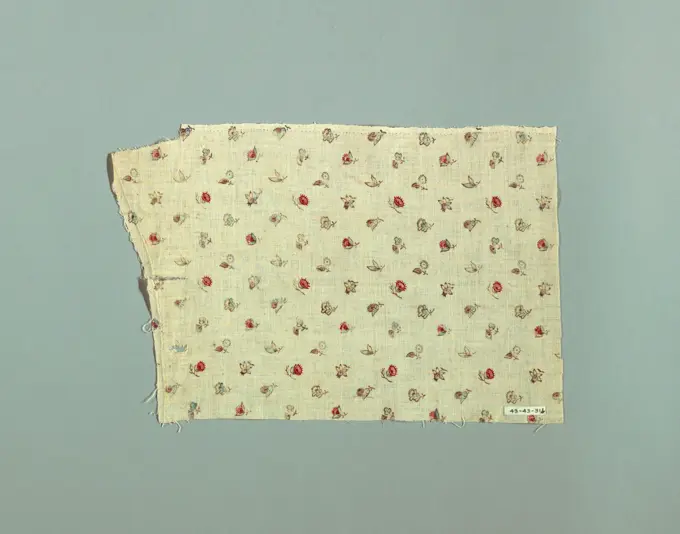
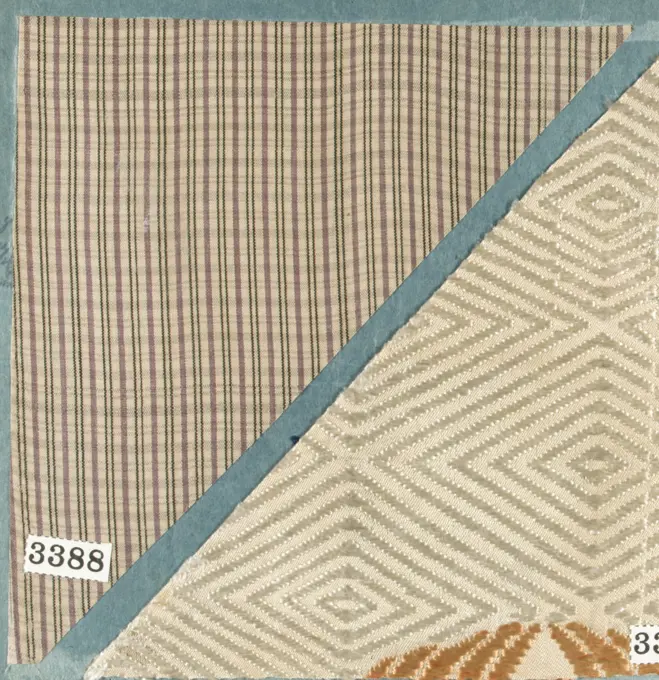
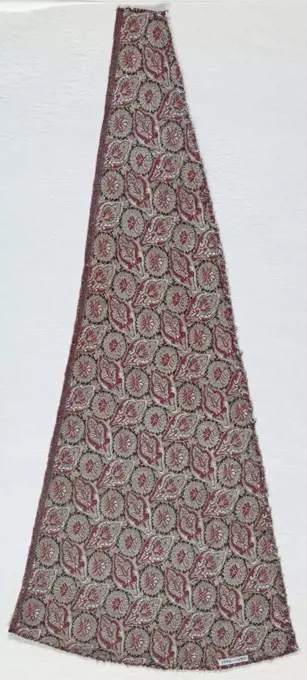
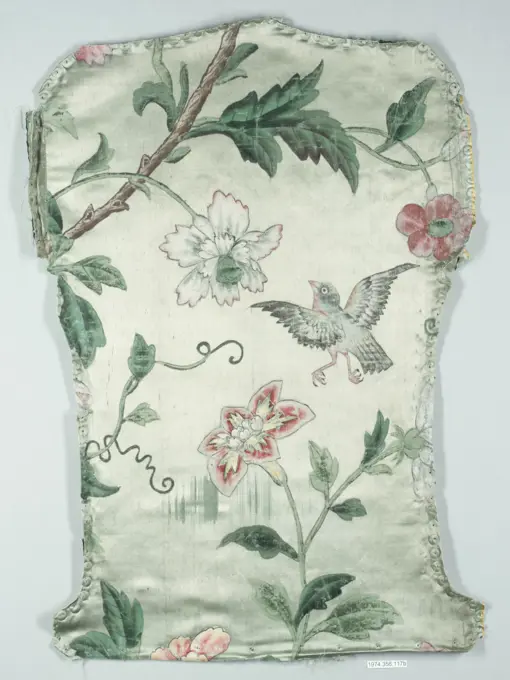
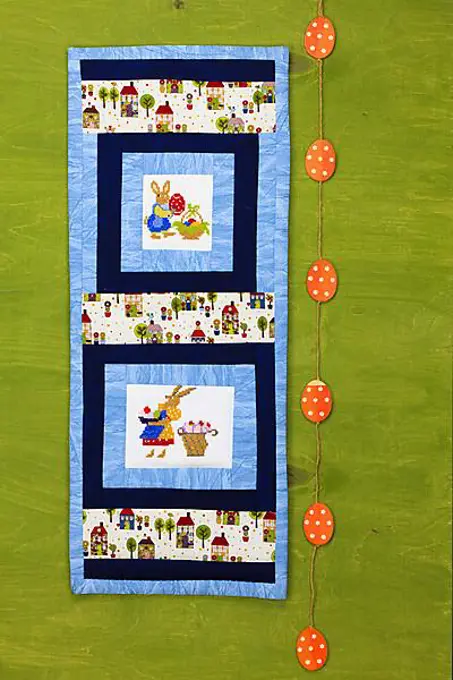
Textile Fragments with Floral Designs

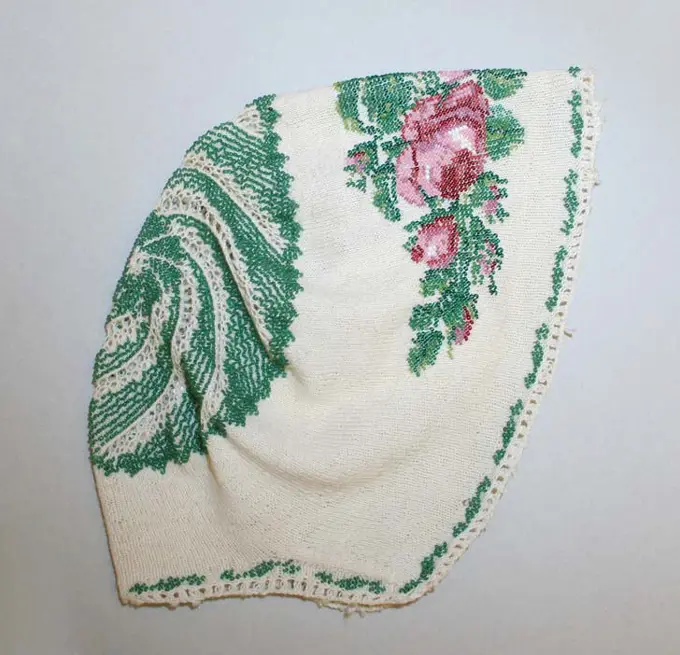
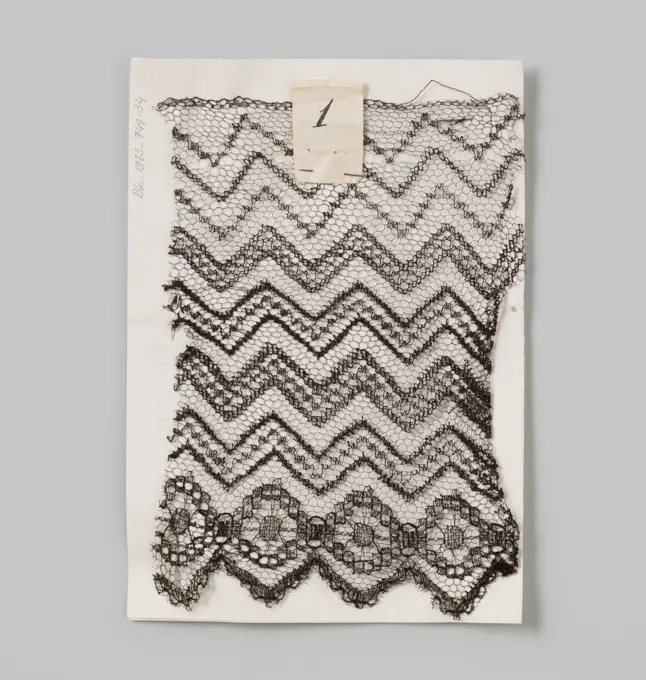
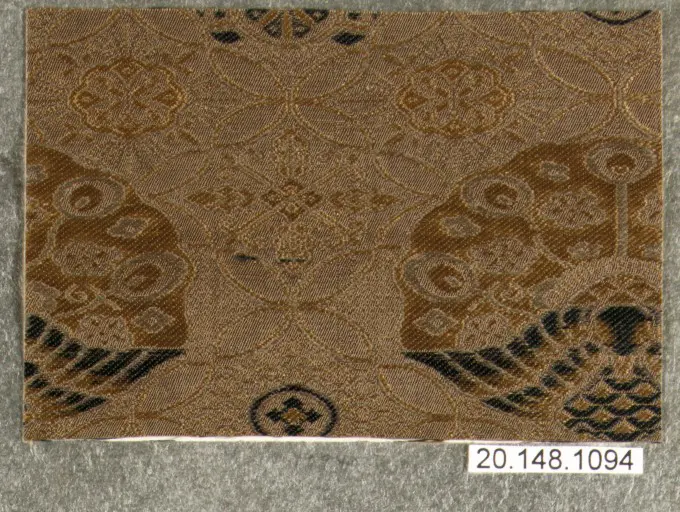
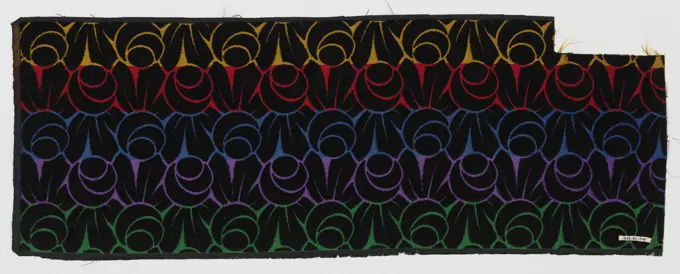
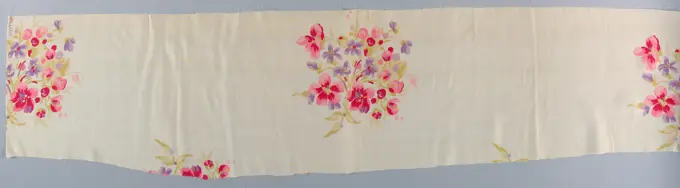
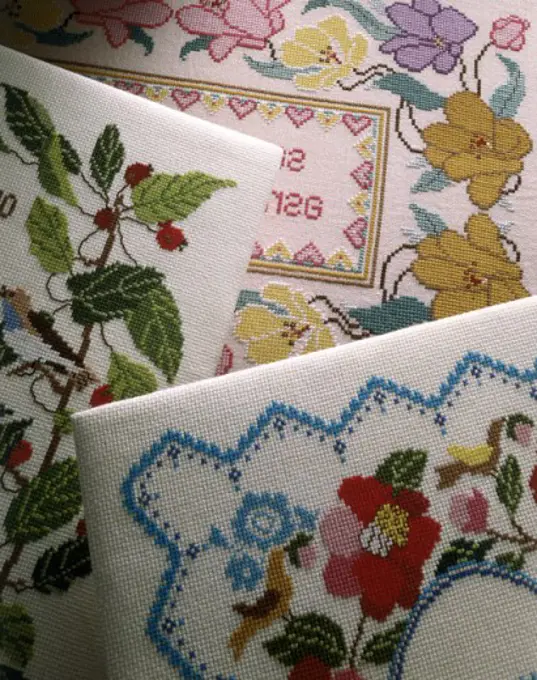
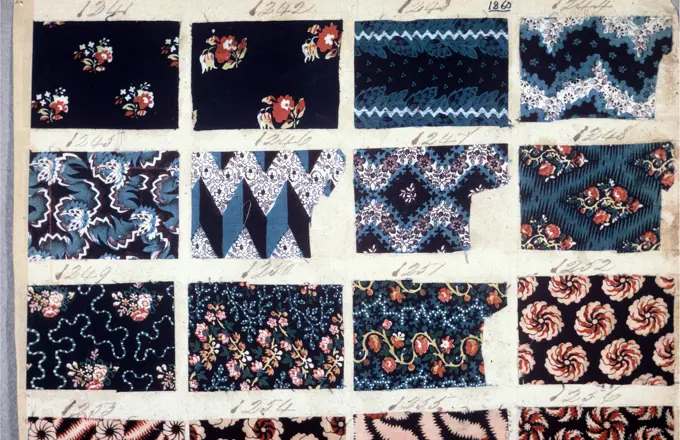
Elegant textile fragments featuring intricate floral patterns woven in silk, showcasing rich colors and detailed designs in historical styles.
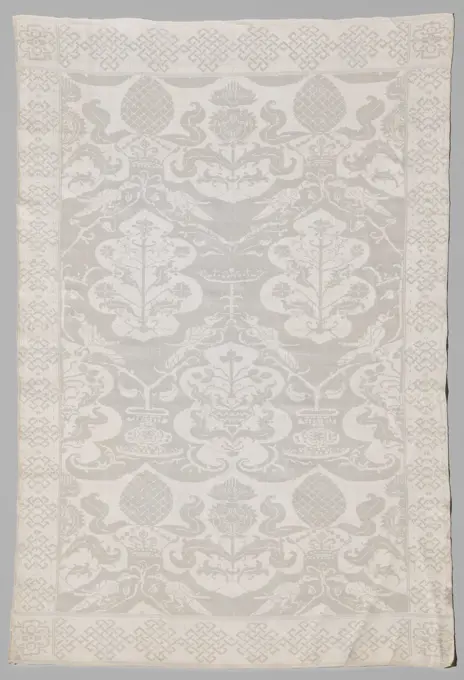
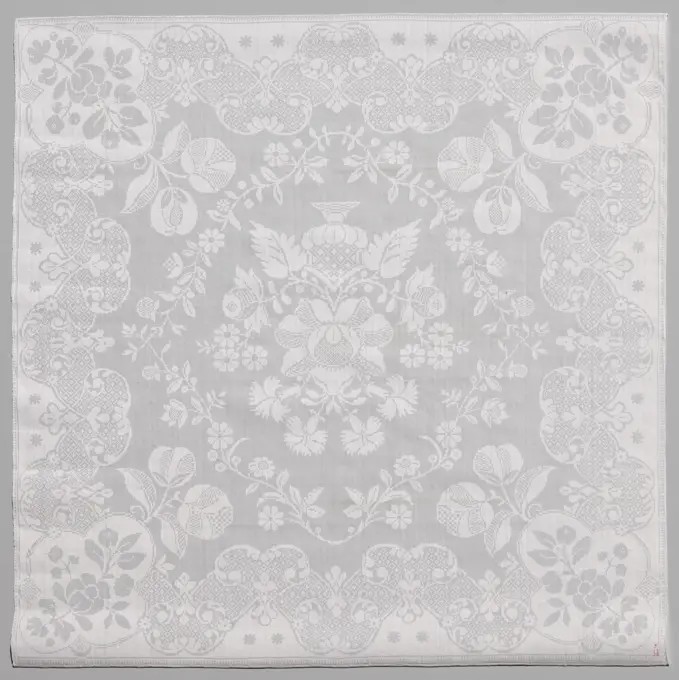
Napkin with potentially English emblems, anonymous, c. 1600 Linnamast napkin with potentially English emblems. Midfield: The symmetrical pattern placed twice next to each other, the side axes are amid a false symmetry, shows three scenes from bottom to top: 1 a pineapple and a thistle standing on a pointed arch, which carries two bold birds on a branch and is covered by a crown . 2 Half oak leaf that shows three clover leaves above Distelblad and is covered by a crown, stands on either side of a Tudorrhose. A tree above that, on which two tired and two birds of birds have been seated. The tree splits and forms a six -sided field, on which an oak leaf with a tree. 3 again scene 1. Standing and lying edges: closed by a double or triple line and consist of consecutive windows of grille, the so-called 'broken stick' motif. Corners: Tudorroos. Southern NetherlandsHaarlem linen (material) damask Linnamast napkin with potentially English emblems. Midfield: The symmetrical pattern placed twice
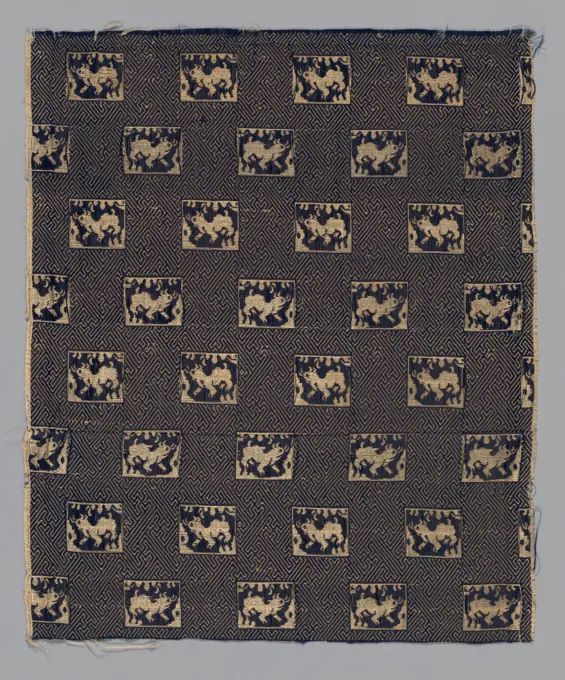
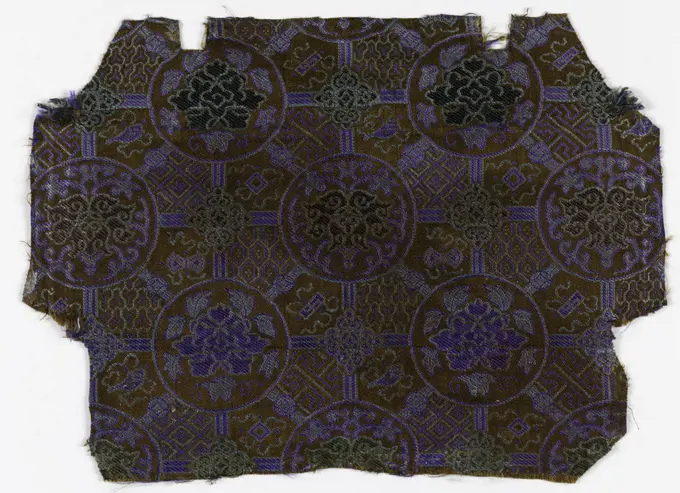
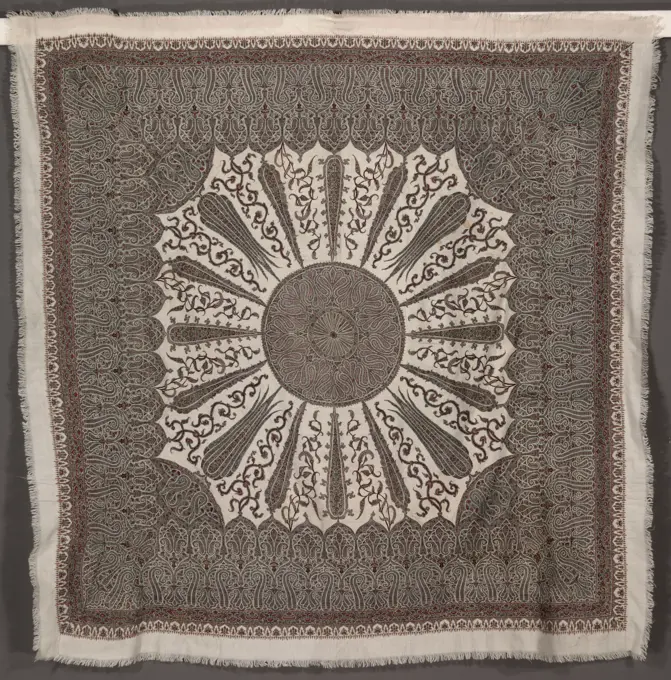
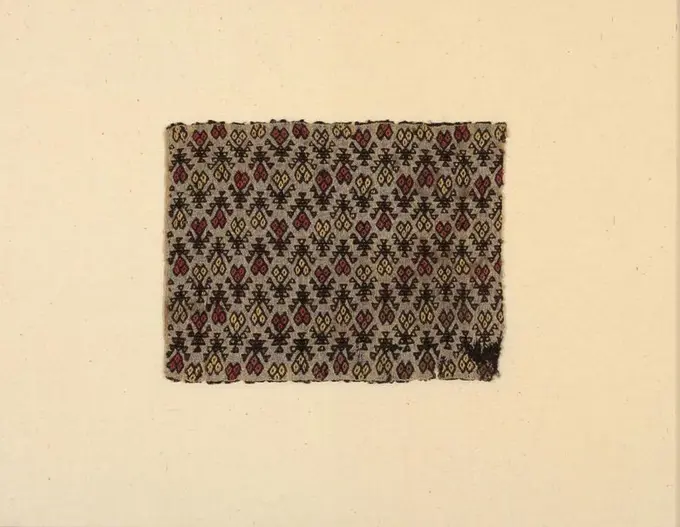
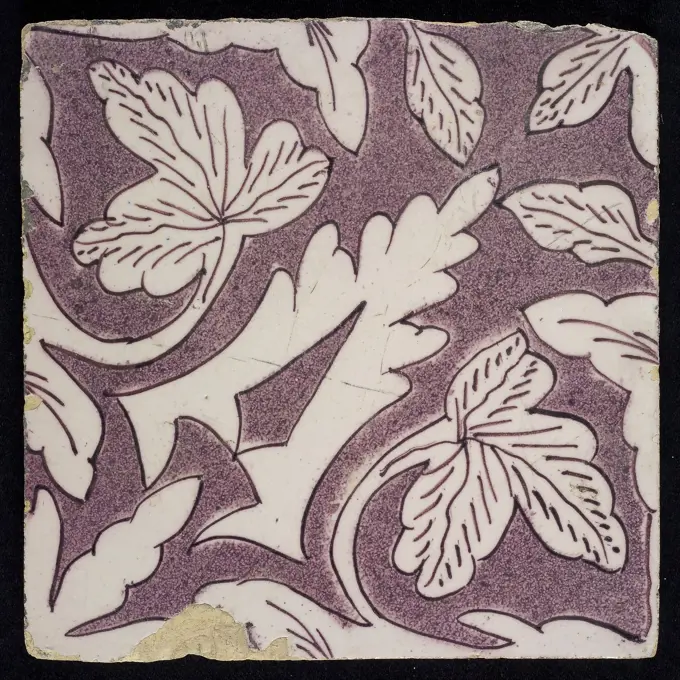
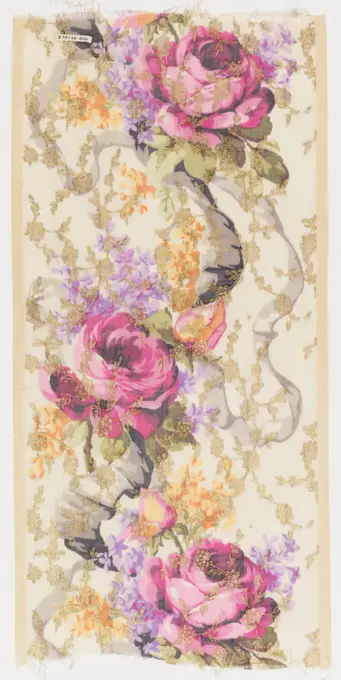
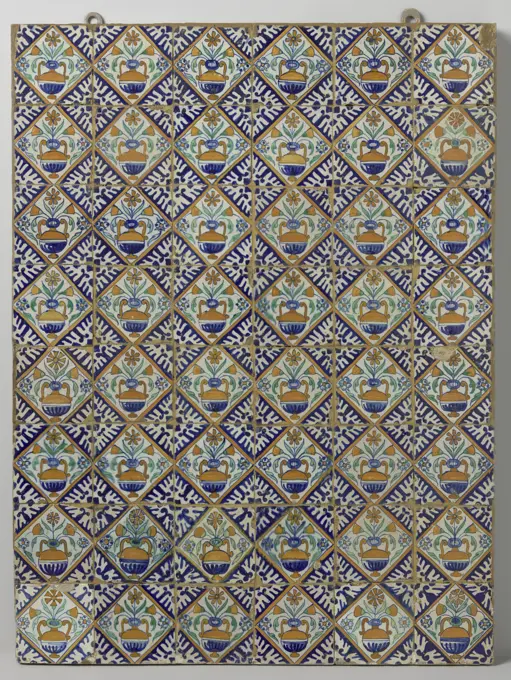
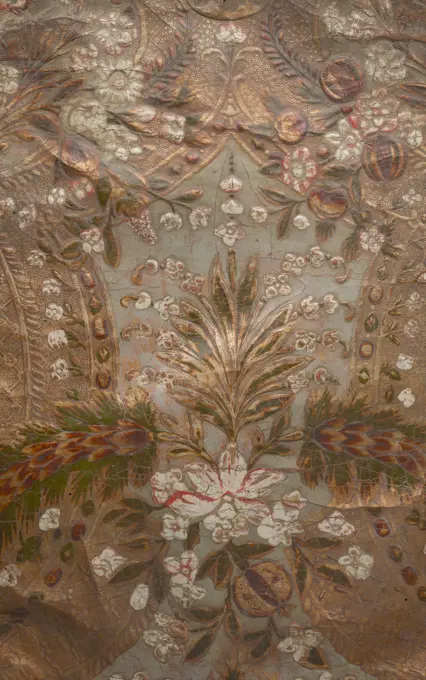
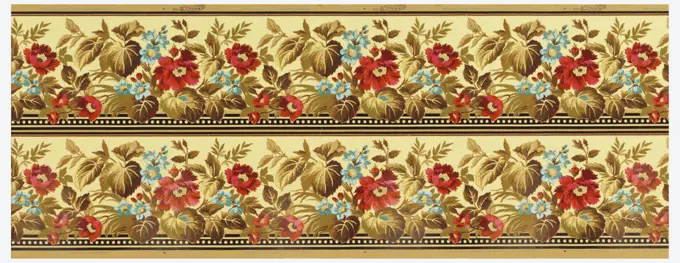
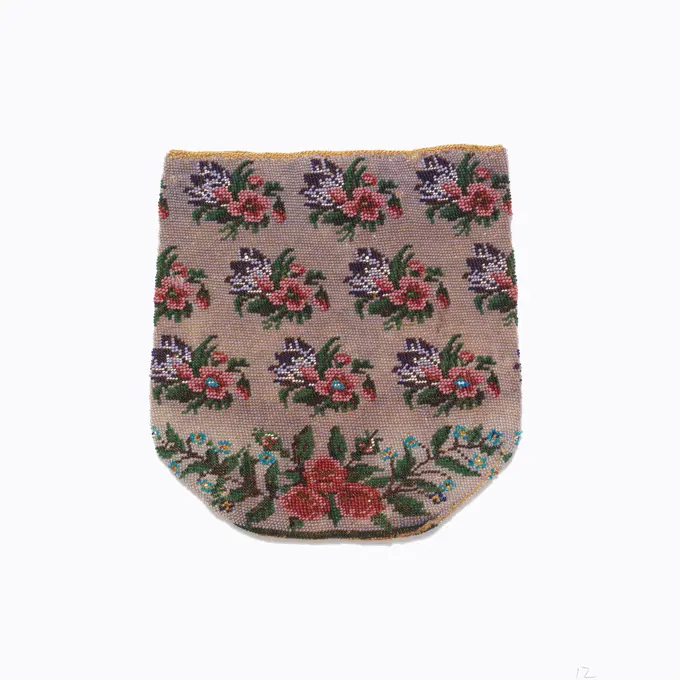
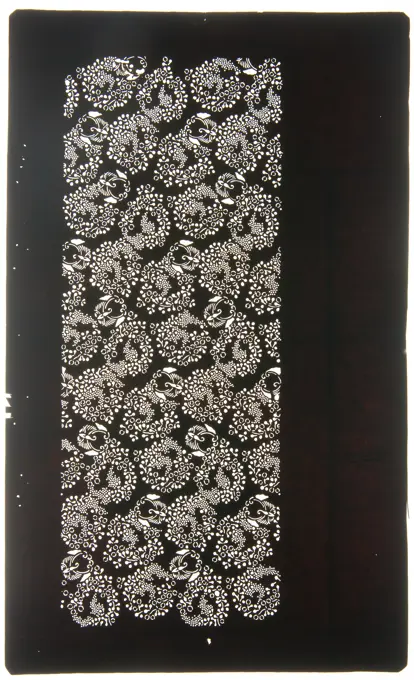
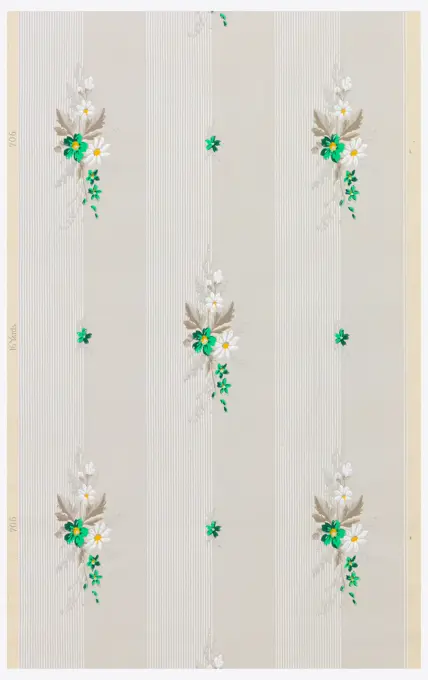
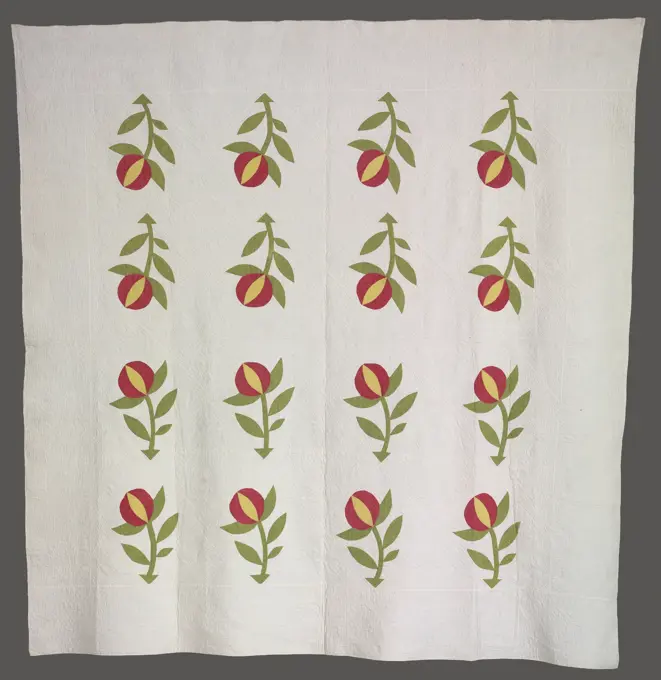
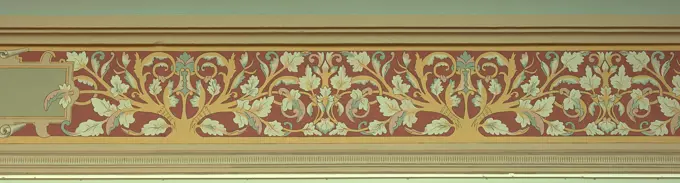
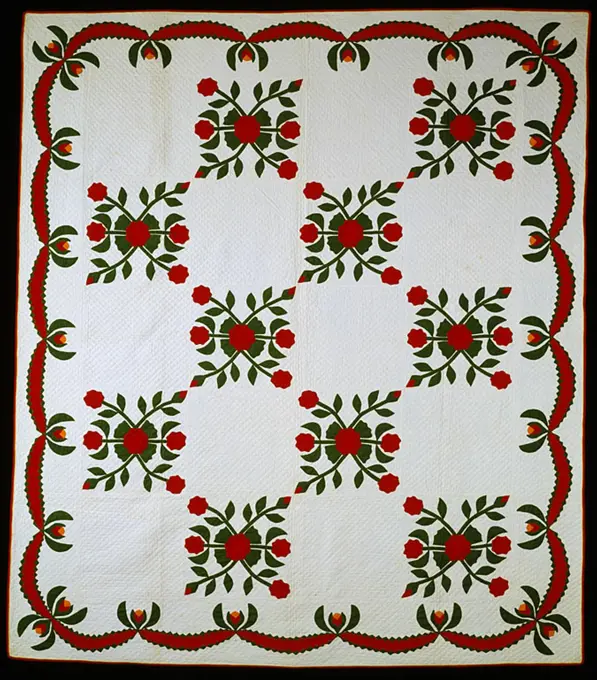
Bedcover (Peony Quilt) Made 1835-1845 United States. appliquÈ, quilting .Chôken (Noh Costume) Made 1825-1875 Japan. Silk and gold-leaf-over-lacquer-paper strips, complex gauze weave with supplementary brocading wefts and self-patterned by areas of 1 2 'Z' twill interlacing; lined with silk, plain weave; dyed with beni, safflower .Fragment Made 1850-1875 Japan. Double cloth, silk. .Textile Swatch Textile Swatch, 1950s to 1960s. Silk, 21 x 11 in. (53.3 x 27.9 cm).    1950s to 1960sFragment, Medium: silk Technique: plain compound satin, Allover geometrical design of circles enclosing peonies in blue and green on a brown ground., China, 19th century, woven textiles, FragmentPiece 16th-17th century Italian. Piece 223375Photo album from Vonk family on South Celebes. Family album from the Vonk family, consisting of 18 pages with photos and 10 empty sheets. The album allows the work of R.H. Spark, assistant-resident of Beeton on South Celebes, and contains photos of the festivities at the birth of Princess Beatrix in 1938 and of the festivities of the installation of the Sultan of Boeton, Vorst van Goa in 1937. A number of loose photos has been added to the album.Square Shawl, 1880s. India, Kashmir, late 19th century. Twill tapestry and embroidery; large pieced areas: wool; overall: 189.9 x 189.9 cm (74 3/4 x 74 3/4 in.).Textile Swatches Onondaga Silk Company, Inc. (1925-1981). , 1948-1959. Silk, 22 1/2 x 11 3/4 in. (57.2 x 29.8 cm).    1948-1959Fragment (From a Noh Costume) Made 1675-1725 Japan. Compound damask, silk and gilt paper; 2 1.2 strips to m.m. .Handkerchief, Medium: cotton Technique: plain weave, Rectangular brown and white gingham plaid bandana., USA, late 19th century, woven textiles, HandkerchiefJacquard Coverlet, 19th century, 78 1/2 x 78 1/2 in. (199.39 x 199.4 cm), Wool, United States, 19th centuryFragment. Possibly Chancay; Probably central coast, Peru. Date: 1000-1476. Dimensions: 22.2 x 17.2 cm (8 3/4 x 6 3/4 in.). Cotton and wool (camelid), plain weave with patterning and brocading wefts. Origin: Peru. Museum: The Chicago Art Institute, Chicago, USA.Patchwork Quilt. Dated: c. 1936. Dimensions: overall: 29.8 x 22.7 cm (11 3/4 x 8 15/16 in.) Original IAD Object: 106" long; 99" wide. Medium: watercolor, graphite, and gouache on paper. Museum: National Gallery of Art, Washington DC. Author: Elizabeth Valentine.Textile (France); cotton; L x W: 96.5 x 34.3 cm (38 in. x 13 1/2 in.)Piece 18th-19th century Japan. Piece 66567Textile 19th century Japan. Textile 68022Sidewall (France); block-printed; Overall: 166 x 56 cm (5 ft. 5 3/8 in. x 22 1/16 in.)Textile, Medium: cotton on linen foundation Technique: tambour work on plain weave, Band of white linen muslin with a horizontal pattern on two borders of trailing wisteria vine and blossoms worked in tambour stitch in green, yellow and purple thread., France, ca. 1805, embroidery & stitching, TextileTextile, Medium: wool Technique: printed, Flowers and medallions with plaid., England, 19th century, printed, dyed & painted textiles, TextileStole, 17th century. Italy, Genoa, 17th century. Cut and uncut velvet, silk, metal thread; overall: 221.6 x 19.5 cm (87 1/4 x 7 11/16 in.).Fragment, Medium: silk, wool, silver-wrapped silk core Technique: compound weave, Dense repeating pattern of silver leaves on a red background., India, possibly 19th century, woven textiles, FragmentTextile, Rosenkavelier; Designed by Wiener Werkstätte (Austria), Dagobert Peche (Austrian, 1887-1923, active Vienna, 1911-1923); silk; A: Height: 18.4 cm (7 1/4 in.), Width: 27.6 cm (10 7/8 in.) B: Height: 19.1 cm (7 1/2 in.), Width: 15.2 cm (6 in.) C: Height: 12.1 cm (4 3/4 in.), Width: 19.1 cm (7 1/2 in.) D: Height: 19.1 cm (7 1/2 in.), Width: 14.9 cm (5 7/8 in.)Leather (Holland); leather, silvered, varnished and painted; 127 x 28 cm (50 x 11 in.); 1913-34-11Upholstery panels for a side chair ca. 1763-64 German, Würzburg The settees and chairs illustrated here (see 1974.356.114-.121) were made for the Franckenstein Pavilion in the gardens of Seehof Castle near Bamberg, one of the three summer residences in Southern Germany used by Adam Friedrich von Seinsheim, prince bishop of Würzberg and Bamberg. A true garden enthusiast, it was under von Seinsheim that the gardens of Seehof were embellished, which must have resembled the still extant Rococo gardens completed by von Seinsheim at Veitshöchheim. His love for gardens and garden imagery also carried over into the interior decoration and furnishings of his castles, as the Seehof furniture demonstrates. A unique example of German Rococo furniture executed in a more flamboyant style than its French prototypes, the ensemble was designed specifically for the Garden Room in the Franckenstein Pavilion. Used as an audience room, it was referred to as the "Green Trellis Chamber" in the 1774 Seehof inSprinkled purple ornament tile, openwork stylized spiked leaves coming from corner, surrounded by creeper leaves, oak leaves, wall tile tile sculpture ceramic earthenware glaze, Baked 2x glazed painted Yellow shard square two nail holes. Purple on white.Purse 1725-40 American. Purse 13851Textile (France); silk, metallic threadSleeve Bands (China); silk, metallic threadCeremonial Mat, 20th century, 80 x 71 1/8 in. (203.2 x 180.66 cm), Plant fibers, Republic of Kiribati, 20th centuryFrieze, Machine-printed paper, mica flakes, Flitter frieze with alternating medium and large foliate medallions, from which suspend pink and purple floral swags. Top has thin green stripe, bottom has a blue stripe and a thin silver mica flaked stripe. Grounding shades from light blue to green. Printed in purples, pinks, greens, yellows, and metallic brown, with outlines in silver mica flakes., USA, 1905-1915, Wallcoverings, FriezeField of forty -eight tiles with flower pots, anonymous, c. 1580 - c. 1625 Field of forty -eight tiles (8 x 6) each with a multicolored (blue, orange, green and yellow) flowerpot within a squared frame. In the corners, ornament in Vultechniek. Netherlands earthenware. tin glaze majolica Field of forty -eight tiles (8 x 6) each with a multicolored (blue, orange, green and yellow) flowerpot within a squared frame. In the corners, ornament in Vultechniek. Netherlands earthenware. tin glaze majolicaShawl Fabric (Jamawar) (Dress Frabic) Made 1825-1875 Iran. Wool, pieced double interlocking 2 2 'S' twill tapestry weave .Communion dress of lace border gland with the Lamb on a book, Anonymous, c. 1825 - c. 1835 Communion rug of natural -colored lace -up work, tuldoor stop work on machine tulle. Rectangular model. Pattern with a detached, slanted motif from a lamb in an oval wreath in the middle. The lamb holds a stick with a penny with the I.H.S. monogram. The Lamb is located on a book, placed in perspective, that is closed with seven stamps. The wreath is made of vineyards with grape bunches, wine leaves and corners. The rug is finished all around with a sculpy edge, along which a closed edge with a succession of leaves with rosette flowers. There is always one leaf in each shell. There is always a flower branch with spring leaves in the corners of the rug. Netherlands (possibly)  embroidering Communion rug of natural -colored lace -up work, tuldoor stop work on machine tulle. Rectangular model. Pattern with a detached, slanted motif from a lamb in an oval wreath in the middle. The lamb holds a stick wFragment of cordovan upholstery unknownCap early 19th century European. Cap 102552Black lace strip with toothed edge, c. 1920 Black lace strip with toothed edge. NijmegenFrance (possibly) . Black lace strip with toothed edge. NijmegenFrance (possibly) .Tuch mit Blumendekor - Cloth with flowers Tuch mit Blumendekor - Cloth with flowers Copyright: xZoonar.com/lantapixx 6597990Folk floral flowers print Floral bouquet of fantasy folk flowers  Botanical illustration in flat cartoon styleHandkerchief, Medium: linen Technique: embroidered, Band of rococo curving lines near border. On these bands walk various tiny animals and people. Animals, flowers and people in four corners., France, mid-19th century, embroidery & stitching, HandkerchiefPiece 18th century Japan. Piece 72079Back shield of a choir cap, from silk, 1700 - 1750 Back shield of a choir cap, of silk tissue. The pattern has silver tifles and bouquets with silver and green leaves on a beige worked soil. NOTE: Identical to BK-NM-1234, Cat 206. Lyon silk. lampas (textile material) / twill Back shield of a choir cap, of silk tissue. The pattern has silver tifles and bouquets with silver and green leaves on a beige worked soil. NOTE: Identical to BK-NM-1234, Cat 206. Lyon silk. lampas (textile material) / twill40 tiles. 40 tiles with a blue painted figure with in the corners, an oak leaf.Fragment of percale  ornamentation copying cross stitch unknownBedcover (Crib Quilt) Made 1875-1900 United States. .Textile Swatches Onondaga Silk Company, Inc. (1925-1981). Textile Swatches, 1948-1959. 34 Rayon; 34 Nylon; 32 silk, (a) - (e): 8 1/2 x 4 1/2 in. (21.6 x 11.4 cm).    1948-1959Crib Quilt probably English ca. 1860 The modest handiwork of this crib quilt suggests that it was amateur work, perhaps assembled by a female relative celebrating the arrival of a new baby. Although at first glance the quilt appears to be a patchwork of small fabric fragments, in fact the central element with its patterned corners is a continuous printed motif, designed to imitate the appearance of a pieced quilt. The anonymous seamstress has inventively amended her pre-printed quilt kit by partly superimposing two of the rose-bush squares, in doing so expanding the quilts height.Color Sample (France); silkFragment; Made by H.R. Mallinson & Co.; silkSide pattern with flower vase. Brand: N6 P Poon., Anonymous, 1730 - 1735 Napkin made of white linen with a 'lace' pattern with flower vase on foot, brand n 6 p poon. Flanders (Possible) linen (material) Napkin made of white linen with a 'lace' pattern with flower vase on foot, brand n 6 p poon. Flanders (Possible) linen (material)Front doubleur. 1902 - 1843. bindings (gathered matter components), Book covers. Spencer Collection. BookbindingEmbroidered message on a wall hanging, Sweden.needlework by Maltese bobbin lace vintage knitting craftsmanship - needlework by Maltese bobbin lace ,property released Copyright: xZoonar.com/ValeryxVoennyyx 6641631 ,model released, Symbolfoto ,property releasedChintz Fragment (India); cottonBack doubleur. 1909. Aumale, Henri d'Orléans, duc d' (1822-1897). bindings (gathered matter components), Book covers. Spencer Collection. BookbindingColorful simple floral decoration, tiny flower illustration, background template, creative arrangement of nature and flowers. Good for banner, wedding card invitation draft, design element, and other.Border Made 1790-1810 England. Linen and silk, bobbin lace .Shard of a plate from the wreck of the East India hollandiaia. Porcelain, plate, type 2; Fragm or base, sim. NG 1980-27H507.Fragment Made 1801-1825 United States. Sample of stripe and check patterns of blue, white and tan .Textile Swatches Onondaga Silk Company, Inc. (1925-1981). , 1948-1959. Silk, 47 1/2 x 18 in. (120.7 x 45.7 cm).    1948-1959Bedcover Made 1795 United States. This bedcover includes an embroidered center square and over 30 different English and French printed cottons ranging in date from about 1780 to 1810. Because the United Statesí commercial textile industry was in its infancy during the late 18th century, there was a great dependency on foreign textiles. The center of the bedcover was embroidered in 1795 while printed cotton fabrics were pieced together at a later date. This bedcover represents decades of careful saving of fashionable imported printed cotton dress and furnishing fabrics.. Center cotton, plain weave; embroidered with silk, cotton, and wool in buttonhole, chain, cross, single cross, feather, Roumanian, satin, single satin, stem, and twined double running stitches; Squares cotton, cotton and linen, and linen, plain weaves; block, copperplate, and roller printed . Mary JonesTextile Swatches Onondaga Silk Company, Inc. (1925-1981). , 1948-1959. Silk, 23 3/4 x 14 1/2 in. (60.3 x 36.8 cm).    1948-1959Ribbon French 19th century View more. Ribbon. French. 19th century. Textiles-TrimmingsUpholstery Fabric, 19th century, 46 x 33 in. (116.84 x 83.82 cm), France, 19th centuryPiece 1750-60 French or Spanish. Piece 213164Border (USA); machine-printed, cut-out; 87 x 29 cm (34 1/4 x 11 7/16 in.) rollTextile Sample from Sample Book 19th century Japan. Textile Sample from Sample Book 68109Detail red white blue throw pillowSpecimens of Swiss embroidery.. Wyatt, M. Digby (Matthew Digby), Sir, 1820-1877. Prints. 1853. The Miriam and Ira D. Wallach Division of Art, Prints and Photographs: Art & Architecture Collection. Decorative arts , Exhibitions, Great Exhibition (1851 : London, England)Close-up of embroidery on fabricTextile (England); paper, cotton; Sheet: 41 x 33.5 cm (16 1/8 x 13 3/16 in.) H x W (each swatch, approximate): 7.6 x 5.4 cm (3 in. x 2 1/8 in.)Traditional Grecian motif souvenir textile.Paper-cutting of flowerBorder, Block-printed, Wallpaper roll., Printed two across, red poppies and smaller blue flowers with large foliage, printed on beige ground., USA, 1880-87, Wallcoverings, BorderWall decorPiece ca. 1715 British, London, Spitalfields. Piece 226491Bag (USA); glass beadsFabric dyeing template using the Kata Yuzen technique  wreaths of flowers and butterflies unknownPaper-cuttingPlaid coverlet ca. 1840 American This plaid coverlet is woven of brown, blue, yellow, and orange wool in two panels and seamed at the center. It has a natural fringe along the bottom.. Plaid coverlet 13633Sidewall (possibly USA); machine-printed; a) 86 x 50 cm (33 7/8 x 19 11/16 in. ) b) 23 x 48.5 cm (9 1/16 x 19 1/8 in.)wheat ears isolated on white backgroundQuilt, c. 1880 (). America, Pennsylvania, Cowan, Late 19th century. Cotton, piecework; overall: 247.7 x 248.9 cm (97 1/2 x 98 in.).Sampler (England); Embroidered by Susan Cuming (English); silk embroidery on wool foundationFragment multicolor silk satin. A fragment silk tissue with a white fond on which multicolored flower branches that are connected to each other through garlands where around colored rings.Ceiling Medallion (USA); block-printed paperGlass mosaic inlay. Culture: Egyptian, Roman. Dimensions: Other: 1 3/4 in. (4.4 cm). Date: 1st century B.C.-1st century A.D..Opaque yellow ground; decoration in opaque white, red, and greyish green, and translucent deep purple appearing black.Narrow horizontal strip, tapering slightly towards the right and rounded right edge.Asymmetrical repetitive floral motif with palmettes, lotus buds, and stems flanked by four ivy leaves.Broken and repaired with some cracks and losses; upper, underside, and edges ground and polished; deep pitting of some surface bubbles.This piece is cut from the same mosaic glass bar as 17.194.377, but decoration appears in mirror image. Museum: Metropolitan Museum of Art, New York, USA.Staal zijde in album.Steel printed silk, green, red, yellow and purple on natural, with stylized flower plant within paralelle piped-shaped frame (Dessreinr. 7134 5/21).Textile Swatches Onondaga Silk Company, Inc. (1925-1981). , 1948-1959. Silk, 23 1/2 x 17 1/2 in. (59.7 x 44.5 cm).    1948-1959Sidewall - Sample (USA); machine-printed on paper; 70 x 48 cm (27 9/16 x 18 7/8 in.)Vintage looking Fabric swatch Vintage looking Red fabric swatch cut with pinking shears zig zag scissors Copyright: xZoonar.com/ClaudioxDiviziax 9709003Linnamast napkin with ivy, Chris Lebeau, c. 1904 Linnamast's napkin with ivy: Motif Klimop, Dessin No. 513. The napkin belongs to eleven napkins (BK-1979-262-A to BK-1979-262-L) and two tablecloths (BK-1979-261-A and BK-1979-261-B). Eindhoven linen (material) damask Linnamast's napkin with ivy: Motif Klimop, Dessin No. 513. The napkin belongs to eleven napkins (BK-1979-262-A to BK-1979-262-L) and two tablecloths (BK-1979-261-A and BK-1979-261-B). Eindhoven linen (material) damaskDetail intake of decoration; Detail shots of decorations in the halerie and the fronthal ..Sampler (Austria); Embroidered by Karoline Berger (Austrian); cotton embroidery on cotton foundationFloral and Foliate Ornamented Metal Keyplate Design. Artist: Anonymous, British, 19th century. Dimensions: irreg. sheet: 13 7/16 x 7 7/8 in. (34.2 x 20 cm). Date: second half 19th century. Museum: Metropolitan Museum of Art, New York, USA.Red patterned sofa with steel tube frame red patterned sofa with steel tube frame copyright: xzoonar.com/dr.xnorbertxlangex 14431587Embroidery, Easter motifTextile (USA); Manufactured by American Print Works; cottonSide of a cantonniere with palm tree, flowers and drapery. Lice mining of a cantonnière with a strain like a palm tree against a crem white. This is a ribbon that went with a bow and a flower gluy. At the crown starter the underside of a dark red curtain, where strings with brushes.Indian ornament