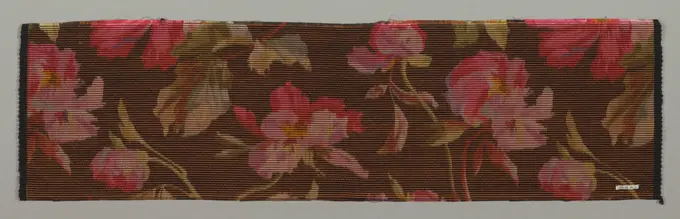
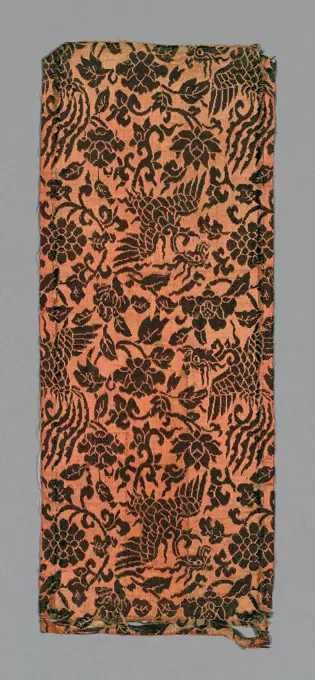
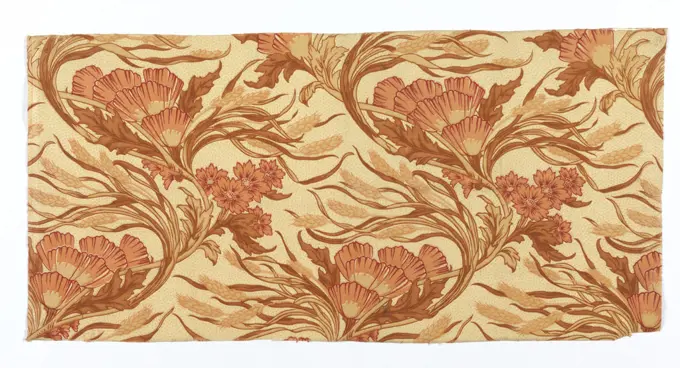
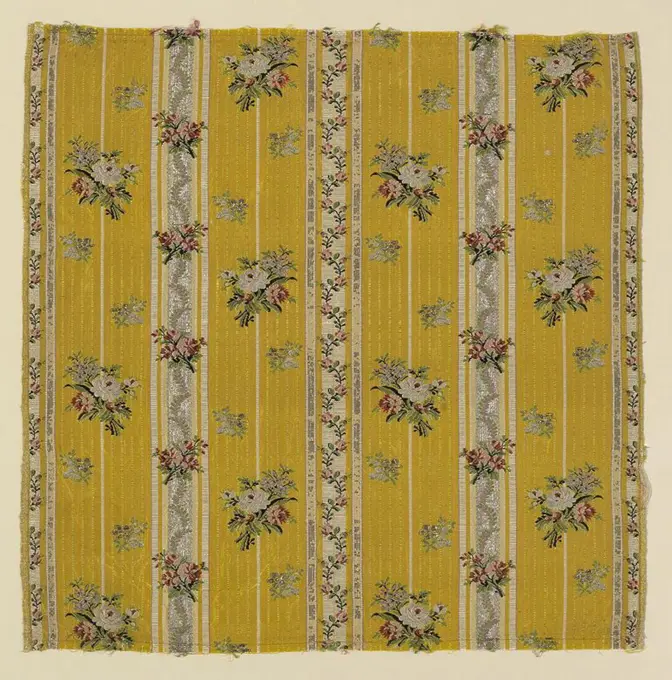
Textile Fragments with Floral Designs

Elegant textile fragments featuring intricate floral patterns woven in silk, showcasing rich colors and detailed designs in historical styles.
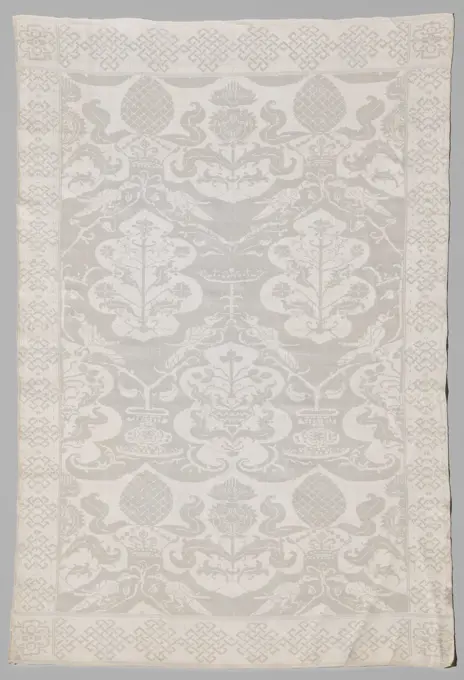
Napkin with potentially English emblems, anonymous, c. 1600 Linnamast napkin with potentially English emblems. Midfield: The symmetrical pattern placed twice next to each other, the side axes are amid a false symmetry, shows three scenes from bottom to top: 1 a pineapple and a thistle standing on a pointed arch, which carries two bold birds on a branch and is covered by a crown . 2 Half oak leaf that shows three clover leaves above Distelblad and is covered by a crown, stands on either side of a Tudorrhose. A tree above that, on which two tired and two birds of birds have been seated. The tree splits and forms a six -sided field, on which an oak leaf with a tree. 3 again scene 1. Standing and lying edges: closed by a double or triple line and consist of consecutive windows of grille, the so-called 'broken stick' motif. Corners: Tudorroos. Southern NetherlandsHaarlem linen (material) damask Linnamast napkin with potentially English emblems. Midfield: The symmetrical pattern placed twice
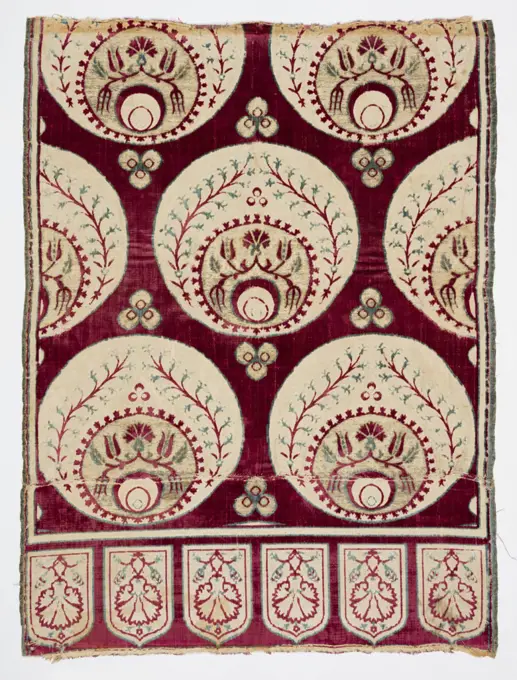
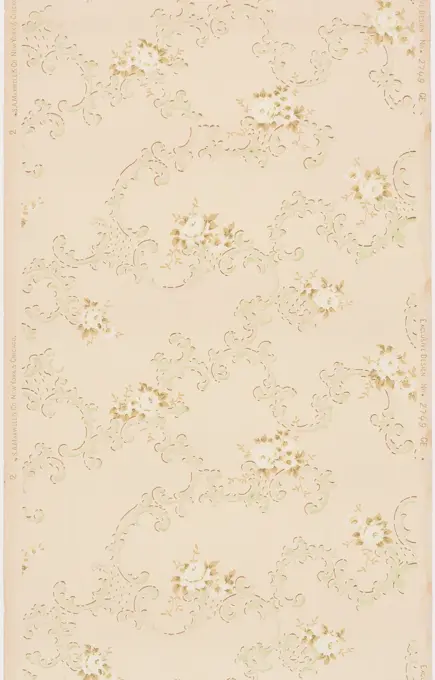
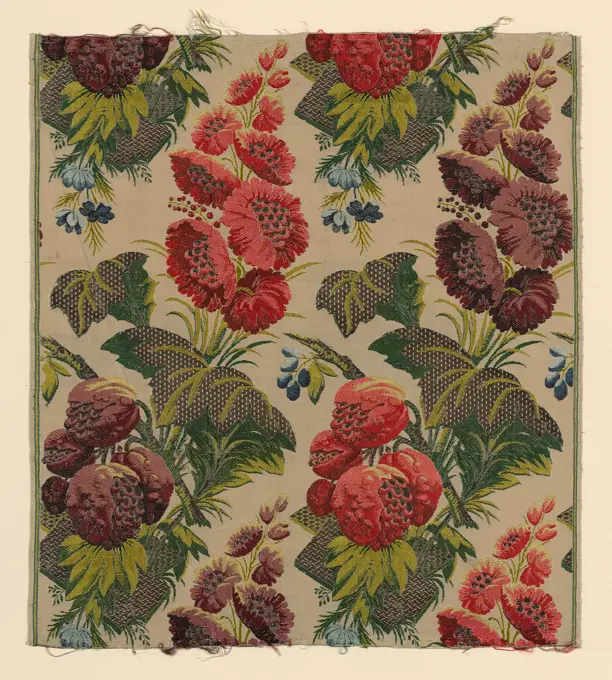
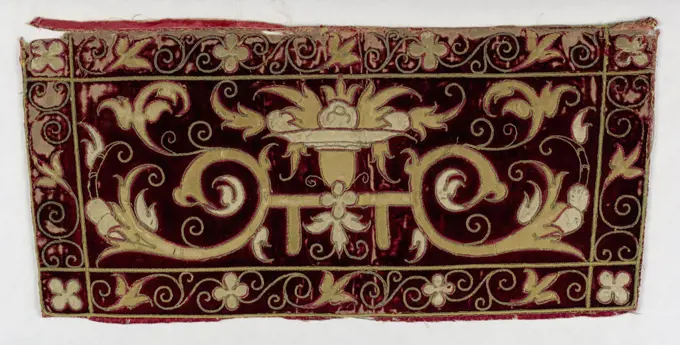
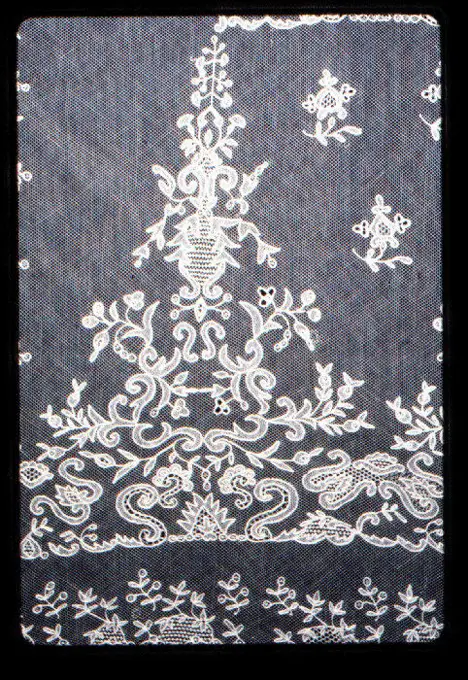
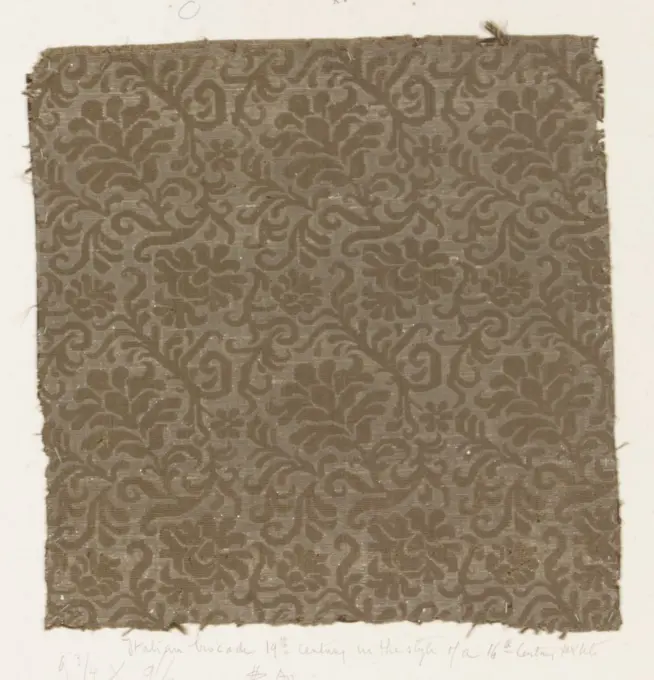
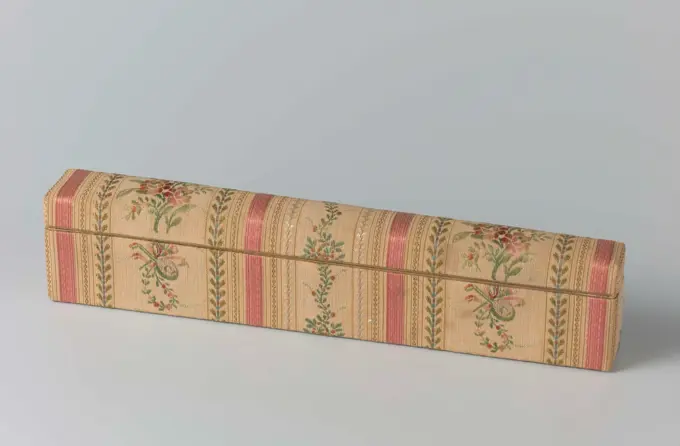
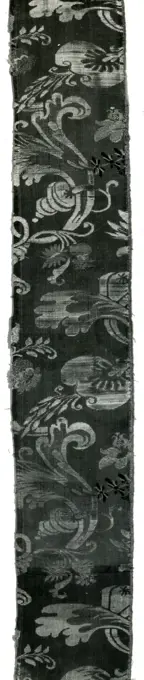
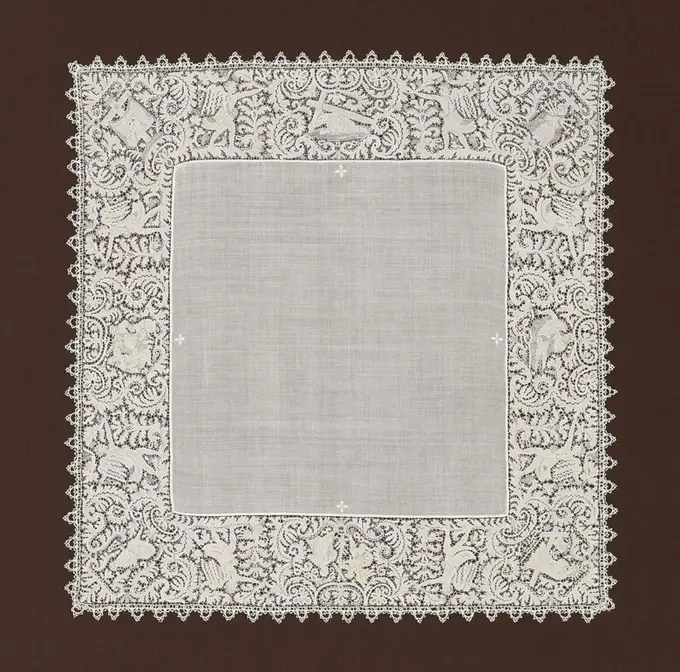
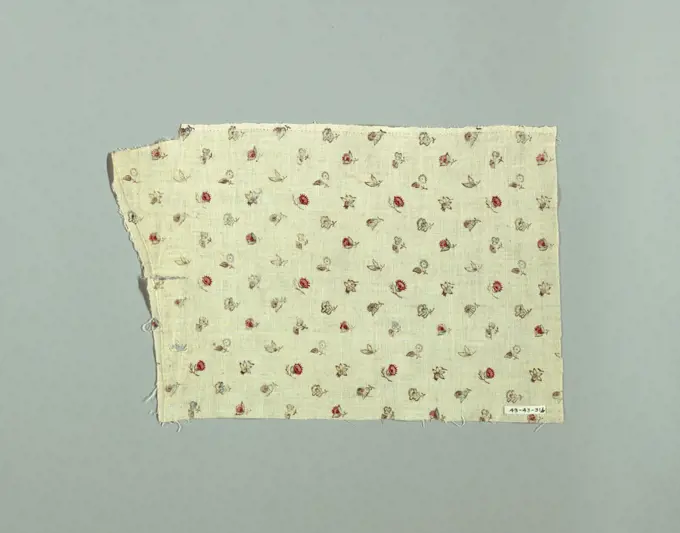
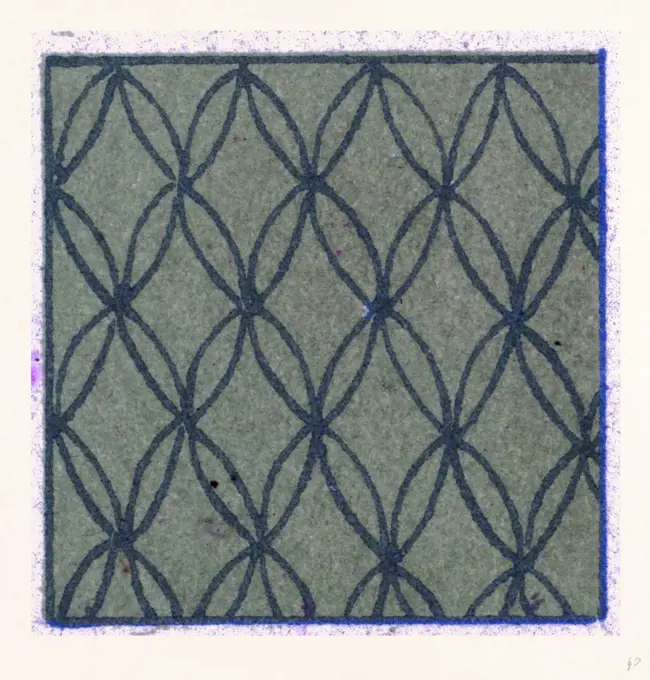
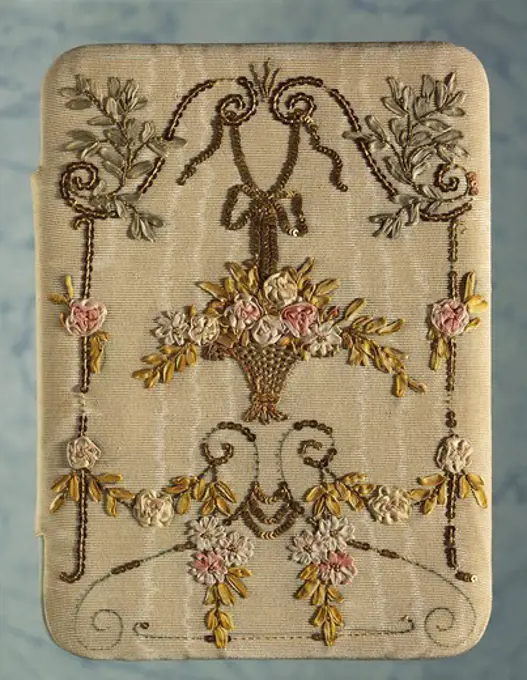
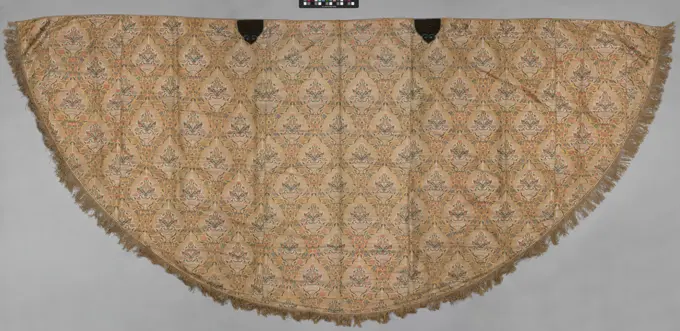
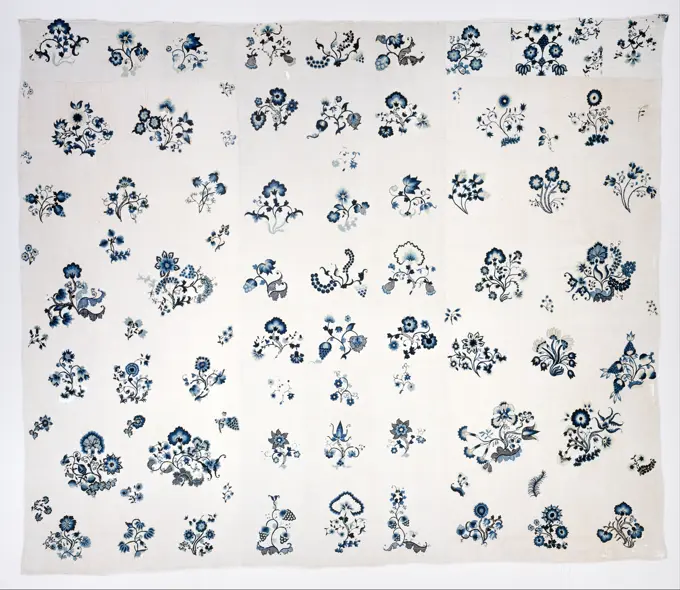
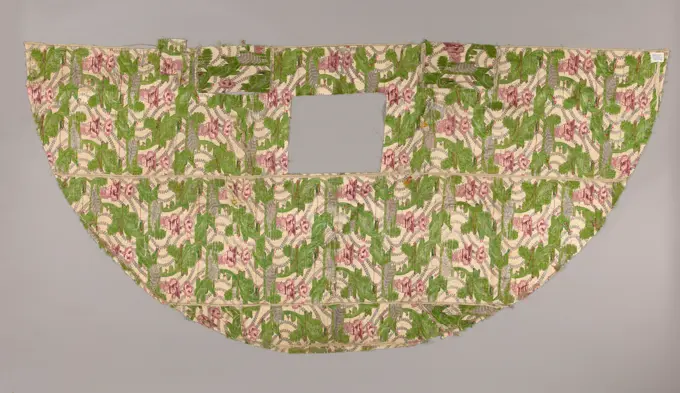
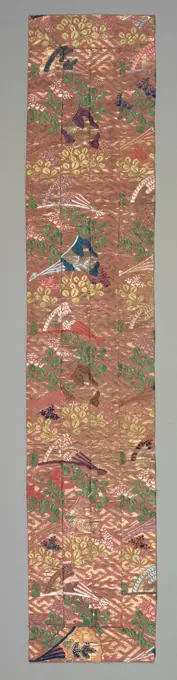
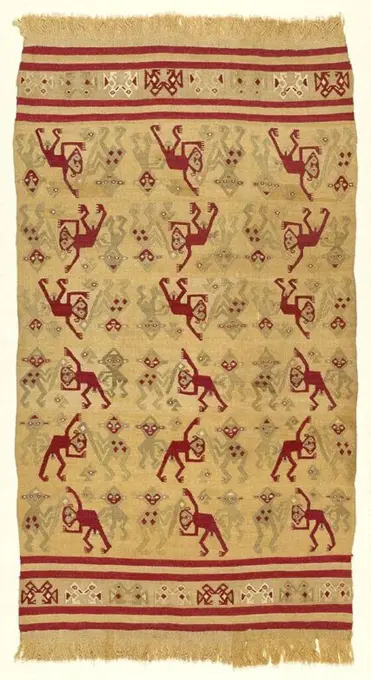
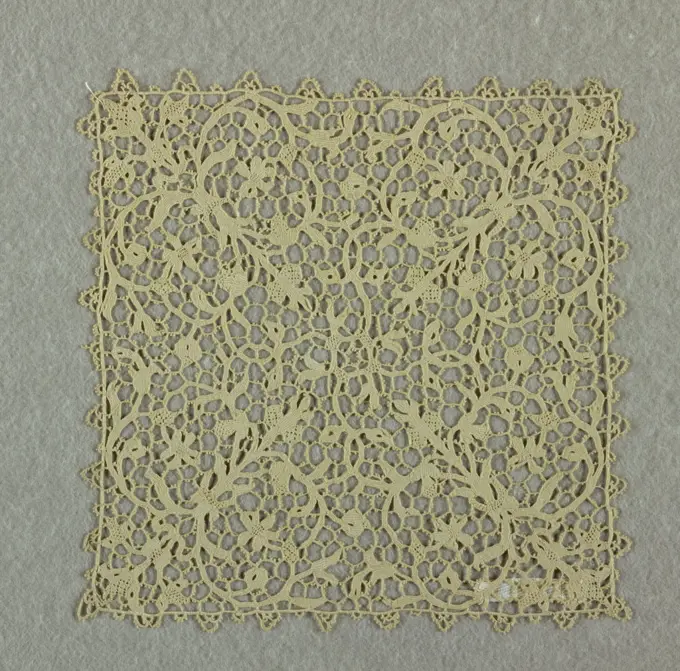
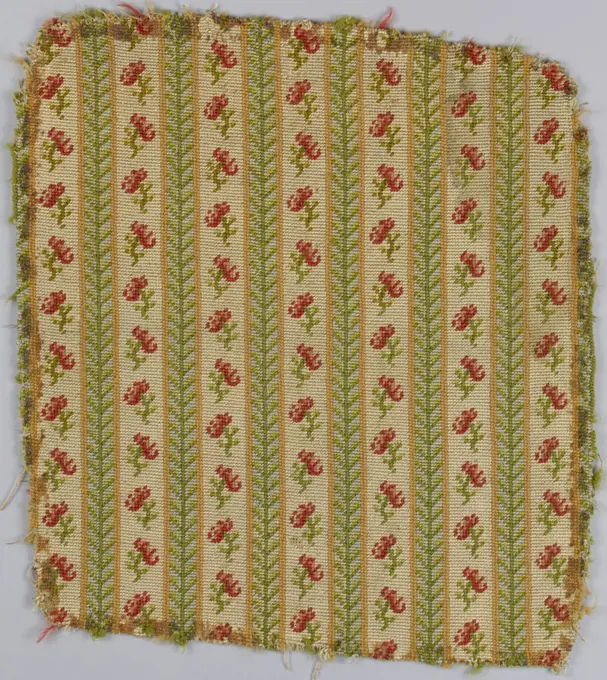
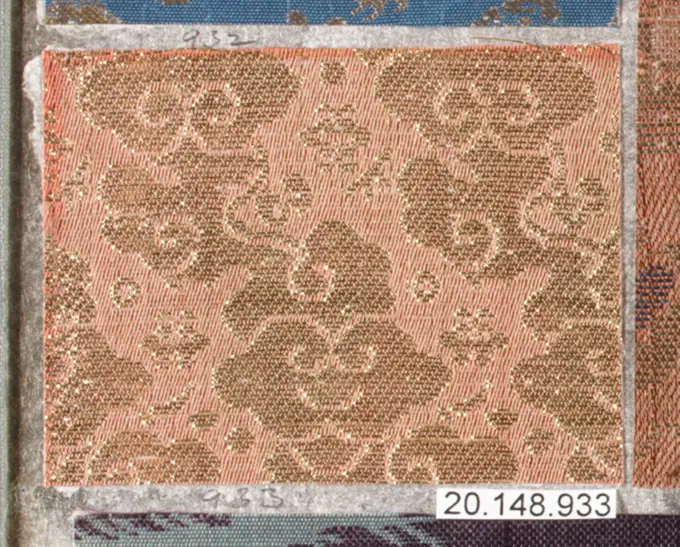
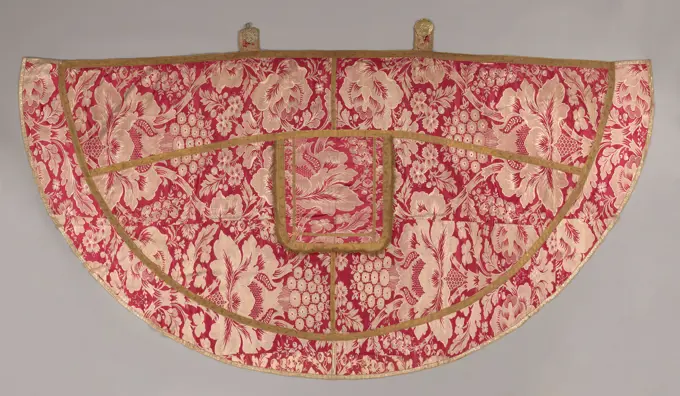
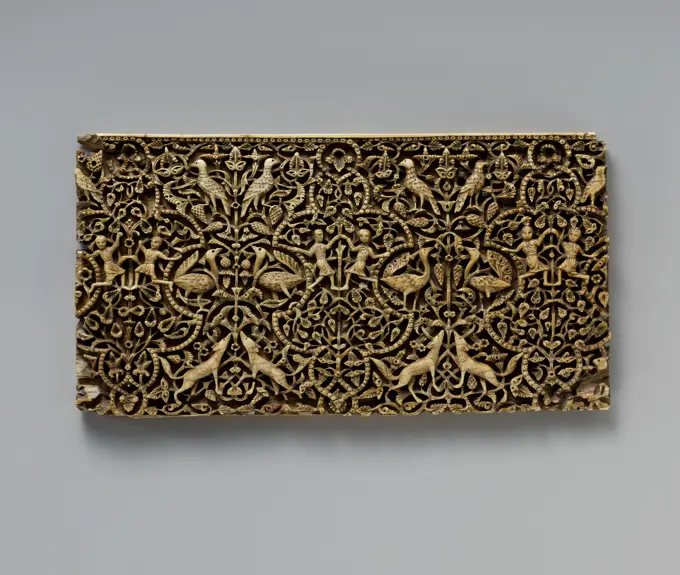
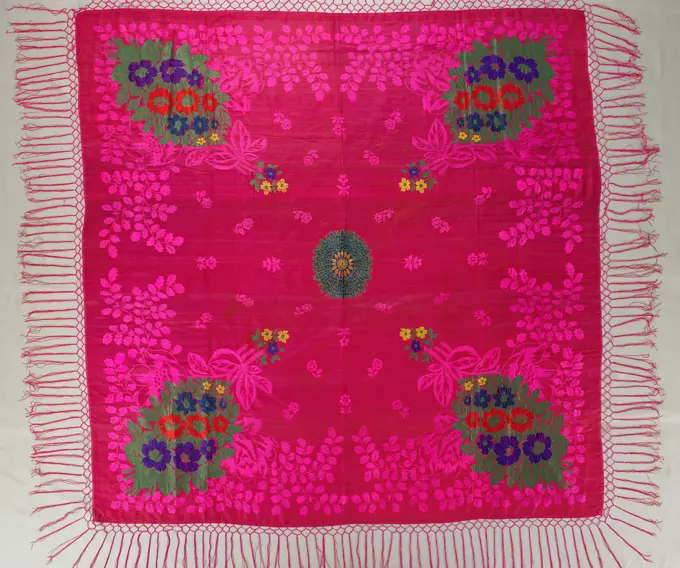
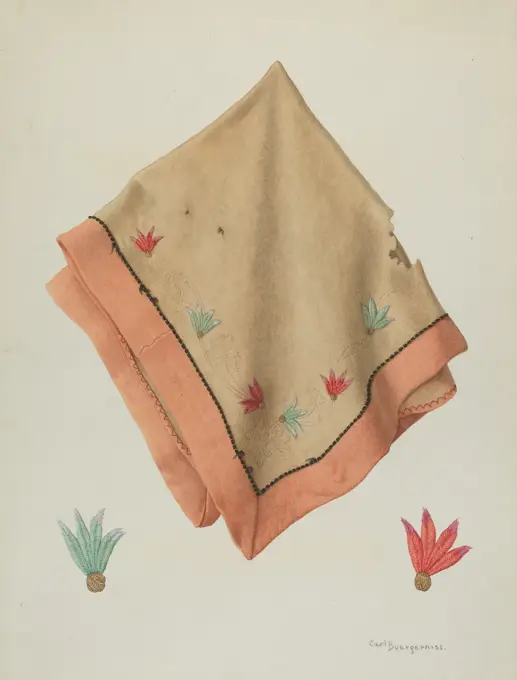
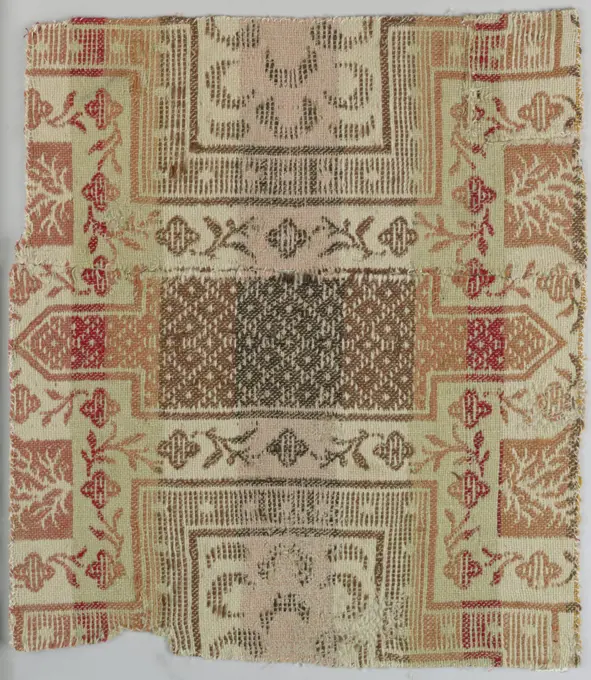
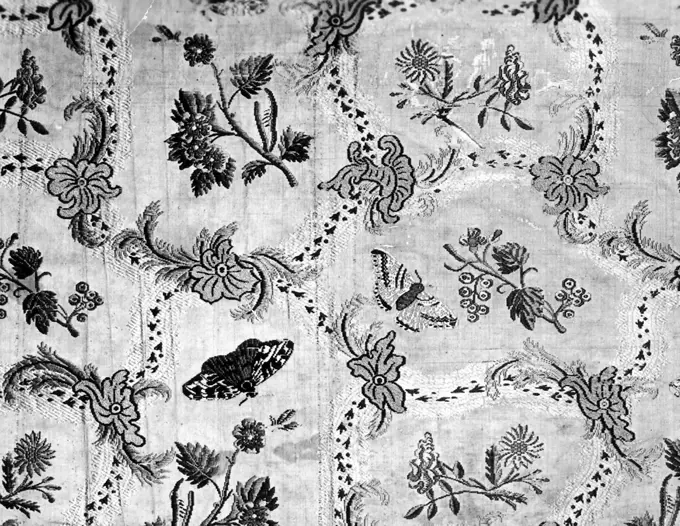
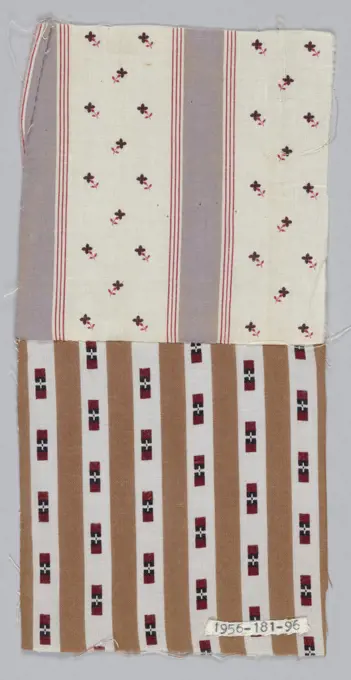
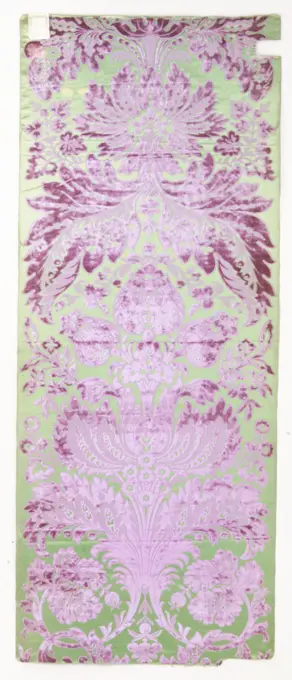
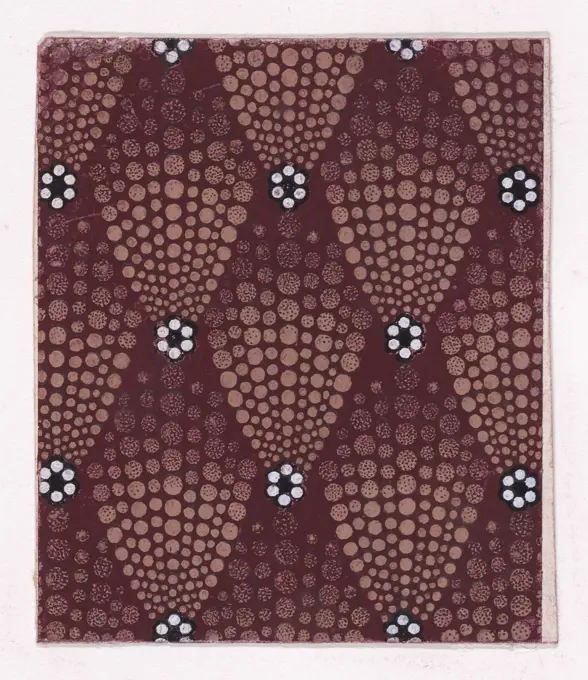
Panel 18th century China. Panel. China. 18th century. Silk, metallic thread; lined with silk. Qing dynasty (1644-1911). Textiles-WovenFrieze, Gledhill Wall Paper Co., New York, New York, founded 1900, Machine-printed paper, Tall bouquets of pink poppies, alternating with lower trailing poppies tied with ribbon and bow. Small foliate swags and pendants along top edge., New York, USA, 1905-1915, Wallcoverings, FriezeSidewall (USA); Manufactured by Carey Bros. W.P. Mfg. Co.; machine-printed paper, liquid mica; 92 x 47 cm (36 1/4 x 18 1/2 in.)Fragment Made 1600-1650 Italy. silk, double compound cloth .Frieze, York Card & Paper Co., 1891, Machine-printed, Large lily flanked by fleur-de-lys; leaves and scrolls. Greens and dark red on strie ground, over-printed with pale green at bottom of design., York, Pennsylvania, USA, 1900, Wallcoverings, FriezeTextile; Manufactured by Oberkampf & Cie. (France); cottonFragment, Medium: printed Technique: printed, Triangular-shaped fragment with alternating vertical columns of floral clusters and circular shapes made from short vertical dashes. Ground is light brown vertical dashes and dots that form a diaper pattern., England or USA, late 19th century, printed, dyed & painted textiles, FragmentPiece. Culture: French. Dimensions: L. 21 1/2 x W. 20 inches54.6 x 50.8 cm. Date: late 18th century. Museum: Metropolitan Museum of Art, New York, USA.Textile (France); silk, cottonSutra Cover Made 1590-1599 China. Silk, warp-float faced 4 1 satin weave with supplementary patterning wefts bound in weft-float faced 1 4 satin interlacings .Textile, Arthur Wilcock, Medium: cotton Technique: roller-printed on plain weave, Sinuous design of windblown leaves, poppies, and wheat in red and russet on a spotted light ground., England, ca. 1886, printed, dyed & painted textiles, TextileFragment ; silkFragment. France. Date: 1770-1780. Dimensions: 54.1 × 54.1 cm (21 1/4 × 21 1/4 in.)Repeat: 19.3 × 26.6 cm (7 5/8 × 10 1/2 in.). Silk, silvered-metal strips, and silvered-metal-strip-wrapped silk (frisé), plain weave with supplementary patterning warps and supplementary brocading wefts. Origin: France. Museum: The Chicago Art Institute, Chicago, USA.Textile, Medium: silk, cotton, metallic yarns Technique: supplementary warp pile (velvet) with two sets of supplementary warps (red and blue) in a five-harness satin foundation, with discontinuous supplementary wefts patterning (brocade) bound in 1/4 twill Label: silk velvet with metallic brocade, Fragment of velvet with rows of offset circles in creamy off-white on a deep red velvet pile ground. Each circle contains a medallion near its base, encircled by flowering hyacinth branches. Each medallion contains a pearl near its base, encircled by a carnation and tulip on a vine. Trefoil patterns in the interstices. A border at the bottom shows carnations (upside down) enclosed in shield-shaped tabs. In red, off-white and gold with touches of pale green., Turkey, 18th century, woven textiles, TextileFragments; linen, silk, woolCeiling Paper (USA); Manufactured by Maxwell & Co., S.A. (United States); machine-printed paper, liquid mica; 84 x 49 cm (33 1/16 x 19 5/16 in.)Medieval ornamentPiece 18th century Japan. Piece. Japan. 18th century. Silk / Compound weave. Edo period (1615-1868). Textiles-WovenPanel (Furnishing Fabric) Made 1724-1745 France. Silk and silvered-metal-strip-wrapped silk, plain weave with supplementary brocading wefts . Style of Jean RevelLength of Silk Textile, 1400s. Italy, 15th century. Damask, silk; average: 58.2 x 61.4 cm (22 15/16 x 24 3/16 in.).Piece 18th century Japan. Piece 71705Fragment, Medium: silk Technique: 5-harness satin damask, One motif visible in a large-scale yellow damask with a symmetrical design or mirror image on the center line of an elaborate exotic plant form with long slender leaves., France, early 18th century, woven textiles, FragmentPiece 1750-60 French. Piece 223167Piece French 19th centuryFragment textiel, anonymous, 1648 - 1652 Textile fragment, embroidery on silk. Japan silk Textile fragment, embroidery on silk. Japan silkHandkerchief (France); linenPiece French 19th centuryTextile, Schwartz-Huguenin, Medium: cotton Technique: printed by engraved roller and/or block printed on plain weave; glazed, a) Ground printed by 'molette' in broad fancy stripes in grey, one stripe composed of rosettes, the other dotted, with fancy edge. Long cluster of roses, violets and ribbons printed in dotted stripe in red, grey, shades of green and violet, probably by block. B) Same design on green printed pround. Glazed., Mulhouse, Alsace, France, 1851-63, printed, dyed & painted textiles, TextileTextile, Medium: silk, metallic thread Technique: appliqué on velvet, Symmetrical scrolls in gold on cut velvet in red., Spain, 17th century, embroidery & stitching, TextileScarf 19th century Irish, Limerick. Scarf 212646Fragment, Medium: wool, linen Technique: damask, Very simple and traditional geometric repeat of squares of contrasting warp and weft twill areas in combinations of blues, tan and white., 18th-19th century, woven textiles, FragmentTextile, Medium: cotton Technique: printed by engraved roller and block printed; glazed, A) Molette-printed ground of tan zig-zags; unprinted white areas form stripe and moire patterns. Over-printed with grey and white lilac sprays and pink and green rose clusters. B) Ground molette-printed in grey with pattern of stripes consisting of checks formed by tiny dots. Over-printed with lilac sprays in brown and white. C) Same with lilacs in blue and white., mid-19th century, printed, dyed & painted textiles, TextileFragment, Medium: silk Technique: cut and uncut supplementary warp pile (velvet) on satin ground, Fragment of red cut and uncut velvet on white satin ground. Design of small circles, each encloses a tiny branch with leaves, a bud and a blossom. Seven circles forming flower-like shape in spaces between large circles., France, mid-late 18th century, woven textiles, FragmentFragment Made 1725-1775 France. Silk, gilt-metal strips, and gilt- and silvered-metal-strip-wrapped silk, plain weave with supplementary brocading wefts and supplementary patterning wefts .Fragment Italian 19th century. Cycle box made of cardboard, covered with silk with stripe pattern with flower drinks in the colors red, pink, green and gold. The edges where box and lid touch each other are trimmed with a golden board. The inside is covered with shiny ivory paper. Box and lid are connected to each other on one side.Fragment. Germany or Netherlands. Date: 1650-1700. Dimensions: . Linen and wool, plain weave with supplementary weft. Origin: Germany. Museum: The Chicago Art Institute, Chicago, USA.Fragment (France); linen; Warp x Weft: 56.7 x 54.5 cm (22 5/16 x 21 7/16 in.); Bequest of Elinor Merrell; 1995-50-313Handkerchief 1840-60 American. Handkerchief 169712Textile (France); silk, cotton; Anonymous bequest in memory of Albert and Rebecca Elsberg; 1938-82-48-bFragment (Japan).Corporal. Italy. Date: 1670-1690. Dimensions: 53.4 x 55.5 cm (21 x 21 7/8 in.). Linen, plain weave; edged with linen, needle lace with raised details. Origin: Italy. Museum: The Chicago Art Institute, Chicago, USA.Barber's Apron 17th-18th century. Barber's Apron 451174Ribbon Fragment (France); silk; 1899-8-1Textile, Medium: silk Technique: satin weave with discontinuous supplementary weft, Delicate meandering sprays, rose vines, small bouquets of roses, and cornflowers are tied with narrow blue ribbons on an off-white ground., France, late 18th century, woven textiles, TextilePiece late 18th century French. Piece 216455Textile (USA); silk; 1936-47-1-a/cTextile, Medium: cotton Technique: block printed on plain weave, Small scale flowers of eight different kinds printed in brown, red, blue, and light purple on white. Widely spaced all-over design., France, 18th century, printed, dyed & painted textiles, TextileChinese ornamentFragment (Italy); silk; Warp x Weft: 13.3 x 51.4 cm (5 1/4 x 20 1/4 in.); 1969-42-1Embroidery, Italy 18th century. Night handbag, embroidered on moire', with silk little ribbons and copper paillettes floral motifs, Venice.Piece 18th-19th century Japan. Piece 67666Cope early 17th century This garment exemplifies the use of Iranian textiles throughout Europe. Worn in Christian liturgical services, it is made of several lengths of Safavid luxury silk adorned with metal-wrapped threads. The lattice framework of the design houses a symmetrical bouquet of poppies and tulips around a centrally placed iris in a vase. Additional flowers wind their way on a foliate vine throughout the lattice on a golden yellow ground. The cope is lined with red silk and would have been draped over the shoulders along the straight edge, with the golden fringe fluttering as the wearer walked through the processional. The garment most likely had a detachable hood that would have been fastened where the triangular areas are located.. Cope 450963Textile Swatches Onondaga Silk Company, Inc. (1925-1981). , 1948-1959. Silk, 23 1/2 x 9 in. (59.7 x 22.9 cm).    1948-1959Leaf with spreading pattern of seals and flowers, Anonymous, 1800 - 1900  Leaf with spreading pattern of stylized tendrils over different flowers.  paper. block printing (relief printing process) ornament derived from plant formsEmbroidered bed hangings ca. 1760-75 Ruth Culver Coleman American This work is composed of nine different-size panels of embroidered fabric; some panels are woven exclusively of linen, and others are of a linen/cotton fabric. The piece is embroidered with the same stitches as 61.48.1 in floral motifs in multiple shades of blue wool.. Embroidered bed hangings. American. ca. 1760-75. Linen embroidered with wool. Probably made in Sag Harbor, New York, United StatesBliżej Kultury unknownPalampore (India); cottonSash (Obi), 1800s. Japan, Edo period (1615-1868) or Meiji period (1868-1912), 19th century. Silk, brocaded; metal thread; overall: 148.6 x 29.2 cm (58 1/2 x 11 1/2 in.).Piece 18th century French. Piece 230849Strip bobbin with feathered leaf vines with large flowers, anonymous, c. 1750 Strip of natural-colored bobbin: binche side. Doubled strip consisting of two sewn in the length of equal parts, creating a symmetrical pattern. For each strip, the repeating pattern consists of an S-shaped feathered leaf with three Carnation-like flowers. The motifs are largely made in linen battle with openwork edges and partly in netslag. The motifs are connected by a ringed snowflake land. A different decorative land has been used in Bloemharten and between leaves. Top and bottom of the doubled strip its straight finish. The short sides are finished with a zoompje. Southern Netherlands linen (material) bobbin lace / Binche lace / large snowflake ground with ring Strip of natural-colored bobbin: binche side. Doubled strip consisting of two sewn in the length of equal parts, creating a symmetrical pattern. For each strip, the repeating pattern consists of an S-shaped feathered leaf with three Carnation-likePanel. Probably Chancay; Probably central coast, Peru. Date: 1000-1476. Dimensions: 91.4 x 48.6 cm (36 x 19 1/8 in.). Cotton and wool (camelid), slit tapestry weave with eccentric and interlaced outlining wefts; edged with plain weave extended weft loop fringe. Origin: Peru. Museum: The Chicago Art Institute, Chicago, USA.Piece 1760-70 French. Piece 223246Piece 17th century Japan. Piece 71875Napkin of Linnendamast with ivy. Napkin of Linnendamast with ivy: motif ivy, design nr. 513. The napkin belongs to eleven napkins (BK-1979-262-1) and two tableclocks (BK-1979-261-A and BK-1979-261-B).Frieze (USA); Manufactured by Carey Bros. W.P. Mfg. Co.; machine-printed paper; 91.5 x 49 cm (36 x 19 5/16 in.)Suzani, 1850-1880, 89 x 61 1/2 in. (226.06 x 156.21 cm), Cotton, silk; embroidery, Uzbekistan, 19th centuryChalice cover, Medium: linen Technique: needle lace, Chalice cover in an elaborate candlestick pattern., Venice, Italy, late 17th-early 18th century, lace, Chalice coverFragment, Medium: wool, silk, linen Technique: counted stitches, Fragment of upholstery fabric with two alternating stripes. One has red blossoms and green stems on an ivory ground; the other is a geometric vine in three shades of green., Europe, early 19th century, embroidery & stitching, FragmentPiece 18th century Japan. Piece 71917Two excerpts silk Lampas, 1700 - 1799 Fragment Eastern textile. The fragment has golden flowers and leaves on a red soil.  silk. cotton (textile). lampas (textile material) Fragment Eastern textile. The fragment has golden flowers and leaves on a red soil.  silk. cotton (textile). lampas (textile material)Suzanne Roy, Bedspread, c 1941 BedspreadCloth with flowersRosemaling tile, traditional Norwegian decorative pattern. Vector illustrationTextile, Layla and Majnun; Iran; silk, metallic threadsFragment silk ciselé velvet, anonymous, c. 1550 - c. 1650 Triangular fragment purple silk ciselé velvet with motif of palmets and tifles in yellow. Italy (possibly) silk. velvet (fabric weave). ciselé velvet Triangular fragment purple silk ciselé velvet with motif of palmets and tifles in yellow. Italy (possibly) silk. velvet (fabric weave). ciselé velvetFragment Made 1801-1900 Japan. Fancy compound twill, silk. .Bliżej Kultury unknownFragment Made 1740-1760 France. Silk, silvered-metal strips, and silvered-metal-strip-wrapped silk, weft-rib plain weave with supplementary brocading wefts and patterning wefts .Textile Swatches Onondaga Silk Company, Inc. (1925-1981). , 1948-1959. Silk and metal yarns, a: 47 x 17 in. (119.4 x 43.2 cm).    1948-1959Panel from a Rectangular Box 10th-early 11th century This panel, carved from a single piece of ivory in a twice-repeating pattern, once adorned the side of a rectangular casket. The complexity of its decoration as well as the attention to details, such as the eyes of humans and animals, which were drilled and filled with minute quartz stones, demonstrate the refinement and the accomplishment of the caliphal ivory-carving workshop.. Panel from a Rectangular Box. 10th-early 11th century. Ivory; carved, inlaid with stone with traces of pigment. Made in Spain, probably Cordoba. Ivories and BonePiece 16th-17th century Italian. Piece 223395Piece 18th century Japan. Piece 71550Scarf, c. 1940-1950, 57 x 58 5/16 in. (144.78 x 148.11 cm) (without fringe), Silk; needlework, Uzbekistan, 20th centuryCarl Buergerniss, Piano Cover, c 1940 Piano CoverTextile Swatches Onondaga Silk Company, Inc. (1925-1981). , 1948-1959. silk; metal, largest component (a): 37 x 12 in. (94 x 30.5 cm).    1948-1959Border (France); block-printed on handmade paper; 46 x 13.5 cm (18 1/8 x 5 5/16 in.)Piece late 18th century Miguel Forment and Co.. Piece 226204Coverlet fragment, Medium: wool, linen Technique: jacquard woven doublecloth, Geometrical framework with floral ornaments in spaces separating these elements. Light brown ground with pale pink and pale yellow vertical bands; pattern in deeper colors of red, orange, brown, and dark brown., Spain, 19th century, woven textiles, Coverlet fragmentFragment Made 1701-1900 France. Silk, brocaded plain compound cloth .Chintz Fragments (India); cotton; Warp x Weft (a): 28.5 x 30.5 cm (11 1/4 x 12 in.) Warp x Weft (b): 47.5 x 14 cm (18 11/16 x 5 1/2 in.) Repeat H (b only): 31.8 cm (12 1/2 in.)Sample early 19th century French. Sample 224695Fragment, Medium: Technique: printed, USA, 19th century, printed, dyed & painted textiles, FragmentWorkpiece for diploma beautiful crafts, Geesje Smid, c. 1890 - c. 1900 Strip Richerieuwerk with wavy branch with leaves, including a three -leaf. Netherlands  embroidering Strip Richerieuwerk with wavy branch with leaves, including a three -leaf. Netherlands  embroideringFurnishing textile 1866 Tassinari & Chatel French. Furnishing textile 210784Textile Design with Rosettes of Pearls Flanked with Abstract Palmettes of Dots 1840 Anonymous, Alsatian, 19th century Rectangular sheet of paper with a textile design from a group, dated 1840, made in Mulhouse, Alsace, which was an important nineteenth-century center for textile production in the Haut-Rhin region of France. The design is made up out of alternating rosettes of six pearls flanked above with abstract palmettes of dots of light tan color over a dark reddish-brown ground. Stipples in dark reddish-brown create shadows towards the bottom of the dotted palmettes.. Textile Design with Rosettes of Pearls Flanked with Abstract Palmettes of Dots. Anonymous, Alsatian, 19th century. 1840. GouacheIndian ornamentChasuble. Italy, probably Turin. Date: 1710-1730. Dimensions: 100.4 x 68.6 cm (41 x 27 in.). Silk, warp-faced weft-ribbed plain weave; underlaid with linen, plain weave; appliquéd with gilt- and silvered-metal strips and metal-strip-wrapped silk, bobbin part lace; embroidered with silk, gilt- and silvered-metal strips and wire coils, and metal-strip-wrapped silk in laid work, couching, and padded couching; edged with silvered-metal-strip-wrapped silk, warp-faced weft-ribbed plain weave with extended weft uncut fringe, and bobbin straight lace; lined with silk, plain weave. Origin: Italy. Museum: The Chicago Art Institute, Chicago, USA.Ukrainian national style of embroider. Ukrainian national style of embroider. Copyright: xZoonar.com/andriixsalivonx 1447040