Textile Fragments with Floral Patterns

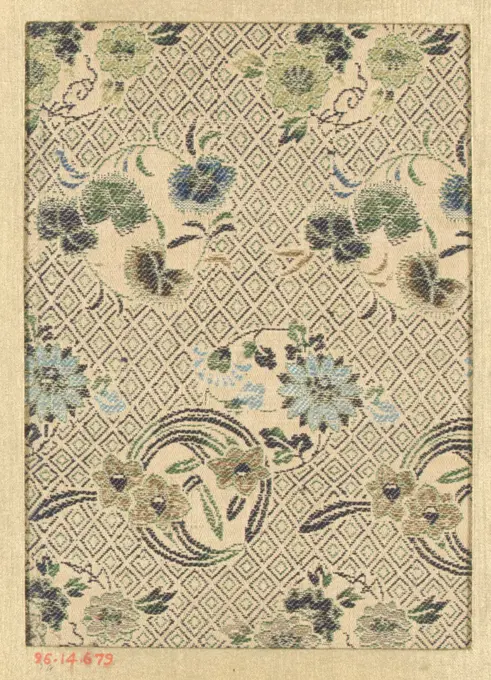
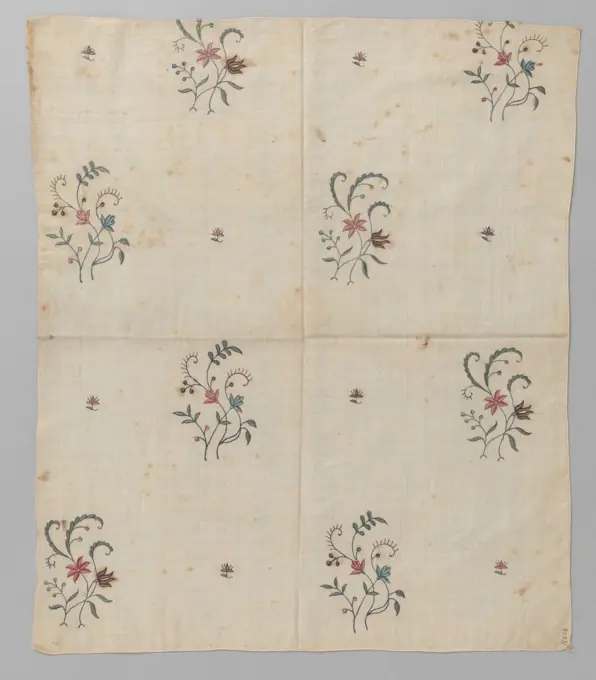
Delicate textile fragments featuring intricate floral designs and colorful patterns, representing textile craftsmanship from various historical periods.

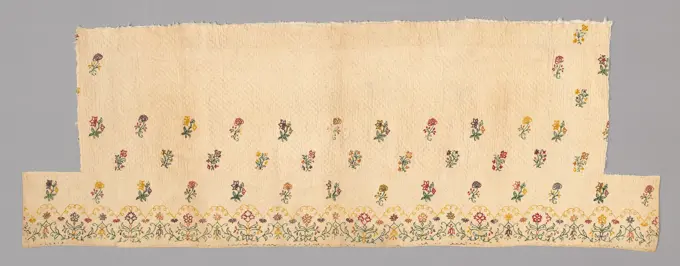
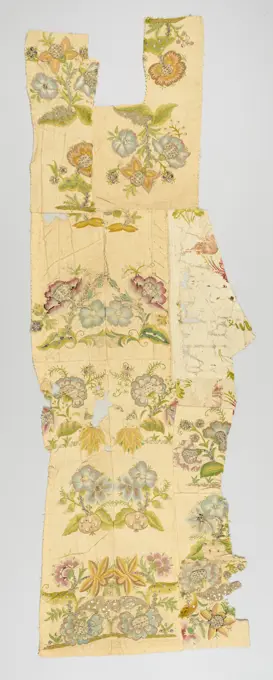
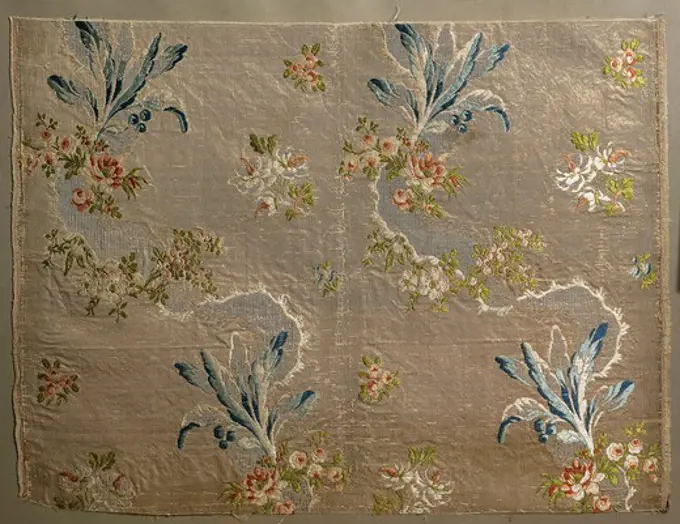
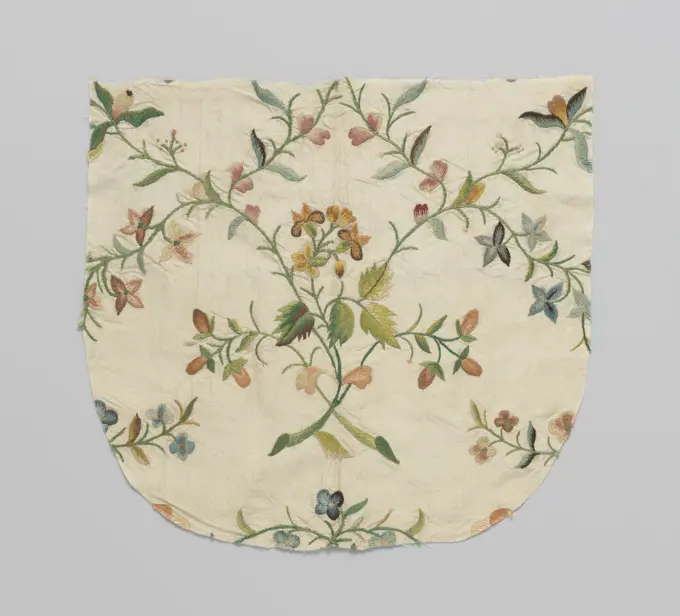
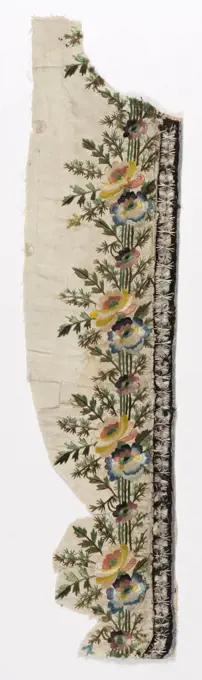
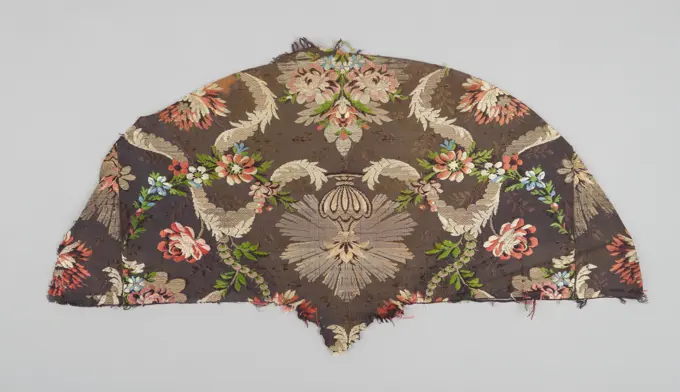
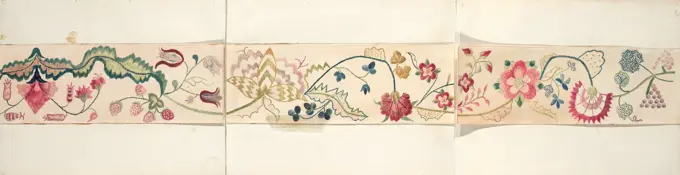
Waistcoat fragment, Medium: silk Technique: embroidered, Waistcoat fragment of taupe silk embroidered with a multicolored design of flowers (snowdrops, violas), strawberries and butterflies., France, early 19th century, costume & accessories, Waistcoat fragment
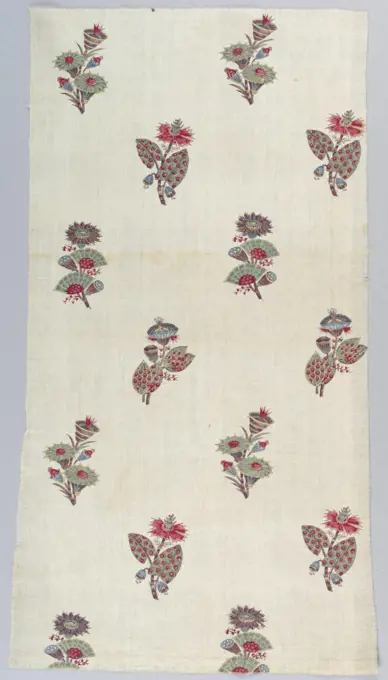
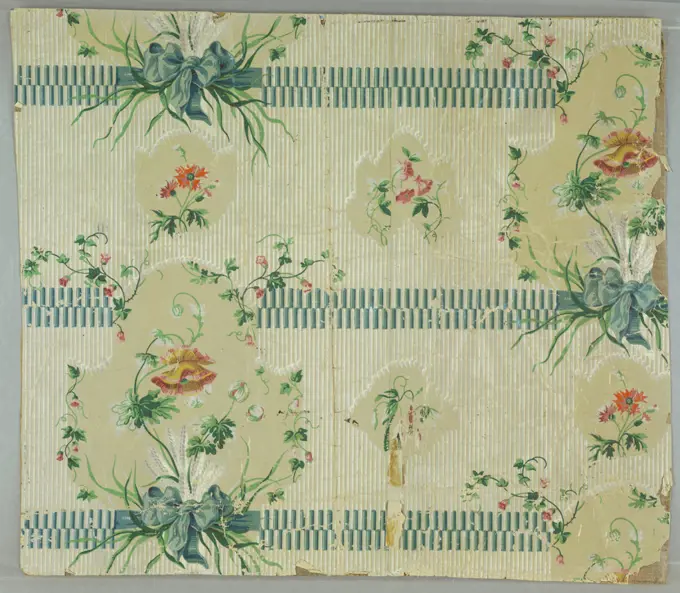
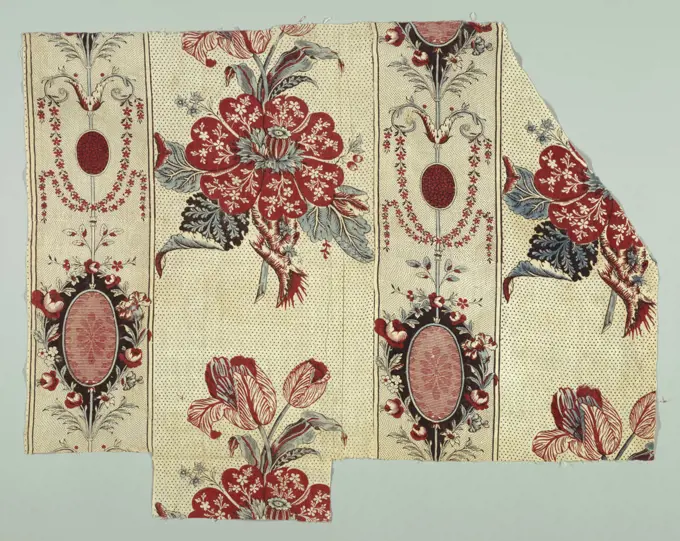
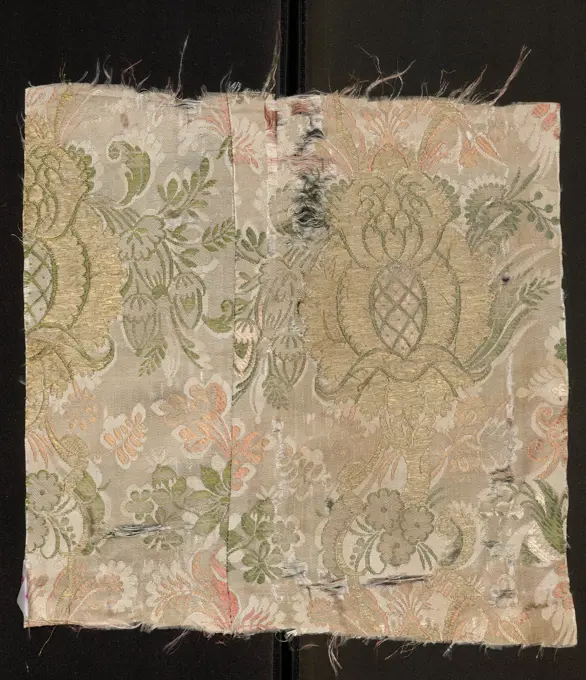
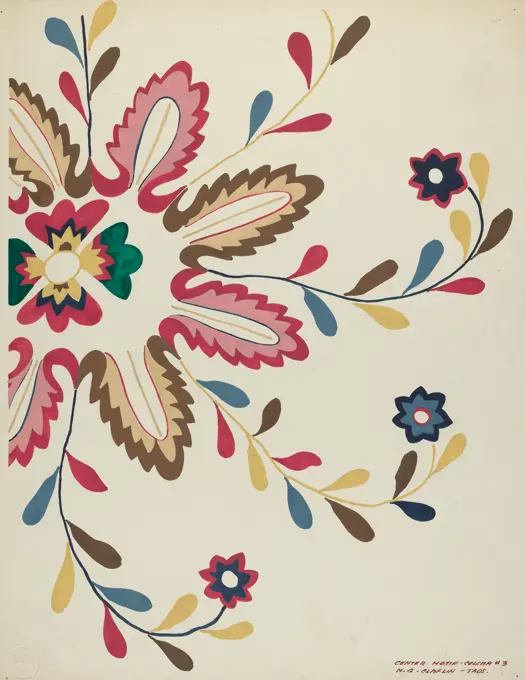
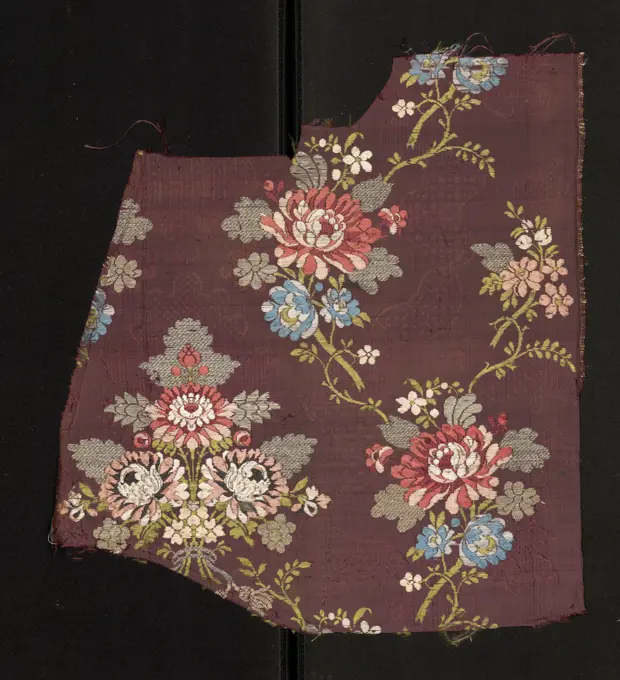
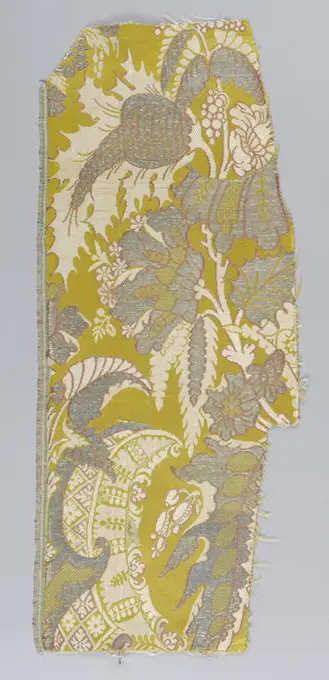
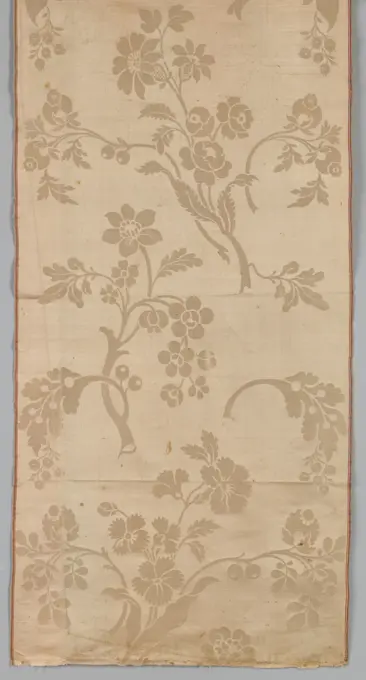
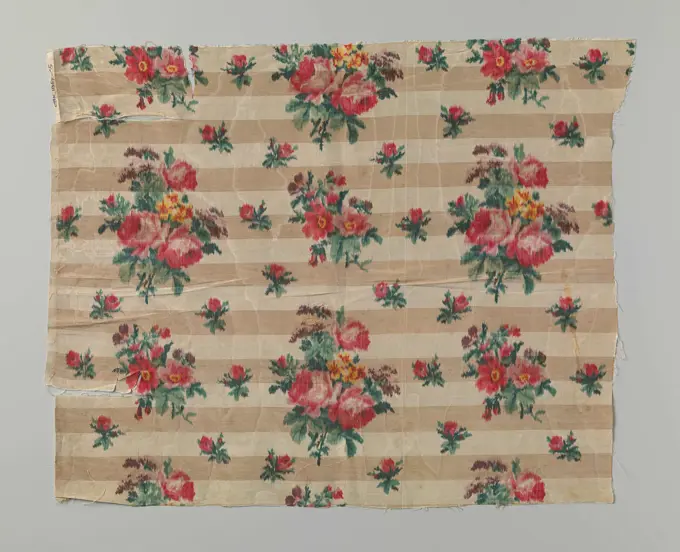
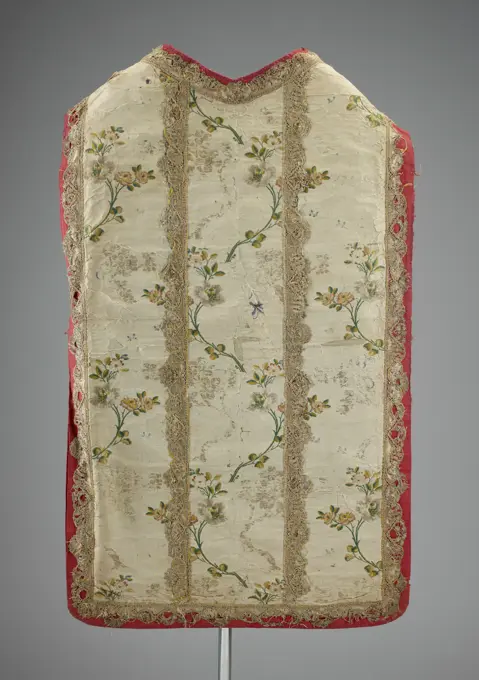
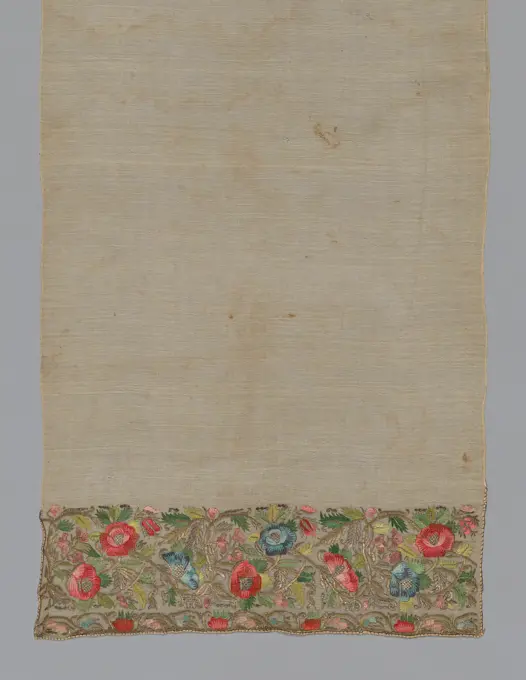
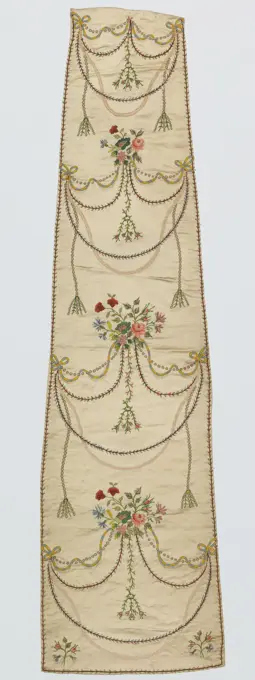
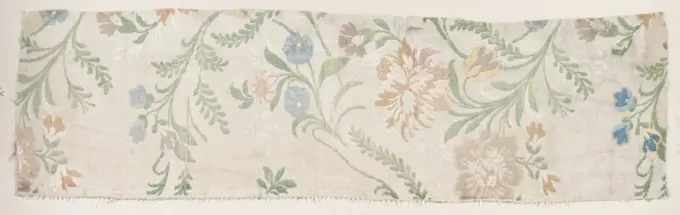
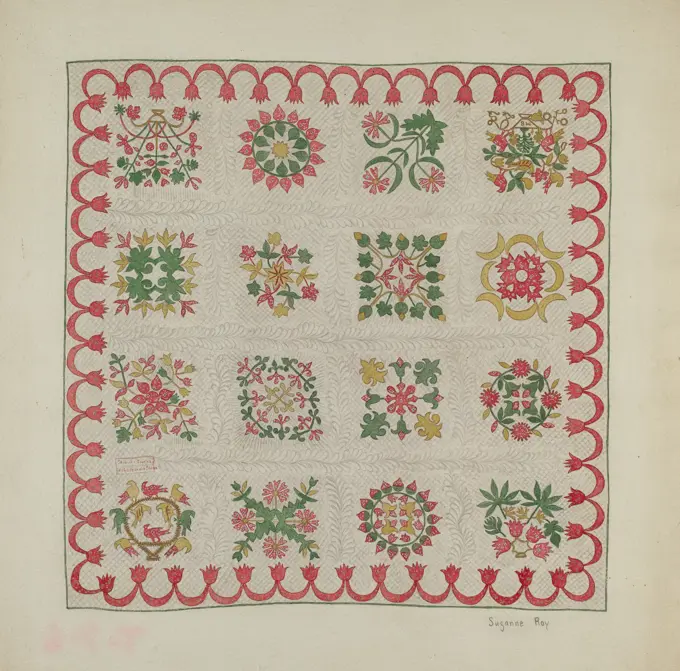
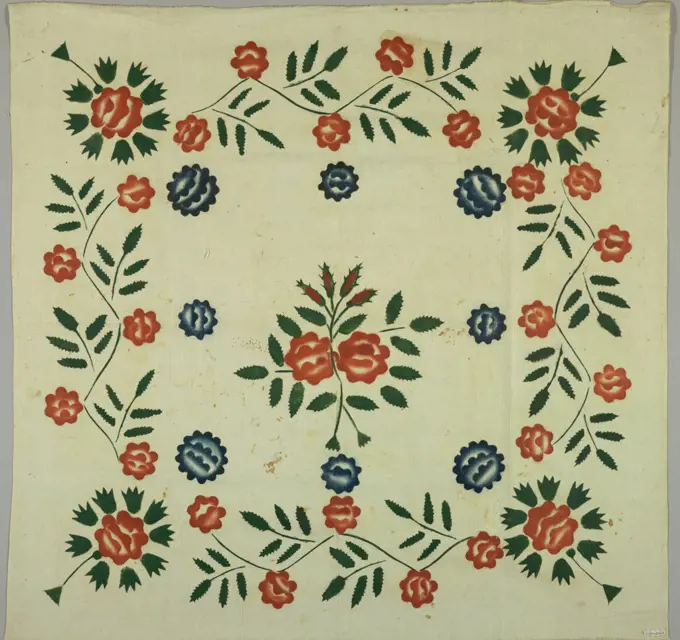
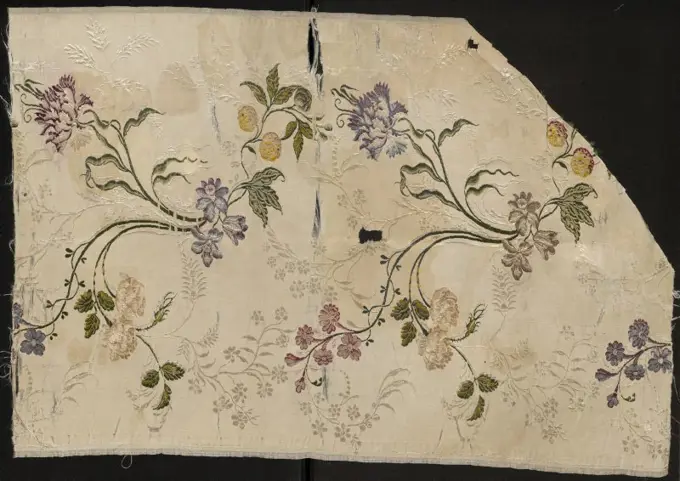
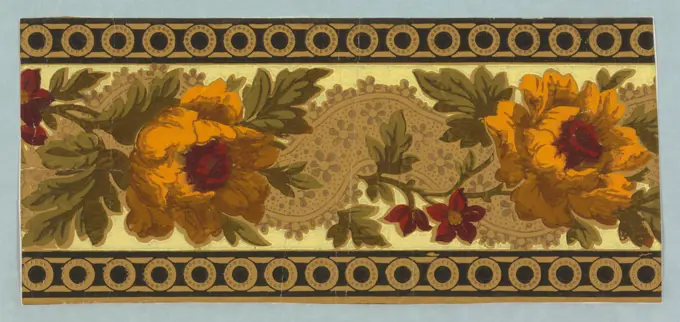
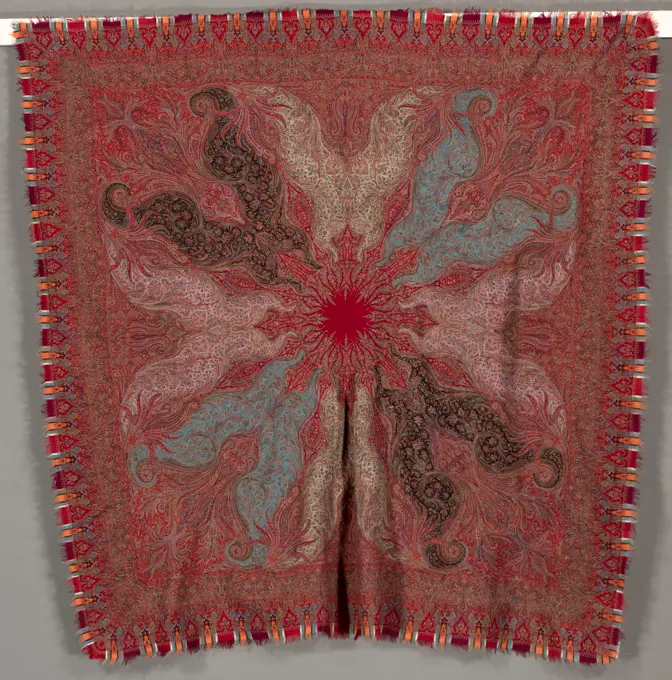
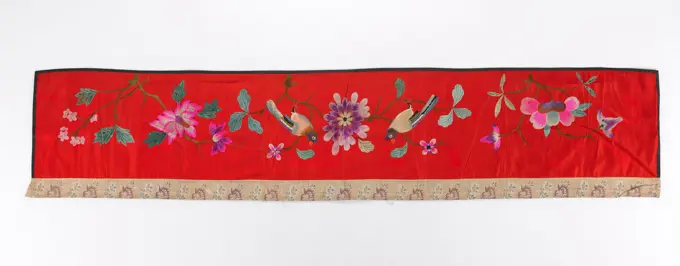
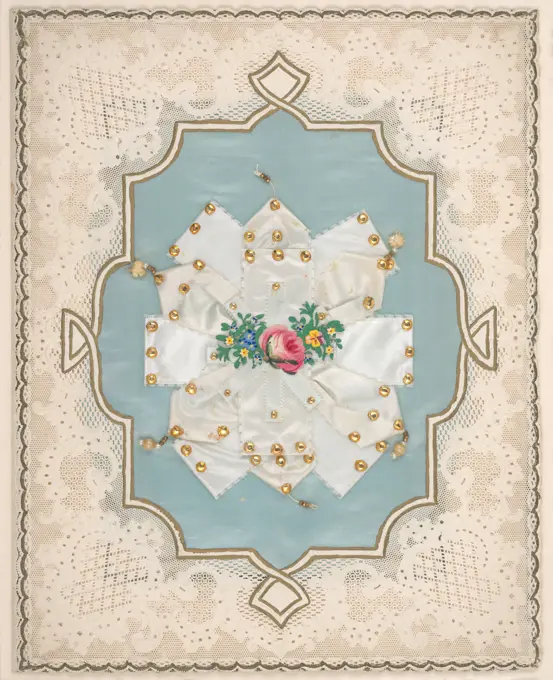
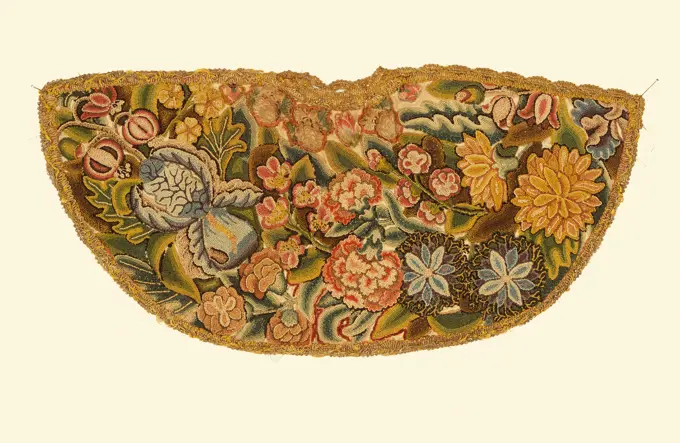
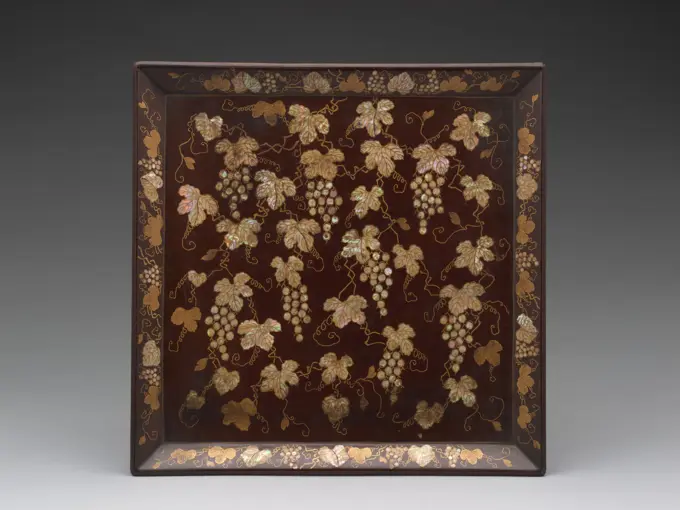
Fragment, Anna Maria Garthwaite, (English, 1688-1763), Medium: silk, metallic thread Technique: plain weave with discontinuous supplementary weft patterning (brocade), Silk brocaded with colored silks and silver thread, with a rocaille pattern in the ground and floral sprays., Spitalfields, England, ca. 1745, woven textiles, FragmentTextile, Oberkampf & Cie., (Jouy-en-Josas, France, 1759-1815), Medium: cotton Technique: block printed on plain weave, White fragment with a detached design of multicolored flower clusters, berries and seed pods arranged in staggered rows., Jouy, France, 1775-85, printed, dyed & painted textiles, TextileWaistcoat fragment, Medium: silk Technique: embroidered, Waistcoat fragment of taupe silk embroidered with a multicolored design of flowers (snowdrops, violas), strawberries and butterflies., France, early 19th century, costume & accessories, Waistcoat fragmentFragment veelkleurige gebrocheerde zijde.Fragment multicolor silk tissue. The white ground has wavy, lobed tires and fields with a fine striped or a zig-saw pattern. On the white pattern, the pattern has multicolored flower branches with small blue, pink and white flowers and large red flowers.Fragment; silk, metallic threadFragment painted silk, 1790 - 1800 Fragment painted silk. Pattern: On cream -colored rips side, two bouquets with a bow and palm leaves are painted in red, blue, orange, purple and green between two edges with floral ornaments.  silk. Fragment painted silk. Pattern: On cream -colored rips side, two bouquets with a bow and palm leaves are painted in red, blue, orange, purple and green between two edges with floral ornaments.  silk.Velvet Fragment, 1600s. Italy, 17th century. Velvet; overall: 37 x 24 cm (14 9/16 x 9 7/16 in.).Demolition of bridged white cotton with embroidered floral. Cotton from cotton, with embroidery in tambouree technology. The pattern has fine spiral drinks, placed in straight rows, with rosette and impeller-shaped flowers.Textile, Medium: cotton Technique: printed on plain weave, Textile fragment printed in blue on white showing scattered florals with serpentine stems., England, mid- 18th-19th century, printed, dyed & painted textiles, TextileFragment of embroidery  Rococo floral ornamentation unknownFragments from a Bedcover made of Petticoat Borders Made 1775-1800 France .Piece 16th-17th century Italian. Piece 216980Fragment Multicolor silk drying liseré. A fragment of green silk tissue with lighter narrow and wide white tires and colored bouquets. Note: Different effects: Lancé, Cannelé Simpleté with interruption pointed in twill. Self-sides; (back); 0.5 cm, plain bond (2 impacts in one jump).Hanging. unknown, contractorSidewall, Machine-printed, Small scale floral green and pink on white purple dot fill., USA, 1850-1900, Wallcoverings, SidewallSilk fabric  flower pattern unknownBorder, Greeff Fabrics Inc., Medium: cotton Technique: block and roller printed on plain weave, Border with large red and blue flowers with green leaves on a pale yellow ground. Narrow guard borders in tan and dark brown., England, 1800-1835, printed, dyed & painted textiles, BorderLeaf with spreading pattern of flowers, anonymous, c. 1700 - c. 1850  Leaf with spreading pattern of flowers.  paper. block printing (relief printing process) ornament derived from plant formsFragment, Medium: silk and metal thread and sequins on vegetable fiber Technique: embroidery and stitching, Corner piece with small-scale conventionalized flowering vine design in polychrome silk, silver and gold with silver sequins sewn to the edge., Turkey, late 19th century, embroidery & stitching, FragmentSidewall, Block-printed, (Louis XVI) horizontal bands with poppies in ribboned cartouches., France, 1790, Wallcoverings, SidewallTextile, Medium: cotton Technique: plain weave foundation. block-printed: red, black. Blue applied by brush., Alternation of two stripes: the wider (about 29cm (11 1/2in.) patterned by large units of flowers on a black picottage background. the other (about 15.5cm, 6 1/8 in. wide) patterned by a medallion and garlands supported by a rod on a smaller scale picottage background., Beautiran, France, 1775-1800, printed, dyed & painted textiles, TextileCoverlet Fragment, c. 1760-1770. Philippe de Lasalle (French, 1723-1805). Embroidered satin and silk; overall: 64.1 x 89.9 cm (25 1/4 x 35 3/8 in.).Piece 18th-19th century Japan. Piece 66403Deck cover of white cotton, with colorful silk embroidery. Deck cover of white cotton, with colorful silk embroidery. The pattern has staggered rows of two entwined fine tawned branches, to which two flowers, towers, sheets and berries.Embroidered serve;  19th century (1801-00-00-1900-00-00);Fragment (France); cottonFragments of silk fabric  a naturalistic floral and vegetable pattern with architectural elements unknownCushion Cover. England. Date: 1689. Dimensions: 55 × 49.7 cm (21 5/8 × 9 1/2 in.). Linen and cotton, weft-float faced twill weave; embroidered with wool yarns in arrowhead, back, buttonhole, herringbone, Roumanian, running, satin, sheaf filling, and stem stitches; wool tassels at corners. Origin: England. Museum: The Chicago Art Institute, Chicago, USA.Fragment of the fabric;  1710-1715 (1710-00-00-1715-00-00);Dąmbska, Grażyna - collection, fragments of silk fabrics, patterned fabrics, bizarre patterns, purchase (provenance)Textile, Medium: silk Technique: satin weave with supplementary weft (brocade), Ground of white satin ornamented with small vine pattern. Brocaded pattern in colored silks of a basket with flowers between serpentine floral bands., France, mid-late 18th century, woven textiles, TextileFragment of embroidery  floral shrub motifs unknownPiece early 19th century Japan. Piece 65775Textiles, 16th century. Brocaded cloth with floral and foil drawing.Excerpt half -sides tissue, anonymous, c. 1875 - c. 1900 Fragment half -sides tissue. The fragment has an irregular pattern of branched twigs in olive and moss green, with lemon-like fruits in white, surrounded by a leaflet, on a beige-brown soil. Europe (possibly) silk. cotton (textile) double weave Fragment half -sides tissue. The fragment has an irregular pattern of branched twigs in olive and moss green, with lemon-like fruits in white, surrounded by a leaflet, on a beige-brown soil. Europe (possibly) silk. cotton (textile) double weaveFragments of embroidery unknownEmbroidered kerchief unknownFragment 18th century Italian. Fragment 230056Samples (USA); Manufactured by Orinoka Mills (United States); Warp x Weft (a): 22 × 64.5 cm (8 11/16 × 25 3/8 in.) Warp x Weft (b): 18 × 64.5 cm (7 1/16 × 25 3/8 in.) Warp x Weft (c): 22.5 × 26 cm (8 7/8 × 10 1/4 in.) Warp x Weft (d): 22.5 × 25.5 cm (8 7/8 × 10 1/16 in.) Warp x Weft (e): 22.5 × 25.5 cm (8 7/8 × 10 1/16 in.) Warp x Weft (f): 22 × 26 cm (8 11/16 × 10 1/4 in.) Warp x Weft (g): 21.5 × 26 cm (8 7/16 × 10 1/4 in.)Majel G Claflin, Colcha Plate, 1935 1942 Colcha PlateFragment of the fabric;  2. PO. 18th century (1751-00-00-1800-00-00);gift (provenance), fabricsFragments, Medium: silk, metallic thread Technique: compound satin with supplementary weft, Brilliant yellow satin ground with a profuse symmetrical design of silver, rose and ivory blossoms and serrated leaves in vases., France, ca. 1700, woven textiles, FragmentsFragment veelkleurig zijden mexicaine.Fragment multicolor silk tissue. A beige ground has orange stripes on which a swinging multicolored flower rank, between which multicolored flower branches, flower bouquets and flower garlands.Arras chair cover. unknown, authorRug of écru half linen with colorful embroidery., Industrial school De Windroos, c. 1925 Dress of écru half linen with colorful embroidery. Rectangular with open zoom. Embroidered with triple stalk in moss green with large palm flower in purple, beige and ocher and on either side a small palm flower in solid purple and plain blue. Pattern in satin stitch, so that pattern on both sides is equally beautiful. The Netherlands, Rotterdam, Ca. 1925. Rotterdam . embroidering Dress of écru half linen with colorful embroidery. Rectangular with open zoom. Embroidered with triple stalk in moss green with large palm flower in purple, beige and ocher and on either side a small palm flower in solid purple and plain blue. Pattern in satin stitch, so that pattern on both sides is equally beautiful. The Netherlands, Rotterdam, Ca. 1925. Rotterdam . embroideringChair seat cover 18th century Indian, for European market. Chair seat cover. Indian, for European market. 18th century. Cotton. Textiles-PaintedLength 1740s British, London, Spitalfields. Length. British, London, Spitalfields. 1740s. Silk. Textiles-WovenTowel end, Medium: cotton, silk, silver gilt foil on silk core Technique: embroidered on plain weave, Towel end made up of three pieces of loosely woven fine cloth with a deep band of embroidery of stylized allover floral design in silver-gilt thread and silk embroidery in shades of green, pink, blue, and red using outline and related filling stitches. Double guard strip in metallic satin stitch across lower part. Edging of gold bobbin lace. Narrow undyed silk cloth selvages., Turkey, 18th-19th century, embroidery & stitching, Towel endSilk Ikat fragment of a dress. Detached branch with fine flowers, a branch flowing from vermilion to dark and light pink, others in heather preparations and yellow. Incomplete branches with large and various flower types, in the same nuances. A small flying bird in the middle.Sidewall - fragment, Machine printed, Floral wreath and swag motifs with red flowers and green leaves on a beige ground, anthemion., USA, 1900-1920, Wallcoverings, Sidewall - fragmentBorder (USA); machine-printed, mica; 71 x 56 cm (27 15/16 x 22 1/16 in.)Chasuble made of silk fabric unknownTowel or Napkin Made 1825-1875 Turkey. embroidered . AnonymousTextile; Manufactured by Schwartz-Huguenin; cottonOnly from a bag () From a white taf side with embroidered flower vines, anonymous, c. 1750 - c. 1800 Only from a bag () From a white taf side with embroidered flower vines. Netherlands (possibly) silk snipping / embroidering Only from a bag () From a white taf side with embroidered flower vines. Netherlands (possibly) silk snipping / embroideringRug Made 1801-1900 United States. Variety of fibers, plain weave with variety of fibers, yarns, felted, knitted, oblique interlaced and/or woven strips, forming hooked pile .Part of a Chasuble Front 18th century Italian. Part of a Chasuble Front 461411Towel End early 19th century. Towel End 443014Fragment scanning of crème-colored rips silk with colorful embroidery with whimsical winding ribbons with O.A. palm trees and low huts (), Branches and tendrils. Fragment scanning of cream-colored rips silk with colorful embroidery of symmetrical-wide and whimsical winding, scalloped ribbons of half light blue, half purple. There are a palm tree alternately at large distances and a covered pergola (low huts). Loose branches with nuanced colored flowers are bound in a loop from the ribbons, while thinner tunes with fine flowers swing around the ribbons.Valentine - HopeEmbroidered sampler 1801 Sarah Thomas This sampler is one of two (see 2005.19) made by Sarah Thomas (1786-1826) in the Museums collection. Sarah completed both during the time she attended the Westtown Quaker Boarding School in Chester County Pennsylvania from December 1800 to December 1801. Both samplers are accomplished examples of a distinctive type of embroidery made only at Quaker schools. The Quaker emphasis on simple, yet careful and precise sewing, enabled students from such schools to become some of the best needleworkers in the nineteenth century who often went on to teach embroidery to other young women. The samplers by Sarah Thomas are related to another Westtown sampler in the Museums collection, 2005.463.2 made by Rebecca March in 1802.This sampler includes floral spot motifs and the initials of her classmates at Westtown. It is the type of work that Sarah would have completed after mastering a more basic sampler (see 2005.19) but before moving on to even more demandingChalice Cover Made 1701-1800 Italy. Silk, satin weave with needlework .Panel (France); silk on silk, metallic threadFragment Made 1701-1800 China. Silk, plain weave, painted .Fragment, silk woven, Incomplete design of ship on waves with large scale leaves and fruit and flowers, 1750-1800, woven textiles, FragmentFragment mid-18th century Italian. Fragment 230360Suzanne Roy, Applique Quilt, c 1937 Applique QuiltFragment (France); wool embroidery on cotton foundationWaistcoat fragments, Medium: silk Technique: satin stitch embroidery on taffeta, Two fragments from the top central portion of an embroidered waistcoat. Design has flowers and leaves with one piece containing the buttonholes., France, ca. 1770, costume & accessories, Waistcoat fragmentsFragment of embroidery from the wall covering  motif of a basket with floral branches unknownPillow cover, Medium: cotton Technique: stenciled on plain weave, Square of unbleached muslin with bold floral border and central sprigs stenciled in red, blue, green opaque paints., USA, 19th century, printed, dyed & painted textiles, Pillow coverFragment beschilderde zijde.Fragment painted silk. Pattern: on cream-colored cross-side side two bouquets with a bow and palm leaves are painted between two edges with floral ornament in red, blue, orange, purple and green.Fragment multicolored silk, anonymous, c. 1600 - c. 1699 A fragment of green silk tissue, with different colored figures of silk and gold and silver wire. Note: Self -sides; 0.8 cm, 4 mm Effenbinding, 4 mm Satin. Italy (possibly) silk. A fragment of green silk tissue, with different colored figures of silk and gold and silver wire. Note: Self -sides; 0.8 cm, 4 mm Effenbinding, 4 mm Satin. Italy (possibly) silk.Fragment textile. Textile fragment, borduusel on silk.Doily (USA); Manufactured by Deerfield Society of Blue and White Needlework (American, 1896-1926) (United States); linen; Diam.: 16 cm (6 5/16 in.)Frontal; Anna's studio from Sanguszków Radziwi (Bia A Podlasie; Manufaktura; Fl. Ca 1720-Ca 1740); L.30,40 XVIIIw. (1730-00-00-1749-00-00);Wit Batist handkerchief with an edge of Honitonkant, Anonymous, c. 1850 - c. 1899 Natural-colored batist handkerchief with a edge of natural torway: Honiton side. The inner piece of Batist has four lobes. The symmetrical pattern of the side consists of two diagonally placed roses between leaves in the corners. The scrap edge consists alternately of a five -lobe flower and an oval with filling pattern. Above each middle oval (halfway through each side) is a similar oval flower, with an as-symmetrical extra petal edge. The inner edge, where the side is sewn on the batist, consists of a decorative edge of concealed ovals on which half -dovale 'gates', with a cross made in form in each. The motifs are made in netslag and linen battle with openwork edges. They are equipped with contour threads and in a single leaf the leaves are accentuated with burst relief contours. Formalities are used in petals and to realize the decorative land in the oval (flowers). The motifs are connected by a braidSampler. Ann Sellers (American, 1783-1870); United States, Pennsylvania, Philadelphia. Date: 1793. Dimensions: 42.5 x 39.3 cm (16 3/4 x 15 1/2 in.). Linen, plain weave; embroidered with silk in cross, satin, individual satin, split, and stem stitches; edged with silk, plain weave. Origin: Pennsylvania. Museum: The Chicago Art Institute, Chicago, USA.Table round, Medium: linen, silk Technique: embroidered on plain weave, crocheted border, Light brown table round with scalloped edges has a stylized, spiky floral forms embroidered in shades of pale pink, light green, light brown, off-white, and orange. Crocheted border., USA, ca. 1908, embroidery & stitching, Table roundFragment 18th century Spanish. Fragment 213126Textile (England); cottonPiece of fabric. unknown, manufactureBorder (USA); manchine printed on paper.; 35 x 15.5 cm (13 3/4 x 6 1/8 in.)Embroidery patch of linen canvas on which with silk in tapertie stitches 19 different flat decorations are made and the text Rinck Cornelis in Nortkoppen. The Lamb of God with a van Vaan has been taken from Johann Sibmacher, Schön Neues Modelbuch ..., first edition Nürnberg 1597. The various flat decorations as an example for bags, shoes and build.Fragment of silk fabric  symmetrical and axial vase pattern and festoons of flowers unknownSquare Multi-Season Pieced Shawl, 1880s. India, Kashmir, 19th century. 2/2 twill tapestry (S), double interlocked, pieced; wool; overall: 194.9 x 193 cm (76 3/4 x 76 in.).Fragment (China); silk, metallic threadsPiece 18th-19th century Japan. Piece. Japan. 18th-19th century. Silk. Textiles-WovenValance for a Wedding Bed, late 20th century, 68 x 14 1/4 in. (172.72 x 36.2 cm), Silk, cotton, embroidery, China, 20th centuryLace Paper Valentine ca. 1855 Attributed to Esther Howland. Lace Paper Valentine. Attributed to Esther Howland (American, Worcester, Massachusetts 1828-1904 Quincy, Massachusetts). ca. 1855. Cameo-embossed lace paper, chromolithographed die-cuts, faux pearls, blue satin, white satin ribbon, gold paper stars, graphite, ink, watercolorA covered dish for ice cream of porcelain, Black chalk, brush and various water colors on light cream paper, Vertical composition with three parts of a porcelain ice cream dish. On the bottom, the bowl is shown in profile with floral decorations, two handles on the side and knobs at the base. The middle section shows the part of the bowl where ice cream is put. At the top, the cover of the ice cream dish is shown with floral decorations. The decorations are similar to 1901-39-5292., Italy, 1775-1800, ceramics, Drawing, DrawingPalampore, Medium: cotton Technique: mordant-painted and resist-dyed (chintz), The wide border, contained between two narrow guard borders with pattern of delicate flowering vine, exhibits a design of five types of palm trees - the Palmyra palm, banana, coconut, betel, and date palms - growing in a row, and forming a repeat pattern. On the ground appear a mongoose, a lamb, and shaggy gray dog wearing a collar. Several of the trees variously inhabited: the coconut palm is being ascended by the 'toddy' man, equipped with ladder, sack and other tools, to gather the fluid which will make the 'toddy' wine. A parakeet with red body and green tail clings to the trunk of a banana palm; a cobra is coiled round the trunk of the date palm, reaching toward birds which flutter about their nest; brown squirrels are busy on the trunk of the betel palm. The palm trunks are in red, or brown, or blue with red and blue foliage. Colors are two reds, two greens, blue, yellow, violet, and brown. Cotton is vIndian ornamentSample, Tanagra; Designed by Felice Rix-Ueno (Austrian, 1893-1967, active Japan 1935-1967); Made for Wiener Werkstätte (Austria); Austria; silkCiborium Veil. Italy, mid-18th century. Costumes; ecclesiastical. Knotted and couched silk thread and silk chenille embroidery on silk satin, metallic thread lace trimPicture 18th century British. Picture. British. 18th century. Silk, ink. Textiles-Painted and EmbroideredTextile, Sing a Song of Sixpence; USA; cottonTray with design of grape leaf Japan (Ryky Islands) 17th century View more. Tray with design of grape leaf. Japan (Ryky Islands). 17th century. Lacquer with mother-of-pearl inlay. LacquerCase. Culture: European. Date: ca. 1800.A lady might have carried or stored her personal letters in a folding case like this well-preserved example dating to the turn of the 19th century. The intricate embroidery and triple-fold construction sets this object apart from other similar objects in the Brooklyn Museum collection. The embroidered motifs, combined with the motto and the inclusion of the two women's names suggest that the case was a token of friendship given by one to the other, perhaps with the sentiment that letters between the two were also treasured keepsakes. The motifs themselves symbolize milestones of life the two might share in a lifelong friendship. With its embroidered motto and motifs representing imagery of friendship and affection, this case probably was given as a token of friendship.Very well preserved example of an accessory given as a token of friendship; imagery related to life circumstances that would be shared in a lifelong friendship. Museum: MetropoliFragment (Furnishing Fabric) Made 1830-1840 England. Cotton, plain weave; engraved roller and block printed .Ella Josephine Sterling, Valance, c 1936 Valance