My Boards
View Pictures
  • My Boards
← Artworks

Textiles and Fabrics from History

Historic textile fragments showcasing intricate patterns and techniques, including embroidery and weaving, reflecting the artistry of past cultures.

Textile, Medium: silk Technique: plain compound satin, Pattern of peacocks and foliage in rose, yellow, and white on blue, very loosely woven, ground in satin weave., Sicily, Italy, early 18th century, woven textiles, Textile
256 assets in this story
6145-51384936
Doily, Flora's Retinue: Rose; Designed by Walter Crane ((English, 1845-1915)); Produced by John Wilson & Sons (United Kingdom); Great Britain; linen warp, silk weft; 18 x 18 cm (7 1/16 x 7 1/16 in.) fringed on all sides
6145-46832828
Shadow Puppet (Wayang Kulit) of Gunungan or Kayon, from the set KyaiNugroho.   Maker: Ki Kertiwanda  Maker: Ki Bekel Prawirasucitra
4443-19532099
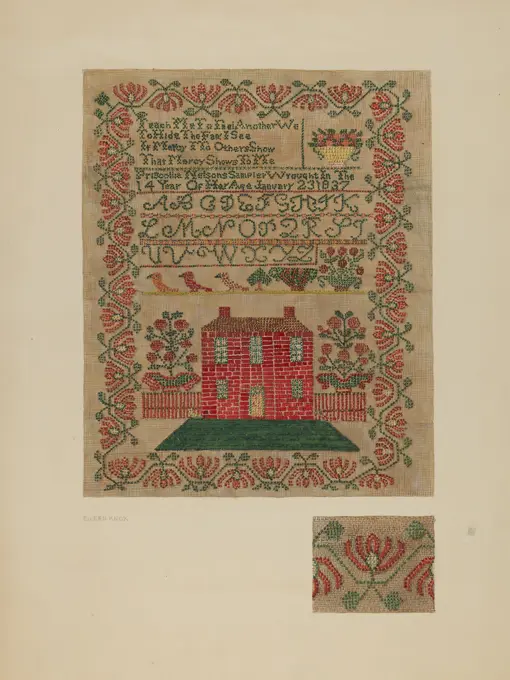
Sampler, Elizabeth Sickfrits, (American), Medium: silk embroidery on linen foundation Technique: embroidered in cross and chain stitches on plain weave foundation, Picture format, with a large brick house and white picket fence, flanked by a weeping willow and another large tree, with trees also behind the house. Surrounded by a wide floral border. Inscription at the bottom., USA, 1824, embroidery & stitching, Sampler
6145-51824992
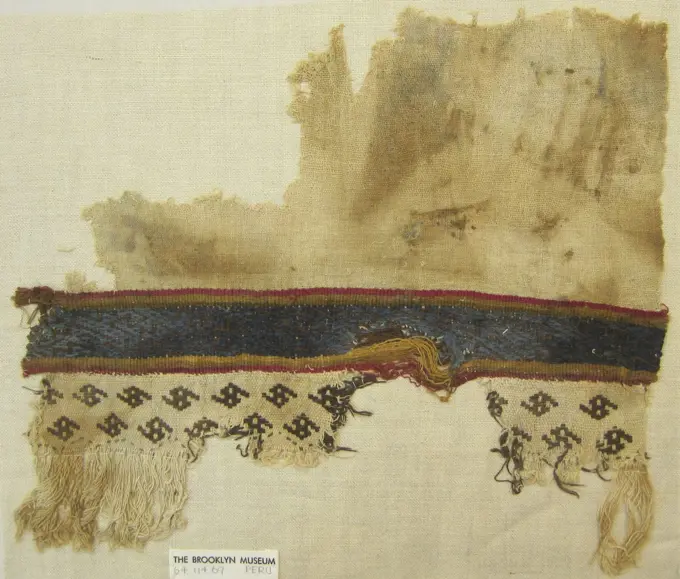
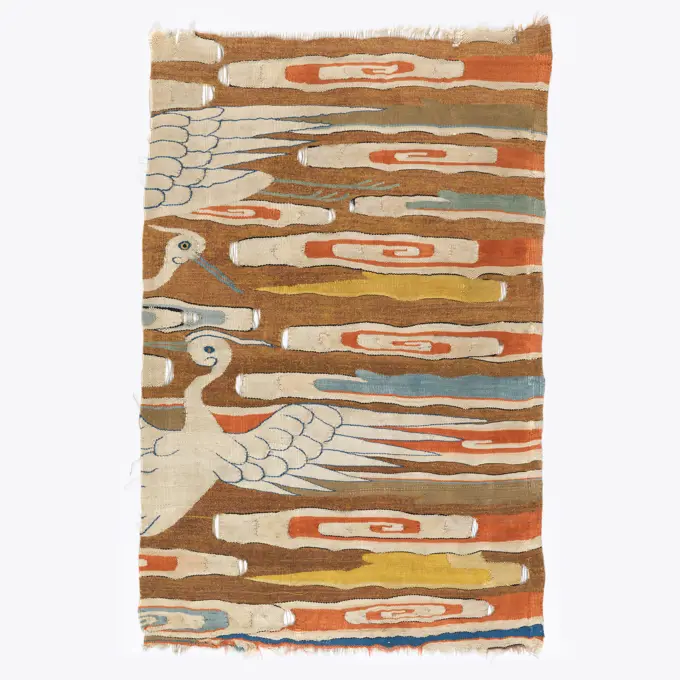
Loincloth Fragment or Textile Fragment, Undetermined Possibly Chimú. , 1532-1700 or 1000-1400. Cotton, camelid fiber, 11 x 12 5/8in. (28 x 32cm).   Arts of the Americas 1532-1700 or 1000-1400
6145-29841239
Eileen Knox, Sampler, c 1941 Sampler
6145-29835603
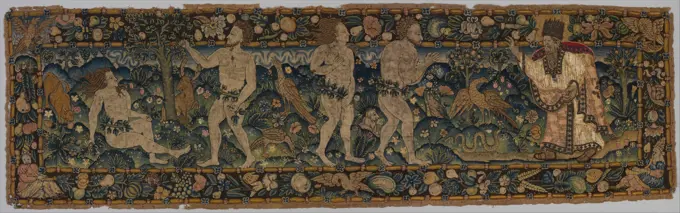
Adam and Eve Making Garments of Leaves; God Admonishing Adam and Eve for their Transgression (one of a set of three) late 16th century Scottish or British. Adam and Eve Making Garments of Leaves; God Admonishing Adam and Eve for their Transgression (one of a set of three). Scottish or British. late 16th century. Canvas worked with wool, silk, and metal thread; chain, split, tent, and straight stitches; appliqué of woven silk textiles; metal thread braid. Textiles-Embroidered
6176-67038085
Detail of a Mycenaean fresco showing a wild boar hunt. Artist: Unknown
4409-17486436
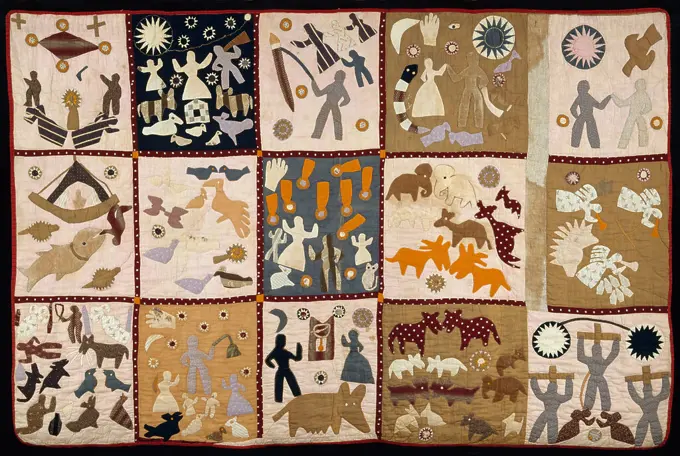
Pictorial quilt. Date/Period: 1895 - 1898. Textiles. Cotton plain weave, pieced, appliqued, embroidered, and quilted. Height: 1,750 mm (68.89 in); Width: 2,667 mm (105 in). Author: Harriet Powers.
4409-17509915
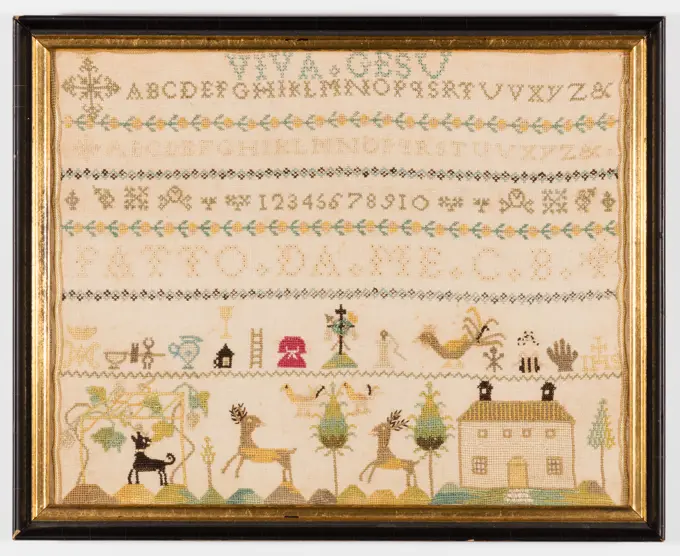
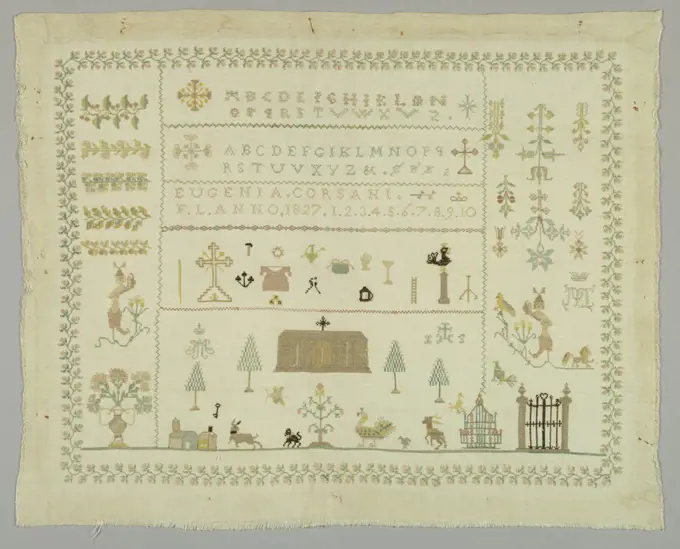
Sampler. Date/Period: 1827. Sampler. Medium: silk embroidery on linen foundation. Technique: embroidered in cross and satin stitches on plain weave foundation. Height: 540 mm (21.25 in); Width: 670 mm (26.37 in). Author: Eugenia Corsani.
4443-21930125
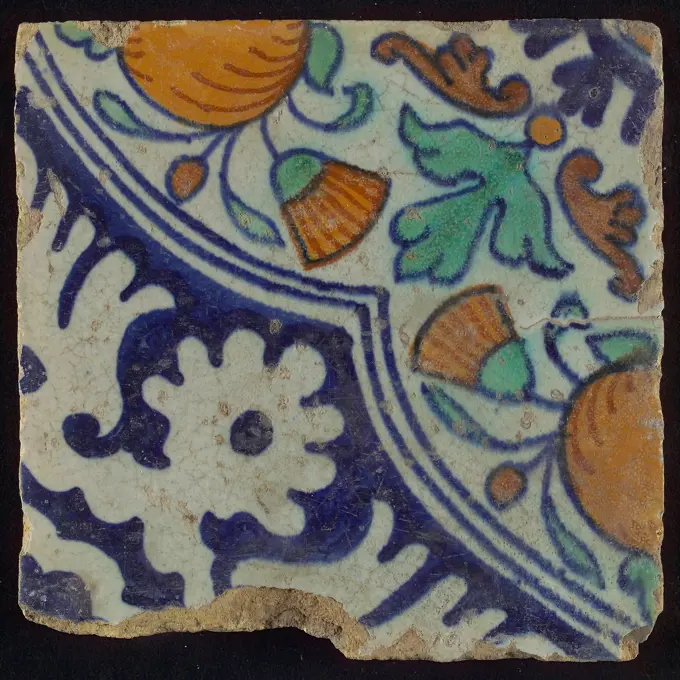
Ornament tile, diagonal ornament in quatrefoil with bows in which orange apples and flowers, palm corner, corner pattern rosette, wall tile tile sculpture ceramics pottery glaze, baked 2x glazed painted Yellow and reddish shard square two and four nail holes. Multicolored: brown blue green yellow on white ground (variation in light and dark). Saving technique in blue on white.
4409-17440907
Quilt - Basket Design. Dated: c. 1937. Dimensions: overall: 35.1 x 44.2 cm (13 13/16 x 17 3/8 in.). Medium: watercolor and graphite on paperboard. Museum: National Gallery of Art, Washington DC. Author: Edward White.
6145-58849501
Field of four tiles with insects and peacocks, anonymous, c. 1640 - c. 1660 Field of four tiles (2 x 2) each with a multicolored (blue, green, yellow, orange and purple) insect or peacock. In the corners, an ox head. Netherlands earthenware. tin glaze majolica Field of four tiles (2 x 2) each with a multicolored (blue, green, yellow, orange and purple) insect or peacock. In the corners, an ox head. Netherlands earthenware. tin glaze majolica
6145-58868983
Front window, Anonymous, 1702 - 1710 Sassinet or painted front window; Made from a narrow wooden framework, stretched with cream-colored silk that is painted with chinoiseries. The performance is derived from an ornament print from a series by Peter Schenk SR: the 'Picturae Sinicae AC Surattenae' etc., published in Amsterdam in 1702, where landscapes and roofs are fantasized. NOTE: see BK-NM-1010-246-C and D. (series no. 10b) Amsterdam wood (plant material). silk. gouache (paint). shellac Sassinet or painted front window; Made from a narrow wooden framework, stretched with cream-colored silk that is painted with chinoiseries. The performance is derived from an ornament print from a series by Peter Schenk SR: the 'Picturae Sinicae AC Surattenae' etc., published in Amsterdam in 1702, where landscapes and roofs are fantasized. NOTE: see BK-NM-1010-246-C and D. (series no. 10b) Amsterdam wood (plant material). silk. gouache (paint). shellac
6145-51380490
Sampler (Italy); silk embroidery on linen foundation; Frame H x W: 21.3 x 26 cm (8 3/8 x 10 1/4 in.)
4409-136090
ACILERES (DEPOSITO: MUSEO ARQUEOLOGICO NACIONAL).
4409-17446498
Saint Catherine. Dated: c. 1480. Medium: paste print. Museum: National Gallery of Art, Washington DC. Author: German 15th Century.
6145-29138827
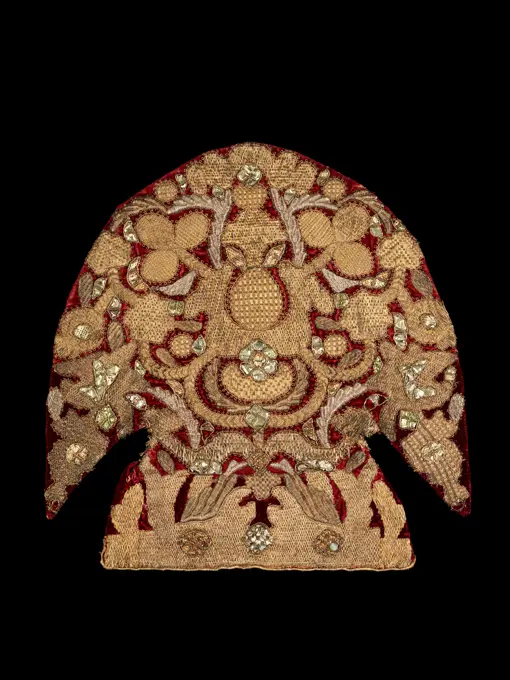
Headdress 19th century Russian This object is from the collection of Natalia de Shabelsky (1841-1905), a Russian noblewoman compelled to preserve what she perceived as the vanishing folk art traditions of her native country. Traveling extensively throughout Great Russia, she collected many fine examples of textile art of the wealthy peasant class. From the 1870s until moving to France in 1902, Shabelsky amassed a large collection of intricately embroidered hand-woven household textiles and opulent festival garments with rich decoration and elaborate motifs. The Brooklyn Museum holdings include many fine examples including the majority of the garments. Portions of Shabelsky's collection are also housed at the Museum of Fine Arts, Boston, the Cleveland Art Museum, and the Russian Museum of Ethnography in St. Petersburg.Headdresses, or kokoshniks had the greatest abundance of ornamentation of any type of garment in Russia. They were most often made of damask woven with gilt metallic threa
6145-29878432
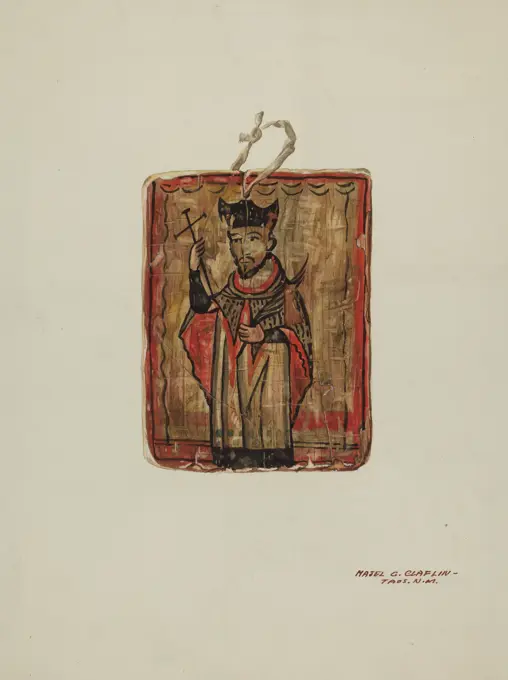
Majel G Claflin, Retablo, 1935 1942 Retablo
6145-51821386
Mantle Nasca. Mantle, 100-200. colored wool embroidery and cotton field, 105 1/8 x 54 5/16 in. (267.0 x 138.0 cm).   Arts of the Americas 100-200
6145-51833857
Mantle ("The Paracas Textile") Nasca. Mantle ("The Paracas Textile"), 100-300 C.E. Cotton, camelid fiber, 24 5/8 × 58 11/16 in. (62.5 × 149 cm).  This extraordinarily complex mantle, or cloak, is one of the most renowned Andean textiles in the world. It was most likely used as a ceremonial object. The ninety figures decorating the border, created by needle knitting, have been interpreted as a microcosm of life on Perus South Coast two thousand years ago, with a particular focus on agriculture. Many of the images illustrate native flora and fauna as well as cultivated plants. Costumed figures may represent humans impersonating gods and acting as intermediaries between the real and supernatural worlds. Severed human trophy heads are shown as germinating seeds, suggesting the practice of ritual sacrifice and the interconnected cycles of birth and death. Este extraordinariamente complejo manto, o capa, es uno de los textiles andinos más conocidos en el mundo. Fue usado probablemente como
4443-19543741
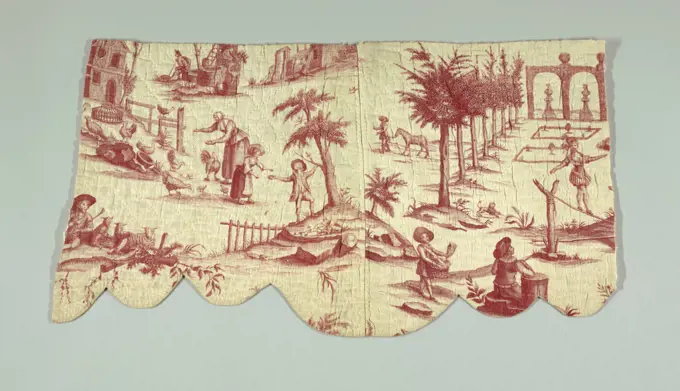
La Danseuse de Corde (Tightrope Walker), Medium: cotton Technique: printed by engraved copper plate on plain weave, Shaped valance showing rural scenes and part of a tightrope walker. In red on white. Quilted., Nantes, France, 1785-90, printed, dyed & painted textiles, Valance, Valance
6145-29871460
Jerry Guinta, Zoar Decorated Painting, c 1938 Zoar Decorated Painting
6145-29068892
Embroidered Border: The Baking of Unleavened Bread, 1500s-1600s. Italy, 16th-17th century. Plain weave linen; embroidery in silk; attached border of needle lace; overall: 18.1 x 45.4 cm (7 1/8 x 17 7/8 in.).
4443-28728539
Wall decoration, 20th century, 35 7/8 x 122 in. (91.12 x 309.88 cm), Cotton, silk; needlework, China, 20th century
1746-21130516
Winged serpent, Cairo Museum, Egypt.
6145-29071150
Roundel, Segmentum from a Tunic, mid 600s - mid 700s. Egypt, Umayyad period (661-750). Tapestry; linen and wool; overall: 7.7 x 7.4 cm (3 1/16 x 2 15/16 in.).
4443-19534609
Sampler, Ann Bell, English, Medium: silk and metal-wrapped silk embroidery on linen foundation Technique: embroidered in cross, stem, satin, and half cross stitches on plain weave foundation, Within a curving floral border text 'Create in me a clean heart, O God and renew a right spirit within me.' Then Adam and Eve with a figure of Justice and an angel., England, 1788, embroidery & stitching, Sampler
6145-51830485
Hanging, 1 of 7 Pieces Hanging, 1 of 7 Pieces, ca. 1610-1620. Painted resist and mordants, dyed cotton, 108 1/4 x 37 3/4 in. (275 x 95.9 cm).   Asian Art ca. 1610-1620
4409-17477365
Patchwork Quilt. Dated: 1935/1942. Dimensions: overall: 48.5 x 47.4 cm (19 1/8 x 18 11/16 in.) Original IAD Object: 84" square. Medium: watercolor, graphite, and gouache on paper. Museum: National Gallery of Art, Washington DC. Author: Vincent P. Rosel.
6188-60045003
Kunst Bildende Kunst Arte Bienale Tourismus Reisen Italien Venedig 28.05.2024 Venedig Venezia Italien 60. Bienale arte 2024 60. Bieanale di Venecia Kurator Adriano Pedrosa BRA Motto Fremde überall Arsenale Santiago Yahuarcani 1960 Peru. -Shiminbro El Hacedor del Sonido 2024 Foto Eberhard Thonfeld Venedig Venetien Italien *** Art Fine Arts Arte Bienale Tourism Travel Italy Venice 28 05 2024 Venice Venezia Italy 60 Bienale arte 2024 60 Bieanale di Venecia Curator Adriano Pedrosa BRA Motto Strangers everywhere Arsenale Santiago Yahuarcani 1960 Peru Shiminbro El Hacedor del Sonido 2024 Photo Eberhard Thonfeld Venice Veneto Italy
6145-30177707
Polychrome Tiles Depicting Male and Female Figures in Contemporary Dress Surrounded by Abstract Foliage Made 1700-1750 Puebla state. Tin-glazed earthenware . Talavera Poblana
4443-19557939
Sampler, Eugenia Corsani, Italian, Medium: silk embroidery on linen foundation Technique: embroidered in cross and satin stitches on plain weave foundation, Two vertical side borders of bands and isolated motifs. Center, two alphabet bands, symbols of the passion and isolated motifs., Italy, 1827, embroidery & stitching, Sampler
6145-29859545
Alfred Koehn, Bandbox Design, 1935 1942 Bandbox Design
1848-55403406
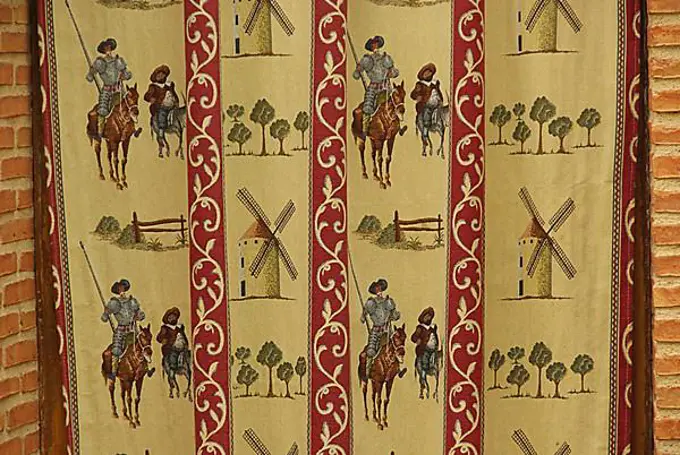
Don Quixote
1788-35852
Cartography, 14th century. Catalan Atlas of Charles V of France. Attributed to Abraham and Jafuda Cresques Mallorca (1375 approx). Copy of the original kept at the French National Library, Paris.
6145-51834646
Mantle ("The Paracas Textile") Nasca. Mantle ("The Paracas Textile"), 100-300 C.E. Cotton, camelid fiber, 24 5/8 × 58 11/16 in. (62.5 × 149 cm).  This extraordinarily complex mantle, or cloak, is one of the most renowned Andean textiles in the world. It was most likely used as a ceremonial object. The ninety figures decorating the border, created by needle knitting, have been interpreted as a microcosm of life on Perus South Coast two thousand years ago, with a particular focus on agriculture. Many of the images illustrate native flora and fauna as well as cultivated plants. Costumed figures may represent humans impersonating gods and acting as intermediaries between the real and supernatural worlds. Severed human trophy heads are shown as germinating seeds, suggesting the practice of ritual sacrifice and the interconnected cycles of birth and death. Este extraordinariamente complejo manto, o capa, es uno de los textiles andinos más conocidos en el mundo. Fue usado probablemente como
4409-17444234
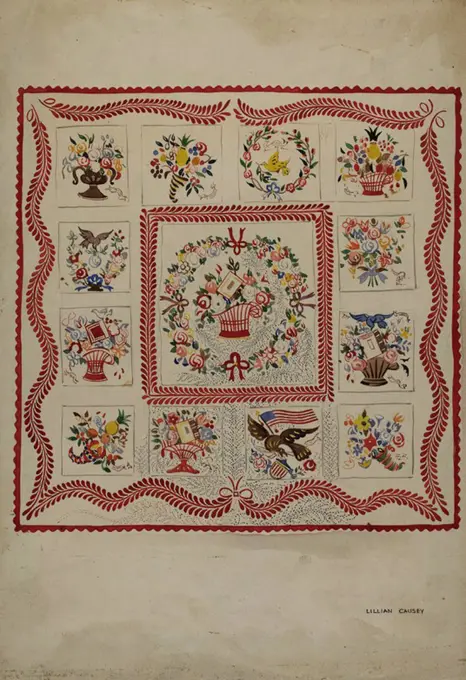
Quilt. Dated: c. 1936. Dimensions: overall: 35.8 x 24.4 cm (14 1/8 x 9 5/8 in.) Original IAD Object: 90"x90". Medium: watercolor and graphite on paper. Museum: National Gallery of Art, Washington DC. Author: Lillian Causey.
4409-63011528
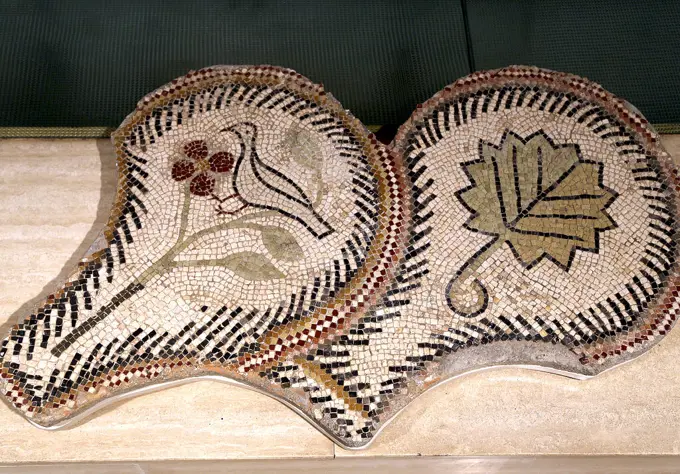
Mosaic with vegetable motifs and bird. Roman culture, Opus tessallatum, marble of different colors. 4th Century AD. Vila del Romeral, Albesa, Lleida.
6145-29785572
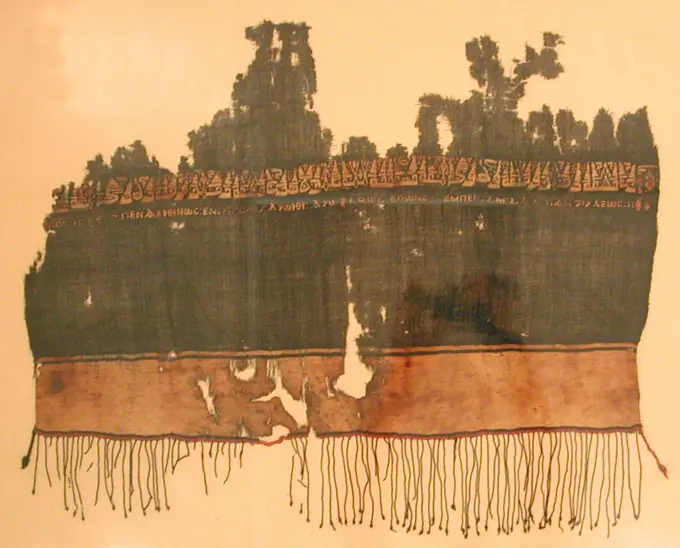
Textile Fragment 9th-10th century This fragment (top) and 31.19.13 (bottom), two ends of a shawl, are both decorated with two inscription bandsone a line of purely ornamental (illegible) kufic, and the other a Coptic inscription interspersed with rosecolored cross-hatches.. Textile Fragment 448574
4409-28962877
Pavilions and people. Origin: China. Date: 1368-1644. Period: Ming dynasty. Ink and color on silk. Museum: Freer Gallery of Art and Arthur M. Sackler Gallery.
6145-52342391
Labirint dukhovnyi.. Rovinski, D. A. (Dmitri Aleksandrovich), 1824-1895. Prints. 1881. Rare Book Division. Folk art , Russia (Federation), Russia , Social life and customs, Engraving, Russian
6145-29789867
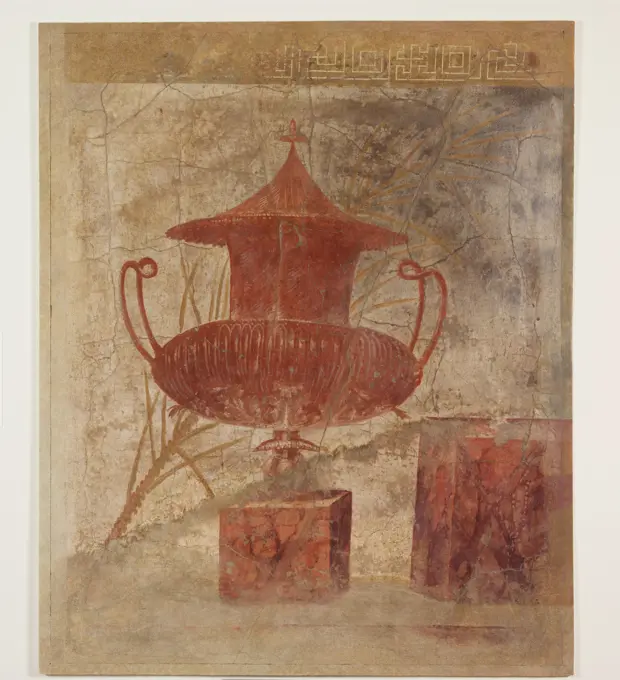
Wall painting fragment from the peristyle of the Villa of P. Fannius Synistor at Boscoreale ca. 50-40 B.C. Roman A large covered vase and a silver pitcher right, stand on marble blocks. The palm fronds at the left, a symbol of victory, suggest that such vessels were awarded as prizes.The Villa of P. Fannius Synistor at Boscoreale: A Virtual Tour. Wall painting fragment from the peristyle of the Villa of P. Fannius Synistor at Boscoreale 247007
4409-17551765
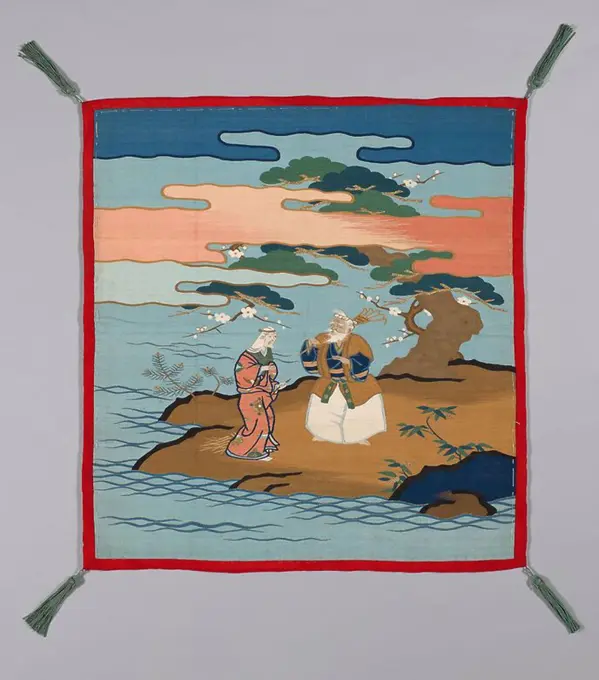
Fukusa (Gift Cover). Japan. Date: 1801-1825. Dimensions: 76.6 x 71.4 cm (30 1/8 x 28 1/8 in.). Silk, gold-leaf-over-lacquered-paper-strip-wrapped cotton and silver leaf-over-lacquered-paper-strip-wrapped silk, slit tapestry weave (kesi); lined; tasseled. Origin: Japan. Museum: The Chicago Art Institute, Chicago, USA.
4409-17548933
Handkerchief. England. Date: 1790-1800. Dimensions: 42.2 × 46.4 cm (16 5/8 × 18 1/4 in.). Cotton, plain weave; copperplate printed. Origin: England. Museum: The Chicago Art Institute, Chicago, USA.
4409-17453930
Jacquard Coverlet. Dimensions: overall: 41.1 x 51.4 cm (16 3/16 x 20 1/4 in.). Museum: National Gallery of Art, Washington DC. Author: H. Langden Brown.
6145-29706225
Tile with Cintamani Design ca. 1560-70 The çintamani pattern - a cluster of three roundels paired with wavy stripes - is one of the leitmotifs of Ottoman art. Derived from the Sanskrit word for "auspicious jewel," the motif originated in Buddhist art. At the Ottoman court the motif came to evoke strength and power and is seen in many media, including architectural decoration, textile design, and ceramics. On this rare tile, the çintamani is the dominant and sole motif. It probably once belonged to a çintamani border surrounding a larger wall composition, such as at the Rüstem Pasha Mosque (1561) in Eminonu or the Apartment of the Sacred Mantle and the Library of Ahmed III at the Topkapi Palace in Istanbul.. Tile with Cintamani Design. ca. 1560-70. Stonepaste; polychrome painted under transparent glaze. Made in Turkey, Iznik. Ceramics-Tiles
4409-17511027
Shiviti. Date/Period: 1838/39. Ceremonial Art-Paper & Parchment. Gouache, ink, crayon, and collage on paper Gouache, ink, crayon, and collage on paper. Height: 864 mm (34.01 in); Width: 1,041 mm (40.98 in). Author: Moshe Ganbash.
4409-17509597
Gulf of Mexico, states of Central America, Cuba and Southern United States. Date/Period: 1565 - 1575. Oil painting on wood. Height: 117 mm (4.60 in); Width: 80 mm (3.14 in). Author: EGNAZIO DANTI.
4443-28742657
Textile Fragment, 18th century, 41 13/16 x 41 7/8 in. (106.2 x 106.36 cm) (sight), Silk; needlework, China, 18th century
4443-19545483
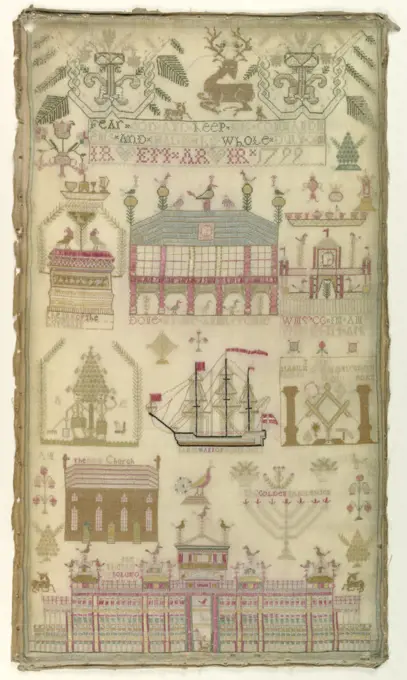
Sampler, Ann Ritchie, Scottish, Medium: silk embroidery on wool foundation Technique: embroidered in cross, stem, satin, eyelet, long-armed cross, and running stitches on plain weave foundation, Bands of pattern and isolated motifs including patriotic, religious, and masonic motifs. 'Fear god and keep his commandments and that is the whole duty.' 'The ark of the covenant.' Undecipherable. Ship 'The James and Ann of Montrose.', Scotland, 1799, embroidery & stitching, Sampler
6145-51379652
Rank Badge (China); silk
4409-17407207
Rank Badge with Peacock. Culture: China. Dimensions: 12 1/2 x 12 1/2 in. (31.75 x 31.75 cm). Date: late 18th-early 19th century. Museum: Metropolitan Museum of Art, New York, USA.
6145-29070303
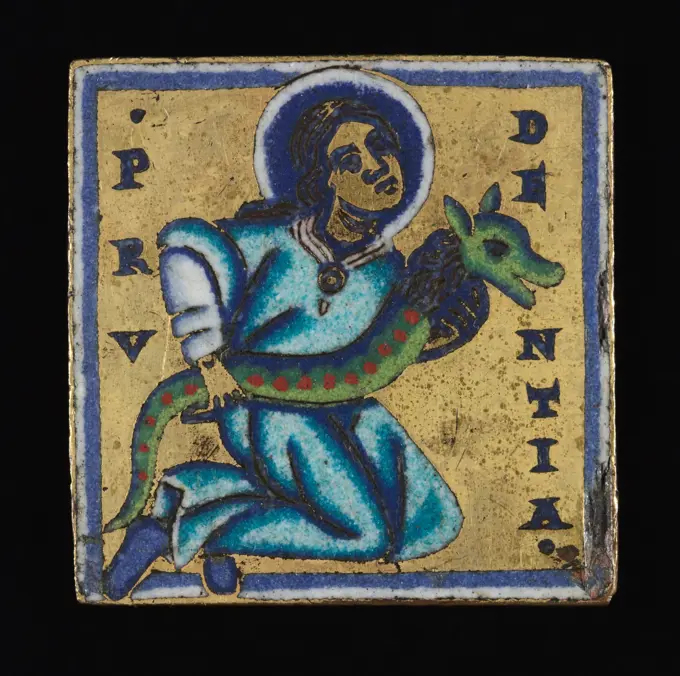
Plaque: Prudentia (Prudence), c. 1160. Mosan, Valley of the Meuse, Gothic period, 12th century. Gilded copper, champlevé enamel; overall: 5.3 x 5.1 cm (2 1/16 x 2 in.).
4435-3230
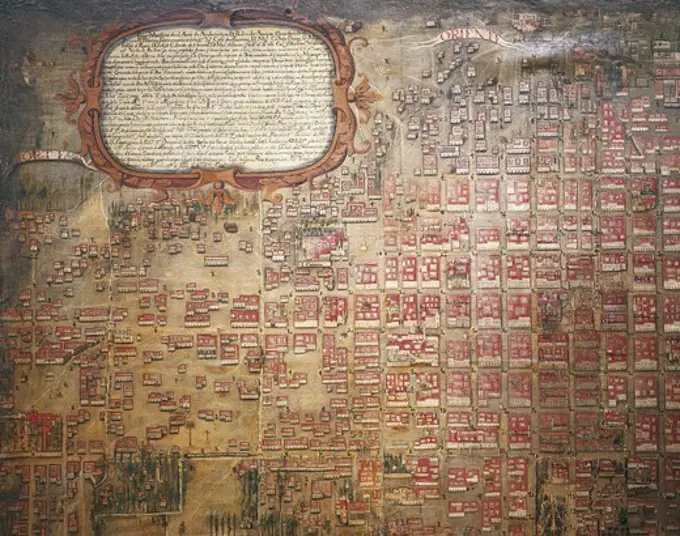
CORREA, Diego (17th c.-18th c.). Map of Ciudad de Mexico. 1737. Oil on canvas. MEXICO. FEDERAL DISTRICT. Mexico City. Chapultepec Castle.
4409-17278581
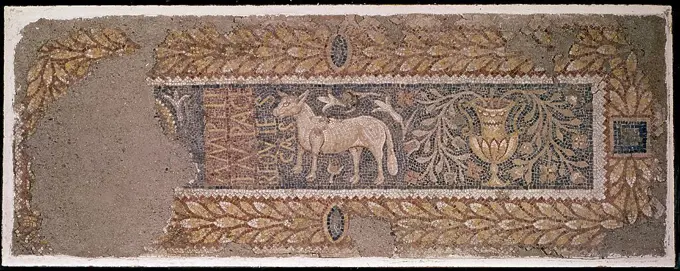
LAUDA SEPULCRAL DE AMPELIO CON LA LEYENDA "AMPELI IN PACE REQUIESTAS" Y LA REPRESENTACION DE UN CORDERO Y UNA COPA - MOSAICO PALEOCRISTIANO. Location: NECROPOLIS. TARRAGONA. SPAIN.
4443-19541173
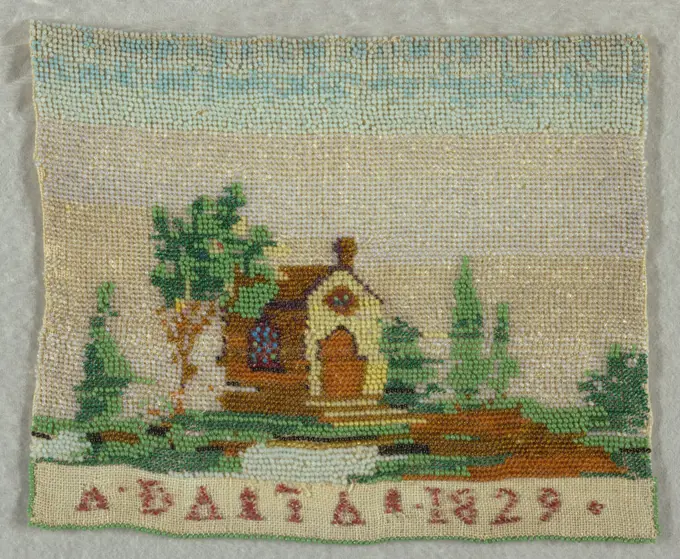
Embroidered picture, Medium: linen with linen lining and colored glass beads Technique: embroidery and beadwork, Panel of linen with colored beads sewn to form a picture of a landscape with a chapel and letters (indecipherable and a date 1829., Italy, 1829, embroidery & stitching, Embroidered picture
PREVIOUS
of 3
NEXT
2401 S. Ervay, Suite 206
Dallas, Texas 75215
United States
Get Started
Free ResearchMy BoardsMy Cart
For Creators
How To License Your ContentContributor PortalFrame of Mind
Resources
API accessPricing
Contact
+1 866 236 0087help@viewpictures.co.uk Contact form
©2026 View Pictures. All Rights Reserved. -A
This site is protected by reCAPTCHA and Google Privacy Policy and Terms of Service apply.