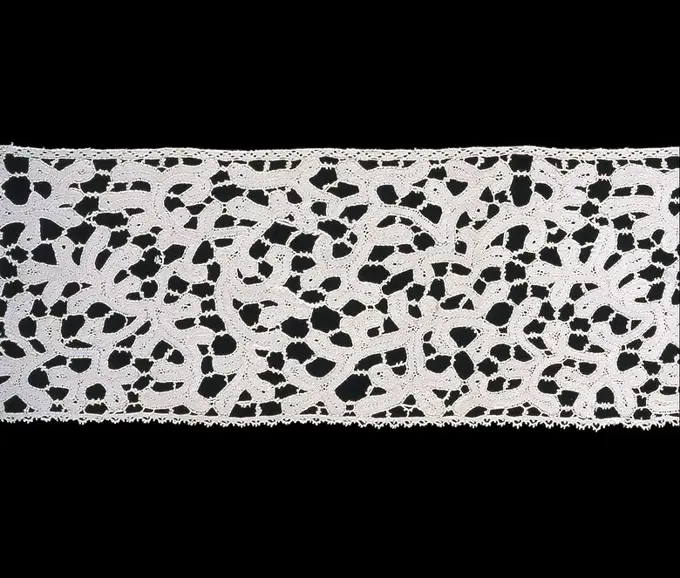
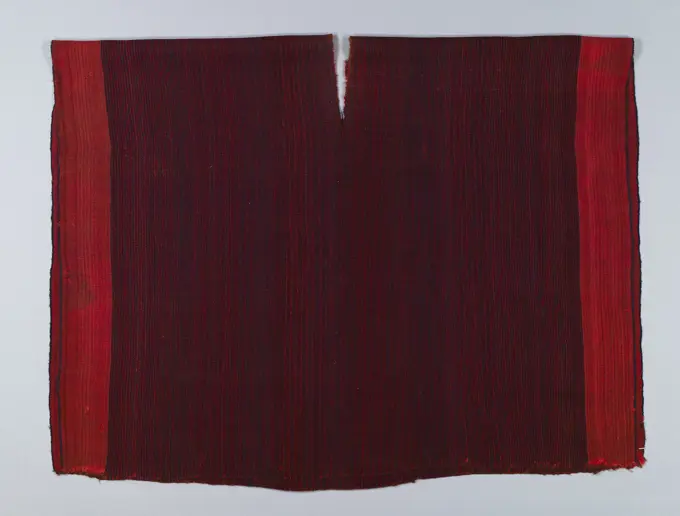
Textiles and Fabrics

A collection of historical textile pieces showcasing various techniques and patterns, including silk, embroidery, and lace from different centuries.
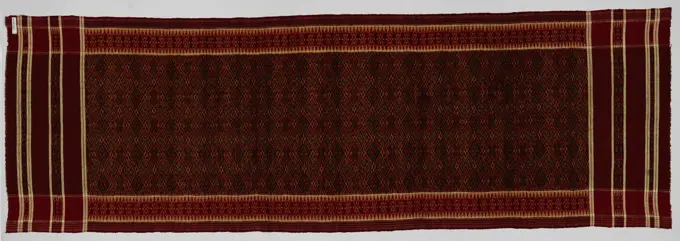
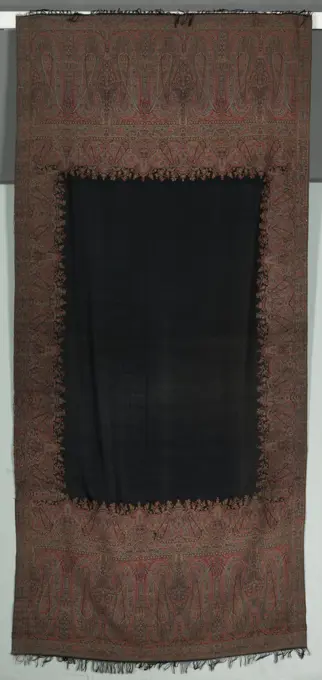
Doek, Anonymous, 1900 - 1949 Cloth in the middle with snake skin, patola motifs; Ceremonial canvas worn for visits to the prince. Bali cotton (textile) Cloth in the middle with snake skin, patola motifs; Ceremonial canvas worn for visits to the prince. Bali cotton (textile)
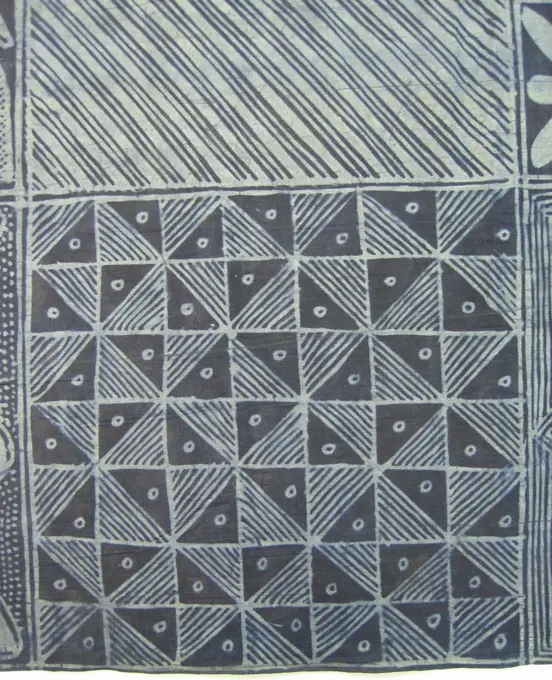
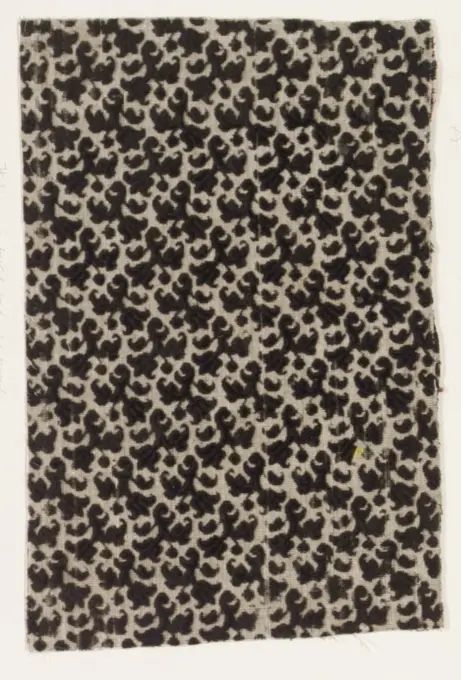
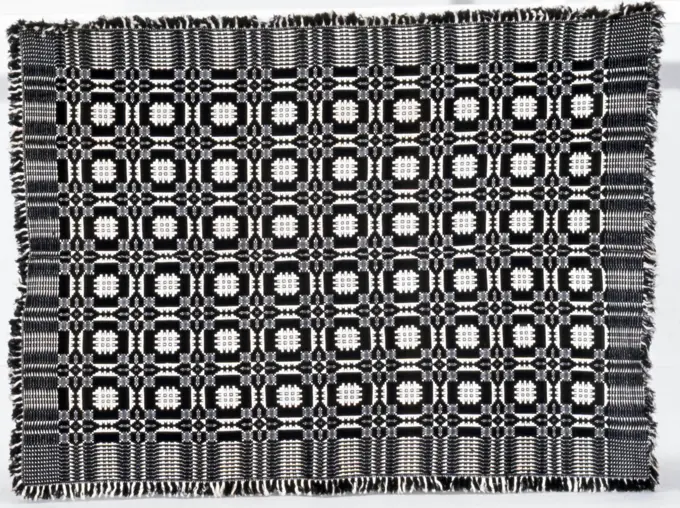
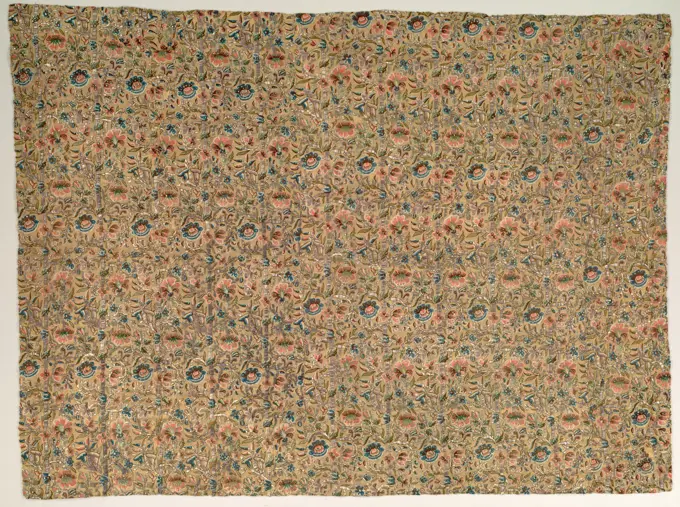
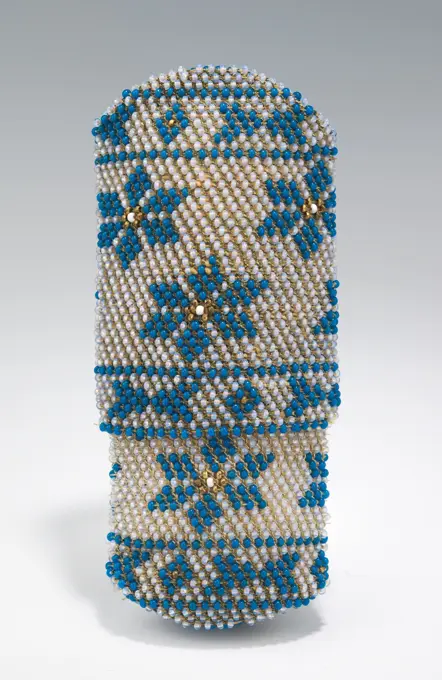
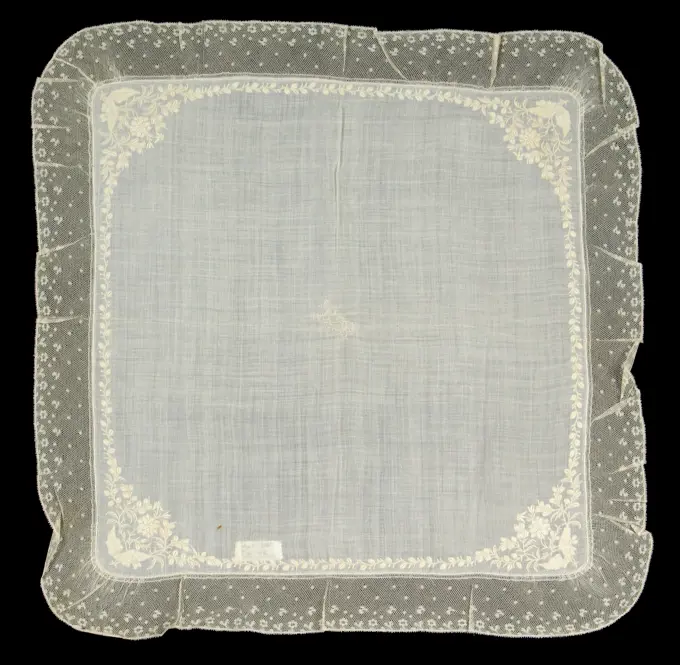
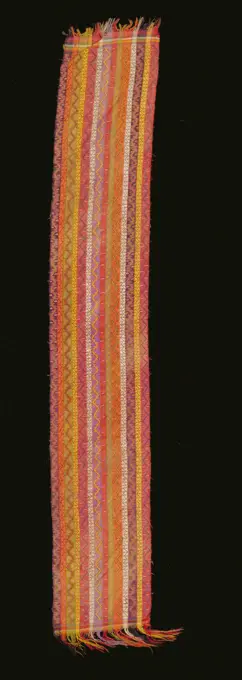
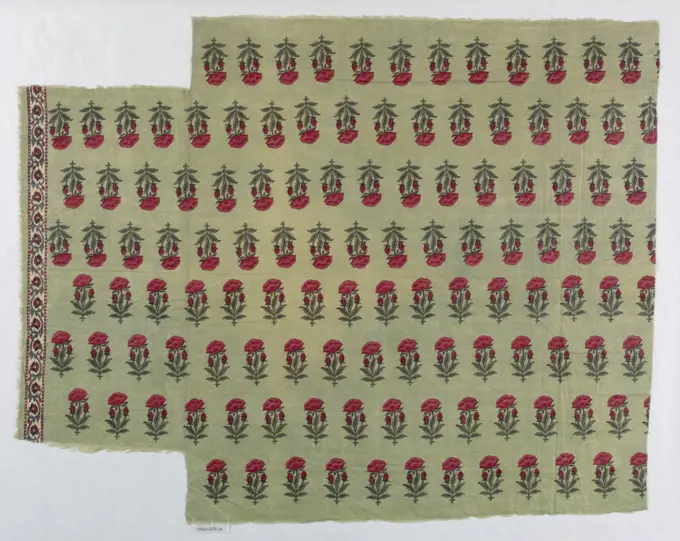
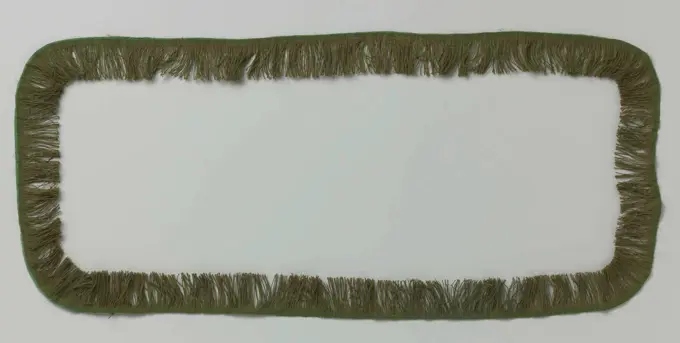
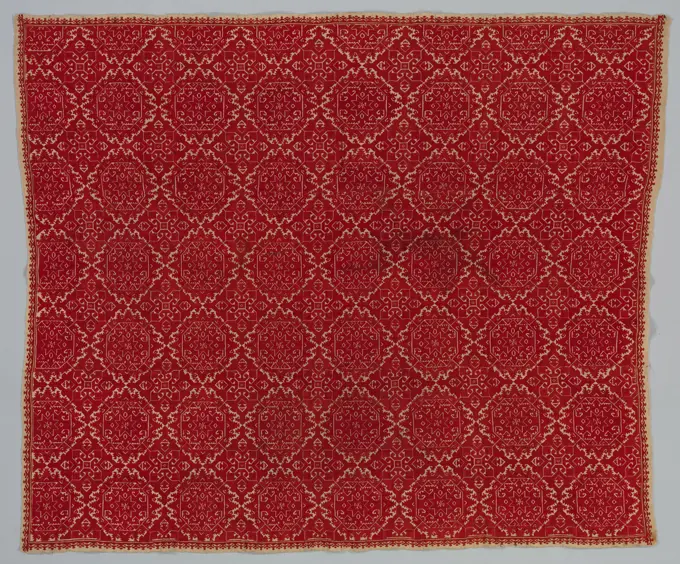
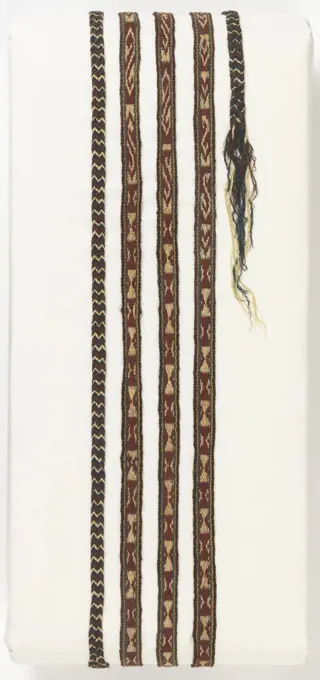
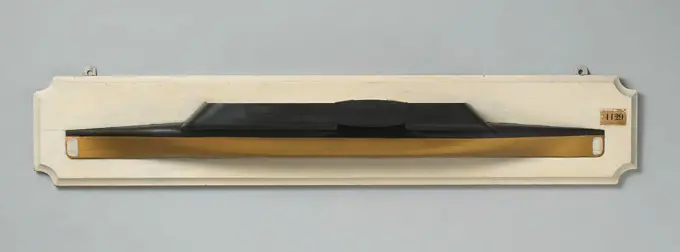
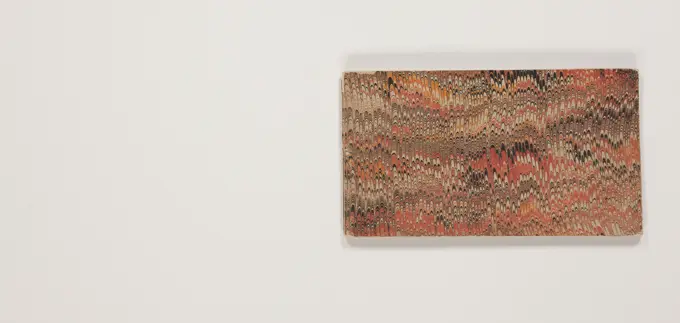
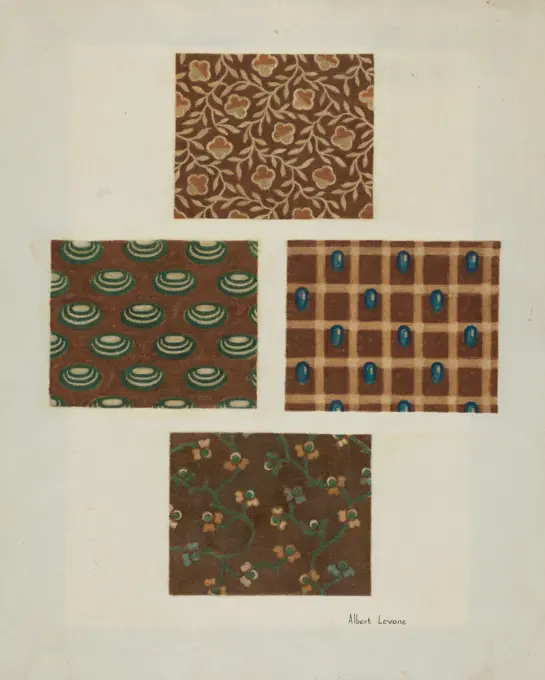
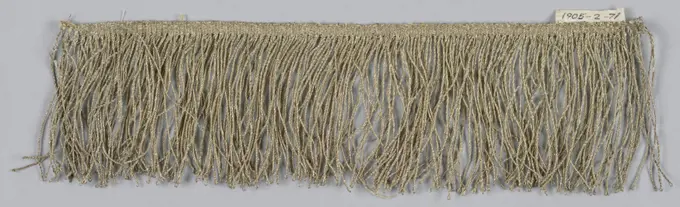
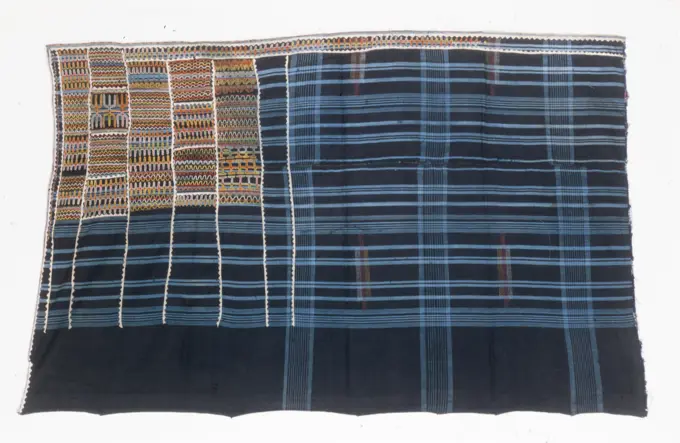
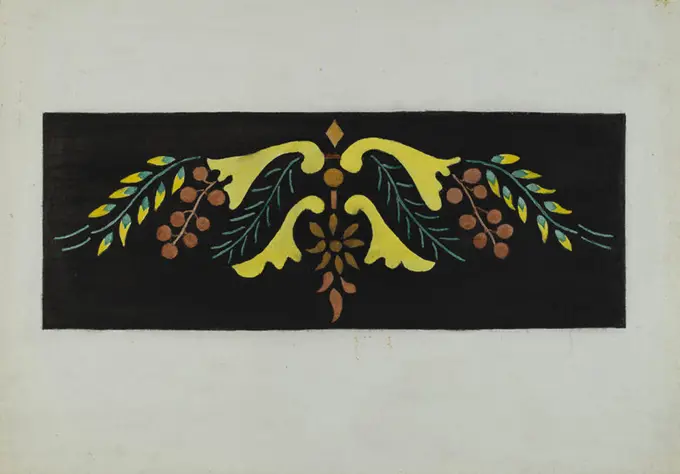
Back doubleur. bindings (gathered matter components), Book covers. 1886. Spencer Collection. BookbindingWoman's wrapper (àdìrẹ ẹlé̩kọ) Yorùbá , unknown maker's mark. Woman's wrapper (àdìrẹ ẹlé̩kọ), 20th century. Commercial cotton cloth, synthetic indigo dye, 68 5/8 × 78 × 1/16 in. (174.3 × 198.1 × 0.1 cm).  Àdìrẹ is a Yorùbá textile whose patterns are made through resist dyeing. The àdìrẹ technique used to make this wrapper is àdìrẹ ẹlé̩kọ, wherein female artists paint cassava flour paste on fabric, preventing certain areas from soaking in blue indigo dye. This cloths name is Olókun, identifiable in part by the motif of a circular “stool” surrounded by “leaves.” As goddess of the sea, Olókuns domain is the source of wealth, lending the cloth the associated meaning “life is sweet.” Other àdìrẹ employ tie-and-dye techniques (àdìrẹ oníko), where raffia ties hold small stones or seeds in place to cover areas of the fabric during dyeing, resulting in àdìrẹ eléso patterns. One such àdìrẹ oníko was incorporated underneath a panel in the featured egúngún (see photograph). Arts of Africa 20th cFragment, Medium: Technique: printed, USA, 19th century, printed, dyed & painted textiles, FragmentFragment late 16th century Italian. Fragment 230664Gold and Amethist bracelet, Jean Baptiste Bonnard, c. 1824 - c. 1829 Bracelet of gold and amethyst. The stones are surrounded and connected to golden rosettes. Amsterdam gold (metal). amethyst (mineral) granulation Bracelet of gold and amethyst. The stones are surrounded and connected to golden rosettes. Amsterdam gold (metal). amethyst (mineral) granulationVessel Rattle late 19th century possibly Congolese. Vessel Rattle 501980Coverlet American. , ca. 1825-1850. Wool, cotton, 80 x 50 in. (203.2 x 127.0 cm) (including fringe).    ca. 1825-1850Book cover with overall dot design with bouquets 19th century Anonymous. Book cover with overall dot design with bouquets. Anonymous , 19th century. 19th century. Relief print (wood or metal). PrintsSarong (Kain Lepas) 18th century Palembang (). Sarong (Kain Lepas). Palembang (). 18th century. Silk, gold wrapped thread. Indonesia, Sumatra, Palembang. Textiles-WovenNapkin van Linen with peel pattern ,, 1627 - 1666 White linen napkin with peel pattern, Brand Kroon IVG Northern Netherlands (Possible) linen (material) White linen napkin with peel pattern, Brand Kroon IVG Northern Netherlands (Possible) linen (material)Jasiek unknownEmbroidered Textile, 18th-19th century. Turkey, 18th-19th century. Embroidery: silk and metallic threads on wool ground, cotton backing; average: 124.5 x 93 cm (49 x 36 5/8 in.).Purse Mexican late 19th century The stylized flower head pattern on this knitted purse is reminiscent of European and American cross-stitch patterning. The stiffened structure is created by adding silver metal to linen cord. The purse is part of the Mexican beadwork collection of over 600 pieces assembled by Elizabeth Morrow (1873-1955), mother of writer Anne Morrow Lindbergh, the wife of renowned aviator Charles Lindbergh. Morrow collected the objects between 1927 and 1930, when her husband, Dwight Morrow, Sr., served as U.S. ambassador to Mexico. She lent the collection to the Brooklyn Museum in 1938 and upon her death, her children donated it. A collection of 155 pieces of Mexican ceramics and other decorative arts were given to Amherst College, her husband's alma mater. Mrs. Morrow collected Mexican beadwork, along with other examples of colonial and native arts, to decorate their country home in Cuernavaca in order to promote a more peaceful image of that country through its worksHandkerchief 1825-50 possibly French. Handkerchief 169693Sash (Kusak), c. 1890-1900, 97 1/2 x 16 1/2 in. (247.65 x 41.9 cm), Wool, Turkey, 19th-20th centuryHood 1860-65 American. Hood 107802Fragment, late 1800s. India, late 19th century. Silk and cotton; overall: 31.8 x 78.7 cm (12 1/2 x 31 in.).Piece 18th-19th century Japan. Piece 66748Textile Swatches Onondaga Silk Company, Inc. (1925-1981). , 1948-1959. Silk and metal, 47 1/4 x 18 in. (120 x 45.7 cm).    1948-1959Piece 16th-17th century German or Italian. Piece 223607Heupdoek, anonymous, 1900 - 1949 Three -piece cloth with geometric motifs. Flores cotton (textile) Three -piece cloth with geometric motifs. Flores cotton (textile)Piece 18th-19th century Japan. Piece 66537Fragment Made 1601-1625 Italy. Silk, plain weave with supplementary pile warps forming cut and uncut voided velvet .Old photo album isolated on white. Textile, Medium: cotton Technique: block printed, Fragment in red and green on light green ground. Stylized, allover floral pattern of a poppy seed plant. One border stripe present showing small-scale floral design on white background., Jaipur, India, late 18th-early 19th century, printed, dyed & painted textiles, TextileStrook groene franje van wol en zijde..Strip green frills of wool and silk. Two deck coverings are kept by the strip (BK-1992-21-A and BK-1992-21-B) and a strip (BK-1992-21-C).Indian ornamentBag, 19th century, 7 x 7 in. (17.78 x 17.78 cm), Wool, linen; embroidery, United States, 19th centuryPrinting block, Medium: wood, metal, Design of leaves and flowers formed by metal strips and pins., USA, 19th century, appliances & tools, Printing blockHandkerchief second quarter 19th century American. Handkerchief 170282Band, c. 600-400 B.C.. Peru, Central Coast, Lima, Early Horizon. Warp-faced weave: llama wool; average: 451.9 x 3.2 cm (177 15/16 x 1 1/4 in.).Bedspread, 1700s. Greece, Cyclades Islands, Naxos, 18th century. Embroidery: silk on linen tabby ground; overall: 179.7 x 144.8 cm (70 3/4 x 57 in.).Sampler (Germany); cottonCotton Towel. Dated: c. 1937. Dimensions: overall: 37 x 28 cm (14 9/16 x 11 in.) Original IAD Object: 39 1/2" long; 21" wide. Medium: watercolor, gouache, and graphite on paper. Museum: National Gallery of Art, Washington DC. Author: Eva Wilson.Textile Swatches Onondaga Silk Company, Inc. (1925-1981). , 1948-1959. cotton, largest component (a): 24 x 18 in. (61 x 45.7 cm).    1948-1959Band, Medium: wool Technique: woven tape with braided ends, Long narrow wool band with series of 'S' repeats, series of angular scroll repeats, and series of rectangular repeats made up of triangles, in dark green, red, white; framed top and bottom with green, yellow, brown guard stripes. Warps at each end plaited in two strips which merge into single thicker plait after 1'; separate again 1' from end and terminate in 4' fringe; chevron striped in plaited area from different warp colors., Peru, 11th-12th century, woven textiles, BandWrapping Cloth, Fragment or Mantle, Fragment Nasca. Wrapping Cloth, Fragment or Mantle, Fragment, 200-1000 C.E. Camelid fiber, cotton, 22 3/4 × 32 1/2 in. (57.8 × 82.6 cm).   Arts of the Americas 200-1000 C.E.paper tag label isolated over white. a paper tag or label or sticker for product information isolated over white backgroundDoek, Anonymous, 1900 - 1999 Cloth with geometric motifs. Sumatra silk. Cloth with geometric motifs. Sumatra silk.Sample; silkDistant view of agricultural fields covered with plasticFragment of the lace;  XVII-XVIII century (1601-00-00-1800-00-00);Krzeszowice, collection, laceSacking cloth on wooden Sacking cloth on a wooden background Copyright: xZoonar.com/RuslanxNassyrovx 14698668African cloths at an ethno marketLong Shawl with Galleries, 1830-1835. France, Paris, 19th century. Supplementary weft pattern; wool; overall: 316.2 x 142.7 cm (124 1/2 x 56 3/16 in.).Chalice cover, Medium: linen Technique: needle lace, Chalice cover of elaborate candlestick pattern., Belgium or Italy, late 17th-early 18th century, lace, Chalice coverTextile (Spain); silk; Warp x Weft (weft selvedge to selvedge): 100 x 57.2 cm (39 3/8 x 22 1/2 in.)needle sews two pieces of tissue needle sews two pieces of tissue close up Copyright: xZoonar.com/ValeryxVoennyyx 7700468Example of Ottoman art patterns applied on metalsRibbon (USA); silkPiece 19th century China or Japan. Piece 72124Half model or an armored paddle steamer. Polychromed stack model (starboard) of an armored paddle steamer. It is a narrow vessel with two very pointed ends, each with a painted opening for a stir. The middle part has a deck surrounded by armored plates, the appearance front and rear 45 ° inwards, on the side around the radio cupboard running. The belt cabinet is located slightly in the middle. Scale 1:50 (derived).Venice carnival mask. Still-life with two venice carnival masks, paints and brushesBaptismal rug or Benedictiewle all around with bobbin side with tifle motifs and braids with picots, anonymous, c. 1685 - c. 1699 Baptismal rug or Benedictiewed from glass batist all around with a wide strip of natural -colored Flemish bobbin side. Kant pattern: Rank motifs, connected by potented braids. Southern Netherlands linen (material). bobbin lace / Flemish lace with plaited ground Baptismal rug or Benedictiewed from glass batist all around with a wide strip of natural -colored Flemish bobbin side. Kant pattern: Rank motifs, connected by potented braids. Southern Netherlands linen (material). bobbin lace / Flemish lace with plaited groundFragment, Medium: silk Technique: supplementary warp forming cut and uncut raised pile in a satin foundation (velvet), 18th-19th century, woven textiles, FragmentNecklace ca. 9th century B.C. Iran. Necklace 324994Tumba Amonemhat (53).Fragment (France); linenCoverlet Made 1820-1830 United States. Cotton and wool, plain weave with supplementary patterning wefts (overshot); two loom widths joined; fringed .Handwork with Jugendstil motifs, Aagje Tiket, c. 1900 Handwork with white leaf motifs in applications of sheets, velvet and satin, border with yellow side on a square of black sheet. Belonging to series of eight white and ten colored crafts, made by Aagje Tiket for achieving the deed of beautiful and/or useful handicrafts at the industrial school, BK-1974-105-A to R. Amsterdam wool. silk Handwork with white leaf motifs in applications of sheets, velvet and satin, border with yellow side on a square of black sheet. Belonging to series of eight white and ten colored crafts, made by Aagje Tiket for achieving the deed of beautiful and/or useful handicrafts at the industrial school, BK-1974-105-A to R. Amsterdam wool. silkCoverlet Made 1825-1835 United States (Object made in), Bucks County (Object made in), Pennsylvania (Object made in). Cotton and wool, plain weave with supplementary patterning wefts (overshot); knotted main warp fringe; woven on loom with Jacquard attachment; two loom widths joined .Sampler 19th century German or Austrian. Sampler. German or Austrian. 19th century. Wool. Textiles-EmbroideredFirecrackerPillow unknownBed Cover (suzani) (Uzbekistan); silk embroidery on linen foundationKontusz sash/belt. unknown, authorKira, 20th century, 91 x 52 1/2 in. (231.14 x 133.4 cm), Silk, cotton, wool, Bhutan, 20th centuryFabric Swatch Fab-Tex Inc.. , 1963-1966. Cotton, sheet: 8 1/4 x 10 1/2 in. (21 x 26.7 cm).    1963-1966Stencil 19th century Japan. Stencil 70074Blanket, early 20th century, 66 x 34 1/2 in. (167.64 x 87.63 cm), Cotton, Thailand, 20th centuryArabic ornament on a wallThai lottery tickets sold at lottery ticket stalls in Bangkok, ThailandSample early 19th century French. Sample 224738Wall extension, Chris Lebeau, 1911 - 1915 Orange-brown Damstic walls with a design of nail flowers. The lower stripes are Bruingrijs. Eindhoven linen (material) damask Orange-brown Damstic walls with a design of nail flowers. The lower stripes are Bruingrijs. Eindhoven linen (material) damaskmummy of a young woman from the Greco roman period 2nd century AD; Fayum EgyptCanada, Nova Scotia, Cape Breton Island, Cheticamp, Acadien Museum and Artist workshop (aka Co-op Artisanale Musee Acadien) Acadien hookrug handicrafts, rug detail. (Editorial Usage Only)Textile Swatches Onondaga Silk Company, Inc. (1925-1981). Textile Swatches, 1948-1959. Possibly metal; acetate; nylon, (a) - (c): 6 x 4 1/2 in. (15.2 x 11.4 cm).    1948-1959Coverlet (Fragment) Made 1859 United States. Cotton and wool, plain weave with plain interlacings of secondary binding warps and patterning wefts (Beiderwand); woven on loom with Jacquard attachment . Daniel Stephenson (Weaver)Frank La Farge Sketchbook #F1 (24pages).  Artist: Frank La Farge, American, 1847-1876Scarf isolated on the white backgroundGoathair Blanket - CowichanAlbert Levone, Cotton Prints, c 1939 Cotton PrintsTextile, Medium: wool Technique: plain compound weft twill, Very incomplete and indistinct design based on geometric forms, in yellow-tan, red and green. No selvage present. The warp is yellow-tan wool, and the wefts are yellow-tan, red, and green wool. The weave throughout is a plain compound weft twill formed by the wefts passing over three warps and under one. The wefts are used two at a time, yellow-tan and green, and yellow-tan and red, but only one color appears on the face of the textile at one time., Egypt, 6th-8th century, woven textiles, TextileFringe, Medium: silver foil on a silk core Technique: woven, Silver fringe with a plain-woven heading and a skirt of looped and twisted threads., Turkey, 19th century, trimmings, FringePortrait of a Child Circle of François Clouet (French, ca. 1516-1572). Portrait of a Child, ca. 1570. Oil on panel, 7 3/4 x 5 5/8 in. (19.7 x 14.3 cm).   European Art ca. 1570Textile Swatches Onondaga Silk Company, Inc. (1925-1981). , 1948-1959. 40 wool; 29 silk, 17 acrylic; 14 metal, 21 x 17 in. (53.3 x 43.2 cm).    1948-1959Woman's Wrapper, 20th century, 44 x 29 1/4 in. (111.76 x 74.3 cm), Cotton; embroidery, appliqué, Niger, 20th centuryTile, purple and orange brown brushed on white, wall tile tile sculpture ceramic earthenware glaze, baked 2x glazed painted Square red shard three nail holes. Purple and orange brown on white background.Multicoloured fabric sample vintage Multicolored striped fabric swatch over white background vintage Copyright: xZoonar.com/ClaudioxDiviziax 8533347Textile Swatches Onondaga Silk Company, Inc. (1925-1981). , 1948-1959. Wool cotton blend, a: 20 1/2 x 17 in. (52.1 x 43.2 cm).    1948-1959Hitchcock Chair. Dated: c. 1940. Dimensions: overall: 24.4 x 35.5 cm (9 5/8 x 14 in.) Original IAD Object: Rendering-actual size. Medium: watercolor and graphite on paper. Museum: National Gallery of Art, Washington DC. Author: Genevieve Sherlock.objectBorder (Furnishing). Northern Italy. Date: 1701-1750. Dimensions: 11.4 x 234.2 cm (4 3/8 x 92 1/8 in.)Width repeat: 18.6 cm (7 1/4 in.). Linen, bobbin part lace (continuous clothwork tapes). Origin: Italy. Museum: The Chicago Art Institute, Chicago, USA.Clyde L Cheney, Woven Striped Linsey Wooley, 1935 1942 Woven Striped Linsey WooleyCollar (USA); cottonTunic late 18th century Aymara. Tunic. Aymara. late 18th century. Camelid hair. Bolivia. Textiles-WovenLongitudinal section of Leopardwood (Roupala montana var. brasiliensis), synonyme : (Roupala brasiliensis), BrazilTextile Swatches Onondaga Silk Company, Inc. (1925-1981). , 1948-1959. Silk, 46 x 17 1/4 in. (116.8 x 43.8 cm).    1948-1959Diaper Strip, 20th century, 14.25 x 68 in. (36.2 x 172.7 cm)(including fringe), Synthetic fiber, Nigeria, 20th century