Textiles and Fragments

A selection of historical textile fragments showcasing intricate patterns and colors, revealing craftsmanship from Japan, India, and Europe.
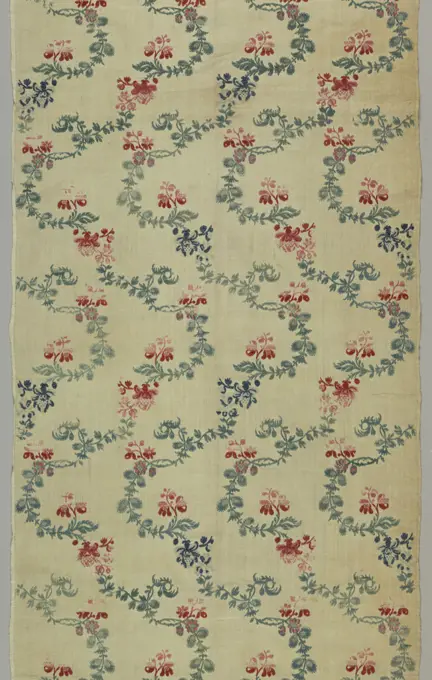
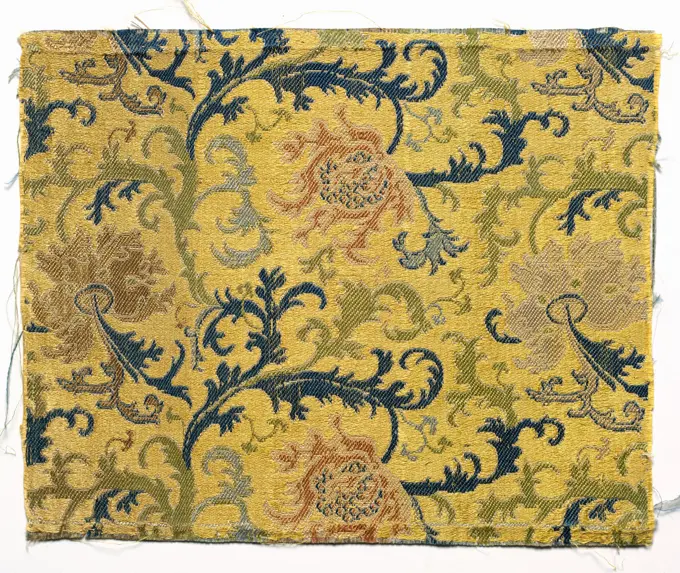
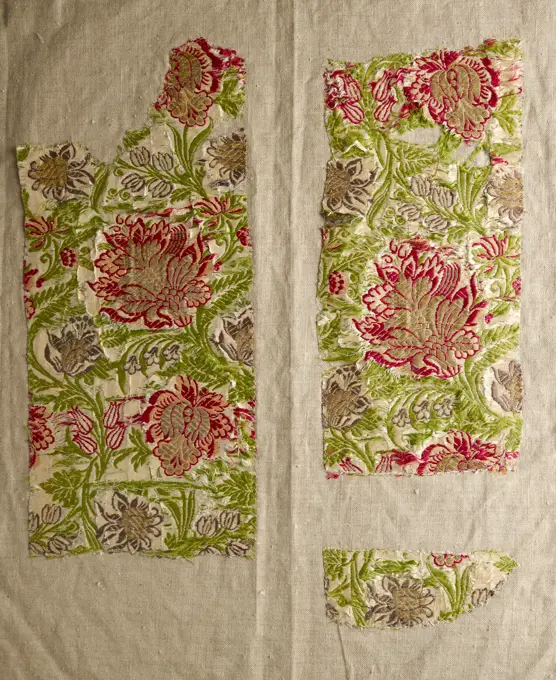
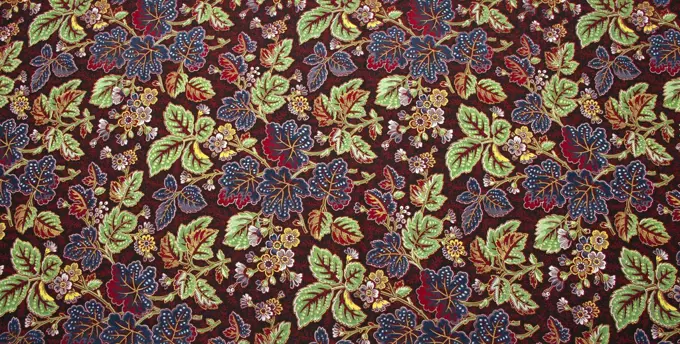
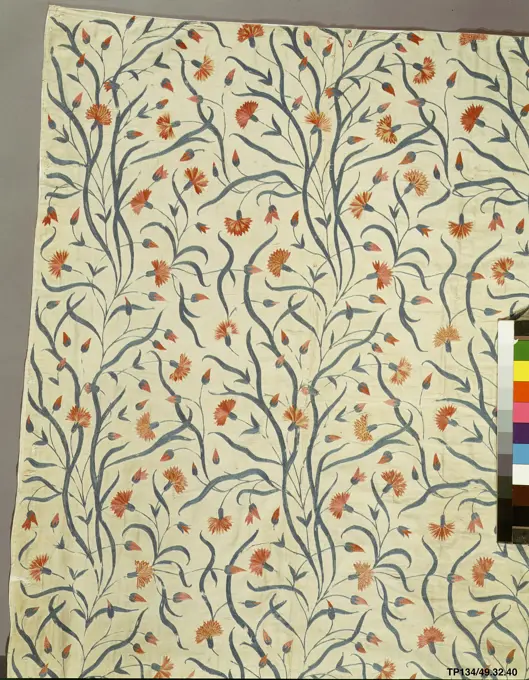
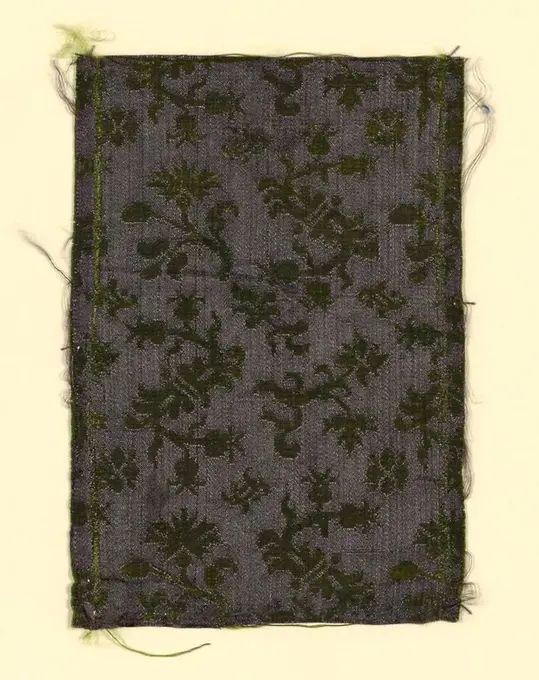
Fragments, Medium: linen, cotton and wool Technique: discontinuous supplementary wefts in a plain weave foundation (brocading), Sharply curved green vines with blue and red flowers. The pattern is made up of a straight repeat of counterfaced units. Lengths of fabric placed side by side would have continued pattern., France, late 18th century, woven textiles, Fragments
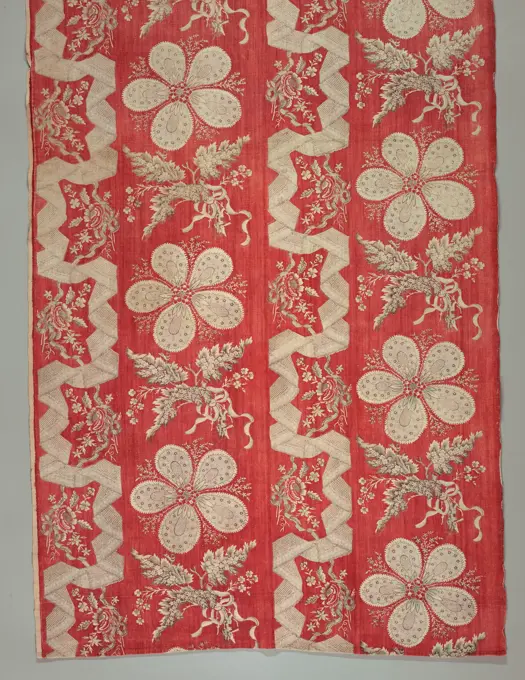
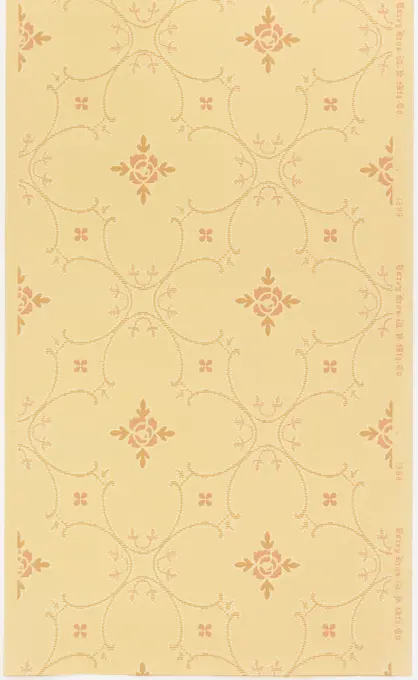
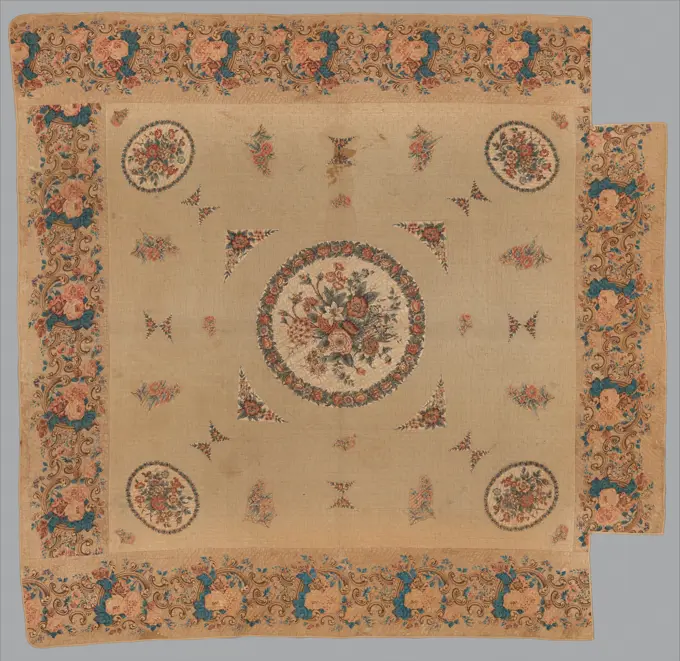
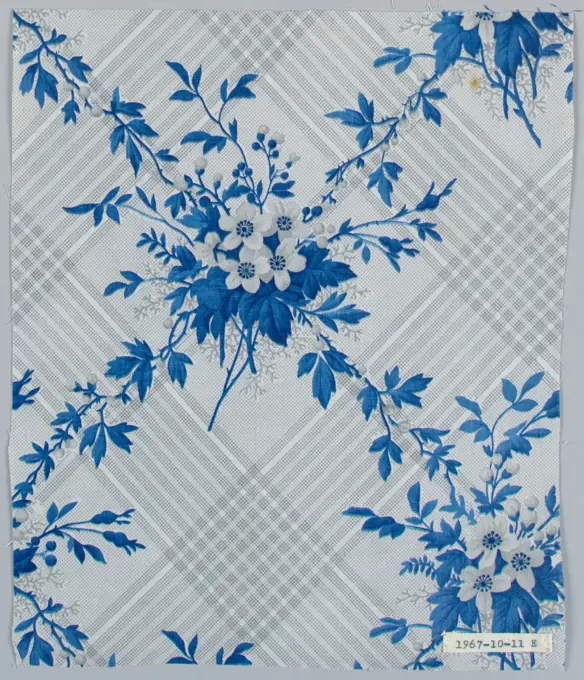
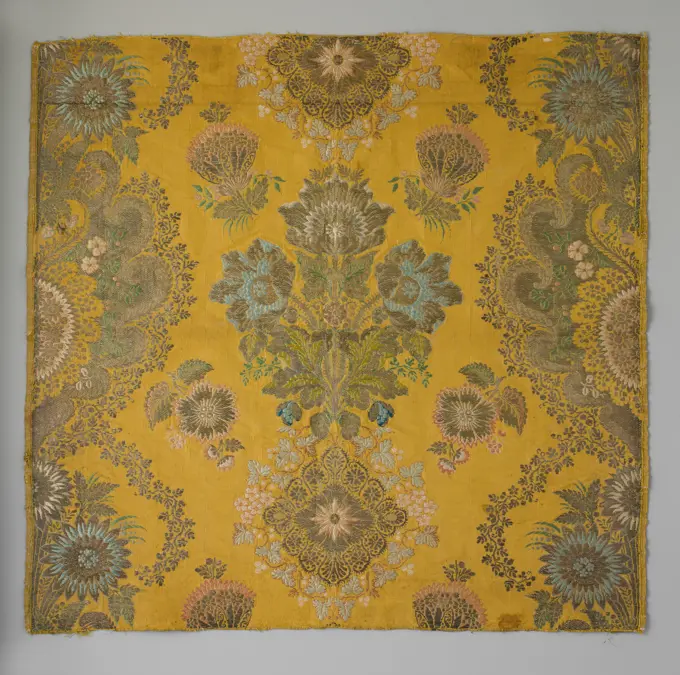
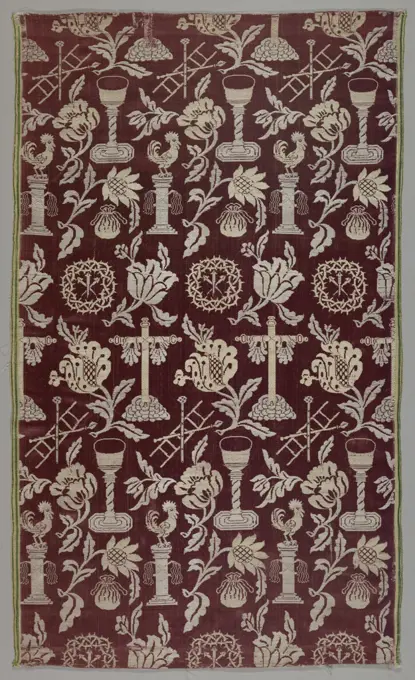
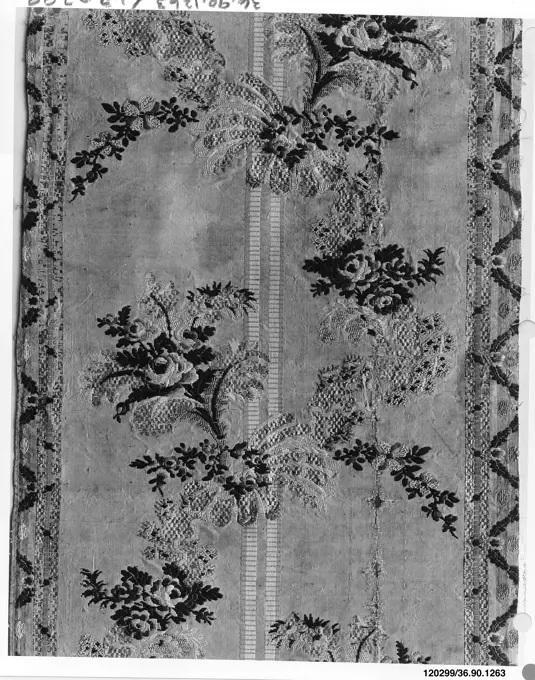
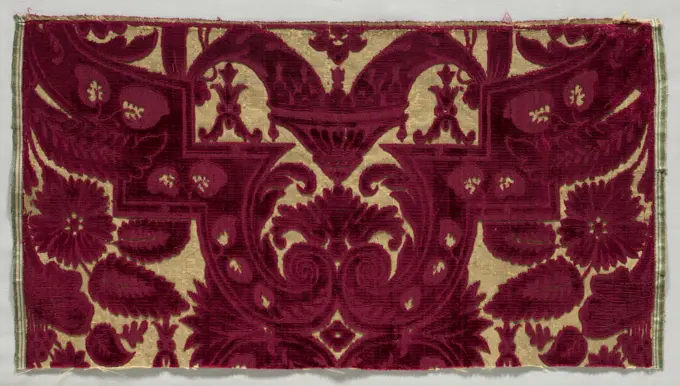
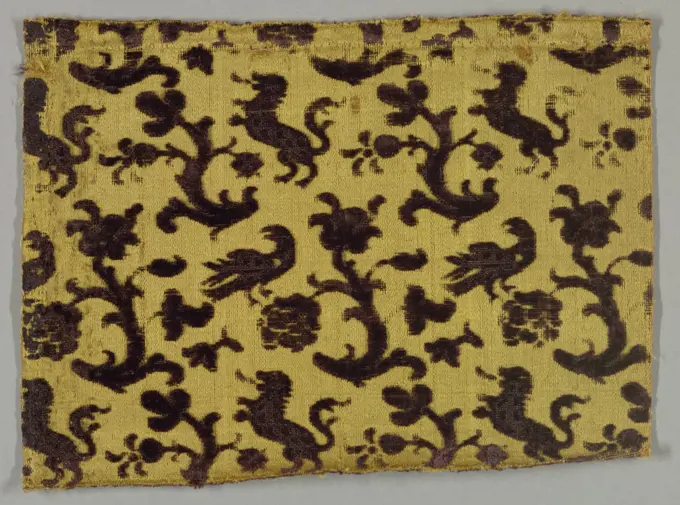
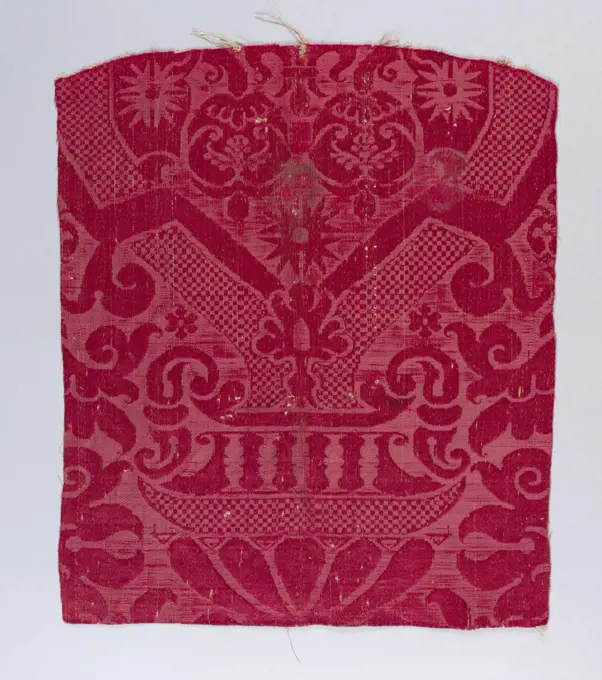
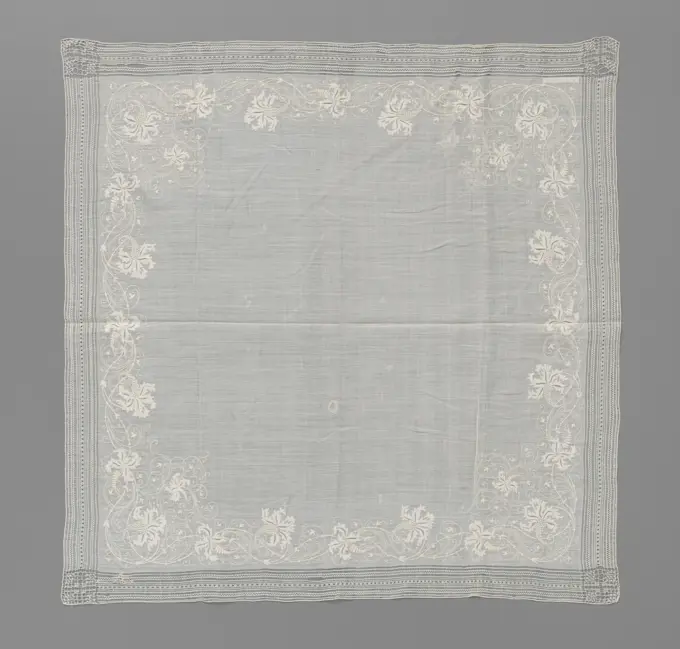
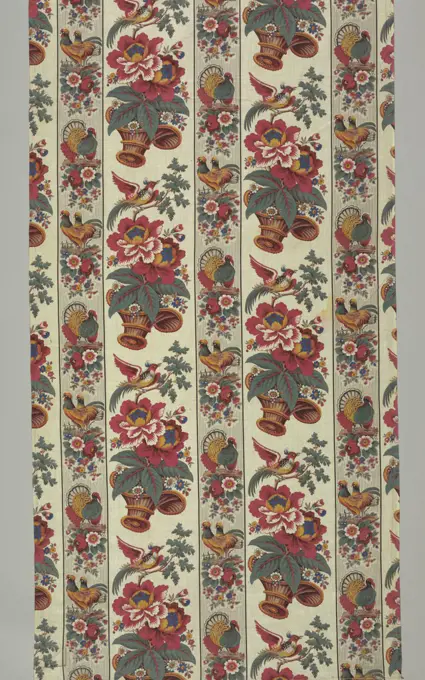
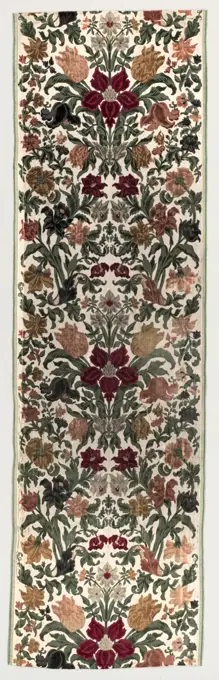
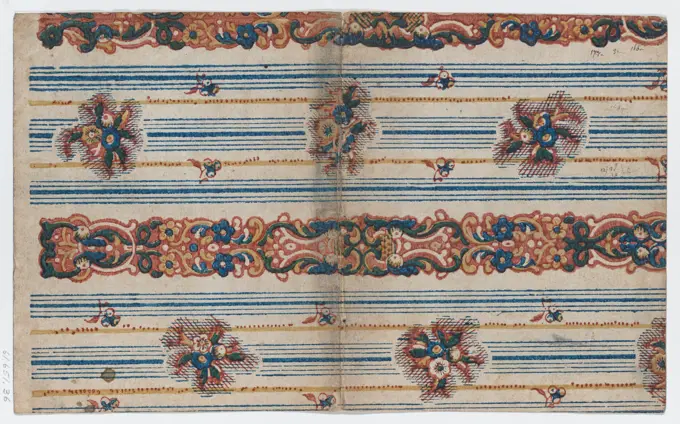
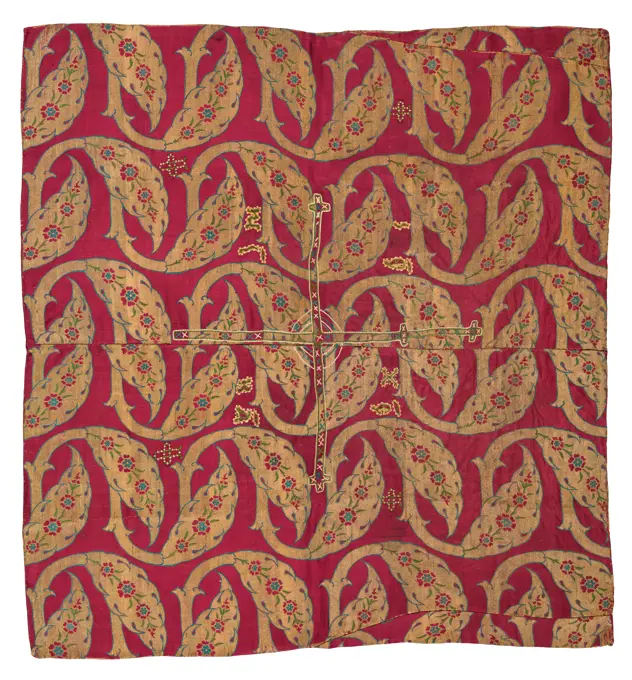
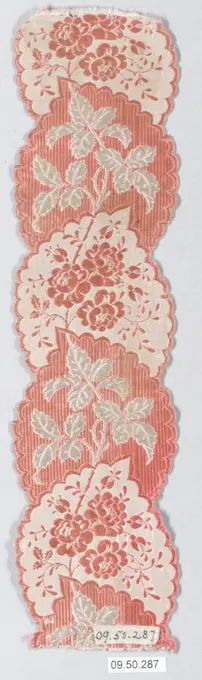
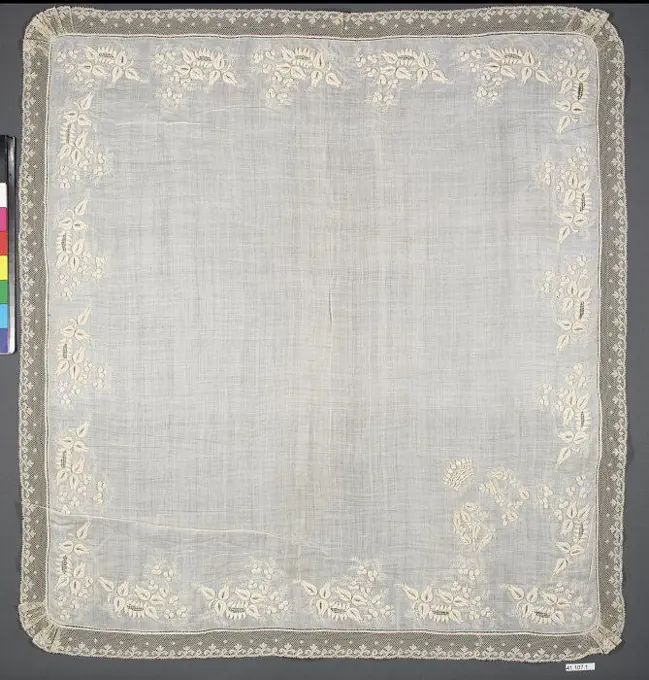
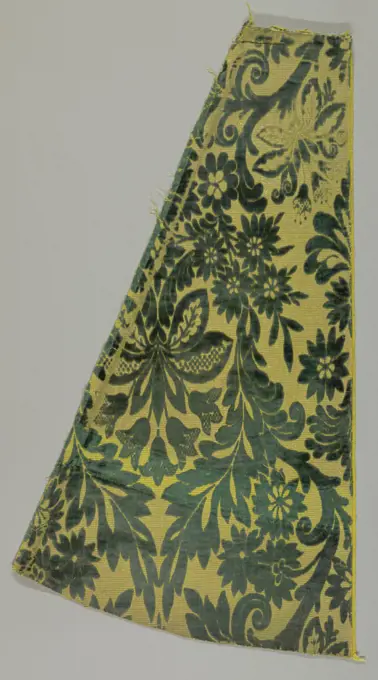
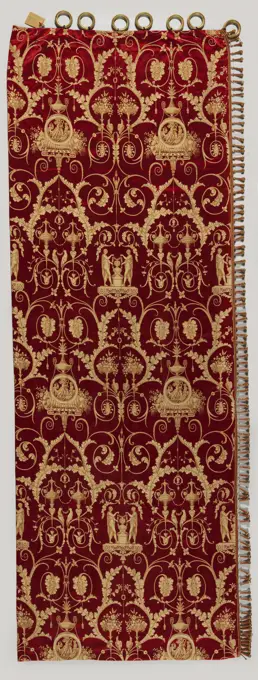
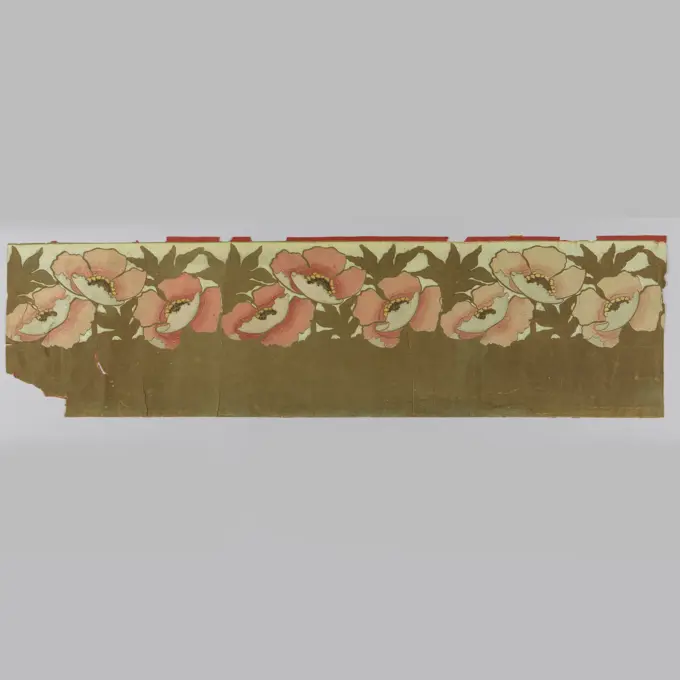
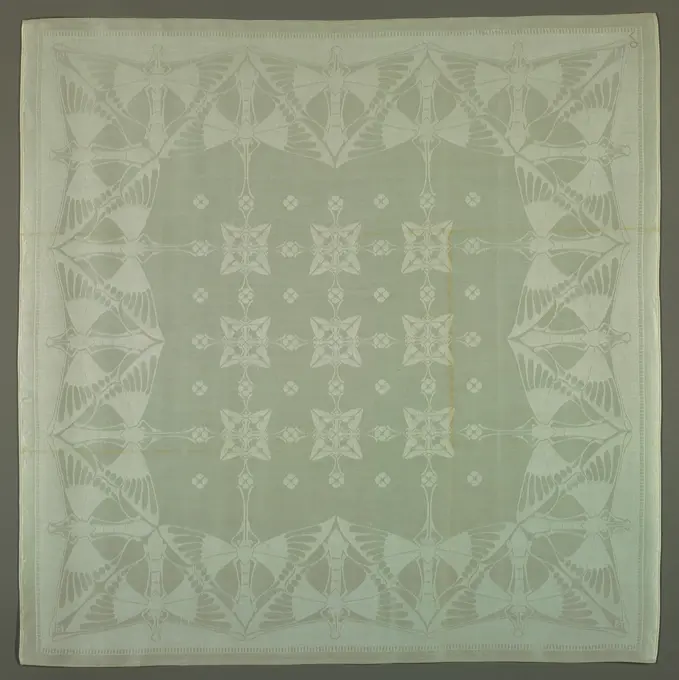
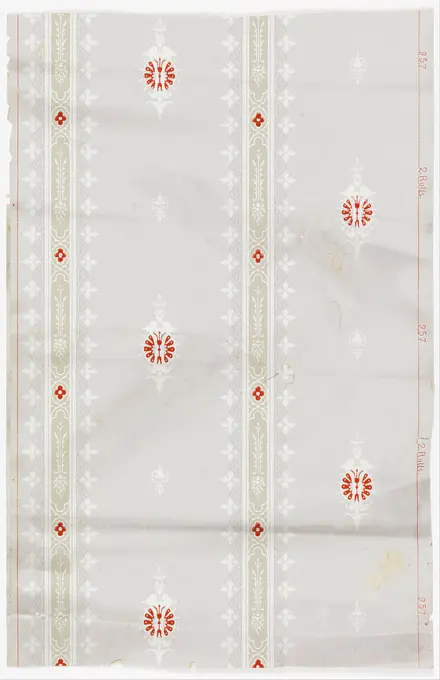
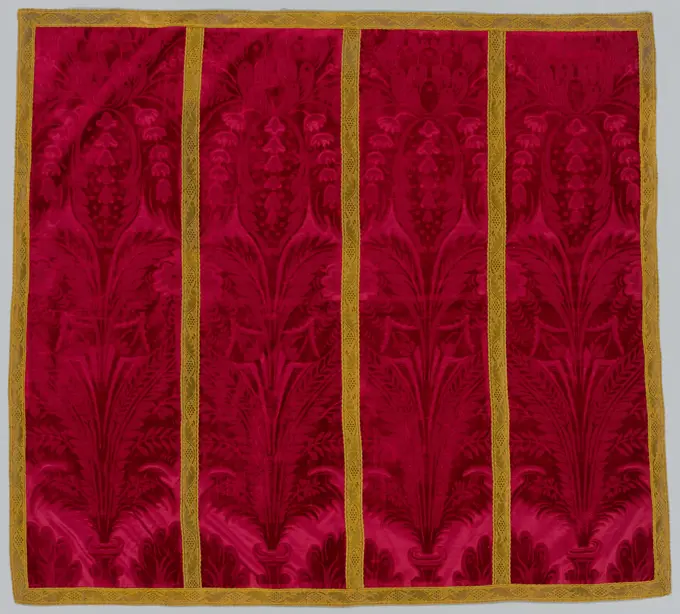
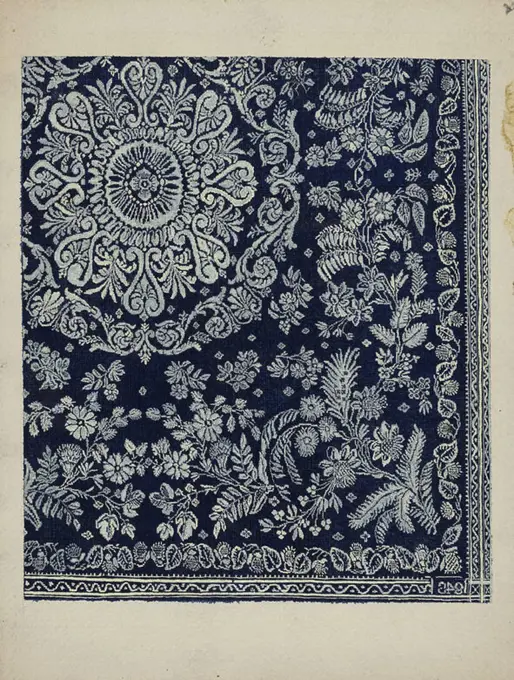
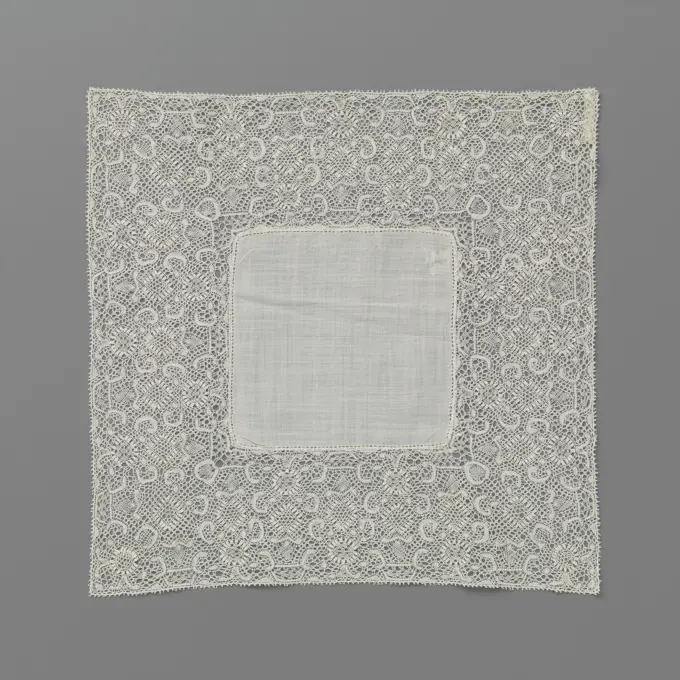
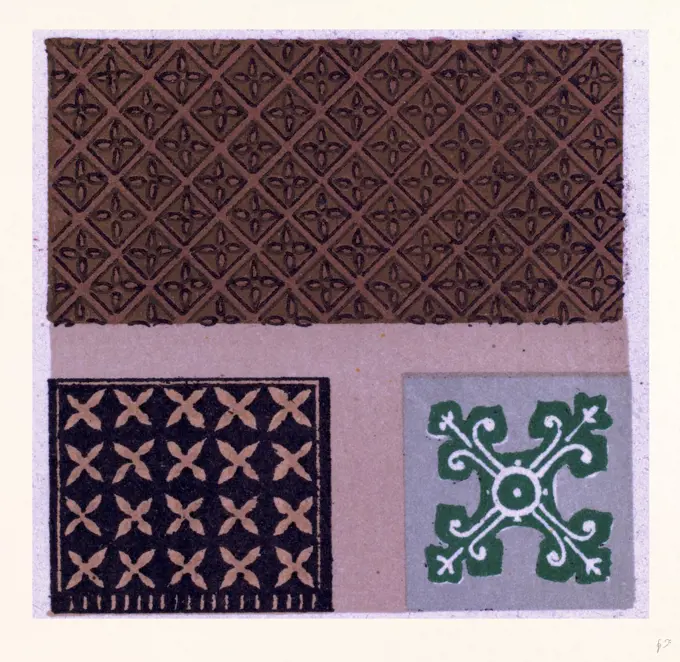
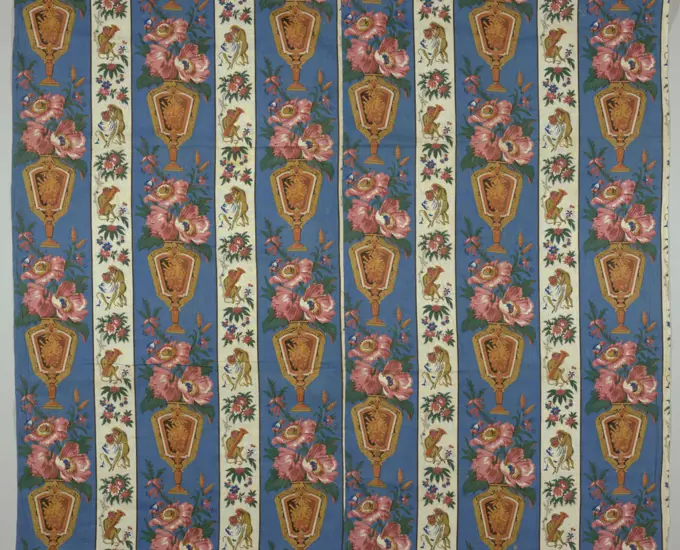
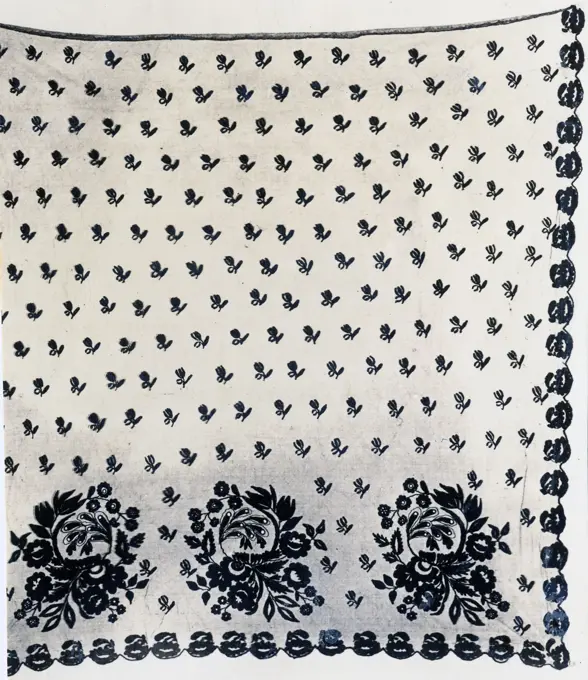
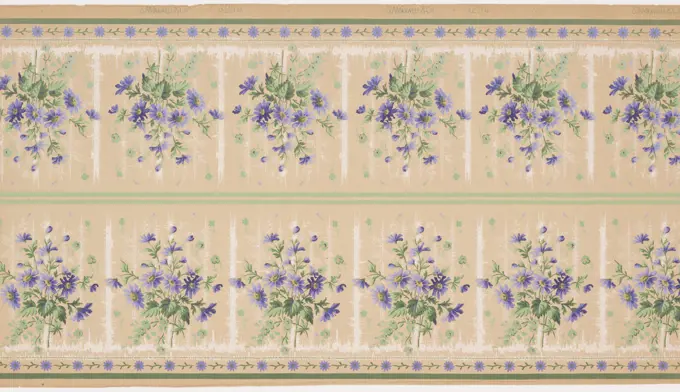
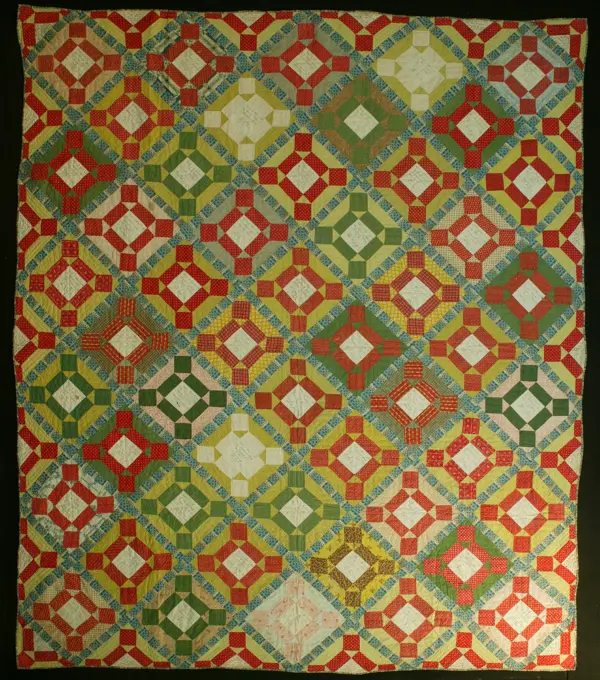
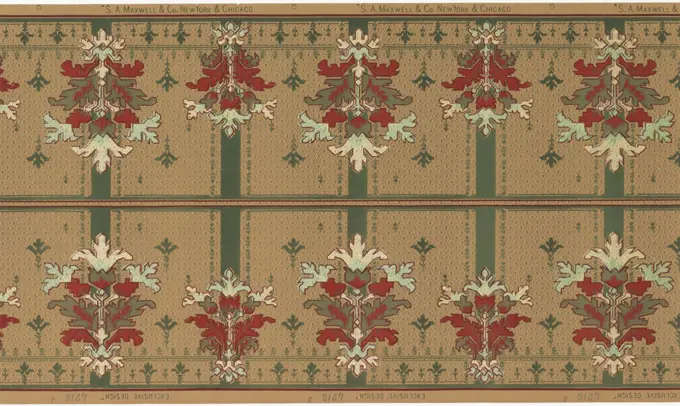
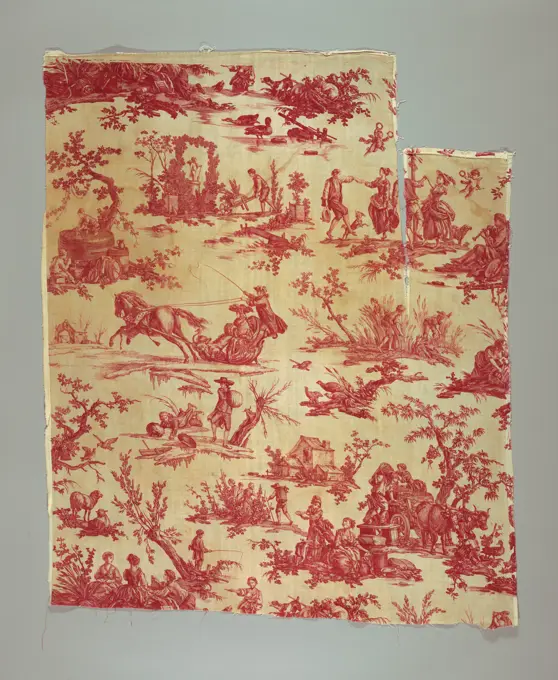
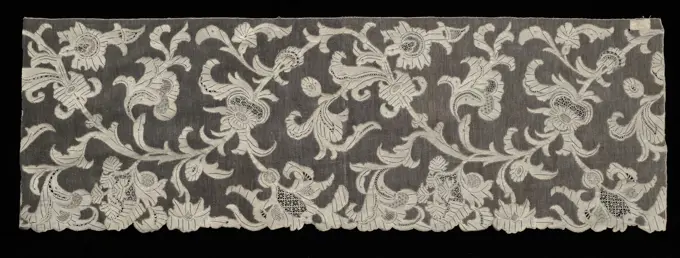
Needlepoint (Burano Point) Lace Edging, 20th century. Italy, Burano, 20th century. Lace, needlepoint: linen; average: 19.1 x 56.5 cm (7 1/2 x 22 1/4 in.).Textile (France); linen warp, cotton weft; Warp: 155.5cm (61 in.). Weft 92cm (36 1/4in.). Both selvedges present..; Bequest of Elinor Merrell; 1995-50-221Fragment (France); silk; Warp x Weft: 118 x 78 cm (46 7/16 x 30 11/16 in.); Bequest of Richard Cranch Greenleaf in memory of his mother, Adeline Emma Greenleaf; 1962-56-69-a,bFragment (Spain); silk, linenCeiling paper, Machine-printed on paper, On light salmon ground, treillage of white scrolls with light green highlights and pink flowers; one in wreath form and others in bunches., USA, 1907-08, Wallcoverings, Ceiling paperFragment, Medium: cotton Technique: relief printed on plain weave, Pattern of moss roses printed in blue on neutral background with stripes and stippling, England, 19th century, printed, dyed & painted textiles, FragmentFragment, Medium: silk Technique: plain weave patterned by supplementary warp floats and continuous and discontinuous supplementary weft floats, Polychrome garlands and bouquets on white., 18th century, woven textiles, FragmentFragment Made 1525-1575 Spain. Silk, satin weave with twill interlacings of secondary binding warps and patterning wefts .Textile Fragment, 1700s. Japan, 18th century. Silk, metallic thread; average: 23.5 x 15.2 cm (9 1/4 x 6 in.).Borders (five); linenCeiling Paper (USA); Manufactured by Carey Bros. W.P. Mfg. Co.; machine-printed paper, liquid mica; 85.5 x 49 cm (33 11/16 x 19 5/16 in.)Textile; cottonChintz appliquéd quilt ca. 1820-30 American The quilt top, binding, and backing are made from white linen fabric. The top is decorated with chintz appliques and a chintz border. The central floral medallion and the four corner ovals are printed in shades of pink, red, brown, and blue-green. The chintz border is printed with roses on a vermicelli background. There are fine double shells quilted in the central area and parallel diagonal lines quilted in the border.. Chintz appliquéd quilt 13874Piece 18th-19th century Japan. Piece 66544Textile; Manufactured by Schwartz-Huguenin; cottonRandolph F Miller, Skirt  Border Design, c 1937 Skirt - Border DesignRed or sprei of needle side with a quadruple star of Spitsovalen, Anonymous, c. 1850 - c. 1874 Red or spar of needle side: Brussels mesh side. Rectangular model. The heart has a symmetrical pattern of a quadruple star of Spitsovalen. Flower sideers to the short sides hang from the star. Leaf vines are hanging on the garlands. The edge has deeply wavy C-Voluten from which bouquets rise to midfield. The corners have the largest bouquets. Faint scalloped outsides. The motifs are made with feston stitches and equipped with thicker and thinner relief contours. Various decorative stitches and decorative lands have been used in many motifs, including exuberant in the C-Voluten. The motifs are connected to each other by a fine mesh ground, a mesh side. Brussels linen (material) Brussels Gaze Point Red or spar of needle side: Brussels mesh side. Rectangular model. The heart has a symmetrical pattern of a quadruple star of Spitsovalen. Flower sideers to the short sides hang from the star. Leaf vPiece 1720s French. Piece 216473Sample book. Date/Period: Ca. 1834. Sample book. Medium: cardboard, paper, cotton. Technique: block and roller printed on plain weave. Author: UNKNOWN.Millia Davenport, Bedspread, 1935 1942 BedspreadFragment (Dress Fabric) Made 1601-1625 Persia. Silk, double cloth .Floor paper, W.N. Peak, Brooklyn, New York, 1880 - 1900, Machine-printed paper, Printed three across: wood grain design of parquet flooring. Circle within a square alternating with a diamond shape. Strung beads run along either edge of borders., New York, USA, 1875-1906, Wallcoverings, Floor paperPiece 17th century Japan. Piece 71650Textile, Medium: silk Technique: 7&1 satin weave with weft floats bound in 1+3 twill, White figures on a pinkish-brown ground depicting the emblems of the Passion of Christ. The emblems include the cross, nails, crown of thorns, cock, ladder, bag of silver, cat o' nine tails, and sponge on a stick. Both selvedges are present, striped green and white satin., Spain, 17th century, woven textiles, TextilePiece 1760-70 French. Piece 224347Veil. unknown, authorPiece 18th century French. Piece 224309Chasuble late 15th-early 16th century Italian Animal patterns in European velvets were rare during this period, which suggests that the unusual design of this polychrome silk velvet was a special commission and may depict the device of a particular family or individual. The unidentified birds facing each other (perhaps swans or herons) are skillfully detailed by fine lines of contrasting color. The silk pile of this chasuble is composed of fours colors: two shades of green, punctuated with a deep vivid pink and off-white. The white is almost completely goneprobably due to the corrosive effects of the bleaching process necessary to achieve this color.. Chasuble 226551Samples (USA); Manufactured by Orinoka Mills (United States); Warp x Weft (a): 13 × 44.5 cm (5 1/8 × 17 1/2 in.) Warp x Weft (b): 18.5 × 22 cm (7 5/16 × 8 11/16 in.) Warp x Weft (c): 19 × 21.5 cm (7 1/2 × 8 7/16 in.) Warp x Weft (d): 18.5 × 25.5 cm (7 5/16 × 10 1/16 in.) Warp x Weft (e): 19 × 21 cm (7 1/2 × 8 1/4 in.) Warp x Weft (f): 25.5 × 12.5 cm (10 1/16 × 4 15/16 in.) Warp x Weft (g): 21.5 × 16.5 cm (8 7/16 × 6 1/2 in.)Fragment, 1700s. China, 18th century. Satin ground; silk diasper weave; overall: 17.8 x 14 cm (7 x 5 1/2 in.).Panel Made 1750-1775 Germany. Silk, plain weave with supplementary patterning and brocading wefts .Velvet Fragments, 1600s. Italy, Genoa, 17th century. Velvet; overall: 167 x 108.7 cm (65 3/4 x 42 13/16 in.).Fragment (USA)Textile (Japan); silkFurnishing Textile. Italy, Genoa, late 17th or early 18th century. Textiles. Cut and uncut silk, voided velvet, satin weave groundFragment, Medium: silk Technique: ciselé, voided supplementary warp pile in a satin foundation (velvet), Fragment with a dark yellow ground has a design of dark purple flowering branches with birds and lions., Italy or Spain, 17th century, woven textiles, FragmentFragment, Medium: silk and linen Technique: brocatelle, Dark red fragment in a vase design with checked band. Part of a larger pattern., 16th-17th century, woven textiles, FragmentFragment of embroidery unknownFragment Figured tissue in linen and wool, anonymous, 1500 - 1599 Fragment with a pattern of rosettes on dark green stock, interspersed with swinging band work. Italy Chain: Wool. impact: Linen (Material) Fragment with a pattern of rosettes on dark green stock, interspersed with swinging band work. Italy Chain: Wool. impact: Linen (Material)Batisten zakdoek met borduurwerk en een rand fils tirés.Batist handkerchief with embroidery including Plugers and shadow work and along the sides Edge embroidery: Work with pulled out wires. Square model. The embroidery has a pattern that consists of a graceful lines of wavy and curling thin tanks with many curling side branches. To the tendrils large exotic flowers with whimsical carnate petals and a far-reaching pestle are constantly growing. The sparingly embroidered leaves on the tendrils are small compared to the flowers. The work with pulled wires has a pattern with different lines and on the corners a pattern with small diamonds in a square grid work.Samples, Medium: cotton Technique: printed, Four samples patterned by alternate stripes of the following: narrow brown stripes, herringbone stripes and stripes of flowers and leaves of brown and red on a vermicular ground edged with very small brown flowers., England or USA, 19th century, printed, dyed & painted textiles, SamplesRug oriental textile with multicolored embroidery. Dress of multicolored chewy cotton, decorated with flower drinks and ornament, lined with cotton.Piece. Culture: French. Dimensions: 20 x 19 1/2 inches (50.8 x 49.5 cm) (loom width). Date: ca. 1735. Museum: Metropolitan Museum of Art, New York, USA.Fragments of silk fabric  a pattern of Fiori Alla Natural unknownSidewall, Machine-printed, On shiny gold ground, clusters of off-white, tan and brown chrysanthemum-like flowers in various stages of openness alternate with stylized four-petal daisies and buds in same colorway., USA, ca. 1880, Wallcoverings, SidewallTextile; linenTextile, Medium: cotton Technique: printed on plain weave, Alternating vertical bands with flowers and birds in polychrome. Narrow band has roosters, chickens and turkeys resting on clusters of flowers. Wider band has large baskets of flowers alternating with an exotic bird on a branch., England, 19th century, printed, dyed & painted textiles, TextilePiece early 17th century Italian or Spanish. Piece 216625Lengths of Floral Velvet, 1600s. Italy, Genoa, 17th century. Velvet (cut, uncut, voided); silk; average: 200.9 x 59.5 cm (79 1/8 x 23 7/16 in.).Textile (France); silk; Warp x Weft: 98 x 54.5 cm (38 9/16 x 21 7/16 in.); 1972-36-9Fragment; linen, silk, woolTextile, Arthur Wilcock, Medium: cotton Technique: printed, Heavy cotton, printed on both sides. Design shows horizontal rows of crocus and daffodils. Shade of yellow, tan, and red for some outlines. Stuff is 31' wide. Both selvedges present., England, ca. 1890, printed, dyed & painted textiles, TextileBook cover with overall striped and floral design 19th century Anonymous. Book cover with overall striped and floral design. Anonymous , 19th century. 19th century. Relief print (wood or metal). PrintsTextile, Medium: silk and linen Technique: plain compound satin weave, Brocatelle type with pattern of stylized stems and leaves reserved in red satin on a ground of gold produced by extra yellow silk wefts floated over the surface of the red satin. Main wefts are coarse linen., Spain, 17th century, woven textiles, TextileFragment, Medium: silk Technique: plain weave patterned by supplementary warp floats and discontinuous supplementary weft floats, Zig-zag floral bands on pink and white striped background., 1750-1800, woven textiles, FragmentGalloon 18th century French. Galloon 213989Chalice Cover. Turkey, second half of the 16th century. Textiles. Silk satin with silk and metallic-thread supplementary-weft patterning bound in twill (lampas or kemha) with silk embroideryFragment, silk woven, large scale design of slender stems in white on grey., late 19th century, woven textiles, FragmentRibbon 18th century French. Ribbon 215677Handkerchief French 19th centuryTextile, Medium: silk, cotton, metal strips Technique: cut supplementary warp pile (velvet) in a plain weave cotton foundation, extra weft floats, Five pieces of velvet forming a panel. Elaborate floral groups with leaves and vines in dark green velvet on a yellow and gold background. On face, extra weft floats of yellow silk alternating with metal strips., Russia, 19th century, woven textiles, TextileCalico, Russian Applied Art  Curtain with imitation style directoire, anonymous, c. 1800 - c. 1825 Curtain with grotes' pattern of medallions, portrait busts, vases and volute vines in cream against a satin surface in dark brick red. Neo-Pompeiaan. Red lining. With large, profiled rings and fringes on one side.  satin. silk. ringen: brass (alloy). voering: cotton (textile) Curtain with grotes' pattern of medallions, portrait busts, vases and volute vines in cream against a satin surface in dark brick red. Neo-Pompeiaan. Red lining. With large, profiled rings and fringes on one side.  satin. silk. ringen: brass (alloy). voering: cotton (textile)Fragment ; silk; Warp x Weft (selvedge to selvedge): 43.2 x 53.3 cm (17 x 21 in.)Sample (Russia); silk, metallic threadHanging 18th century. Hanging 446661Border Made 1801-1900 England. Cotton, plain weave; block printed .Piece 1835-40 British. Piece. British. 1835-40. Cotton. Textiles-PrintedFrieze (possibly USA); oatmeal paper; 115 x 45.5 cm (45 1/4 x 17 15/16 in.)Sample (France); silkNapkin, Butterfly: Design no. 505; Designed by Chris Lebeau (Dutch, 1875 - 1945); Manufactured by E.F.J. Van Dissel and Son; Netherlands; linen. quality no. 810 (finest the company produced); Warp x Weft: 71 x 70 cm (27 15/16 x 27 9/16 in.)Fragment (Italy); silk, metal wrapped linen; Warp x Weft: 23.5 x 50.3 cm (9 1/4 x 19 13/16 in.)Sidewall. Date/Period: 1850-70. Sidewall. Machine-printed. Height: 770 mm (30.31 in); Width: 495 mm (19.48 in). Author: UNKNOWN.Altar Hanging, 1600s. Italy, 17th century. Velvet; overall: 114.9 x 129.5 cm (45 1/4 x 51 in.).Border, Medium: silk Technique: bobbin lace made in Lille style with heavy outlining thread, Border in a Lille-style pattern with a ground called spanish mesh which was more than likely made in Italy., Spain, late 18th century, lace, BorderWoven Coverlet. Dated: 1935/1942. Dimensions: overall: 30.2 x 23 cm (11 7/8 x 9 1/16 in.). Medium: watercolor and gouache on paper. Museum: National Gallery of Art, Washington DC. Author: Dorothy Lacey.Kloskant handkerchief with C-volutes between which a diamond-shaped flower in a pot and a round tree, anonymous, c. 1830 Natural -colored batist handkerchief trimmed with a wide border bobbin: magic side. Square model with straight sides that are finished with picots. The pattern consists of a lines of C-Voluten with ringed snowflakes, between which a diamond-shaped flower is in a pot and a round tree above each other. In the corners there is a slightly different but comparable pattern that is placed slanted. The motives are made in linen and mains and they are connected by a twisted cross -stroke ground. Striking are the forms with which the contours of the diamond shapes and circles are made. Southern Netherlands batiste bobbin lace / fairy point Natural -colored batist handkerchief trimmed with a wide border bobbin: magic side. Square model with straight sides that are finished with picots. The pattern consists of a lines of C-Voluten with ringed snowflakes, between which a diamond-Japanese embroidery unknownTextile, Cheney Brothers, (South Manchester, Connecticut, USA), Medium: silk Technique: compound satin weave, Dark blue and beige reproduction textile inspired by a sixteenth century example in the Cooper Union Museum collection. Design has a large-scale symmetrical design of a flower-filled urn surrounded by scrolling bands with perching peacocks. Warp threads vary slightly in tone to simulate the appearance of a historical textile., USA, ca. 1915, woven textiles, TextileRenaissance ornamentTextile, Medium: cotton Technique: printed by engraved roller on plain weave, Unlined bed cover made up of two lengths of printed fabric. Pattern composed of two stripes: the wider with an urn of flowers on a blue background. 18.5cm. wide and the other with a monkey giving another monkey a haircut alternating with a monkey playing a horn seated under a flowering plant. 9.5cm. wide. Two groups of stripes are half dropped and with an additional wide stripe fill full width of fabric. Unit of repeat: 36.5 cm. high x 28 cm. (11') wide., England, late 19th century, printed, dyed & painted textiles, TextilePiece 18th century possibly British. Piece 227439Piece 1872-86 British. Piece 226224Ceiling Paper (USA); Manufactured by Maxwell & Co., S.A. (United States); machine-printed paper, liquid mica; 92 x 49 cm (36 1/4 x 19 5/16 in.)Piece, 18th century, L.51 x W.33-1/2 in., linen, silk; needlework, Turkey, 18th centurySidewall (USA); Manufactured by Maxwell & Co., S.A. (United States); machine-printed paper, liquid mica; 92 x 49 cm (36 1/4 x 19 5/16 in.)Veil Made 1800-1820 United States. Silk, machine-made net; embroidered with silk in darning and running stitches . Mary N. KeithFrieze, Maxwell & Co., S.A., Chicago, Illinois, USA, Machine-printed paper, liquid mica, ungrounded, Clusters of blue flowers with green leaves, with upright white verticals separating into compartments. Narrow band of purple floral motifs at bottom of border. Two borders printed across the width., USA, 1905-1915, Wallcoverings, FriezePersian ornamentBedcover ( Album Patch or Signature Quilt) Made 1847-1848 United States. Cotton, various plain weaves; most printed; pieced; quilted; inscribed; backed with cotton, plain weave; pieced; printed; edged with cotton, plain weave; printed .Fragment. Italy. Date: 1601-1650. Dimensions: 15.5 x 10.8 cm (6 1/8 x 4 1/4 in.). Silk, warp-float faced satin weave self-patterned by seversing of faces (damask). Origin: Italy. Museum: The Chicago Art Institute, Chicago, USA.Piece 18th century Japan. Piece 71364Fragment, Medium: silk, linen, wool Technique: plain weave plus plain weave, Ogival pattern with circles at the point on intersection., 17th century, woven textiles, FragmentPanel 18th century Japan. Panel. Japan. 18th century. Silk, ramie, metallic thread. Edo period (1615-1868). Textiles-EmbroideredTextile (England); silk, wool; 1968-116-1-a/jFrieze, Maxwell & Co., S.A., Chicago, Illinois, USA, Machine-printed paper, Printed two across. Stylized floral medallions alternating large and small. Vertical band behind each medallion. Printed in metallic green, red, olive green on gray/beige ground., USA, 1905-1915, Wallcoverings, FriezeBöhmer Franz (1907-1943), official apartment of the Reich Foreign Minister Joachim von Ribbentrop in Berlin-Mitte (1941-1941): Stem Main entrance: Ornament. Pencil on transparent, 48.8 x 20.3 cm (including scan edges)Panel Made 1501-1700 Italy. Silk and gilt strip wound around a silk fiber core, warp-float faced satin weave with supplementary brocading wefts .Bedcover (North Carolina Lily or Virginia Lily Quilt) Made 1835-1845 United States. .Textile, Les Delices des Quatre Saisons; Designed by Jean-Baptiste Marie Huet (French, 1745 - 1811); France; cotton; Warp x Weft (a): 109 x 91 cm (42 15/16 x 35 13/16 in.); 1980-34-11-a