Textiles and Fragments

A selection of historical textile fragments showcasing intricate patterns and colors, revealing craftsmanship from Japan, India, and Europe.
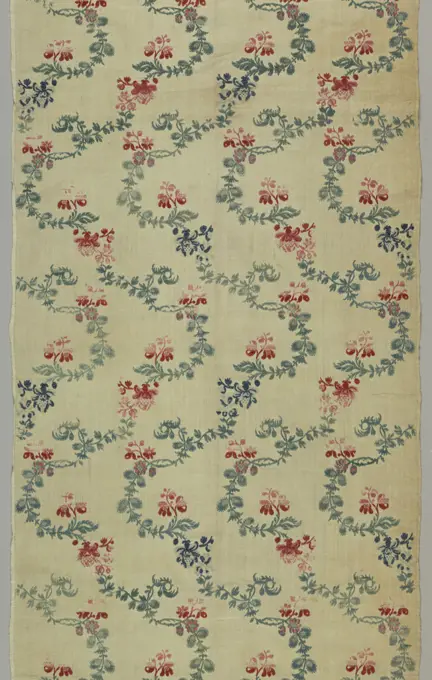
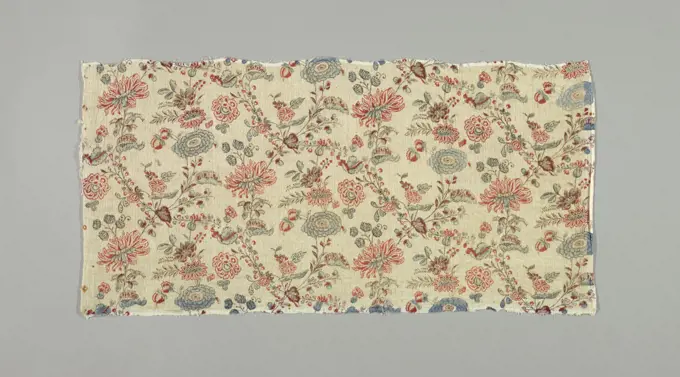
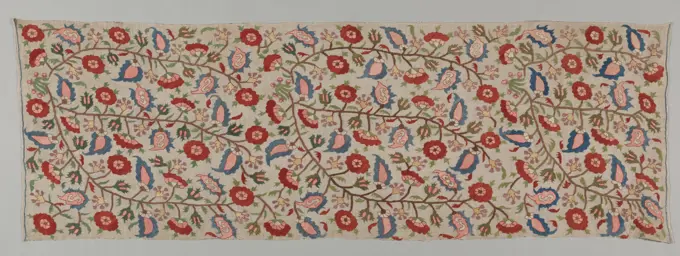
Fragments, Medium: linen, cotton and wool Technique: discontinuous supplementary wefts in a plain weave foundation (brocading), Sharply curved green vines with blue and red flowers. The pattern is made up of a straight repeat of counterfaced units. Lengths of fabric placed side by side would have continued pattern., France, late 18th century, woven textiles, Fragments
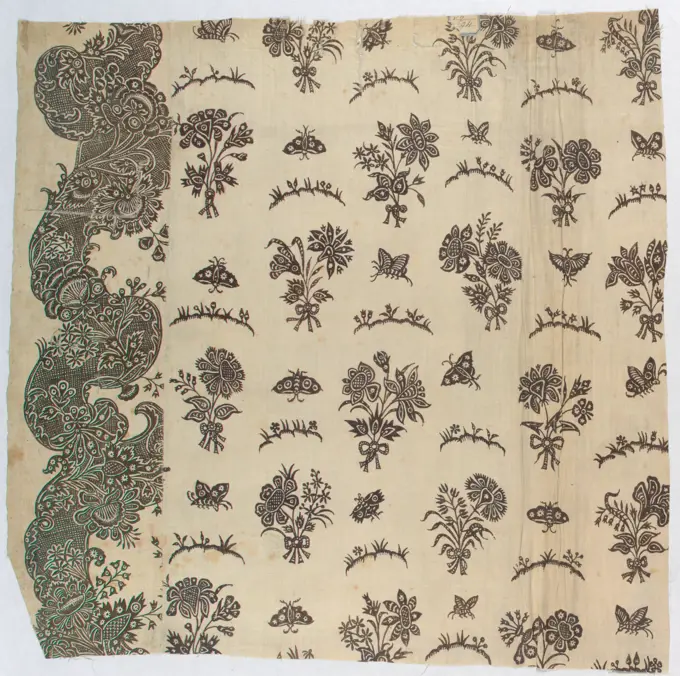
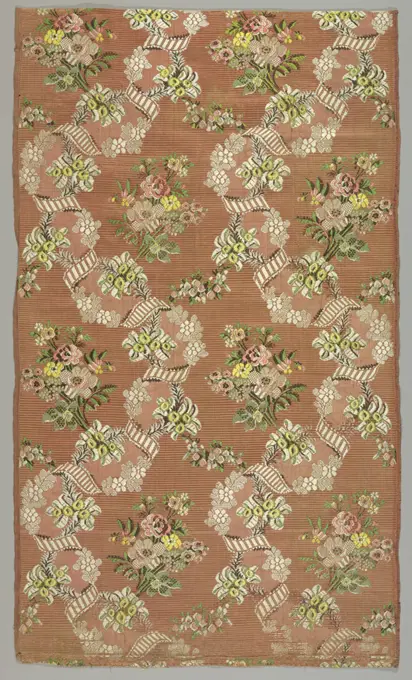
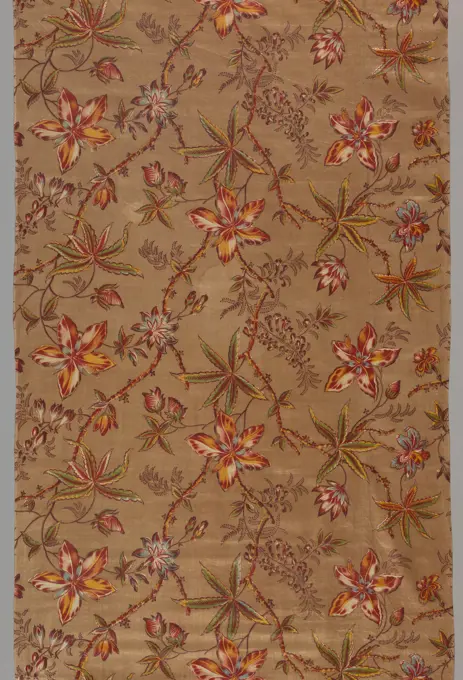
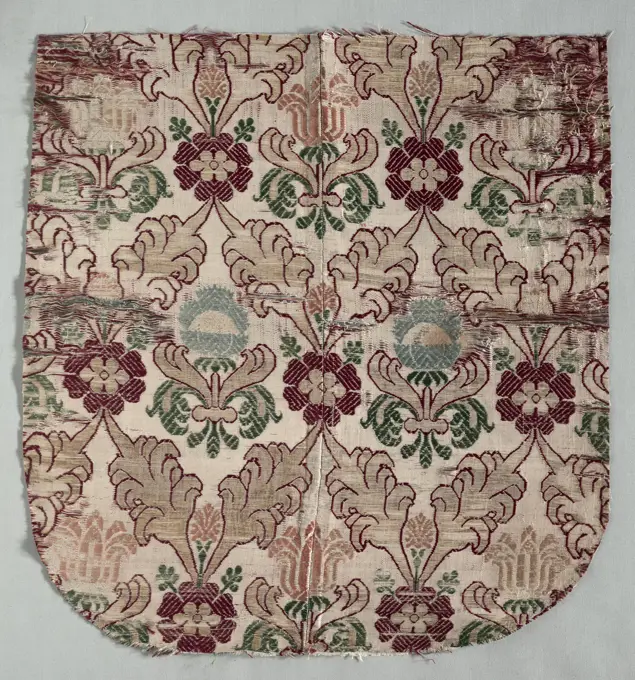
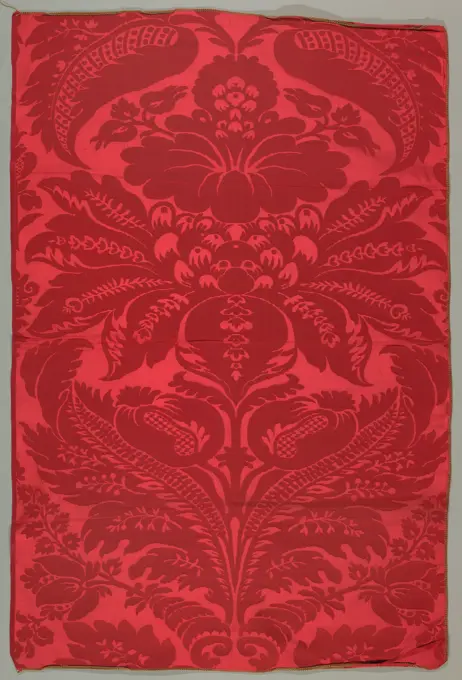
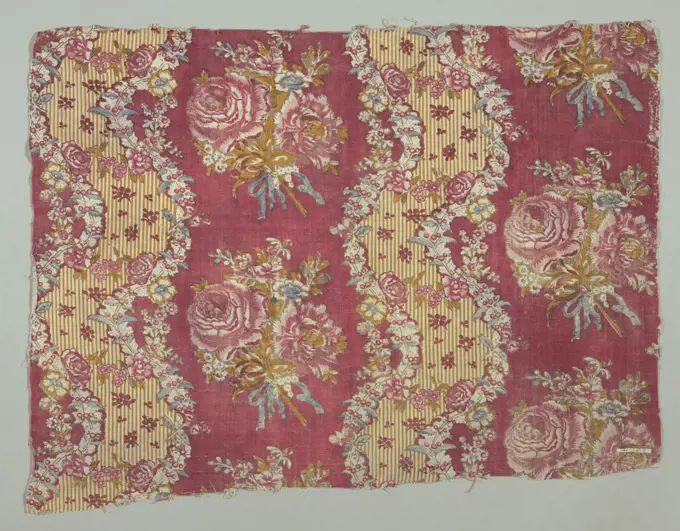
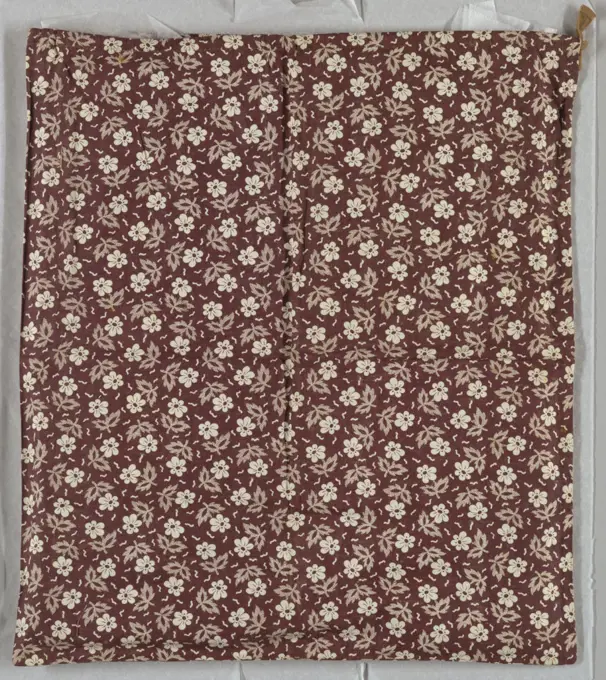
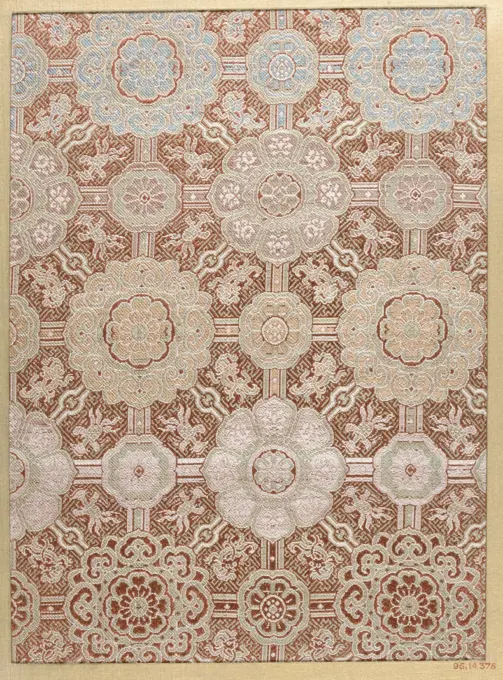
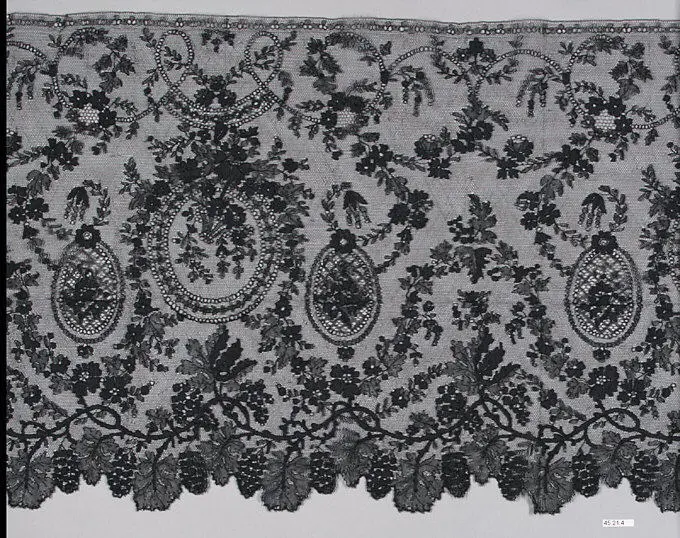
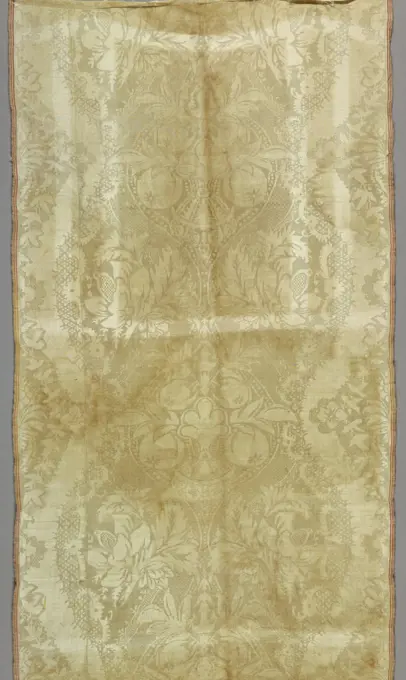
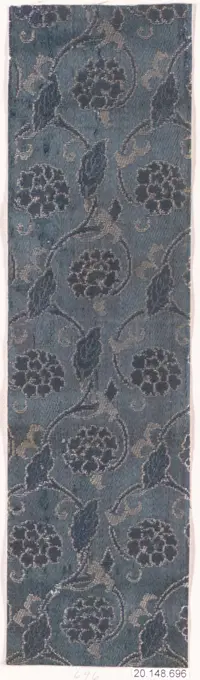
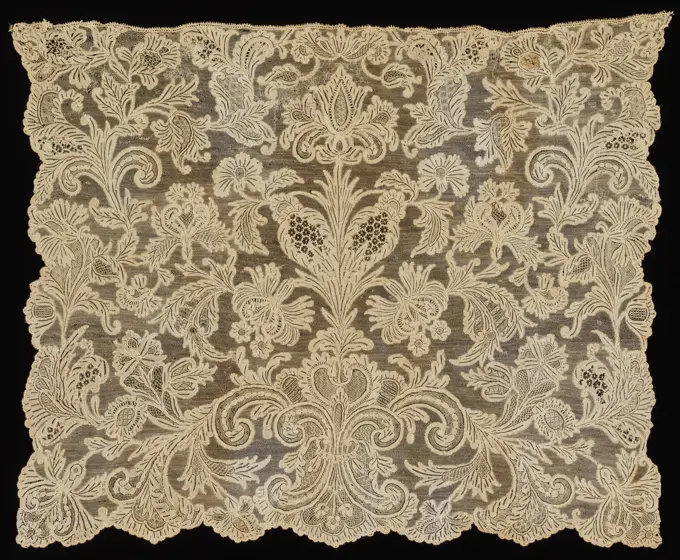
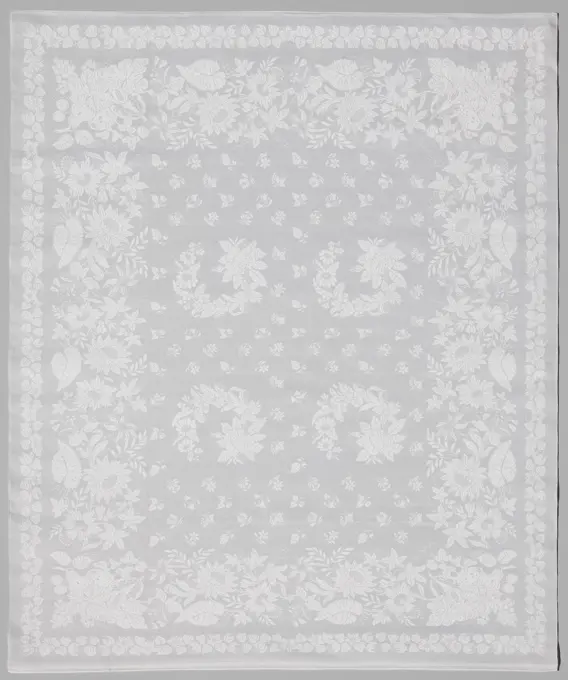
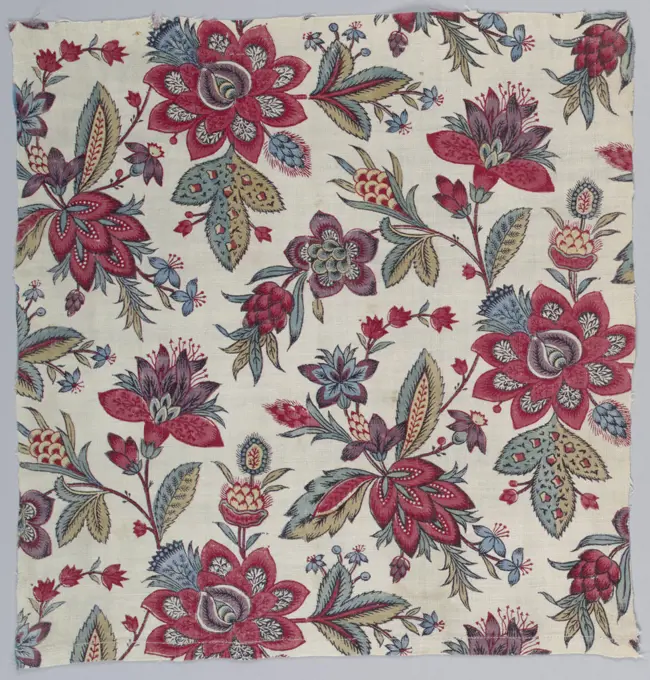
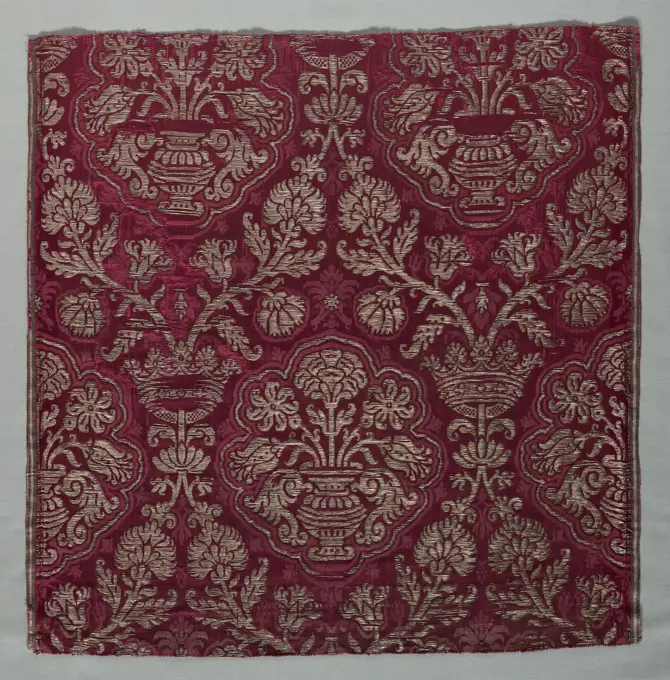
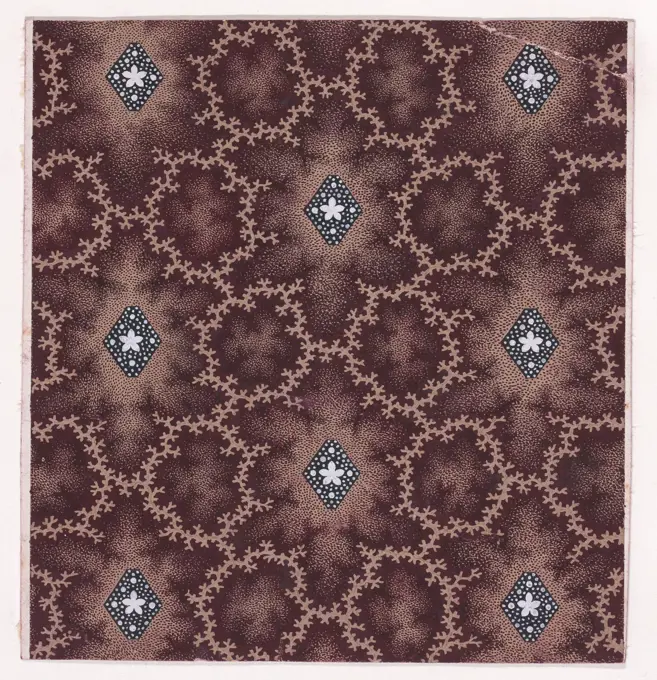
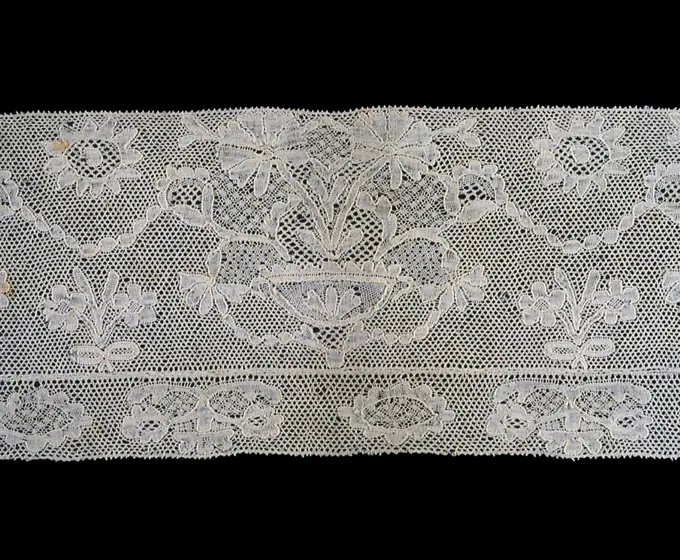
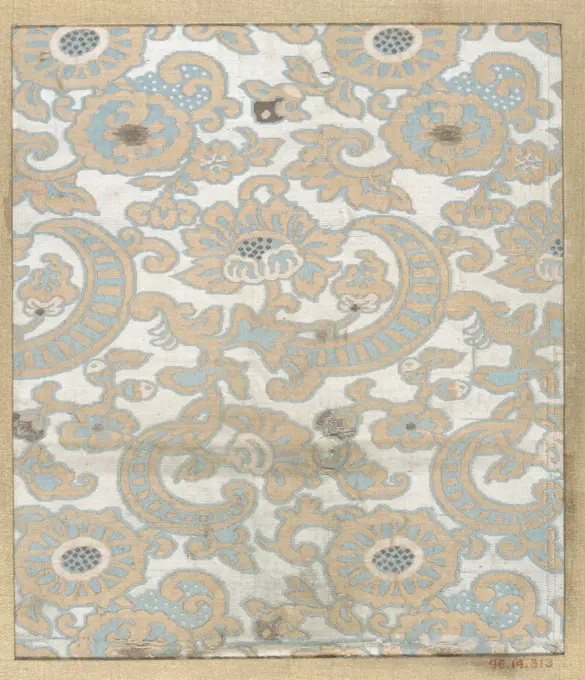
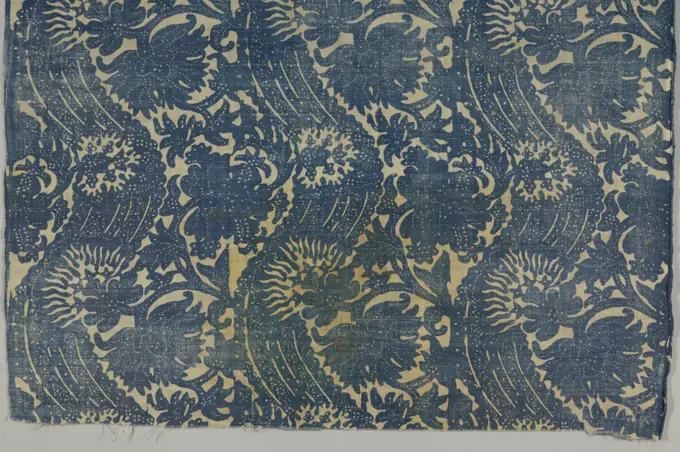
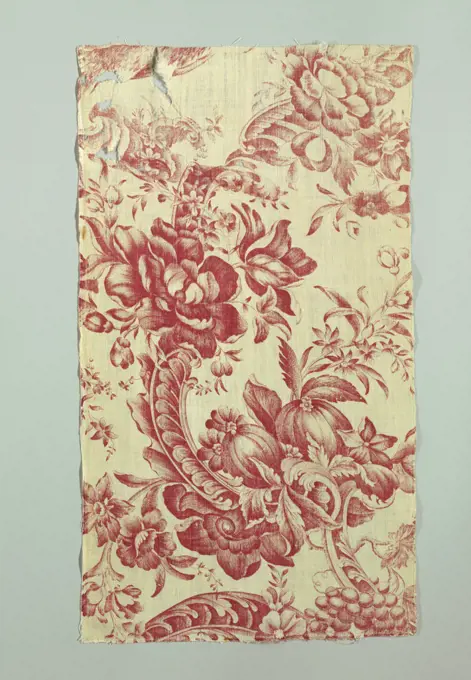
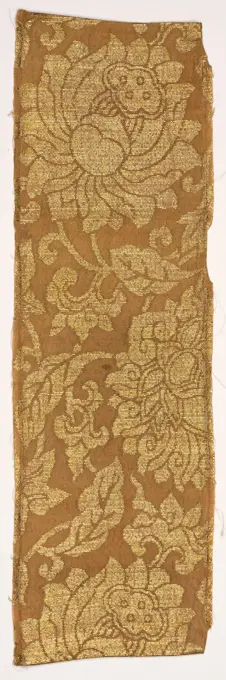
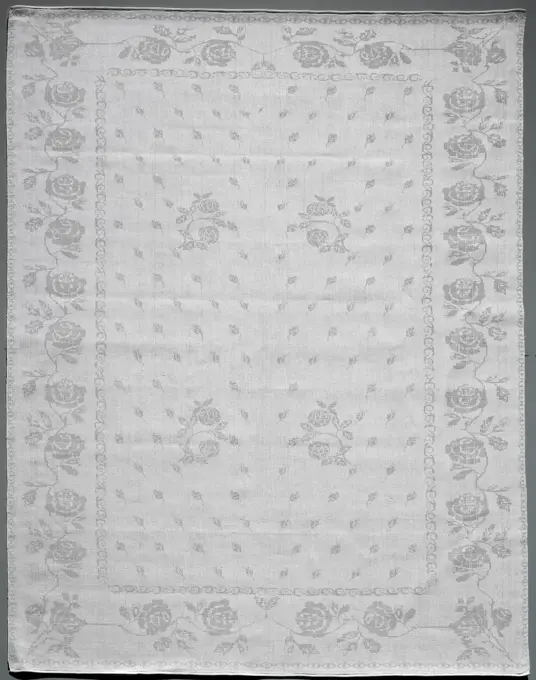
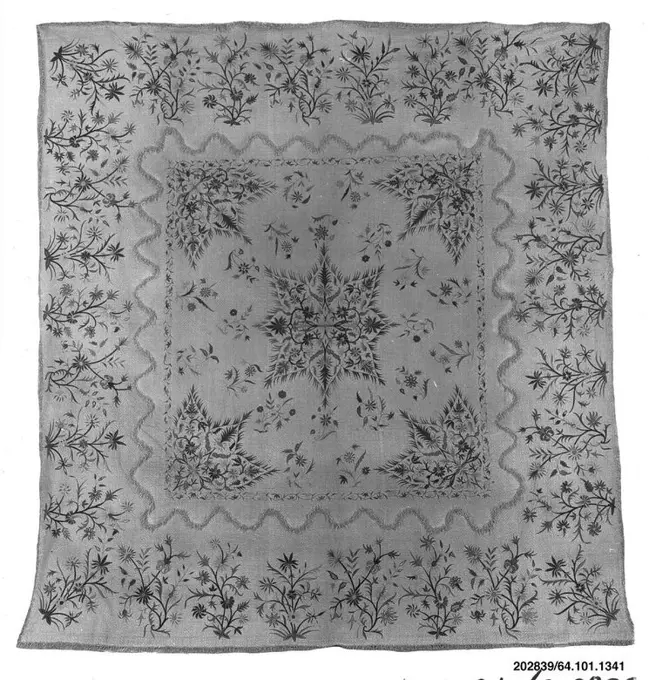
Fragment (Japan)Textile (India); Warp x Weft (a): 49 x 51 cm (19 5/16 x 20 1/16 in.) Warp x Weft (b): 32.5 x 10 cm (12 13/16 x 3 15/16 in.)Textile, Medium: silk Technique: 5-harness satin damask, Medium-scale classical urn and flowers in roughly ogival framework formed by stylized leaf sprays at angles and crowns at tangent points. Double cord selvages., Italy or Spain, late 16th-early 17th century, woven textiles, TextileFragments, Medium: silk Technique: warp-oriented plain weave patterned with supplementary flushing warps and discontinuous supplementary wefts, Twined ribbons supporting bunches of flowers on a ribbed 'flushing' warp background., France, mid-18th century, woven textiles, FragmentsFragment of a multicolored brochure side. A silk tissue with a cream-colored soil and a symmetrical drawing. On the cream-colored ground with zigzag reliefs a symmetrical drawing, from a yellow rosette develop stems with red nuanced flowers and diagonally placed branches with silver leaves and bunches of red and blue flowers, standing both above and under unite in a Palmmet motif.Textile (England); cottonFragments, Medium: linen, cotton and wool Technique: discontinuous supplementary wefts in a plain weave foundation (brocading), Sharply curved green vines with blue and red flowers. The pattern is made up of a straight repeat of counterfaced units. Lengths of fabric placed side by side would have continued pattern., France, late 18th century, woven textiles, FragmentsBorder, Medium: silk embroidery, cotton foundation Technique: chain stitch embroidery on 22 twill foundation, Wide border, probably from a coverlet, with an offset repeat of bouquets of flowers tied with a bow, and with tiny delicate flower sprays between the larger bouquets. Top and bottom guard borders are set off by fine curving lines, with fanciful symmetrical flower sprays alternating wtih delicate arabesque and floral arrangements with diaper filling. Very fine silk chain stitch in intense shades of black, blue, green, gold, red, pink, and white, on a fine off-white plain twill cotton ground., India, 18th century, embroidery & stitching, BorderFragment, Medium: cotton Technique: embroidered on plain weave, Plain weave undyed cotton textile embroidered with black yarns showing allover pattern of small crosses and large floriate crosses., North Africa, possibly Morocco, before 1800, embroidery & stitching, FragmentPiece of fabric. unknown, authorFragment, Medium: silk Technique:cut loops of supplementary warp in a 3Z1 twill foundation (velvet), Incomplete large scale ogival design . Worn, faded., 16th century, woven textiles, FragmentTextile (England); cottonPiece third quarter 18th century British, London, Spitalfields. Piece. British, London, Spitalfields. third quarter 18th century. Silk. Textiles-WovenTextile, Medium: linen Technique: relief printed linen, quilted, Length, probably from a skirt, of quilted linen, with wide border along one side of block-printed linen, also quilted. Design a natural size all-over floral pattern in red, dark red, light blue and brown for outlines., England or Ireland, 18th century, printed, dyed & painted textiles, TextileHood of a Cape, 1500s. Italy, 16th century. Brocade; overall: 49.5 x 46.5 cm (19 1/2 x 18 5/16 in.).Textile (USA); Company: F. Schumacher & Co. (United States); silk; Warp x Weft: 97 x 64.5 cm (38 3/16 x 25 3/8 in.)Textile; silkTextile (Spain); silk; Warp x Weft: 92.5 x 57.6 cm (36 7/16 x 22 11/16 in.)Fragment; Company: F. Schumacher & Co. (United States); silk, velvet; Warp x Weft: 87 x 67 cm (34 1/4 x 26 3/8 in.) Repeat H: 73.7 cm (29 in.)Textile, Printed by wooden block or roller on cotton Medium: cotton Technique: printed by woodblock or relief rollers; plain weave foundation, Design of curving floral stripes. The broadest stripe is composed of bouquets tied with blue ribbons on lavender ground. This stripe alternates with narrower stripes made of small bouquets on a white ground with yellow bars., Nantes, France, ca. 1790, printed, dyed & painted textiles, TextileFragment, Medium: cotton Technique: block printed on plain weave, Square cream-colored fragment in a design of flowers and leaves in an allover pattern in red, blue, yellow, green, light brown and black. Design reminscent of Indian calico with decorative florishes on the leaves., France, mid-18th century, printed, dyed & painted textiles, FragmentFragment, Medium: silk Technique: 4&1 harness satin with supplelementary wefts, Detached sprigs, birds and lions rampant in yellow, green, white and pink on a maroon ground., 17th century, woven textiles, FragmentPanel Made 1701-1725 China. Silk, stripes of weft rib plain weave; painted with pigment; alternating with stripes of warp-float faced satin weave .Fragment multicolored brochure silk, anonymous, 1750 Fragment multicolored silk tissue. A white ground has white side garlands and white branches, on which a pattern of baskets with flowers that are connected to flower branches by flower vines. Netherlands silk. metal thread. Fragment multicolored silk tissue. A white ground has white side garlands and white branches, on which a pattern of baskets with flowers that are connected to flower branches by flower vines. Netherlands silk. metal thread.Fragment Made 1701-1800 France. Cotton, plain weave; block printed .Textile Fragment, 1600s. Italy, 17th century. Silk, metallic thread; overall: 35 x 16.5 cm (13 3/4 x 6 1/2 in.).Pocket, Medium: cotton Technique: printed on plain weave, Pocket with a drawstring closure. Pattern is a small allover floral design in brown and white., USA, ca. 1870, costume & accessories, PocketTextile, Medium: cotton Technique: block printed on plain weave foundation, Medium scale pattern of exotic, feathery foliage and flowers, many containing fill patterns. In black, blue, yellow, and several shades of purple and red on a white ground., France, late 18th century, printed, dyed & painted textiles, TextileFragment Made 1601-1625 Spain. Silk, brocaded simple satin damask .Textile; silkFragment 18th century Italian. Fragment 230066Fragment (Japan)Table Cover; linenMetrage gordijnstof van namaak-sits van linnen, gedrukt met gele en rode exotische bladeren en bloemen.Methro curtain fabric (A and B) of counterfeit sits of linen, printed with yellow and red exotic leaves and flowers. Pattern: Slanted to the left-clicking stems with branches growing infinitely through, between which orchids and wide gray-dotted ballards with red grain and red bunch of bunches. Also waving palm branches and lancet leaves with red and yellow dots and bells to long stems, white hyacinths, trosnarces and graspouimes. France or Alsace, 19th or early 20th centuries.Piece 18th-19th century Japan. Piece. Japan. 18th-19th century. Silk. Edo (1615-1868). Textiles-WovenTextile; silk; 1951-112-13-a/cFlounce mid-19th century French. Flounce 227055Fragment 17th century Italian. Fragment 230327Dress silk, Medium: silk Technique: plain weave with supplementary weft, Curving ribbons of white lace and sprigs of flowers on a pale blue background., France, 1750-75, woven textiles, Dress silkFragment, Medium: silk Technique: 5-harness satin damask, Pieced white damask with a symmetrical vertical ogival repeat with fruits, flowers, and decorative filling patterns. Selvages have three red stripes., Italy, 18th century, woven textiles, FragmentPiece 17th century Japan. Piece 71692Piece 18th-19th century Japan. Piece 67678Fragment Made 1701-1800 France. Silk, cut, and voided velvet with additional patterning wefts in gold foil (cut strips, wound around silk core); against twill weave .Piece 18th-19th century Japan. Piece 66306Ceiling Paper (USA); Manufactured by Maxwell & Co., S.A. (United States); machine-printed paper, liquid mica; 94 x 49.5 cm (37 x 19 1/2 in.)Cravat End (France); linenTextile Fragment 17th-18th century. Textile Fragment. 17th-18th century. Silk. Made in Turkey. TextilesTextile Fragment 16th century The ogival lattice pattern seen in this silk was one of the most popular designs for textiles in the Ottoman court. Popular in both China and Mamluk Egypt, the ogival design made its way into the Ottoman visual repertoire, where it was combined with the floral style favored by the imperial court. The tall, narrow, irregular shape of this silk textile suggests it was cut for use as a sleeve of a robe or other garment.. Textile Fragment 445264Fragment early 17th century Italian. Fragment 230324Piece 18th-19th century Japan. Piece 67284Sutra Cover Made 1590-1599 China. Silk, warp-float-faced 4 1 satin weave with supplementary patterning wefts bound in weft float faced 1 4 satin interlacings .Textile, Medium: crewel wool on linen Technique: embroidered, Design of flowers and fruits in bright colors on undulating brown stems., France, 1700-1750, embroidery & stitching, TextileSilk Fragment, c. 1735-1740. Italy, 18th century. Silk; brocaded; overall: 52.1 x 55 cm (20 1/2 x 21 5/8 in.).Panel. Italy or Spain. Date: 1601-1625. Dimensions: 229.7 x 37 cm (90 3/8 x 14 1/2 in.)Repeat: 45.4 x 29.4 cm (17 7/8 x 11 1/2 in.). Silk and linen, warp-float faced 7:1 satin weave with supplementary patterning wefts bound by secondary binding warps in weft-float faced 3:1 twill interlacings. Origin: Italy. Museum: The Chicago Art Institute, Chicago, USA.Textile, Medium: silk Technique: plain compound cloth, Blue ground fabric with all-over diaper pattern produced by floats of the secondary blue warps. Pattern of polychrome floral serpentines and plumes in white. Details of the pattern are in dark brown., France, early 18th century, woven textiles, TextilePiece 16th-17th century Italian. Piece. Italian. 16th-17th century. Silk and metal thread. Textiles-VelvetsLinnamast napkin with a flower pattern, anonymous, c. 1800 - c. 1850 Linnamast napkin with a flower pattern. Midfield with spreading motifs, lying and running edges, floral motifs and leaf edge and lying edge with checkerboard motif respectively. The napkin is part of seven napkins (BK-1976-121-A to BK-1976-121-H) and a tablecloth (BK-1976-120). Netherlands (possibly) linen (material) damask Linnamast napkin with a flower pattern. Midfield with spreading motifs, lying and running edges, floral motifs and leaf edge and lying edge with checkerboard motif respectively. The napkin is part of seven napkins (BK-1976-121-A to BK-1976-121-H) and a tablecloth (BK-1976-120). Netherlands (possibly) linen (material) damaskFragment, Medium: silk Technique; 4&1 satin damask, Broken ogives with central palmettes in green damask., Selvage both sides., 16th-17th century, woven textiles, FragmentFragment, 17th century; silk; Warp x Weft: 15.3 x 21.6 cm (6 x 8 1/2 in.)Fragment Made 1675-1725 Japan. .Fragment of a carpet, composed of nineteen parts, anonymous, c. 1640 - c. 1650 Fragment of a carpet, composed of nineteen parts. Flower motif. Northern India wool. cotton (textile) Fragment of a carpet, composed of nineteen parts. Flower motif. Northern India wool. cotton (textile)Textile, Medium: linen warp, cotton weft Technique: mordant dyed and painted (chintz) on plain weave foundation, Exotic flowers with trailing blossoms and leaves in vivid shades of purple, blue, green, yellow, and reds with black outlining on a white ground., Jouy, France, 1750-1800, printed, dyed & painted textiles, TextileSilk Fragment, 1500s. Italy, 16th century. Brocaded satin, silk, and gold filé; overall: 54.6 x 58.5 cm (21 1/2 x 23 1/16 in.).Fragment, Medium: silk and metallic Technique: woven, Blue fabric with large scale flowers and buds in a lighter blue; brocaded with two kinds of silver thread., France, mid-18th century, woven textiles, FragmentSample, Orinoka Mills, (Philadelphia, Pennsylvania, USA), USA, ca. 1910, woven textiles, SampleFragment Made 1775-1825 Japan. Plain compound cloth, silk & silvered paper; 2 1/2 strips to m.m. .Piece 16th-17th century Italian. Piece 223511Fragment (France); linen; Warp x Weft: 35.5 x 50 cm (14 x 19 11/16 in.); Bequest of Elinor Merrell; 1995-50-312Textile Fragment, 1800s. Japan, 19th century. Silk; average: 48.3 x 11.5 cm (19 x 4 1/2 in.).Textile Design with Alternating Vertical Rows of Lozenges Decorated with Rosettes and Pearls Framed by Interlacing Garlands of Branches 1840 Anonymous, Alsatian, 19th century Rectangular sheet of paper with a textile design from a group, dated 1840, made in Mulhouse, Alsace, which was an important nineteenth-century center for textile production in the Haut-Rhin region of France. The design is made up of alternating vertical rows of lozenges of black color decorated with rosettes of five petals and pearls, framed by interlacing garlands of branches of light tan color with offsetting branches rendered with stipples of brown color over a ground of light tan color with stipples of brown color. The rosettes and the pearls are colored with white.. Textile Design with Alternating Vertical Rows of Lozenges Decorated with Rosettes and Pearls Framed by Interlacing Garlands of Branches. Anonymous, Alsatian, 19th century. 1840. GouacheBolster Cover, 19th century. Turkey, 19th century. Embroidery: silk on linen tabby ground; average: 154.9 x 50.8 cm (61 x 20 in.).. Cotton and linen, bobbin straight lace .Sidewall Sample; machine-printed on paper; 22.5 x 22.5 cm (8 7/8 x 8 7/8 in.)Fragment; silkPiece late 16th century Italian. Piece 222880Linnamast napkin with weapons of Limburg Stirum and Van Tuyll van Serooskerken, Gebroeders Rath (firm), 1890 - 1910 White Linnamasten Napkin with weapons from Limburg Stirum and Van Tuyll van Serooskerken, brand: Wh. Veghel linen (material) damask White Linnamasten Napkin with weapons from Limburg Stirum and Van Tuyll van Serooskerken, brand: Wh. Veghel linen (material) damaskPiece 18th-19th century Japan. Piece. Japan. 18th-19th century. Silk. Edo (1615-1868). Textiles-WovenTextile Fragment, 1600s. Italy, 17th century (). Fancy compound cloth; silk; overall: 39.3 x 21 cm (15 1/2 x 8 1/4 in.).Sidewall (USA); block-printedTextile, Medium: cotton Technique: block-printed resist, vat-dyed in indigo on plain weave, Curving stripes with flame-like flowers. In blue on white., England, mid-18th century, printed, dyed & painted textiles, TextileTextile, Talwin & Foster, 1783 - 1790, Medium: cotton Technique: printed by engraved plate on plain weave, England, 1765-75, printed, dyed & painted textiles, TextileTextile Fragment, 1800s. Japan, 19th century. Silk, metallic thread; average: 35.6 x 10.2 cm (14 x 4 in.).Fragment; silkTextile, Cheshire; Made by Morris & Co. (United Kingdom); England; cottonFragment. Date/Period: 15th-16th century. Fragment. Medium: silk. Technique: supplementary warp forming raised pile in 4&1 satin foundation (velvet). Height: 652 mm (25.66 in); Width: 240 mm (9.44 in). Author: UNKNOWN.Piece. Culture: French. Dimensions: 10 x 20 1/4 inches (25.4 x 51.4 cm). Date: 1750-60. Museum: Metropolitan Museum of Art, New York, USA.Textile, Medium: silk Technique: plain compound satin, Pale blue satin ground with design of alternating chysanthemum and one other flower arranged in horizontal rows. Design in weft of blue, green, purple, and pink silk., China, late 19th century, woven textiles, TextileSidewall, Ingrain paper with applied mica flakes, Curvaceous leaf and flower forms rise from cornucopia and urn. Printed in tan, outlined in brown. Flitter paper with highlights of applied mica flakes., USA, 1885, Wallcoverings, SidewallEmbroidered coverlet 1795 American or British. Embroidered coverlet. American or British. 1795. Linen embroidered on linen. Possibly made in Kentucky, United States; Possibly made in EnglandFragments (France); silk, metalTextile (France); cottonFrieze (USA); Distributed by Kayser & Allman; machine-printed paper, embossed; 91.5 x 49.5 cm (36 x 19 1/2 in.)Fragments, Medium: silk Technique: machine made, Black lace border with scalloped edge formed by flowers with a curving stem with flowers and leaves rising from each border flower., Spain, 19th century, lace, FragmentsNapkin with roses motif, anonymous, c. 1750 - c. 1785 Napkin with a motif of roses. The midfield consists of thrown rose buttons and a branch with two flowering roses. The report repeats itself twice in height and is mirrored in width. Midfield is framed with a narrow terral edge. The border pattern all around consists of flowering rose branches. Arnhem linen (material) damask Napkin with a motif of roses. The midfield consists of thrown rose buttons and a branch with two flowering roses. The report repeats itself twice in height and is mirrored in width. Midfield is framed with a narrow terral edge. The border pattern all around consists of flowering rose branches. Arnhem linen (material) damaskPiece 18th-19th century Japan. Piece 67641Quilted bed cover. Culture: British. Dimensions: Overall: 95 × 90 in. (241.3 × 228.6 cm). Date: first quarter 18th century. Museum: Metropolitan Museum of Art, New York, USA.Piece 18th-19th century Japan. Piece 66538Textile (France); silk, cottonSidewall (USA); machine-printed paperTextile