Textiles from Different Eras

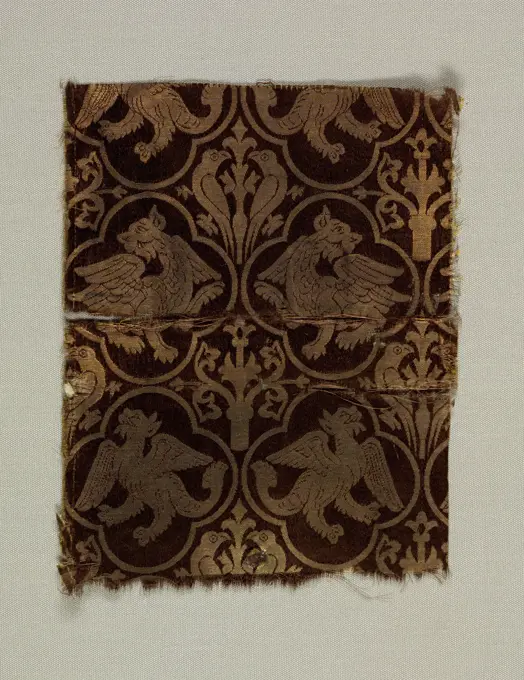
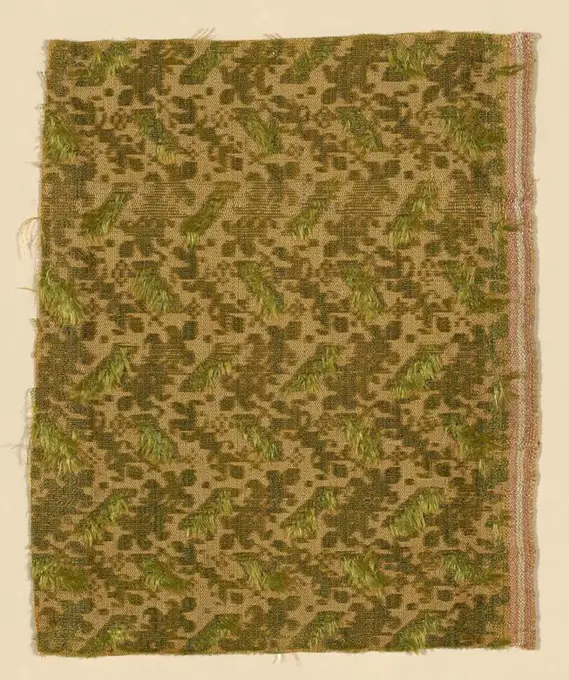
Various fabric pieces showcasing historical textiles from China, Italy, and Japan, highlighting intricate patterns and craftsmanship.
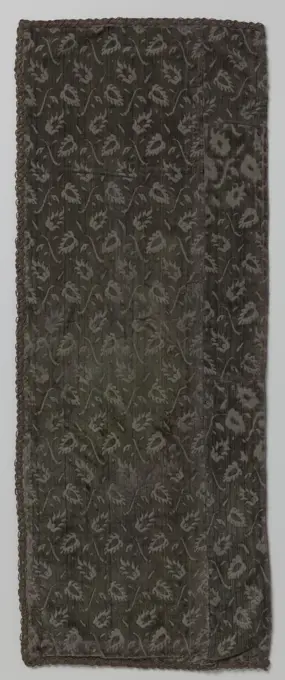
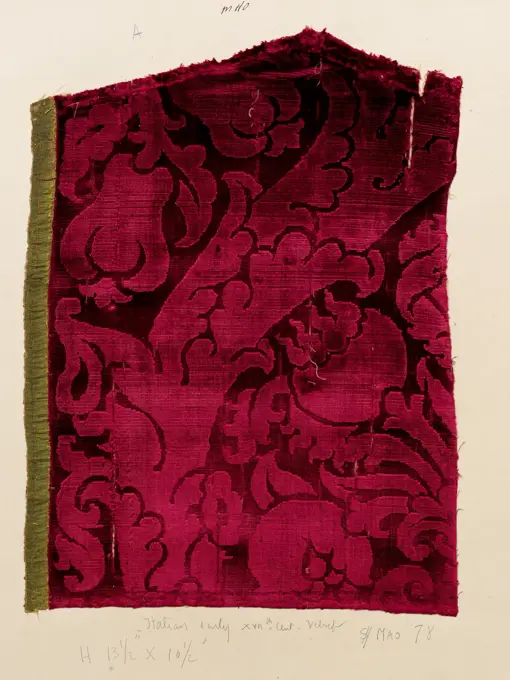
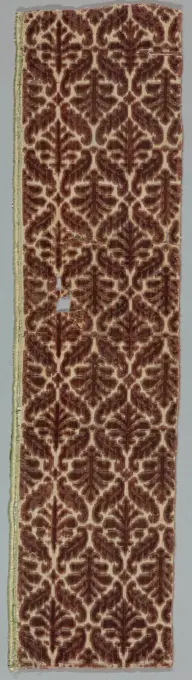
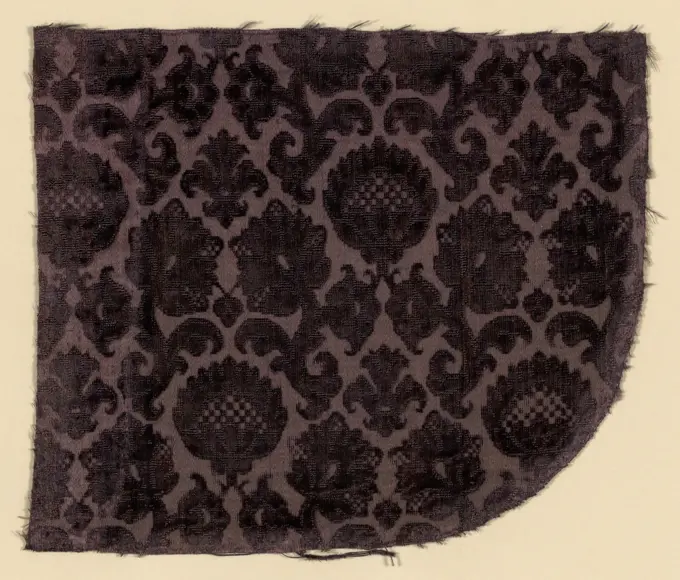
Rug of Purple Silk Velvet ,, 1500 - 1600 A rug of purplish side, composed of four pieces. Spread pattern of twigs, partially saved. Three sides surrounded by a dark tinted gold galon. Italy silk. velvet (fabric weave). ciselé velvet. satin. cotton (textile) A rug of purplish side, composed of four pieces. Spread pattern of twigs, partially saved. Three sides surrounded by a dark tinted gold galon. Italy silk. velvet (fabric weave). ciselé velvet. satin. cotton (textile)
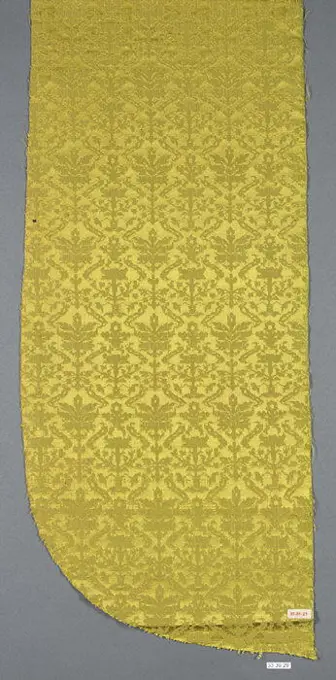
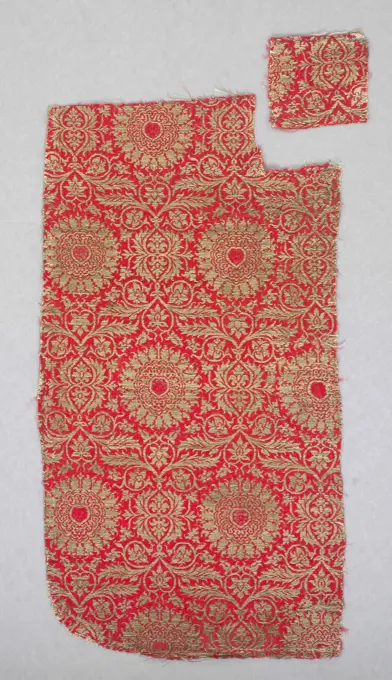
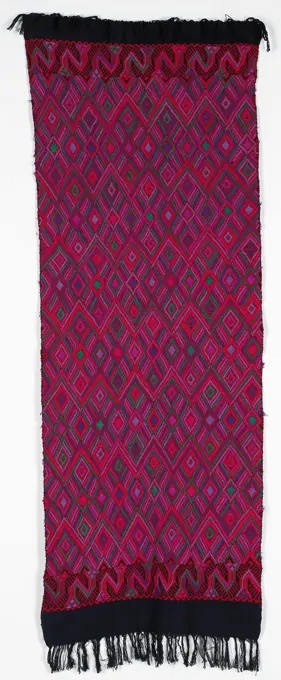
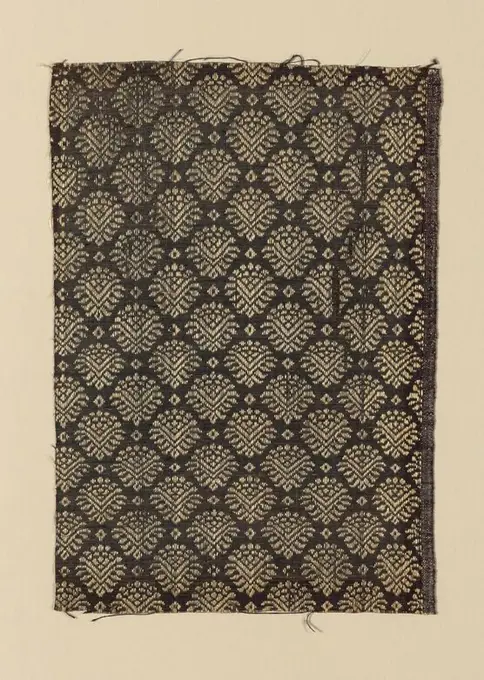
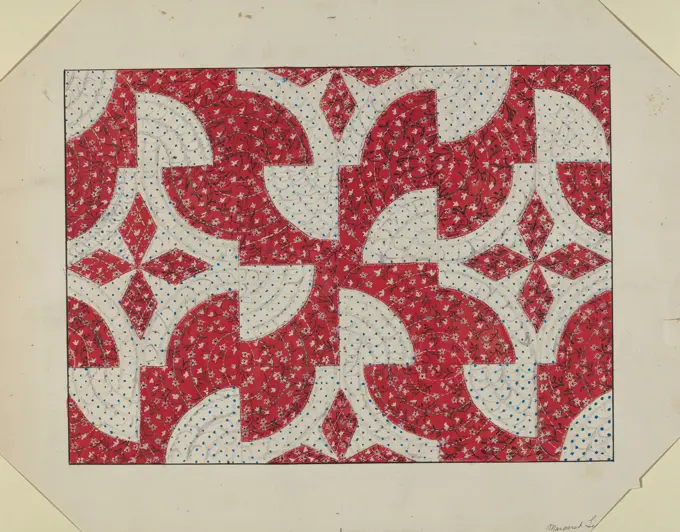
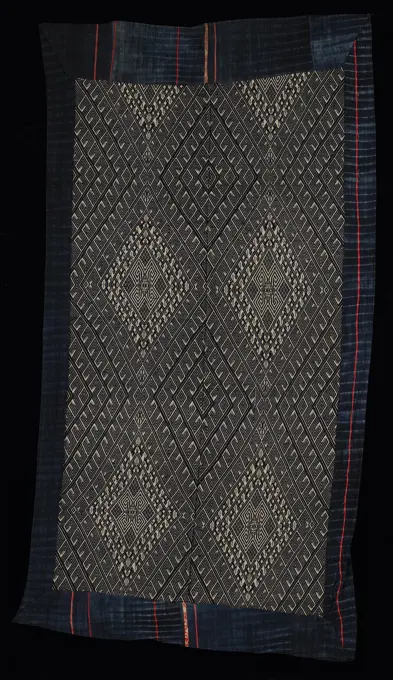
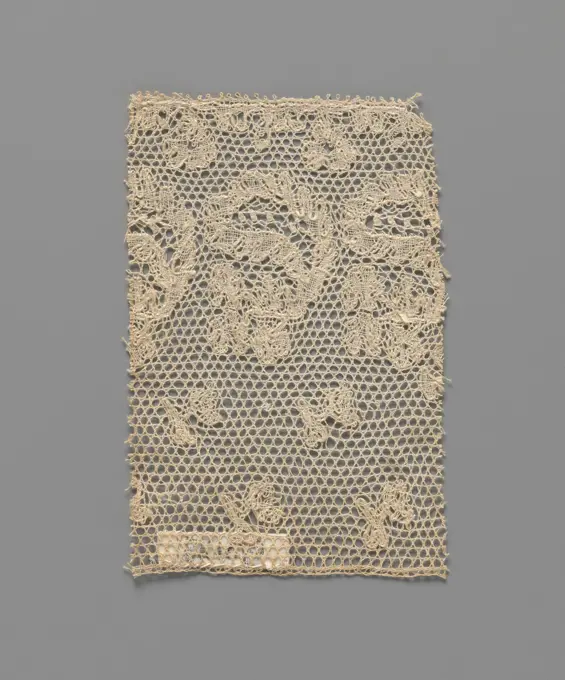
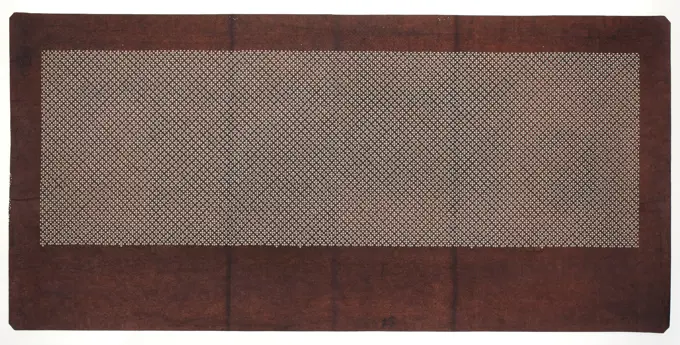
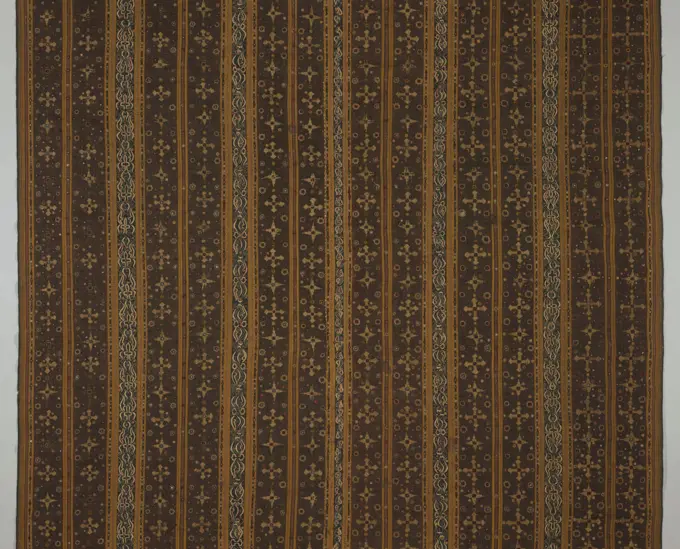
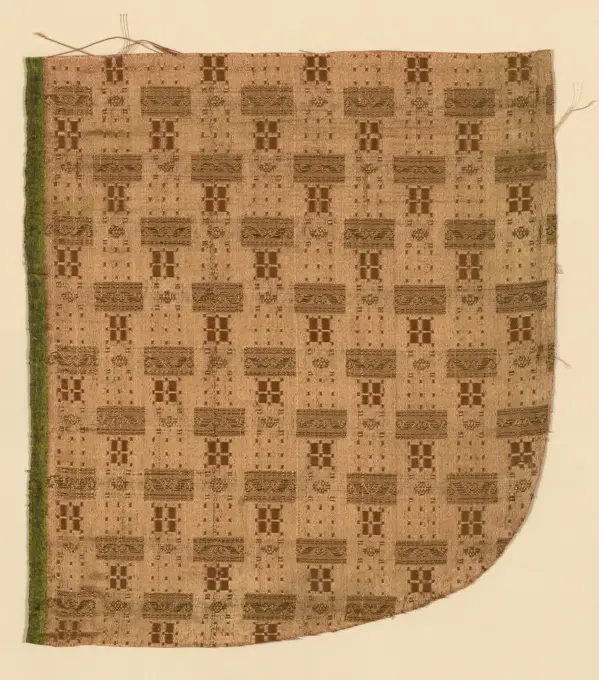
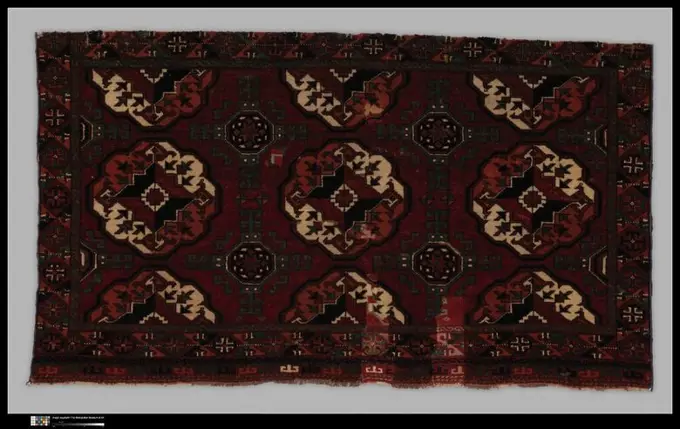
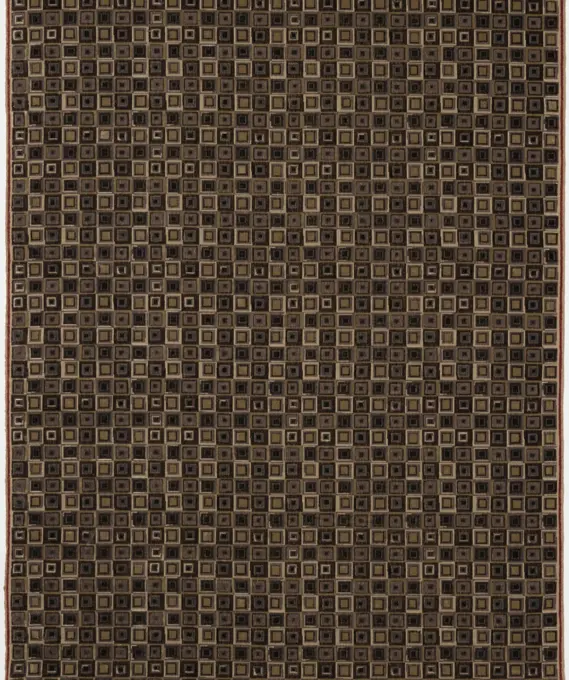
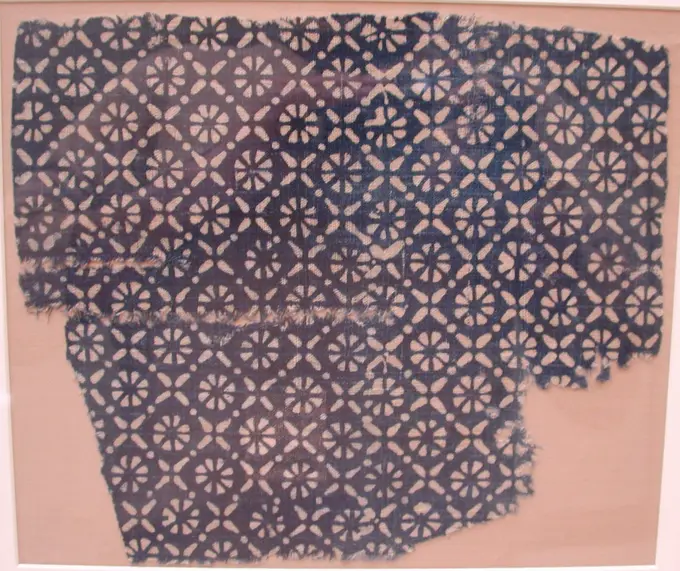
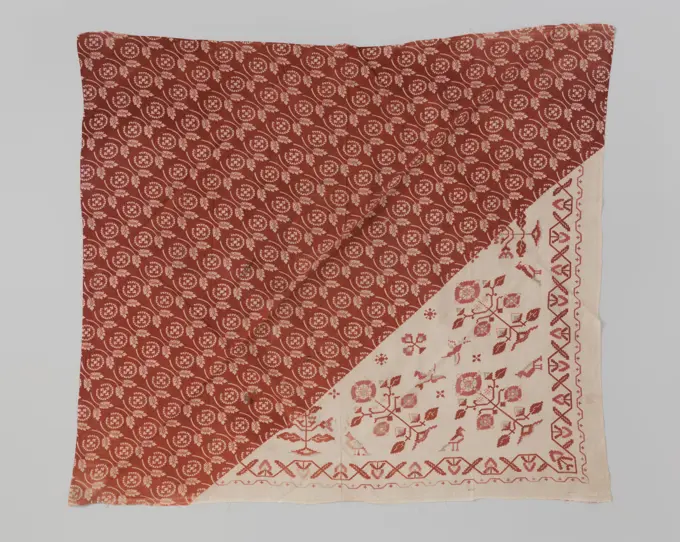
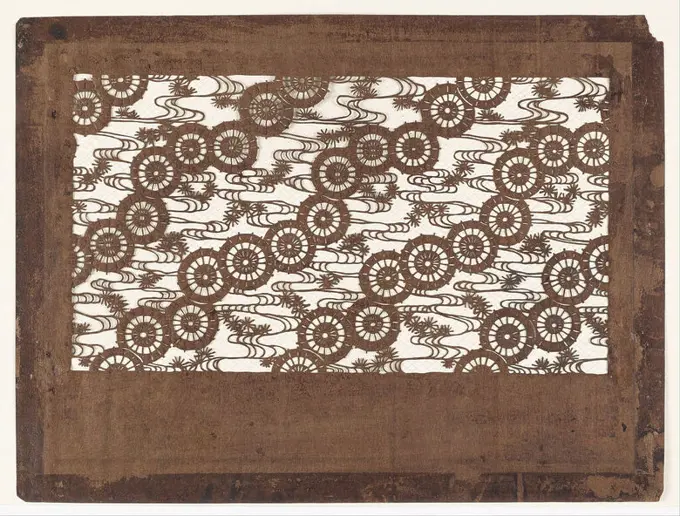
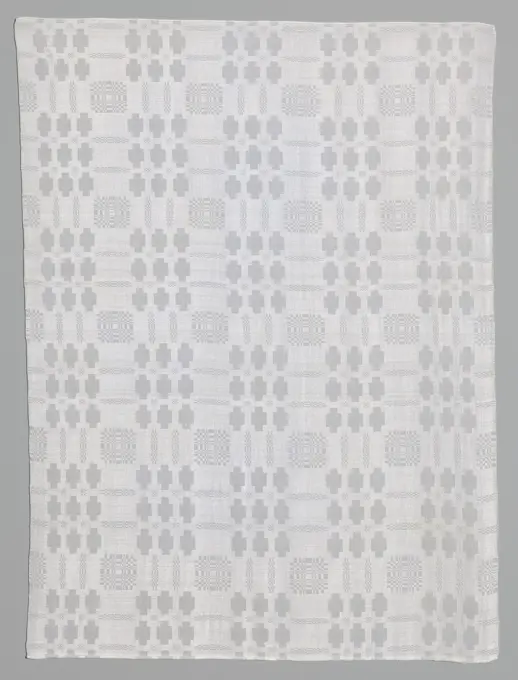
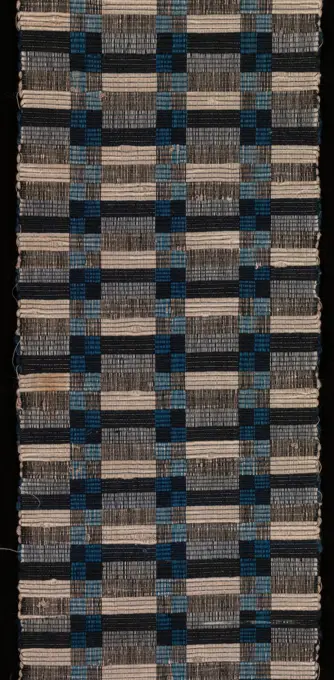
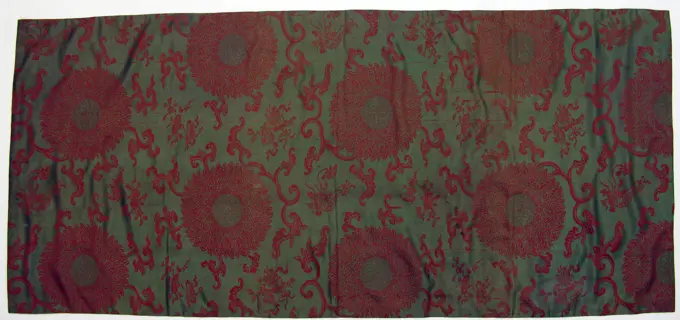
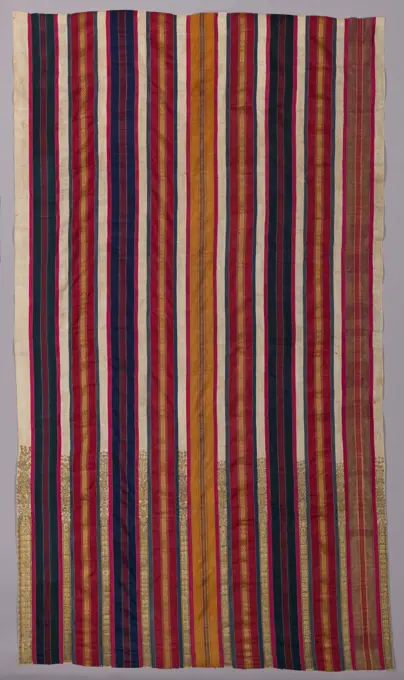
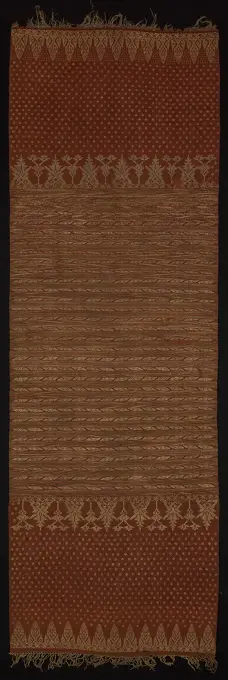
Piece 18th century China. Piece 72051Piece 16th-17th century Italian. Piece 222636Textile; Manufactured by Cheney Brothers (United States); silkPiece 18th-19th century Japan. Piece 65835Panel Made 1701-1800 Náxos. Linen, plain weave; embroidered with silk in running stitches (pattern darning); two selvalges present .Rug of Purple Silk Velvet ,, 1500 - 1600 A rug of purplish side, composed of four pieces. Spread pattern of twigs, partially saved. Three sides surrounded by a dark tinted gold galon. Italy silk. velvet (fabric weave). ciselé velvet. satin. cotton (textile) A rug of purplish side, composed of four pieces. Spread pattern of twigs, partially saved. Three sides surrounded by a dark tinted gold galon. Italy silk. velvet (fabric weave). ciselé velvet. satin. cotton (textile)Shoulder Cloth(Limar)Band; silk on linenPiece 18th-19th century Japan. Piece. Japan. 18th-19th century. Silk. Textiles-WovenTextile 14th century Italian. Textile 468122Shawl, c. 1990, 61 7/8 x 24 9/16 in. (157.16 x 62.39 cm) (without fringe), Cotton; supplementary weft patterning, Guatemala, 20th centuryFragment; silkFragment. Italy. Date: 1650-1700. Dimensions: 25.7 x 18.3 cm (10 1/8 x 7 1/4 in.). Silk, plain weave with supplementary patterning warps tied by supplementary binding wefts. Origin: Italy. Museum: The Chicago Art Institute, Chicago, USA.Fragment broached and launched silk tissue. Fragment broached and launched silk tissue in chain satin bonding. Dessin: raising rigging, wavy tires with edge sliced by five floral drinks with in the twist with flowers in Écru, green, red and pink (launch) and yellow (brochation) and blue (ground tissue). The silk tissue consists of twelve sewn fragments of different sizes. Potted paper (approx. 1978-1998) With the letter W. Condition: pretty bad.Fragment 16th century Italian. Fragment 230491Textile 10th-11th century Byzantine. Textile 468141Fragment late 16th century Italian. Fragment 230111Piece 18th-19th century Japan. Piece 67249Piece 18th-19th century Japan. Piece 67135Shawl. Scotland, Paisley, circa 1830. Costumes; outerwear. Wool, silk, supplementary weft on plain-weave groundFragment (Italy); silkFragment Of Panel (Italy); silkTextile Fragment, 1800s. Japan, 19th century. Silk, metallic thread; average: 43.2 x 13.4 cm (17 x 5 1/4 in.).Textile Swatches Onondaga Silk Company, Inc. (1925-1981). , 1948-1959. Silk, 46 3/4 x 17 3/4 in. (118.7 x 45.1 cm).    1948-1959Piece 18th-19th century Japan. Piece 65927Fragment, Medium: silk Technique: supplementary warp forming cut and uncut pile in plain weave foundation (velvet), Pattern of lozenges containing small leaves in deep green., 17th-18th century, woven textiles, FragmentMargaret Linsley, Applique Quilt, c 1936 Applique QuiltSample (Belgium); linen, paper; 1938-49-1Textile (possibly USA); cottonFragment Made 1775-1800 Spain. Silk and silvered-metal strip, warp-faced weft-ribbed plain weave with supplementary patterning wefts .Full frame shot of almonds.Sleeping blanket (Phaa hom lai), 20th century, 70 x 37 1/2 in. (177.8 x 95.25 cm), Cotton; supplementary weft patterning; needlework, Laos, 20th century, In the Lao-Tai culture bed linens form an important part of a woman's dowry. A prospective bride was expected to prepare as many as ten sets of mattresses, pillows and blankets, and one mosquito net prior to the wedding. Although the bride weaves most of these items herself, other family members may assist her if the dowry is unusually large.Head cover (odni), 20th century, 80 1/2 x 59 1/2 in. (204.47 x 151.13 cm), Cotton; embroidery, India, 20th centurySteel bobbin with Paris soil, anonymous, c. 1875 - c. 1899 Steel natural -colored bobbin: Parisian side. Coming from a lifted side school in Turnhout. Turnwood cotton (textile) bobbin lace / Paris lace Steel natural -colored bobbin: Parisian side. Coming from a lifted side school in Turnhout. Turnwood cotton (textile) bobbin lace / Paris laceDying template katagami, type of komon; Dese - at the grille with flower rosettes inscribed in the stitches;  End of the 20th century (1990-00-00-2000-00-00);gift (provenance), Japanese (culture), flowers, templates, Japanese artSarong, Medium: cotton, mica Technique: embroidered on plain weave, Woven striped sarong in brown, light brown, cream-white, and blue. Embroidered in an all-over pattern of alternating geometric, organic patterned, and plain stripes with mica pieces added., Lampung, Indonesia, 19th century, embroidery & stitching, SarongFragment, Medium: silk Technique: cut and uncut supplementary warp pile (velvet) with voided satin ground, Ciselé velvet in tan with a ground of uncut pile with small scale conventionalized rose in cut pile. Diagonal decorative lines voided in satin ground., France, 18th century, woven textiles, FragmentFragment; silkFragment, 700s. China, 8th century. Plain cloth, twill patterned; overall: 20 x 7.8 cm (7 7/8 x 3 1/16 in.).Breast Cover, 24 3/4 x 12 1/2 in. (62.87 x 31.75 cm), Cotton, Myanmar (Burma)Fragment of a Textile, early 1900s. France, early 20th century. Damask; silk and gold filé; overall: 18 x 14 cm (7 1/16 x 5 1/2 in.).Fragment. Italy. Date: 1601-1700. Dimensions: 20.4 × 17 cm (8 1/16 × 6 11/16 in.). Cisele voided twill velvet. Origin: Italy. Museum: The Chicago Art Institute, Chicago, USA.Fragment Made 1501-1600 Italy. Silk and gold gilt strips wound around silk fiber core, warp-floatfaced satin weave self-patterned by warp floats, weft floats and areas of plain interlacing .Storage Bag (Chuval) Face. Dimensions: Rug: H. 31 in. (78.7 cm)W. 55 in. (139.7 cm). Date: early 19th century. Museum: Metropolitan Museum of Art, New York, USA.Textile, Kaleidoscope; Produced by Jack Lenor Larsen Incorporated (United States); 72% linen, 17% cotton, 11% polyester; pile 100% linenFragment 18th century Italian. Fragment 230390Textile Fragment 13th-14th century Dated to either the thirteenth or fourteenth century, this plain-woven, block-printed, cotton textile fragment was once part of a much larger piece. This fragment exhibits the unique characteristics of technique and decoration associated with textile production in Western India, in the province of Gujarat, during the Middle Ages. The fragments bold design is rendered through the use of a single block which consists of a repeated rosette motif enclosed in a pattern of diamond-shaped forms. The decoration is reminiscent of Jain stylistic traditions typically found in architecture and painted manuscripts associated with Gujarat. The vibrancy of the blue dye points to Western India, which at the time was a popular production center for richly dyed and block-printed textiles. Throughout the centuries, there was an international demand for such fabrics. Found near the site of Fustat, Egypt, these textiles have been preserved largely due to the arid and dryBand, Medium: cotton Technique: embroidered, Band solidly embroidered with yellow-orange cotton in a simple geometric pattern. The border has been cut from a blouse on which there are traces of black embroidery., Balkans, 19th century, embroidery & stitching, BandFragment early 19th century Dutch, possibly Beveren. Fragment 214750Piece 16th-17th century Italian. Piece 223396Cotton square corner printed with red design on white stock and white design on red stock, anonymous, c. 1800 - c. 1820 Cotton square corner printed with red design on white stock and white design on red stock. Model: Square with two self -sides (Negen) and two hems. Pattern I: slightly more than half of the neck cloth is printed diagonally with a red stock, on which a full pattern - of rosettes caught in two branches of tops with leaves - is saved in white. Pattern II: IJL pattern with finely stepped contours. Within a double edge of angular tifles, Over Hoeels, three times, an equal carnation of straight steel with three symmetrical branches with carnation and buds. Furthermore, a few flying birds and two peacocks. India (possibly) whole: Cotton (textile) printing Cotton square corner printed with red design on white stock and white design on red stock. Model: Square with two self -sides (Negen) and two hems. Pattern I: slightly more than half of the neck cloth is printed diagonally Textile, Medium: silk and linen Technique: stamped plain weave with extra wefts of purple and white silk, Tan silk with extra wefts of purple and white silk forming horizontal zigzag design with conventionalized floral forms between lines of zigzag. Orphrey, in shape of cross, of deep purple linen stamped with all-over, small-scale blossom and quatrfoil design. Orphrey outlined with ribbon of natural linen and yellow silk., 17th century, woven textiles, TextilePiece 16th-17th century Italian. Piece 223199Textile Sample Book 1846 French. Textile Sample Book. French. 1846. Silk, cotton. Textiles-Sample BooksPiece 18th-19th century Japan. Piece 67582Kata-gami : Umbrellas, water and pine needle clusters. Date/Period: Late 19th century. Stencil. Mulberry paper, lacquer made from persimmon juice, silk thread. Height: 321 mm (12.63 in); Width: 425 mm (16.73 in). Author: UNKNOWN.Fragment; silk, metallicIndian ornamentFragment, Medium: silk Technique: 4&1 satin damask, Close pattern of detached leaf sprigs in pale blue. Pattern is two directional., 17th century, woven textiles, FragmentTextile (Indonesia); cotton, tin edging; Warp x Weft: 167.6 x 36.8 cm (66 x 14 1/2 in.)Trimming, Medium: silk, Red trimming fragment in a design of roses with buds and leaves placed diagonally., France, ca. 1850, trimmings, TrimmingRug, 76 3/8 × 53 1/8 in. (193.99 × 134.94 cm), Wool, United StatesFragment (France); silkTextile, Medium: silk Technique: velvet, Allover pattern of small black flowers on silver., 17th century, woven textiles, TextileFragment Made 1601-1700 Italy. Linen, plain weave; embroidered with silk floss in flame stitch .Bed curtain 18th century Greek Islands, Cyclades, Naxos. Bed curtain 222297Fragment of silk fabric  small, styIIsed floral patterns unknownSample ca. 1840 French, Mulhouse. Sample 220019Piece 16th century Italian. Piece 216976Piece 18th century French. Piece 216701Head cloth, from a five-piece costume, 21st century, 73 11/16 x 20 3/4 in. (187.17 x 52.71 cm) (without fringe), Wool, Myanmar (Burma), 21st centuryFragment polychroom zijdefluweel, anonymous, 1500 - 1599 A fragment of polychrome silk flaw. The eight -leaf flower skins and discreet applied hoses of hoses have been saved on a ground of sky blue. Italy silk. satin. velvet (fabric weave). ciselé velvet A fragment of polychrome silk flaw. The eight -leaf flower skins and discreet applied hoses of hoses have been saved on a ground of sky blue. Italy silk. satin. velvet (fabric weave). ciselé velvetField of Grain in Raked LightVelvet Fragment, 1600-1740. Italy, first third of 17th century. Velvet (cut and uncut); silk; overall: 43.6 x 23.5 cm (17 3/16 x 9 1/4 in.).Trimming, Medium: silk Technique: woven, Red, yellow and white trimming fragment in a design of eight-pointed stars alternating with lozenges between borders of triangles; picot edges., France, 19th century, trimmings, TrimmingPiece French 19th century View more. Piece. French. 19th century. Silk. Textiles-WovenCover early 19th century British, Bedfordshire. Cover 214465Breast cloth, 20th century, 13 1/4 x 26 11/16in. (33.7 x 67.8cm), Cotton, beads; woven fabric, Myanmar (Burma), 20th centuryHip cloth. Cloth with geometric motifs.Sample 1884 Ida F. Clark. Sample 14030Piece. Culture: China. Dimensions: 1 × 4 1/4 in. (2.5 × 10.8 cm). Date: 17th century. Museum: Metropolitan Museum of Art, New York, USA.Napkin with peel pattern. Brand: Kroon G 30. ,, c. 1725 - c. 1775 White linen napkin with peel pattern, Brand Kroon G 30 Northern Netherlands (Possible) linen (material) White linen napkin with peel pattern, Brand Kroon G 30 Northern Netherlands (Possible) linen (material)Fragment (Spain); linen, woolObi Japan. Obi 70732Length 18th century China. Length. China. 18th century. Silk, metallic thread. Qing dynasty (1644-1911). Textiles-WovenCurtain, 1600s-1700s. Africa, North Africa, Tunisia, Djerba, Tunisian weaver(s) and embroiderer(s). Silk, linen, metal, and dye; overall: 281 x 157.7 cm (110 5/8 x 62 1/16 in.). One of a pair, this curtain displays colorful silk bands with woven geometric motifs, and cream bands with gold-embroidered plants, birds, six-pointed stars, and the khamsah (), an open five-fingered hand. Birds and the tree of life were popular good luck or fertility symbols linked to marriage. This curtain’s cosmopolitan motifs would have resonated with Jews, Muslims, and Christians alike, reflecting its creation on multiethnic and multireligious Djerba, an island off the Tunisian coast. There, both goldsmithing and gold thread embroidery were done by Jewish artisans (male and female, respectively). The fine materials suggest this curtain once hung in a wealthy home or for special occasions; interior wall hangings were typically made from rough wool.Turkish traditional kilim, geometric patterns   from Anatolia             Piece 16th-17th century Spanish. Piece 228776Indian ornamentSquare (Denmark); linenVintage looking Fabric swatch Vintage looking Red fabric swatch cut with pinking shears zig zag scissors Copyright: xZoonar.com/ClaudioxDiviziax 9706590Indian Trade Cloth with Three Distinct PatternPanelsCeremonial Shoulder Cloth Made 1801-1900 Bali. Silk, cotton, bast fiber, and gold-leaf-over-lacquered-paper-wrapped silk and gold-paper-wrapped bast fiber (probably ramie), bands of weft resist dyed (weft ikat) plain weave and plain weave with supplementary brocading wefts; attached fringe of silk and silver-paper-wrapped silk, and gold-paper-wrapped bast fiber (probably ramie), wrapped and knotted cut fringe .Fragment Made 1600-1650 Italy. Silk, warp-float faced satin weave with supplementary pile warps forming cut, uncut and voided velvet .Tissue, c. 1800 - c. 1950 Tissue striped cover in blue, white and brown Europe (possibly) cotton (textile) Tissue striped cover in blue, white and brown Europe (possibly) cotton (textile)Fragment, 1800s. Iran, 19th century. Compound weave: silk and gold; overall: 62.3 x 76.2 cm (24 1/2 x 30 in.).Tereska Torrès braid. Blue fabric and kakitu = woven = weaving, 1939-1945. General Leclerc Museum of Hauteclocque and the Liberation of Paris, Jean Moulin Museum. 78985-5 War 1939-1945, War 39-45, Second World WarPiece second quarter 19th century British. Piece 230911Following the principles of geometryServet van Pellendem, c. 1750 - c. 1800 Pellendam napkin. The napkin is marked. The napkin belongs to a napkin (BK-1980-119-A) and a tablecloth (BK-1980-118) .. Eastern Netherlands (possibly) linen (material) Pellendam napkin. The napkin is marked. The napkin belongs to a napkin (BK-1980-119-A) and a tablecloth (BK-1980-118) .. Eastern Netherlands (possibly) linen (material)