My Boards
View Pictures
  • My Boards

Traditional Asian Garments

A display of traditional garments from China and Peru, showcasing intricate embroidery and diverse textiles from different cultural backgrounds.

Jacket, China
Jacket, China
180 assets in this story
4443-28726583
Blouse, late 19th century, 10 1/2 x 34 in. (26.67 x 86.36 cm), Silk; needlework, India, 19th century
6176-67063160
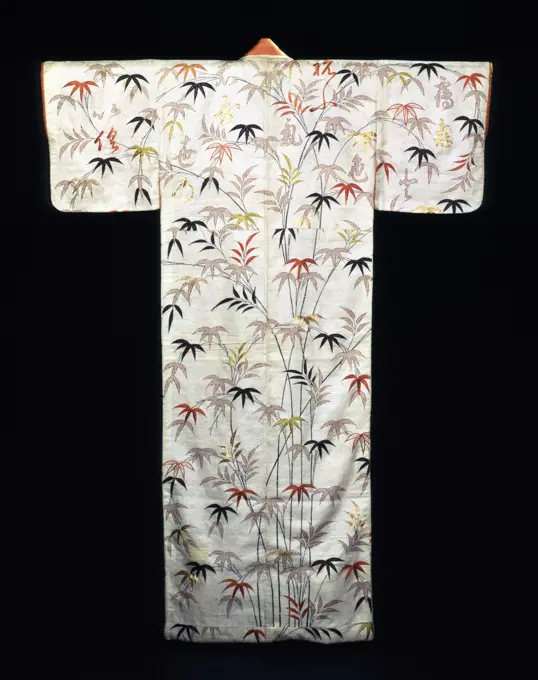
Embroidered white satin ladies kimono, Japanese, Edo period, 1600-1867. Artist: Unknown
6145-50490125
Waistcoat Fragment; silk; Bequest of Richard Cranch Greenleaf in memory of his mother, Adeline Emma Greenleaf; 1962-56-22
4443-28742687
Skirt, from a three-piece set, 30 x 72 1/2 in. (76.2 x 184.15 cm), Cotton, silk, China
4443-28726915
Woman's vest, c. 1970, 17 x 33 x 4 in. (43.18 x 83.82 x 10.16 cm), Beads, cotton, cowrie shells, iron, Sudan, 20th century
6145-29799612
Trousers ca. 1830 European. Trousers. European. ca. 1830. wool
4443-28743822
Skirt, 29 1/2 x 33 in. (74.93 x 83.82 cm), Cotton, China
4443-19534411
Collar, Medium: silk Technique: embroidered, Black fabric attached to large symmetrical fabric with a black border that surrounds natural colored fabric with vase and floral embroidery. Below black is a border of yellow fabric with florals in the center bordered by decorative stitches at the top and bottom of the fabric. Below is an area of green openwork crochet edged with 11 multi colored tassels., China, 19th century, costume & accessories, Collar
4443-28742694
Jacket, 17 3/8 x 50 1/4 in. (44.13 x 127.64 cm), Cotton, silk, metallic strips, seeds, China
4443-28736695
Ceremonial skirt, 1950-1982, 30 1/2 x 24 3/4 in. (77.47 x 62.87 cm) (length at waistband, without ties), Cotton, polyester, silk; indigo batik, cross stitch embroidery and appliqué, Laos, 20th century, It is thought that the Hmong people originally lived in central China, and over a time period of several centuries some groups have migrated into Southeast Asia. During this process, Hmong groups have developed distinctive clothing traditions. Many Blue Hmong women are skilled indigo dyers and create elaborate resist dyed patterns on cotton or hemp fabric. This fabric is further decorated with cross stitch embroidery and sometimes appliqué and then sewn into intricately pleated skirts.
4443-28739857
Trousers, 20th century, 40 1/2 x 82 in. (102.87 x 208.28 cm), Cotton; embroidery, Nigeria, 20th century
6176-61998338
Folk group Edmonton (Alberta), Ukrainian dancers Viter from Canada during the 48th International Folklore Festival in Zagreb
4443-28726913
Man's corset, about 1970, 44 3/4 x 26 1/2 in. (113.67 x 67.31 cm) (flattened), Beads, cotton, iron, cowrie shell, Sudan, 20th century, Dinka men used to dress lightlyuntil recently, they simply covered their torsos in tight, beaded corsets, highlighting their lithe figures. But these garments did more than that: the colors of the beads signal social and marital status as well as the wearer’s age. Red and black means a young man between 15 and 25 years old.
4443-28743848
Jacket, 27 x 33 in. (68.58 x 83.82 cm), Cotton, silk, sequins, China
4443-28726085
Skirt, China
6145-58999837
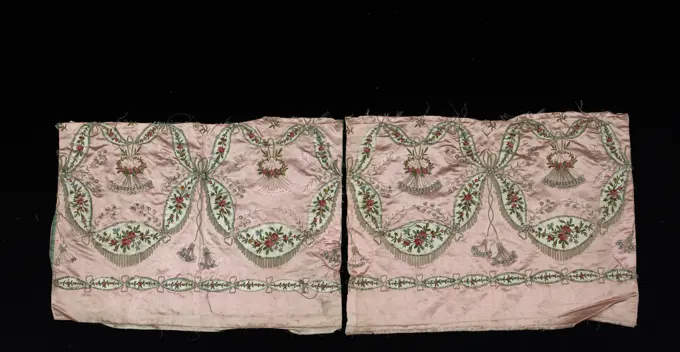
Fabric. Pink silk satin, chain point embroidery, polychrome silk son. 1770-1790. Galliera, fashion museum of the city of Paris. Etoffe, fabric
7017-69904989
Georgia, Mtskheta, Juta. Piece of traditional clothing from Georgia.
6145-29734845
Corset ca. 1700 Spanish. Corset 90402
6145-58878424
Fragment of a dress of white moiré side, richly embroidered with flower vines in multicolored silk, anonymous, c. 1775 - c. 1800 Fragment of a dress of white moiré side, richly embroidered with flower vines in multicolored silk. Europe silk embroidering Fragment of a dress of white moiré side, richly embroidered with flower vines in multicolored silk. Europe silk embroidering
6145-29140244
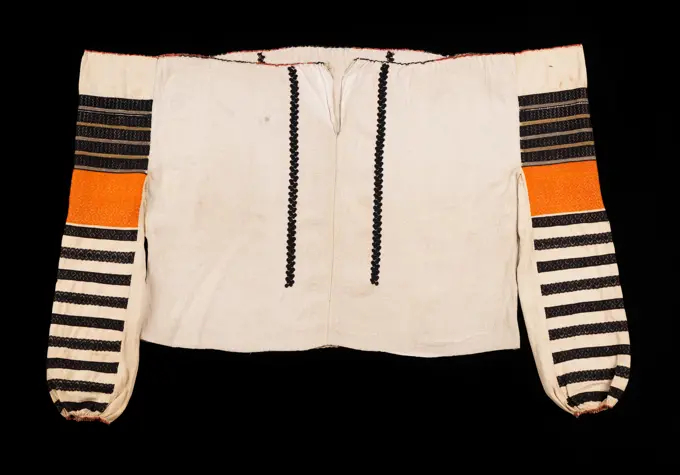
Blouse fourth quarter 19th century European, Eastern This is from a collection of textiles, regional costume, and related objects originally owned by Morris de Camp (M.D.C.) Crawford, editor of "Women's Wear Daily" from 1915 to 1949, and advisor to the Brooklyn Museum for much of that time. From 1920 to 1929 Crawford collaborated with Stewart Culin, Brooklyn Museum Curator of Ethnology from 1903 to 1929, to unite the fashion industry and museum community in the study of costume and textiles. Crawford believed strongly in the importance of using museum collections for design research, and worked tirelessly to promote this idea both in his work at "W.W.D." and in an advisory capacity with Brooklyn and other museums including the American Museum of Natural History, Cooper Hewitt National Design Museum, and the Museum of Fine Arts, Boston. After Culin's death in 1929, Crawford continued to collaborate with other Brooklyn Museum personnel. His work culminated in the opening of the Edward C.
1746-19658966
Ladys Kimono of embroidered white satin. Edo period.
6145-30179973
Chapan or Khalat (Man's Outer Robe) Made 1801-1900 Central Asia. Silk, warp-resist dyed (ikat) plain weave; center front and hem faced with cotton; machine embroidered with cotton in straight stitches; lined with cotton, plain weave; block printed; silk padding and cotton, machine stitching in cotton .
4443-28740872
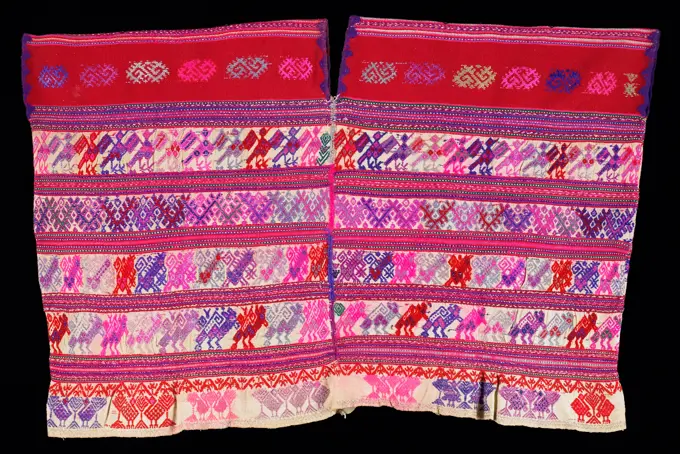
Skirt, 30 13/16 x 27 3/4 in. (78.26 x 70.49 cm), Cotton; needlework, Guatemala
7002-69565268
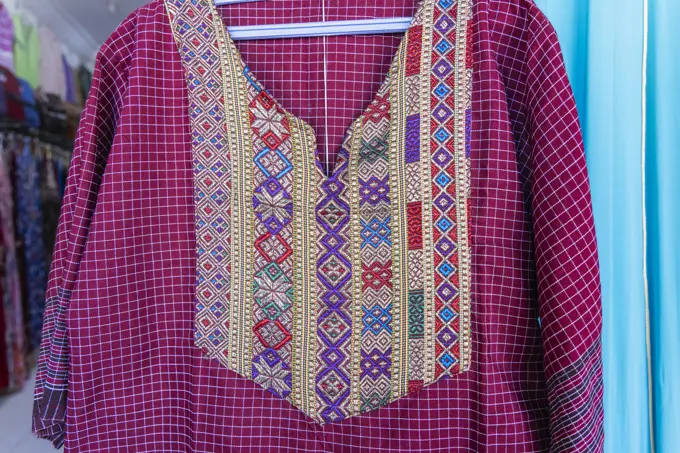
Djerba, Medenine, Tunisia. Traditional women's dress for sale at the Houmt Souk.
4443-28740876
Jacket, 31 1/2 x 52 1/4 in. (80.01 x 132.72 cm), Cotton, metalic threads, metal buttons, China
6145-29770451
Skirt mid-19th century Romanian. Skirt 127384
6145-50493690
Vest (Japan); silk, indigo
4443-28733234
Beaded Vest, 19th century, 19 1/4 in. (48.9 cm) (back), Leather, glass beads, United States, 19th century
6176-67057351
Costume design for a ballet by Igor Stravinsky, 1913. Artist: Leon Bakst
6145-58857603
Collar, square model, from tulle with lace pieces, anonymous, c. 1910 - c. 1915 Collar, square model, from tulle with lace pieces. The outer edge is faintly sculpted and equipped with picots. Alençon . Collar, square model, from tulle with lace pieces. The outer edge is faintly sculpted and equipped with picots. Alençon .
4443-28734887
Woman's Blouse, early 20th century, 16 1/4 x 20 1/2 in. (41.28 x 52.1 cm), Cotton, wool, glass beads, metal bells, Taiwan, 20th century
6188-54898700
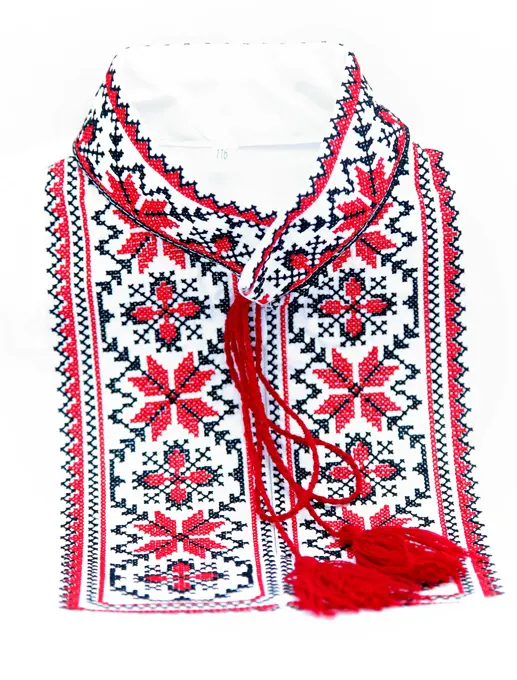
embroidery Ukrainian men s embroidery on a white background ,model released, Symbolfoto ,property released Copyright: xZoonar.com/OleksandrxPakhayx 6221083 ,model released, Symbolfoto ,property released
4443-28743946
Pair of Baby's Pants, 17 3/4 x 14 3/4 x 4 7/8 in. (45.09 x 37.47 x 12.38 cm), Cotton, silk, China
6145-43495061
Sample, Zarte Bänder; Designed by Wiener Werkstätte (Austria), Fredericka Löw-Lazar (Austrian, 1891-1975); Austria; silk
4443-28745553
Woman's blouse (Huipil), 1920-1930, 23 x 35 in. (58.42 x 88.9 cm), Cotton, Guatemala, 20th century
4443-28742749
Baby Carrier, 30 1/8 x 25 3/4 in. (76.52 x 65.41 cm) (without ties), Cotton, velvet, silk, China
1525-28045075
Lady's chemise, vintage engraved illustration.
6145-29154122
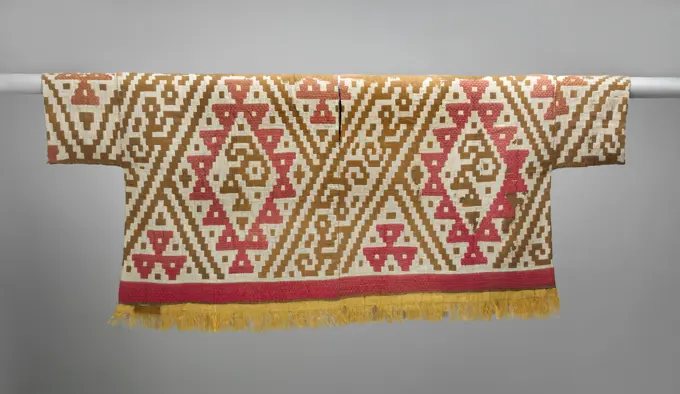
Shirt 1300-1470 Chimú Male attire in the Chimú period consisted of a relatively wide shirt worn over an elaborate loincloth. The finest examples were produced as sets, complete with a matching turban.. Shirt 312790
6145-58846401
Mitaine van Blauwe Silk Tricot and wrinkled strip of black machining side, anonymous, c. 1775 - c. 1800 Mitaine of blue silk jersey and wrinkled strip of black machine side. Part of a few. Zaanstreek whole: Silk. whole:. Mitaine of blue silk jersey and wrinkled strip of black machine side. Part of a few. Zaanstreek whole: Silk. whole:.
6145-29154396
Skirt 19th century Spanish. Skirt. Spanish. 19th century. Bobbin lace, black blonde. Textiles-Laces
6145-48511410
Capelet; cotton
6145-58829166
Women Haori with colorful lines, 1920 - 1940 Haori for a woman with a decoration throughout the plane of Kris-scratch-running red, green, yellow and brown lines with white dots; Perhaps an impression of fireworks in the snow. Beige silk with decoration in stencil pressure (girls). Folding of stenciled silk. Japan silk painting Haori for a woman with a decoration throughout the plane of Kris-scratch-running red, green, yellow and brown lines with white dots; Perhaps an impression of fireworks in the snow. Beige silk with decoration in stencil pressure (girls). Folding of stenciled silk. Japan silk painting
6145-58854393
Skirt of knitted cotton, straight model, P. Titjen boss, c. 1910 Skirt of knitted cotton, straight model. Belonging to pop "lilly". Netherlands cotton (textile) knitting Skirt of knitted cotton, straight model. Belonging to pop "lilly". Netherlands cotton (textile) knitting
4443-28730177
Patchwork (boro) farmers short coat (hanten), 19th century, Unknown Japanese, 38 1/4 × 51 15/16 in. (97.16 × 131.92 cm), Cloth: cotton patchwork; sashiko (decorative reinforcement stitching), Japan, 19th century
6145-29129433
Woman's Jacket. Indonesia, South Sumatra, Kauer people, 19th century. Costumes; principal attire (upper body). Cotton plain weave with metallic thread supplementary weft patterning, cotton appliqué, sequins, shells and mica
6145-45801889
National party skirt. A national party skirt made in the context of the liberation of the Netherlands to wear on national holidays and in memory of various events during the Second World War. At the skirt, an orange sash and a black belt belong. On the skirt itself, various events are depicted, embroidered, such as: 1948 - 50 years Wilhelmina (with portrait), 1940 - 1945 with aircraft and birds, a prison with barbed wire and a church with a cemetery, map of the Netherlands and map of South Africa With the ship the Gelderland with which Paul Kruger sailed to the Netherlands and the Years 1901 and 1901. Ports of the four princesses, Beatrix, Irene, Margriet and Marijke with their birth talk. On the Zoom of the skirt The year: 1901, 1909, 1937, 1898, 1948. Embroidered the stamp of the national party skirt with the year 1948 and NI (National Institute) and the Sentence: Sam employed on a surface. At the skirt a Ticket with the address of the manufacturer and a number: your party skirt is r
6145-45329229
Embroidered top from a pall unknown
4443-28743221
Woman's Front Apron, 23 3/8 x 17 1/16 in. (59.37 x 43.34 cm) (without ties or fringe), Cotton, feather quills, China
6145-29196023
Waistcoat third quarter 18th century French In the 17th and 18th centuries, lace was a valuable and luxurious commodity which men wore primarily as decoration at the neck and cuffs. Most waistcoats were made of silk, elaborately embroidered at the edges and pockets, and often with an overall spotted or sprig motif. Here, the lace design mimics the lines and placement of the embroidery on the more typical silk examples. Lace waistcoats such as this one were rare, and there are very few extant examples.. Waistcoat 155766
6145-45695610
Women's Haori with abstract pattern. Haori for a woman with an ornament over the entire plane of irregular orange and yellow surfaces with round shapes, surrounded by black lines and scattered white motifs. Fine crepe silk (Kinsha) with a damask woven motif (Rinzu) of Kris-Kras lines and tie-dye decoration (Shibori). Fenciled silk lining.
6145-58829209
Furisode with peonies, 1960 - 1980 Formal Kimono with long sleeves for an unmarried young woman (Furisode), decorated all over the plane with stylized large peonies. Blue painted silk with saved white decoration in tie-dye technology (Shibori). White silk lining with orange edges. Japan silk painting / embroidering Formal Kimono with long sleeves for an unmarried young woman (Furisode), decorated all over the plane with stylized large peonies. Blue painted silk with saved white decoration in tie-dye technology (Shibori). White silk lining with orange edges. Japan silk painting / embroidering
6145-30181232
Waistcoat Design Made 1830-1849 England. Paper .
4443-28734439
Masquerade garment, 20th century, 28 3/4 x 21 in. (73.03 x 53.3 cm), Cotton, metal inserts, Niger, 20th century
6145-58869194
Mitaine of white knitted cotton, c. 1750 - c. 1800 Mitaine of white knitted cotton, with a pattern of rows of hearts. Falling triangle with seven scoops. Marked: AEL / G. Netherlands whole: Cotton (textile) knitting / embroidering Mitaine of white knitted cotton, with a pattern of rows of hearts. Falling triangle with seven scoops. Marked: AEL / G. Netherlands whole: Cotton (textile) knitting / embroidering
4443-28725460
Woman's blouse (Huipil), 2000, 37 3/16 x 35 1/4 in. (94.46 x 89.54 cm), Cotton; supplementary weft patterning, embroidery, Guatemala, 21st century
4443-28725876
Baby carrier, China
6145-46436663
Mitaine from white knitted cotton in Ajour. Mitaine of white knitted cotton in Ajour, with a diamond pattern and with a clocking over the hand-falling strip. Unreadablely marked.
6145-46436664
Mitaine from white knitted cotton in Ajour. Mitaine of white knitted cotton in Ajour, with a diamond pattern and with a clocking over the hand-falling strip. Stopped in different places. Unreadablely marked.
6145-29783347
Embroidery sample for a mans suit ca. 1785 French. Embroidery sample for a mans suit 224675
6145-29821801
Dress border early 19th century French. Dress border 226468
1848-56626549
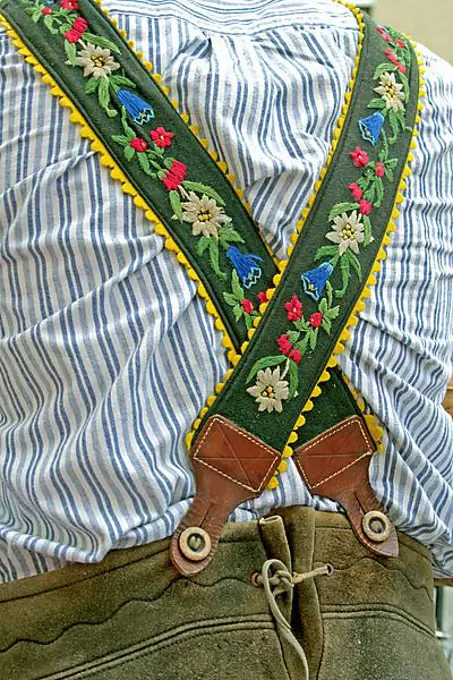
Embroidered Suspenders and leather trousers Bavaria Germany
4443-28728019
Noh costume jacket (happi), first half 20th century, Unknown Japanese, 49 1/2 × 77 7/8 in. (125.73 × 197.8 cm), Silk, Japan, 20th century
6145-58829134
Women's kimono with flying goose and pattern of lines, 1950 - 1970 Kimono for a woman with a decoration all over the plane of a flying white goose against a black background with concentric white lines. Black crepe silk (surgery) with an embroidered decoration (sashi-nui). White silk lining. Japan silk painting Kimono for a woman with a decoration all over the plane of a flying white goose against a black background with concentric white lines. Black crepe silk (surgery) with an embroidered decoration (sashi-nui). White silk lining. Japan silk painting
6145-29092840
Embroidered Dress Front, c. 1850. Madeira, 19th century. Embroidery; average: 101.6 x 107.3 cm (40 x 42 1/4 in.).
4443-28730098
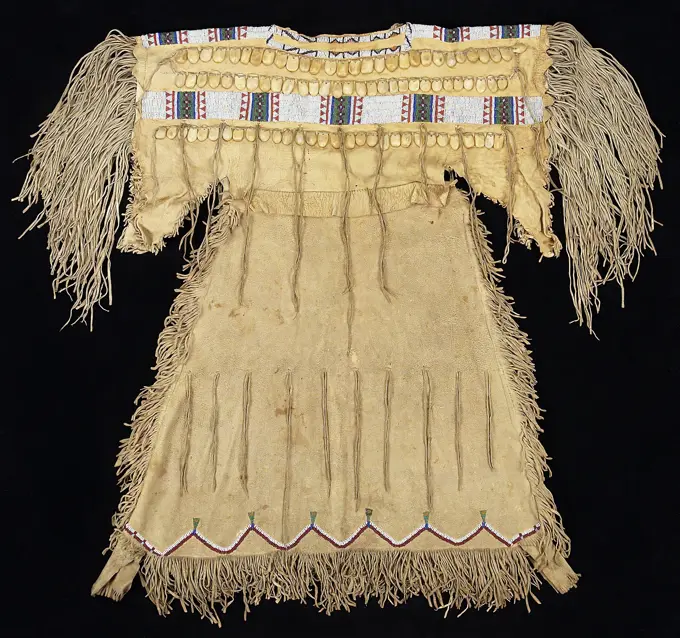
Girl's Dress, c. 1860-1870, 35 3/4 x 26 in. (90.8 x 66 cm) (including bottom fringe), Animal hide, beads, bone, United States, 19th century, This style of dress was introduced to the Plains in the 19th century, replacing an earlier draped and tied design common amongst the Tsistsistas (Cheyenne). Elk teeth, the upper two incisors only, were used as decoration, representing great wealth because of their scarcity. As elk become harder to obtain, bone was carved to resemble teeth and used the same way, such as on this dress. The beaded yoke and hem design is typical of Tsistsistas art and added to the overall decorative effect. Tsistsistas beadwork was typically sewn in a lane-stitch style. The creation of decorative beaded patterns among the Tsistsistas was limited to women of respected character who were members of a beadworkers guild. This guild had sacred aspects and production of work followed a set of rituals that were taught to its members along with beading techniques. The work pr
6145-59016566
Mariano Fortuny (1871-1949). Jacket. Gold printed orange -printed silk velvet, gray silk satin lining. Around 1912. Galliera, fashion museum of the city of Paris. 101860-2 Haute couture, female mode, female model
4409-17379553
Robe made to imitate leopard skin with rosettes with the name of Harnedj-. Dimensions: W. 89 (35 1/16 in); l. 122 cm (48 1/16 in). Date: A.D. 1st century. Museum: Metropolitan Museum of Art, New York, USA.
6145-29822697
Waistcoat early 18th century French. Waistcoat 89561
1525-22282484
Japanse lady wearing kimono
6145-30180483
Trousers Made 1701-1900 India. . Islamic
6145-29790250
Pair of short dress sleeves ca. 1700 British. Pair of short dress sleeves 229038
6145-58994703
Textile sample ". Black silk satin, embroidery of pearls and turquoise tubes (pagodo motive). 1920s. Galliera, fashion museum of the city of Paris. 76181-14 Embroidery, textile sample, pattern, black, pagoda, pearl, silk satin, turquoise tube
4443-28742518
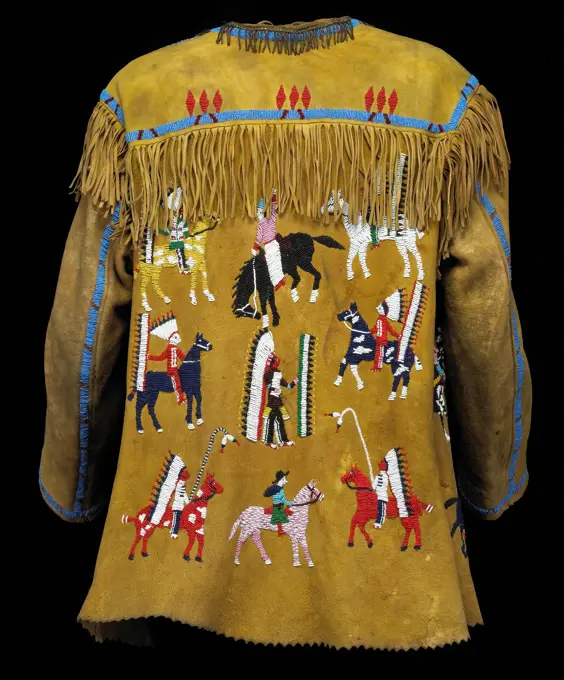
Man's Jacket, c. 1910, 31 1/8 x 21 in. (79.06 x 53.34 cm) (width at the shoulder), Animal hide, beads, wool (), metal buttons, United States, 20th century, When the nomadic life of the Plains tribes was over at the end of the 19th century, Plains Indian beadworkers adapted their skills to decorate objects with new imagery. This jacket, which is tailored in a western style, is a good example of how female artists incorporated new themes into their work. Depictions of warfare and horseraiding are gone, and have been replaced with men and women on horseback, and various other rodeo scenes. The jacket may have been presented to a Native American rodeo rider, or given as an honor gift.
6145-29766384
Embroidery sample for a mans suit ca. 1785 French. Embroidery sample for a mans suit 224776
6145-29764897
Imperial Court Robe China. Imperial Court Robe 70225
4443-28744294
Jacket, from a three-piece set, 33 1/4 x 50 1/2 in. (84.46 x 128.27 cm), Cotton, China
7003-69632036
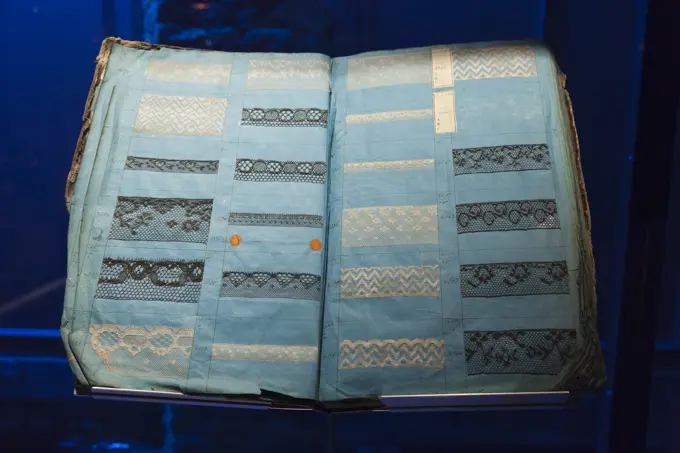
France, Pas de Calais, Calais, Musee de la Dentelle et de la Mode, museum of lace and fashion, catalog of lace patterns.
4443-28733235
Vest, 19th century, 20 in. (50.8 cm) (excluding fringe), Leather, glass beads, United States, 19th century
1848-61689457
Block printing, woman holding finished panel, finished fabrics at back, Bad Aussee, Styria, Austria, Europe
6188-66536994
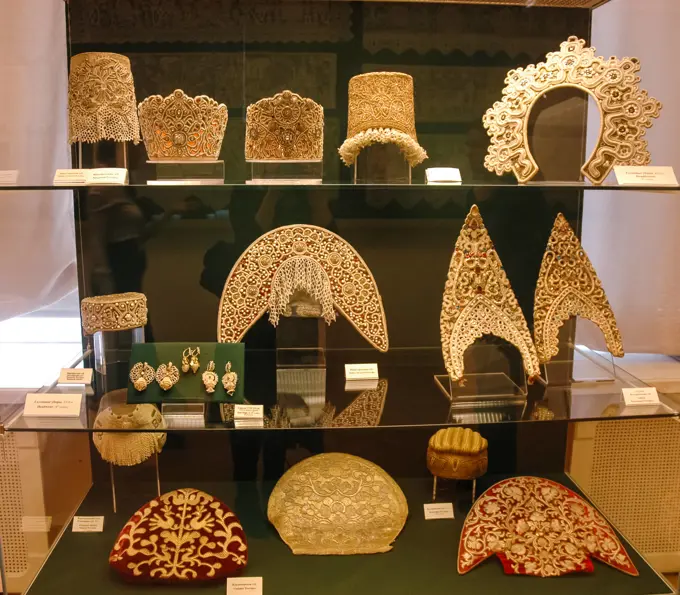
Kokoshnik, Element of Russian national costume of women. Russian national clothing. Kokoshnik, Element of the Russian national costume of women. Russian national clothing. Copyright: xZoonar.com/DenisxPomortsevx 16449886
PREVIOUS
of 2
NEXT
2401 S. Ervay, Suite 206
Dallas, Texas 75215
United States
Get Started
Free ResearchMy BoardsMy Cart
For Creators
How To License Your ContentContributor PortalFrame of Mind
Resources
API accessPricing
Contact
+1 866 236 0087help@viewpictures.co.uk Contact form
©2026 View Pictures. All Rights Reserved. -A
This site is protected by reCAPTCHA and Google Privacy Policy and Terms of Service apply.