Traditional Asian Landscapes

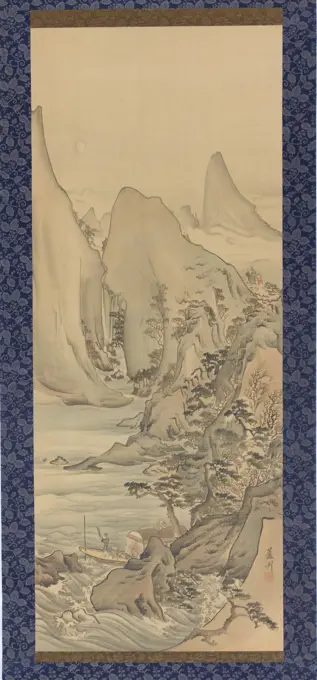
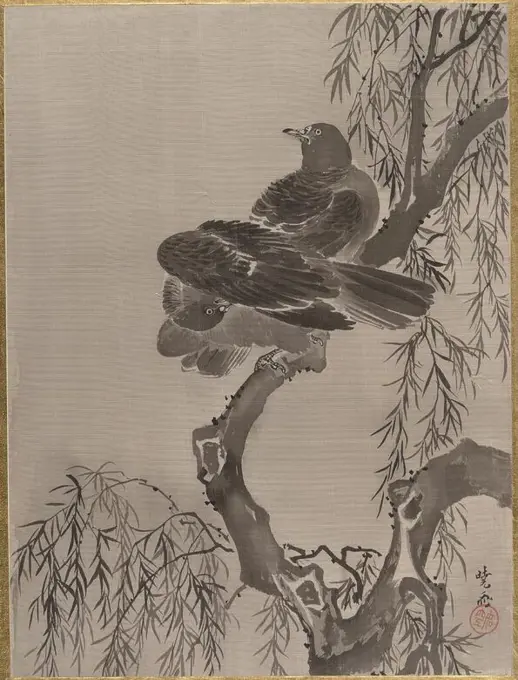
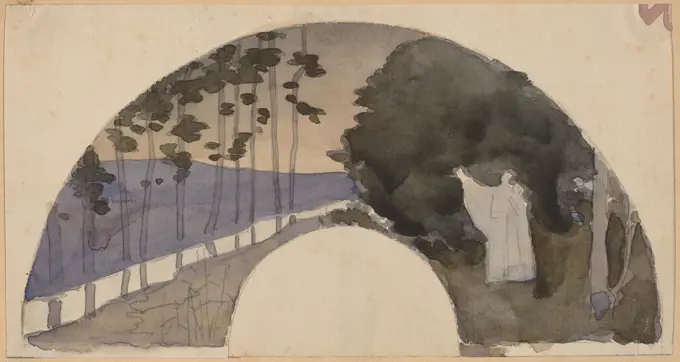
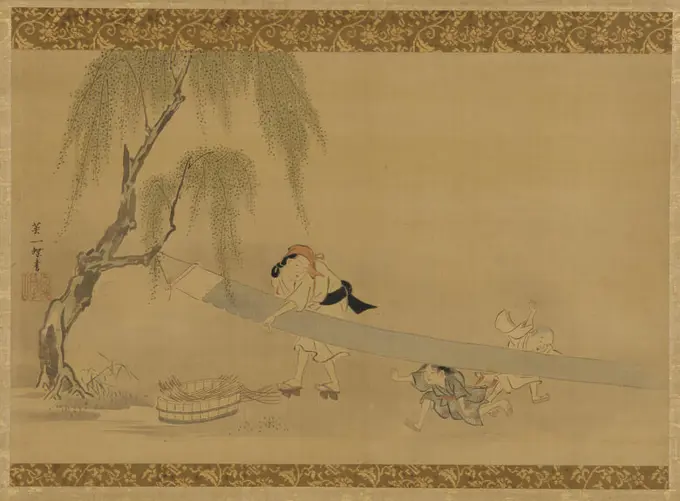
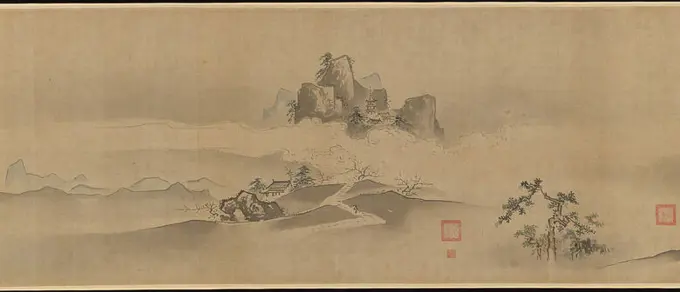
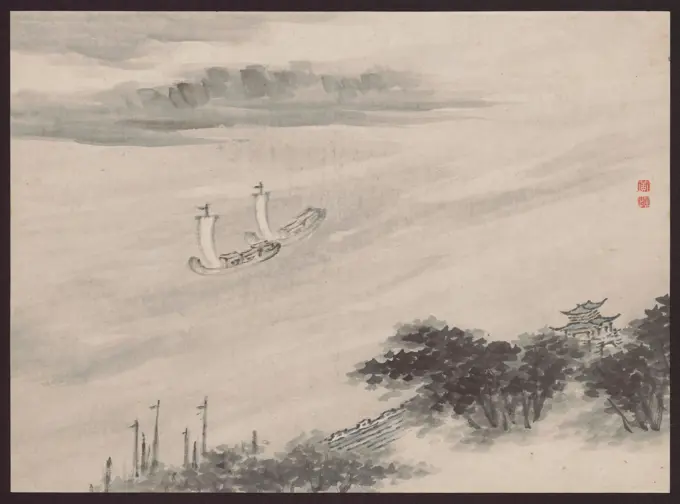
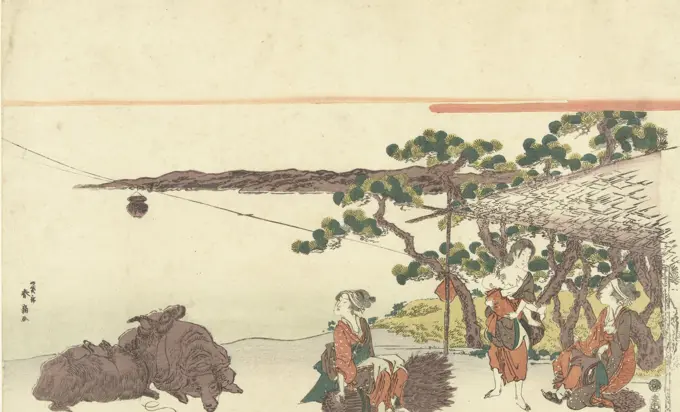
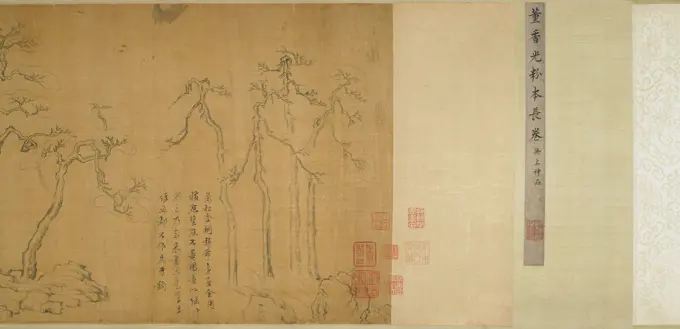
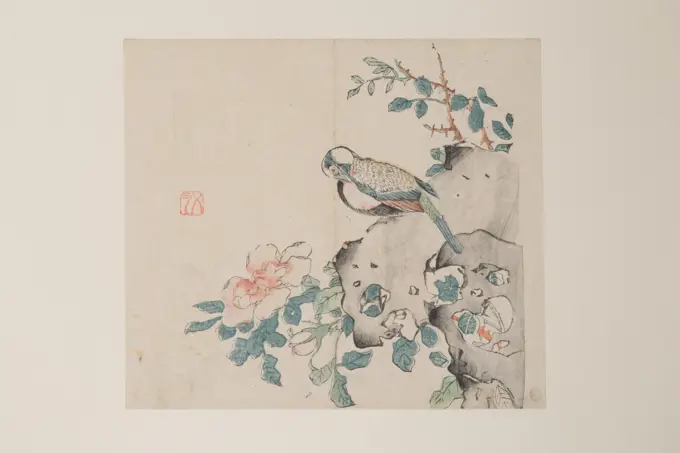
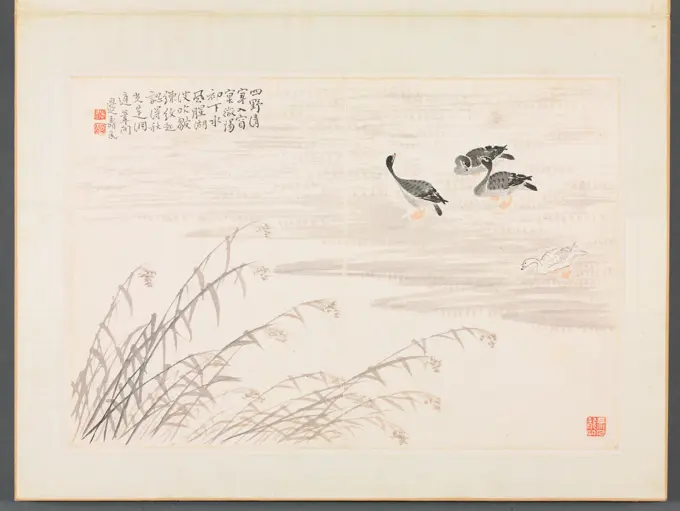
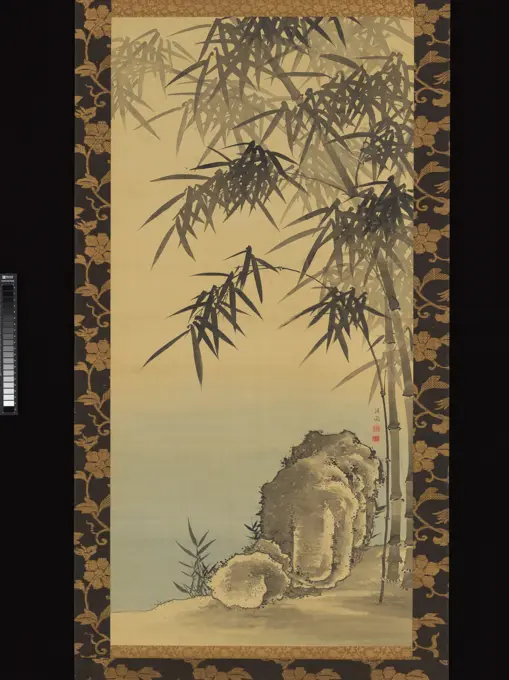
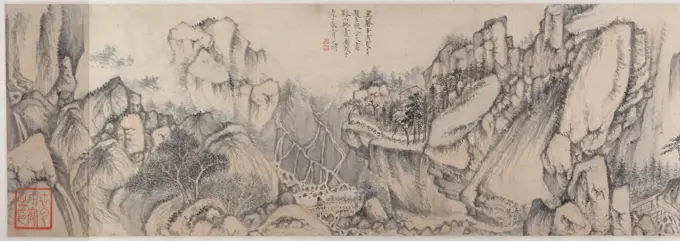
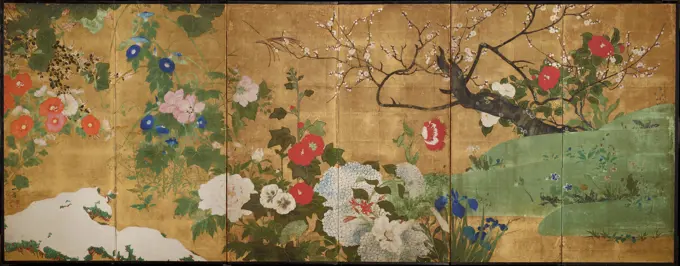
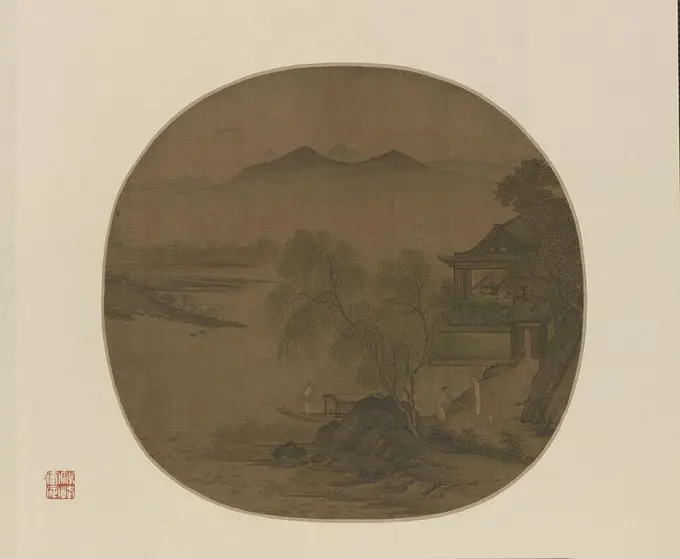
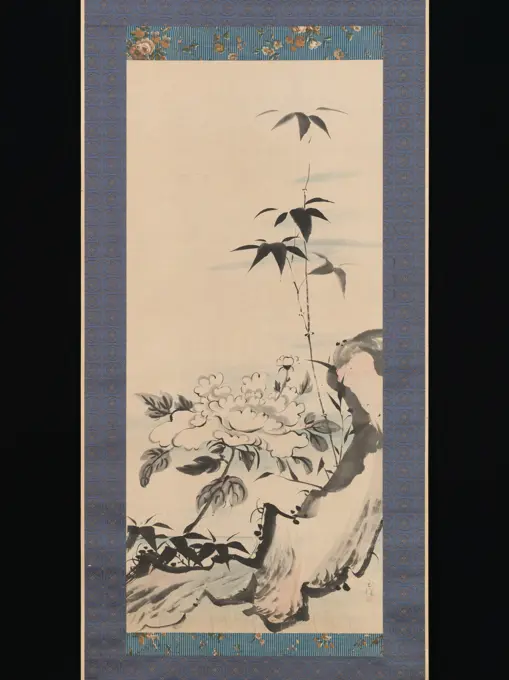
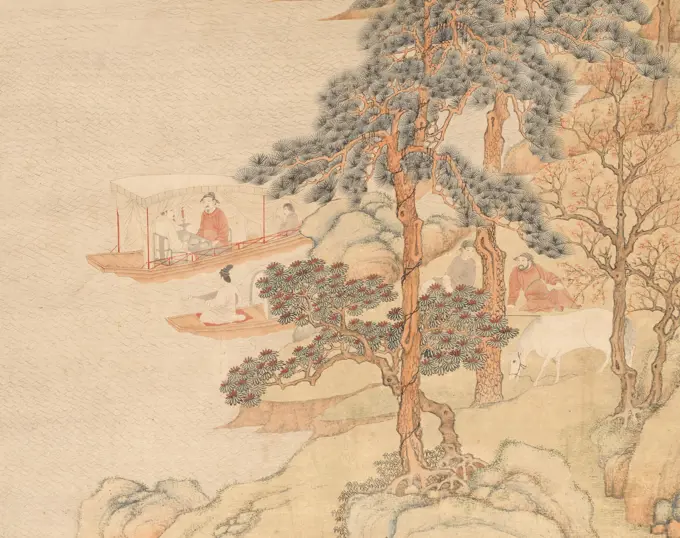
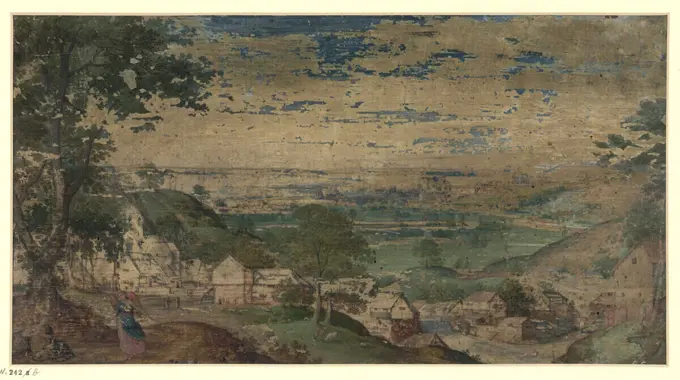
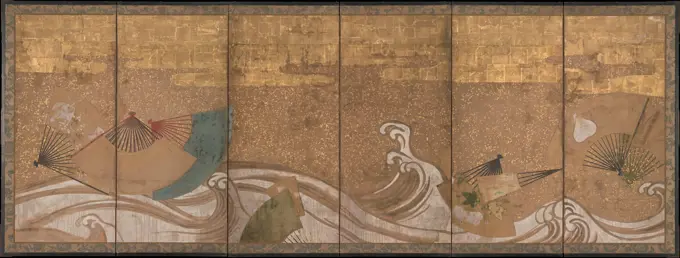
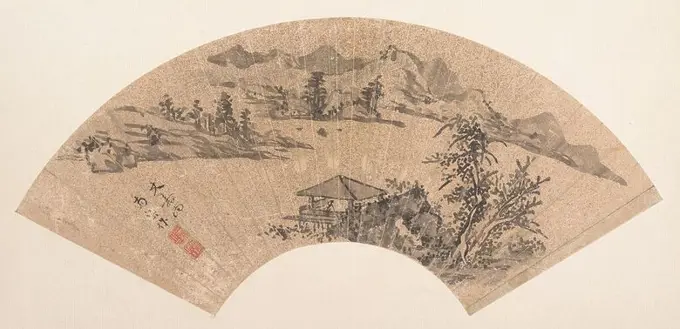
Elegant ink and color paintings depicting serene mountain and lake scenes, featuring figures in nature, with a focus on tranquility and artistry from Edo and Ming periods.
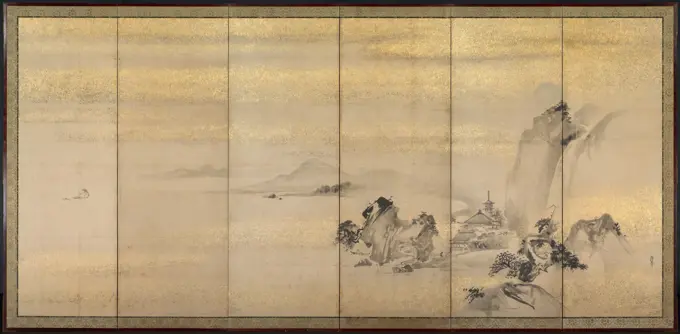
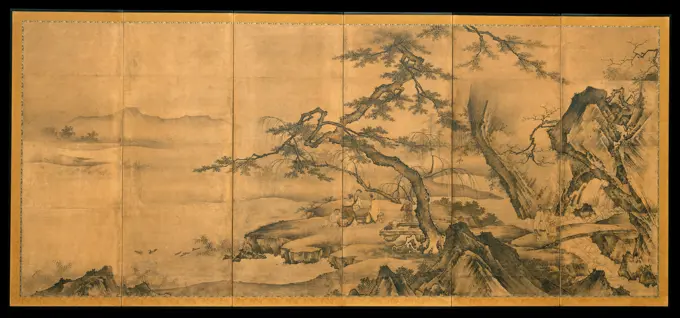
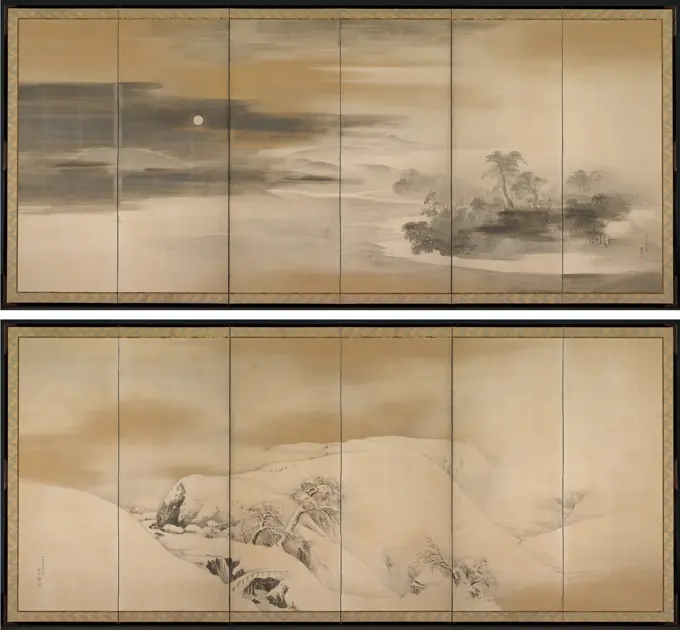
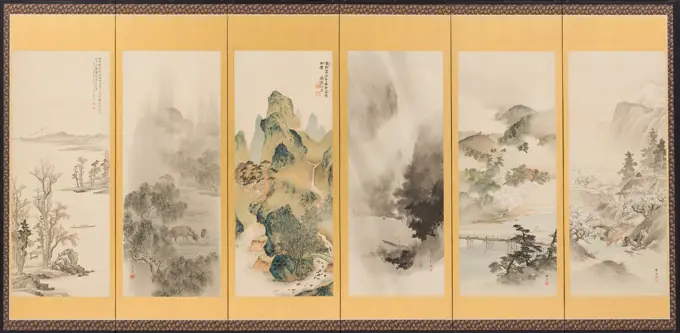
Summer and Winter Landscapes (one of a pair), 1600s. Kano Naonobu (Japanese, 1607-1650). Six-panel folding screen; ink on gold- and silver-decorated paper; framed: 170 x 354 x 58.7 cm (66 15/16 x 139 3/8 x 23 1/8 in.). This sparse composition depicts a summer scene on the right and a winter scene on the left. Careful observation reveals that the pair of screens was once damaged, and a later conservation including new sections of paper and inpainting sought to preserve the original flavor of the paintings so they could continue to be appreciated. Kano Naonobu was born in Kyoto, the younger brother of major painter and authenticator Kano Tany? (1602-1674). He relocated to Edo (present-day Tokyo) at the behest of the Tokugawa government in 1630 where he worked with his brother and teacher. In Kyoto, he helped his brother with paintings for Nij? Castle and the major Pure Land Buddhist temple Chionin.