My Boards
View Pictures
  • My Boards

Traditional Chinese Jackets

Colorful and intricately designed traditional jackets and coats from China, featuring rich fabrics and decorative patterns.

Jacket, 31 x 45 in. (78.74 x 114.3 cm), Cotton, silk, China
167 assets in this story
6145-29070561
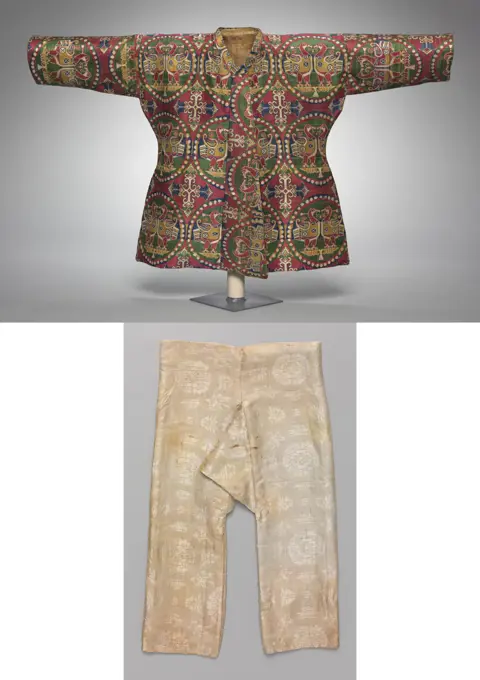
A Childs Coat with Ducks in Pearl Medallions and a Child's Pants, 700s. Iran or Central Asia, Sogdiana. Silk; weft-faced compound twill, samit; overall: 48 x 82.5 cm (18 7/8 x 32 1/2 in.). This luxurious silk coat for a young prince displays ducks in pearl roundels alternating with cross-shaped lotus blossoms woven in five radiant colors of silk. The ducks are adorned with imperial motifs adopted from the previous Sasanian dynasty in Iran including pearl collars, flying ribbons, and a jeweled necklace in their beaks. This silk was woven in Iran or Sogdiana; however, it is lined with Chinese silk damask and has a pair of pants also made with Chinese silk damask, both decorated in an 8th-century style of the Tang Dynasty.
4443-28743738
Jacket, 34 3/4 x 46 1/2 in. (88.27 x 118.11 cm), Cotton, China
4443-28744305
Jacket, 32 x 51 in. (81.28 x 129.54 cm), Cotton, China
6145-46803807
Mans Jacket
6145-45332420
Women's vest Majia with figural motifs in medallions unknown
4443-28742775
Pair of Leggings, Cotton, China
4443-28742138
Man's Long Ceremonial Coat, 46 1/2 x 65 5/8 in. (118.11 x 166.69 cm) (without tabs at hem), Cotton, silver, China
4443-28726069
Double-layer jacket, China
4409-17384675
Tunic. Dimensions: 60.62 in. high 41.00 in. wide (154 cm high 104.1 cm wide). Date: 6th-7th century. Museum: Metropolitan Museum of Art, New York, USA.
4443-28736075
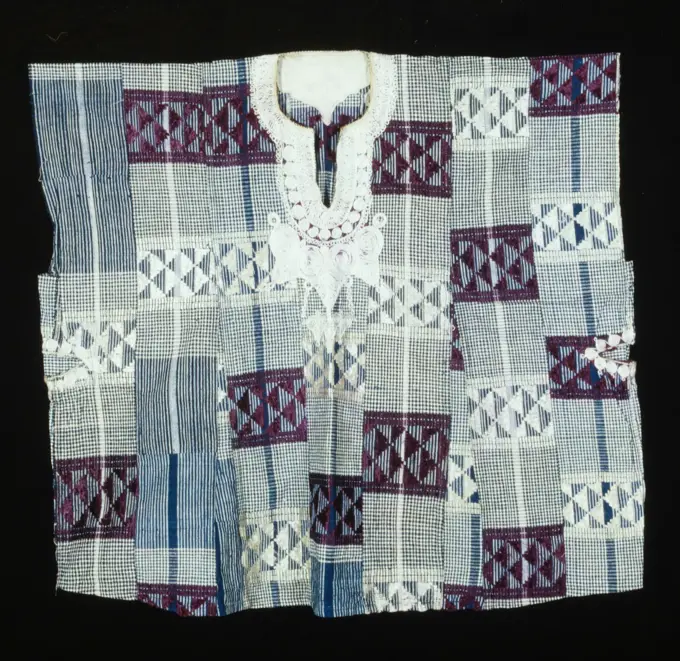
Shirt, one of a three piece outfit, 20th century, 32 3/4 x 33 1/2 in. (83.19 x 85.1 cm), Cotton, silk; needlework, 20th century, This three-piece ensemble was a festive outfit of a Yoruba man from Nigeria. It is made from blue and white cotton strip-woven cloth, which has been sewn together to create a large fabric. The white rayon or silk embroidery, which decorates the hem of the pants and hat, and the hem and neckline of the tunic, is characteristic of Nigerian clothing. The checkered pattern of the fabric, however, is exceptional, and striking to onlookers.
1899-28660063
Ancient Chinese clothes, tunic with large sleeves and embroidery, Qing dynasty, eighteenth century.
4443-28743515
Woman's Tunic, 20th century, 26 7/8 x 26 1/16 in. (68.26 x 66.2 cm) (without fringe), Cotton, seeds; brocade; needlework, Myanmar (Burma), 20th century
6145-29083045
Jacket, c. 1800s. Macedonia or Albania, 19th century. Velvet; metallic embroidery; overall: 30.5 x 154.3 cm (12 x 60 3/4 in.).
6145-29733942
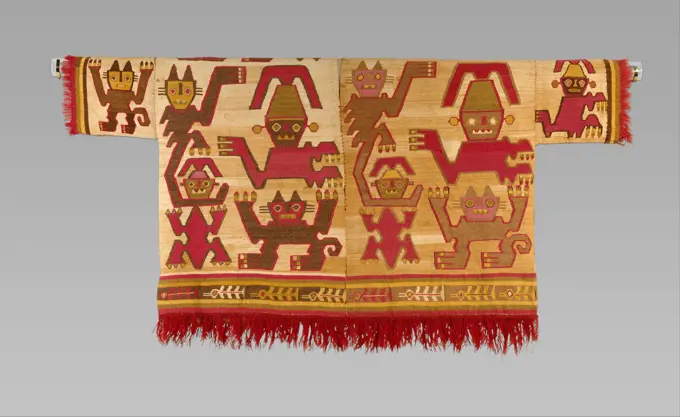
Shirt 1450-1550 Chimú The production of cloth was highly developed in ancient Peru. Textile garments conveyed important social, political, and religious messages depending on the materials and the imagery elaborating them. Andean weavers were full-time specialists. They worked in a wide range of techniques, including twining, knotting, plaiting, and weaving. This shirt is woven in tapestry weave, a technique in which the wefts are so tightly packed that they completely cover the warps. Tapestry was considered a high-prestige cloth in ancient Peru as elsewhere in the world.The sleeved shirt features eight boldly rendered figures on each face of the tunic. One figure each appears on the front and back of the sleeves. All have wide open, staring eyes and toothy mouths. Some figures appear catlike, with pointed ears and tails, while the others seem more human, wearing crescent-shaped headdresses. The unusually long tail of one "cat" seems to wrap around the neck of the seated figure below
6145-29140807
Vest late 19th century Slovak. Vest 159163
6145-29144610
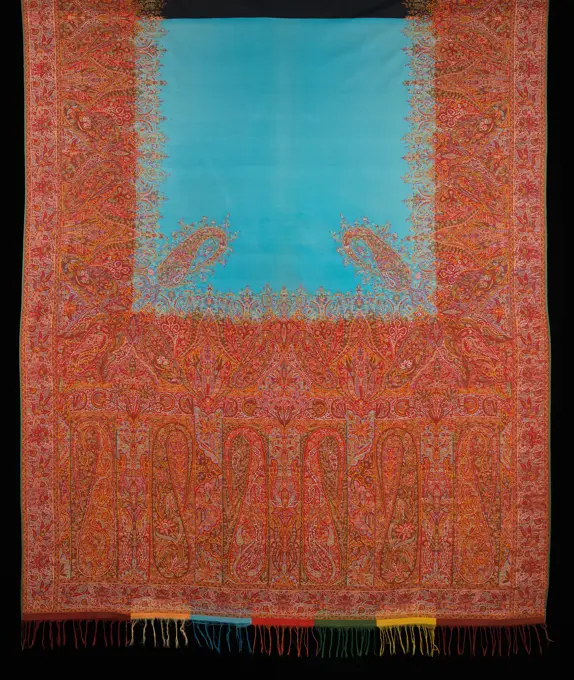
Shawl 1860-69 Scottish This is a particularly stunning design and color combination presented by the Scottish textile mills of the 19th century. The bi-color field is thematic while the overall pattern is very intricate and vibrant. The pattern follows the traditional Indian jamawar format with an inner border, outer border and large cone patterns at each end.The shawl held a place as a high fashion accessory for a relatively large period between the end of the 18th century to the 1870s. These accessories were originally adopted by men with exposure to India and Persia through the Trading Companies. The changing fashions near the end of the 18th century brought a renewed interest in Indian and Persian shawls as a form of warmth over the thin muslins of fashionable Empire silhouette dresses. The shawls came in many designs which generally incorporated the boteh form. This form, which is mostly known as the paisley now, is an ancient Persian design based upon the tree of life and inspire
4443-28735940
Odd Fellows Cloak, 'David as Prince', 19th century, Henderson Ames Co., 40 1/2 x 60 in. (102.9 x 152.4 cm), Velvet, silk, metalic thread, United States, 19th century
4443-28744006
Skirt, 31 1/2 x 21 1/2 in. (80.01 x 54.61 cm), Cotton, China
4409-17441548
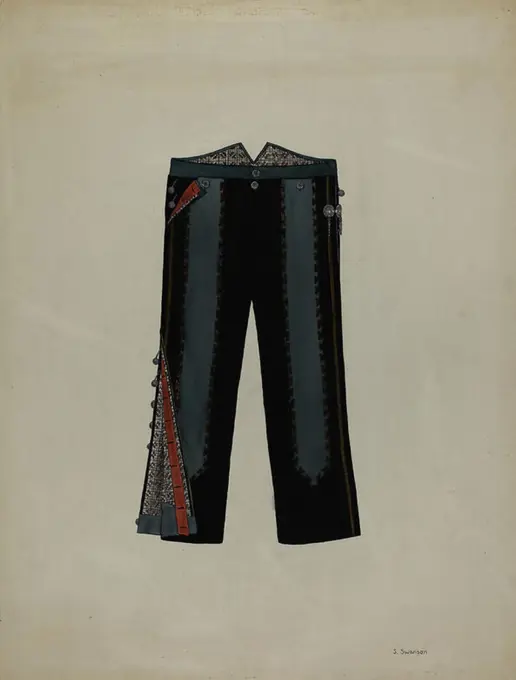
Man's Trousers. Dated: c. 1937. Dimensions: overall: 35.6 x 27.4 cm (14 x 10 13/16 in.). Medium: watercolor, graphite, and gouache on paper. Museum: National Gallery of Art, Washington DC. Author: Syrena Swanson.
6145-30091976
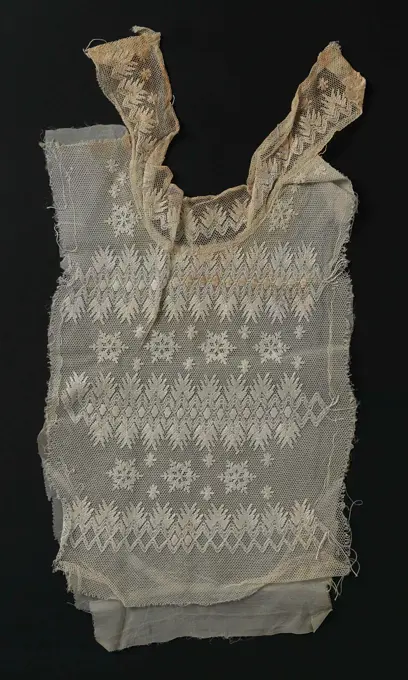
Chemisette van kantborduurwerk op machinale tule met sneeuwkristallen.Chemisette of natural-colored edge embroidery, tuled stitch on machine tulle. Alternating pattern of scattered snow crystals and staggered double zigzag lines. In the diamond-shaped spaces that created between the zigzag lines, a poignant oval has been created. Grass pollen are on the zigzag tops. A mesh-like fabric is sewn at the rear of the chemisette.
4409-17415519
Skirt from Theatrical Ensemble for a Female Role. Culture: China. Dimensions: Overall: 39 x 116 in. (99.1 x 294.6 cm). Date: 18th century.A close look at this colorful design of phoenixes amid scrolling vegetation reveals transformations in the pattern: some of the flowering areas have heads. This transformational potential is present in the patterns of many Chinese costumes. In addition, the embroidered design of this skirt is identical to that of a theatrical jacket in the Qing court collection of the Palace Museum, Beijing. Museum: Metropolitan Museum of Art, New York, USA.
4443-28741808
Apron, 17 5/16 x 10 1/16 in. (43.97 x 25.56 cm) (front panel only), Cotton, pearls (), metal, China
4443-28744741
Skirt, 40 1/2 x 22 15/16 in. (102.87 x 58.26 cm), Cotton, sequins, metallic thread, felt, mirrors; needlework, Indonesia
4409-73219
Embroidered sheepskin waistcoat. Bekes county. Ethnographic Museum. Budapest. Hungary.
4443-28743509
Skirt, first half of 20th century, 25 5/8 x 22 3/4 in. (65.09 x 57.79 cm) (at waist), Silk;, Laos, 20th century
4443-28731523
Coat, 19th century, 51 x 57 1/2 in. (129.5 x 146.05 cm), Silk, metallic threads, Morocco, 19th century
4443-28744698
Skirt, 30 15/16 x 29 in. (78.58 x 73.66 cm) (at waistband), Cotton, China
6145-29748810
Blouse 19th century Romanian. Blouse 102380
4443-28735639
Dress, late 20th century, 30 3/4 x 49 1/8in. (78.1 x 124.8cm), Cotton, China, 20th century
4443-28742494
Child's dress, 20th century, 14 1/2 x 27 7/8 in. (36.83 x 70.8 cm), Silk, cotton, metal; embroidery, India, 20th century
6145-58990486
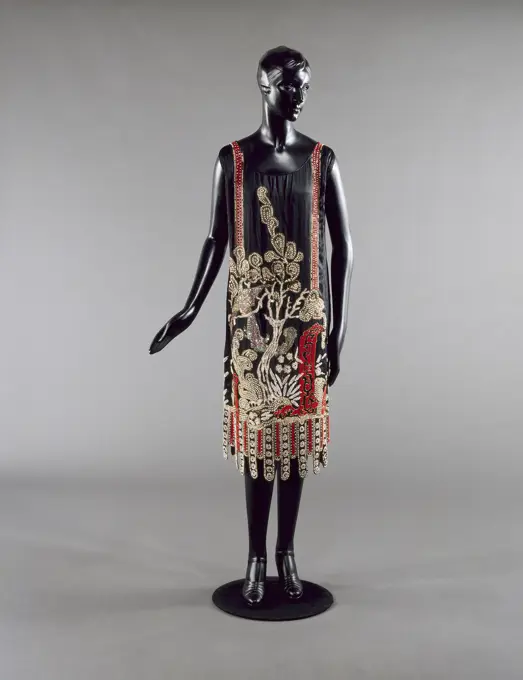
Jean Patou (1887-1936). "Evening dress in black silk satin, glitter embroidery, pearls and red tubes, golden and pearly, around 1925", (front view). Galliera, fashion museum of the city of Paris. 26123-5 Paillette embroidery, gilded, feminine, model, female model, mother -of -pearl, pearl, evening dress, silk satin, red tube, view face
4443-28742784
Apron, 21 11/16 x 33 1/4 in. (55.09 x 84.46 cm) (without ties), Cotton, silk, China
6145-29127757
Man's Jacket
6145-29093371
Bodice or Coli, late 1800s. India, late 19th century. Embroidered satin with gold thread and sequins; overall: 32.5 x 78.5 cm (12 13/16 x 30 7/8 in.).
6145-58825941
Jas, anonymous, 1900 - 1949 Jacket with stitching. Toraja . embroidering Jacket with stitching. Toraja . embroidering
4443-28725339
Skirt, from a three-piece Jaipur royal outfit, c. 1900, 32 1/2 x 14 in. (82.55 x 35.56 cm) (at waist), Cotton, metallic threads, India, 19th-20th century
4443-28743560
Woman's Skirt, 20th century, 44 1/2 x 33 3/8 in. (113.03 x 84.77 cm), Cotton, Laos, 20th century
4409-17304151
TRAJE DE LOS INDIOS DE COSTAS NOROESTE AMERICA. Location: PRIVATE COLLECTION. NEW YORK.
4443-28743805
Baby Carrier, 31 x 79 in. (78.74 x 200.66 cm) (including ties), Cotton; needlework, China
1848-50668997
Traditional wedding dress, Mary Historical Museum, Turkmenistan, Mary, Turkmenistan, Asia
6145-46632266
. Elongated bated scarf with unprocessed yellow-gold middle pattern inside a plain blue and green border. On both ends a standing figure with stretched spread arms and a long-tongue. To make the figure an aureool with blue leather yellow-gold courses and contiguous rows with spiral circles. In the style of Art Nouveau.
4443-28743158
Shirt, c. 1890, 33 1/4 x 71 3/16 in. (84.46 x 180.82 cm) (excluding tails at hem), Animal hide, beads, United States, 19th century
4443-28744002
Baby Carrier, 34 x 14 in. (86.36 x 35.56 cm), Cotton, silk; needlework, China
4443-28740241
Shirt, 65 1/4 x 22 3/4 in. (165.74 x 57.79 cm), Cotton, silk, beads, shells; needlework, China
7073-70250337
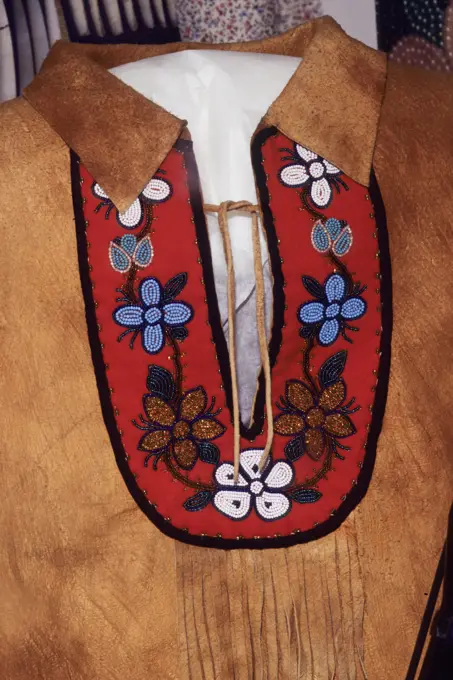
Floral patterns of beadwork decorate the front of a traditional Athabaskan moosehide shirt
1525-21698745
Balkan folk costume isolated on white in museum
4443-28744027
Skirt, from a three-piece set, 27 x 24 1/2 in. (68.58 x 62.23 cm), Cotton, silk, China
4443-28743780
Jacket, 39 1/2 x 49 3/4 in. (100.33 x 126.37 cm), Cotton, China
6145-46803823
Pants
1848-49758576
An antique red Ottoman dress in the view
6145-30180517
Trouser Band Made 1875-1900 China. Forty-four pairs and eight odd pieces of embroidered sleeve, ankle bands, etc. on gauze. . Han-Chinese
6145-46803809
Pants
4168-2219
Korea, Seoul, Itaewon, Shopping Area, Colorful Clothes On Display
6145-29094117
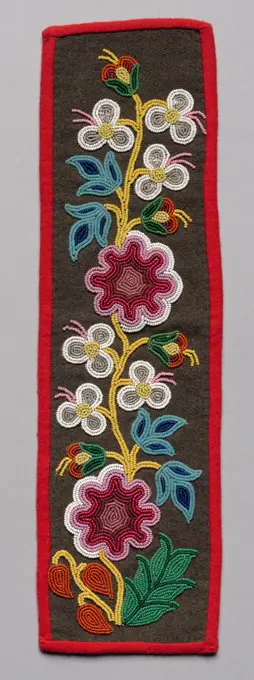
Beaded Panel, late 1800s. Northeast Woodlands, Great Lakes Region, Anishinaabe (Ojibwe) or Nehiyawak (Cree) People. Glass beads on wool; overall: 38.9 x 11.4 cm (15 5/16 x 4 1/2 in.). In the 1800s, native peoples began to use European fabrics to fashion fine formal garments; they favored sturdy cloth, such as velvet and wool broadcloth, which provided support for heavy decorative beadwork that was added by hand. Often the fabric was a dark color, providing dramatic contrast for the multicolored beads. Rather than encrusting the entire garment, beadwork was confined to cuffs, “epaulettes,” bib-like plackets and yokes, rectangular panels sewn to leggings, shirts, and dresses, and the like.
6145-29763676
Coat ca. 1849 India. Coat 86121
4443-75478509
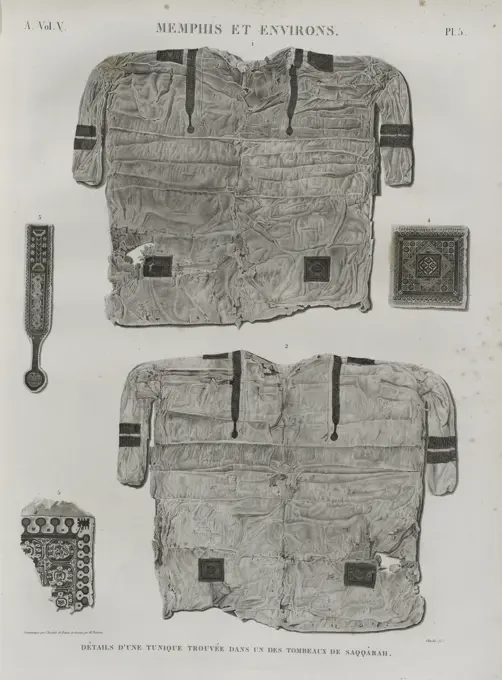
Details of a tunic found in one of the tombs of Saqqârah. Issued between 1809 and 1828 in Paris by Impr. impériale. The dimensions of the image are 70 x 50 cm. The content relates to clothing and dress, with a focus on decorations from ancient Egypt, specifically from the extinct city of Memphis and the site of Saqqârah
6145-45333488
Male hat unknown
7050-70034614
Europe, Hungary, Budapest, Covered Market, embroidered vest, blouse, traditional clothing.
1525-21185555
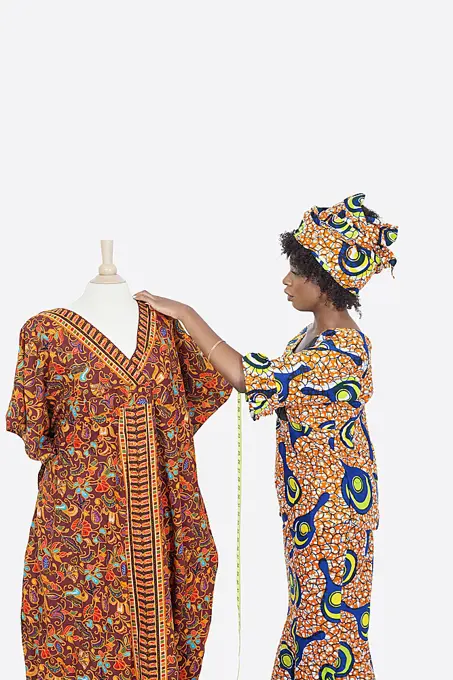
Female tailor in traditional outfit measuring dashiki on tailor´s dummy over gray background
6145-29207932
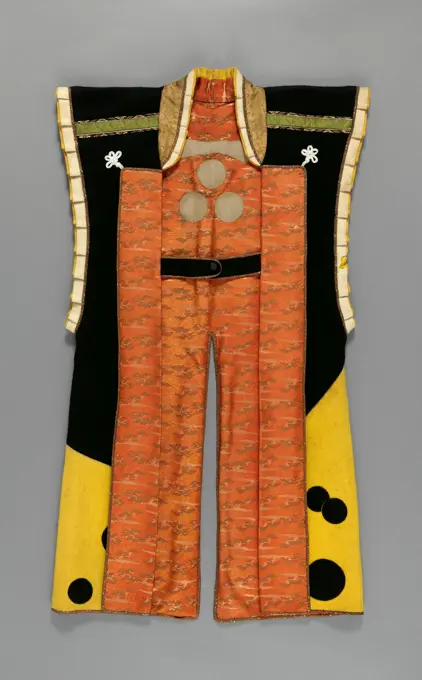
Surcoat (Jinbaori) early-mid-19th century Japanese This surcoat features a sacred volcano motif, possibly representing Mount Fuji. It is also decorated with the crest (mon) of the Mori family, one of the most powerful daimyo clans of the nineteenth century. Using imported European wool, called rasha in Japan, it was skillfully made as a detailed copy of a famous seventeenth-century surcoat, which is now in the collection of the Osaka Castle Museum.. Surcoat (Jinbaori). Japanese. early-mid-19th century. Wool (rasha), silk, crepe. Surcoat
6176-66096563
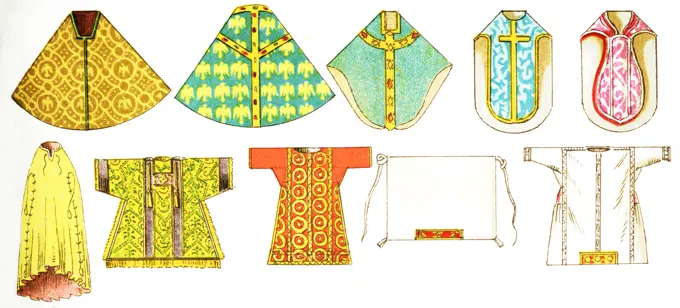
Shown in this image are a variety of ecclesiastical costumes related to the Christian Church. They are, from left to right, top to bottom: chausable from the 10th century, chausable from 11th century, chausable from 14th century, chausable from 15th century, chausable from 1880s, chausable from 11th century, dalmatic from 15th century, tunic from 12th century, alb from 14th century, humeral veil (usage began in 11th century). The illustration dates to 1882.
6145-30180607
Trouser Band Made 1875-1900 China. Forty-four pairs and eight odd pieces of embroidered sleeve, ankle bands, etc. on gauze. . Han-Chinese
1899-61455964
Shown in this image are a variety of ecclesiastical costumes related to the Christian Church. They are, from left to right, top to bottom: chausable from the 10th century, chausable from 11th century, chausable from 14th century, chausable from 15th century, chausable from 1880s, chausable from 11th century, dalmatic from 15th century, tunic from 12th century, alb from 14th century, humeral veil (usage began in 11th century). The illustration dates to 1882. .
6145-58933096
Shirt -
6145-46454329
JAK; Men's jacket; Songket. Jacket with geometric motifs.
7012-69881132
Greenland, Qaqortoq. South Greenland's largest town. Traditional Greenlandic national cosutme with boots (aka Kamiit) made of untanned seal skin. Worn for holidays & Christmas.
6145-29809230
Suit ca. 1858 American. Suit 81686
PREVIOUS
of 2
NEXT
2401 S. Ervay, Suite 206
Dallas, Texas 75215
United States
Get Started
Free ResearchMy BoardsMy Cart
For Creators
How To License Your ContentContributor PortalFrame of Mind
Resources
API accessPricing
Contact
+1 866 236 0087help@viewpictures.co.uk Contact form
©2026 View Pictures. All Rights Reserved. -A
This site is protected by reCAPTCHA and Google Privacy Policy and Terms of Service apply.