My Boards
View Pictures
  • My Boards
← Documents & Records

Traditional East Asian Calligraphy

Artistic manuscripts featuring traditional calligraphy and illustrations, highlighting cultural significance and historical artistry from Japan and China.

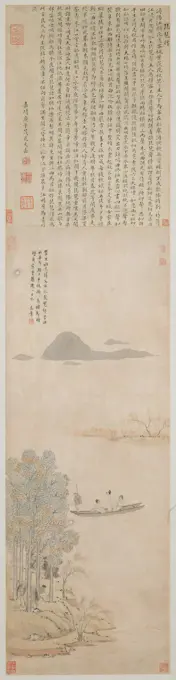
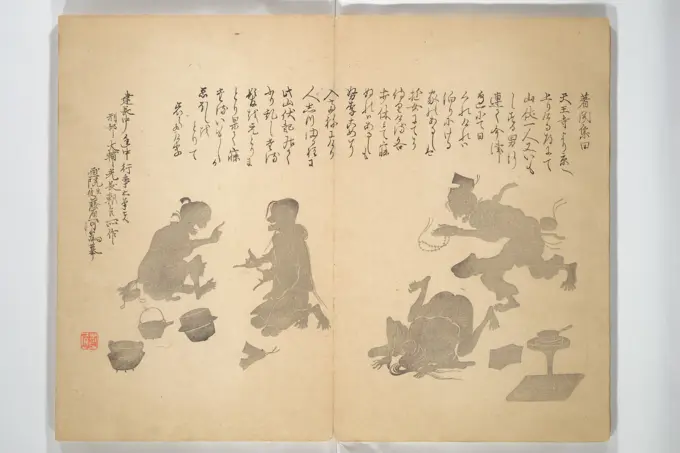
Poems on Fishermen, first half 18th century, Gion Nankai, Japanese, 1677 - 1751, 14 9/16 × 18 1/8 in. (36.99 × 46.04 cm) (image)50 15/16 × 24 1/8 in. (129.38 × 61.28 cm) (mount, without roller), Ink on paper, Japan, 18th century
263 assets in this story
6145-29817412
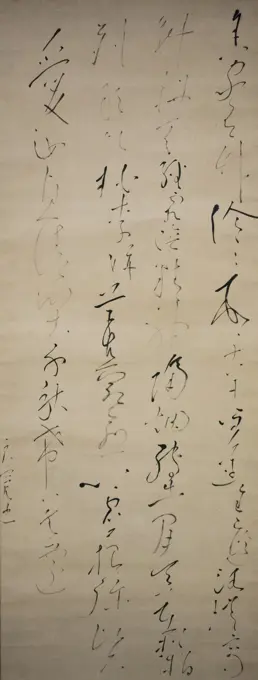
Chinese Poem: There is a bamboo grove around my house” early 19th century Ry?kan Taigu At first glance the cursive Chinese calligraphy of Monk Ry?kan seems, even to those trained in the language, to be somewhat sloppy, almost childish in appearance, and illegible in places. But this disarmingly simple, artless, and exuberant style of brush writing—utterly individual and idiosyncratic—earned Ry?kan esteem as one of the great Zen monk calligraphers of all time. Though he trained as a S?t? monk under Abbot Kokusen at Ents?ji Temple, and was offered the position of head of the temple after his master died, he renounced the rigors of a monastic regimen and instead decided to live mostly as a recluse and earned the reputation of being an eccentric. He was dedicated to poetry in both Chinese and Japanese (especially haiku), and examples of his verse brushed in his own distinctive hand were avidly sought, both in his own day and into the present. The example here is a Chinese verse written in
4443-28745705
Ode to the Pipa, or Song of the Lute, 1650, Wang Jianzhang; Calligrapher: Wen Chia, Chinese, active c. 1621 - 1650, 30 7/8 × 11 3/8 in. (78.4 × 28.9 cm) (image, without text)74 1/4 × 17 1/4 in. (188.6 × 43.8 cm) (overall, without roller)48 1/8 × 11 in. (122.2 × 27.9 cm) (image)76 1/2 × 20 1/2 in. (194.3 × 52.1 cm) (mount, with roller), Ink and light colors on paper, China, 17th century, The artist Wang Jianzhangs inscription tells us that he painted this work for his friend Gong Weiliu in 1650, after Gong acquired Wen Jias calligraphic rendering of the 'Pipa Xing' ('Song of the Pipa Player'), a famous poem. Both Wens script and Wangs painting were mounted together on the same scroll. This famous Tang poem, composed by the poet Bai Juyi (772-846), is one of the great poems of Chinese literature. In it, a man encounters a woman playing a stringed instrument called a pipa and expresses the sadness he feels when he hears her play her melancholy song. Here, Wang depicts the woman standi
1746-30021546
The Student Government of Tongji University was democratically re-elected. Tongji University expelled progressive students during the re-election, sabotaging the re-election of the Student Self-Government Committee.
6145-29296778
Chinese woodcut:
6145-29141058
Miniature Album Prince Yongxing Chinese. Miniature Album 42559
4443-75471858
Kaishien gaden = The Mustard Seed Garden Painting Manual, 1753, Wang Gai, active 1677-1705, Kyoto, Woodcuts
6145-55954173
Scroll 2, scene 36. 1650 - 1699. Illustrations, Manuscripts. Spencer Collection
6145-48967792
Plan of the temple in the Izu province unknown
6145-29707883
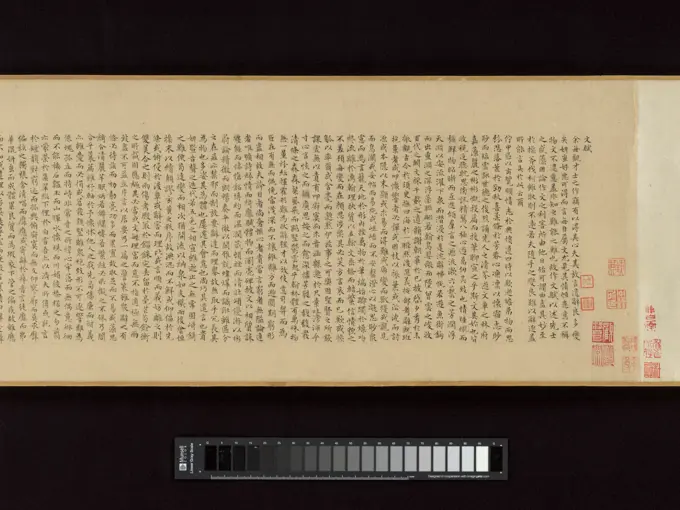
Lu Jis Essay on Literature dated 1544 and 1547 Wen Zhengming Chinese. Lu Jis Essay on Literature. Wen Zhengming (Chinese, 1470-1559). China. dated 1544 and 1547. Handscroll; ink on paper. Ming dynasty (1368-1644). Calligraphy
6145-55954164
Scroll 2, scene 26. 1650 - 1699. Illustrations, Manuscripts. Spencer Collection
6145-29257713
Smallpox illustration, Japanese manuscript, c. 1720
6145-29197356
Poem in Seven-syllable Meter Zhang Fengyi Chinese. Poem in Seven-syllable Meter 48915
1746-30021671
Proletarian Youth; General Conference Special Issue, Issue 3.
6145-29293859
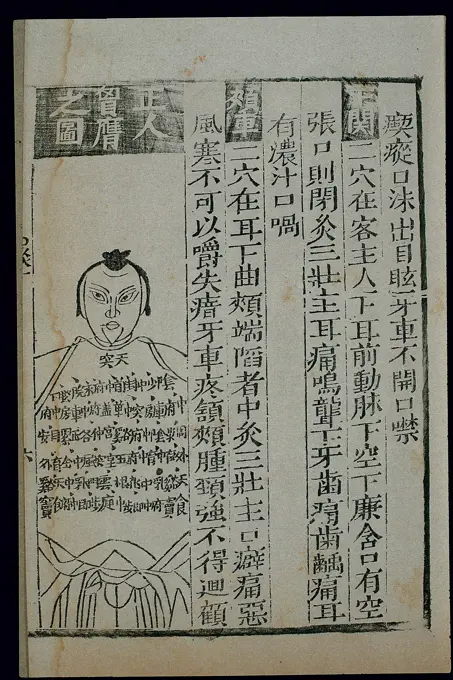
Acu-moxa chart, front of thorax, Chinese woodcut
6145-29294627
Benjamin Hobson, "On the medical Profession in China".
6145-55954189
Scroll 3, scene 8. 1650 - 1699. Illustrations, Manuscripts. Spencer Collection
1746-30021429
Teachers and students of the Peicheng Girls' School made 2,000 silk cotton vests for the soldiers on the front line in Suiyuan and presented them with a pennant. This was during the Japanese invasion of China.
6145-29718963
Album of Flowers and the Moon late 19th century reprint of original edition of 1836 Mori Tetsuzan Japanese. Album of Flowers and the Moon. Mori Tetsuzan (Japanese, 1775-1841). Japan. late 19th century reprint of original edition of 1836. Woodblock printed book (orihon, accordion-style); ink and color on paper. Meiji period (1868-1912). Illustrated Books
6145-29296478
Bencao Gangmu -- C.16 Chinese materia medica, Bezoars, etc.
4449-54561
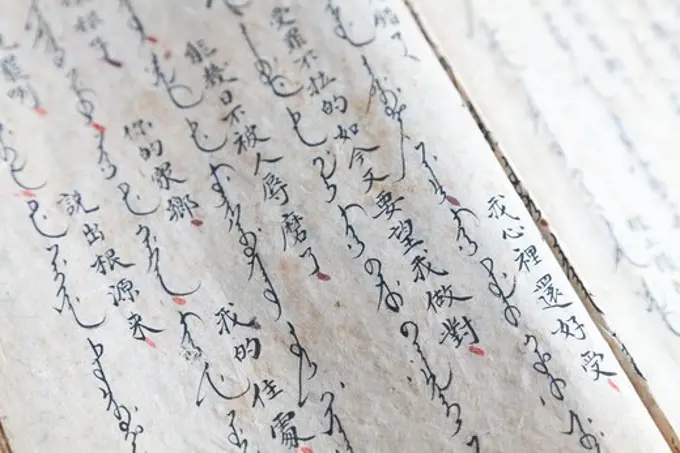
Parchment with Manchu-Chinese text, Qing dynasty, Leipzig, Saxony, Germany
6145-29293867
C19 Chinese ink drawing: Location of various boils
6145-29274237
Smallpox illustration, Japanese manuscript, c. 1720
1899-19137922
China: Pediatric 'tuina' hand massage diagram, Chinese woodcut, mid-Qing Dynasty (1644 - 1912), reproduced in Youke San Zhong ('Three volumes of Paediatrics'), c. 1940
6145-29163435
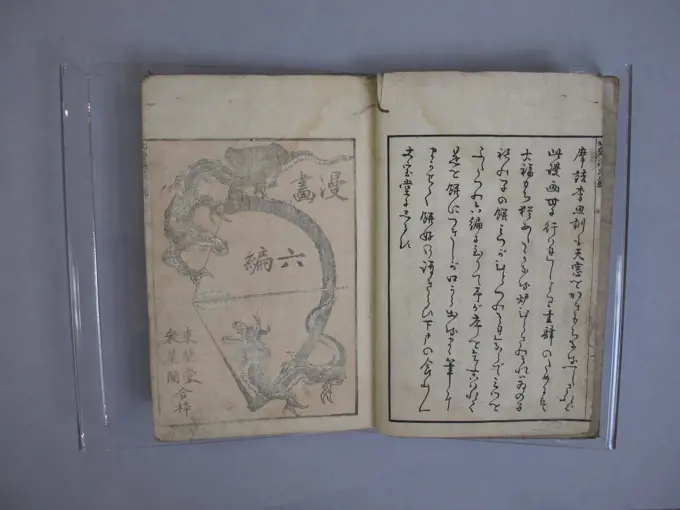
Transmitting the Spirit, Revealing the Form of Things: Hokusai Sketchbooks, volume 6 (Denshin kaishu: Hokusai manga, rokuhen) Katsushika Hokusai Japanese. Transmitting the Spirit, Revealing the Form of Things: Hokusai Sketchbooks, volume 6 (Denshin kaishu: Hokusai manga, rokuhen) 57683
4443-75475868
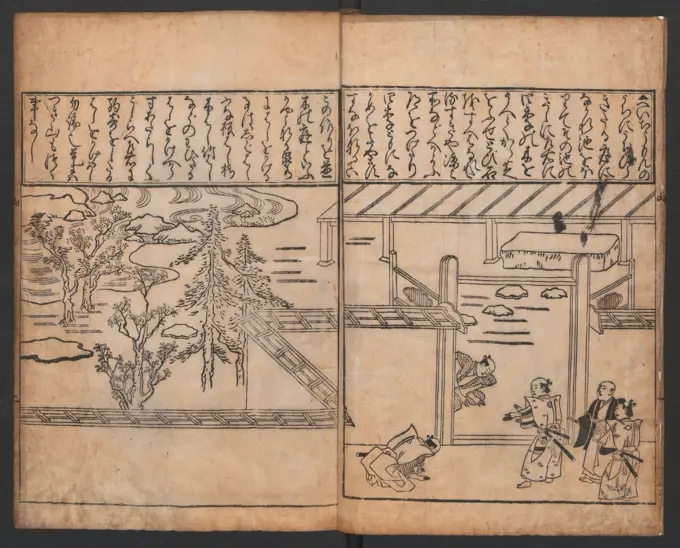
Ise monogatari = The Tales of Ise., 1608, Yoshida, Soan, -1632, Kyoto
6145-29292796
C19 Chinese ink drawing: Location of various boils
6145-29256796
Smallpox illustration, Japanese manuscript, c. 1720
6145-29269376
Smallpox illustration, Japanese manuscript, c. 1720
6145-50635838
Plan of the Haraizumi dera Temple unknown
6145-29293672
Smallpox illustration, Japanese manuscript, c. 1720
4409-17392376
Calligraphy. Artist: Unidentified Artist; After Wang Chong (Chinese, 1494-1533). Culture: China. Dimensions: 6 3/4 x 20 in. (17.1 x 50.8 cm). Museum: Metropolitan Museum of Art, New York, USA.
6145-51830257
Tale of the Wisteria Robe Tale of the Wisteria Robe, 15th century. Ink on mica-flecked paper, 6 5/8 x 405 1/4 in. (16.8 x 1029.3 cm).   Asian Art 15th century
6145-44317810
Tōfu: An overview. .
6145-29096650
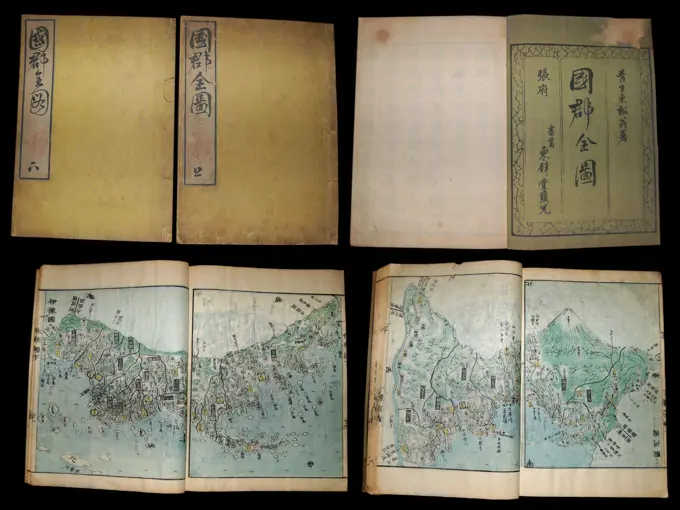
1839 Woodblock Ino Tadataka Atlas of Japan or Kokugun Zenzu ( 2 volumes )
6145-55954227
Scroll 3, scene 30. 1650 - 1699. Illustrations, Manuscripts. Spencer Collection
6145-54559037
Scroll II.. 1501 - 1599. Illustrations, Manuscripts. Spencer Collection
6145-55954193
Scroll 3, scene 13. 1650 - 1699. Illustrations, Manuscripts. Spencer Collection
1899-18852216
Karakuri-zui was written by Hosokawa Hanzo Yorinao, and was published in the Edo period (1798). This, Japan's oldest manuscript of mechanical engineering, consists of three volumes. They were later reprinted in Osaka and Kyoto. The compendium details the structure and the construction process of clocks (wadokei, jp. 時計) and automated (Karakuri ningyō, jp. からくり人形) mechanical dolls, and it explains not only the techniques, but also about the spirit of making these mechanical devices.
6145-29266911
Smallpox illustration, Japanese manuscript, c. 1720
1746-30021156
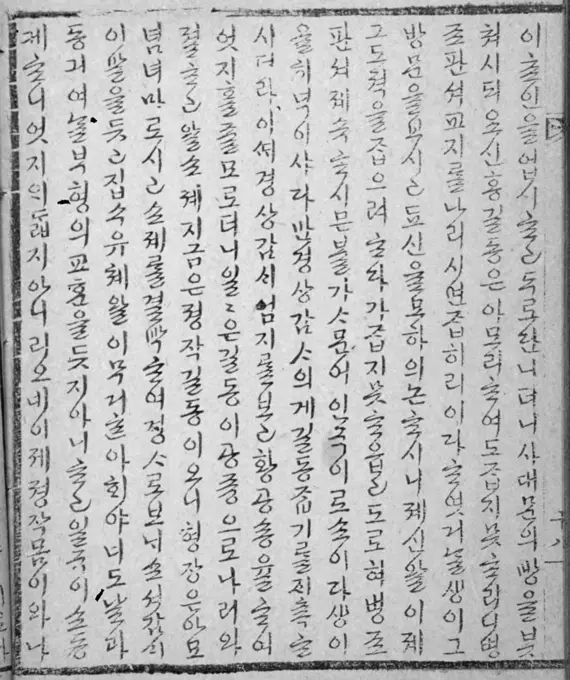
Tale of Hong Gildong is one of the first novels written in Hangul, the Korean alphabet, in the middle of the Joseon Dynasty. The novel is by Heo Gyun (Ho Kyun, 1569-1618), whose revolutionary thinking is reflected in the story's emphasis on breaking down differences in status and reforming corrupt politics. The main character of the novel, Hong Gildong, was the child of a nobleman and a female servant. Even though he was very intelligent and talented, Hong Gildong was never accepted as a son of a noble family because of a rigid status system. After he left home, Hong Gildong became a bandit leader and organized a band of "Robin Hoods," who robbed the rich of their unjustly earned goods and distributed them to the poor. Later, he went to the foreign nation called Yuldo and built an ideal country where all people were equal.
6145-29164254
A Compendium of Model Gardens (Tsukiyama no zu niwa zukushi; Yokei tsukuri niwa no zu) 1691, fifth month Hishikawa Moronobu Japanese. A Compendium of Model Gardens (Tsukiyama no zu niwa zukushi; Yokei tsukuri niwa no zu). Hishikawa Moronobu (Japanese, 1630/31-1694). Japan. 1691, fifth month. Woodblock printed book; ink on paper. Edo period (1615-1868). Illustrated Books
6145-51830255
Tale of the Wisteria Robe Tale of the Wisteria Robe, 15th century. Ink on mica-flecked paper, 6 5/8 x 405 1/4 in. (16.8 x 1029.3 cm).   Asian Art 15th century
6145-46127561
Poem. Shijo 'sur paper' with stylized motif of pine needles and blossoms, surimono for a funeral. With multiple poems.
6145-55954213
Scroll 3, scene 24. 1650 - 1699. Illustrations, Manuscripts. Spencer Collection
1746-19689527
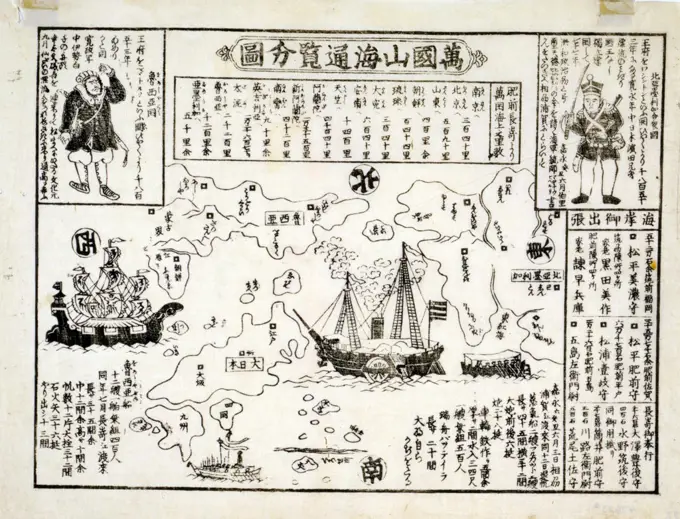
Japanese print shows a map of the world with an American & Russian ship on the seas. Said to be from 1850-1900.
6145-29280021
Chinese Materia Medica illustration, Ming: Red cockerel
1899-19138001
China: Page from a 16th century Ming dynasty edition of the Jiuzhang suanshu (Nine Chapters on the Mathematical Arts).  The illustration explains a method for determining pi
6145-51821872
Kunmo Zu-i Taisei. Kashiragaki Zoho After the original by Nakamura Tekisai (Japanese, 1629-1702). Kunmo Zu-i Taisei. Kashiragaki Zoho, 1629-1702. Paper, H: 8 7/8" - W: 6 1/4".   Asian Art 1629-1702
6145-55951064
Ise monogatari = The Tales of Ise.. text. Illustrations. 1608. Spencer Collection
1899-19137923
China: Pediatric 'tuina' hand massage diagram, Chinese woodcut, mid-Qing Dynasty (1644 - 1912), reproduced in Youke San Zhong ('Three volumes of Paediatrics'), c. 1940
6145-29269505
Chinese pulse chart, 17th century.
6145-29255683
Smallpox illustration, Japanese manuscript, c. 1720
6239-71008482
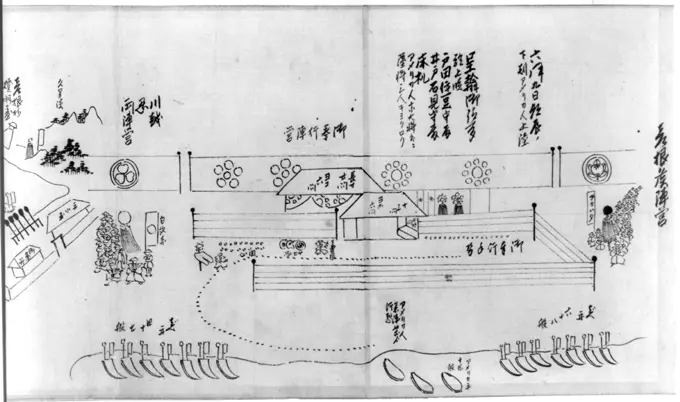
Perry's first landing at Kurihama, July 8, 1853, part 2  | Library of Congress
6145-29770999
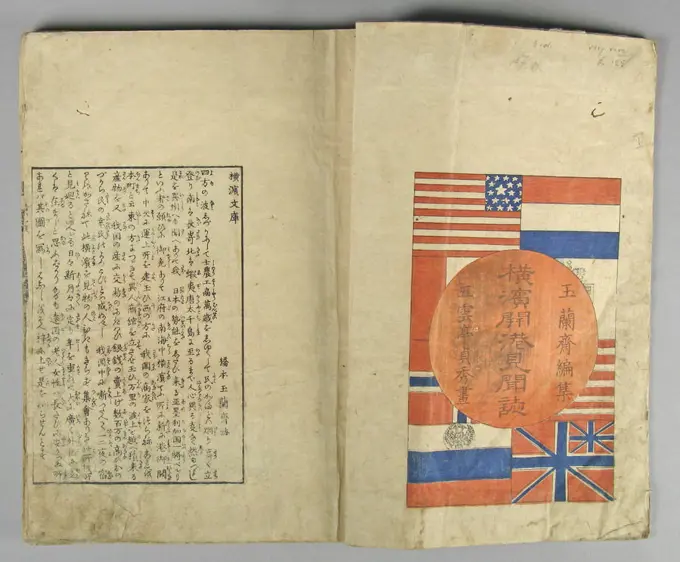
Observations on the Opening of Yokohama (Yokohama kaikō kenbunshi) 19th century Utagawa (Gountei) Sadahide Japanese. Observations on the Opening of Yokohama (Yokohama kaikō kenbunshi) 73591
1746-30021224
The Central Committee of the Communist Party of China publishes "To Protest the Brutal Massacre of Imperialism to the People of the Whole country".
1746-19661751
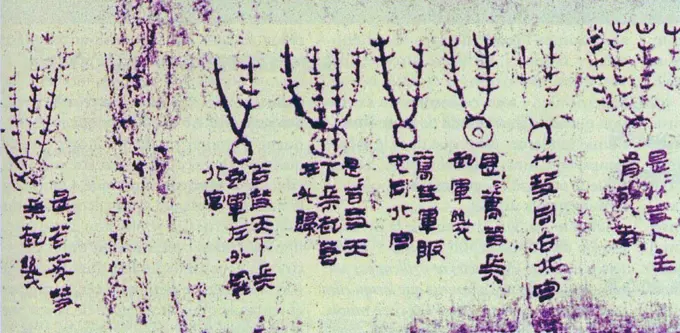
The Mawangdui silk, a Chinese textbook of cometary forms and the various disasters associated with them, was compiled sometime around 300 B.C.
6145-29230738
Illustrated Journal of National History no. 11-13 1893 Japan. Illustrated Journal of National History no. 11-13. Japan. 1893. Ink on paper. Illustrated Books
6145-50636171
Plan of Eigen ji Temple in the Totomi province unknown
6145-29294006
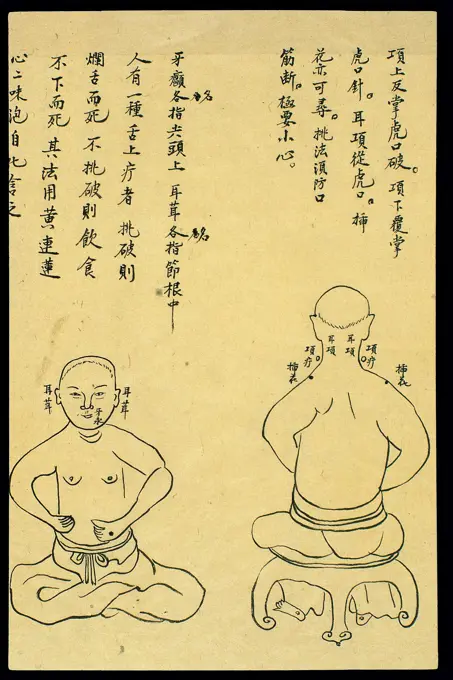
C14 Chinese tongue diagnosis chart
6145-55951093
Ise monogatari = The Tales of Ise.. text. Illustrations. 1608. Spencer Collection
6145-29249061
Smallpox, textured illustration, Japanese manuscript, c. 1720
1848-55978217
Sign at the entrance to the Paelkhor Choede Convent, Gyantse, Tibet
4443-73201911
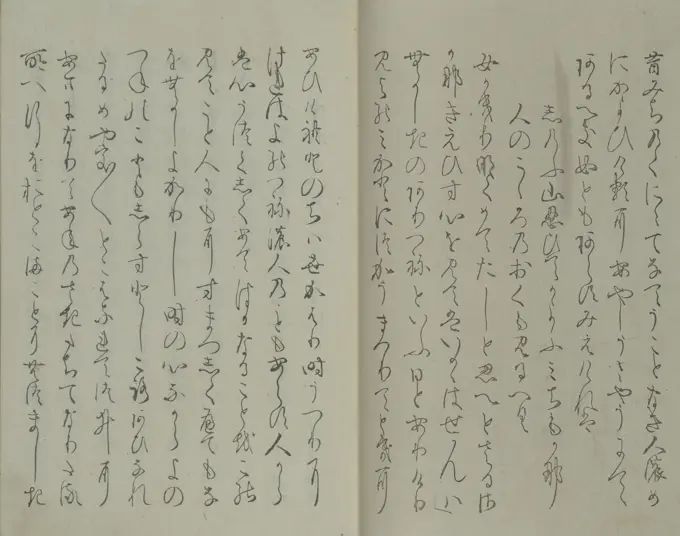
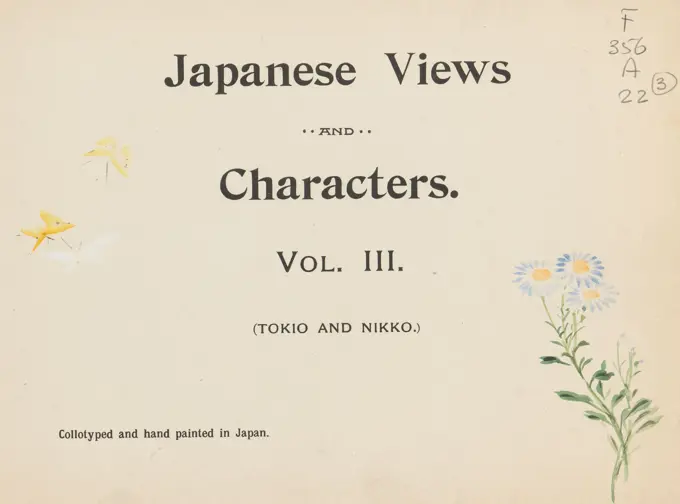
Japanese views and characters Vol. III., book, photos, photographically illustrated books, height 159 mm, width 233 mm, thickness, 7 mm
PREVIOUS
of 3
NEXT
2401 S. Ervay, Suite 206
Dallas, Texas 75215
United States
Get Started
Free ResearchMy BoardsMy Cart
For Creators
How To License Your ContentContributor PortalFrame of Mind
Resources
API accessPricing
Contact
+1 866 236 0087help@viewpictures.co.uk Contact form
©2026 View Pictures. All Rights Reserved. -B
This site is protected by reCAPTCHA and Google Privacy Policy and Terms of Service apply.