My Boards
View Pictures
  • My Boards
← Artworks

Traditional Japanese Art

Prints showcasing intricate Japanese woodblock art, depicting poetic scenes, nature, and cultural elements from historical Japan, highlighting delicate colors and forms.
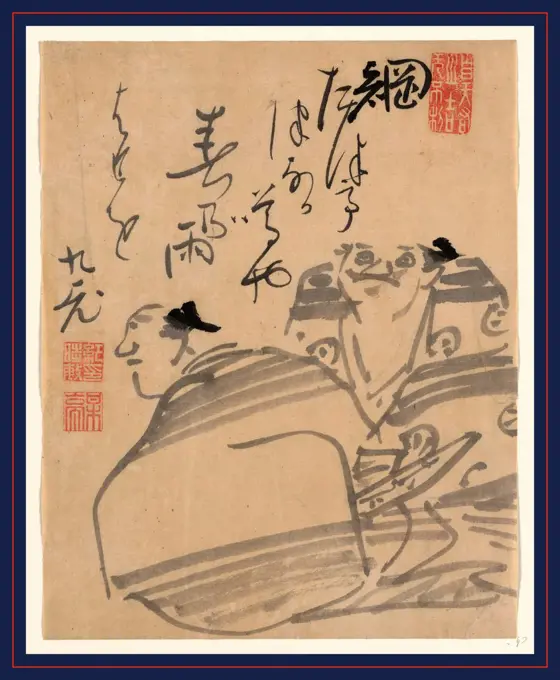
Two men, possibly actors, Ki, Baitei, 1734-1810, artist, between 1760 and 1810, 1 drawing : wash, color ; 28 x 22.3 cm (sheet)
256 assets in this story
4443-20306949
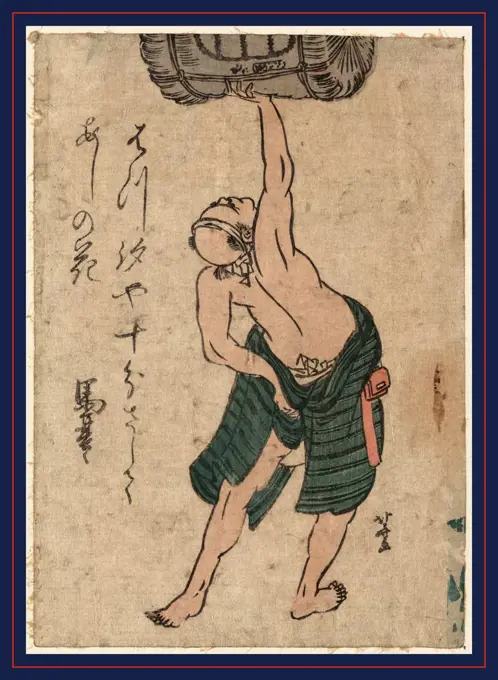
Sakadaru o sashiageru otoko, A man lifting a sake barrel., Katsushika, Hokusai, 1760-1849, artist, between 1804 and 1818, 1 print : woodcut, color ; 18.7 x 13.1 cm., Print shows a man from behind lifting a sake barrel and holding it aloft with one arm.
6145-51817819
Gardens of Somei, from an untitled series of Famous Places in Edo Kitao Shigemasa (Japanese, 1739-1820). Gardens of Somei, from an untitled series of Famous Places in Edo, ca. 1770. Color woodblock print on paper, 8 1/2 x 6 1/8 in. (21.6 x 15.5 cm).   Asian Art ca. 1770
6145-30181317
Sutra Cover Made 1590-1599 China. Silk and gold-leaf-over-lacquered-paper strips, warp-float faced 4 1 satin weave with supplementary patterning wefts bound in weft-float faced 1 4 satin interlacings .
6145-29136443
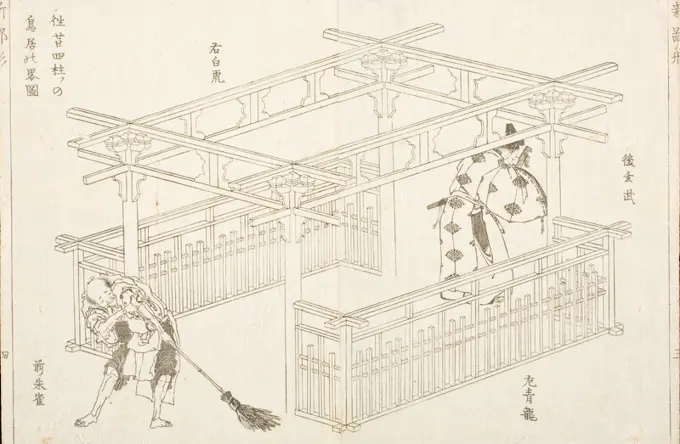
Repelling Demons at the Four Posts Bounding a Torii. Katsushika Hokusai (Japan, 1760-1849). circa 1836. Books. Double-page book illustration; black and white woodblock print
6145-29813900
Dolphin Fountain Element 18th century Attributed to Anonymous, British, 18th century British. Dolphin Fountain Element 363331
4443-73254945
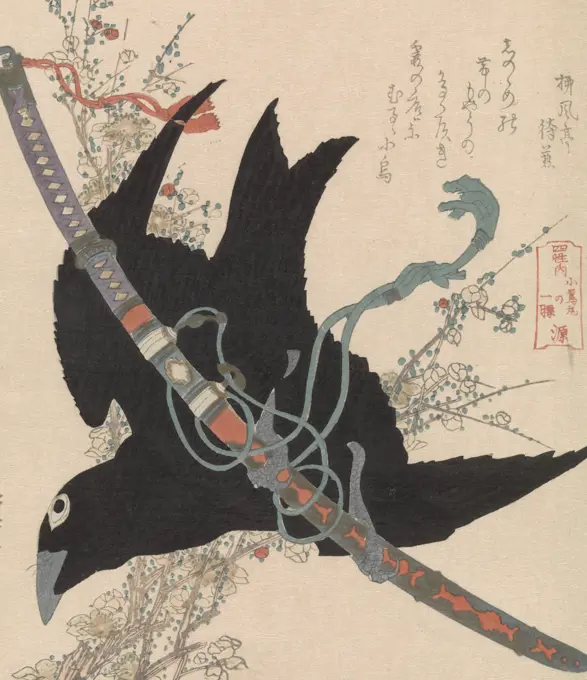
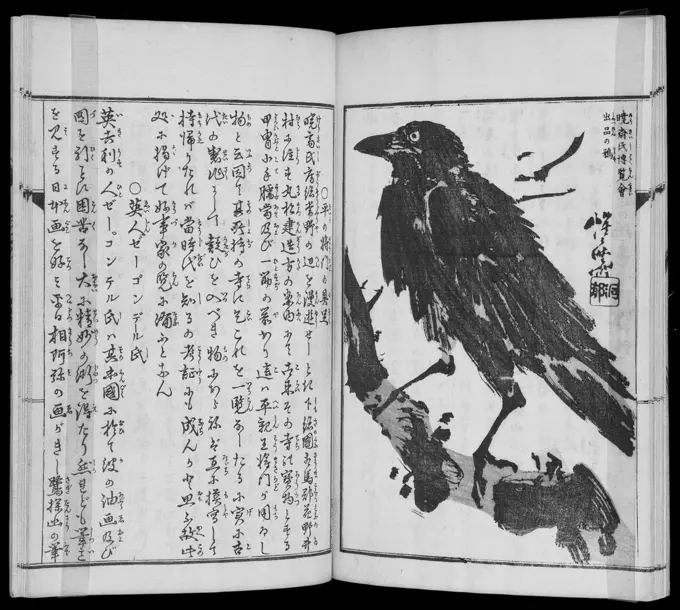
Japan, Hokusai, Katsushika, Shisei no uchi, The Four Notable Clans of Japan, Minamoto kogarasumaru no hitokoshi, The sword kogarasumaru of the Minamoto family, A crow flies with a sword in its claws. The sword of the family was nicknamed kogarasumaru (little crow). With two poems. The print is a b-copy., print, prent, surimono, prints, Japan (collection), height 216 mm, width 186 mm, Work conception, 1760-10-12 - 1849-05-10, after a print by, 1890 - 1900, paper, papier, colour woodcut, blind printing, polishing, polijsten
4443-73245627
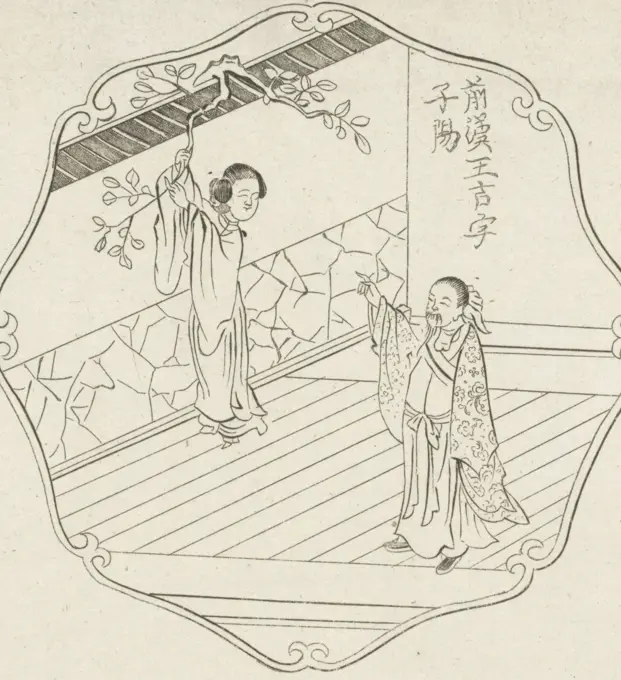
Amsterdam, Schenk, Pieter (I), Picturae Sinicae Ac Surattenae, Vasis Tabellisque exhibitae, Admiranda; colligente Petro Schenkio cum privil: Amstelaed: 1702, Wang Chi of the early Han period, whose adult name is Tzu-Yang, King Chuang of Ch'u with his ministers at a night feast, print, prints, height 272 mm, width 115 mm, Northern Netherlands, 1660-12-26 - 1711, print maker, printmaker, 1702 - 1702, paper, etching, etchings, Work conception, after a print by, Publication (Event), Publication, publisher
6145-45598961
Shells. A framed painting of shells and flowers, on the right an aster leaf, cherry blossom and shells laid in the form of an iris. Left shells laid in the form of golden rain and another flower. The poem is written on an envelope. This print is also a calendar sheet, the shells give the long months (1, 3, 5, 8, 10, 11 and 12) of the year 1797.
6145-29162663
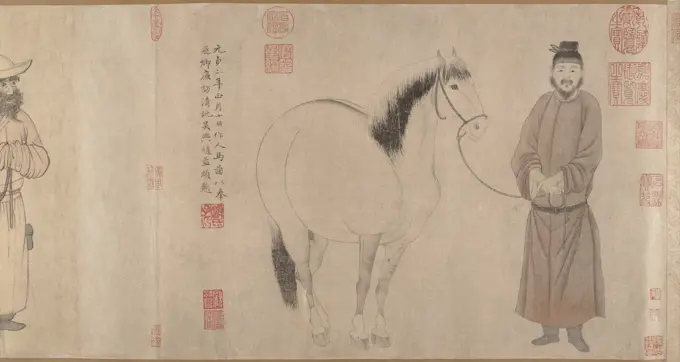
Grooms and Horses dated 1296 and 1359 Zhao Mengfu Chinese In the early Yuan period, when the ruling Mongols curtailed the employment of Chinese scholar-officials, the theme of the groom and horse-one associated with the legendary figure of Bole, whose ability to judge horses had become a metaphor for the recruitment of able government officials-became a symbolic plea for the proper use of scholarly talent. Zhao Mengfu painted this work for the high-ranking Surveillance Commissioner Feiqing, who may have been a government recruiter. Executed in early 1296, shortly after Zhao withdrew from civil service, the sensitively rendered groom may be a self-portrait.The striking geometry of the composition, made up of a series of prominent arcs in the figures of the horse and groom, and framed by the level ground line and vertical inscription, appears to have been constructed with a compass and square. The Chinese term "compass-square" (guiju) means "regulation" or "order." Thus, the painting may
6145-46835390
NightRain.  Artist: Yashima Gakutei, Japanese, ca. 1786-1868
6145-51818235
Parody of Bodhidarma Embarking on a Reed Leaf Suzuki Harunobu (Japanese, 1724-1770). Parody of Bodhidarma Embarking on a Reed Leaf, ca. 1766. Woodblock color print, 28 3/8 x 5 3/16 in. (71.9 x 13.1 cm).   Asian Art ca. 1766
6145-30156858
The Theater Outing 1816-1826 Japan. Color woodblock print with metallic pigments; surimono shikishiban . Totoya Hokkei
6145-52877236
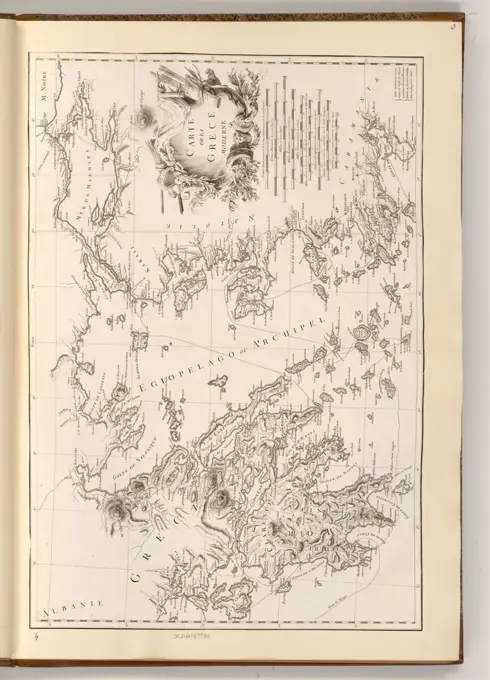
Etching and copper engraving by Choiseul-Gouffier, 1782, depicting a book of modern Greek, showing text, bindings, and ornamental details.
6145-51817790
Ehon Azuma Kagami, Vol. III Kitao Masayoshi (Japanese, 1764-1824). Ehon Azuma Kagami, Vol. III, 1810. Paper, 8 7/8 x 6 1/8 in. (22.5 x 15.6 cm).   Asian Art 1810
866-7548
Teapot And Cups. Hanging Scroll, Ink And Colour On Paper. Wang Zhen (1866-1938).
4409-17352190
A Kind of Religious Paper Decoration. Artist: Haikairyo Henpuku (Japanese, 1744-1830). Culture: Japan. Dimensions: 3 7/8 x 5 7/16 in. (9.8 x 13.8 cm). Date: 18th-19th century. Museum: Metropolitan Museum of Art, New York, USA.
6145-43495066
Fragment (Japan)
6145-29245765
C18 Chinese woodcut: Throat-related malnutrition
6145-29206053
Illustrated book 1893 Japan. Illustrated book. Japan. 1893. Ink on paper. Meiji period (1868-1912). Illustrated Books
6145-29249102
Chinese woodcut: Daoist internal alchemy (10)
6145-51830651
View of Shogetsu Pond Eisen Keisai (Japanese, 1790-1848). View of Shogetsu Pond, 1829. Color woodblock print on paper, Sheet: 9 1/2 x 11 7/8 in. (24.1 x 30.2 cm).  This print is believed to be the very first of the aizuri-e done entirely in blue. It consequently set the trend for landscape prints in the 1830s and established the genre. Asian Art 1829
6145-30159968
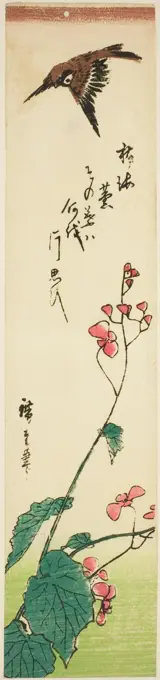
Sparrow flying over begonias 1844-1846 Japan. Color woodblock print; kotanzaku . Utagawa Hiroshige
4409-17393568
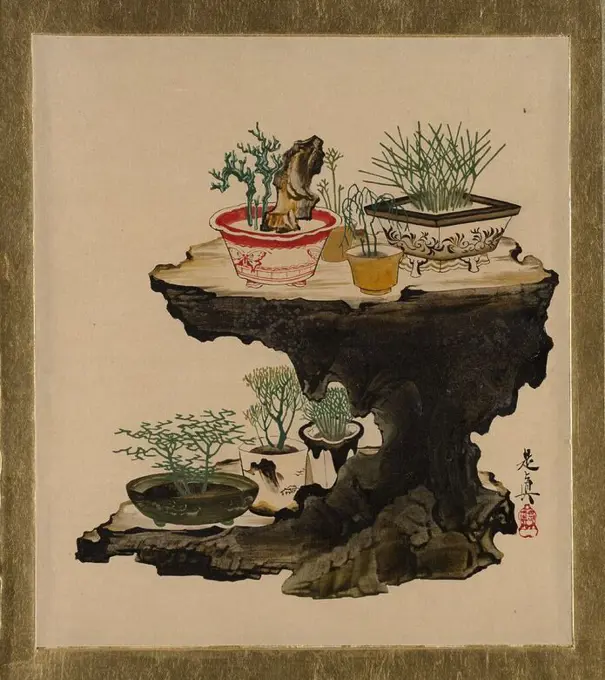
Lacquer Paintings of Various Subjects: Bonsai. Artist: Shibata Zeshin (Japanese, 1807-1891). Culture: Japan. Dimensions: 7 1/2 x 6 1/2 in. (19.1 x 16.5 cm). Date: 1882.The strong color effect seen in this album is achieved by using lacquer as a painting medium. Painting with lacquer on paper was one of the techniques Zeshin developed into his own style. Despite the heavy material, Zeshin's skillful brushwork and his technical inventions with the material made it possible to create various textures as with ink painting. In addition, some lacquer techniques, like mother-of-pearl inlays and the creation of rough surfaces, are also used. Up until the middle of the Meiji period, lacquer was limited to roughly five colors--black, brown, vermillion, green, and yellow--which determined the color palette of Zeshin's lacquer paintings. Museum: Metropolitan Museum of Art, New York, USA.
6145-51819526
Gishi Shozo Sanshi (Annotated Portraits of Loyal Retainers) Gishi Shozo Sanshi (Annotated Portraits of Loyal Retainers), 1850. Paper, 10 3/8 x 7 in. (26.4 x 17.8 cm).   Asian Art 1850
4409-17559966
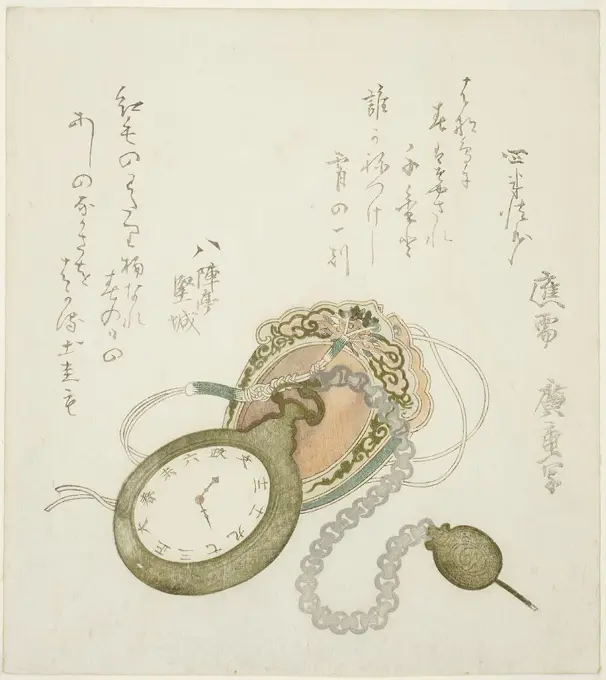
Pocket watch. Utagawa Hiroshige  ; Japanese, 1797-1858. Date: 1818-1828. Dimensions: 20.8 x 18.8 cm. Color woodblock print; shikishiban, surimono. Origin: Japan. Museum: The Chicago Art Institute, USA.
6145-50509887
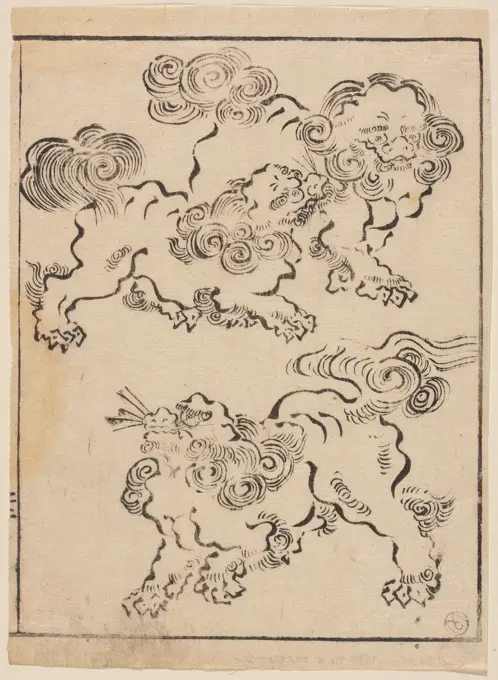
Three karashishi, Chinese lions"; card from the album Shoshoku ekagami". Kitao, Masayoshi (Kuwagata Keisai) (1764-1824), graphic artist
6145-52306700
Iaponskie upolnomochennye vo vremia peregovorov o torgovom traktate s General-Adiutantom Putiatinym, v Simode; Vnutrennost' dvora Iaponskago khrama, v Khakodade. Timm, Vasili Fëdorovich, 1820-1895. still image. Prints. 1851 - 1862. Rare Book Division. Russia , Social life and customs, Russia , History, Arts, Russian
6145-59050823
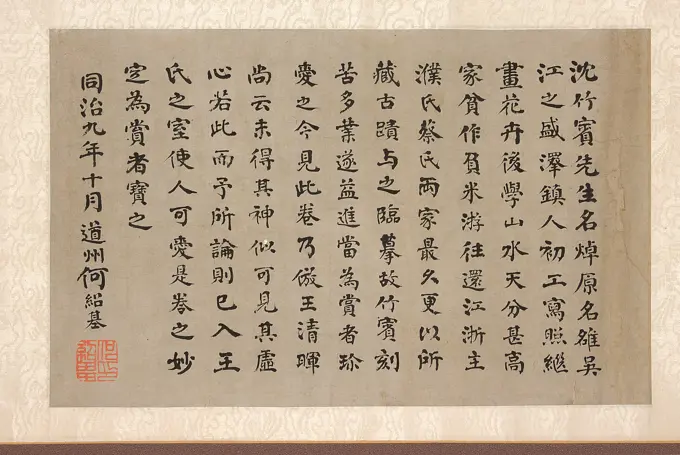
On the banks of the lake "-landscape; Shen, Zhuo (fl. Ca 1801-1900); 1845 (1845-00-00-1845-00-00); was downloaded from the Muse of the National Museum in Warsaw; drawing / ink, painting / paint / water paint; products from W Dzkien / fabric / silk; painting o: height 23 cm, width 136 cm, dubla they.Knothe, Jerzy (1917 -2002), Knothe, Jerzy (1917 -2002)-collection, Chinese (culture), coil painting, landscapes, Chinese art, purchase (provenance), scrolls, horizontal scrolls
6239-70932566
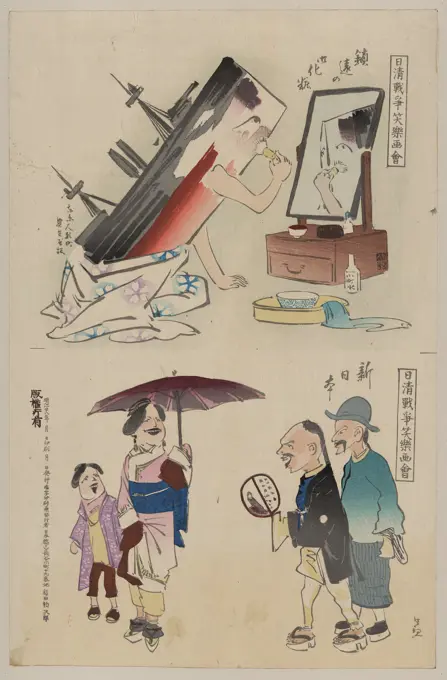
Chin'en no keshō - shin nippon  | Library of Congress
4443-28729291
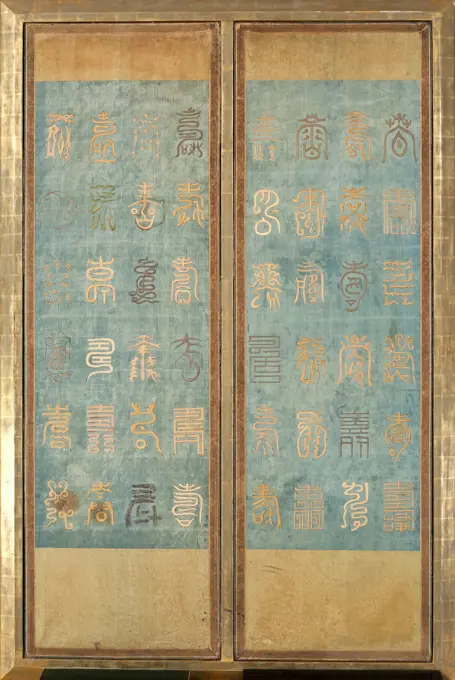
Embroidered Panels with Design of the Chinese Characters for 'Longevity' and 'Good Fortune',, 18th-19th century, Unknown Korean, 34 1/8 × 12 5/8 in. (86.68 × 32.07 cm) (image)46 3/8 × 14 3/8 in. (117.79 × 36.51 cm) (mount)50 1/4 × 33 5/8 × 1 1/16 in. (127.64 × 85.41 × 2.7 cm) (outer frame), Gold-thread embroidery on silk, Korea, 18th-19th century, Each of these six panels features twenty-four Chinese characters, alternating between the characters for 'longevity' () and 'good fortune' (福). The characters, embroidered in gold thread on a light-blue ground, represent a wide variety of scripts. Some are traditional, while others are less orthodox, including characters whose brushstrokes are formed by stylized bamboo, fish, or birds.
6145-29118007
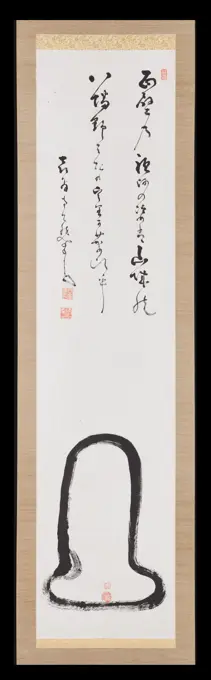
Daruma Facing a Cave Wall while Meditating. Nakahara Nantenb (Japan, 1839-1925). Japan, Taisho period (1912-1926), 1916. Paintings; scrolls. Hanging scroll; ink on paper
6145-52354352
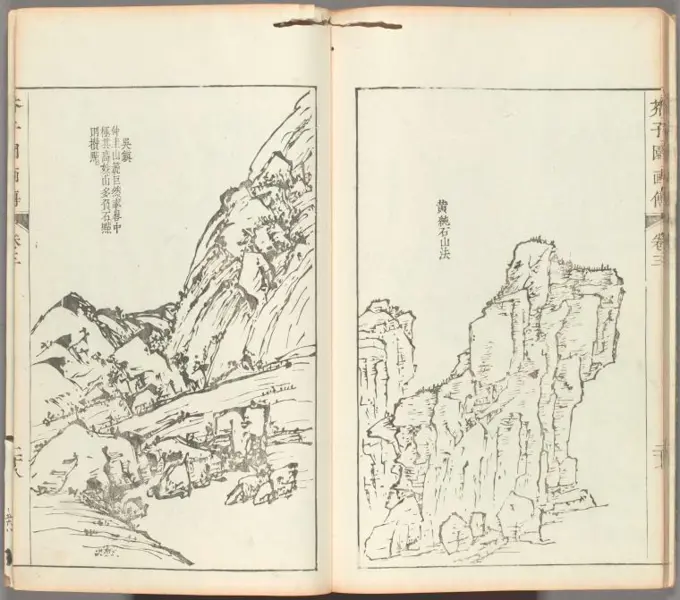
Cover. Wang, Gai, active 1677-1705. Prints, Illustrations. 1753. Spencer Collection
4409-17556959
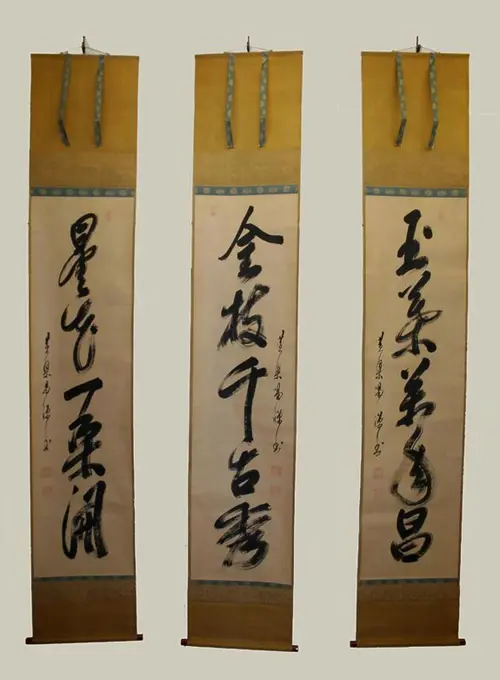
Triptych of Calligraphy. Katsuzen Dowa; Japanese, 1634-1707. Date: 1675-1725. Dimensions: 140.9 x 37.5 cm (55 1/2 x 14 3/4 in.). Set of three hanging scrolls; ink on paper. Origin: Japan. Museum: The Chicago Art Institute, Chicago, USA.
6145-29269338
C18 Chinese woodcut: Lurking-cold throat abscess
6145-51836013
Owl on a Pine Branch Utagawa Hiroshige (Ando) (Japanese, 1797-1858). Owl on a Pine Branch, ca. 1833. Color woodblock print on paper, Sheet: 14 11/16 x 5 1/16 in. (37.3 x 12.9 cm).   Asian Art ca. 1833
6145-29281671
A Chinese seller of a snake antidote. Drawing by a Chinese artist, ca. 1850.
6145-30094385
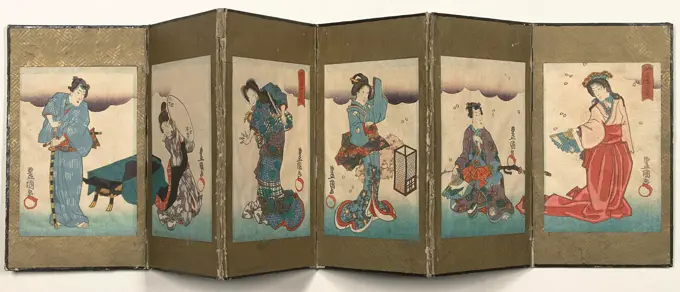
Lente en zomer; Vier seizoenen; Shiki.Two-piece miniature room screen that mounted a complete 12-piece print series; Three prints per season. Right screen, from right to left: Haru - Spring, two women and a man between falling blossom leaves; Natsu - summer, man and woman looking at woman with hat in hands. Back side screen: blue and green flower pattern against gray background.
6145-51830227
Graffiti on a Storehouse Wall Utagawa Kuniyoshi (Japanese, 1798-1861). , 1847. Color woodblock print on paper, approx.: 10 × 15 in. (25.4 × 38.1 cm).  In the early 1840s, the Japanese government passed laws to limit what it saw as excessive freedom of expression among Japans urbanites. The laws banned the overt representation of current events in works of art and theater. Although actor images were still allowed, adding written information about the actor or his current production was forbidden. The artist Utagawa Kuniyoshi poked fun at those restrictions when he released a series of prints that purported to illustrate a wall covered with graffiti but actually contained multiple actor portraits, many accompanied by notes that hinted at the roles they were playing. The artist chose a specific term for the graffiti, nitakaragura, because it incorporates the Japanese phrase nita kara, meaning “dont they look like?” Apparently the joke was subtle enough, because two different government
6145-46648142
. A black headgear worn by Japanese courtiers, with red cords (Tate-Ebôshi) on a low table. With two poems.
4409-17560574
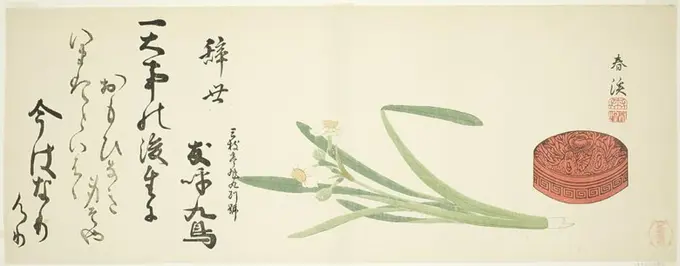
Narcissus and lacquer box. Mori Shunkei; Japanese, active c. 1820s-1830s. Date: 1820-1839. Dimensions: 19.5 x 51 cm (7 11/16 x 20 1/8 in.). Color woodblock print; nagaban surimono. Origin: Japan. Museum: The Chicago Art Institute, Chicago, USA.
6145-54555799
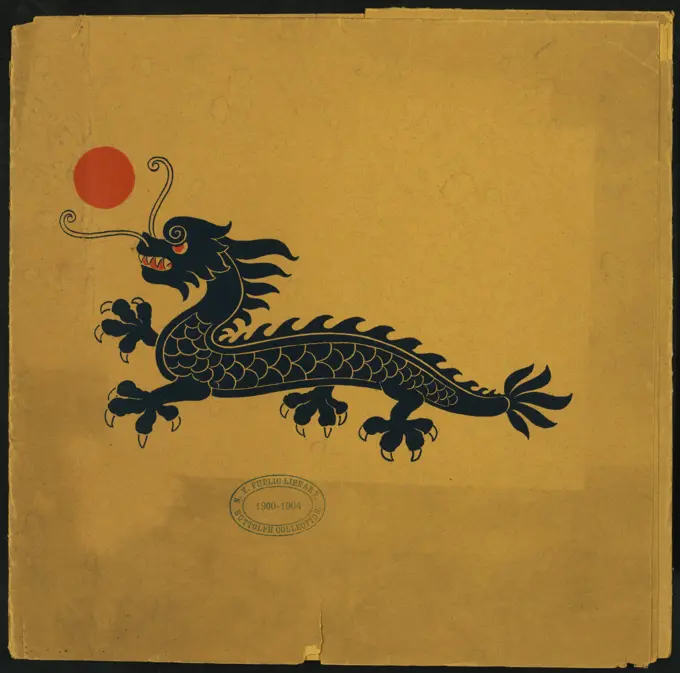
DINNER IN HONOR OF WU TING-FAN, HIS IMPERIAL CHINESE MAJESTY'S ENVOY EXTRAORDINARY AND MINISTER PLENIPOTENTIARY TO THE UNITED STATES, SPAIN AND PERU held by LOTOS CLUB at "LOTOS CLUB, NEW YORK, NY" (OTHER (CLUB);). Buttolph, Frank, 1850-1924. text. Menus. 1900. Rare Book Division. Dragons
6145-52341486
MAVO. text. Illustrations. 1923 - 1924. Spencer Collection
6145-29266903
Chinese Materia Dietetica, Ming: Boiling water
6145-51819758
Album Leaf Painting: Scholar and Bamboo Album Leaf Painting: Scholar and Bamboo, 18th century. Album leaf, ink on silk, Image: 9 5/8 x 11 1/2 in. (24.4 x 29.2 cm).   Asian Art 18th century
6145-29089837
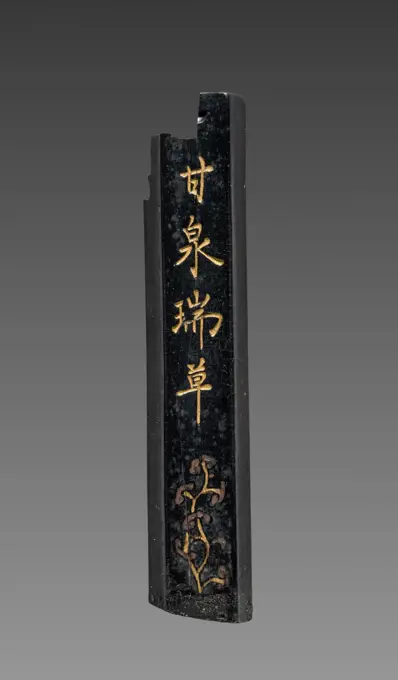
Ink Cake, 19th Century. China, Qing dynasty (1644-1911). Ink cake; overall: 9.3 cm (3 11/16 in.).
4443-28728026
Skeleton, second half 19th century, Doi Gōga, Japanese, 1817 - 1881, 52 1/8 × 11 9/16 in. (132.4 × 29.37 cm) (image)78 1/4 × 16 13/16 in. (198.76 × 42.7 cm) (mount, without roller), Ink on paper, Japan, 19th century
6145-29179027
Xian Ying Ji 20th century China. Xian Ying Ji. China. 20th century. Ink on paper. Rubbing
4409-17427149
Fragment. Dimensions: 5 5/16 in. high 4 1/2 in. wide (13.5 cm high 11.5 cm wide). Date: 5th-6th century. Museum: Metropolitan Museum of Art, New York, USA.
4443-19375402
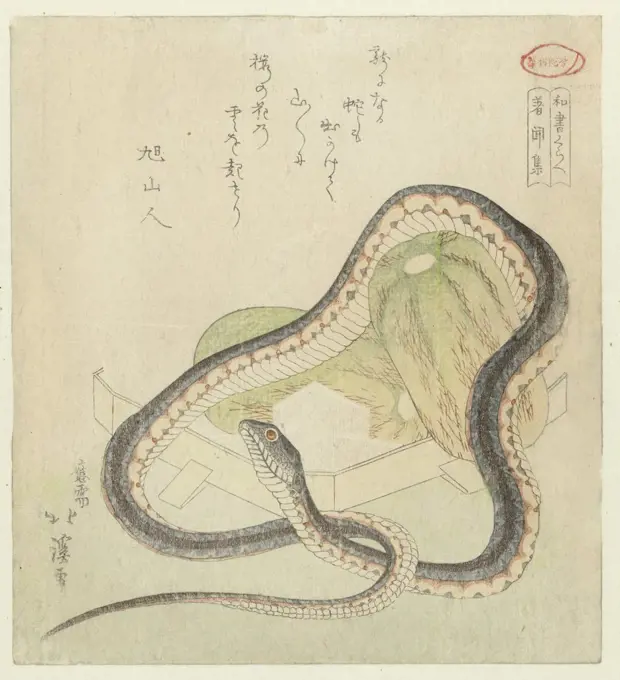
An anthology of things heard, past and present Chomonjû (title on object) A comparison of Japanese writings (series title) Washo kurabe (series title on object), Snake, two melons and a wooden box. The Chomonjû is a 30-volume book written by Tachibana no Narisue in 1254. One of the stories is about a melon given to Fujiwara no Michinaga (921-1005). There appears to be a snake in the melon, which one finds out in time. With one poem, snakes, fruits: melon, Totoya Hokkei (mentioned on object), Japan, c. 1822, paper, colour woodcut, h 199 mm × w 184 mm
6145-59087833
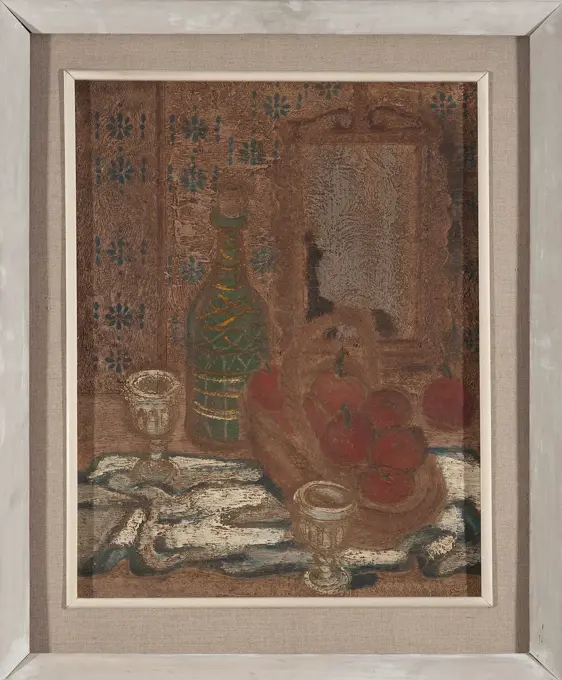
Still life with a bottle, mirror and apple -plated in the basket; Adler, Jankiel (1895-1949); around 1930 (1925-00-00-1934-00-00);Jung Idysz (1919-1921), interwar period, contemporary painting, still lifes, interiors, purchase (provenance)
6145-29294845
Oriental figures
6145-51832342
Kyosai Kadan Nihen (Pictorial Accounts of Kyosai), Part II, Volume 4 Kawanabe Kyosai (Japanese, 1831-1889). Kyosai Kadan Nihen (Pictorial Accounts of Kyosai), Part II, Volume 4, 1887. Ink and light colors on paper, 10 1/16 x 6 15/16 in. (25.6 x 17.6 cm).   Asian Art 1887
6145-45353227
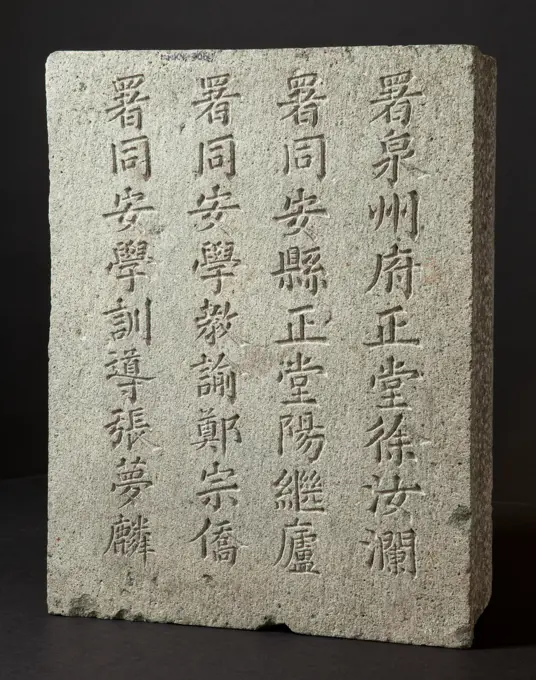
Stone plate with a relief performance of a standing dignitary and bird unknown
1899-18712668
The Bakemono Zukushi handscroll, painted in the Edo period (18th-19th century) by an unknown artist, depicts 24 traditional monsters that traditionally haunt people and localities in Japan.
1899-18855268
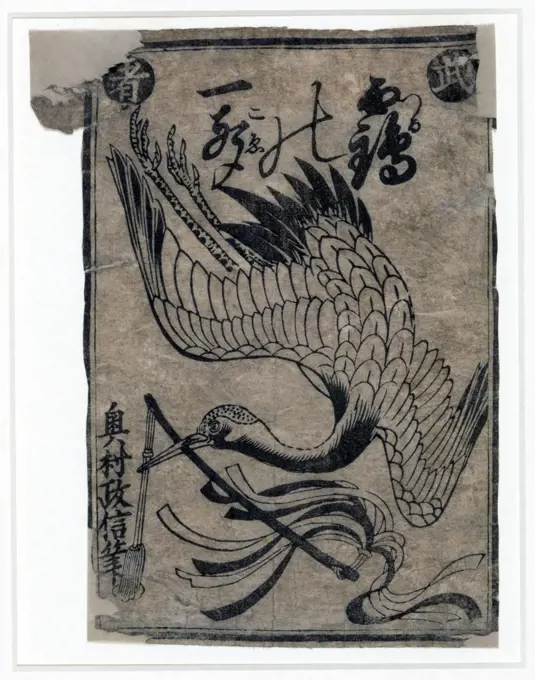
Okumura Masanobu (Japanese: 村 政信; 1686 - 13 March 1764) was a Japanese print designer, book publisher, and painter. He also illustrated novelettes and in his early years wrote some fiction. At first his work adhered to the Torii school, but later drifted beyond that. He is a figure in the formative era of ukiyo-e doing early works on actors and bijin-ga ('pictures of beautiful women').
6145-29068852
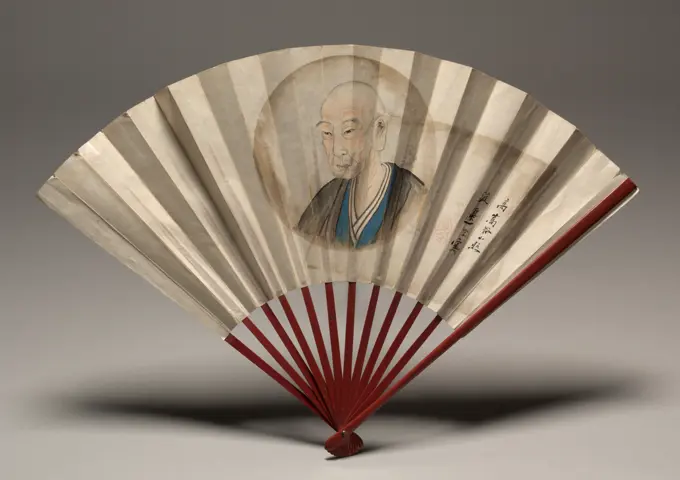
Portrait of Kō Sūkoku, possibly 1817. Watanabe Kazan (Japanese, 1793-1841), Tani Buncho (Japanese, 1763-1840). Fan, wood with ink, color, gold, and silver on paper; overall: 17.8 x 45.7 cm (7 x 18 in.).
PREVIOUS
of 3
NEXT
2401 S. Ervay, Suite 206
Dallas, Texas 75215
United States
Get Started
Free ResearchMy BoardsMy Cart
For Creators
How To License Your ContentContributor PortalFrame of Mind
Resources
API accessPricing
Contact
+1 866 236 0087help@viewpictures.co.uk Contact form
©2026 View Pictures. All Rights Reserved. -A
This site is protected by reCAPTCHA and Google Privacy Policy and Terms of Service apply.