My Boards
View Pictures
  • My Boards
← Religion & Culture

Traditional Japanese Scenes

Illustrations of Japanese cultural events and figures, capturing ceremonies and historical narratives with traditional art styles.

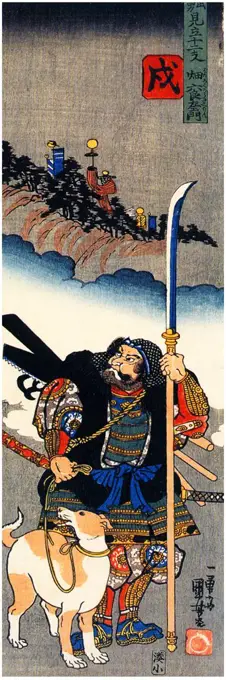
Actors in Kanjinchô: Ichikawa Kuzô II as Togashi no Saemon
387 assets in this story
6145-59576944
Display of traditional costume in all countries, Kobayashi Kiyochika, 1882 print Right magazine of the triptych.  paper  folk costume, regional costume. human types; peoples and nationalities
1899-18788722
The Japanese tea ceremony, also called the Way of Tea, is a Japanese cultural activity involving the ceremonial preparation and presentation of matcha, powdered green tea. In Japanese, it is called chanoyu or chadi, sadi. The manner in which it is performed, or the art of its performance, is called otemae. Zen Buddhism was a primary influence in the development of the tea ceremony. Tea gatherings are classified as chakai or chaji. A chakai is a relatively simple course of hospitality that includes confections, thin tea, and perhaps a light meal. A chaji is a much more formal gathering, usually including a full-course kaiseki meal followed by confections, thick tea, and thin tea. A chaji can last up to four hours.
6145-29352996
Photo collection Deli Society. Photo album Deli Maatschappij: Japan (19th century). Collection Photo collection Deli Society, photo number 837_30. Japan
1899-18787838
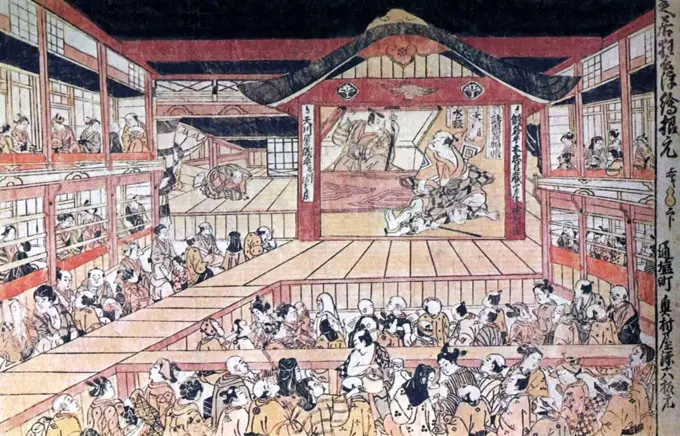
Kabuki is a classical Japanese dance-drama. Kabuki theatre is known for the stylization of its drama and for the elaborate make-up worn by some of its performers. The individual kanji characters, from left to right, mean sing, dance, and skill. Kabuki is therefore sometimes translated as the art of singing and dancing'. These are, however, ateji characters which do not reflect actual etymology. The kanji of 'skill' generally refers to a performer in kabuki theatre. Since the word kabuki is believed to derive from the verb kabuku, meaning 'to be out of the ordinary', kabuki can be interpreted as 'avant-garde' theatre.
1899-18713839
Hyakki Yako ('Night Parade of One Hundred Demons') is a Japanese folk belief. The belief holds that every year yokai, the Japanese supernatural beings, will take to the streets during summer nights. Anyone who comes across the procession will die, unless protected by some Buddhist sutra. It is a popular theme in Japanese visual art.
1788-42213
Monk visits lovers and condemns the boyfriend, painter from the Tosa school, from a traditional literature novel, Japan. Japanese Civilisation, 19th century.
6145-30163838
Snowy Rabbit 1867 Japan. This image of a rabbit on a black-lacquer tray set against a backdrop of plum blossoms was designed by Yabu Chosui as a New Yearís message of poetry and art. The rabbit refers to the tradition of forming a rabbit out of snow at the New Year. Chosui succeeded in realizing the soft contours of a snow figure by embossing the rabbit using the kimekomi technique.. Color woodblock print; surimono . Yabu Chosui
6145-29273010
Chinese Materia Dietetica, Ming: Warm spring water
6145-29257184
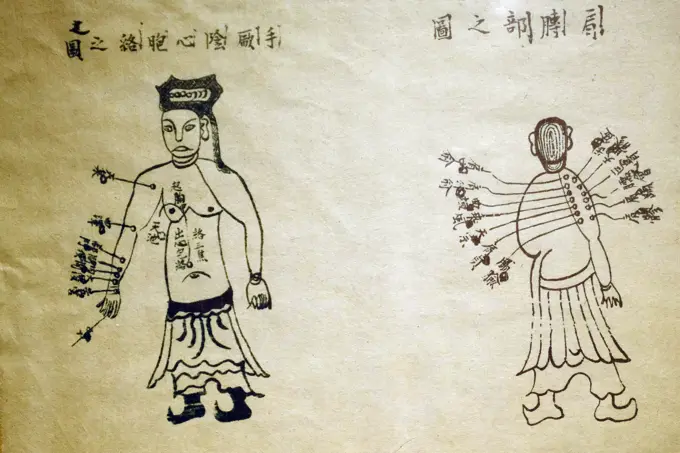
Acupuncture chart: the second head line, Chinese woodcut
6145-29266640
Double picture: Shiva protecting his devotee from Yama, the God of Death (left), Khandoba as a Mahratta horseman spearing a demon. Transfer lithograph.
6145-29748695
Dutchman and Child Viewing the Benten Shrine at Shinobazu Pond 7th month, 1861 Utagawa (Gountei) Sadahide Japanese. Dutchman and Child Viewing the Benten Shrine at Shinobazu Pond 73413
6145-30123155
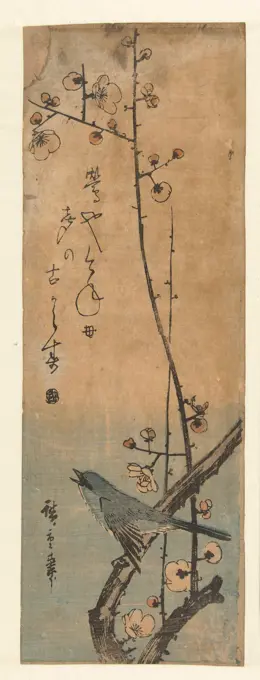
Japanese shrink singer on plum branch, with haiku ..
6145-30151715
The Actor Nakamura Nakazo I as the Renegade Monk Dainichibo in the Play Edo Meisho Midori Soga, Performed at the Morita Theater in the Second Month, 1779 1774-1784 Japan. Color woodblock print; hosoban . Katsukawa Shunsho
6145-30148360
The Dancing Fox 1761-1771 Japan. A fox dressed as a ShintÙ priest beats a drum and dances by a shrine, probably Inari Taisha, which was dedicated to the fox god. Part of the name of the drum (taiko) sounds like the Japanese word for big or long (dai), and this reveals that the numerals appearing in relief on the foxís clothing are the long months of the year 1766.. Color woodblock print; chuban .
1746-28968876
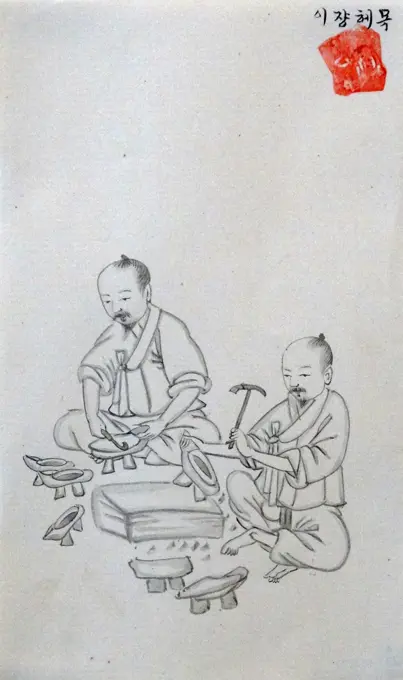
Korean sketches in the style of Kisan's genre by James Scarth Gale (1863-1937) Canadian Presbyterian missionary, educator and Bible translator in Korea. Dated 19th Century
7155-70376504
Ten Ox Herding pictures by Seikyo. Stage 1: Undisciplined. Zen Buddhism. Japan.
6145-29772210
Wise Men and Children 19th century Unidentified artist. Wise Men and Children 40435
4443-19523791
Sakanoshita: The Kannon in the Cave (Sakanoshita, Gankutsu no Kannon) From the 53 Stations of the Tokaido, Ando Hiroshige, Japanese, 1797-1858, Woodblock print in colored ink on paper, Here the scene depicts men approaching a cave. Three other men are already kneeling in prayer. Alongside the cave is an impressive waterfall., Japan, 1797-1858, landscapes, Print, Print
6145-29246921
A Buddhist master () sitting on a chair under a tree, with books laid out on a table, while a young pupil kneels before him. Watercolour with gouache, China (), 1750/1850
6145-29790987
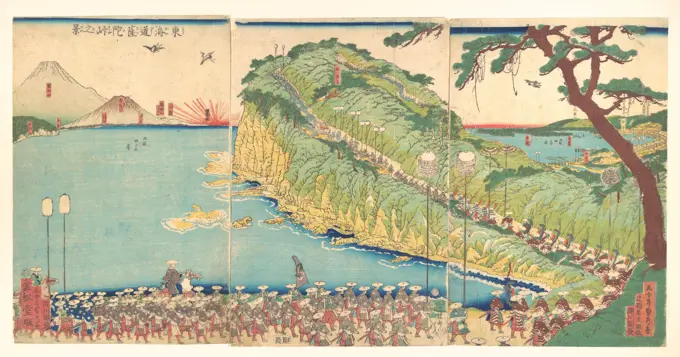
Daimyo's Processions Passing along the Tōkaidō 19th century Utagawa (Gountei) Sadahide Japanese. Daimyo's Processions Passing along the Tōkaidō 73648
1899-18791910
Prajñāpāramitā (Sanskrit Prajñāpāramitā; Tibetan sherchin) means 'Perfection of (Transcendent) Wisdom'. Prajñāpāramitā is a central concept in Mahāyāna Buddhism and its practice and understanding are taken to be indispensable elements of the Bodhisattva Path. The practice of Prajñāpāramitā is elucidated and described in the genre of the Prajñāpāramitā sūtras, which vary widely in length and exhaustiveness. The monk Xuanzang returned to China from India with three copies of the Mahāprajñāpāramitā Sūtra which he had secured from his extensive travels. Xuanzang, with a team of disciple translators, commenced translating the voluminous work in 660 CE using the three versions to ensure the integrity of the source documentation. Xuanzang was being encouraged by a number of the disciple translators to render an abridged version. After a suite of dreams quickened his decision, Xuanzang determined to render an unabridged, complete volume, faithful to the original of 600 fascicles.
6239-70845904
Tōgū Denka gokeiji no zu. - digital file from original print | Library of Congress
6145-29795079
Sutra Cover 16th century China. Sutra Cover. China. 16th century. Silk. Textiles-Woven
1899-18719078
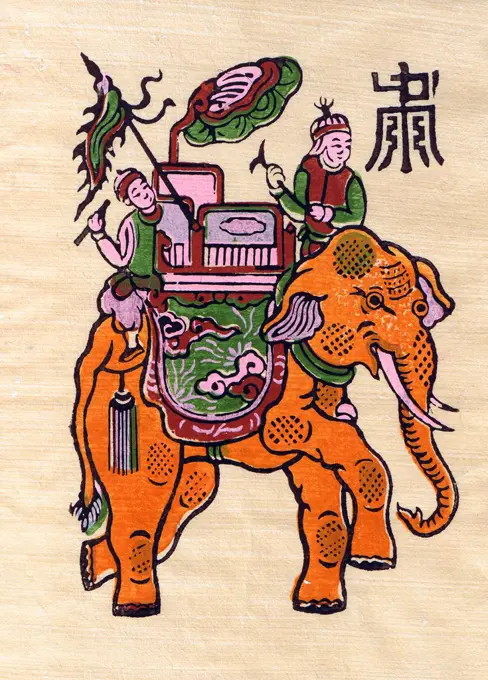
The Trung Sisters (c. 12 - 43 CE), known in Vietnamese as Hai Ba Trung (literally 'the two Trung Ladies'), and individually as Trung Trac and Trung Nhi, were two first century Vietnamese women leaders who successfully rebelled against Chinese Han-Dynasty rule for three years, and are regarded as national heroines of Vietnam. The sisters were born in Northern Vietnam, the dates of their birth are unknown, but Trung Trac was older than Trung Nhi. The exact date of their death is also unknown but both died in 43 CE. Dong Ho painting (Vietnamese: Tranh aong Ho or Tranh lang Ho), full name Dong Ho folk woodcut painting (Tranh khac go dan gian aong Ho) is a genre of Vietnamese woodcut paintings originating from Dong Ho village (lang aong Ho) in Bac Ninh Province, Vietnam. Using the traditional iep paper and colours derived from nature, craftsmen print Dong Ho pictures of different themes from good luck wishes, historical figures to everyday activities and folk allegories. In the past, Dong H
1899-18716801
With some 2000 religious sites - 1600 Buddhist temples and 400 Shinto shrines, as well as palaces, gardens and architecture, Kyoto is one of the best preserved and most culturally distinguished cities in Japan. Among the most famous temples are Kiyomizu-dera, a magnificent wooden temple supported by pillars off the slope of a mountain; Kinkaku-ji, the Temple of the Golden Pavilion; Ginkaku-ji, the Temple of the Silver Pavilion; and Ryoan-ji, famous for its rock garden. The Heian Jingu is a Shinto shrine, built in 1895, celebrating the Imperial family and commemorating the first and last emperors to reside in Kyoto. Three special sites have connections to the imperial family: the Kyoto Gyoen area including the Kyoto Imperial Palace and Sento Imperial Palace, homes of the Emperors of Japan for many centuries; Katsura Imperial Villa, one of the nation's finest architectural treasures; and Shugaku-in Imperial Villa, one of its best Japanese gardens. The 'Historic Monuments of Ancient Kyoto
1899-18712503
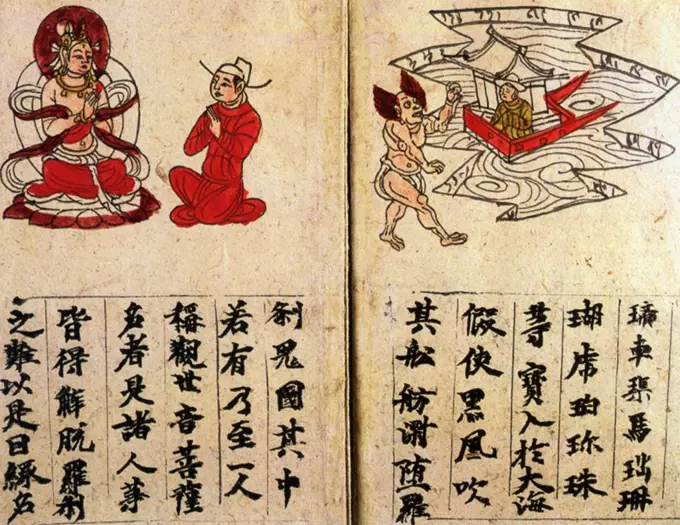
Guanshiyin or Avalokitesvara is the bodhisattva associated with compassion as venerated by East Asian Buddhists, usually as a female. The name Guanyin is short for Guanshiyin which means 'Observing the Sounds (or Cries) of the World'. Some Buddhists believe that when one of their adherents departs from this world, they are placed by Guanyin in the heart of a lotus then sent home to the western pure land of Sukhāvatī. It is generally accepted (in the Chinese community) that Guanyin originated as the Sanskrit Avalokiteśvara, which is her male form. Commonly known in English as the Goddess of Mercy, Guanyin is also revered in Daoism as an Immortal.In Japan, Guanyin is called Kannon.
4408-19610
Watanabe no Tsuna and the demon of Ibaraki., Japanese Prints
1899-19136410
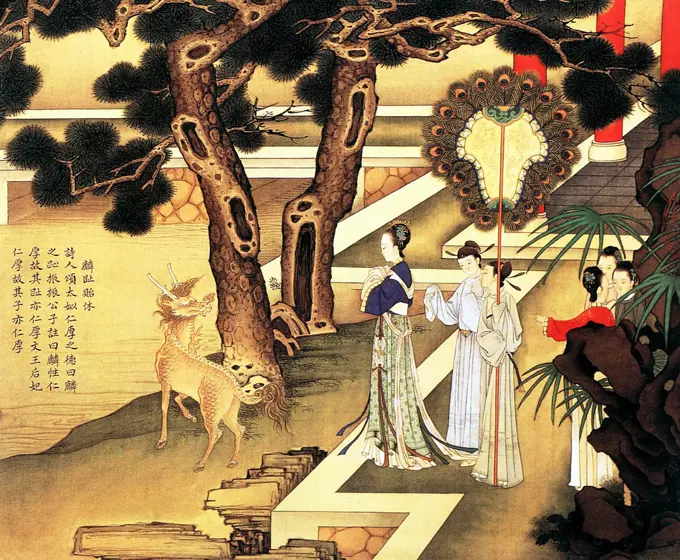
China: Ladies in a park with a qilin (mythical animal). Qing Dynasty painter Jiao Bingzhen (1689-1726)
6145-30188842
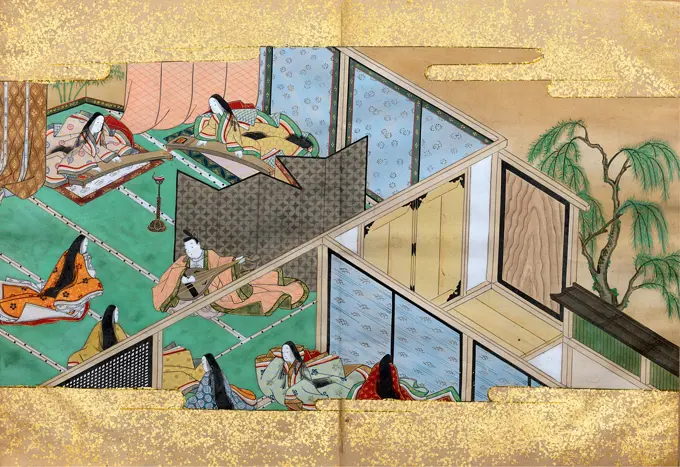
The Tale of Genji 1601-1625 Japan. 545This pair of folding screens depicts a few favorite moments from the 11th-century Tale of Genji, written by the court lady Murasaki Shikibu. Though they take place at disparate times in the story, the five episodes selected from the novelís fifty-four chapters are set in one continuous landscape. Among these scenes is one on the far right showing the baby Genji being presented to his father, the emperor, for the first time. Across the bottom of left screen, court ladies argue which season is the most beautiful. Above, in the upper right corner, Genji and his love
1899-19136206
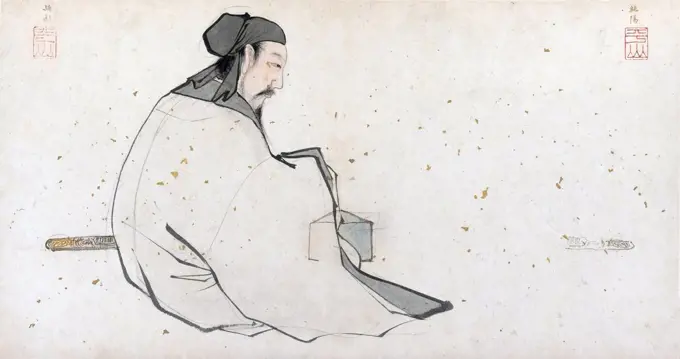
China: The Daoist immortal Lu Dongbin, from the album of 18 Daoist Paintings by Zhang Lu (1464-1538), 16th century CE. Painting sprinkled with gold leaf, Shanghai Museum, Shanghai
6145-30095717
Kyoto Dancing Girls Playing Music Shamisen and Koto..
6145-29859507
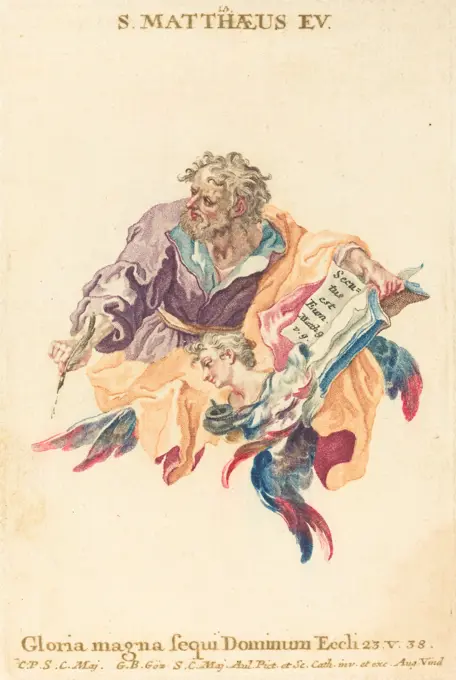
Gottfried Bernhard Götz, Saint Matthew the Evangelist Saint Matthew the Evangelist
1899-19136869
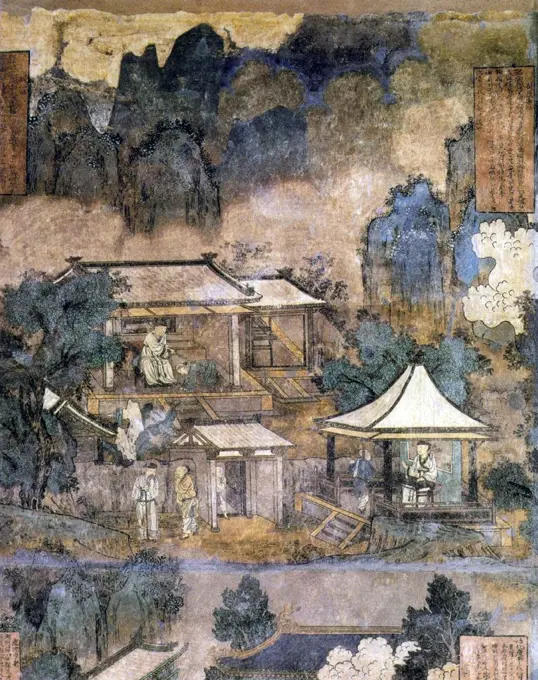
China: 'Conversion of Immortal Guo', Zhu Haogu, 14th century mural. Chunyangdian, Yonglegong, Shanxi Province
7062-70065391
Mural telling the story of Journey to the West, Xuanzang and his followers, Dafo (Great Buddha) Temple, Zhangye, Gansu Province, China
1899-18717210
Arhat in Buddhism signifies a spiritual practitioner who has realized certain high stages of attainment. The implications of the term vary based on the respective schools and traditions. In Theravada Buddhism, it means anyone who has reached the total Awakening and attained Nirvana, including the Buddha. An 'arahant' is a person who has destroyed greed, hatred, and delusion - the unwholesome roots which underlie all fetters - who upon decease will not be reborn in any world, having wholly cut off all fetters that bind a person to the samsara the cycle of birth, death and rebirth.
6145-29294072
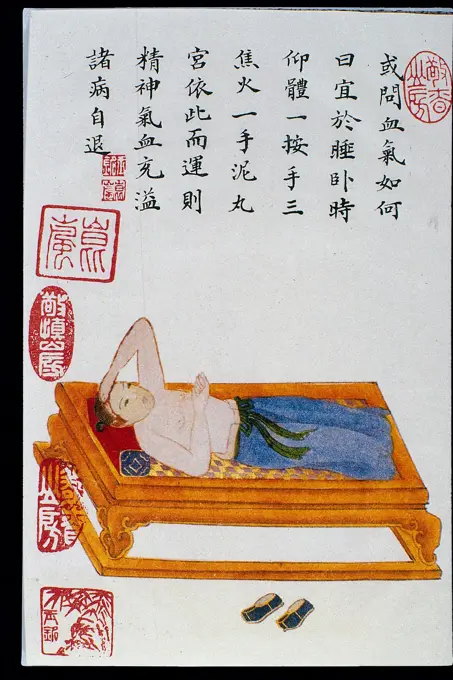
Daoyin technique to nurture Qi and blood, C19 Chinese MS
6145-29797921
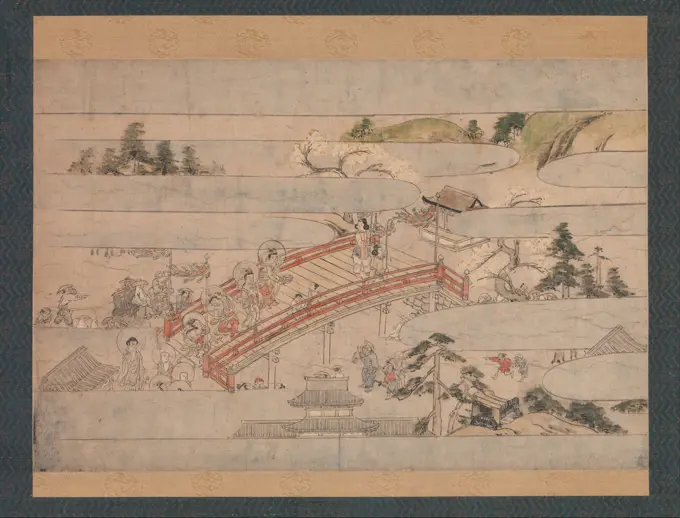
The Final Scene from A Long Tale for an Autumn Night (Aki no yonaga monogatari) ca. 1400 Unidentified artist This scene presents the conclusion of the amorous tale of a Buddhist monk and his young acolyte, in which the latter commits suicide. A procession for raigo-e, a ritual ceremony celebrating Amida Buddha and his retinue of bodhisattvas, descends and crosses a bridge to welcome the souls of the departed and guide them to paradise with music and song.. The Final Scene from A Long Tale for an Autumn Night (Aki no yonaga monogatari) 76969
4220-21857356
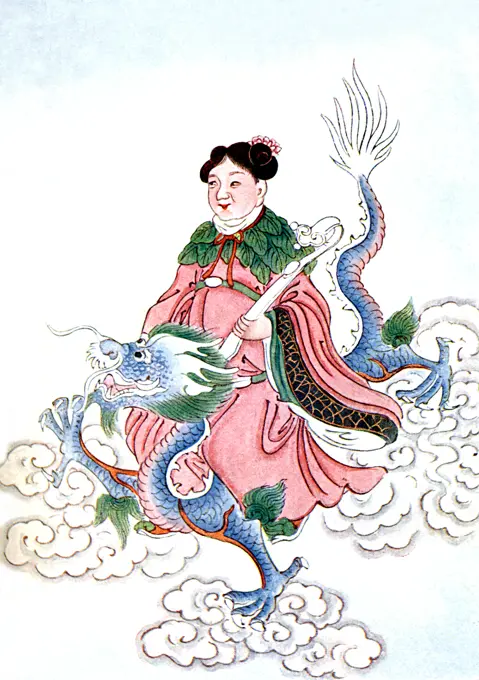
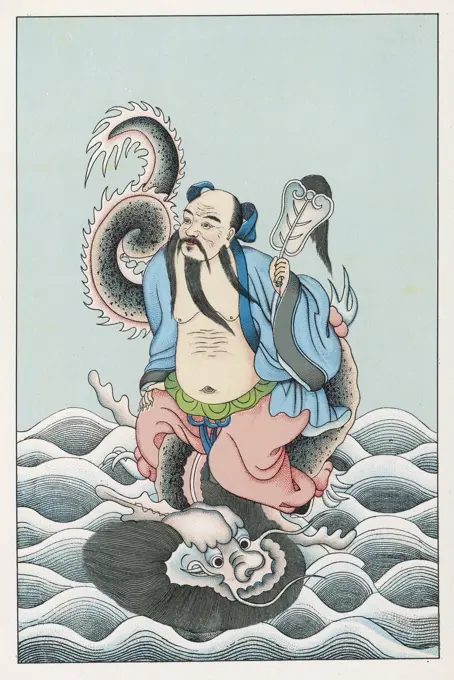
The Chinese deity Han Tchong- li rides a sea creature across  the waves        Date: 1915
1899-18717826
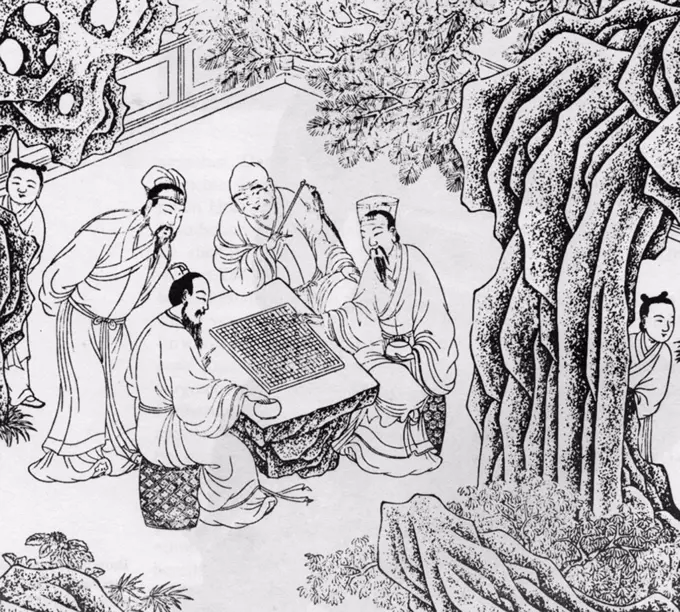
Go (Japanese name), known as 'weiqi' in Chinese and 'baduk' in Korean, is an ancient board game for two players that is noted for being rich in strategy despite its relatively simple rules.
4443-28736118
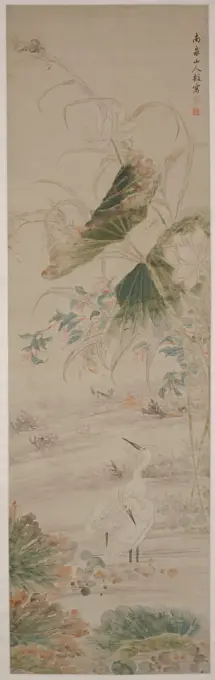
Egrets, Lotus and Hibiscus Mutabilis, 18th century, Zhang Yu, Chinese, 1734 - 1803, 73 x 22 1/8 in. (185.42 x 56.2 cm) (image), Ink and color on paper, China, 18th century, After the spread of Buddhist belief in China, the lotus was imbued with religious associations and became known as the sacred flower of Buddhism. The lotus flower blooms above the water, just as Buddha was born into the world but lives above it. The lotus fruits are said to be ripe when the flower blooms, just as the truth preached by Buddha immediately bears the fruit of enlightenment. These Buddhist connections, however, do not fully account for the later, widespread popularity of the lotus in Chinese art. A more general belief at the time associated the lotus, which grows out of mud but is not defiled, with noble purity and unflinching courage.
6145-45645523
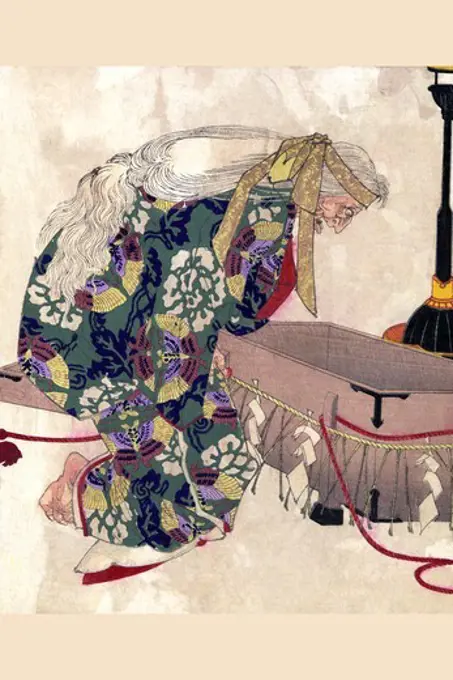
Samurai Aoyama and the Ghost Okiku. Upper leaf of a triptych, on which the long hairs of the Ghost Okiku.
1899-18855232
Samurai is the term for the military nobility of pre-industrial Japan. By the end of the 12th century, samurai became almost entirely synonymous with bushi, and the word was closely associated with the middle and upper echelons of the warrior class. The samurai followed a set of rules that came to be known as Bushid. While they numbered less than ten percent of Japan's population, samurai teachings can still be found today in both everyday life and in martial arts such as Kend, meaning the way of the sword.
1899-18855231
Samurai is the term for the military nobility of pre-industrial Japan. By the end of the 12th century, samurai became almost entirely synonymous with bushi, and the word was closely associated with the middle and upper echelons of the warrior class. The samurai followed a set of rules that came to be known as Bushid. While they numbered less than ten percent of Japan's population, samurai teachings can still be found today in both everyday life and in martial arts such as Kend, meaning the way of the sword.
1746-21111118
A man or monk seated at a table, leaning on his arms, possibly asleep or meditating.
4443-28735290
Demon Reciting Buddhist Prayers, 18th-19th century, Unknown Japanese, 23 1/16 x 9 1/8in. (58.6 x 23.2cm), Hanging scroll; ink and color on paper, Japan, 18th-19th century
1848-49362314
Chinese praying in front of a shrine, detail of Chinese wallpaper from the handicraft life of the Chinese, Chinoiserie, Chinese room, Sala cinese, 18th century, Castle, Castello Govone, architect Guarino Guarini, Baroque, Govone, Roero, Province of Cuneo, Piedmont, Italy, UNESCO World Heritage Site, Europe
1899-18717805
Painting from a watercolour sketch album dating from c. 1897 by a Burmese artist including representations of monks,the Buddha, monasteries, people performing work and trades, elephant, cart race and cremation, domestic, and relaxation scenes.
6145-29160345
Life of Confucius China. Life of Confucius 60773
6145-30141760
Gezicht op de Fudo tempel in Meguro; Meguro Fudo no zu.View of a Torii with a busy temple complex; On the background right, a staircase to the higher temple buildings.
6176-66095749
Magic Umbrellas
6145-29276705
A Japanese prisoner in chains. Gouache painting by a Japanese artist, ca. 1850.
4220-21884321
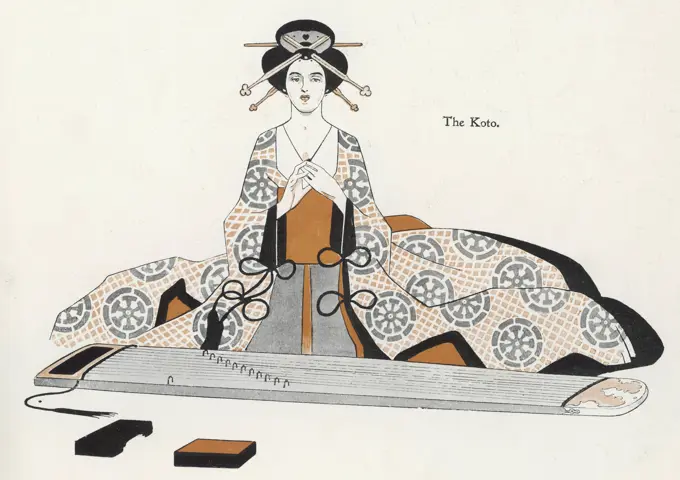
 A Japanese musician plays the  KOTO, a harp-like instrument  played horizontally on the  floor till the player  collapses from back-ache.     Date: 1898
4220-21935871
A lady of the Middle Ages wearing a form of wimple on her head breathes in the fragrance of a bunch of lilies.     Date: 1934
4443-28728985
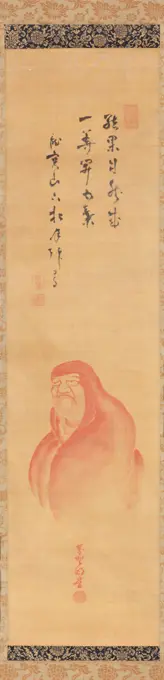
Daruma, c. 1818 - 1837, Mindō Sōsen; Author: Inscribed by Chūhō Sō'u, Japanese, 1768 - 1837, 32 5/16 × 8 5/16 in. (82.07 × 21.11 cm) (image)61 7/8 × 10 7/16 in. (157.16 × 26.51 cm) (mount, without roller), Red ink on silk, Japan, 18th century, Bodhidharma, known as 'Daruma' in Japan, is one of the iconic figures associated with Zen Buddhism. Born in India, he is credited with transmitting Zen teaching to China sometime during the Former Song dynasty (420-479 CE), and is thus considered the patriarch of Chinese Zen (or Chan). Here, the painter, Mindō Sōsenthe 429th abbot of the influential Zen monastery Daitokujirenders his portrait of the scruffy-faced patriarch in crimson ink. The inscription above, brushed by the retired Daitokuji abbot, Chūhō Sō'u, reads: 'The fruit comes into being naturally. / One flower produces five leaves.' 'Five leaves' is a reference to the five schools of Zen that developed in China after Bodhidharma’s time.
1746-111327304
Taoist service altar with musical instruments for monks to use 1860 and 1900 watercolour
6145-29831758
Tale of the Nun Akizuki 17th century Japan This medieval tale relates the story of Aigy, daughter of a palace nobleman, who, from the age of seven, is raised by an evil stepmother. When Aigy falls in love with a captain from the palace, the stepmother tries to drown her stepdaughter so that her real daughter can get engaged to the captain. Before her stepmother succeeds, Aigy’s deceased mother magically appears as a large turtle to save her daughter from drowning.Afterwards, during a pilgrimage to the Kumano Shrines, Aigy befriends a nun from Kyushu named Akizuki (Autumn Moon), as in the title of the story. When Nun Akizuki meets the captain at Kiyomizu Temple in Kyoto, she arranges for Aigy to be reunited with her former love. They marry, and the captain is eventually promoted to imperial regent, and Aigy compassionately looks after both her stepmother and Nun Akizuki.Didactic stories such as this, known as “companion tales” (otogizshi), were often reproduced in deluxe illustra
4430-6350
China people banquet in a noble circle with musicians Chinese woodcut circa 1860,
6145-29262514
A Japanese man heating his sword before using it to torture or kill a man tied to wooden staves. Colour process print after a woodcut ().
6145-30103375
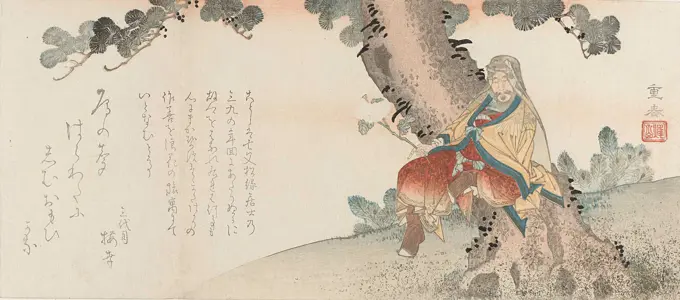
Een surimono met verwijzingen naar de acteur Onoe Shoroku I (Matsusuke I).A Chinese man sitting on the whimsical tribe of a pine, holds a chrysanthemum in his right hand. A surimono with references to the actor One Shoroku I (Matsusuke i). The text is by the adopted son Onge Kikugoro III (Baikô III). The first words are: this year it is the 27th (there is 3 and 9) Nenkai (Buddhist memorial) of my deceased father Shôroku. Kikugoro also writes that the commemoration takes place during its temporary stay in Naniwa, or the Osaka-Kyoto region. This concerns his stay from 11/1840 to 1/1842. To the left of the text is a poem. The Chrysanthemum (Kiku) refers to the Kikugorô III actor. In the Ániscenhi Theater, this spent special attention to the 27th Kaiki (death memory) of Shôroku (ref. Kabuki Nenpyô part 6, p. 430).
6145-30188154
The Tale of Taishokan 1635-1685 Japan. This screen narrates the medieval Taishokan tale, an action-adventure story that captivated medieval and early modern audiences whether they saw it performed on the Noh, Bunraku or Kabuki stage, or depicted in paintings and prints. The many variants of the tale combine elements from early Japanese mythology and history; 14th-century Buddhist temple origin legend (engi) that reflects continuing anxiety about foreign invasion in the wake of the Mongol attacks of the late 13th century, and Noh play motifs.The story unfolds from right to left, opening with a scene in and around the courtyard of Fujiwara Kamatariís residence in the Nara area. Kamatari, the most powerful courtier of the seventh century, was the first and only person ever granted the rank of ëTaishokan,í the highest rank in a system used only between 647 and 685. According to legend, reputation of Kamatari daughterís beauty made its way to China, where the emperor Taizong fell in love wi
1890-111012
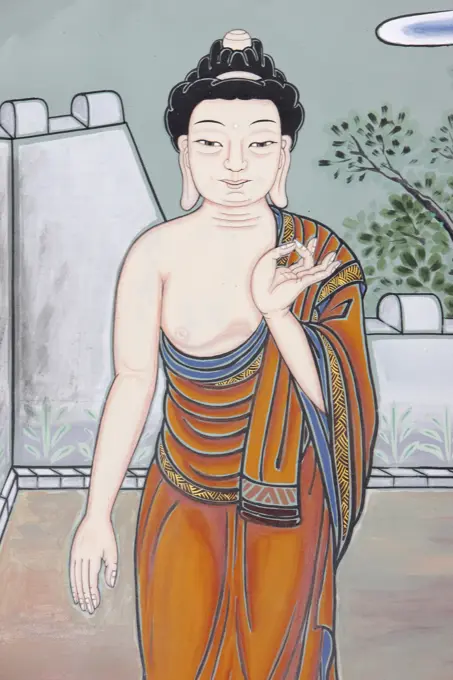
The Gesture of Debate explaining the Buddhas teachings Vitaka Mudra, depicting the ministry in the Life of Buddha, Seoul, South Korea, Asia
1899-18712769
The Liao Dynasty, also known as the Khitan Empire, was a state that ruled over the regions of Manchuria, Mongolia, and parts of northern China proper. It was founded by the Yelü clan of the Khitan people in the same year as the Tang Dynasty collapsed (907), even though its first ruler, Yelü Abaoji (Yaruud Ambagai Khan), did not declare an era name until 916. Although it was originally known as the Empire of the Khitan, the Emperor Yelü Ruan officially adopted the name 'Liao' (formally Great Liao’) in 947. Another name for China in English, Cathay, is derived from the name Khitan. This is also the origin of the Russian word for China, Китай or Kitay, and that of several other East European languages. The Liao Empire was destroyed by the Jurchen of the Jin Dynasty in 1125. However, remnants of its people led by Yelü Dashi established the Xi (Western) Liao Dynasty 1125-1220, also known as Kara-Khitan Khanate, which extended its influence over Central Asia into Persia and survived until t
1899-18716789
With some 2000 religious sites - 1600 Buddhist temples and 400 Shinto shrines, as well as palaces, gardens and architecture, Kyoto is one of the best preserved and most culturally distinguished cities in Japan. Among the most famous temples are Kiyomizu-dera, a magnificent wooden temple supported by pillars off the slope of a mountain; Kinkaku-ji, the Temple of the Golden Pavilion; Ginkaku-ji, the Temple of the Silver Pavilion; and Ryoan-ji, famous for its rock garden. The Heian Jingu is a Shinto shrine, built in 1895, celebrating the Imperial family and commemorating the first and last emperors to reside in Kyoto. Three special sites have connections to the imperial family: the Kyoto Gyoen area including the Kyoto Imperial Palace and Sento Imperial Palace, homes of the Emperors of Japan for many centuries; Katsura Imperial Villa, one of the nation's finest architectural treasures; and Shugaku-in Imperial Villa, one of its best Japanese gardens. The 'Historic Monuments of Ancient Kyoto
6145-59696096
Altar, Jan Luyken, 1659 - 1712 print   paper etching
6145-59489270
Korean men in an interior, James Erxleben, 1832 - 1852 print Six men are sitting on the floor, one of them is seen on their backs. Behind them, a landscape is visible through an open sliding wall. The men wear light robes and four of them wear a hat or hat. The print is numbered in the top left: Nippon VII and top right: tab. Ii. Netherlands paper  Asiatic races and peoples Korea
6145-59576942
Parade of people from the five countries, Utagawa Sadahide, 1861 print Right magazine of the triptych.  paper  folk costume, regional costume. festivities on events of national importance. human races; peoples; nationalities
6176-66082495
Accusing Shelf and Drum of advice for the Emperor Yao, Ancient China History. Old 19th century engraved illustration from El Mundo Ilustrado 1879
6145-29255522
Chinese woodcut: Daoist internal alchemy (11)
4408-19597
Raik_ Shitenn_ Minamoto Yorimitsu and the earth spider., Japanese Prints
4409-63013699
Old Persia. Seleucids. Costumes. Hellenistic state. 312 BC-63 BC. Antiochus I Theos of Commagene shaking hands with Apollo-Helios-Mithras. Color. Engraving.
1899-18305452
Oiran on Parade, Eisen, Keisai, 1830
6145-29706168
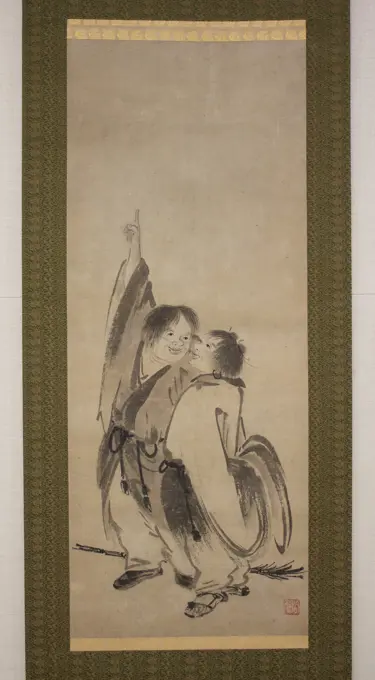
Hanshan and Shide mid- to late 16th century Style of Kenk Shkei  The eighth-century Chinese figures Hanshan and Shide (Kanzan and Jittoku, in Japanese) were Chan (Zen) Buddhist monks who held low-level positions at Guoqingsi, a temple on China’s sacred Mount Tiantai. Hanshan was a reclusive monk-poet, while Shide, his constant companion, is often shown carrying a broom, indicating his role as the temple’s custodian. This beloved pair of eccentric figures came to represent an iconoclastic aspect of Zen monastic practice and is among the most popular figural subjects in Japanese painting. This image of the monks shows them side by side, with Shide in front, hands held behind his back, while Hanshan behind him points to the sky and casts a knowing glance to his companion. Compositions like this one were derived from paintings held in Japanese collections that were believed to have been created by the Chinese Zen monk-painter Muqi  (active ca. 1250-80). They proliferated in sixteen
6145-58828897
A temple with construction workers at work, Anonymous, 1700 - 1800 One of a series of seven paintings that together represent the miracles of Mazu. China paper. ink One of a series of seven paintings that together represent the miracles of Mazu. China paper. ink
6145-46650774
. A folded kimono decorated with pine trees and flying cranes on a lacquered leaf. In the background a table with an image of luck god Fukurokuju, sitting under bamboo. With two poems.
1899-65659289
According to Chinese legend, one day Chang Dao-Ling, the founder of Daoism, met 12 women who had the appearance of evil spirits. He struck the ground with his sword and a well of salt water appeared. He then threw a ring into the well and said who ever recovered it would become his wife. All 12 women dove into the well. He then fastened a cover over the well and let it be known that they were the spirits of the well. Pictured in this early 1900s illustration is one Spirit of the Well.
824-72489307
Fito Museum or museum of Vietnamese Traditionnal Medicine. The channels and vessels. Book of acupuncture. Chinese medecine. Ho Chi Minh City. Vietnam.
1899-18711547
Emperor Taizong (r. 626-649) receives Ludongzan, ambassador of Tibet, at his court; painted in 641 CE by Yan Liben (600-673); detail from scroll painting. Emperor Taizong of Tang (January 23, 599 - July 10, 649), personal name Li Shimin, was the second emperor of the Tang Dynasty of China, ruling from 626 to 649. He is ceremonially regarded as a co-founder of the dynasty along with Emperor Gaozu. He is typically considered one of the greatest, if not the greatest, emperors in Chinese history. Throughout the rest of Chinese history, Emperor Taizong's reign was regarded as the exemplary model against which all other emperors were measured, and his era was considered a golden age of Chinese history and required study for future crown princes. During his reign, Tang China flourished economically and militarily. For more than a century after his death, Tang China enjoyed peace and prosperity. During Taizong's reign, Tang was the largest and the strongest nation in the world. It covered most
6145-29162275
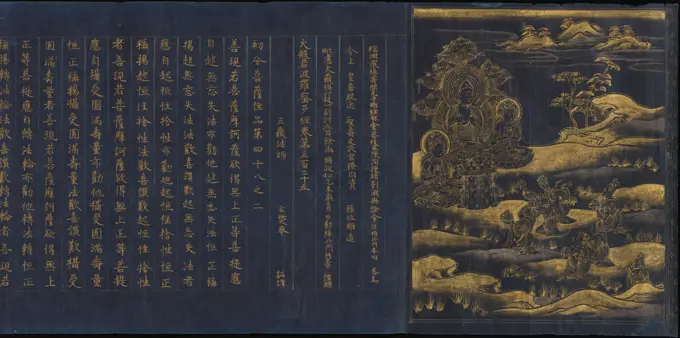
Great Wisdom Sutra from the Ch sonji Temple Sutra Collection (Chsonjiky) ca. 1175 Japan The frontispiece to this sutra chapter shows a dramatic three-quarters view of the Buddha seated with two bodhisattvas. Seven figures pay obeisance to the Buddha, with the six in front raising offerings of food. The silver used to articulate sections of the ground, the ribbons that hang from the tree behind and the altar before the Buddha, and the offering bowls raised before him provides a subtle, pleasing contrast to the gold used elsewhere in the composition.This chapter from the Great Wisdom Sutra (Daihannyaky; Sanskrit: Mahaprajnaparamita) is one of more than five thousand scrolls of Buddhist scripture that were dedicated in 1176 to the temple Chsonji in northern Japan by the nobleman Fujiwara Hidehira (died 1187) for the salvation of his father, Motohira (died 1157). Throughout the sutra, absolute truth is equated to emptiness, and wisdom is praised as the best means of attaining enlighte
4220-21900665
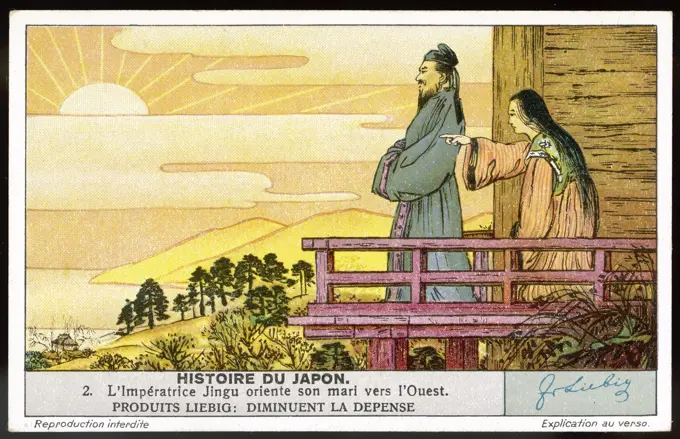
The empress Jingu urges her  husband, the emperor Chuai to  direct his efforts to the  west.  He won't listen, so the  gods slay him, and Jingu makes  a friendly treaty with Korea.     Date: 200
6145-29816666
Woman in Night Robe Reading a Letter 1764-72 Suzuki Harunobu Japanese In his hashira-e, or pillar print, Harunobu depicts a woman reading a letter in an extremely casual manner. The thin, vertical nature of the pillar print helps to stress the languidness of the scene, as do the robe, sash, and letter, all draped heavily downward in an elongated manner.. Woman in Night Robe Reading a Letter 55814
1899-19135374
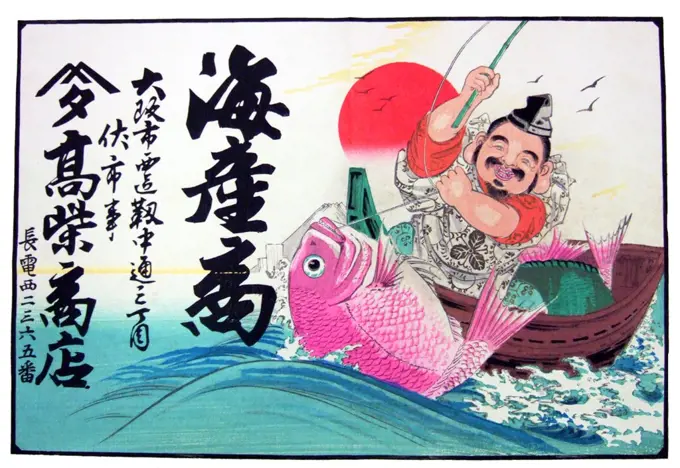
Japan: Hikifuda advertising poster featuring the Shinto god Ebisu. Late Meiji (1868-1912), c. 1900
4409-17553468
Presentation of Offerings, from a Set of Initiation Cards (Tsakali). Southern Tibet. Date: 1301-1500. Dimensions: 16 x 14.5 cm (6 1/4 x 5 3/4 in.). Ink and watercolor on paper. Origin: Tibet. Museum: The Chicago Art Institute, Chicago, USA.
1899-18855910
Miho no Matsubara (保の松原 Miho Pine Grove) is a scenic area on the Miho Peninsula in Shimizu Ward of Shizuoka City, Japan. Its seven-kilometre seashore is lined with pine trees. It is the location of the legend upon which the Noh drama Hagoromo is based; on the second Saturday and Sunday of October, the city of Shizuoka holds a Hagoromo Festival and a performance of the Noh drama takes place near the pine tree of the legend. In 2013 the pine groves were added to the World Heritage List as part of the Fujisan Cultural Site.
4220-21858785
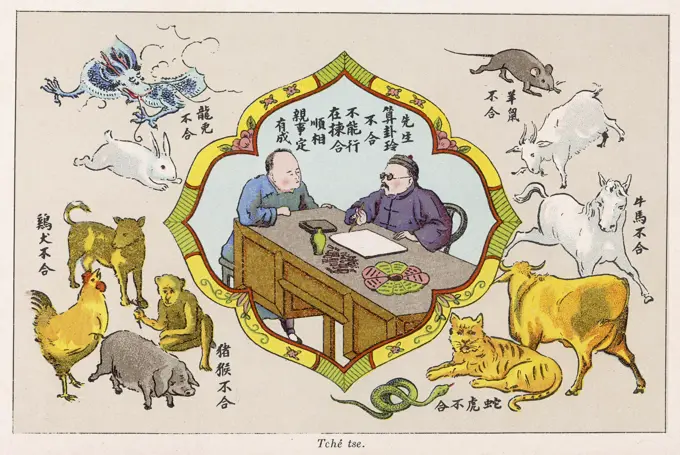
A Chinese fortune teller uses  the TCHE' TSE method of  divining from characters        Date: 1912
6145-29060005
Sudhana and a Parrot: Folio 20 (recto), from a Gandavyuha-sutra (Scripture of the Supreme Array), 1000-1100s. Nepal. Gum tempera and ink on palm leaf; average: 4.2 x 52.4 cm (1 5/8 x 20 5/8 in.). On his quest to find teachers to guide him to enlightenment, the pilgrim Sudhana traveled alone through the wilderness. The tree and parrot indicate the forests of southern India. Graceful lines and vibrant color contribute to the enduring visual appeal of the paintings of this manuscript. In a stylistic convention of the time, the artist extended the "farther eye" beyond the contours of the face.
4220-20433104
Emperor Meiji of Japan (1852-1912) when a young man, pictured as an inset on the rising sun flag. Possibly published on his death Outside of Japan he was sometimes called Emperor Mutsuhito (his personal name)  circa 1880
1525-25316147
CHINA - CIRCA 1955: A Stamp printed in China shows image of Tibetan highway celebration, circa 1956
PREVIOUS
of 4
NEXT
2401 S. Ervay, Suite 206
Dallas, Texas 75215
United States
Get Started
Free ResearchMy BoardsMy Cart
For Creators
How To License Your ContentContributor PortalFrame of Mind
Resources
API accessPricing
Contact
+1 866 236 0087help@viewpictures.co.uk Contact form
©2026 View Pictures. All Rights Reserved. -A
This site is protected by reCAPTCHA and Google Privacy Policy and Terms of Service apply.