My Boards
View Pictures
  • My Boards
← Artworks

Traditional Japanese Theater Art

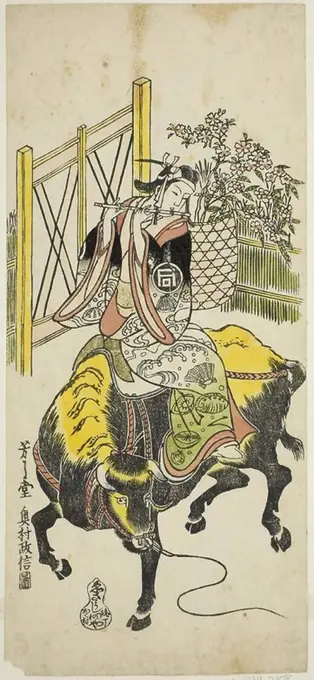
Color woodblock prints depict samurai and actors in traditional Japanese theater, showcasing vibrant clothing and dramatic poses indicative of the Edo period.
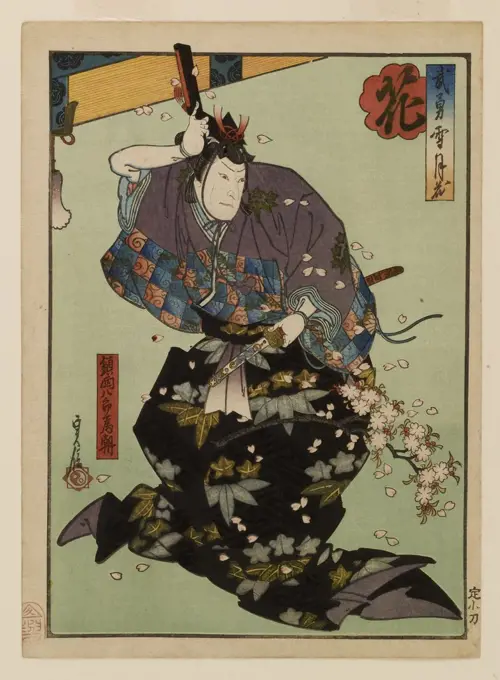
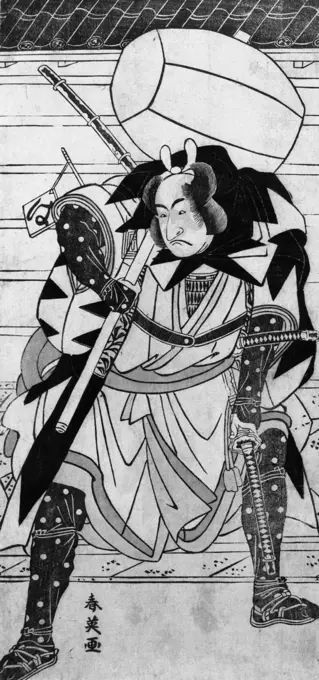
Samurai by Hasegawa Sadanobu, Color woodcut, circa 1850, 1809-1879, Private Collection, 25,4x18,1
442 assets in this story
6145-30157220
Raiko (Minamoto no Yorimitsu) and the demon kite 1820-1830 Japan. Color woodblock print; shikishiban, surimono . Totoya Hokkei
4409-17561797
The Actor Sanogawa Ichimatsu I as Kumenosuke in the play "Nanohana Akebono Soga," performed at the Nakamura Theater in the second month, 1741. Okumura Masanobu; Japanese, 1686-1764. Date: 1741. Dimensions: 32.6 x 14.7 cm (12 13/16 x 5 3/4 in.). Hand-colored woodblock print; hosoban, urushi-e. Origin: Japan. Museum: The Chicago Art Institute, Chicago, USA.
7003-69612303
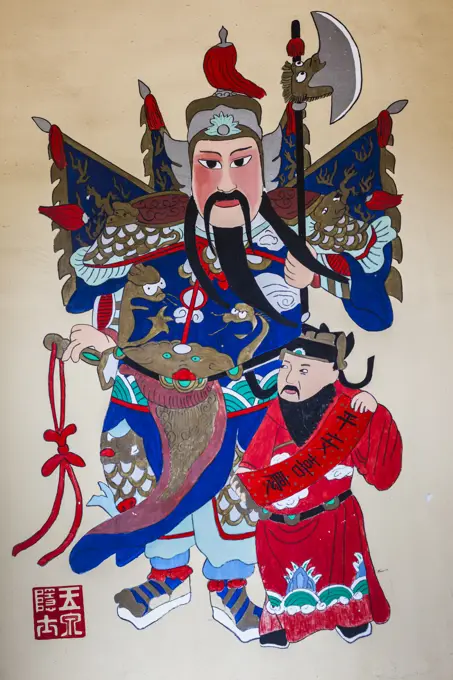
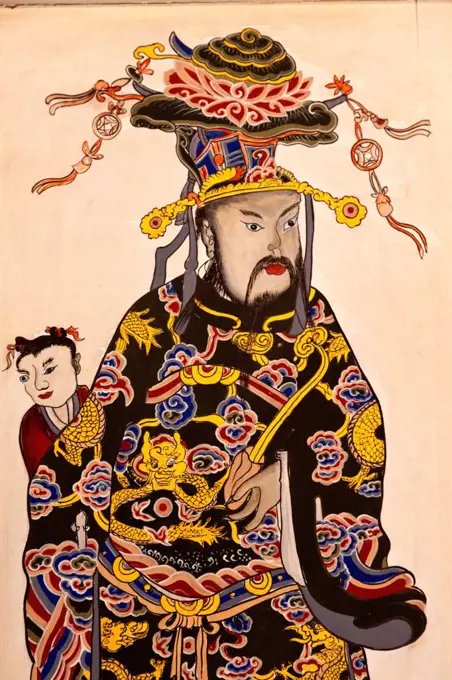
Australia, Victoria, Bendigo, Golden Dragon Museum and Gardens, museum of Chinese immigrant life, wall art
4272-43638
China, Yunnan, Tuanshan. Painting on a door in Tuanshan village, built in the Qing Dynasty.
6145-59468406
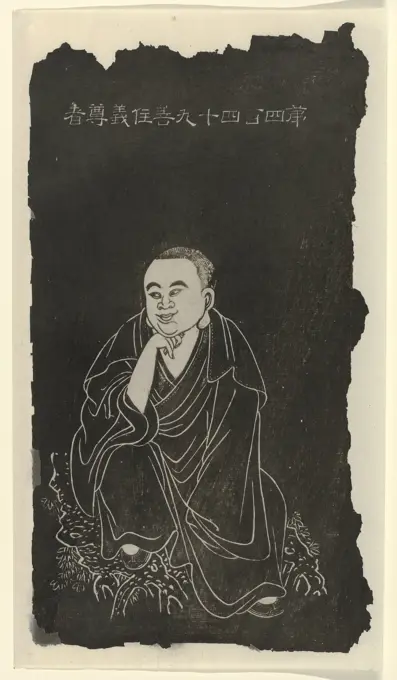
Lohan from a series of 500; No. 449, Anonymous, c. 1600 - c. 1699   China paper
6145-51818884
Chinese Beauty Kishi Ganku (Japanese, 17(49/56)-1838). , early 19th century. Hanging scroll, ink and colors on silk, Image: 49 3/4 x 22 1/2 in. (126.4 x 57.2 cm).   Asian Art early 19th century
1899-18789278
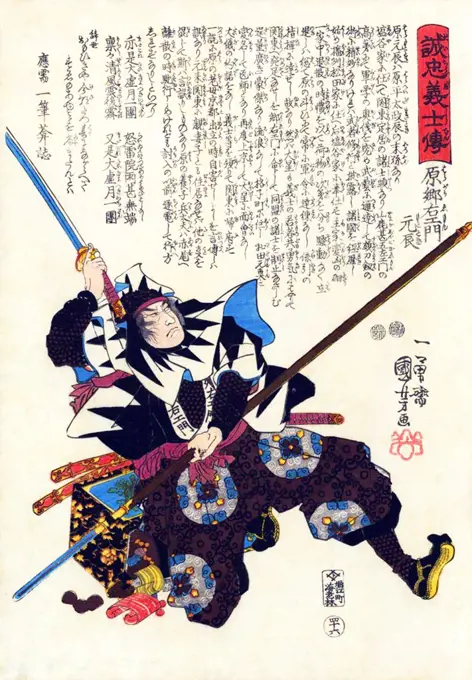
The revenge of the Forty-seven Ronin (Shi-ju-shichi-shi), also known as the Forty-seven Samurai, the Aki vendetta, or the Genroku Aki incident (Genroku aki jiken) took place in Japan at the start of the 18th century. One noted Japanese scholar described the tale as the country's 'national legend'. It recounts the most famous case involving the samurai code of honor, bushidi. The story tells of a group of samurai who were left leaderless (becoming ronin) after their daimyo (feudal lord) Asano Naganori was forced to commit seppuku (ritual suicide) for assaulting a court official named Kira Yoshinaka, whose title was Ki zuke no suke. The ronin avenged their master's honor after patiently waiting and planning for two years to kill Kira. In turn, the ronin were themselves ordered to commit seppuku for committing the crime of murder. With much embellishment, this true story was popularized in Japanese culture as emblematic of the loyalty, sacrifice, persistence, and honor that all good peopl
6145-30174424
Portrait of a Gentleman 1260-1644 China. Album leaf; ink and colors on silk .
4409-17561949
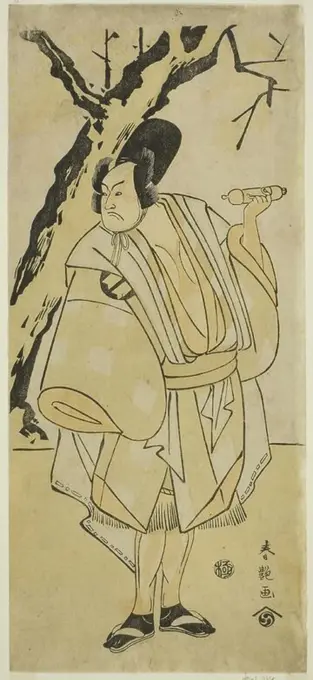
The Actor Sakata Hangoro III as the Guard Yahazu no Yadahei in the Play Otokoyama O-Edo no Ishizue, Performed at the Kiri Theater in the Eleventh Month, 1794. Katsukawa Shun'en; Japanese, active c. 1790. Date: 1789-1799. Dimensions: 33.2 x 14.8 cm (13 1/8 x 5 13/16 in.). Color woodblock print; hosoban. Origin: Japan. Museum: The Chicago Art Institute, Chicago, USA.
4409-17350294
Emperor and Two Attendants. Artist: Unidentified Artist; Copy after Yan Liben (Chinese, 640-680). Culture: China. Dimensions: 10 x 5 15/16 in. (25.4 x 15.1 cm). Museum: Metropolitan Museum of Art, New York, USA.
6145-59605721
Ichikawa DanjûRô VIII in Eight Different Roles, Utagawa Kuniyoshi, 1849 print Nine bust portraits of Kabuki actor Ichikawa Danjurô VIII in eight different roles.  paper color woodcut portrait of actor, actress
6145-29825196
Watercolor of musician playing xiao late 18th century Chinese. Watercolor of musician playing xiao 506084
1899-18713774
Utagawa Kuniyoshi (January 1, 1798 - April 14, 1861) was one of the last great masters of the Japanese ukiyo-e style of woodblock prints and painting. He is associated with the Utagawa school. The range of Kuniyoshi's preferred subjects included many genres: landscapes, beautiful women, Kabuki actors, cats, and mythical animals. He is known for depictions of the battles of samurai and legendary heroes. His artwork was affected by Western influences in landscape painting and caricature.
6145-50635745
Nissaka. Bust of a man with a thick rope, from the series: Tokaido gojusan tsugi no uchi Kunisada, UTAGAWA (1786 1864)
1899-18857146
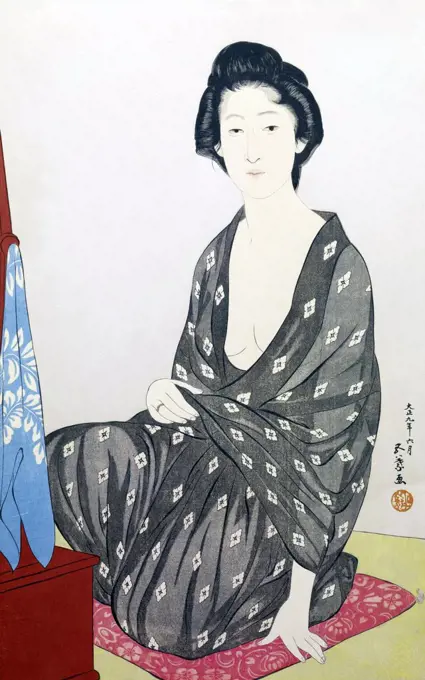
Torii Kotondo is known to have made only 21 prints - all of them images of bijin or beautiful women. They belong to the finest works of art of the Shin Hanga movement. Shin hanga ('new prints') was an art movement in early 20th-century Japan, during the Taisho and Showa periods, that revitalized traditional ukiyo-e art rooted in the Edo and Meiji periods (17th-19th century). The movement flourished from around 1915 to 1942, though it resumed briefly from 1946 through the 1950s. Inspired by European Impressionism, the artists incorporated Western elements such as the effects of light and the expression of individual moods, but focused on strictly traditional themes of landscapes (fukeiga), famous places (meisho), beautiful women (bijinga), kabuki actors (yakusha-e), and birds and flowers (kachoga).
4443-20306903
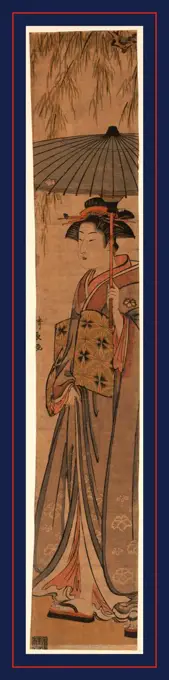
Ryuka no odoriiko, Beauty under a willow tree., Torii, Kiyonaga, 1752-1815, artist, 1782 or 1783, 1 print : woodcut, color ; 67.8 x 11.9 cm., Print shows a full-length portrait of a woman holding a parasol, standing beneath a willow tree.
1899-18713808
Tsukioka Yoshitoshi (1839 - June 9, 1892), also named Taiso Yoshitoshi, was a Japanese artist. He is widely recognized as the last great master of Ukiyo-e, a type of Japanese woodblock printing. He is additionally regarded as one of the form's greatest innovators. His career spanned two eras - the last years of feudal Japan, and the first years of modern Japan following the Meiji Restoration. Like many Japanese, Yoshitoshi was interested in new things from the rest of the world, but over time he became increasingly concerned with the loss of many outstanding aspects of traditional Japanese culture, among them traditional woodblock printing.
6145-45388719
Wszyscy Święci w MNK Strixner, Johann Nepomuk (1782 1855), Schoreel, Jan van (1495 1562)
1899-18788503
Goyi Hashiguchi (Hashiguchi Goyi, December 21, 1880 - February 24, 1921) was a Japanese painter and woodblock artist. Hashiguchi was born Hashiguchi Kiyoshi in Kagoshima Prefecture. His father Hashiguchi Kanemizu was a samurai and amateur painter in the Shijo style. His father hired a teacher in the Kano style of painting in 1899 when Kiyoshi was only ten. Kiyoshi took the name of Goyo while attending the Tokyo School of Fine Arts, from which he graduated best in his class in 1905.
4220-21839448
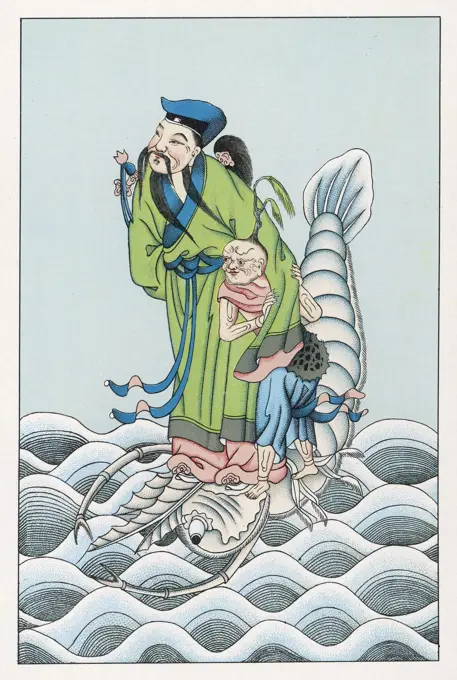
LIU TONG-PIN, one of the EIGHT IMMORTALS of the Chinese pantheon, depicted  riding on a kraken (which  looks very like a giant  crayfish !)     Date: 1915
4443-28744759
Xiwangmu (Queen Mather of the West) and Attendant, c. 1764, Tomikawa Fusanobu, Japanese, fl. 1750-1770, 27 5/16 x 4 13/16 in. (69.4 x 12.3 cm) (image, sheet), Woodblock print (benizuri-e); ink and color on paper with embossing, Japan, 18th century
1899-28660082
Ancient Chinese painting, portrait of a Chinese dignitary, tempera on canvas, Qing period 1644-1911.
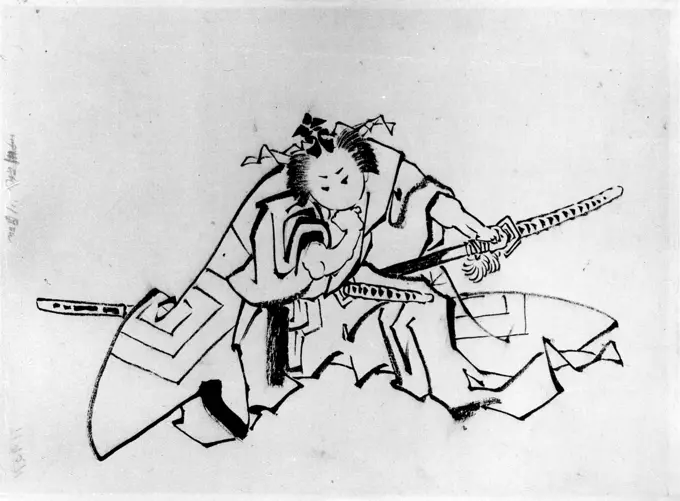
6145-51818485
An Actor of the Ichikawa School about to Draw His Sword Ippitsusai Buncho (Japanese, 1725-1794, active 1765-1780). An Actor of the Ichikawa School about to Draw His Sword, ca. 1792. Color woodblock print on paper, 11 1/4 x 5 1/8 in. (28.6 x 13 cm).   Asian Art ca. 1792
4069-522
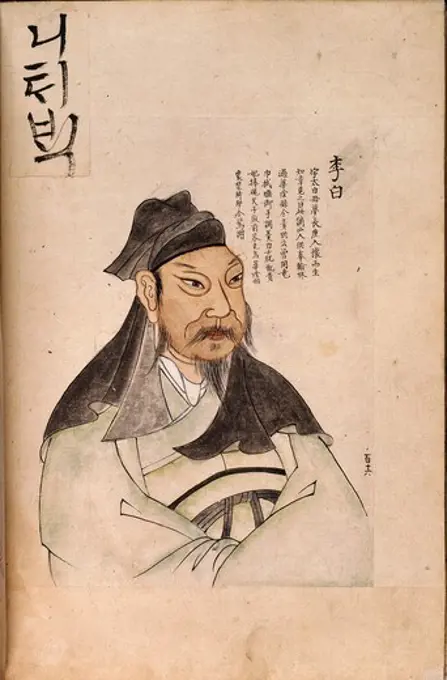
Li Bo, Chinese poet, 701-62 AD, Tang dynasty, c. 18th century, Chinese painting
6145-51819585
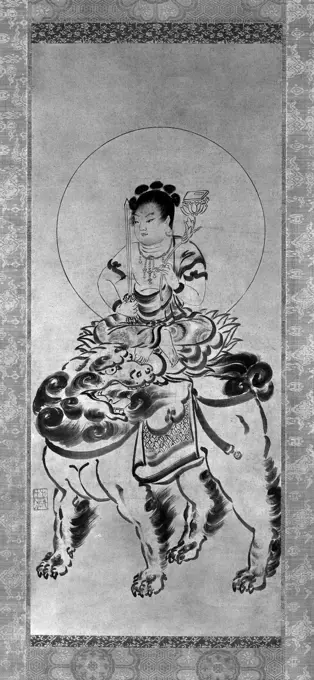
Monju Monju, 16th century. Hanging scroll: Ink on paper, Image: 37 3/8 x 15 3/4 in. (94.9 x 40 cm).   Asian Art 16th century
4069-4332
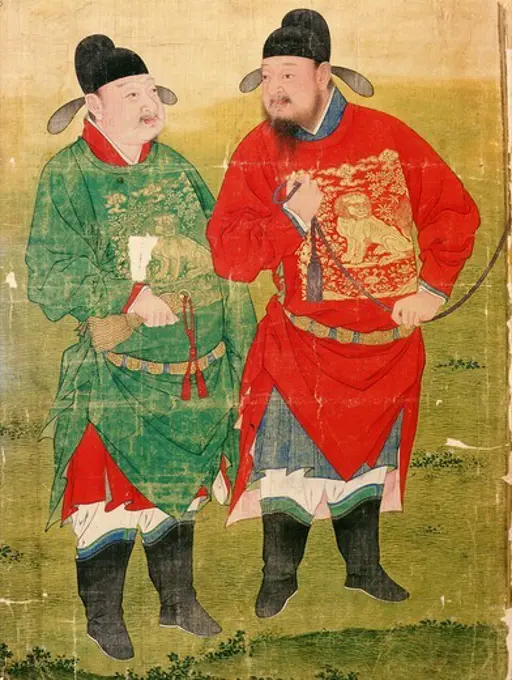
2 mandarins of Ming dynasty court, silk painting, 15th century Ming Dynasty, China
4409-28962726
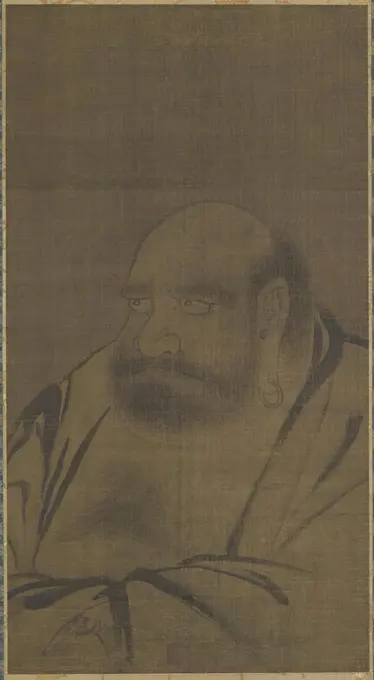
Portrait of Bodhidharma. Origin: China. Date: 14th century. Ink on silk. Period: Yuan dynasty. Museum: Freer Gallery of Art and Arthur M. Sackler Gallery.
4409-11369
SOLIMAN I EL MAGNIFICO Y DOS INTENDENTES (TAMBIEN CONOCIDO COMO SOLIMAN II) - 1570. Author: MIGARI. Location: PALACIO TOPKAPI-BIBLIOTECA. ISTANBUL. TURQUIA. SOLIMAN I ELMAGNIFICO.
1746-19661916
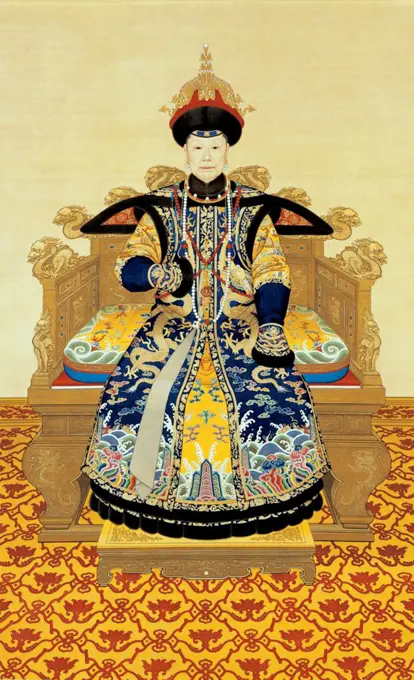
Portrait of the Xiaosheng Empress Dowager, Qianlong period, 1751, by anonymous The Palace Museum, Beijing.
1899-18719007
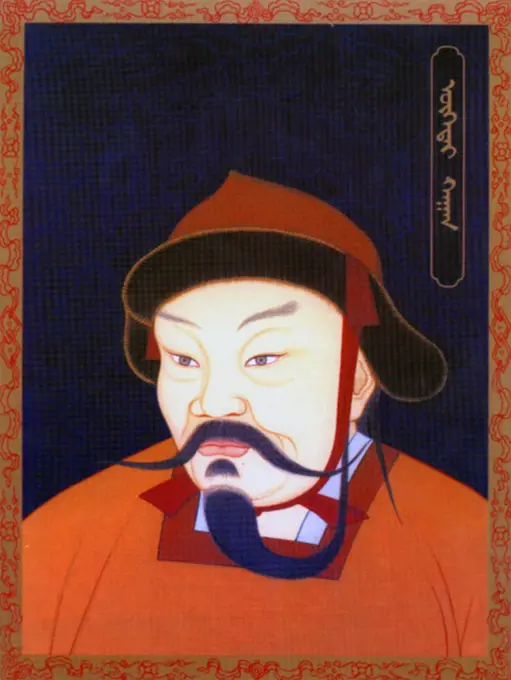
Ogedei Khan (c. 1186 - December 11, 1241) was the third son of Genghis Khan and second Great Khan (Khagan) of the Mongol Empire by succeeding his father. He continued the expansion of the empire that his father had begun, and was a world figure when the Mongol Empire reached its farthest extent west and south during the invasions of Europe and Asia. Like all of Genghis' primary sons, he participated extensively in conquests in China, Iran and Central Asia. After the death of Genghis Khan, his youngest son Tolui acted as the temporary head of state affairs until in 1228, yellow cattle year, the third son of Genghis Khan, Ogedei was enthroned by the Great Assemblage held in Hudeearal on the river Herlen. Ogedei was born in 1187,the red horse year, and from the age of 17 he began to contribute to the strenghening of state affairs. Ogedei Khan improved the organizational form of the state, finished the construction of Karakorum city begun by his father Genghis Khan and made it the capital
6145-29726231
Figure China. Figure 53942
6145-29772643
The Actor Danjuro as Shibaraku 18th-19th century School of Katsushika Hokusai Japanese. The Actor Danjuro as Shibaraku 57272
1899-18718225
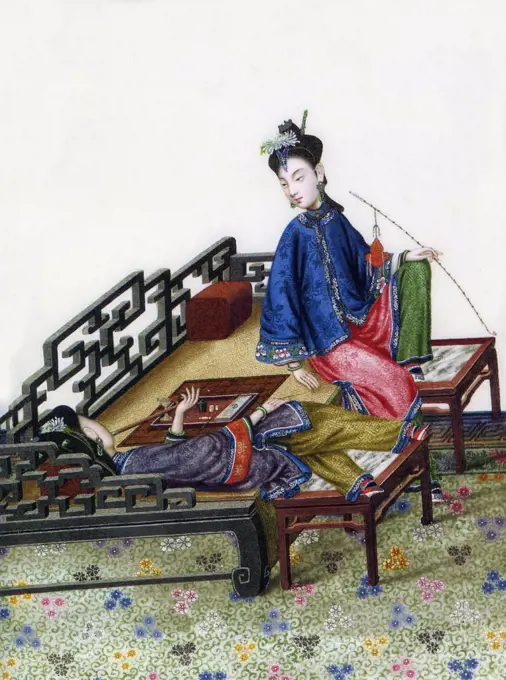
The Qing Dynasty (1644-1911) was founded after the Manchus defeated the Ming, the last Han Chinese dynasty. The Manchus introduced a 'queue order', forcing the Han Chinese to adopt the Manchu queue hairstyle and Manchu-style clothing. The Qing consolidated control of some areas originally under the Ming, including Yunnan. They also stretched their sphere of influence over Xinjiang, Tibet and Mongolia. But during the 19th century, Qing control weakened. Britain's desire to continue its opium trade with China collided with imperial edicts prohibiting the addictive drug, and the First Opium War erupted in 1840. Hong Kong was ceded to Britain in 1842 under the Treaty of Nanking. At the start of the 20th century, the Boxer Rebellion threatened northern China. This was a conservative anti-imperialist movement that sought to return China to old ways. The Empress Dowager, probably seeking to ensure her continued grip on power, sided with the Boxers when they advanced on Beijing. But an Eight-N
1899-18789526
Kikuchi Yi sai (November 28, 1781 - June 16, 1878), also known as Kikuchi Takeyasu and Kawahara Ryi hei was a Japanese painter most famous for his monochrome portraits of historical figures.
1899-18711665
Gaozong was a regional ruler in the Northern Song dynasty. After Song's Qinzong and Huizong emperors were captured by the Jurchen, he became the emperor of China and established the Southern Song empire at Lin'an (modern Hangzhou) . During his reign, Jurchens often attacked the Southern Song empire. Initially, he used military officials such as Li Gang, Yue Fei, Han Shizhong and Yu Yunwen to hold the Jurchens at bay. However, after years of fighting and significant military success, Gaozong settled on a pacifist stance. One of the major reasons behind this was that Gaozong and the premier Qin Hui did not want the Song army to defeat the Jurchens, as this might result in Emperor Qinzong being restored to the throne. As a result, Gaozong and Qin plotted to frame Yue Fei for some ambiguous offence and had him put to death. General Han Shizhong was also dismissed from his military duties. Gaozong then signed the Treaty of Shaoxing with the Jurchens which further ceded huge amounts of terri
6145-51817609
The Actor Ichikawa Monnosuke II as Otaka Gengo, from Chushingura Katsukawa Shunei (Japanese, 1762-1819). The Actor Ichikawa Monnosuke II as Otaka Gengo, from Chushingura, 1783. Color woodblock print on paper, 11 13/16 x 5 3/4 in. (30.0 x 14.5 cm).   Asian Art 1783
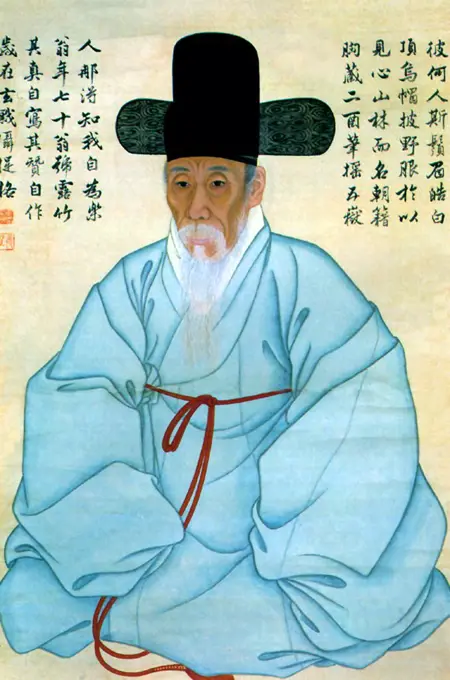
1899-18792249
Gang Se-hwang was a high government official as well as a painter, calligrapher and art critic of the mid-Joseon period. He was born in Jinju, Gyeongsangnam-do, the son of Kang Hyeon. He entered royal service when more than sixty years old. Gang established and practised the 'munhwa' style of painting.
6176-66095257
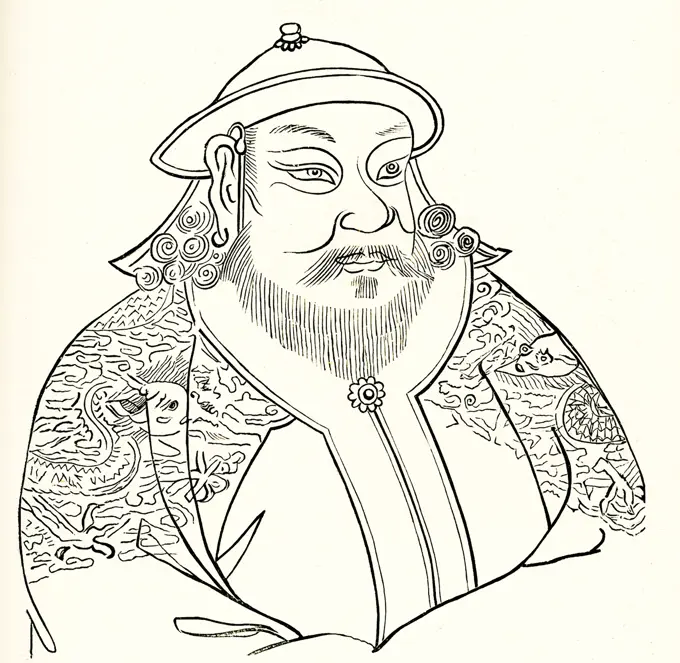
The caption for this map from The Travels of Marco Polo Vol I  as translated by Henry Yule reads: Portrait pf Kublai Khan. From a Chinese engraving). Kublai Khan, also known by his regnal name Setsen Khan, was the founder of the Yuan dynasty of China and the fifth khagan-emperor of the Mongol Empire from 1260 to 1294, although after the division of the empire this was a nominal position. Marco Polo was a Venetian traveler who left Venice, Italy, with his father Niccolo and uncle Maffeo in 1271. He arrived in China in 1275 where Kublai Khan had his court, and returned home in 1294.  Note that
1899-18711858
King Wu of Zhou or King Wu of Chou was the first of the Chinese Zhou Dynasty. The dates of his reign are 1046-1043 BCE or 1049/45-1043 (Cambridge History of Ancient China). Various sources quoted that he died at the age of 93, 54 or 43. He was considered a just and able leader. Zhou Gong Dan was one of his brothers. In 1048 BCE, Wu marched down the Yellow River to the Mengjin ford and met with more than 800 dukes. In 1046 BCE, seeing that the Shang government was in a shambles, King Wu launched an attack along with many neighboring dukes. In the Battle of Muye, Shang forces were destroyed, and King Zhou of Shang set his palace on fire and burned himself to death. Following the victory, King Wu established many smaller feudal states under the rule of his brothers and generals. He died three years later in 1043 BCE.
6176-67069035
Shanghai advertising poster, c1930s. Artist: Unknown
1899-18719021
In 1415, the western Mongols led by Bahamu, Delbeg and Bolad were defeated by the Ming army which penetrated as far as Tuul River. However, it was a pyrrhic victory and the number of killed was about the same on both sides. The Ming Emperor was persuaded to return by his followers while the Mongols retired northwards. Although Adai Khan did not claim the throne of Great Khan until 1425, he was able to first unify the eastern part and then the central part of the Mongol territory while denouncing the legitimacy of Delbeg Khan, and carried on campaigns against Delbeg, eventually succeeding in defeating and killing Delbeg Khan in 1415, along with many of his Oirats supporters. Delbeg Khan was succeeded by another direct descendant of Ariq Boke, Oyiradai Khan, chosen by the Oirats to boost the legitimacy of their rule. The son of Haruusag Duuren, Adai Khan was born in 1400, the red horse year, he assumed the throne and in 1438, the yellow horse year, he was killed by the Oirat's prince Tog
6176-67069155
Shanghai advertising poster, c1930s. Artist: Unknown
PREVIOUS
of 5
NEXT
2401 S. Ervay, Suite 206
Dallas, Texas 75215
United States
Get Started
Free ResearchMy BoardsMy Cart
For Creators
How To License Your ContentContributor PortalFrame of Mind
Resources
API accessPricing
Contact
+1 866 236 0087help@viewpictures.co.uk Contact form
©2026 View Pictures. All Rights Reserved. -A
This site is protected by reCAPTCHA and Google Privacy Policy and Terms of Service apply.