My Boards
View Pictures
  • My Boards
← Artworks

Traditional Japanese Woodblock Prints

Elegant woodblock prints capturing traditional Japanese actors and cultural motifs, showcasing intricate patterns and timeless artistry.

Seated singer in decorated robe with swimming sea plovermotif.  Artist: Totoya Hokkei, Japanese, 1780-1850
Seated singer in decorated robe with swimming sea plovermotif. Artist: Totoya Hokkei, Japanese, 1780-1850
271 assets in this story
6145-29115632
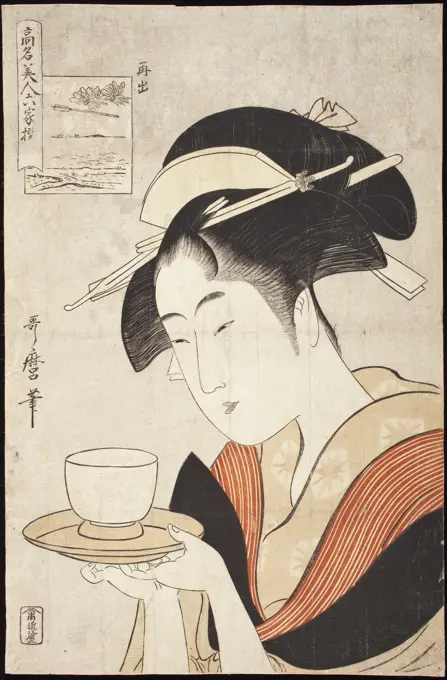
Appearing Again: The Courtesan Naniwaya Okita. Kitagawa Utamaro (Japan, 1753-1806). Japan, circa 1795-1796. Prints; woodblocks. Color woodblock print
4443-75462532
A woman sewing., 1796. Woodcuts., 15 x 10 in. (38.1 x 25.4 cm)
6145-46834894
Earth: Lin Chong, from the Series The Five Elements of theSuikoden.  Artist: Totoya Hokkei, Japanese, 1780-1850
4409-17584139
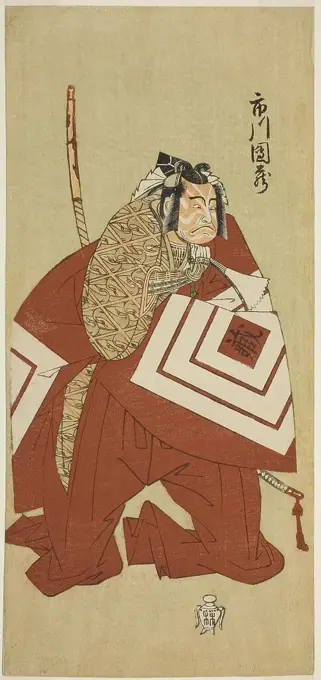
The Actor Ichikawa Danzo III as Kamakura no Gongoro Kagemasa () in the Play Otokoyama Yunzei Kurabe (), Performed at the Ichimura Theater () in the Eleventh Month, 1768 (). Katsukawa Shunsho  ; Japanese, 1726-1792. Date: 1763-1773. Dimensions: 31 x 14.3 cm (12 3/16 x 5 5/8 in.). Color woodblock print; hosoban. Origin: Japan. Museum: The Chicago Art Institute, USA.
1788-42260
Ukiyo-e with portrait of an actor, 19th century, woodcut from the Kabuki Theatre series. Japanese civilization, Edo period (1603-1868).
4408-5508
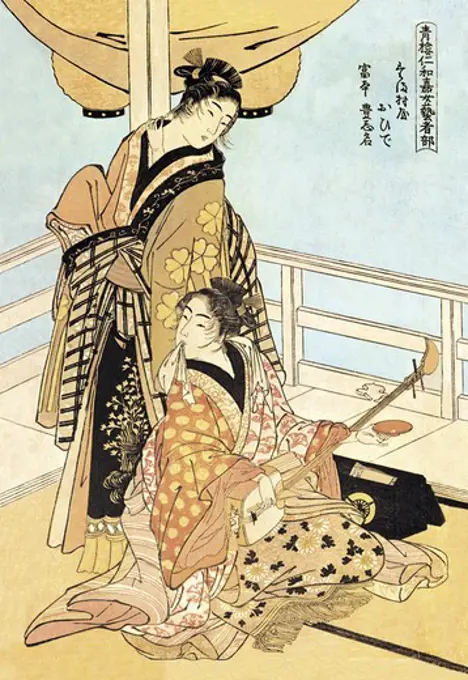
Two Musicians, Japanese Prints - Utamaro
6145-30148208
The Actor Segawa Kikunojo I as Utabikuni in the play Fuji Miru Sato Sakae Soga ( ), performed at the Ichimura Theater in the first month, 1742 1742 Japan. Hand-colored woodblock print; hosoban, urushi-e . Torii Kiyomasu II
6145-30174256
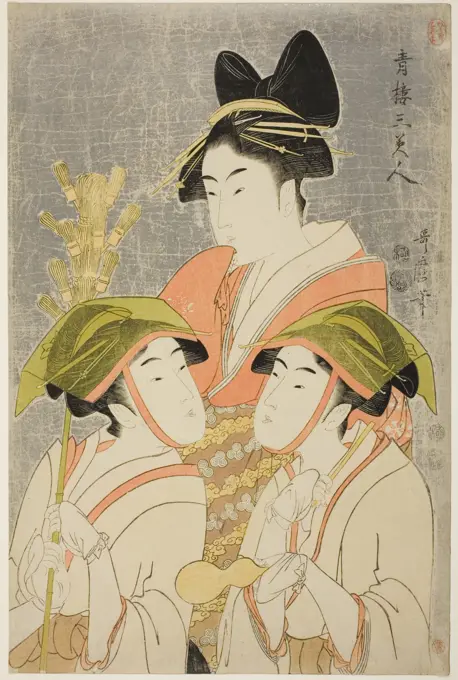
Three Beauties of Yoshiwara (Seiro san bijin) 1756-1806 Japan. Color woodblock print; oban . Kitagawa Utamaro
6145-59467210
Woman washing clothes in the river, Utagawa Sadakage, 1832  A young woman stands on a stone in a river, where she washes clothes. On the bank behind her a large wash with pestle. On the on standing bank a washbasin and two men who transport laundry on a stick over their shoulders. The river shown here is the Chôbû river near Edo in the province of Musashi. With one poem. Japan paper color woodcut
6145-45666863
Fire, sôkômei; Hi - Sôkômei; The five elements and suicodes; Suikoden Suiko Gogyô. Kohôgi Sôkômei is one of the 108 heroes of the suicodes (waterfront stories), a Chinese novel, stands next to a lamp. One poem
4443-73180196
Kunisada, work, Actor Bando Mitsugoro III in the play Kanadeho chusingura (Faithful vassals), 1830, colored woodcut, graphics
6145-45697186
Honderd Verhalen Over Dapperheid in Ons Land; Honchô Hashizô I ALS Tenjiku Kanja (TOKUBEI), In Het Stuk 'Sangoku Ichi TSUI NO KUROMONO', KADO THEATER
1899-18789425
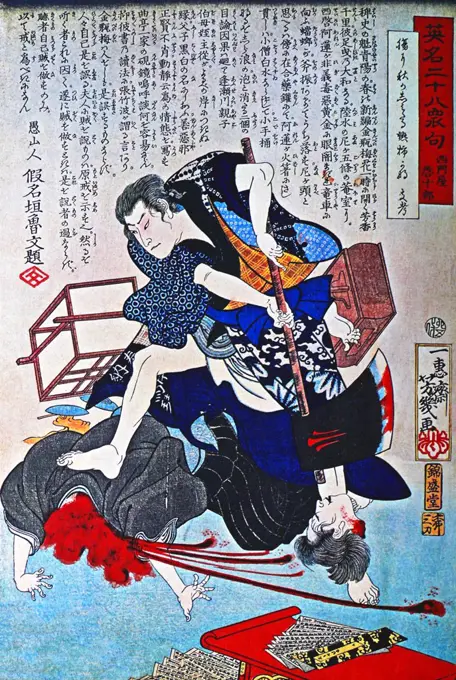
Utagawa Yoshiiku (1833 - February 6, 1904, also known as or Ochiai Yoshiiku), was a Japanese printmaker and newspaper illustrator. The son of a tea house proprietor, he was a student of Utagawa Kuniyoshi. Utagawa went to school with Tsukioka Yoshitoshi, recognized as the last great masters of Ukiyo (woodblock printing). Eimei nijuhasshuku (28 Famous Murders with Verse)., also known as the 'Bloody Prints', is a collection of Japanese ukiyo-e from the 1860s, which depicted gruesome acts of murder or torture based on historical events or scenes in Kabuki plays. Although most of the works are solely violent by nature, it is perhaps the first known example of ero guro or the erotic grotesque in Japanese culture, an art sub-genre which depicts either erotic or extreme images of violence and mutilation.
4430-2895
fine arts, Japan, graphics, actor as samurai in front of blooming plum tree, first half 19th century, colour woodcut, private collection,
6145-29739451
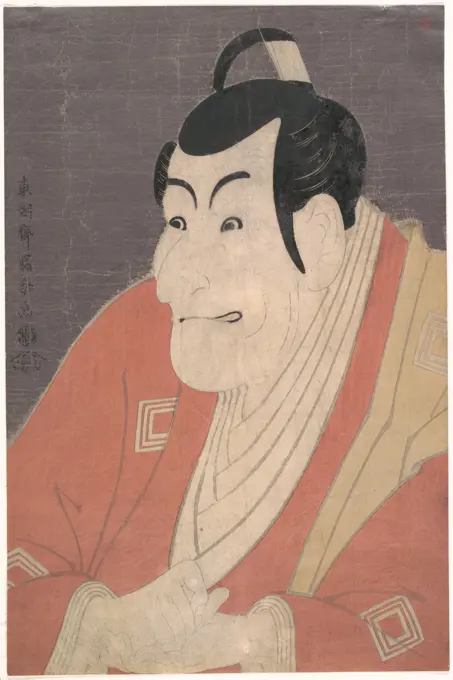
Kabuki Actor Ichikawa Ebiz (Ichikawa Danjr V) in the play The Colored Reins of a Loving Wife (Koi nyb somewake tazuna) 5th month, 1794 Tshsai Sharaku Japanese Sharaku created bold and stylized depictions of Kabuki actors by focusing on bust portraits. He thus could concentrate on the facial expressions and hand gestures of his subjects.In this portrait, one of Sharaku's most famous works, Ebiz (Danjr V) acts the part of a samurai warrior of tremendous integrity in a moment of insufferable moral conflict. Immediately afterward, he will commit seppuku, suicide by disembowelment, to preserve his honor. This close-up image of Danjr V in the role of Takemura Sadanoshin shows a strong sense of tension and immediacy.. Kabuki Actor Ichikawa Ebiz (Ichikawa Danjr V) in the play The Colored Reins of a Loving Wife (Koi nyb somewake tazuna). Tshsai Sharaku (Japanese, active 1794-95). Japan. 5th month, 1794. Woodblock print; ink and color on paper with mica ground. Edo period (161
6145-30148709
The actor Sakata Hangoro III as Fujikawa Mizuemon 1794 Japan. Color woodblock print; oban . Tôshûsai Sharaku
6145-46834394
Huyan Zhuo (Koen Shaku), from a series of The Five Tiger Generals of Heroes of the Water Margin, No. 5”.  Artist: Yashima Gakutei, Japanese, ca. 1786-1868
6145-44307332
The actor Iwai Kumesaburō III in Hahakigi, Leaf 2 from the series: The 54 chapters of the Edo Violet. .
6145-29743265
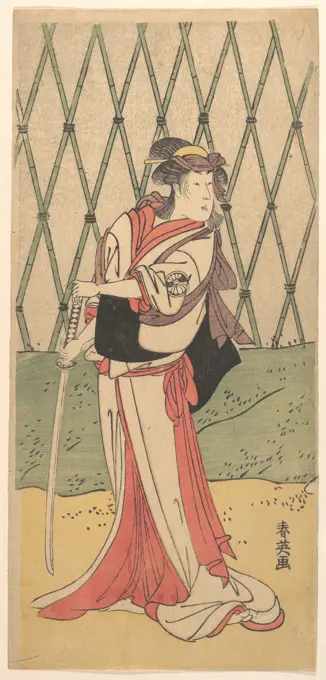
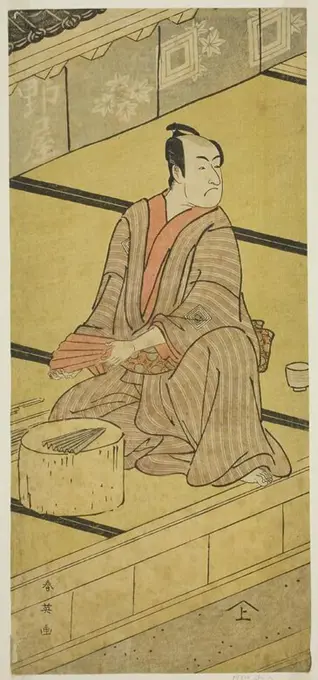
Segawa Kikunojo, in a Female Role 1762-1819 Katsukawa Shun'ei 川春英 Japanese. Segawa Kikunojo, in a Female Role 56012
6145-59460732
ActeursportRet Van Sawamura Sojuro III in de Rol VAN KAKOGAWA HONZO, KATSUKAWA SHUNEI, 1795 print The actor Sawamura Soy III, back, in green Kimono with geometric pattern, up the left sleeve. Scene from the play Kanadehon Chushingura, staged in the Miyakoza Theater in the fourth month of 1795. Japan paper color woodcut portrait of actor, actress. hacking and thrusting weapons: sword
6145-45521374
Painting on glass  semi troop women with their hands raised unknown
4266-2556
Men by Utagawa Kunisada (Toyokuni III), Colour woodcut, 1853, 1786-1865, Private Collection
6145-45644673
Bust portrait of Kataoka Nizaemon VII .. Fragment of portrait of the actor Kataoka Nizaemon VII, in black and red robe.
6145-29128330
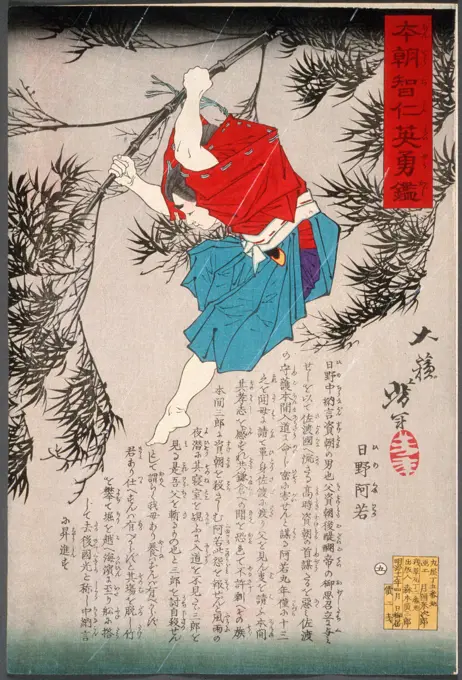
Hino Kumawaka Leaping from Bamboo. Tsukioka Yoshitoshi (Japan, 1839-1892). Japan, 1878, April. Prints; woodblocks. Color woodblock print
6145-30149067
Casting a curse at the hour of the ox (ushi no koku mairi) 1765 Japan. Color woodblock print; chuban . Suzuki Harunobu
6145-59098094
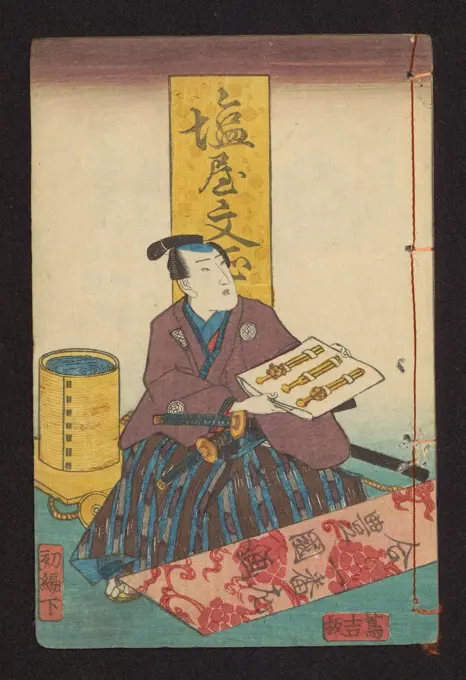
Illustrated book: Shioya Bunshô - former and tuition fees, volume I (Shioya Bunshô Kokon Sôshi Awase, Shohen Shita)
6145-59575354
Onoe Kikugorô III ALS KUWANAYA TOKUZô, ALIAS SHIMIZU NO KANJA YOSHITAKA, UTAGAWA SADAMASU, 1841 print Onoe Kikugorô III ALS KUWANAYA TOKUZô, AlIAS SHIMIZU NO KANJA YOSHITAKA, In Het ToneLSTUK 'UME NO HATSUHARU Gojûsan-tsugi', KADO THEATER, MAAA RT 1841 of APRIL 1841.  paper  portrait of actor, actress
1899-18792190
The Astana Graves (Chinese: , Pinyin: Asitanà Gumù) are a series of underground tombs located 6km from the ancient city of Gaochang, and 42km from Turpan, in Xinjiang, China. The tombs were used by the inhabitants of Gaochang, both commoners and locals, for about 600 years from 200 CE - 800 CE. The complex covers 10 square kilometres and contains over 1,000 tombs. Different plots for separate castes and families are marked by gravel dividers. Due to the arid environment many important artifacts have been well preserved at the tombs, including natural mummies. A typical tomb is entered by a 10 metre sloping staircase. The tombs are not very large, usually only 2 metres high. Some tombs also have murals inside. The deceased were laid on a small raised platform in the back of the tomb, surrounded by possessions and even food. Their faces were covered by cloths, some of which have distinct Persian motifs. A small funeral brick was placed to next to each body, on which was written the
1899-18712907
Utagawa Yoshitora was a designer of ukiyo-e Japanese woodblock prints and an illustrator of books and newspapers who was active from about 1850 to about 1880. He was born in Edo (modern Tokyo), but neither his date of birth nor date of death is known. He was an important pupil of Utagawa Kuniyoshi who excelled in prints of warriors, kabuki actors, beautiful women, and foreigners (Yokohama-e).
4443-75477943
Takao, from the series A Set of Three Courtesans (Yûkun sanban tsuzuki), 1830, Woodcuts, Surimono
6145-59583920
Tayu, 1847 - 1850 print Moronao with love letter for the married Kaoyo behind him. The butterflies stand for marital loyalty and indicate that Kaoyo does not go into the advances of Moronao. Scene from a kabukitis piece. Poem by Tayû.  paper color woodcut lover with love-letter. group of actors, troupe; actors on the stage
4409-17562213
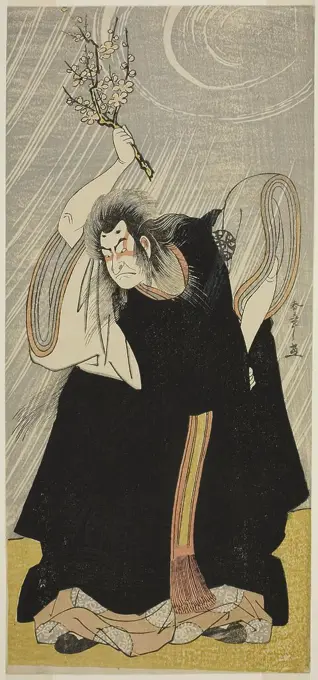
The Actor Nakamura Nakazo I as the Thunder God, an Incarnation of Kan Shojo, in the Play Sugawara Denju Tenarai Kagami, Performed at the Morita Theater in the Third Month, 1780. Katsukawa Shunsho  ; Japanese, 1726-1792. Date: 1775-1785. Dimensions: 32.8 x 14.9 cm (12 15/16 x 5 7/8 in.). Color woodblock print; hosoban. Origin: Japan. Museum: The Chicago Art Institute, USA.
4443-20307840
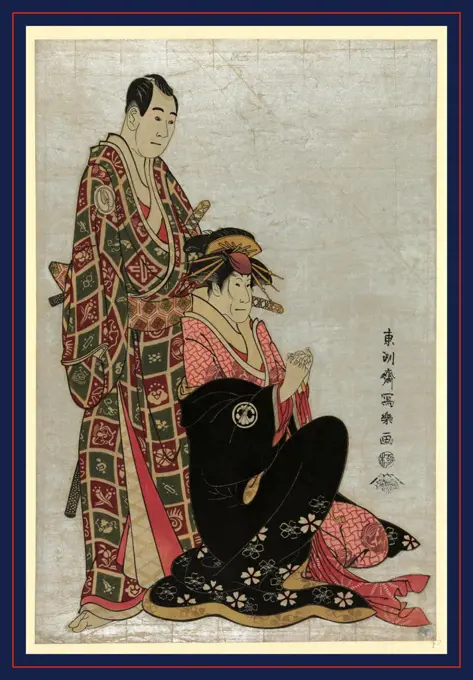
Sawamura sojuro to segawa kikunojo, The actors Sawamura Sojuro and Segawa Kikunogo., Toshusai Sharaku, active 1794, artist, 1794, printed between 1918 and 1923, 1 print : woodcut, color., Print shows actors Sawamura Sojuro and Segawa Kikunogo, one in the role of a woman.
6145-59461633
HAREN WASSEN, KITAGAWA UTAMARO, 1800-1805 print Woman with bare upper body, bent over the hair combing above a tub. In the cartouche at the top left a character description of this type of woman. Japan paper color woodcut adult woman. partially clothed. comb, brush and other tools (care of the hair) - AA - ~ women
6145-59584661
Rode Kraag, YAMAKAWA SHUHO, 1928 print BostePortret and Profil of a young woman in bright pink Kimono with a red collar.  paper. color woodcut adult woman. historical persons
4430-2426
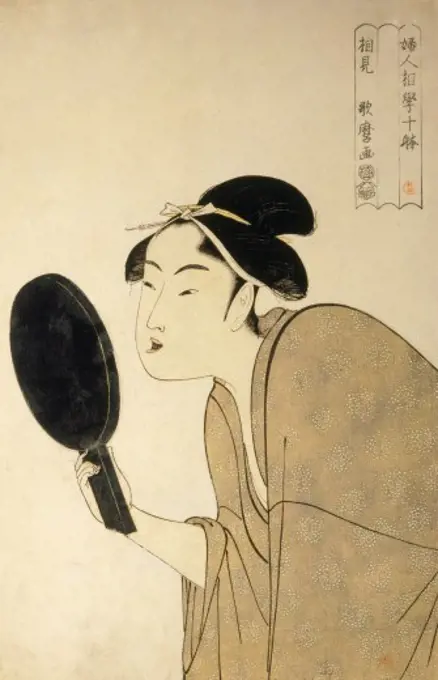
fine arts, Utamaro, Kitagawa (circa 1754 - 1806), ""married woman looking at mirror"", coloured print, Japan, 1792 / 1793, collection Otto Riese,
4409-17562095
The Actor Ichikawa Monnosuke II as Daidoji Tabatanosuke in the Play Mukashi Mukashi Tejiro no Saru, Performed at the Ichimura Theater in the Eighth Month, 1792. Katsukawa Shun'ei; Japanese, 1762-1819. Date: 1787-1797. Dimensions: 31 x 13.9 cm (12 3/16 x 5 1/2 in.). Color woodblock print; hosoban; left sheet of diptych (). Origin: Japan. Museum: The Chicago Art Institute, Chicago, USA.
1788-42254
Ukiyo-e with portrait of an actor wearing a hat, 19th century, woodcut from the Kabuki Theatre series. Japanese civilization, Edo period (1603-1868).
1788-42247
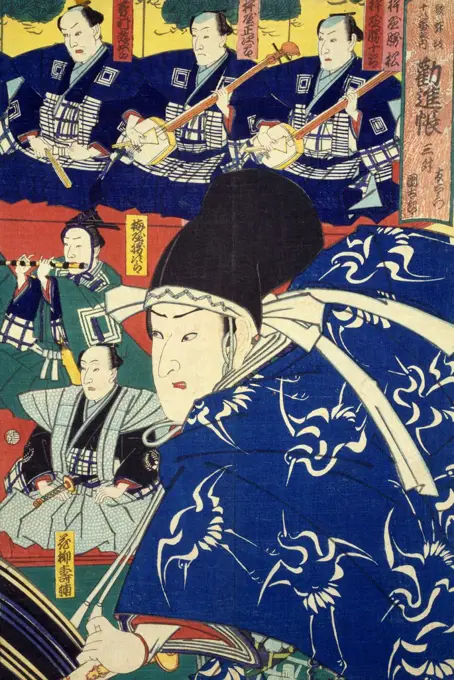
Detail of an ukiyo-e depicting the Kabuki Theatre with actors, narrators and shamisen players, 19th century, woodcut from the Kabuki Theatre series. Japanese civilization, Edo period (1603-1868).
6145-30148809
The Actor Ichikawa Ebizo as Kudo Saemon Suketsune (Ichikawa Ebizo no Kudo Saemon Suketsune) 1790-1800 Japan. Color woodblock print; hosoban,nishiki-e . Tôshûsai Sharaku
6145-59468478
De Courtisane ôiso NO TORA, YASHIMA GAKUTEI, 1823 print The actor Segawa Kikunojô V (1802-1832) in the role of the Courtisane Oiso No Tora, the mistress of Soga Broeder Soga No Jûrô Sukenari. With three poems. Fifth print (VRNL) of a five -part. Japan paper color woodcut courtesan, hetaera
4409-17558236
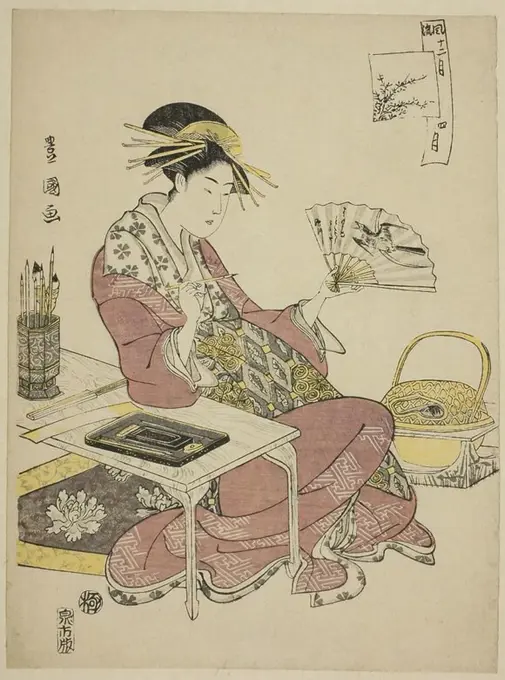
The Fourth Month (Shi gatsu), from the series "Fashionable Twelve Months (Furyu junikagetsu)". Utagawa Toyokuni I   ; Japanese, 1769-1825. Date: 1788-1798. Dimensions: 10 1/4 x 7 5/8 in. Color woodblock print; chuban. Origin: Japan. Museum: The Chicago Art Institute, Chicago, USA.
1899-18309729
Katada Bay Moon, Yoshitoshi, Tsukioka
1899-19188152
Toyohara Kunichika (30 June 1835 - 1 July 1900) was a Japanese woodblock print artist. Talented as a child, at about thirteen he became a student of Tokyo's then-leading print maker, Utagawa Kunisada. His deep appreciation and knowledge of kabuki drama led to his production primarily of ukiyo-e actor-prints, which are woodblock prints of kabuki actors and scenes from popular plays of the time. A drinker and womanizer, Kunichika also portrayed women deemed beautiful (bijinga), contemporary social life, and a few landscapes and historical scenes. He worked successfully in the Edo period, and carried those traditions into the Meiji period. To his contemporaries and now to some modern art historians, this has been seen as a significant achievement during a transitional period of great social and political change in Japan's history.
1746-2365
Theatre Scene, Utagawa Kunisada, (1786-1864/Japanese)
4443-20307731
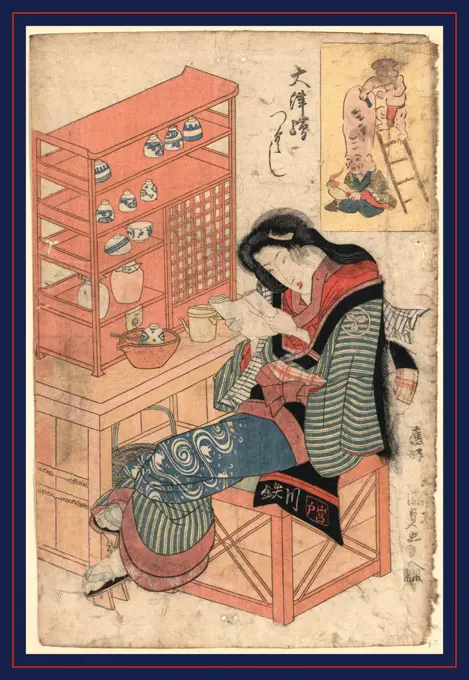
Gebho no atamazori, Shaving a monk's head Daikoku shaving Fukurokujin's head., Utagawa, Toyokuni, 1786-1865, artist,  between 1818 and 1830, 1 print : woodcut, color ; 37.8 x 24.7 cm., Print shows a woman reading, sitting in a chair at a cabinet containing tea service utensils, on the wall behind her is a print showing two of the seven lucky gods, Daikokuten shaving Fukurokuju's head.
4409-17550276
Oiwa (Oiwa-san), from the series "One Hundred Ghost Tales (Hyaku monogatari)". Katsushika Hokusai  ; Japanese, 1760-1849. Date: 1831-1832. Dimensions: 10 1/16 x 6 5/16 in. Color woodblock print; chuban. Origin: Japan. Museum: The Chicago Art Institute, USA.
6145-45622053
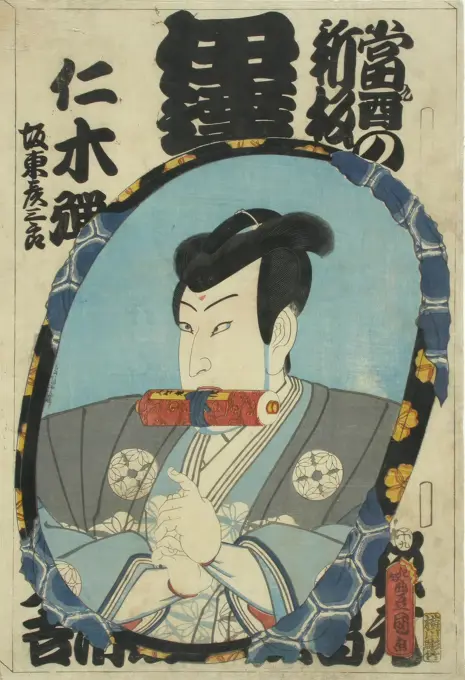
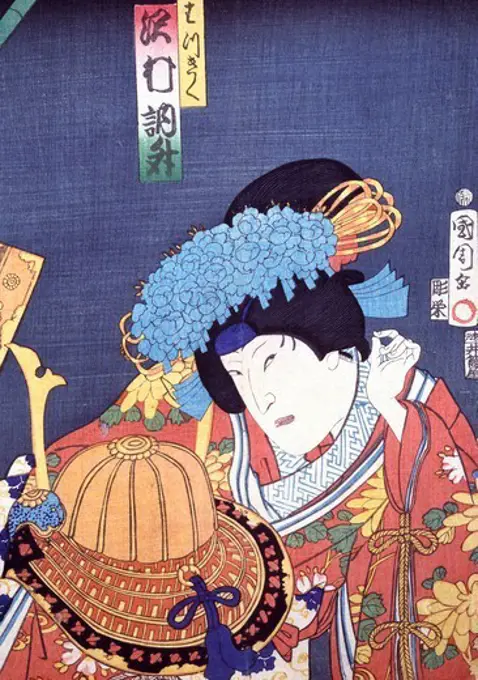
Actor as a young man; Famous restaurants in the eastern capital; Toto Komei Kaitei Tsukushi. An Ichikawa actor depicted against a blue background; At the top left a cartouche with a face of the woodwoven of Fukagawa, which is a cartouche in which a still life with a table, tray and crockery. The actor is a kunisada design, the cartouches of Hiroshige.
1899-19136419
China: Section from the scroll painting 'Beauties in History', attributed to the Ming Dynasty artist Qiu Ying (1494-1552) (National Museum of China, Beijing)
6145-59464210
It is good to make sake, totoya hokkei, c. 1822  A woman makes rice wine (sake) in a large barrel. Behind her are two metal sacrifice bottles. With two poems. The prints from this series are in line with the belief that the first activities of the new year were extra special. The red cartouche on the prints refers to almanacs in which it was indicated which activities could or should not be undertaken on certain days by people born in a certain year. Japan paper color woodcut
1899-17834907
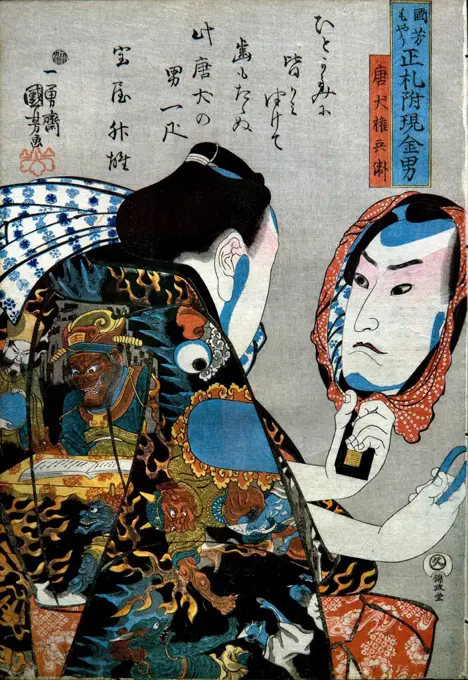
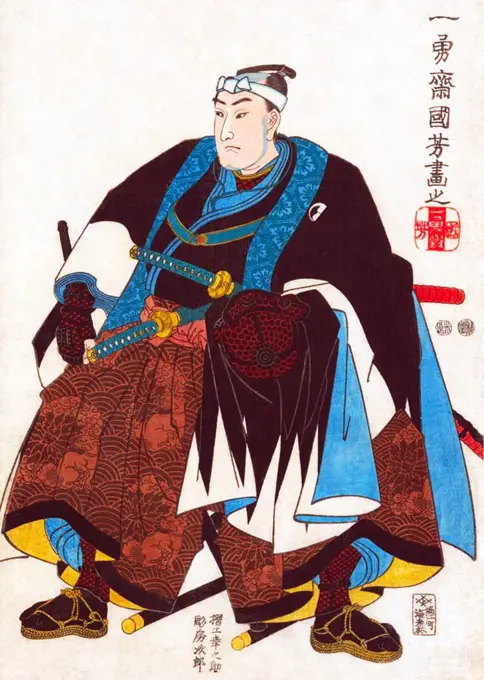
Utagawa Kuniyoshi 1798-1861. Token Gonbei Series: Men of Ready Money with True Labels Attached. Kuniyoshi Fashion (Kuniyoshi moyo shofuda tsuki genkin otoko) . about 1845. Oban vertical.
1889-60397593
Woman Applying Powder, after a woodcut by Japanese artist Hashiguchi Goyō, 1880 - 1921. To the modern eye it may appear that the woman is looking at a smart phone.
1899-19136416
China: Section from the scroll painting 'Beauties in History', attributed to the Ming Dynasty artist Qiu Ying (1494-1552) (National Museum of China, Beijing)
4409-17504046
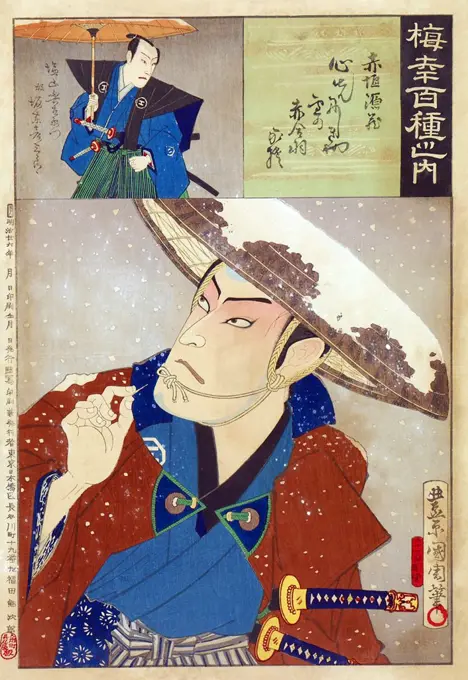
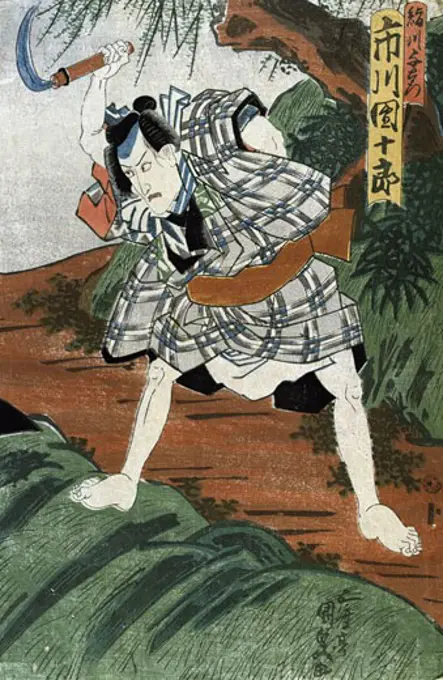
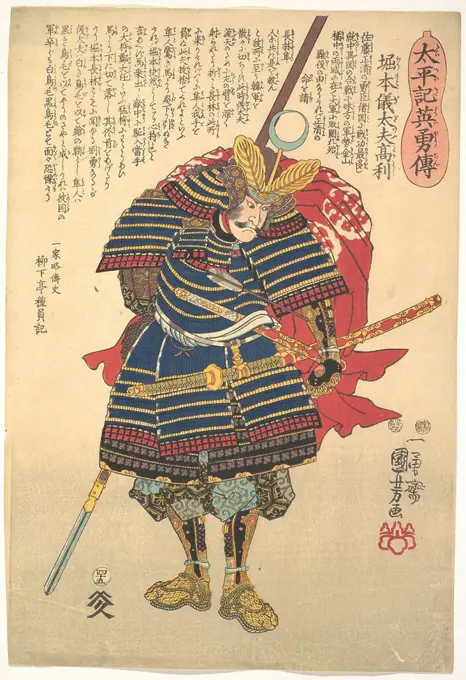
Horimoto Gidayu Takatoshi. Artist: Utagawa Kuniyoshi (Japanese, 1797-1861). Culture: Japan. Dimensions: Oban tate-e, 14 7/8 x 10 in. (37.8 x 25.4 cm). Date: ca. 1848.In this series, all the characters figured in the civil wars of the sixteenth century, an era that was uncomfortably close to the Edo period's Tokugawa shogunate. Thus, all are disguised as figures in the Taiheiki (Chronicle of Great Peace), a history of the wars of royalists against the Ashikaga warlords during the second quarter of the fourteenth century. However, the names of the heroes in the series have been changed, and it is difficult to identify the actual historical figures.This print portrays Akashi Ridayu Hidemoto wearing a straw rain cloak over his armor and armed with two swords and a hoe. A straw hat and blooming iris lie on the ground at his feet. He stands firmly with tightly closed lips and brandishes the hoe in a threatening manner. Museum: Metropolitan Museum of Art, New York, USA.
6145-59559540
After a visit to the bathhouse, Kotondo Torii, 1933 print Woman in Kimono, depicted in half between the blue access curtains of the bathhouse. In her hands a bowl in which bath supplies. Her skin is colored red with the warm water.  paper color woodcut public baths
1899-19136812
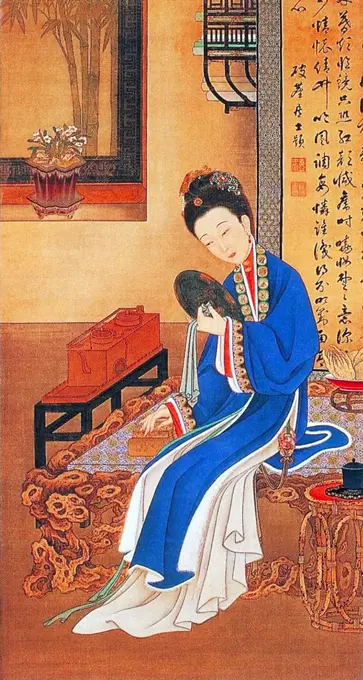
China: 'Dressed in a Fur-Lined Coat and Looking in a Mirror', from the Yongzheng shier meiren tu or 'Twelve Beauties of Prince Yong', Qing Dynasty court painting, early 18th century
1606-65680285
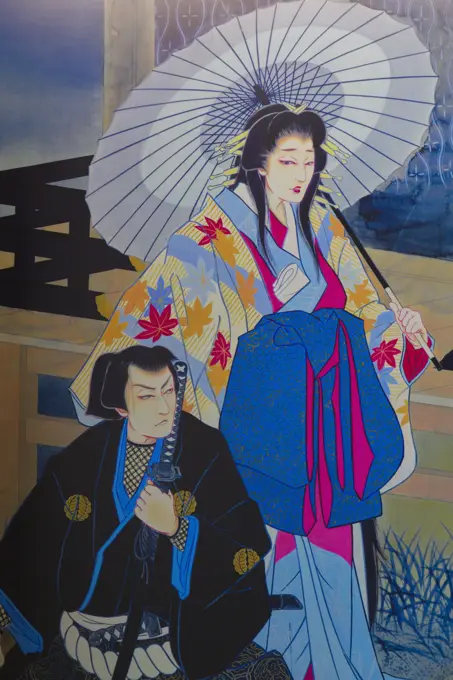
Japan, Shikoku, Kotohira, Kabuki Theatre, poster
1899-18788500
Goyi Hashiguchi (Hashiguchi Goyi, December 21, 1880 - February 24, 1921) was a Japanese painter and woodblock artist. Hashiguchi was born Hashiguchi Kiyoshi in Kagoshima Prefecture. His father Hashiguchi Kanemizu was a samurai and amateur painter in the Shijo style. His father hired a teacher in the Kano style of painting in 1899 when Kiyoshi was only ten. Kiyoshi took the name of Goyo while attending the Tokyo School of Fine Arts, from which he graduated best in his class in 1905.
1899-18789271
The revenge of the Forty-seven Ronin (Shi-ju-shichi-shi), also known as the Forty-seven Samurai, the Aki vendetta, or the Genroku Aki incident (Genroku aki jiken) took place in Japan at the start of the 18th century. One noted Japanese scholar described the tale as the country's 'national legend'. It recounts the most famous case involving the samurai code of honor, bushidi. The story tells of a group of samurai who were left leaderless (becoming ronin) after their daimyo (feudal lord) Asano Naganori was forced to commit seppuku (ritual suicide) for assaulting a court official named Kira Yoshinaka, whose title was Ki zuke no suke. The ronin avenged their master's honor after patiently waiting and planning for two years to kill Kira. In turn, the ronin were themselves ordered to commit seppuku for committing the crime of murder. With much embellishment, this true story was popularized in Japanese culture as emblematic of the loyalty, sacrifice, persistence, and honor that all good peopl
4443-73180546
Kunisada, work, Actor Bando Hikosaburo IV as Nikki Danjo, 1858, color woodblock print, graphics
6145-45620223
Bust portrait of Ichikawa Omezo. The actor Ichikawa Omezo in green and red checkered costume, the right sleeve oppressed.
4409-28962159
A picnic party: eight people seated under blossoming trees. Date: early 17th century. Origin: Japan. Period: Edo period. Color and ink on paper. Museum: Freer Gallery of Art and Arthur M. Sackler Gallery.
1899-19136807
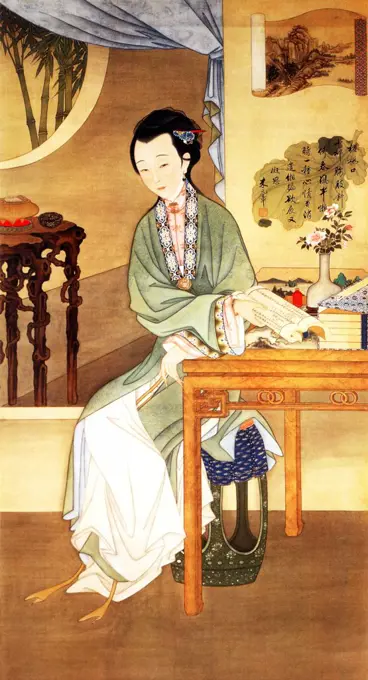
China: 'Reading and Musing', from the Yongzheng shier meiren tu or 'Twelve Beauties of Prince Yong', Qing Dynasty court painting, early 18th century
1899-18788729
Ashikaga Yoshimasa (January 20, 1435 January 27, 1490) was the 8th shogun of the Ashikaga shogunate who reigned from 1449 to 1473 during the Muromachi period of Japan. Yoshimasa was the son of the sixth shogun Ashikaga Yoshinori. On the August 16, 1443 (Kakitsu 3, 21st day of the 7th month), 10-year-old shogun Yoshikatsu died of injuries sustained in a fall from a horse. He had been shogun for only three years. Immediately, the bakufu elevated Yoshinari, the young shogun's even younger brother, to be the new shogun. Several years after becoming shogun, Yoshinari changed his name to Yoshimasa, by which name he is better known.
4408-5513
Drunken Courtesan, Japanese Prints - Utamaro
4266-2417
Japanese musician by anonymous watercolor on silk, 17th century, Honolulu Academy of Arts
6145-29272243
A wrestler in a ring facing right and wearing a formal apron. Colour woodcut by Kuniteru, 1866.
6145-29062043
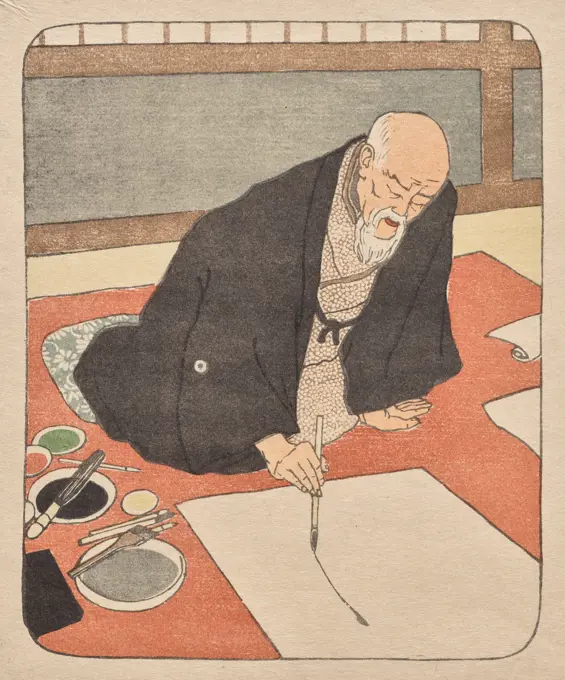
The Japanese Painter, 1900-1901. Emil Orlik (Czech, 1870-1932). Offset lithograph; image: 19.3 x 15.6 cm (7 5/8 x 6 1/8 in.).
1899-18712952
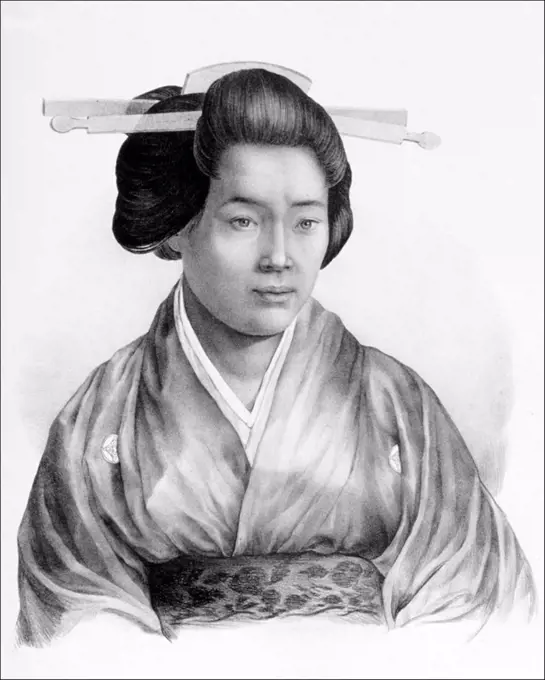
Since mixed marriages were forbidden in Japan at this time, Von Siebold 'lived together' with his Japanese partner Kusumoto Taki. In 1827 Kusumoto Taki gave birth to their daughter, Oine. Von Siebold used to call his wife 'Otakusa' and named a Hydrangea after her. As a result of her father's efforts, Oine eventually became the first Japanese woman known to have received a physician's training, and became a highly-regarded practicing physician. She died in 1903.
6145-29282395
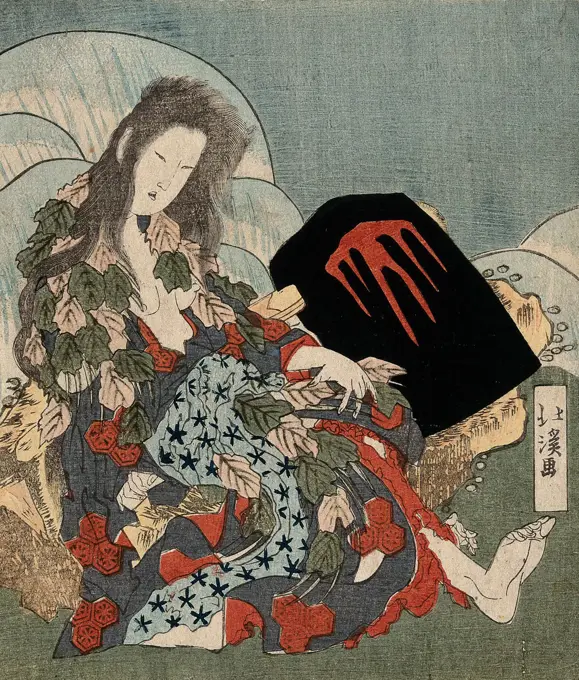
A wild mountain woman in a cloak of leaves seated by a rushing stream, behind her the head of a great axe, which belongs to her son Kintoki, the "child Hercules" of Japanese legend. Colour woodcut, 188-() after Hokkei, 182-.
1899-18718268
Tabriz was capital of the Safavid Empire from 1501 to 1548, during which time many great painters, such as Aqa Mirak, Mir Sayyid Ali and Dust Muhammad produced magnificent royal manuscripts. Safavid art set the standard for painting, literature and architecture, as well as ceramics, metal and glass. While of course nourished by Persian culture, much Safavid art was strongly influenced by Turkish, Chinese, Ottoman and Western cultures. The royal workshops of Tabriz were very influential, and illuminated and illustrated manuscripts spread throughout the empire. When the capital was transferred from Tabriz to Qazvin in 1548, the court artists fled to foreign courts, mostly Mughal or Ottoman.
PREVIOUS
of 3
NEXT
2401 S. Ervay, Suite 206
Dallas, Texas 75215
United States
Get Started
Free ResearchMy BoardsMy Cart
For Creators
How To License Your ContentContributor PortalFrame of Mind
Resources
API accessPricing
Contact
+1 866 236 0087help@viewpictures.co.uk Contact form
©2026 View Pictures. All Rights Reserved. -B
This site is protected by reCAPTCHA and Google Privacy Policy and Terms of Service apply.