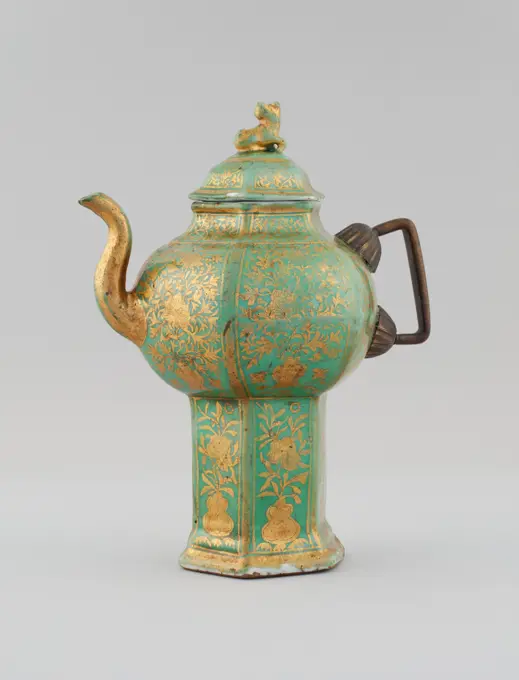
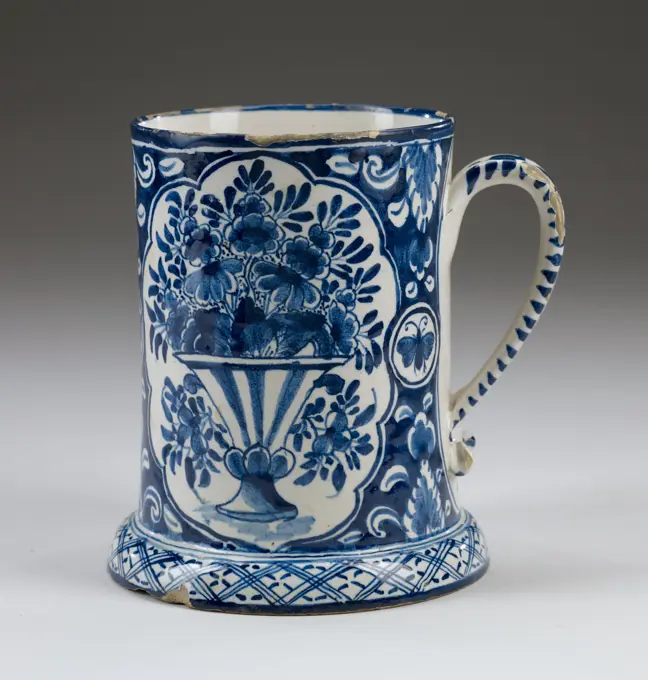
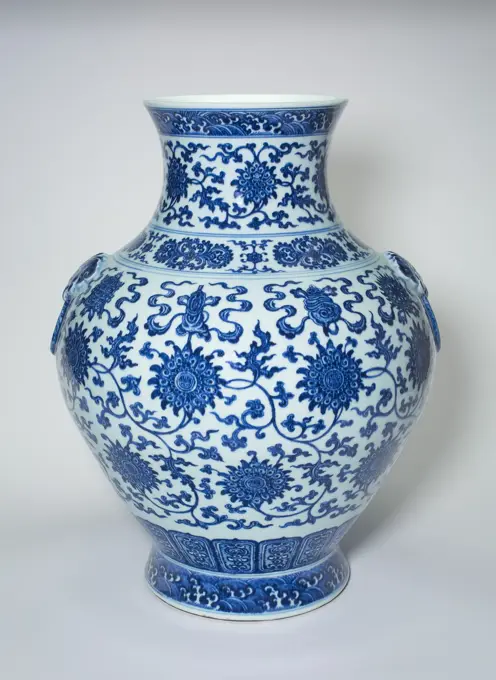
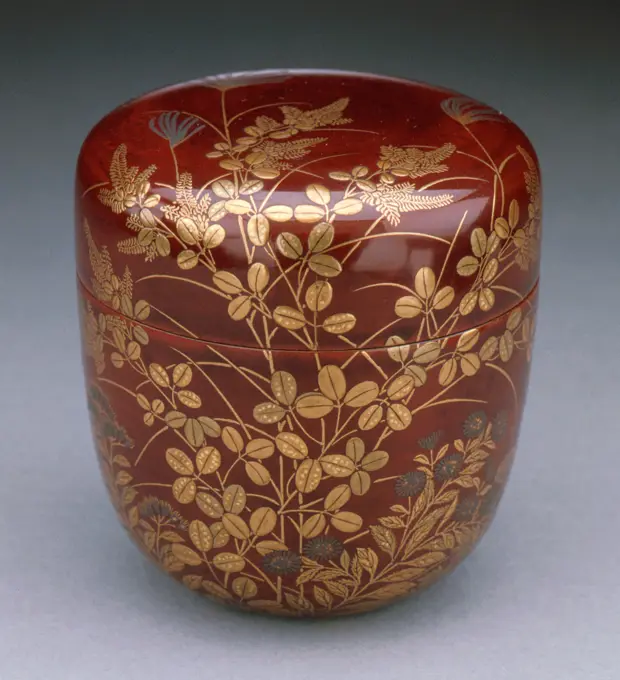
Traditional Porcelain Jars

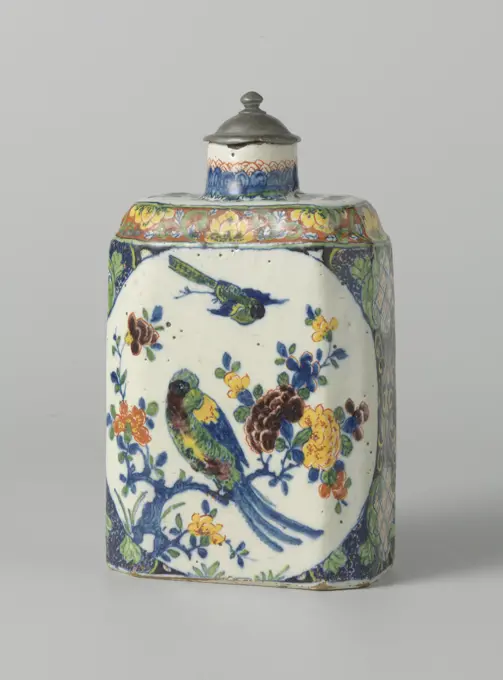
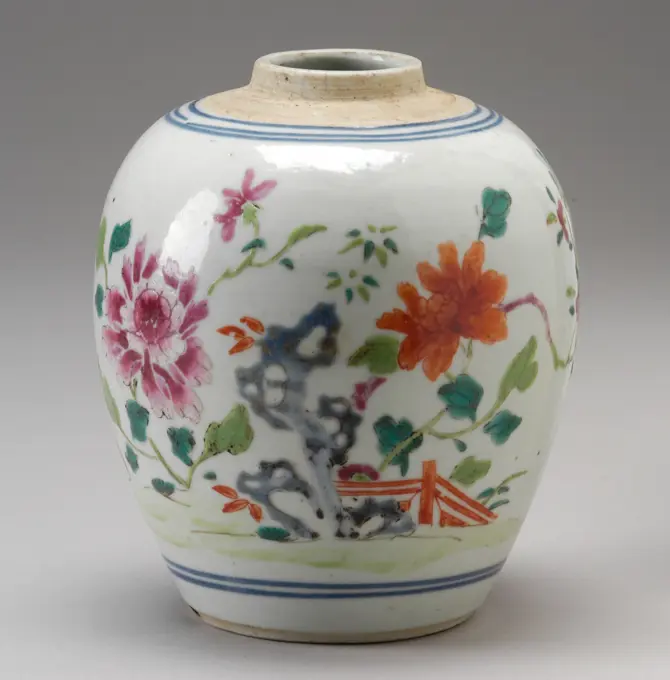
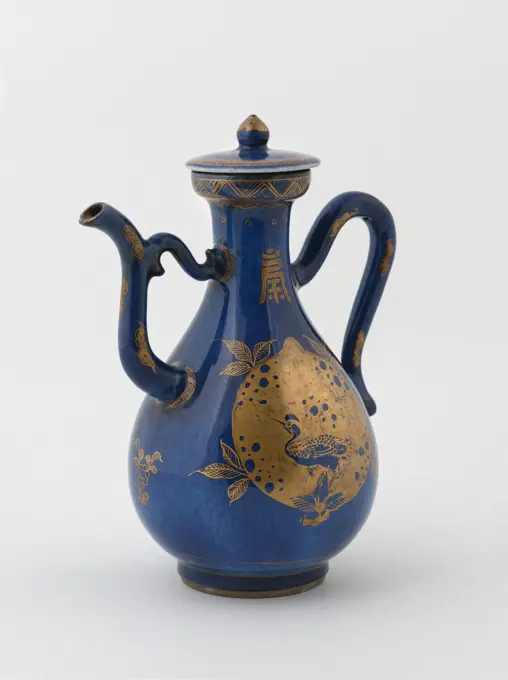
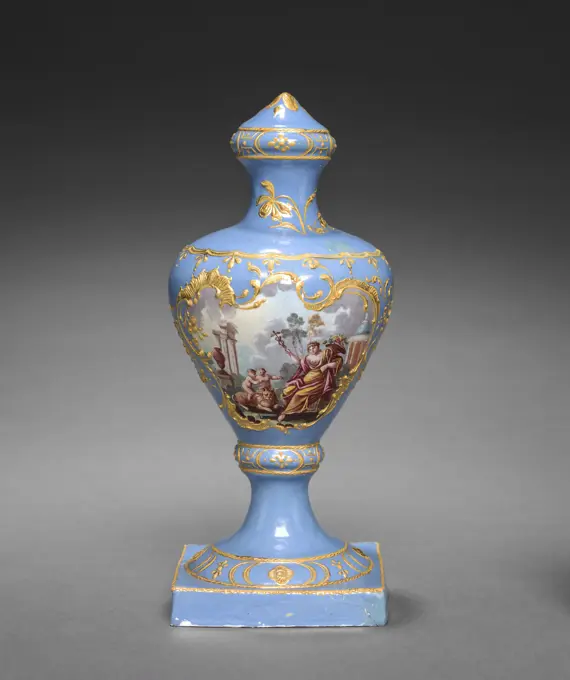
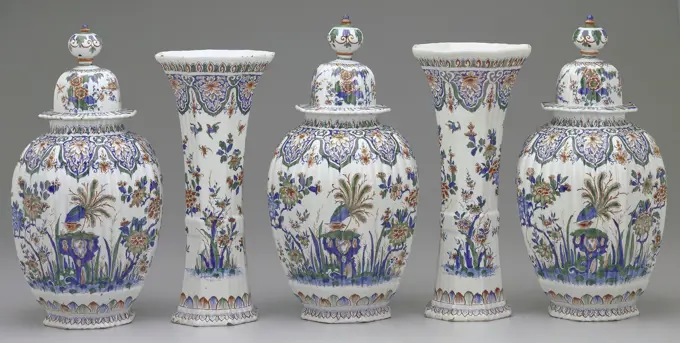
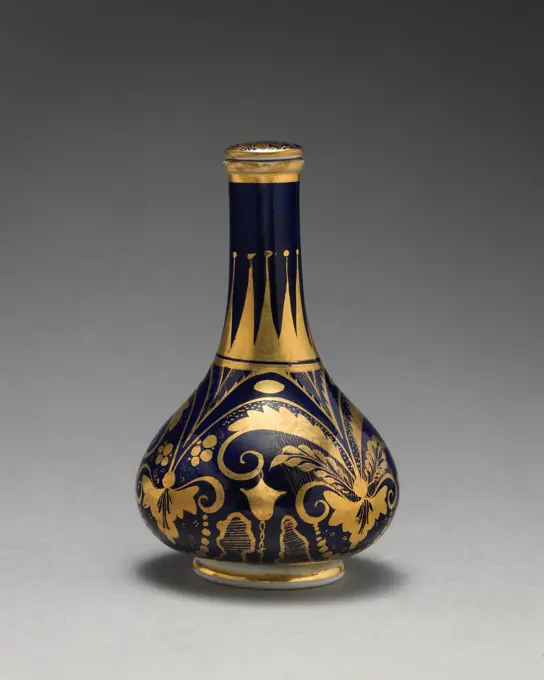
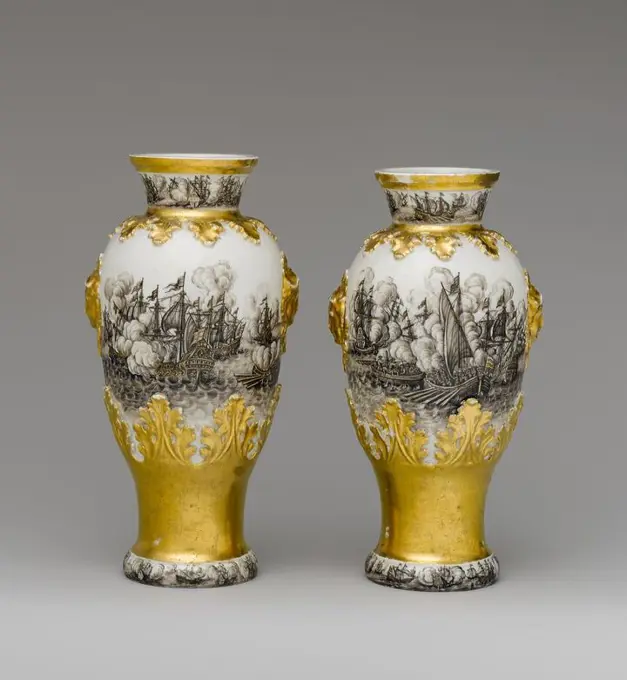
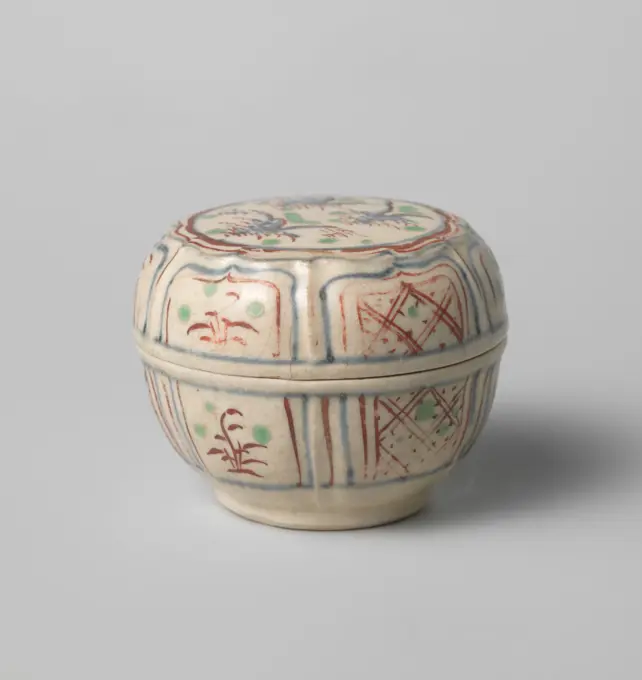
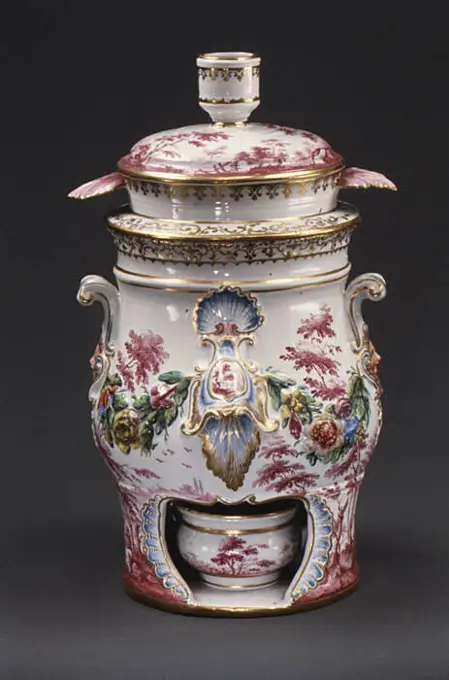
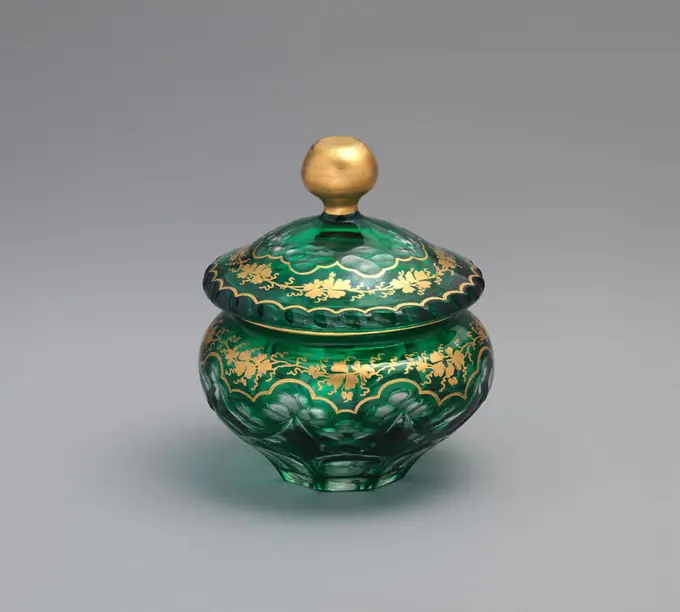
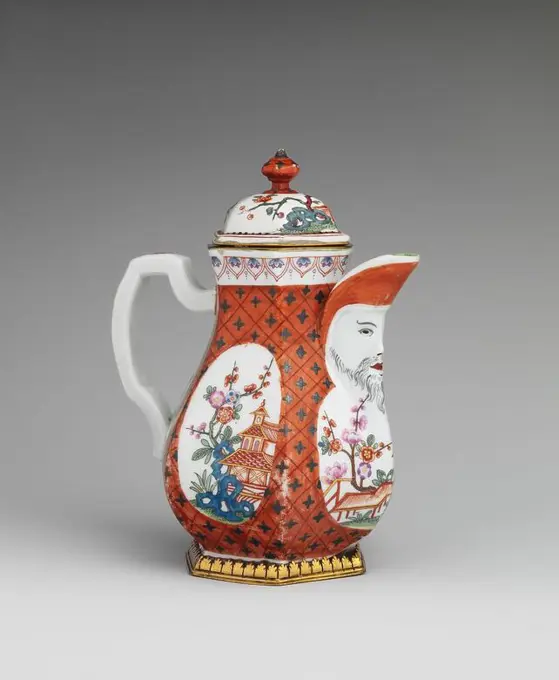
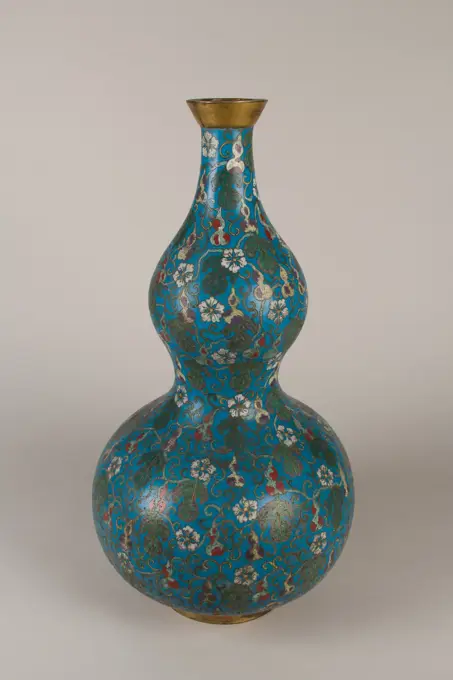
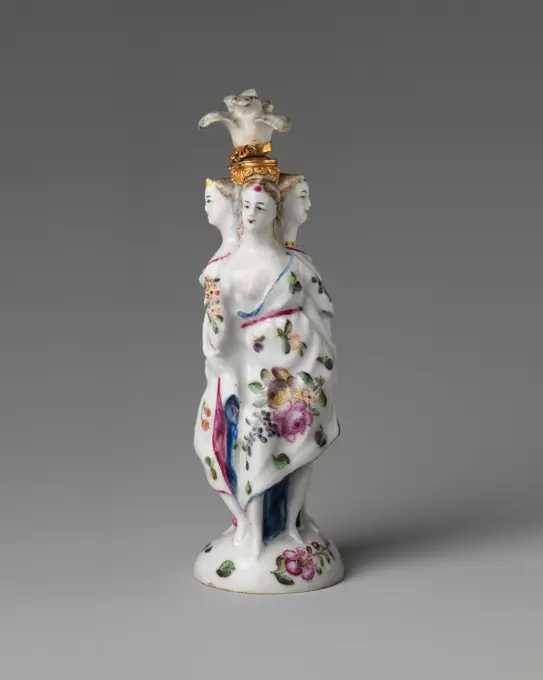
A selection of antique ceramic jars and vases, beautifully painted in blue and multicolors, showcasing intricate floral and scenic designs.

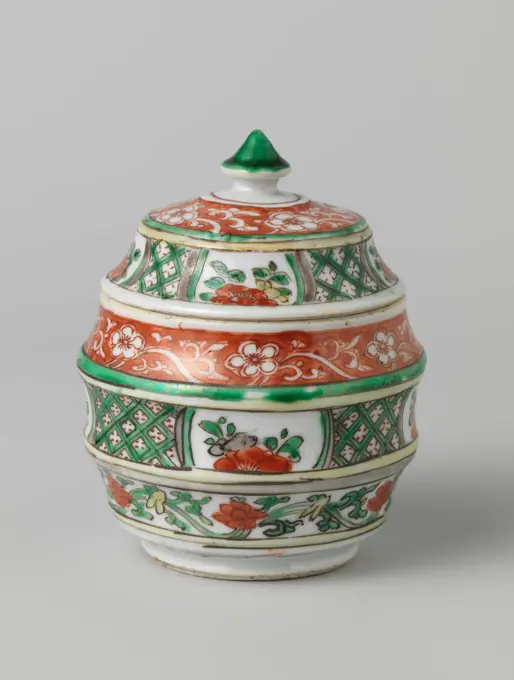
Covered jar with ruyi-heads and flowers, anonymous, c. 1700 - c. 1724 Cover of porcelain jar, painted on the glaze in blue, red, green, yellow, eggplant and black. On the lid a stylized peony with branches and sprinkling flowers. A crack in the lid. Famle Verte. China porcelain. glaze. painting / vitrification Cover of porcelain jar, painted on the glaze in blue, red, green, yellow, eggplant and black. On the lid a stylized peony with branches and sprinkling flowers. A crack in the lid. Famle Verte. China porcelain. glaze. painting / vitrification
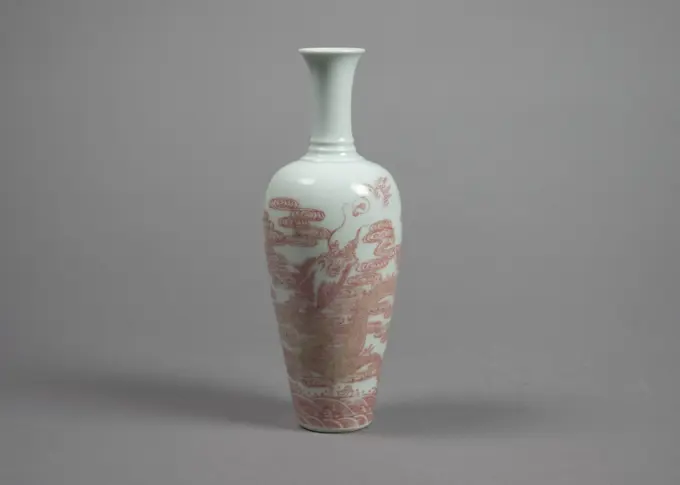
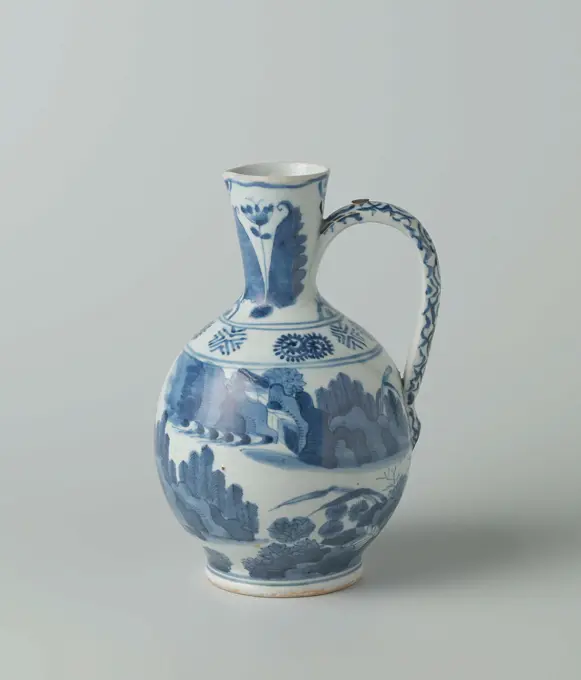
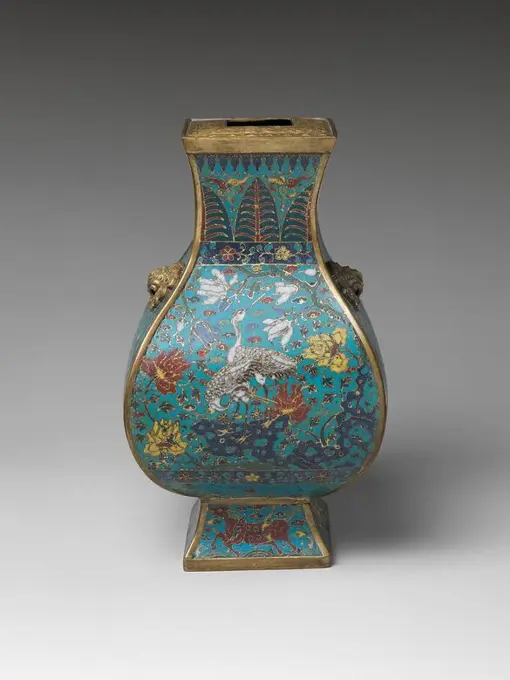
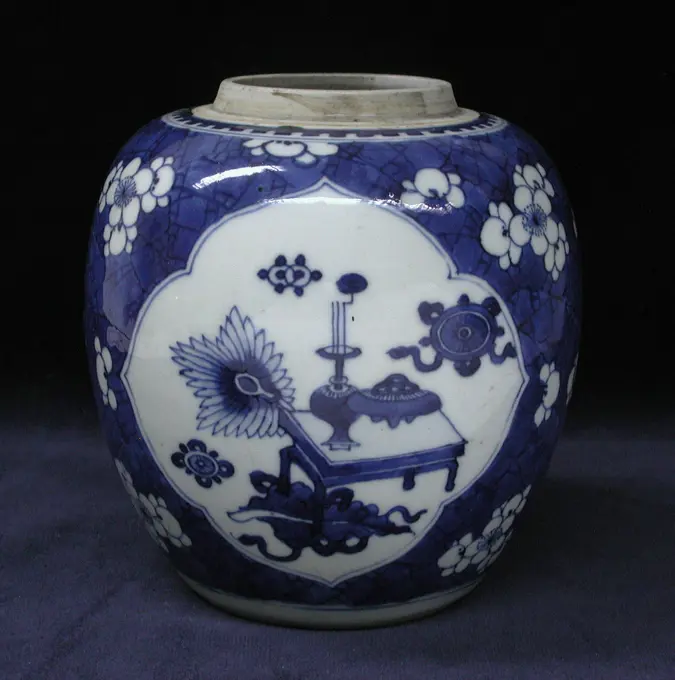
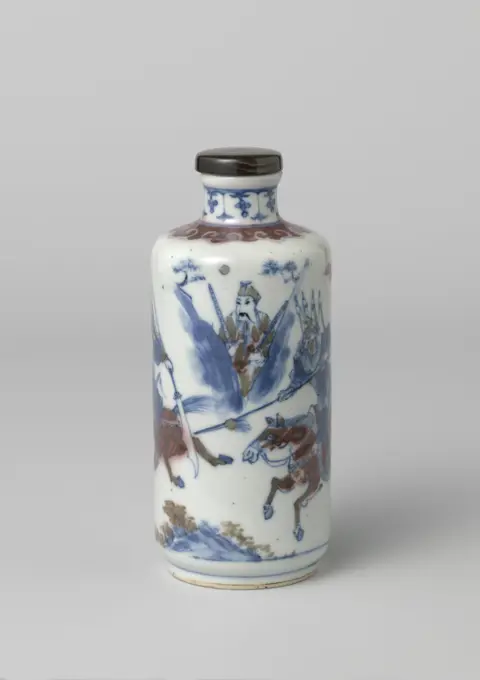
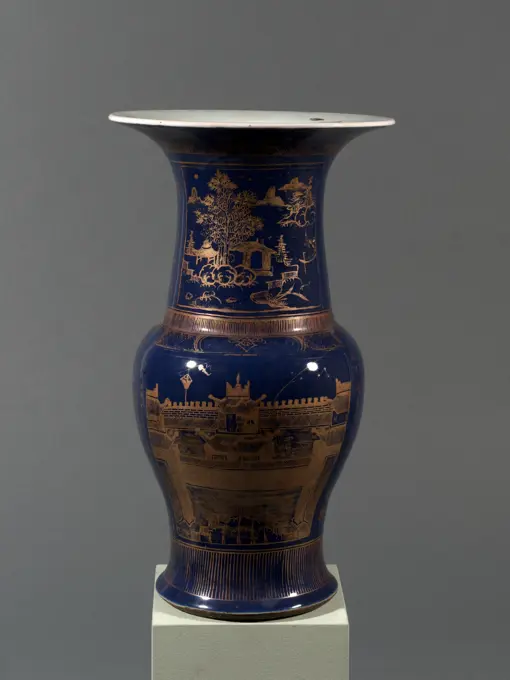
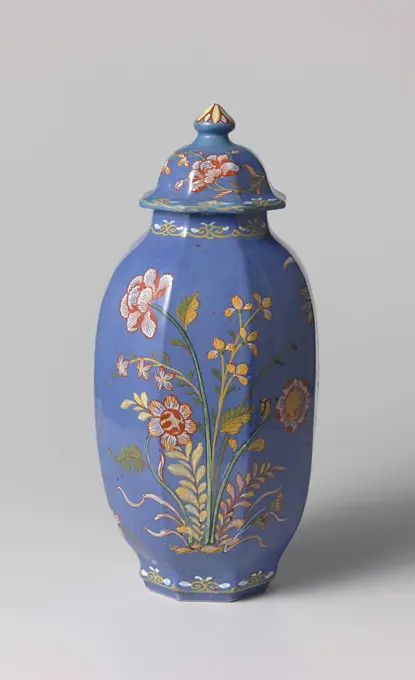
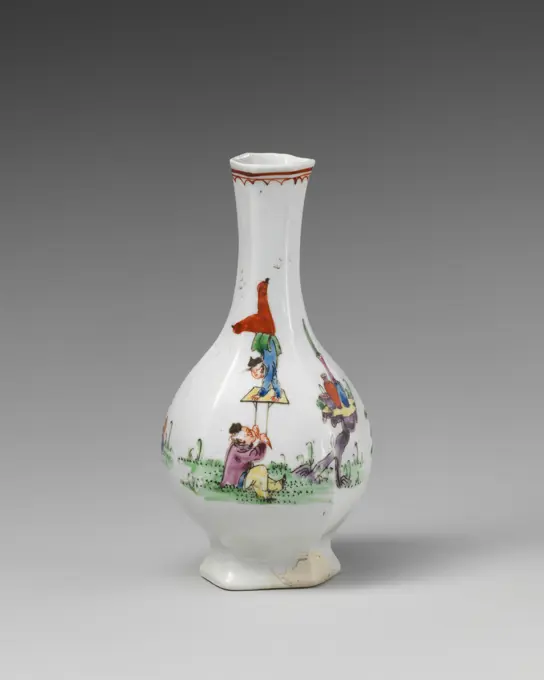
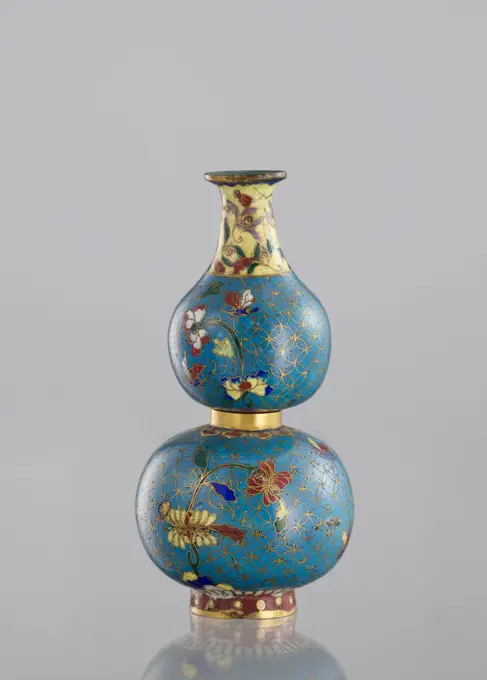
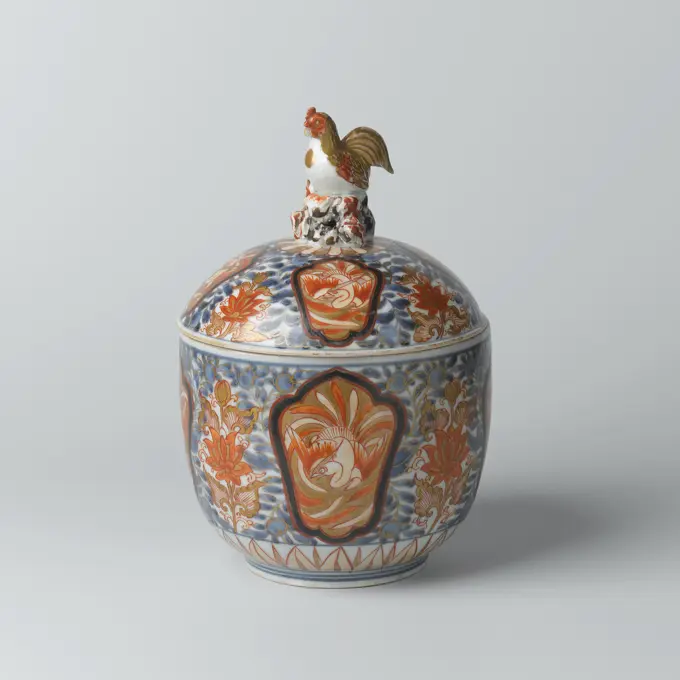
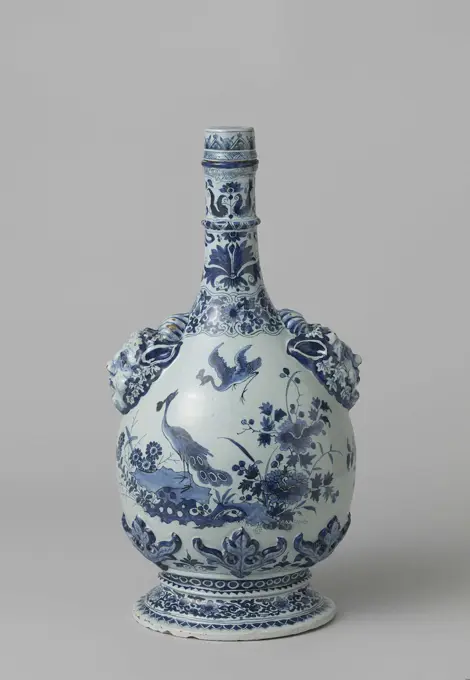
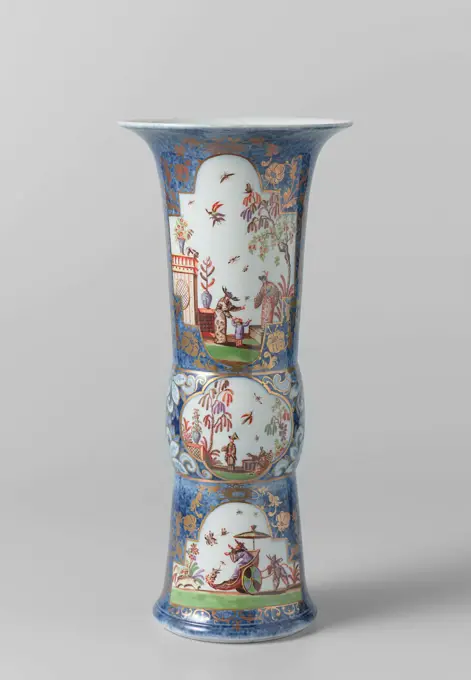
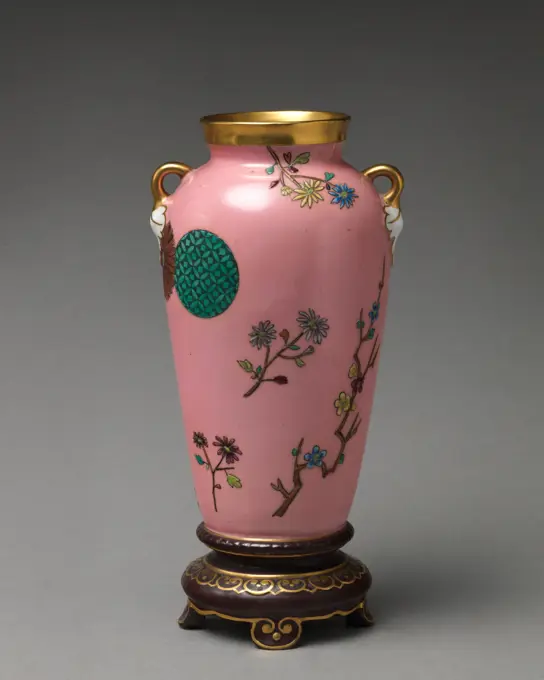
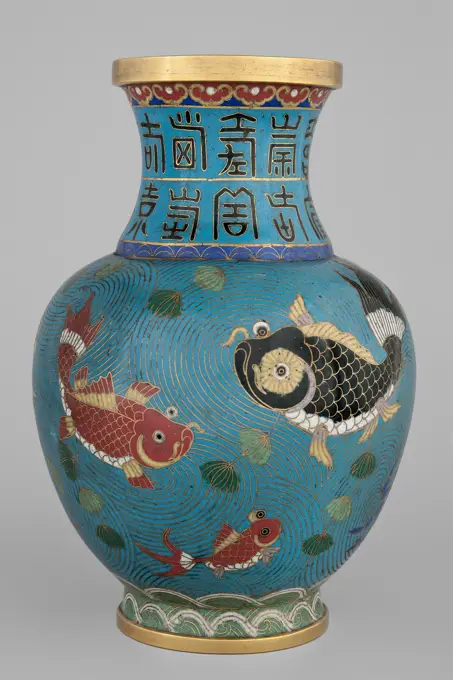
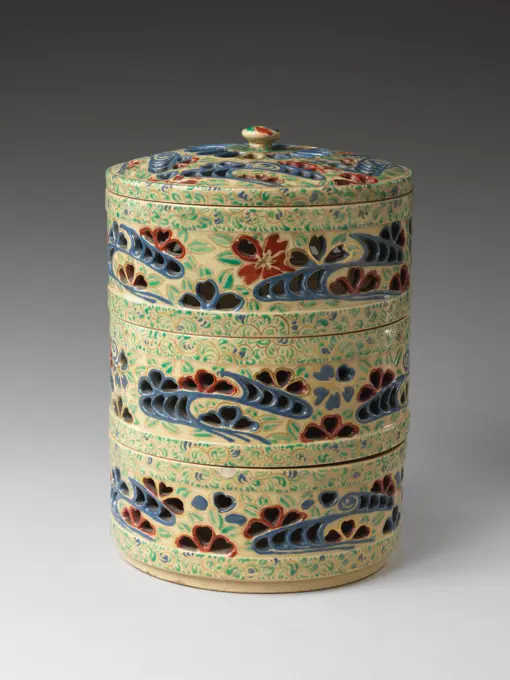
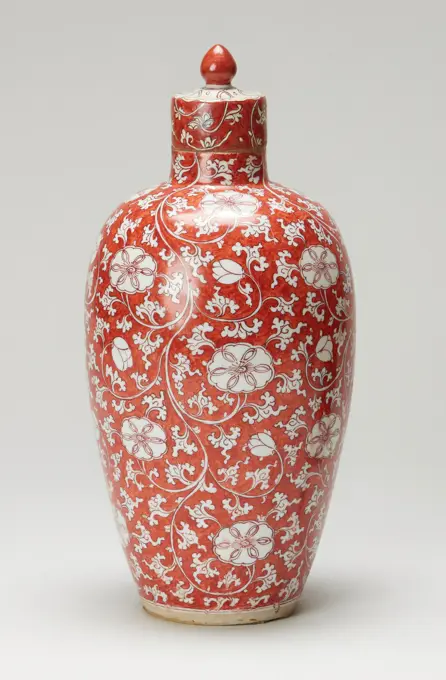
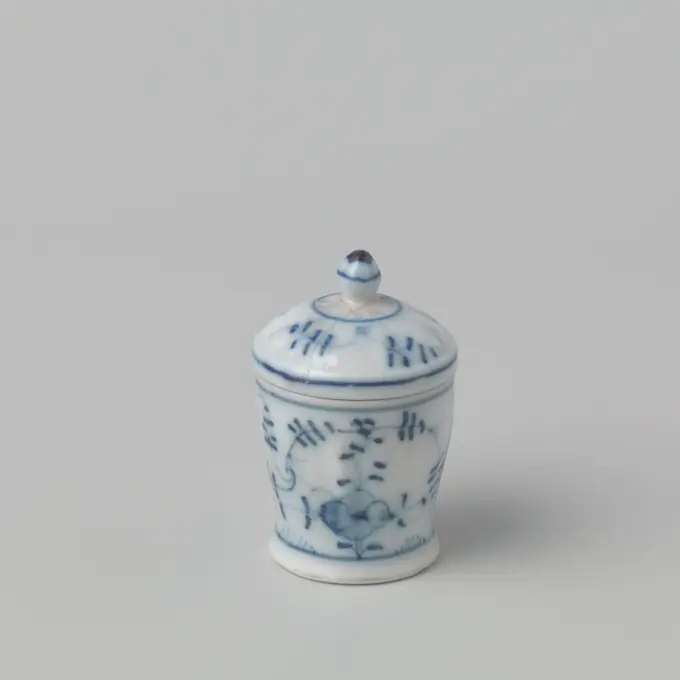
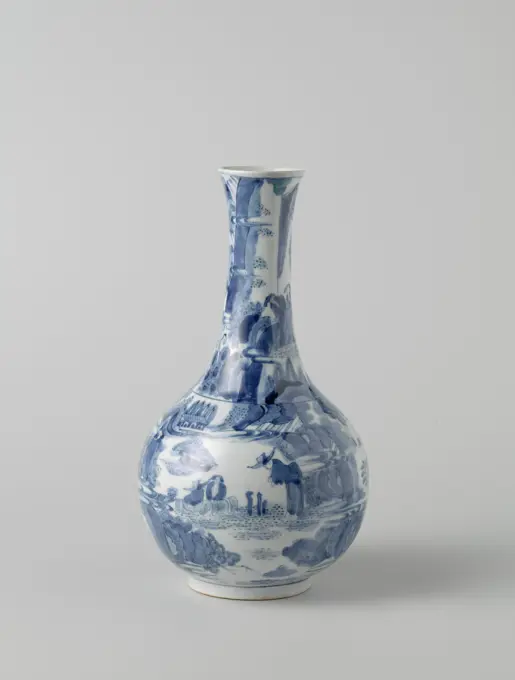
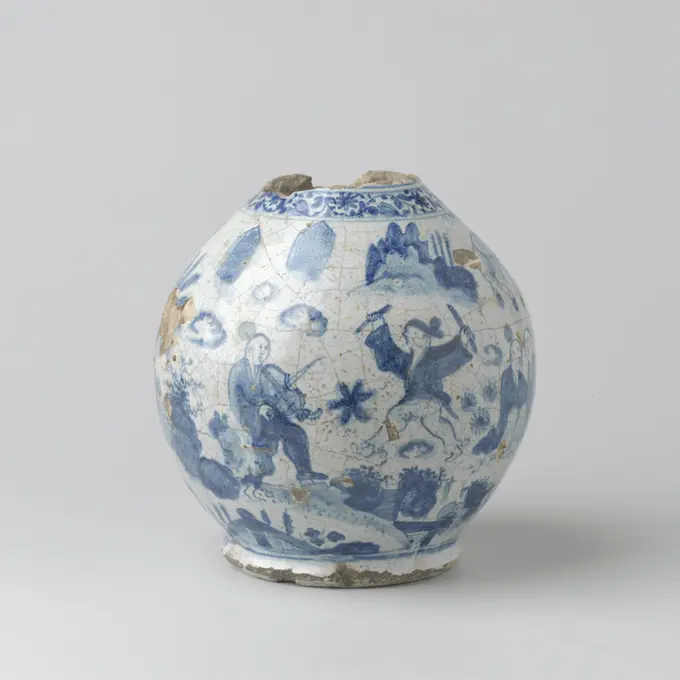
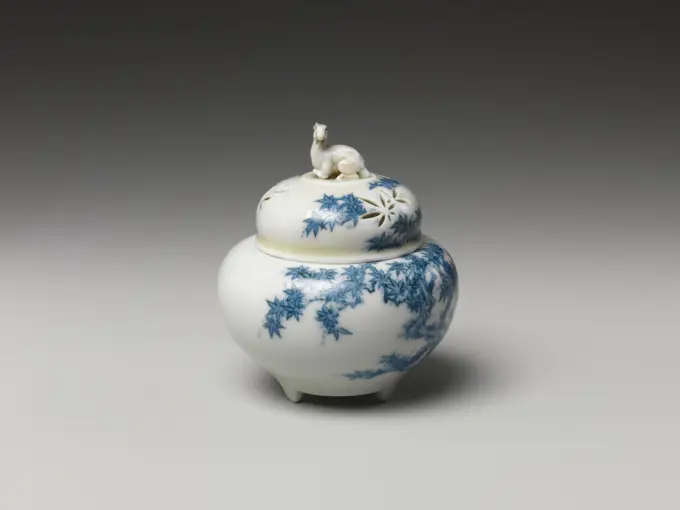
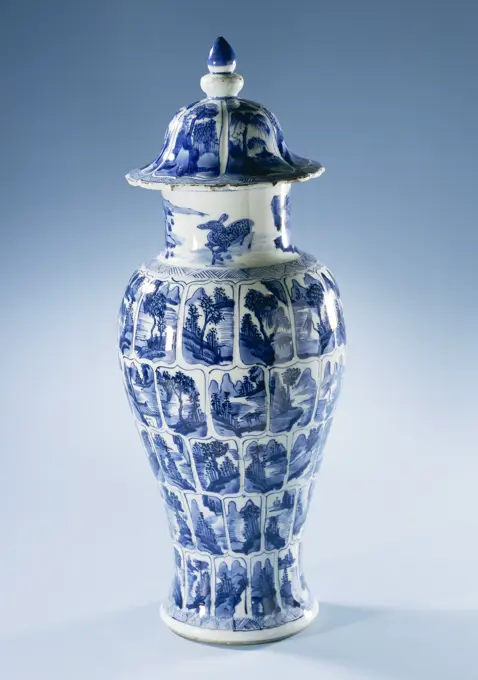
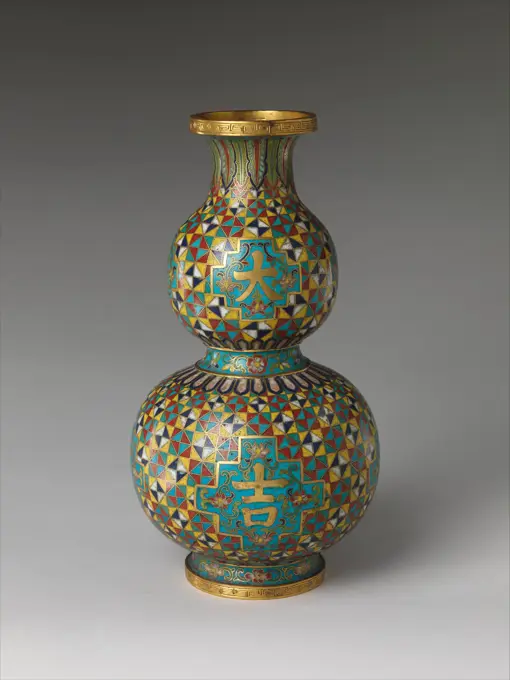
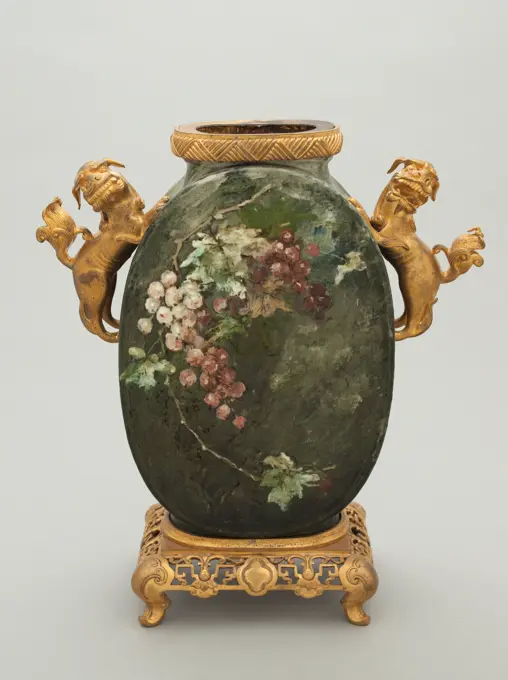
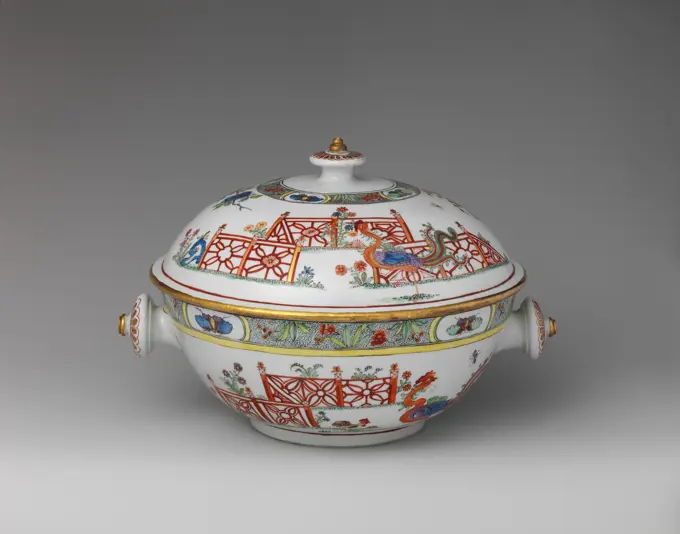
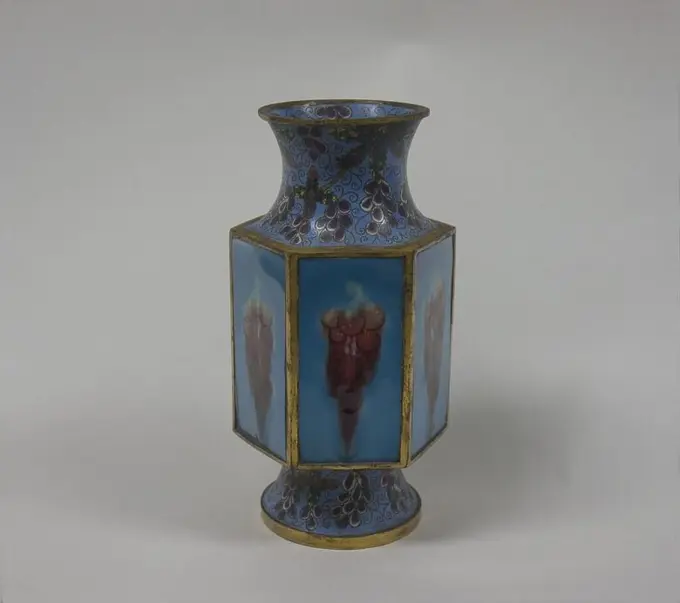
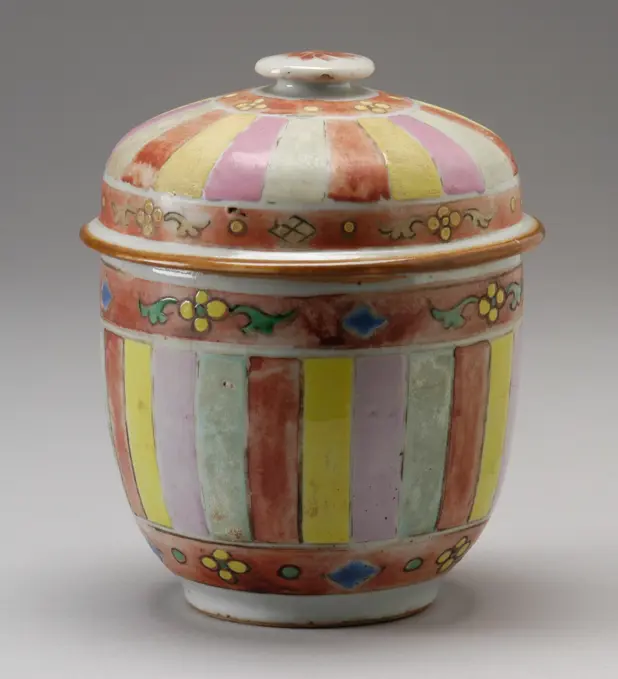
Two-Handled "Oak Leaf" Drug Jar with Male and Female Portraits , 1431. Workshop of Giunta di Tugio (Italian, c. 1382-1450). Tin-glazed earthenware (maiolica); overall: 20.4 cm (8 1/16 in.).Vase with Dragon amid Clouds early 18th century China Arguably the most well-known motif in Chinese art, the dragon is a multivalent symbol imbued with many layers of meaning, including protection, happiness, and fertility. In early Chinese art the dragon was understood as a symbol of the cardinal direction east, and it has long been associated with water, particularly lakes and rivers. The dragon also signifies imperial rule, and works decorated with five-clawed dragons are known to have been produced for use at court.. Vase with Dragon amid Clouds. China. early 18th century. Porcelain painted with copper red under transparent glaze (Jingdezhen ware). Qing dynasty (1644-1911), Yongzheng mark and period (1723-35). CeramicsVase. Sèvres Porcelain Manufactory; French, founded 1740. Date: 1904. Dimensions: 22.2 x 10.5 cm (8 3/4 x 4 1/8 in.). Porcelain with polychrome enamels. Origin: Sèvres. Museum: The Chicago Art Institute, Chicago, USA.Covered cylindrical beaker with leaf-motif, anonymous, c. 1680 - c. 1720 Cylindrical cup of porcelain, painted in underlaze blue. Decorated with a revolving, curly leaf motif interspersed with flower rosettes (tiger lily motif). Marked on the underside with an artemisia leaf in a double circle. Blue White. China porcelain. glaze. cobalt (mineral) painting / vitrification Cylindrical cup of porcelain, painted in underlaze blue. Decorated with a revolving, curly leaf motif interspersed with flower rosettes (tiger lily motif). Marked on the underside with an artemisia leaf in a double circle. Blue White. China porcelain. glaze. cobalt (mineral) painting / vitrificationCovered, ovoid jar with flower sprays, birds and butterflies, anonymous, c. 1700 - c. 1724 Wooden lid of egg -shaped lid jar. Opened with a flower branch motif and six flowers and has a medallion of openwork Jade. Famle Verte. China Cover: Jade (Rock). Cover: Wood (Plant Material) painting / vitrification Wooden lid of egg -shaped lid jar. Opened with a flower branch motif and six flowers and has a medallion of openwork Jade. Famle Verte. China Cover: Jade (Rock). Cover: Wood (Plant Material) painting / vitrificationEwer With Two figures in a Landscapes, Scrolls and Tulip Motif. Porcelain gift jug with a spherical body, spreading neck and C-shaped ear, painted in underglaze blue. On the abdomen a continuous landscape with two standing people between trees, flowering plants and rocks. The shoulder with a decorative band. A tulip motif twice on the neck. The ear with tendrils; In the ear a metal pen, probably from a lid. A chip in the edge; Edge slightly worn down, possibly by a now missing frame. Arita, blue-white.Vase with auspicious animals. Culture: China. Dimensions: H. 12 3/4 in. (32.4 cm); W. 7 1/4 in. (18.4 cm); D. 7 1/4 in. (18.4 cm). Date: 17th century. Museum: Metropolitan Museum of Art, New York, USA.Beaker vase with powder blue, flower sprays, antiquities and precious objects.Bekvase of porcelain with spreading neck and foot, painted in underglaze blue and on the glaze blue, red, green, yellow, eggplant and black. The outside of the vase is covered with bleu poudré (powder blue) with four compartments saved in this; Two with a flower branch (prunus and peony) and insects, two with valuables (pearl, artemisiablad), antiques (ruyi-scepter, vase, rolls, books, whaler burner) and an attribute of one of the eight immortals (impeller). Cabinet set with AK-NM-6364. Bleu poudré with famille verte.Jar ca. 1700-1710 Chinese, for European market The gift of the Hans Syz Collection in 1995 endowed the Museum with nearly three hundred examples of European and Asian ceramics meticulously acquired by Swiss-born collector Dr. Syz (1894-1991) to chart the migration of models and patterns from East to West. Documenting a continuous process of influence and adaptation, these pieces provide a discriminating review of the nuances of stylistic change resulting from three centuries of trade.. Jar 208248Cylindrical bottle vase with warriors, anonymous, c. 1800 - c. 1924 Cilidrian, bottle -shaped vase of porcelain with flat shoulder and short neck, painted in underlaze blue and red. On the wall a continuous image of warriors in a landscape, two on horseback, a look between two rocks, in the sky a cloudy; A band with Ruyi motif around the shoulder; The neck with a decorative edge. A double circle on the bottom; Wooden cap. Underglaze blue and copper red. China porcelain. glaze. cobalt (mineral). copper (metal) painting / vitrification Cilidrian, bottle -shaped vase of porcelain with flat shoulder and short neck, painted in underlaze blue and red. On the wall a continuous image of warriors in a landscape, two on horseback, a look between two rocks, in the sky a cloudy; A band with Ruyi motif around the shoulder; The neck with a decorative edge. A double circle on the bottom; Wooden cap. Underglaze blue and copper red. China porcelain. glaze. cobalt (mineral). copper (metal) painting / viVase. Blue monochrome and golden decor covered porcelain, colorless covered interior, Qing dynasty (1644-1912). Provenance: China. Paris, Cernuschi museum. 78838-25 Asian art, Chinese art, art of living, ceramic, fine ceramic, Ching dynasty, Qing dynasty, tsing dynasty, porcelain, container, vaseVase or hunting bottle of painted porcelain, manufacture Oud-Loosdrecht, c. 1774 - c. 1784 Porcelain hunting bottle. The bottle has a flattened, ellips -shaped abdomen, which gradually turns into a high neck. Painted with a flower bouquet in Sepia. Loosdrecht porcelain Porcelain hunting bottle. The bottle has a flattened, ellips -shaped abdomen, which gradually turns into a high neck. Painted with a flower bouquet in Sepia. Loosdrecht porcelainLidded Vase; about 1662 - 1722; Porcelain, polychrome enamel decoration; 35 cm (13 3,4 in.)Pear-Shaped (Yuhuchun) Bottle with Everted Lip 1399-1499 Vietnam. Glazed stoneware with cobalt-blue underglaze .Small covered wine pot or teapot 1662-1722 Chinese. Small covered wine pot or teapot. Chinese , Qing Dynasty, Kangxi period. Chinese. 1662-1722. Porcelain painted in underglaze blue.. CeramicsLid of pot with lid of multicolored painted faïence.Lid of pot with lid of faïence. Multicolored painted with flowers on a blue fond.Bottle 18th century British. Bottle. British. 18th century. Soft-paste porcelain. Ceramics-PorcelainFaience tea lid with Tin, Anonymous, c. 1750 - c. 1770 FaaMence tea drill with tin lid. Multicolored painted. Delft tin (metal) FaaMence tea drill with tin lid. Multicolored painted. Delft tin (metal)Apothecary Jar ca. 1700 Mexican. Apothecary Jar 3459Ginger Jar. China, Qing dynasty, 18th-19th century. Furnishings; Serviceware. Wheel-thrown porcelain with overglaze enamel, underglaze blue decoration, and clear glazeChinese, Perfume bottle, porcelain.Vase with Figures in Landscape ca. 1660-80 Japan In addition to the shape, both the theme of scholars in a landscape and the swirling clouds in the composition reflect the importance of Chinese prototypes in early Japanese porcelain.. Vase with Figures in Landscape. Japan. ca. 1660-80. Porcelain painted with cobalt blue under transparent glaze (Hizen ware). Edo period (1615-1868). CeramicsBUIRE. Porcelain dressed in a blue monochrome cover with golden decor. Paris, Cernuschi museum. 78837-18 Asian art, Chinese art, bun, porcelain, containerUrn, c. 1770. England, South Staffordshire, 18th century. Enamel; overall: 22.6 x 9.1 x 9.3 cm (8 7/8 x 3 9/16 x 3 11/16 in.).Orza de farmacia, 18th century, Ceramics (earthenware decorated in blue, with the emblem of the order of the Augustinians and plant motifs), by Tavalera de la Reina (Toledo), Height: 20 cm. Museum: Museo Fundación Francisco Godia, Barcelona, Cataluña, España.Small vase in the shape of double gourd. unknown, craftsmanOvoid covered jar with flower sprays and narrative scenes in medallions, anonymous, c. 1680 - c. 1720 Egg -shaped porcelain lid jar with a ribbed wall, painted in underlaze blue. On the wall a wide, ribbed band with four medallions with scenes saved: two women (long lips) on a terrace at a table 'go' playing; Two women, one with a flowerpot, and a boy (crazy) in an interior with a Qin on a table; Two women on a terrace, one standing with a fan, the other sitting at a table on which a book is located; Two women on a terrace, one dancing, the other looks sitting next to a table on which a book is located. On the shoulder a band with flower branches (Prunus, peony). Around the foot a band with flowering plants (Pauwlonia, Orchid, peony, peach, prunus, beautifulanjer). Marked on the underside with the six-character brand of Keizer Chenghua in a double circle. Glue residues on the bottom. Blue White. China porcelain. glaze. cobalt (mineral) painting / vitrification Egg -shaped porcelain lidOctagonal, Pear-Shaped Beakervase With Narrow Panels With Flowering Plants. Octagonal, pear-shaped cup earrase made of porcelain, with trumpet-shaped neck. Painted in underglaze blue. The wall is divided into eight elongated compartments with flowering plants; To the courses a bond with leaf raft. Under the edge a band with square boxes with flowering plants on rocks. Around the foot, inner and outer edge a bond with leaf refines. Blue White.Ewer with Paired Dragon amid Cloud Scrolls 1506-1521 China. Porcelain painted in overglaze green and yellow enamels .Hookah Base, c. 1700. India, Mughal Dynasty (1526-1756). Gold on blue glass; overall: 19.8 cm (7 13/16 in.).Vase 1830-70 American. Vase 9256Vase Necel, Franciszek (1868 1935)Covered jar with hoo-birds in panels on a ground of lotus and floral scrolls, anonymous, c. 1720 - c. 1770 Porcelain lid jar, painted in underly glaze blue and on the glaze red, black and gold. On the outer wall flower vines with a lotus vendal and a cartouche with a Hoo-Vogel alternately. Around the foot a band with pointed leaf motifs. Imari. Japan porcelain. glaze. cobalt (mineral). gold (metal) painting / gilding / vitrification Porcelain lid jar, painted in underly glaze blue and on the glaze red, black and gold. On the outer wall flower vines with a lotus vendal and a cartouche with a Hoo-Vogel alternately. Around the foot a band with pointed leaf motifs. Imari. Japan porcelain. glaze. cobalt (mineral). gold (metal) painting / gilding / vitrification. Vessels of this form are often referred to as pilgrim flasks because they resemble the bottles travellers carried on a strap hanging from their belt on long journeys. This one probably derives from silver models that no longer had any practical function, but instead simply embellished formally laid tables or sideboards.. Porcelain gift jug with spherical body, C-shaped ear and small, triangular spout in the edge. Painted in underglaze blue. On the abdomen a continuous representation with people in a landscape with rock, trees, plants, a flying bird and houses. A person has a flag in hand. On the shoulder a bond with tendrils. The shoulder with a tulip motif twice. On the ear tanks. Around the edge a later added silver frame with lid, annual letter Z (1859). Arita, blue-white.Chinese, Pair of Snuff Bottles, porcelain.Sugarpot with lid, with children playing. Pottery lid with red transfer decor. The pointed tapered lid decorated with hexagonal cartouches in which stylized leaf motif. The lid is awarded by an onion-shaped button with the same motif.Two vases. Meissener Porzellan Manufakturpainted decoration: attributed to Johann Ehrenfried Stadler (1701-1741)Meissen, c. 1725hard-paste porcelainVase with flowering branch motif (one of a pair) after 1872 Minton(s) Minton was the most important ceramics factory during the Victorian period and began exhibiting products at the first Great Exhibition of 1851. Founded in 1793 by Thomas Minton at Stoke-on-Trent, the firm initially specialized in transferware pottery before expanding under the ownership of Thomass son Herbert Minton, beginning in 1836. Under the ownership of Colin Minton Campbell, who succeeded his uncle in 1858, the factory became recognized as a specialist producer of Aesthetics movement porcelain, which were inspired by a rich array of exotic and eclectic decorative motifs.. Vase with flowering branch motif (one of a pair). British, Stoke-on-Trent, Staffordshire. after 1872. Porcelain. Ceramics-PorcelainVase Greenwood Pottery Company American 1883-86Vase;  19th century (1801-00-00-1900-00-00);Paderewski, Ignacy Jan (1860-1941), Paderewski, Ignacy Jan (1860-1941)-collection, qing (style), Chinese (culture), cloisonné, gift (provenance), lands, dishes, fish, Chinese artFlowers Floating Down an Autumn Stream Japan Edo period (1615-1868) View more. Flowers Floating Down an Autumn Stream. Japan. Earthenware with polychrome glaze (Ko-Kiyomizu ware). Edo period (1615-1868). CeramicsVase with Bird on Flowering Plum and Setting Sun mid-17th century China. Vase with Bird on Flowering Plum and Setting Sun 42391Vase. Culture: American. Decorator: Faience Manufacturing Company (American, New York, 1881-1892). Dimensions: H. 18 1/2 in. (47 cm). Date: 1886-90. Museum: Metropolitan Museum of Art, New York, USA.Tea bus, hexagonal, painted multi-colored with courses with Indian blums and Chinese. Hexagonal tea bus from painted porcelain. The vaulted ribs, the foot edge, the shoulder and the lid wall are decorated with a network with crosses in brown on a green fond, interrupted by the lid wall by reserves with at half rosette. The walls are painted with Indian blums, birds and butterflies on two courses a Chinese boy, one with a range, the other with a cup and saucer in both hands. The tea bus has been marked.Ginger jar with cover, one of a pair, 1662-1722, 11 3/8 × 5 3/8 × 5 3/8 in. (28.89 × 13.65 × 13.65 cm), Glazed porcelain, China, 17th-18th centuryCovered vase, from a five-piece garniture set, c. 1710, 17 1/4 x 7 15/16 x 8 1/2 in. (43.8 x 20.2 x 21.6 cm), Delftware with polychrome glazing, Netherlands, 18th century, A garniture is a set of items, usually vases, whose only purpose is to decorate, and five-piece garnitures were the most prestigious decoration for a mantelpiece or the top of a cupboard. This set was made in the Netherlands, but its bird and flower decoration, as well as its color scheme of blue and white with orange and green, draws inspiration from imported Chinese porcelain, which was widely admired but too expensive for most Dutch people at the time.Pair of templejarsWine Jug. Germany, Bayreuth. Date: 1695-1705. Dimensions: 29.5 × 15.2 cm (11 5/8 × 6 in.). Tin-glazed earthenware (faience) and pewter. Origin: Germany. Museum: The Chicago Art Institute, Chicago, USA.Cover of powder pot, anonymous, c. 1775 - c. 1800 Lid of a powder pot with blue Saxon pattern, unnoticed.  . Lid of a powder pot with blue Saxon pattern, unnoticed.  .Bottle vase with two continuous landscapes with figures, anonymous, c. 1650 - c. 1699 Bottle -shaped vase made of porcelain with bullet -shaped abdomen and slightly flared neck, painted in underly glaze blue. On the abdomen a continuous landscape with groups of people among rocks, trees and plants: two people under a parasol, one points to something that the other looks at; three people, one with a walking stick; A standing person who bends forward to two sitting people. A house in the background. On the neck a continuous landscape with a sitting person and two standing people, one with a banner and the other with a kind of vase. A proen on the bottom. Arita, Blauw-Wit. Japan porcelain. glaze. cobalt (mineral) painting / vitrification Bottle -shaped vase made of porcelain with bullet -shaped abdomen and slightly flared neck, painted in underly glaze blue. On the abdomen a continuous landscape with groups of people among rocks, trees and plants: two people under a parasol, one points toOvoid covered jar with women in a garden, anonymous, c. 1680 - c. 1720 Porcelain lid of egg -shaped lid jar, painted in underlaze blue. The lid decorated with two dancing boys (fools) in rocks and plants. A crack in the lid. Blue White. China porcelain. glaze. cobalt (mineral) painting / vitrification Porcelain lid of egg -shaped lid jar, painted in underlaze blue. The lid decorated with two dancing boys (fools) in rocks and plants. A crack in the lid. Blue White. China porcelain. glaze. cobalt (mineral) painting / vitrificationKettle on a burner stand, the ancient Moriaanshooft, c. 1765 - c. 1770 Komfoor van Faience. The Komfoor belongs to a boiler with InvNR. BK-1955-65-A. Delft . Komfoor van Faience. The Komfoor belongs to a boiler with InvNR. BK-1955-65-A. Delft .Elongated Bottle Vase (Meiping) with Peony Sprays 1115-1234 China. Cizhou ware; stoneware, slip-coated with overglaze painted decoration in iron brown .Established by the Institute for Southern Thai Studies in 1991, this unusually good museum, set in an attractive series of Thai sala-type buildings, features a library (mainly in Thai) on southern Thai culture, and a well-documented series of exhibits on southern culture including nang talung shadow puppets, musical instruments, textiles, basketry, household artifacts, fishing equipment, jewellery and weapons. There is also a suan yaa samunprai or natural herb and medicinal garden in the well-tended grounds.Ovoid Covered Jar With Chinese Ladies And Flower Pots. Egg-shaped porcelain lid pot, painted on the glaze in blue, red, green, yellow, eggplant and black. The wall is divided into four compartments with alternating a Chinese lady with a range in a fenced garden and a flowerpot with flowering plants (chrysanthemum), a rock and a banner. Above the foot a bond with flower drinks. The shoulder with a tire napkin interrupted by anti-demonies in cartouches (Qin, rolls, books, go game). The lid with antiques and napkin work. Famille Verte.White vase with blue decoration of flowers, knob vase vase crockery holder ceramic earthenware glaze, baked painted glazed part of cabinet set: baluster shaped body long narrow neck with protuberance above the center wide chalice mouth Rotterdam Delfshaven Middelland Heemraadssingel cabinet set Delft blue chinoiserie decorate home interior house at Heemraadssingel Rotterdam.Vase, spherical, painted in blue with landscape with Chinese figures, anonymous, c. 1630 - c. 1650 vase Spherical vase of blue painted majolica. The neck of the vase is missing. On the vase a landscape is painted with Chinese figures. A figure plays the violin, a dance, three sitting under a screen, three walking with a flag and two sitting on a couch. The vase is a soil find. Holland earthenware. tin glaze. lead glaze majolicaBarrel-Shaped Covered Jar With Flower Scrolls And Geometric Patterns. Bon-shaped pot of porcelain made up of three concave layers above each other, painted on the glaze in red, green, yellow, eggplant and black with flower drinks and geometric motifs. Each layer has a different decoration: the bottom is filled with lotus drinks, the middle with geometric motifs interrupted by cartouches with a flower branch, the upper with floral drinks saved in a red ground; Curl works around the foot. Famille Verte.Vase with painting of flowers, Firma Wed. N.S.A. Brantjes en Co., Philippus Lagrand, 1895 - 1904Jug with floral scrolls, anonymous, c. 1750 - c. 1824 Can of stoneware on a high base with a spherical body and long neck with a pinched spout. The C-shaped ear is attached to the neck and shoulder. Profiles on the neck and foot. Partly covered with cobalt blue. On the abdomen, saved in blue, an entry decoration of flower vines and tires with triangles. On the neck two tires with stamped heart shapes and a bond with a pressed zigzag line (Knibis). Blue lines on the neck and foot. Westerwald. Westerwald stoneware. glaze. cobalt (mineral) vitrification Can of stoneware on a high base with a spherical body and long neck with a pinched spout. The C-shaped ear is attached to the neck and shoulder. Profiles on the neck and foot. Partly covered with cobalt blue. On the abdomen, saved in blue, an entry decoration of flower vines and tires with triangles. On the neck two tires with stamped heart shapes and a bond with a pressed zigzag line (Knibis). Blue lines on the neck and foot. Westerwald. Incense Burner with Cover 1750 Japan Incense burners such as this were usually placed in the tokonoma alcove of a room both to scent the room and as decorative artworks. This oval-shaped incense burner has small legs, and a cover reticulated in maple-leaf forms to match the underglaze blue decoration of the body. The handle is a figure of a horse. The incense burner would have contained fine ash on top of which incense wood or incense mixture would have been burned. The delicate smoke of the burning incense would come through the reticulated maple leaves of the cover. The incense used would have provided a seasonal reference to autumn, along with the maple-leaf theme of the burner and other items displayed in the alcove, such as flowers and paintings or calligraphy.. Incense Burner with Cover. Japan. 1750. White porcelain decorated with blue under the glaze (Hirado ware). Edo period (1615-1868). CeramicsVase China. Vase 48682Baluster covered vase with landscapes in panels, anonymous, c. 1700 Balus -shaped lid vase made of porcelain, painted in underlaze blue. The belly is divided into five rows of lotus leaf -shaped cartouches with landscapes. A continuous landscape on the neck. The bell -shaped lid is divided into six compartments with landscapes. Above the foot, on the shoulder, the edge and the lid edge a band with a zigzag pattern. A few chips in the edge of the lid. Lid vase is part of a cupboard set. Blue White. China porcelain. glaze. cobalt (mineral) painting / vitrification Balus -shaped lid vase made of porcelain, painted in underlaze blue. The belly is divided into five rows of lotus leaf -shaped cartouches with landscapes. A continuous landscape on the neck. The bell -shaped lid is divided into six compartments with landscapes. Above the foot, on the shoulder, the edge and the lid edge a band with a zigzag pattern. A few chips in the edge of the lid. Lid vase is part of a cupboard set. Blue WhiMosquito Smoker 19th century Minzan. Mosquito Smoker. Minzan. Japan. 19th century. Pottery covered with glaze and designs (Sanuki ware). Edo (1615-1868) or Meiji period (1868-1912). CeramicsVase. unknown, craftsmanVase first half of the 19th century China. Vase 48727Vase China. Vase 40745Bottle vase with stopper 1862 Crown Derby The history of the Derby porcelain manufactory can generally be divided into two periods. The old Derby porcelain was produced from 1750 to 1848, and was foremost distinguished by the ownership of William Duesbury I and II. When the original factory closed in 1848, a number of former workers established a separate smaller factory at King Street, Derby, using Crown Derbys original molds and patterns and oftentimes incorporating the factory marks on its wares. Around 1876, a separate company established a factory at Osmaston Road under the name Derby Crown Porcelain Company (and eventually bought the King Street factory in 1935), although the firm did not being producing commercial pieces until two years later. In 1890, the factory was granted the privilege of using the title "Royal Crown Derby Porcelain Company." Although the new Crown Derby continued to produce the firms old eighteenth-century Japan patterns, it became known for making vesselVase (one of a pair). Culture: German, Meissen. Decorator: Ignaz Preissler (1676-1741). Dimensions: Overall (confirmed): 8 9/16 × 4 7/16 × 3 3/4 in. (21.7 × 11.3 × 9.5 cm). Factory: Meissen Manufactory (German, 1710-present). Factory director: Böttger Period (1713-1720). Date: ca. 1720-25. Museum: Metropolitan Museum of Art, New York, USA.Sleeve vase, anonymous, c. 1635 - c. 1650 Porcelain cylindrical vase (roller wagon) with a wide, spreading neck, painted in under -glaze blue. On the wall a continuous river landscape with mountains, trees, rocks, a fishing boat and a pavilion. Here a dignitarary and his entourage. He meets a fisherman on the banks of the river. It is probably king of the Zhou-Rijk the wise hermit Jiang Taigong. Two boys playing and a servant next to the group of men. A woman looks around the corner of the pavilion, standing next to a prunus tree and a fence made of branches. The shoulder with a breached band with tenders. On the edge a band with hanging, pointed leaf motifs. A crack in the edge. Transitional porcelain in blue and white. China porcelain. glaze. cobalt (mineral) painting / vitrification Porcelain cylindrical vase (roller wagon) with a wide, spreading neck, painted in under -glaze blue. On the wall a continuous river landscape with mountains, trees, rocks, a fishing boat and a pavilion. Box with Diaper Patterns and Flowering Plants in a Panel Decoration. Lid of box of stoneware, painted in underglaze blue and on the glaze red and green. The top of the lid with a modeled, scalloped cartouche with a landscape with mountains and trees. A chip in the edge of the box. Decoration Following the Chinese squirrch porcelain.Food warmer ca. 1760 Doccia Porcelain Manufactory Italian. Food warmer 206400Anonymous, Buire (usual name), 1500. CERUNUSCHI museum, Asia Museum of Asia in the city of Paris.Dish;  19th century (1801-00-00-1900-00-00);Chinese, Pair of Famille Verte Vases, Yung Chêng Period (1723-1735), porcelain.Candlestick With Large Leaves, Flower Sprays and Birds. Candlestick of porcelain with a lobed, round foot, layered handle and cylindrical candle holder, painted in underglaze blue and on the glaze blue, red, pink, green, yellow, brown, black and gold. The candlestick is decorated with a 'Tobacco Leaf' pattern of large leaves, flower branches and birds. European forms with email colors.. Can of porcelain with ball-shaped body, C-shaped ear and small, triangular spout from the edge, painted in underglaze blue. The belly is covered with 'Karakusa' tanks containing three scalloped cartouches in it. The middle cat shower with two men in a landscape, one with a parasol and a range, the other with a collapsed parasol and a dog. Left of this a cartouche with cranes in a landscape with trees and rocks. The third cartouche with different birds in a landscape with a pavilion, mountains and a pond. The neck and the ear with flower drinks. A hole in the top of the ear. Arita, blue-white.Tankard, 1728, 5 3/8 x 5 1/8 x 4 9/16 in. (13.65 x 13.02 x 11.59 cm), Glazed ceramic, England, 18th centuryVase;  19th century (1801-00-00-1900-00-00);TIBOR CHINO CON FLORES. Location: PALACIO REAL-INTERIOR. LA GRANJA DE SAN ILDEFONSO. SEGOVIA. SPANIEN.Jug with the monogram 'GR' and horses, anonymous, c. 1710 Jug of stoneware on a high base with a spherical body and wide neck. The C-shaped ear is attached to the neck and shoulder. A few profiles on the neck and foot. Partly covered with cobalt blue. On the belly in relief a printed and imposed monogram 'gr' (George Rex, or King George of England) in a medallion with a rkoon, birds and flower vines. On either side of the monogram, an Ingrift Medallon with a prancing horse. Flower vines between the courses. A pewter frame with lid is attached to the ear. On the inside a beaten brand (unreadable). Westerwald. Westerwald Stoneware. Glaze. Cobalt (Mineral). frame: tin (metal) vitrification Jug of stoneware on a high base with a spherical body and wide neck. The C-shaped ear is attached to the neck and shoulder. A few profiles on the neck and foot. Partly covered with cobalt blue. On the belly in relief a printed and imposed monogram 'gr' (George Rex, or King George of England) in a medallVase with Loop Handles, Peony Scrolls, Eight Buddhist Emblems, and Waves 1736-1795 China. Porcelain painted in underglaze blue .Covered Tea Carrier with Design of Autumn Grasses. Anonymous. Japan, 19th century. Lacquer. Red lacquer with gold leaves, grasses, and flowersPowder box. Culture: American. Dimensions: 4 9/16 × 3 7/8 in. (11.6 × 9.8 cm). Manufacturer: New England Glass Company (American, East Cambridge, Massachusetts, 1818-1888). Date: 1866-70. Museum: Metropolitan Museum of Art, New York, USA.Tea Caddy, c. 1735. Meissen Porcelain Factory (German). Porcelain; overall: 10.7 x 7.5 x 5.1 cm (4 3/16 x 2 15/16 x 2 in.).Coffeepot. Culture: Austrian, Vienna. Dimensions: 7 × 6 1/4 in. (17.8 × 15.9 cm). Factory: Vienna. Factory director: Du Paquier period (1718-1744). Date: ca. 1720. Museum: Metropolitan Museum of Art, New York, USA.Vase (one of a pair) China. Vase (one of a pair) 40628Scent bottle ca. 1750-55 Saint James's Factory. Scent bottle. British, London. ca. 1750-55. Soft-paste porcelain. Ceramics-PorcelainTripod incense burner ca. late 7th-first half of the 8th century China. Tripod incense burner 42384Water pot for tea (Mizusashi). Ceramic. Japan, 19th century. Paris, Cernuschi museum. 59521-7 Asian art, blue, ceramic, lid, water, mizusashi, decorative motif, pot, 19th century, the. Theo Colenbrander was the artistic mastermind of the Rozenburg earthenware factory in The Hague. His designs exhibit great freedom in both form and decoration. The slender, ribbed shape of these vases recalls bamboo. The ornamentation is modern: abstractly rendered floral and plant motifs in bright colours. Their shapes, however, are quite old-fashioned. It is a garniture (set) of five vases for display atop a cabinet.Edouard Dammouse (1850-1903). Vase mounted. Enameled terracotta and gilded bronze, 1876-1881. Museum of Fine Arts of the City of Paris, Petit Palais. VASE MONTE Decorative art, Asian Inspiration, Fantastic Bete, Dore Bronze, Decorative Art, Dog, Emaillee, Enamed, Fantasy Creature, Gilded Bronze, Gilt, Grape Cluster, Asian Inspiration, Lion, People in Nature, Terracotta, Terracotta, Vase, Vase, Vase Monte , dog, grapeVase with dragons amid floral sprays early 18th century China. Vase with dragons amid floral sprays 46330Excerpt of a pharmacist's jar made of white -baking earthenware, with a decoration of branches, flowers and fruits in blue, yellow, green, orange and brown, over which a banner with the inscription 'r Ob de Ribes' (berry -jelly), Anonymous, 1600 - 1650  Northern Netherlands earthenware. glaze majolica  Northern Netherlands earthenware. glaze majolicaCovered Hexagonal Lobed Jar with Dragons Chasing a Flaming Pearl 1573-1620 China. Porcelain painted in underglaze blue and overglaze polychrome enamels .Blue and white vessel from the Qing Dynasty, China. Dated 19th CenturyTureen with phoenixes in landscape 1725-30 Vienna The size of this tureen and the high quality of its painted decoration make it as an exceptional example from the manufactorys middle period. It is painted in the colors and style of Chinese famille verte porcelains, in which green and red predominate; the phoenix and fence motifs derive from Chinese examples. The distinctive handles in the form of turned wood knobs, which are echoed in the shape of the finial, were a Du Paquier invention.. Tureen with phoenixes in landscape 208454Vase. Culture: China. Dimensions: H. 8 1/2 in. (12.6 cm); W. 4 in. (10.2 cm). Museum: Metropolitan Museum of Art, New York, USA.Covered Jar. China, Qing dynasty, Yung-chen period, 1723-1735. Furnishings; Serviceware. Stoneware with red, yellow, pink, and green painted decoration