Vintage Decorative Metalwork

A range of ornate brass and silver objects, including buckles and utensils, highlighting craftsmanship and historical design from various eras.
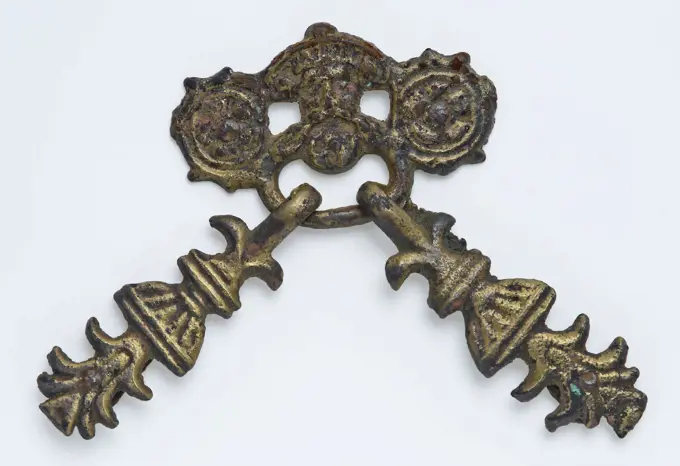
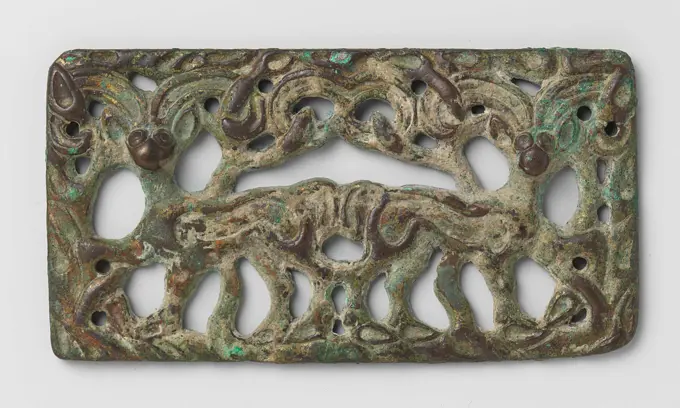
Brass belt buckle or belt hanger embossed in relief: man's head, flowers and vases, belt fittings clothing accessory clothing ground find brass metal, archeology Rotterdam Stadscentrum Stadsdriehoek Beursplein Soil discovery Beursplein (Koopgoot).
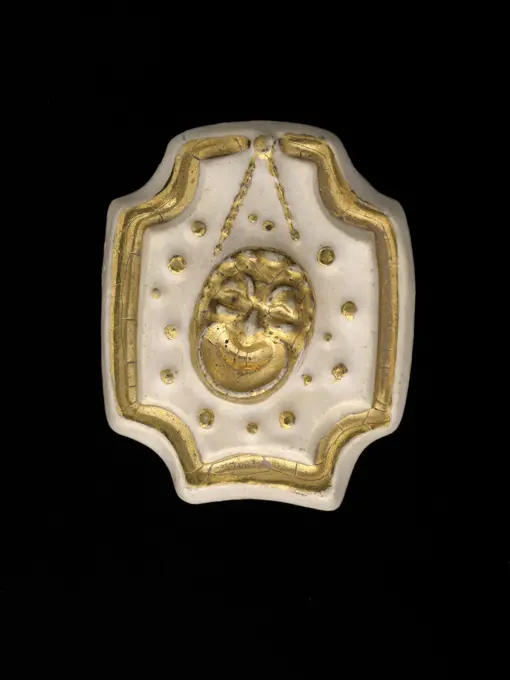
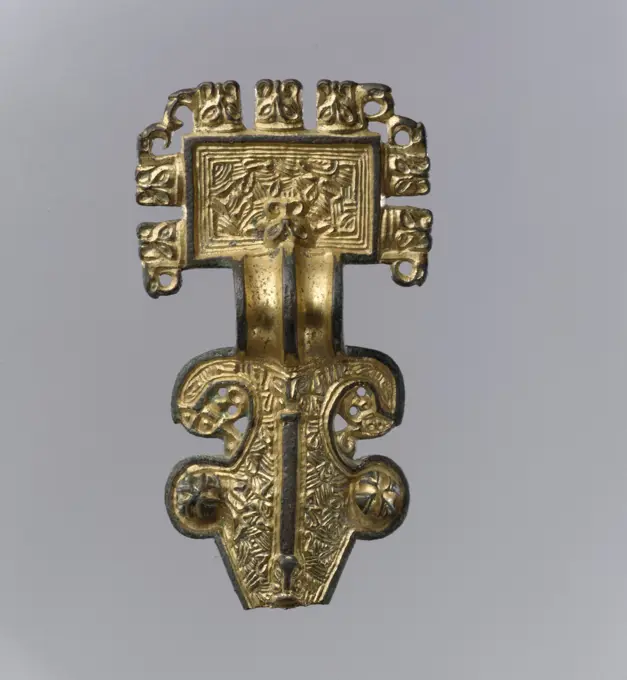
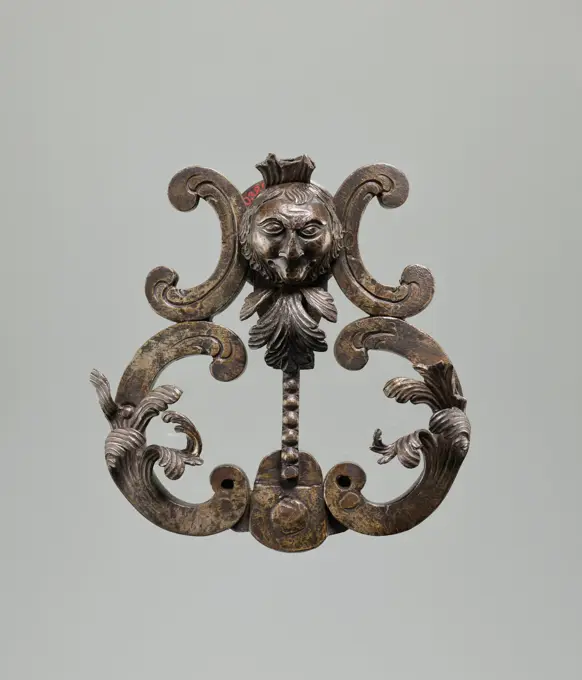
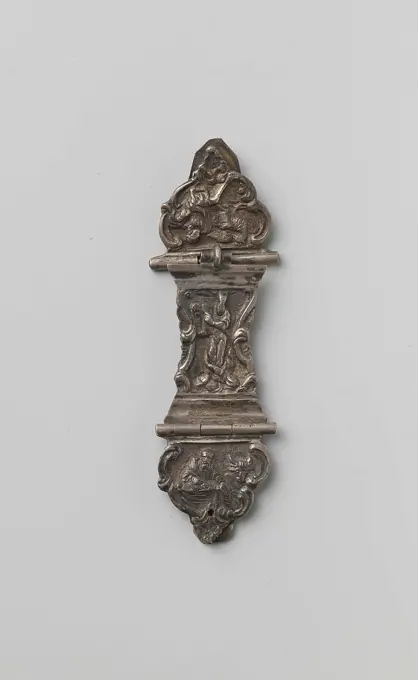
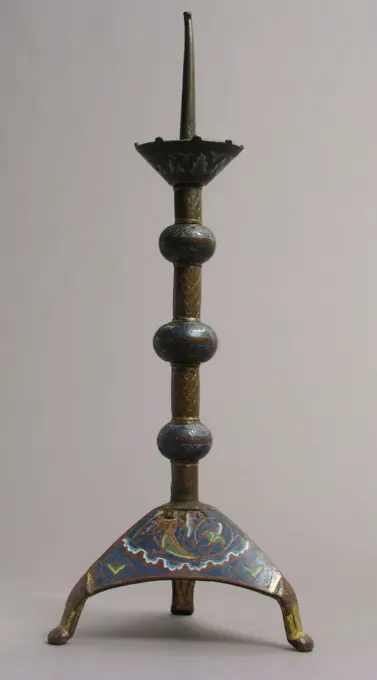
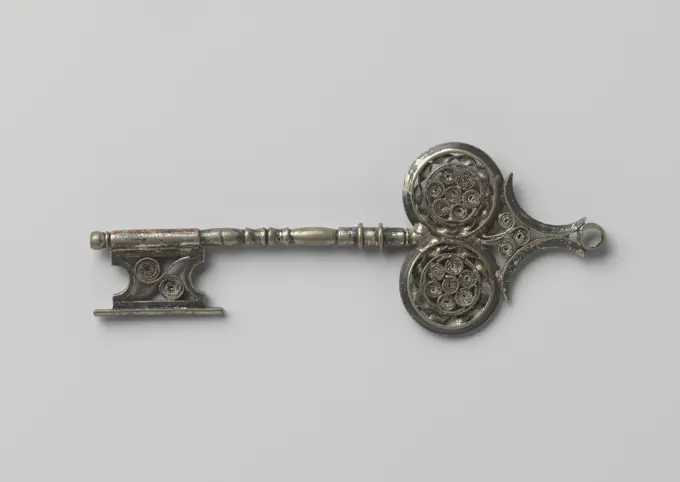
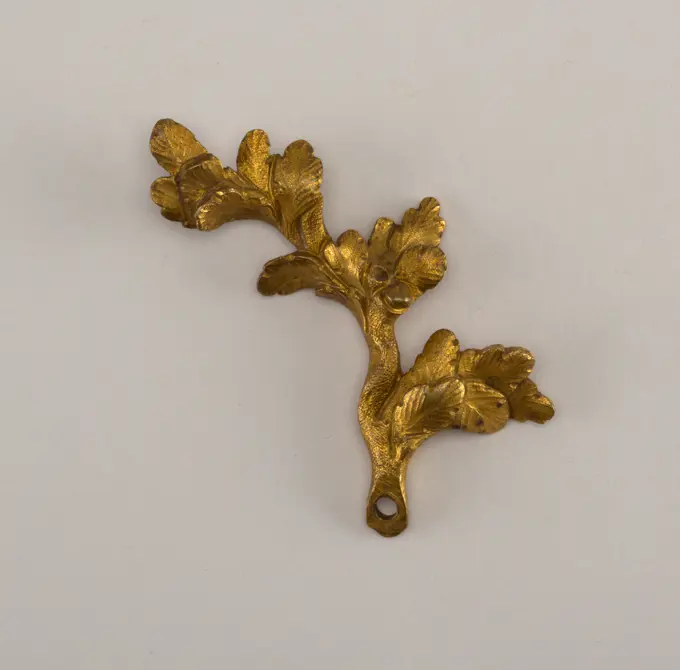
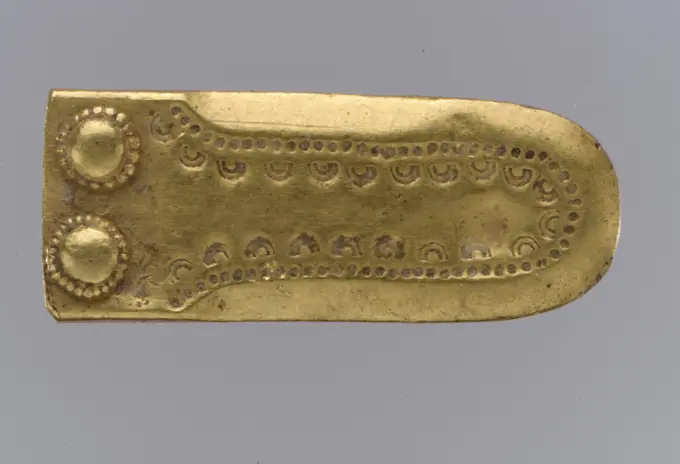
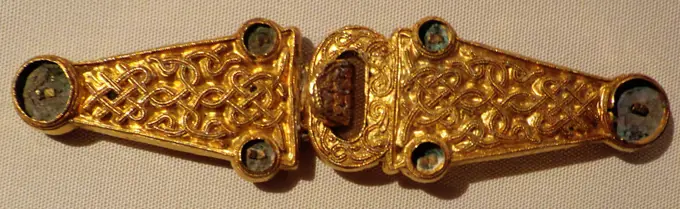
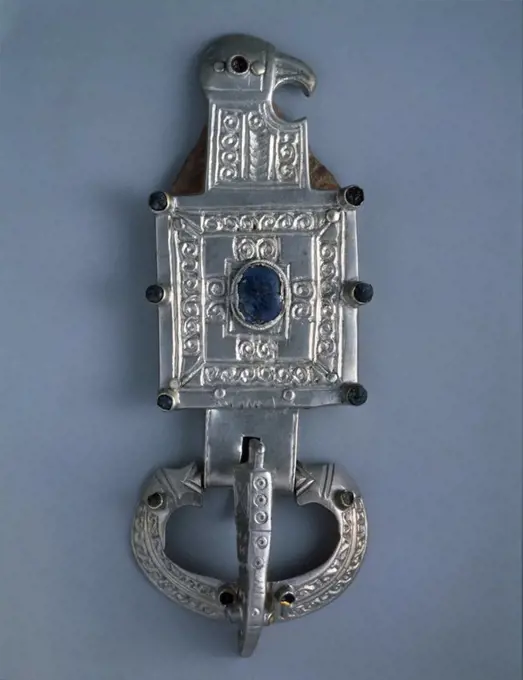
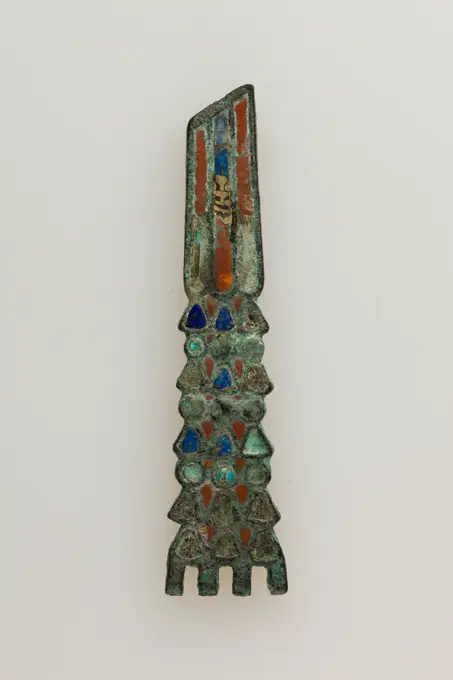
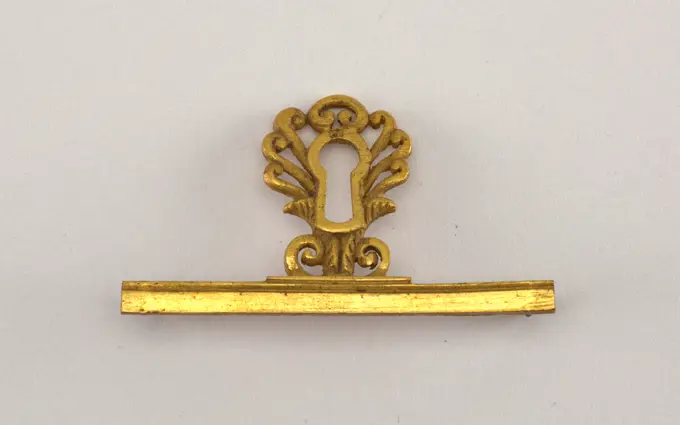
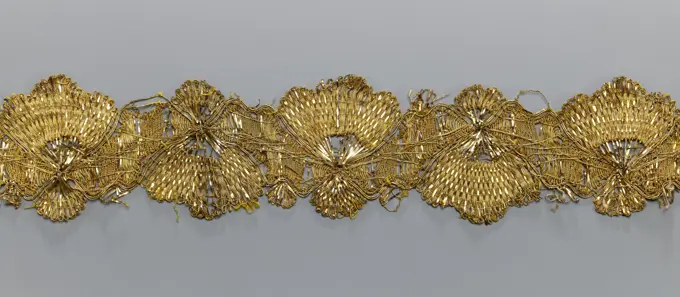
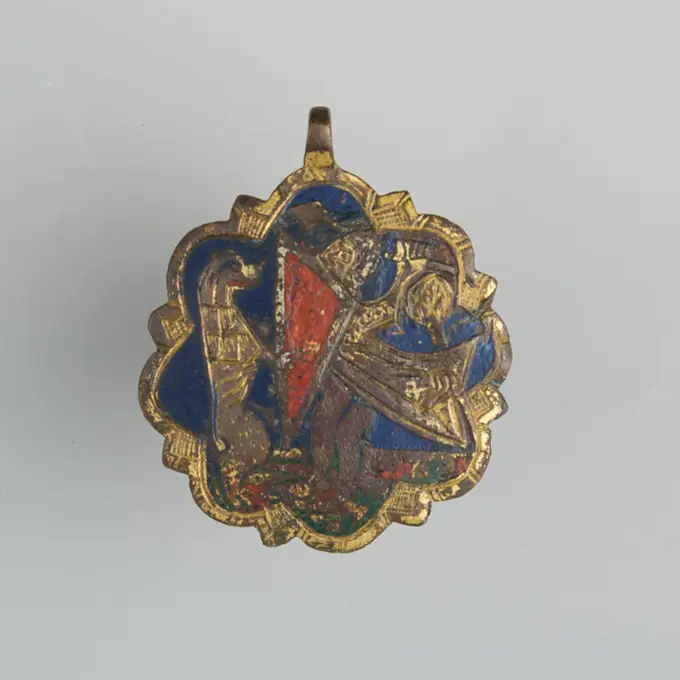
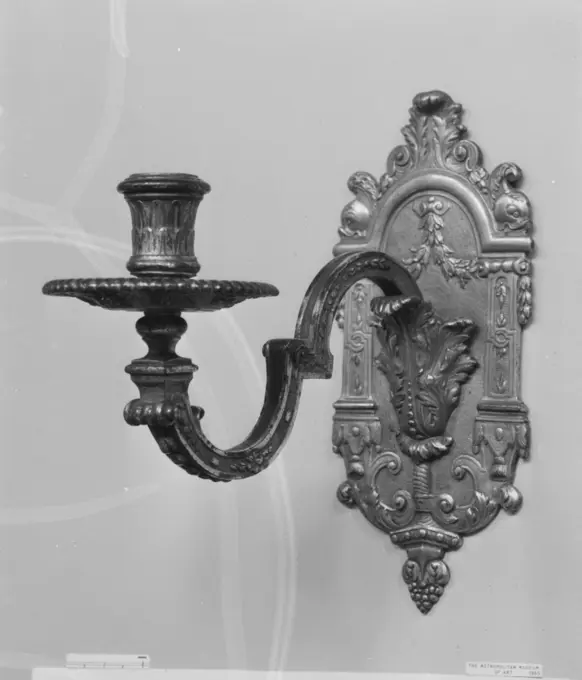
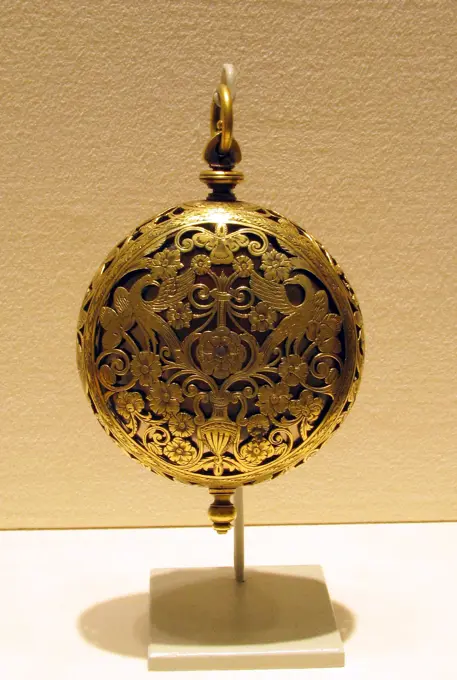
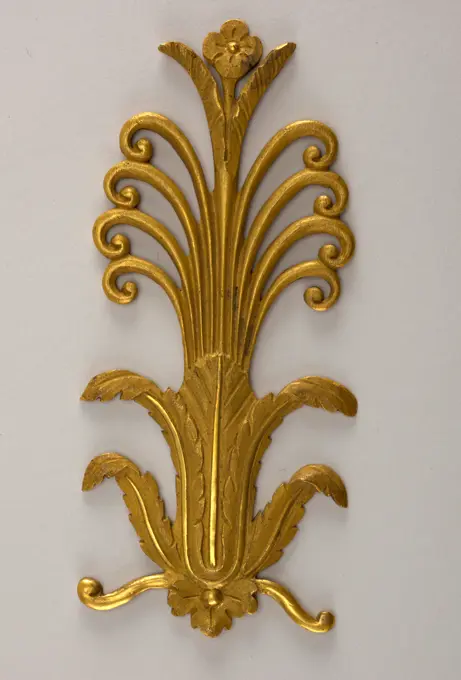
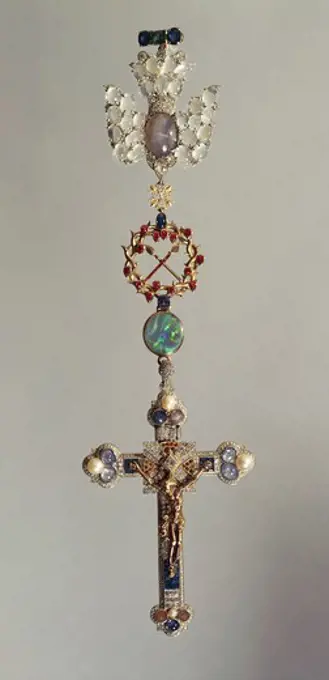
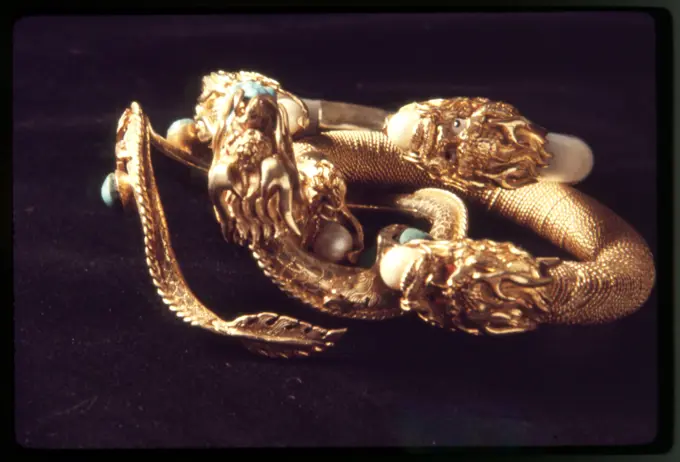
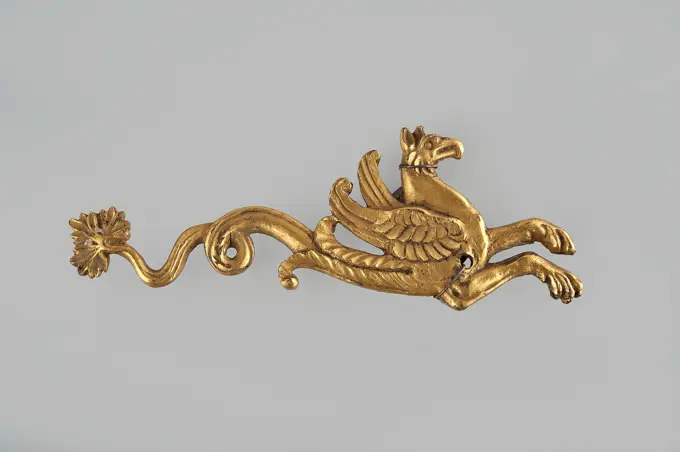
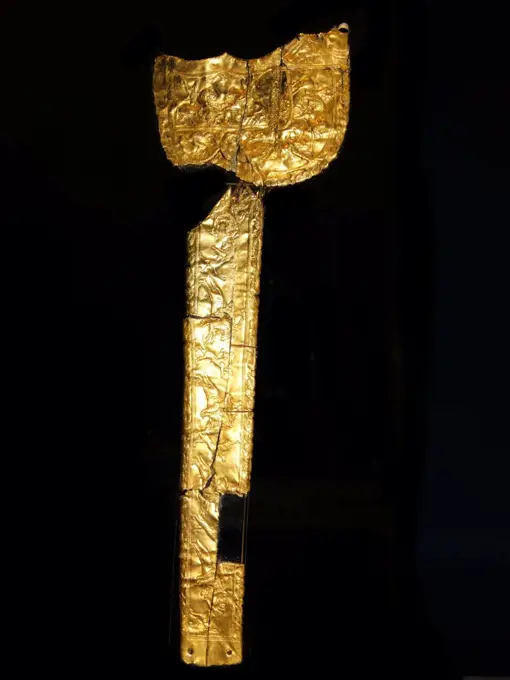
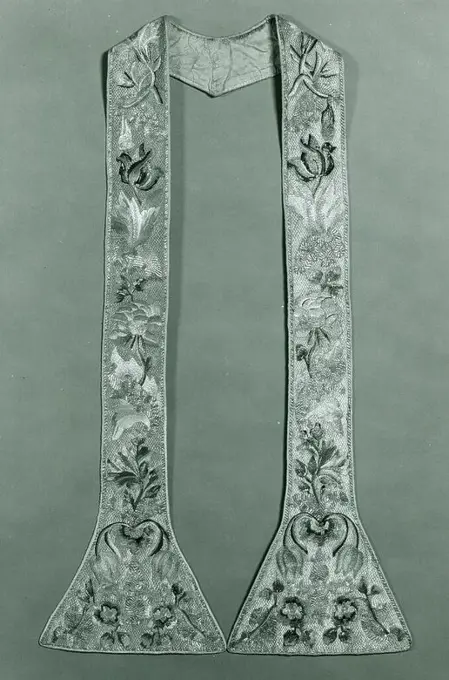
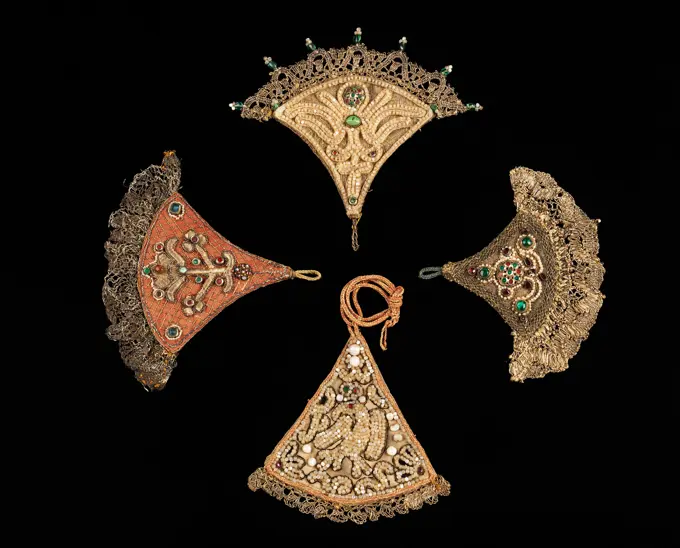
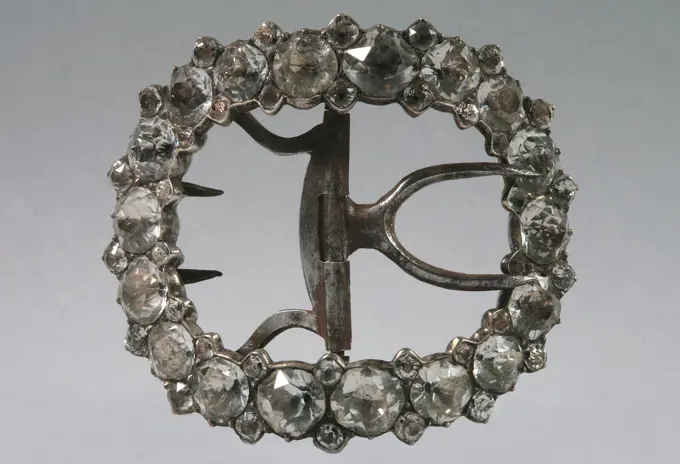
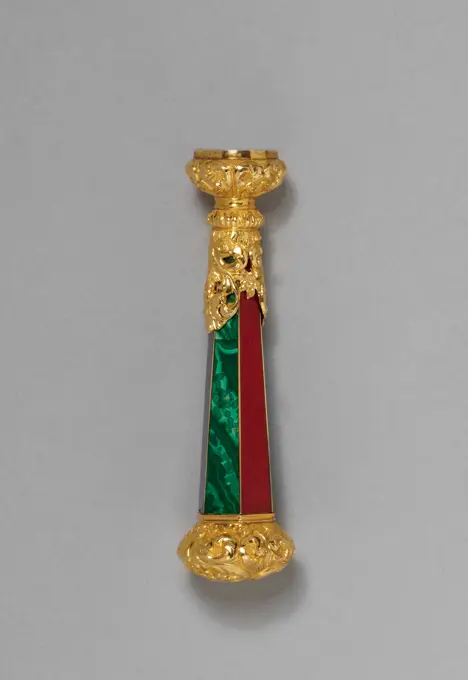
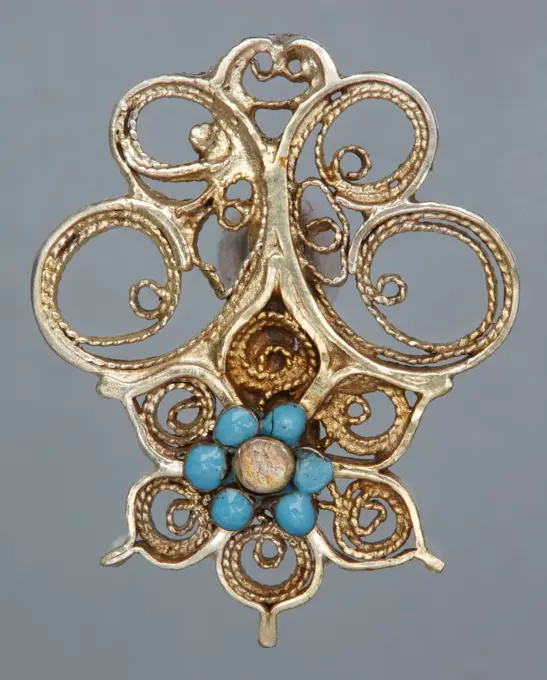
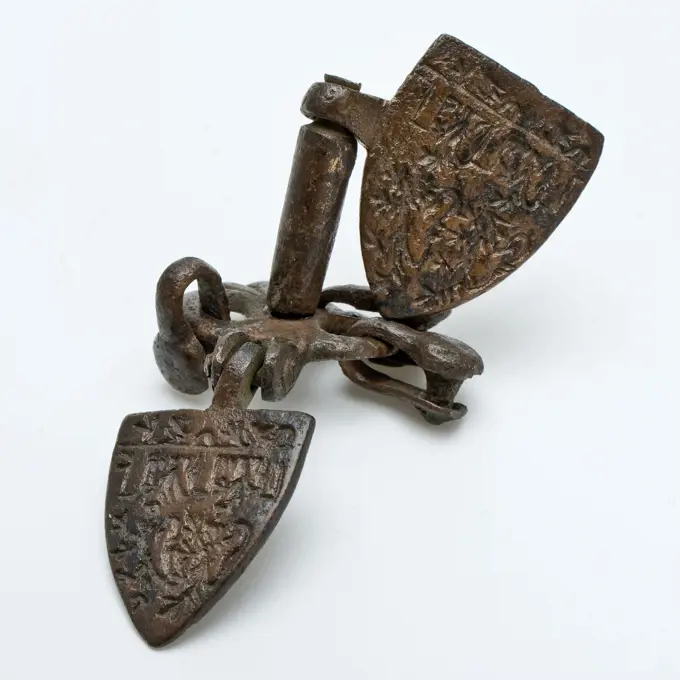
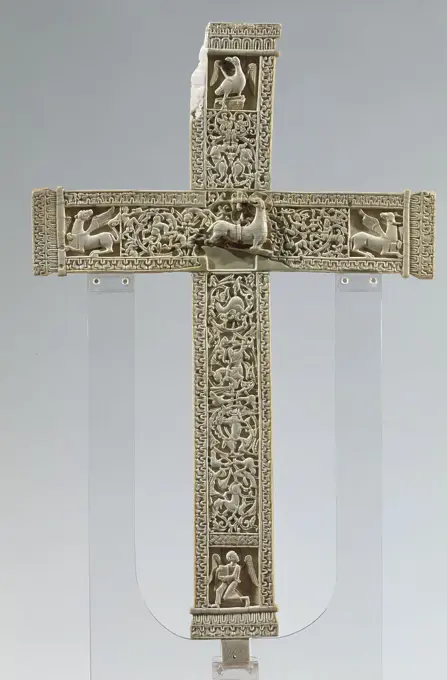
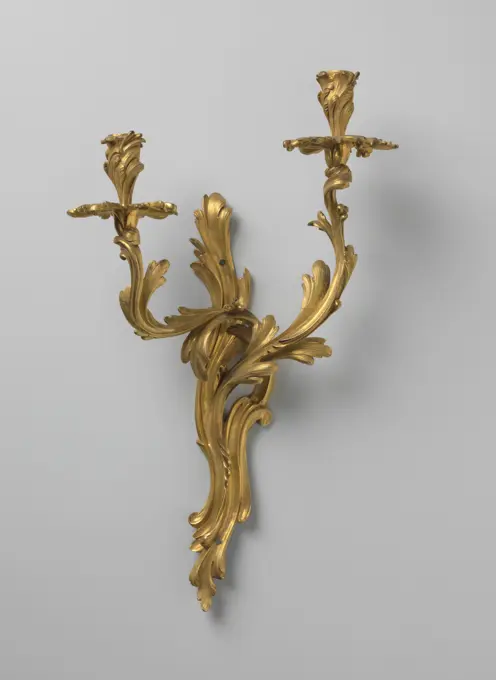
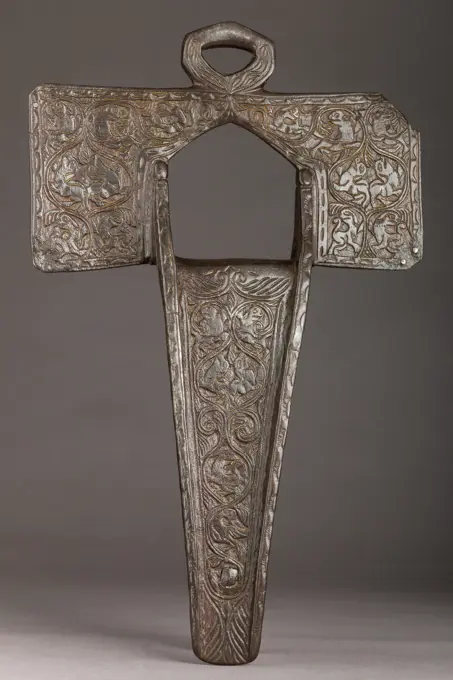
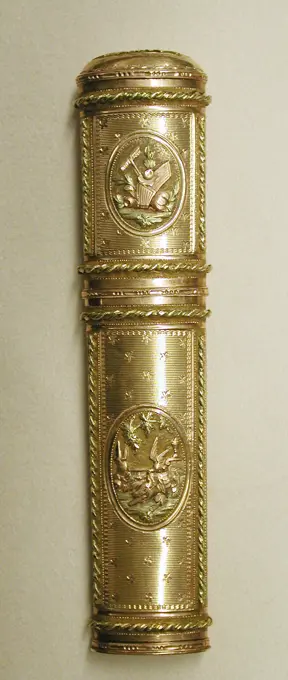
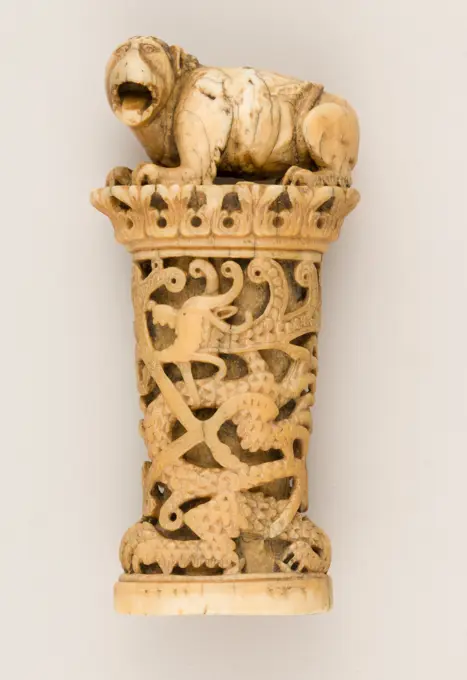
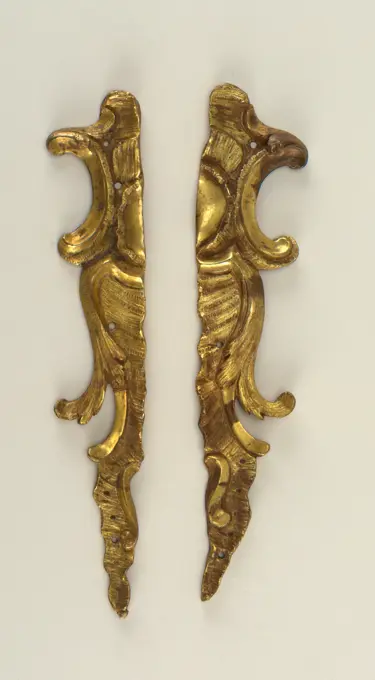
MountBrass belt buckle or belt hanger embossed in relief: man's head, flowers and vases, belt fittings clothing accessory clothing ground find brass metal, archeology Rotterdam Stadscentrum Stadsdriehoek Beursplein Soil discovery Beursplein (Koopgoot).Silver spoon and fork ca. 3rd century A.D. Roman This elegant and unusual eating implement doubles as both a spoon and a fork, the latter intended more for picking up food from a serving dish than for eating with from one's own plate. The handle is decorated with a spotted panther, an animal often associated with the god Dionysus.. Silver spoon and fork. Roman. ca. 3rd century A.D.. silver. Imperial. Gold and SilverPalmette, HalfPull; 1904-21-14Mordant German, Saxony 17th century View more. Mordant. German, Saxony. 17th century. Brass. Miscellaneous-Buckles & OrnamentRené Mittler. "Golden mask" pin. Golden white ceramics, decorated with ancient comedy mask; Pin on metal circular plate on the back, 1940-1944. Galliera, fashion museum of the city of Paris. Commedia art mask. Accessory, jewel, white, spindle, ceramic, gild, feminine, maskHeaddressMountBliżej Kultury unknownMountSquare-Headed Bow Brooch 500-600 Anglo-Saxon This brooch displays the Anglo-Saxon preference for lavish decoration, with a particular emphasis on fantastic animal forms. Dividing the foot is a strip of niello (a black substance containing silver, copper, lead, and sulphur) terminating in an animals head, and above the foot is a pair of stylized animal heads with gaping jaws.. Square-Headed Bow Brooch 466124Belt buckle 1840s European. Belt buckle 122025Triangular brisket made of light green silk, decorated with silver mesh on which floral appliques of multicolor chenille. Triangular brisket of light green satin lined with natural linen. Fronted in front with a meshy tissue of silver wire in flat binding on which appliques in orange, pink, white and yellow chenille (flowers) with green leaves from Chenille. Decoration: at the top in the middle of an applique of a flower in orange, pink, cream, blue and green silk and silver wire in fall stitch. The flower has a brown beige stem and green, beige, blue with pink, silver and light and dark green leaves. On either side of the floral bows of strips this paper wounded with silver thread around a silk core. Under the flower applique a V-shaped ornament of loosened band from a silverware to a sides core (2 cm wide). Below is a symmetrical constructed ornament with bows in the middle and floral chenille appliques on either side. The Devant-de-Gorge ends in a heart-shaped point in which pink anStola with gold bormental in high relief of a horn of abundance., 1700 - 1725 Stola with gold boring in high relief of a horn of abundance. Model: stirrup -shaped with cross pieces on which the book of the seven stamps, the cross and the lamb against a jet wreath. Over the length a volute drink with roses that come from a stocky horn of abundance, with godrons and wounded with drapery, a pomegranate and grape chocolas hang over the edge. Finished with gold galon and gold frain and some forces on the relief. Europe, first quarter of the 18th century. Europe . embroidering Stola with gold boring in high relief of a horn of abundance. Model: stirrup -shaped with cross pieces on which the book of the seven stamps, the cross and the lamb against a jet wreath. Over the length a volute drink with roses that come from a stocky horn of abundance, with godrons and wounded with drapery, a pomegranate and grape chocolas hang over the edge. Finished with gold galon and gold frain and some forces onPendant 6th-7th century Langobardic. Pendant 465010 Langobardic, Pendant, 6th7th century, Gold, Overall: 1 x 13/16 x 3/8 in., 0.1oz. (2.6 x 2 x 0.9 cm, 4g). The Metropolitan Museum of Art, New York. Gift of J. Pierpont Morgan, 1917 (17.191.30)List fragment: Gilded list of pâte ornaments, left style., C. 1700 - c. 1899 frame Gilded list of oak leaves with acorns. List part, left style. With written on the back: 'Left or by, no. 2 left'.  wood (plant material). gold leaf gildingTriangular breastpiece of light green silk, decorated with silver foster on which flower appliques of multicolored chenille, anonymous, c. 1750 - c. 1775 Triangular breastpiece made of light green satin with natural linen. Decorated at the front with a mesh -like fabric of silver wire in flat binding on which appliques in orange, pink, white and yellow Chenille (flowers) with green leaves from Chenille. Decoration: at the top of an Applique of a flower in orange, pink, cream, blue and green silk and silver thread in an incentive. The flower has a brown beige stem and green, beige, blue with pink, silver and light and dark green leaves. On either side of the flowers of strips of strips, this paper wounded with silver thread around a silk core. Under the Bloemenapplique a V-shaped ornament of loose-woven strap of silver drink around a silk core (2 cm wide). Below a symmetrical ornament with bows in the middle and floral Chenille appliques on either side. The Devant-de-Gorge ends in a heaBalance Cock / Coque De Montre (probably France); gilt brassBone from the gate;  2 after. XVII century (1650-00-00-1700-00-00);Book lock with representation of Aaron. Church lock of silver, with representation of Aaron. Signature: We, and Minerva head.RodGUARNICION DE UN ESPADIN S XVIII. Location: ALCAZAR / MUSEO DEL EJERCITO-COLECCIÓN. Toledo. SPANIEN.Breastplate;  1st half 19th century (1801-00-00-1850-00-00);Candlestick ca. 1190-1200 French. Candlestick. French. ca. 1190-1200. Copper: engraved, scraped, stippled and gilt; champlevé enamel: dark and medium blue, green, yellow, red, and white.. Made in Limoges, France. Enamels-ChamplevéSiersleutel, c. 1800 - c. 1900 Decorative key of which the handle consists of two side -by -side circles on which two backs are placed half moons, crowned by an eye. The stem is profiled. The beard is formed from two vertical, parallel lines of parallel, sealed up and below by two semi -circles lying inwards. Handle and beard filled with filig train work.  silver (metal) filigree Decorative key of which the handle consists of two side -by -side circles on which two backs are placed half moons, crowned by an eye. The stem is profiled. The beard is formed from two vertical, parallel lines of parallel, sealed up and below by two semi -circles lying inwards. Handle and beard filled with filig train work.  silver (metal) filigreeCrossbow Brooch 4th century Late Roman. Crossbow Brooch 464887 Late Roman, Crossbow Brooch, 4th century, Bronze-gilt, Overall: 2 11/16 x 1 7/16 x 1 1/4 in. (6.9 x 3.6 x 3.1 cm). The Metropolitan Museum of Art, New York. Gift of J. Pierpont Morgan, 1917 (17.191.190)Bit Boss possibly Italian first half 17th century Bit bosses were ornamental elements decorating both sides of a horse bit. The central part of this boss is adorned with symmetrical scrolling vines with leaves and flowers inspired by Renaissance and oriental designs. View more. Bit Boss. possibly Italian. first half 17th century. Copper alloy, gold. Equestrian Equipment-BitsMountGold Strap End from a Shoe Buckle ca. 600 Langobardic This group of objects was found in the grave of a Langobardic horseman, who was buried in his warrior dress, with weapons, shield, helmet, and the fittings for his horse. What remains are the many gold pieces that would have ornamented his clothing and equipment, and they attest to the great wealth of the Langobardic aristocracy within a generation of settling in Italy.. Gold Strap End from a Shoe Buckle 469027Finger Ring 500-700 European. Finger Ring 465288 European, Finger Ring, 500700, Gold, Overall: 1 x 11/16 x 1/4 in., 0.1oz. (2.5 x 1.8 x 0.6 cm, 3g). The Metropolitan Museum of Art, New York. Gift of J. Pierpont Morgan, 1917 (17.192.221)Gold necklace, detailBadge or Harness Pendant 14th-15th century Spanish Heraldry, or coat-of-arms, were vitally important in Europe throughout the Middle Ages and the Renaissance. Heraldic emblems were used to identify noble families, cities, regions, and even countries. In addition to being displayed on shields and flags, heraldry was incorporated into architectural decoration on the interior and the exterior of buildings, on furniture, works of art, clothing, and horse equipment. Harness pendants, like this example, would have been attached to a headstall, bridle, or other straps making up the tack of a horse ridden by a nobleman or noblewoman, or a member of their household. Many harness pendants also have decoration that is simply ornamental, or have symbols that are not specifically heraldic in nature.. Badge or Harness Pendant. Spanish. 14th-15th century. Copper, gold, enamel. Miscellaneous-BadgesSword belt, Anglo-Saxon, early AD 600s. Gold belt buckle, inlaid with garnets and a pair of clasps. Example of the finest in early medieval craftsmanship. Found in a grave mound in Taplow, Buckinghamshire in the 1880's.Silver Bucke with precious stones and head of eagle from Tarnovka necropolis Mangup Crimea 7th century AD Goth Alani. Museum: HERMITAGE, SAN PETERSBURGO, RUSSIA.Part of a flail for a statue 664-30 B.C. Late Period-Ptolemaic Period This fragment of a flail belonged to a large Osiris statuette or statue. The beautiful multi-colored glass inlay speaks to the stunning quality and craftsmanship of the original piece, which may have utilized other rich materials like precious metals or stones. The statue was probably made out of wood but would have incorporated bronze elements like this flail, a common technique for high prestige, large, and costly cult images. Because this type of mixed media construction was commonly used, pieces such as these, even in their fragmented state, provide excellent clues about the appearance of large-scale temple statuary made from organic materials, much of which is now degraded and lost. The inlay on the piece also shows how craftsmen played with the chromatic possibilities of different materials to create visually dynamic images.. Part of a flail for a statue. 664-30 B.C.. Cupreous metal, glass. Late Period-PtolemaiEscutcheonFragment of the lace;  XVIII/19th century (1751-00-00-1850-00-00);MountBadge. Culture: Spanish. Dimensions: H. 2 13/16 in. (7.1 cm); W. 2 7/16 in. (6.2 cm); Wt. 1 oz. (28.3 g). Date: 13th century (). Museum: Metropolitan Museum of Art, New York, USA.Fragment, Frame; wood, gildedBliżej Kultury unknownPendant in the form of a cross, decorated with eleven imitation diamonds, Anonymous, 1700 - 1750 Cross -shaped pendant of (gilded) silver, decorated with six large and five smaller imitation gems. The stones are made of glass, on foil and in a closed cupboard and have a rooslifting to imitate diamond. The six large stones are put in a silver cupboard. The pendant consists of two parts; At the top of the cross is a sliding hook on which a single stained glass hangs, also with a sliding hook. Netherlands (possibly) Silver (Metal). gemstone: Cross -shaped pendant of (gilded) silver, decorated with six large and five smaller imitation gems. The stones are made of glass, on foil and in a closed cupboard and have a rooslifting to imitate diamond. The six large stones are put in a silver cupboard. The pendant consists of two parts; At the top of the cross is a sliding hook on which a single stained glass hangs, also with a sliding hook. Netherlands (possibly) Silver (Metal). gemstone:Flat Brooch 3rd century Roman. Flat Brooch 464808 Roman, Flat Brooch, 3rd century, Champlev enamel, Copper alloy, Overall: 1 15/16 x 1 x 9/16 in. (5 x 2.6 x 1.5 cm). The Metropolitan Museum of Art, New York. Gift of J. Pierpont Morgan, 1917 (17.191.119)Court Sword and Scabbard 1805-1815 Paris. This court sword, with its heavily gilded silver hilt, mother-of-pearl grip and gold inlayed blade, was intended for presentation to a diplomatic, civic, or military leader for ceremonial wear at court. It represents the final development of the eighteenth civilian smallsword, with its characteristic short blade and downturned kidney-shaped guardódesign features meant to make it less inhibiting to wear or less damaging to fine silk clothing.The reverse side of the guard is engraved with the name and address of Napoleon Bonaparteís official goldsmith, Martin-Guillaume Biennais of Paris. Biennais was responsible for executing gold and silver table wear, furniture, and even weapons for the Emperor and his court, much of which was designed by the architect Charles Percier. Watercolor drawings attributed to Percier for a nearly-identical hilt designócomplete with flanking winged horses, laurel leaves, and other classical ornamentsóare preserved in tWall bracket early 18th century French. Wall bracket. French. early 18th century. Gilt bronze. Metalwork-Gilt BronzeFrogpendant. Artist: UnknownSpoon and fork combination possibly French second half 19th centuryCurb Bit 1800-1900 Germany. Iron .Designs for Two Drawer Handles, Pen and black ink, brush and yellow, brown, gray wash on paper; verso: graphite, Vertical rectangle. Designs for two drawer handles intended to be executed in metal, one below the other, the lower intended to be executed in two-colored metal. From a lion mask in the center below rinceaux are springing. The upper handle with a curved form. Verso: the same architectural plan as 1938-88-675 with the scale., Italy, ca. 1820, hardware, Drawing, DrawingMountMiniature Square-Headed Brooch first half 6th century Anglo-Saxon The affinity of these brooches, found in France, with objects from Kent is evidence of the spread of artistic traditions through export or copying.. Miniature Square-Headed Brooch 465096 Anglo-Saxon, Miniature Square-Headed Brooch, first half 6th century, Silver-gilt, niello, inlays lost, Overall: 7/8 x 1 13/16 x 3/8 in. (2.2 x 4.6 x 1 cm). The Metropolitan Museum of Art, New York. Gift of J. Pierpont Morgan, 1917 (17.191.49)MountOrdos ceintuur applique twee bokken.Applique for a belt with the representation of two bricks between trees and foliage.Gold Ornament from a Sword Grip ca. 600 Langobardic These objects were once part of a set of four that would have been applied in pairs to the grip of a luxury sword.This group of objects was found in the grave of a Langobardic horseman, who was buried in his warrior dress, with weapons, shield, helmet, and the fittings for his horse. What remains are the many gold pieces that would have ornamented his clothing and equipment, and they attest to the great wealth of the Langobardic aristocracy within a generation of settling in Italy.. Gold Ornament from a Sword Grip 469019Repeater watch ca. 1675-80 Watchmaker: Johann Wutky Breslau, which in the sixteenth and early seventeenth centuries had been a major center of metalworking, was by about 1680 still p roducing a type of watchcase that was fashionable in South Germany around 1600. (Unlike the earlier watchcases, this one shows no evidence of ever having been gilded.) The movement, however, was more up-to-date; indeed, Breslaus reputation for watchmaking was such that the Swiss clockmaker Jacob I Enderlin (1628-1689) appears to have gone there in order to learn the craft of watchmaking before returning in 1658 to his native city of Basel.. Repeater watch 194116MountTweezers 5th-10th century Colombia. Tweezers 309942Mount; L x W x D: 14 x 6.2 cm (5 1/2 x 2 7/16 in.)Goldsmith's art, 20th century. Dove-shaped moonstone brooch with Maltese cross set with rubies and attached gold crucifix pendant set with diamonds, sapphires and pearls.3 dragon headed bracelets & jewels - digital file from original | Library of CongressNose Ornament 6th-7th century Moche (Loma Negra). Nose Ornament 313413Furniture fitting. unknown, creatorBelt plate (common name). Silver damask iron. Carnavalet museum, history of Paris.gold scabbard from the Oxus Treasure. The lion hunt scenes show riders in costumes resembling those of eastern Iranians from the provinces of Aria and Parthia. 5thó4th century BCBroochSword of Honour, presented to Marshal M'Mahon, 1860. A testimonial, designed by M. Schönewerke, in commemoration of '...the Italian victory...On the handle are two draped figures, representing France and Italy. At the feet of France, represented in the attitude of strength and security, Italy is seen crouching in a position indicating fear. The danger she dreads is symbolised by a serpent, which interlaces the lower part of the hilt; the upper part is composed of a winged Victory placing a crown of laurels on the head of France, and a ducal coronet on the escutcheon bearing the arms of thStole. Culture: Italian. Dimensions: From center back: 38 1/2 x 3 1/2-10 in. (97.8 x 8.9-25.4 cm). Date: 17th-18th century.This stole forms a set with three other liturgical textiles in the Robert Lehman Collection: a chasuble (1975.1.1797), a maniple1975.1.1798), and a burse (1975.1.1800). The four objects are embroidered in an allover polychrome floral design entirely surrounded by a solidly worked background in silvered metal thread with additional patterns in gilt metal thread. On the chasuble front and back large blossoms are arranged symmetrically on either side of a spray of pink carnations and other flowers placed along the center axis and the background is composed of freely meandering strapwork of wide floral stems and leaves worked in gilt metal thread. The same floral motifs, smaller in scale, appear on the accessories. A large-scale floral design embroidered in a smilar style against a solid background in gilt metal thread decorates a chasuble and two matching dalmatics iHair accessory 1830-80 Russian This object is from the collection of Natalia de Shabelsky (1841-1905), a Russian noblewoman compelled to preserve what she perceived as the vanishing folk art traditions of her native country. Traveling extensively throughout Great Russia, she collected many fine examples of textile art of the wealthy peasant class. From the 1870s until moving to France in 1902, Shabelsky amassed a large collection of intricately embroidered hand-woven household textiles and opulent festival garments with rich decoration and elaborate motifs. The Brooklyn Museum holdings include many fine examples including the majority of the garments. Portions of Shabelsky's collection are also housed at the Museum of Fine Arts, Boston, the Cleveland Art Museum, and the Russian Museum of Ethnography in St. Petersburg.. Hair accessory 156485Gold crown rosette ornament, h. 4.90cm. Goldsmith art, Greek Civilization.Pommel in the shape of coiled animals. Culture: Scythian. Dimensions: 0.91 x 1.57 in. (2.31 x 3.99 cm). Date: ca. 6th century B.C.. Museum: Metropolitan Museum of Art, New York, USA.Curtain Tie-backs (USA); gilded copperRoman gold bracelet set with glass imitating emeralds, 1st century. Artist: UnknownHarness FittingDecoration from Tadeusz Kościuszko's bedroom  a wooden decoration from the bedBrooch (India); silverLoop .Medallion from pendant 12th century Ukranian. Medallion from pendant 464173Seal from a Writing Set, c. 1830. John Hamilton Mortimer (British, 1740-1779), and Paul Storr (British, 1771-1844). Hardstones including lapis lazuli, malachite, carnelian, agate, gold; original fitted velvet-lined case; overall: 6.4 x 1.3 x 2 cm (2 1/2 x 1/2 x 13/16 in.).The past of the future unknownNecklace depicting the river god Achelous. Etruscan Civilization, 6th Century BC.Loop.Galloon 17th century Spanish. Galloon 222190PendantCopper coat of arms of the later count William IV, part of horse cage, coat of arms information shape ornament batter ground find copper bronze metal, cast driven engraved riveted Elongated cylindrical rod that vertically rests on key-shaped flat plate with stalk and three eyes as if in tripod; so-called 'male' is attached to each of the eyes; the stick is rejuvenated at the top in pin; to this shield has been attached that can move freely; second shield hinged at the top hinges archeology Rotterdam City Center C.S.-Quarter Weenaplein Hof van Weena castle Weena count William IV Henegouwen heraldry horse rider knight lock adornment Soil discovery: found 1905 at the foundation of Hof van Weena west side Weenaplein.CRUCIFIJO DE MARFIL DE DON FERNANDO Y DOÑA SANCHA - SIGLO XI - REVERSO. Location: MUSEO ARQUEOLOGICO NACIONAL-COLECCION. MADRID. SPAIN.Bracket, wood, painted, Italy, late 18th century, Decorative Arts, BracketMountWall arm of polished copper, the parts of which are made up of leaf voltuten and leaf shapes, anonymous, 1740 - 1760 furniture. sconce Wall arm of polished copper. The trunk is made up of leaf voltuits, two of which cross each other at the top and walk through in the arms. The fat holders are leaf -shaped and the candle holders are also made up of leaf fillets. See also: BK-14301-B. France copper (metal)MakaraFinialPocket knife with silver ajour work. Pocket knife with silver ajour edited handle with scilated flowers, between a rectangular plate with a playing child embossed. Lamps and knife labeled, Leeuwarden, with a half lion a year letter C = 1810, master sign a.r. = Albertus RooswinkelA pendant in the shoe of the cross;  2. PO. XVII century (1651-00-00-1700-00-00);baroque (style), two -headed eagle (symbol), purchase (provenance)19th Century silver, bronze, gold and enamel clasp from JapanStirrup 18th century Mexican This heavy iron cross-form stirrup is decorated in low relief with vegetal scrolls inhabited by lions, dogs and birds, motifs possibly inspired by imported Chinese textiles and ivories. The silver nails on the corners of the side arms would have attached silver ornaments (now lost). The two elongated flaps are connected with a flat piece of iron pierced as a house facade motif showing a balcony, windows with vases, and vegetal scrolls inhabited by animals.Estribos de cruz, as they are called in Spanish, were particularly popular in Mexico during the 18th century, including in the cavalry. Oversized and very heavy, many of them feature extravagant decoration, sometimes enriched with silver elements. Horses were already at this time a mark of a certain social status in Mexican society, and the display of rich, beautiful and shiny horse tack was a way to highlight this fact. Despite (or perhaps because) of its popularity, however, this type of stirrup has beenBracketChasuble pole;  XVII century (1601-00-00-1700-00-00);Étui 1781-82 French, Paris In eighteenth-century Europe, Paris led the production of high-quality luxury goods. Parisian goldsmiths made a wide range of small, personal articles such as snuffboxes; étuis to hold sealing wax, tweezers, or utensils for sewing; souvenirs, which contained thin ivory tablets for note taking; and shuttles for knotting lace. Gold snuffboxes and boxes decorated with portrait miniatures were prized and frequently given as royal gifts, often to ambassadors or members of the court in lieu of cash payments for their services. Coveted and admired, these boxes were produced from a variety of materials. The best were skillfully made of gold and embellished with diamonds, enameled decoration, lacquer, and other luxurious materials. By the middle of the century, the taking of snuff had become an entrenched social ritual, and the snuffbox, too, had become an important social prop. Snuffboxes were considered highly fashionable accessories, with some merchants advertisingFitting for leather decorationsHilt of a Dagger ca. 1300 possibly Italian, Venice This very unusual hilt was purchased by Arms and Armor founding curator Bashford Dean from a Parisian dealer about 1895 and is his earliest personal acquisition that can be identified in the Metropolitan Museum's collection today. Dean considered it to be possibly Venetian and made about 1300. He may have interpreted the strongly Asian nature of the dragons entwined around the grip as indicative of a place where eastern and western styles mixed, and therefore concluded that it originated in Venice, an active crossroads between Europe and Asia in the Middle Ages. The actual place of origin and date of this hilt, however, remain open to question.. Hilt of a Dagger 34077Gold pendants from Tomb D 16-22, Athens (Greece). Goldsmith art, Greek Civilization.