Vintage Keys and Tools

A selection of antique keys and tools, each reflecting unique designs and historical significance, perfect for collectors and history enthusiasts.
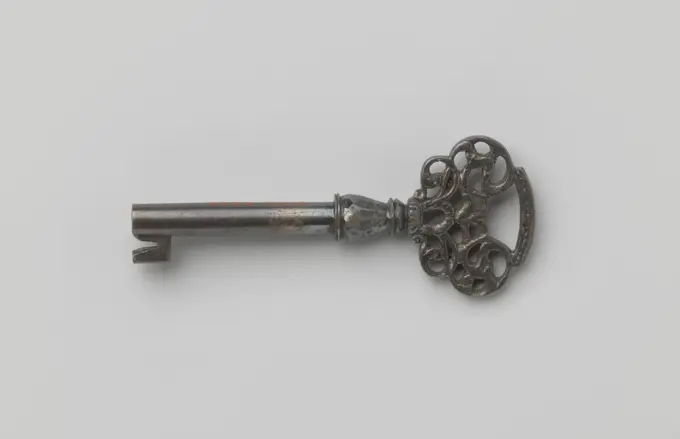
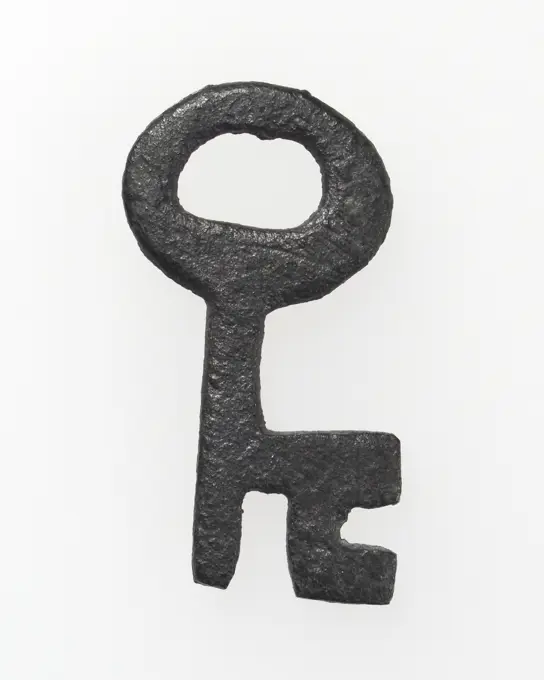
Pipe key, c. 1700 - c. 1800 Pipe key with oval handle consisting of leaf voltuten, covered above by a curved bar. The key breast is facet -shaped.  iron (metal) Pipe key with oval handle consisting of leaf voltuten, covered above by a curved bar. The key breast is facet -shaped.  iron (metal)
Pipe key, c. 1700 - c. 1800 Pipe key with oval handle consisting of leaf voltuten, covered above by a curved bar. The key breast is facet -shaped. iron (metal) Pipe key with oval handle consisting of leaf voltuten, covered above by a curved bar. The key breast is facet -shaped. iron (metal)
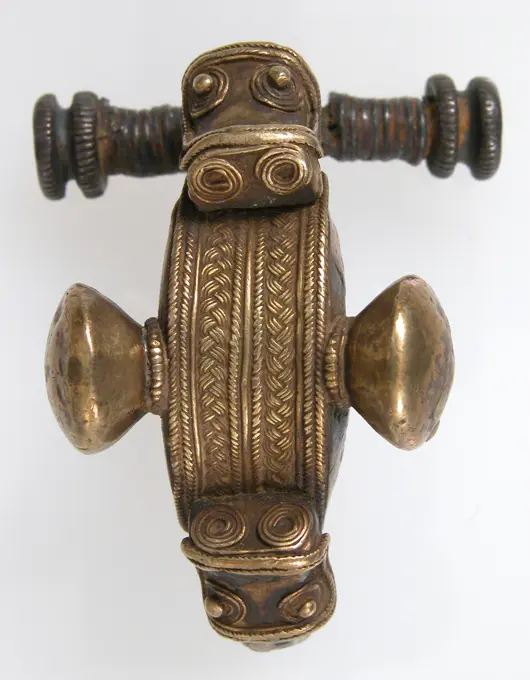
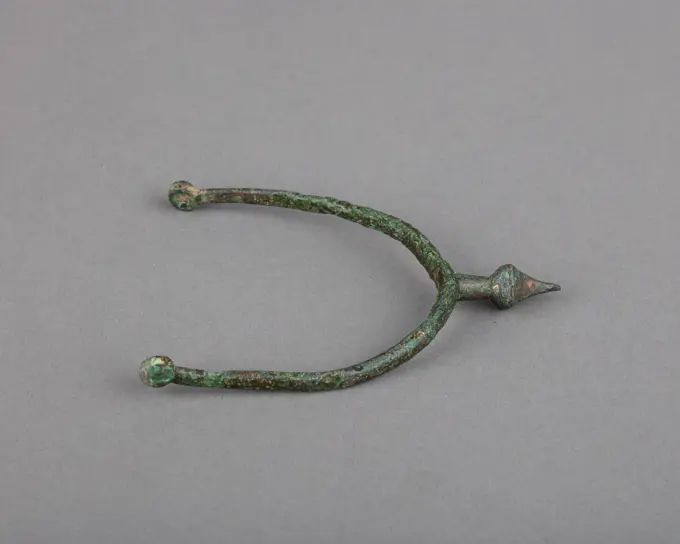
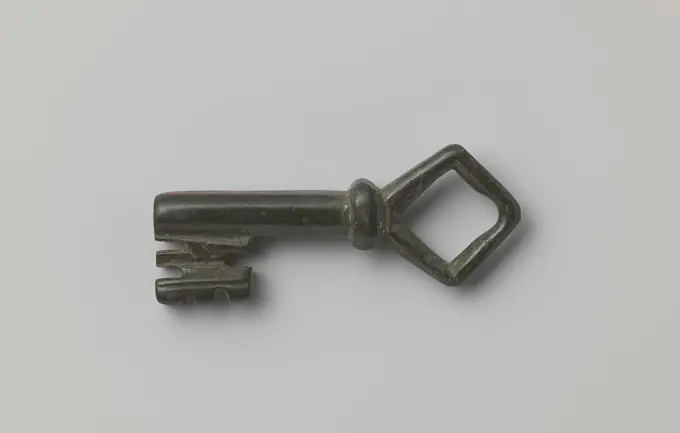
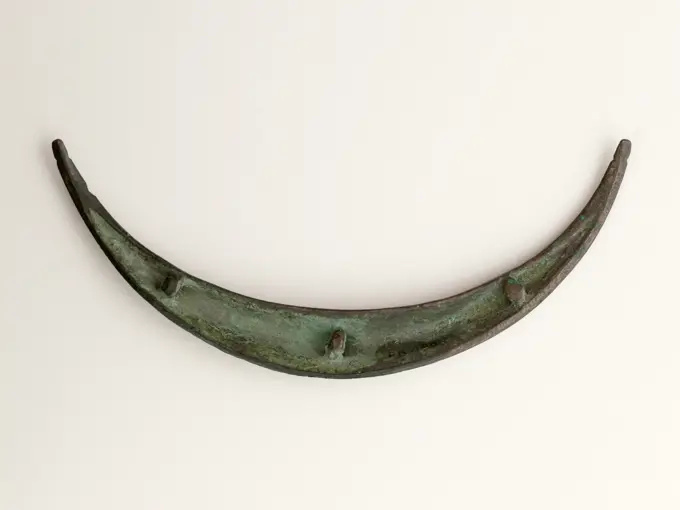
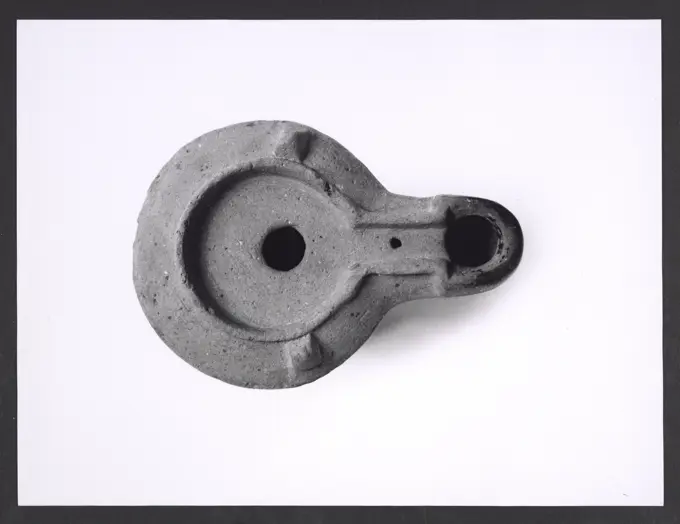
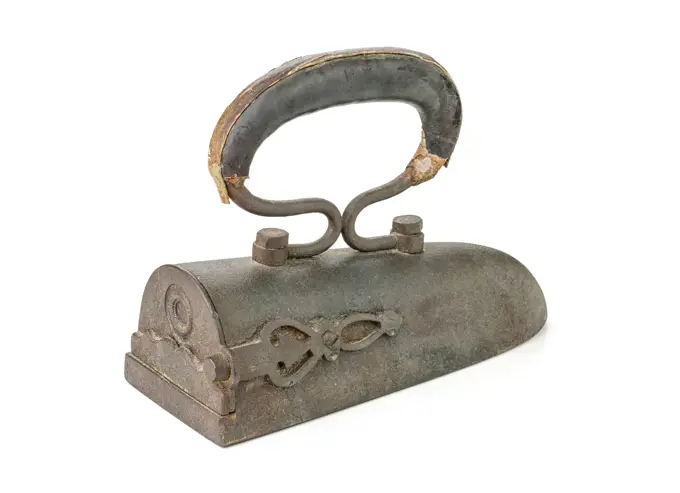
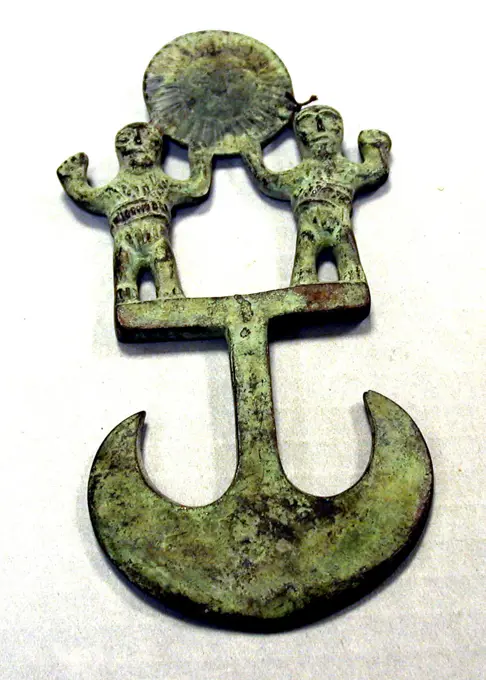
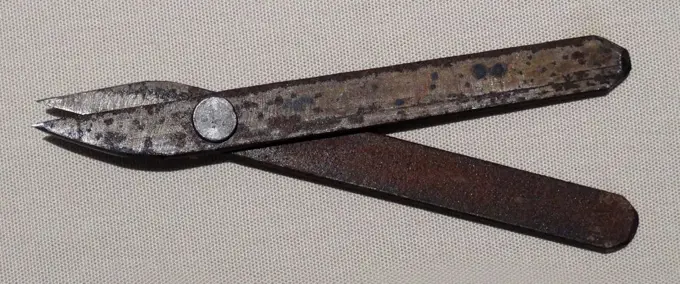
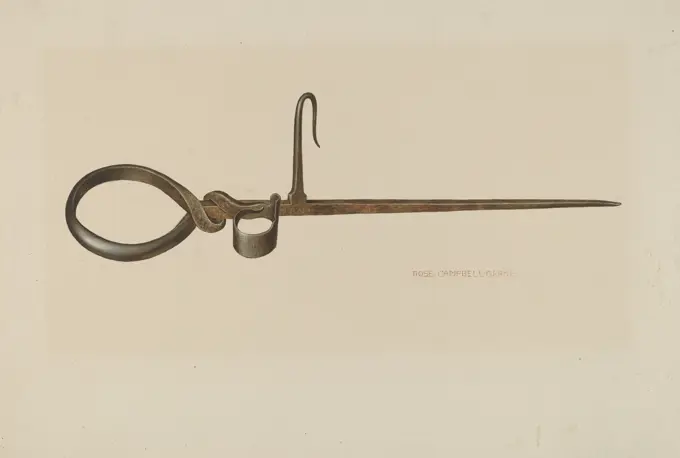
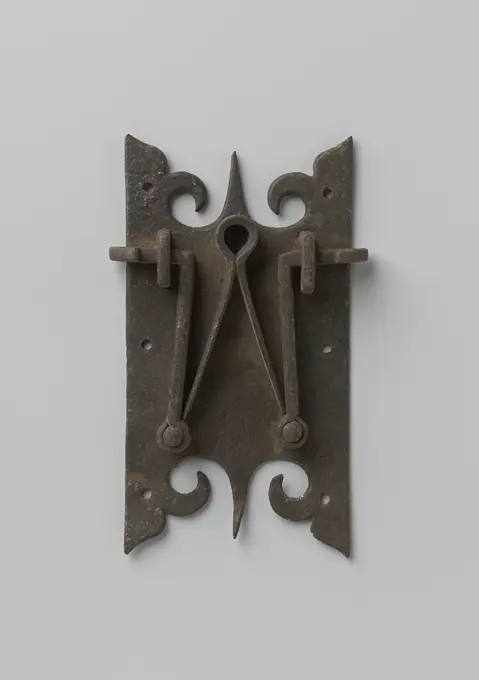
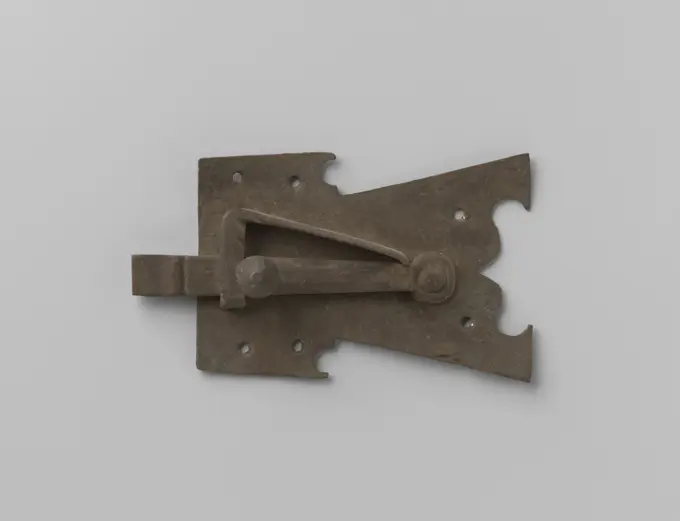
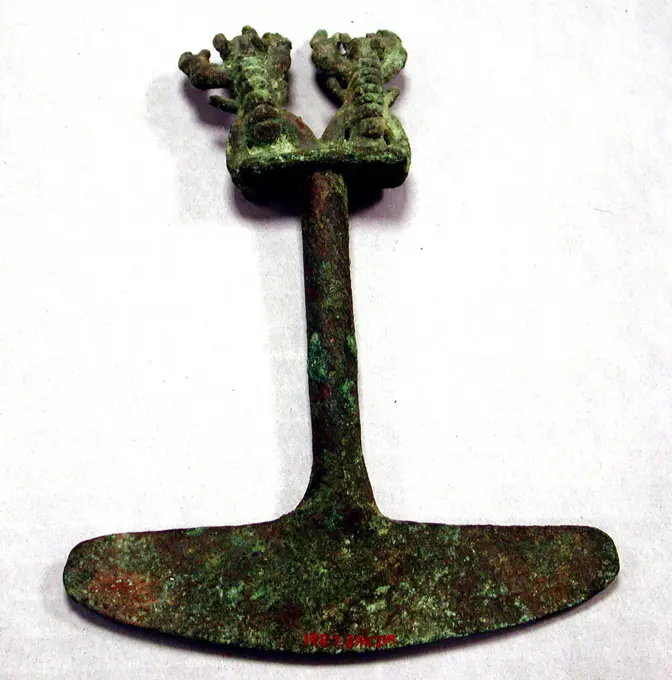
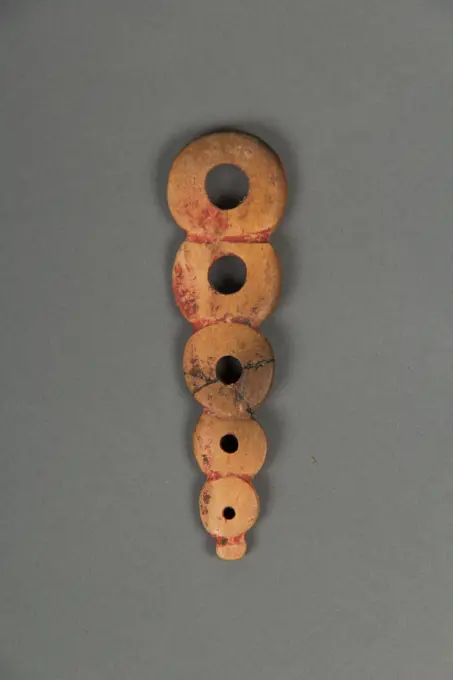
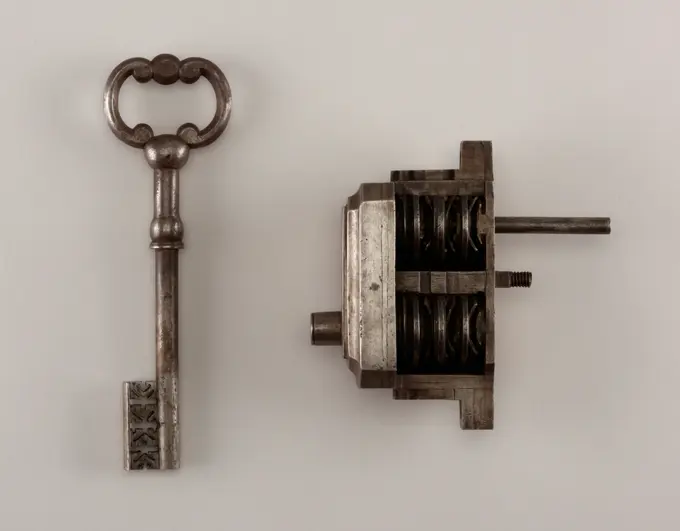
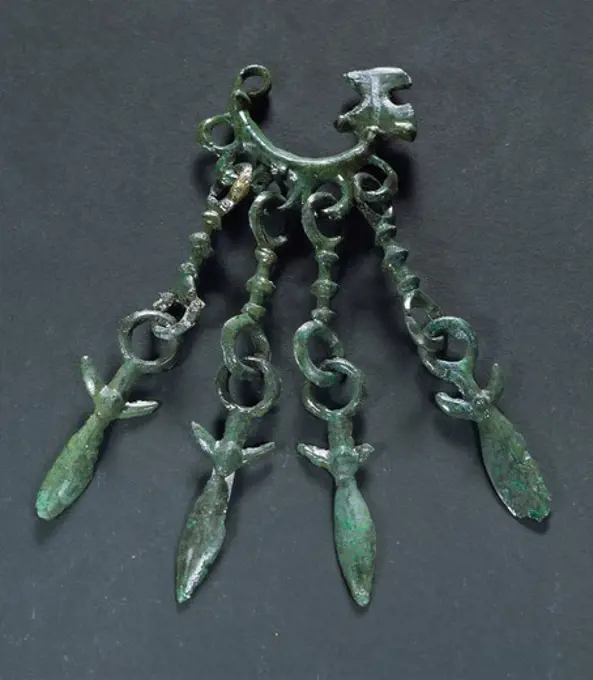
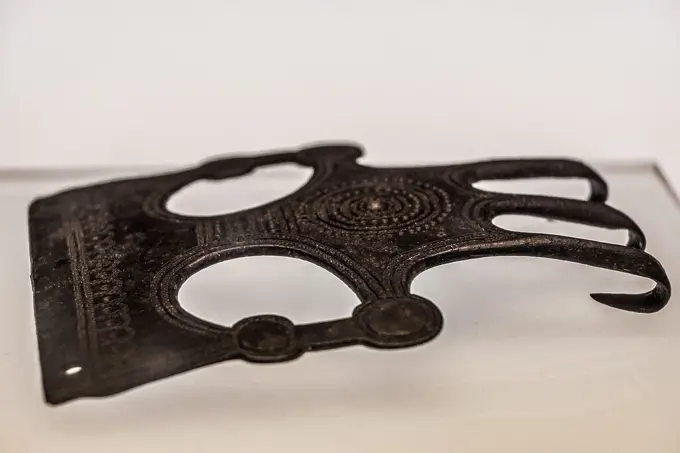
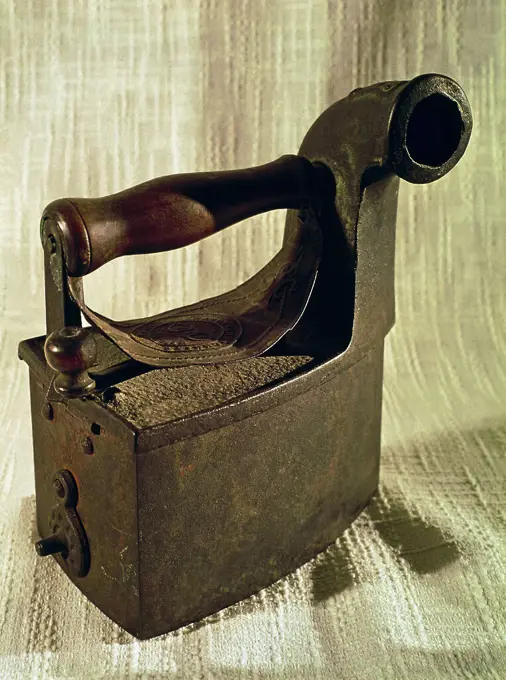
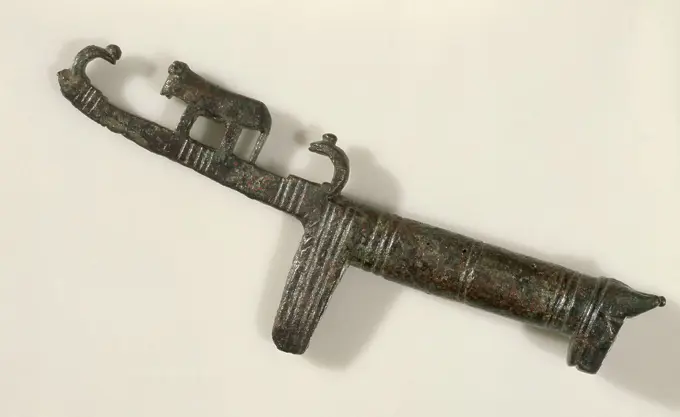
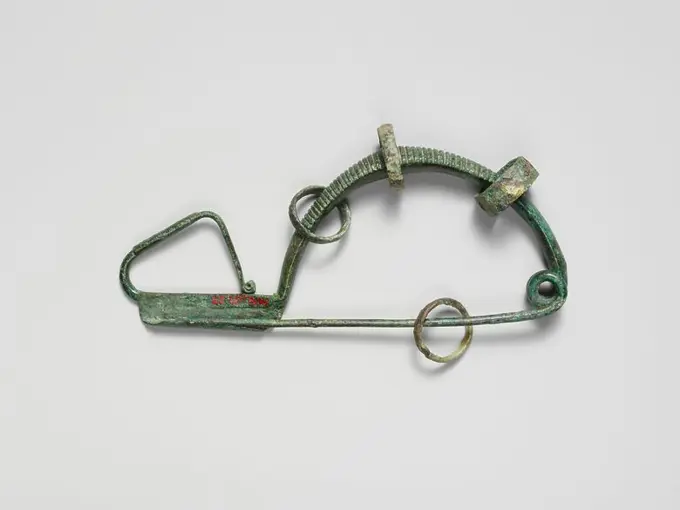
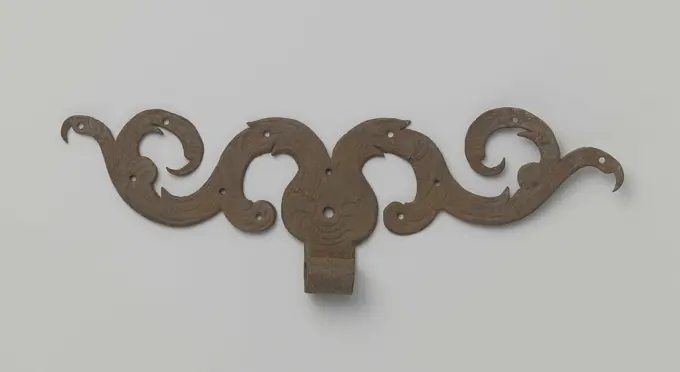
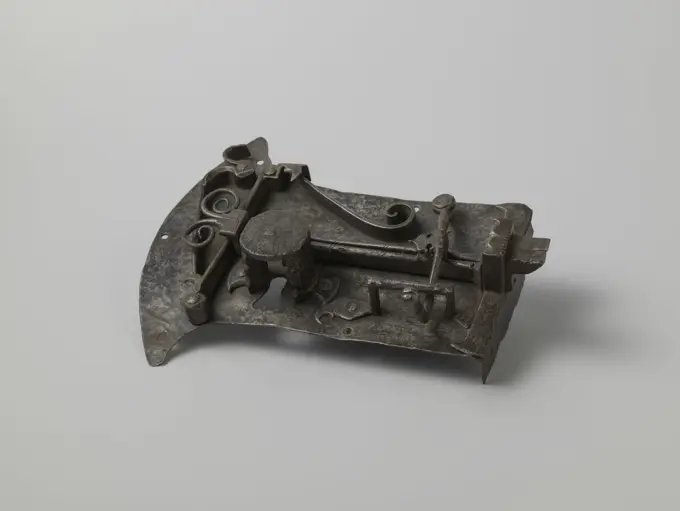
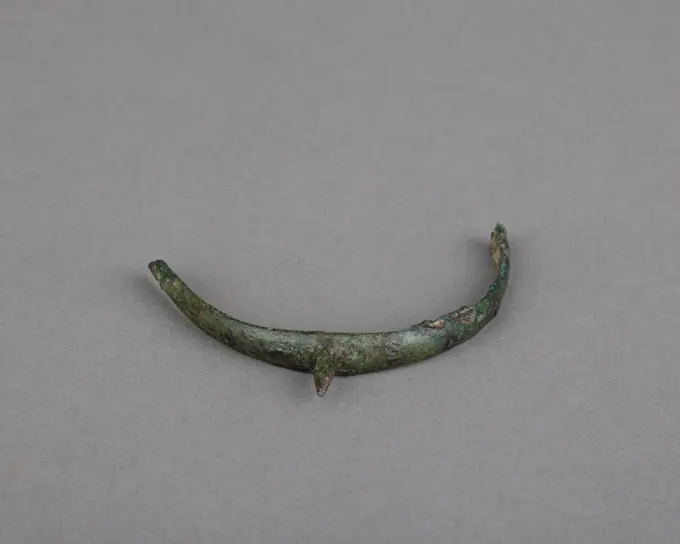
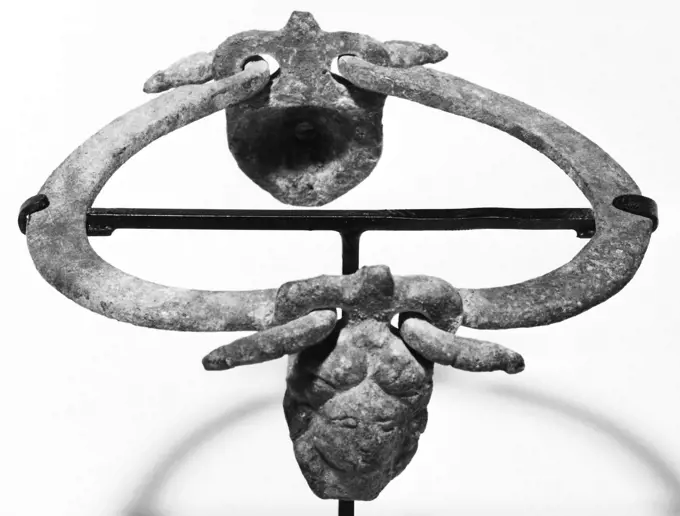
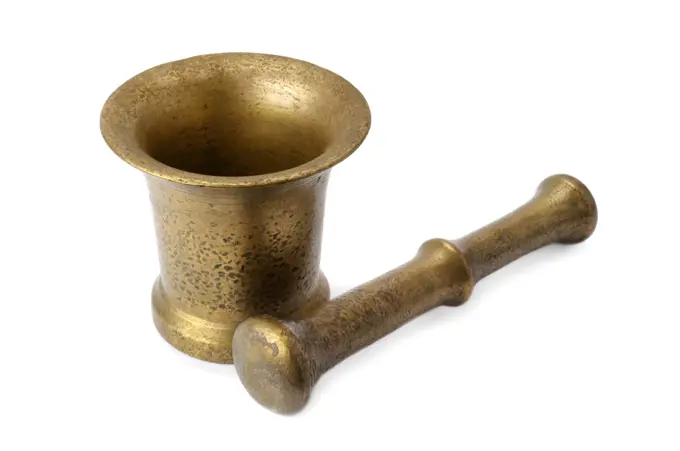
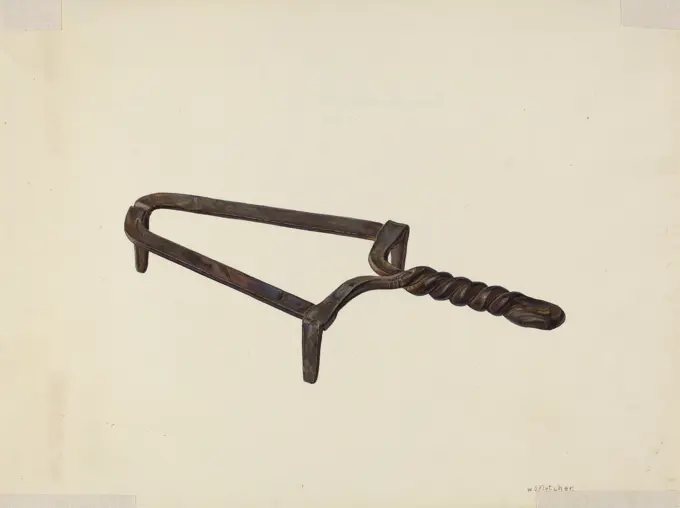
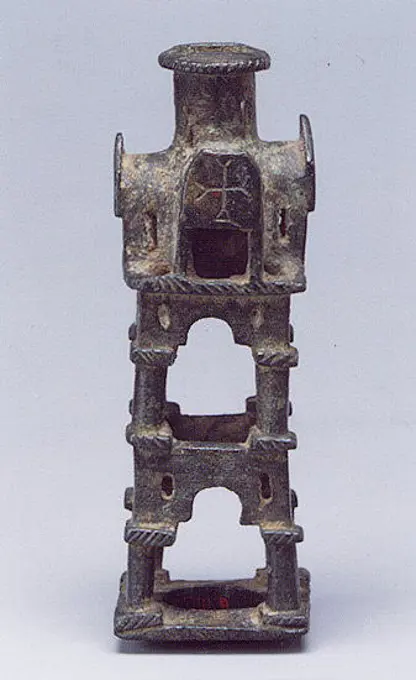
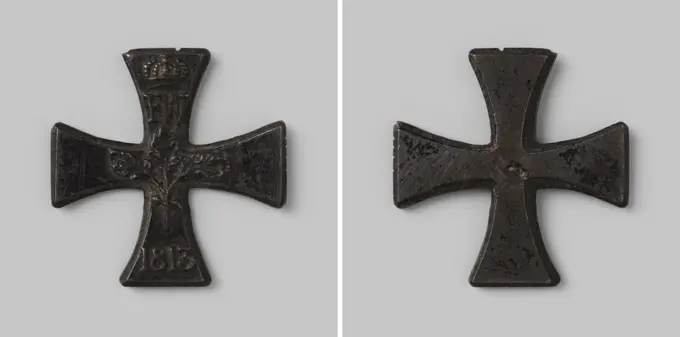
Clippers 16th century probably Italian. Clippers 198806Brooch -Key, c. 1700 Key belonging to two fence doors BK-16959-A-TM-B. In the ring a star -shaped ornament filled with three -quarters of circles. Italy iron (metal) Key belonging to two fence doors BK-16959-A-TM-B. In the ring a star -shaped ornament filled with three -quarters of circles. Italy iron (metal)Bolt;  End of the 18th century (1791-00-00-1800-00-00);SpoonBow Brooch 7th century Baltic or Scandinavian. Bow Brooch. Baltic or Scandinavian. 7th century. Gold, electrum. Metalwork-SilverEarring, 1800s. India. Silver; diameter: 5.2 cm (2 1/16 in.).Luckenbooth brooch -Wall arm of brass, anonymous, 1700 - 1750 Brass wall, part of an hourglass holder. Netherlands brass (alloy) casting Brass wall, part of an hourglass holder. Netherlands brass (alloy) castingPrick Spur 12th century German The prick spur was the first type of spur to be invented, and it consists of a goad or prick, more or less pointed, connected to side arms or a heel plate. The earliest spurs were probably simple thorns attached at the back of the heel, before they started to be made out of metal in antiquity. Prick spurs were the main type of spurs used in the Middle Ages until the mid-14th century, when they were supplanted by rowel spurs, which appeared in Europe a century before and with which they had cohabitated for a time. As a knights status was closely related to his horse, spurs became one of the symbols of chivalry, and one of the tokens given to him during his knighting.. Prick Spur. German. 12th century. Copper alloy. Equestrian Equipment-Spurs39 keys from the collection of Emmanuel Vita Israël.The Amsterdam apothecary and art collector Emmanuel Vita Israël. He donated his collection, comprising keys dating from Roman antiquity to the 19th century, to the Koninklijk Oudheidkundig Genootschap (Royal Antiquarian Society) in 1937. Vita Israël claimed that his key collection had grown more or less by accident: being one of the few collectors of keys, dealers automatically made their way to him.Key, c. 1600 - c. 1699 Key whose eye is formed by a down-turning C-Volut-widening in the middle, resting at the ends on a ball-shaped thickening of the shaft. This ends under the beard in a button.  iron (metal) Key whose eye is formed by a down-turning C-Volut-widening in the middle, resting at the ends on a ball-shaped thickening of the shaft. This ends under the beard in a button.  iron (metal)Triangular section. Copper alloy. Gallo-Roman. Paris, Carnavalet museum. 51538-16 Copper alloy, croissant, Gallo-Roman, Gallo-Roman time, triangular sectionEmilia-Romagna Ferrara Ferrara Museo Civico di Schifanoia29. Hutzel, Max 1960-1990 General Notes: INCOMPLETE RECORD--NEGATIVES PROCESSED, PRINTS FILED German-born photographer and scholar Max Hutzel (1911-1988) photographed in Italy from the early 1960s until his death. The result of this project, referred to by Hutzel as Foto Arte Minore, is thorough documentation of art historical development in Italy up to the 18th century, including objects of the Etruscans and the Romans, as well as early Medieval, Romanesque, Gothic, Renaissance and Baroque monuments. Images are organized by geographic region in Italy, then by province, city, site complex and monument.Amulet of the Harpoon of Horus 1070 BCE-332 BCE Egypt. Bronze . Ancient EgyptianThree fragmentary iron fire-rakes late 4th or early 3rd century B.C. Etruscan Iron utensils used to rake the charcoal embers of a fire.. Three fragmentary iron fire-rakes 247070Luckenbooth brooch -antique flat iron antique flat ironCast Copper Crescent Ornament with Figures 16th-17th century Peruvian. Cast Copper Crescent Ornament with Figures 309288. Mokko-shaped tsuba with slightly swamped sides and raised edge; a Chinese range in a negative silhouette; On one side also a range of relief; Signed "Myochin Munehide".Loop .Example of tools used to make the Staffordshire Hoard. Dated 7th CenturyAstronomical ring - Pierre Lemaire (1717-1785)Rose Campbell Gerke, Miner's Candlestick, c 1940 Miner's CandlestickFour corner handles. .Door Handle late 15th century German. Door Handle 468898Key; 1909-2-245An old key hanging in a key ringBrooch -Buckle 12th century French, Haute-Savoie. Buckle. French, Haute-Savoie. 12th century. Bronze, patina. Miscellaneous-Buckles & OrnamentWilliam Kieckhofel, Spur, c 1940 SpurCopper strips from the wreck of the East Indies Hollandia, 1700 - in or before 1743  Varied parts or fragments, strips and strip-shaped fragments. Netherlands copper (metal)   SecondDouble cut. A double cut (undisturbed).Switch from a chain from the wreck of the East Indians Hollandia, Anonymous, 1700 - in Or Before 1743 fragment. chain Varied parts or fragments, chains; fragm, link, of wire, figure-of-eight-shaped, flat. Netherlands copper (metal)   SecondAlbert Taxson, Andiron, c 1939 AndironFragment of a Box 3rd-12th century. Fragment of a Box 446069Escutcheon; 1904-21-57Knip, c. 1400 - c. 1950 A sorner single cut (telling).  iron (metal) A sorner single cut (telling).  iron (metal)GRILLETE.Olive lamp; Unknown Gallic workshop; II century (101-00-00-200-00-00);Ceremonial Knife (Tumi) 12th-15th century Chimú. Ceremonial Knife (Tumi) 315279Plaque, Openwork 5th-6th century Byzantine. Plaque, Openwork. Byzantine. 5th-6th century. Bronze. Metalwork-BronzeBatter, c. 1400 - c. 1950   iron (metal)   iron (metal)Body Ornament Japan. Body Ornament. Japan. Bone. Final Jmon period (ca. 1000-300 B.C.). BoneKey And LockNail 15th-16th century European. Nail. European. 15th-16th century. Iron. Metalwork-IronPrehistory, Albania, Iron Age. Glasinac-Mati type fibula with ornamental pendants.Studs ca. 9th century B.C. Iran. Studs 325054Antique vintage rusty padlock on wooden background. Vintage antique rusty hinged lockThree-hook brooch, Carratiermes Necropolis, 4th century BC, Tiermes Archaeological Site Museum, Soria, Spain.Tiny figurine of man miniature and retro keyPin 4th century B.C. European. Pin 110751Mecanismme the arbals. Bronze, chine, Iv-IIY s. Av. J.-c. Paris, Museum Causori. Asian art, Chinese art, bronze, Asian civilization, Chinese civilizationHairpin finial China. Hairpin finial 60697Torc 4th-3rd century B.C. Celtic. Torc 464951 Celtic, Torc, 4th3rd century B.C., Copper alloy, Overall: 5 1/2 x 5/8 in. (14 x 1.6 cm). The Metropolitan Museum of Art, New York. Gift of J. Pierpont Morgan, 1917 (17.191.247)Old iron.MANGO DE PUAL VOTIVO - PROCEDE DE PALENCIA - ARTE IBERICO. Location: MUSEO ARQUEOLOGICO NACIONAL-COLECCION, MADRID, SPAIN.NSDAP cap badge (Adler für die schirmmütze) (attributed title), 1939. Metal. General Leclerc Museum of the Liberation of Paris - Jean Moulin Museum.Loop.Bronze fibula (safety pin) with four rings. Culture: Italic. Dimensions: length 5 15/16in. (15.1cm). Date: 9th century B.C..With an inverted clasp and transverse ribs on bow and four rings. Museum: Metropolitan Museum of Art, New York, USA.Two drill planing, Anonymous, c. 1818Plate or element of harness on animal subject in bronze, China, ordos, art of steppes, between the 3rd century BC and the 2nd century AD. Paris, Cernuschi museum. 35007-20 Art of steppes, bronze, china, decoration, han dynasty, element harness, ordos, brochure, animal subject, animalMetal shackles isolated on the whiteKey 16th century German. Key. German. 16th century. Iron. Metalwork-IronArrowhead Japan These implementsan arrowhead, fishhooks, needle, and harpoonwere skillfully carved from bone, a material worked by Japanese artisans since Paleolithic times. They were found in the Obara Shell Mound at Ofunato Bay in Iwate Prefecture. According to information gleaned from shell mounds, or middens, the people of the Jomon period relied on a variety of strategies to obtain food. The large number of fishhooks, fashioned with and without barbs, together with the rich array of marine remains found in these rubbish heaps since very early times indicate that some fifty species of fish and shellfish constituted an essential dietary staple. Toggle-head harpoons, a later innovation, facilitated the hunting of sea mammals. Attaching a line to the toggle allowed the hunter to draw in his prey once the toggle had broken away from the harpoon shaft. Further evidence gathered from these refuse dumps suggests that the Jomon people also relied heavily on nuts, collected most actively Door brace ..Bus with dick instruments from the wreck of the East Indians Hollandia, Anonymous, 1700 - in Or Before 1743 pen. pencil. compass Tools and instruments, case of drawing instruments; (12); a: (1) case, oval in section, slightly tapering (6.9h, 4.7-4.1w, 2.3d), engraved decoration of floral motifs with plain central panel, moulded upper rim with three-lugged hinge on short side, lid and bottom missing; b: (1) partition frame with slots for instruments; c: (1) pen, straight tube (2.4l, 0.5d) with dip pen inserted (0.4d); d: (1) pencil, tube (2.9l, 0.4d) with inverted baluster-shaped finial, (w) pencil inserted (0.3d); e: (1) pen(cil) holder, cylinder, octagonal faceted, tapering (7l, 1.1-0.9d), with lid; f: (1) pair of compasses (4l), circular hinge, legs with faceted ends, oval recess on inner edges; g: (4)fragm(1) of folding ruler, (2) strips, straight (6.4l, 0.4w, 0.1t) with engraved scale, (2)fragm of hinge, splayed strips with small fitting holes and engraved scale; h: (1) pointed strCeltic civilization, France, 5th century b.C. Ram's head shaped fibula brooch ornamented with corals. From a burial mound at Grand Bois.Fragment (Italy); linenTerracotta oil lamp 1st century B.C.-1st century A.D. Roman Loeschcke Type 4. Mold-made. Discus: a circular wave pattern; a single filling hole at center, with a band of lines and grooves at edge. A broad, funnel-shaped channel runs from the discus to the nozzle between the volutes. Elongated volutes flanking nozzle, with large wick hole. Incised base ring, and a shallow, uneven base.Intact.. Terracotta oil lamp. Roman. 1st century B.C.-1st century A.D.. Terracotta. Early Imperial. TerracottasDoor lock, anonymous, c. 1500 - c. 1599 Door lock with curled iron decorations NetherlandsGermany iron (metal) Door lock with curled iron decorations NetherlandsGermany iron (metal)Ring -shaped fragment from the wreck of the East Indians Hollandia, Anonymous, 1700 - in Or Before 1743 fragment Varied parts or fragments, rings or ring-shaped fragments; id. 80H946. Netherlands copper (metal)   SecondArrowhead (Yanone). Culture: Japanese. Dimensions: L. 19 7/8 in. (50.5 cm); L. of head 7 1/4 in. (18.4 cm); W. 4 in. (10.2 cm); Wt. 7.8 oz. (221.1 g). Date: 18th century. Museum: Metropolitan Museum of Art, New York, USA.Pilgrim's Badge 14th-16th century French. Pilgrim's Badge. French. 14th-16th century. Lead. Metalwork-LeadWaldhoorn bracket. Waldhoorn bracket. UnmarkedCross 7th century Late Roman. Cross 464807 Late Roman, Cross, 7th century, Silver, Overall: 1 3/16 x 1 3/16 x 1/8 in. (3 x 3 x 0.3 cm). The Metropolitan Museum of Art, New York. Gift of J. Pierpont Morgan, 1917 (17.191.118)Iron horse bit ca. 550 B.C. Etruscan Two U-shaped side elements; perforated for the attachment of a leather harness.. Iron horse bit 247066Fragment Screw plate of a musket from the wreck of the East Indians Hollandia, Anonymous, 1700 - in Or Before 1743  Id. NG 1978-74H986, left eye cut off, notches of fitting screw on cut edge, side plate Netherlands copper (metal)   SecondPrick Spur 6th-7th century Germanic The prick spur was the first type of spur to be invented, and it consists of a goad or prick, more or less pointed, connected to side arms or a heel plate. The earliest spurs were probably simple thorns attached at the back of the heel, before they started to be made out of metal in antiquity. Prick spurs were the main type of spurs used in the Middle Ages until the mid-14th century, when they were supplanted by rowel spurs, which appeared in Europe a century before and with which they had cohabitated for a time. As a knights status was closely related to his horse, spurs became one of the symbols of chivalry, and one of the tokens given to him during his knighting.. Prick Spur. Germanic. 6th-7th century. Copper alloy. Equestrian Equipment-SpursCarnavalet Museum, Medals CollectionLeather (Holland); leather, wood, silvered, painted and varnished; 137 x 127 cm (53 15/16 x 50 in.) -5-b) 53 x 58.5 cm -5-c) 53 x 58 cm -5-d) 53 x 62 cmKnife from Board ofRevenue.  Mint: Board of Revenue Artist: UnknownDouble Handle from a Pail with Appliques; Italy (); 2nd century; Bronze; 14.4 cm (5 11,16 in.)Bit Boss late 17th - early 18th century possibly French Bit bosses were ornamental elements decorating both sides of a horse bit.. Bit Boss. possibly French. late 17th - early 18th century. Copper alloy, iron. Equestrian Equipment-Bitsmetal mortar and pestle isolated on whiteWilliam O Fletcher, Trivet, c 1939 TrivetBuckle dated 1520 German. Buckle. German. dated 1520. Brass. Miscellaneous-Buckles & OrnamentIron cutting knife, anonymous, 1600 - 1699 A completely iron cutting knife. The point is missing. (Used by smokers).  iron (metal) A completely iron cutting knife. The point is missing. (Used by smokers).  iron (metal)Base for a Cross 11th century Byzantine These miniature buildings are bases that held crosses. With their equal-armed cross shapes and domed tops, they reproduce in miniature the church design most popular during the middle Byzantine centuries.. Base for a Cross 468589Key (France); iron ; 1.8x4.5x17.2cm; 1909-27-4Cord III (Roger Bigod, Earl of Norfolk;& Guy de Beauchamp, Earl of Warwick, 1904. Artist: UnknownHIERRO PARA MARCAR RESES.Two Shackles, anonymous, 1820 - 1858 fastening Two harp closures linked together, each with two chain schaals at the end. The retaining pins do not have a thread, but are sounding. The whole is painted black. This type of harp closures was used for rig chains. Netherlands iron (metal). paint (coating)Gold Tweezers 500-1500 A.D. Colombia. Gold Tweezers 312725Finial. Culture: Coptic. Dimensions: Overall: 1 x 1/2 in. (2.5 x 1.2 cm). Date: 4th-7th century. Museum: Metropolitan Museum of Art, New York, USA.Jamb Hook 1700-1800. Jamb Hook. 1700-1800. Iron, steelIron Cross 1813 (Prussia) without a edge, c. 1813 history medal Cast iron cross without a border, a crowned monogram fw on the front, a three -leaf oak branch and the year 1813, the downside blank.  iron (metal) castingOld  padlock and key. Isolated on white backgroundTwo old keys on rusty sheet metal, Germany, EuropeNose Ornament 6th-7th century Moche (Loma Negra). Nose Ornament. Moche (Loma Negra). 6th-7th century. Gold. Peru. Metal-Ornaments