Vintage Lace Fragments

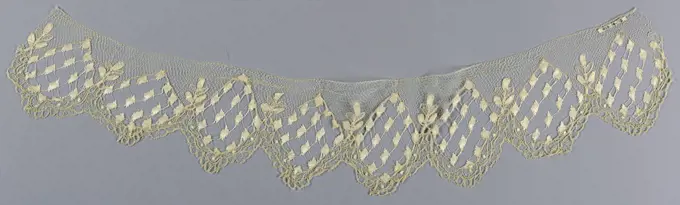
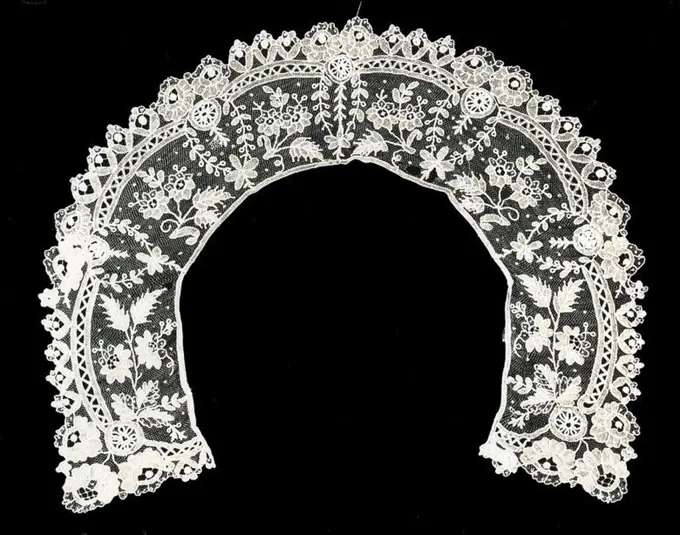
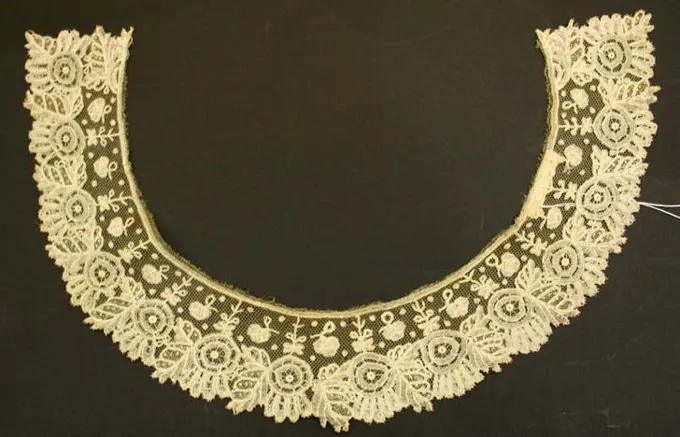
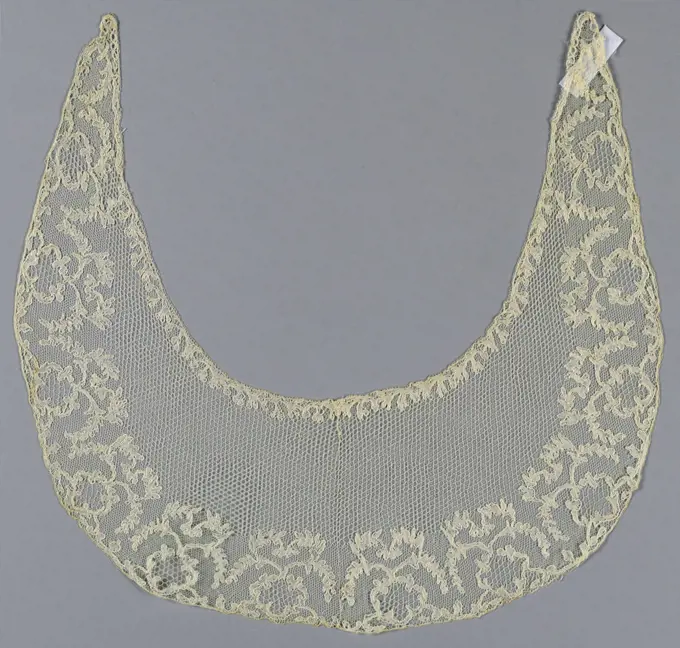
Delicate lace pieces from different centuries, featuring intricate floral and geometric designs displayed on a subtle gray background.

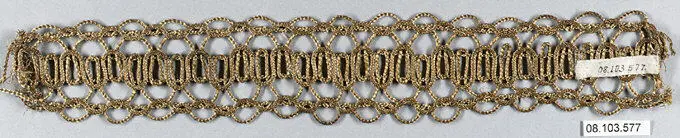
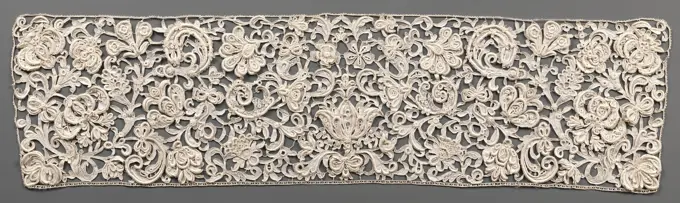
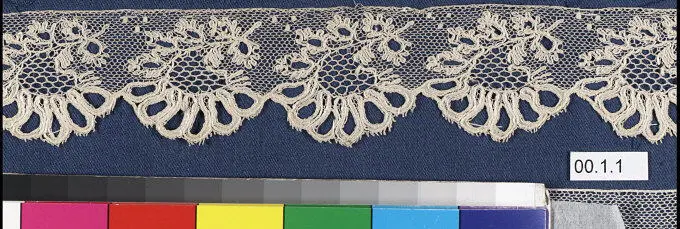
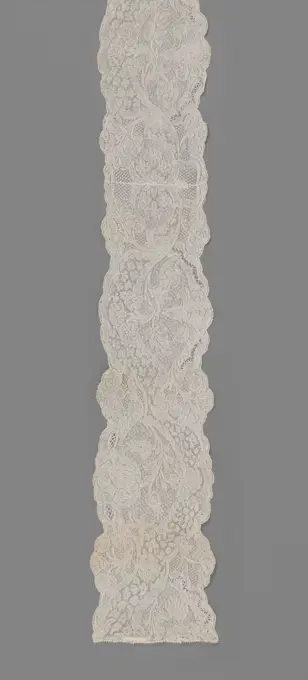
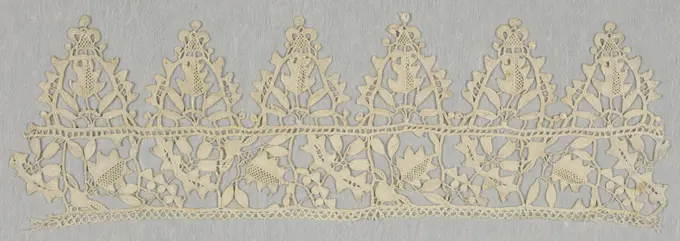
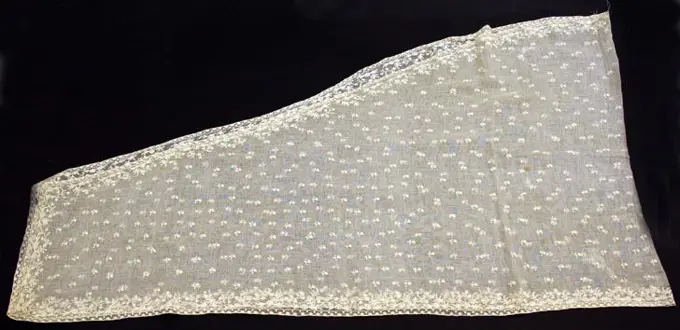
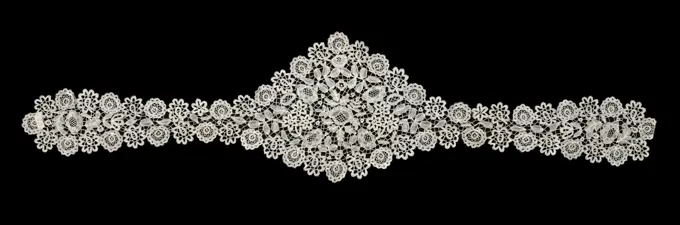
Strip bobbin with flying insects between flower branches, anonymous, c. 1740 - c. 1760 Strip of natural -colored Brussels bobbin. The pattern consists of flying insects between flower branches with different larger and smaller flowers. Along the underside, the pattern consists of a variety of curly leaves, fruits, rosette flowers and decorative tires that form as-symmetrical cartouches. The motifs are connected by a fine Maas soil, a drachel soil. The fullwork is largely made in linen battle with openwork edges and recesses. A few (flour) leaves and insect wings are made in netslag. Most motives are provided with burst relief contours. Different ornamental grounds have been applied, including fine snowflake grounds and potented braids in the cartouches and potented braids between the flower branches. The top is straight. The irregularly scalloped underside is finished with picots. Brussels linen (material) bobbin lace / Brussels bobbin lace Strip of natural -colored Brussels bobbin. Th
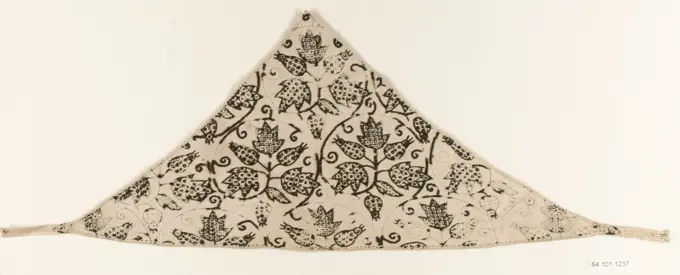
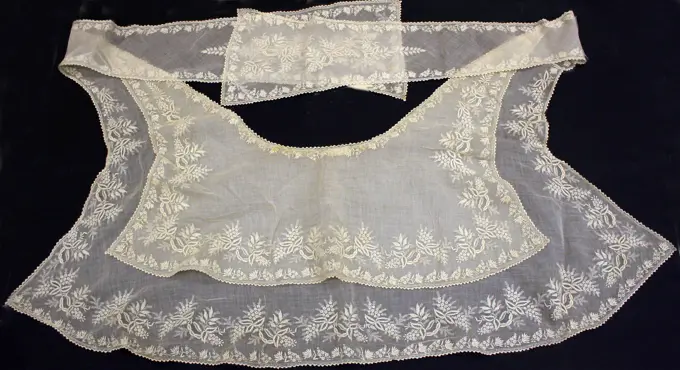
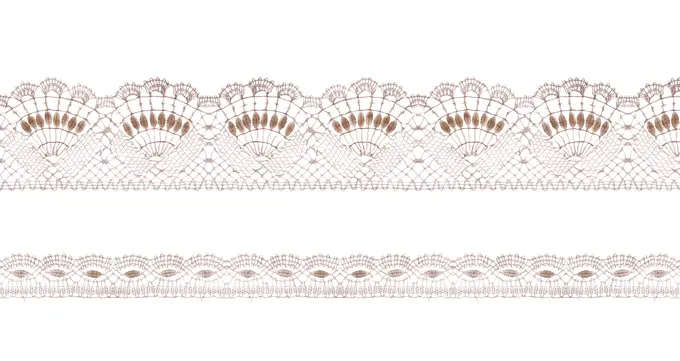
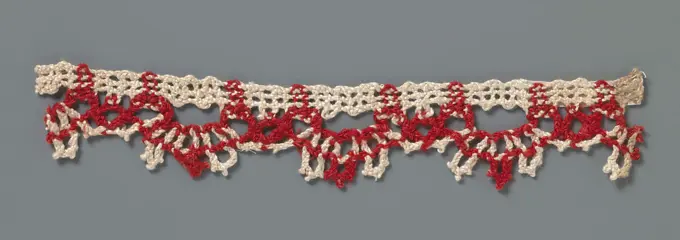
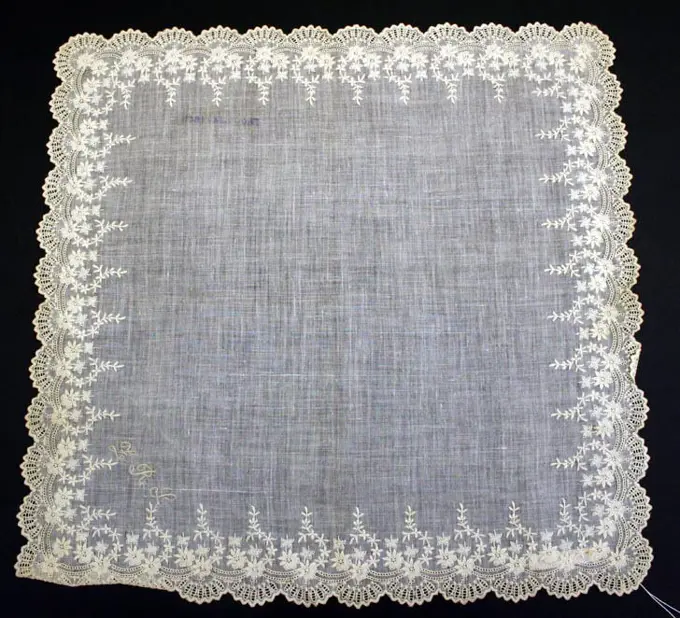
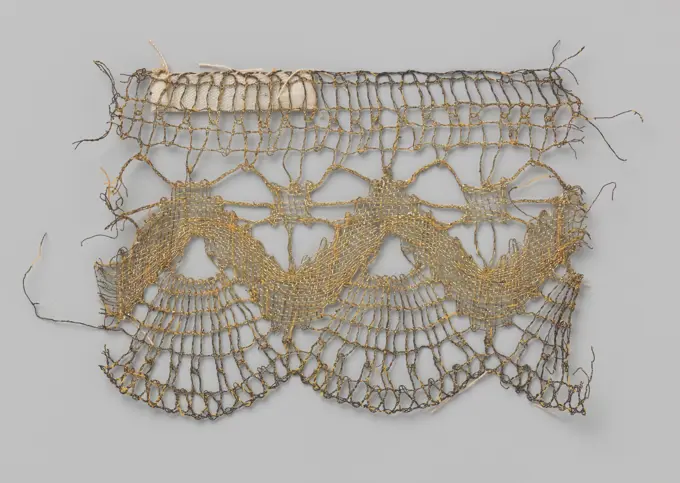
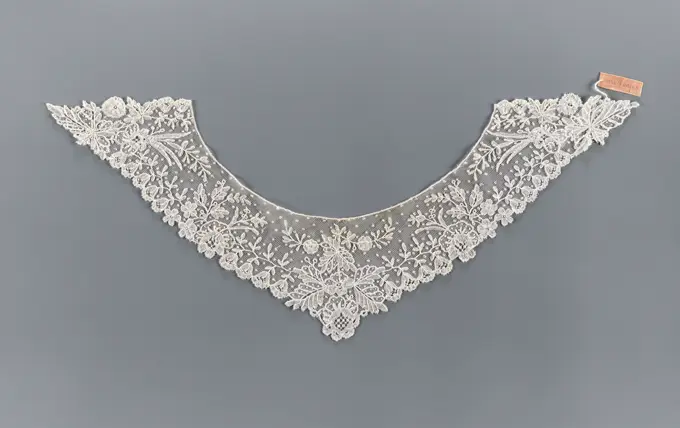
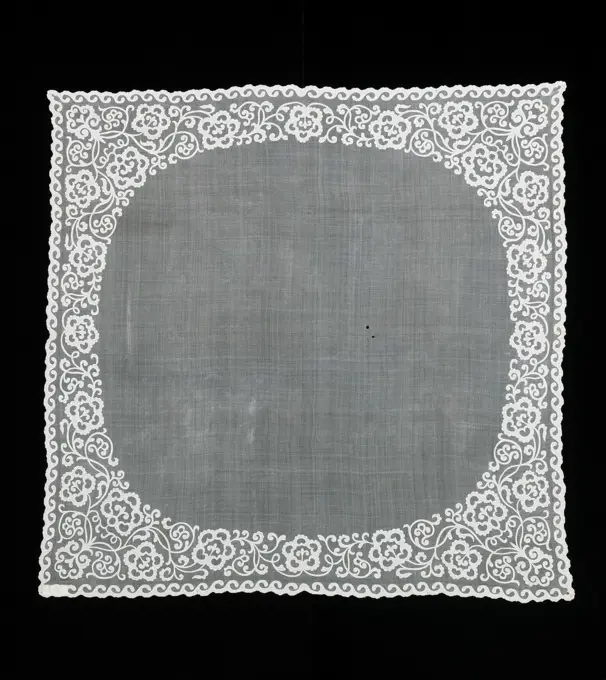
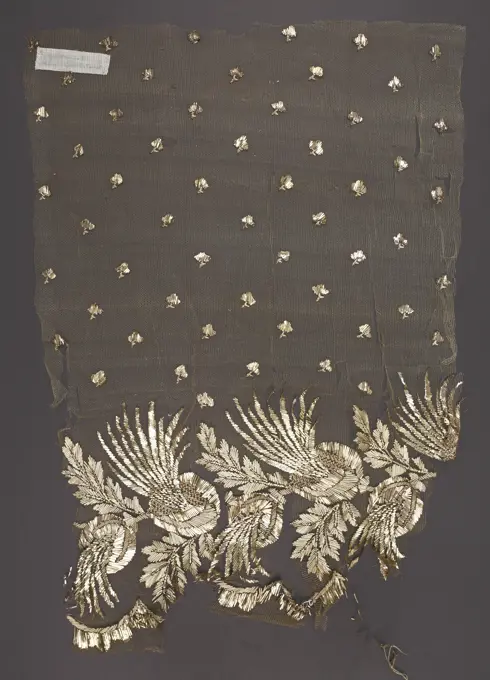
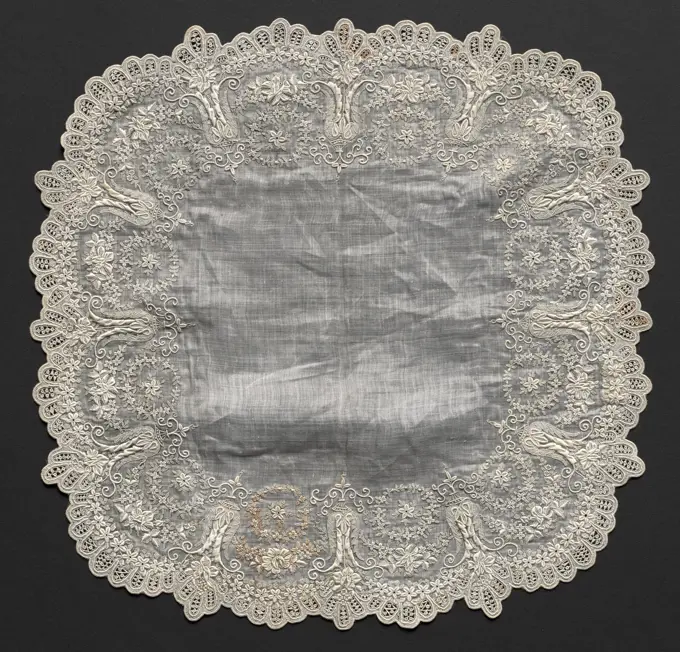
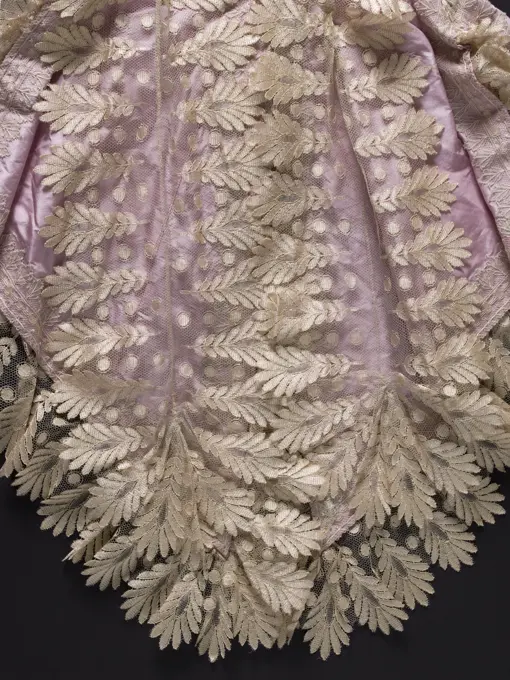
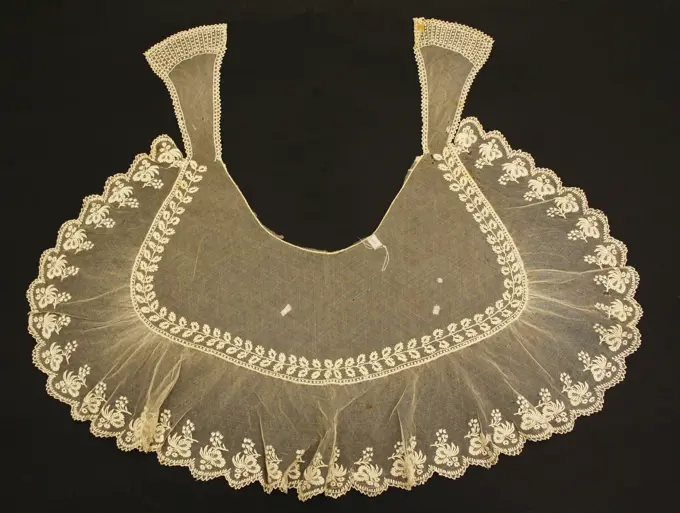
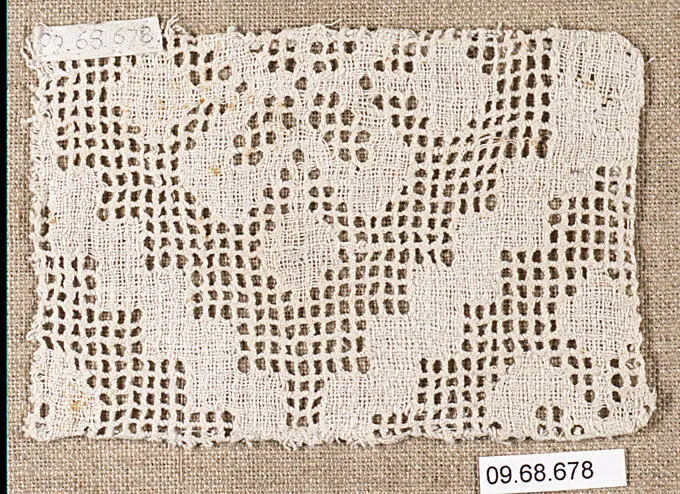
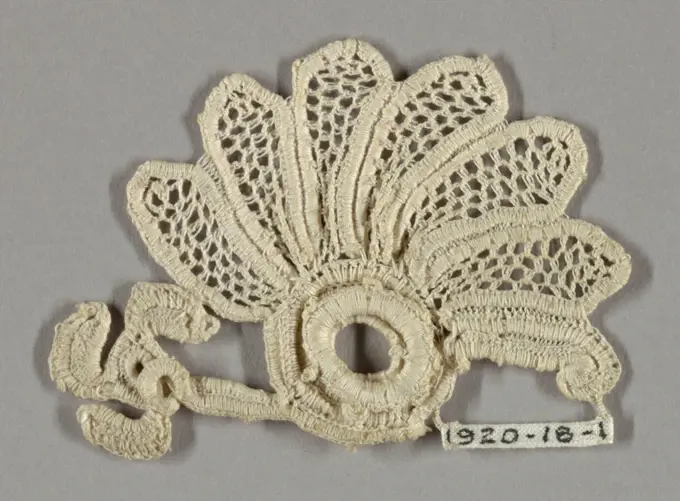
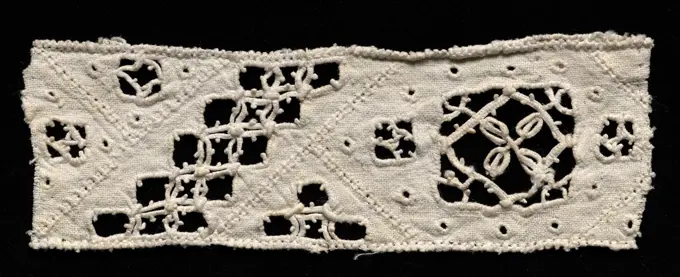
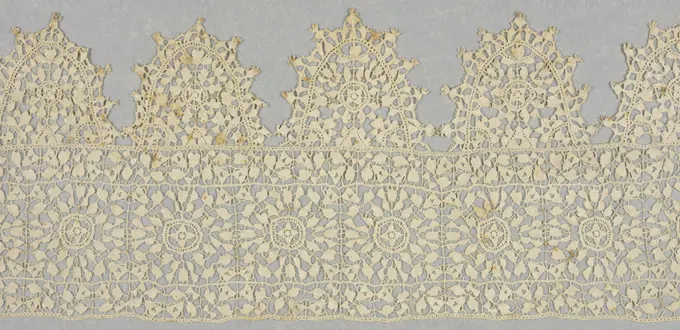
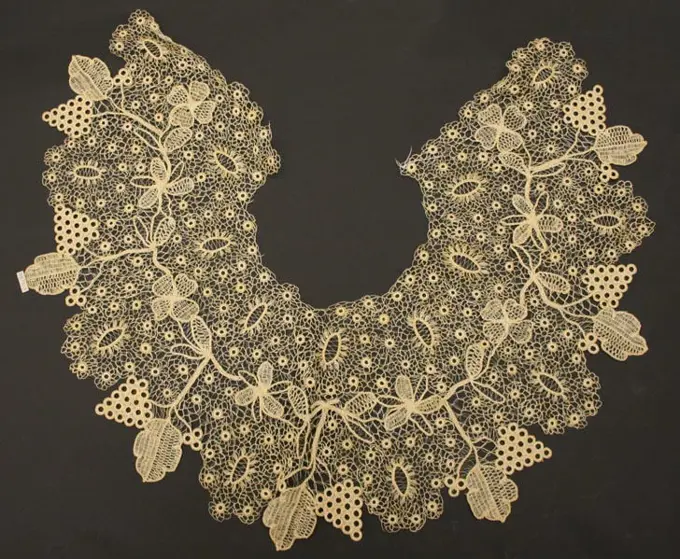
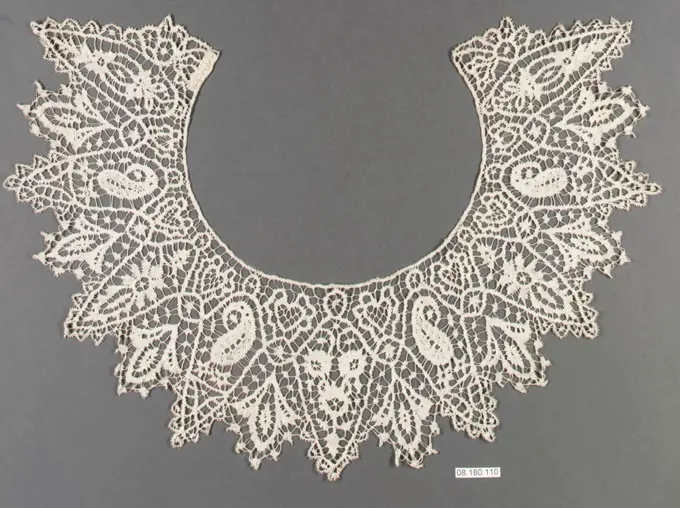
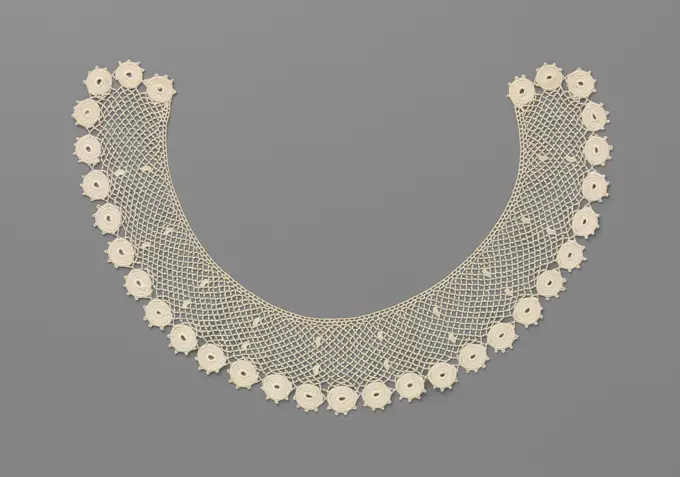
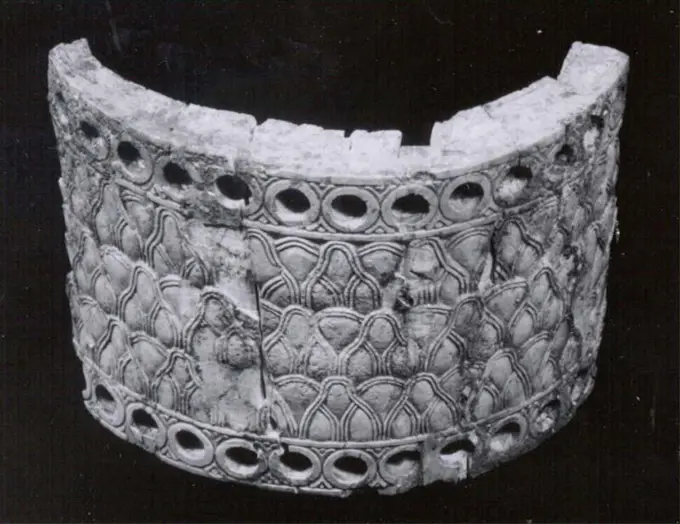
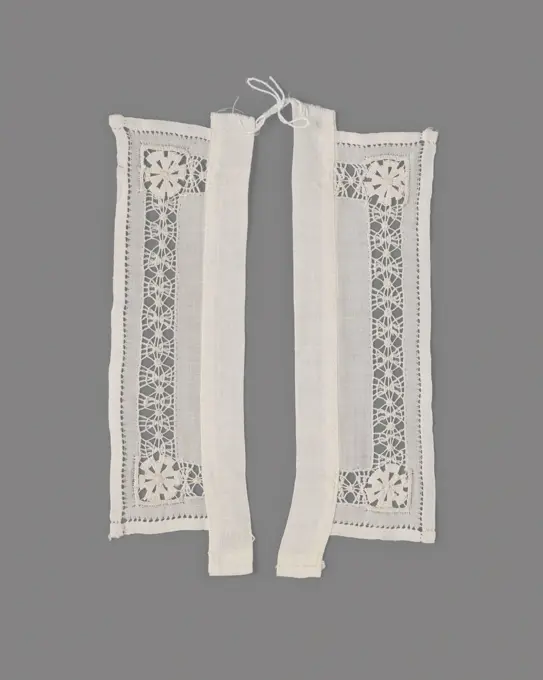
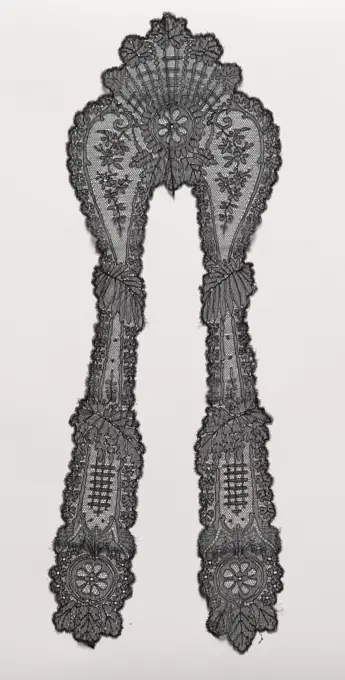
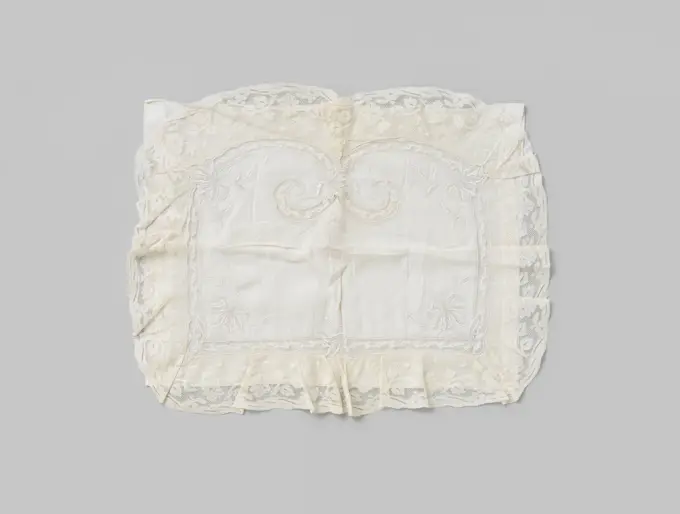
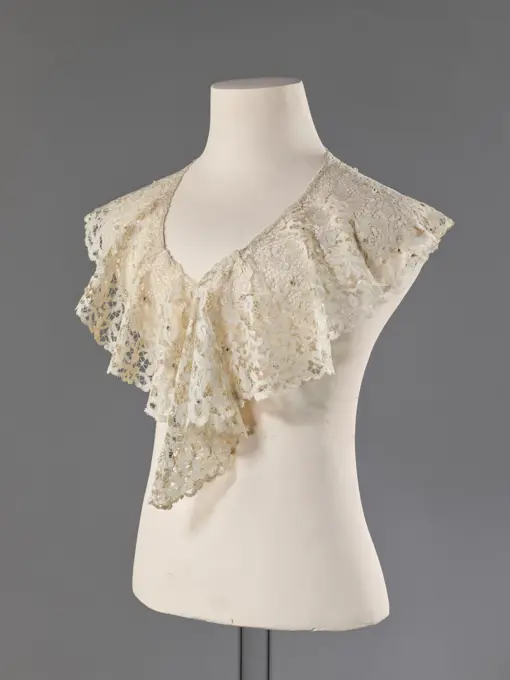
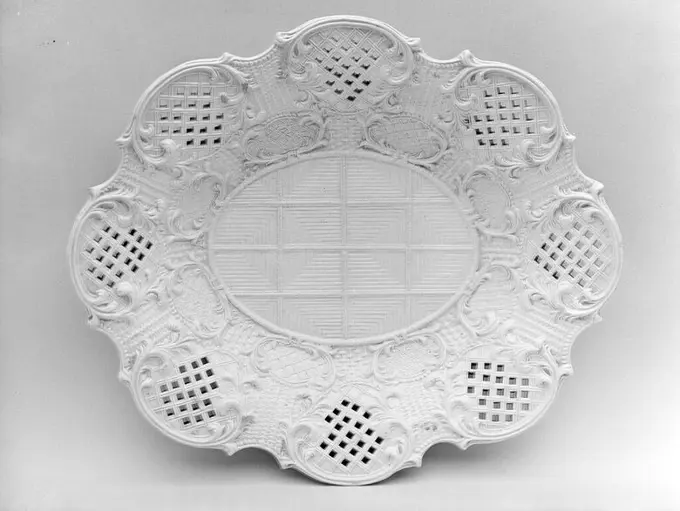
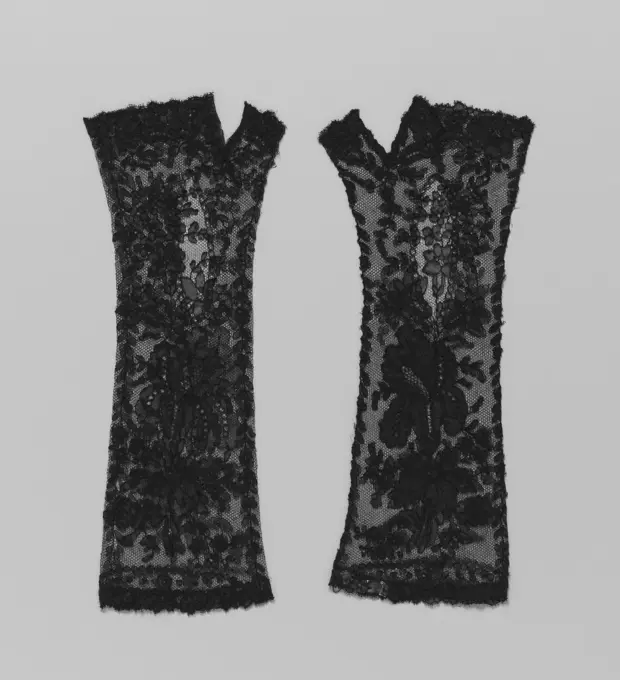
Galloon 18th century French. Galloon 214074Piece late 18th century French or Spanish. Piece 213492Collar. Culture: American. Date: 1830s. Museum: Metropolitan Museum of Art, New York, USA.Kloskant collar with heart and drop shape between two lobes formed by a narrow through ribbon, Louise Wilhelmina van der Meulen-Nulle, c. 1919 Collar of natural -colored bobbin: Russian side. Half -round model with scallops. An ongoing narrow ribbon in linen battle with thick decorative wire in the middle forms the contours of the symmetrical motifs. The repeating pattern consists alternately of a heart and a drop shape between two lobes. The motifs are facing outside. In each drop shape and between the two bulbs of the heart, there is always a flower with five petals clopping in shape. Connections are made with double potented braids and braids that form four -pointed stars. The pattern is probably by Mrs. L.W. Van der Meulen-Nulle made and the collar was hit by her student Alida Maria van Schaik. Netherlands linen (material) bobbin lace / tape lace (bobbin lace) / Russian lace Collar of natural -colored bobbin: Russian side. Half -round model with scallops. An ongoing narrow ribbon iLace pledger fan with flower vines, anonymous, c. 1870 Natural -colored lace -colored lace -colored lace: Lierse Kant (Machinal Tulle with Tamboereerwerk). The Fancchon consists of a middle part with two slips. The symmetrical pattern consists of tendrils with flowers, leaves and berries that spring from a central part with three flowers. The scalloped edges are trimmed with picots. West-Europa cotton (textile). linen (material) Natural -colored lace -colored lace -colored lace: Lierse Kant (Machinal Tulle with Tamboereerwerk). The Fancchon consists of a middle part with two slips. The symmetrical pattern consists of tendrils with flowers, leaves and berries that spring from a central part with three flowers. The scalloped edges are trimmed with picots. West-Europa cotton (textile). linen (material)Forehead cloth last quarter 16th century British. Forehead cloth. British. last quarter 16th century. Silk on linen. Textiles-EmbroideredDress of knotted side with rosette flower in center and bow border. Natural knotted side dress: Frivolité. Round model. Rosette flower in the center. Arches with picots form the slip edge around.Pelerine 1835-37 British. Pelerine 120953Pastel lace ribbons isolated shot Delicate pastel color lace ribbons isolated view ,model released, Symbolfoto Copyright: xZoonar.com/AndreyxGuryanovx 14349486 ,model released, Symbolfoto ,property releasedInsertion 18th century Italian. Insertion 214937Cravat probably Austrian late 19th century Venetian gros point needle lace, characterized by bold patterns that combined heavily padded outlines and delicate filling stitches, first became popular in the mid-seventeenth century. In late nineteenthcentury Austria, a number of lace schools were established under the patronage of Empress Elizabeth. One of these, the K. K. Zentral- Spitzenkurs, or Central Lace Exchange of Vienna, became known for its copies of Venetian gros point that incorporated partially detached elements, an innovation that augmented the threedimensional effect. This border contains elements in the style of Josef Storck, head designer at the Zentral-Spitzenkurs.Needlepoint (Drawnwork) Lace Band, 17th century. Spain, 17th century. Lace, needlepoint: linen; average: 6.7 x 16.6 cm (2 5/8 x 6 9/16 in.).Children's hat of white nettle cloth decorated with whitework and fils tirés, and trimmed with strips of Mechelse side, anonymous, c. 1800 - c. 1850  Children's hat of white nettle cloth. The rounds on the crown is decorated with whitework and fils tirés. The hat ball consists of sloping jobs of embroidered nettle cloth. The forehead strip is also made of embroidered nettle cloth. This strip is trimmed with strips of wrinkled Mechelen side. Two ribbons serve as kinnerbands. Netherlands (possibly) hat: Buckram. Kinnebands: Ribbon (Material) Mechlin (lace)Lappet 1740-60 French. Lappet 156882Insertion 18th century Scottish, Hamilton. Insertion 212759Strook grove kloskant met witte en rode draden.Strip red and white dick side, cluny side. On a strap with square meshes, open-worked semicircular shelters, each with three lobes and made with braids.Handkerchief 1888 American or European. Handkerchief 122280Fragment 19th century British, Buckinghamshire. Fragment 212639Strip of gold side with zigzag, anonymous, c. 1900  Strip bobbin, gold side. The pattern consists of a band that runs over the center line in zigzag. There is a square in every zigzag valley and there is a fan-shaped shell under each top. The top of the strip is straight finished. The zigzag band and squares are made in linen battle and are banned by bars and twisted couples. The upper edge of the strip and the scoops consist of twisted couples, which are intertwined. Russia . bobbin laceFour fragments of lace;  XVII century (1601-00-00-1700-00-00);Collar. unknown, authorBobbin Lace (Rose Lace) Edging of Points, 17th century. Italy, Genoa, 17th century. Lace, bobbin; average: 10.5 x 45.7 cm (4 1/8 x 18 in.).Kerchief third quarter 19th century Philippine The cutwork appliqué work, known as sombrado technique, worked on this scarf is very specific to the Philippines. Giving the appearance of lace, it is very labor-intensive and highly detailed technique that involves stitching down the fragile cutwork onto the equally fragile pineapple cloth. Because of the degree of difficulty and time involved, it is used on high quality pineapple cloth accessories and garments.. Kerchief 155982A fragment of the decoration of an empiry dress unknownTwo pussy slips from Binchekant, Anonymous, c. 1725 - c. 1750 Two -sewn hats from Binchekant. The pattern consists of flower and leaf vines; The fillings are decorative stitches. The scalloped edge is trimmed with picots. Binche linen (material). Binche Lace Two -sewn hats from Binchekant. The pattern consists of flower and leaf vines; The fillings are decorative stitches. The scalloped edge is trimmed with picots. Binche linen (material). Binche LaceStrip of bobbin with pink and gold -colored flowers and leaves, anonymous, c. 1740 - c. 1760 Strip of natural-colored bobbin, binche side, where the pattern is painted light pink, with dark pink and gold-colored contour lines and gold-colored dots. The pattern consists of feathered leaves, bent and curled, with a plume flower and a flower in the shape of a pine cone. The motifs are connected by a decorative land, a snowflake ground. The fullwork is largely made in linen battle with openwork edges. A mains filling has been used between some leaves and in the flowers. The underside of the strip is straight. The top is finished with a separate strap. Southern Netherlands linen (material) Bobbi Lace / Binche Lace Strip of natural-colored bobbin, binche side, where the pattern is painted light pink, with dark pink and gold-colored contour lines and gold-colored dots. The pattern consists of feathered leaves, bent and curled, with a plume flower and a flower in the shape of a pine cone. The Fragment; linenBorder 16th century Italian. Border 214830Ornament (Italy); linenHandkerchief third quarter 19th century French The needle lace patterns on this handkerchief include fairly unusual forms on the exterior border and lyric scrolling motifs outlining the center. This complex and attractive combination of styles exemplifies the high-quality Belgian lace of the late 19th century.. Handkerchief 157734Collar (pelerine) from linen batist and etching side, high -free model with standing board, anonymous, c. 1910 - c. 1915 Collar (pelerine) of linen batist and etching side, high -free model with standing board and a smooth shoulder part. The collar is composed of intermediate sinks at the front that run slanted from behind to the blind closure with mother -of -pearl knot. A strip of linen batist is wrinkled along the rounded line of the upper part with a galon on which a lace strip is switched on smoothly. Sankt Gallen (Possible) linen (material). knoop: mother of pearl Collar (pelerine) of linen batist and etching side, high -free model with standing board and a smooth shoulder part. The collar is composed of intermediate sinks at the front that run slanted from behind to the blind closure with mother -of -pearl knot. A strip of linen batist is wrinkled along the rounded line of the upper part with a galon on which a lace strip is switched on smoothly. Sankt Gallen (Possible) linen (mEmbroidered Handkerchief, 19th century. France or Switzerland, 19th century. Embroidery: linen; average: 29.6 x 29.6 cm (11 5/8 x 11 5/8 in.).Collar ca. 1850 European. Collar 156930BAL CORSAGE. Rose taffeta, partly covered with blonde with sheet patterns, tulle. 1867-1868. Galliera, fashion museum of the city of Paris. Corsage the ball (detail) Blonde, ball, female, leaf, second empire, pink taffeta, tulleTray on legs; Houlle, Daniel John & Charles (London; company z Otnicz; Fl. 1811-1886); Ok. PO. 19th century (1846-00-00-1855-00-00);Collar 1830s probably American. Collar 110197Fragment, Medium: linen Technique: bobbin lace (continuous tape with bars added), Fragment of corner piece with a symmetrical, ribbon-like, highly conventionalized floral design., Belgium, 17th century, lace, FragmentBobbin Lace Insertion, 17th-18th century. Italy, Abruzzi, Pescocostanzo, 17th-18th century. Lace, bobbin; average: 9.9 x 49.6 cm (3 7/8 x 19 1/2 in.).Collar 1700-1939 American. Collar 119129Fragment 16th-17th century Italian. Fragment 218584Mitaine of white knitted cotton in ajour motif, anonymous, c. 1800 - c. 1899 Mitaine of white knitted cotton with vertical ajour stripe and scallops, below and above a hole edge for a ride slip for baby or child. Netherlands whole: Cotton (textile) knitting Mitaine of white knitted cotton with vertical ajour stripe and scallops, below and above a hole edge for a ride slip for baby or child. Netherlands whole: Cotton (textile) knittingHat for day or slurry of knitted cotton; cable pattern, anonymous, c. 1800 - c. 1900 Hat for day or slurry of knitted cotton. The hat has a cable pattern. The edges are scooped. Friesland cotton (textile) knitting Hat for day or slurry of knitted cotton. The hat has a cable pattern. The edges are scooped. Friesland cotton (textile) knittingVeil. Dated: c. 1939. Dimensions: overall: 50.3 x 71 cm (19 13/16 x 27 15/16 in.) Original IAD Object: 26" long; 14 1/2" wide. Medium: pen and ink and watercolor on paper. Museum: National Gallery of Art, Washington DC. Author: Nancy Crimi and Marie Mitchell.Bobbin Lace (Needlepoint Design) Insertion and Edging of Points, second half of 16th century. Italy, Genoa, second half of 16th century. Lace, bobbin; average: 9.6 x 33 cm (3 3/4 x 13 in.).Trimming ornaments, Medium: linen Technique: crochet, Flower and leaf ornament in a style known as 'Irish lace.', USA, 1919, knotted, knitted and crocheted textiles, Trimming ornamentsBorder, Medium: linen Technique: grid of laid cords with needle lace (reticella style), edge of punto in aria, Border of single squares edged on one side with triangular, rounded pendants. Modes: portes, brides., Italy, late 16th-early 17th century, lace, BorderFragment Swedish, Skane 19th centuryFragment of Needlepoint (Cutwork) Lace, 17th century. Italy, 17th century. Lace, needlepoint: linen; average: 4.5 x 13.7 cm (1 3/4 x 5 3/8 in.).Mitts 1874 American. Mitts 119648Border 17th century Italian. Border 220969Collar, Medium: linen Technigue: early 17th c needle lace and style, Lace collar of insertion and deep points in design of scrolling stems with flowers and leaves, birds, lions and dogs. Narrow band of bobbin lace at top., Italy, 16th-early 17th century, lace, CollarBorder (Italy); linenStrip Application side with Margriet branches, Anonymous, c. 1890 - c. 1899 Strip of natural -colored application side, bobbin lacquered on mechanical tulle. On a fond decorated with twigs, along the scalloped side, alternately a large branch with daisies and a small branch with bell flowers. The stretched scales show, among other things, broken C-volutes and rocailles filled with gridwork. Brussels linen (material) Strip of natural -colored application side, bobbin lacquered on mechanical tulle. On a fond decorated with twigs, along the scalloped side, alternately a large branch with daisies and a small branch with bell flowers. The stretched scales show, among other things, broken C-volutes and rocailles filled with gridwork. Brussels linen (material)Handkerchief third quarter 19th century probably Philippine. Handkerchief 168971Fragment, Medium: linen Technique: needle lace (reticella), Triangular piece of reticella has a geometric design and buttonholed scallops on two sides., Italy, 16th century, lace, FragmentBobbin Lace Insertion with Fringe, mid 16th century. Italy, Venice, mid 16th century. Lace, bobbin; average: 11.5 x 4.2 cm (4 1/2 x 1 5/8 in.).Band, Medium: linen Technique: grid of laid cords with needle lace, reticella style; edge of punto in aria, Deep band with a regular lattice - each square contains a small flower within a circle with leaf-like forms extending to the edges. This lattice supports oval tabs with a small flower within a circle and half-circles in each corner. Each tab is filled with the same leaf-like forms and is finished with a narrow edging of small points., probably Italy, 17th century, lace, BandBatist handkerchief with embroidery and finished all around with a border bobbin, anonymous, c. 1875 - c. 1899 Batist handkerchief with embroidery and finished all around with a border of natural torway side: Valenciennes side. Square model with rounded corners. Embroidery: There are four long narrow leaves in the corners, aimed at the center of the handkerchief and always a cord between two leaves on which rosette flowers from large to small. Below three extraction leaves between which open sewing with needle lace piera. A similarly smaller pattern in the middle along the sides. Side: The repeating pattern consists of a row of rosette flowers above which a row of dots or mosjes. Along the outer edge slightly pointed arched sculptures, finished with picots. Valenciennes linen (material). batiste Embroidering / Bobbi Lace / Valenciennes Lace Batist handkerchief with embroidery and finished all around with a border of natural torway side: Valenciennes side. Square model with rounded cornBorder, Medium: silk Technique: bobbin lace, white silk, White lace border with a pointed, scallop edge showing a geometric design of small squares of heavy silk arranged in diamond-shaped areas., France or Belgium, 19th century, lace, BorderCollar (France); linen, cottonFragment of the lace;  2. PO. 19th century (1851-00-00-1900-00-00);Bone and cuff;  1. PO. 19th century (1801-00-00-1850-00-00);Sleeve of Chain Mail, 1500s. Germany, 16th century. Steel; overall: 86.4 x 28 cm (34 x 11 in.).Collar. Belgium. Date: 1880-1889. Dimensions: 7.7 × 29.5 cm (3 × 11 5/8 in.). Cotton, needle lace of a type known as "Point de Gaze". Origin: Belgium. Museum: The Chicago Art Institute, Chicago, USA.Collar 1886 American. Collar 118887Lace, 1800s, Italy, maker unknown. Gift of Mrs G. Acland Allen, 1955.Collar, Medium: linen Technique: bobbin lace made in Lille style with heavy outlining thread, Collar with six-point star ground and hexagonal (Lille) ground and leaf ornaments., 19th century, lace, CollarNeckcloth ca. 1900 American or European. Neckcloth. American or European. ca. 1900. metal, rhinestonesBorder, Medium: silk Technique: bobbin lace, white silk, White lace border with a pointed, scallop edge showing a geometric design of small squares of heavy silk arranged in diamond-shaped areas., France/Belgium, 19th century, lace, BorderCollar 19th century Greek. Collar 102566Border Made 1780-1799 France. Linen, needle lace of a type known as Point d'Argentan with buttonholed mesh groundCollar early 19th century British, Bedfordshire. Collar 214464Kraag van gehaakte kant met ronde spiraalschulpen.Collar of natural-colored Irish crochet side. Strip-shaped round model, 2/3 of a circle. Two rows of meadows, slightly curved rectangles in a diamond-shaped network with picots. Finished on three sides with a sloping edge of co-switched round spiral slot, which are formed by a rounded and embedded wire bundle. The inner edge is straight finished.Collar unknownValance 18th century German or Swiss. Valance 229464Mitaine of white cotton with open knitting and trimmed with crochet, c. 1800 - c. 1900 Mitaine of white cotton with open knitwear, with crocheted for a baby or child. Netherlands whole: Cotton (textile) knitting / crocheting Mitaine of white cotton with open knitwear, with crocheted for a baby or child. Netherlands whole: Cotton (textile) knitting / crochetingPatterned frieze ca. 8th century B.C. Assyrian This fragmentary piece of ivory was found in a storage room in Fort Shalmaneser, a royal building at Nimrud that was used to store booty and tribute collected by the Assyrians while on military campaign. Shaped like a half cylinder, it takes the shape of a section of the elephant tusk from which it was cut. The fragment was found with another piece of similar shape and decoration, suggesting that the two may have originally been part of the same object, which may have been a decorative furniture element like one section of a table leg. The top and bottom edges of the cylinder are decorated with a row of deeply drilled circles set between two plain border strips, with small abstract flowers filling the space between the outer edges of the circles. Within each drilled circle is a deeper hole for a peg, probably for anchoring the material that was originally inlaid within the circles and is now lost. Between the two rows of circles is a patteCuff with edge of needle tissue or button work, c. 1850 - c. 1920  Cuff with edge of needle tissue or button work. West-Europa linen (material) sewingMachine Lace (Embroidered Net) Barb, late 19th century. Spain, Ronda, late 19th century. Embroidered cotton net; average: 56.2 x 19.1 cm (22 1/8 x 7 1/2 in.).Fragments of Lace. Italy, Venice, 17th century. Textiles; fragments. Linen needle laceDemolition with white embroidery with the name Lucille ,, c. 1890 - c. 1910 Demolition with white embroidery with the name Lucille. With matching sheet and a second demolition (A, C). Netherlands yarn. bobbin lace / embroidering Demolition with white embroidery with the name Lucille. With matching sheet and a second demolition (A, C). Netherlands yarn. bobbin lace / embroideringHeadcloth 1810-14 French. Headcloth 120959Bobbin Lace Cap Piece, 19th century. England, Honiton, 19th century. Lace, bobbin: linen; average: 91.5 x 21 cm (36 x 8 1/4 in.).Panel to be Used as Dress or Gown Inserts Made 1825-1875 France. Cotton and silk, plain weave with supplementary brocading wefts; woven on loom with Jacquard attachment .Collar ca. 1850 Belgian, Brussels. Collar 212918Strip 17th century Italian. Strip 220848BOOK;  End of the 19th century (1891-00-00-1900-00-00);Collar. unknown, authorApplique. UnknownFragment; linen; Bequest of Marian Hague; 1971-50-397Coif. Culture: British. Dimensions: L. 8 1/2 x 6 1/2 inches (21.6 x 16.5 cm). Date: last quarter 16th century. Museum: Metropolitan Museum of Art, New York, USA.Cutwork Lace Bib. Dated: c. 1938. Dimensions: overall: 45.9 x 32.3 cm (18 1/16 x 12 11/16 in.) Original IAD Object: 5 1/2" high; 11" wide. Medium: graphite and watercolor on paperboard. Museum: National Gallery of Art, Washington DC. Author: Richard Whitaker.Arabic with a four -leaf flower, Anonymous, After Bernard Salomon, c. 1516 - c. 1571 print  France (possibly) paperPlate. Culture: British (American market). Dimensions: 13 x 11 1/8 in. (33 x 28.3 cm). Date: 1740-60. Museum: Metropolitan Museum of Art, New York, USA.Trimming, Medium: silk Technique: velvet, Red and white trimming fragment ornamented with white cord (gimp) arranged to form a pattern of interlocking compartments., France, 19th century, trimmings, TrimmingMitaine van zwarte kloskant met iris en afhangde trosbloemen en klokjesbloemen.Mitaine from black climbing side: Chantilly side. Straight model with hollow side lines. The pattern is equal to both sides and has a large iris and dependent bunch of bells. The motifs are made in a cut-off and are accentuated by contour wires. The motifs are connected by a tuland. An ornamental ground is applied in the flower heart of the Iris, a rose ground. All edges are finished with picots.Shirt early 19th century British. Shirt. British. early 19th century. unbleached linen. Textiles-CostumesCap Crown (Italy); linenBand, Technique: bobbin lace, Edge of bobbin lace, leaf pendant edge; late 18th century Buckinghamshire., late 18th century, lace, BandCap, 19th century. Dalmatia, 19th century. Plain weave silk with metal thread embroidery; average: 38.1 x 40.7 cm (15 x 16 in.).