Vintage Lace Fragments

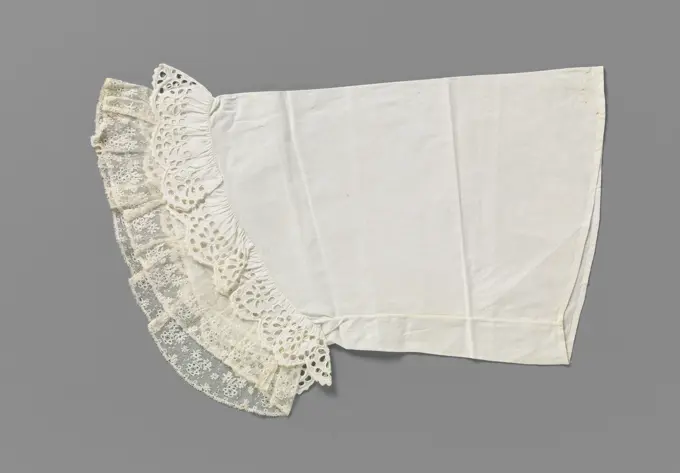
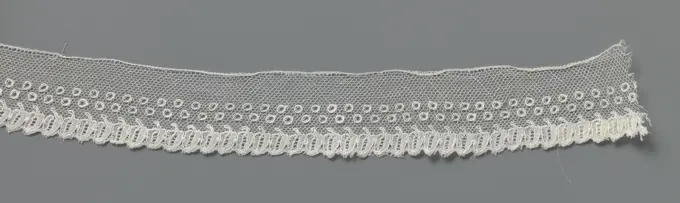
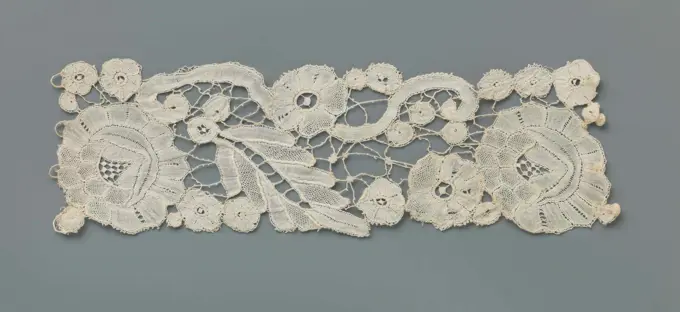
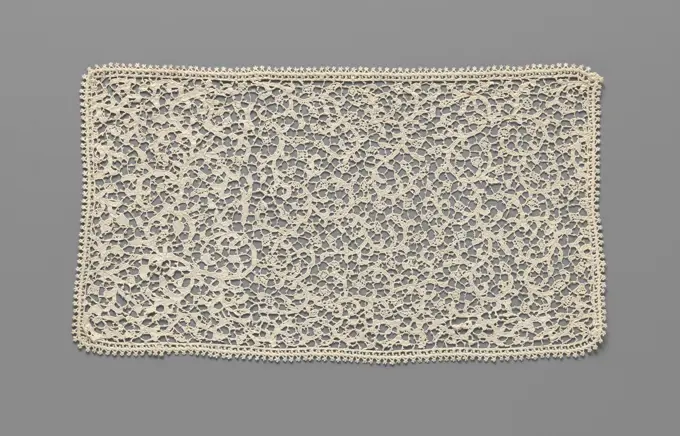
Delicate lace pieces from different centuries, featuring intricate floral and geometric designs displayed on a subtle gray background.

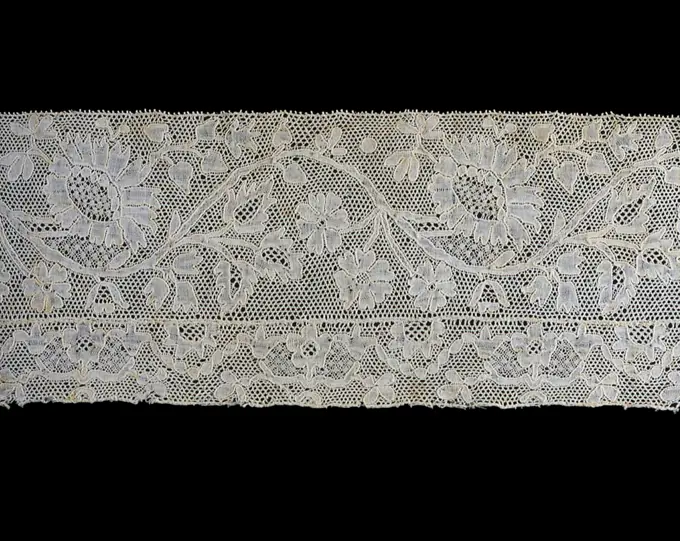
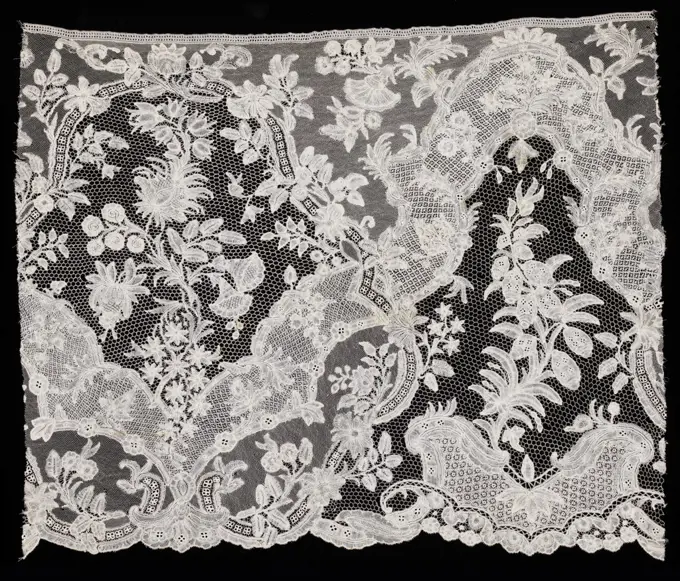
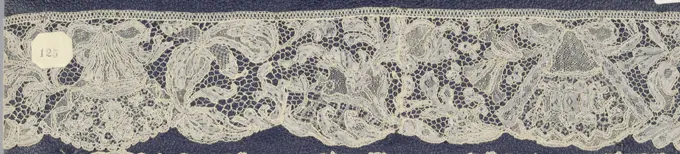
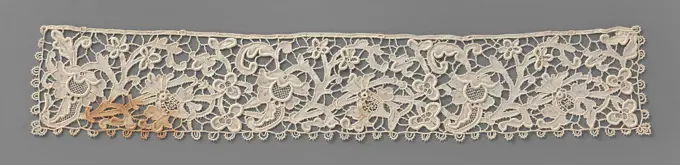
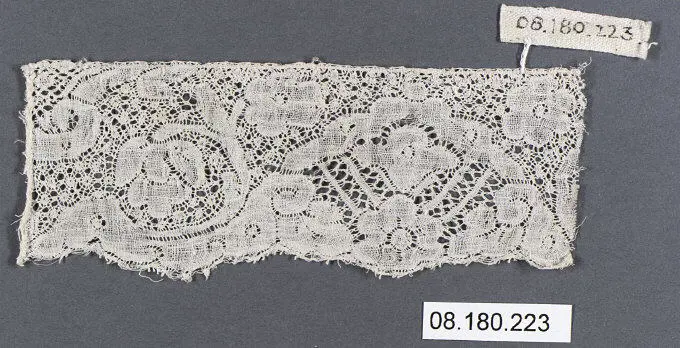
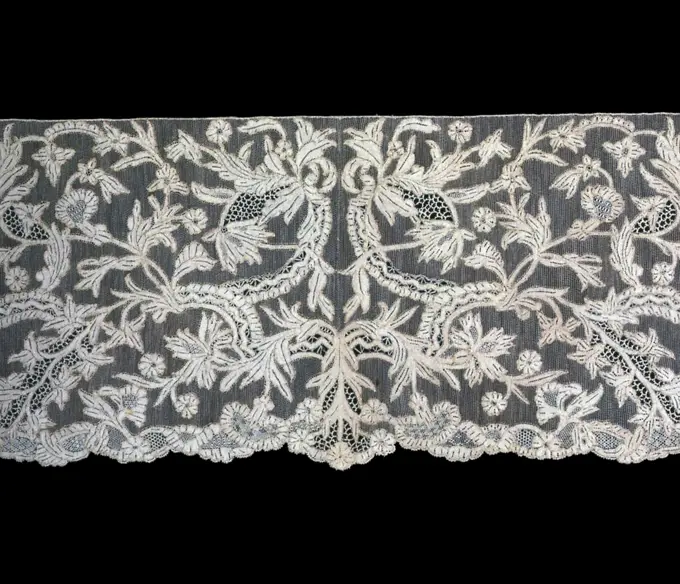
Strip bobbin with flying insects between flower branches, anonymous, c. 1740 - c. 1760 Strip of natural -colored Brussels bobbin. The pattern consists of flying insects between flower branches with different larger and smaller flowers. Along the underside, the pattern consists of a variety of curly leaves, fruits, rosette flowers and decorative tires that form as-symmetrical cartouches. The motifs are connected by a fine Maas soil, a drachel soil. The fullwork is largely made in linen battle with openwork edges and recesses. A few (flour) leaves and insect wings are made in netslag. Most motives are provided with burst relief contours. Different ornamental grounds have been applied, including fine snowflake grounds and potented braids in the cartouches and potented braids between the flower branches. The top is straight. The irregularly scalloped underside is finished with picots. Brussels linen (material) bobbin lace / Brussels bobbin lace Strip of natural -colored Brussels bobbin. Th
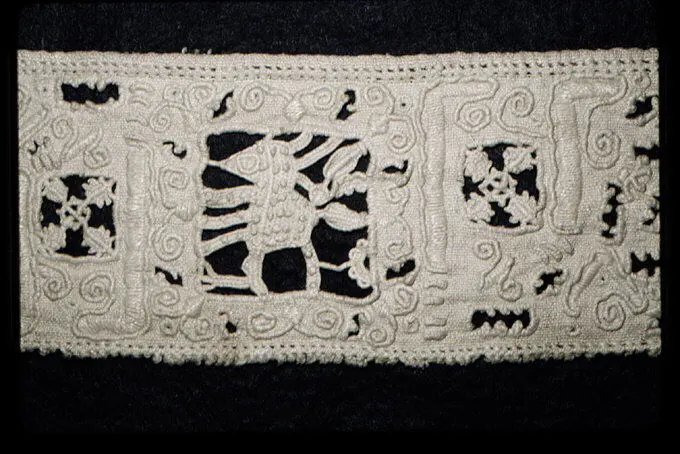
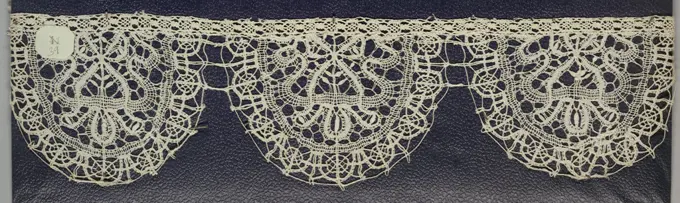
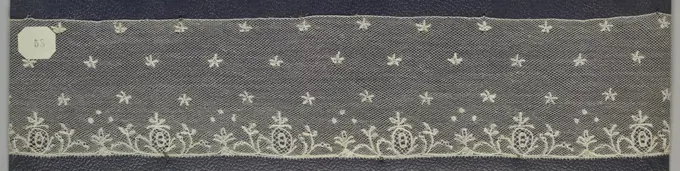
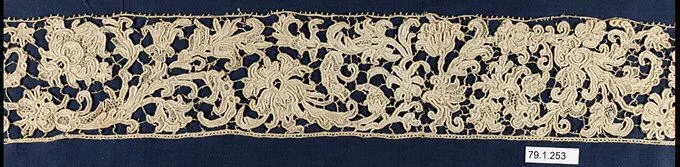
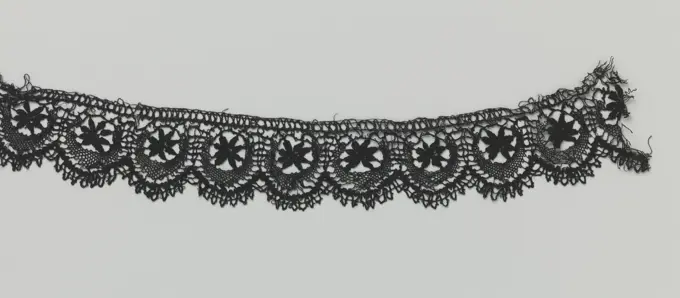
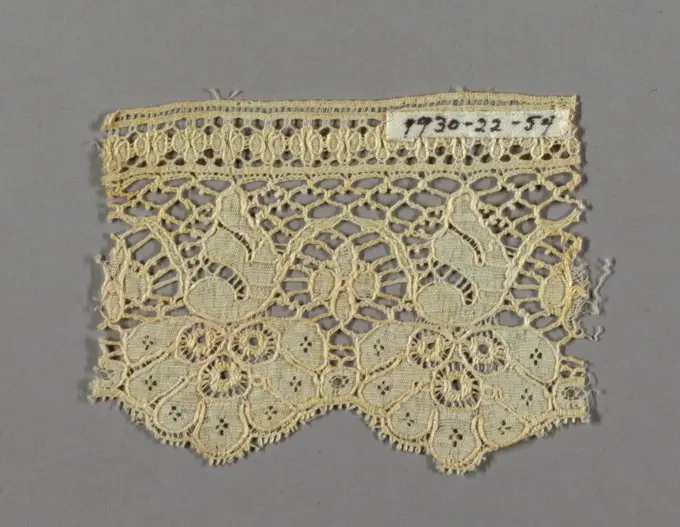
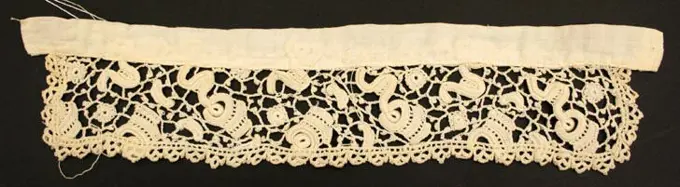
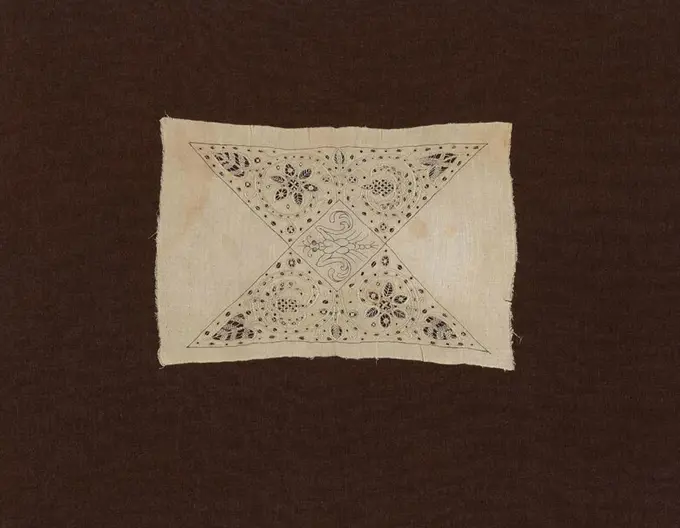
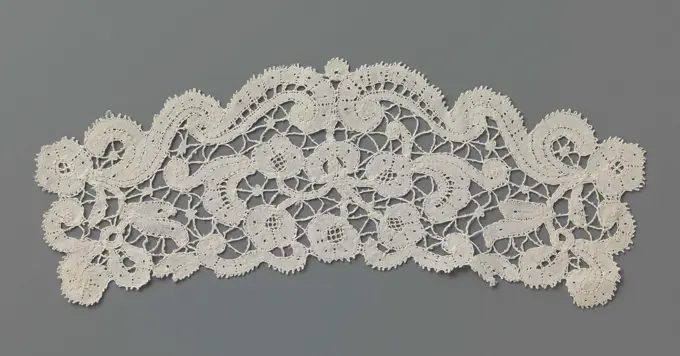
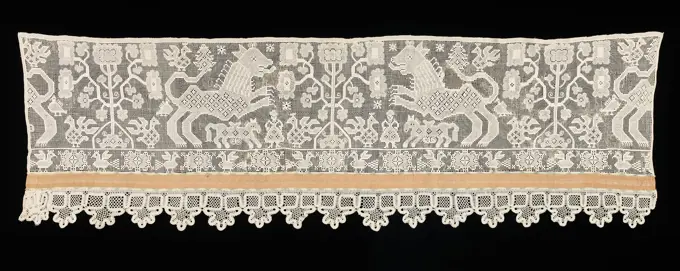
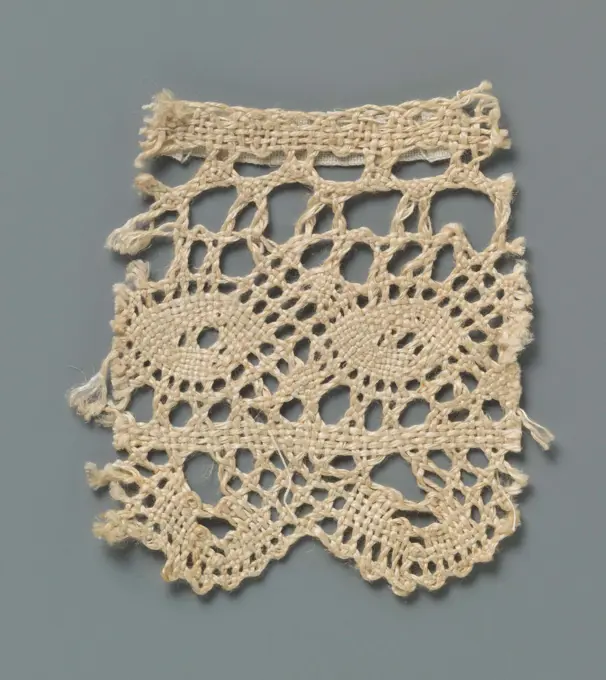
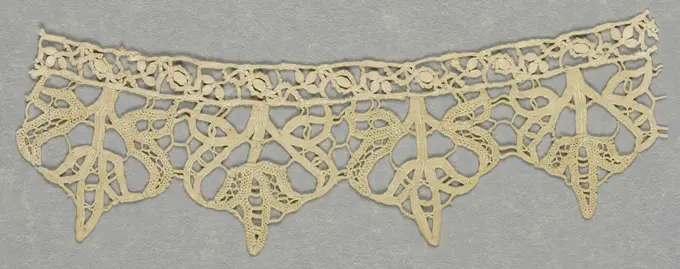
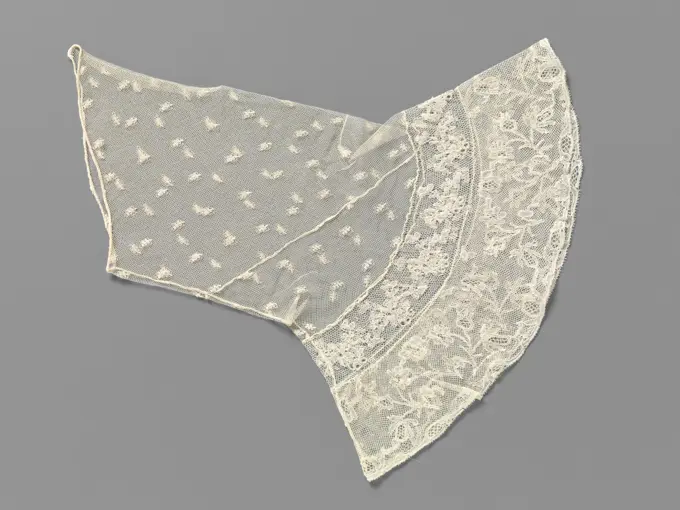
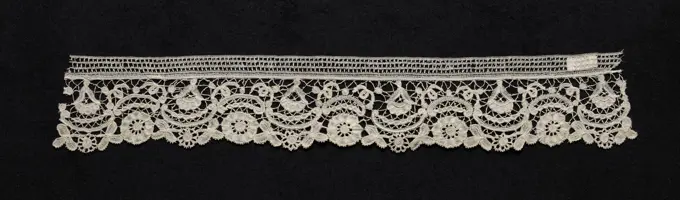
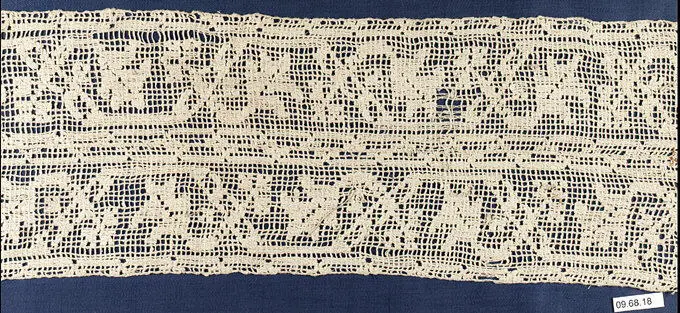
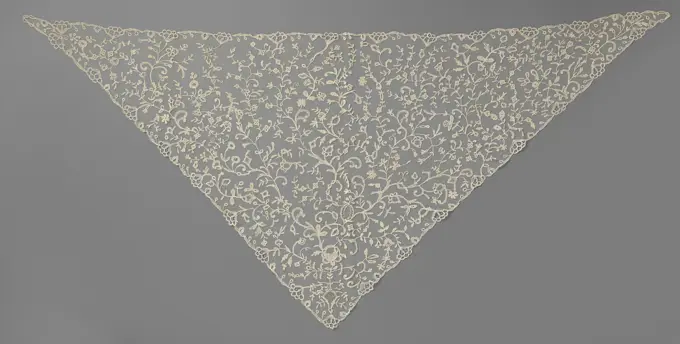
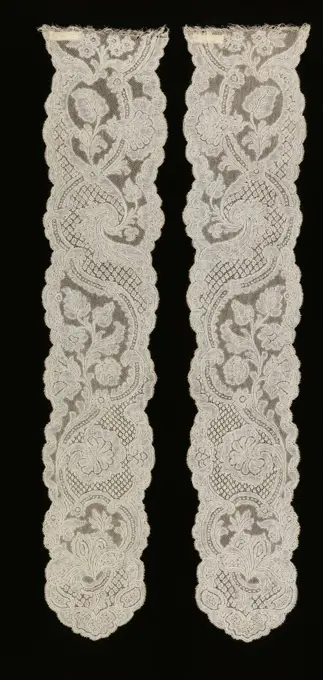
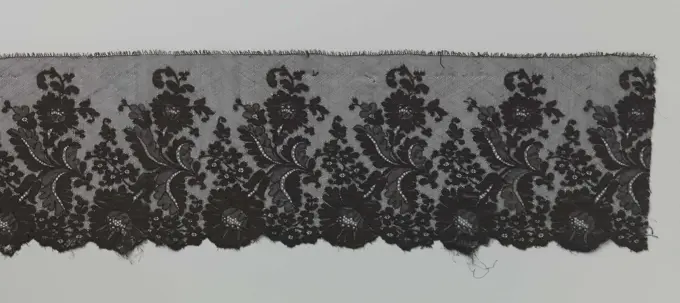
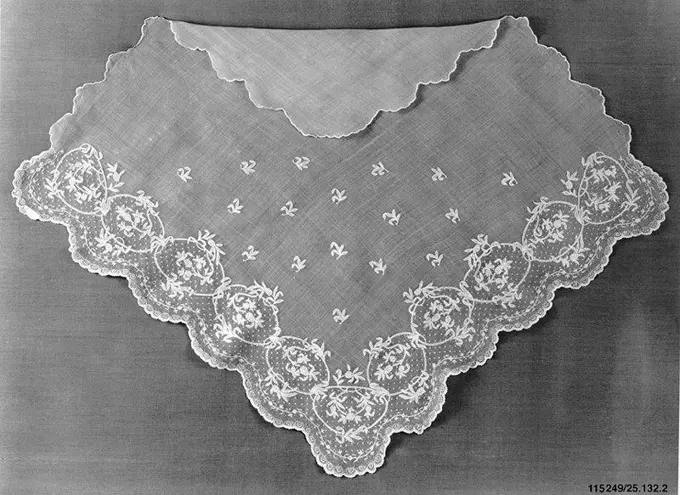
Strook kloskant zogenaamde pottekant.On a coarse grille (a Malinois or ice soil) there is a symmetrical pattern of two distant, hanging towers, which, in purpose, now above a low flower pot, then touch the straight outer edge and emboss a grid work medallion. There are two types of halved cross flowers on the inside. Both the tendrils and the cross flowers surround some parties filled with grid work. Mechelen side.Strip bobbin with three rows of windows and semi -rounds, anonymous, c. 1900 - c. 1915  Strip of natural-colored bobbin: Cluny side. The repeating and symmetrical pattern consists of diagonal lanes cloated in netslag, which form three rows of diamond -shaped fields and an upper fourth row with triangular fields, half windows. The middle cycling row is filled with windows in linen battle in which a cross is made with small recesses. The half version of this is in the top row. The other fields are filled with a five -part ground and has a flower with eight petals in the center in the center. The semicircular scrap edge is formed because the diagonal lines are completed here. The scrap edge is finished with a bow edge formed by a strong winding braid with picots. Bohemia linen (material) bobbin lace / Cluny laceBorder (From a Cover) Made 1675-1700 Italy. Linen, plain weave; embroidered with linen yarns; pulled threadwork, embroidered in Antwerp edge, crossed back, four-sided, Greek cross filling, interlocking lace, running, satin, and single faggot stitches .Handkerchief French late 19th centuryPagodemouw van Batist dropped off with an edge edge emphasis and a border. The Strip of English Embroidery is Partly Covered in The Edge.Edge; linen; Bequest of Marian Hague; 1971-50-394Lace, 1800s, maker unknown. Gift of Mary Francis, 1977.Strip bobbin with two rows of open mouses and a row of leaves, anonymous, c. 1850 - c. 1899 Strip of natural -colored bobbin, Lille side. The pattern consists of two rows of open mosjes on the center line of the strip, with a row of close -standing leaves close together directly along the underside of the strip. The motifs are connected by a fine Maas soil, a tuler land. The motifs are made in linen and mains, with thicker, shiny contour threads. The Mosjes are accentuated Mazen in the tuler land with a contour wire. The top of the strip is straight finished. The shells along the underside, which are created through the leaves, are finished with picots. Belgium cotton (textile) bobbin lace / Lille lace Strip of natural -colored bobbin, Lille side. The pattern consists of two rows of open mosjes on the center line of the strip, with a row of close -standing leaves close together directly along the underside of the strip. The motifs are connected by a fine Maas soil, a tuler land. The moSierstuk voor een avondmantel van gemengde kant met rozenhaag.Ornamental piece (cuff) for an evening casing of natural mixed side - climbing side in combination with needle lace - Brussels Duchesse. In a widely spread braid soil there are roses that usually support two leaves. An intermediate ornament consists of a few and double voluntaries and many small flowers. With natural-colored dust buttons and knot loops on the short edges.Strip 16th century Italian. Strip. Italian. 16th century. Cutwork. Textiles-LacesStrip of needle side with spiral vines entertained into a rug, anonymous, c. 1900 Strip of natural needle side, venise flat. The strip was entertained around 1900 into a rug. Pattern with irregular branched spiral vines, on which coral -shaped buds or flowers and short -length leaves. Soil with irregularly potented bars. Motives with highly closed feston or buttonhol stitches, without relief and with little decorative stitches. The rug is put together with many pieces. For example, there are narrow strips along three sides with another pattern, across the spiral vines. All around it is finished with a modern passion with dots. Venice linen (material) flat Venetian (needle point) Strip of natural needle side, venise flat. The strip was entertained around 1900 into a rug. Pattern with irregular branched spiral vines, on which coral -shaped buds or flowers and short -length leaves. Soil with irregularly potented bars. Motives with highly closed feston or buttonhol stitches, without reliefFragment, Medium: cotton Technique: Needle lace, interlacing and wrapping Technique: needle lace, interlacing and wrappping, Indeterminate pattern of three-lobed leaves and stems., northeastern Italy, late 19th century, lace, FragmentBorder (Netherlands); linen; Repeat: 17 inches; Bequest of Marian Hague; 1971-50-248Yoke (For Child's Dress). United States, Maryland, Baltimore. Date: 1890. Dimensions: . Linen, plain weave; embroidered in padded satin, straight overcast, buttonhole, back and seed stitches; punched work in curved lines resembling hemstitching; overcast eyelets. Origin: United States. Museum: The Chicago Art Institute, Chicago, USA.Edging 17th century Italian. Edging 220925Cuffs late 17th century Italian. Cuffs 169670Border (Fragment) Made 1750-1800 Flanders. Cotton, bobbin straight lace of a type known as Mechlin with a kat stitch mesh ground .Strip of a climbing side with ribbons that form a symmetrical pattern from above. Strip natural colosside, Russian side. The strip shows a part of a symmetrical pattern, a piece of the pattern along the bottom is missing. The pattern is formed by two ribbons that run together along the top of the strip. At the point where the two ribbons make each other, they make a large S-shaped bend in the opposite direction, and then swing to each other again along the bottom. The ribbon is made in closed linen stroke, with open edges and the S-shaped bend is made in a cut-off. Relief contours are formed by a braid. At the part of the ribbon made in linen, this braid runs over the middle. At the portion of the ribbon made in the slipper, the braid splits and walks along the outer sides of the ribbon. The pattern is held by an ornamental ground of four-pointed stars with braids in shape and through a diamond-shaped mesh soil. In the center there is a flower with eight petals made in shape stroke. ThJapon strip of application side with symmetrical reserves along the lower edge, anonymous, c. 1840 - c. 1850 Japon strip of natural -colored application side, bobbin and needle side Applicated on mechanical tulle. Symmetrical pattern along the bottom edge with two reserves with gridwing filling, crowned with volutes and with five flowers at the bottom. Between the two reserves a rosette flower and two large flowers on the outside. Bent branches with large flowers from the decorated lower edge. The strip consists of three pieces of pieces and is sewn to BK-BR-J-191. Brussels Japon strip of natural -colored application side, bobbin and needle side Applicated on mechanical tulle. Symmetrical pattern along the bottom edge with two reserves with gridwing filling, crowned with volutes and with five flowers at the bottom. Between the two reserves a rosette flower and two large flowers on the outside. Bent branches with large flowers from the decorated lower edge. The strip consists of three pNeedlepoint Lace (Argentan Lace) Lappet, 1715-1774. France, Argentan, 18th century (Louis XV Period, 1715-1774). Lace, needlepoint: linen; average: 58.5 x 10.2 cm (23 1/16 x 4 in.).Bobbin Lace Edging, 18th century. France, Valenciennes or Flanders, 18th century. Lace, bobbin: linen; average: 4.8 x 9.6 cm (1 7/8 x 3 3/4 in.).Edging (Belgium); linen; a) H x W: 43 x 8.5 cm (16 15/16 x 3 3/8 in.) b) H x W: 43 x 8.5 cm (16 15/16 x 3 3/8 in.)Japonstrook van applicatiekant met gezwenkte poortboogjes.Japanese strip of natural brussels application side: dick side applicated on machining tulle. Symmetrical arcs, made up of thin c-voluten, wealthy above a spiral field, filled with a hanging flower branch. Wide edge of symmetrical, engagements and thrown spirals, which follow the slot, which are filled on the outside with godrinks with a hanging flower.Fragment ca. 1650 Italian. Fragment 212558Strip 16th century Italian. Strip. Italian. 16th century. Cutwork. Textiles-LacesKerchief 17th century German, Dresden. Kerchief 215232Strook kloskant met ijle s- en c-vormige rankjes met ovale knopjes.Strip natural colosside, binche side. The pattern consists of a jumble of ijle S and C-shaped ranks with oval buttons. The motifs are connected by a Maas soil, a Flemish grade. The very sparse full work is made in linselag with openwork edges. Upper and bottom of the strip are straight finished, the underside with picots.Edging. Culture: Italian. Dimensions: L. 160 x W. 6 3/4 inches406.4 x 17.1 cm. Date: 17th century.Punto in aria--literally, "stitches in the air"--is one of the earliest styles of needle lace, which is itself developed from cutwork of primarily geometric design. When lacemakers transitioned to using a foundation of threads laid out according to a pattern drawn on parchment, they were able to incorporate more fluid lines and curves into their designs. Museum: Metropolitan Museum of Art, New York, USA.Application side handkerchief with sixteen rocailles, anonymous, c. 1860 - c. 1870 Natural application side handkerchief: mixed side - needle side and bobbin - Applicated on mechanical tulle. An eight-lobe batisten centerpiece is bordered by every cru-colored side with large, lobed, shield-shaped reserves in the corners and smaller reserves in the middle of the sides. The contours of the corner reserves are formed by small C-volutes and rocailles with grid work (needle side). In the reserves are fine, curved twigs with dwarfanjers, forget mine fits (bobbin) and ranonkels (needle side). The fairly straight edge is made up of extraction leaves and rosette (needle side). France (possibly) linen (material). batiste Natural application side handkerchief: mixed side - needle side and bobbin - Applicated on mechanical tulle. An eight-lobe batisten centerpiece is bordered by every cru-colored side with large, lobed, shield-shaped reserves in the corners and smaller reserves in the middle of thHandkerchief, 1700s. Flanders, 18th century, Louis XVI Period. Embroidery on linen ground; lace edging; overall: 52.1 x 52.1 cm (20 1/2 x 20 1/2 in.).Border, Technique: bobbin lace, Bobbin lace edge, floral tab edge; mid-18th century Flemish, mid-18th century, lace, BorderFragment 18th century Flemish, Antwerp. Fragment 214473Fragment, Bobbin Lace 3; linenDasslip Van Point de Gaze de Brussels, Anonymous, c. 1900 - c. 1925  Point of Point de Gaze de Bruxelles. The edge is trimmed with two alternating wheels; One with a flower shape in the center and the other with circles. The wheels vary in size. Centrally an open -up medallion with two flowers contained in two different edges. The medallion is caught in a fond of tulle with leaf motif. West-Europa . Brussels Gaze PointNeedlepoint Lace Edging, 1715-1774. France, Argentan, 18th century (Louis XV Period, 1715-1774). Lace, needlepoint: linen; average: 5.1 x 34.4 cm (2 x 13 9/16 in.).Border, Technique: bobbin lace, Bobbin lace border, floral scroll; late 18th century Maline, late 18th century, lace, BorderInsert from Kloskant in lobed diamond shape with rose branch, anonymous, c. 1875 - c. 1899 Insert of natural-colored bobbin, Valenciennes side. Diamond -shaped with lobes. The pattern consists of a slightly curved branch with rushed leaves between which one rose. The rose is made in a mesh ground, a diamond-shaped Valenciennes ground, with one mushy top and below the branch. The motifs are made in linen battle with openwork edges and recesses. A band runs along the outer edge. Valenciennes cotton (textile) Bobbi Lace / Valenciennes Lace Insert of natural-colored bobbin, Valenciennes side. Diamond -shaped with lobes. The pattern consists of a slightly curved branch with rushed leaves between which one rose. The rose is made in a mesh ground, a diamond-shaped Valenciennes ground, with one mushy top and below the branch. The motifs are made in linen battle with openwork edges and recesses. A band runs along the outer edge. Valenciennes cotton (textile) Bobbi Lace / Valenciennes LaceEdging 16th century Italian, Genoa. Edging 221123Flounce fragment, Medium: linen Technique: Brussels style bobbin lace, Belgium, 1755-70, lace, Flounce fragmentFragment 18th century Italian, Genoa. Fragment 214906Strip 17th century Italian, Venice. Strip 212458Bobbin Lace 3, Medium: linen Technique: bobbin lace, Straight-edged band with cloud like forms and scalloped areas. Round mesh. Sewn to 1897-8-9., Netherlands, 18th century, lace, Fragment, FragmentStrip bobbin with star and crescent, anonymous, c. 1900 - c. 1929 Strip of black bobbin, cluny side. Symmetrical design with deep scoops and a braid ground. Each shell is filled with an eight -pointed star that is comprised by a lying half moon at the bottom. The scrap edge is finished with arcs and fine dots of potented braids. The top of the strip is straight finished. France (possibly) silk bobbin lace / Cluny lace Strip of black bobbin, cluny side. Symmetrical design with deep scoops and a braid ground. Each shell is filled with an eight -pointed star that is comprised by a lying half moon at the bottom. The scrap edge is finished with arcs and fine dots of potented braids. The top of the strip is straight finished. France (possibly) silk bobbin lace / Cluny laceFichu 19th century British. Fichu 102585Border, Medium: Technique: needle lace, Needle lace, fan shapes and floral scrolls repeated; early 18th century Argantan joined, early 18th century, lace, BorderBand, Medium: linen Technique: tambour work on net, Net band with tambour embroidery in floral spray design. Border of small ovals forms scallop along bottom edge. Tiny dots over ground., Limerick, Ireland, early 19th century, embroidery & stitching, BandInsertion 17th century Italian, Genoa. Insertion 220883Collar unknownTriangular scarf of black machining side with rose bouquets, anonymous, c. 1875 - c. 1880 Machine black lace scarf, coarse imitation of Chantilly side. Triangular model. The pattern has large rose bouquets and garlands that are caught in a pointed rising formation of C-Voluten. The sculpting edges are formed by Godrons and the tuler floor is littered with mosies. England (possibly) Machine black lace scarf, coarse imitation of Chantilly side. Triangular model. The pattern has large rose bouquets and garlands that are caught in a pointed rising formation of C-Voluten. The sculpting edges are formed by Godrons and the tuler floor is littered with mosies. England (possibly)Bobbin Lace 5, Medium: linen Technique: bobbin lace, Fragment of Valenciennes lace has a design of squarish conventionalized flowering branches. Round mesh., France, 18th century, lace, Fragment, FragmentFragment (USA); Manufactured by A .G. Jennings & Sons; cottonJaponstrook van applicatiekant met golvende rank en klokjesbloemtakken.Japon strip of Brussels application side, dick edge with coniferous sketch decorative stitches, confirmed on machine tulle. The strip is made as an upper strip of three strips for a crinoline juice. On the strip is a continuous pattern with a wavy and opened leaf drink to the left. Three rosette flowers and a large to the right reveal branch with bells flowers. Under one wave there are two richly decorated garlands, which form the deep slots. The motifs are made in linen stroke and the motifs are largely equipped with relief contours made with a thicker thread and here and provided with clost relief contours (ribs). One type of ornamental ground (needle side), with thickened knots decorated meshes, fills part of the motifs. The top edge is finished with a soil.Collar 1700-1941 American. Collar 119169Insertion from a Table Cloth. England. Date: 1601-1625. Dimensions: 16.2 x 23.7 cm (6 3/8 x 9 3/8 in.). Linen, plain weave; ink drawing; embroidered with silk and linen in chain and running stitches; cut and drawn work embroidered with linen in buttonhole, overcast, and Russian overcast stitches; with needle lace filling stitches. Origin: England. Museum: The Chicago Art Institute, Chicago, USA.Manchet van kloskant met hangende tros in symmetrische omlijsting.Cuff from natural colosside: Flemish Guipure. In a symmetrical frame of S volutes, rosettes and C volutes, an asymmetrical bunch with round-shaped fruits or flowers hangs. Braiding ground. Finish on all sides with uneven slot, which arise from the pattern. The cuff is rectangular with a raised center.Bed curtain border early 19th century Russian This object is from the collection of Natalia de Shabelsky (1841-1905), a Russian noblewoman compelled to preserve what she perceived as the vanishing folk art traditions of her native country. Traveling extensively throughout Great Russia, she collected many fine examples of textile art of the wealthy peasant class. From the 1870s until moving to France in 1902, Shabelsky amassed a large collection of intricately embroidered hand-woven household textiles and opulent festival garments with rich decoration and elaborate motifs. The Brooklyn Museum holdings include many fine examples including the majority of the garments. Portions of Shabelsky's collection are also housed at the Museum of Fine Arts, Boston, the Cleveland Art Museum, and the Russian Museum of Ethnography in St. Petersburg.. Bed curtain border 158390Bliżej Kultury unknownNeedlepoint Lace Lappet, 18th century. France, Argentan, 18th century. Lace, needlepoint: linen; average: 9.6 x 54.7 cm (3 3/4 x 21 9/16 in.).Strip of a climbing side with spitsovals. Strip natural colosside: sloping. The repeating pattern consists of a spiral rise surrounded by a table ground, a straw rotation, which turns on the top as fast in the open network of braids. Just below the consecutive spitsovals runs a right band in linselag with a slight sloping edge. The sloping edge is formed by a decorative belt from arches in linse stroke, which are linked to each other with fields in a steam ground. The top of the strip is straight finished, with a band in linen stroke from the braid.Border, Medium: linen Technique: punto in aria (needle lace), Fragment of a border has scalloped tabs formed by blossoms of three pointed lobes., Italy, late 16th century, lace, BorderOndermouw van kantborduurwerk met een manchet bestaande uit twee soorten kloskant.Submit of edge embroidery - tuledo strop on machine tulle - and a cuff of two strips of clusters: Lille and Malinois. The strip of Lille side is sewn at the bottom and the strip of Malino side at the bottom of the strip of Lille side. Pagodod model. A scattering pattern of berry branches is embroidered on the machine tulle. The reenching pattern of the Lille side consists of a lying branch with a rosette flower, three berries and some erraticly shaped leaves. The repeating and symmetrical pattern of the Mechelen side consists of a horseshoe-shaped arc formed by two flower branches with a few different flowers. Along the very flat sloping edge, oval fields are formed by leaves or twigs, interspersed by a hand-shaped leaf right under the bow. The edge is finished with picots.Bobbin Lace (Duchesse) Lace Edging, 19th century. Belgium, Brussels, 19th century. Lace, bobbin: linen; average: 6.4 x 40.7 cm (2 1/2 x 16 in.).Bobbin Lace Edging, 17th century. Italy, Genoa, 17th century. Lace, bobbin; average: 8.6 x 51.5 cm (3 3/8 x 20 1/4 in.).Collar 18th century French. Collar 226113Border 18th century French. Border 212562Collar of linen with intermediate mingage and shell strips in reticella, anonymous, c. 1630 - c. 1635 Collar of linen with intermediary and shell strips in Reticella, marked in the board with a gothic letter H. lying, smoothly sewn on a collar, which was laid around by means of numerous spine seams, with a smooth lace lane. The collar has a sides intermediate creature with a pattern of equal squares filled with windows, triangles and arches. The strip of lace is sculpted and has a pattern of deep arch shapes touching each other and bows radiating in the tops, surrounded by squares that have been raised with three ovals. Italy linen (material). Collar of linen with intermediary and shell strips in Reticella, marked in the board with a gothic letter H. lying, smoothly sewn on a collar, which was laid around by means of numerous spine seams, with a smooth lace lane. The collar has a sides intermediate creature with a pattern of equal squares filled with windows, triangles and arches. The Cravat end early 18th century Flemish. Cravat end 218151Border ca. 1600 Italian or German. Border 217950Border Made 1601-1625 Italy. Linen, needle lace worked on a laid and plaited thread ground, Reticello pattern; edged with bobbin straight lace points .Manchet van naaldkant met getongde bloem.Cuff of natural needle side: Venetian relief side. Against an open bars ground is an ongoing pattern of tendrils with pomegranates and a tongue flower. Along three sides a list of doubled arcs.Handkerchief 1872 Belgian. Handkerchief 168628Fragment (Italy); linenBorder mid-19th century Flemish. Border 227329Handkerchief (England); linenOplegstuk van gehaakte kant imitatie grove Venetiaanse kant.V-shaped image of natural-colored Irish crochet side, imitation coarse Venetian needle side. The long sides of the V are finished with a copied bow edge. The short side is not finished.Application side scarf with the open edge flowers.shawl of natural applicators, climbing side applied to machine tulle. Triangular model with a tightly sprinkled pattern of low swinging stems, crossing each other. They end in volutes and sometimes in openwork edge flowers. In the point there are a large poppy, an aan-shaped fruit and seed beads, all with grid pattern. Furthermore, multiple smaller flowers and spindular leaves.Handkerchief with a border of needle side with wheels edges. Handkerchief with an edge of natural needle lace, Brussels mesh edge. For a cross-shaped batters center piece, a wide lobed edge runs. Along the outer sides, a fine meshing is governed by hollow C-voluten with wheelsh edges, interspersed by relief roses. The inner edge is formed from hollow and convex c-voluten. In the corners stand on the mesh net flies of forgetmine beaniesShawl. England or France. Date: 1860-1869. Dimensions: 140.2 × 275.8 cm (55 1/8 × 108 5/8 in.). Silk and mohair, Pusher machine lace. Origin: England. Museum: The Chicago Art Institute, Chicago, USA.Sierloop of linen with a front of the needle side with the weapon of Belgium, anonymous, c. 1914 - c. 1918 Demolition of natural linen with a front of parts made in needle side and parts made in bobbin. Within a reticella list (needle side) of squares with rosettes and half -shaped sculptes with half rosettes along the outside, is in a rectangular midfield (needle side) the crowned weapon of Belgium and the text "L'Union Fait La Force" - Eendracht makes power - The national weapon spell. On the weapon a climbing lion and two -looking lions as shield carriers. In a decorative edge up and below midfield, the year 1914 is embroidered on a traly land (bobbin). The same grid land comes back in two panels next to midfield, with open -worked drop -shaped fields (mixed side: bobbin with a few needle -sided soils). The demolition was donated by Belgian refugees to the doctor G.H. De Jong and his wife, both of whom were active for the help committee in Amsterdam. Brussels (possibly) linen (materCap Streamers (Belgium); linenFragment 18th century Flemish. Fragment 214577Tray cloth tray clothsStrook machinale kant met grote hangende bloem.Strip black machine side: machining chantilly-side. Running pattern of swiveled flower branches, splitting in two and marking dark against a mesh stock. Founded stems is a small, hanging stems a large flower, which forms the slot with a side branch of blossoms.Strip of black machine side with dragonflies, anonymous, c. 1890 - c. 1899 Strip of black machine side: Machinal Chantilly side. The repeating pattern consists of two, almost straight -placed, flying dragonflies. The wings of the upper Libelle are more upset and those of the lower dragonfly sideways. A thin, split rose branch with a few flowers and leaves originates at the bottom of the strip on a wavy line, which consists of a succession of rose branches. There is a curved short decorative band with a square grid under each wave top. The motifs are provided with contour threads and are connected by a machine tuler floor, which is littered with mosies. As a decorative land, a machine rose soil has been used in the curved decorative band and in the flower hearts. The curved decorative belt forms the Schulpenrand, which is finished with picots under the tops of the continuous wavy rose branches. The top of the strip is cut straight and not finished. Calais cotton (textile) Strip of blackBorder; medium:Piece 18th century () Flemish. Piece 220798Lace;  XVI/XVII century (1590-00-00-1610-00-00);Edge Lace (Italy); linenBobbin Lace Insertion with Fringe, mid 16th century. Italy, Venice, mid 16th century. Lace, bobbin; average: 5.8 x 24.2 cm (2 5/16 x 9 1/2 in.).Borders Made 1875-1900 Italy. Cotton, needle lace .Oplegstuk van gehaakte kant met roosje en klaverblaadjes.Triangular design of natural-colored Irish crochet side. Central to the triangle a layered rose with a scattering pattern with a cloverleaf and dots around it. Crochet soil with picoted diamond shaped mesh. Along all sides finished with picoted three-piece arcs.Square, Medium: linen Technique: grid of withdrawn element work with needle lace, reticella style, Large square formed by three rows of three squares each. Modes: brides, portes., Italy, 16th century, lace, SquareChalice Cover (Italy); linenFragment, Medium: linen Technique: bobbin lace (Brussels-style), Fragment wtih a small-scale meandering floral design. Oval scrolls on the edges have decorative filling stitches. Vrai droschel ground., Belgium, 1750-1800, lace, FragmentStrip late 18th century French. Strip 212389Kerchief (Pañuelo) first half 19th century Philippine, Manila. Kerchief (Pañuelo) 221682Strip ca. 1700 Italian, Venice. Strip 212461Albesto smoke van Kloskant with bouquets and bows, anonymous, c. 1765 - c. 1780 Albesto smoke of natural -colored Brussels bobbin side. Symmetrical pattern with bouquets, bows and garlands on drochel soil. Fullwork in Linnenlag and Netslag, with burst of relief contours (ribs). Numerous decorative lands made with, among other things, partridge eyes. The pattern along the lower edge is formed by interconnect double shades and a pendulum of roses. The scoops formed by this pattern are filled with decorative soil. The upper edge is finished with a cracked edge. Brussels linen (material) bobbin lace / Brussels bobbin lace Albesto smoke of natural -colored Brussels bobbin side. Symmetrical pattern with bouquets, bows and garlands on drochel soil. Fullwork in Linnenlag and Netslag, with burst of relief contours (ribs). Numerous decorative lands made with, among other things, partridge eyes. The pattern along the lower edge is formed by interconnect double shades and a pendulum of roses. The Kloskant collar with ivy leaf, anonymous, c. 1910 - c. 1920 Collar of natural-colored bobbin, Valenciennes side. The collar is made of a double strip lace, on the folding line a narrower, wrinkled strip of lace is sewn. A mother -of -pearl button is attached to one side. The folded strip has a repetitive motif of ivy leaves on a square Maas soil, with a row with slightly staggered mushes above it. The top of the strip is not finished. At the underside, silly scallops, formed by connected cogs. Netherlands (possibly) linen (material) Bobbi Lace / Valenciennes Lace Collar of natural-colored bobbin, Valenciennes side. The collar is made of a double strip lace, on the folding line a narrower, wrinkled strip of lace is sewn. A mother -of -pearl button is attached to one side. The folded strip has a repetitive motif of ivy leaves on a square Maas soil, with a row with slightly staggered mushes above it. The top of the strip is not finished. At the underside, silly scallops, formed by connectFragment; linen