Vintage Lace Strips

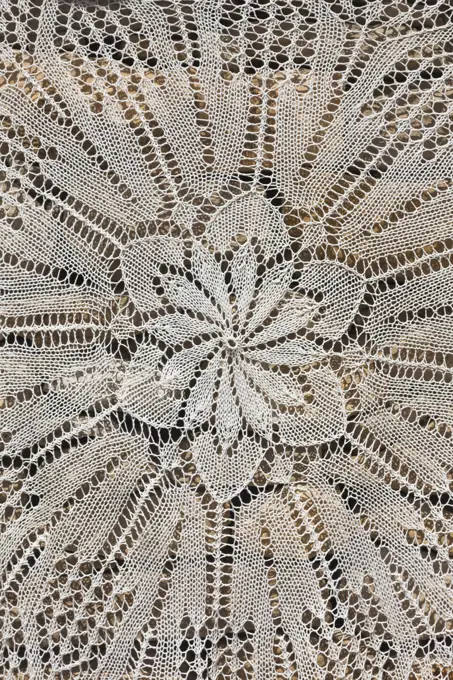
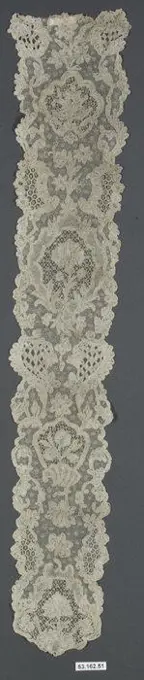
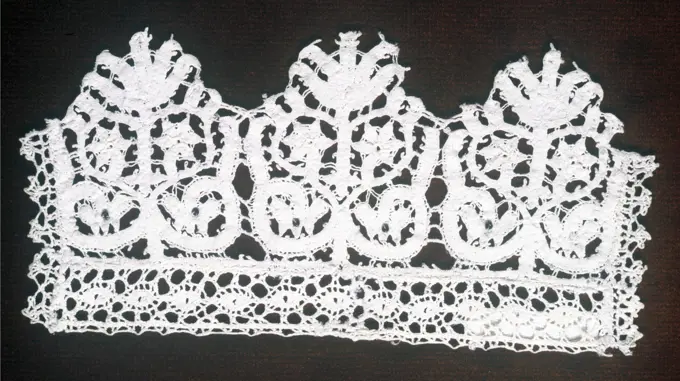
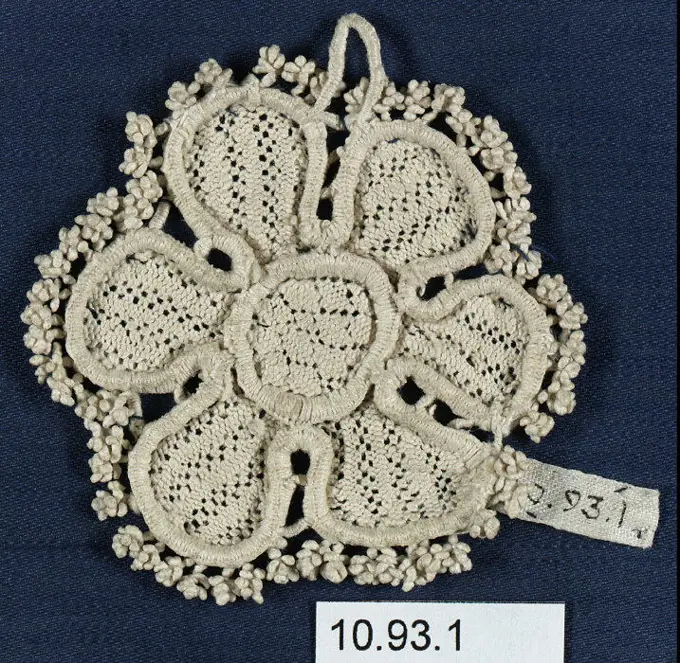
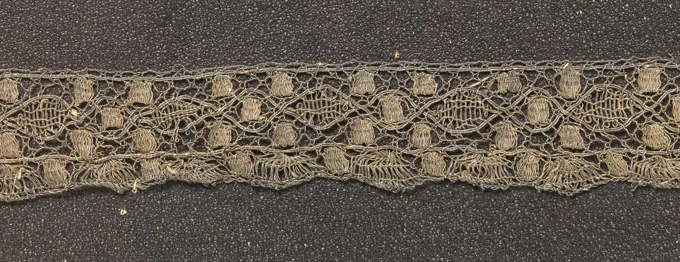
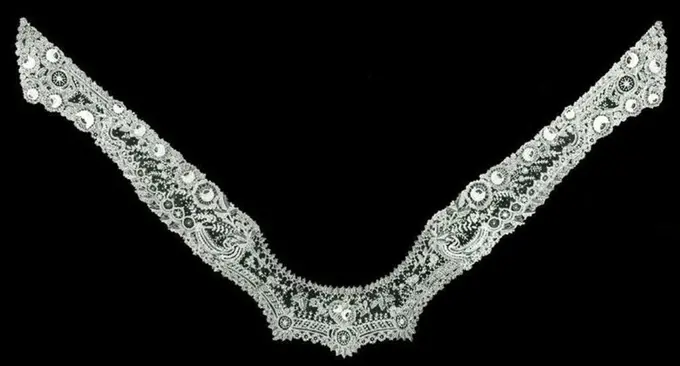
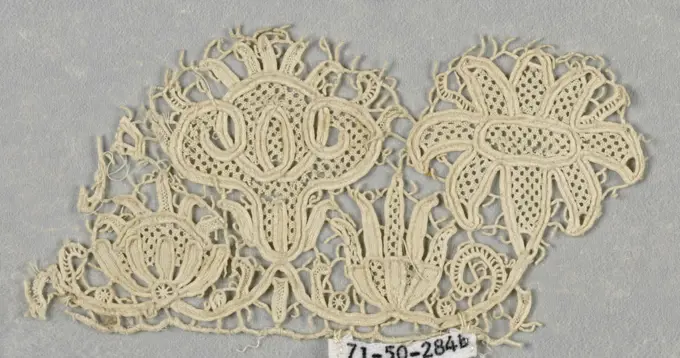
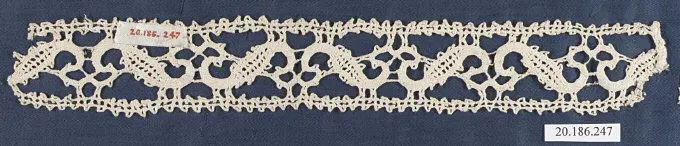
Intricate lace strips featuring floral and vine patterns, showcasing craftsmanship from the 17th to 19th centuries in natural linen shades.

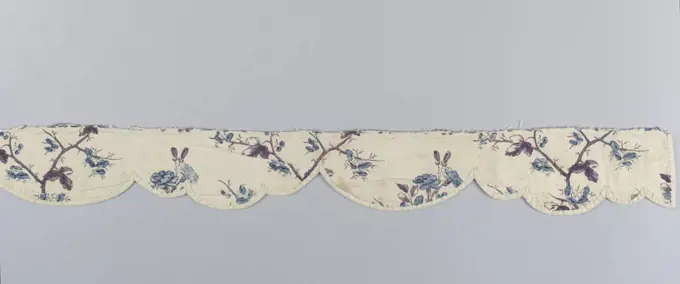
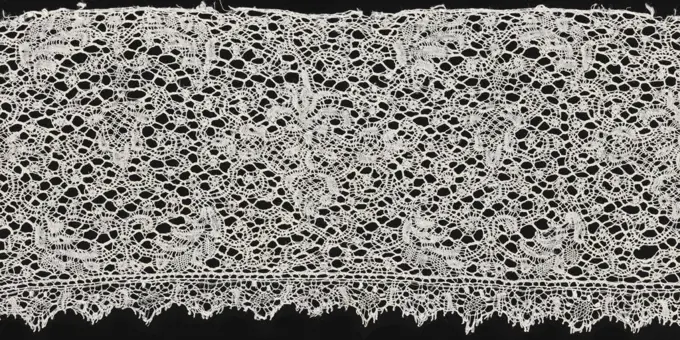
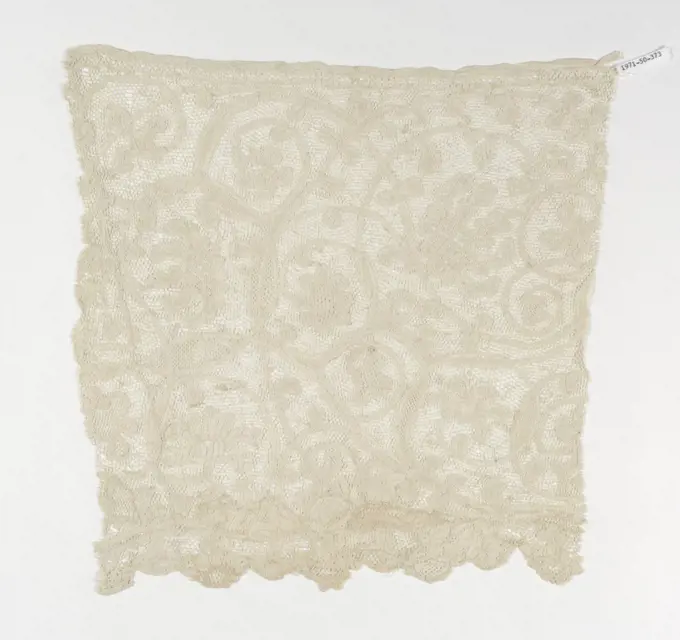
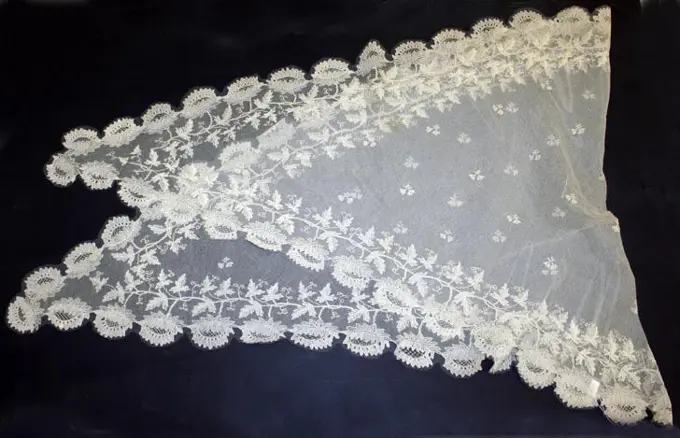
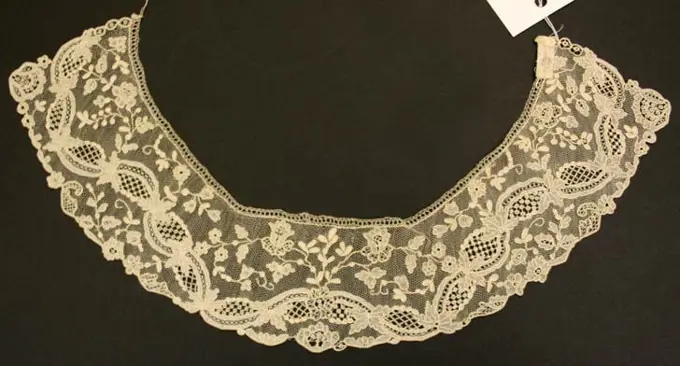
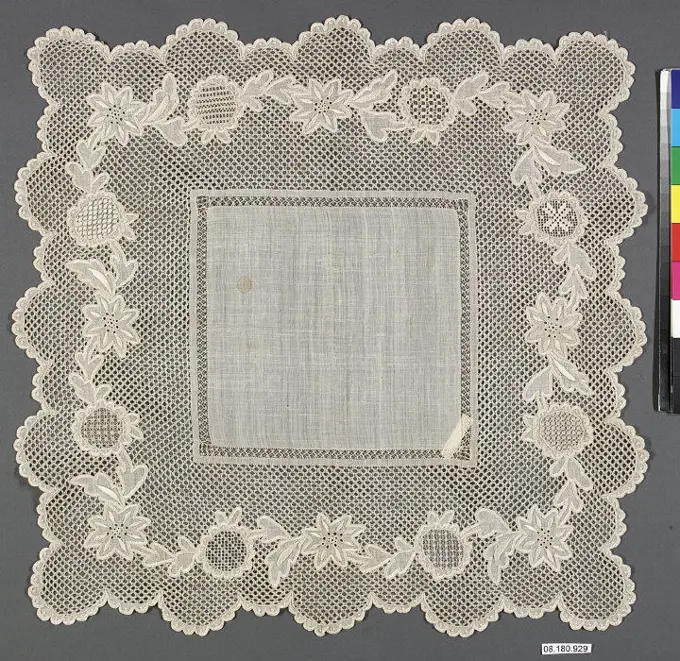
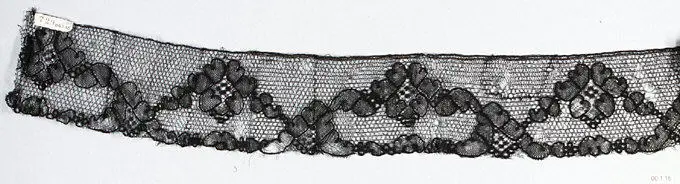
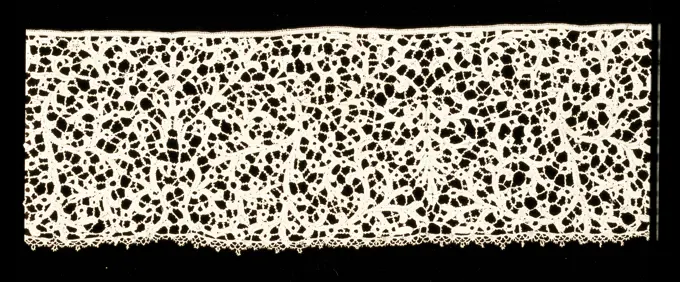
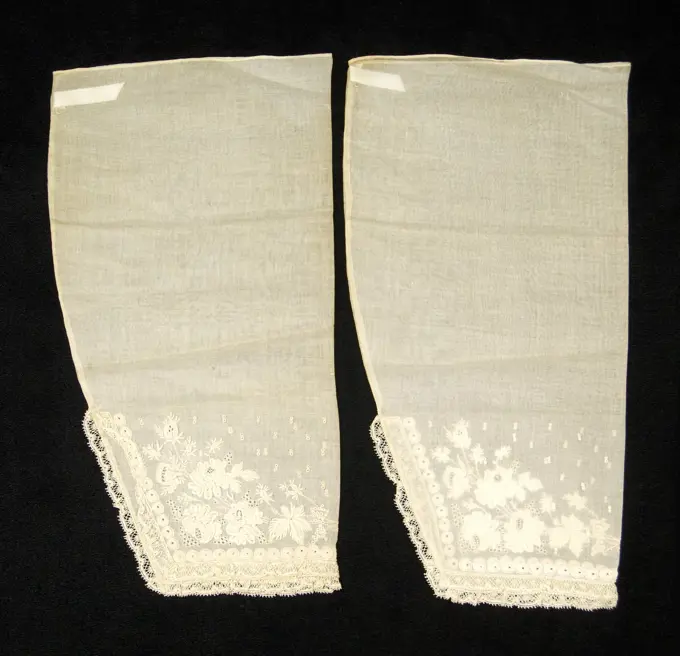
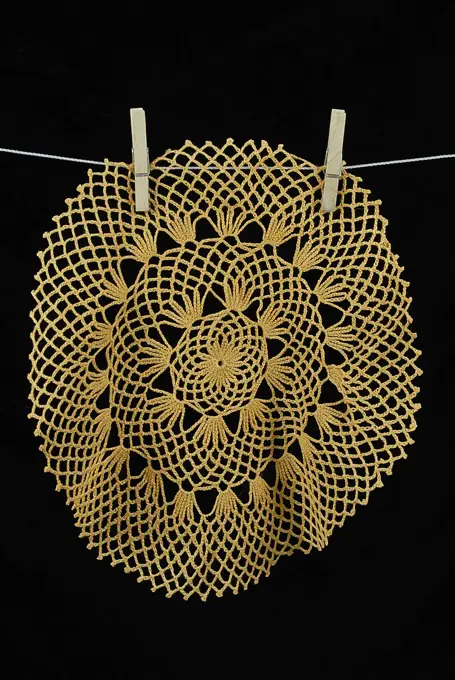
Border (Belgium); linen
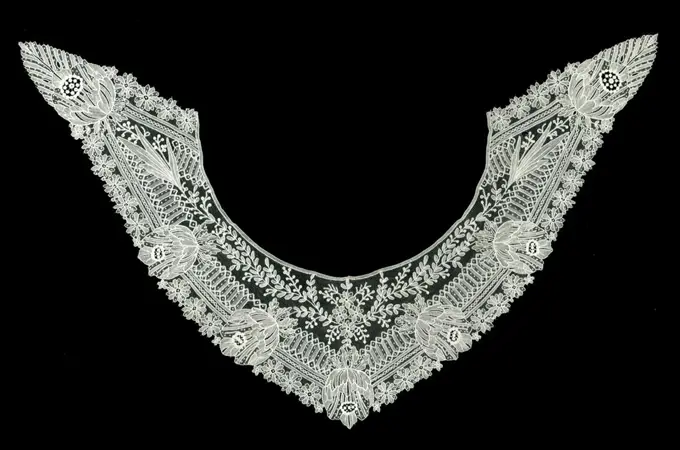
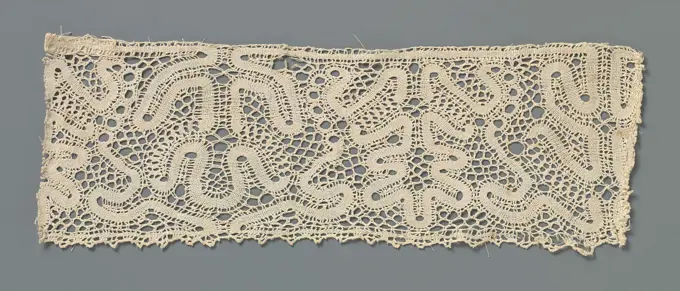
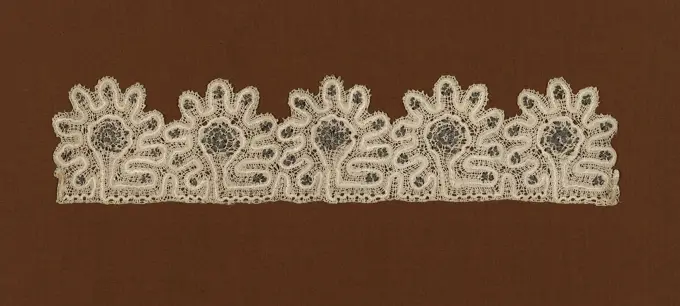
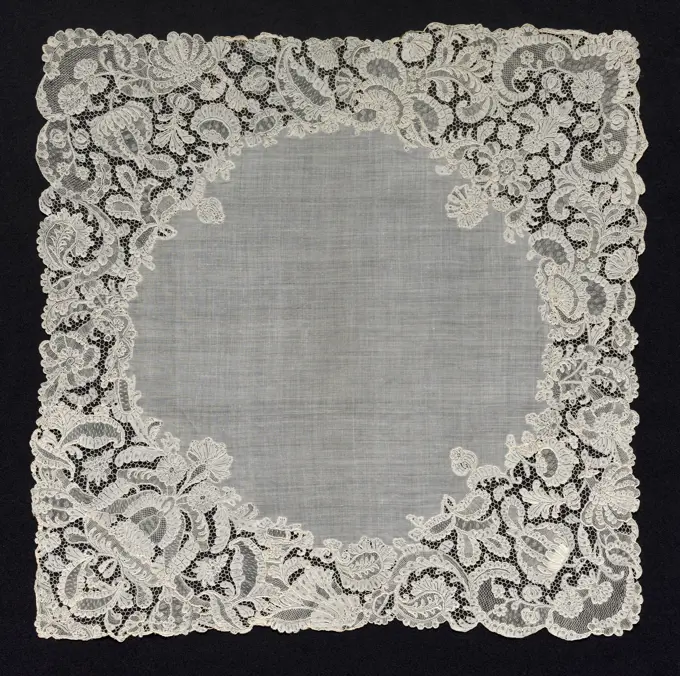
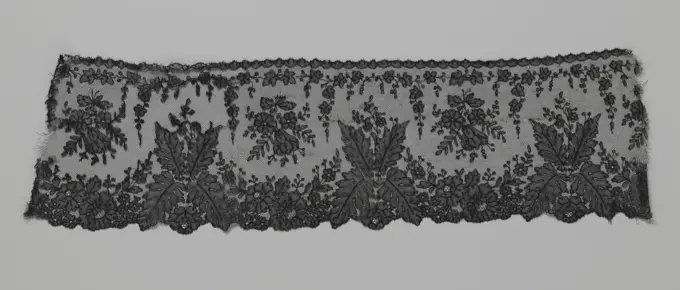
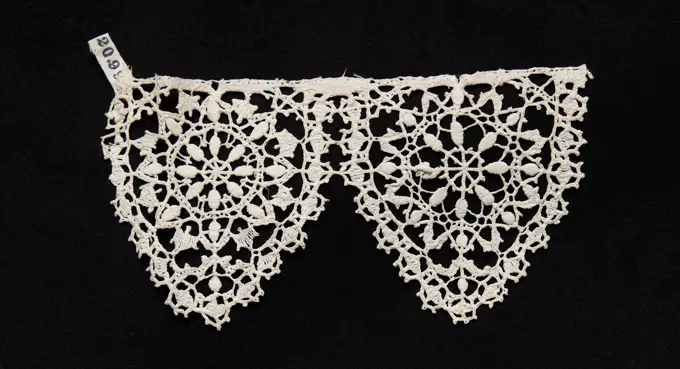
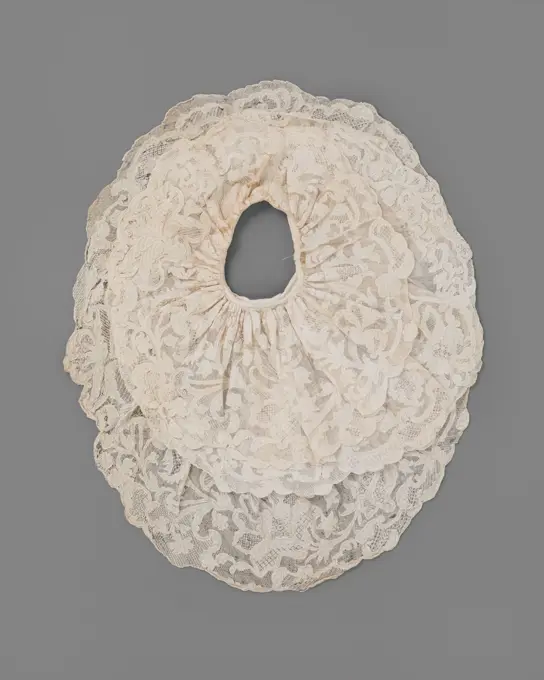
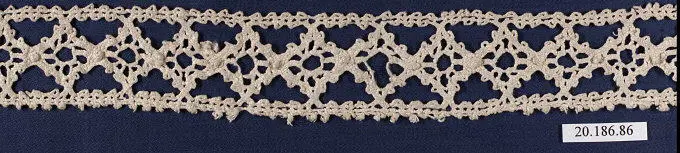
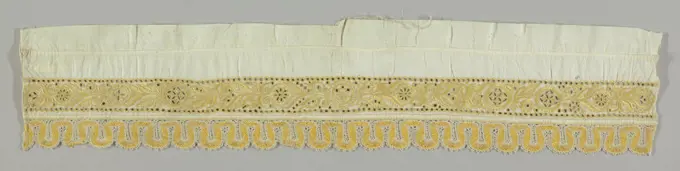
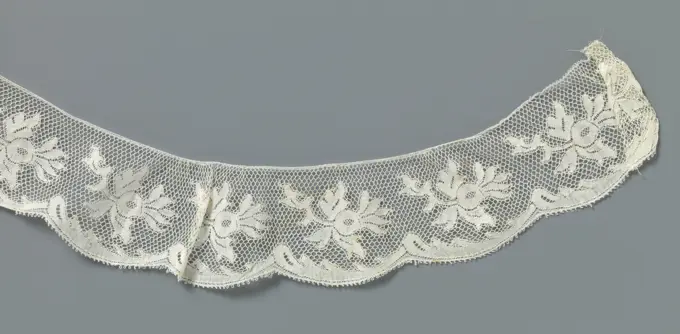
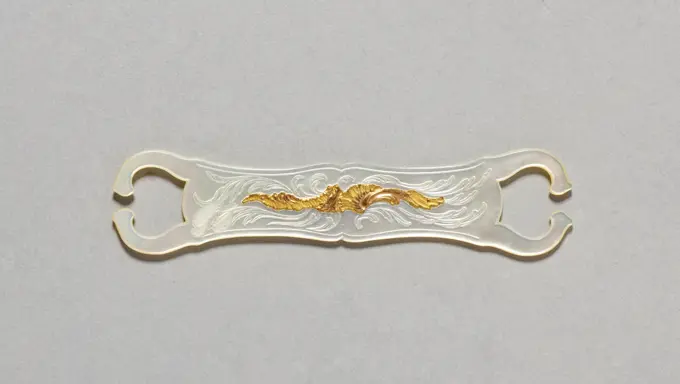
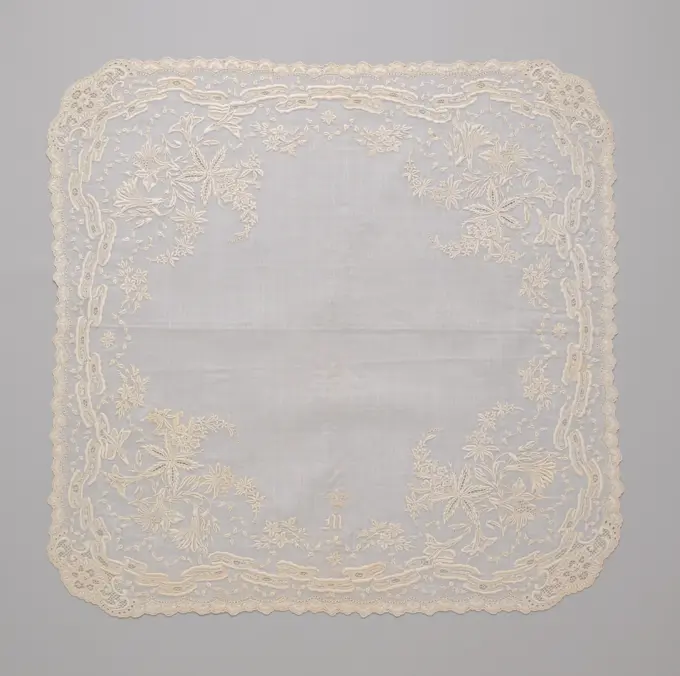
Insertion 17th century Italian, Florence. Insertion. Italian, Florence. 17th century. Bobbin lace. Textiles-LacesCollar Made 1875-1900 Belgium. Cotton, needle lace of a type known as Point de Gaze .Edging 17th century Italian, Genoa. Edging 220966Border Made 1575-1625 Italy. Linen, macramÈ .Paper for diploma Beautiful needlework. Strip of fat.Ornament, Medium: Technique: bobbin made continuous tape with connections, Tape like pattern forming leaf motif., 17th century, lace, OrnamentFragment of the lace;  18th century (1701-00-00-1800-00-00);Bobbin Lace (Needlepoint Design) Insertion, second half of 16th century. Italy, Genoa, second half of 16th century. Lace, bobbin; average: 3.2 x 32.7 cm (1 1/4 x 12 7/8 in.).Border. Flanders, Brussels. Date: 1755-1765. Dimensions: 7.5 × 217.3 cm (3 × 85 1/2 in.)Width repeat: 52-52.2 cm (20 1/2 in.). Linen, bobbin part lace of a type known as "Brussels" with a Droschel mesh ground. Origin: Brussels. Museum: The Chicago Art Institute, Chicago, USA.Insertion 16th century Italian. Insertion 220875Fragment. Culture: Italian. Dimensions: L. 76 x W. 4 1/2 inches (193.0 x 11.4 cm). Date: 17th century. Museum: Metropolitan Museum of Art, New York, USA.Shawl. Culture: Belgian, Brussels. Dimensions: 27 1/4 x 3 7/8 in. (69.2 x 9.8 cm). Date: ca. 1840. Museum: Metropolitan Museum of Art, New York, USA.MUTS VAN Old Brussels Kloskant, Anonymous, c. 1780 - C. 1790 Kloskant hat with floral vends on a tulle ground. The model has been changed by points set. The hat can be cut down by means of a basting cord. Brabant . Brussels bobbin lace Kloskant hat with floral vends on a tulle ground. The model has been changed by points set. The hat can be cut down by means of a basting cord. Brabant . Brussels bobbin laceFragment; linen; 1897-8-312Strook kloskant met gestileerde symmetrische bloemen.Strip natural colosside, osteuropese side. The pattern consists of two stylized symmetrical flowers, wherein the contours are made with winding ribbons, which vary at least in width. One flower has a chalice with three lobes and could imagine a tulip. The other is a palm mining flower has five lobes. Both flowers hang down from the top of the strip until almost at the bottom. The motifs are connected by a variety of Maas soils. The ribbons are made in linen stroke with openwork edges. The top is finished with a straight splitting ribbon in linen stroke with borders open on both sides. The underside is finished with a slip edge where the scallops are made with braids.Lace, 1800s , maker unknown.Border Made 1750-1825 Bohemia. Linen, silk, and gold-gilt-silver-strip-wrapped silk, bobbin part-lace .Cap from the needle side, anonymous, c. 1770 - c. 1790 Cutslip from Alençon side, with round end. The pattern consists of flower and leaf vessels on which pomegranates and berries hang. The scalloped edges are trimmed with picots. West-Europa linen (material). Alençon Lace Cutslip from Alençon side, with round end. The pattern consists of flower and leaf vessels on which pomegranates and berries hang. The scalloped edges are trimmed with picots. West-Europa linen (material). Alençon LaceEdging 17th century Italian, Venice. Edging 220817Length of brocaded velvet first half 16th century Italian. Length of brocaded velvet. Italian. first half 16th century. Silk and metal thread. Textiles-VelvetsNeedlepoint (Point Alençon) Lace Handkerchief, mid 18th century. France, Alençon, mid 18th century. Linen center with border of needlepoint lace; average: 43.2 x 43.2 cm (17 x 17 in.).Bridal veil made of lace border border on tulle with scalloped edge and rosette flowers, anonymous, c. 1825 Bridal veil of natural -colored lace bobbins, tuledoor stop work. Pattern with half -circular scallops on all four sides, filled with a rosette flower with leaves pointing inner. A branch with three such flowers overhoeks has been placed in the four corners. The extension work is made of a thin and thicker wire. Netherlands linen (material) embroidering Bridal veil of natural -colored lace bobbins, tuledoor stop work. Pattern with half -circular scallops on all four sides, filled with a rosette flower with leaves pointing inner. A branch with three such flowers overhoeks has been placed in the four corners. The extension work is made of a thin and thicker wire. Netherlands linen (material) embroideringFragment, Medium: cotton Technique: relief printed on plain weave, Stylistic flowers in purple, light blue and black on an off-white ground, France, 18th century, printed, dyed & painted textiles, FragmentLength of brocaded velvet. Culture: Italian. Dimensions: L. 79 x W. 22 inches (200.7 x 55.9 cm). Date: first half 16th century. Museum: Metropolitan Museum of Art, New York, USA.Fragment 17th century Italian. Fragment 214999Bobbin Lace Insertion, 18th century. Spain, Huelva, 18th century. Lace, bobbin; average: 3.2 x 21 cm (1 1/4 x 8 1/4 in.).Hat -slip (fragment) from Mechelse side, Anonymous, c. 1750 Cap from Mechelse side. The pattern consists of volute bines with flowers and leaves on a ground of tulle. West-Europa linen (material). Mechlin (lace) Cap from Mechelse side. The pattern consists of volute bines with flowers and leaves on a ground of tulle. West-Europa linen (material). Mechlin (lace)Fragment, Medium: linen Technique: plain weave embroidered with withdrawn element work, needlework filling stitches, bobbin lace, Woven linen fragment with withdrawn element work and embroidery showing a diamond lattic design, and bobbin lace on one edge., Italy, 16th-17th century, embroidery & stitching, FragmentPiece 18th century Flemish. Piece 214545Band, Medium: linen Technique: bobbin lace, Binche style with no ground, Band with a floral pattern and a snowball ground., Belgium, late 17th century, lace, BandPanel Entitled Blue Ribbon Made 1760-1764 France. Linen and cotton, plain weave; block printed . Oberkampf Manufactory (Producer)Kloskant dress strip with ferns, anonymous, c. 1850 - c. 1855 Black bobbin jelly strip: Chantilly side. On an empty mesh stock there is a closed edge with scoops, filled with a garland of flowers and leaves. On the intersections there is a small shell with a hanging rose, above which a striker bouquet rises from four large fern leaves and a flower branch, which extends to the top edge. Here a horizontal climbing window with hanging twigs runs, while on the field above the large shell of this climbing crank a large bouquet depends, among other things with a tulip. France (possibly) silk bobbin lace Black bobbin jelly strip: Chantilly side. On an empty mesh stock there is a closed edge with scoops, filled with a garland of flowers and leaves. On the intersections there is a small shell with a hanging rose, above which a striker bouquet rises from four large fern leaves and a flower branch, which extends to the top edge. Here a horizontal climbing window with hanging twigs runs, while on Doily (Mexico); linenBobbin Lace Insertion, mid 16th century. Italy, Venice, mid 16th century. Lace, bobbin; average: 2.3 x 17.5 cm (7/8 x 6 7/8 in.).Collar in sailor model with Reticella, C.I. Bosch Reitz-Teding van Berkhout, c. 1900 - c. 1910 Collar in sailor model with reticella. Lying model, wide and square on the back and narrower in a V-neck with straight ends at the front. The Reticella edges consist of squares, subdivided into crucifixes filled with concentric windows. The toothed edges are made of crochet. Amsterdam linen (material) crocheting Collar in sailor model with reticella. Lying model, wide and square on the back and narrower in a V-neck with straight ends at the front. The Reticella edges consist of squares, subdivided into crucifixes filled with concentric windows. The toothed edges are made of crochet. Amsterdam linen (material) crochetingBorder Made 1750-1759 Mechelen. Linen, bobbin straight lace of a type known as Mechlin with a Mechlin mesh ground(probably 18th century) .Bobbin Lace (Needlepoint Design) Edging of Rounded Points, 17th century. Italy, Genoa, 17th century. Lace, bobbin; average: 7.7 x 14.3 cm (3 1/16 x 5 5/8 in.).Fragment, Medium: linen Technique: early tape lace of pre-made tape with needle work fillings, Fragment of a wide band with a scrolling, overlapping vine and large flowers., Italy, 17th-18th century, lace, FragmentEdging 16th century Italian. Edging 212979Kraag van kloskant met gevederde bladvoluten en rozetbloemen.Collar of natural blacklock edge. Asmetric pattern with feathered leaf volutes, rosette flowers, palmet flowers, pear-shaped and eggplant-shaped flowers, composite flowers, fruit roots and seed beads. The motifs are connected by a picoted braid soil. Full work in linen stroke and scroll, solved and with some relief contour lines (ribs). The bland scaled bottom edge comes from the pattern. The top edge is finished with a very narrow splitting strap with picots.Fichu 1840s European. Fichu. European. 1840s. cottonLace laceTest pieces crocheted for lingerie sewn on pink textile, anonymous, c. 1895 - c. 1910 Test pieces of natural hooking sewn on a pink satinet surface. Elongated rectangular model with a point on one short side (at the top). It concerns five large and six small edges in Dik D.M.C. crochet yarn. Apart from one test piece, an intermediate creature, all test pieces have scales of scales. The patterns have meander, zigzag, fan, bar, block, window and rose motifs. Netherlands cotton (textile). crocheting Test pieces of natural hooking sewn on a pink satinet surface. Elongated rectangular model with a point on one short side (at the top). It concerns five large and six small edges in Dik D.M.C. crochet yarn. Apart from one test piece, an intermediate creature, all test pieces have scales of scales. The patterns have meander, zigzag, fan, bar, block, window and rose motifs. Netherlands cotton (textile). crochetingCollar 19th century French. Collar 102621Handkerchief 1864 Cuban. Handkerchief 215278Shawl (England); yak woolEngageante with a continuous pattern of coordonated application work, anonymous, c. 1750 - c. 1900 Engageante consisting of three strips decorated with a continuous pattern of tendrils, leaves and flowers in coordonated application work. The fund and the fillings are of Flemish open sewing work in alternating motives. West-Europa . embroidering Engageante consisting of three strips decorated with a continuous pattern of tendrils, leaves and flowers in coordonated application work. The fund and the fillings are of Flemish open sewing work in alternating motives. West-Europa . embroideringInsertion 16th century Italian, Venice. Insertion 220896Square. Culture: Italian, Burano. Dimensions: 3 × 3 in. (7.6 × 7.6 cm). Date: 18th century. Museum: Metropolitan Museum of Art, New York, USA.Border, Medium: cotton, metal Technique: embroidered using satin stitch, Border in a stylized floral design with cutwork embroidery and a Sicilian filet border in yellow., Balkans, 19th century, embroidery & stitching, BorderStrip of mechanical side with rose hole branch, anonymous, c. 1875 - c. 1899 Strip of natural-colored machine side: machine valenciennes side. The strip is strongly bent in shape. The repeating pattern consists of a curved branch with a rose hole and a few leaves. Under each branch, a wide curved shell has been made along which there is a narrow unilaterally feathered leaf. The motifs are made in linen battle with openwork edges and some recesses. They are connected by a square Maas soil, a machine Valenciennes ground. The top of the strip is straight finished. The scrap edge along the underside of the strip is finished with picots. Europe cotton (textile) Strip of natural-colored machine side: machine valenciennes side. The strip is strongly bent in shape. The repeating pattern consists of a curved branch with a rose hole and a few leaves. Under each branch, a wide curved shell has been made along which there is a narrow unilaterally feathered leaf. The motifs are made in linen battleHalfovaal -shaped fragment of bobbin with spreading pattern and leaf edge, anonymous, c. 1870 Halfovaal-shaped fragment of black bobbin: Chantilly side. Spray pattern with dots on a fine hexagonal grid. A scalloped edge of large leaves runs along the curved side. Above the large leaves a flower branch with round -leaf flowers alternately alternated with a flower branch with flowers with heart -shaped petals. The other sides have been cut and not finished. The side is possible a fragment of a hat veil. Bayeux silk bobbin lace Halfovaal-shaped fragment of black bobbin: Chantilly side. Spray pattern with dots on a fine hexagonal grid. A scalloped edge of large leaves runs along the curved side. Above the large leaves a flower branch with round -leaf flowers alternately alternated with a flower branch with flowers with heart -shaped petals. The other sides have been cut and not finished. The side is possible a fragment of a hat veil. Bayeux silk bobbin laceFragment 19th century French. Fragment. French. 19th century. Bobbin lace, Point de Paris, silk. Textiles-LacesKloskant rug with machinal intermediate sinks that form a cross -sectional circle in the center, anonymous, c. 1900 - c. 1949 Dress of natural -colored bobbin side - Lille side - with intermediate sinks of mechanical valenciennes side. Round model made up of a round-piece of tulle with moesjes, which is cross-wise intersected and bordered with intermediate sinks of mechanical valenciennes side. With fine wrinkles, a wide edge of the bobbin - Lille side - is sewn on this mechanical edge. The pattern of this strip consists of a wide lane with square mushes made in form, with a repeating pattern of a flower branch with feathered leaves and carnation -like flowers. The motifs in the bobbin are made in linen battle with recesses and equipped with thicker and shiny contour threads. The motifs are connected by a tuler land. Decorative lands have been used in some flowers and leaves, including the rose land. The bottom or outside is straight and finished with picots. The side was manufactured Collar ca. 1861 probably European. Collar 108661Fragment, Medium: Technique: bobbin lace, discontinuous tape, Fragment with vases of flowers forming tabs., Italy, 17th century, lace, FragmentStrip bobbin with five -leaf, anonymous, c. 1890 Strip of natural -colored bobbin, fine bridge flower arrangements. On an open bars stock there are concentric U-shapes with a running pattern of branches, on which an anemone, a five-leaf and a bunch of three almond-shaped fruits or leaves. Bruges (possibly) linen (material) bobbin lace Strip of natural -colored bobbin, fine bridge flower arrangements. On an open bars stock there are concentric U-shapes with a running pattern of branches, on which an anemone, a five-leaf and a bunch of three almond-shaped fruits or leaves. Bruges (possibly) linen (material) bobbin laceFlounce (Narrow, Milan), 18th century, 128 x 7 in. (325.12 x 17.78 cm), Linen; bobbin lace, Italy, 18th centuryFragment French 19th centuryNeckerchief 1700-1938 American. Neckerchief 119106Undersleeves third quarter 19th century American. Undersleeves 170548Collar 1820-30 American. Collar 170429haekeleien 1 haekeleien 1 Copyright: xZoonar.com/murxxxx 1882531Two fragments of lace;  18th century (1701-00-00-1800-00-00);Chalice cover border, Medium: linen Technique: punto in aria needle lace, Design of floral and foliated forms with pointed scallops on border., Italy, late 16th century, lace, Chalice cover borderBulgaria, Central Mountains, Veliko Tarnovo-area, Arbanasi, souvenir embroideryBobbin Lace Insertion with Selvage, 16th-17th century. Italy, Venice, 16th-17th century. Lace, bobbin; average: 4.8 x 17.8 cm (1 7/8 x 7 in.).Fragment of a Band with Winding Design and Tendrils, 16th century. Italy, 16th century. Needle lace, filet/lacis (knotted ground and darned in one and two directions); bleached linen (est.); overall: 9.5 x 42.3 cm (3 3/4 x 16 5/8 in.). A scrolling vine with budding vegetation or a tendril motif is a recurring pattern in needle lace. The frequent use of the motif, adapted in lace from different centuries and regions, suggests that it was found in a pattern book.Textile Swatches Onondaga Silk Company, Inc. (1925-1981). Textile Swatches, 1948-1959. 72 silk; 28 metal, a-h: 11 x 3 1/2 in. (27.9 x 8.9 cm).    1948-1959Piece 18th century Italian. Piece 214918Bobbin from a Sewing Box (Nécessaire), c. 1765. Austria, Vienna(), 18th century. Gold and mother-of-pearl;Shawl. Culture: Belgian. Date: third quarter 19th century.The high quality of this Brussels needle lace shawl is displayed not only in the fine workmanship but also in the complexity of its design. The variety of motifs includes a number of different types of flowers. The border motif, which features alternating lilacs, roses, and aster-like flowers, is particularly intricate. A velvet-covered plastic headband, which has since been removed, was attached to the apex of the triangular shawl to modify it for use as a veil. Museum: Metropolitan Museum of Art, New York, USA.Lappet (one of a pair) 18th century French. Lappet (one of a pair). French. 18th century. Needle lace, point dAlençon. Textiles-LacesTable mat -Edging 16th century Italian, Venice. Edging 220987Handkerchief 1840-80 French or Swiss. Handkerchief 236967Strook kloskant met parel- en rozetlijst.On the ground soil, a mechelen soil (also known as ice soil), with some sprinkled four-pastor moes is a running pattern. Along the inside are small hanging rosette branches, a dune rose in the middle of a dune rose to larger voluntaries, which shown at the same flour that forms the closing piece of pure circle arc shut. The tubes consist of a pearl and rosette list, which enclose a center barrier with grid work. Mechelen side.Band, Medium: linen Technique: bobbin lace, continuous braid-like, Fragment of a band with a row of diamond shapes., Italy, 16th century, lace, BandEngageantes 18th century European. Engageantes 101627Textile Swatch Textile Swatch, 1950s to 1960s. Silk, 21 1/4 x 11 in. (54 x 27.9 cm).    1950s to 1960sCollar ca. 1842 American. Collar 120868Fragment; linen, black beads; Bequest of Marian Hague; 1971-50-360Woman's Collar. Belgium, mid-19th century. Costumes; Accessories. Cotton bobbin laceStrip of black machine side with dragonflies, anonymous, c. 1890 - c. 1899 Strip of black machine side: Machinal Chantilly side. The repeating pattern consists of two, almost straight -placed, flying dragonflies. The wings of the upper Libelle are more upset and those of the lower dragonfly sideways. A thin, split rose branch with a few flowers and leaves originates at the bottom of the strip on a wavy line, which consists of a succession of rose branches. There is a curved short decorative band with a square grid under each wave top. The motifs are provided with contour threads and are connected by a machine tuler floor, which is littered with mosies. As a decorative land, a machine rose soil has been used in the curved decorative band and in the flower hearts. The curved decorative belt forms the Schulpenrand, which is finished with picots under the tops of the continuous wavy rose branches. The top of the strip is straight finished. Calais cotton (textile) Strip of black machine sidCap crown mid-18th century Flemish, Brussels. Cap crown 222800Collar ca. 1860 Belgian. Collar 170432Tray, 18th century, 1 1/8 x 12 3/4 in. (2.86 x 32.39 cm), Zinc alloy; cast, engraved, inlaid with silver, India, 18th centuryFragment 17th century Italian. Fragment 214867Rosace (one of five) 18th century Italian. Rosace (one of five) 218728Strip of Goudkant.strip or Gold Side.Wooden pattern of flower on carve teak wood in circle shape for decoration isolated on blackground with clipping path.Pair of Lappets (Joined) Made 1750-1759 Flanders. Linen, bobbin part lace of a type known as Brussels with a plaited bar ground .Border with Birds and Bunches of Grapes, anonymous, c. 1600 - c. 1620 Strip of natural needle side, punto in aria. Pattern divided into triangles in which a bird that picks up a stylized grape voucher is interspersed with a stylized grape pawn surrounded by wine leaves. The birds are turned to the left and to the right. Separately set edge with pointed symmetrical scales with a stylized wine leaf in the center. Fullwork with feston stitches and recesses. No decorative stitches, relief or contour threads. Italy linen (material) Strip of natural needle side, punto in aria. Pattern divided into triangles in which a bird that picks up a stylized grape voucher is interspersed with a stylized grape pawn surrounded by wine leaves. The birds are turned to the left and to the right. Separately set edge with pointed symmetrical scales with a stylized wine leaf in the center. Fullwork with feston stitches and recesses. No decorative stitches, relief or contour threads. Italy linen (material)Handkerchief fourth quarter 19th century Belgian This example of duchesse lace shows how it can be fashioned to conform to the shape of the object for which it is made, in this case a handkerchief with four corners.. Handkerchief 157819Panel Made 1720-1740 France. Wool and linen, plain weave with supplementary pile warps forming cut solid velvet; stamped; of a type known as velours de trek .Collar. Belgium. Date: 1880-1899. Dimensions: 49.2 × 98.6 cm (19 3/8 × 38 3/4 in.). Cotton, needle lace of a type known as "Point de Gaze". Origin: Belgium. Museum: The Chicago Art Institute, Chicago, USA.Fragments, Medium: natural linen Technique: lace of early premade tape with needle fillings, Fragments of a scalloped border formed by two alternating flowerheads. In spaces below flowers are two smaller flowerheads in an alternate arrangement., Italy, 17th century, lace, FragmentsCollar Italian, Burano 19th centuryCollar 1700-1941 American. Collar 119182Collar. Culture: Spanish. Date: late 17th century.As it was customary to refashion fine laces, early lace pieces in their original form are fairly rare. That the lace pattern fills the whole space and conforms to the shape of the piece indicates this collar is in its original form. The ties are later replacements for the original ones. Museum: Metropolitan Museum of Art, New York, USA.