Vintage Lace Trim Designs

A collection of historical lace trim designs from different centuries, showcasing intricate patterns and materials used in lace-making.

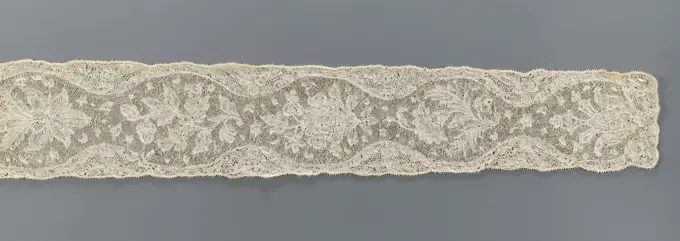
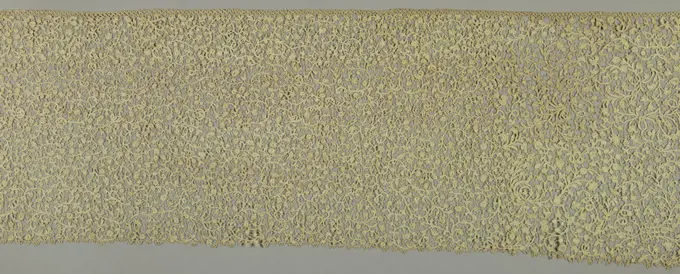
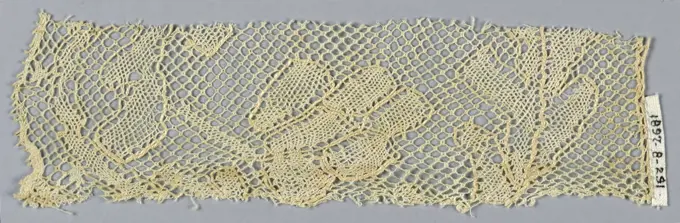
Strip bobbin with falling leaf, anonymous, c. 1910 On a stock of square meshes there are falling leaves above flat shells that are filled with a reversed V-shaped leaf with berry. Valenciennes side. Netherlands (possibly) linen (material) Bobbi Lace / Valenciennes Lace On a stock of square meshes there are falling leaves above flat shells that are filled with a reversed V-shaped leaf with berry. Valenciennes side. Netherlands (possibly) linen (material) Bobbi Lace / Valenciennes Lace
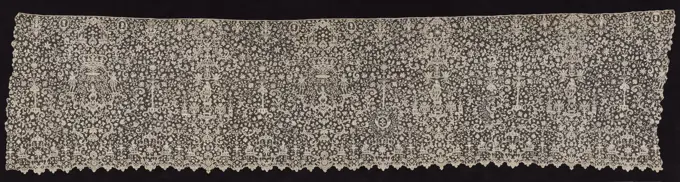
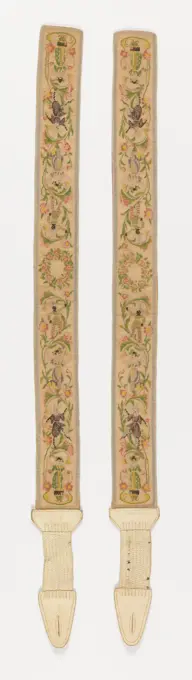
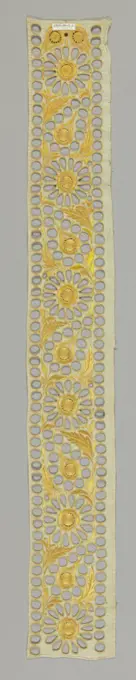
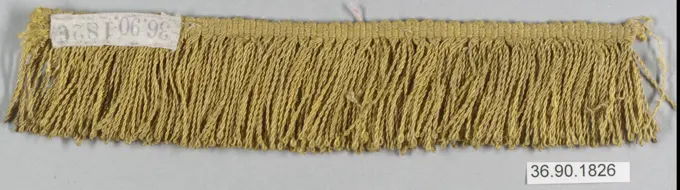
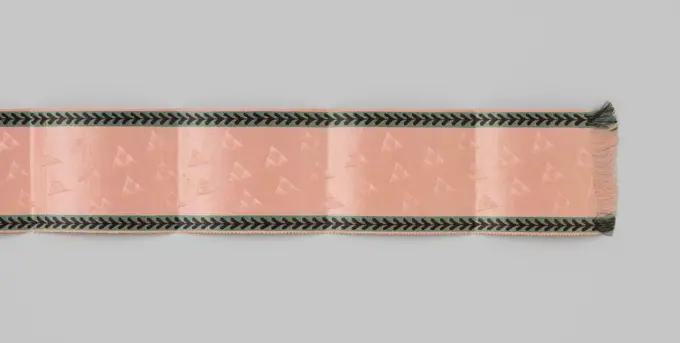
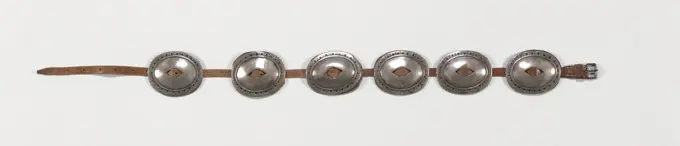
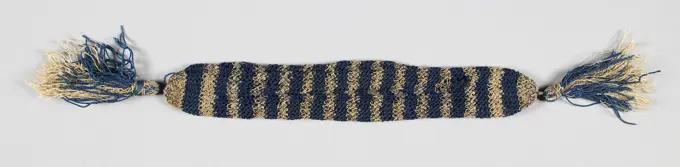
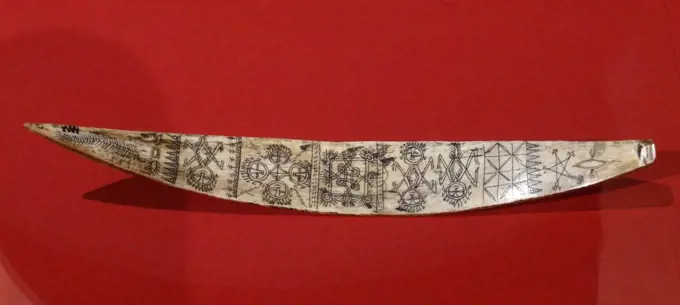
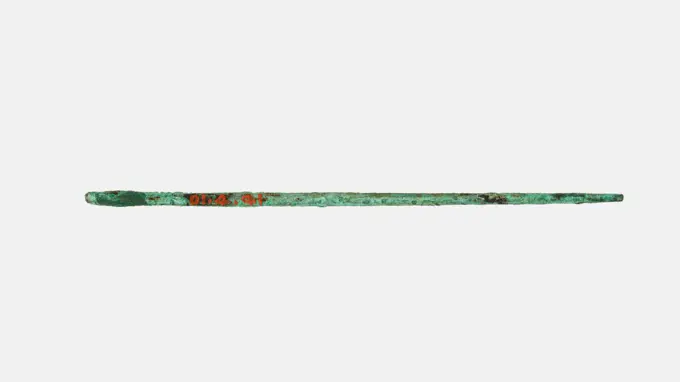
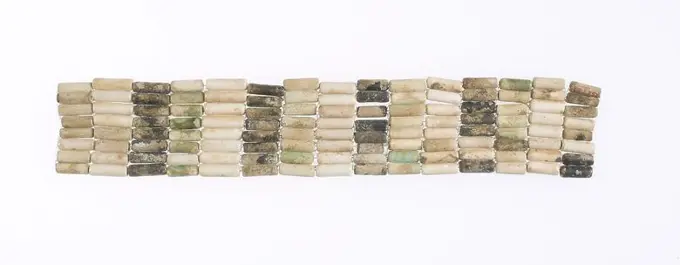
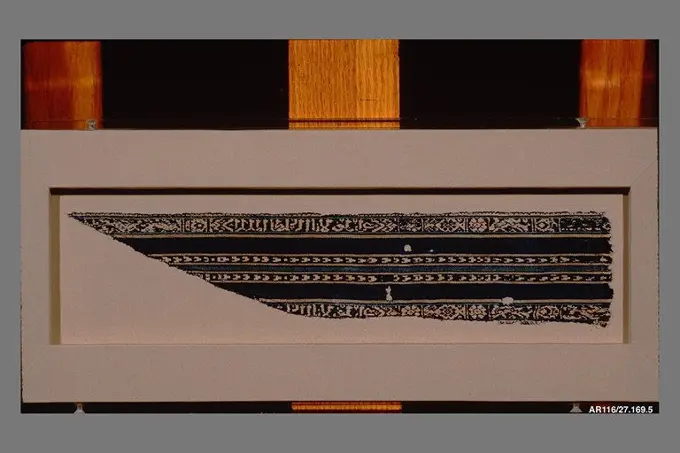
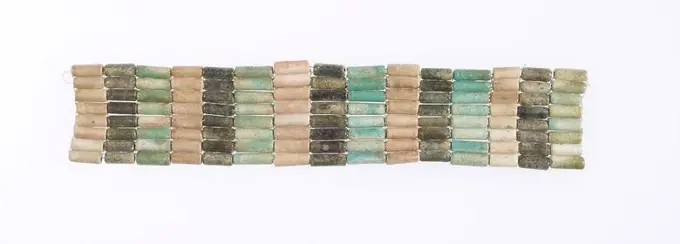
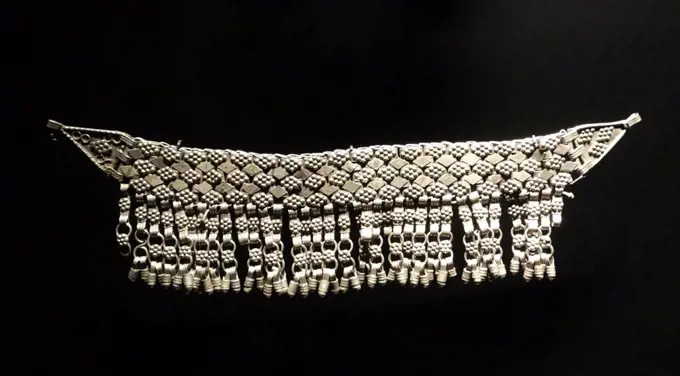
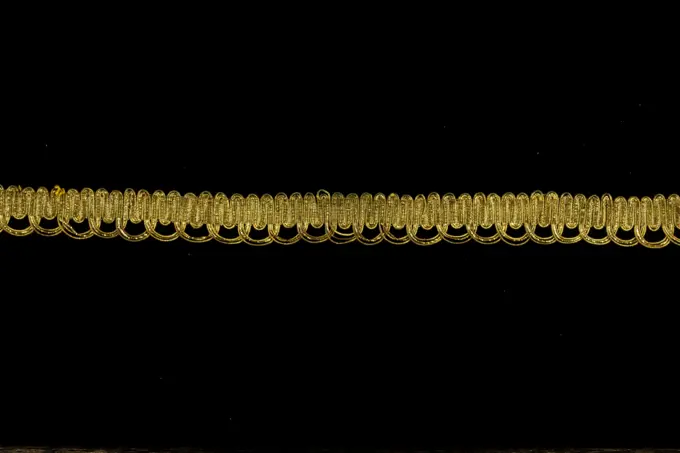
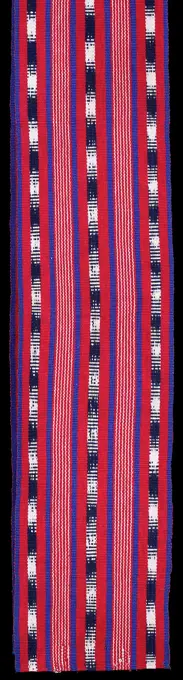
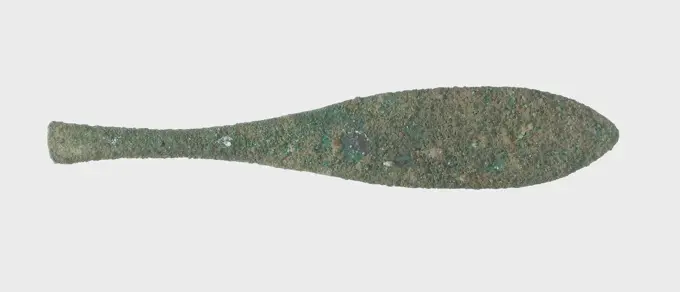
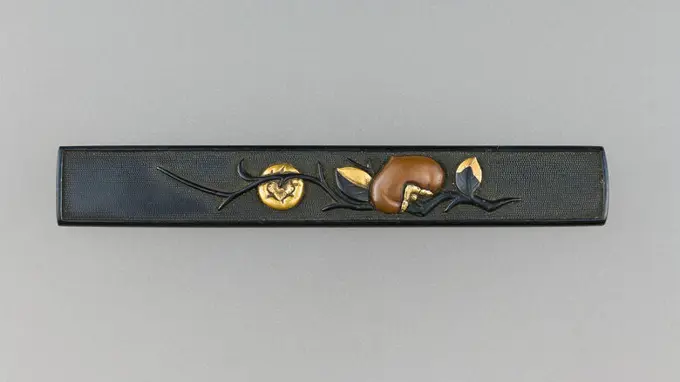
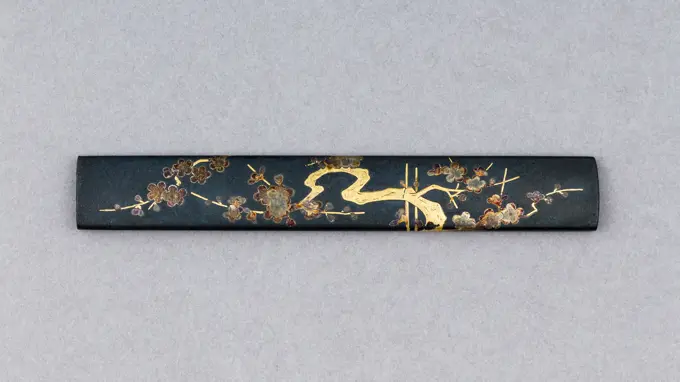
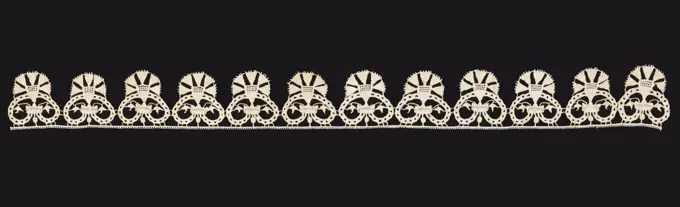
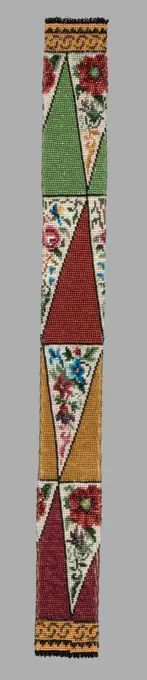
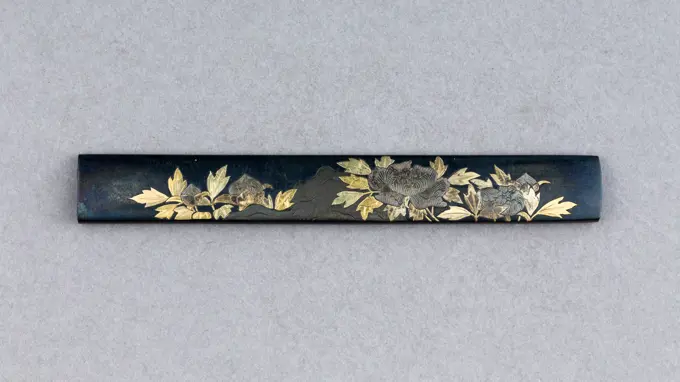
Fan box of cardboard covered with gray/beige paper, anonymous, c. 1950 - c. 1970 Narrow, elongated box for fan. White cardboard covered with paper with gray and beige stripes and points. Netherlands Completely: Cardboard. whole: Paper Narrow, elongated box for fan. White cardboard covered with paper with gray and beige stripes and points. Netherlands Completely: Cardboard. whole: PaperPiece 18th century Japan. Piece 71815Needlepoint (Point de France) Lace Flounce, 1700-1715. France, early 18th century (Louis XIV period, 1643-1715). Lace, needlepoint: linen; average: 266.7 x 63.5 cm (105 x 25 in.).Knife Handle (Kozuka) late 18th-early 19th century Japanese A kozuka is a handle of a by-knife that is part of a sword mounting. It is kept in a slot on the reverse of a katana scabbard, often with a matching kōgai (hairdressing tool).. Knife Handle (Kozuka) 25275Cap streamer, Medium: linen Technique: bobbin lace (Mechlin style), One lappet of Mechlin style bobbin lace, N. Europe, 1750-1800, lace, Cap streamerGalloon 18th century French. Galloon 214000Suspenders (France); silk, leatherTrimming, Medium: silk, metallic thread Technique: woven, Design of saw tooth bands with an open weave forming scalloped borders. In yellow and metallic thread., Italy, 16th century, trimmings, TrimmingEdging 16th century Italian. Edging 213446Fragment of a ceremonial garter, of Prussian blue rips side with the initial 'A' (Prince Albrecht van Pruissen) embroidered in silver thread (B) and trimmed with silver lovers in the form of a flower, Anonymous, Before 1830 Fragment of a ceremonial garter from the marriage of Princess Marianne der Nederlanden (1810-1883) to Albert van Pruisen (1809-1872) on 14 September 1830 in The Hague. Prussian blue rips side with the initial 'A' embroidered in silver wire, trimmed with silver lovers in the form of a flower and provided with a fringe.f West-Europa lint:. silk. borduurwerk: silver thread. lovers: silver (metal) embroidering / die cutting  Noordeinde Palace Fragment of a ceremonial garter from the marriage of Princess Marianne der Nederlanden (1810-1883) to Albert van Pruisen (1809-1872) on 14 September 1830 in The Hague. Prussian blue rips side with the initial 'A' embroidered in silver wire, trimmed with silver lovers in the form of a flower and provided with a fringe.f West-Europa Band, Medium: wool, silk, cotton, linen, silver foil on silk core Technique: slit tapestry, Rectangular piece for a cap with a double row of close-set medium scale floriated crosses in green, yellow, blue, tan and black silks with alternating silver or black centers on a red wool ground., Romania, 18th-19th century, woven textiles, BandOrnament with flowers, Bernard Willem Wierink, c. 1910 print   paper  ornament derived from plant forms. fable of Reynard the FoxBorder, Medium: cotton, metal Technique: embroidered using satin stitch, Border in a stylized floral design with cutwork embroidery worked in yellow., Balkans, 19th century, embroidery & stitching, BorderMedical Instrument with Paddle Finial. UnknownFragmentary Strigil. UnknownFragment of the lace;  around 1750 (1740-00-00-1760-00-00);Bobbin Lace Insertion without Selvage, late 16th century. Italy, Venice, late 16th century. Lace, bobbin; average: 2.6 x 37.2 cm (1 x 14 5/8 in.).Band, Medium: linen Technique: bobbin lace, Binche style with Binche ground, Binche style with allover small scaled floral pattern., Belgium, late 17th-early 18th century, lace, BandRibbon (USA); silkBarbe Belgian second half 19th centuryMiser's purse, Medium: silk, metal Technique: knotted netting, White silk purse ornamented with cut steel and gold beads in small diamond pattern. Two rings of cut steel in gold control side opening. Twisted gold beads ending in larger cut steel beads form fringe on one end, a tassel on the other., France, early 19th century, costume & accessories, Miser's purseFringe (Italy); silkBand Fragment 1st century B.C.-A.D. 7th century Nasca. Band Fragment 307973Ritual Cloth(Mawa’)Lace 18th century Italian. Lace 90830Hanging. Pracownia Oskara Potockiego (Buczacz ; pracownia tkacka ; 1879-1913), atelierPiece 18th century China. Piece 71885Flounce, Medium: linen Technique: needle lace (commonly called Rosaline), Venetian Rose point in a design of tape-like scrolls with delicate palmettes and roselike forms., Venice, Italy, mid- 17th-early 18th century, lace, FlounceCap Streamer (Belgium); linen; Bequest of Marian Hague; 1971-50-426Fringe late 17th century Italian. Fringe 224913Trimming (France); silkStrip of needle side with rows of sprinkled leaf branches, anonymous, c. 1775 - c. 1799 Strip of natural-colored needle side: Alençon side. Pattern with rows of stroked leaf branches on a fine hexagonal mesh ground. The pattern on the bottom of the strip consists of medallions strung together by crooked branches, filled with different decorative land. The top is finished with a straight edge. The underside is finished with a scrap edge that comes from the pattern. France linen (material) Alençon Lace Strip of natural-colored needle side: Alençon side. Pattern with rows of stroked leaf branches on a fine hexagonal mesh ground. The pattern on the bottom of the strip consists of medallions strung together by crooked branches, filled with different decorative land. The top is finished with a straight edge. The underside is finished with a scrap edge that comes from the pattern. France linen (material) Alençon LaceRibbon of salmon pink side, with a scatter motif of woven triangles; A green trim runs along the edges in which a stylized leaf vank, anonymous, c. 1800 - c. 1815 Ribbon of salmon pink side, with a scatter motif of woven triangles. A green trim runs along the edges in which a stylized leaf vank. Possibly women's clothing, possibly a strikial scenery. Netherlands (possibly) whole: Silk Ribbon of salmon pink side, with a scatter motif of woven triangles. A green trim runs along the edges in which a stylized leaf vank. Possibly women's clothing, possibly a strikial scenery. Netherlands (possibly) whole: SilkLappet early 18th century Flemish, Brussels. Lappet. Flemish, Brussels. early 18th century. Bobbin lace, point d'Angleterre. Textiles-LacesStrip Passement with gold thread, 1800 - 1900 Strip passement of gold thread.  . Strip passement of gold thread.  .Ornamental Shoulder Bands from a Tunic, 500s. Egypt, Byzantine period, 6th century. Undyed linen and dyed wool: tapestry weave with supplementary weft wrapping; overall: 65.1 x 7.6 cm (25 5/8 x 3 in.); mounted: 74.9 x 15.2 cm (29 1/2 x 6 in.).Concha Belt, 1880-1890, 37 in. (93.98 cm), Silver, leather, United States, 19th centurySash, Medium: silk Technique: printed on satin weave, Sash ornamented in three places with medallions and other neo-classical flourishes. In center, three medallions show cherubs, children at play, and angels holding a foliate picture frame containing a portrait of a gentleman in profile. At the sides are medallions showing a child musician with scrolls, medallions and trophées. Finished at ends with fringe, and hooks and ties to fasten., France or Italy, early 19th century, printed, dyed & painted textiles, SashBorder, Medium: linen Technique: bobbin lace, discontinuous tape, Narrow band with a small, dense pattern of an inverted flower on a stem with curling leaves, which forms a series of pendants., Belgium, 1600-1650, lace, BorderLong scholarship. 1860. GAL1956.37.3Fragment, Medium: linen Technique: bobbin lace (Lille-style with heavy outlining thread), Fragment of Lille type bobbin lace, 19th century, lace, FragmentBorder 17th century Italian. Border 214824Chasuble made of silk fabrics unknownFragment; linenAmulet carved from buffalo bone. Made by the Batak people of Sumatra, Indonesia in the 19th century.Two Fragments of a Band, late 1000s. Italy, Sicily, end of 11th century. Tablet weave; silk and gold metal thread; overall: 34.3 x 3.5 cm (13 1/2 x 1 3/8 in.).Band, Medium: cotton, wool Technique: slit tapestry, Five tapestry-woven strips stitched together with highly stylized snake design in tan and dark brown on red background., Peru, 700-1000, woven textiles, BandDouble-ended folding spoon 18th century German. Double-ended folding spoon 188158 German, Double-ended folding spoon, 18th century, Silver, once parcel-gilt, 7 3/4 in. (19.7 cm). The Metropolitan Museum of Art, New York. Gift of Mrs. Samuel P. Avery, 1897 (97.2.123)Realistic gold glitter paint brush.Hindu ornamentDecoration with plants and grass; Signed Iwamoto Konkan.Copper pin ca. 2650 B.C. Early Dynastic Period. Copper pin. ca. 2650 B.C.. Copper alloy. Early Dynastic Period. From Egypt, Northern Upper Egypt, Abydos, Umm el-Qaab, Tomb of Khasekhemui, Egypt Exploration Fund excavations. Dynasty 2Fragment, Medium: silk Technique: supplementary warp pile in a taffeta foundation (velvet), Velvet showing a red ground with tiny flecks of white and narrow horizontal black stripes., France, 19th century, woven textiles, FragmentBorder, Medium: linen Technique: bobbin lace, Mechlin style, Straight border of Mechlin lace with a design of buds sprinkled over the field, and a border of detached leaf and flower motifs above a row of flowers., Belgium, early 19th century, lace, BorderBand; silk, metallic thread; Bequest of Marian Hague; 1971-50-49Anklet. Dimensions: l. 18.2 cm (7 3/16 in). Dynasty: Dynasty 12-13. Date: ca. 1981-1640 B.C.. Museum: Metropolitan Museum of Art, New York, USA.Piece 18th-19th century Japan. Piece 66964Fragment; linen; 1933-1-81Photo is missing, 1928 - 1943 photograph Photo is missing.  photographic support gelatin silver printFragment (Italy); linenFringe European 19th centuryBelt, from a set of three, 22 x 1 1/2 in. (55.88 x 3.81 cm) (without tie), Cotton, ChinaKiln Rod 9th century. Kiln Rod 451145International Youth Day, Nazarevskaya, Marina Sergeevna (1898-after 1982)Heat slip from Brussels bobbin, Anonymous, c. 1735 - c. 1745 Cap from Brussels Kloskant. The pattern has four large motifs of a flower box, a low flower basket and a vase. A swinging branch, surrounded by a cartouche with grid filling, carries the flower bouquets. The round ends have a rod wreath. The entire hat -slip is equipped with a picotrand. Mechelen . Brussels bobbin lace Cap from Brussels Kloskant. The pattern has four large motifs of a flower box, a low flower basket and a vase. A swinging branch, surrounded by a cartouche with grid filling, carries the flower bouquets. The round ends have a rod wreath. The entire hat -slip is equipped with a picotrand. Mechelen . Brussels bobbin laceSash, Medium: silk, Italy, 19th century, woven textiles, SashEdging mid-18th century Flemish or possibly British The Metropolitan Museum's great lace collection was started when the Museum became the first among American museums to organize a permanent collection of lace with the acceptance of the McCallum Collection in 1879 and the bequests of Mrs. John Jacob Astor, Mrs. Robert L. Stuart, Mrs. Augustus Cleveland, and Mrs. A. W. Winters shortly thereafter. In 1893 a loan collection of antique laces shown at the World's Columbian Exposition in Chicago was assembled by a committee of New York women headed by Catharine Augusta Newbold. About 1900 Miss Newbold arranged and labeled an exhibition of laces and linenworks lent to the Metropolitan Museum by Mrs. James Boorman Johnstone and the Misses Johnstone. "Her scholarly knowledge of lace technique enabled the Museum for the first time to offer a comprehensive display of lace illustrating its historical development," wrote Miss Frances Morris, then curator of the textile department. Miss Newbold's nTextile Fragment 12th-14th century. Textile Fragment 448037Piece 18th century German, Saxony. Piece 214718Suspenders ca. 1825 French. Suspenders. French. ca. 1825. silk, linen()Stylus. UnknownFan case, early 19th century, 9 3/16 × 2 3/16 × 1/4 in. (23.34 × 5.56 × 0.64 cm) (without cord), Silk, metallic threads, cardboard, China, 19th centuryKamarband, late 19th century, 38 1/2 x 3 1/4 in. (97.79 x 8.26 cm), Silk, cotton; cross-stitch, Uzbekistan, 19th centuryBracelet. Dimensions: l. 16.4 cm (6 7/16 in). Dynasty: Dynasty 13 to 1700 B.C.. Date: ca. 1802-1700 B.C.. Museum: Metropolitan Museum of Art, New York, USA.Textile, Medium: cotton Technique: block printed on plain weave, Length of printed cotton with vertical stripes of tan and yellow alternating with stripes curved leaves in red and blue on a white ground., England, ca. 1790, printed, dyed & painted textiles, TextileStrip of lace tissue with lying round rosette flower and triangular frills, anonymous, c. 1600 - c. 1799 Strip of natural lace tissue: open tissue in linen binding. The repeating pattern consists of a horizontal round rosette flower on a stalk with three leaves. The motif is densely extracted. Schulpenrand with triangular frills. Top right. Southern Netherlands (possibly) linen (material) Strip of natural lace tissue: open tissue in linen binding. The repeating pattern consists of a horizontal round rosette flower on a stalk with three leaves. The motif is densely extracted. Schulpenrand with triangular frills. Top right. Southern Netherlands (possibly) linen (material)Piece 14th century Japan. Piece 71020MantleBorder.  Artist: UnknownPendant. From Ethiopia, made from silver.Glass Fragment 15th century French. Glass Fragment. French. 15th century. Pot metal glass. Made in Paris, France. Glass-StainedTrim, 19th century, 15 x 3/4 in. (38.1 x 1.91 cm), Metallic fringe, Spain, 19th centuryFringe (Italy); silkBack Panel for a Jacket, 8 7/16 x 27 3/8 in. (21.43 x 69.53 cm), Cotton; needlework, ChinaMetal Tube late 19th Century Possibly by Victor-Charles Mahillon Belgian. Metal Tube. probably Belgian. late 19th Century. Metal. Belgium. Aerophone-AccessoriesArch -shaped grotesket carpet with allegorical figures with horns of abundance, master of the geometric brand, c. 1560 Arch -shaped tapisserie for above a windows, from the series Grotesken by Sigismund August van Polen. Upstairs and sides straight, bottom cut hollow-shaped. In the middle stock, festons of flowers and fruits were hung on lion masks. The corner festivals come from Hoorns of abundance, stopped by a sitting woman. Linkd woven "no 10 d", on the right in the upper edge a weaver brand. Brussels Ketting: Wool. Entry: Silk. Elements: Metal Thread tapestry Arch -shaped tapisserie for above a windows, from the series Grotesken by Sigismund August van Polen. Upstairs and sides straight, bottom cut hollow-shaped. In the middle stock, festons of flowers and fruits were hung on lion masks. The corner festivals come from Hoorns of abundance, stopped by a sitting woman. Linkd woven "no 10 d", on the right in the upper edge a weaver brand. Brussels Ketting: Wool. Entry: Silk. Elements:Man's sash (banda) and trousers, c. 1950, Cotton; four selvedge, warp faced, plain weave ikat (jaspe), Guatemala, 20th centuryKnife ca. 1390-1353 B.C. New Kingdom. Knife. ca. 1390-1353 B.C.. Bronze. New Kingdom. From Egypt, Upper Egypt, Thebes, Malqata, Palace of Amenhotep III, Houses G-K, MMA excavations, 1910-11. Dynasty 18Knife Handle (Kozuka). Culture: Japanese. Dimensions: L. 3 3/4 in. (9.5 cm); W. 9/16 in. (1.4 cm); thickness 1/4 in. (0.6 cm); Wt. 1 oz. (28.3 g). Date: 17th century. Museum: Metropolitan Museum of Art, New York, USA.Knife Handle (Kozuka) ca. 1615-1868 Japanese A kozuka is a handle of a by-knife that is part of a sword mounting. It is kept in a slot on the reverse of a katana scabbard, often with a matching kōgai (hairdressing tool).. Knife Handle (Kozuka) 34563Frieze (USA); Manufactured by Cresswell & Washburn Ltd; machine-printed paper; 224 x 49.5 cm (88 3/16 x 19 1/2 in.)Band, Medium: linen Technique: punto in aria needle lace, Border composed of stylized heart-shaped forms. Taken from design by PARASOLE in 1597., Italy, early 17th century, lace, BandNarrow Strip used as Galloon, 1700s - 1800s. India, 18th-19th century. Lampas weave with unbound brocaded pattern; overall: 36.8 x 3.8 cm (14 1/2 x 1 1/2 in.).Viga románica del Monasterio de Sant Miquel de Cruïlles, siglo XIII. Museum: Museu d'Art, Girona.Textile Fragment late 18th-early 19th century. Textile Fragment 443008Trimming, Medium: silk Technique: woven, Yellow trimming fragment in a design of decorated lozenge shapes; scalloped edges., France, 19th century, trimmings, TrimmingPipestem case. unknown, authorEdging Hungarian-Slovak 19th centuryStrip -Hindu ornamentKnife Handle (Kozuka) ca. 1615-1868 Japanese A kozuka is a handle of a by-knife that is part of a sword mounting. It is kept in a slot on the reverse of a katana scabbard, often with a matching kōgai (hairdressing tool).. Knife Handle (Kozuka) 34557