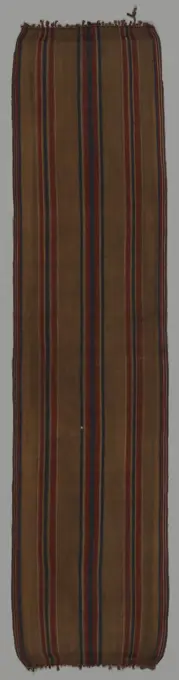
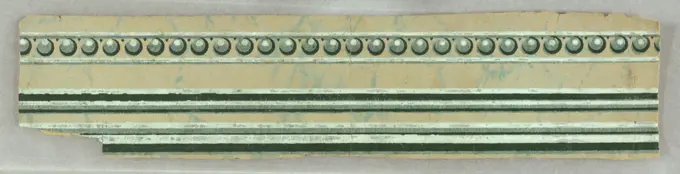
Vintage Lace Trim Designs

A collection of historical lace trim designs from different centuries, showcasing intricate patterns and materials used in lace-making.


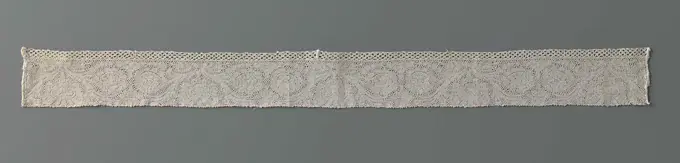
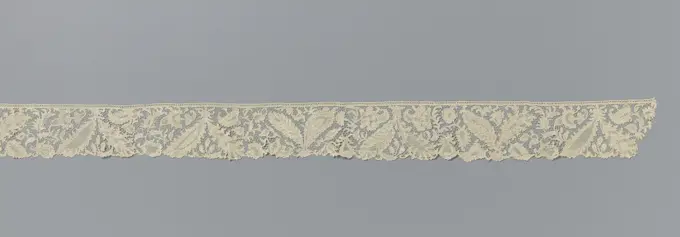
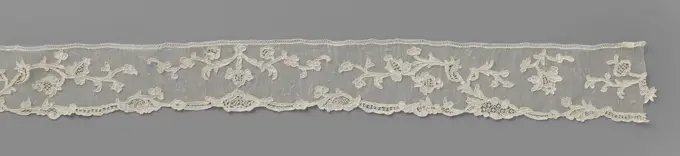
Strip bobbin with falling leaf, anonymous, c. 1910 On a stock of square meshes there are falling leaves above flat shells that are filled with a reversed V-shaped leaf with berry. Valenciennes side. Netherlands (possibly) linen (material) Bobbi Lace / Valenciennes Lace On a stock of square meshes there are falling leaves above flat shells that are filled with a reversed V-shaped leaf with berry. Valenciennes side. Netherlands (possibly) linen (material) Bobbi Lace / Valenciennes Lace
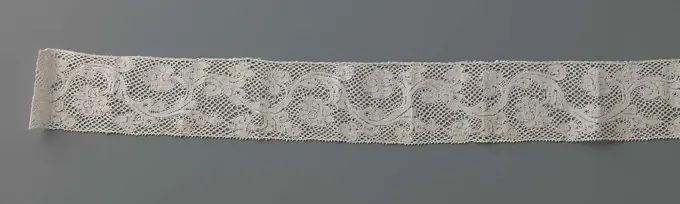
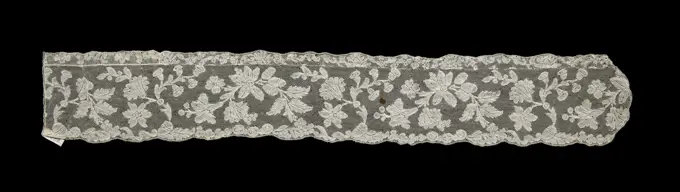
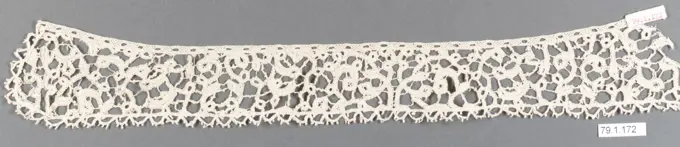
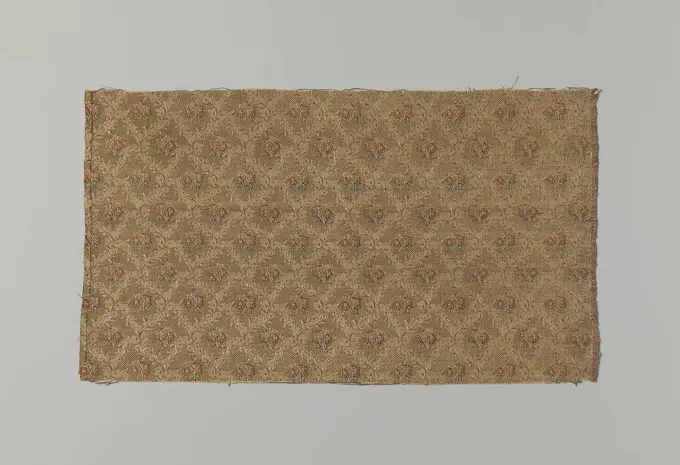
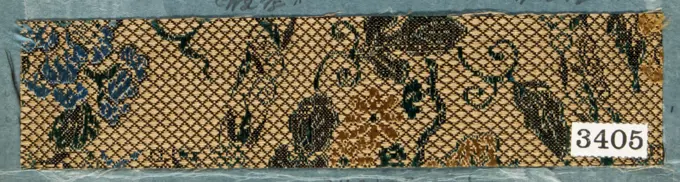
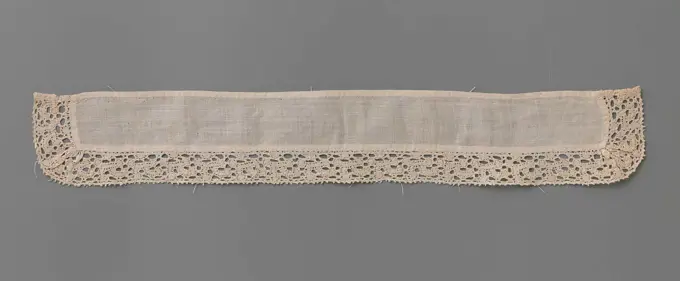
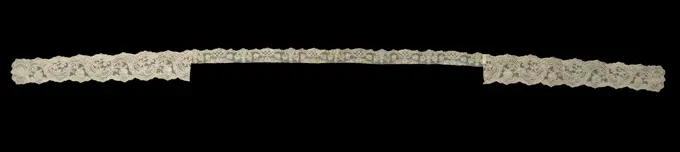
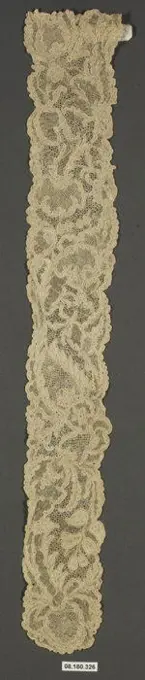
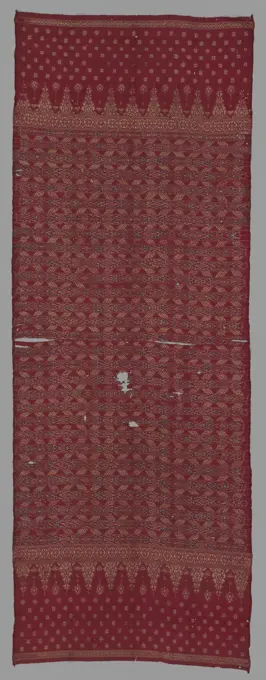
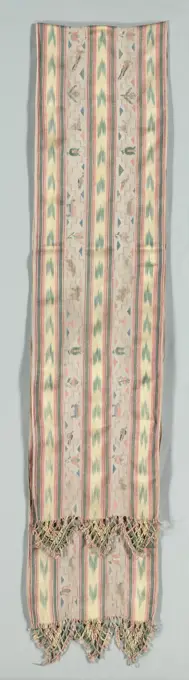
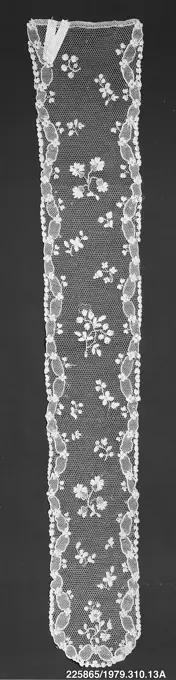
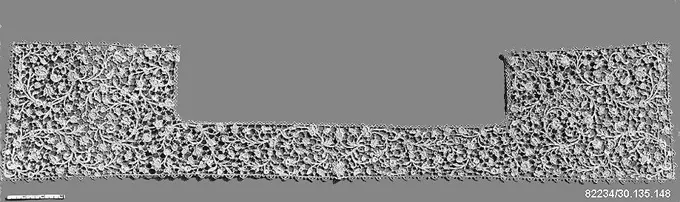
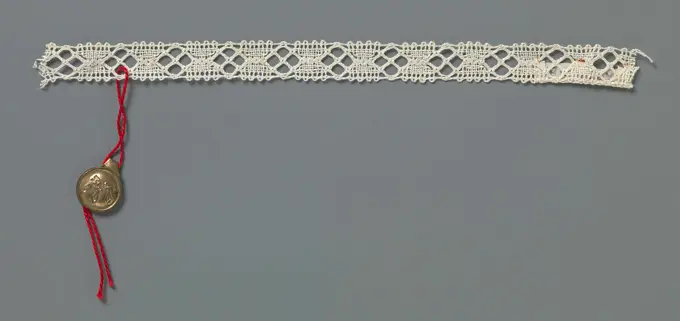
Strip bobbin with falling leaf, anonymous, c. 1910 On a stock of square meshes there are falling leaves above flat shells that are filled with a reversed V-shaped leaf with berry. Valenciennes side. Netherlands (possibly) linen (material) Bobbi Lace / Valenciennes Lace On a stock of square meshes there are falling leaves above flat shells that are filled with a reversed V-shaped leaf with berry. Valenciennes side. Netherlands (possibly) linen (material) Bobbi Lace / Valenciennes LaceInsertion 18th century Flemish. Insertion 212421Galloon 17th-18th century Italian or French. Galloon 213858Band, Medium: linen Technique: bobbin lace, Buckingham, England style, England, 19th century, lace, BandGalloon 17th-18th century Unknown. Galloon 213848Band (Italy); linenVelvet Band, 1500s-1600s. Italy, 16th-17th century. Velvet (cut and uncut); silk and metal thread; overall: 92.7 x 9.8 cm (36 1/2 x 3 7/8 in.).Strip 18th century French. Strip. French. 18th century. Bobbin lace. Textiles-LacesStrook kloskant met drie pioenrozen in een symmetrische compositie.Strip natural-colored Dutch clamping side. The repeating pattern consists of a symmetrical composition with three peonies. The middle peony depends on a straight stem and is more or more trapezoidal. From the right stem releases a curly stem with elongated narrow leaves on the left and right of this flower. At the ends there is a more or less round flower. The motifs are made in linen stroke with openwork edges. The motifs are connected to each other by a table ground with braid. Upper and bottom of the strip are straight finished in which a separate splitting band is sewn along the top and the underside is equipped with picots. The short sides are finished with a soil.Band; metallic threadTrimming, Medium: silk, metallic thread Technique: woven, Design of plain center with saw tooth borders in yellow and metallic thread., France, mid-18th century, trimmings, TrimmingStrook kloskant met golvende rank met pioenrozen.Strip natural-colored Dutch clamping side. The repetitive and continuous pattern consists of a wavy rank with curling leaves and under every wave top and in each golf valley a curling side branch with a peony. The motifs are made in linen stroke with openwork edges and a few recesses. The motifs are connected by a five-grown soil. Upper and bottom of the strip are straight finished, the underside with picots.Strip of needle side with spring -shaped and plume -shaped leaves and flowers, anonymous, c. 1700 - c. 1724 Strip of natural needle side: Argentan side. Pattern with spring -shaped and plume -shaped leaves. A recurring motif are always two large leaves that are placed in a V-shape, in between there are smaller flowers and leaves, the V-shape is alternately upright or hanging down. The motifs are connected by a hexagonal soil with founded meshes: an Argentan ground. The scrap edge along the bottom comes from the pattern and is finished with picots. The top of the strip is straight finished with a tie. France (possibly) linen (material) Argentan Lace Strip of natural needle side: Argentan side. Pattern with spring -shaped and plume -shaped leaves. A recurring motif are always two large leaves that are placed in a V-shape, in between there are smaller flowers and leaves, the V-shape is alternately upright or hanging down. The motifs are connected by a hexagonal soil with founded meshes: aNeedlepoint (Point Alençon) Lace Edging, 1715-1774. France, Alençon, 18th century (Louis XV Period, 1715-1774). Lace, needlepoint: linen; average: 8.6 x 97.8 cm (3 3/8 x 38 1/2 in.).Galloon ca. 1600 Italian. Galloon. Italian. ca. 1600. Silk and metal thread. Textiles-TrimmingsKloskant intermediate mate with zigzag line, anonymous, c. 1875 - c. 1949 Piles of Natural -colored bobbin side: Mechelse side. In the middle of the fine grid, a Mechelen soil (also known as ice soil), an openwork band runs in Zigzaglijn, cut over by two types of rosettes. Belgium linen (material) bobbin lace / Mechlin (lace) Piles of Natural -colored bobbin side: Mechelse side. In the middle of the fine grid, a Mechelen soil (also known as ice soil), an openwork band runs in Zigzaglijn, cut over by two types of rosettes. Belgium linen (material) bobbin lace / Mechlin (lace)Galloon early 19th century French. Galloon 213951Needlepoint Lace Edging, 18th century. France, Alençon, 18th century. Lace, needlepoint: linen; average: 9.6 x 26.1 cm (3 3/4 x 10 1/4 in.).Kloskant intermediate mate with zigzag line, anonymous, c. 1875 - c. 1949 Piles of Natural -colored bobbin side: Mechelse side. In the middle of the fine grid, a Mechelen soil (also known as ice soil), an openwork band runs in Zigzaglijn, cut over by two types of rosettes. Belgium linen (material) Mechlin (lace) / bobbin lace Piles of Natural -colored bobbin side: Mechelse side. In the middle of the fine grid, a Mechelen soil (also known as ice soil), an openwork band runs in Zigzaglijn, cut over by two types of rosettes. Belgium linen (material) Mechlin (lace) / bobbin laceFragment of a Bobbin Lace Lappet, 18th century. France, Valenciennes, 18th century. Lace, bobbin; average: 10.2 x 63.5 cm (4 x 25 in.).Border, Medium: linen Technique: needle lace, Floral and foliated garland interspersed by inversed diagonal bands at repeated intervals., France, 1700-1750, lace, BorderGalloon 18th century French. Galloon. French. 18th century. Metal thread. Textiles-TrimmingsEdge (Russia); cottonGalloon 17th-18th century Unknown. Galloon 213789Trimming; metal wrapped threadStrip late 17th century Flemish. Strip 212379Trimming, Medium: silk, metallic thread Technique: woven, Design of flower and leaves placed alternately up and down. In yellow and metallic thread., France, early 18th century, trimmings, TrimmingFragment of the lace;  18th century (1701-00-00-1800-00-00);Fringe, Medium: gilt foil on silk Technique: woven, Gold fringe with a patterned heading and a skirt of twisted loops., Italy, 16th century, trimmings, FringeBobbin Lace Edging, 18th century. Belgium, Binche, 18th century. Lace, bobbin: linen; average: 5.1 x 90.2 cm (2 x 35 1/2 in.).Bobbin Lace Edging, late 18th century. England, Buckinghamshire, late 18th century. Lace, bobbin: linen; average: 7.7 x 61 cm (3 1/16 x 24 in.).Cutslip from Mechelse side, Anonymous, c. 1775 - c. 1800 Cutslip from Kloskant. The pattern consists of flower vines that spring on the edge. The scalloped edge is trimmed with picots. West-Europa linen (material). Mechlin (lace) Cutslip from Kloskant. The pattern consists of flower vines that spring on the edge. The scalloped edge is trimmed with picots. West-Europa linen (material). Mechlin (lace)Edging 18th century British, Northamptonshire. Edging 214392Piece 17th century Japan. Piece 71069Galloon 17th century () European. Galloon 225008Needlepoint (Point de France) Lace Edging, early 18th century. France, Alençon, early 18th century. Lace, needlepoint: linen; average: 3.9 x 92.8 cm (1 9/16 x 36 9/16 in.).Galloon late 18th-early 19th century European. Galloon 224969Galloon ca. 1600 Italian. Galloon. Italian. ca. 1600. Silk and metal thread. Textiles-TrimmingsSidewall - Fragment (USA); Manufactured by Janeway & Co. Inc.; machine-printed; 34.5 x 36 cm (13 9/16 x 14 3/16 in.)Strip knotted side with two rows of loops, anonymous, c. 1900 Strip of natural knotted side: Frivolité. Two rows of loops. The top row consists of oval loops. The bottom row has larger drop -shaped loops, alternately larger and smaller. The top is straight. The loops are finished with picots on the underside of the strip. Europe linen (material) Strip of natural knotted side: Frivolité. Two rows of loops. The top row consists of oval loops. The bottom row has larger drop -shaped loops, alternately larger and smaller. The top is straight. The loops are finished with picots on the underside of the strip. Europe linen (material)Trimming (Italy); metal-wrapped silk thread; 1905-2-59Edging mid-18th century Flemish. Edging 222815Bobbin Lace Edging, 20th century. France, Valenciennes, 20th century. Lace, bobbin: linen; average: 15.6 x 208.3 cm (6 1/8 x 82 in.).Fragment (England); Produced by Thomas Clarkson & Co.; cotton; Warp x Weft: 8 x 66 cm (3 1/8 x 26 in.) Repeat H (arranged as a half-drop): 5.5 cm (2 3/16 in.); Bequest of Elinor Merrell; 1995-50-19Border, Medium: linen Technique: needle lace, A border of Point d'Argentan with asymmetrical floral sprays interspersed by oval openings and asymmetrical diagonally running ribbons., France, 1750-75, lace, BorderBobbin Lace (Point d'Angleterre) Edging, early 18th century. Belgium, Brussels, early 18th century. Lace, bobbin; average: 7.7 x 370.8 cm (3 1/16 x 146 in.).Fragment multicolor silk tissue. A fragment of green silk tissue with diamonds of flowers, white black, between colored bouquets. Note: Self side; 0.5 cm, multiple inserts in one jump.Border (France); block-printed on handmade paperPiece 18th-19th century Japan. Piece 66152Bobbin Lace Edging, 19th century. Spain, 19th century. Lace, bobbin ; average: 7.7 x 59.8 cm (3 1/16 x 23 9/16 in.).Textile 19th century Japan. Textile. Japan. 19th century. Textiles-WovenKloskant intermediate mate with a center line of diamonds, anonymous, c. 1600 - c. 1624 Piles of natural -colored bobbin side. The pattern consists of a center line of closed diamonds, always one loose window but closed on the next. The diamonds are connected by a Maas soil. The motives are made in linen battle. Top and bottom of the strip are straight. The short sides are finished with a zoompje. The intermediate facility comes from or intended for bedding. Friesland (possibly) linen (material) bobbin lace Piles of natural -colored bobbin side. The pattern consists of a center line of closed diamonds, always one loose window but closed on the next. The diamonds are connected by a Maas soil. The motives are made in linen battle. Top and bottom of the strip are straight. The short sides are finished with a zoompje. The intermediate facility comes from or intended for bedding. Friesland (possibly) linen (material) bobbin laceFringe (France); silkWitte Strik, Unknown, 1920 - 1980  Europe textile materials  Europe textile materialsLappet 17th century Italian, Venice. Lappet. Italian, Venice. 17th century. Needle lace. Textiles-LacesNeedlepoint Lace Edging, 18th century. France, Argentan, 18th century. Lace, needlepoint: linen; average: 5.5 x 59.8 cm (2 3/16 x 23 9/16 in.).Strip of needle side with hanging flowers, anonymous, c. 1760 - c. 1790 The elongated sculptures of a wavy ribbon, interspersed by medallions with gridwork, form the outer edges of a soil, on which it turns a wavy branch with hanging flowers and pomegranates and a short flower branch. In the strip, the pattern is symmetrical to a standing middle branch. Alençon side. France linen (material) Alençon Lace The elongated sculptures of a wavy ribbon, interspersed by medallions with gridwork, form the outer edges of a soil, on which it turns a wavy branch with hanging flowers and pomegranates and a short flower branch. In the strip, the pattern is symmetrical to a standing middle branch. Alençon side. France linen (material) Alençon LaceStrip of needle side with split spirals, anonymous, c. 1800 - c. 1899 Cuff of natural -colored needle side: Venetian relief side. There are running, wide spiral ranks on an open bar, which are split in many places. There are also large openwork centers in the petals, which typifies the 19th century. Finishing with a straight list of alternately large and small triangles. Bayeux (possibly) linen (material) Venetian raised work Cuff of natural -colored needle side: Venetian relief side. There are running, wide spiral ranks on an open bar, which are split in many places. There are also large openwork centers in the petals, which typifies the 19th century. Finishing with a straight list of alternately large and small triangles. Bayeux (possibly) linen (material) Venetian raised workStrook kloskant met wirwar van knopjes rond een rechthoekig stukje linnen.Strip of a climbing side, ancient side, which is sewn around a rectangular piece of linen. The pattern consists of a jumble of oval buttons with mostly C-shaped appendices. There is hardly any floor, the motifs run into each other or are connected to each other by very short braids. The motifs are made in linen stroke with openwork edges. The straight upper edge of the strip is sewn along one long and two short sides of the elongated rectangular piece of linen. The linen is finished around all sides with a soil. The underside of the side strip is straight finished and has picots. It is possible intended stole cop.Piece 18th century French. Piece 214064Bobbin Lace Lappets and Edging for Cap, 18th century. Belgium, Mechelen, 18th century. Lace, bobbin; overall: 189.4 x 9.5 cm (74 9/16 x 3 3/4 in.).Piece 16th century Japan. Piece 71052Galloon 18th century French. Galloon. French. 18th century. Metal thread. Textiles-TrimmingsTrimming (France); silkFragment of a glass batist curtain, 1800 - 1874 Fragment of a glass batist curtain, decorated with tulle breathing bobbin (white on white). With note: 'These curtains were used for the windows of the dressing room of H.M. de Koningin July 16, 1874'.  Curtain: Batiste Fragment of a glass batist curtain, decorated with tulle breathing bobbin (white on white). With note: 'These curtains were used for the windows of the dressing room of H.M. de Koningin July 16, 1874'.  Curtain: BatisteBand, Medium: linen Technique: needle lace, Venice, Italy, late 17th century, lace, BandSampler 19th century German or Austrian. Sampler 228164Belt (epek) and Cumberbund(sabuk)Pair of Needlepoint Lace (Alençon Lace) Lappets, Joined, 1774-1792. France, Alençon, 18th century (Louis XVI Period, 1774-1792). Lace, needlepoint: linen; average: 115.6 x 9 cm (45 1/2 x 3 9/16 in.).Strip bobbin with wavy line of three different flowers, anonymous, c. 1790 - c. 1799 Strip of natural-colored bobbin: Valenciennes side. The repeating and continuous pattern consists of a succession of three different flowers in a wavy line. They are a chalice flower, a rosette flower on a curved stem with two leaves and a wide -ranging flower like a maple leaf. The motifs are made in linen battle with recesses and openwork edges. The motifs are connected by a grid, the Round Valenciennes ground. At the top and bottom are straight finished, with the bottom with picots. France linen (material) Bobbi Lace / Valenciennes Lace Strip of natural-colored bobbin: Valenciennes side. The repeating and continuous pattern consists of a succession of three different flowers in a wavy line. They are a chalice flower, a rosette flower on a curved stem with two leaves and a wide -ranging flower like a maple leaf. The motifs are made in linen battle with recesses and openwork edges. The motifs are connSuspenders 19th century European. Suspenders 102538Barbe 18th century French. Barbe 218120Galloon 17th-18th century probably European. Galloon 213875Edging 18th century Flemish. Edging 222814Barbe (one end) early 18th century French. Barbe (one end) 214679Panel Panel; France; oakShoulder Cloth(Limar)Scarf, late 1700s-1800s. Mexico, late 18th-19th century. Weaving, embroidery and ikat techniques; overall: 257.8 x 29.3 cm (101 1/2 x 11 9/16 in.).Fragment of embroidery  twig ornamentation unknownLappet (one of a pair) third quarter 18th century French The Metropolitan Museum's great lace collection was started when the Museum became the first among American museums to organize a permanent collection of lace with the acceptance of the McCallum Collection in 1879 and the bequests of Mrs. John Jacob Astor, Mrs. Robert L. Stuart, Mrs. Augustus Cleveland, and Mrs. A. W. Winters shortly thereafter. In 1893 a loan collection of antique laces shown at the World's Columbian Exposition in Chicago was assembled by a committee of New York women headed by Catharine Augusta Newbold. About 1900 Miss Newbold arranged and labeled an exhibition of laces and linenworks lent to the Metropolitan Museum by Mrs. James Boorman Johnstone and the Misses Johnstone. "Her scholarly knowledge of lace technique enabled the Museum for the first time to offer a comprehensive display of lace illustrating its historical development," wrote Miss Frances Morris, then curator of the textile department. Miss NewbolBorder (Democratic Republic of the Congo); raffiaDodenoek.Dead cloth with geometric motifs.Strip of mechanical side with dots and arches of a top with tuber, anonymous, c. 1900 - c. 1924  Strip of natural -colored machine side: Flanders side. The repeating pattern consists of a row of large dots and below a row of arcs that are formed by a curved leaf with a more or less heart -shaped tuber at the end. The motives are equipped with a mechanical Parisian land. The top of the strip is straight finished, with the bottom with picots. Europe cotton (textile)Sculpted style of oak, from the so -called house of Alva, Warmoestraat in Amsterdam, c. 1500 - c. 1699 Carryed oak style, from the so -called house of Alva, Warmoestraat in Amsterdam. In total it concerns six painted styles (see BK-KOG-754-1, 3 to 7). See also BK-KOG-755-A to H, these are two capitals and six styles of untreated oak that come from the same house.  oak (wood). paint (coating) Carryed oak style, from the so -called house of Alva, Warmoestraat in Amsterdam. In total it concerns six painted styles (see BK-KOG-754-1, 3 to 7). See also BK-KOG-755-A to H, these are two capitals and six styles of untreated oak that come from the same house.  oak (wood). paint (coating)Trimming, Medium: silk Technique: woven, Design of yellow ornamental lozenges., Spain, 17th century, trimmings, TrimmingBorder, Medium: silver metal wrapped on silk thread Technique: bobbin lace, Narrow lace border with scallops on one edge. In white and silver metallic thread., Italy, 16th century, lace, BorderFragment, Medium: silk Technique: supplementary raised pile warp (velvet), Stripes of black alternate with floral trails all in black on a background of white twill formed by supplementary wefts., 17th-18th century, woven textiles, FragmentPleated fan and case, Parchment leaf painted with gouache, gilded and painted ivory sticks, guards inlaid with mother-of-pearl, Pleated fan with paper leaf. Obverse showing a woman or goddess on a cloud with a putti playing with a shield. The reverse shows a seated woman. Central cartouche of putti playing musical instruments. Mother-of-pearl on back of cartouche and inlay on guards. Carved, gilded and painted ivory sticks., France, ca. 1740, costume & accessories, Pleated fan and caseCollar 17th century Italian. Collar 222468Strook kloskant met gestileerde ogentroost of "ögontröst".Natural collate strip, Swedish side. The strip is mounted with pins on a light blue cardboard, with four other strips. The strip is mounted with pins on a light blue cardboard, with four other strips. At the top of the cardboard is "Wadstena. Sweden." Written and under the strip is "Eye-Bright. (Ögontröst)". The repeating and symmetrical pattern consists of four diamond-shaped meshes, which together form a larger diamond. The space between the consecutive windows has been worked in linen stroke with a circle in the middle, which is possible a stylized eye-toast flower. Upper and bottom of the strip are straight finished and provided with picots. On the strip a red thread hangs with a golden seal, on which three clasps are depicted on one side and a monogram on the other side with a V and an Ö (Vadstena Östergötland).Edging Hungarian-Slovak 19th centuryWhite silk stocking in jersey stitch, at the top with two pink narrow stripes and at the bottom with two embroidered decorative lines, ending in a window in cross stitch, anonymous, c. 1815 - c. 1830 Knitted stocking of white silk in jersey stitch, at the top with two pink narrow stripes and at the bottom with two embroidered decorative lines, ending in a window in the cross stitch. Discolored/weathered. Possible court clothing. Netherlands (possibly) whole: Silk knitting / embroidering Knitted stocking of white silk in jersey stitch, at the top with two pink narrow stripes and at the bottom with two embroidered decorative lines, ending in a window in the cross stitch. Discolored/weathered. Possible court clothing. Netherlands (possibly) whole: Silk knitting / embroideringStrip bobbin with triangular scales with loops, anonymous, c. 1925 - c. 1937  Strip of natural -colored bobbin. The repeating and symmetrical pattern consists of alternately large and smaller triangular scallops on a braid that forms the upper edge of the strip. The sculptes are made up of more or less rectangular cubes made in linen stroke that are connected with short 'braids' of double netslag. At the bottom of each shell and along the edges of the scallops, bundles of loops are made with braids. It concerns 20th-century side made to a 16th-century pattern. Pescocostanzo linen (material) bobbin laceStrip bobbin with flower claws, anonymous, c. 1910 - c. 1920 On a mesh stock (square meshes) there are unilaterally targeted strips of three flowers above a zigzag-scrap with concatents. Valenciennes side. Netherlands (possibly) linen (material) Bobbi Lace / Valenciennes Lace On a mesh stock (square meshes) there are unilaterally targeted strips of three flowers above a zigzag-scrap with concatents. Valenciennes side. Netherlands (possibly) linen (material) Bobbi Lace / Valenciennes LaceGalloon mid-19th century French. Galloon. French. mid-19th century. Silk. Textiles-TrimmingsShoulder Cloth(Selendang)Galloon late 18th-early 19th century European. Galloon. European. late 18th-early 19th century. Silk. Textiles-TrimmingsBand (Italy); linenEdge; linenBorder, Borders, polished colors. All with beading, some marbleized., France, 1860-1900, Wallcoverings, Border