Vintage Silver Spoons

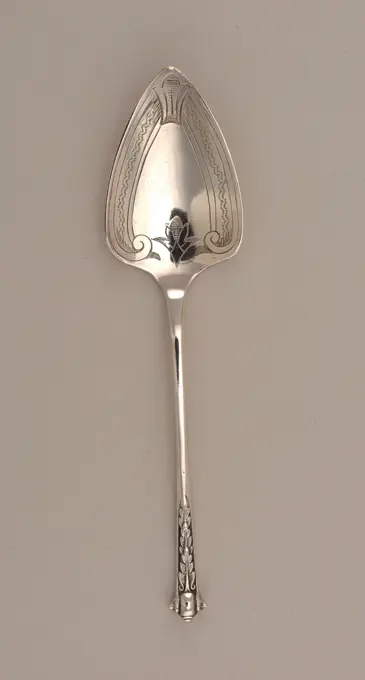
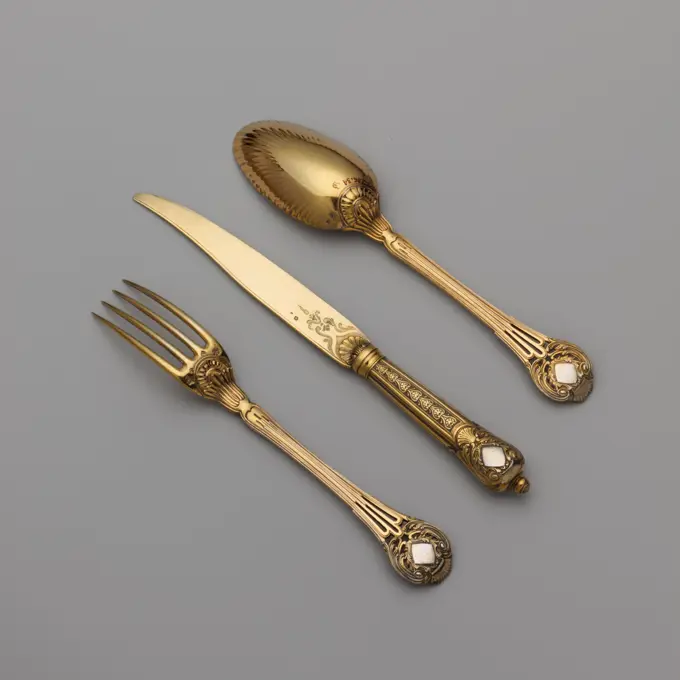
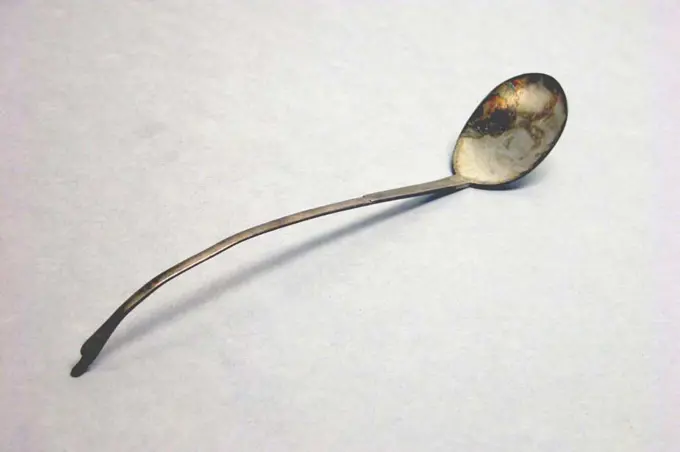
Collection of ornate silver spoons from different centuries showcasing intricate designs and craftsmanship, with varied shapes and styles.

Dessert spoon with the Helm sign Clifford, Cornelis Loeff (attributed to), 1793 The egg -shaped container is connected to the flat, bent stem by means of single praise, which broadens to the rounded end and that shows a faint rib on the top over the middle. The Clifford helmet sign is engraved on the bottom of the stem. Amsterdam silver (metal) The egg -shaped container is connected to the flat, bent stem by means of single praise, which broadens to the rounded end and that shows a faint rib on the top over the middle. The Clifford helmet sign is engraved on the bottom of the stem. Amsterdam silver (metal)
Stylish steel teaspoons on a textured background in displayTeaspoon.   Maker: Haight and Leach, American, active ca. 1850Maker, formerly attributed to: Hotchkiss & Schreuder, American, ca. 1850-1871Retailer: Thomas Davies (1), American, 1760-1780Wooden Spoon isolated on white background
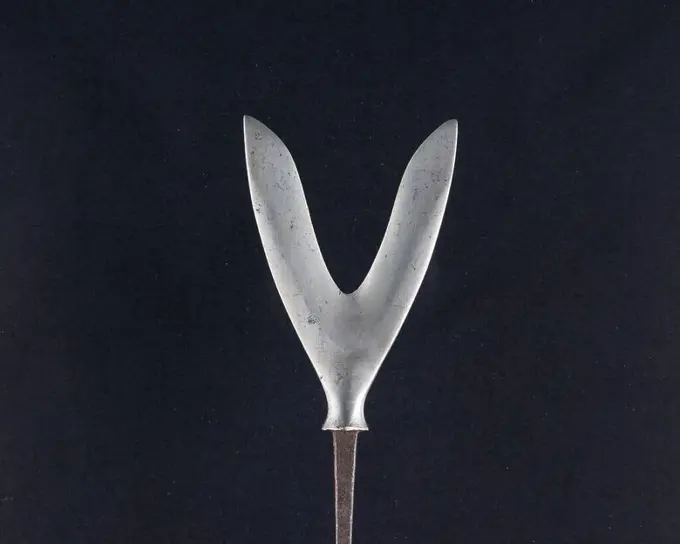
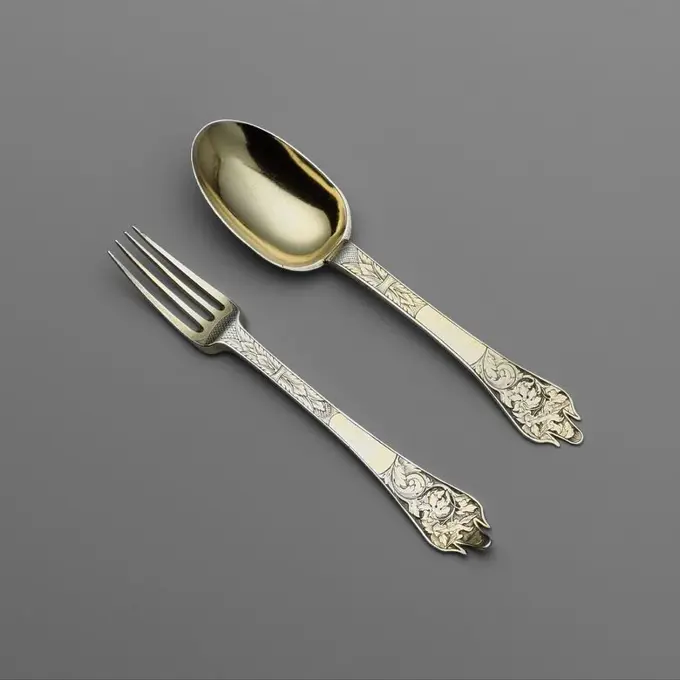
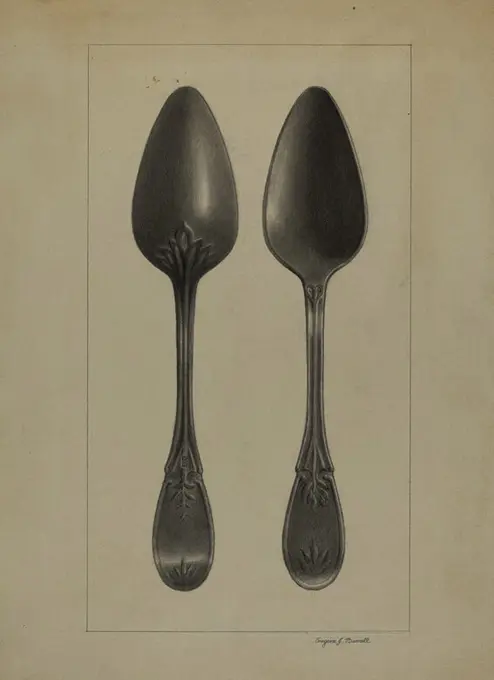
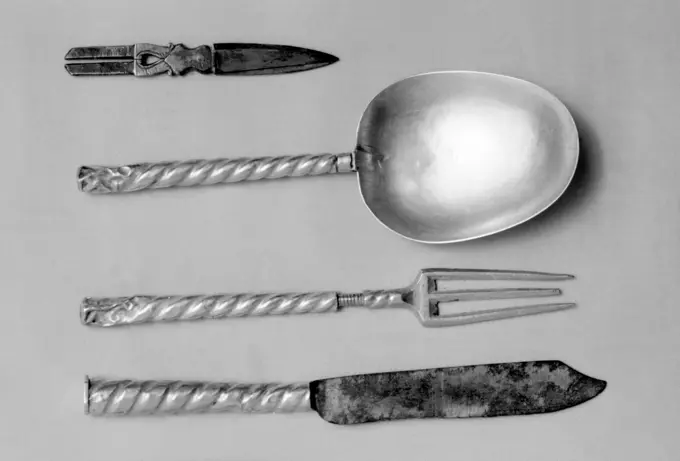
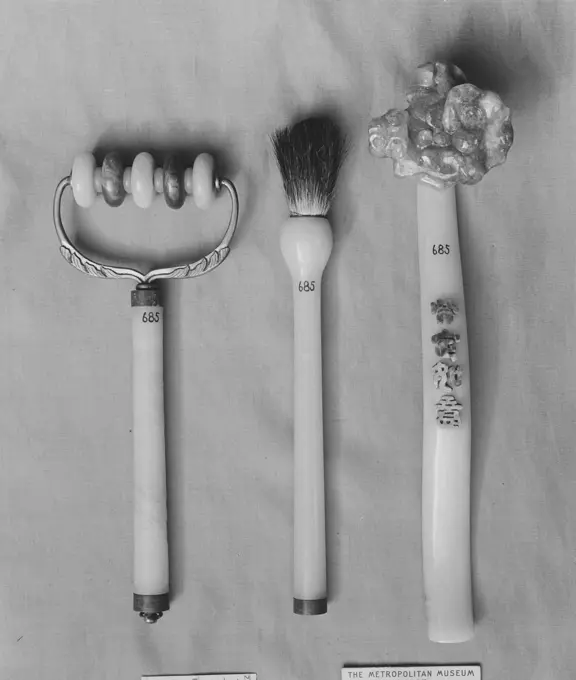
Tarragon in a spoon over a blured wooden background with copy spaceArrowhead (Yanone). Culture: Japanese. Dimensions: L. 8 3/4 in. (22.2 cm); L. of head 3 1/8 in. (7.9 cm); W. 2 1/8 in. (5.4 cm); Wt. 1.8 oz. (51 g). Date: 18th century. Museum: Metropolitan Museum of Art, New York, USA.Unknown, Three Tea Spoons, c. 1785, silver.TwelveTeaspoons.   Maker: Reed and Slater, active ca. 1845 - 1850Spoon. Culture: French, Paris. Dimensions: Length: 7 in. (17.8 cm). Maker: Louis Nicolle (master 1666, registered new mark 1680, active 1694). Date: 1683-84.This matching fork and spoon are significant not only as rare survivors of Louis XIV's sumptuary edicts but also as early examples of silver flatware. Although spoons had been used at table since the fifteenth century, forks came into widespread use only in the early part of the seventeenth century, and the concept of a matched fork and spoon, known as a couvert, did not appear until the second half of the century. Knives were included in the couvert toward the end of the 1600s, shortly after this fork and spoon were made. Gilding and engraved scrolling vegetal motifs decorate other surviving couverts of the 1680s.Jeffrey H. Munger, 2010. Museum: Metropolitan Museum of Art, New York, USA.Poll photo collection. Product photos; silverware. Teaspoon of the fa. Gerritsen & Van Kempen in Zeist. January 1, 1930. Utrecht (province), ZeistBowl 12th-15th century Chimú. Bowl 310643Ice cream spoon, Silver, gilding, France, late 19th century, cutlery, Decorative Arts, Ice cream spoonPewter Spoon. Dated: c. 1936. Dimensions: overall: 28.6 x 21.7 cm (11 1/4 x 8 9/16 in.) Original IAD Object: 9 1/16" long; 1 3/4" wide. Medium: graphite on paperboard. Museum: National Gallery of Art, Washington DC. Author: Eugene Barrell.Traveling set 17th century French, Paris. Traveling set 188165 French, Paris, Traveling set, 17th century, Silver, steel, leather, (a-c): L. 5-3/16 in. (13.2 cm.); (d,e): L. 4-5/8 in. (11.7 cm.); (f,g): L. 4-7/8 in. (12.4 cm.); (h): L. 2-11/16 in. (6.8 cm.); (i, j): L. 4-1/8 in. (10.5 cm.). The Metropolitan Museum of Art, New York. Gift of Mrs. Samuel P. Avery, 1897 (97.2.131 a-j)Tablespoon.   Maker: T. A. (2), American, active ca. 1745-55Maker, formerly attributed to: Timothy Allen, American, 1713-1792Spoon (Netherlands); Designed by N.V. Koninklijke (Dutch); Produced by Begeer (Netherlands); silver; cm: L: 16 x W: 5.6 (at widest)Set of six knives 1767-71 Louis-Joseph Lenhendrick The tooled leather box contains six couvertsthe French term for two or more matched pieces of flatwarewhich in this instance each comprise a fork, spoon, and knife. Six identical couverts housed in a similar box are also in the Museum’s collection. It is not known for whom these thirty-six pieces of flatware were made because the coats of arms that decorated each fork, knife, and spoon have been erased. However, the two boxes are decorated on the lids with the Noailles arms, suggesting that a member of that distinguished aristocratic family owned the cutlery in the eighteenth century.The designs of the flatware are unusually elaborate and ambitious, especially in the use of openwork in the stems of the fork and spoon, and in the molded and chased decoration of the knife blades. The amount of work required by the complexity of the designs marks these as especially fine pieces of silver cutlery. The two sets date from the years 1767-71Empty pan with old spoons top viewSpoon China. Spoon. China. Metal, silver. Tang dynasty (618-907). MetalworkPoll photo collection. Product photos; silverware. Teaspoons of the fa. Gerritsen & Van Kempen in Zeist. January 1, 1930. Utrecht (province), Zeistspoon silver cartoon vector. tablespoon metal, stainless teaspoon, silverware spoon silver vector illustration. spoon silver cartoon vector illustrationMadrid, 11/28/2017. Exhibition on Auschwitz. Photo: Maya Balanya Archdc.Massage implement 18th century China. Massage implement. China. 18th century. Nephrite and jadeite, lapis lazuli, and carnelian, made up of five round, flat perforated discs, two of nephrite, one red agate, one jadeite and one lapis lazuli; white handle. Qing dynasty (1644-1911), Qianlong period (1736-95). Jade