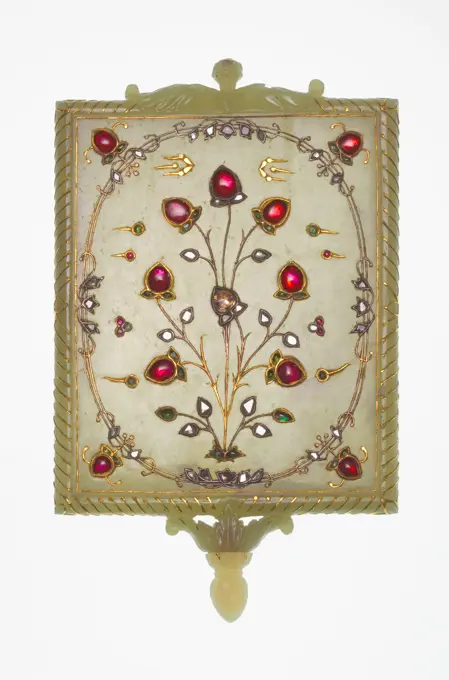
Vintage Textile Designs

Detailed illustrations of historical textiles featuring intricate embroidery, floral patterns, and decorative motifs from various centuries.
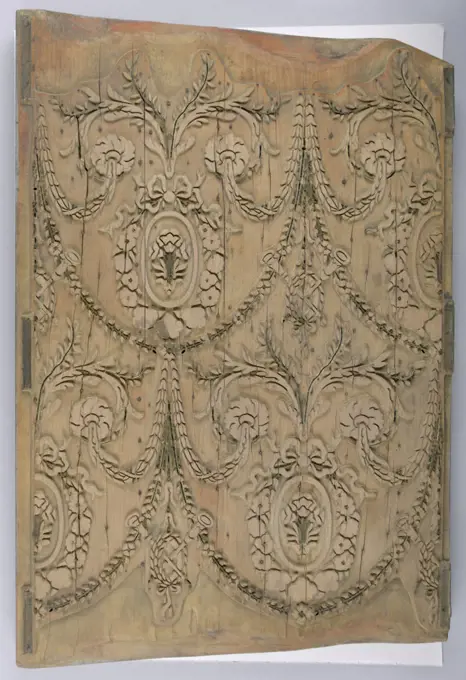
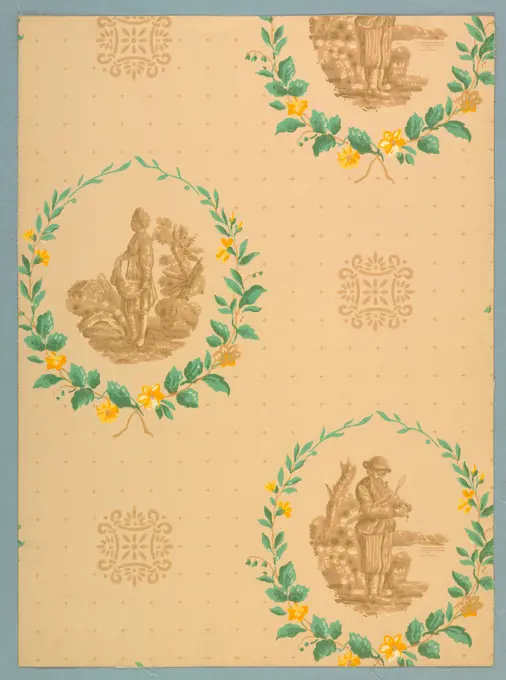
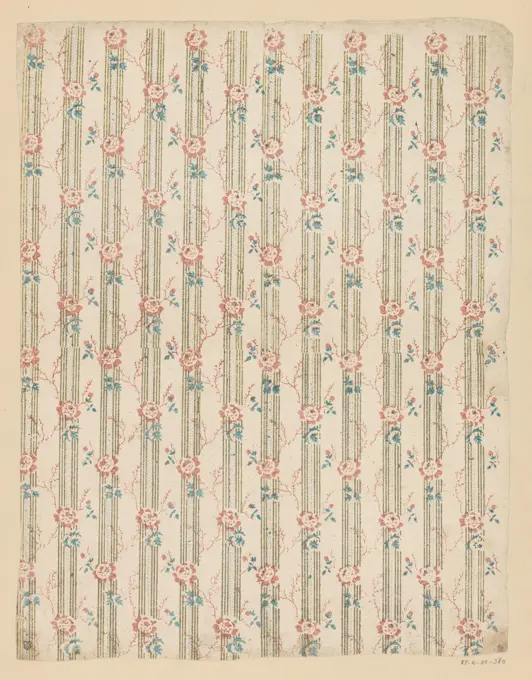
Wood block, M.H. Birge & Sons Co., 1834, Wood, brass, Vertical rectangle with irregular short sides. Basic block for multicolored design, cut for larger printing areas. Leafy swags (the stems and a few nails in brass), containing wreathed oval medallions with flower. At junction of swags, two crossed flutes in laurel wreath. Drop repeat, drop match. Block stamped '8596'., Buffalo, New York, USA, 1875-99, Wallcoverings, Wood block
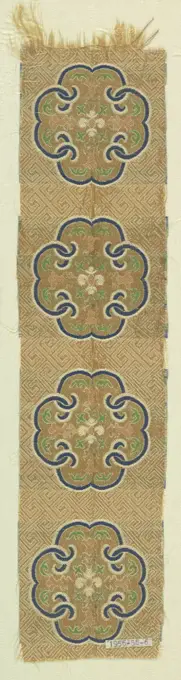
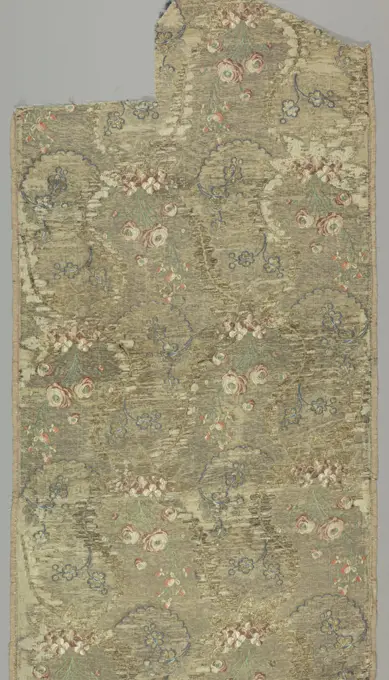
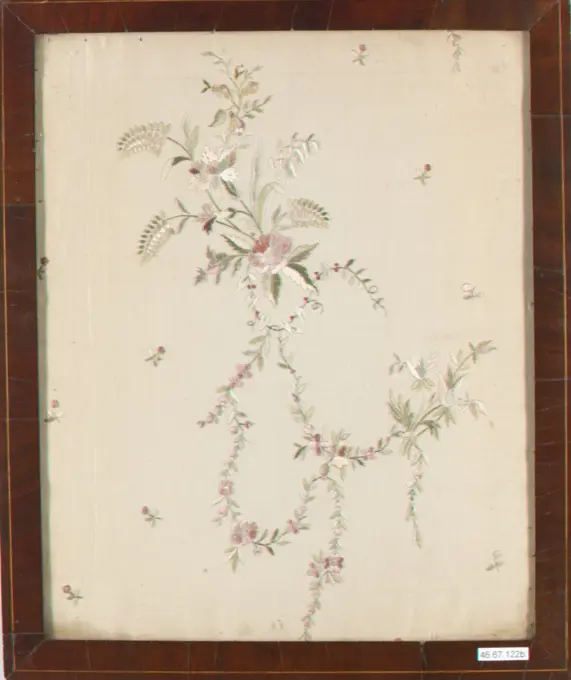
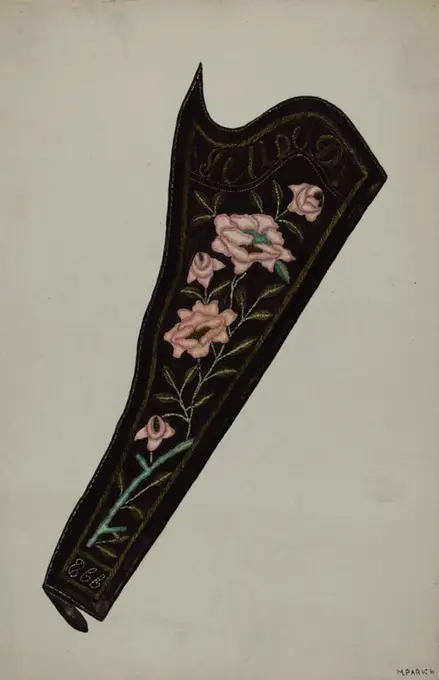
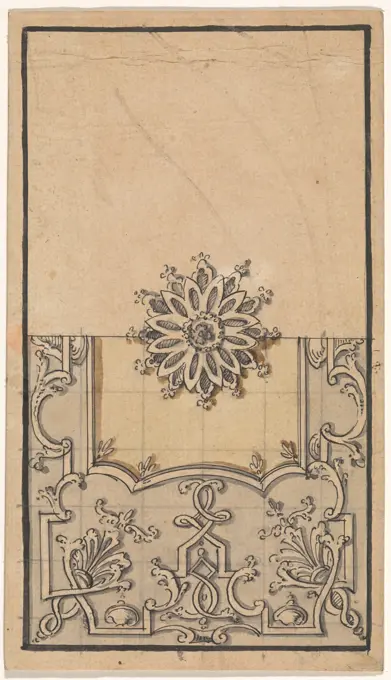
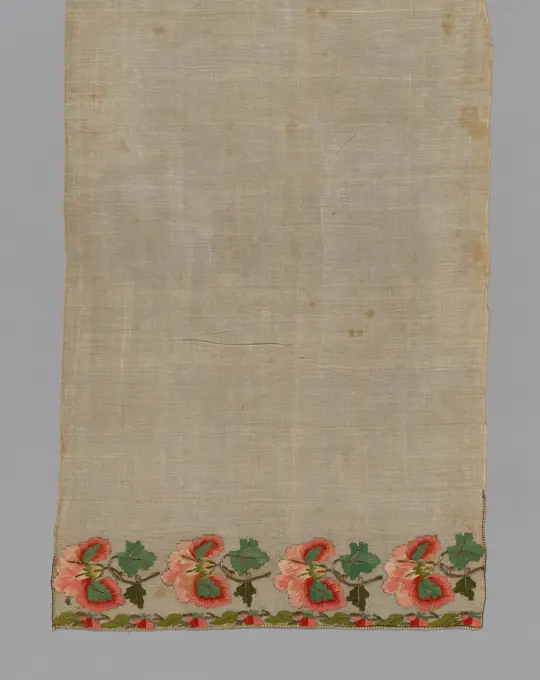
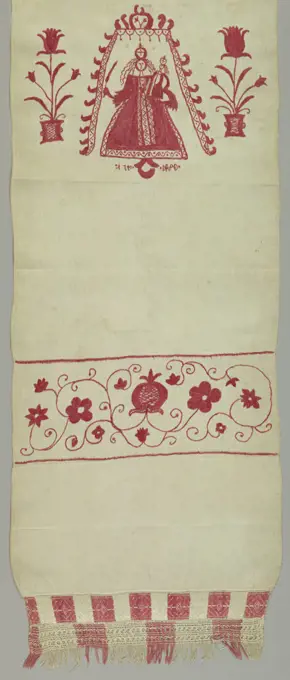
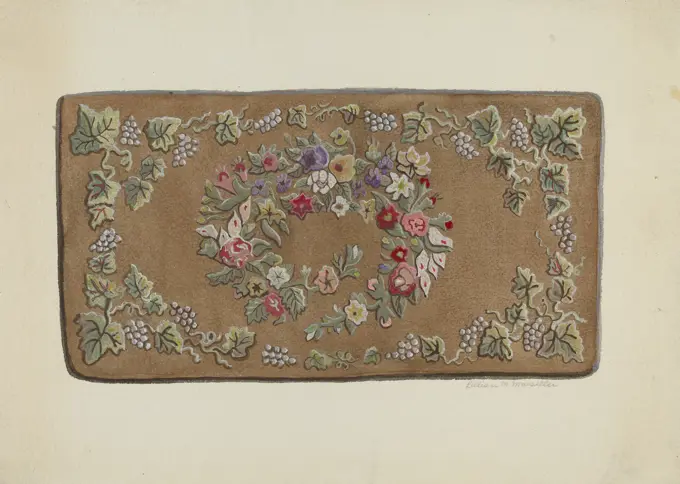
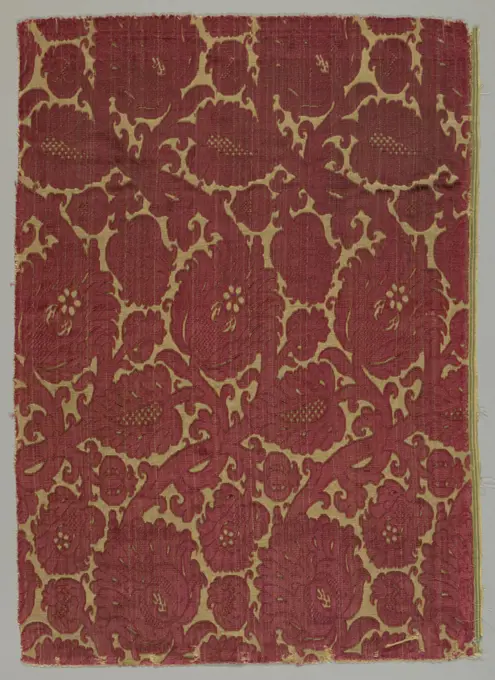
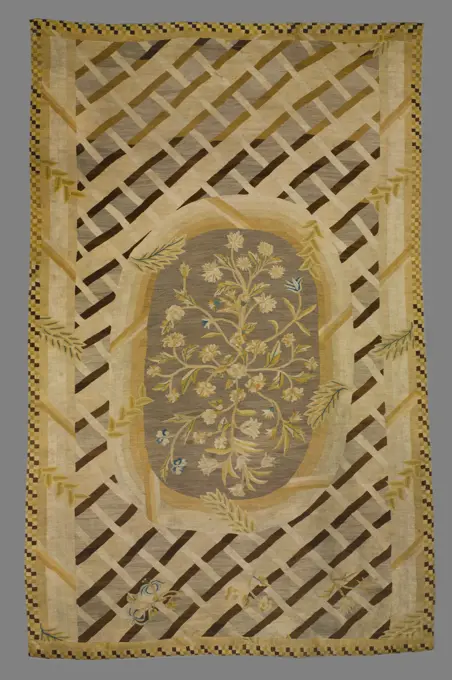
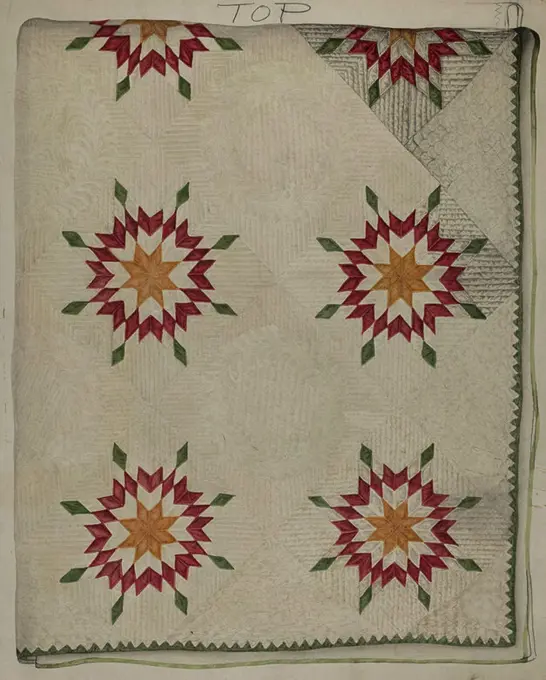
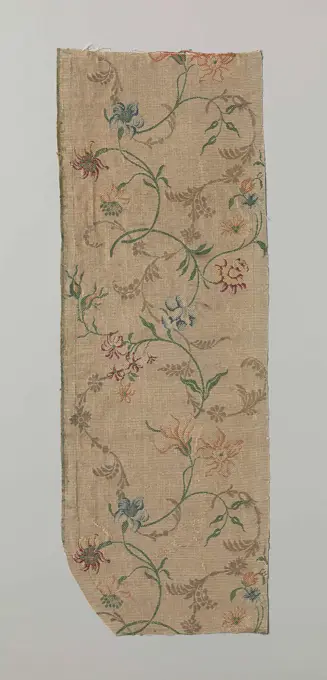
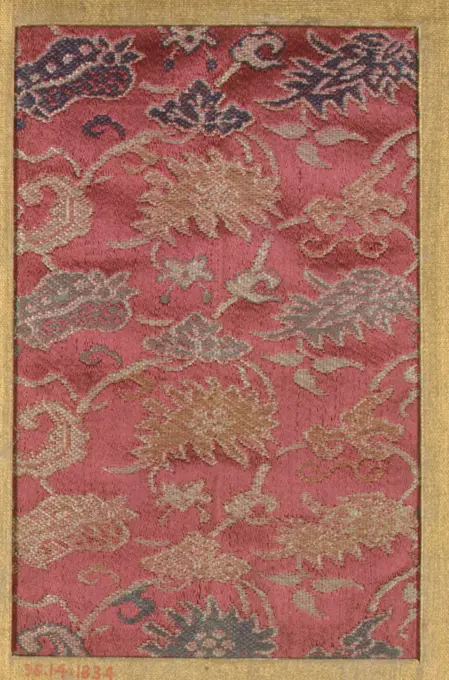
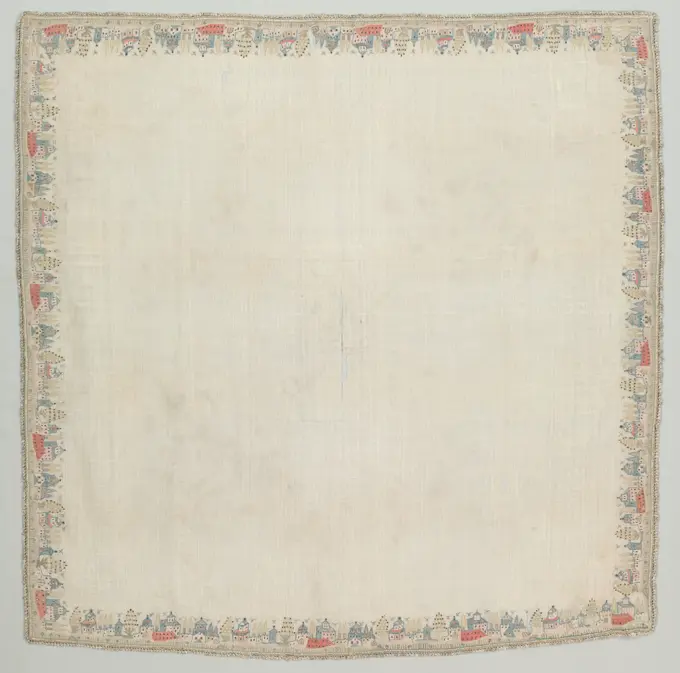
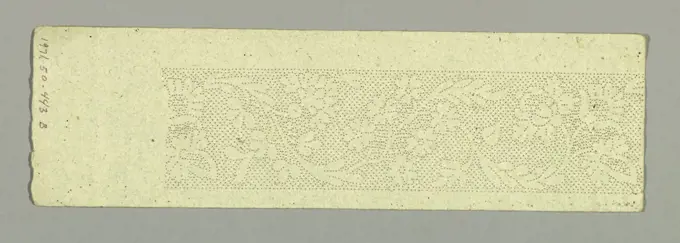
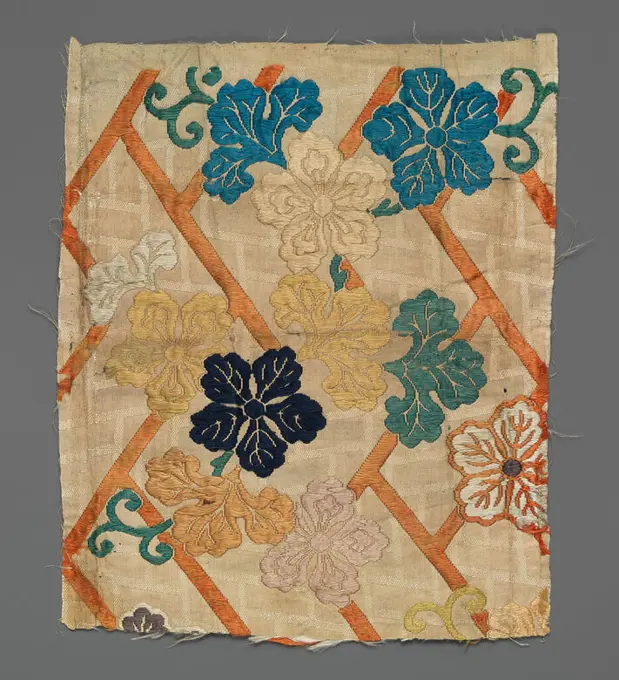
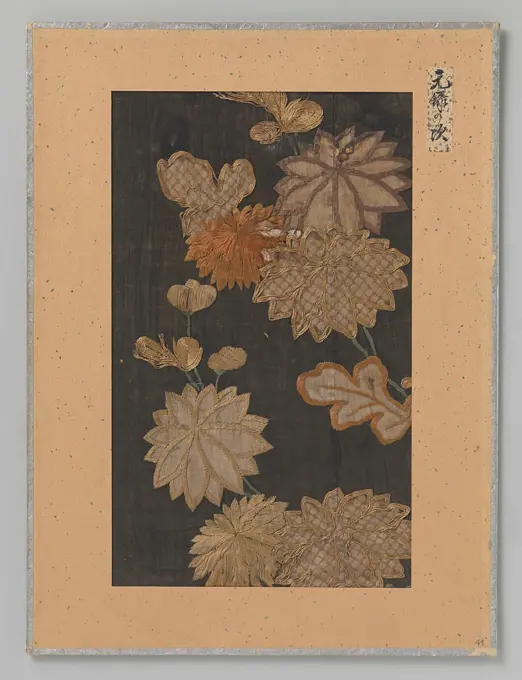
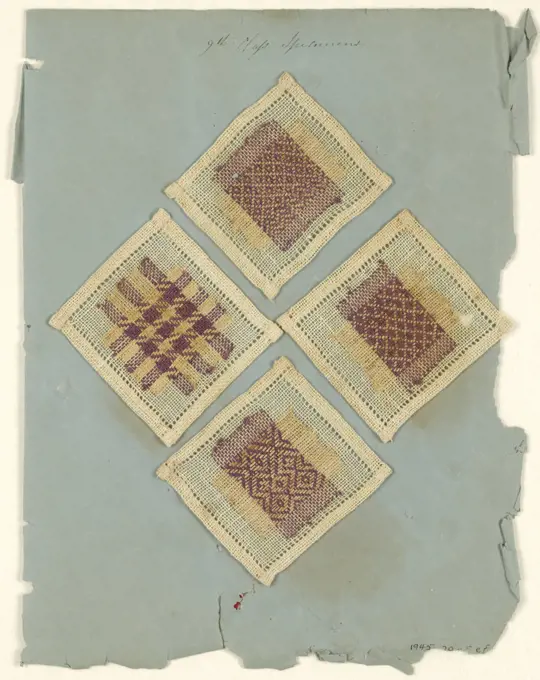
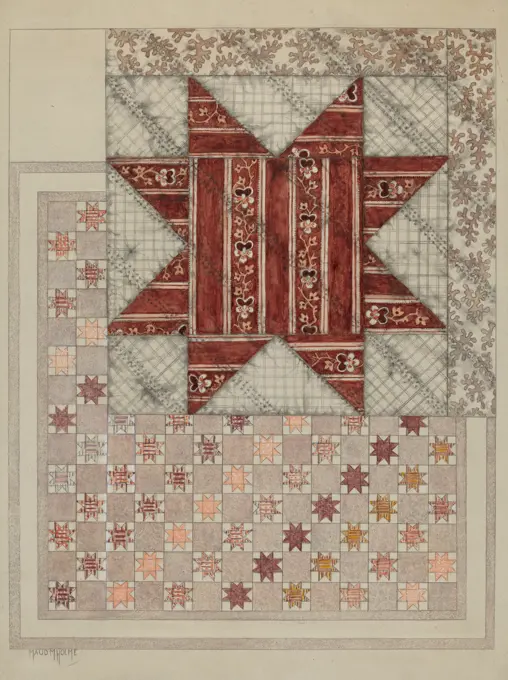
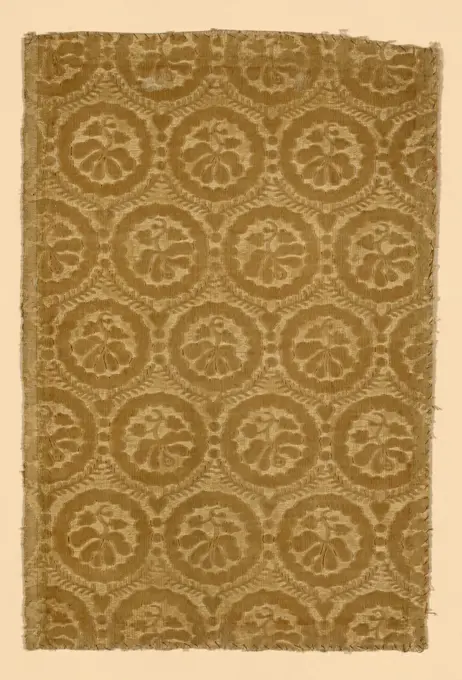
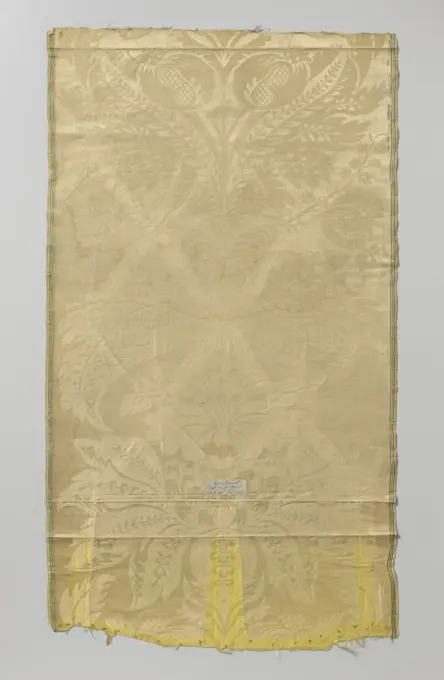
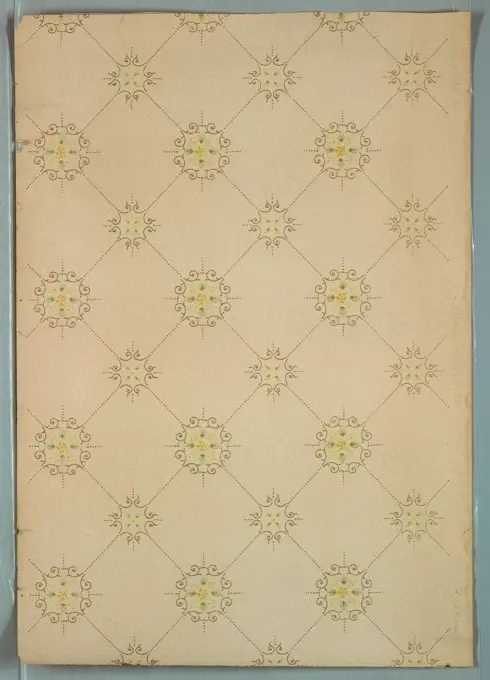
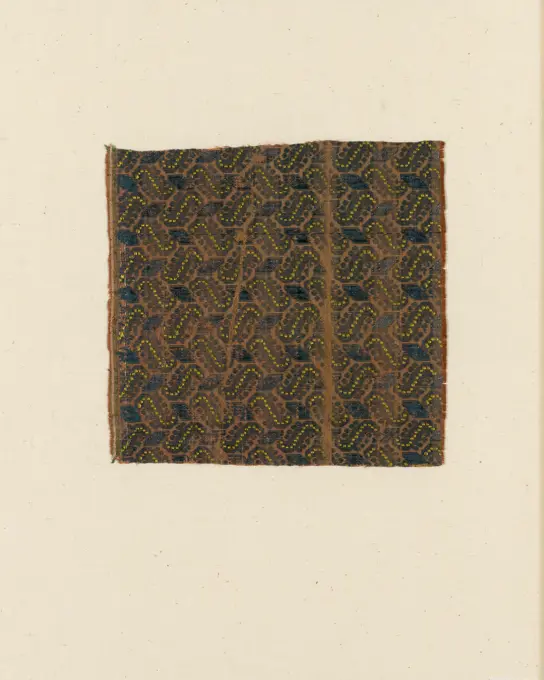
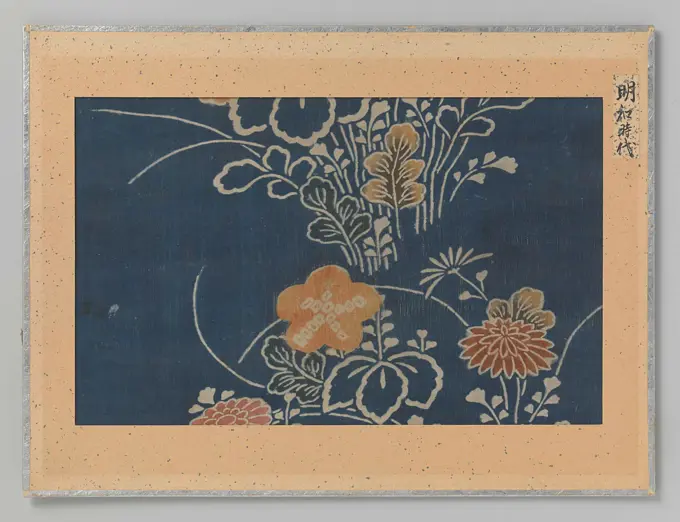
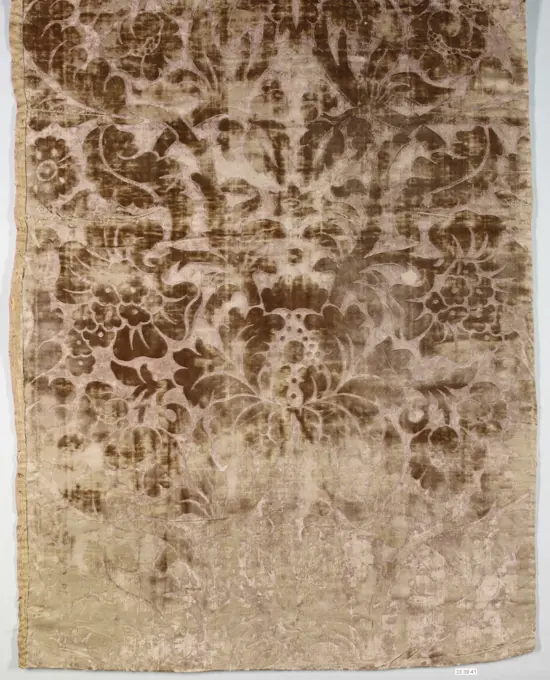
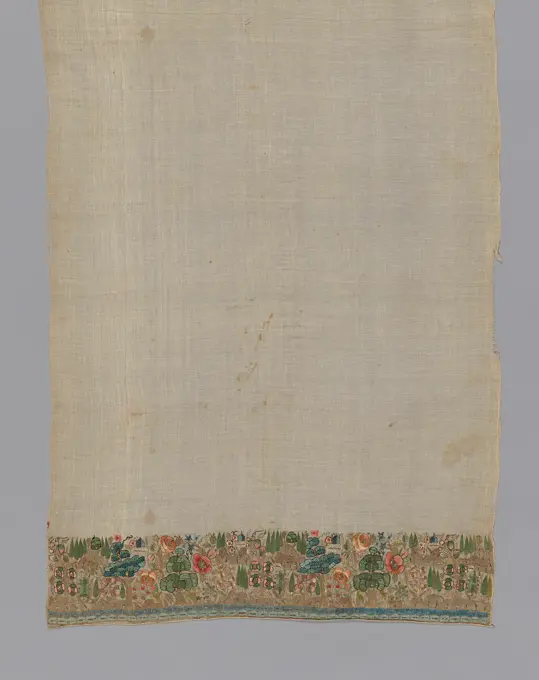
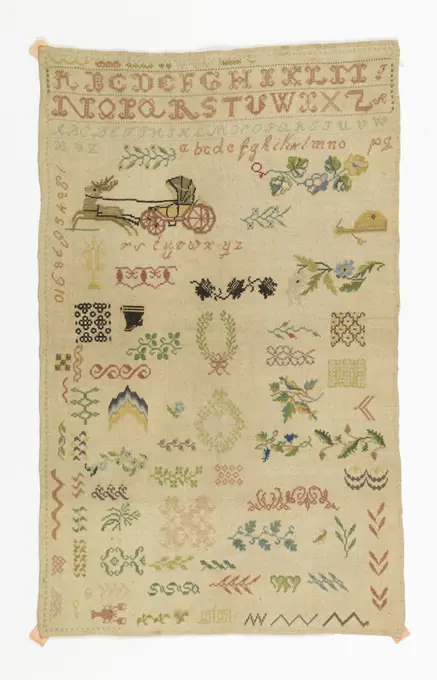
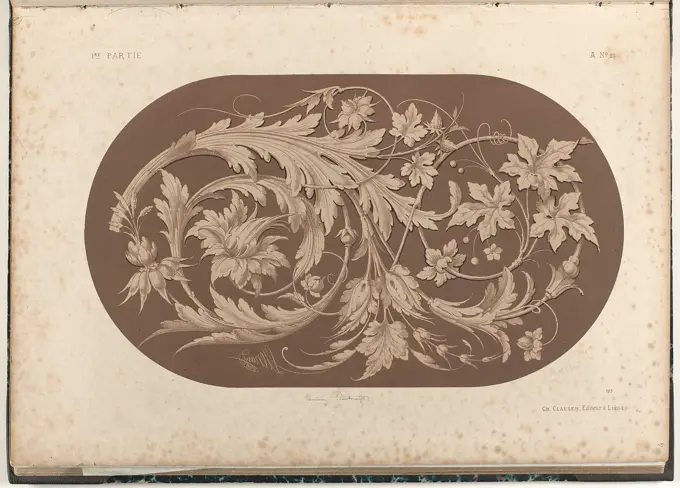
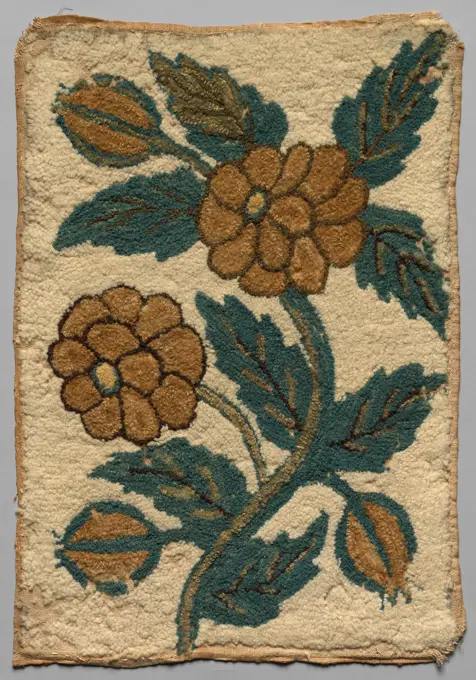
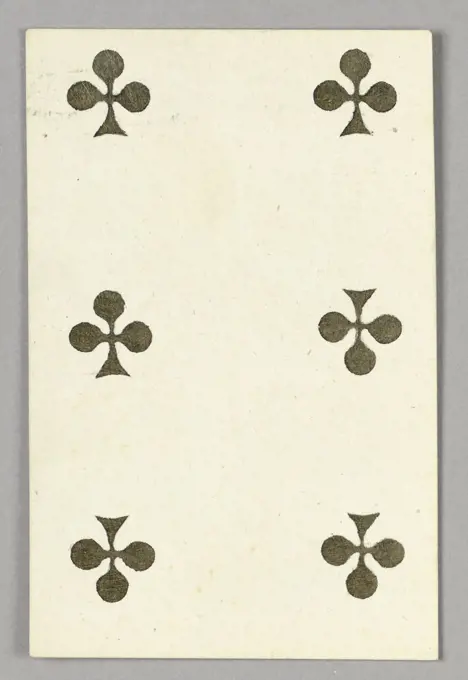
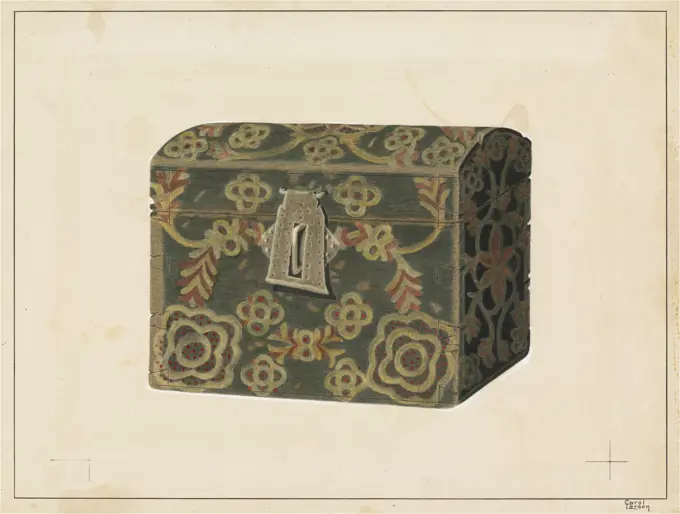
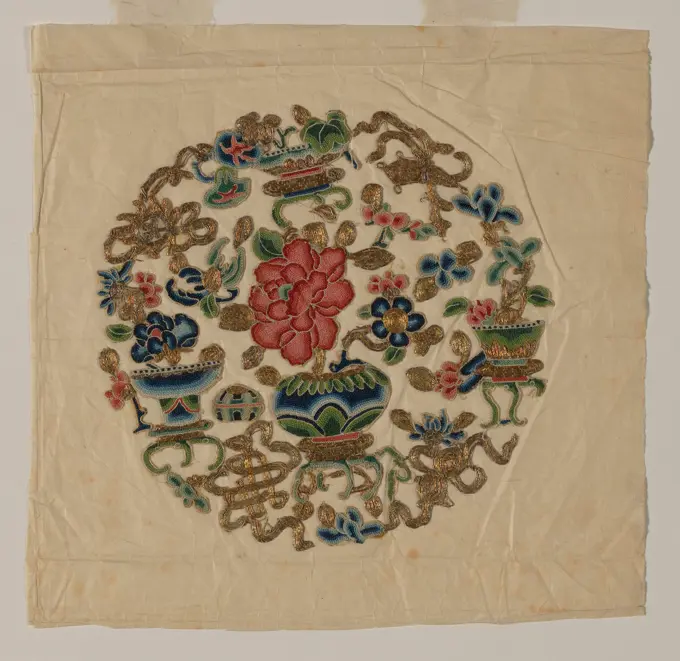
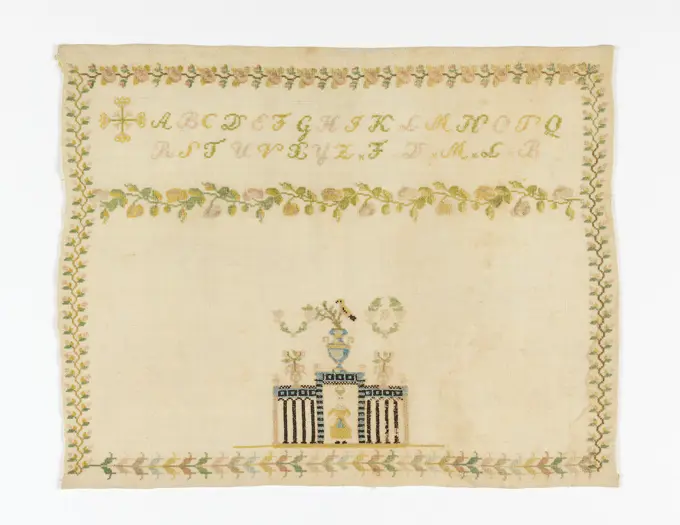
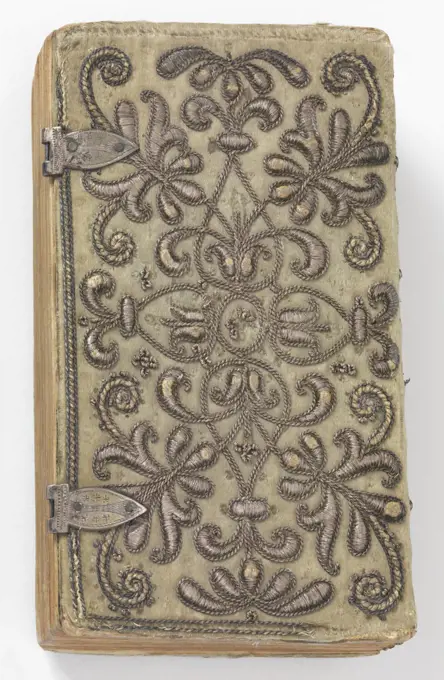
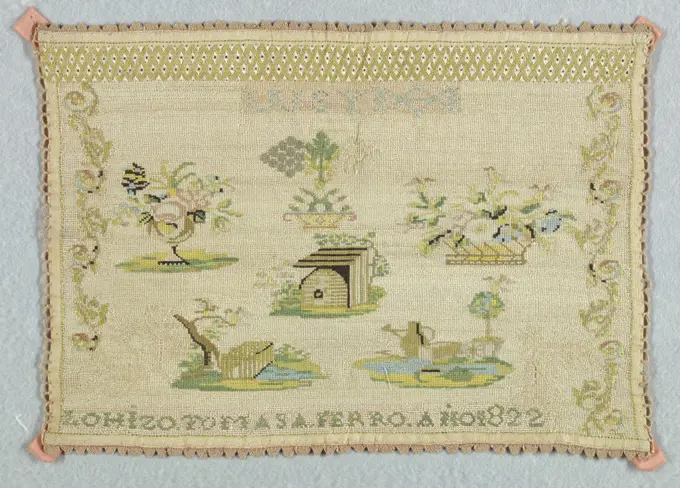
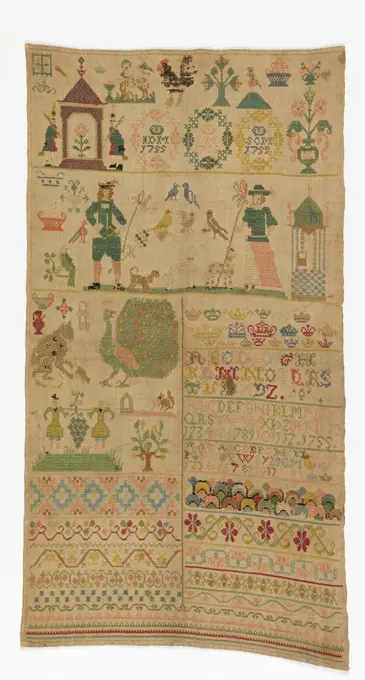
Sampler, Medium: silk embroidery on linen foundation Technique: wrapped bars and cross stitch on plain weave, At top, cross borders showing alphabets, numbers, floral and geometric designs and 'A G F den 10 July' (Angefangen 10th July); below, scattered motifs including a wreath with 'D S M CG G ANNO 1806,' flowers, animals, people in a sleigh, and 'F E G W den 23 AUGUS' (Fertig Guersen August 23rd)., Germany, 1806, embroidery & stitching, SamplerRectangular field with a rosette in the middle in the middle with a rosette in the middle and a wide border of tape work on a yellow midfield, design for a flat filling, perhaps for textile.Textile 19th century Japan. Textile 68008Wood block, M.H. Birge & Sons Co., 1834, Wood, brass, Vertical rectangle with irregular short sides. Basic block for multicolored design, cut for larger printing areas. Leafy swags (the stems and a few nails in brass), containing wreathed oval medallions with flower. At junction of swags, two crossed flutes in laurel wreath. Drop repeat, drop match. Block stamped '8596'., Buffalo, New York, USA, 1875-99, Wallcoverings, Wood blockPanel Made 1775-1800 France. silk .Fragment. Italy or Spain. Date: 1690-1710. Dimensions: 33.4 x 24.8 cm (13 7/8 x 9 3/4 in.)Repeat: 17.4 x 16.5 cm (6 7/8 x 6 1/2 in.). Silk and silvered-metal-strip-wrapped silk (frisé), warp-faced satin weave with supplementary brocading wefts and self-patterned by areas of plain weave. Origin: Italy. Museum: The Chicago Art Institute, Chicago, USA.Towel or Napkin Made 1701-1800 Turkey. Embroidered . AnonymousTowel, Medium: cotton embroidery, linen foundation Technique: cross, running, interlacing, and surface satin stitches on plain weave, Towel ornamented with three bands of embroidery; one showing the Virgin and Child under a canopy with '1740 DRAD' and two flowering scrolls. At the bottom, a band of darning and knotted fringe., Europe, 1740, embroidery & stitching, TowelLillian M Mosseller, Hooked Rug, c 1936 Hooked RugFragment Made 1750-1800 Italy. Silk; velvet bands cut, voided, warp painted; against satin weave foundation; alternating with satin weave bands .Fragment, Medium: silk Technique: cut and uncut supplementary warp pile (velvet) in a woven foundation, Velvet fragment has a yellow ground with a large-scale floral pattern in red cut and uncut pile., Italy, early 17th century, woven textiles, FragmentFragment, Medium: silk Technique: embroidered on satin, Fragment of the outer border with flowers, vines and ribbons., China, 18th century, embroidery & stitching, FragmentRug;  beginning of the 19th century (1801-00-00-1820-00-00);Quilt - Applique Patterns with Border. Dated: c. 1936. Dimensions: overall: 48.4 x 39.5 cm (19 1/16 x 15 9/16 in.). Medium: watercolor and graphite on paper. Museum: National Gallery of Art, Washington DC. Author: Lily Capson.Towel or Napkin Made 1801-1900 Turkey. embroidered . AnonymousFragment veelkleurige gebrocheerde zijde.A silk tissue, consisting of two rectangular pieces, green tendrils with various floral o.a. large salmon-colored cheries blue, red and white rosette flowers. Note: Two panels put together left and right a self-side; 0.3 cm Plain bond.Woman's coif, Medium: linen, silver thread Technique: embroidered, Woman's coif, opened out, linen embroidered in white linen and silver threads, with details in reticello; pattern of small flower clusters bordered by lattice., England, late 16th-early 17th century, costume & accessories, Woman's coifSilk fragment with horizontal rows of small flowers, anonymous, c. 1600 - c. 1650 Silk fragment; White warp with ditto impacts, and a second silver, passed on with orange, red, purple, blue and green silk. The pattern consists of horizontal rows of small flowers, alternately bent to the left and to the right. Germany Ketting an element: Silk. Elements: Cotton (Textile). Silk fragment; White warp with ditto impacts, and a second silver, passed on with orange, red, purple, blue and green silk. The pattern consists of horizontal rows of small flowers, alternately bent to the left and to the right. Germany Ketting an element: Silk. Elements: Cotton (Textile).Piece 18th-19th century Japan. Piece 66268Uncut Sleeve Bands, early 1900s. China, early 20th Century. Satin weave silk with silk embroidery; overall: 111.8 x 38.1 cm (44 x 15 in.).Piece 18th-19th century Japan. Piece 67547Sampler (England); Embroidered by Susana Pratt (English); silk and metal-wrapped silk embroidery on linen foundationTextile (USA); cottonTable Cloth, c. 1775-1825. Turkey, Late 18th- Early 19th century. Metallic embroidery on cotton; overall: 103.5 x 104.8 cm (40 3/4 x 41 1/4 in.).Wall Pocket; silk, metalFragment, Medium: silk Technique: cut, voided supplementary warp pile in a 3/1 twill foundation (velvet), Cut and voided ferronerie-style red velvet fragment with selvedge has a pomegranate pattern outlined by large palmettes., Spain, 19th century, woven textiles, FragmentSample, Medium: linen Technique: bobbin lace, Binche ground, 18th century, lace, SamplePiece 16th-17th century Italian. Piece 223538Piece. Culture: Japan. Dimensions: Overall (a): 12 1/4 x 11 1/4 in. (31.1 x 28.6 cm)Overall (b): 11 x 9 1/4 in. (27.9 x 23.5 cm)Overall (c): 11 x 8 1/4 in. (27.9 x 21 cm)Overall (d): 11 1/2 x 2 1/4 in. (29.2 x 5.7 cm)Overall (f): 31 x 11 in. (78.7 x 27.9 cm). Date: 17th century. Museum: Metropolitan Museum of Art, New York, USA.Textile 19th century Japan. Textile 67982Velvet Fragment (of a Chasuble ), 1400-1420. Italy, early 15th century. Velvet (cut and voided); silk; overall: 49.5 x 25.1 cm (19 1/2 x 9 7/8 in.).Drawing, Two Bracelets; Made by Salvatori (Italian, active 19th century); ItalySuzanne Roy, Crewel Embroidered Bedspread, c 1941 Crewel Embroidered BedspreadEdmond W Brown, White House Bed Cover, c 1936 White House Bed CoverFragment textile. Textile fragment, embroidery and applique of chrysanthemums on dark fond.Towel 18th century () Greek, Crete or Cypriot. Towel 219388Sutra Cover. China. Date: 1590-1599. Dimensions: 36 × 14.4 cm (14 1/4 × 5 5/8 in.)Weft repeat: 4.7 cm (1 7/8 in.). Silk and cotton, warp-float faced 3:1 broken twill weave with supplementary patterning wefts some bound in 1:3 'S' twill interlacings. Origin: China. Museum: The Chicago Art Institute, Chicago, USA.Textile, China, 18th-19th century, woven textiles, TextileTextile, Medium: silk, metallic thread Technique: plain weave with supplementary weft, Floral sprays and scalloped lines in blue silk., 18th century, woven textiles, TextilePiece 18th-19th century Japan. Piece 65806Joseph Lubrano, Printed Textile, c 1940 Printed TextileBorder. Italy. Date: 1601-1700. Dimensions: 43 x 26.5 cm (17 x 10 3/8 in.). Linen and silk, intergrated compound weave of warp-float faced satin weave and plain weave. Origin: Italy. Museum: The Chicago Art Institute, Chicago, USA.Sewing instruction book samples, Medium: linen Technique: darning and hem stitches on plain weave, Squares of linen fabric, each one hemstitched and ornamented with a design worked in darning stitch in purple and yellow silk., USA, 1829, sample books, Sewing instruction book samples, Sewing instruction book samples, Medium: linen Technique: darning and hem stitches on plain weave, Squares of linen fabric, each one hemstitched and ornamented with a design worked in darning stitch in purple and yellow silk., USA, 1829, sample books, Sewing instruction book samplesTowel end, Medium: linen Technique: withdrawn element with embroidery, Towel end with deep border at bottom of three flower heads in drawn work with fine embroidered foliage detail, in white linen thread. Initials 'I.A.D.' in symmetrical leaf-framed cartouche above. Two plain selvages. Hand-stitched hems at top and bottom., Denmark, 19th century, embroidery & stitching, Towel endRuth M Barnes, Hooked Rug, c 1936 Hooked RugMaud M Holme, Pieced and Quilted Coverlet, c 1937 Pieced and Quilted CoverletFragment Made 1750-1800 Flanders. Cotton, plain weave with supplementary pile warps forming cut solid 'velvet'; stampedRibbon French 19th centuryEleven designs for jewelry; Ein Neues Buch von Allhand Gold-Arbeit. Most of the designs are only shown halfway. Leaf 13 from series of 17 sheets.Ornament van bladranken, c. 1866 - c. 1900 photograph Leaves in a four -lobe list.  paper albumen printLength of Brocaded Satin, c. 1780. Philippe de Lasalle (French, 1723-1805). Satin, brocaded; silk with areas of chenille; overall: 182.9 x 54.6 cm (72 x 21 1/2 in.).Bed curtain, Medium: silk embroidery on linen foundation Technique: embroidered on plain weave, Bed curtain of hand-spun undyed linen, embroidered with a border of tree of life, peacock, and dog motifs in red, beige and green silks. With tassels., Rhodes, Greece, 19th century, embroidery & stitching, Bed curtainFragment of yellow silk damask with large pattern of stylized fan -shaped leaves between flowers and fruits, anonymous, c. 1740 - c. 1760 Fragment of yellow silk damask with large pattern of stylized fan -shaped leaves between flowers and fruits. Germany Ketting an element: Silk damask Fragment of yellow silk damask with large pattern of stylized fan -shaped leaves between flowers and fruits. Germany Ketting an element: Silk damaskCeiling Paper (USA); Manufactured by Maxwell & Co., S.A. (United States); machine-printed paper, liquid mica; 70.5 x 49 cm (27 3/4 x 19 5/16 in.)Fragment Made 1625-1675 Italy. Silk, plain weave with supplementary patterning warps and supplementary pile warps forming cut and uncut voided velvet .Sidewall, Angler; Manufactured by M.H. Birge & Sons Co. (United States); USA; machine-printed; 61.5 x 45 cm (24 3/16 x 17 11/16 in.)Fragments, Medium: silk Technique: printed and painted on plain weave, White ground with leafy blue zigzags and curling floral sprays in green, dark pink, purple, yellow, blue and orange., China, 18th century, printed, dyed & painted textiles, FragmentsEdith Miller, Beadwork Book Marker, c 1937 Beadwork Book MarkerTextile fragment. Textile fragment, pressure from chrysanthemums and other plants on the blue fond.Photo production of a decorative pattern with flowers and birds, anonymous, c. 1890 - in or before 1900 photograph  Paris photographic support albumen print flowers ~ ornament. other ornament derived from animal formsPiece 17th century Italian or Spanish. Piece 222648Leaf with floral pattern on lines and twigs with fruits, anonymous, 1700 - 1850  Leaf with lanes pattern of flowers on lines and twigs with fruits. Fine tenders about this.  paper. block printing (relief printing process) ornament derived from plant formsAltar Frontal; silk, metallic thread, metal sequinsFragment. Italy. Date: 1601-1625. Dimensions: 25.4 x 27.9 cm (10 x 11 in.). Plain compound satin ground. Origin: Italy. Museum: The Chicago Art Institute, Chicago, USA.Towel or Napkin Made 1801-1900 Turkey. Embroidered . AnonymousSampler, Medium: silk embroidery on linen foundation Technique: cross stitch on plain weave, Alphabets, numerals, portions of borders and varying other designs., Italy, late 18th century, embroidery & stitching, SamplerFragment silk tissue with gold and silver thread on a yellow soil. Pattern of palmets, acanthus leaves, stylized flowers and pomegranates. A silk tissue frement with a symmetrical pattern in gold and silver thread on a yellow soil. The pattern has palmets and acanthus leaves that swing to stylized flowers and pomegranates.Fragment of silk fabric  deIIcate twigs with oval fruits unknownFragment of silk fabric  colourful naturaIIstic pattern made of sprays of flowers unknownEleven designs for jewelry, 1695 print Most designs are only represented for half. Page 13 from series of 17 sheets.  paper engravingFragment Made 1600-1635 Italy. Silk, plain weave with supplementary pile warps forming cut and uncut voided velvet .Fragment of chasuble embroidery  irregular floral twig unknownFloral design for printed textile, Louis-Albert DuBois, Swiss, 1752-1818, Brush and gouache, graphite on white wove paper, Multi-colored floral and leaf pattern on white ground, lined graphite border., France, 1800-1818, textile designs, Drawing, DrawingOval with leaf rank. Leaf rank finished in Volutes. Top left is: 1re Partie, top right: A. n ° 23., Bottom right: 105.Tile (Sweden); tin-enamelled earthenware, underglaze polychrome decorationPiece 18th century Japan. Piece. Japan. 18th century. Silk. Edo period (1615-1868). Textiles-WovenPurse Cover (Mexico); leather, metal, silkFragment Made 1701-1800 China. Silk, plain weave, painted .Still life with field bouquet ..Towel Cover (USA); Made by Elizabeth Witmer; cotton on linenPiece. Culture: Italian. Dimensions: Overall: 10 3/4 × 7 3/4 in. (27.3 × 19.7 cm). Date: 16th century. Museum: Metropolitan Museum of Art, New York, USA.Fragment of lace fabric from the collection of the Minutoli Institut, Liegnitz (now Legnica, Poland). Belitski, Ludwig (1830-1902), photographerHooked Panel, 1700s. America, 18th century. Hooked wool; average: 43.2 x 30.5 cm (17 x 12 in.).Daniel Mignot, Hyacinth Shaped Brooch with Winged Animals at Top and Crouching Swans at Bottom, 1596 Hyacinth-Shaped Brooch with Winged Animals at Top and Crouching Swans at BottomSix of Clubs from Set of 'Jeu Imperial-Second Empire-Napoleon III' Playing Cards, F. Chardon, French, active 19th c., Lithograph on glazed paper, Six of Clubs from Set of 'Jeu Imperial-Second Empire-Napoleon III' Playing Cards., Paris, France, 1858, Playing Card, Playing CardCarol Larson, Wood Box or Chest, c 1937 Wood Box or ChestCut Out Motif (Needlework) Made 1801-1900 China. Silk, plain weave; embroidered with silk and gold-leaf-over-lacquered-paper-strip-wrapped cotton in knot stitches; laid work and couching; cut and glued to paper support .Cover with ornamental frame for 42 prints of landscapes in Germany, Anonymous, 1770 - 1826  Album Amicorum with 42 prints. With all the prints, except for two, the Verso contains an assignment, personally handwritten text and/or drawing. The cassette, cover and prints are possible as a whole by Johann Carl Wiederhold in Göttingen.  paper. cardboard. leather etching / decorated paper 'album amicorum', 'Stammbuch'. fruits and vegetables ~ ornament. wooden container: barrel, cask, bucketPassementerie 18th century French. Passementerie 214177Designs for various bronze objects, c. 1830 - c. 1850  Paris paper. graphite (mineral)  Paris paper. graphite (mineral)Textile, Medium: silk Technique: brocaded, White ribbed ground with grouped stripes. Brocaded in detached design of rosebuds and carnations in reds, blues and greens., France, late 18th century, woven textiles, TextileSampler (Italy); silk embroidery on linen foundationPa. German Book Marker. Dated: c. 1937. Dimensions: overall: 27.6 x 38 cm (10 7/8 x 14 15/16 in.) Original IAD Object: W OM 203; H OM 075 (). Medium: watercolor, colored pencil, and graphite on paperboard. Museum: National Gallery of Art, Washington DC. Author: Albert Levone.Book with embroidered covers, Medium: paper, silk, metallic thread Technique: embroidered, 'The Holy Bible' covered with green silk satin and embroidered in a symmetrical vine pattern using metallic yarns. The embroidery is in very high relief., London, England, 1665, embroidery & stitching, Book with embroidered coversSampler, Tomasa Ferro, Medium: silk embroidery, linen foundation Technique: eyelet, needle lace, cross and running stitches on plain weave, Detached motifs including landscapes and floral forms with the letters W.S.Y and a band of eyelets. Edged with needlepoint lace stitches., Spain, 1822, embroidery & stitching, SamplerSampler (Germany); silk and cotton embroidery on linen foundationSampler (Mexico); silk embroidery on linen foundationFirescreen ca. 1780 American. Firescreen 3640Gun Holster. Dated: 1935/1942. Dimensions: overall: 36.3 x 24.3 cm (14 5/16 x 9 9/16 in.). Medium: watercolor, graphite, and pen and ink on paper. Museum: National Gallery of Art, Washington DC. Author: Majel G. Claflin.Mirror Frame with Tree of Life Motif 1601-1800 India. This exquisite Mughal mirror frame of pale-green nephrite jade is inlaid with gems in the kundan technique, a quintessentially Indian method of gem setting. The motif of this luxury item designed for the Mughal court is a tree of life with inlaid gold stems and leaves and buds of rubies, diamonds, and emeralds. Above the naturalistically depicted plant are two abstracted Chinese-style clouds in gold. Acanthus-leaf motifs adorn the top and bottom of the frame, while the mirror handle is in the shape of an unopened flower bud.Jade was imported into India from the Khotan region of China. The owner of the jade concession there, the merchant Khwaja Muíin, visited the court of Mughal emperor Akbar in 1563 and presented him with jade pieces. The earliest Mughal jades reflect Timurid, Ottoman, Safavid, and Chinese influences, and the finest jade objects were produced during the Jahangir and Shah Jahan periods in the seventeenth century. Jad