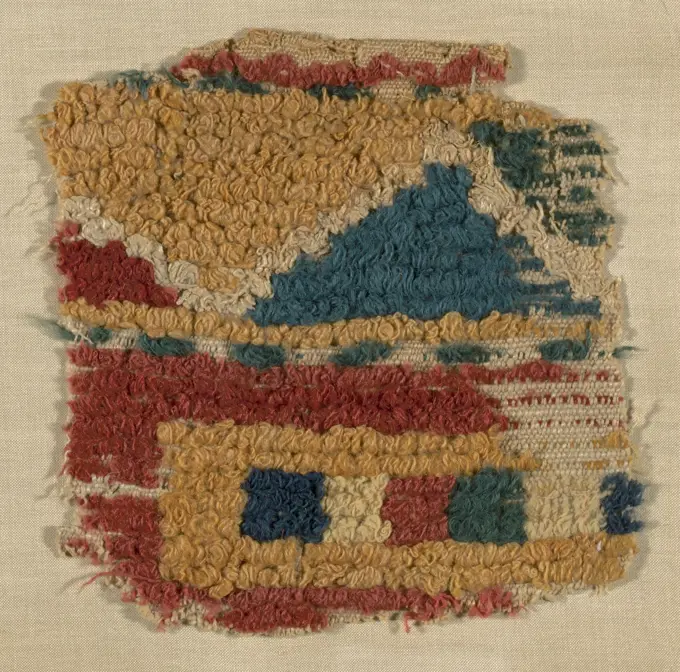
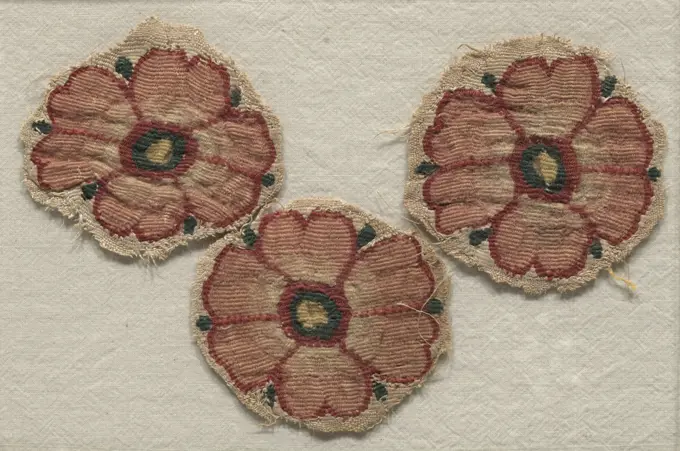
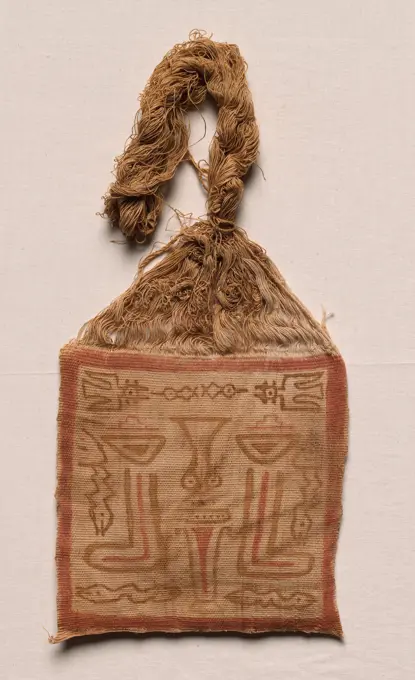
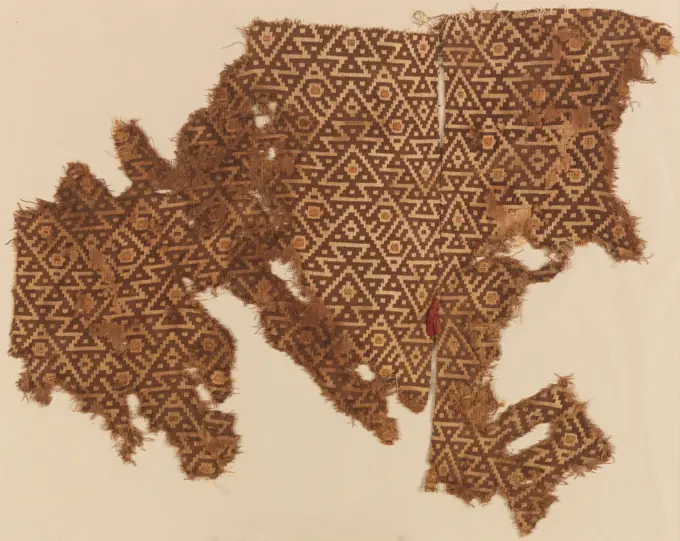
Vintage Textile Fragments

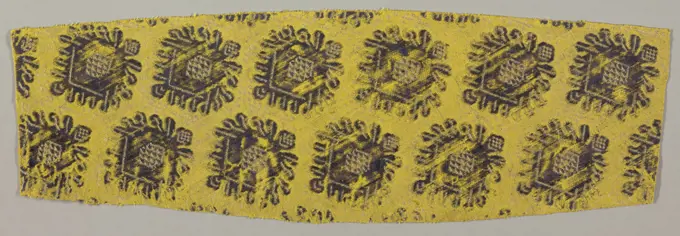
Fragments of woven textiles from Italy and Japan, showcasing historical patterns and rich colors from different centuries.

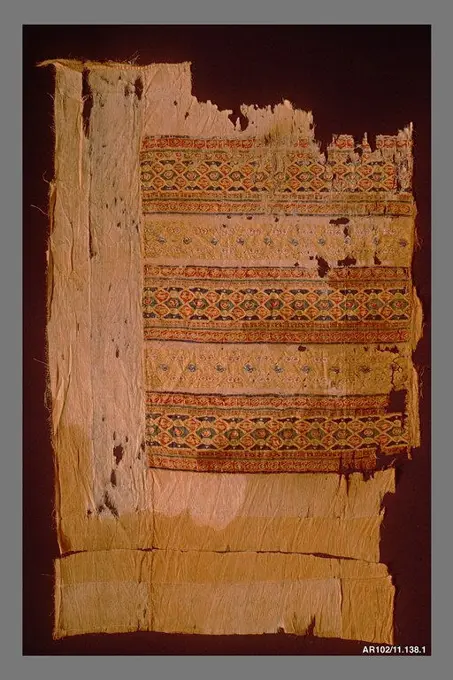
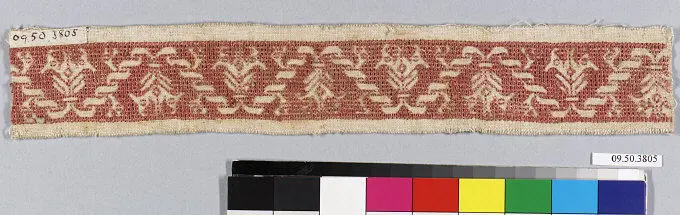
Bands, Medium; linen Technique: plain weave and tapestry weave, Bands of triangles and arrow and wave design, 13th century, woven textiles, Bands
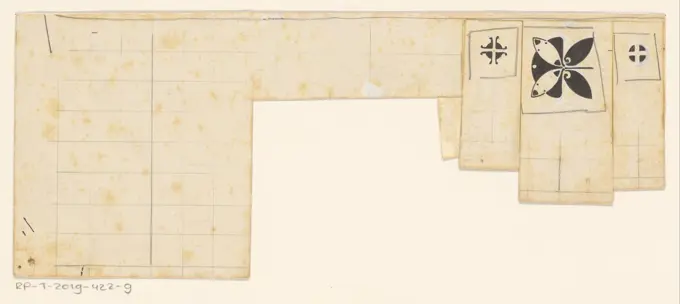
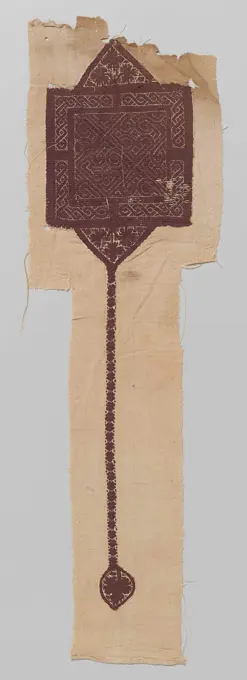
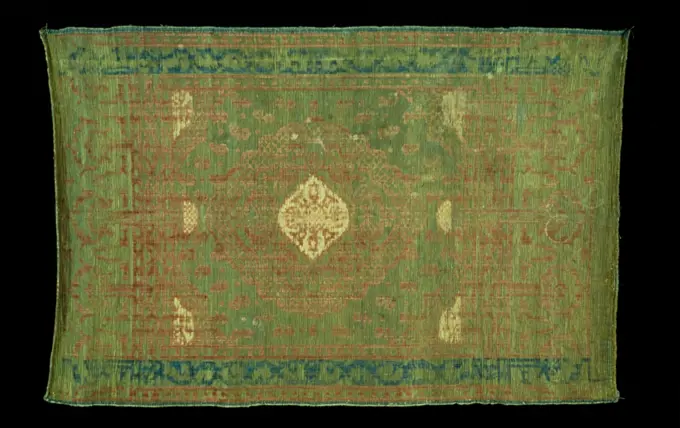
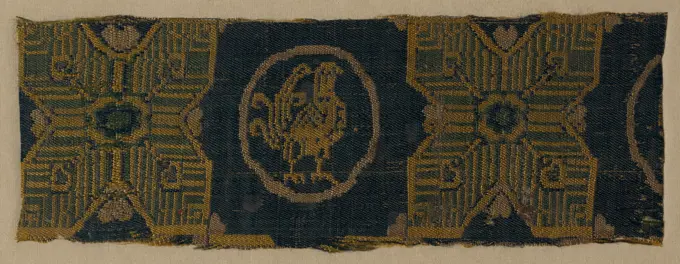
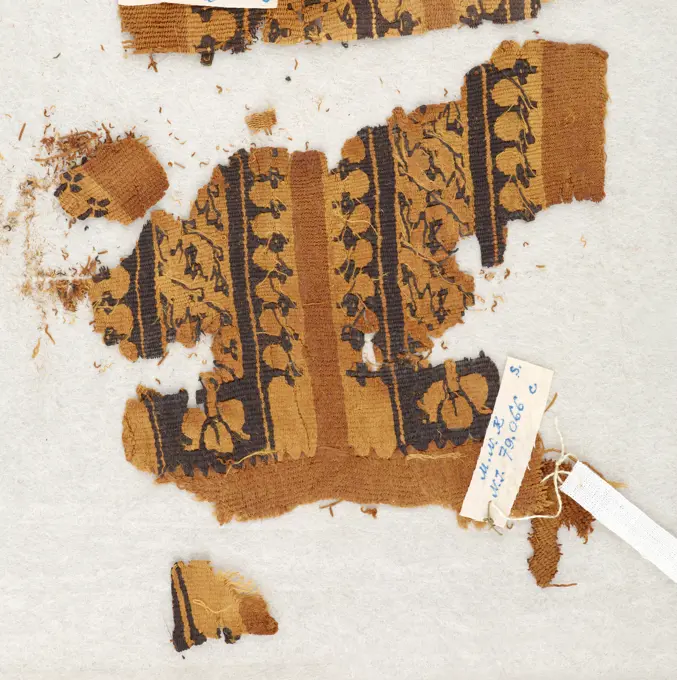
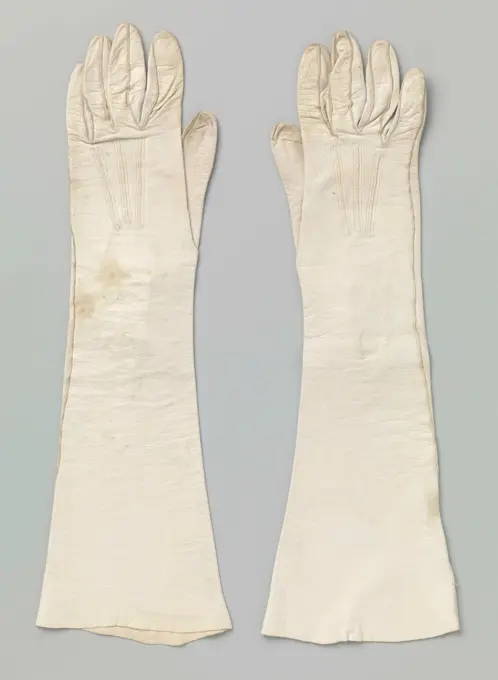
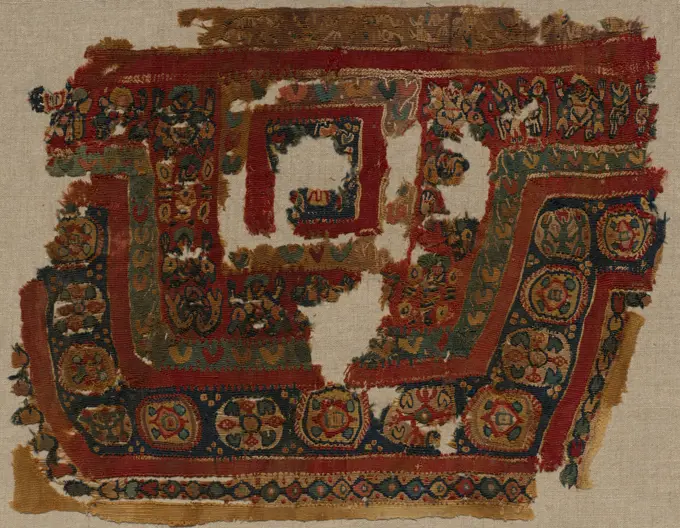
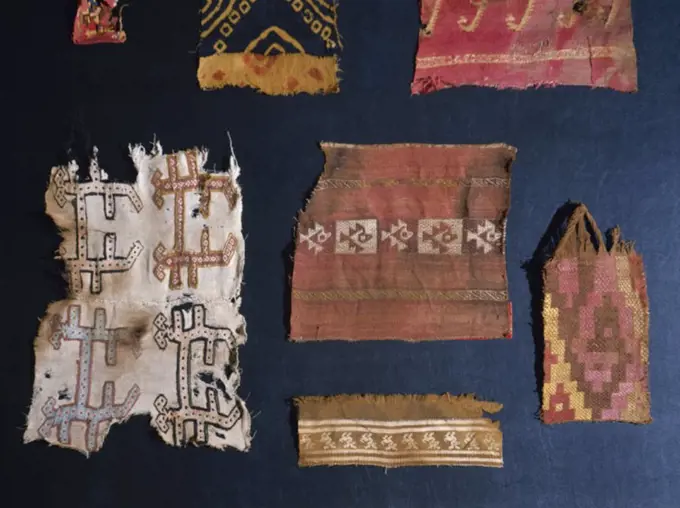
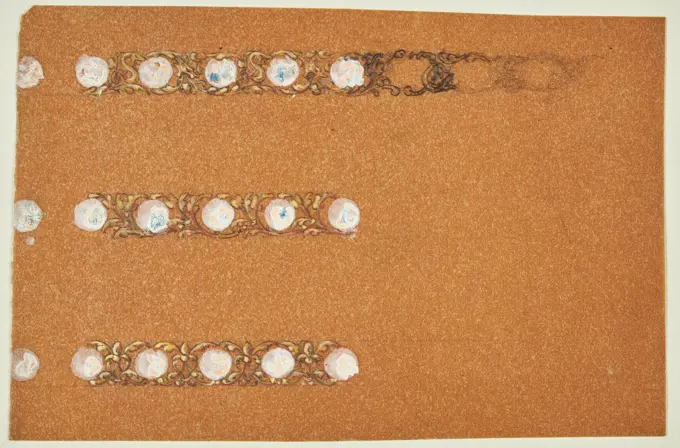
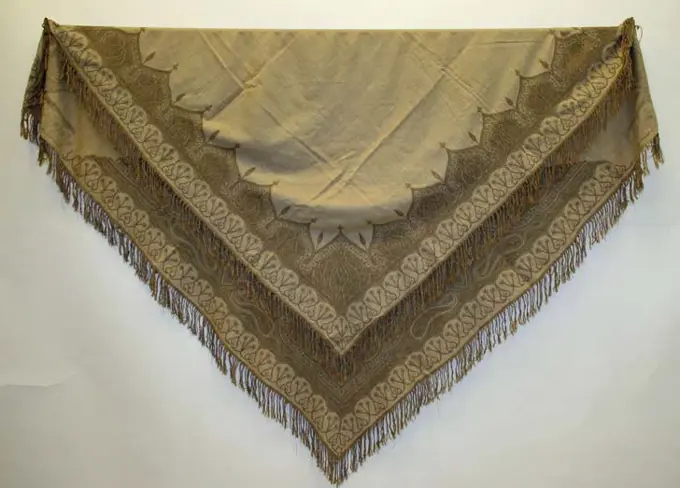
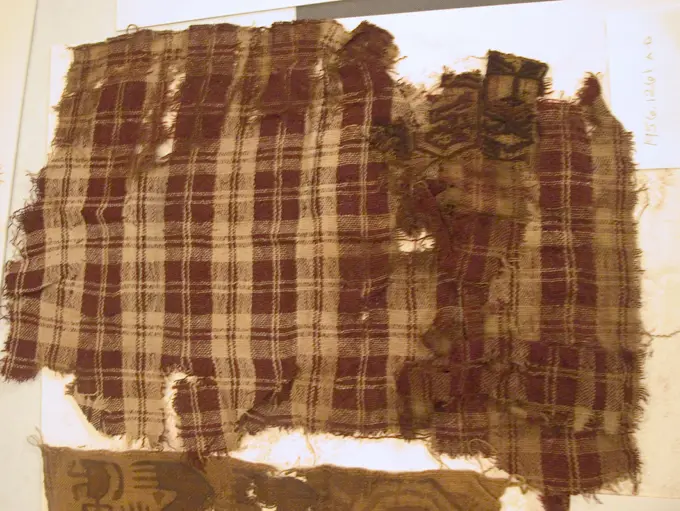
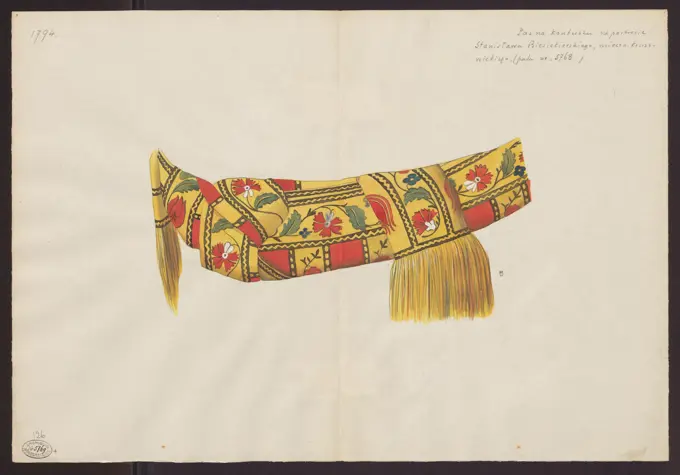
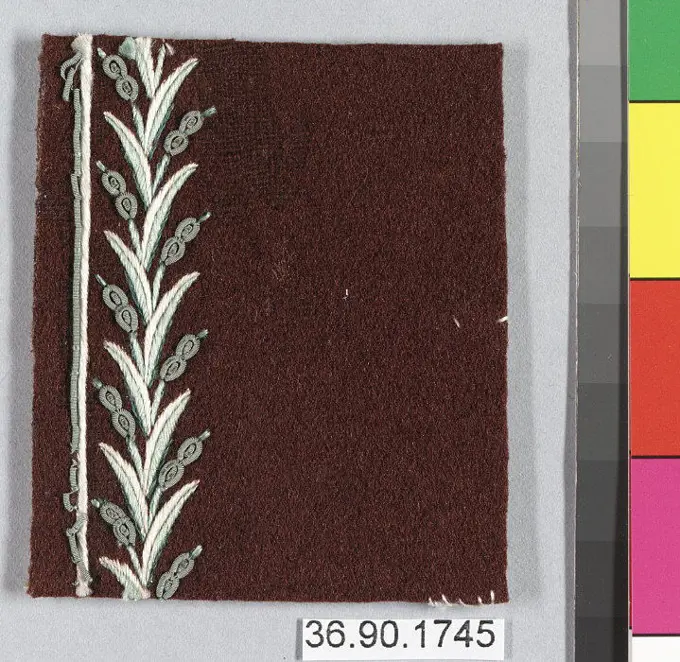
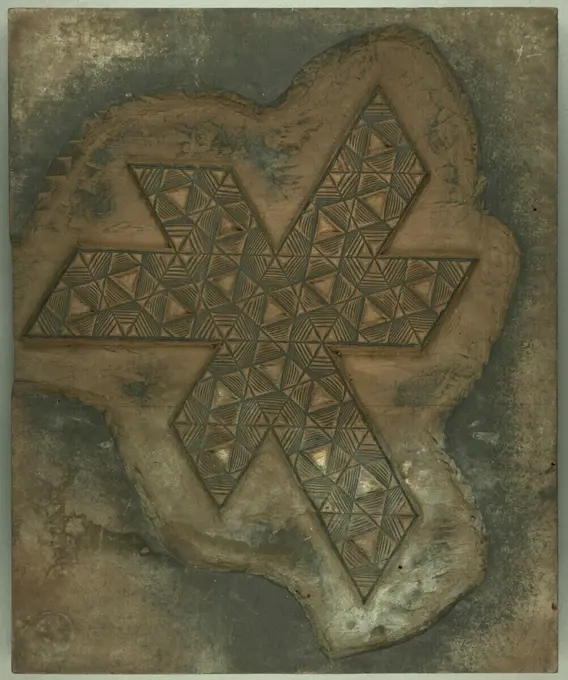
Edward D Williams, Shaker Wool Braids, c 1941 Shaker Wool BraidsAmerican 20th Century, Textile, 1935 1942 TextileBand design for: Ina Boudier-Bakker, powers, 1902, Reinier Willem Petrus de Vries (1874-1953), 1903 drawing Ornaments intended for the back of the tire. Also used for the band of: Ina Boudier-Bakker, the promised land, 1903.  paper. India ink (ink). deck paint. pencil pen flowers ~ ornamentTextile Fragment 11th century. Textile Fragment 446185Neck collar with folds, anonymous, c. 1590 - c. 1596  Neck collar with folds. The smooth part of the collar (5.8 cm wide) is made of double fabric and is composed of four pieces, so three seams. On one side of the collar there is a piece of metal () That green has been turned and on the other side two round yarn residues that have also been somewhat green. On the same side as the two round yarn residues, the letter 'H' is embroidered. A pleated piece has been turned on over the length of the smooth part (3.8 cm wide) of a few fabric.  textile materials   Nova Zembla. Saving HuysTextile Fragment: Brocaded Tabby with Pattern of Hares 13th-mid-14th century China. Textile Fragment: Brocaded Tabby with Pattern of Hares 45694Irritent stated on a double piece of cotton and with trace wires and needle side stitches for making a part of a collar of needle side, Belgian interned (Village Elisabeth, Amersfoort), c. 1915 - c. 1924  Property for a part of a collar of Venetian needle side. The needle side pattern is drawn with ink on light blue paper and holes are then stung along the pattern lines. A trace wire is sewn through this 'incentive' and the double layer of cotton. Some parts have already been filled with needle side stitches. If all needle side stitches are made over and between the trace wires, the incentive and the cotton surface can be cut and removed. Then you only have a needle side, in this case a part of the collar that can then be processed with the other parts and the edge into a collar. The design of the collar was made by a person from Belgium who was interned in the 'Elisabeth-Dorp' camp in Amersfoort in the First World War. Mrs. Van Nierop started making the collar and has donated the unfiSewing And Placket Sampler (Germany); cotton and silk embroidery on linen foundationSampler (Germany); cotton and silk embroidery on cotton foundationHandkerchief, Medium: linen, cotton Technique: embroidered, White linen handkerchief with border of four woven and two embroidered stripes and a monogram, W.P.C. in lavender and white cotton., France, ca. 1880, embroidery & stitching, HandkerchiefSkirt, 20th century, 64 1/2 x 32 in. (163.83 x 81.3 cm) (slightly irregular), Cotton, spice packet; dyed, Niger, 20th centuryHead Cover, 20th century, 30 x 30 7/8 in. (76.2 x 78.42 cm), Cotton; needlework, Vietnam, 20th centuryFragment, 17th century; silkSaddle Rug with Branch Designs 18th century China. Saddle Rug with Branch Designs. China. 18th century. Foundation: cotton; wool knotting. Qing dynasty (1644-1911). Textiles-RugsSquare (Egypt); warp; s-spun wool. wefts; s-spun wool; Warp x Weft: 11.4 x 13.2 cm (4 1/2 x 5 3/16 in.)Piece 18th-19th century Japan. Piece 67648Textile Fragment 7th-8th century. Textile Fragment 443678Fragment. Dimensions: Rug: L. 129.5 in.(328.93 cm)W. 40.75 in. (103.51 cm). Date: 17th century. Museum: Metropolitan Museum of Art, New York, USA.Wooden frame Fragment of a Sleeve 5th century. Fragment of a Sleeve 443939Fragment; silk; A/ H x W: 11.5 × 85 cm (4 1/2 × 33 7/16 in.); B/ H x W: 6 × 3 cm (2 3/8 × 1 3/16 in.)Textile Swatches Onondaga Silk Company, Inc. (1925-1981). , 1948-1959. Silk, 46 x 24 in. (116.8 x 61 cm).    1948-1959Weefselfragment met tabula.Natural linen tissue fragment with woven geometric motif in purple of a tabula with a triangle at the top and at the bottom of a triangle that excludes in a line that ends in an oval. Within the Tabula, a pattern is a pattern woven from diamond and circular braid in flying wire technique. A braid work pattern in the corners. The triangles they filled with three geometric motifs.Fragment of a Shoulder Band 5th-6th century. Fragment of a Shoulder Band 443738Leather lap of lap belonging to the equipment of a juice of the 1st Department of Noord-Hollandse Schutterij, c. 1800 - c. 1830  White veal leather lap sheet. Coming from the equipment of a juice of the 1st Department of Noord-Hollandse Schutterij. Netherlands calf (leather)Textile (Near East); silk, metallic threadVelvet Mat, 17th century, 33 1/2 x 22 1/2 in. (85.1 x 57.2 cm), Turkey, 17th centuryTextile Sample from Sample Book 19th century Japan. Textile Sample from Sample Book. Japan. 19th century. Silk. Textiles-WovenWaist Cloth from the Model of a 74-Gun Ship of the Line, anonymous, 1698 part Schans of red cotton trimmed with white piping. Middelburg cotton (textile)   MiddelburgHuallas, 19th century, 37 1/2 x 27 in. (95.2 x 68.6 cm), Silk, alpaca, Bolivia, 19th centuryFragment (Italy); linen; 1938-23-41Fragment, Medium: cotton, wool Technique: Slit tapestry and fancy compound cloth. A. warp-faced plain weave; B. tapestry on grouped warps, tapestry occasionally single-interlocked, C. complementary wefts in plain weave with inner warps Sides: intact Bottom: tubular warp selvage, Corner fragment. Brown cotton plain cloth with corner in figured weave. Pyramidal outline in red, tan (two shades). Center filled with minute bird repeat in tan wool and white cotton. Wefts occasionally link with wefts in border. Colors now so faded that design is almost indistinguishable., Peru, 1100-1400, woven textiles, FragmentFringe, Medium: silk, metallic thread (gold strips wound on a silk core) Technique: soumak weave, Green and metallic gold fringe with a soumak heading. Trellis design in metallic thread above a skirt of green threads., Greece, 17th century, trimmings, FringePiece French 19th century View more. Piece. French. 19th century. Silk. Textiles-WovenFragment, Medium: silk Technique: supplementary warp forming raised pile (velvet) with additional supplementary warp, Regularly spaced palmettes on a diagonally shaped fragment., 16th century, woven textiles, FragmentBorder 18th century French. Border 214595Panel (Egypt); warp; s-spun, z-twist linen. wefts; s-spun linen, s-spun woolStockings American 1860-79Star and Cross Pattern from a Tomb Cover(), 800s-900s. Byzantium, Islamic or Byzantine periods, 9th -10th Century. Complementary weft-faced plain weave with inner warps (samit); silk; overall: 8.5 x 24.1 cm (3 3/8 x 9 1/2 in.); mounted: 15.2 x 30.5 cm (6 x 12 in.). This fragment is one of several that may have come from a tomb in the Caucasus (the region between the Black and Caspian seas). The design displays rows of eight-pointed stars, here with a rooster on a blue ground, alternating with striped pointed crosses.Fragment silk tissue with printed pattern, Wiener Werkstätte, c. 1920 Fragment silk tissue. A beige or liver -colored soil has a pattern of staggered rows with different patterns. One row has flower branches between a soil with a tree under which two people, the other row has flower branches between a ground on which two standing figures (male and female), In the colors blue, pink and red.  silk block printing (relief printing process) Fragment silk tissue. A beige or liver -colored soil has a pattern of staggered rows with different patterns. One row has flower branches between a soil with a tree under which two people, the other row has flower branches between a ground on which two standing figures (male and female), In the colors blue, pink and red.  silk block printing (relief printing process)Fragment (Egypt); warp; s-spun linen. wefts; s-spun linen, s-spun woolspostcards isolated on white background. pile of old blank paper cards. vintage style pictureTent hanging, 19th century, 51 1/2 x 11 1/2 in. (130.81 x 29.21 cm), Linen, silk; embroidery, Greece, 19th centuryEmbroidery patch of linen. Embroidery patch of light blue yarn on linen. The embroidery once has the alphabet up to the letter M, once digits and French embroidery.Fragment of Coptic fabric unknownFragment (Near East); silk, metallicNAIPE DECORADO EN COLOR ROJO CON CRUCES INSCRITAS EN CUADRADOS - CUERO Y PIGMENTO - SIGLO XVIII - PROCEDENTE DE CHILE - ESTILO MAPUCHE - 10,8x7,7 CM. Location: MUSEO DE AMERICA-COLECCION. MADRID. SPANIEN.Sampler, Fanny Hill, American, Medium: cotton embroidery on linen foundation Technique: embroidered in cross stitch on plain weave foundation, The field contains bands of alphabets and numerals, motifs symmetrically arranged of houses, trees, female figures, and dogs, with the inscription. With a border of hearts, embroidered in brown on a white ground., USA, 1834, embroidery & stitching, SamplerTextile (Germany); silkKesa Made 1801-1825 Japan. Silk, warp-float faced 4 1 satin weave with weft-float faced 1 3 'S' twill interlacings of secondary binding warps and supplementary patterning wefts; lined with silk, plain weave .Child's Tunic (Egypt); linen, wool (warp - s-spun linen warp; weft - z-spun linen, z-spun undyed wool, z-spun red wool, z-spun green wool, s-spun red wool in the three spots of clavus bands)Strip 16th-17th century Italian. Strip 217919Glove from white leather. Right glove from white leather with three lines on the back. At the wrist a split with three buttons of which two pearl-colored and a worn down.Fragment, Part of the Neck Ornament of a Tunic, 400s - 600s. Egypt, Byzantine period, 5th - 7th period. Tabby weave, inwoven tapestry ornament; wool and linen; overall: 39.4 x 30.5 cm (15 1/2 x 12 in.).Fragment (from a Large Hanging) Made 400 CE-500 CE Egypt. Linen and wool, plain weave; uncut pile weave . Ancient EgyptianFringe, Medium: silk Technique: plain weave, Pink, gray, yellow and white fringe with a woven heading and skirt thread arranged to form stripes., Spain, 16th century, trimmings, FringeTextile Fragment 5th century. Textile Fragment 444122Fragments from a Curtain, 300s - 500s. Egypt, Byzantine period, 4th-6th century. Tapestry (originally inwoven in tabby ground, applied to plain tabby linen); linen and wool; overall: 7 x 6 cm (2 3/4 x 2 3/8 in.).Fragment (Spain); linen; Bequest of Marian Hague; 1971-50-219Piece 17th-18th century Japan. Piece 71923Banner, Head Wrapper, or WaistWrapperBand 17th-18th century Italian, Sicily. Band 217778Mummy Bundle "Mask", 400-200 BC. Peru, South Coast, Ica Valley, Ocucaje site, Paracas style (700 BC-AD 1). Cotton and pigment, plain weave; overall: 58.4 x 21 cm (23 x 8 1/4 in.). The Paracas people of Peru's South Coast buried their dead in pear-shaped mummy bundles made of a seated human body carefully wrapped in garments and other textiles. Sometimes a painted cloth was placed at the top of the bundle, as though it served as the bundle's face, head, or "mask." The cloth was padded on the back so it curved outward like a face, and the tress-like yarns (unwoven warps) at the upper edge were arranged around a solid cotton disk that, in turn, was wrapped with a headband. Some cloths were painted with mask-like faces, and others with full figures, apparently mythical creatures.One-sided Polish belt, silk, interwoven with silver, in various-tight-like colors, Persjarnia product in Koby, 1782-1784-fragment on a 1: 1 scale; Kotarbi, Mieczys Aw (1890-1943); 1917 (1917-00-00-1917-00-00);Fringe mid-18th century Italian. Fringe 224919Stockings 19th century French. Stockings 121590Fragment (Peru); cotton, woolFloral decoration , FlowersArmband -Textile Swatches Onondaga Silk Company, Inc. (1925-1981). , 1948-1959. Silk, synthetic, and metal yarns, a: 19 1/2 x 16 1/2 in. (49.5 x 41.9 cm).    1948-1959Napkin with the Wapen van Wijk bij Duurstede, Anonymous, 1786 Napkin van Linnamast with the Wapen van Wijk bij Duurstede. Midfield: placed in width for a spear with freedom hat, the Wapen van Wijk bij Duurstede: gold with a beam of throat, loaded with three columns; It is surrounded by two lauwert branches and rest on a trophy of bayonets, flags, fire mouth and phases bundle. Below that: 20 March AO 1786 and above it 36. Edges: winding branch with oak leaves and acorns, a plain band list and a block of blocks. Satin 7 Binding. North Brabant (Possibly) linen (material) damask  Wijk bij Duurstede Napkin van Linnamast with the Wapen van Wijk bij Duurstede. Midfield: placed in width for a spear with freedom hat, the Wapen van Wijk bij Duurstede: gold with a beam of throat, loaded with three columns; It is surrounded by two lauwert branches and rest on a trophy of bayonets, flags, fire mouth and phases bundle. Below that: 20 March AO 1786 and above it 36. Edges: winding branch with oak leavFichu 18th century probably American. Fichu 110184Piece 18th century Japan. Piece 71932Pre-Columbian art.Pre-Incan. Chimu culture (1100-1470). Coast of Peru. Diferents textiles of wool and cotton. From Peru. Private Collection.Przeszo Przyszoci unknownSampler 19th century German. Sampler 228556Textile Fragment, undetermined Coastal Wari. , 600-1000 C.E. Cotton, camelid fiber, 2 1/4 × 2 in. (5.7 × 5.1 cm).   Arts of the Americas 600-1000 C.E.Trimming, Medium: silk, gilt strips Technique: woven, Pink and white trimming fragment of a floral ornament in red-orange silk arranged on a band between borders with gilt stripes and picot edges., France, 18th century, trimmings, TrimmingDeraisme, Pierre -Georges (n.1859 - D.1932), necklaces (main title), 1900. Graphite and Gouache on transparent rives vellum. Petit Palais, Museum of Fine Arts of the City of Paris.Commemorative or questioning badge commemorating the act on November 5, 1916Sleeve Flounce (Spain); silkFragment multicolor mexicaine. A fragment of salmon-colored moiré with blue and white striped jobs in which the wide striped job runs a lace garrier with a flower branch on every bend.Shawl mid-19th century Middle Eastern. Shawl 94243Fragment (Italy); linenFringe 18th century Italian or Spanish. Fringe 224944Piece of cardboard Piece of cardboard and rope with space for your text on white background Copyright: xZoonar.com/Lakhesisx 2183938Textile Fragment 4th century. Textile Fragment 443519Fragments Peru. .Count belt from the portrait of Stanis Wieskierski from around 1794; Marconi, Bohdan Lucjan (1894-1975); 1915-1916 (before 7.02.1916) (1871-00-00-1921-00-00);Sample early 19th century French. Sample 224833Fragment Made 1000-1476 Peru. .Fragment Of A Bag (Peru); woolFringe, Medium: silk, metallic thread (gold strips wound on a silk core) Technique: soumak weave, Green, pink, white and metallic gold fringe with a soumak heading in metallic gold, pink and green warp threads. At the top of the skirt, a trellis design in white and green threads., Greece, 17th century, trimmings, FringeBook of Designs. Artist: Unidentified Artist. Culture: Japan. Dimensions: Overall: 12 x 8 1/8 in. (30.5 x 20.6 cm). Date: ca. 1680. Museum: Metropolitan Museum of Art, New York, USA.10 Textile Fragments, undetermined , 1400-1532 or undetermined. Cotton, Largest fragment: 4 × 12 1/4 in. (10.2 × 31.1 cm).   Arts of the Americas 1400-1532 or undeterminedStockings 19th century French. Stockings 121565Skirt, early 20th century, 57 x 30 in. (144.78 x 76.2 cm), Wool, cotton, Myanmar (Burma), 20th centuryPhilip Smith, Meat Dish, c 1939 Meat DishGeometric network of an icosahedron showing connections to a flattened dodecahedron, created with a wooden stick after 1538.Handmade traditonal rugs in close-up