Vintage Wooden Chairs

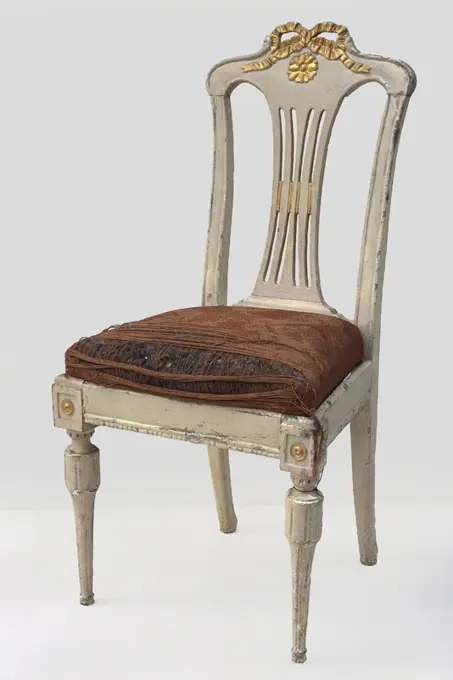
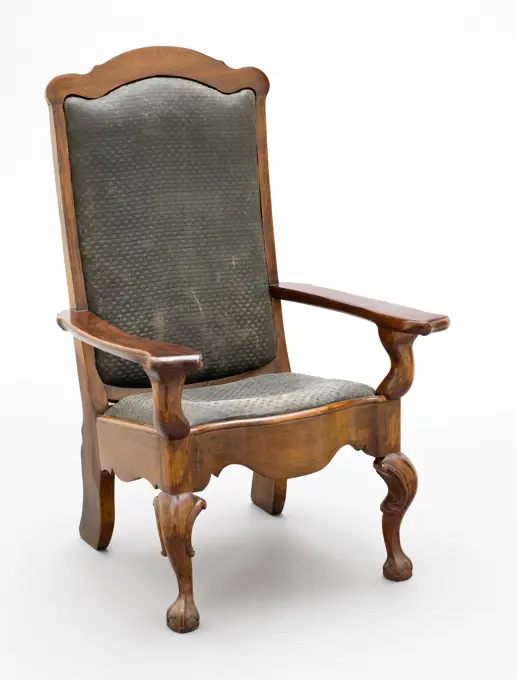
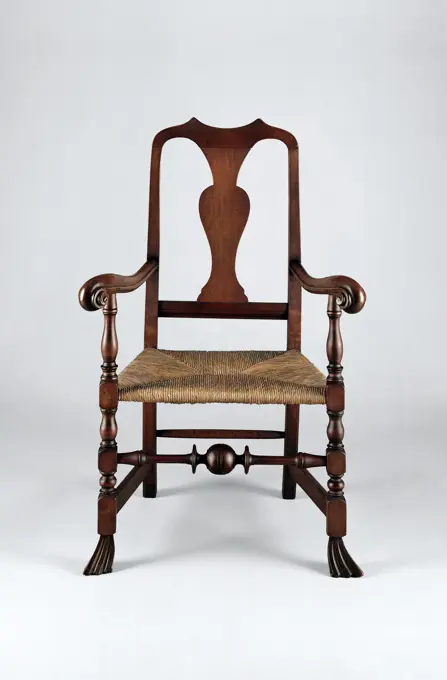
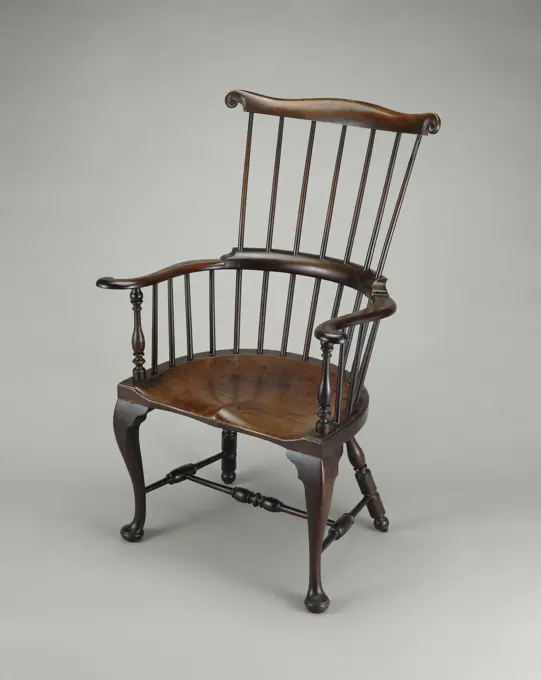
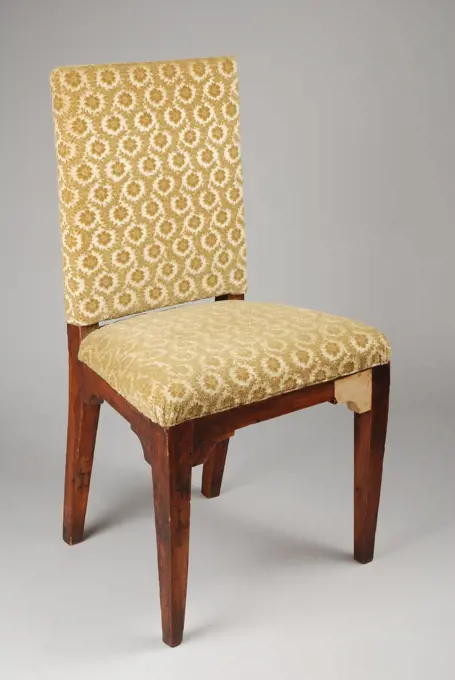
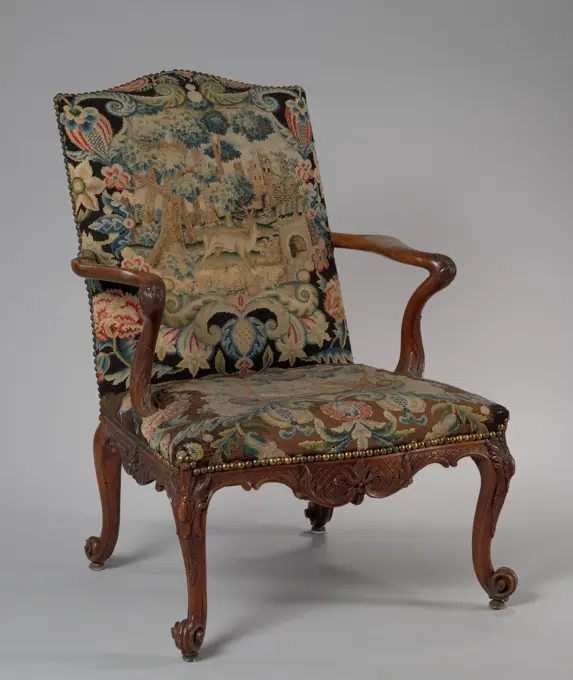
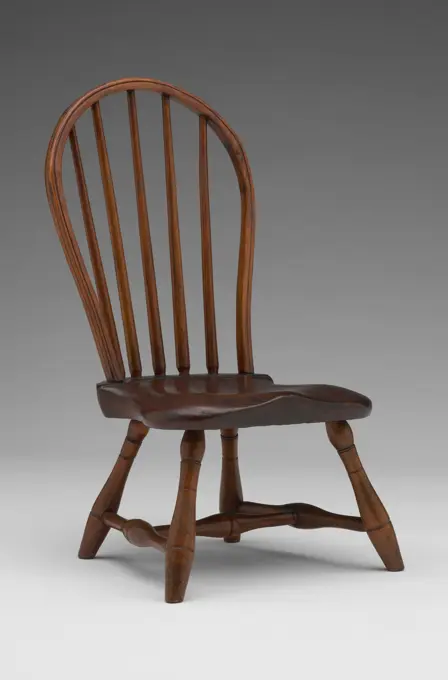
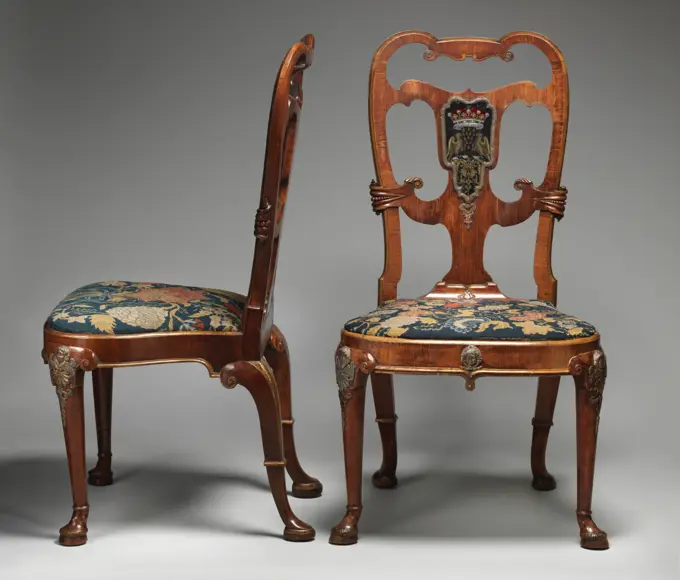
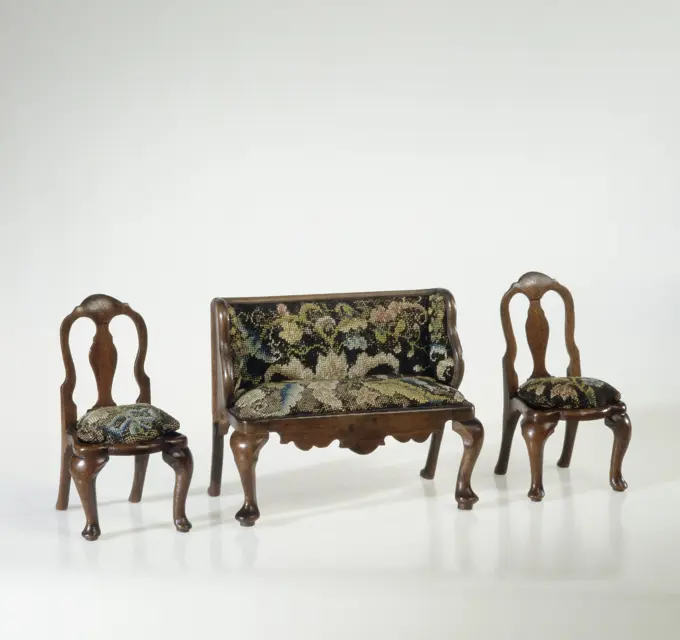
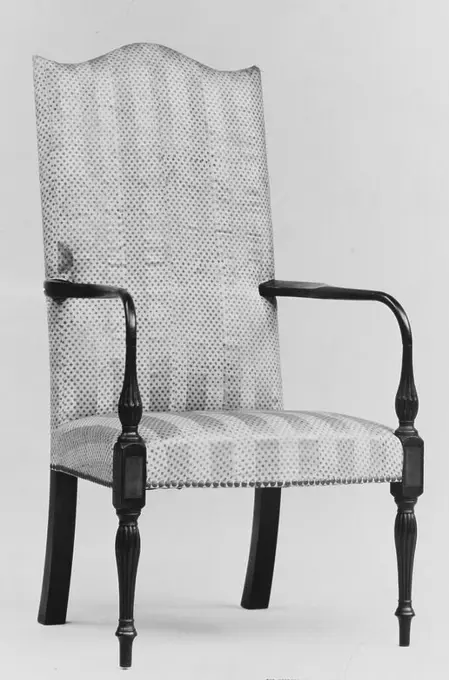
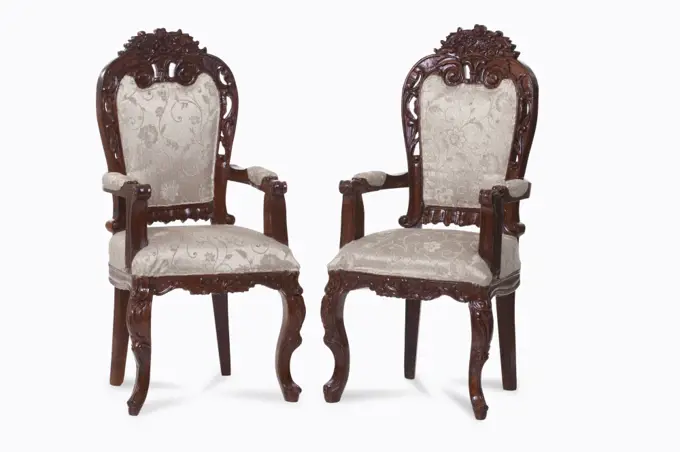
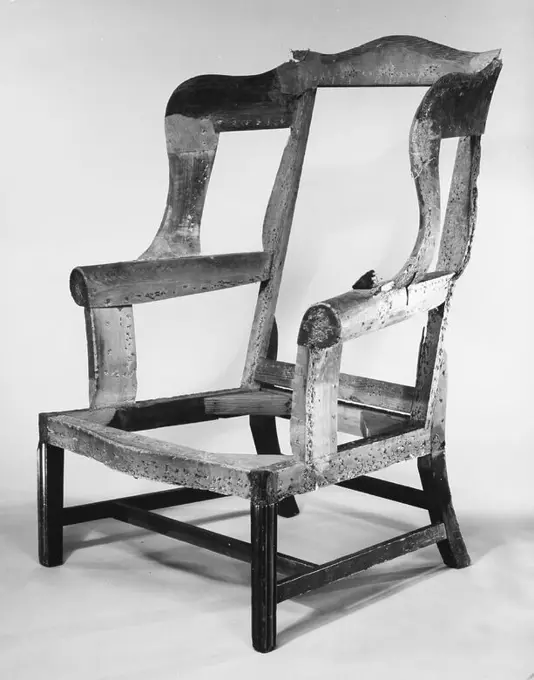
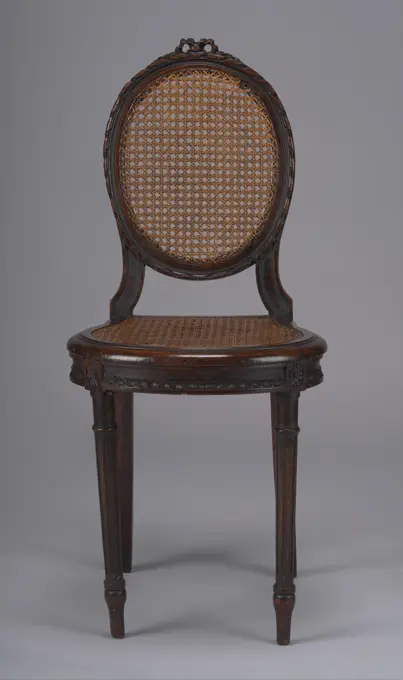
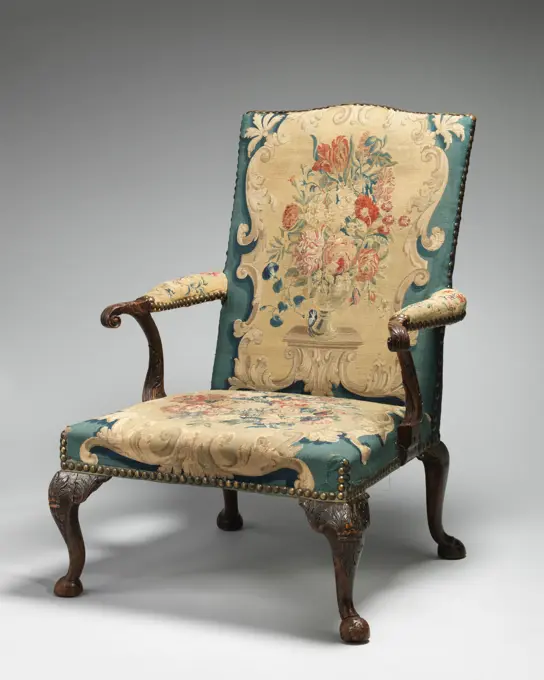
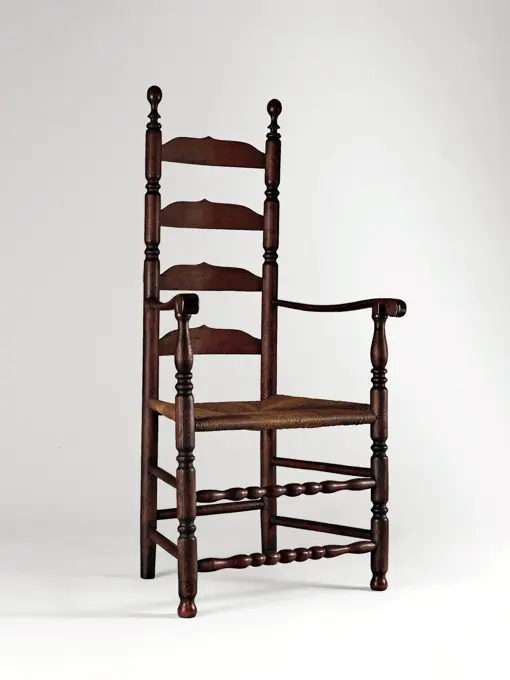
Selection of antique wooden chairs with distinct styles and upholstery, showcasing craftsmanship from various historical periods, rich in detail and character.

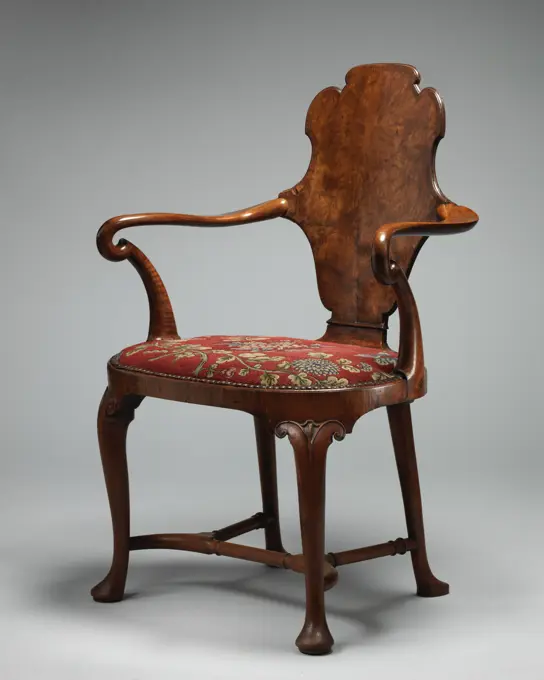
Slipper chair, c. 1760-1790, 35 x 20 1/2 x 17 in. (88.9 x 52.07 x 43.18 cm), Walnut, cloth, United States, 18th century, This low-seated chair is a rare example of this form, it may have been used as a child's chair.
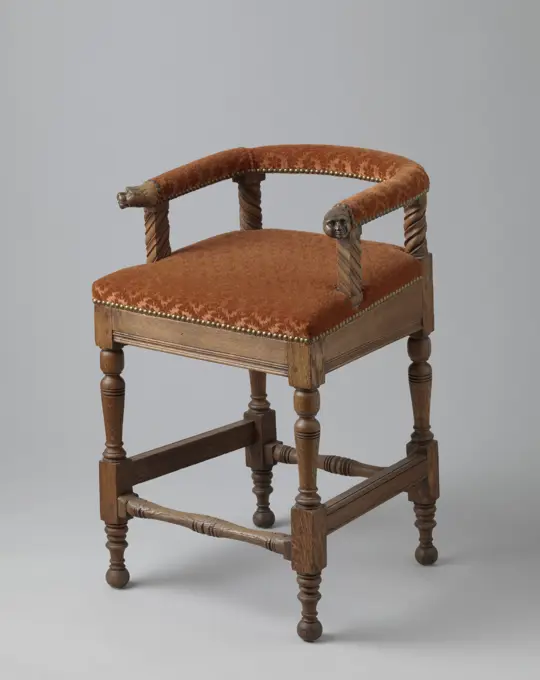
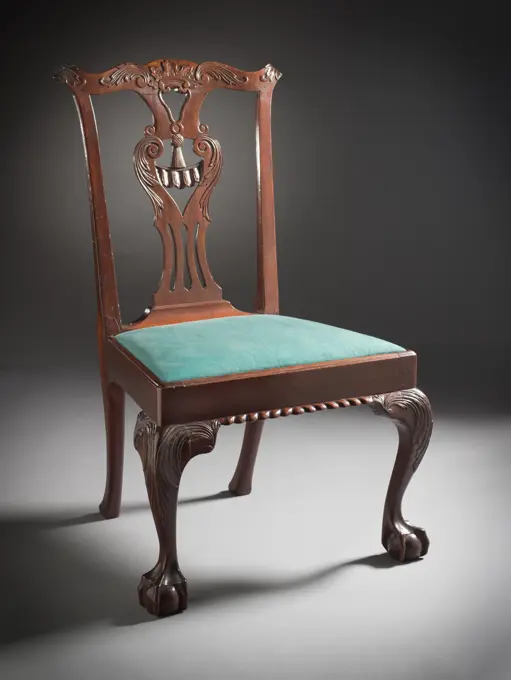
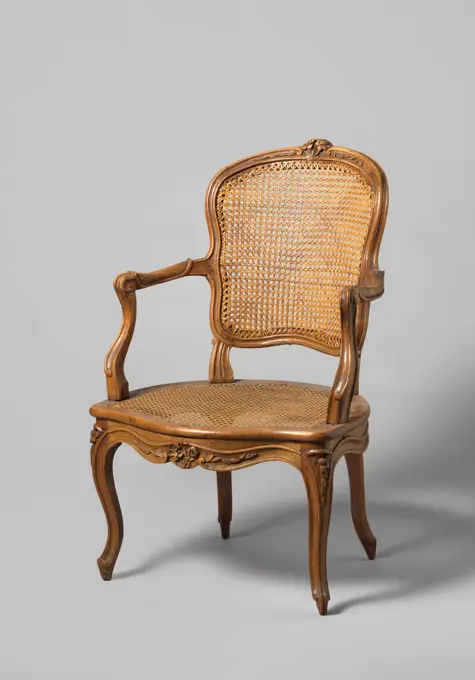
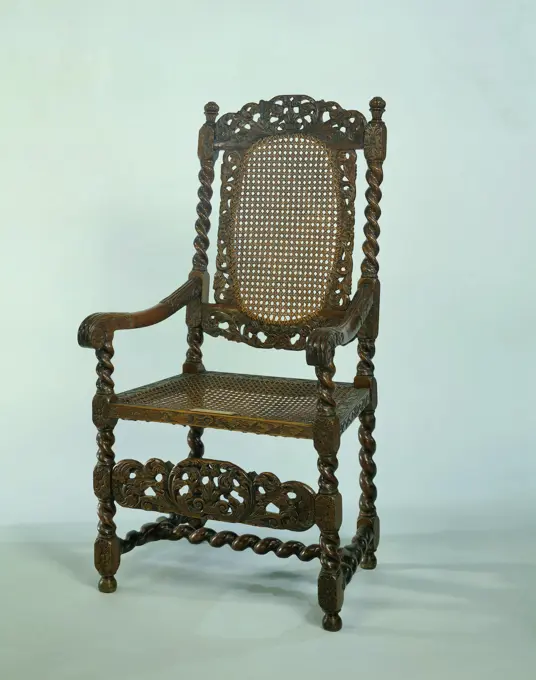
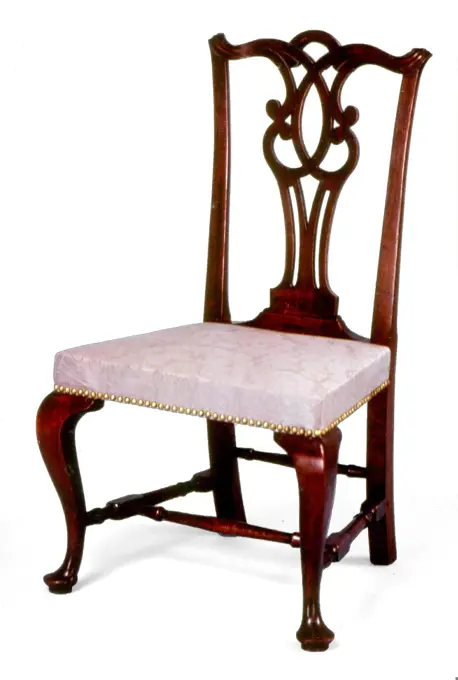
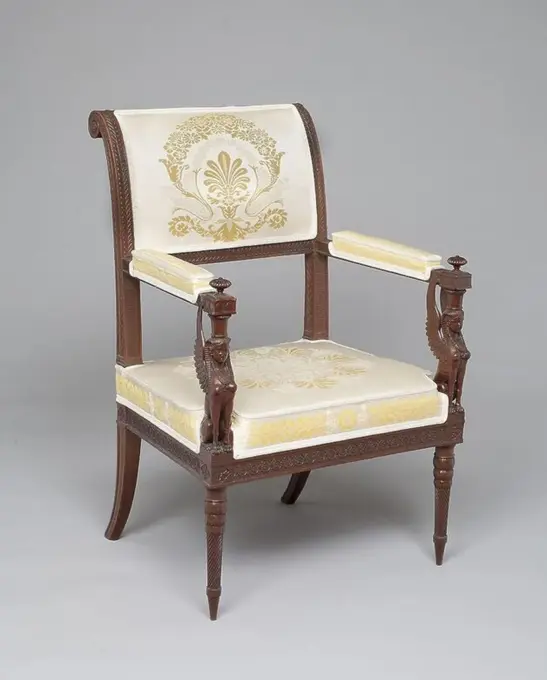
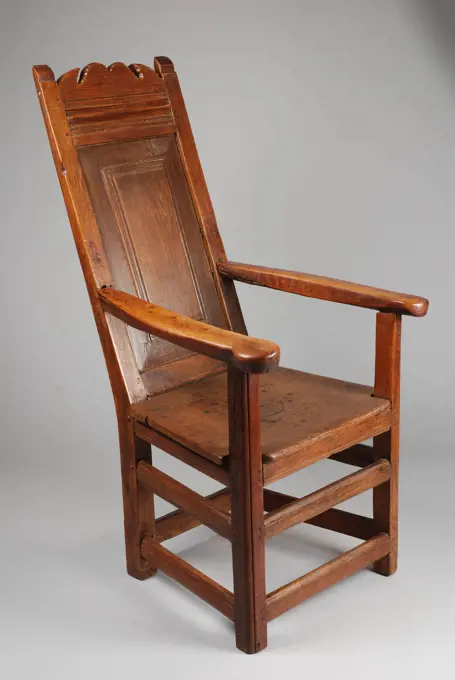
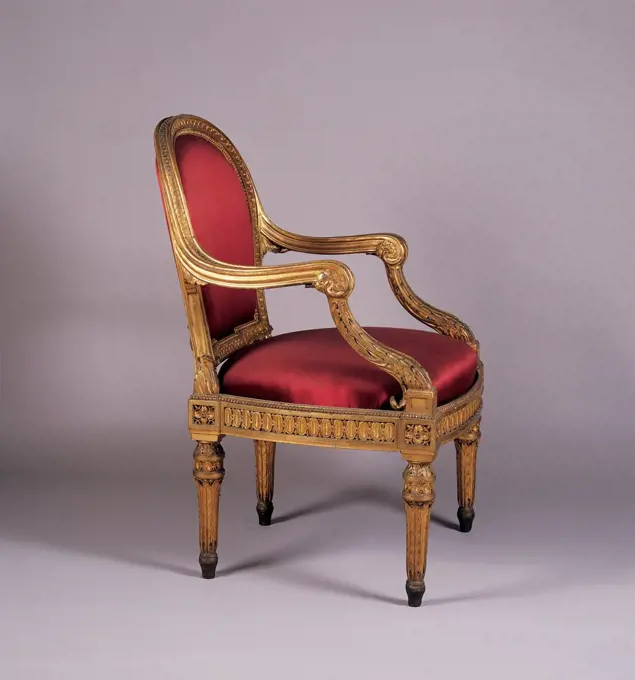
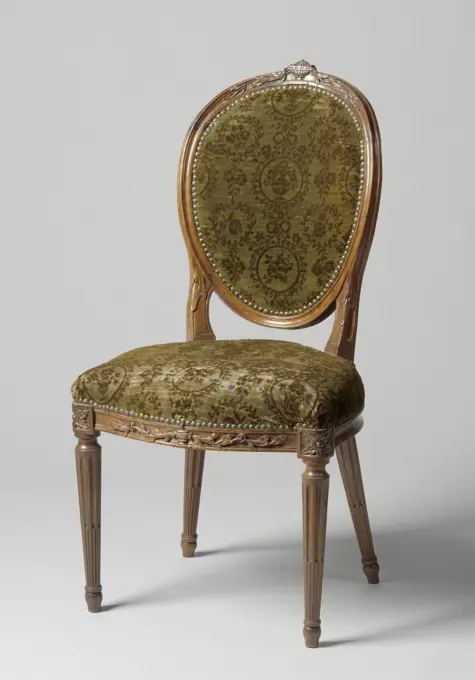
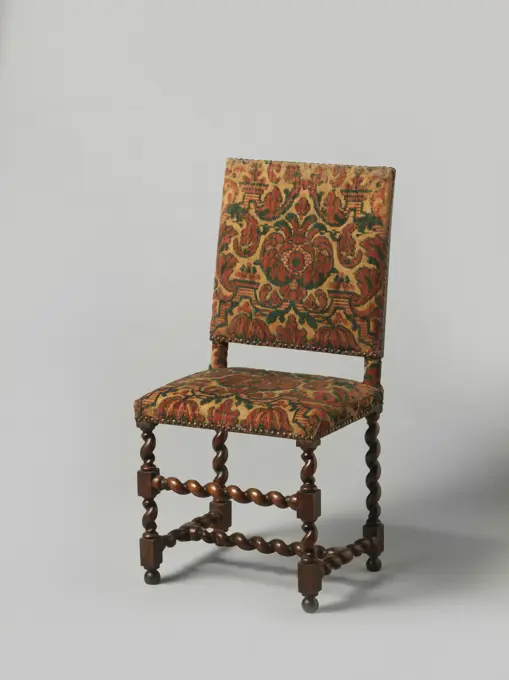
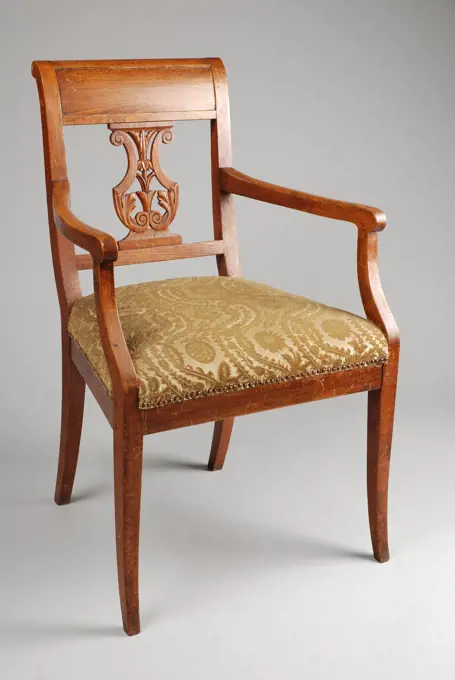
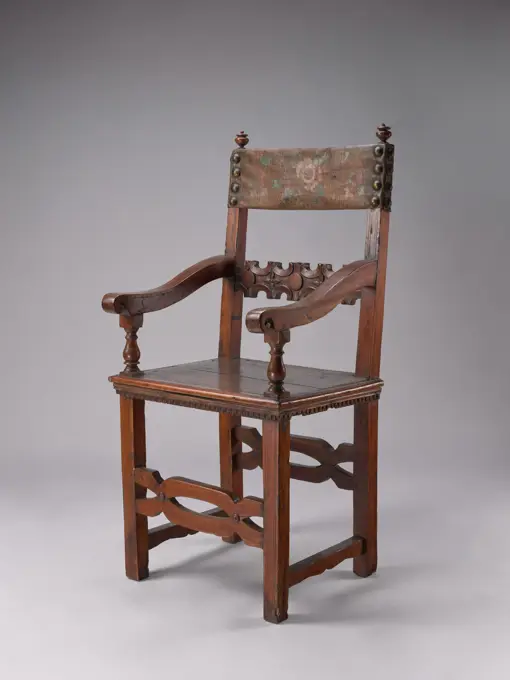
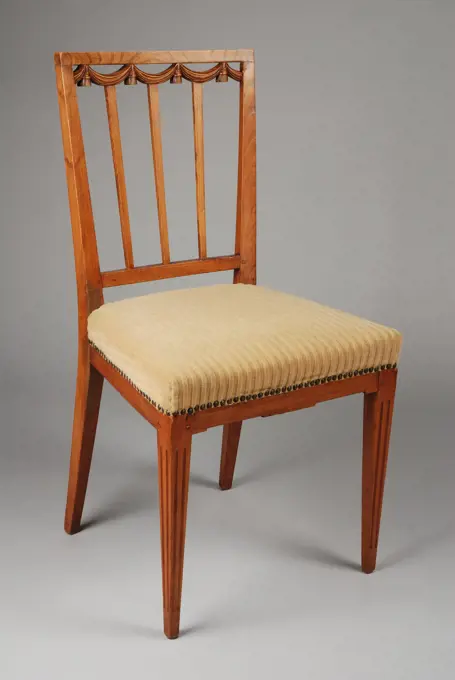
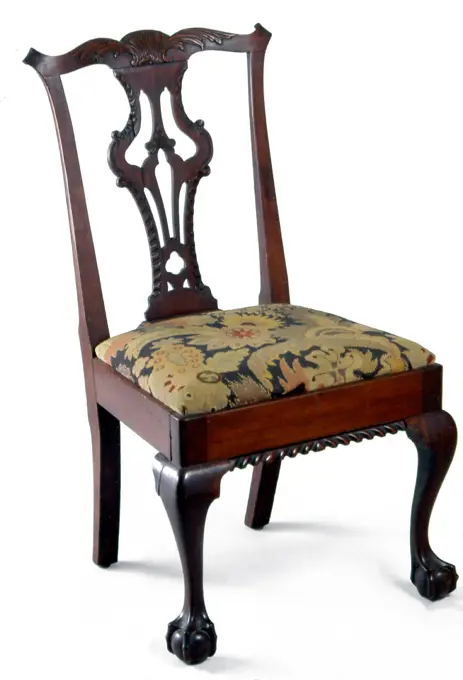
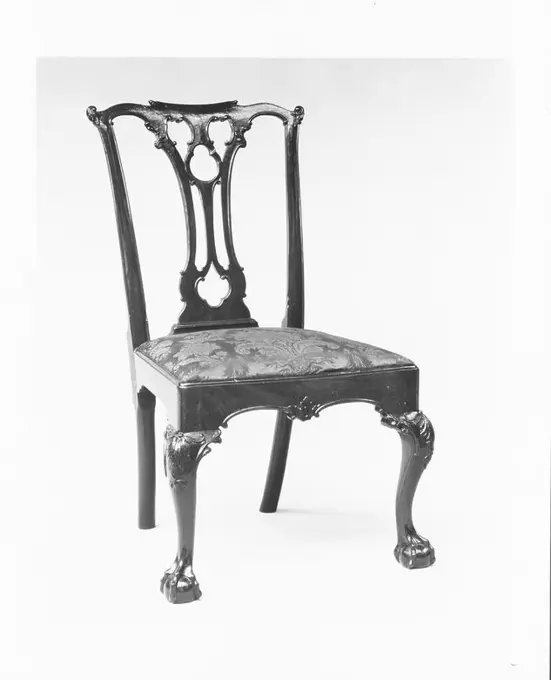
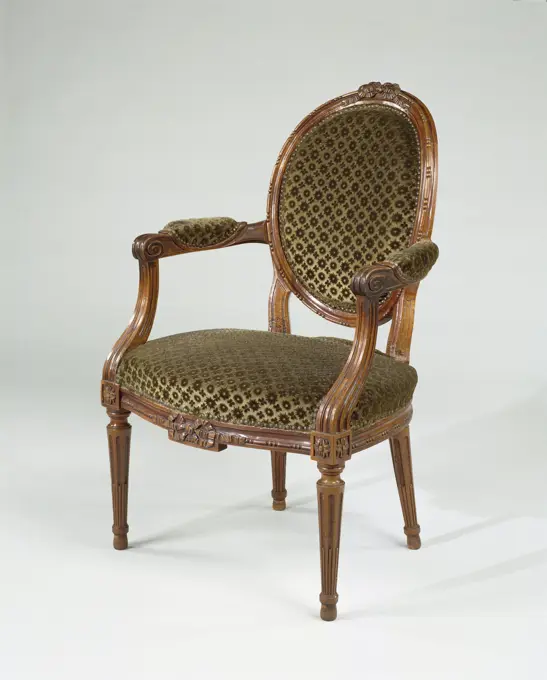
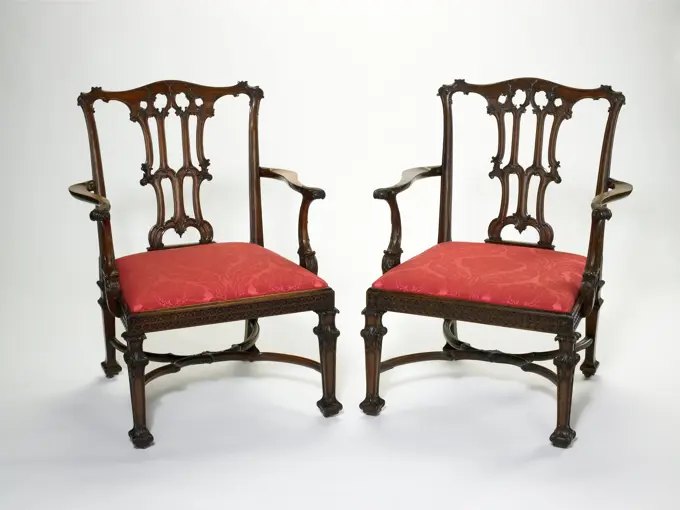
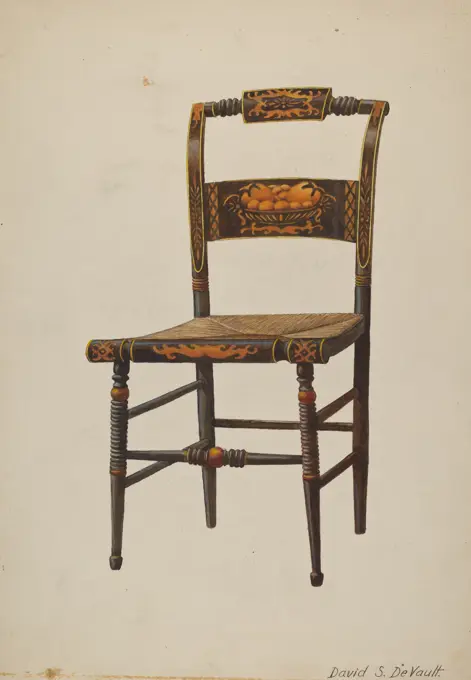
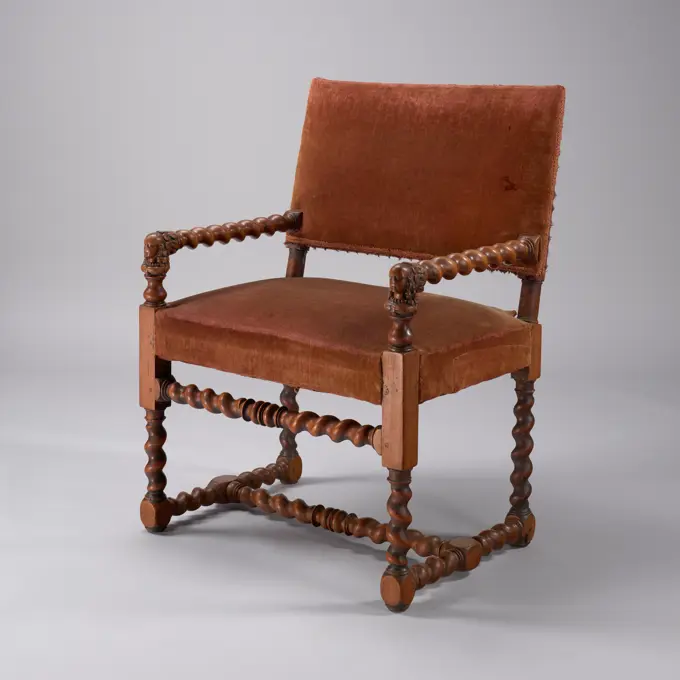
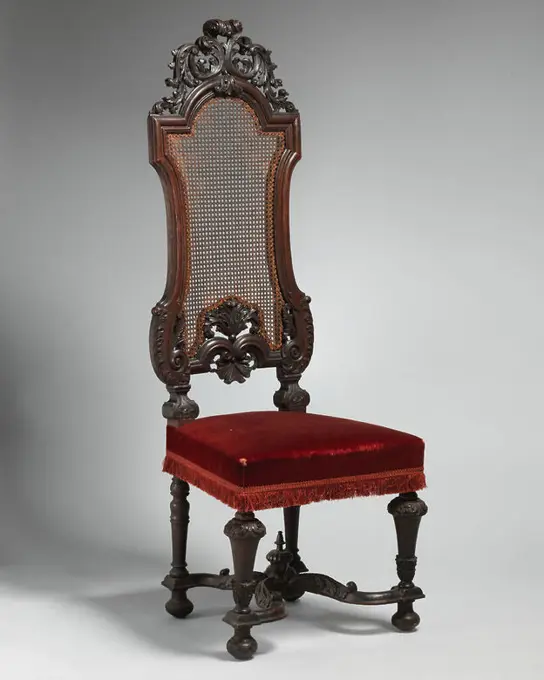
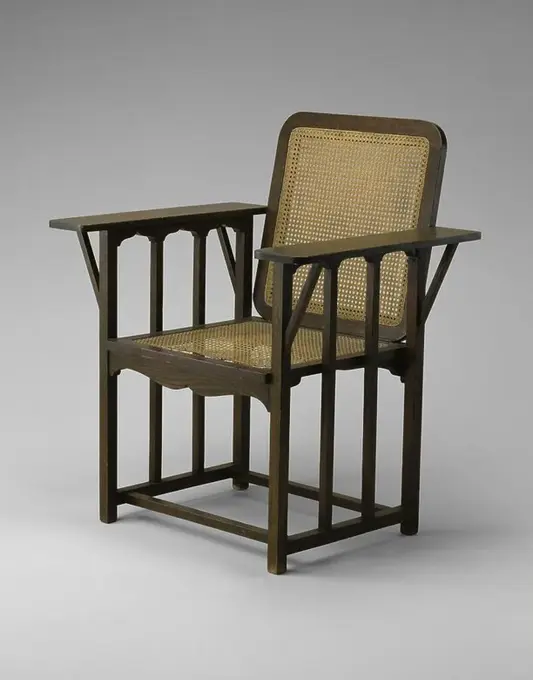
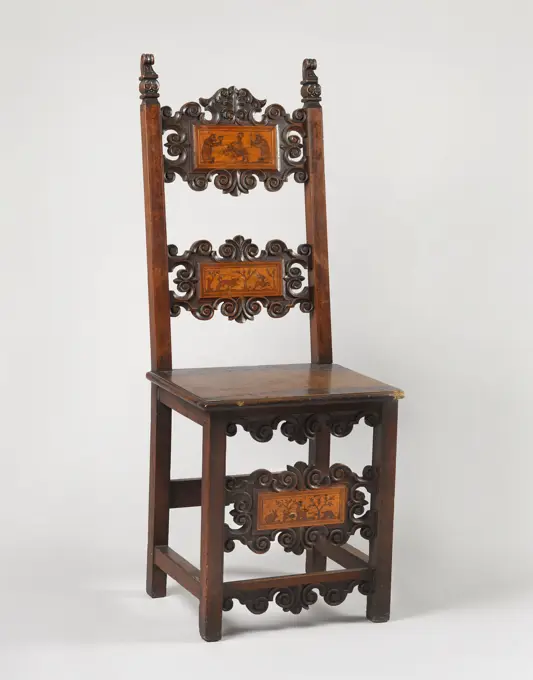
Arm chair, covered with green boring. Among other things decorated with tooth lists. Forsport accolade -shaped sculpted., Anonymous, 1600 - 1650 Arm chair of walnut, covered with green boring. The front legs have houses and stocks. The upper front and rear sport and the right side sport show huddened tooth lists at the bottom; The fors sport at the bottom is accolade -shaped. The other three sports are flat. The armrests are slightly walked and end in a volute with rosettes on the side. The armrest stars have a double section. The upholstery is nailed. Corning with the same armchair (inv.no. BK-KOG-601). Northern Netherlands wood (plant material). walnut (hardwood). serge Arm chair of walnut, covered with green boring. The front legs have houses and stocks. The upper front and rear sport and the right side sport show huddened tooth lists at the bottom; The fors sport at the bottom is accolade -shaped. The other three sports are flat. The armrests are slightly walked and end in a voluteChair. unknown, authorEasy Chair (Butaca). Unidentified artist. Venezuela, mid-18th century. Furnishings; Furniture. Mahogany and pardillo wood, seat and back upholstered in horsehair over frameArmchair 1735-60 American. Armchair 186Side Chair. American; Boston, Massachusetts. Date: 1760-1785. Dimensions: 93.3 × 54.6 × 44.8 cm (36 3/4 × 21 1/2 × 17 5/8 in.). Mahogany with oak and maple. Origin: Boston. Museum: The Chicago Art Institute, Chicago, USA.Armchair and Two SideChairsChair. unknown, creatorSlipper chair, c. 1760-1790, 35 x 20 1/2 x 17 in. (88.9 x 52.07 x 43.18 cm), Walnut, cloth, United States, 18th century, This low-seated chair is a rare example of this form, it may have been used as a child's chair.Arm chair, Empire model, with back and seat of reeds, painted red and gilded and heighted with gold. ,, 1800 - 1825 Two arm chairs (A and B) of a tropical wood (djati), Painted red, pledged parts and heighted with gold, the back and the loose sitting window with reeds. Empire model with straight, slightly backwards vaulted back, widening session with curved sides, baluster-shaped front legs and army tits, bent, spinning arms and closed cheeks with deepened fields, which are repeated under the sitting line in mirror image and in smaller size. Sculpted with acanthus and palmmet motifs that are gilded. Mutual differences in proportions and detailing. On both label: 'This chair once stood in the Batavia castle. Later he was in use at the Hoogerchechtshof of the Dutch East Indies Wagener '. Indonesia wood (plant material).   Batavia Two arm chairs (A and B) of a tropical wood (djati), Painted red, pledged parts and heighted with gold, the back and the loose sitting window with reeds. EmpireArm chair with intermediate rule in the back consisting of two swan halls, anonymous, 1830 Arm chair from a set of ten chairs and four arm chairs of partly solid and partly glued mahogany on elm core. Loose covered seats. The square hind legs areas backwards. Nine chairs and an armchair have square, slightly rounded at the front, front legs; The rest has rounded front legs like this. The stretched S-shaped backs have a sculpted intermediate rule with a palmet flanked by two swans bending back. The flat volute -shaped armrests run high in the back. Northern NetherlandsNetherlands wood (plant material). mahogany (wood). elm (wood). textile materials Arm chair from a set of ten chairs and four arm chairs of partly solid and partly glued mahogany on elm core. Loose covered seats. The square hind legs areas backwards. Nine chairs and an armchair have square, slightly rounded at the front, front legs; The rest has rounded front legs like this. The stretched S-shaped backs have a sculpted intHigh-Back Windsor Chair c 1760 Philadelphia. Walnut . Artist unknownChair with low arm and side railings and with armrests ending in a groteskop, Pierre Joseph Hubert Cuypers, 1880 Chair with low arm and side railings and with armrests that end in a groteskop. Covered with red trijp. Roermond oak (wood). Chair with low arm and side railings and with armrests that end in a groteskop. Covered with red trijp. Roermond oak (wood).Armchair with Tablet Putti Drawing 1785-1805 England. Beechwood, painted to simulate rosewood and en grisaille; partly gilded; caned seats and seat cushion not original .Tassle-Back Side Chair. United States, New York, New York City, circa 1770. Furnishings; Furniture. Mahogany, and replaced upholsteryArm chair of walnut with S-shaped overhoeks placed legs with cutting of flowers and leaves. Back and seat of braided reeds. With loose pillow., Anonymous, 1750 - 1775 Arm chair of nuthout (ameblement) with back and seat of braided reeds. The stretched S-shaped overhoeks placed legs with profiling pass into the sitting window without interruption and are decorated with stuck flowers. Scalloped by line with flower and leaf work. Placed backwards army stars S-shaped; Holded armrests ending in Voluten. top line window with stabbed volutes. With loose pillow. See also: BK-16851-A to G. France wood (plant material). walnut (hardwood). Arm chair of nuthout (ameblement) with back and seat of braided reeds. The stretched S-shaped overhoeks placed legs with profiling pass into the sitting window without interruption and are decorated with stuck flowers. Scalloped by line with flower and leaf work. Placed backwards army stars S-shaped; Holded armrests ending in Voluten. top line window with stabbArm chair whose flinged backstyles are crowned by twisted vases, Anonymous, 1650 - 1700 Arm chair of walnut with reed covering. The furniture rests on flinged legs. The wide flat pre -sport has openwork symmetrical acanthus drinks. The sitting window has stabbing from bay leaf, fruits and blossoms. The armrests are slightly walked and end in Voluten decorated with Acanthus leaf. The armrests and detached corner styles of the back are hurled. The sides of the oval back window show Acanthusranken. The backstyles are crowned by twisted vases. Northern Netherlands wood (plant material). walnut (hardwood). Arm chair of walnut with reed covering. The furniture rests on flinged legs. The wide flat pre -sport has openwork symmetrical acanthus drinks. The sitting window has stabbing from bay leaf, fruits and blossoms. The armrests are slightly walked and end in Voluten decorated with Acanthus leaf. The armrests and detached corner styles of the back are hurled. The sides of the oval back windowArmchair of walnut, with upholstery of gold leather. Armchair of walnut on square legs, connected by aczoladen-shaped rules. The line at the front shows symmetrical leaf motifs and volutes. The arm struts were led; The armrests rolled light. The back styles end in Acanthus sheet. The furniture is covered with gold leather, which in gold-green shades shows braid band motifs with flower celts and rosettes.SidechairColonial arm chair with rattan seat and pillow, anonymous, c. 1700 - c. 1800 Colonial armchair with rattan seat and pillow Indonesia textile materials. rattan Colonial armchair with rattan seat and pillow Indonesia textile materials. rattanChair of mahogany, covered with green tripe. Chair of mahogany, lined with greenery, belonging to an amele. The hind legs deviate from the conical, fluted legs. The sitting window is round; The oval healed back window rests on C-shaped struts with acanthus leaf. The rule and the upper spray are decorated with a vase, in the middle of branches with leaves, hung on rings. See also: BK-18323-a / j and l / n.Armchair. Georges Jacob; French, 1739-1814; Paris, France. Date: 1790-1800. Dimensions: 94.6 × 51.7 × 61.3 cm (37 1/4 × 20 5/8 × 24 1/8 in.). Mahogany, modern reproduction upholstery. Origin: France. Museum: The Chicago Art Institute, Chicago, USA.Armchair. unknown, contractorSide chair (one of a pair) ca. 1795 British. Side chair (one of a pair). British. ca. 1795. West Indian satinwood, beech, birch, modern silk. Woodwork-FurnitureArmstoel van mahoniehout, anonymous, 1750 - 1775 Arm chair of mahogany. The furniture is covered and rests on S-shaped legs, which turn into the semi-circular sitting window. The rule is accolade -shaped at the front. The armrest stars turn into the S-shaped, partially covered, armresters. The hold back window rests on short struts, is scalloped and has a leaf motif in the middle of the top sill. The sitting window is partly glued to oak. The upholstery of red floral velvet was probably applied later. Northern NetherlandsNetherlands wood (plant material). mahogany (wood). velvet (fabric weave) Arm chair of mahogany. The furniture is covered and rests on S-shaped legs, which turn into the semi-circular sitting window. The rule is accolade -shaped at the front. The armrest stars turn into the S-shaped, partially covered, armresters. The hold back window rests on short struts, is scalloped and has a leaf motif in the middle of the top sill. The sitting window is partly glued to oak. The uOak chair, chair furniture furniture interior design oak wood pear wood, High backrest double lines under the trapezoidal seat.. Armchair of walnut with a wicker sitting and back. S-shaped legs placed on the swelling of the overhoeks and decorations are made to the scalloped surface. The S-shaped armrest tricks deviate outwards and support the rated S-shaped armrests. The styles and sills of the back window are scalloped; The upper shell wears an ornament in the middle.SidechairArmchair, by Turin Work, 18th Century, wood carved and gilded, pad and silk. Italy, Piemonte, Turin, Royal Palace. View armchair gold gilt: gilding wood decorated padding: upholstery red silk tissue: fabric.Chair of Mahoniehout, covered with green Trijp, Anonymous, 1775 - 1800 Chair of Mahoniehout, covered with green trijp, belonging to an American. The hind legs of the conical, scanned legs are backwards. The sitting window is round; The oval hired back window rests on C-shaped struts with acanthus leaf. The front rule and the top sill are decorated with a vase, in the midst of branches with leaves, hung on rings. See also: BK-18323-A/D and F/N. Northern NetherlandsNetherlands wood (plant material). mahogany (wood). Chair of Mahoniehout, covered with green trijp, belonging to an American. The hind legs of the conical, scanned legs are backwards. The sitting window is round; The oval hired back window rests on C-shaped struts with acanthus leaf. The front rule and the top sill are decorated with a vase, in the midst of branches with leaves, hung on rings. See also: BK-18323-A/D and F/N. Northern NetherlandsNetherlands wood (plant material). mahogany (wood).Chair with pendulum, covered with tripe with a pattern of red and green grenades. Woodwood chair, lined with tripe. The chair has swapped legs, which are also connected by an H-shaped cross and middle sport. The tripe shows a pattern of red and green grenades on a shaved pool shaved. The frills has small raised tassels above a frills. The rear styles are covered. One from a series of three (inv.no. BK-KOG-1443-A T / M -C).Chair;  End of the 19th century (1890-00-00-1900-00-00);Baroque (style), tricks, purchase (provenance)Egret Empire armchair, armchair chair seating furniture interior design wood elm wood velor copper, Green velvet upholstery with flower garlands in the ajour sawn back leaf volutes and leaf ornaments curved armrests Empire Schiedamsesingel Rotterdam Cool Sijthoff The whole has formed the music hall from the Sijthoff family living on the Schiedamsesingel 25 from around 1890 to 1920.Armchair. unknown, creatorArm chair with a sliced braided rosette and covered with red/pink trijp, Karel Petrus Cornelis de Basel, c. 1894 - c. 1900 Arm chair of oak -wood resting on four curved legs. The legs are interconnected by means of curved rules. The front legs continue in the struts for the armrests. The hind legs continue in the backstyles. The backrest consists of a panel with a round top at the top and a line on the bottom with three styles in between, the middle style of which is wider than the two others. On the panel on the top, a sliced rosette with pearl edges and inlaid with ebony is in the middle. The armrests broaden to the front. The seat is trapezoidal and is covered with red/pink trijp. Netherlands oak (wood). ebony (wood). wool Arm chair of oak -wood resting on four curved legs. The legs are interconnected by means of curved rules. The front legs continue in the struts for the armrests. The hind legs continue in the backstyles. The backrest consists of a panel with a round top at the topEgg-wood Louis Seize chair, chair furniture furniture interior design wood elm wood velor, Three bars in the back above garlands with tassels light green striped velvet upholstery Louis XVI Louis XVI Louis SeizeSidechairSide chair. Culture: American. Dimensions: 39 x 21 1/2 x 21 1/2 in. (99.1 x 54.6 x 54.6 cm). Date: 1760-90.This is an example of the trefoil-pierced-splat chair, which was especially popular in Philadelphia. Except for the scroll-like central part of the crest rail, the design of the entire back was taken line for line from plate 10 of the first edition of Thomas Chippendale's "Gentleman and Cabinet-Maker's Director" (1754). Museum: Metropolitan Museum of Art, New York, USA.Chair 1730-1740 . Wood with red and gold lacquer decoration and caned seat . Giles GrendeyLaw chair of mahogany wood, with conical, scanned legs and decorated with a bow on the line. Covered with green velor with pattern of rosettes. Not original upholstery., Anonymous, c. 1780 - c. 1790 Arm chair of mahogany. The furniture is covered and rests on conical legs with cannelures. The sitting window is bent around, bent at the front. The chair rule is decorated in the middle with a bow. The square-canelled armrest stars wear C-shaped armrests with cushions, ending in a volute. The oval, hired back window is decorated with stabbed pearl necklace and in the middle with a bow. Netherlands wood (plant material). mahogany (wood) Arm chair of mahogany. The furniture is covered and rests on conical legs with cannelures. The sitting window is bent around, bent at the front. The chair rule is decorated in the middle with a bow. The square-canelled armrest stars wear C-shaped armrests with cushions, ending in a volute. The oval, hired back window is decorated with stabbed pearl necklace Side Chair Chair; England; walnut, silk; velved seat, caned backLeather chair. Culture: American. Dimensions: 45 7/8 x 18 x 14 3/4 in. (116.5 x 45.7 x 37.5 cm). Date: 1695-1715.This tall, flat-top, leather-upholstered chair marks the stylistic transition between the low seventeenth-century back stool and the Baroque-inspired, William and Mary style leather chair. Boston was home to colonial America's earliest chairmaking industry. The later evolution of the Boston leather chair can be seen on an ornately carved William and Mary style crest rail (52.77.58) and the other with "Spanish" feet and an S-curved or "crook'ed back", precursor to the Queen Anne style (10.125.698). Museum: Metropolitan Museum of Art, New York, USA.Chair ca. 1690-95 British. Chair. British. ca. 1690-95. Walnut. Woodwork-FurnitureSidechair. Maker, possibly by: Eliphalet Chapin, American, 1741-1807Armchair, Parcel-gilt mahogany; yellow silk/cotton (present upholstery), Mahogany armchair with square tapering front legs which curve inwards. The plain mahogany top rail has beneath it a carved wreath of oak leaves which forms the slat. The seat is upholstered and covered in red silk, with gold embroidered medallion in center. The arms are carved and terminate in eagle heads. The arm supports are formed by lions paw feet. Two festoons of oak leaves rise from the arms to the seat rail. All the carving is gilded., France, ca. 1810, furniture, Decorative Arts, ArmchairArmchair ca. 1710 British. Armchair. British. ca. 1710. Walnut, oak; walnut veneer. Woodwork-FurnitureArmchair, one of a pair, c. 1755, 40 x 25 3/4 x 23 3/4 in. (101.6 x 65.41 x 60.33 cm), Mahogany, England, George II, This armchair represents the highest level of furniture craftsmanship and design in mid-18th century England.Chair, belonging to an eleven -piece amblement, anonymous, c. 1750 Chair, made of walnut, belonging to an eleven -piece ameblement, consisting of a bank and ten chairs. The seat of neighboring duration with leaf and floral motifs in silk on linen grid, with a soft filling. Amsterdam (possibly) Walnut (Hardwood). Seat: Silk. seat: Chair, made of walnut, belonging to an eleven -piece ameblement, consisting of a bank and ten chairs. The seat of neighboring duration with leaf and floral motifs in silk on linen grid, with a soft filling. Amsterdam (possibly) Walnut (Hardwood). Seat: Silk. seat:Chair ca. 1872 Designed by Henry Fernbach. Chair 20477Armchair;  1 PO. XVII century (1600-00-00-1650-00-00);Armchair. Culture: American. Dimensions: 39 1/8 x 20 7/8 x 22 in. (99.4 x 53 x 55.9 cm). Date: 1755-75. Museum: Metropolitan Museum of Art, New York, USA.Chair with round, open backrests with middle style, the seat with flower and leaf motifs. Sterehout chair, brown varnished, round open backrests with middle style; round rule, back plane legs and overhoeks placed S-shaped front legs; Seat covered with silk with flower and leaf motifs: coloring cream with green, yellow, pink or red flowers or leaves; Staff about hard filling stretched with many wires on the bottom visible under thick layer of varnish.David S De Vault, Hitchcock Chair, c 1941 Hitchcock ChairArmchair;  1640-1660 (1640-00-00-1660-00-00);Chair, Joined and turned mahogany, A side chair with a rectangular back filled with a lattice-work of curved members. Its curved arms are supported on shaped stumps secured to side rails. Round rear legs; 'cluster' front legs. Two lateral and two longitudinal stretchers. Hollowed seat upholstered in brown wool. Described as 'cockpen' armchairs., England, ca. 1765, furniture, Decorative Arts, ChairChair of Notenhout, Anonymous, 1640 - 1660 Chair of Notenhout. The furniture is covered and has flared legs, connected by four flat underputs. The backstyles, between session and back, are co -dressed and crowned by two loose lions, without base. Northern NetherlandsNetherlands wood (plant material). walnut (hardwood). Chair of Notenhout. The furniture is covered and has flared legs, connected by four flat underputs. The backstyles, between session and back, are co -dressed and crowned by two loose lions, without base. Northern NetherlandsNetherlands wood (plant material). walnut (hardwood).Chair (one of a set of six). Culture: British. Dimensions: Overall: 55 1/4 × 20 1/4 × 17 in. (140.3 × 51.4 × 43.2 cm). Date: ca. 1695. Museum: Metropolitan Museum of Art, New York, USA.Photograph of an antique dining chair.Anonymous, Chinese chair - Decor of Hauteville II, Maison de Juliette Drouet in Guernesey (attributed title), 1700. Maison de Victor Hugo - Hauteville House.Side Chair from the Robert BlackerHouse.  Designer Charles Sumner Greene, American, 1868-1957 Designer Henry Mather Greene, American, 1870-1954  Maker: Peter and John Hall ShopArmchair 1760-90 American This rococo armchair belongs to a small group of unusually large-scale chairs, which may have been made outside Philadelphia in neighboring Maryland or Chester County, Pennsylvania.. Armchair 177Chair with S-shaped overhoeks placed front legs and scalloped parts. Shell and Acanthus Blad Decoration. Loose seat covered with floral velvet, anonymous, 1700 - 1725 Chair of Notenhout. The furniture has a loose, covered on a window, covered pillow of floral velvet. The rest on overhoeks placed, s-shaped front legs. The H-shaped cross is sculpted, as well as the prescription rule, which has a shell motif in the middle. The high back is slightly horizontal and has an open -up center leaf with heart as a decoration and scalloped circumference. The window is profiled and has styles and a scalloped top and sill with acanthus leaf in the middle. Northern NetherlandsNetherlands wood (plant material). walnut (hardwood). velvet (fabric weave) Chair of Notenhout. The furniture has a loose, covered on a window, covered pillow of floral velvet. The rest on overhoeks placed, s-shaped front legs. The H-shaped cross is sculpted, as well as the prescription rule, which has a shell motif in the middlChair; Radziwi , Micha Piotr (1853-1903); around 1880 (1880-00-00-1885-00-00);Armchair. David Wolcott Kendall; American, 1851-1910; Manufacturer: Phoenix Furniture Company. Date: 1894-1896. Dimensions: 86 × 75 × 56 cm (33 7/8 × 29 1/2 × 22 in.). Green-stained oak with caned inserts. Origin: Michigan. Museum: The Chicago Art Institute, Chicago, USA.Chair with s-shaped overhoeks placed front legs and scalloped parts. Shell and acanthus sheet decoration. Loose seat covered with floral velvet. Chair of walnut. The furniture has a loose, applied to a window, covered cushion of floral velvet. Resting on overhoeks placed, s-shaped front legs. The H-shaped cross is scalloped, as well as the front seat, which has a shell motif in the middle. The high back is lightly rolled horizontally and has a cut-away middle leaf with heart like decoration and scalloped outline. The window has been profiled and has styles and a scallop top and solid with acanthus leaf in the middle.Chair;  beginning of the 17th century; 4. W. 19th century (1601-00-00-1630-00-00);deer, foxes, bears, dogs, elephants, volutes, hares, animalsArmchair with trapezoidal open space in the backrest. Arch chair from oak resting on four legs. The front legs are chamfered and rested on black-stained discs with convex sides. The front legs run through in the arm struts and just contain a sculpted black stuffed droplet under the armrest. The hind legs run through in the back stamps and widen from below, after which they narrow up at the height of the center. The backrest is composed of three panels. These are formed in such a way that a trapezoidal shape is created on the top a trapezoidal shape on the underside. The two outer panels are connected to the black-stained central panel by means of five beads on each side. The seat is covered with black tripe.Chair with Swans, Anonymous, 1830 Chair from a set of ten chairs and four arm chairs of partly solid and partly glued mahogany on elm core. Loose covered seats. The square hind legs areas backwards. Nine chairs and an armchair have square, slightly rounded at the front, front legs; The rest has round articulated front legs. The stretched S-shaped backs have a sculpted intermediate rule with a palmet flanked by two swans bending back with the necks. The flat volute -shaped armrests run high in the back. Northern NetherlandsNetherlands wood (plant material). mahogany (wood). elm (wood). textile materials Chair from a set of ten chairs and four arm chairs of partly solid and partly glued mahogany on elm core. Loose covered seats. The square hind legs areas backwards. Nine chairs and an armchair have square, slightly rounded at the front, front legs; The rest has round articulated front legs. The stretched S-shaped backs have a sculpted intermediate rule with a palmet flanked by two swans Simple elm wood straight chair, upright chair seat furniture furniture interior design wood elmwood velvet, Moss green velor upholstery on seat and back square rejuvenated legs with cannelures this specimen is higher than the other five nrs 8066 Rotterdam Stadscentrum Stadsdriehoek Hoogstraat Cheese market town hall From the orphanage of the old town hall on the HoogstraatArmchair, 1760-1765. England, 18th century. Mahogany upholstered in needlework; overall: 101.6 x 73 x 69.9 cm (40 x 28 3/4 x 27 1/2 in.).Louis XIII chair in leather with pattern of helmeted characters carrying a lance. Wood, leather. House of Victor Hugo - Hauteville House.Childs Bow-Back Windsor Side ChairChair. unknown, creatorGermán Rodríguez Arias / Butaca catalana, 1942. Colección privada.Chair, belonging to an eleven -piece amblement, anonymous, c. 1750 Chair, made of walnut, belonging to an eleven -piece ameblement, consisting of a bank and ten chairs. The seat of neighboring duration with leaf and floral motifs in silk on linen grid, with a soft filling. Amsterdam (possibly) Walnut (Hardwood). Seat: Silk. seat: Chair, made of walnut, belonging to an eleven -piece ameblement, consisting of a bank and ten chairs. The seat of neighboring duration with leaf and floral motifs in silk on linen grid, with a soft filling. Amsterdam (possibly) Walnut (Hardwood). Seat: Silk. seat:Pair of side chairs ca. 1724-36 Attributed to Thomas How British The set included twelve side chairs, two settees, and two pedestals supplied to Nicholas, fourth Earl of Scarsdale (d. 1736) for Sutton Scarsdale, Derbyshire.. Pair of side chairs. British. ca. 1724-36. Walnut and walnut veneer, parcel-gilt, the seat rails of beech; gilded lead mounts on the knees and front rail; verre églomisé panel mounted on the splat; covered in contemporary tent stitch embroidery on canvas needlework not original to the chair. Woodwork-FurnitureSide chair (part of a set) ca. 1790-1800 Italian, Sicily The gilded moldings and carved decoration on this chair and a matching settee (acc. no. 1992.173.1) frame reverse-painted glass panels, which imitate in different colors the hardstones agate, marble, and lapis lazuli. Close inspection reveals the high quality and intriguingly delicate structure of the paint and the fragility of the panels, which is not evident at first glance. That the chair and settee have survived in such good condition is testimony to the technical skills of the maker, who provided a sound base for the heavy glass strips, preventing them from peeling away over time. Nevertheless, these are display pieces that were clearly not intended for regular use. The smallest body movement of a user or any attempt to shift or lift the heavy objects puts divergent forces and pressure on their ostentatious "skin."The Museum's chair and settee are part of a large suite that originally consisted of at least four settees and tHelen Bronson, Chair, c 1937 ChairPair of Folding Garden Chairs (chaises de jardin). Georges Jacob (French, 1739 - 1814, master 1765) 1786Joe Brennan, Braided Rawhide bottomed Chair, c 1939 Braided Rawhide-bottomed ChairSide Chair 1730-50 American. Side Chair. American. 1730-50. Walnut, maple, white pine. Probably made in Boston, Massachusetts, United StatesSidechairChair 1802-1810 England. When Thomas Hope published his book Household Furniture and Interior Decoration in 1807, his name became forever associated with Neoclassicalism. Hope was a connoisseur and collector from a wealthy banking family of Scottish origin that moved from Amsterdam to London after the French Revolution. As a young man, he traveled extensively throughout Europe, Turkey, Syria, and Egypt, acquiring objects from all of these places, and incorporating elements from them in his design work. Hopeís wish was to shape the taste of his time by commissioning cabinetmakers to produce objects, most of which he designed himself, for display in his London home. His mansion on Duchess Street became a showplace visited by art lovers and professional architects who took inspiration from his work.Of all the forms illustrated in Hopeís influential book, seating received the most attention. This chair, originally intended for use in a room containing Classical vases, is based on the saberSidechairChair. Dated: c. 1936. Dimensions: overall: 30 x 23 cm (11 13/16 x 9 1/16 in.) Original IAD Object: 37 1/4"high, 21 1/4"wide. Medium: watercolor, gouache, colored pencil, and graphite on paperboard. Museum: National Gallery of Art, Washington DC. Author: GEORGE NELSON.Chair, belonging to an eleven -piece amblement, anonymous, c. 1750 Chair, made of walnut, belonging to an eleven -piece ameblement, consisting of a bank and ten chairs. The seat of neighboring duration with leaf and floral motifs in silk on linen grid, with a soft filling. Amsterdam (possibly) Walnut (Hardwood). Seat: Silk. seat: Chair, made of walnut, belonging to an eleven -piece ameblement, consisting of a bank and ten chairs. The seat of neighboring duration with leaf and floral motifs in silk on linen grid, with a soft filling. Amsterdam (possibly) Walnut (Hardwood). Seat: Silk. seat:Armchair. Culture: American. Dimensions: 47 1/2 x 25 x 20 in. (120.7 x 63.5 x 50.8 cm). Date: 1800-1810. Museum: Metropolitan Museum of Art, New York, USA.Side Chair. Culture: American. Dimensions: 30 1/4 x 16 1/2 in. (76.8 x 41.9 cm). Maker: Workshop of Duncan Phyfe (1770-1854). Date: 1837. Museum: Metropolitan Museum of Art, New York, USA.Two chairs Pair of side chairs. Culture: British. Designer: After a design by Thomas Chippendale (British, baptised Otley, West Yorkshire 1718-1779 London). Dimensions: Overall (each): 39 1/2 × 23 × 19 1/2 in. (100.3 × 58.4 × 49.5 cm). Date: ca. 1755-60.The design is based on one of several "ribband back chairs" in the first edition of Thomas Chippendale's influential patternbook The Gentleman and Cabinet-Maker's Director (1754). Museum: Metropolitan Museum of Art, New York, USA.Easy Chair. Culture: American. Dimensions: 47 1/4 x 35 3/4 x 27 3/4 in. (120 x 90.8 x 70.5 cm). Date: 1790-1810. Museum: Metropolitan Museum of Art, New York, USA.Chair;  early XIX century (1801-00-00-1810-00-00);Arm chair (model button chair) of walnut with smooth, twisted styles and cross rules, front legs and in the back ending in fine twisted buds, anonymous, c. 1690 - c. 1710 One of four arm chairs (model button chair) made of walnut, with smooth twisted styles and cross rules; front legs and in the back ending in fine -turned buttons; diagonally backwards back with four flat cross sports; Armrests bent and ending in smooth volute, resting on baluster -shaped strut. Seat of braided piping, turned on top, processed under straight. On the seat of (a) loose trapezium -shaped pillow, eroded at the corner styles, covered with curved red side over a hard filling. The pillow is trimmed all around with a passion with woven brushes of alternating yellow and red silk (according to a special pattern). The moiré effect is mirrored with a fold (necessary for obtaining this effect) that runs over the seat in the middle. Originally approval is still present. Silk and Galon Identic to Bed (BK-NM-1010-33),Footstool. unknown, authorButton chair, the backrest with two cross rules, the seat of braided piping. Four button chairs from dark brown pickled wood; backrest with two transverse rules; Low model with seat of braided piping.Armchair ca. 1740 British The tapestry panels displaying bouquets, baskets, and vases of flowers were probably designed by the painter Tobias Stranover (1684-1756), who specialized in the depiction of birds, flowers, and still life, and were woven by William Bradshaw (act. 1728-75) in London.. Armchair. British. ca. 1740. Mahogany and tapestry. Woodwork-FurnitureSidechairChair of ebony. Chair of ebony. The legs with house and articulation are connected by accolode-shaped and straight sports. The square seat is on three sides with a profile with egg list, inserted leaf raft around the seat. Back styles with sliced leaf drinks carry a standing lion with shield. The three arcuate and scalloped sports are connected by balusters. The lower two show leafwork and the upper sorrel a carved show of the Emmausgoers and three twisted vases. BK-1974-64-b.Armchair 1710-50 American. Armchair 154Side Chair 1859 Attributed to Joseph Meeks & Sons American. Side Chair. American. 1859. Rosewood. Made in New York, New York, United StatesArm chair of nuthout, inlaid with quasi oriental characters from Tin, Carlo Bugatti, c. 1900 Arm chair of nuthout, inlaid with quasi oriental characters from Tin. The slender colonets on which the seats rest on the front are decorated with leg and copper fittings. The upholstery of the handrails and the seats consists of parchment that is attached with ornamental nails with large square -detailed heads on styles and rules. Italy walnut (hardwood). pine (wood). ebony (wood). ivory. tin (metal). copper (metal). parchment (animal material). silk Arm chair of nuthout, inlaid with quasi oriental characters from Tin. The slender colonets on which the seats rest on the front are decorated with leg and copper fittings. The upholstery of the handrails and the seats consists of parchment that is attached with ornamental nails with large square -detailed heads on styles and rules. Italy walnut (hardwood). pine (wood). ebony (wood). ivory. tin (metal). copper (metal). parchment (animal material).