World War I Ceremonies and Trench Life

Historical images from WWI, featuring ceremonies for aviators, soldiers in front line trenches, and personal moments of military personnel in France.

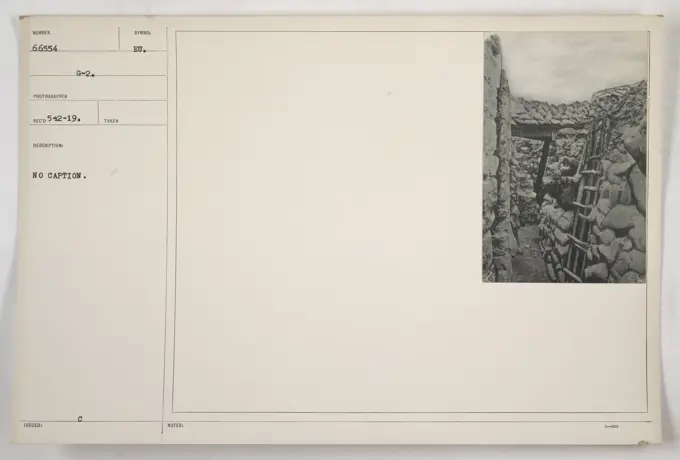
Members of the 132nd Infantry, 32nd Div., standing in a front line trench during World War One. They are on high alert, anticipating an imminent attack. The trench overlooks the Meuse Valley, where approximately 70,000 men are believed to be buried. Taken in Alexandre, Meuse, Prince.
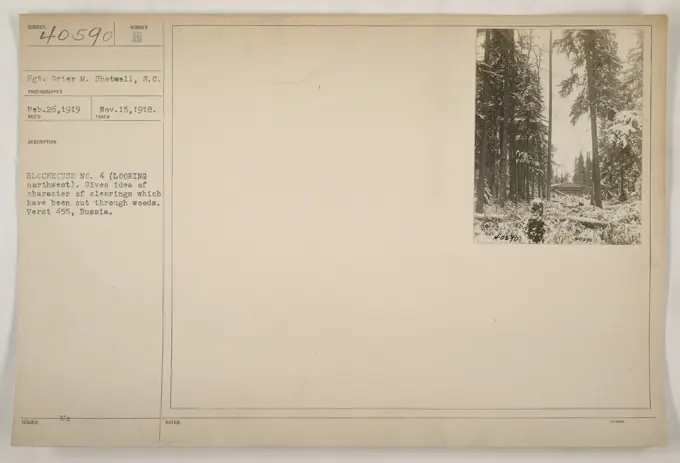
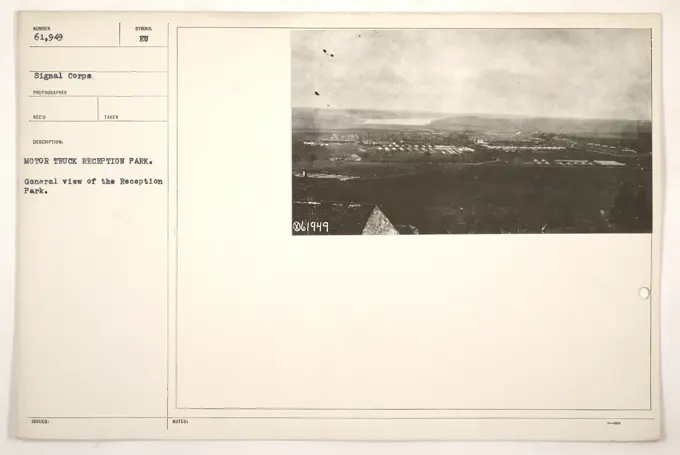
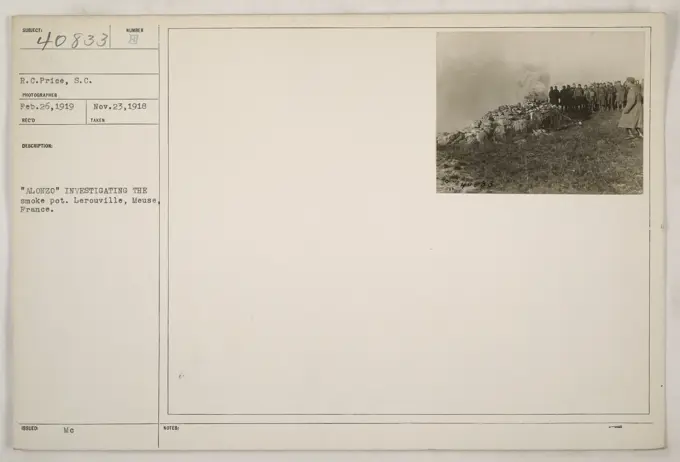
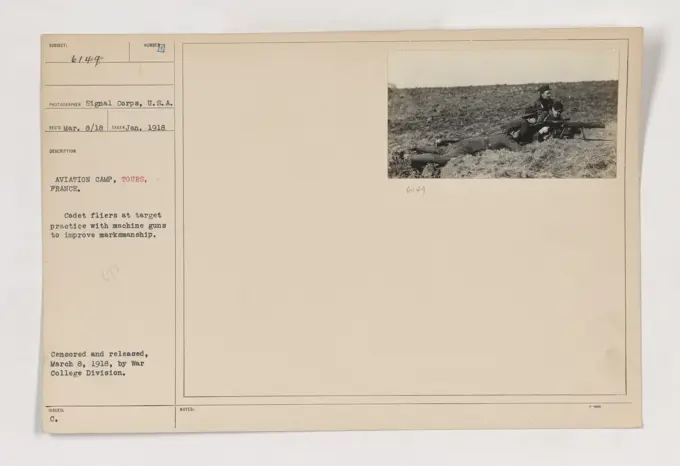
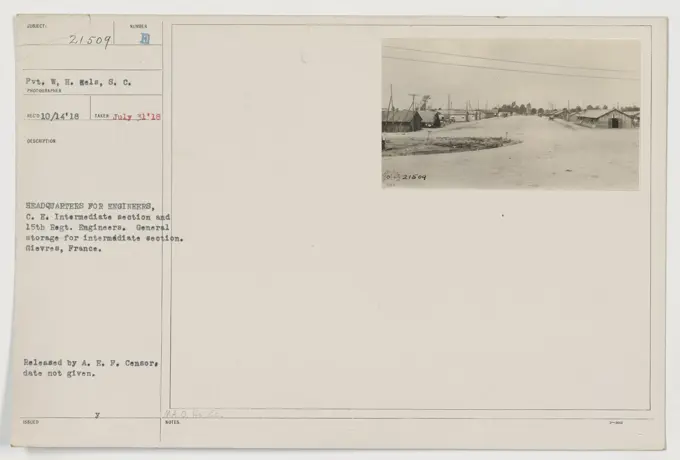
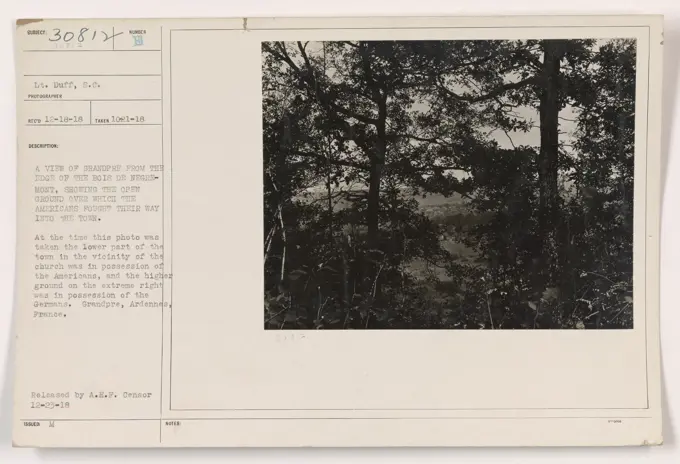
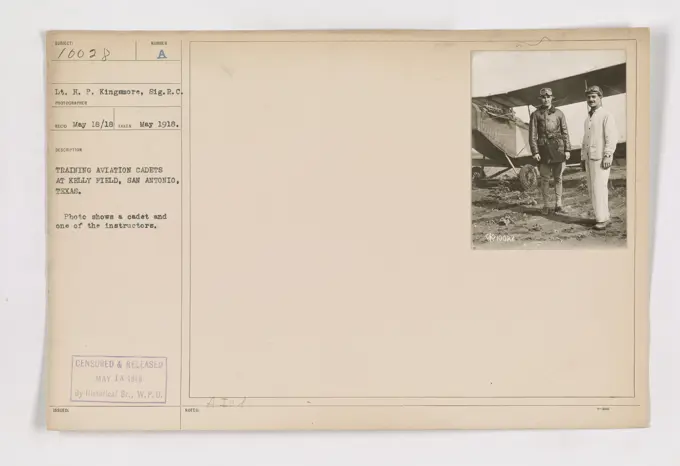
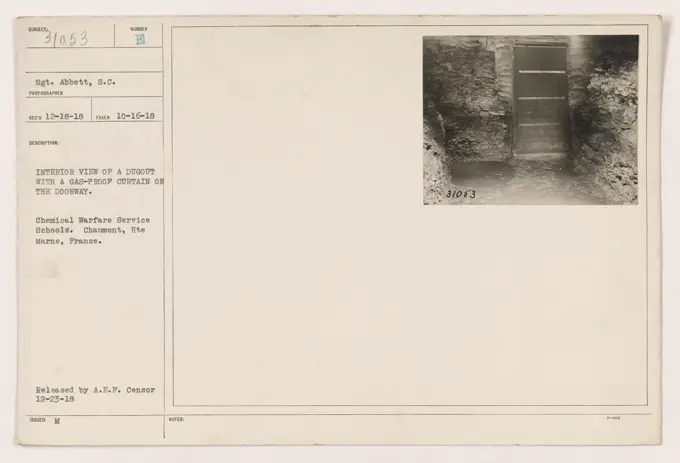
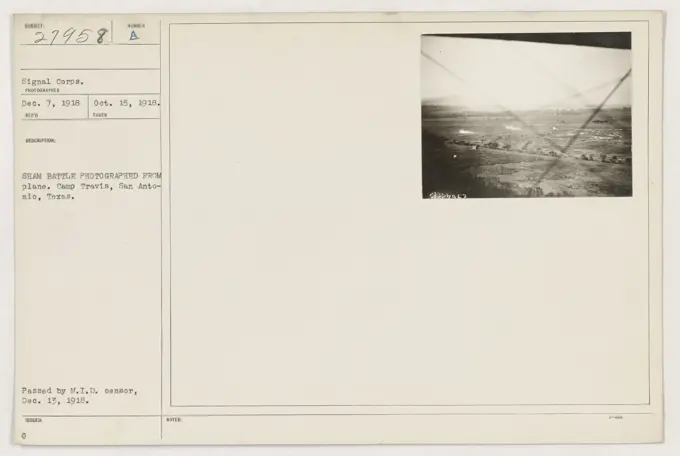
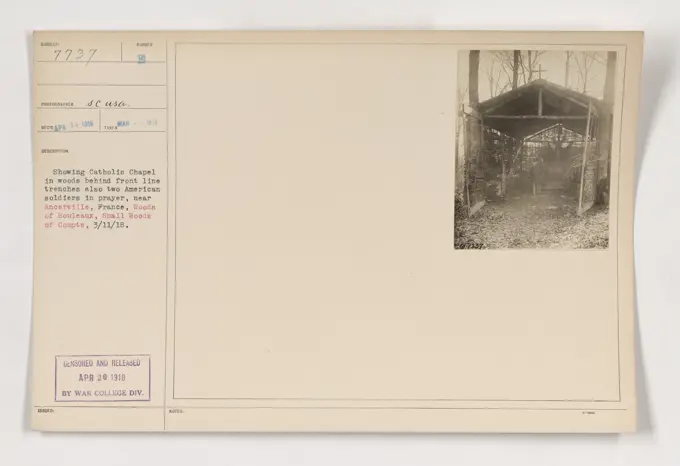
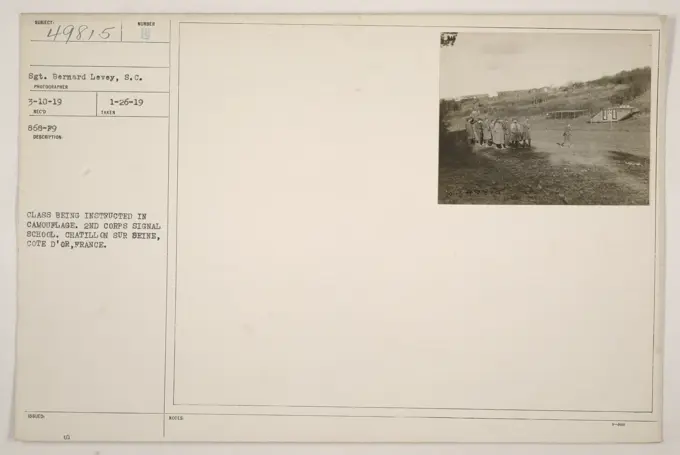
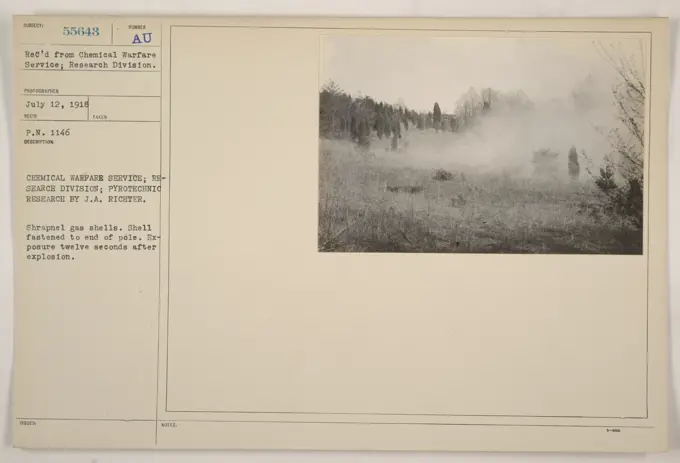
Soldiers at the Metz airfield in Lorraine survey the wreckage of a plane that crashed, resulting in the tragic deaths of six individuals. The image captures the aftermath of the accident, highlighting the devastation caused.Sergeant Grier M. Shotwell took this photograph on February 26, 1919, in Blockhouse No. 4, Russia. It provides an insight into the clearings that were made through the woods, showcasing the character of the area. The photograph was taken during World War One as a part of the American military activities.Co. C, 26th Regiment Infantry, led by Major Roosevelt, stationed in Menil-la-Tour, France on April 1918. The photograph shows the soldiers halting on the roadside. This image is part of the Photographs of American Military Activities during World War I, with identification number 111-SC-10355, taken on May 9, 1918, and recorded by photographer RECO."Lt. N. McDonald, S.C., captured in this photograph taken on 9-12-18, shows a clear view of Mt. Sec. The image depicts a group of reserve engineers in the foreground. The location of the photograph is near Mt. Sec in France. Release by A.E.P. Censor, with no specified date mentioned."Image capturing the septic tank at Aytre, France, located in Camp Pullman and used by the 21st Grand Division Transportation Corps during World War I. The symbol "E" was issued, and the photograph was taken on November 9, 1918. The image is labeled as "For Official Use Only."Cpl. Lubatty stands in an American cemetery, marked with a six-pointed star to denote the grave of a Jewish soldier, at Fleville, Ardennes, France. This photograph was taken on October 22, 1918 by an unknown photographer. It was approved by the A.E.P. censor, although the date of censorship is unknown.American soldiers from Battery "D", 7th Pennsylvania, advancing towards the Mont sector in Beaumont, France. This photograph was taken on September 14, 1918. The exact date of issuance and censorship is unknown.A photograph showing a general view of the Motor Truck Reception Park, numbered 61,949, during World War I. The image was taken by a photographer from the Signal Corps and serves as a documentation of American military activities during the war. This specific park was used for the reception and storage of motor trucks. The photo is part of a larger collection identified by the symbol "EU."The image shows a common grave in the village of Dannevoux, France, where a large number of fallen German soldiers are buried. The grave is marked with the identification number G-2a 65484. This photograph was taken on an unspecified date and was included in a collection of photographs documenting American military activities during World War One. The description notes that it was issued with the identification symbol "B. Us."Aerial photograph taken in 1919 of an unidentified location, showing terrain from a military perspective. The photographer received this image as part of their assignment to document aerial photography of various terrains during World War One. The "C" symbol indicates relevant military information. Additional notes marked as "HU" and "BB" may provide further context.Cpl. A. H. Hansen, S. C., a photographer, took this photo on August 1, 1918. It shows troops from the 2nd Battalion, 126th Regiment Infantry (formerly 31st and 32nd Regiment Infantry, Michigan National Guard) assembling in a wheat field before advancing on German-occupied woods. This photo was taken in Coutmont, France and released by A.E.F. Censor on November 22, 1918.Soldiers examining a smoke pot in Lerouville, Meuse, France. The photo was taken by R.C. Price on November 23, 1918. The caption suggests that the soldier named Alonzo is seen investigating the smoke pot. No further information or details are provided.Three soldiers, Pvt. Walter Toefer, Pvt. Joseph Disfano, and Pvt. Leon Dale, are seen in their shell hole on the front line near Cunel, Meuse, France during World War One. The photograph was taken on October 30, 1918, and passed by the A.E.P. censor. Accessed notes provide additional details.Lt. H.P. Kingamore of the Signal Reserve Corps trains aviation cadets at Kelly Field, San Antonio, Texas, in May 1918. In the photo, airships are seen being prepared for a cross-country formation flight.Cadet fliers at an aviation camp in Tours, France, participate in target practice with machine guns to improve their marksmanship. This photograph, labeled 111-SC-6149, was taken by the Signal Corps, U.S.A. It was censored and released on March 8, 1918, by the War College Division.Troopers participating in a rifle grenade barrage at Sunber A School of Fire in Fort Sill, Oklahoma. This photograph was taken on June 18th, 1918 by Lt. E. N. Jackson of the Signal Corps. It was censored and released by the M.I.B Censor on July 3rd, 1918. Issu notes not available.R.O.T.C. students practicing tactical maneuvers in a schirmish line at Reserve Officers Training Camp in Camp Lee, VA. Photograph taken by photographer St. Warner S.C. The reference number for this photograph is 61786 RECO 3-1549. This image captures the training activities of the R.O.T.C. during World War I.Men of the 3rd Battalion, 16th Infantry, 1st Division, conducting maneuvers against machine gun nests in Otzingen, Germany. Some soldiers are seen as skirmishers, kneeling or in a prone position. The soldiers demonstrate resilience as they maneuver through mud and water. Photograph was taken on March 10, 1919 by Sgt. J.A Marshall.Sgt. A. C. Duff of the 326th Battalion, 311th Tank Center is seen on his way to action near the 35th Division headquarters in Boureuilles, Meuse, France. The photograph was taken on Sept. 26, 1918. It is part of a series authorized by the A.E.F. censor.Colonel Arnouly de Birey of the 60th French Infantry salutes the remains of Pvt. D.J. Bird at a burial in Domjevin, France on 3rd March 1918. The photo, taken by the Signal Corps, captures the solemn moment before Colonel de Birey departs. This image was released on 20th April 1918 by the War College Division.Funeral service for Major J.P. Mitchell in Woodlawn Cemetery, New York City. The casket is surrounded by a large number of flowers, creating a poignant and somber atmosphere for the mourners. The photograph was taken on July 11, 1918 during World War One.Sgt. Lucien Rode from the Signal Corps posing near the American Bridge at Becara Cut-off in Marcy, France during World War 1. This photograph was released by the A.E.P. Censor without a specific date recorded. It is part of the 111-SC-22080 series.Soldiers from Company B, 165th Regiment Infantry, formerly known as the 69th Regiment Infantry, New York National Guard, 42nd Division, await a patrol assignment near Hazavant, France. The photograph shows them gathered next to a narrow gauge railway. The image was reviewed and approved by the American Expeditionary Forces censor.This image shows an experiment conducted at the Aviation Experiment Station in Hampton, Virginia during World War One. The photograph captures the effect of a bomb on a tree. The reference number is 111-SC-3595, and it was taken by a photographer designated as REC. The symbol AU represents the Aviation Unit.The photograph shows a symbolic moment at Love Field, Texas in 1919. The symbol issued is AU. The date the photograph was taken is October 31, 1918. It captures a run for the "take off" at Love Field. The accompanying notes mention the number 21640 and the presence of three individuals.Workers at the 21st Grand Division Transportation Corps in Camp Pullman, France, constructing septic tanks in Aytre. This photograph, with the reference number 57829, was taken on October 12, 1918. It was intended for official use only.Temporary units at canal on the east side of Camp Pullman, France. Photograph taken on August 17, 1918, by a Signal Corps photographer. This image depicts the 21st Grand Div. Transportation Corps at the canal. Official use only. Symbol: Sumber 57551, B. 218T, Description Symbol Recd: 7-15-19.Private C.E. Painter, S.C., is pictured boarding Hospital Train No.59 bound for Pase Hospital No. 15 at Chaumont. This train consisted of wounded soldiers from an American Division being transported back to the Base Hospital. The photograph was taken on July 22, 1918, in Toul, France, and has been officially approved by the A.E.F.Cuban artillery at Key West Naval Station firing a 12-inch gun against the sunset at Fort Taylor. Image taken on March 20, 1918, by Lt. H.P. Kingsmore, Sign-RC photographer. The photograph is part of the collection documenting American military activities during World War One.Image: The photograph shows National Army Artillery units from the 40th Division participating in maneuvers in the hills of California at Camp Kearny, San Diego, towards the end of World War I. The image was taken by E.N. Jackson from the Signal Reserve Corps. This photograph was censored and released by the War College Division on April 20, 1918.This photograph shows Montfaucon, a town in the Meuse region of France, captured by the Seventy Ninth Division at 11:45 a.m. on September 27th, 1918. The image captures the town in the distance, showcasing the military activities during the World War One. The photograph was taken in the Argonne region.Trans-Atlantic Motor Convoy: In this photograph, a military truck belonging to the Trans-Atlantic Motor Convoy is being pulled out of a three-foot-deep hole by a Militor (military tractor) 10 miles west of North Platte, Nebraska. The convoy took place on August 5, 1919.Soldiers firing twin Lewis Machine Guns at a target in the lake at Taliaferro Field, Fort Worth, Texas. The photograph shows a fountain of spray caused by the gunfire. Taken on October 8, 1918. Image number 27830, received in 1918.Sergeant G. Ryden firing without a gas mask during a military activity in Le Mans, Sarthe, France. The photograph was taken on October 5, 1918, and received on November 12, 1918. It was released by the A.E.F. Censor on November 15, 1918. Photograph belongs to Series 25980.No man's land on a training field during World War I. This photograph, taken by Reed, captures the symbolic depiction of the training field known as "No man's land." Located in Demblain, France, it served as a practice ground for soldiers preparing for war.A photograph taken by Sgt. L. Rode on July 1, 1916, showing a light railway cut with a highway bridge in Sorcy, France. The photograph is categorized as number 17491 and was received and approved by the A.E.F. Censor on August 13, 1918. It is part of the collection of American military activities during World War One.Destroyed French munition train photographed on May 12, 1919, by G-2. The image captures the aftermath of the incident, showing the wreckage of the train at sunset. The photographer's notes describe it as a symbol of the destruction caused during World War I.Group of German prisoners carrying a wounded American soldier to the rear. The American soldier belongs to the 113th infantry, previously known as Carolina infantry detachment of the 30th division. The incident took place near St. Martin-Piviere, Aisne, France during World War I. The photo was passed by the A.E.P. censor, although the date is unknown.Soldiers transporting a 5700 ft. 30-inch pipe over a mile at Bassons Docks, Bordeaux, France on October 23, 1918. The photograph was taken by Pvt. J.W. Beach and was passed by the A.E.F. censor. This image is part of the Photographs of American Military Activities during World War One collection.Formation of planes flying over Kelly Field in San Antonio, Texas. Photograph taken by Captain Shields during World War One.American soldiers participating in military exercises during World War One. The soldiers are seen engaging in physical training and maneuvers. This photograph captures a moment of solidarity and teamwork among the troops.Lieutenant Jackson of the U.S. military overlooking the "Bund" at Dickebush Lake in the Ypres district of Belgium during World War One. Photo taken on November 21, 1918. Image Number: 111-SC-38270. Photographer: S.C. PHOTOGRAPHER RECO 2-13-19. Additional notes: M Ma.American soldiers at Camp Souge in Bordeaux, France, on August 20, 1918, posing with 155mm guns. The photograph was taken by Pvt. J.W. Beach and received on October 23, 1918. It was approved by the A.E.P censor and is part of the collection "Photographs of American Military Activities during world war one."German machine gun nest captured by the 125th Regiment Infantry, formerly the 32nd Regiment Infantry, Minnesota National Guard, 32nd Division. The nest was located on a hill west of Cierges in France and was entrenched in a stone quarry. The infantry advanced across wheat fields and captured the nest at bayonet point. Photo released by the A.E.F. Censor on November 22, 1918.German shell explodes in the distance, causing casualties and damage in Molain near Vaux Andigny Aisne, France. Two soldiers, five horses, and a moving picture operator from the 30th Div., U.S.A. were among those affected by shrapnel. This photograph was taken on October 17, 1918, and received on January 4, 1919. It was released by the A.E.P. Censor on January 7, 1919.Floral decorations adorn the 21st Grand Div. Transportation Corps camp at Camp Pullman, France. Lt. Herring can be seen in the photograph. This image is identified as NUMBER 58299 S.C. PHOTOGRAPHER RECO 7-15-19 DESCRIPTION SYMBOL E TAKES 1-1248. The accompanying notes indicate that it is for official use only.Artillery target practice during World War I. This photo was taken on January 17, 1918 at Gondrecourt, France. The image captures a gun in action, illustrating the recoil. Censored and released on March 14, 1918 by the War College Division Laboratory. Photographer: Signal Corps, U.S.A.Sgt. Ryden captured a photograph on November 17, 1918, in Paris, France. The image showcases a parade celebrating the liberation of Alsace Lorraine after World War One. The photo depicts a crowd of liberated Alsatians cheering for President Poincare. The photograph was received and stamped by the A.E.F. censor.A dummy airplane serves as a target for aerial gunners in Lake Taliaferro Field. This photograph was taken on October 8, 1918, by the Signal Corps. The image shows the plane submerged in the lake, providing a practice target for the gunners. It was approved by the M.I.D. censor on December 13, 1918.Lt. H.P. Kingsmore of the Signal R.C. is seen participating in bomb and grenade practice during training in Camp Wheeler, Macon, GA. The photograph captures Kingsmore throwing grenades from a trench. This image was taken on February 4, 1918, and released by the W.O.D to the Photo Division.A pair of horses from the 80th Division Headquarters Troop drinking from a stream in Ippe court, Dept. of Meuse, France. The photograph was taken on September 17, 1918, by Egt.1st. Cl.L. G. Morper, S. C. Date of censor approval not given. A77 3-4.Private W. H. Hela of the Intermediate Section, 15th Regiment Engineers, at headquarters in Gievres, France. The photograph shows the general storage area for the intermediate section. The image was taken on July 31, 1918. It was released by the A.E.F. Censor, although the exact date of censorship is unknown. It is accompanied by the notes "21509."Soldiers at Camp Hendaye in Bayonne, Gironde, France. The photograph was taken by Soper on February 5, 1919, but depicts activities from December 19, 1918.American soldiers advancing through the open ground towards Grandpre, Ardennes, France during World War One. The lower part of the town, including the church, was under American control, while the higher ground on the right was held by the Germans. Date and source of the photograph are specified. Released by A.E.F. Censor on 12-23-18.American soldiers unloading supplies at Port de Commerce in Brest, France during World War One. The photo was taken on July 4th, 1918. Symbol E.C on the description indicates it was issued by the Signal Corps.An aviation cadet and an instructor training at Kelly Field in San Antonio, Texas. The photo features Lt. R. P. Kingamore of the Sig.R.C. The image was taken on May 18, 1918, and has been censored and released by the Historical Branch of the W.P.D.PIOGAZ.American soldier, Private Boach from South Carolina, seen in this photograph taken on November 20, 1918, at Langres, Hte Marne, France. The image shows a low-type spider web entanglement used for defense purposes during World War One. This photograph was released by the A.E.F. Censor on January 7, 1919.German monument commemorating soldiers who died in battle at St. Andre near Lille, France. The photograph was taken on 5-12-19 by RECO and is labeled as NUMBER G-2. The monument features a symbol (possibly a crest or emblem) with the number 59921. Additional notes mention the location as "het Andre cel."A photograph taken by Sct. E.G. Hamlin on 1-3-19. The image shows the Ahr Valley looking west in Kreuzberg, Germany. This picture was part of the American military activities during World War One.Telephone control at observation pit for artillery practice on camp range at Camp Kearney, San Diego, California. This photograph was taken by E. Carl Wallen of the International Film Service on February 21, 1918, during the activities of the 40th division. This image was released by the War College Division in 1918.View from the headquarters of "Camp Clayton" at Chateau de Loire, France during World War One. The photo captures "overflow" tents on a hill at the back. Image taken on December 20, 1918 by photographer Pvt. Eddy, S.C."Interior view of a dugout in Chemical Warfare Service Schools in Chaumont, Hte Marne, France during World War One. The dugout features a gas-proof curtain on the doorway. Photograph taken on 10-16-18 by Sgt. Abbott, S.C. Released by A.E.F. Censor on 12-23-18."American Harvesting Machine passing shell hole in a wheat field near Belleau Wood, France during World War One. The photograph, taken on August 29, 1918, features Sgt. Charles E. Mace. This image was released by the A.E.F. Censor and the exact date is unknown.Image caption: Germans shelling village of Rambucourt with six-inch shells, targeting a church steeple. The village is held by the 101st Infantry Regiment of the 26th Division, under the command of Colonel Logan. Photographed by Lieutenant Edward Cooper, Signal Reserve Corps on April 20, 1918 in Rambucourt, France. Note: Not to be published."Public demonstration of engineer activities at Washington Barracks. Soldiers engage in engineer drills. Photograph taken by Signal Corps photographer RECO. Image shows soldiers in uniform performing engineering tasks. Location identified as Washington Barracks, later renamed Fort Humphreys."Soldiers take shelter in comfortable winter quarters in enemy territory. The photograph, labeled as G-2 with the issued symbol EU, captures the scene of a cozy living quarters. The notes indicate that it is a "Wohnliches Mieterheim in feindesland," or a comfortable tenant house in enemy land.Lieutenant Fox captured this image on November 23, 1918, near the Loison River in France. The photograph showcases American soldiers (designated as Number E) observing their surroundings, facing east. The location is southwest of Juvigny, Marne. (Additional notes: photograph number: 40058)In this photograph, taken on November 20, 1918, Private Gibbon from South Carolina is seen amidst the aftermath of battle in the Ardennes. The image depicts a path with dense underbrush, rocky ground, and discarded items including a bandage, rifle, and entrenching tool. The photograph illustrates the challenges faced by infantrymen during World War One.A photograph taken on August 24, 1918, shows a general view of American and French officers and the 7th Machine Gun Battalion from the 3rd Division after inspection. The location is at Grande Fout between Ville Maisons and La Chappelle Sur Chezy, France. The photograph was passed by the A.E.F. censor on July 29, 1918.Aftermath of enemy fire in Givenchy, France. Buildings lie in ruins due to the destruction caused by the enemy during World War One. This photograph, numbered G-24, was taken by photographer Reco on May 12, 1919. It is one of many images capturing American military activities during the war."CAMP HANCOCK, AUGUSTA, GA. A photograph taken on September 26, 1918, from atop a 100 ft. pine tree by Pvt. A.J. Lubbe. The image offers a general view of the camp. It was censored and released by M.I.D. censor on October 8, 1918. Number identification from RECO is 20344."Soldiers performing a drill on the parade ground at Fort Oglethorpe, Georgia. The photograph was taken by Sergeant McGarrigle on May 5, 1919. The descriptive information for the photograph is issued under tag 5-349 and it captures the symbolic nature of the parade ground.Truck loaded with lumber gets stuck on its way to Camp Humphreys, VA. Camp Humphreys is being constructed to serve as a major engineering training camp during World War One, where 25,000 men will receive instruction. Photograph taken by LT. Lentz, SIG.R.C. on February 28th, 1918. Censored and released on April 10th, 1913 by War College Div. Laboratory.Sergeant C.H. White from the Signal Corps took this photograph, numbered 111-SC-17128, on June 30, 1918. It captures the Division Headquarters Building of the 42nd Division in Vadenay, France during World War I. The image was approved by the A.E.F. Censor on July 29, 1918, and there are additional notes, but the message seems to be scrambled - "NOGO PICOBOU JUIL."This photograph shows an Italian observation post during World War One. It was taken in 1919 and is part of the collection identified with number 18078. The photographer is identified as CD. The image showcases the structure of the observation post and its location, but no further details are provided.A battle plane leaving Taliaferro Field in Texas for aerial combat practice during World War One. Photo taken on October 9, 1918.Sgt. V.J. Palumbo captured this photograph on November 30, 1918, at Aberdeen Proving Grounds, MD. The image features an American 75mm motorized gun ascending a hill. The photograph was approved by the M.I.D. censor on December 4, 1918. Each issued note is accompanied by the number 3927772.Sergeant 1st Class C. H. White and his comrades from the 167th Regiment Infantry, 42nd Division, are seen with rifles equipped with tromblons, ready to be fired. This photograph was taken on May 10, 1918, in Neuviller, France. Note: Not for publication.A photograph taken on October 15, 1918, at Camp Travis in San Antonio, Texas, during a sham battle. The image captures a view of the battlefield from an airplane. It was reviewed and approved by the M.I.D. censor on December 13, 1918. No further notes are provided for this image.The image shows a Catholic chapel located in the woods behind the front line trenches near Ancerville, France. It was taken on April 15, 1918, in the Woods of Bouleaux, Small Woods of Compte. Two American soldiers can be seen in prayer. The photograph was censored and released on April 20, 1918, by the War College Division.Soldiers at an ammunition dump prepare to stack cases at the Officers School of Fire for Field Artillery in Fort Sill, Oklahoma. This photo, taken on June 14, 1918, by Lt. E.N. Jackson, S.R.C. shows the military activities during World War One. It was censored and released by M.I.B. censor on June 21, 1918.Panorama of the town of Hannappes, France, captured by an unidentified photographer on May 12, 1919. The photo provides an overview of the town and its surrounding landscape. It was taken as part of a series documenting American military activities during World War One. Attribution notes are unavailable.Image of the 114th Infantry, 29th Division advancing in combat formation in Ledger Woods and Fields, St. Ledger Woods, France during World War One. Date of the image is unknown."Explosion of bomb in water - Photo taken at School of Military Aeronautics, Langley Field, Hampton, VA. This photograph depicts a bomb detonating in the water during a training exercise at the school. Taken by photographer Numai Reco on June 5th, 1918, and assigned the identifier A-618."Lt. R.W. Sears captured a photo on November 5, 1918, in St. Juvin, Ardennes, France. The image shows French General Camille Walch and his aide, Capt. Lavoisier, inside a German dugout. In the center, Pvt. Carl Lest of the 307th Supply Co. from the 77th Div. can be seen. The photo was received on December 27, 1918, and is part of the collection of American Military Activities during World War One."Temporary canvas covered hangars at Ford Junction Aerodrome in Sussex, England. The photo shows two Farman planes in the foreground. Taken on October 22, 1918, by an A.E.F photographer. Caption on the photograph reads: 'View looking South showing temporary canvas covered hangars with two Farman planes in foreground. Ford Junction Aerodrome, Sussex, Eng.'"Image of toxic gas cylinders, specifically Mark I, issued to the Chemical Warfare Service during World War One. The photograph was taken on April 2, 1919, by photographer 54661. There are a total of 2904 gas cylinders in the picture."F Company A, 165th Regiment Infantry (formerly 69th Regiment Infantry, New York National Guard), a part of the 42nd Division, is shown in the front line trenches in Chausseres, France on June 3, 1918. The photograph was taken by Lt. J.S. Brown, Signal Corps, and was formally approved by the A.E.F. censor on July 2, 1918."Soldiers are seen in a classroom being instructed in camouflage techniques at the 2nd Corps Signal School in Chatillon sur Seine, Cote d'Or, France. The photo was taken by Sgt. Bernard Levey and received on March 10, 1919. Description issued with the photo is B 5 1-26-19.Soldiers of the 80th Division conducting a review at Camp Lee, Virginia in 1918 during World War One."Panoramic view of Camp Pullman, France, taken from a tower on the east side of the Etat line. The image depicts the beginning stages of car erection by the 21st Grand Div. Transportation Corps. The photograph is numbered 58298 and was taken on July 15, 1919, with a description symbol of B."The 21st Grand Div. Transportation Corps at Camp Pullman, France, is shown digging a pit for gasoline storage tanks. This photo, numbered 57335 S.C. and taken by photographer sco 715-19 takes 7-248, captures the activities of the transportation corps. Notes indicate that the image is for official use only.This photograph captures a pyrotechnic experiment conducted by J.A. Richter of the Chemical Warfare Service Research Division during World War I. It shows a shrapnel gas shell being fastened to the end of a pole, with the exposure taken twelve seconds after the explosion. The image was received from the Chemical Warfare Service on July 12, 1918.Private Bailey participates in a field meet at Fort Washington, MD. The photograph, taken on April 1, 1920, shows Bailey successfully clearing hurdles. The image bears the identification number 67981 and was captured by Private Eskin of the Signal Corps. This official picture was noted and issued accordingly.Soldier of the 18th Infantry Division, 1st Division, Pvt. Brotherhood, S.C is seen resting along the roadside in Coblens, Germany. This photograph was taken on Feb. 26, 1919, during World War One.Survivors of the "PRESIDENT Lincoln" shipwreck are seen being tied together, and rafts being tied together, off the coast of Brest, France on June 1, 1918. This photograph was taken by Lt. Sutton on July 2, 1918, and released by the M.I.B. Censor on June 19, 1918.American soldiers resting and enjoying a meal in a make-shift camp during World War One. The soldiers are seen sitting atop logs and eating from mess tins. Tents and equipment are visible in the background. The photo is part of a collection documenting American military activities during the war.Image of different forms of wire entanglement used at Camp Dix, Wrightstown, NJ during World War One. This photo was taken in January 1919 by an undisclosed photographer from the C.P.I. Und. & Und. It shows various arrangements of wire barriers used for military purposes. This image is classified as "FOR OFFICIAL USE ONLY."Aerial view of Lamington and Hydrogen piers at the Aviation Experiment Station in Hampton, VA. The photograph was taken on August 1, 1917, from a height of 4000 feet.Pvt. Ed. J. Peters, S.C. captured this photograph of the 132nd and 134th British Field Ambulance Corps passing by the reviewing stand near Beaucourt, Somme, France. The exact date of the photo is not provided, but it was taken between November 14th and December 27th, 1918.