World War I Ceremonies and Trench Life

Historical images from WWI, featuring ceremonies for aviators, soldiers in front line trenches, and personal moments of military personnel in France.

Members of the 132nd Infantry, 32nd Div., standing in a front line trench during World War One. They are on high alert, anticipating an imminent attack. The trench overlooks the Meuse Valley, where approximately 70,000 men are believed to be buried. Taken in Alexandre, Meuse, Prince.
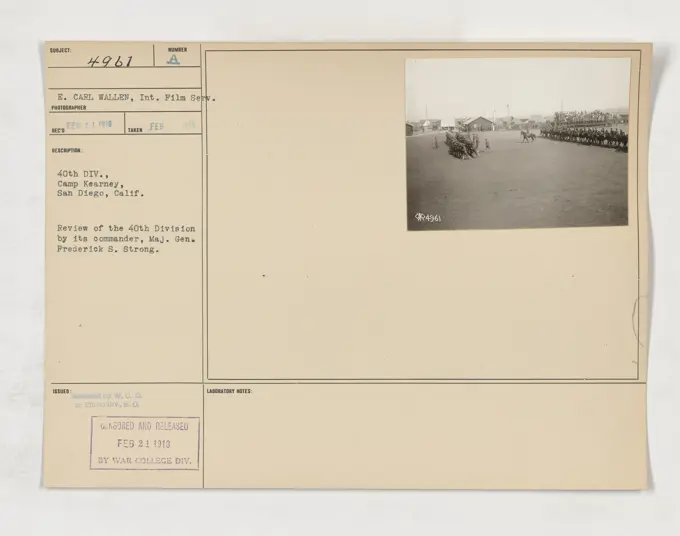
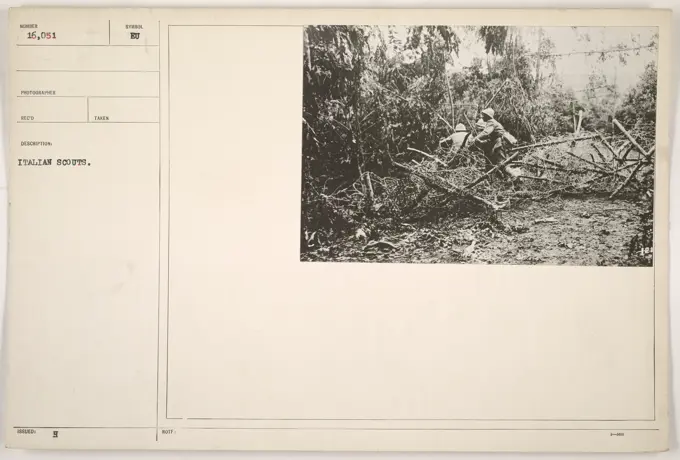
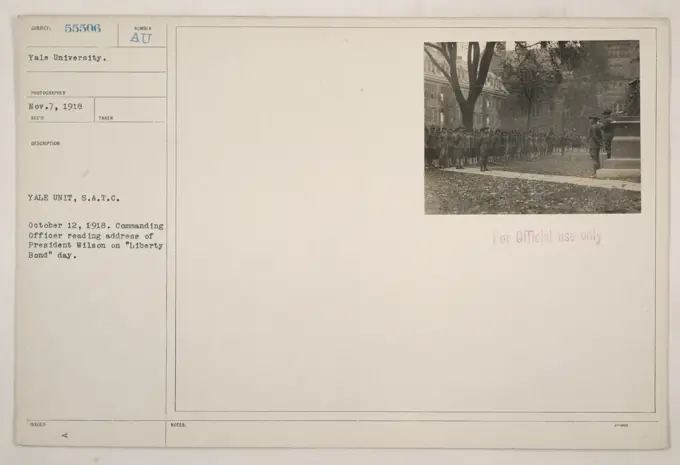
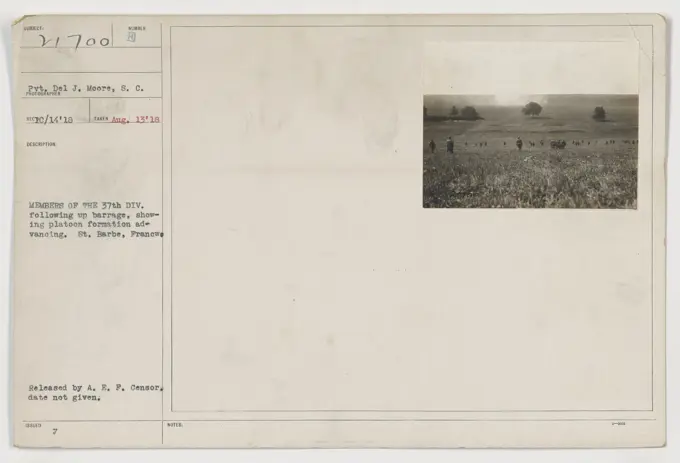
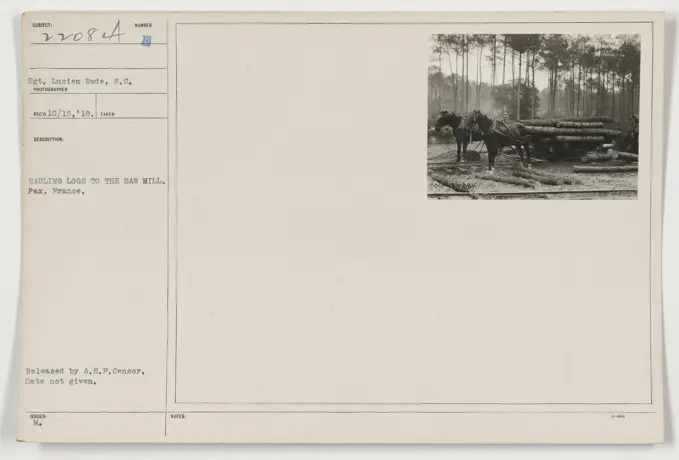
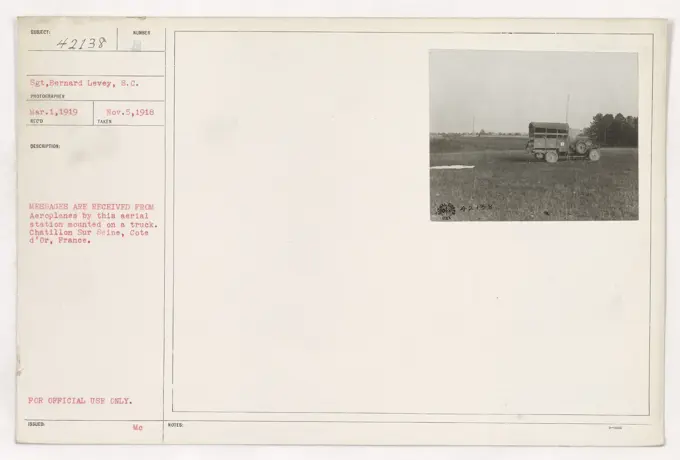
Ex-Cavalrymen from the 117th Field Artillery, now part of the 31st Division, showcasing their equestrian skills during a training exercise at Camp Wheeler in Macon, Georgia. This photograph was taken on February 21, 1918, and was censored and released on March 5, 1918, by the War College Division Laboratory. Image number A from collection 111-SC-5478, photographed by Lt. Lentz of the Signal Reserve Corps.A 2nd Light School Battery, mounted on grey horses, drives their guns and caissons through the woods at Camp Taylor, Kentucky. Photograph taken by S.C. Photographer Reco, identified by the symbol A. This image is part of the collection titled 111-SC-26840, taken during World War One activities. Date issued: November 5, 1918.Soldiers enrolled in the Michigan School of Mines in Houghton, Michigan, as part of the war work of the U.S. Bureau of Mines. This photograph shows the second soldier-miner contingent at the school in November 1918.Soldiers of the 21st Grand Division Transportation Corps in France working on the power house at Camp Pullman. The photo was taken on October 29, 1918, with the official symbol SC and is marked for official use only.Image of Maj. Gen. Frederick S. Strong conducting a review of the 40th Division at Camp Kearney, San Diego, California. This photograph was taken by E. Carl Wallen from the International Film Service on February 21, 1918. It was later sent to the Photographic Division of the War Office for strategic purposes. Censored and released on February 21, 1913, by the War College Division Laboratory.A French tank moving through a forest during World War One. This photograph, taken by G-2 photographer 58465 on June 30, 1919, shows the tank advancing through the trees. The tank bears an issued symbol indicating its French origins. Notes suggest that it is a French tank.Pvt. Gibbons took this photograph on December 1918, from the summit of Cote 182 in Buzancy, Ardennes. The image shows the territory captured by the 82nd Division, 1st Army Corps, U.S.A. during the second phase of the Argonne-Meuse offensive on October 14-15, 1918. St. Juvin can be seen in the distance.Pvt. E.S. Brotherhood of the 1st Engineers Division is seen marching along a road in Bois de Berliere, Ardennes, France. The photograph was taken on 3-1-19 by the photographer S.C. Photographer. The soldiers had returned from a forced march upon Sedan in the Ardennes.Image caption: U.S. Marines firing a volley over the graves of American soldiers during a ceremony in the American Cemetery on Decoration Day at General Headquarters, A.E.F., Chaumont, France, on May 30, 1918. The photograph was taken by Corporal Abbott, S.C., and approved by the A.E.F. Censor on June 19, 1918.21st Grand Div. Transportation Corps from Camp Pullman, France, is seen here with French stock car NUMBER 58193. The photograph was taken on 12-10-18 and recorded by the Signal Corps. The image is depicting the Transportation Corps' activities at Camp Pullman. This is an official documentation from the war.Italian scouts in action during World War One. This photograph, numbered 111-SC-16051, is part of a collection of American military activities. The photographer received a description of the image in which Italian scouts are mentioned. The image was issued on condition of marking with the symbol EU and took place at an unknown location with an estimated 3-4000 individuals involved.Soldiers march through the streets of Hattonville, France during World War One. The photograph is number G-2, taken by photographer 65458. The image, issued with symbol RECO 5-12-194, captured the daily activities of American military personnel in the town. The street scene showcases the presence and mobilization of US troops during the war. These notes are reported in official C.E.U. documentation.Yale Unit, S.A.T.C. Commanding Officer reading President Wilson's address on "Liberty Bond" day, October 12, 1918. This photograph was taken at Yale University by an official photographer on November 7, 1918. The image is marked with the field number "55506" and "AU" designating it for official use only.Sgt. 1st Cl. C. H. White signalling to airplanes during practice maneuvers. This photo was taken on May 10, 1918, in Baccarat, France. Sgt. White was from the 2nd En., 167th Regt. Inf., which was previously known as the 4th Regt. Inf., Als. N. G., and was part of the 42nd Div. The photo was censored and released on June 29, 1918."Soldiers of Co. 'B' 364th Infantry, 182nd Brigade, 91st Division, advance under cover of a barrage. The photo was taken by Sgt. 1st C1.J.T. Seabrook on Sept. 26, 1918, at Mt. Des Allieux near Vauquois, France. The time was 7:40 A.M. The photograph was approved by the A.E.F. Censor and issued by the War of Publix Information Committee (W.P.C.)."Members of the 37th Division advancing in platoon formation, following a barrage in St. Barbe, Franowe. The photograph, taken on August 13, 1918, shows Del J. Moore directing the troops. This image was released by the A. E. F. Censor and is numbered B53193 in the collection.Soldiers from the 29th Division at Camp McClellan in Anniston, Alabama, practicing firing automatic weapons on the camp target range. In this photograph, a gun crew is seen dropping to cover after advancing. Censored and released on March 14, 1918, by the War College Division Laboratory.Observers on a hill in Montfaucon, France, looking towards Bois de Ogons, and providing range information to the Artillery during World War One. This photo was taken by Lt. Charles Stone, S.C., and is part of the collection "Photographs of American Military Activities during World War One."Soldiers from the 29th Division, known as the "Blue & Gray," are seen marching at Camp McClellan in Anniston, Alabama. The photograph, taken by Lieutenant H.P. Kingsmore of the Signal Regiment Corps, captures members of the 115th Infantry Regiment (58th Brigade) practicing for a review. This image was censored, released, and logged by the War College Division Laboratory on March 14, 1913.Cadet aviators in Camp Dick, Texas receive athletic training in this photograph taken on October 11, 1918. The image, numbered 27971 and captured by a Signal Corps photographer, shows the aviators engaging in physical fitness activities for their training. The photograph and its details are part of the collection themed around American military activities during World War One.Soldiers search the coal bine at the 5th Army Corps railhead near Harricourt, Ardennes, France, during World War I. The engine house can be seen in the background of the photograph. This image was taken on November 15, 1918, by Sgt. Eikleberry and received on January 7, 1919. It was released by the A.E.P. Censor on January 16, 1919.Cpl. R. H. Ingleston, S.C., took this photograph on October 17, 1918, capturing a barbed wire obstruction that American infantry had to navigate through during the morning of September 12, 1918. The large cable seen in the foreground was electrified. This obstruction was located in Lahayville, Meuse, France. The photograph was approved by the A.E.F. censor.Formation of five planes flying in a single file. The photograph depicts the planes on the dead line during World War One, in 1918. The image shows the planes in a dual stage. Photo taken by photographer Kingsmore.S.C. Note: Symbol A₂ is not for publication.Two 155 mm howitzers being fired in Semogneux, Meuse, France. This photograph was taken on November 3, 1918, by Sgt. S.C. Fineberg. The guns belong to Battery B, 106th Field Artillery, 79th Division. The image was approved by the A.E.F. censor, however, the exact date is unknown.Caption: "Wreckage of a German plane shot down during combat with allied planes. The aviators were burned to death as the gasolene tank exploded. Charred bodies can be seen in the picture. Taken near Bohain, Aisne, France, on October 11, 1918, by a Signal Corps photographer."The image shows the 31st Division in training at Camp Wheeler in Macon, Georgia during World War I. It depicts 3 inch field artillery pieces in action, with a total of 16 guns firing at intervals. The photo was taken on February 4, 1918. It was released by the War Office to the Photo Division in February 1918.Aerial view of Manzanillo Bay and New Cristobal seen from Coco Solo. The image shows the 7th Aero Squadron in Port Sherman and Zone, taken on February 9, 1918. The photograph was received for description and issued under the identification code 111-SC-4376.Cpl. Paul 0. Bogart captured this photograph titled "Metz Bridge" in St. Paul, Meurthe et Moselle, France during World War One. The image shows both the lower and upper roads, which were heavily used during the big drives. The exact date of the photograph is not given.Image 111-SC-3583A shows an aviation experiment at Hempton, Virginia, during World War I. The photograph displays the impact of a bombing, specifically on a tree. The image provides an insight into the testing and developments in aviation and ordnance during the war."Sgt.icl.Morris Bineberg of the 315th Infantry Regiment, 79th Division, takes part in a "mimic parade" after Thanksgiving services. The event was witnessed by senior military officers including Maj. Gen.Kuhn, Brig. Gen. Evan M. Johnson, and Col. A. C. Knowles. The parade was held in Damvillers, Meuse, France. Photo passed by A.E.F. censor, date not given. Caption reads 'ON TO BERLIN'."Sgt. A.C. Irish prepares to start the propeller of a plane for a photographic flight over the Marne River. In the photo, Lt. H.T. Douglas, Lt. J.M. Murphy, and Lt. F.M. Moors can be seen, with Lt. Murphy acting as the pilot. Taken at Groves Farm, (Aigne) France, on an unspecified date.Image depicting a flame projector apparatus used by the Chemical Warfare Service during World War One. The apparatus is numbered as Subject 54894 and was captured in the photograph. It was issued for military use and was undoubtedly one of the tools employed in chemical warfare during that time period.American soldiers stationed in Italy during World War One. The photograph captures a scene, with soldiers in military uniforms and military vehicles in the background. The exact details of the scene are not provided in the description. The photograph was taken by Signal Corps photographer and assigned the identification number 111-SC-15294."Factual caption: American Soldier killed during World War One on the night of July 14, 1918, near Crezancy, France. The photograph taken on July 20, 1918, depicts a dead soldier with a shrapnel hole in his head. This image is part of the 111-SC-17459 collection and was photographed by Pvt. J. E. Gibbon, S.C."Sgt. 1st Cl. C. H. White, S.C., took this photograph on May 1, 1918, in Bois de Chein, St. Maurice, France. The image shows an explosion of shells on German trenches during the 2nd Battalion, 167th Regt. Inf.'s assault. It was censored and released by the M.I.B. Censor on June 10, 1918.Soldiers receiving medical treatment at Beau Desert Hospital Center in France during World War One.Captain J.G. Grayson, an assistant to the G-3 of the 33rd Divisional Staff, is pictured here in Dieuse, Meuse, France. The photograph was taken by Sgt. C.H. Jackson on October 25, 1918. It was passed by the A.E.F censor and issued the number H 32003. Captain Grayson is also a member of the 106th Field Signal Battalion, formerly Company A of the Illinois S.C. (Signal Corps).The image captured by Photographs of American Military Activities during World War I shows a flame projector apparatus used for pyrotechnic research by J.A. Richter within the Chemical Warfare Service's Research Division. The photograph was received on July 12, 1918, labeled as P.N. 1272. The image provides a side view of the apparatus.Camouflaged French 75 artillery pieces used by the American 6th Field Artillery, 1st Division. The photo was taken by Captain P.D. Miller in 1918 near Gypse Hill in Einville, Meurthe et Moselle, France. The total expenditure for the photograph was $57,136.Soldier constructing warehouses at Montoir Yards, St. Nazaire, France during World War One. Private D.C. Donnelly seen working on the project in this photograph taken on April 20, 1918. The image has been censored and released by the M.I.B. censor on July 2, 1918. Caption provided by M.A.O.tr, witness to the event.Soldier of the 320th Infantry, Pvt. Alley, is seen participating in a double quick marching exercise at Camp Lee, Virginia in December 1917. The photograph was taken by Reed and is a part of the collection documenting American military activities during World War One. The image was released to the Central Press International on December 24, 1917.Sgt. John P. Musler, a soldier in the U.S. military during World War One, is photographed on January 3, 1919, in Bendorf, Germany. The image shows Captain Adjutant of the 9th Infantry calling the roll and discussing acts of heroism among the men soon to be awarded the D.S.C. (Distinguished Service Cross). This particular photograph is numbered 4334 and is part of the 111-SC-44334 collection.Sgt. Lucien Rode of the Signal Corps is seen in this photograph, taken in Pax, France. The image shows him hauling logs to the saw mill. The date of the photograph is not provided, but it was released by the A.E.F. Censor.Aerial view of Post Field, Fort Sill, Oklahoma, taken on October 2, 1918. The photograph shows the layout and buildings of the military base. This image was received and approved by the Signal Corps on December 7, 1918, and passed by the M.I.D. censor on December 13, 1918.Student officers at Fortress Monroe, Virginia, seen firing a 2.95" mountain gun. In addition, the officers are observed studying the plotting board. The photograph was taken on May 18, 1918, and falls under number "9753 A Lieut. Wn. Pox, Sig. R.C. PHOTOGRAPHER". The image was censored and released by M.I.B. censor on July 31, 1918. 18BJED NOTES: 09755.Casino located behind the firing lines during World War One. The photograph was taken by SUNBER 0-2, PHOTOGRAPHER 66397 RECO on May 12, 1919. The image shows a casino building, identified as "Kasino, Neter der fevere 3," with soldiers and military personnel seen in the vicinity.Sergeant Bernard Levey of the Signal Corps receiving messages from airplanes using a serial station mounted on a truck. The photograph was taken on March 1, 1919, in Chatillon Sur Seine, Cote d'Or, France. This communication system was used during World War One. The image is labeled as "FOR OFFICIAL USE ONLY."Private W.J. Beach of the Supply Corps captured and salvaged guns in Mehun sur Yevre, Cher, France in December 1918. This photograph, taken by Pvt. Beach on February 1, 1919, shows guns that were successfully salvaged. The image is labeled as number E 18 in the collection.American soldiers from the 6th Field Artillery are seen operating camouflaged French 75 artillery guns on Gypse Hill near Einville, Meurthe et Moselle, France. The photograph was taken on November 19th, 1917 by Captain P.D. Miller and is labeled as item number 67,137.Horses killed in the street of Courboin on the night of July 14, 1918. The photograph was taken by Pvt. J. E. Gibbons on July 15, 1918. It was received on August 27, 1918, and issued by the military censor on August 13, 1918.Soldiers of the 6th Field Artillery unit are seen moving towards the American lines during World War One. The photograph was taken by an American photographer and received on March 1, 1918. It was later issued by the War Office of Defense to the Photo Division. Lab notes indicate photo reference number 05710 and the date as November 22, 1918.Soldiers take shelter in makeshift dugouts during World War I. The photograph, numbered 66877, was taken on May 12, 1919, by the photographer Reco. The image shows soldiers resting in the dugouts, which were created to provide protection and cover during battle. Notes mention "isterstände in de bine," indicating German language involvement.1749 - This photograph shows a view of outposts S.E. and Banholz Woods, looking west. The photo was taken in 1919 by the Signal Corps reconnaissance team, identified by the number 67715. The image was captured as part of their documentation of American military activities during World War I.American soldiers engage in combat during the Battle of Soissons in World War One.Soldier observing the landscape known as the "Punch Bowl" in Dun sur Meuse, France, on November 13, 1918. The photo was taken by Pvt. Brotherhood and was censored and issued by the A.E.F. No other details or notes were provided.Artillery at Camp Kearney, San Diego, Calif. during World War I, practicing Barrage Fire. The objective was to accurately place the barrage on the road in the center of the image. This photograph was taken in February 1918 as part of the activities of the 40th Division. Image leased by W. O. D. obo teveth or 30RED and released on February 21, 1913 by the War College Division. Laboratory Notes: 904972 For Official use only.Soldiers observe the shelling and burning of Thiaucourt, Meurthe et Moselle, France during World War One. This photograph, taken by Sgt. Paul W. Cloud, shows the destruction caused by the ongoing military activities. The exact date of the photograph is not provided.Caption: "Soldiers of the 42nd Division being trained in the art of throwing hand grenades during World War One. This photograph, numbered 5749, was taken by S.C., U.S.A. and received on March 1, 1918. The image was released by W.O.D. to the Photo Division on the same date. LABORATORY NOTES: 85749 A.E.P. 137 B. N.8."Aerial view of dugouts and trenches captured by A.E.F. MURER 7500 Signal Corps photographer. The photograph is labeled as 111-SC-7500 and has a symbol EU on it. The description states that the photograph was taken during World War One and shows a view of dugouts and trenches. The notes indicate that the photograph was taken from an aerial perspective and issued as part of the military records, with the item number 97590 for reference.American soldiers using a concrete cellar as a cooler for beer. Skids were used to lower barrels down an incline. An arbor with tables and benches was set up above. Located in the woods between Chalons and Heudicourt, Meuse, France. Submitted without a specific date by the American Expeditionary Forces censor.Aerial photograph taken during World War One depicting an unidentified location. The image is labeled as number 951, taken by the photographer, and includes the symbol "H." The photograph was received by description and issued with the note "EU NOTES 951. 1140 A-2."US soldiers conducting artillery operations at Camp Kearney in San Diego, California during WW1. The photograph shows a soldier using the telephone control at an observation pit. Taken in February 1918. Officially released and censored by the War College Division."This photograph depicts the southeast corner of a war prison, displaying sentinel tower No. 1. The image was taken by Sgt. Ray R. Tyrell of the S.c. Photographer on April 13, 1919. It was assigned the description number 47088 and was likely taken for documentation purposes."Caption: "Secretary of State Robert Lansing reviewing troops during a parade at Camp Hancock, Augusta, Georgia. The photograph was taken on March 9, 1918 and received by Lieutenant H.P. Kingsmore of the Signal Corps. The troops seen in the image are the 107th and 108th Artillery of the 28th Division. This photo was censored and released by the War College Division Laboratory on March 26, 1913."Soldiers in active service during World War One in Italy. The photograph showcases uniformed troops, possibly engaged in a training exercise or awaiting deployment. The location and specific activities depicted are not provided in the description.Secretary of State Robert Lansing reviews troops from the 107th and 108th Artillery at the 28th Division camp in Augusta, Georgia in March 1918. The photograph, taken by Lieutenant H.P. Kingsmore, is part of a series depicting American military activities during World War One. It was censored and approved for release on March 26, 1913 by the War College Division Laboratory.Soldiers from Battery C, 150th Field Artillery, formerly 1st Regt. Field Artillery, Indiana National Guard, are pictured in St. Pol, France on May 1, 1918. The photograph was taken by Sgt. 1st Cl. C. H. White and released after being censored. May 1, 1918.Maj. Gen. Robert Alexander and Col. J. R. R. Hannay, Chief of Staff, entering the ruins of an ancient chateau known as Chateau Fere near Fere en Tardenois, Aisne, France. The chateau, which was home to Compte de la Fere in the 12th Century, is featured in Alexander Dumas' famous "Three Musketeers".Aerial view of Kelly Field, San Antonio, Texas. Lieutenant Kinganore and Sergeant R. C. captured the photograph. It was taken on May 22, 1918. The photograph is part of a series documenting Kelly Field and shows a general view of the military installation. Note: The image was not meant for publication."Pvt. Berhens closely hugging the ground during a night raid, captured in a drawing by Captain Harvey Dunn, an official American military artist. The soldiers are cautious as a shell explodes nearby, a common occurrence during World War I. Photo taken on December 21, 1918. Source: 111-SC-37902."Group of German prisoners in a receiving enclosure at Central Prisoner of War Enclosure No. 1. St. Pierre des Corps, Indre et Loire, France. Taken on Oct. 28, 1918. Shows exhaustion of German prisoners upon arrival at prison camps, as they lay down anywhere to sleep. Passed by A.E.F. censor.A wood and cloth dummy tank at Fort Sill, Oklahoma. This image was captured on December 7, 1918. The dummy tank was destroyed by shrapnel fire. The photograph was passed by the M.I.D. censor on December 13, 1918.Funeral procession of the First Division in Bouvillers on July 19, 1918. This photograph is sourced from Photographs of American Military Activities during World War One (111-SC-16515 FILE No. 16515).The original copy of this image can be found in the National Archives (SOURCE DATE ACCESSIONED).Image showing a crumpled right wing of an airplane at Dorr Field, Arcadia, Florida. The damage occurred after the plane hit a parachute sandbag. This photo was taken on December 10, 1918, and is not intended for publication, but is for official use only.Panoramic view from La Port de St. Nicolas, showcasing the front view of Nouvelle Gare, NUMBER 5.8212 E PHOTOGRAPHER SIGNAL CORPS. The photograph was received on July 15th, 1919, and taken on November 11th, 1918. It portrays the 21st Grand Div. Transportation Corps at Camp Pullman, France. This information and image are intended for official use only.The image depicts a tool house before it underwent camouflage treatment. The photograph was taken in 1975 as part of the activities of the Engineer Corps, U.S.A. The house is shown in its original state and was subsequently camouflaged in the year 1977. This image was included in the 1974 documentation.This photograph, taken on April 8, 1919, shows a general view of the classification yard at Montoir project in Montoir, Loire-Inferieure, France. The photographer was Sgt. P. T. Morris, S.C. The photo was issued on February 11, 1919, with the description and notes cited above.This photograph shows the devastation caused in the village of Lille, France during World War One. The village has been extensively damaged, with buildings in ruins and debris littering the streets. The photograph was taken by the photographer number G-2 on May 12, 1919.Photograph captured in 1918 depicts the desolation in the region of Transloy in Somme. The image illustrates the aftermath of military activities during World War I, portraying a landscape symbolizing the devastating impact of the war. The photo is numbered as 111-SC-1651, taken by photographer WUNDER. Additional notes state the photograph's designation as 1651 and it being part of a larger collection with the number 27601.American soldiers from the 40th Division at Camp Kearny, San Diego, California, take a break during a ten-day hike. They are seen enjoying a swim in the Pacific Ocean at Cardiff, California. Lieutenant E.N. Jackson, a member of the Signal Corps, took the photograph on April 24, 1918. It was released by the War College Division on April 27, 1918.American soldiers camouflaging the village of Attan in France during World War One. The village is situated within clear view of the German lines and is occupied by American troops. The photograph was taken by Pvt. E. Trabold and released by the A.E.F. Censor, though no specific date is provided.E Sgt. G. Ryden, S.C., from the 83rd Division, 2nd Depot, aims his rifle in Mayet, Sarthe, France during World War One. The photo was taken on October 1, 1918, and released by the A.E.F Censor on November 15, 1918. For more information, visit www 324045Soldiers taking a brief rest in a camp located 200 meters behind enemy trenches during World War One. The camp provides a safe haven for exhausted soldiers before they resume their duties on the frontlines. The photo taken on May 12, 1919, showcases the important role of resting areas in supporting military operations.Soldiers from the 13th Engineers Railway swim in the River Aire at Fleury during World War I. This photograph was taken in August 1918 and was issued by the American Expeditionary Forces.Caption: The image captures the aftermath of a French mine explosion near the front lines during World War I. The impact of the explosion is visible, causing substantial damage to the terrain and surrounding area. The photograph was taken by photographer Sumber G-2 on May 12, 1919.American military personnel at Base Hospital #2 in Bassens, Gironde, France during World War One. The photograph features Sergeant Morris, the photographer, and was taken on January 15, 1919. The hospital provided medical care and support for wounded soldiers. Image number is 3368-19.Caption: Infantry Regiment of the 581 Brigade marching to the parade ground at Camp McClellan, Anninston, Alabama, on February 14, 1913. This photograph, taken by Lt. H.P. Kingsmore, SIG.R.C, is part of the collection titled "Photographs of American Military Activities during World War One." Released and approved by the War College Division laboratory on March 14, 1918.Shell hole made by bomb dropped from French airplane in Pere-en-Tardenois, France. Cpl. Ingleston of the Signal Corps is shown in the photograph. The photo was taken on August 3, 1918, and was later passed by the A.E.P. censor. Additional information such as the date of issuance is not available.Enlisted men stationed near Fliry, Meurthe et Moselle, France, looking through the sight of a 155 m/m gun. The image was taken on November 6, 1918, by Lt. Paul W. Cloud, S.C. It was approved by the A.E.P. censor, with the exact date of approval unknown.A convoy of Military Transport Corps vehicles enroute to the coast, traveling across the Great Salt Lake Desert in Utah. The photograph was taken by Sgt. Lacy on November 8, 1919.Sgt. H.D. Lothers, S.C., accompanied by other Signal Corps men, can be seen in the photograph installing lights around the cross located on the roof of the 3rd Army Corps Headquarters in Coblens, Rhenish Prussia, Germany. The photo was taken on March 1st, 1919 and is numbered 44311.1st Lt. J.G. Oldham, a member of the 309th Field Artillery of the 78th Division, is seen at the phone in his role as Acting Executive Officer. He is directing the firing of Bat. A 155's at the Student Artillery Training School in Le Valdahon, Doubs, France. This photo was taken on April 5th, 1919, by Lt. R.W. Sears, S.C. The description and issuance number for this photo is 2631-F9 and it was taken by 1st Lt. J.G. Oldham himself.Sergeant A.J. Mann standing on the Sun Boulevard in Malesherbes, Paris, France, on December 14, 1918. The photograph was taken on January 20, 1919, and received by the photographer. In the picture, Sergeant Mann is holding a cane with the emblem of St. Augustine. This image was approved by the A.E.F (American Expeditionary Forces) but does not indicate the date of issuance."Instructional session at the 1st Corps School in Gondrecourt, France, taken on August 13, 1918. Sergeant 1st Class J.J. Marshall in the photo demonstrates hand indication, pointing, and parrying techniques to NCOs who will then train men with bayonet and musket. Approved by A.E.F. Censor."A photo taken at Love Field, Dallas, Texas, showing a plane wrecked after a forced landing. The pilot, Cadet Muchestone, was operating the aircraft. This image was not intended for publication and was meant solely for official use. (Note: The photo code suggests this image comes from the collection of the Defense Media Activity, Photographer Department, and was received on December 3, 1918.)A laboratory at a hospital in Norfolk, VA, is depicted in this photograph from the collection "Photographs of American Military Activities during World War One." The photographer, Sgt. Me Garrigle, captured scenes at an Army supply base. This image, labeled under serial number 58383, was received on July 2, 1919, and taken on June 17, 1919. Notes associated with the photograph include reference number 59243.Secretary of War Baker and his party preparing to depart from Fort de Marre in France during World War One. This photograph, labelled 111-SC-23812, was taken by the Signal Corps, U.S.A., with the photographer receiving it on October 25, 1918. It was released by the A.E.F. Censor, although the specific date is undisclosed.American soldiers travel by battery post and canal in La Bassée, France during World War I. The photograph, captured by an aeronautics photographer, shows a significant military activity of the 27231 division. The image bears a description symbol and is marked for official use only.French infantry soldiers stationed in Fere Champenoise during World War One. The photograph is part of the official copies of war pictures collection, taken by an unidentified photographer. The assigned number for this image is 67924, and it was received on March 9, 1920. The notes indicate the presence of the "183LED: C SYMBOL BU" insignia.Lieutenant E.N. Jackson of the Signal Corps inspecting ammunition during training at Fort Sill, Oklahoma on May 25, 1918. The photo was taken as part of the Officers School of Fire for Field Artillery. It was censored and released by the M.I.B. censor on June 21, 1918.