World War I Ceremonies and Trench Life

Historical images from WWI, featuring ceremonies for aviators, soldiers in front line trenches, and personal moments of military personnel in France.

Members of the 132nd Infantry, 32nd Div., standing in a front line trench during World War One. They are on high alert, anticipating an imminent attack. The trench overlooks the Meuse Valley, where approximately 70,000 men are believed to be buried. Taken in Alexandre, Meuse, Prince.
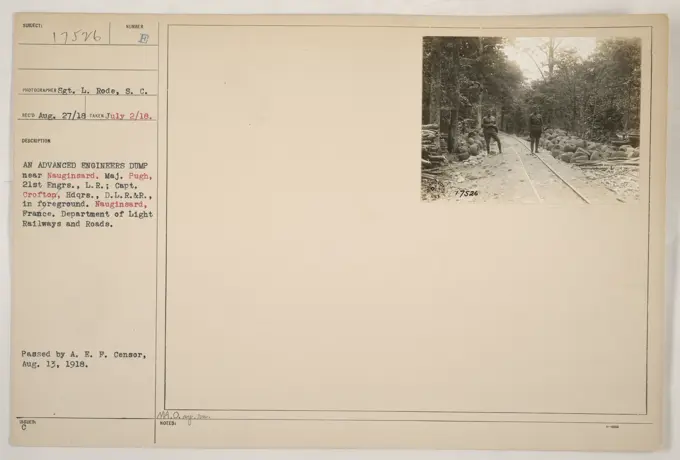
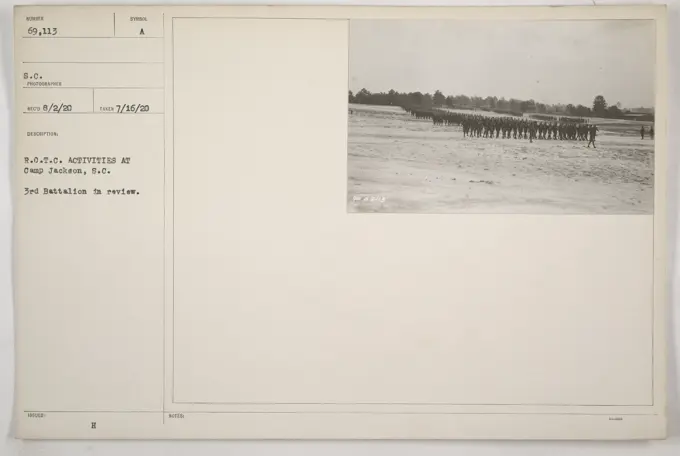
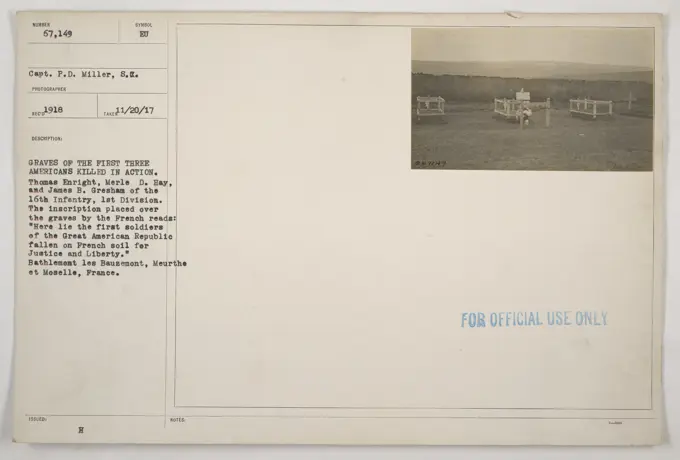
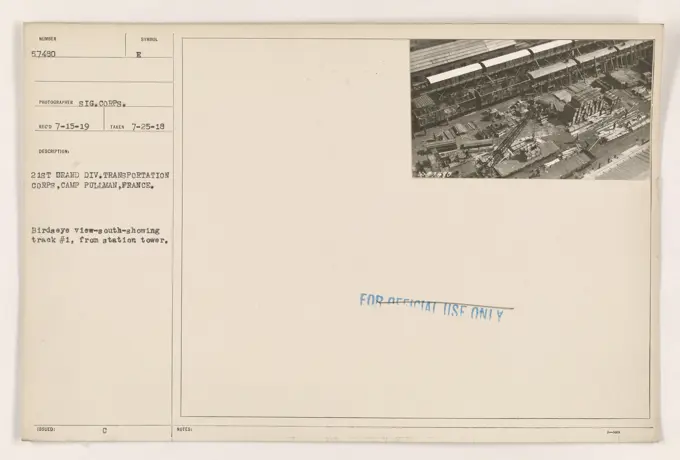
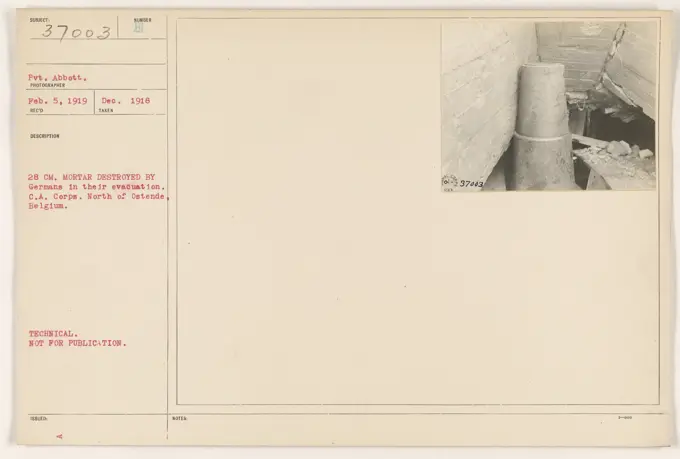
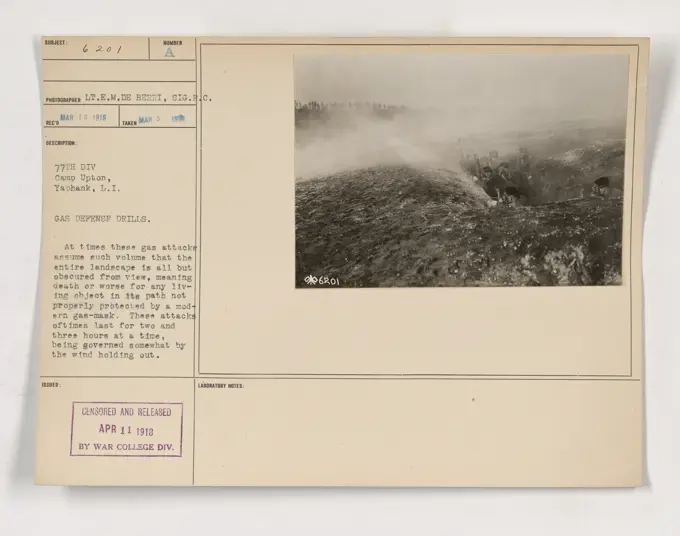
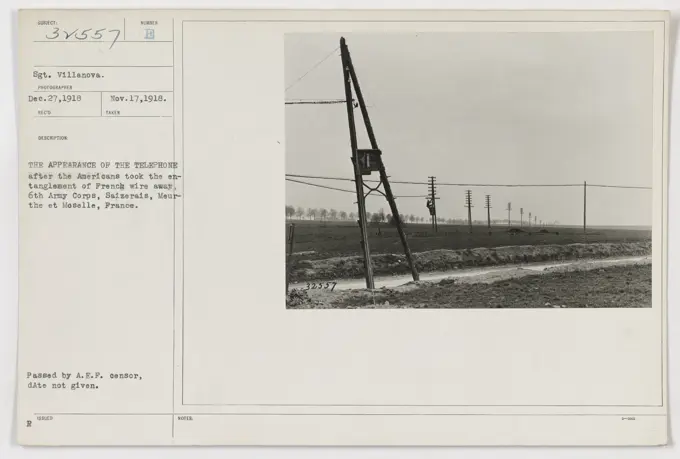
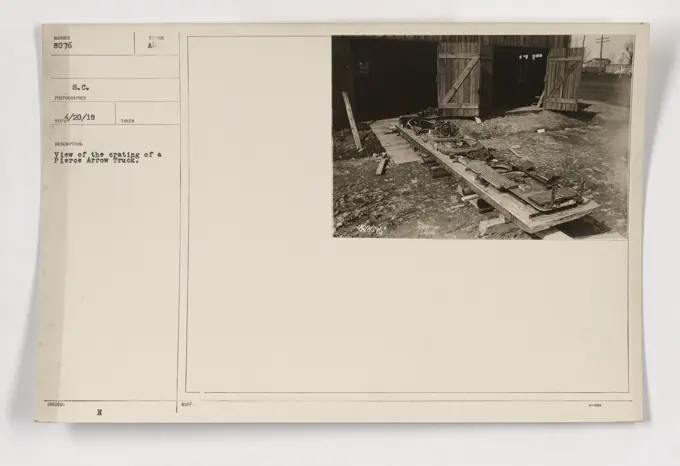
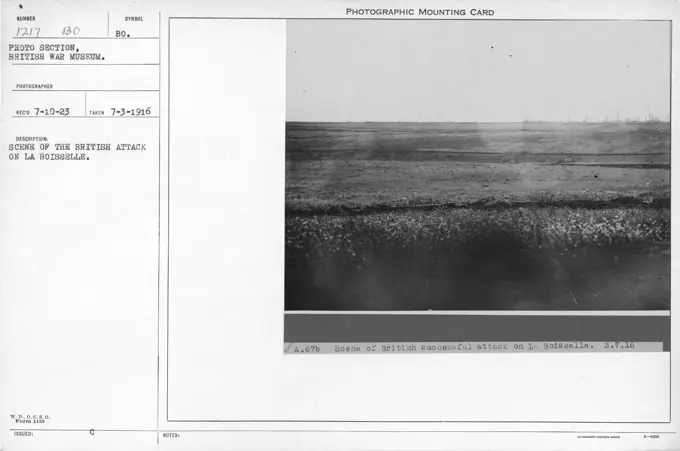
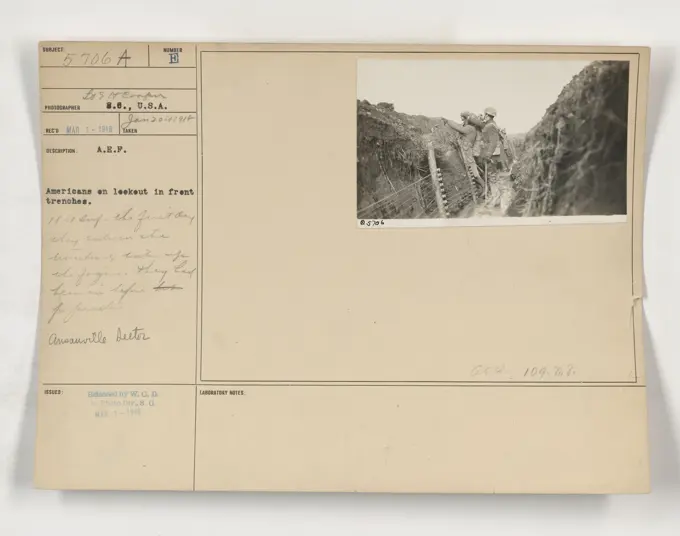
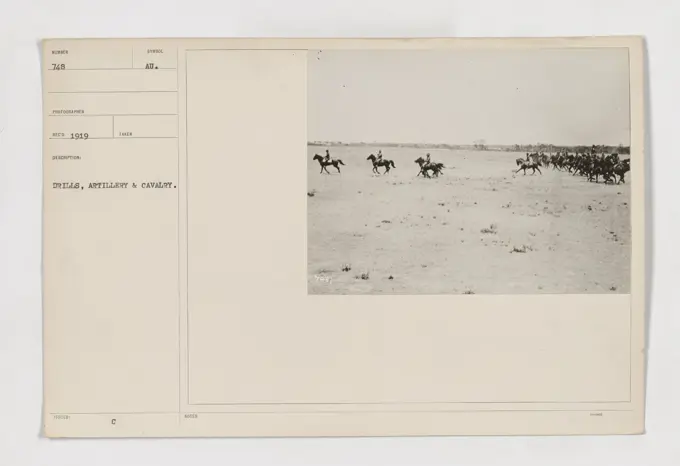
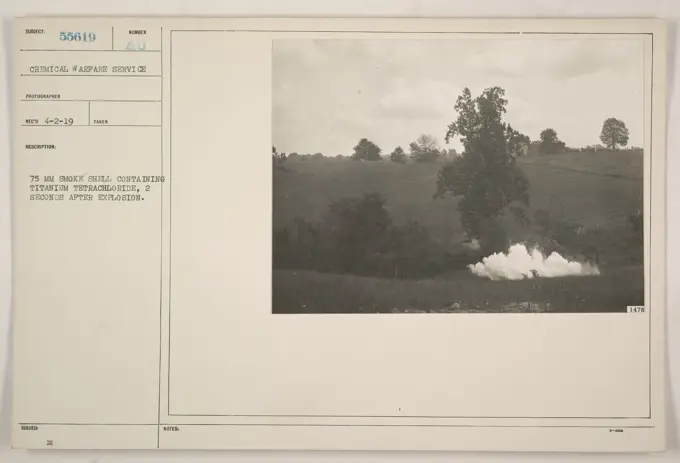
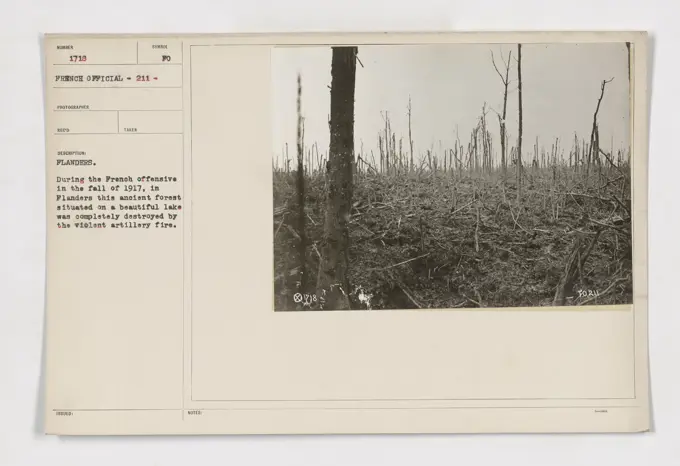
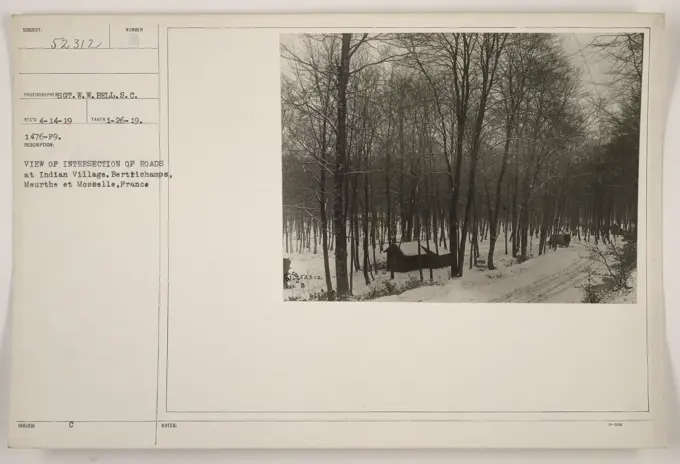
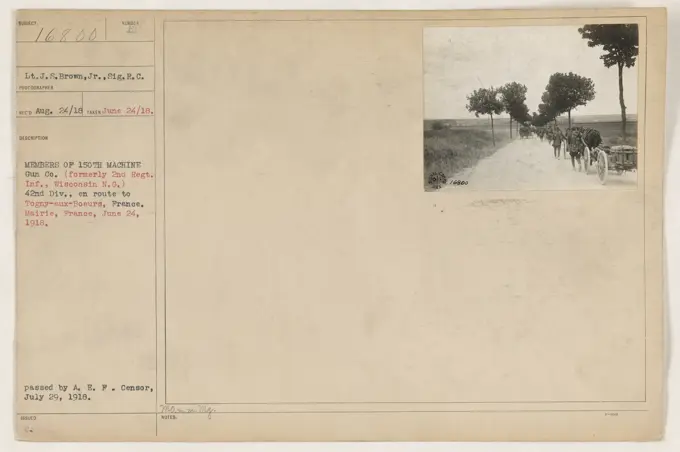
Shell shelters and a fortified pit near the front lines in Marne. Photograph taken by Syndol Takes. The image portrays the practical measures taken by American military during World War One to ensure safety and protection from enemy attacks.Belgian infantry soldiers launching an attack on a German defense during World War One. This photograph was taken by a CPI photographer and was issued under the description number 19459. It is important to note that this image is for official use only.Photograph showing a 75 mm smoke shell containing titanium tetrachloride, 20 seconds after explosion. Taken by a Chemical Warfare Service photographer. The image is classified under subject number 556:20 and was received on April 2, 1919. It is marked with the description "Number issued: 75 mm smoke shell, containing titanium tetrachloride, 20 seconds after explosion." Additional notes include the reference number 1478.A group of American military personnel, including Major Pugh of the 21st Engineers and Captain Crofton of Headquarters, are shown standing near an advanced engineers dump in Nauginsard, France. The photograph was taken by Sgt. L. Rode on July 2, 1918, and received on August 27, 1918. It was passed by the A. E. P. Censor on August 13, 1918.Soldiers disembarking from a military vessel in Italy during World War One.Aerial photograph of an unidentified location in France during World War One. The photograph, with the symbol EU, is numbered SUMBE 929 and was taken in 1919 and issued as an aerial photograph. The image shows various military activities taking place on the ground.ROTC cadets at Camp Jackson, S.C. participate in a battalion review. The photograph, taken on July 16th, 1920, shows the 3rd Battalion in formation. The image, numbered 69,113, was captured by a South Carolina photographer and cataloged on August 2nd, 1920. The caption provides brief details and identification markings for recordkeeping purposes.Soldiers from the American military gathered during World War One. The photo was taken in 1918 and is part of the Signal Corps collection. It is currently filed under a different number (25072) and the photographer's name is not mentioned.A view from a window across Hohenzollern-plas in Grandpre, Ardennes, France during World War One. The photograph, taken on October 29, 1918, features Lt. Duff, S.C. The image was received on December 18, 1918, and released by A.E.P. Censor on December 23, 1918. Issued under M. ROTER H 807987 TAVSSOVE.Hunting - West Virginia. Photographs Relating to National Forests, Resource Management Practices, Personnel, and Cultural and Economic History"Graves of the first three Americans killed in action during World War I. Located in Bathlemont les Bauzemont, France, the graves belong to Thomas Enright, Merle D. Hay, and James B. Gresham of the 16th Infantry, 1st Division. The inscription by the French reads: "Here lie the first soldiers of the Great American Republic fallen on French soil for Justice and Liberty."Soldiers preparing for battle in the South du Montaigo Sector during World War One. The photograph was taken in 1918 and is designated as image number 111-SC-131. The soldiers can be seen getting ready and organizing their equipment.Private A.R. Wright from the 402nd Telegraph Battalion is shown installing telephone cables at the General Intermediate Supply Depot in Gievres, France. The photo was taken on July 24, 1918, by Pvt L.P. Goldshlag. It was approved by the A.E.F. Censor on August 13, 1918.American soldiers at an Italian observation post during World War One.A soldier camouflages a tree trunk for use as a listening post on January 2, 1918. The camouflage is designed to hide the route of roads from hostile airmen. This photograph was taken for the purpose of issuing and studying camouflage techniques during World War One.Description: This is a photograph taken by Sgt. 1st el. C.E. Dunn on March 27, 1919. It depicts a German concrete observation post located east of Consenvoye, Meuse, France. The image was received and documented on February 1, 1919, under the identification number 188LED, and contains the additional note 45184.Soldiers of the Spruce Production Division of the Aviation Section, S.C. are shown felling a large spruce tree in Hoquaim, Washington on February 5, 1918. The photograph was taken by I.T.E.N. Jackson and released by the War Department's Photo Division. Lab notes indicate the photograph's serial number to be 24691.Eberts Field, located in Lonoke, Arkansas, is depicted in this photograph. The image captures a plane stuck in the treetops after a forced landing. Fortunately, no injuries were reported. The photo was taken on November 7, 1918, and received by D.M.A. on August 17, 1918. It is designated as 54122 in the record. The image is not intended for publication and is for official use only.Sgt. 1st Cl. Frank A. Wallock, s.c., captured a photo of log cabins reinforced with sandbags, originally built by Germans at Bois Farm. These cabins are now being used as Post Command by the 315th and 318th Regiments Field Artillery of the 32nd Div. The location is near Cierges, Meuse, France. The photo was approved by the A.E.F. Censor, but the exact date is unknown.Trenches on the shore of the North Sea, captured in a photograph from the collection "Photographs of American Military Activities during World War One". This particular image is labeled as number 59484 G-2. The photographer received the image on May 12, 1919. The description of the photo-issuer states "taken by M Symbol". Additional notes mention the presence of Schützengraben (German: "trenches") along the northern coast.Cpl. James L. McGarrigle at the Tanks Corps Training School in Camp Colt, Gettysburg, PA. The image shows a tank coming over an embankment. Photographed on August 15, 1918. For official use only.West Point Class of 1921 visiting the Valley of the Aire in France during their tour through France, Belgium, and Germany. The photograph was taken by Lt. Col. G. R. Harrison on December 1, 1919, and is part of the official records. The location of the photo is Hill 223.Mounted Horseback Wrestling event taking place at Fort Myer, Virginia. The contest involves Battery E, 19th Field Artillery and Troop I, 3rd Cavalry. This photograph is part of the series documenting athletic events at the fort. Photographer: Sot. Keen Polk. Taken on June 4, 1920. (Description and issuing info)A photograph of a flying field at Issoudon during World War One, taken by Captain J. Andre Smith. The image shows the aerial activities of American military aviation. This image is classified as 111-SC-42884 in the StillPixFindingAid collection and has the Mc number 49894.A camouflaged machine gun emplacement in a trench, covered with wire screens and grass to blend in with the surroundings. The photograph was taken on January 2, 1918 and released to C.P.I. (Committee on Public Information)."Pvt. J. E. Gibbon of the 28th Division, 1st Army Corps, U.S.A., photographed terrain southeast of Cherry Ardennes that was captured from the enemy during the Argonne Meuse operations in Oct. 1918. The location is Cornay, Ardennes, France."American military personnel using an airplane to observe the impact of artillery fire during World War One. The airplane relays real-time information wirelessly to the ground batteries. This photograph is marked "FOR OFFICIAL USE ONLY."Appearance of a shrapnel gas shell two seconds after explosion. The shell was securely fastened to a tree as part of pyrotechnic research conducted by J.A. Richter, under the Chemical Warfare Service Research Division. Photo taken on July 12, 1918. Documentation acquired from Chemical Warfare Service; Research Division. P.N. 1141."Photograph of the old incinerator at Camp Pullman, France, under the supervision of 3rd Lt. Snyder from the 21st Grand Div. Transportation Corps. Date of photograph is September 26, 1919. Image number 57740, taken by the SC photographer, as described on July 15, 1919."Major Robert J. Halpin, Senior Supply Officer of the 80th Division, and 1st Lt. A. N. LaPorte, Assistant Division Quartermaster, are pictured together at a bread pile in Robert Espagne. Lt. LaPorte is responsible for the division's motion dump. Major Halpin previously commanded the 314th Machine Gun Battalion before the 318th Infantry, and is currently serving at Headquarters 80th Division as a senior supply officer in Robert Espagne, Meuse, France.Soldiers from the 3rd Battalion, 167th Infantry, 42nd Division, are seen practicing bayonet drills in Villiers sur Suse, France during World War I. The soldiers are shown hurdling a barrier in a simulated trench warfare scenario. This photograph was taken on March 11, 1918 by a photographer from the Signal Corps, U.S.A."A group of officers participating in a rifle range exercise at Camp Joseph E. Johnston in Jacksonville, Florida. Photograph taken by Sgt. McGarrigle on November 22, 1918. Received and approved by the M.I.D. censor on November 29, 1918. Image number 27700 in the collection."Factual caption: View of thorough construction of German front line trenches just north of the village of Rey-en-Haye. These trenches were held by the Germans since the Battle of the Marne and were taken by the 90th Division on the morning of September 12, 1918. Rey-en-Haye, France. Trenches are seen in good condition. Photograph taken by Lt. Estep. Date of issuance not provided. Information passed by A.E.P. censor.A photograph capturing a scene of U.S soldiers engaging in an attack using rifles and grenades during World War One. The image is numbered 111-SC-3130, taken on March 30th. It falls under the category of Subenfantry. The photograph was received by the photographer with the given description of an attack. Additionally, the laboratory notes indicate the entry number as 03139.Lieutenant E. H. Cooper from the Signal Corps captured this photograph. The image shows Colonel Hune of the 104th Regiment Infantry (formerly 2nd, 6th, and 8th Regiment Infantry, Massachusetts National Guard) in Soissons, France on March 12, 1918. This image is cataloged as subject number 11295 and was assigned on May 22, 1918.Cavalry troops riding their horses during a review by President Woodrow Wilson of the 26th division in Chaumont, France. The photo was taken in 1918 by the Signal Corps and is marked with the number 63498. It is described as cavalry participating in the review. Note that there is an additional identification number of 9008498.A hastily constructed trench in a cemetery in Arras, France, captured in this photograph taken by Bee in 1919. The image showcases the makeshift nature of the trench, likely dug during World War One. This photograph is labeled as number 1462 in the collection and is accompanied by the notes 2462.R.O.T.C. boys from Camp Devens in Ayer, Massachusetts, are seen here ready for physical drill during their infantry camp training in 1920.Aerial view of Camp Pullman in France, showing track #1 and the station tower. This photo was taken on July 25, 1918, during World War One. It is part of the collection of the 21st Grand Division Transportation Corps. The image is marked with the description symbol 189LED, and was taken by a photographer from the Signal Corps. The accompanying note states that it is only for official use."Sgt. Mackenzie, S.C., photographer, captured this image on February 24, 1919, at Balloon School in Arcadia, California. The photograph shows Arcadia Camp and the surrounding area as viewed from a balloon. It passed inspection by the M.I.D. Censor on March 21, 1919. Additional notes suggest that it was issued for military purposes."Troops descending the Moselle River during World War I, as depicted in a drawing by official American military artist Captain Ernest Peixotto of the Engineering Corps. Photograph taken by Photo Lab on March 27, 1919, with the reference number 41907.Pvt. Abbott stands beside a destroyed 28 cm mortar, which was sabotaged by the Germans during their evacuation. This photograph was taken in December 1918, north of Ostende, Belgium, by an unspecified photographer. It is a technical image, not intended for publication, marked with the identification number 37003."Pvt. W.J. Miller of the Signal Corps captured this photograph at the Aberdeen Proving Grounds on November 13, 1918. It depicts a trench warfare demonstration where twelve 8" gas bombs were being fired. The photograph was received and approved by the military censors on November 16, 1918."Officers at Arlington National Cemetery where the burial site for the dead from the 2nd Division will be placed. This image shows the view from the right of Sheridan Gate, with the officers standing in the location where the monument will be erected. This photograph was taken in May 1920 by the Signal Corps.Soldiers participating in gas defense drills at Camp Upton, Yaphank, L.I. during World War I. Gas attacks were unpredictable and could last for several hours, making it essential for soldiers to properly protect themselves with modern gas masks to avoid death or injury. Photograph taken on March 5, 1918, by Lt. E.M. De Berri, Sig. R.C. Censored and released by War College Division Laboratory on April 11, 1918. (62 words)"Training aviation cadets at Kelly Field, Texas in 1918. This photo shows the scene from inside the hangar as an airplane is being taken out. Photographer: Lt. Kingsmore. Source: Photographs of American Military Activities during World War One."Soldiers from the South Carolina unit, including Pvt. Brotherhood, are seen in November 1918, posing near bridge materials in Clery le Grand, Meuse, France. The photo shows the soldiers waiting to move the materials under cover of darkness. The image was passed by the A.E.F. censor and does not have a specific date.American soldiers navigating through Sumber trenches and machine gun nests in the thickets near Le Cheve Tondu in Meuse, France. The photograph was taken on November 22, 1918, and shows the aftermath of a six-day battle in which the Germans eventually surrendered. It was released by AEP but the censor date is unknown.A portable pigeon cage used by the Signal Corps during World War I. This particular cage is numbered 67,571. Pigeons were an important means of communication during the war, as they could carry messages across enemy lines. This photograph was taken as part of the documentation of American military activities during the era.Enlisted specialists at the Enlisted Specialists School in Fortress Monroe, Virginia are seen driving a stake into the ground to secure one of three ropes that support a pole. This activity is part of a class in electricity and radiography. The photograph was taken on May 18, 1918 and was censored and released by the M.I.B censor on July 31, 1918. The photograph bears the serial number 9698 and features Lieutenant William Pox of the Signal Corps.Sergeant Villanova inspecting a telephone line on November 17, 1918, in Salon-de-Provence, Meurthe-et-Moselle, France. The image shows the removal of French wire entanglement after the American forces took control. This photograph was taken by a photographer on December 27, 1918, and approved by the A.E.F censor. Caption ID: 32557 3-Soldiers and their horses at Camp Taylor, Louisville, KY, are seen during training as they hurdle over obstacles. The hurdles help keep the horses in shape. This photograph was taken on November 5, 1918, and released by M.I.B on November 23, 1918.12-19 Road house ruins in the Banholz Woods, Alsace. This photograph was taken on March 12, 1919, by a photographer from the Signal Corps. The image shows the remains of a road house destroyed during World War I.This photograph shows a member of the Signal Corps observing a pilot balloon through a theodolite at Fort Omaha, Nebraska. The image was taken for documentation purposes on February 19, 1921.Aerial bombs being dropped from airplanes, causing an explosion. This photograph was taken at the Aviation Experiment Station in Langley Field, Hampton, VA. The image shows a Barlow bomb exploding. The photo was taken on June 16, 1917, and received by the station by September 19, 1918. It is marked for official use only.50 EMBERS OF THE 312th Machine Gun Company, 78th Division, move through a gully on the outskirts of the Argonne Forest between Chevieres and Grand Pre, Ardennes, France. The photo, taken by Pvt. Alex. F. Edouart, shows soldiers descending a hill and heading towards a wooded area. Date: Oct. 18, 1918.Image caption: "Vietnamese casualties in Danang, Vietnam, on April 18, 1966. The photo shows the aftermath of an attack by the Viet Cong on K Battery, 1st Battalion, 3rd Marine Regiment of the 3rd Marine Division. Taken by Pfc. Dagman, this Defense Department photo highlights the impact of the Vietnam War."German snipers' post, 100 yards from third line held by Germans. Lt. Wright of 168th Infantry seen inspecting the German trenches after taking out the first patrol. Photo taken in Badonviller, France on March 18, 1918. Censored and released on April 23, 1918 by War College Division.Soldiers from the 305th Infantry of the 77th Division, composed of men from the Metropolitan portion of New York and trained at Camp Upton, Yap Hank, Long Island, are seen moving forward. The photograph was taken on September 5, 1918, between Vauxcere and Longeuval, Aiane, France. This information is described as description number VBUED C.U.S. Navy ship U.S.S. Davis capturing U-103 submarine during World War I. Drawing taken at 4:30 AM on May 12, 1918, by a signalman from the bridge of the Davis.Entrance to a bombproof dugout. This photograph was taken in Beaumont, France during World War I. The image shows the entrance to a secure underground shelter designed to protect soldiers from bombs and explosives. The photograph was taken by a photographer with the US Signal Corps on March 8, 1918.American Marines taking refuge in a dugout in a training camp in Menacourt, France during World War I. The dugout was built to safeguard the troops during bombardment and had a sign above the entrance that read "Cave of Safety in case of bombardment". Photograph taken on January 11, 1918.Corporal A. Klein of the Signal Corps is pictured here with a load of rails left by retreating German forces in Sumber, France during World War One. The image was received on October 25, 1918, and was distributed by the A.E.P. Censor. The date of the photograph is unknown.Wreck of plane that crashed in woodland near Eberts Field in Lonoke, Arkansas. No injuries were reported. Date of photograph: August 9, 1918. This image is subject 34270, received from the D.M.A. Photographe on November 7, 1918. It is not intended for publication and is for official use only.American soldiers constructing a jetty at Base 5 in Brest, Finistere, France. The photograph, taken on December 24, 1918, shows troops unloading and installing loose lumber on the jetty under the orders of Captain Mecloud of the Engrs. 3-4. The location is S. Lake Wimico at Jety de l'Est.Tactical map of St. Mihiel operation on September 12, 1918. This map was prepared under the direction of Brig. Gen. Hugh Drum, Chief of Staff, 1st Army U.S.A. It was photographed by Cpl. Bhrens, S.C. on March 27, 1919. The map shows the strategic plans for the operation in Vincennes, Seine, France. The map is labeled "Tactical Map of St. Mihiel operation Sept. 12th, 1918". This image is part of the Photographs of American Military Activities during World War One collection.Italian soldiers assisting wounded comrades during World War I. The photo was taken by a photographer, with the ID number 16,055, and was issued by SYR (presumably an abbreviation for Syria). The soldiers are providing help and support to their injured fellow soldiers. The caption is accompanied by the abbreviations "H BU" and "NOTES: 01655," which may reference further information or additional notes.Title: Play performed by nurses and enlisted men at Base Hospital #101, St. Nazaire, France during World War I. The photograph, taken on July 4, 1918, depicts a scene from the play titled "Miss Mary Devine." The photo was captured by Corp. F.G. Carnochan and received on August 24, 1918. It was permitted by the A.E.P. Censor on August 6, 1918. The notes state that the photo is numbered 16216.329th Infantry Regiment American soldiers standing next to an ONTOS tank in Vietnam during 1966. The tank, registered as GVB-329, is part of the 1st Battalion in combat as seen by the markings on the vehicle. The photograph captured an important military activity during the Vietnam War.Caption: "Lt. Sears photographed the third gun of the battery, showing its position and the tree used as an observation station during World War One. Montfaucon, Meuse, France. On top of the tree is a member of the 11th Engineers. Photograph released by A.E.F. Censor on 1-16-19."A pillbox structure built for training purposes in Chaumont, Haute Marne, France during World War I. The photo was taken by Captain P.D. Miller, S.C. in 1918. It is described as a practice pillbox and comes with a unique identification number 67,170. The official record indicates that it was issued under the symbol EU 126/17. This photo is marked as "notes for official use only.""In this photograph, we can see soldiers from the 28th Infantry, 1st Division in France during World War One. They are positioned in a sector near Chaudon, overlooking a railroad that leads towards Soissons. The image was captured on July 20, 1918, by Captain P.D. Miller and signed by R.C. Sunder of the Signal Corps. It was approved by the A.E.F. Censor on August 13, 1918."Aerial map showing the elaborate trench systems in France during World War One. The map provides a detailed overview of the network of intricately designed trenches in the war-torn region. This photograph was taken by the Signal Corps photographer Syrdol from the Wunder collection.Soldiers stand in a trench in the Aisne country during World War One. This photograph was taken on May 12, 1919, by an unknown photographer. The image shows the reality of war and the conditions endured by the military during this time.Caption: A photograph taken in 1919 at Pich Field, Texas, during World War I shows an airplane caught on fire shortly after takeoff. The image was captured by photographer Red and has been assigned the identification number 35138.Machine Gun of Co. K, 28th Infantry, 1st Division, under the command of Lt. John W. Scott, is seen here positioned on the left side of the neutral zone at the American bridgehead boundary line. From this position, they are able to cover the towns of Frickhofen and Durndorf, which are within range. This is just one of the many machine gun locations along the line. The photograph was taken in Molsberg, Germany on April 5, 1919, by Sgt. J.A. Marshall of the Signal Corps.Aerial shot displaying a map of trenches in France during World War One. This photograph, bearing the number 111-SC-8861, is part of the Signal Corps collection. The image serves as an overview of the trench system. The shot was taken from an oblique angle and cataloged as C. 49-463."Image of a camouflaged road on the Western Front during World War One. The photograph, taken in 1919 by a French official photographer, shows a simple device used to hide the road from enemy airmen. From an airplane, the camouflaged road blends seamlessly with the surrounding terrain."Soldiers unloading supplies from a Pierce Arrow truck during World War One. The truck was issued to the soldiers of the SOTF (Special Operations Task Force). Photo taken by photographer RECU S.C. /20/18.Collection of World War I Photographs, 1914-1918 that depict the military activities of British and other nation's armed forces and personnel during World War I."American troops in the trenches during World War I, specifically the Ansauville sector. This photograph shows soldiers on the front lines, preparing for battle. It was taken in 1914 and released by W.O.D to the Photo Div. on March 1, 1918."Soldiers participating in a drill exercise for artillery and cavalry during World War One. The photograph, taken in 1919 by photographer RED, captures the training session.Cpl. Palumbo stands by as an 8" British howitzer, mounted on a British caterpillar tractor, emerges from the woods at Aberdeen Proving Grounds, MD. The photograph, taken on November 22, 1918, captures military activities during World War I. No publication is allowed, and the image is for official use only.Aerial view of trenches at Camp Fremont, California. This photograph was taken on May 28, 1918, and is part of a collection titled "Photographs of American Military Activities during World War One." The photographer received the issued symbol ATJ and the photo was taken on October 16, 1918.Photograph taken by a Chemical Warfare Service photographer, showing a 75mm smoke shell containing titanium tetrachloride, 2 seconds after explosion. The shell exploded as part of a chemical warfare activity during World War One.German observation post located on Hill 255, approximately 1 kilometer northwest of Gesnes in the Meuse region of France. The photo was taken on February 18, 1919 by Sergeant Seabrook from South Carolina. The reference number for the photograph is CD 4-14-19 and it is numbered 177-79 in the collection.Stretcher bearers searching for causalities in "No Man's Land" near the Meuse River during World War One. August 27, 1917. Photograph taken by photographer ECO 1919. Ground was recovered Symbol EU.Close-up photograph of a firing mechanism for an incendiary bomb at the Ford Building in Washington, D.C. The image was taken on May 27, 1918, by Lieutenant M.S. Lents of the Signal Reserve Corps. It depicts a piece of trench warfare material being tested by the Ordnance Department. This photograph is not intended for publication.American Artillery Officers training at Fort Sill, Oklahoma, using the latest artillery placements during World War I. This photograph, taken on May 27, 1918, features Lt. E.N. Jackson of the Signal Corps. It was censored and released by the MI.E. Censor on June 21, 1918.American soldiers survey the devastation at Hill 204 in France during World War I. The hilltop is characterized by a desolate landscape of sand and broken trees. This official drawing, created by Captain Andre Smith of the Engineer Corps, provides a glimpse into the aftermath of the conflict.Wreckage of a German Zeppelin brought down by the French during World War One. The photograph, taken in 1918, shows the remains of the destroyed airship. This image was captured by the Signal Corps of the United States Army.The image depicts the 91st Division at Camp Lewis, American Lake, Washington during World War One. It shows poison gas bombs bursting. The photograph was taken by Lea N. Jackson, a photographer from BigRe, in January 1917. The image was released by the Photo Division on February 5, 1918. Laboratory notes indicate the identification number 2804.Coast Defense and Navy personnel engaging in a simulated battle at the Old Montecello Tower in Key West Barracks and Coast Defense Station, Key West, Florida. The photograph was taken in March 1918 by Lt. H.P. Kingsmofe. Aerial view shows an airplane flying over the Gulf of Mexico. The image was censored and released on March 21, 1913, by the War Collbos Division.This image shows Signal Corps apparatus used during World War One. The focus is on the radio aerial screen, which is identified by the number 34,577. The photographer received a description of the equipment being used. The photograph captures the importance of communication technology in military activities during this time period. (50 words)General view of the Roche Herve Dam at Pont Chateaux, which supplied water to St. Nazaire during World War I. Located in Montoir, Loire-Inferieure, France. Photograph taken by 530rd" Sgt. F.T. Morris, S.C. on April 6, 1919. Officially issued on February 10, 1919. Receival number: RECO 3579-79.Image shows a French official inspecting the site of the destroyed 1917 offensive in Flanders. The photograph depicts a wooded area that has been obliterated by heavy artillery fire, with remnants of burned trees and debris scattered across the landscape. The official is documenting the extent of the destruction.Image showing the intersection of roads at Indian Village in Bertrichamps, Meurthe et Mosselle, France. Taken on January 26, 1919, this photograph was captured by GT. W. W. Bell, S.C. 8500. It is part of a series numbered 1476-19. The view showcases the intersection in a straightforward manner.Soldiers from the 150th Regiment Field Artillery (formerly 1st Regiment Field Artillery, Indiana National Guard) firing a barrage at 4:15 AM in Reherrey, France on May 3, 1918. The photograph was taken by Sgt. 1st Class C. H. White. It was censored and released by the M.I.B. Censor on June 10, 1918.An image showing a radio field station at Love Field in Dallas, Texas, during World War I. This photograph, taken on June 29, 1918, was censored and released by the M.I.D. censor on November 15, 1918. The radio field station was used for official military purposes only.Members of the 150th Machine Gun Co., formerly 2nd Regt. Inf., Wisconsin N.G., of the 42nd Div., are shown en route to Togny-aux-Boeurs, France. The photograph was taken on June 24, 1918, by Lt. J.S. Brown, Jr., Signal Corps. It was later issued and passed by the A.E.F. Censor on July 29, 1918.