World War I Military Personnel

Historical images of soldiers and officers during World War I, showcasing moments before deployment and inspections, with a somber, historical mood.

Soldiers standing in Castle Park near Ypres during World War I. The photograph, labeled as number 66982, was taken on 5-12-19 and features a European Union symbol. The notes indicate it was taken in Ya Schlosspark Polderton bei Ypem, which translates to Castle Park Polderton near Ypres.
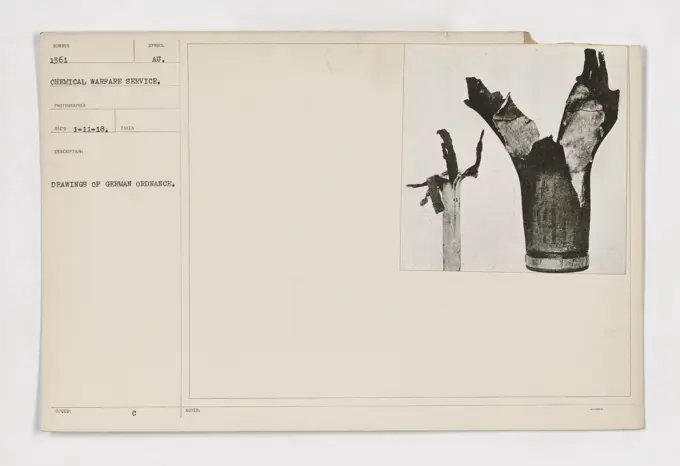
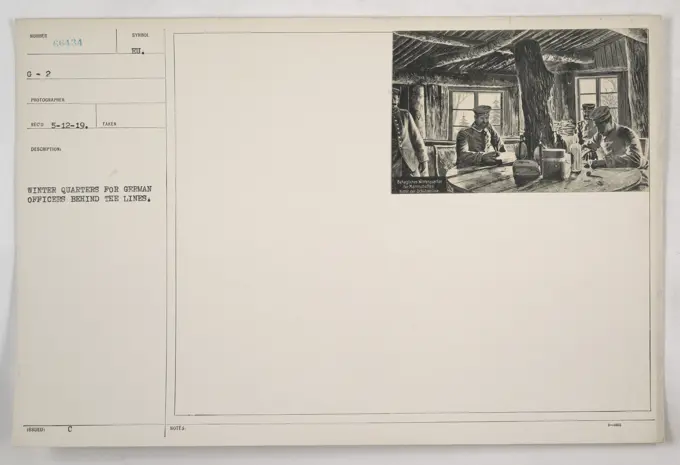
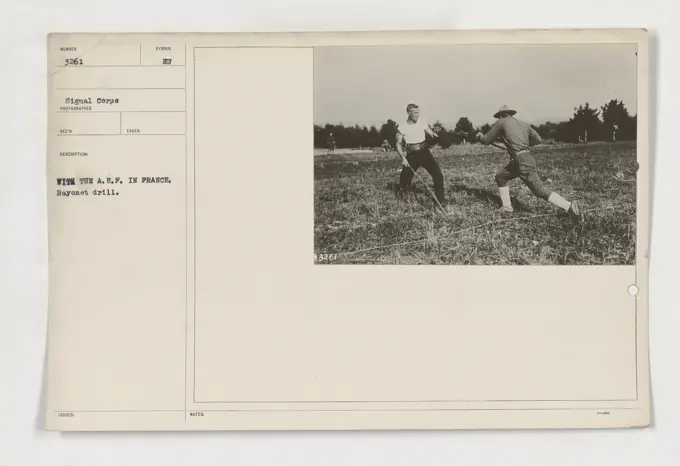
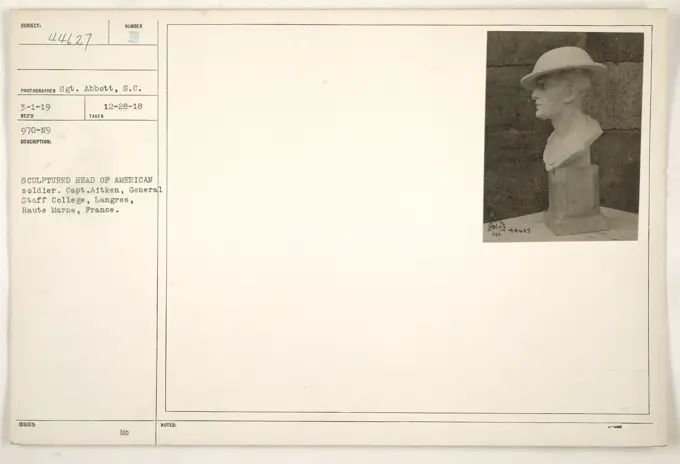
Soldiers loading and unloading supplies from a truck during World War One. Navy photographer captured this moment in 1919, but there is no official caption or identification provided by the Navy Department.Machine gunners conducting a maneuver during World War I. Lt. E. N. Jackson and Sig. R. C. are seen in the photograph. This photo was taken on March 19, 1918, and was issued by the School of Military Aeronautics at the University of California, Berkeley.Honorable Henry White, Member of the American Commission to Negotiate Peace, and his aide, 2nd Lieutenant R.E. Condon, Infantry, pictured at the Hotel Crillion in Paris, France. This photograph was taken on December 20, 1918, and was issued on February 19, 1921.Group of Polish troops visible during their swearing-in ceremony and review by General Haller, their commander. The event took place in Haussonville, Meurthe et Moselle, France, on October 6, 1918. The photograph was taken by Lt. E.R. Estep, S.C. This image is part of the American Military Activities during World War One collection.Drawing of German ordnance by the Chemical Warfare Service during World War I. The image combines symbols and descriptions to depict the weaponry used by the Germans in the war. A note mentions the presence of drawings for reference.A photograph showing the shell shelters at a Commander's Headquarters in Marne during World War One. The image, numbered 111-SC-7871, was taken by a French official photographer and received on September 18, 31901. It captures the practical military structures used for protection during the war.A photograph depicting a street barricade at Chateau Thierry during World War I. The image was drawn by Capt. J. Aylward and captured by a photographer. The description of the photo was received and issued by SYROOL. The image shows a street barricade, and additional information is noted as 257044.Wrecked house, used as the headquarters of the Division Quartermaster of the 42nd Division, at Deuvardee on July 28, 1918. The house was shelled by the Germans, forcing the Quartermaster to relocate on September 1, 1918. Taken by Cpl. P. G. Carnochan and received on September 12, 1918. A.E.F. censor passed the image."An American tank from the 26th Infantry Regiment, 2nd Brigade, 1st Division enters dense woods near Breteuil, France on May 11, 1918. This photograph was taken by Pvt. Longacre, S. C. and was issued with a note stating it is not for publication."Soldiers from the A.E.P. pose with Mr. and Mrs. Emile Loder, owners of Hotel L'Europe. Also pictured is Mrs. J. T. Anderson, known as "Ma Anderson," a mother figure to the soldiers, and Miss Ruth Laurenius, an American resident of Rome and Aix-les-Bains. The group is joined by the French lady, "Madame Lombard," and her daughter. Aix-les-Bains, France.The image shows the graves of Thomas Enright, Merle D. Hay, and James B. Gresham, who were the first three Americans killed in action during World War One. They were members of the 1st Division and their graves can be found near Bethelemont-les-Bauzemont, Meurthe et Moselle, France. This photograph was taken in 1918 and was part of Sumber's collection, with Captain P.D. Miller as the photographer. The description and notes indicate that it is for official use only.Workers pouring concrete to construct the foundations of the Power House, located at Aytre in France. This photograph was taken as part of the documentation of the activities of the 21st Grand Division Transportation Corps at Camp Pullman during World War One.Caption: Captain Amble of the 21st Grand Division Transportation Corps at Camp Pullman, France, winning a pot in a poker game. The photograph was taken on January 17, 1918, symbolizing the camaraderie among soldiers during World War I. (Note: The additional information about "82 for affight het ont" is illegible and requires further clarification.)Lieutenant W.J. Frost, a member of the Supply Section, poses for a photograph with officers from the Department of Military Aeronautics on October 7, 1918. Private A.J. Lubbe took the photo, and it is assigned the identification number 111-SC-21147.Sergeant Lucien Rode from the Signal Corps is seen visiting the ancient site at Carcassonne, France. American officers and French officials also visited the site. This photo was released by A.E.F. Censor and the date is unknown. Caption: 111-SC-22056 - Sgt. Lucien Rode at Carcassonne, France.45550 Sgt. McGarrigle of the Signal Corps captured this photograph on May 5, 1919. The image shows Lytle Forests located on the outskirts of Chattanooga, Tennessee. This scenic setting served as a training ground for American military activities during World War I.Winter quarters for German officers, Norder 0-2, 66434. Photo taken on 5-12-19, photographer: Reco. The image shows the symbolic representation of the winter quarters used by German officers behind the lines. Issued in accordance with Note Selairarter 3-4044.Soldiers participating in bayonet drill during World War One. This image, numbered 111-SC-3261, was taken by a Signal Corps photographer and shows American troops in France undergoing training. The photo is part of a collection showcasing American military activities during the war.Men from the 18th Infantry, 1st Division, are seen running across a road while Exermont, Ardennes, France, is under shell fire during World War I. This photograph was taken on October 7, 1918, by Sgt. Marshall and is numbered 27424 in the collection. It was passed by the A.E.F. Censor, although the specific date of issue is not provided.Image showing a view of the Suresnes section of the American Cemetery near Paris, France. The photograph was taken on November 30, 1918, by Pvt. Sopper and received on February 10, 1919.DEDICATION OF THE NATIONAL MEMORIAL AMPHITHEATER: Commander-In-Chief of the G.A.R., Dan M. Hall, presides over the Dedication Exercises at Arlington, Virginia. The photograph, taken on May 15, 1920, shows the grand ceremony marking the dedication of the National Amphitheater at Arlington National Cemetery.Sculpted head of an American soldier, Capt. Aitken, at General Staff College in Langres, Haute Marne, France. The photograph was taken by Sgt. Abbott on 3/1/19 and was issued on 12/28/18. It is part of the collection 94627.Cpl. Lubatty demonstrates the contrast between the gas masks used by the man and horse in this photograph. Unlike humans who breathe through their mouth, horses never breathe through theirs, which makes creating a gas mask for them simpler. It has been observed that horses can survive several hours during a gas attack without a mask, showing no ill effects. This image was captured in Chatel, Ardennes, France, by a photographer on October 27, 1918, and received on December 18, 1918. It was released by the A.E.P. Censor on December 23, 1918.Photograph depicting American soldiers sharing a meal in a wartime camp. The soldiers can be seen gathered around a table, eating and conversing. This image provides a glimpse into daily life and camaraderie among American military personnel during World War One.Quartermaster Bailing Section in the Victory Parade, New York, N.Y. During World War One. This photograph was taken by Protographelt Geo.H.Lyon, S.C. on May 3, 1919. The image captures a group of servicemen marching confidently through the crowd.A photo depicting a Belgian artillery battery in action in Belgium during World War One. The gun is hidden behind foliage, earthworks, and sandbags to camouflage it from enemy air scouts. This camouflage is necessary due to the enemy's reconnaissance activities. This photo is labeled as 1415 Belgian Official 8, taken and issued by the Belgian Army."First Division Parade at New York City, New York. Small army munition trucks seen at 38th Street and 5th Avenue. The photograph, captured by Sgt. Warner S.C. on September 10, 1919, showcases the presence of military vehicles during the parade. Additional notes: 63624 KNDX HATS."Abandoned enemy trench and dugout stoves in Rehon, near Logway, Meurthe et Mosselle, France. These stoves were left behind by the enemy and have been collected and issued in large quantities. Photograph taken by IT. WM. FOX.E.C. on October 19, 1918. Photo number 49311, received on December 3, 1918.Caption: Sergeant W.9. Legge, S.C., stands next to a captured German Mercedes ambulance taken at Gre recourt, France, on September 27, 1918. The photograph was taken in Tours, Indre et Loire, France on January 20, 1919. This technical image is for official use only.American soldiers in Italy during World War I. They are seen standing in formation, wearing their military uniforms and helmets. The soldiers appear to be engaged in a conversation or receiving instructions from their superior. The photograph captures the determination and solidarity of the troops during the war.Common grave of German soldiers at Markirch, Alsace during World War One. The location served as a burial ground for numerous fallen soldiers from Germany. This photograph was taken and issued on an unspecified date, and is associated with the symbol E.U. No further details or notes are available.Soldiers participating in the Victory Parade in New York City, NY. A photograph of soldiers demonstrating the use of an X-Ray apparatus on May 3, 1919, taken by photographer Geo. H. Lyon. Caption includes notes and reference number "47812 HE."Douglas A-20 Havocs of the 12th Air force dropped supplies by parachute to stealthy French Commandos who preceded the main waves of amphibious fighters who landed in Southern France on D-Day. The technique of dropping suppliesSoldier posing with an issued symbol of the American manufacturing ordnance. The photo was received in 1919 and is part of the Photographs of American Military Activities collection from World War One.Students at Dartmouth College in Hanover, N.H. are being instructed in the use of the Lewis machine gun by British officers. This photo is part of the Photographs of American Military Activities during World War One collection, with the subject number 55211. It was taken on April 19, 1918 by photographer FEC0. The photo is labeled "For Official use only."LT. Jackson, an American military photographer, captured this image on December 13, 1918. It shows the SS George Washington arriving at Brest, Finistere, France during World War I. In the background, the battleship Pennsylvania can be seen. This photograph is numbered 8 and was officially issued by the military.Brig. Gen. J. G. Barnard 19th Century Mathew Brady, Quartermaster, and Other Civil War PhotographsMajor E. K. Goulter, a photographer for the Quartermaster Corps, took this photograph, with number 39121, on June 20, 1918. It shows a civilian stevedore battalion commanded by Capt. George Luberoff, also from the Q.M.C., on board the ship Momus, en route to St. Nazaire, France. This battalion was recruited from different parts of the United States to avoid disrupting the labor situation. The image was taken in a dangerous situation."Military personnel of the 316th F.S.Bn., 91st DIV. within close proximity to a shell hole, casually dining while observing an airplane flying above. The location is Bertrame Ferme, commonly referred to as Cote 290 near Aubreville, Meuse, France. The photograph was taken on September 24, 1918, at 1:15 P.M. Recorded by Sgt. 1st Cl. J.T. Seabrook, S.C. and photographed by Reconov on November 12, 1918. The photo was approved by the A.E.F. Censor and issued with the official number 25640 in the W.F.C. Malay collection. No other details or dates were provided."Sergeant Lucien Rode of the Signal Corps is shown in this photograph. The image captures a typical ox team in S.O.S. Carcassonne, France during World War One. The photo was taken by a photographer whose name is mentioned as "SUBIECT," and it was received on October 15, 1918. The photo was released by A.E.P. Censor, and the specific date of the photo is unknown. The photo is marked with the numbers 20-22065 and 3-ISQUED: M.Soldiers participating in a military parade during World War I in 1919. The photograph was taken by the Signal Corps photographers and depicts the soldiers marching in synchronized formation. The image is a duplicate of photograph 22806-2, issued under the symbol E C.A Victory Parade taking place in New York City recognizing the Army Nurse Corps during World War One. The photograph, taken by Lt. Geo.H.Lyon, captures the corps marching Proudly on May 3, 1919. This particular image has been classified as Beachtu 9847810 HEARM 2:1 Cana Biscuit.-(50 words exact)Soldiers of the American Signal Corps, photographed by Signal Corps photographer, Reed, on December 9, 1918. The image depicts 1st Lieutenant Carl W. Pratt, a member of the Army Signal Corps, showing and explaining symbols to his fellow soldiers. This photograph has the identification number 29075 and is accompanied by detailed notes.A soldier is seen installing an electric light into an old French house in Lucey, Meurthe et Moselle, France. The house, with a tablet over the door reading "Ste. Anne, l'an du Jubilé 1804," displays signs of being a historical building. The image was taken on August 21, 1918, by Lt. Cloud and recorded under subject code 38545. The photograph is a part of the collection "Photographs of American Military Activities during World War I," with the reference number 111-SC-38545.American troops using a former Alsatian home destroyed by German shell fire as a shelter in the Gildwiller sector of Alsace, Germany. The photograph was taken on September 21, 1918 by Cpl. A. Hanson, S.C., and passed by the A.E.F. censor. The 126th Infantry of the 32nd Division was stationed in this area.Turkish prisoners of war in Italy during World War One. The photograph shows a group of prisoners being guarded by American soldiers. This image depicts the interactions between enemy combatants during the war. The prisoners are identified as Turks, emphasizing the international scope of the conflict.Aerial view of Vaux, France during World War One. The photograph, numbered 111-SC-23967, was taken on October 31, 1918 by a D.M.A. photographer. It was censored and released by the M.I.D. censor on the same day for official use only.A field bakery operated by the U.S. Quartermaster Corps during World War One. In the photograph, there is a partial view of the bakery. The image is labeled as 111-SC-3226 and was taken at Firel Banery, U.S. The description provided is "partial view of SUBJECT: QUARTERMASTER CORPS, U.S.A. 3226." The photograph was received with the reference number W229 and is part of the American Military Activities collection.Crowd outside of Palace grounds in Brussels, Belgium, as King and Queen return for the first time in four years since the German occupation. Photograph taken by Photographer J.T. Seabrook on November 22, 1918.A formation of 45 planes, known as the "flying wedge," captured flying over Love Field in Dallas, Texas, in December 1918. The photograph was taken by a DMA photographer assigned to document American military activities during World War I.Soldiers from the 18th Sustainment Brigade (G-2) are seen in Noyon, France during World War One. The photo, taken by photographer RECO on 5-12-19, shows soldiers wearing the symbol "EU" on their helmets. Mayon is written on a note attached to the photograph.Y.M.C.A. canteen at Camp de Mailly in France, serving Army Heavy and Railroad Artillery School. Soldiers can be seen enjoying food and refreshments provided by the Y.M.C.A. - December 6, 1917.The 77th Division parades up Fifth Avenue in New York City on May 15, 1919. The image shows the 304th Field Artillery Band leading the procession. The photographer is Sgt. Combs from South Carolina. The picture was taken on May 6, 1919. Notes indicate that it was issued for publication with the Ministry of Defense.A photograph taken at the flying field in Issoudon during World War I. The image captures a group of American military personnel gathered around a drawing by official American artist Captain Ernest Peixotto. The purpose of the gathering and the significance of the drawing are not specified.Soldiers and civilians participating in a welcome home parade in Washington, D.C. A balloon is seen flying over the Capitol. Photo taken on March 4, 1919, by Sgt.J.L.McGarrigle. The picture was censored and released on March 10, 1919.S.A.T.C. recruits are being inducted into service at Macon College in Randolph, VA. This photograph was taken by photographer 59121 and received on April 27, 1919. The S.A.T.C. stands for Students' Army Training Corps. This image captures the official induction ceremony.Rear view of an Colt machine gun at Love Field, Dallas, Texas. Image received from the D.M.A. Photographer on December 6, 1918. The photograph is labeled "Not for Publication" and is meant for official use only. Notes indicate it was taken on August 4, 1918.Soldiers in uniform participating in a military training exercise during World War I."Image depicting the Civil War Memorial at Camp Lee, Virginia in June 1918. The memorial symbolizes the soldiers who went into action on July 30, 1864, during the Civil War. A total of 780 men answered the roll call. Sadly, 236 soldiers lost their lives, while 494, including officers, were injured in the battle."Colored American soldiers' living quarters at Camp Ancona, located in Bassens, Gironde, France. This photograph was taken on January 18, 1919, by S.C. Morris, and it is part of the SIL!ww1/war SUBJECT 5x8x5 series. The image, labeled 5384-1-9, showcases the housing arrangements for African-American troops during World War One.This photograph depicts soldiers of the telephone, who bravely maintained communication lines amidst shell and machine gun fire during World War One. Often positioned ahead of tanks and infantry, they served as the "eyes" and "ears" of the advancing columns, ensuring constant contact between Regimental Headquarters and the troops.terproof copy. American soldier Pvt. Berhens, S. C., as drawn by Captain George Harding, during the opening of the Verdun offensive. The image shows intense American gunfire early in the morning. This photograph is a reproduction of the original drawing, identified as 111-SC-37894.Soldiers and civilians view a display of French war posters. The posters, issued by the French government, promote the Semprunt Defense Nationale, urging people to contribute towards the war effort to hasten victory and achieve peace. Image number: 111-SC-7177.U.S. Naval Railway Battery in St. Nazaire, France during World War One. The image shows a slide being placed into a rifle. Caption submitted for A.E.F censorship, but no date given. (Photograph source: 111-SC-29386, Photographer H. McLaughlin, S.C.)Y.M.C.A. quarters at Bathelemont, Meurthe et Moselle, France. This photograph, taken by Capt. P.D. Miller in 1918, shows the Y.M.C.A. building in the town of Bathelemont. This facility was used by military personnel during World War One. The image was received as part of a collection of photographs of American Military Activities from that time period.A captive balloon ascending in the sky during World War One. This photograph showcases an American military activity in aviation, where balloons were used for reconnaissance purposes. The image depicts the moment of the balloon's ascent, captured and documented by the photographer E. Captior.Captain Thomas H. McHatton of the A.S.A.P. is depicted in this photograph. The image carries the signal corps number 29047 and was taken on December 9, 1918. The photograph features Captain McHatton posing with a military symbol, identified as the 3m symbol."Photo shows Piest Aero Squadron, number 64296, stationed at Richecourt, France in 1918. The photograph was taken on June 26, 1919 and depicts reconnaissance activities in progress. The symbol on the photograph is C RU SOTES."Pvt. Clyde I Eddy pictured in front of the Dental Infirmary at the 1st U.S. Depot Division in St. Aignan, Loir et Cher, France. The photograph was taken on an unknown date and passed by the A.E.F. censor. Pvt. Eddy is seen in his military uniform.Caption: Cpl. R. H. Ingleston, S.C. at the Telephone and Telegraph Office in 2nd Army Corps Headquarters at Toul, Meurthe et Moselle, France. This photograph was taken on December 2, 1918 by an unidentified photographer. It was issued and passed by the A.E.P. censor, but the exact date is unknown.American engineer wearing a captured German leather helmet taken from a prisoner in the salient of St. Mihiel. The photo was taken on October 5, 1918, during the American military operation to capture the St. Mihiel Salient. It was passed by the A.E.P. censor and assigned the identification number 20913.111-SC-31066: A photograph taken by Captain J. Andre Smith on March 14, 1919, during World War I. The image depicts Hill 204, located near Chateau-Thierry, with the view facing northeast. The hilltop is barren, covered in sand and splintered trees. The photograph is part of a series of official American military artwork depicting military activities during the war.Soldiers from the Chemical Warfare Service conducting drills using a sled during World War One. They are seen working around the corner of a traverse as part of their training. The photograph was taken by photographer Reed. (Photo ID: 111-SC-1197)Soldiers and military vehicles in a liberated village in Lorraine, titled Jouy-aux-Arches, on the road to Metz. The village is decorated with flags and other patriotic imagery. The photograph was taken in 1918 by an official American artist, Captain J. Andre Smith.Caption: "A drawing by Capt. J. Andre Smith showcases the aftermath of the destruction caused by World War One. Ruined houses stand in stark contrast against the backdrop of Dieulourd, a somber reminder of the devastating impact of war. The image was censored and released by the A.E.F. Censor."Civil War veteran Myrick Coil of Co. I, 43rd Indiana Infantry Regiment, and unidentified veterans of Grand Army of the Republic Post #352, Potomac, Illinois. Liljenquist Family Collection of Civil War Photographs , pp/liljvet. Grand Army of the Republic, People, Illinois, Potomac, 1900-1910, United States, Army, People, 1900-1910, Veterans, Union, 1900-1910, United States, History, Civil War, 1861-1865, Veterans, Union.Adjudanten van Generaalis. 1910. Vinkhuijzen, Hendrik Jacobus. still image. Illustrations. General Research Division. Military uniforms , History, Netherlands, Military uniforms , NetherlandsSt. Jean d'Acre, from the land. Roberts, David (1796-1864). Croly, George (1780-1860). Prints, Illustrations. 1842 - 1849. Dorot Jewish Division. Middle East , Description and travel, Acre (Israel), Beaches , Israel , Acre, Clothing & dress , Israel , Acre, Military training , Israel , AcreFrench troops enter the city of Sedan on the morning of November 17, 1918. Caption based on an official drawing by American artist Capt. J. Andre Smith. This image is from the collection of photographs capturing American military activities during World War One.Workers constructing a track in Aytre, France at Camp Pullman during World War One. This image was captured by the photographer on November 4, 1918 and is numbered 57975 S.C. The photo was issued by the 21st Grand Division Transportation Corps and is marked with the symbol "E".Sailors in training at Great Lakes Naval Training Station in Great Lakes, Illinois spelling out "Vive la France" as a message of support during World War One. Photograph taken in 1918.Woman Pleading for a Soldier's Life, Victor Semon Pérard, American, 1870-1957, Ink on paper, Trial proof for illustration. In the foreground, a woman is pleading for the life of a solider, tied to a tree int he background. Men wearing turbans point rifles at the solider, preparing for an execution. An encampment is in the background., USA, ca. 1905, figures, Print, PrintGroup of Soldiers 19th Century Mathew Brady, Quartermaster, and Other Civil War PhotographsKeep it Dark - Careless Talk Costs Lives. Country: England Artist: Maurice Bennett Printed By: Multi Machine Plates, Ltd.. 1942 - 1945.  Office for Emergency Management. Office of War Information. Domestic Operations Branch. Bureau of Special Services. 3/9/1943-9/15/1945. World War II Foreign Posters