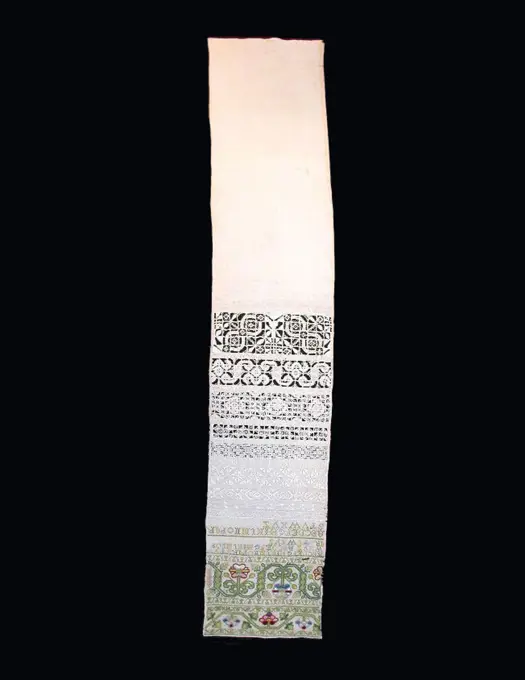
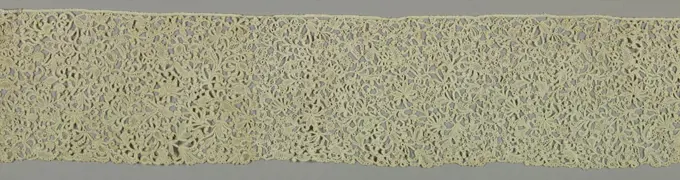
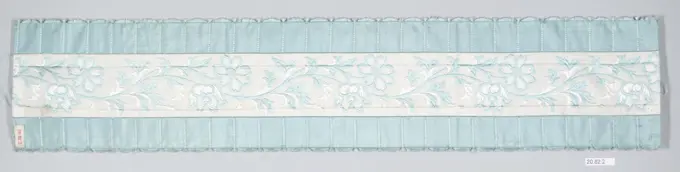
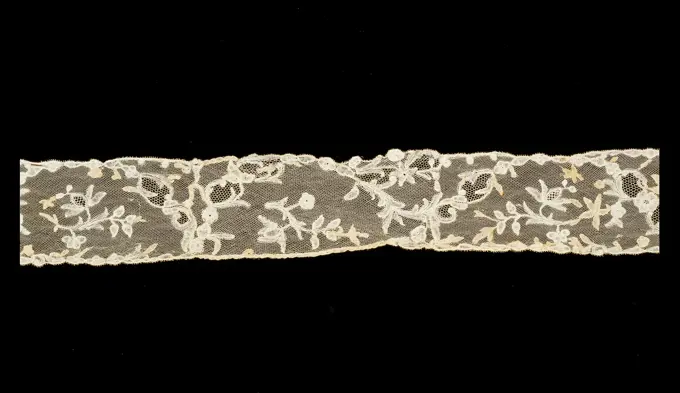
17th to 18th Century Lace Fragments

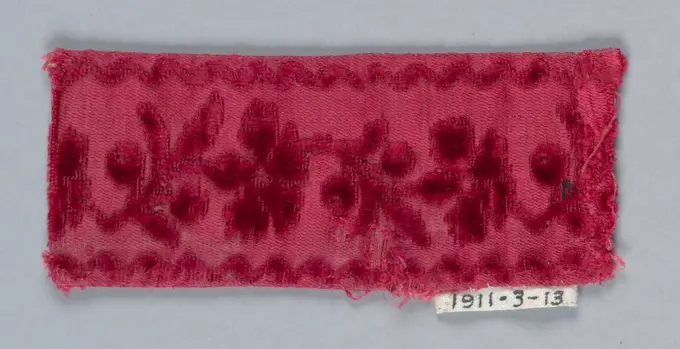
Fragments of vintage lace pieces from various periods, showcasing elaborate patterns and textures that reflect traditional textile craftsmanship.

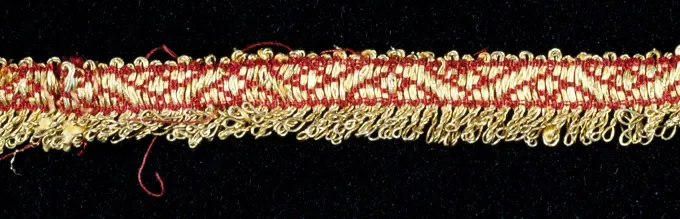
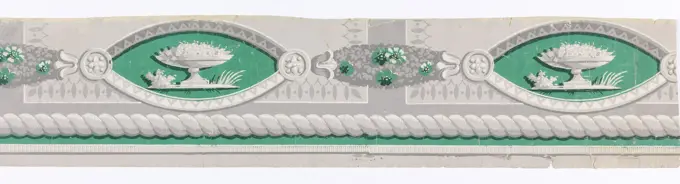
Fringe, Medium: silk Technique: soumak weave, Red fringe with a soumak heading and picots with looped and twisted skirt threads., Spain, 16th century, trimmings, Fringe
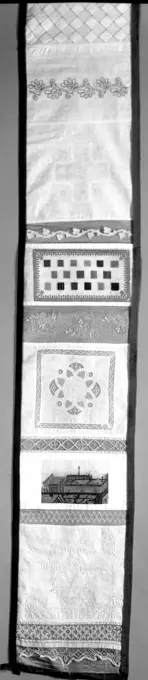
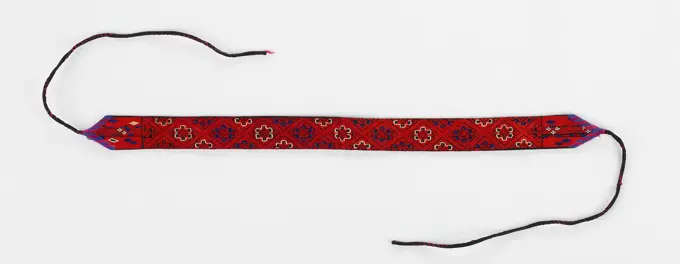
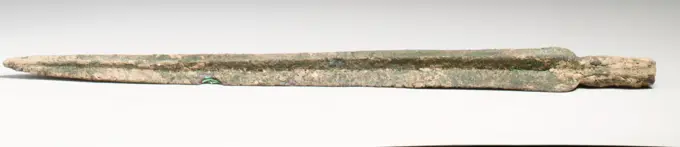
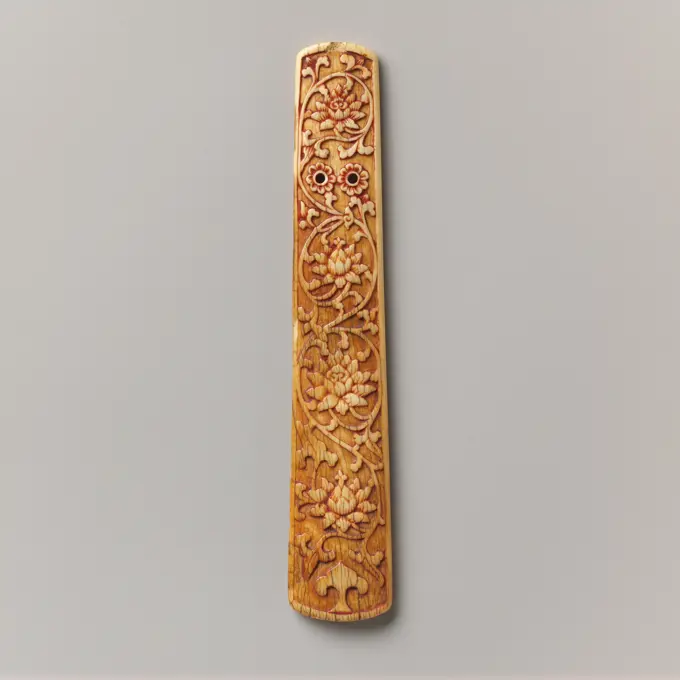
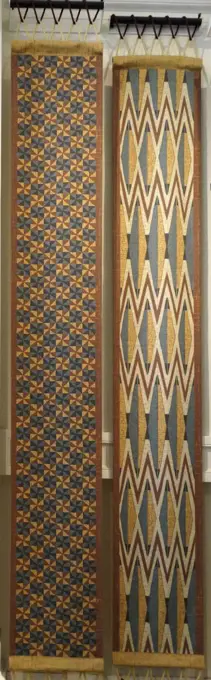
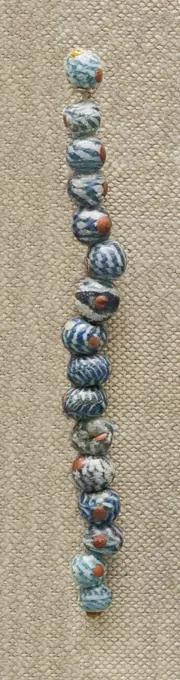
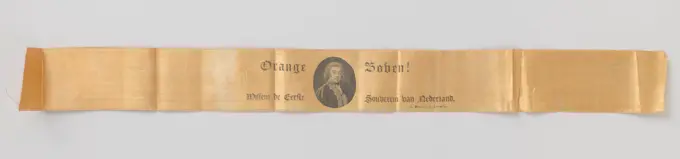
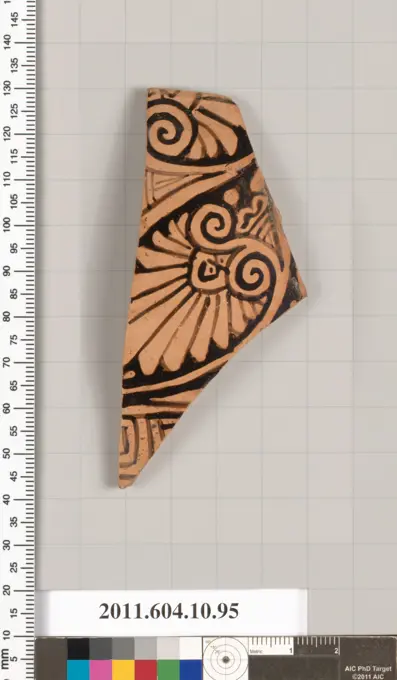
Man's Waist Sash (Patka). India, probably Lucknow, early 19th century. Costumes; Accessories. Cotton plain weave with metallic thread embroidery, beetle-wing sequins, silk braid, with metallic-thread fringeTrimming (France); silkSampler Made 1887 Belgium. Forty-two bands of cotton and linen, plain weaves with cut and drawn work and embroidered with cotton, linen, and silk; and of cotton and linen, crochet, knitting, lacis, and lace; backed with cotton, warp-float faced 4 1 satin weave; edged with silk, plain weave . Maggie CurtainHeadband, 19 3/4 x 1 1/4 in. (50.17 x 3.18 cm), Cotton, ChinaTrimming (France); silkBronze spearhead 12th century B.C. Cypriot This spearhead is datable to the time of the Trojan War. It comes from Cyprus, which was well known to Homer as the island of Aphrodite and as one of the places where the Greek heroes stopped on their way home from Troy.. Bronze spearhead 244186Fragment, Medium: linen Technique: bobbin lace (Lille-style with heavy outlining thread), Fragment of Lille type bobbin lace., 19th century, lace, FragmentFringe 18th century Italian or Spanish. Fringe 213706Sampler Made 1688 England. Linen, plain weave; with bands of cut and drawn thread work in back, buttonhole, darning, double hem, interlocking lace, overcast, and needle lace filling stitches; bands of linen, needle lace; and bands embroidered with silk in Algerian eye, Antwerp edge, back, cross, double hem, double running, long-armed cross, two-sided Italian cross, satin, squared ground, and a variety of buttonhole stitches . Mercy MackettNeedlepoint (Burano Point) Lace Edging, 18th century. Italy, Burano, 18th century. Lace, needlepoint: linen; average: 4.5 x 33 cm (1 3/4 x 13 in.).Armlet 19th century. Armlet. 19th century. SIlver. Attributed to North Africa. JewelryFringe early 18th century Spanish. Fringe 224869Border Made 1650-1775 Milan. Linen, bobbin part lace; edged with bobbin straight lace .Piece 17th century Japan. Piece 71417Top view of the marble leaf of a consolet table, anonymous, c. 1750 drawing  France graphite (mineral). inkFringe (Spain); silkBorder, Medium: linen Technique: Brussels style bobbin lace, All over floral pattern., Belgium, 19th century, lace, BorderBrown featherPiece 18th-19th century Japan. Piece 67410Sampler 19th century German. Sampler. German. 19th century. Wool, knitted lace. Textiles-LacesPair of pilaster panels 18th century French. Pair of pilaster panels. French. 18th century. Wood, carved and painted green. WoodworkFurnishing damask early 18th century British, London, Spitalfields or Dutch, Amsterdam. Furnishing damask 236194Fob ca. 1800 German. Fob 102448Reproduction of: Rectangular band with climbing plant with flower buds ..Ribbon early 19th century possibly French. Ribbon 220659Fragment of a Band (1 of 2), late 1000s. Italy, Sicily, end of 11th century. Tablet weave; silk and gold metal thread; overall: 34.3 x 3.5 cm (13 1/2 x 1 3/8 in.).Belt, 20th century, 33 x 3 1/2 in. (83.82 x 8.89 cm) (without braids or ties), Wool, Bolivia, 20th centuryTextile (Japan); cottonRibbon 18th century French. Ribbon. French. 18th century. Textiles-TrimmingsBelt hook 5th-3rd century B.C. China. Belt hook 49445Border, Block-printed paper, Band of blue leaves with black stripes, white highlights above a narrower band of chevrons., possibly France, possibly USA, ca. 1800, Wallcoverings, BorderChristmas greeting cards.Five pink flowers with foliated tendrils last quarter 19th century Morris & Company William Morriss Arts and Crafts movement prized needlework as a medium worked by hand by dedicated practitioners, in a direct riposte to the anonymous industrialization of other, increasingly mass-produced textiles. For more than a decade, the embroidery workshop of Morris & Co. was run by William Morriss daughter, May. She supervised a team of professional embroiderers who specialized in darned needlework like this, producing a supply of elegantly stylized textile friezes for use as borders and valences.. Five pink flowers with foliated tendrils. British. last quarter 19th century. Linen embroidered with silk, in non-original frame. Textiles-EmbroideredCap streamers, Medium: linen Technique: bobbin lace, Brussels style, Brussels-style lace in a design that shows asymmetric volutes placed intervals terminating in complex floral sprays., Belgium, mid-18th century, lace, Cap streamersBand (from Sleeves of Woman's Robe) Made 1875-1900 China. .Linguist Staff 19th Century. Ghana. This would have been carried by high-ranking officials within the courts of Akan chiefs in an area of West Africa (The Gold Cost)Lappet, c. 1750, 49 1/8 x 3 3/8 in. (124.78 x 8.57 cm), Linen; bobbin lace, Belgium, 18th centuryMummy Wrapping with Spells and Vignettes from the Book of the Dead. UnknownMatrasomhang, Anonymous, 1720 - 1740 Yellow silk mattressomhang of a bed garnish embroidered with peacocks, flowers, butterflies, horns of abundance in multicolored silk, omboard and decorated with blue passion, lined with coarse linen. Intended for the front of the bed. Canton silk. linen (material) Yellow silk mattressomhang of a bed garnish embroidered with peacocks, flowers, butterflies, horns of abundance in multicolored silk, omboard and decorated with blue passion, lined with coarse linen. Intended for the front of the bed. Canton silk. linen (material)Trimming (France); silk, metallic threadBorder, Block-printed on handmade paper, Rounded architectural arches alternating with three vertically stacked bellflowers, this placed between top and bottom numerous stripes. Printed in three shades of green on gray ground., H#216, France, 1800-1830, Wallcoverings, BorderPlate Ceramic Horend with a chimney from the house of Dentz van Schaick, c. 1900 - c. 1905 Signed: inv: Lioncachet. The plate belongs to a chimney that is part of a paneling for the house of Mr Th.G. Dentz van Schaick on Frederiksplein in Amsterdam 50-52. The Hague earthenware Signed: inv: Lioncachet. The plate belongs to a chimney that is part of a paneling for the house of Mr Th.G. Dentz van Schaick on Frederiksplein in Amsterdam 50-52. The Hague earthenwareFragment (Border) Made 100 BCE-200 CE Peru. . NazcaTextile Fragment 17th-18th century. Textile Fragment. 17th-18th century. silk. Made in Iran. TextilesSash, 37 3/4 × 3 13/16 in. (95.89 × 9.68 cm) (approx.)40 × 8 × 1 1/4 in. (101.6 × 20.32 × 3.18 cm) (outer frame), Beads, wool, United StatesFringe early 19th century British. Fringe 225102Textile, Medium: silk Technique: chenille embroidery on satin weave, Design of alternating pink flower and green leaf worked in chenille on a yellow ground., France, late 18th century, embroidery & stitching, TextileBorder, Medium: linen Technique: needle lace, Narrow border of points in two sizes, alternating. Fine, flat needle lace technique., Italy, late 16th century, lace, BorderEcclesiastical Stole, 88 1/2 x 4 1/2 in. (224.79 x 11.43 cm), Silk, metallic threads; tapestry weave, SyriaTrimming (France); silkPiece 18th century French. Piece 214032Vier leere Vintage-Blechschilder auf weißem Hintergrund Four empty vintage tin signs on a white background Copyright: xZoonar.com/BorisxZerwannx 16203440Wooden pencilInsertion Made 1875-1900 England. Linen, needle lace .Border, Block-printed, Narrow border, printed two across, each a mirror image of the other. Cabled fluting, with acanthus boss at regular intervals., France, 1875, Wallcoverings, BorderFringe, Medium: silk Technique: woven, Fringe with a red and blue checkerboard heading. Skirt threads are red., Italy, 17th century, trimmings, FringeTrimming, Medium: silk Technique: woven, Red, green, blue, purple and yellow trimming fragment in a design of butterflies placed alternately up and down above a narrow band of broken lines. One picot edge., France, 19th century, trimmings, TrimmingTrimming, Medium: silk Technique: woven, Trimming fragment in a design of red and yellow chevrons between red borders and on a pale blue ground., France, 19th century, trimmings, TrimmingSection of a Clapper (Paiban) early 15th century China In continuous use since the Tang dynasty, the paiban usually comprises two to six slabs of wood strung together at one end with a cord. It is held vertically and clapped to keep time. Here, a beautifully decorated single length of ivory preserves traces of its original red pigment. Red-colored ivory clappers are known in literature of the Northern Song dynasty (11th century).. Section of a Clapper (Paiban). China. early 15th century. Ivory. Ming dynasty (1368-1644). IvoriesOttoman Turkish art with geometric patterns in viewReplica Ancient Egyptian Mat work hangings. Copied from woven mats made of reeds; they were in use as wall decorations in official dwellings and official buildings as well as tombs throughout ancient Egypt. Recreated in 2011Stole, Medium: silk ribbons, glass beads, metal thread, and paillettes. Technique: embroidered, Ribbon of red silk with narrow borders in Persian cone design with ornaments of rosettes and, at either end, flowering stems, cross border and fringe worked in metal threads, foil, and paillettes. B similar to A, except for ribbon which is plain., Italy, 19th century, costume & accessories, StoleImperial girdle 1802-19 China. Imperial girdle 44028Old vintage typewriter .The view from the top. Old vintage typewriter .The view from the top Copyright: xZoonar.com/DmitriyxPraizelx 21334238NecklaceArrowhead ca. 3100-2900 B.C. Early Dynastic Period. Arrowhead. ca. 3100-2900 B.C.. Ivory. Early Dynastic Period. From Egypt, Northern Upper Egypt, Abydos, Umm el-Qaab, Tomb of Djer, Egypt Exploration Fund excavations. Dynasty 1Trimming, Fringe, Italy, 18th century, woven textiles, TrimmingString of 16 Beads after 100 Roman Period or later. String of 16 Beads. after 100. Glass. Roman Period or later. From EgyptSpine. 1910 - 1889. Boileau Despréaux, Nicolas (1636-1711). bindings (gathered matter components), Book covers. Spencer Collection. BookbindingTrimming (France); 1909-2-171Busk 1825-50 probably American. Busk 85362MoldingBand; embroidery using colored silk threads on plain weave linenVictor Hugo (1802-1885). Chinese decor from Juliette Drouet's house in Guernsey, West Wall. Green wooden record containing plates and dishes, composed of fourteen compartments (left side of the fireplace). Painted wood. 1857-1864. Paris, house of Victor Hugo. 78171-21 Asian art, decorative arts, green wood, Chinese cabinet, chinoiserie, compartment, decor, earthenware, painted, storage, Chinese living room, dishes, 19th XIX 19th 19th 19th 19th century, plate, dishCollar 1700-1941 American. Collar. American. 1700-1941. cottonYeah;  the beginning of the 20th century (1900-00-00-1910-00-00);Headband (wincha), 20th century, 18 x 2 3/16 in. (45.72 x 5.56 cm) (excluding tie fragment), Wool, beads, Bolivia, 20th centuryBlue-ground fragment with bamboo motif, 19th century, Unknown Ryukyuan, 84 × 7 3/8 in. (213.36 × 18.73 cm) (overall), Cloth: Japanese fiber banana (bashō); bingata (stencil resist with applied pigments), Japan, 19th centuryBelt -Watercolor gray ribbon. Hand painted banners isolated on white background.Sash, 19th century, 93 x 5 3/8 in. (236.22 x 13.65 cm), Wool, hemp, glass beads, United States, 18th-19th centuryFringe European 19th century View more. Fringe. European. 19th century. Silk. Textiles-TrimmingsYeah;  the beginning of the 20th century (1900-00-00-1910-00-00);Fringe, Medium: silk Technique: woven, Yellow fringe with a plain-woven heading and a skirt of course yellow threads., Spain, 17th century, trimmings, FringeTrim, fringe, 18th-19th century, 1/2 x 9 in. (1.27 x 22.86 cm), Passementerie, 18th-19th centuryWedgwood Manufacture. "Cup". Wedgwood fine earthenware. Paris, Museum of Romantic Life. CupSurround for Turkish Silk Cushion Cover, early 1600s. Iran, Safavid period, late 17th - 18th c.. Plain weave with inner warps and with continuous and discontinuous supplementary wefts bound in plain and 1/3 Z twill order; silk, silver-metal thread; overall: 140.3 x 21 cm (55 1/4 x 8 1/4 in.).Sash, Medium: silk, Italy, 19th century, woven textiles, SashTrimming, Medium: silk Technique: cut and uncut supplementary warp pile in a satin foundation (velvet), Green and yellow trimming fragment in a design of a serpentine stem with leaves., France, 19th century, trimmings, TrimmingAutomobil-Logo WartburgTrimming (France); silkField of five edge tiles with animals, anonymous, c. 1600 - c. 1630 Tile field of five rand tiles (1 x 5), each with a blue painted animal on a ground. Netherlands earthenware. tin glaze majolica Tile field of five rand tiles (1 x 5), each with a blue painted animal on a ground. Netherlands earthenware. tin glaze majolicaBorder (France); block-printed on handmade paper; 87.5 x 19.5 cm (34 7/16 x 7 11/16 in.)Spine. Brillat-Savarin (1755-1826). bindings (gathered matter components), Book covers. 1879. Spencer Collection. BookbindingHead piece, first quarter 20th century, 33 x 12 in. (83.82 x 30.48 cm) (width of tassels side-by-side), Cotton, silk, glass, metal, Syria, 20th centuryTrimming (Spain); silk; Overall: 28 x 4 cm (11 x 1 9/16 in.)Trimming (France); silkRibbon of Oranje Satijn, on which an oval portrait of Erfprins Willem Frederik (later King Willem I) in Stippelgravure in uniform of 'Garde de Corps', with caption:' Orange Boven! // Willem the first - Souverein of the Netherlands // E. Maashamp in Amsterdam ', Evert Maashamp, c. 1813 - c. 1814 Ribbon of Oranje Satijn, on which an oval portrait of Erf Prince Willem Frederik (later King Willem I) in uniform of 'Garde de Corps' in Stippelgravure. Presentation: De Jongere, Erfprins Willem Frederik (1772-1843). Breastpiece to the right, with slightly wavy medium length hair, combed up and out of the face. Uniform skirt with standing collar, black necker cloth, lighter covers with Brandebourgs, jabots that emerge from the closed jacket and a shoulder cover that runs into three cords (uniform of the Garde de Corps). The oval is printed in the width of the ribbon. Amsterdam whole: Silk. Portrait: Printing ink   Amsterdam. Brussels Ribbon of Oranje Satijn, on which an oval portrait of Erf PrinTerracotta fragment of a closed shape 4th century B.C. Etruscan Parts of two circumscribed palmettes; below, a meander. Terracotta fragment of a closed shape. Etruscan. 4th century B.C.. Terracotta; red-figure. Classical. VasesA sash from the funeral of Adam Mickiewicz in Krakow on July 4, 1890