18th Century Lace Strips

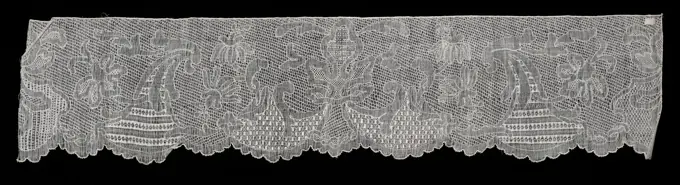
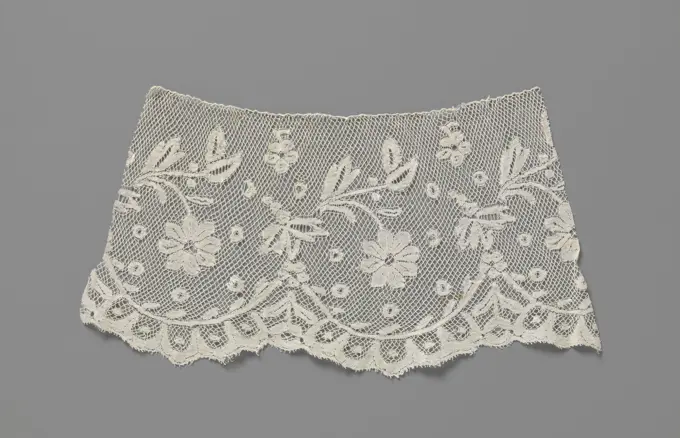
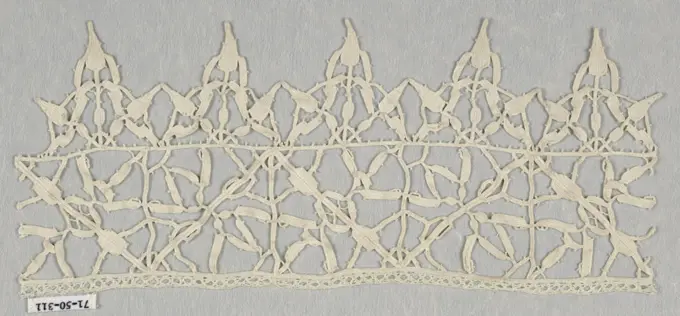
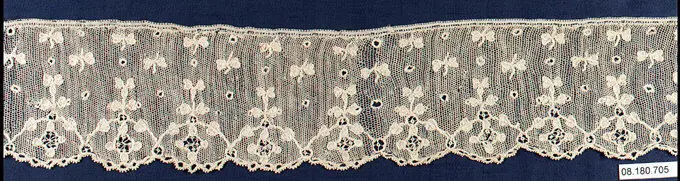
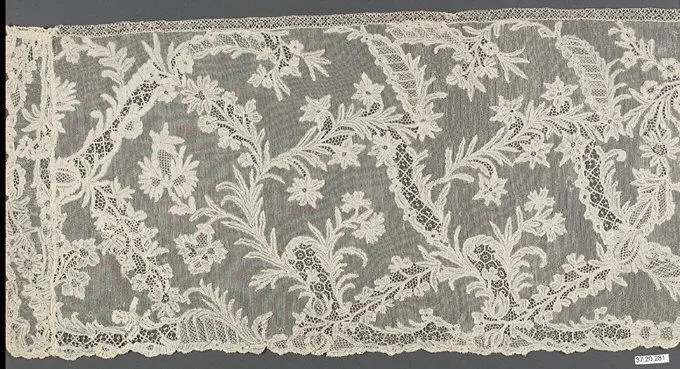
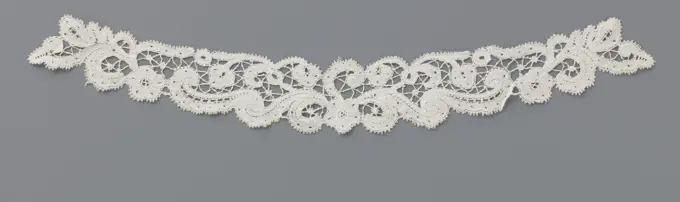
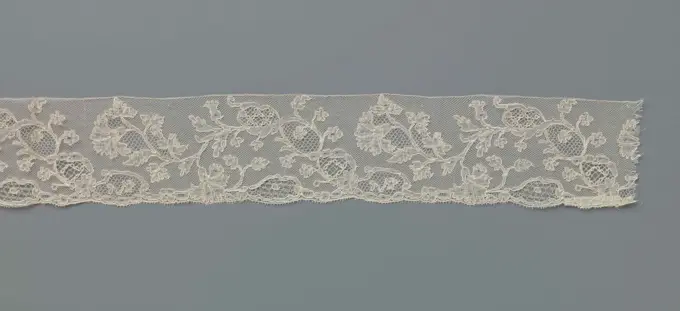
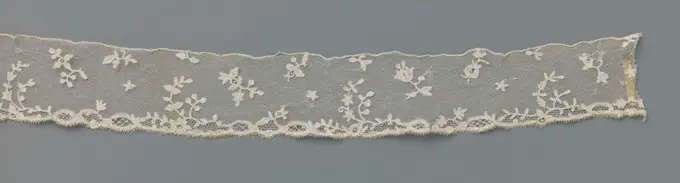
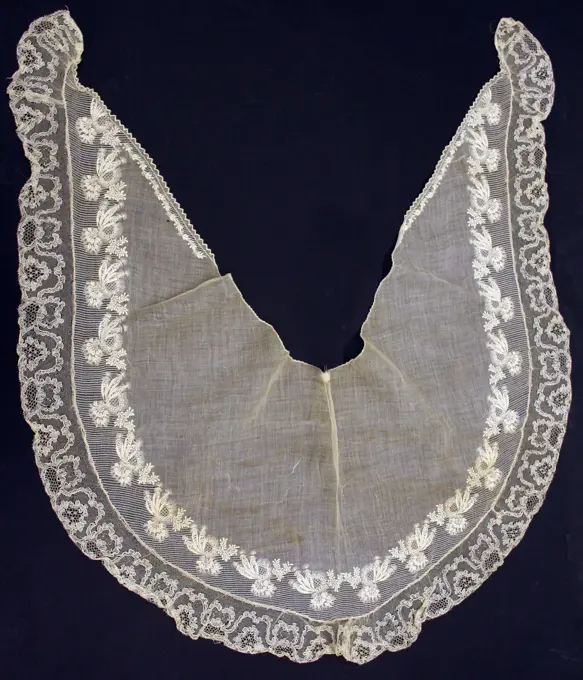
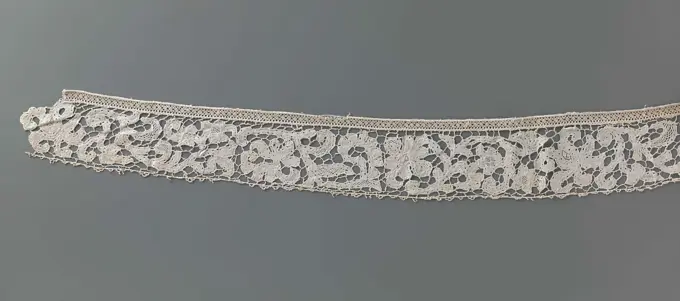
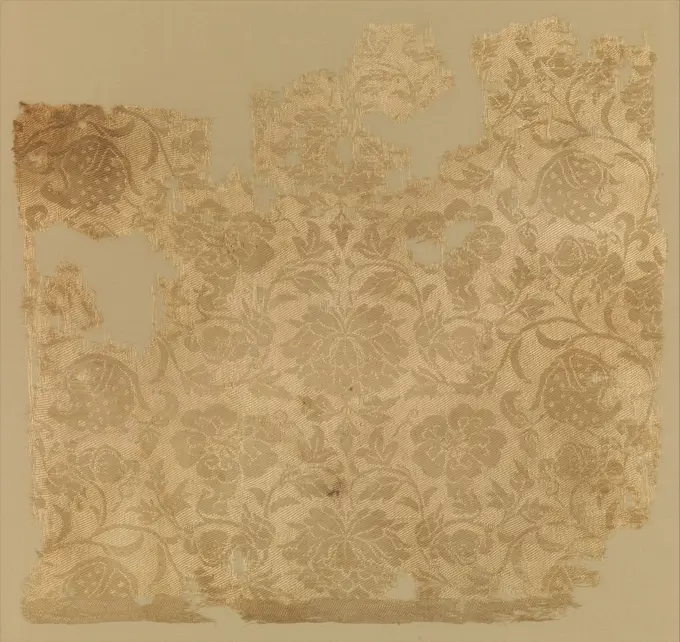
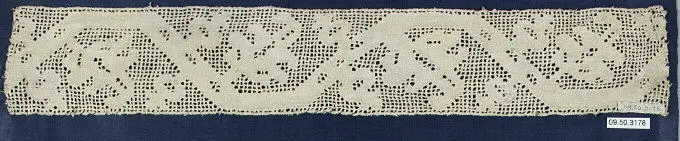
A collection of vintage lace strips featuring intricate floral and geometric patterns, showcasing skilled craftsmanship from the 18th century in various styles.

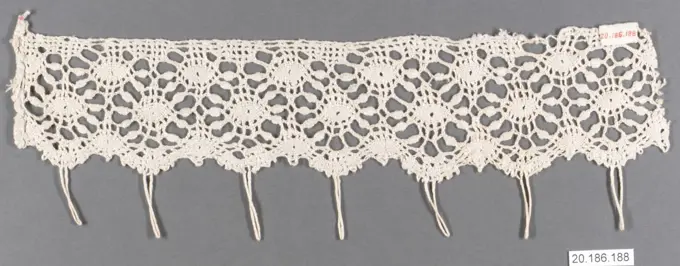
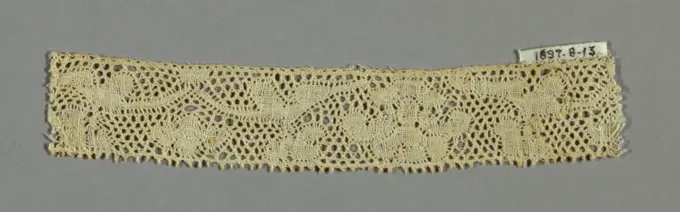
Piles of crocheted side with three -leaf flower under arch, anonymous, c. 1900 Piles of natural -colored Irish crocheted side. The repeating pattern consists of a flower with three round petals under an arc. The arcs are alternately directed with the open side to the bottom and top of the strip. A spray pattern of half moons is crocheted in the diamond -shaped soil with picots. Top and bottom of the strip are straight. Ireland cotton (textile) Piles of natural -colored Irish crocheted side. The repeating pattern consists of a flower with three round petals under an arc. The arcs are alternately directed with the open side to the bottom and top of the strip. A spray pattern of half moons is crocheted in the diamond -shaped soil with picots. Top and bottom of the strip are straight. Ireland cotton (textile)
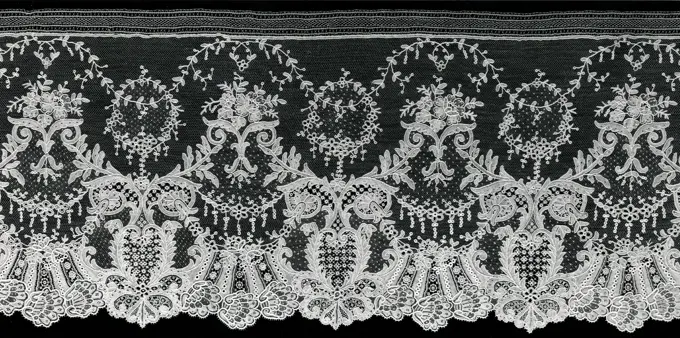
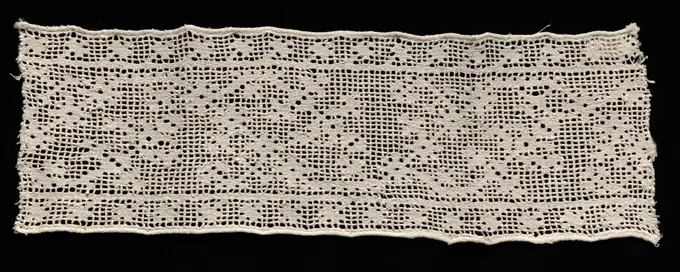
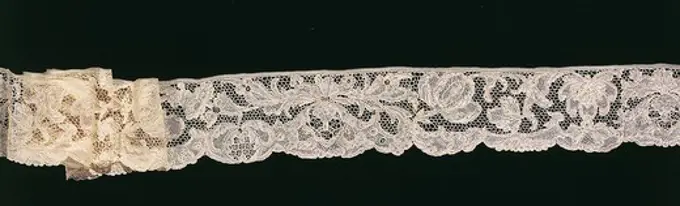
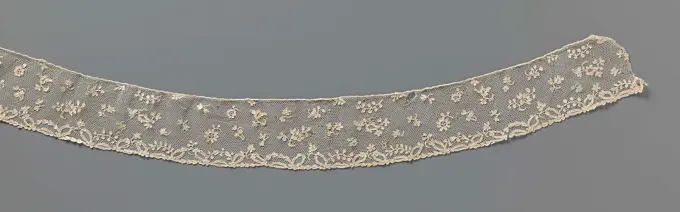
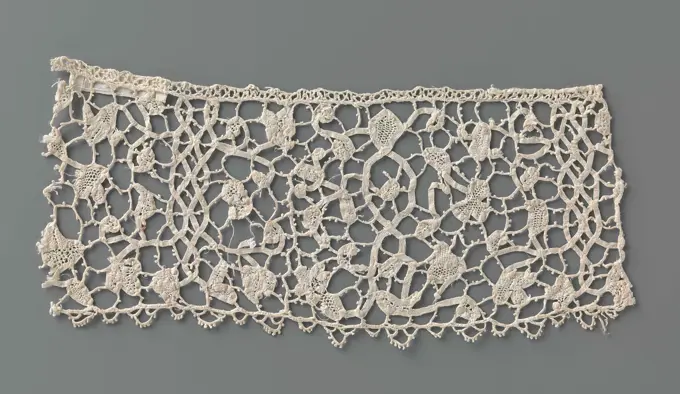
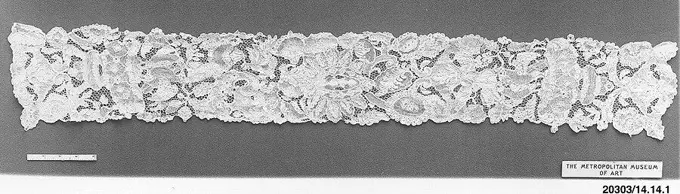
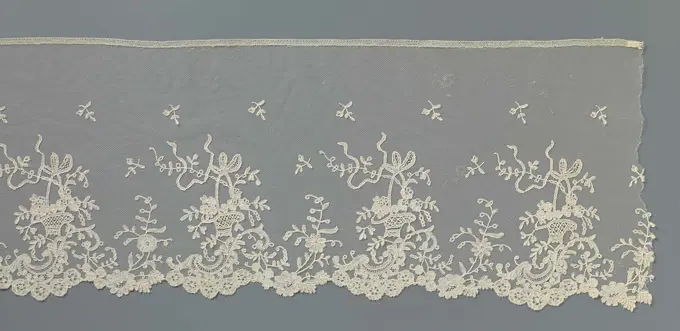
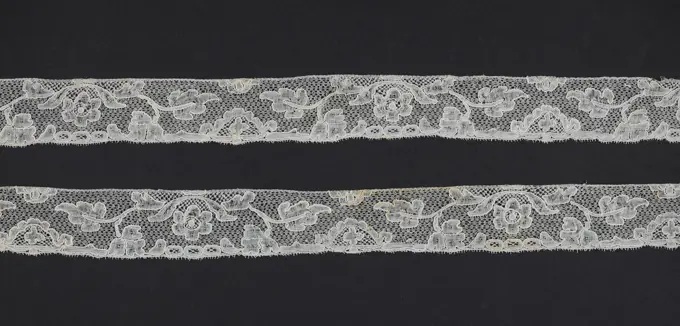
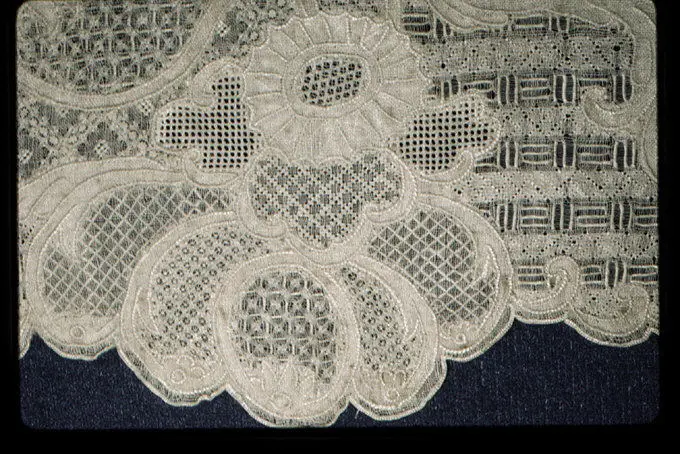
Strip of needle side with tulip and rose branch in medallions, anonymous, c. 1850 - c. 1860 Strip of natural-colored needle side: Alençon side. Pattern with a repetitive motif of medallions on a fine hexagonal Maas soil, which is littered with moesjes. In the medallions alternately a tulip and a rose branch. The outer edge of the medallions consists of multifaceted flowers and leaves that are getting larger downwards. Decorative land in a single flower and in the space formed by C-Voluten between the medallions. The underside is finished with a scrap edge that comes from the pattern. The top is trimmed with a border bobbin. Alençon linen (material) Alençon Lace Strip of natural-colored needle side: Alençon side. Pattern with a repetitive motif of medallions on a fine hexagonal Maas soil, which is littered with moesjes. In the medallions alternately a tulip and a rose branch. The outer edge of the medallions consists of multifaceted flowers and leaves that are getting larger downwards. Fragment, Medium: linen Technique: grid of withdrawn element with needle lace (reticella style), Wide panel with deep border of inverted triangles. Central panel in diamond-shaped design with tiny circles at intersections. Circle and spokes fill pointed border., Italy, 16th century, lace, FragmentNeedlepoint Lace Edging, 18th century. Belgium, Dinant , 18th century. Lace, needlepoint: linen; average: 20.4 x 90.9 cm (8 1/16 x 35 13/16 in.).Length of Lace. Belgium, Brussels, 1875-1900. Textiles; textile lengths. Cotton point de gaze needle laceStrip late 18th century Northern Hungarian. Strip 221380Strip bobbin with careless scales, anonymous, c. 1875 - c. 1899 Strip of natural-colored bobbin: Valenciennes side. Pattern with careless half -circular sculptures, above which a hanging daisy between 'sequins'. Belgium (possibly) linen (material) Bobbi Lace / Valenciennes Lace Strip of natural-colored bobbin: Valenciennes side. Pattern with careless half -circular sculptures, above which a hanging daisy between 'sequins'. Belgium (possibly) linen (material) Bobbi Lace / Valenciennes LaceInsertion 16th century Italian. Insertion 220858Strip crocheted side with reticella motifs, anonymous, c. 1890 - c. 1909 Strip of natural -colored Irish crocheted side. Pattern with squares, in which two different window motifs alternate. Lower edge. Sewn to a circular shape. Ierland (possibly) cotton (textile) Strip of natural -colored Irish crocheted side. Pattern with squares, in which two different window motifs alternate. Lower edge. Sewn to a circular shape. Ierland (possibly) cotton (textile)Fragment of a shirt 1750-99 Russian. Fragment of a shirt 175601Border, Medium: linen Technique: grid of laid cords with needle lace, reticella style; edge of punto in aria, Broder with pointed tabs and a very open zigzag lattice pattern., Italy or Spain, 16th-17th century, lace, BorderFragment, Medium: linen Technique: bobbin lace (Lille-style with heavy outlining thread), Fragment of Lille type bobbin lace, 19th century, lace, FragmentFragment 18th century Italian, Burano. Fragment 215054Strip of needle side with double vertical spirals, anonymous, c. 1775 - c. 1795 Strip of natural-colored needle side: Alençon side. Repetitive motif of double vertical spirals and a spreading motif of flowers and dots on a fine hexagonal Maas soil. A horizontal winding line with bows and circles runs through the pattern on about three -quarters of the top edge. The top is trimmed with a border bobbin. The lower edge is formed by a horizontal spiral with a picoted bow edge underneath. The space between the spiral and the bows is filled with a decorative land. unknown linen (material) Alençon Lace Strip of natural-colored needle side: Alençon side. Repetitive motif of double vertical spirals and a spreading motif of flowers and dots on a fine hexagonal Maas soil. A horizontal winding line with bows and circles runs through the pattern on about three -quarters of the top edge. The top is trimmed with a border bobbin. The lower edge is formed by a horizontal spiral with a picoted bow edge Fragment, Medium: linen Technique: needle lace, Fragment of Alençon lace has minute scattered flowers and leaves in the upper half while the lower portion has small arched compartments containing floral motifs., France, late 18th century, lace, FragmentEdging first half 16th century Italian, Genoa. Edging 220998Scarf end, Medium: cotton, linen Technique: machine made cotton net with linen embroidery, Design of flower filled horns of plenty with small flowers scattered over ground., USA, early 19th century, lace, Scarf endTab 18th century Flemish. Tab 214483Strip of gold side with a cross in V-shape, anonymous, c. 1900 - c. 1924  Strip bobbin, gold side. The symmetrical pattern consists of a wide-ranging V-shape with a cross crowned in the middle by an arc and above it on both sides two loose inverted arches. There are two arcs on the V-shape, with a configuartie of a few squares left and right. Along the scalloped underside there is a succession of Spitsovalsjes. The motifs are connected by a mesh soil, a lace-hole strike-grid. And they are largely made in shape, with contour lines that consist of three next to each other thicker threads. The top is straight. Volvic . bobbin laceFlounce Made 1860-1879 Belgium. Cotton, needle lace of a type known as Point de Gaze . August LefebureEmbroidered Handkerchief, 1800s. Italy, 19th century. Embroidery: linen; overall: 45.7 x 45.7 cm (18 x 18 in.).Strip 16th century Italian. Strip. Italian. 16th century. Needle lace. Textiles-LacesNeedlepoint (Drawnwork) Lace Band, 17th century. Italy, 17th century. Lace, needlepoint: linen; average: 9.3 x 28.6 cm (3 11/16 x 11 1/4 in.).Strip bobbin with window between bulbs, anonymous, c. 1900 - c. 1924  Strip of natural -colored bobbin: sling. The pattern consists of a window in a square field formed by a list of connected single bulbs. In every corner between the window and the bulbs there is a rush -in loss in Linnenlag. The window consists of a decorative soil that forms square blocks. The strip has been cut halfway at the subsequent field. This field was probably also diamond -shaped and is formed by a grid with an oval grater. The top of the strip is straight finished. Under the bulbs along the underside of the strip, an arc strap runs into netslag. The bows form the scrap edge. Russia linen (material) Bobbi lace / lace clothLaces, 18th century. Burano stitch (Punto Burano) and Venice stitch (Punto Venezia) needle lace hem.Strip of black machine side with dragonflies, anonymous, c. 1890 - c. 1899 Strip of black machine side: Machinal Chantilly side. The repeating pattern consists of two, almost straight -placed, flying dragonflies. The wings of the upper Libelle are more upset and those of the lower dragonfly sideways. A thin, split rose branch with a few flowers and leaves originates at the bottom of the strip on a wavy line, which consists of a succession of rose branches. There is a curved short decorative band with a square grid under each wave top. The motifs are provided with contour threads and are connected by a machine tuler floor, which is littered with mosies. As a decorative land, a machine rose soil has been used in the curved decorative band and in the flower hearts. The curved decorative belt forms the Schulpenrand, which is finished with picots under the tops of the continuous wavy rose branches. The top of the strip is cut straight and not finished. Calais cotton (textile) Strip of blackPair of Lappets (Joined) Made 1880-1889 France. Linen, needle lace of a type known as Point d'Argentan with a whipped mesh ground .Border (Italy); linenBed curtian border. Culture: Russian. Dimensions: 67 x 16 in. (170.2 x 40.6 cm). Date: early 19th century.This object is from the collection of Natalia de Shabelsky (1841-1905), a Russian noblewoman compelled to preserve what she perceived as the vanishing folk art traditions of her native country. Traveling extensively throughout Great Russia, she collected many fine examples of textile art of the wealthy peasant class. From the 1870s until moving to France in 1902, Shabelsky amassed a large collection of intricately embroidered hand-woven household textiles and opulent festival garments with rich decoration and elaborate motifs. The Brooklyn Museum holdings include many fine examples including the majority of the garments. Portions of Shabelsky's collection are also housed at the Museum of Fine Arts, Boston, the Cleveland Art Museum, and the Russian Museum of Ethnography in St. Petersburg.The goddess in Russian embroidery is a symbol of fertility. She is commonly depicted with upraCollar (Russia); cottonBobbin Lace Insertion, 18th century. Italy, Abruzzi, Gessopalena, 18th century. Lace, bobbin; average: 4.8 x 14.6 cm (1 7/8 x 5 3/4 in.).Strip of black bobbin with drop -shaped earrags, anonymous, c. 1850 - c. 1874  Strip black bobbin: Le Puy side. The repeating pattern consists alternately of a larger and a smaller earring motif, hanging on a horizontally wavy pendulum. They hang a small piece under the top of the strip to the bottom where the undersides of the large earrings form a scrap edge of half -circular sculptures. The large 'earrings' consist of three underneath each other and partly overlapping drop -shaped motifs. Between two large ones, there is always a smaller 'earring' in the form of a single drop. The contour lines of the motifs are made in linen battle between which crossed couples and details in form. The smaller earrings are accentuated by a contour wire. A simple grille soil has been applied in the center of the drops. The motifs are connected by a much coarser (decorative) grid. The top of the strip is finished. The scrap edge is finished with picots. The Puy silk bobbin laceBorder 18th century Italian, Burano. Border 226137Guimpe van Kloskant with symmetrical volute pattern, Leon Sacré, c. 1907 Guimpe of natural -colored bobbin: Flemish Guipure. Symmetrical pattern of S-Voluten and C-Voluten between which a total of three round-shaped flowers or fruits and three rosette flowers. Braid soil. Finishing on all sides with unequal sculptures that arise from the pattern. The guy is faintly curved rectangular. Brussels linen (material) bobbin lace / Flemish guipure lace Guimpe of natural -colored bobbin: Flemish Guipure. Symmetrical pattern of S-Voluten and C-Voluten between which a total of three round-shaped flowers or fruits and three rosette flowers. Braid soil. Finishing on all sides with unequal sculptures that arise from the pattern. The guy is faintly curved rectangular. Brussels linen (material) bobbin lace / Flemish guipure laceFragment; linen; Bequest of Marian Hague; 1971-50-384Japonstrook van kloskant met reserves en anjers.Natural collate strip: Mechelen side. Continuous pattern with wavy stems over the entire width, with branches, along which oval reserves are and ending in carnations. The motifs are connected by a fine Maas soil, the Malinois. The motifs are made in linen stroke with thicker and shiny contour wires. Ornamental grounds in the reserves. Flat schulch edge on the underside occurring from a pattern with connected reserves. The top is finished with a separate clust strap.Fragment (Belgium); linenFragment, Medium: linen Technique: bobbin lace (continuous tape with net added), Wavy ribbon like floral design. Hexagonal mesh ground., 17th century, lace, FragmentPiece early 19th century British, Northamptonshire. Piece. British, Northamptonshire. early 19th century. Bobbin lace. Textiles-LacesBobbin Lace Insertion, mid 16th century. Italy, Venice, mid 16th century. Lace, bobbin; average: 2.3 x 18.5 cm (7/8 x 7 5/16 in.).Strook kloskant met gestrooide takjes en gebogen dubbele takjes.Strip natural colored Brussels climbing side. The pattern consists of scattered flowers to steals, asterisks and twigs with berries. Along the bottom, an edge runs with various connected ovals, from which double sprigs steal those left from the center of the strip to the left and bend to the right of the center to the right. The motifs are connected by a fine Maas soil, a slighten ground. The motifs are made in linen stroke with openwork edges and largely equipped with clost relief contours. In the flower hearts of the larger scattered flowers, a block is made in shape stroke. Ornamental grounds are applied in the ovals along the underside with coarser growers than the drachelland. The top is just finished. The bland scalloped underside is finished with picots.Strip bobbin with slanted whimsical flour, anonymous, c. 1900 - c. 1924  Strip of natural -colored bobbin, Lille side. The repeating pattern consists of a whimsical branch with a rosette flower between two horizontal leaves, from which a larger sloping flour or fruit originates and a curved leaf. Under the branch is a similar rosette flower between two horizontal leaves, but without the larger flower and the leaf. A narrow straight strap runs along the bottom. The motifs are connected by a mesh soil, a tuler floor, strewn with square mosies. The motifs are made in linen battle with large cut -outs and with thicker and shiny contour threads. A rose soil has been applied as a decorative land. The Mosjes are made in form. The top and bottom of the strip are straight finished, with the bottom with picots. Belgium cotton (textile) bobbin lace / Lille laceFragment; linenZakdoek van batist met een rijk gewerkte brede ring van borduurwerk met vier keer drie symmetrische bloemtakken tussen rozet met lus en naaldkantsiersteken in opengewerkte delen.Handkerchief from Batist with embroidery: white work with fine french embroidery and sand stitches. The embroidery forms a wide and richly edited edge forms a circle on the square piece of Batist, which is finished with simple narrow hems. The pattern consists of four equal parts, marked by a rosette along the inner edge of the circle to which an elongated loop pointing towards the corners of the Batist. Between the loops, the pattern consists of three symmetrical flower branches with three rosette flowers and two curling feathered leaves and along the interior and outer edge of the circle with ornate and richly crafted lists. In the opened parts, needle lace-up stitches are used that form small festived picos, starflowers and checks in openwork parts.Cap Crown (Belgium); linenHandkerchief with a border of needle side with twelve ovals. Handkerchief with an edge of natural needle lace, Brussels mesh edge. Around a diamond-shaped, batters center piece runs a wide edge side with deep slip, filled with a rose with double, imposed leaves. The closing pieces consist of twelve oval, which are decorated with a crove of leaves. The edges of the schulpen exhibit a wheels edge and a row of heart shaped leaves, which form the scales. The inside consists of hollow and convex c-voluten.Strook naaldkant met bloemenstrooipatroon en spitsovaaltjes.Strip natural needle side, Argent tank. Spreading pattern from twigs to whom alternately a small or larger flower, leaves and / or berries. Ground with meshes that are close to the buttonhole stitches. The pattern along the lower edge consists of two-way-around spindle releases between which a flower or berry branch exprements. The oval pairs are connected by a bow of leaves and / or berries and hearts. Among these arcs along the bottom edge a flat, oval oval. The oval-shaped figures in the pattern are filled with a fine hexagonal Maas soil (alençong soil). Different ornamental grounds in the flowers. Full work without recesses in flowers, leaves and berries. Sloppy edge on the underside through a concatenation of heart-shaped leaves, regularly interrupted by a rosette flower and the flat oval oval. The top is finished with a straight edge.Fragment of the lace;  19th century (1801-00-00-1900-00-00);Strip bobbin with standing oval and one -sided feathered leaves, anonymous, c. 1900 - c. 1924  Strip of natural -colored bobbin, Lille side. The pattern consists of a succession of standing ovals between which one feathered leaf is tilted upwards. The ovals are made of a circles forming decorative soil, a rose ground, and stand on the straight strap that runs along the bottom. The contours are made with thicker and shiny threads. Also along the band, made in linen battle, run contour threads, where the upper is used to form the motifs. The motifs are connected by a Maas soil, a tuler land. The top and bottom of the strip are straight finished, with the bottom with picots. Belgium linen (material) bobbin lace / Lille laceMachinale application side with fan -shaped flowers and three -part leaves, anonymous, c. 1900 - c. 1924 Cuff made of natural -colored machine side: Etskant applied on mechanical tulle. The etching side imitates Duchesse side. Cone -shaped model. Pattern with fan -shaped flowers between which smaller rosette flowers and three -part leaves on short stems. Calais rayon. cotton (textile) Cuff made of natural -colored machine side: Etskant applied on mechanical tulle. The etching side imitates Duchesse side. Cone -shaped model. Pattern with fan -shaped flowers between which smaller rosette flowers and three -part leaves on short stems. Calais rayon. cotton (textile)Strip 16th century Italian. Strip 217229Batist pago rope with a peripheral lace plunge and a border bobbin, anonymous, c. 1860 Pago rope of natural batist finished with a strip of lace bobbin work - English embroidery - and a strip of bobbin: Lillese side. The strip of English embroidery falls partly over the bobbin edge. West-Europa Batist and English Embroidery: Cotton (Textile). Sleeve: Batiste. Strip Kloskant: Linen (Material) bobbin lace / Lille lace Pago rope of natural batist finished with a strip of lace bobbin work - English embroidery - and a strip of bobbin: Lillese side. The strip of English embroidery falls partly over the bobbin edge. West-Europa Batist and English Embroidery: Cotton (Textile). Sleeve: Batiste. Strip Kloskant: Linen (Material) bobbin lace / Lille laceBorder; linenVeil of coniferous lace and chosknant (Vieux Bruxelles lace). Sides veil with a ground of closted meshes and a pattern of garlands, bouquets and bows with various fillings in needlework. The pattern has open rosettes on the three scalloped sides. On the fourth side an edge of machining tulle, so-called Angleterre, which is deposited with picots.Fragment, Medium: linen Technique: needle lace, Fragment has a delicate conventionalized floral design connected by picoted bars., France, early 18th century, lace, FragmentFragment or piece 16th-17th century Southern German. Fragment or piece 217944Japon strip of application side with palm tree. Natural colored application side juic strip, climbing side with some details in needle side applicated on machinery tulle. The fond is evenly filled with a running pattern of palm trees, which tilted to the left and start with a strain and a fan-shaped crown, then split into several strains and smaller crowns. From the latter, multi-facing branches, including with arrow-shaped leaves, hanging down left and right, while garlands are hung here and there in their fulluity. A low flowering plant is always growing between two strains, which starts with a fine leaf rosette. The shelters are formed by winding edge strips and feathered leaves.Square dress of machining with large flower in the middle. Dress of natural-colored machining. Square model with hollow sides and stumpy corners. The pattern consists of an oval medallion in the center with a large flower in it with many excellent flower leaves, such as with a Dalhia or chrysanthemum. In the corners the pattern has three-old floral motifs and the edge has a decorative tire from Volutes and Spitsovale medallions. The motifs are equipped with contour wires and are interconnected by a variety of machining ground grounds with coarser and finer round grating. A machine rose soil has been applied as ornamental ground.Strip bobbin with windows above a border with columns, anonymous, c. 1900 - c. 1924  Strip of natural -colored bobbin: straw side or the gravy -mower side. The repeating and geometric pattern exists along the upper half of the strip from a row of windows in netslag, which are linked to each other by an inverted V where a smaller window hangs under a 'stalk'. The smaller window is made in linen battle. The contours of the motifs are accentuated by a thick shiny thread. The lower half of the strip consists of three rows of diamonds in netslag between which three rows of open worked ovals in a closed pin stroke ground. A thick shiny contour thread forms a pattern with columns around the openwork oval and diamonds. The top of the strip is straight finished with the bottom with picots. 's Gravenmoer linen (material) bobbin lace / 's Gravenmoer laceStrip of a climbing side with salmon pink windows. Strip colored dick edge: sloping side. The colors used are salmon pink and natural. The pattern consists of two salmon pink zigzag lines in a further natural-colored whole. The salmon pink zigzag lines cross each other and in this way about the center line of the strip probably a chain of diamond-shaped fields. However, the strip is short, so that only one diamond-shaped field is complete, flanked on two sides by a half diamond shaped field. In the complete field is a flower with twelve petals made in shape stroke. A grade land is applied above the zigzag: a nozzle ground. With a narrow strap in linen stroke, a smaller diamond-shaped field is formed with a spouse. There are impeller-shaped fields under the zigzag, made in linen stroke, which form a flat sloping edge. The top of the strip is straight finished.Handkerchief with a rim of needle side with corner banderolles, anonymous, c. 1860 - c. 1880 Handkerchief with a border of natural -colored needle side, Brussels mesh side. Around a large twelve -flobbig, batisten centerpiece runs a lace edge of four instrained medium sculptures and deep corner shells. The latter are filled with a banderolle, which binds a hanging tuft of lilacs and lilies. The lilies have a single relief leaf and form the outer corners. A chain of hanging clocks along the scallops forms the outer circumference. Brussels linen (material) Brussels Gaze Point Handkerchief with a border of natural -colored needle side, Brussels mesh side. Around a large twelve -flobbig, batisten centerpiece runs a lace edge of four instrained medium sculptures and deep corner shells. The latter are filled with a banderolle, which binds a hanging tuft of lilacs and lilies. The lilies have a single relief leaf and form the outer corners. A chain of hanging clocks along the scallops forms thFragment (Italy); linen; Bequest of Marian Hague; 1971-50-207Border. France, Valenciennes. Date: 1765-1775. Dimensions: 6.5 x 213.4 cm (2 5/8 x 147 1/4 in.)Width repeat: 20.2 cm (8 in.)Heading height: .4 cm (1/8 in.). Linen, bobbin straight lace of a type known as "Valenciennes" with a square Valenciennes mesh ground. Origin: Valenciennes. Museum: The Chicago Art Institute, Chicago, USA.Bib Fragment (Italy); linenPiece ca. 1700 Italian. Piece 214889Lace, 1800s , maker unknown.Strook gemengde kant met bloemen tussen vertikaal geslingerde banden.Strip natural-colored mixed side: Venetian ribbon side. Pattern of vertical around each other swinging ribbons to which foothills with flowers and leaves. Irregular, open soil with picoted bars of needle side. The contours of flowers and leaves are formed by the winding, woven ribbons. Within the contours different ornamental grounds of needle side. The top is trimmed with a border clamping side. The underside is finished with a straight picro edge with arcs.Strook kloskant met bloem en bloemknop aan gebogen tak.Strip natural colosside: Valenciennes-side. The repeating pattern consists of a curved branch with a flower and a flower bud. The branch originates from the blandly scaled edge along the bottom of the strip. Slant above each branch a loose leaf with spitsoval shape. The motifs are made in linen stroke with openwork edges and are connected by a square valenciennes ground. The top is finished with a straight edge. The short sides of the strip are sewn together.Fragment, Cooper Union Museum Lace Study Card; Made for Cooper Union Museum; Italy; linenFragment 18th century Flemish. Fragment 218909Batist handkerchief trimmed with a wide edge application side with U-shaped decorative tires, anonymous, c. 1850 - c. 1899 Batist handkerchief with a wide edge of natural -colored application side: Kloskant Applicated on mechanical tulle. Square model with around Batist middle piece. The pattern is symmetrical along each side and consists of a U-shaped decorative belt in the corners with a succession of rosette flowers in it. In the center of the U is a rose branch with one large flower and three smaller leaves. Left and right, flower branches with chalice stitches from the decorative tires in the corners towards each center. Here a decorative band forms a stiffer frame in the form of a U, containing a palmet crowned by berry branches. The scrap edge is formed by the U-shaped frames and some rosette and chalice flowers. The motifs are made in linen battle with contour threads and partly with burst relief contours. Rasterwork has been used in the Bloemharten and in various leaves. BelgiFragment 17th century Greek. Fragment 212828Fragment Of Needlework On Net; embroidery on machine net; 1897-8-334Strip crocheted side with five -pointed stars and flowers made with open circles, anonymous, c. 1890 - c. 1909 Part of a strip of natural -colored Irish crocheted side. The original, repeating, pattern consists of a double row with a total of eight triangular floral motifs made with open circles, interspersed with one five -pointed star with a circle in the middle and a circle on each point. Crochet irregular mesh soil with picots. At the top and bottom are finished with a straight edge. Ireland cotton (textile) Part of a strip of natural -colored Irish crocheted side. The original, repeating, pattern consists of a double row with a total of eight triangular floral motifs made with open circles, interspersed with one five -pointed star with a circle in the middle and a circle on each point. Crochet irregular mesh soil with picots. At the top and bottom are finished with a straight edge. Ireland cotton (textile)Fragment of Lace. Probably France, 1820-1840. Textiles; fragments. Silk bobbin lacePillowcases (2) Russian 19th centuryJabot of two strips of needle side, decorated with a horizontal branch with berries, anonymous, c. 1780 - c. 1940 Jabot of two strips of Alençon side, decorated with a lying branch with berries. The upper strip is half attached to the bottom strip and has a snap button in a corner. The pattern has a rolling decor lying branch with berries and leaves. The lower edges are sculpted and picoted. Alençon Drukknoop: Metal Alençon Lace Jabot of two strips of Alençon side, decorated with a lying branch with berries. The upper strip is half attached to the bottom strip and has a snap button in a corner. The pattern has a rolling decor lying branch with berries and leaves. The lower edges are sculpted and picoted. Alençon Drukknoop: Metal Alençon LaceRochet strip from Kloskant with two triangular compositions, anonymous, c. 1700 - c. 1724 Strip of natural -colored bobbin: old Brabant side. The pattern has two varied and more or less triangular compositions with large motifs, which are partly connected by a braid ground with picots and partly through a grid. One composition is caught between two sloping leaves between which, among other things, a flower with a handle and a flower without a stem and some oval shapes. The other composition is symmetrical with a large flower centrally, or fruit in a bowl, surrounded by rosette flowers and four rush -hourly. The motifs are made in loosely worked linen battle with openwork edges and with very sparingly occurring relief contour lines. A five -part ground has been used as a decorative soil. The top is finished with a cracked edge. The scrap edge on the underside stems from the pattern. The ends are sewn together. Southern Netherlands linen (material) bobbin lace / old Brabant lace Strip ofTrim, Technique: appliqué and embroidery on net, Sample dress trim, applique and embroidery on net, small floral vine; late 19th century Carrick-McCross, late 19th century, lace, TrimCollar; linenFragment, Medium: linen Technique: bobbin lace (Lille-style with heavy outlining thread), Fragment of Lille type bobbin lace., 19th century, lace, FragmentBarbe 1715-24 French. Barbe 219675Lappet (one of a pair) mid-18th century Flemish, Brussels. Lappet (one of a pair) 222790Volant van applicatiekant met bloemenmandje.Volant of natural-colored application side, dick edge with some details in needle side applicated on machining. A blank distance along the inside is always filled to the schul edge. It is an ongoing pattern of a few twigs and openwork floral baskets (coniferous lace), the handle of which is very high and decorated with a bow with waving slipping. Large and small slippers with small and large roses form the slot, from which a stiff branch rises and an S-shaped curved branch, which rises to an open-worked C volute.Two fragments of block lace unknownFlounce Belgian, Brussels second half 19th centuryStrip double -sided sculpted black machining side with floral pattern with contour threads, on cardboard, Gustav Schnitzler, c. 1925 Strip double -sided sculpted black machine side with floral pattern with contour threads, on cardboard. Nijmegen cardboard Strip double -sided sculpted black machine side with floral pattern with contour threads, on cardboard. Nijmegen cardboardBodice panel, 19th century, 10 1/8 x 13 in. (25.7 x 33.02 cm), Cotton; needlelace, France, 19th centuryFragment ca. 1750 Flemish. Fragment 212704Band 16th century Italian. Band 221454Pelerine ca. 1845 British. Pelerine 102667Pillow border, 19th century, 3 1/2 x 15 1/2in. (8.9 x 39.4cm), Embroidered silk on linen, Morocco, 19th centuryFichu 1855 American. Fichu 119379Collar. Culture: American. Date: 1830s. Museum: Metropolitan Museum of Art, New York, USA.Coverlet Made 1840-1845 United States. Two loom widths joined cotton and wool, plain weave double cloth; warp and weft fringe (woven on loom with Jacquard attachment) .Sleeve (one of a pair) early 18th century French. Sleeve (one of a pair) 218286Border ca. 1600 Italian, Venice Punto in arialiterally, "stitches in the air"is one of the earliest styles of needle lace, which is itself developed from cutwork of primarily geometric design. When lacemakers transitioned to using a foundation of threads laid out according to a pattern drawn on parchment, they were able to incorporate more fluid lines and curves into their designs.. Border 218007Border 16th century Italian. Border 212708Strook gemengde kant met grillige bloemen.Strip natural-colored mixed side: Venetian ribbon side. Converted pattern, with whimsically shaped flowers and acanthus leaves on an irregular, open bars soil (needle side) with picots. The contours of the pattern are formed by a split ribbon with holes. Different ornamental grounds within the contours. The top is trimmed with a border clamping side. The underside is finished with a straight picro edge with arcs.Textile fragment with boys in floral scrolls 11th-12th century China This textile was meticulously woven with boys tucked among floral scrolls and lotus podsa rebus for, or visual allusion to, progeny. In addition to the Buddhist belief in rebirth from the lotus, multiseeded lotus pods were also thought to be a symbol for plentiful offspring.. Textile fragment with boys in floral scrolls 39708Border fragment 16th-17th century Italian or Sicilian. Border fragment 217769