My Boards
View Pictures
  • My Boards

19th Century Scientific Figures

Illustrations of notable 19th-century inventors and engineers, each contributing to various fields such as paleontology and technology.

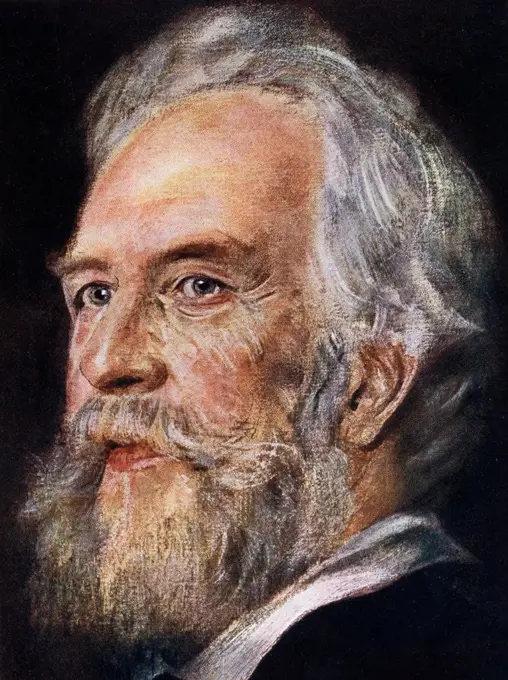
Othniel Charles Marsh (1831-1899), American paleontologists discovered and named 80 dinosaur fossils found in the American West. His discoveries now form the core of the Yale University's Peabody Museum.
152 assets in this story
1848-19347280
Johann Carl Friedrich Gauss, Carolus Fridericus Gauss, 30 April 1777, 23 February 1855, was a German mathematician and physicist and Wilhelm Eduard We...
1848-60921713
James Sheridan Muspratt (1821-1871) studied chemistry with Thomas Graham in Glasgow and London and with Justus von Liebig in Giessen (1843) . Founder of the Liverpool College of Chemistry (1848) and author of Chemistry. (London, ca. 1860) . Copper engraving, Historic, digitally restored reproduction from a 19th century original, Record date not stated
6176-71613718
Schiaparelli, Giovanni, 14.3.1835 - 4.7.1910, Italian scientist (astronomer), portrait, lithograph, 1892, ,
4443-19609132
Vanity Fair - Doctors and Scientists. 'Agricultural Science'. Sir John Bennet Lawes. 8 July 1882, Theobald Chartran, 1849-1907, French, 1882, Chromolithograph
6188-63924498
Thomas Thomson 1773-1852, Scottish chemist, born in Crieff, Perthshire. Regius professor of chemistry at the University of Glasgow 1817. From James Sheridan Muspratt Chemistry London, approx. 1860. B, historically, digitally restored reproduction of a 19th century template, Record Date Not Stated
1899-61458548
Adolph Wilhelm Hermann Kolbe, 1818 - 1884, a German chemist, discovered a way to link the alkyl residues of acids using the electrolysis of carboxylic acids and was the first to produce salicylic acid from phenolate and carbon dioxide. Historical, digitally restored reproduction of a 19th century model..
4220-4098
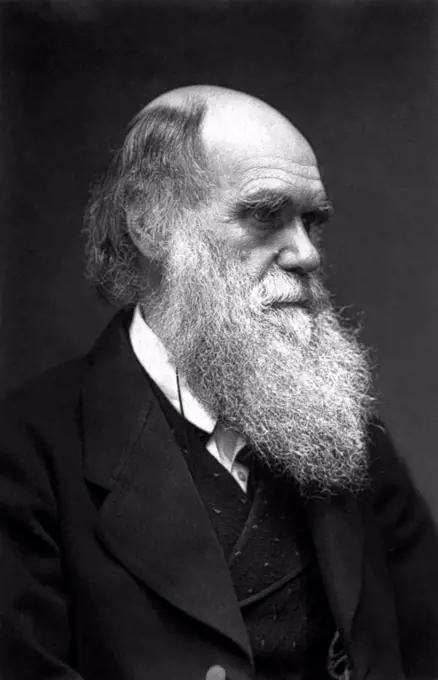
CHARLES DARWIN  English naturalist
1746-19626814
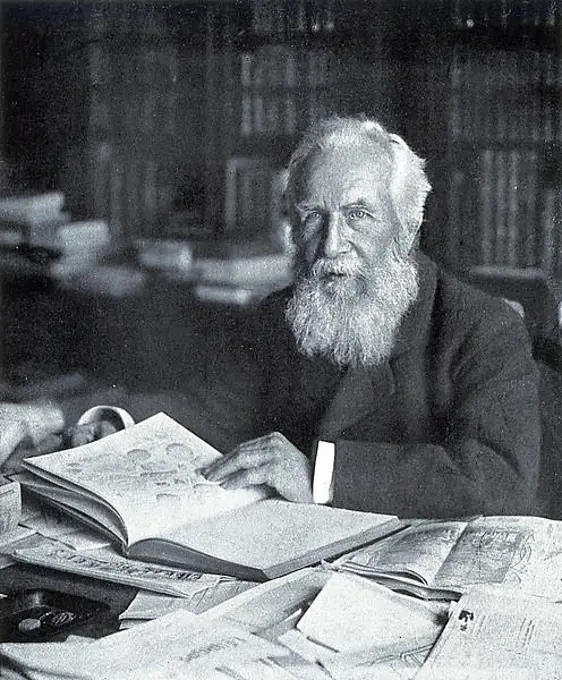
Ernst Haeckel (1834-1919) German zoologist and evolutionist. Recapitulation theory 'Ontology recapitulates phylogeny'. Haeckel in 1899. Halftone.
6145-48831425
Électro-Physiologie Photographique, Figure 12.
1848-62136125
Giuseppe Fiorelli, 1823, 1896, Italian archaeologist, his excavations at Pompeii helped preserve the city, 1895, historical illustration, Italy, Europe
1838-111223333
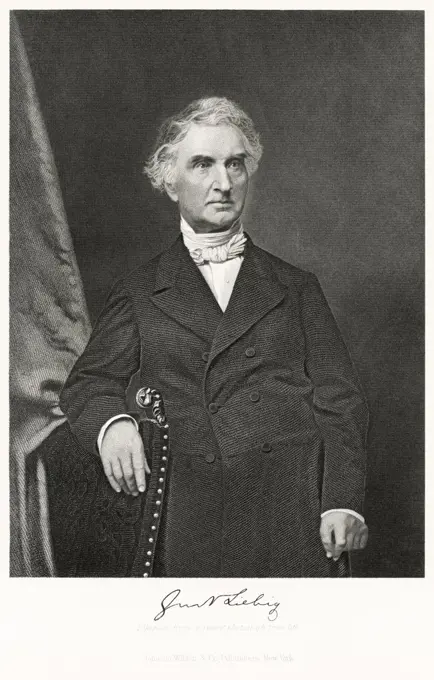
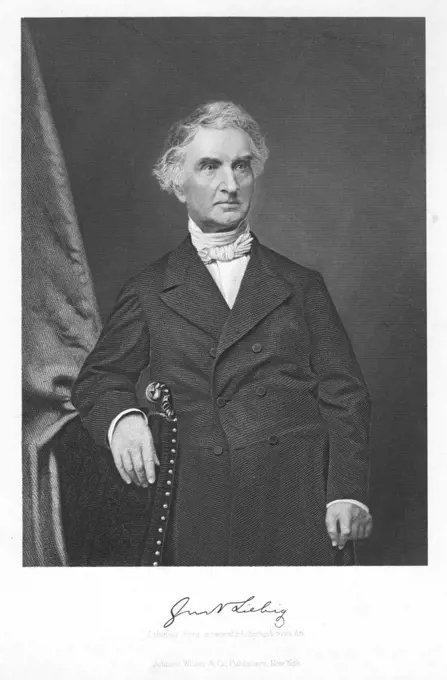
Justus, Baron von Liebig (1803-73), German Chemist, Made Significant Contributions to the Analysis of Organic Compounds, the Organization of Laboratory-based Chemistry Education, and the Application of Chemistry to Biology and Agriculture, Half-Length Por
6145-30334766
Theobald Chartran, 1849-1907, French, Vanity Fair - Doctors and Scientists. 'Agricultural Science'. Sir John Bennet Lawes. 8 July 1882, 1882. Chromolithograph.
1746-19632088
Justus von Liebig (1803-1873) German chemist. Engraving
6176-66088418
Electrophysiological experiments by Jacques-Arsène d'Arsonval (1851-1940) French physician and physicist. Self-conduction, illumination of a lamp by the currents induced in the operator's arms. Old 19th century engraved illustration from La Nature 1893
4409-36544
KOCH, Robert (Clausthal, near Hanover, 1843-Baden-Baden, 1910). German doctor. In 1882 discovered the bacillus of tuberculosis, known as Koch's bacillus and tuberculin. Nobel Prize in Medicine in 1905.
1899-18717397
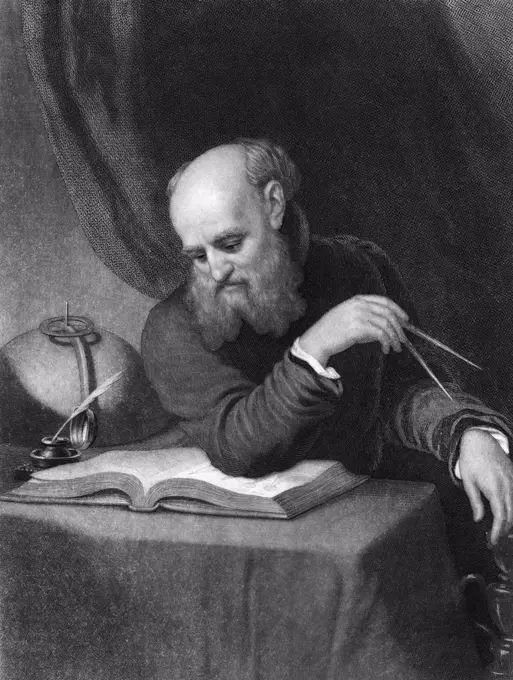
Galileo Galilei (15 Feb. 1564 8 Jan. 1642) was an Italian physicist, mathematician, philosopher and astronomer who played a pivotal role in establishing modern science at a time when contradiction of religion was considered heresy. It was as an astronomer that he was most controversial. Galileo developed telescopes that confirmed the phases of Venus, and the discovery of the four largest satellites of Jupiter (named the Galilean moons in his honour), as well as sunspots. In 1610, while a majority of philosophers and astronomers still subscribed to the geocentric opinion that the Earth was the centre of the universe, Galileo came out in support of Copernicus' heliocentric view that the Sun was at the center of the solar system. Galileo's opinions were met with outrage and bitter opposition, and he was denounced to the Roman Inquisition. In February 1616, although he had been cleared of any offence, the Catholic Church nevertheless condemned heliocentrism as 'false and contrary to Chris
6145-48830199
Électro-Physiologie Photographique, Figure 16.
6145-29266917
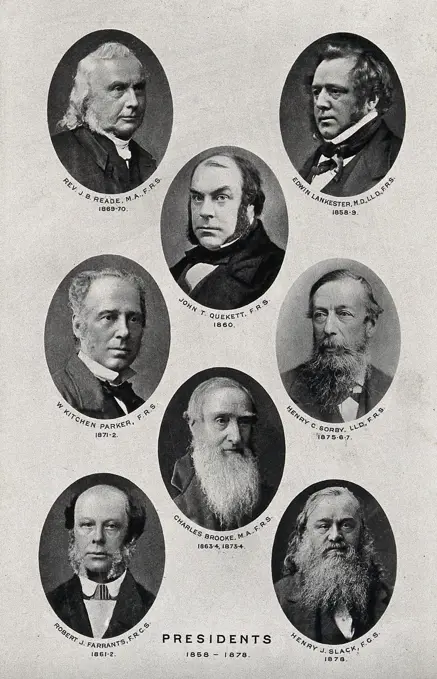
Royal Microscopical Society Presidents, 1858-1878: eight portraits. Photolithograph, ca. 1880.
6176-67082840
Galileo Galilei, Italian physicist, astronomer, and philosopher, (c1924). Artist: Unknown
6176-66912652
Caricature of Charles Darwin
1746-28997077
1969 Brooke Bond collectors tea card, depicting: Charles Darwin, (1809  1882); English naturalist and geologist, known for his contributions to the science of evolution. CosmoCaixa Museum, Barcelona, Spain
6145-46678820
Portrait of astronomer giovanni inghirami. .
6188-61008565
Franz Leydolt 1810-1859, natural scientist, zoologist, botanist, historically, digitally restored reproduction of a 19th century template, Record Date Not Stated
6145-50629740
Comets 6 cab, circa 1920, Wellington, by Berry & Co.
6145-52885325
Mattollodium photograph by Johann Victor Krämer from around 1900 showing a portrait of a man.
1899-18856214
Charles Robert Darwin, FRS (12 February 1809 - 19 April 1882) was an English naturalist and geologist, best known for his contributions to evolutionary theory. He established that all species of life have descended over time from common ancestors, and in a joint publication with Alfred Russel Wallace introduced his scientific theory that this branching pattern of evolution resulted from a process that he called natural selection, in which the struggle for existence has a similar effect to the artificial selection involved in selective breeding.  Darwin published his theory of evolution with compelling evidence in his 1859 book 'On the Origin of Species', overcoming scientific rejection of earlier concepts of transmutation of species. By the 1870s the scientific community and much of the general public had accepted evolution as a fact. However, many favoured competing explanations and it was not until the emergence of the modern evolutionary synthesis from the 1930s to the 1950s that a
6145-30299689
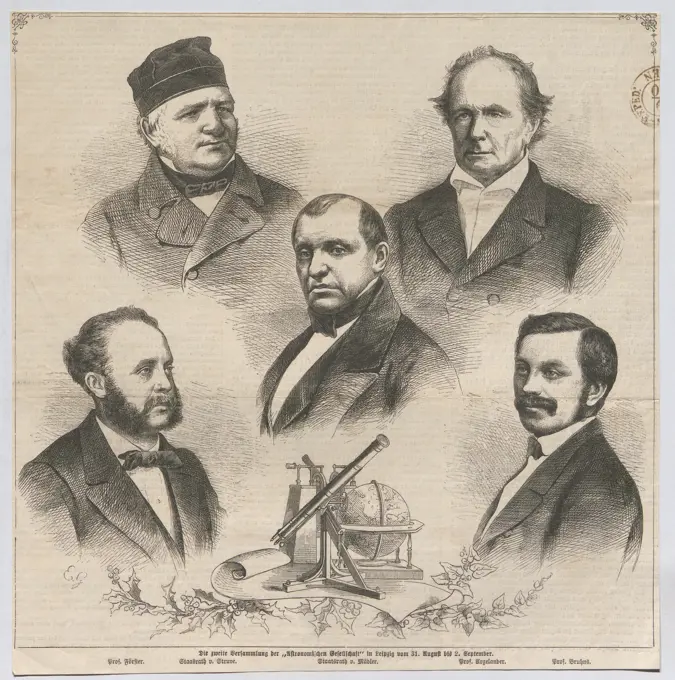
The second meeting of the Astronomical Society in Leipzig from August  to September ,  Heinrich von Mädler, Friedrich Wilhelm August Argelander, Karl Christian Bruhns from Illustrirte Zeitung, Leipzig, Unknown
6145-44326111
The zoologist Ernst Haeckel. State state view Hamburg, collection of photography history, acquired 1972
1525-28068670
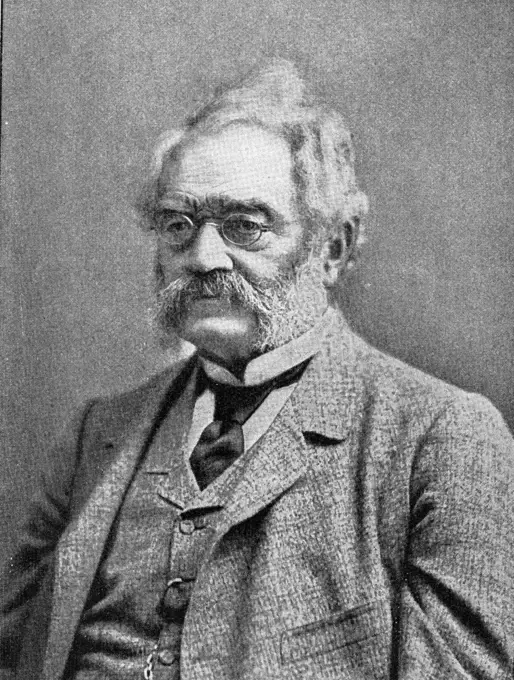
Werner Siemens, vintage engraved illustration. From the Universe and Humanity, 1910.
6145-29263451
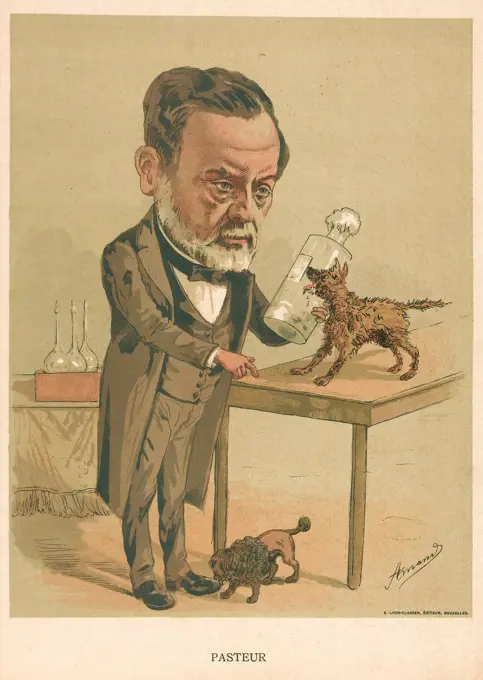
Louis Pasteur. Colour lithograph by Amand, 188-().
6188-62404099
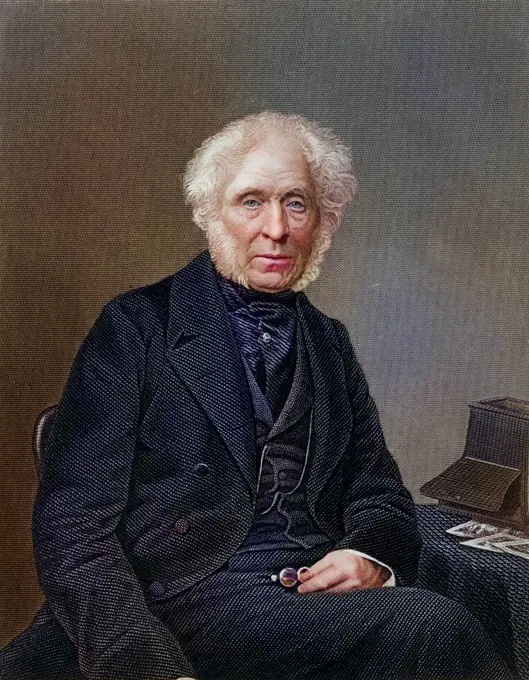
David Brewster 1781-1868 Scottish physicist. Optics kaleidoscope and polarized light. Editor of Edinburgh Magazine 1802 and the Edinburgh Encyclopaedia 1808. On the table next to him is a stereoscope, one of the optical instruments that he invented. Copper engraving, approx. 1870., historical, digitally restored reproduction of a template from the 19th century, Record Date not stated
6145-30334750
Leslie Matthew 'Spy' Ward, 1851-1922, British, Vanity Fair - Doctors and Scientists. 'orthodoxy'. Sir William Broadbent. 30 October 1902, 1902. Chromolithograph.
6145-52886037
Albumin print by Johann Victor Krämer showing artists' templates around 1900, depicting drawing and design tools in a studio context.
1899-18856982
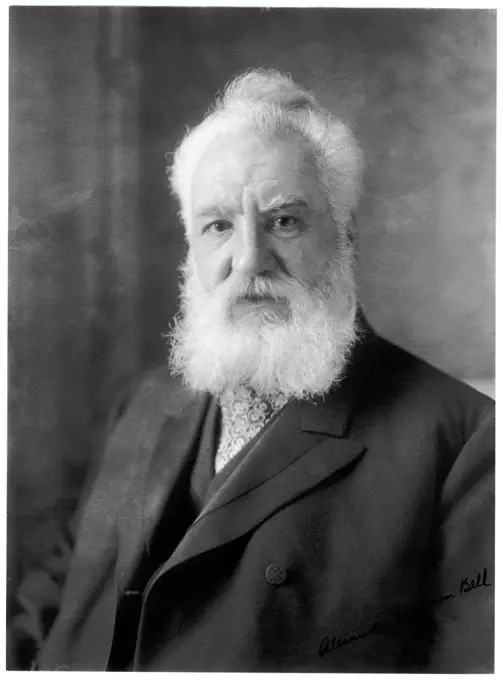
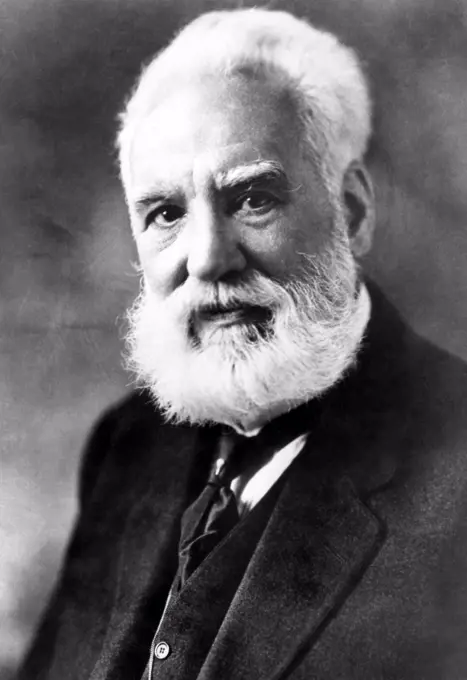
Alexander Graham Bell (March 3, 1847 - August 2, 1922) was an eminent Scottish-born scientist, inventor, engineer and innovator who is credited with inventing the first practical telephone. Bell's father, grandfather, and brother had all been associated with work on elocution and speech, and both his mother and wife were deaf, profoundly influencing Bell's life's work. His research on hearing and speech further led him to experiment with hearing devices which eventually culminated in Bell being awarded the first U.S. patent for the telephone in 1876. Bell considered his most famous invention an intrusion on his real work as a scientist and refused to have a telephone in his study. Many other inventions marked Bell's later life, including groundbreaking work in optical telecommunications, hydrofoils and aeronautics. In 1888, Bell became one of the founding members of the National Geographic Society.
6145-51954567
Atomic Scientists. Photographs of Marshall Plan Programs, Exhibits, and Personnel
6145-29291451
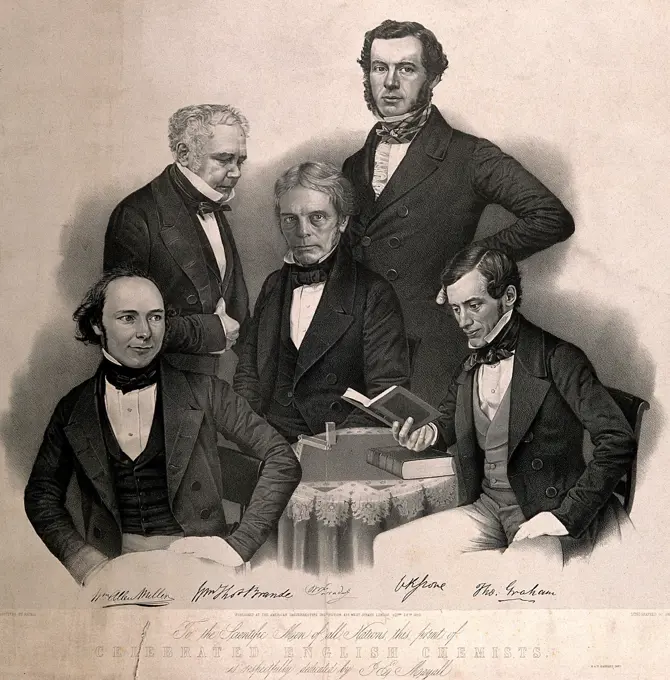
Famous chemists, gathered around a table. Lithograph by Shapper after J.E. Mayall, 1850.
1848-49285671
Ernst Heinrich Philipp August Haeckel (16 February 1834) (9 August 1919) was a German physician, zoologist, philosopher, draughtsman and freethinker who, from the 1860s onwards, developed the ideas of Charles Darwin into a special theory of descent, Historical, digitally restored reproduction from an original of that time
1899-18856979
Alexander Graham Bell (March 3, 1847 - August 2, 1922) was an eminent Scottish-born scientist, inventor, engineer and innovator who is credited with inventing the first practical telephone. Bell's father, grandfather, and brother had all been associated with work on elocution and speech, and both his mother and wife were deaf, profoundly influencing Bell's life's work. His research on hearing and speech further led him to experiment with hearing devices which eventually culminated in Bell being awarded the first U.S. patent for the telephone in 1876. Bell considered his most famous invention an intrusion on his real work as a scientist and refused to have a telephone in his study. Many other inventions marked Bell's later life, including groundbreaking work in optical telecommunications, hydrofoils and aeronautics. In 1888, Bell became one of the founding members of the National Geographic Society.
4409-17261640
Pierre Curie (1859 - 1906), French physicist, a pioneer in crystallography, magnetism, piezoelectricity and radioactivity. In 1903 he received the Nobel Prize in Physics with his wife, Marie Sklodowska-Curie, and Henri Becquerel, "in recognition of the extraordinary services they have rendered by their joint researches on the radiation phenomena discovered by Professor Henri Becquerel". Location: ACADEMIA DE CIENCIAS. France.
1848-50226837
James Richardson, born 1809, indo-pacific king mackerel (1851), a British missionary, abolitionist and African explorer, Adolph Overweg and Johann Heinrich Bart, born 1821, died 1865, German African explorer and scientist, digitally restored reproduction of a 19th century original, exact date unknown
6176-66096318
German explorer, scientist, and natural philosopher Alexander von Humbolt (1769-1859) was known for his systematic observations.
6145-51360700
Eastman, Prof. Naval Observatory
6145-29279607
Edmond Isidore Etienne Nocard, microbiologist. Oil painting by E. Delbos.
4070-111115135
Darwin in the Woods - historical cartoon of Charles Darwin entitled 'Natural Selection' by Frederick Waddy from his 'Cartoon portraits and biographical sketches of men of the day' 1873.
1848-73119070
Pierre Paul Broca, 1824 - 1880, French physician, anatomist and anthropologist, digitally edited
6145-29258074
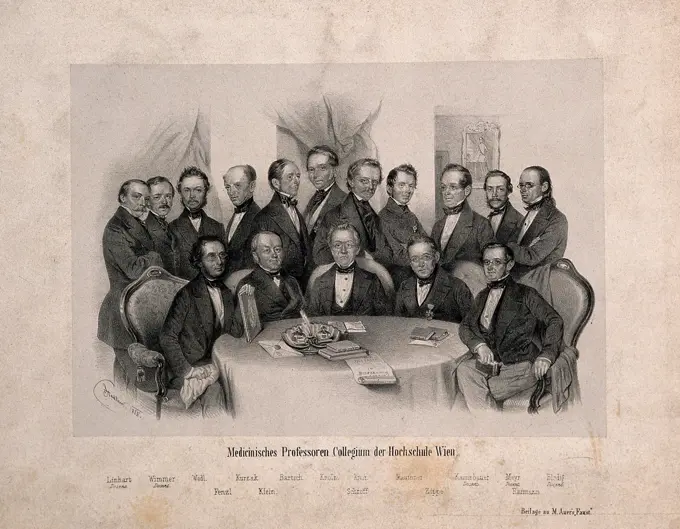
Medical professors at the University of Vienna. Lithograph by J. Stadler, 1856, after A. Prinzhofer, 1853.
1788-21874
France, Dole, Louis Pasteur (1822-1895) studying the fermentation of grape juice
6188-56016025
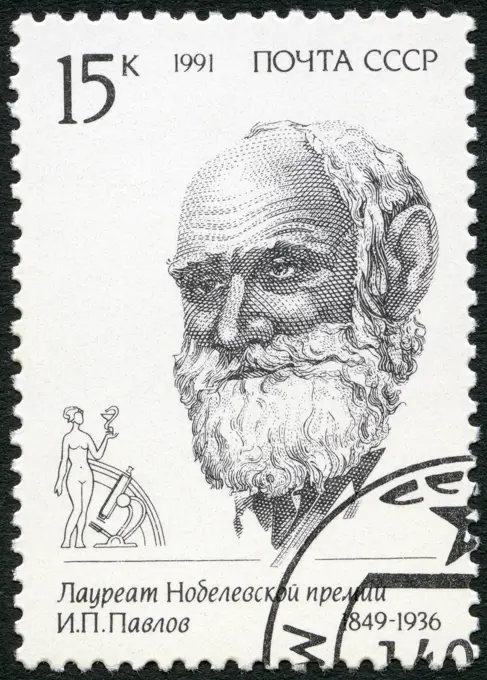
RUSSIA - 1991: shows Ivan P. Pavlov 1849-1936, Nobel Prize Winner, 1904, Physiology RUSSIA - CIRCA 1991: A stamp printed in Russia shows Ivan P. Pavlov 1849-1936, Nobel Prize Winner, 1904, Physiology, circa 1991 Copyright: xZoonar.com/OlgaxPopovax 4713233
6145-29200187
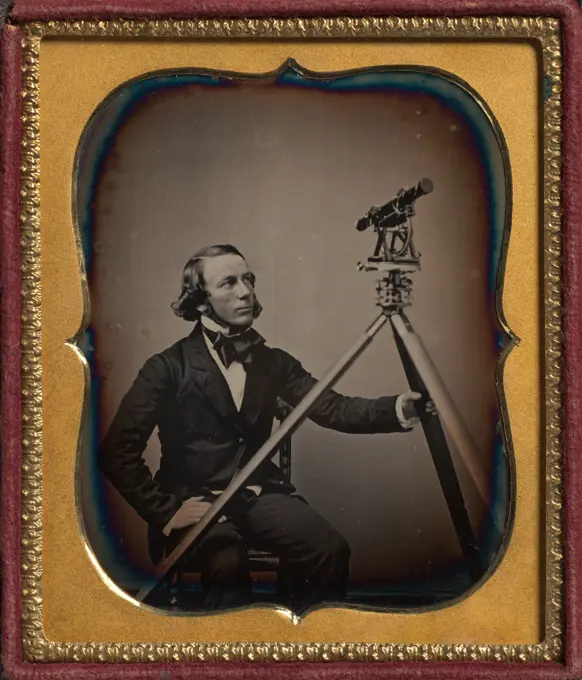
Surveyor ca. 1854 Unknown This portrait of a surveyor from an unknown daguerreotype studio was made during the heyday of the Daguerreian era in the United States, a time that coincided with an increased need for survey data and maps for the construction of railways, bridges, and roads. The unidentified surveyor, seated in a chair, grasps one leg of the tripod supporting his transit, a type of theodolite or surveying instrument that comprised a compass and rotating telescope. The carefully composed scene, in which the angle of the man's skyward gaze is aligned with the telescope and echoed by one leg of the tripod, conflates its surveyor subject with an astronomer. As a result, the lands of young America are compared to the vast reaches of space, with both territories full of potential discovery.. Surveyor. Unknown (American). ca. 1854. Daguerreotype. Photographs
1746-28995813
Illustration depicting a profile of Socrates. Socrates was a classical Greek philosopher and educator. Dated 18th Century
1848-51089948
Vladimir Vernadskij, a Russian mineralogist and geochemist, portrait on a Russian stamp, Sweden, Europe
1746-19629063
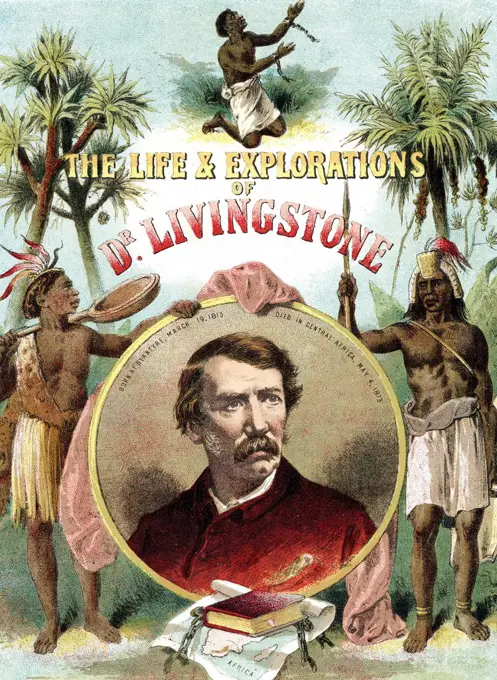
David Livingstone (1813-73) Scottish missionary and explorer of Africa. Chromolithograph from 'The Life and Explorations of Dr Livingstone' c1875
PREVIOUS
of 2
NEXT
2401 S. Ervay, Suite 206
Dallas, Texas 75215
United States
Get Started
Free ResearchMy BoardsMy Cart
For Creators
How To License Your ContentContributor PortalFrame of Mind
Resources
API accessPricing
Contact
+1 866 236 0087help@viewpictures.co.uk Contact form
©2026 View Pictures. All Rights Reserved. -A
This site is protected by reCAPTCHA and Google Privacy Policy and Terms of Service apply.