Ancient and Decorative Vases

Historical vases from various cultures, showcasing unique designs, materials, and functions, including Roman and Neolithic styles.
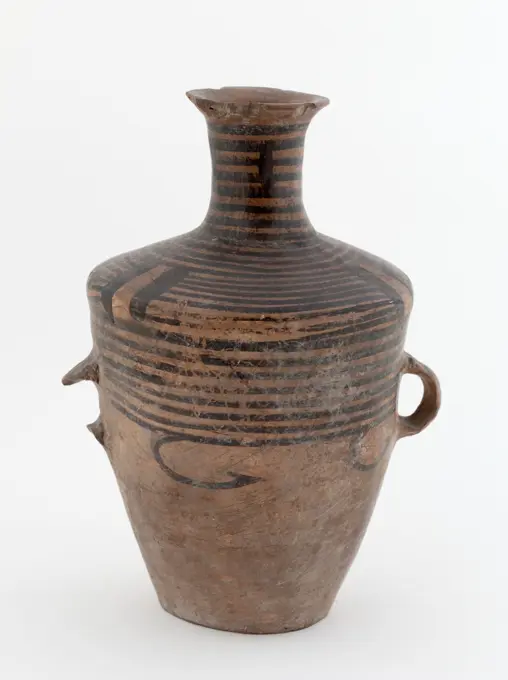
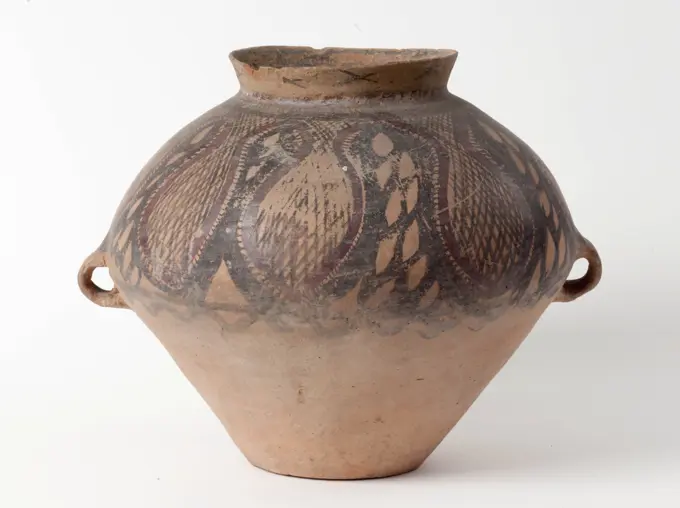
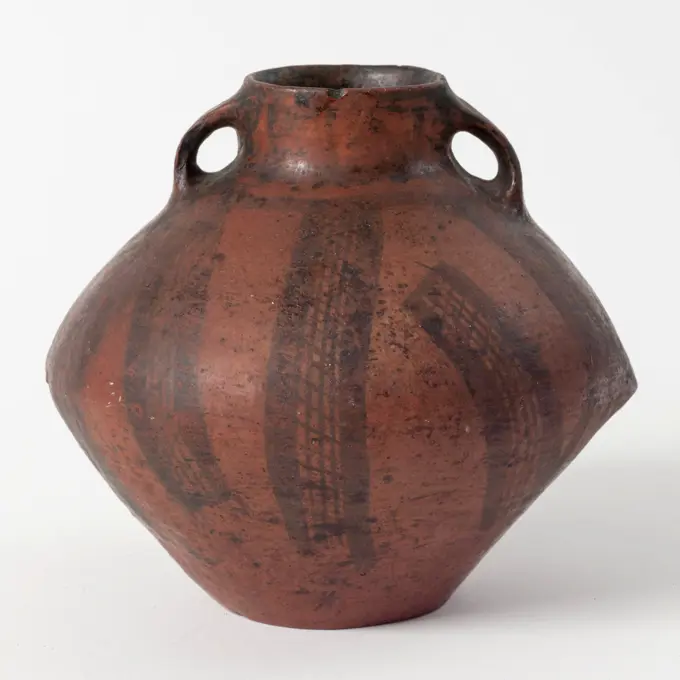
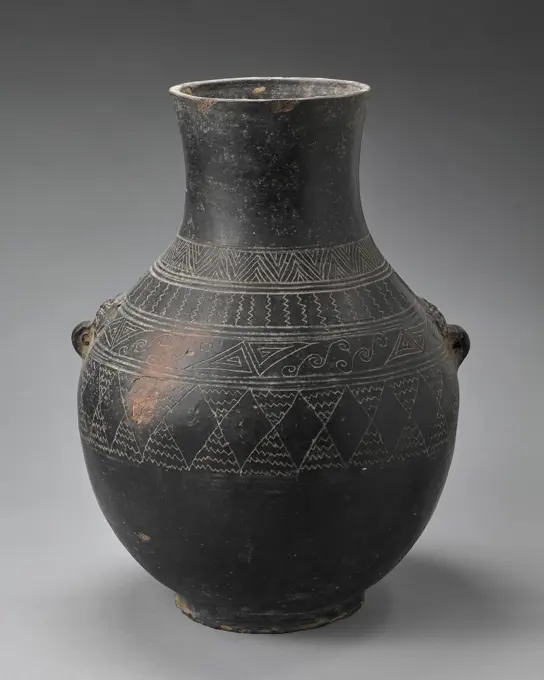
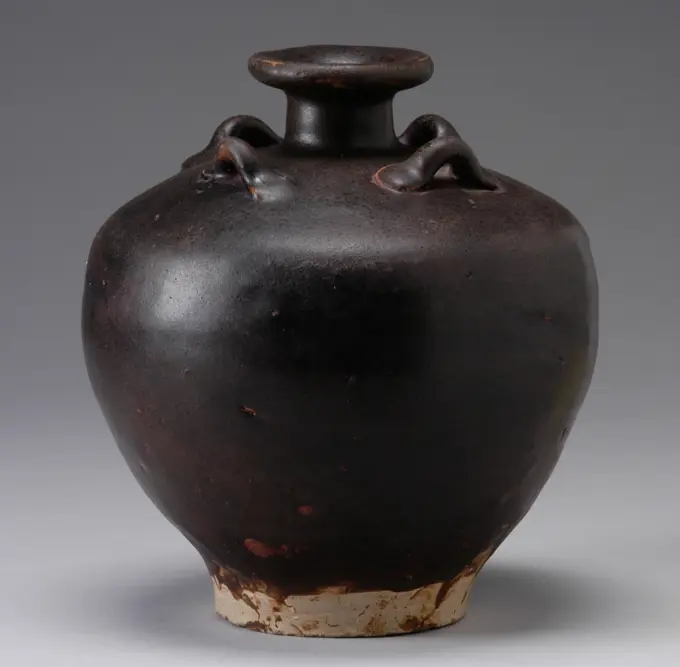
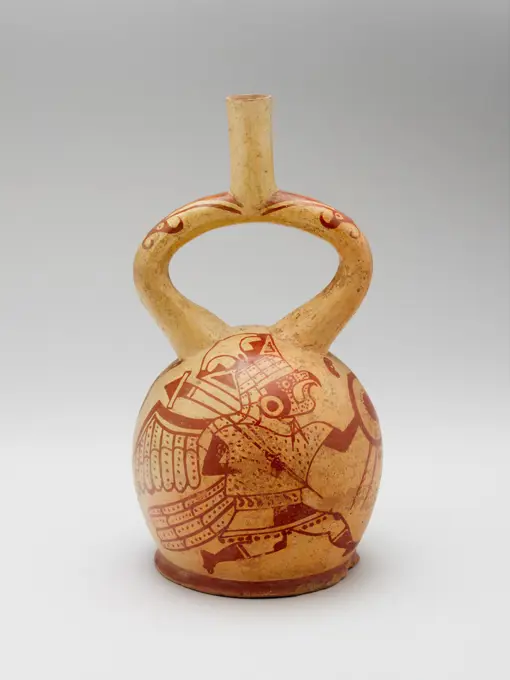
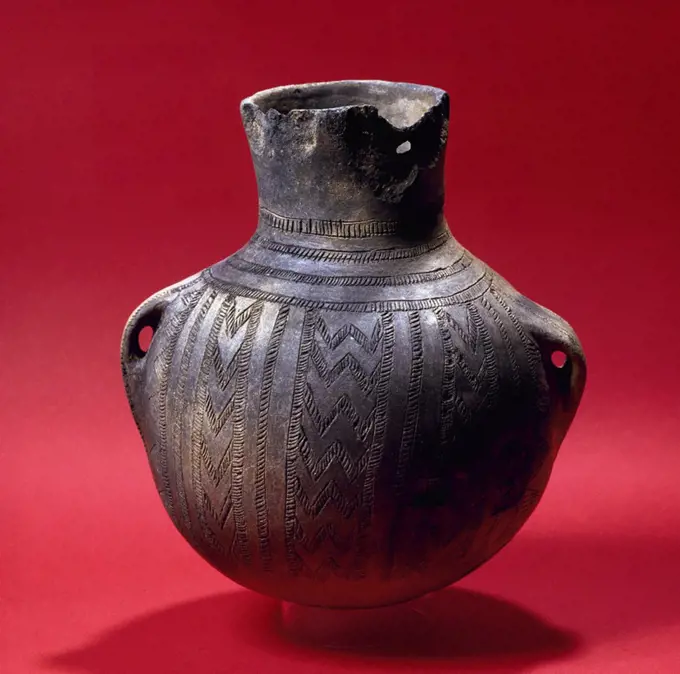
Vase. Terracotta. China, Neolithic, Majiayao. Paris, Cernuschi museum. 72782-8 Anse, Asian art, Majiayao, decorative, neolithic, pottery, terracotta, Chinese vase
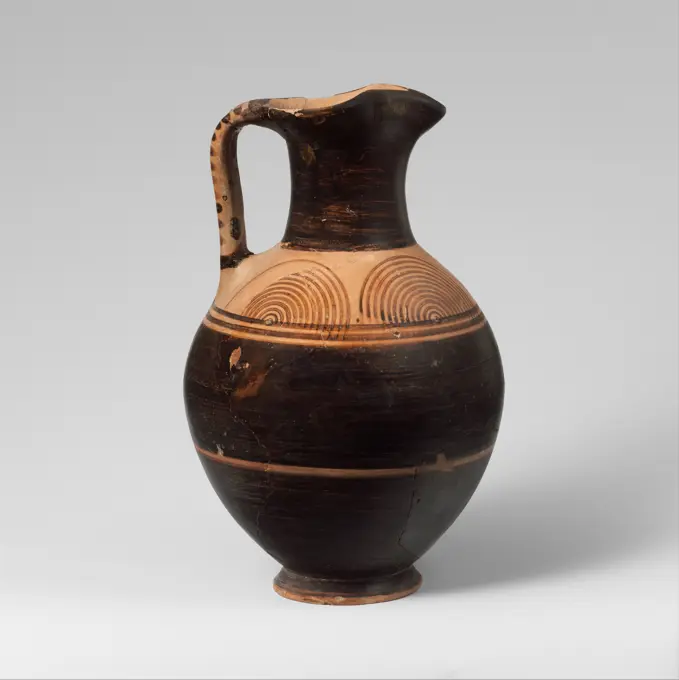
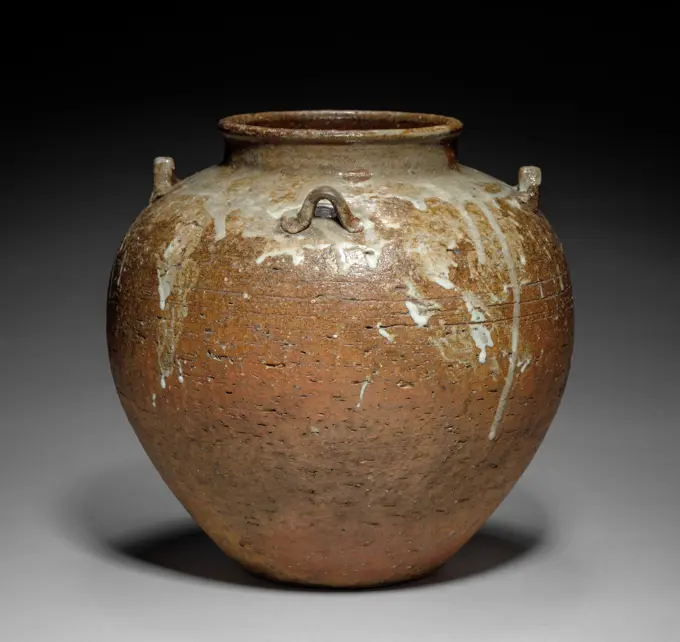
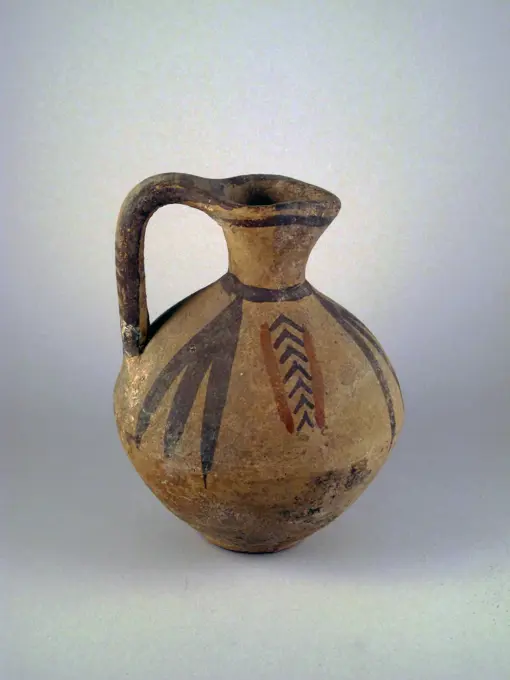
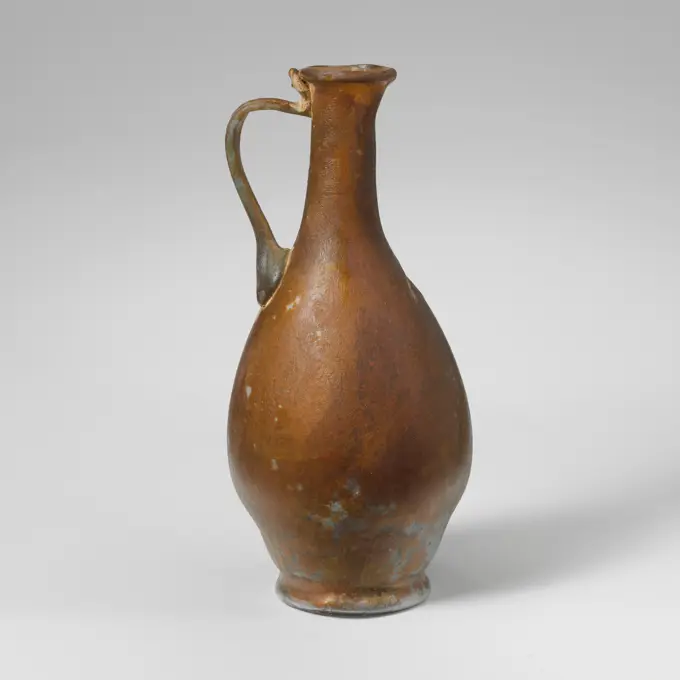
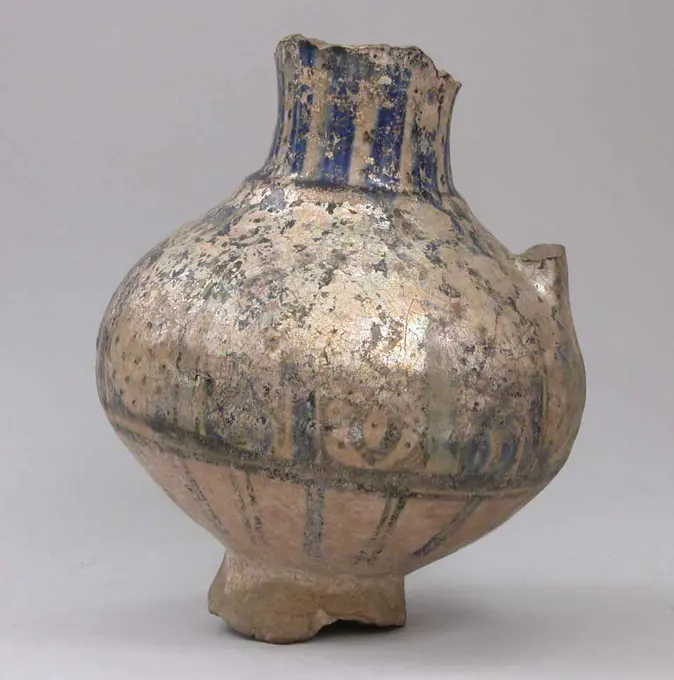
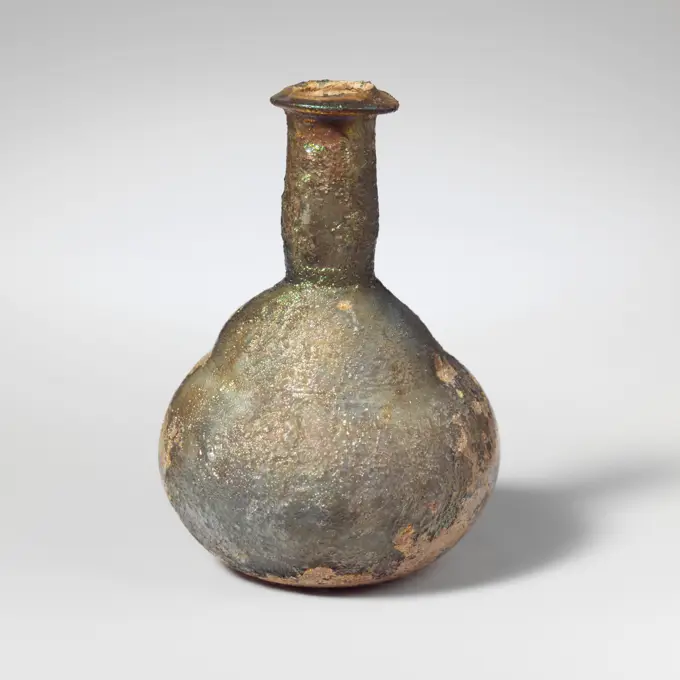
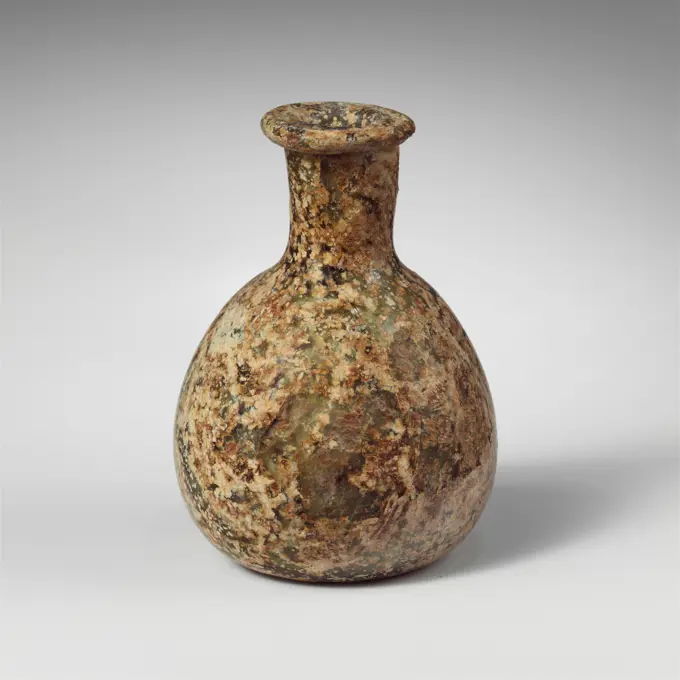
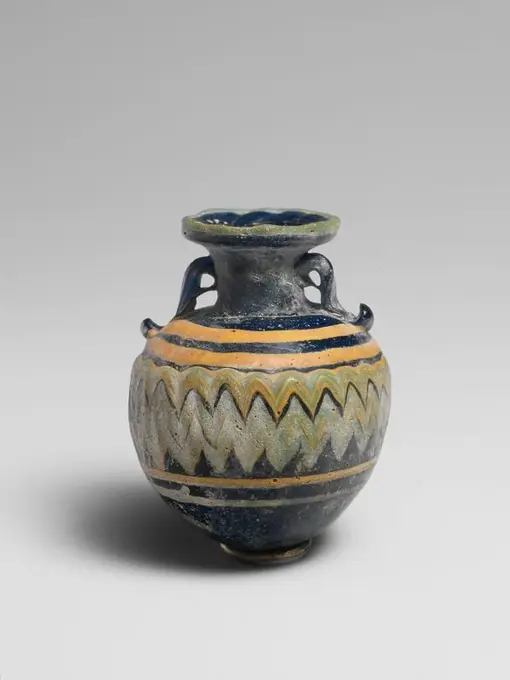
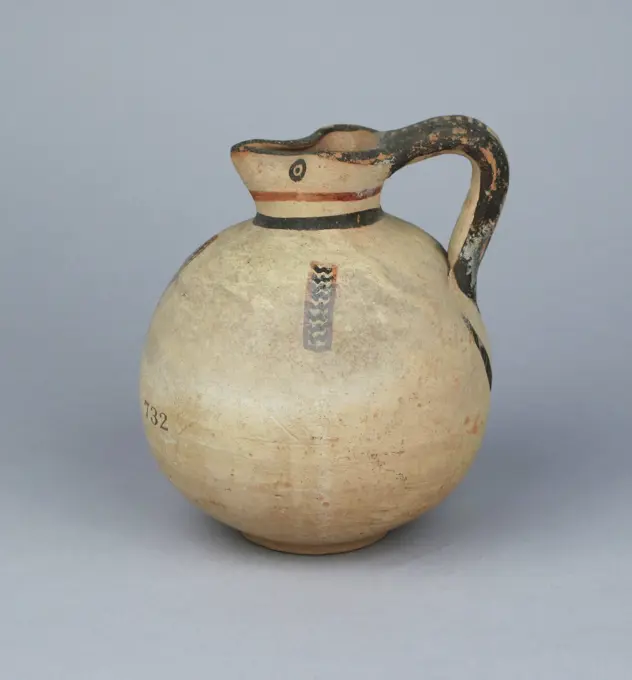
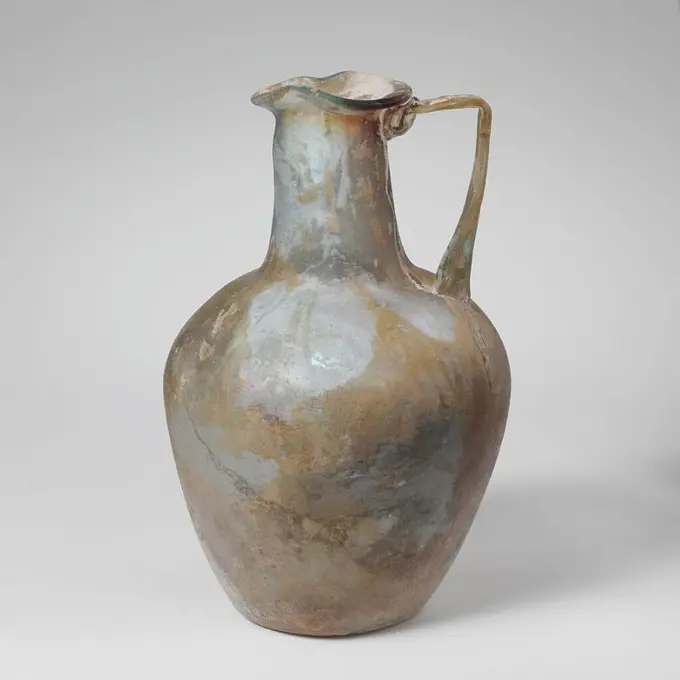
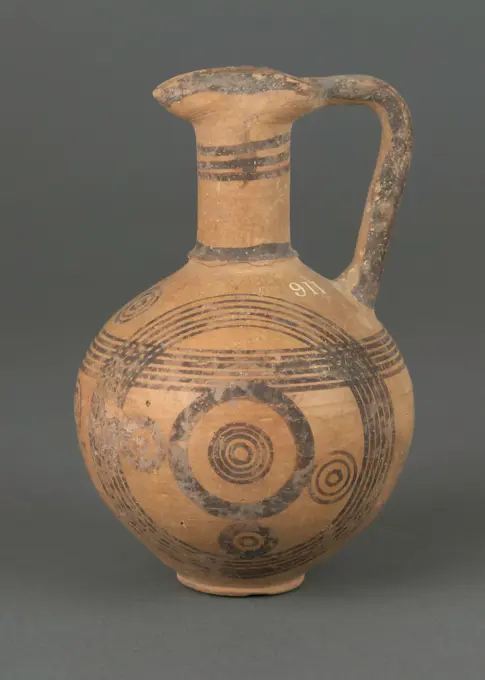
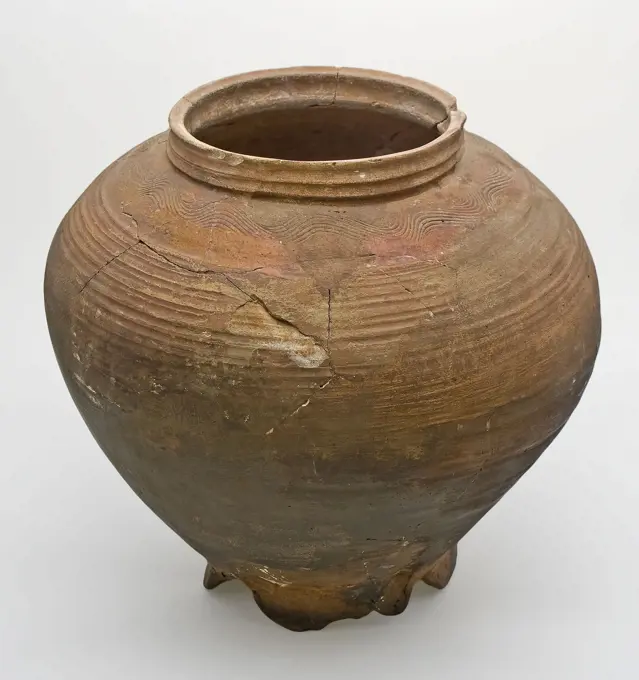
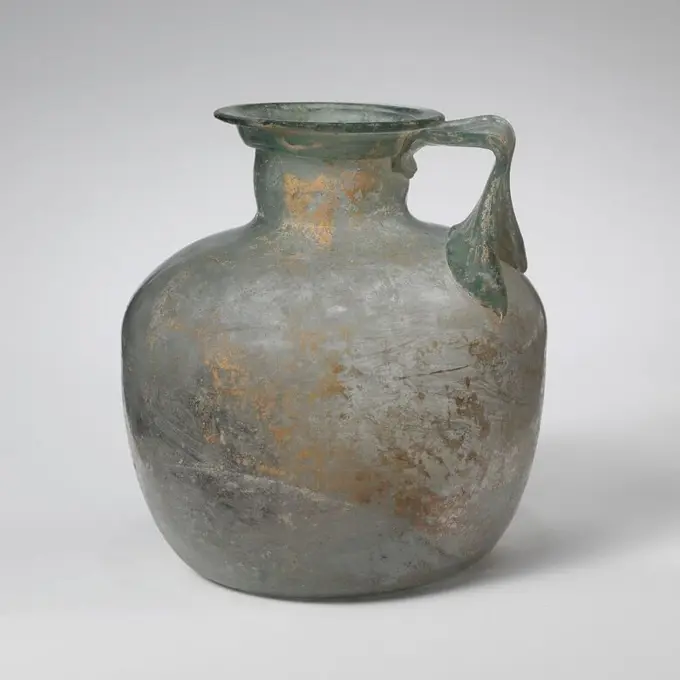
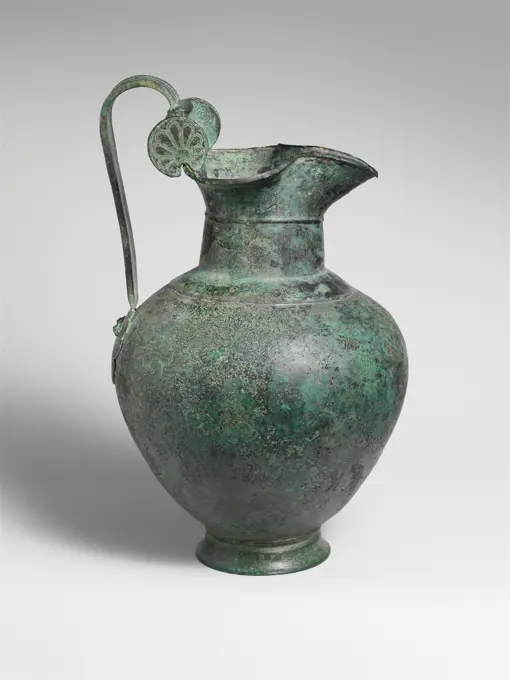
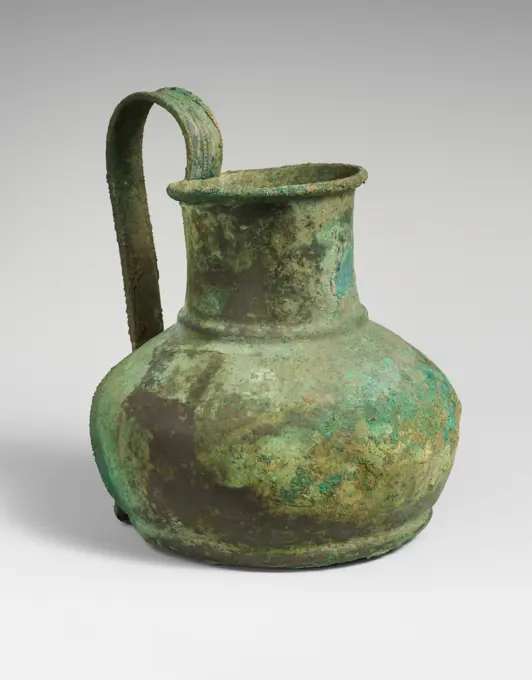
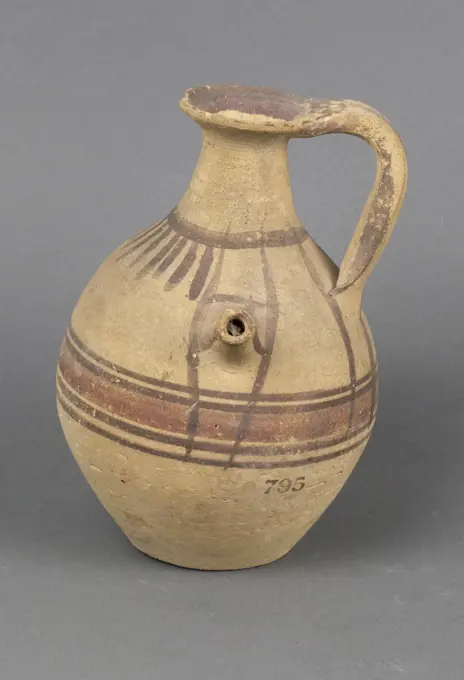
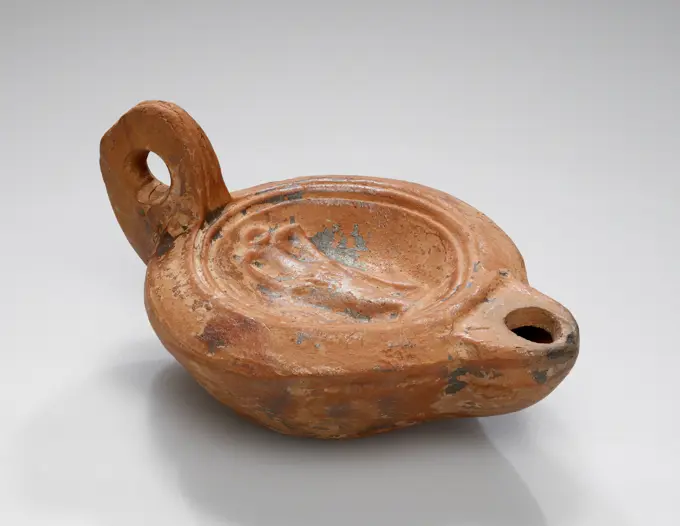
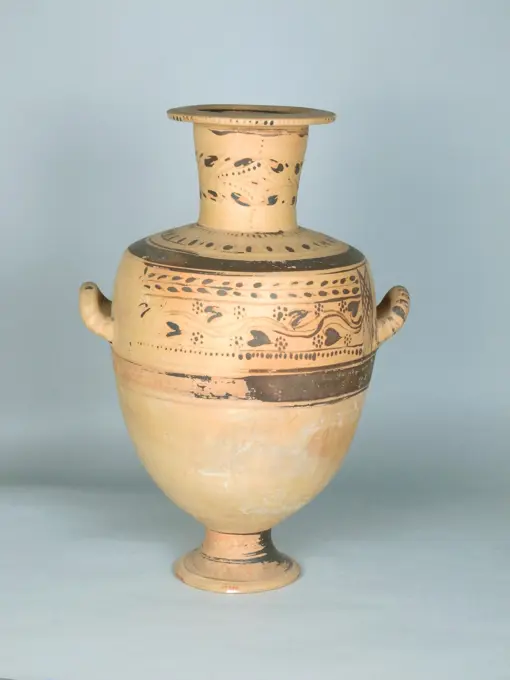
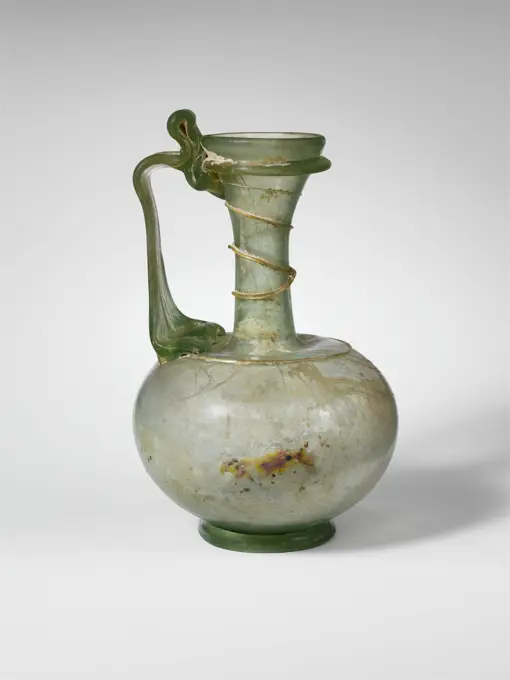
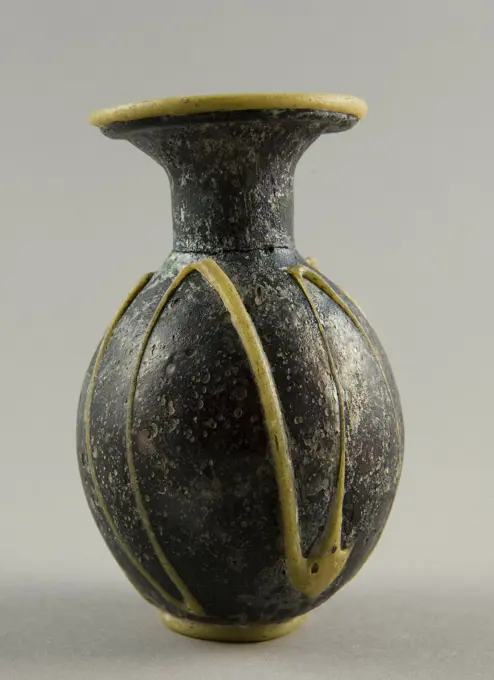
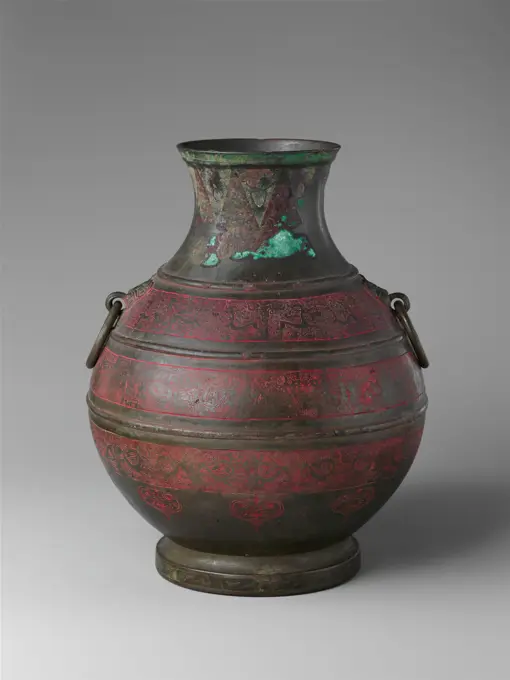
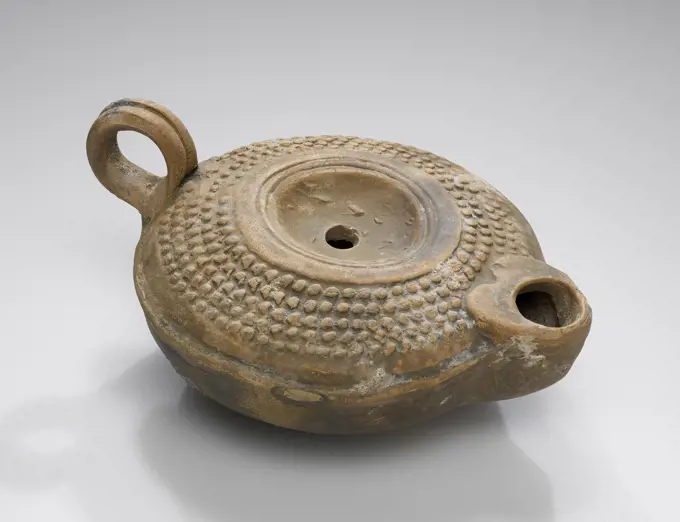
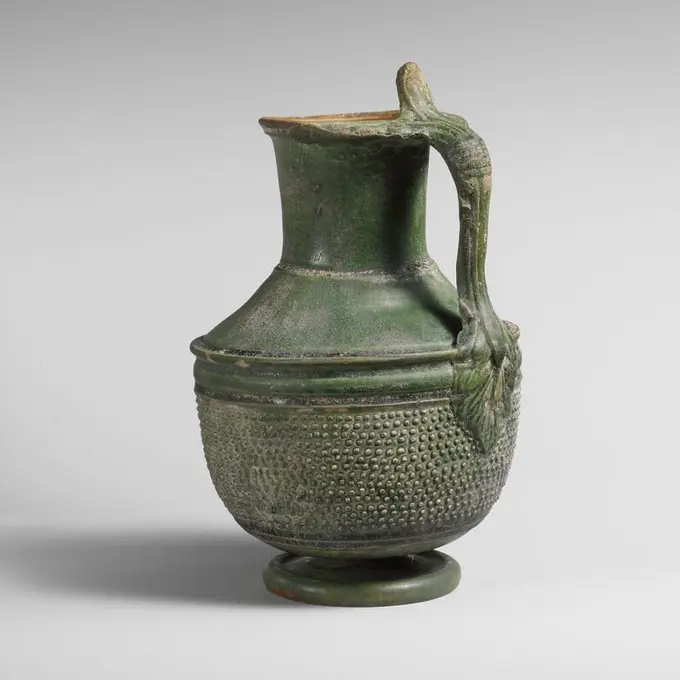
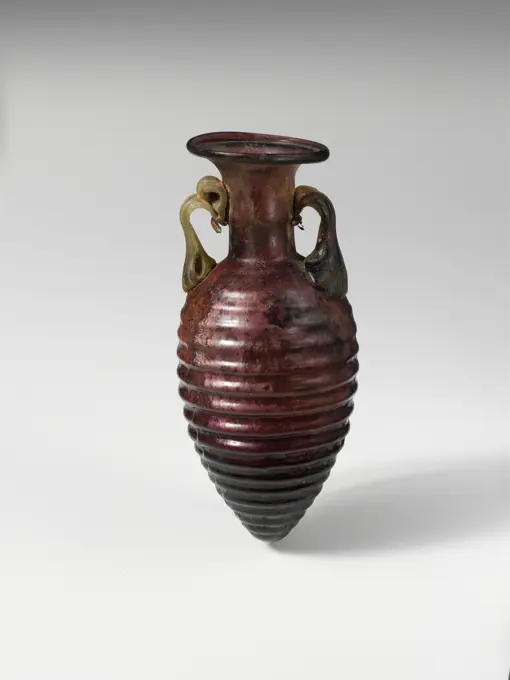
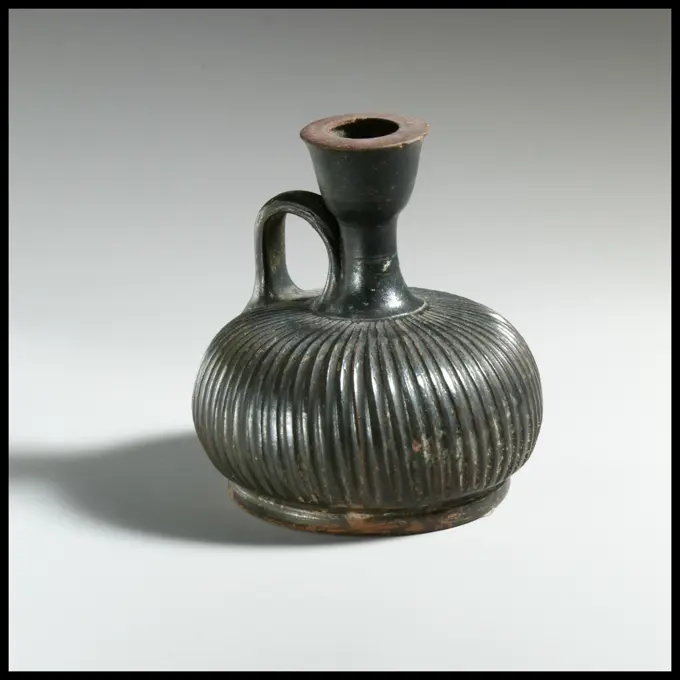
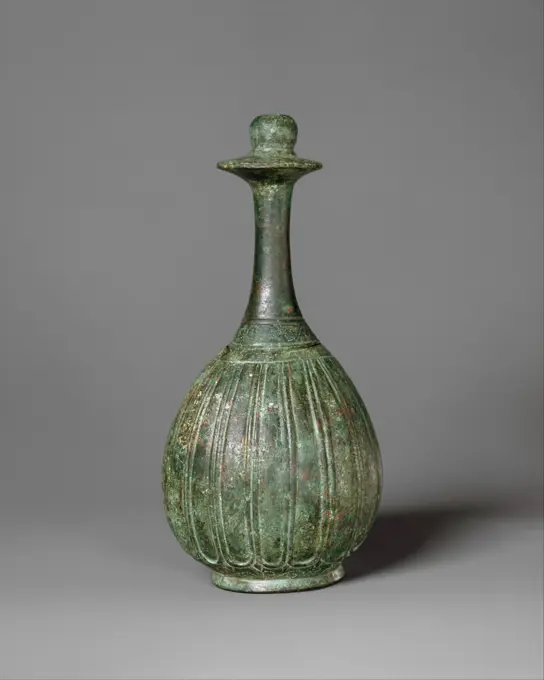
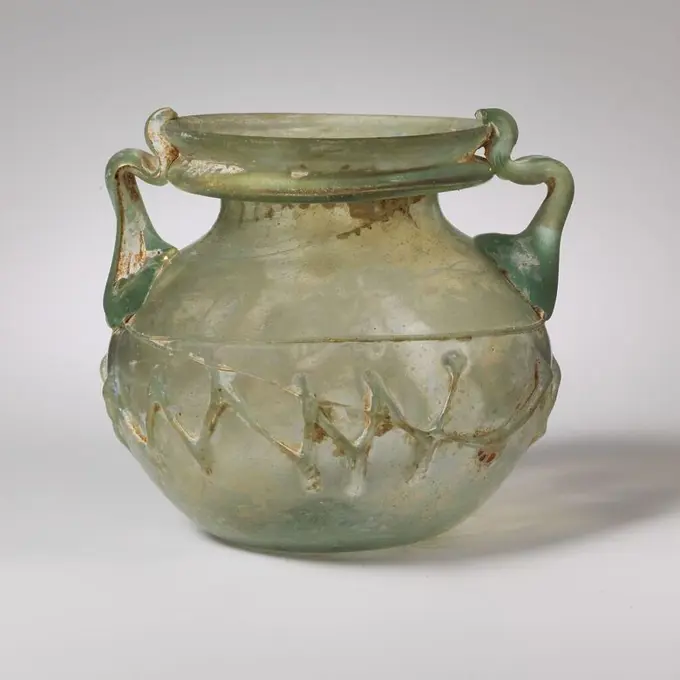
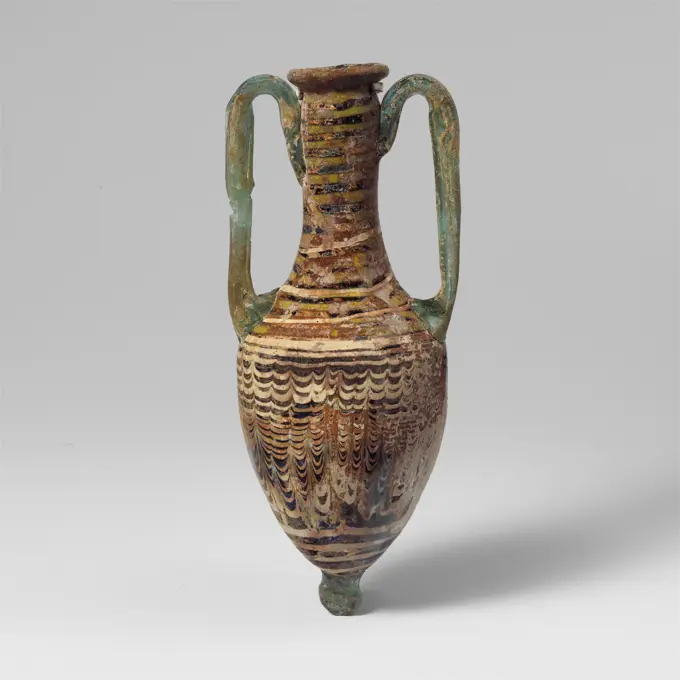
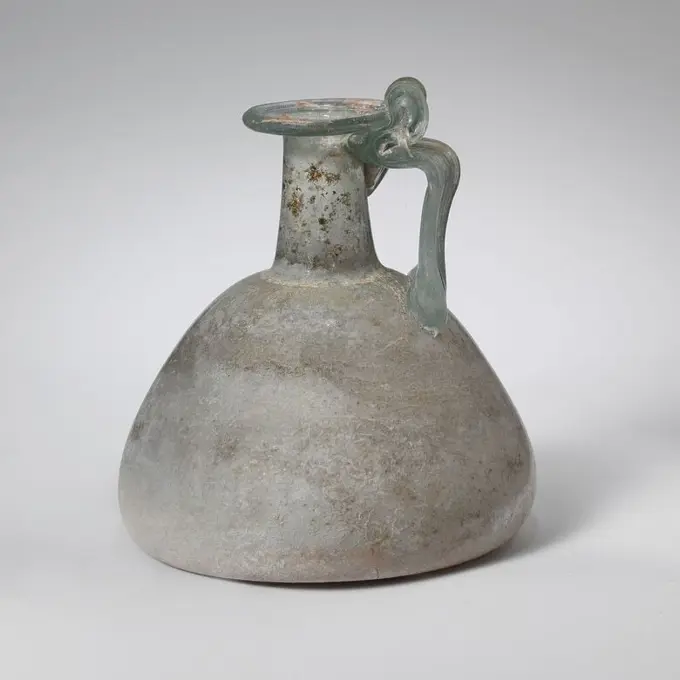
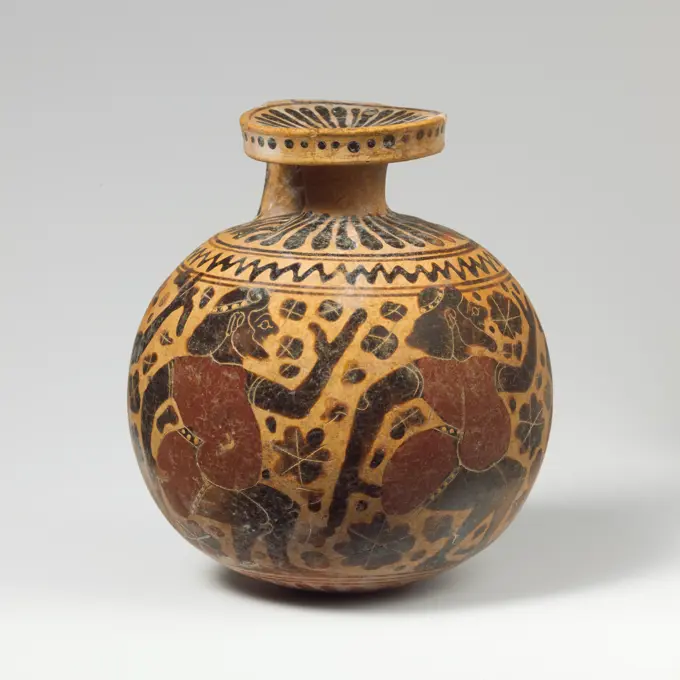
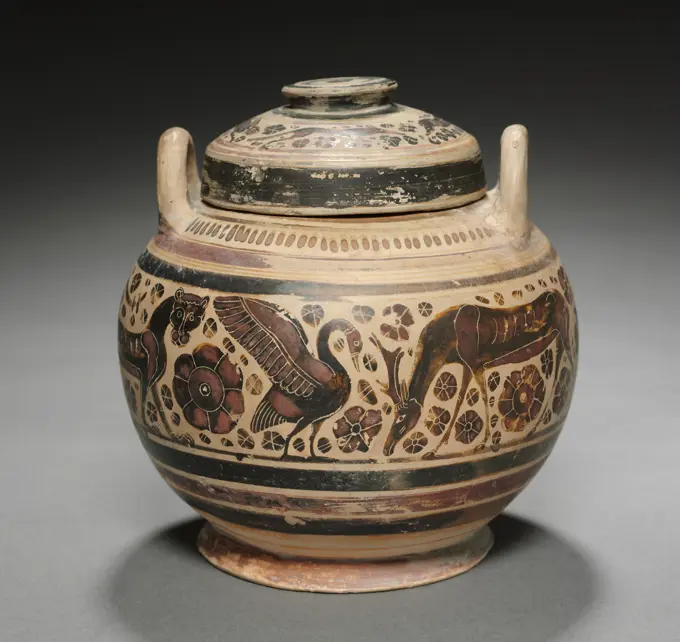
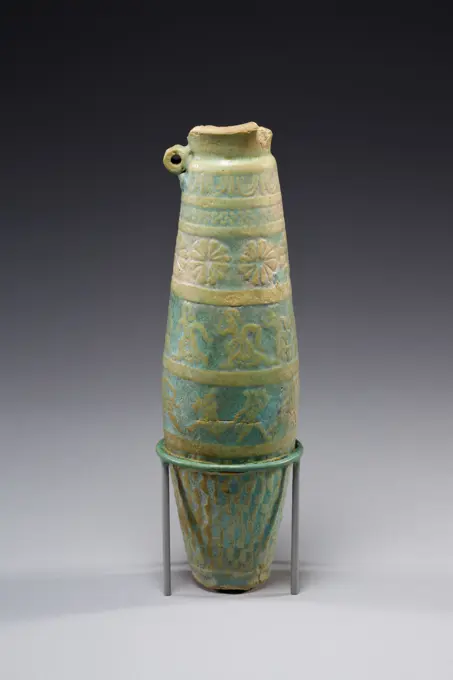
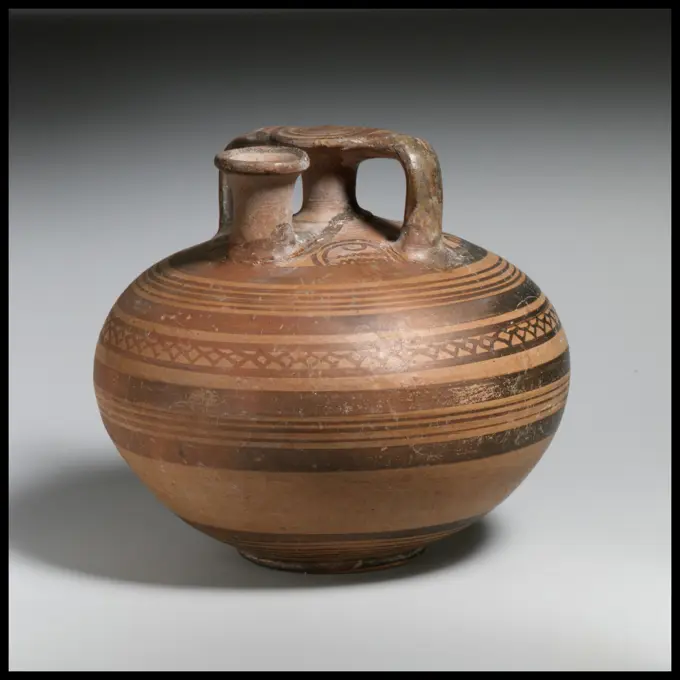
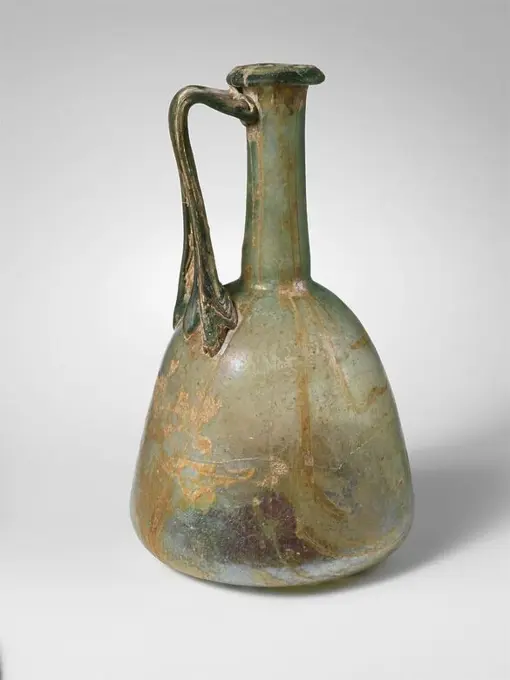
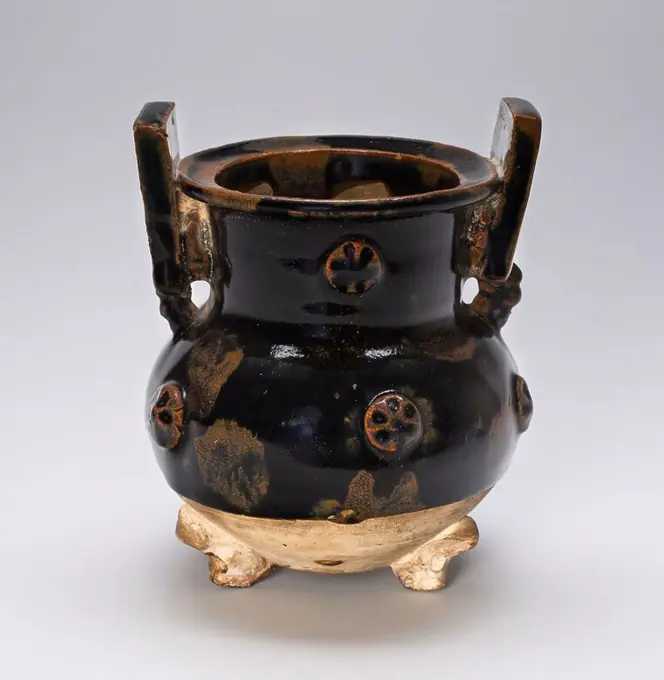
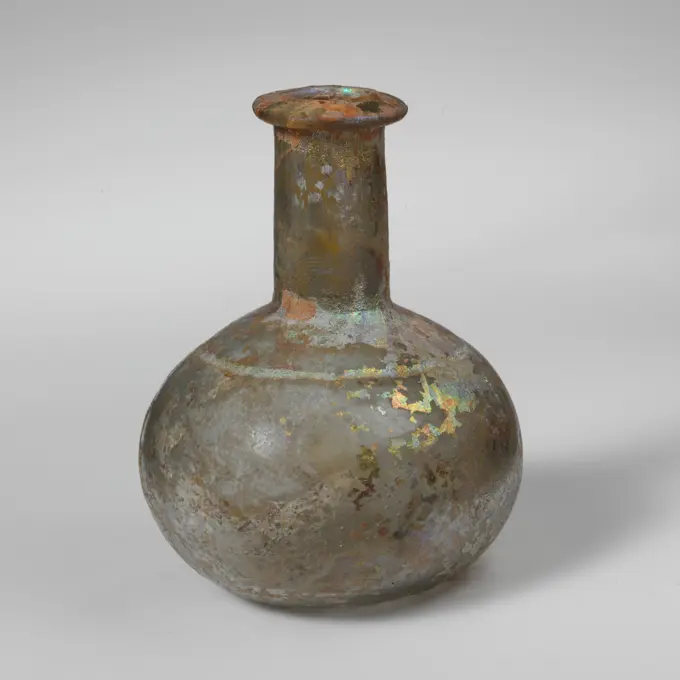
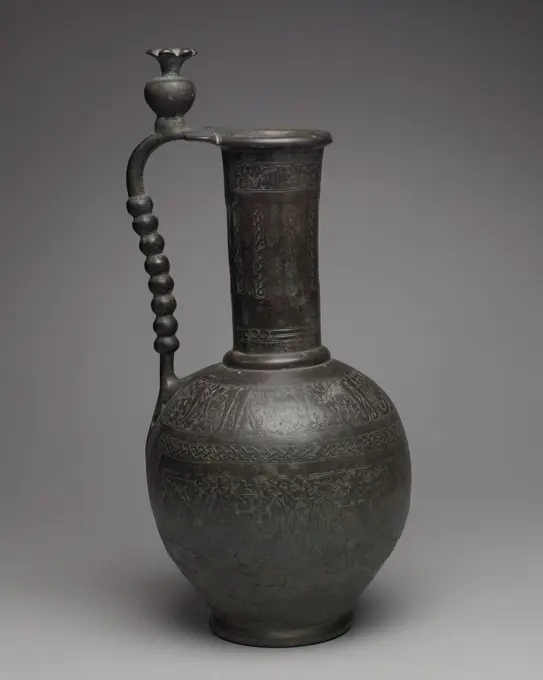
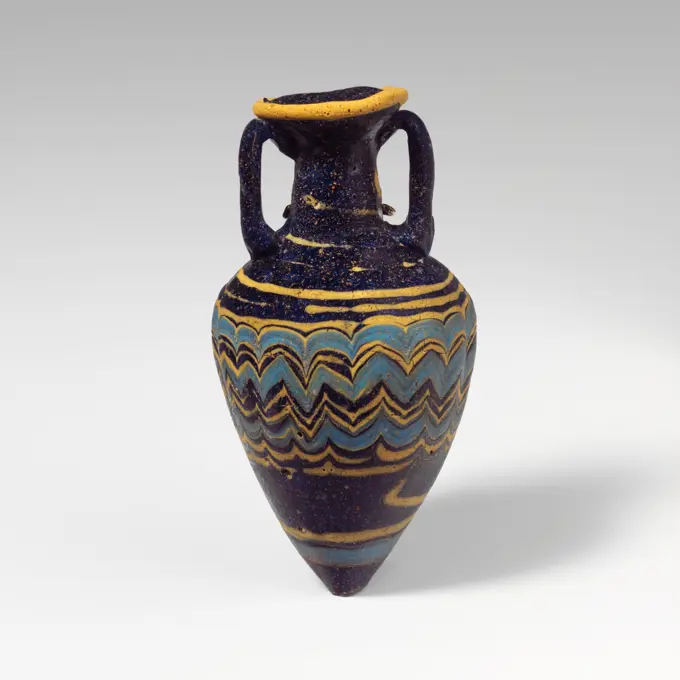
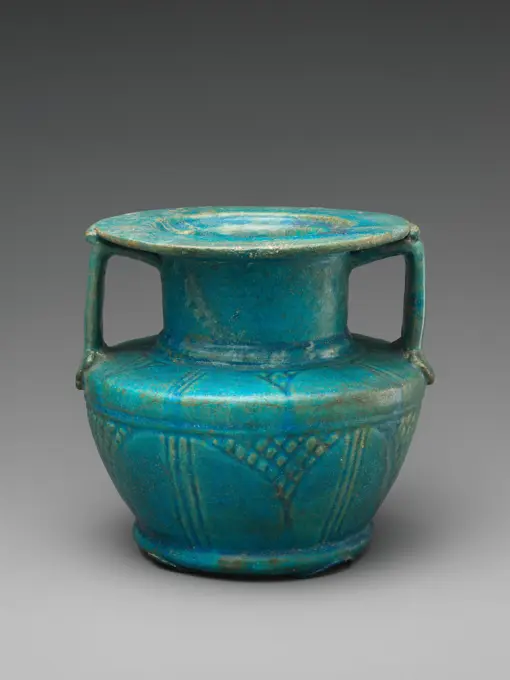
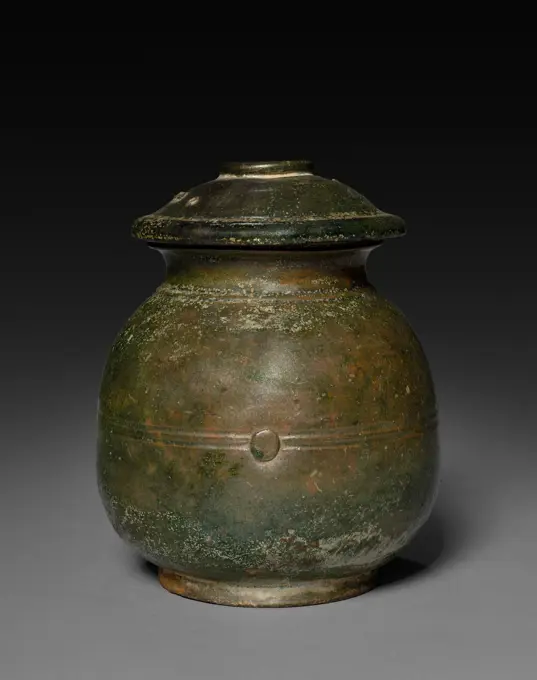
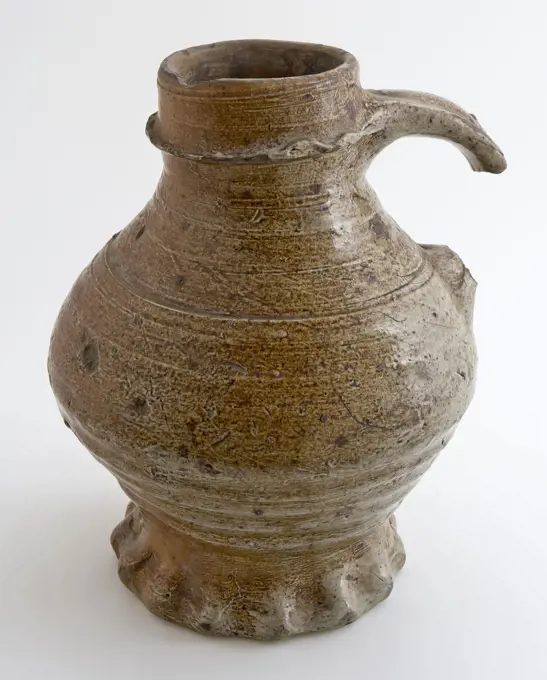
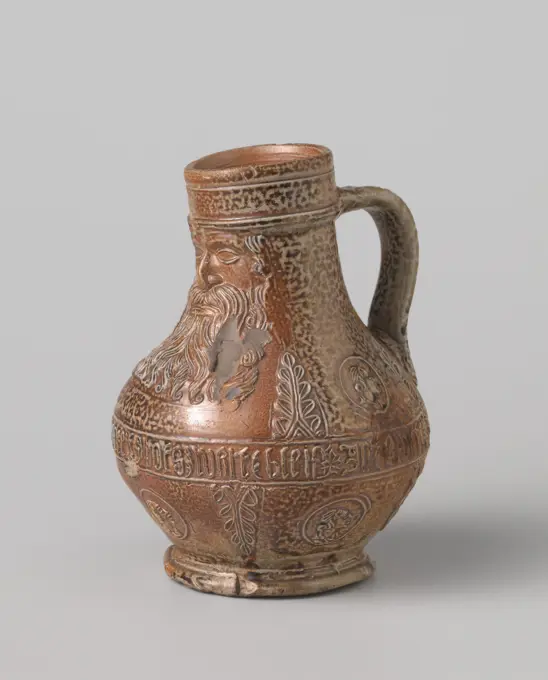
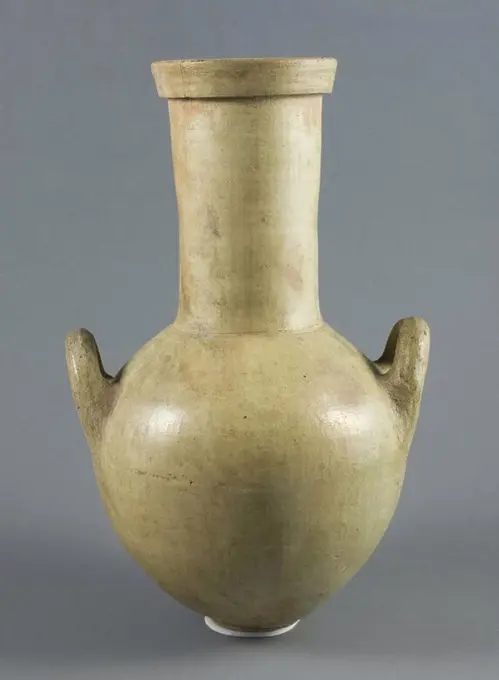
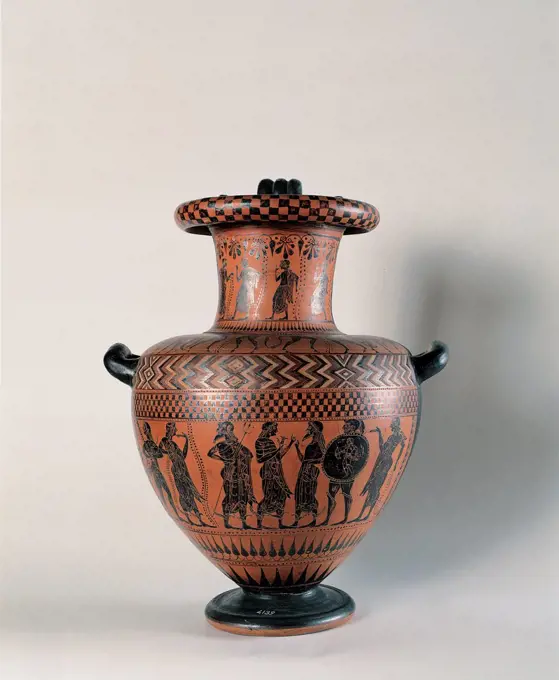
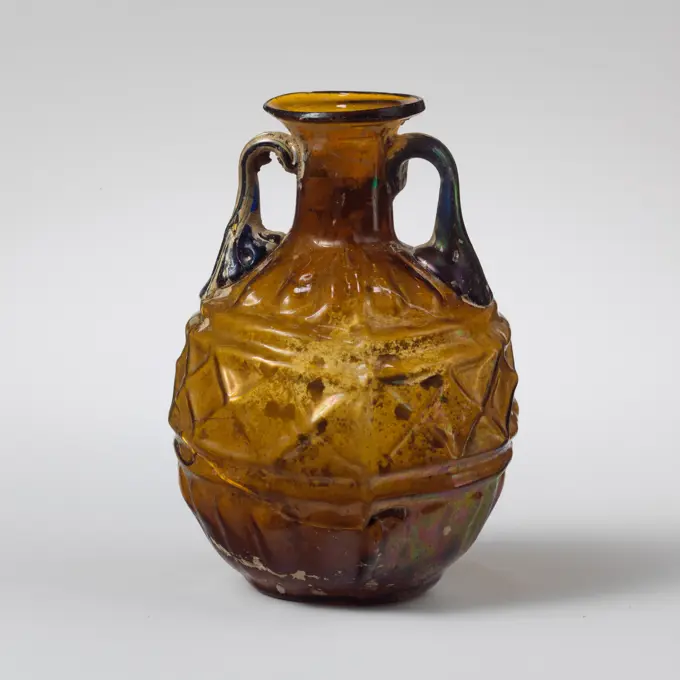
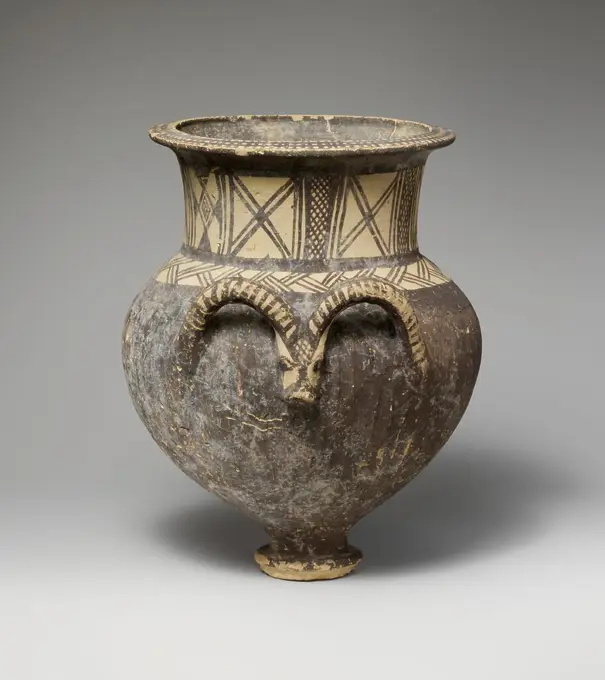
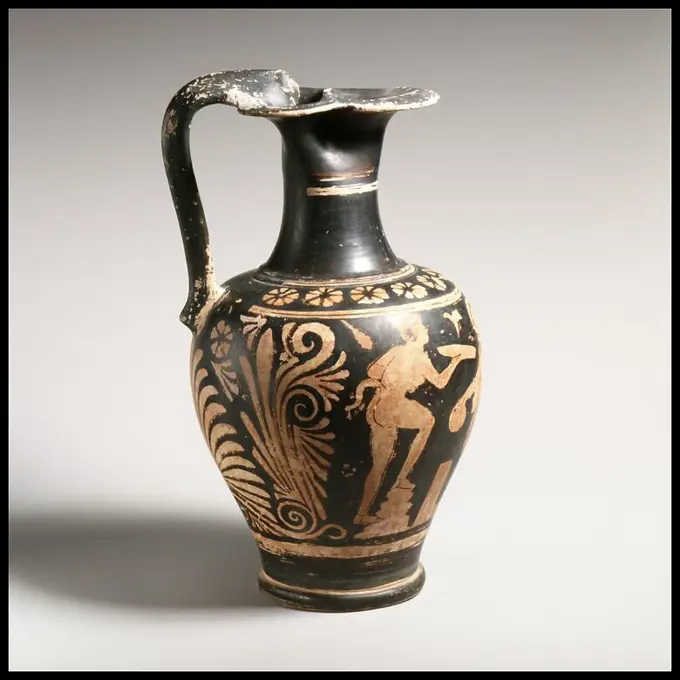
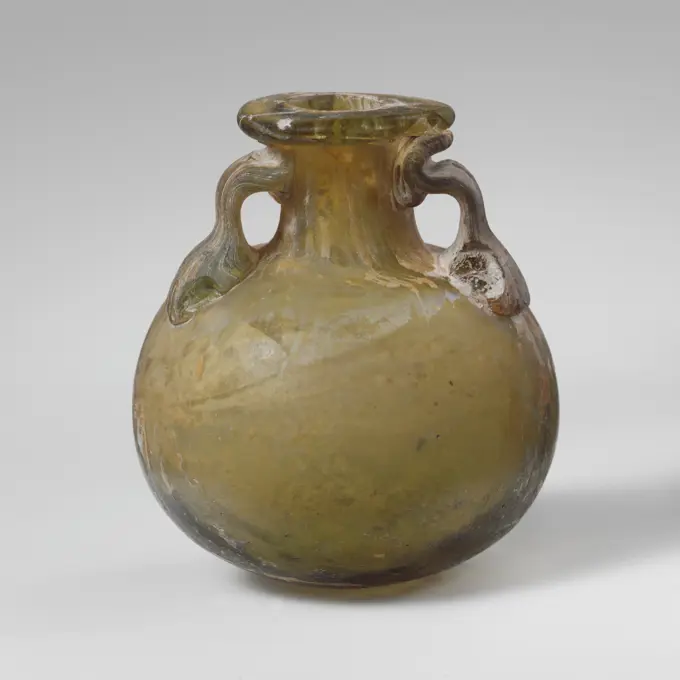
Glass aryballos (oil bottle) mid-1st-3rd century A.D. Roman Thick-walled oil bottleTranslucent yellow green; handles in same color.Rim folded out, over, and in, and flattened on top; cylindrical neck, flaring out at base to join squat, globular body; rounded bottom; two handles applied to top of body in large pads, drawn up, folded in, and pressed on to top of neck and underside of rim.Body intact, but one handle broken and repaired; one large chip missing from rim; chip with weathering breaks missing from lower pad of each handle; some bubbles and glassy inclusions; dulling, pitting, and iridescence, with some creamy weathering.. Glass aryballos (oil bottle). Roman. mid-1st-3rd century A.D.. Glass; blown. Imperial. GlassTerracotta oinochoe (jug) late 10th-early 9th century B.C. Greek, Attic The vases in this case with the accession numbers that begin with 30.118.1 belong to a deposit that was found at the Sanctuary of Zeus on Mount Hymettos, near Athens. The objects date to a period of about two centuries, from the late tenth to the late eighth centuries B.C. and illustrate the nature of ordinary dedications. Of note is the considerable number of small pieces. The vases were acquired as a gift of the Greek government.This oinochoe and its counterparts, 30.ll8.18, 30.118.20, 30.118.40, illustrate Athenian artists' mastery of potting and decoration from the beginning of the Geometric period.. Terracotta oinochoe (jug) 253202Tea Storage Jar, mid- to late 1600s. Nonomura Ninsei (Japanese, active 1600s). Stoneware with white glaze (Shigaraki style); diameter: 28.7 cm (11 5/16 in.); overall: 28.3 cm (11 1/8 in.). Shigaraki ware is recognized for its warm orange color, asymmetrical round forms, and irregular natural ash glazes. These features were largely unintentional on the part of their makers, whose principal goal was a functional jar. Some tea masters employed Shigaraki vessels as found objectsitems appropriated from one context for use in a new onemanifesting effortless and imperfect beauty. In Nonomura Ninsei’s take on Shigaraki, though, careful symmetry is used as a backdrop for deliberately subtle and pleasing deviations such as would appeal to a tea master interested in refined rusticity.Vase. Terracotta. China, Neolithic, Majiayao. Paris, Cernuschi museum. 72782-8 Anse, Asian art, Majiayao, decorative, neolithic, pottery, terracotta, Chinese vaseRitual wine vessel, anonymous, -500 - -200 Lid of ritual wine barrel; Green, gray and brown patina. China bronze (metal) casting Lid of ritual wine barrel; Green, gray and brown patina. China bronze (metal) castingTerracotta stirrup jar. Culture: Cypriot. Dimensions: H. 6 5/16 in. (16 cm.). Date: ca. 1075-1050 B.C..Proto-white painted ware with bands and triangles. Museum: Metropolitan Museum of Art, New York, USA.Jug 600-480 B.C. Cypriot Three converging lines alternating with groups of arrow-shaped lines.. Jug. Cypriot. 600-480 B.C.. Terracotta. Cypro-Archaic II. VasesGlass jug. Culture: Roman. Dimensions: 4 5/8 in. (11.8 cm)Other: 2 3/16 in. (5.5 cm)Diam. of rim: 7/8 in. (2.3 cm)Diam. of foot: 1 3/8 in. (3.5 cm). Date: 1st century A.D..Colorless with bluish tinge; handle in same color.Uneven rim folded out, over, and in; concave neck, joinging imperceptibly with shoulder; ovoid body; integral base ring with pronounced outward fold; flat bottom; rod handle applied in a large pad on shoulder, drawn up and outward, curved in, and pressed on to top of neck, with trail ending on outer edge of rim.Intact, except for small hole hole in shoulder; pinprick bubbles; creamy weathering, pitting, and iridescence. Museum: Metropolitan Museum of Art, New York, USA.Glass jug 1st century A.D. Roman Colorless with bluish tinge; handle in same color.Uneven rim folded out, over, and in; concave neck, joinging imperceptibly with shoulder; ovoid body; integral base ring with pronounced outward fold; flat bottom; rod handle applied in a large pad on shoulder, drawn up and outward, curved in, and pressed on to top of neck, with trail ending on outer edge of rim.Intact, except for small hole hole in shoulder; pinprick bubbles; creamy weathering, pitting, and iridescence.. Glass jug 239704Fragmentary Ewer 14th century. Fragmentary Ewer 444501Jar ". Terracotta with polychrome paint. Neolithic period (around 8000 BC). Paris, Cernuschi museum. Anse, Chinese art, Chinese Ceramic, container, jar, decorative motif, Neolithic period, container, terracottaFluted Vessel, Possibly in the Form of a Gourd 100 CE-300 CE Colima state. Ceramic and pigment . ColimaGlass oinochoe (perfume jug). Culture: Greek, Eastern Mediterranean. Dimensions: Overall: 4 1/4 x 2 1/2 x 2 5/8 in. (10.8 x 6.4 x 6.7 cm). Date: late 6th-5th century B.C..Opaque white, with handle and foot in same color; trails in translucent purple.Applied broad trefoil rim-disk; rather tall cylindrical neck, slanting forward; broad sloping shoulder; ovoid body; applied outsplayed foot with uneven concave bottom; handle attached to top of body over trail decoration, drawn up and out, then turned in and pressed on to back of neck below rim.One trail attached at edge of rim-disk; a second fine trail wound horizontally once around shoulder; a thicker trail begun on shoulder and wound spirally, at first in horizontal lines, then tooled into a close-set zigzag pattern around upper half of body; below this, a fourth trail wound horizontally three times around body; finally, a fifth trail wound around edge of foot.Complete, but broken and repaired bottom of body and top of foot; some dulGlass flask. Culture: Roman. Dimensions: 3 11/16 in. (9.4 cm)Other: 2 1/8 in. (5.4 cm)Diam. of rim: 1 7/16 in. (3.7 cm). Date: 3rd-4th century A.D..Small flaskColorless with pale yellow green tinge.Rounded rim, slightly inverted on one side; flaring mouth; concave neck; bulbous body; small, flattened bottom.Intact; pinprick bubbles; pitting, iridescence, and patches of brown enamel-like weathering. Museum: Metropolitan Museum of Art, New York, USA.Jug (Bartmann jug) with floral scrolls, anonymous, c. 1520 - c. 1560 Jug (beard fancier bush) of stoneware on a high base with a spherical body and wide neck. The C-shaped ear is attached to the neck and shoulder. Profiles on the neck. Covered with a brown Engobe. The belly with flower vines printed and imposed in relief. On the neck, continuously on the shoulder and belly, a bearded man. Cologne/Frechen. Cologne (possibly) stoneware. glaze. engobe vitrification Jug (beard fancier bush) of stoneware on a high base with a spherical body and wide neck. The C-shaped ear is attached to the neck and shoulder. Profiles on the neck. Covered with a brown Engobe. The belly with flower vines printed and imposed in relief. On the neck, continuously on the shoulder and belly, a bearded man. Cologne/Frechen. Cologne (possibly) stoneware. glaze. engobe vitrificationGlass perfume bottle 1st century A.D. Roman Translucent pale blue.Rim folded out, over, and in, with jagged upward inner lip; short, cylindrical neck, tooled in around base; convex, sloping shoulder, with horizontal tooling marks below; squat, bulbous body; small, slightly concave bottom. Thick, heavy glass.Intact; heavy pitting and iridescence, with patches of creamy weathering.. Glass perfume bottle 239648Glass perfume bottle ca. 1st-2nd century A.D. Roman Translucent pale blue green.Thick everted, horizontal rim, with rounded outer lip and circular groove on top surface; short, cylindrical neck, tapering downwards; ovoid body; flat bottom with slightly concave center.Intact; many pinprick bubbles; pitting, dulling, and creamy brown weathering.. Glass perfume bottle 244624Glass aryballos (perfume bottle). Culture: Greek, Eastern Mediterranean. Dimensions: H.: 1 3/8 in. (3.5 cm). Date: late 6th-5th century B.C..Translucent cobalt blue, with same color handles; trails in opaque turquoise blue and opaque yellow. Broad inward-sloping oval rim-disk with radiating tooling marks on upper surface; cylindrical neck; almost horizontal shoulder; almost spherical body; convex, slightly pointed bottom; two ring handles with knobbed tails, applied over trail decoration, extend from shoulder to neck .A turquoise blue trail applied to outer edge of rim-disk; a broad yellow trail applied on upper body and wound down in spiral, at first in horizontal lines, then tooled into a close-set zigzag pattern around central section of body, formed by uneven vertical tooling indents; a second trail in turquoise blue added to zigzag, mingling with the yellow trail; below, a yellow trail and two turquoise blue trails wound horizontally once round body.Intact; dulling, pitting, aJuglet 750-600 B.C. Cypriot "Bird-Jug" type with conventional ornament and imitated hieroglyphs.. Juglet. Cypriot. 750-600 B.C.. Terracotta. Cypro-Archaic I. VasesGlass jug. Culture: Roman. Dimensions: Overall: 5 3/4in. (14.6cm)Other: 3 11/16in. (9.4cm). Date: mid-1st-2nd century A.D..Translucent blue green; handle and trail in same color; purple streak in rim and neck.Everted rounded rim, tooled into trefoil shape; funnel-shaped, oval neck; sloping shoulder; body tapering downward with convex sides; concave bottom; strap handle with three ribs applied to shoulder, drawn up and out, turned in horizontally to rim, and trailed on to top of neck and underside of rim.Complete, but cracks in upper body below handle, running up shoulder and neck to rim; many pinprick bubbles; dulling, pitting, and iridescence on exterior; weathering and encrustation on interior. Museum: Metropolitan Museum of Art, New York, USA.Juglet 750-600 B.C. Cypriot. Juglet. Cypriot. 750-600 B.C.. Terracotta. Cypro-Archaic I. VasesTerracotta Hadra hydria (water jar). Culture: Greek, Ptolemaic. Dimensions: Other: 15 3/4 x 10 7/8 in. (40 x 27.6 cm). Date: 3rd century B.C..On body, wave pattern; on shoulder, conventional ornaments. Museum: Metropolitan Museum of Art, New York, USA.Earthenware storage jar on four long stand fins, comb decoration on the shoulder, storage jar pot holder soil find ceramic earthenware glaze lead glaze, hand turned set decorated glazed fried Stockpot of red brown earthenware profiled collar On shoulder comb stroke in wavy lines with glaze wipe Four pinched fins. Draairings archeology Valckensteyn Poortugaal Albrandswaard indigenous pottery store store stock packaging kitchen Soil discovery: moat at drawbridge castle Valckensteyn at Poortugaal now Albrandswaard 1962.Engraved ceramic jug, Ukraine. Cuman Civilization, 10th-13th Century.Pottery cooking pot, cooking jug, small model with one sausage ear, on three legs, cooking pot tableware holder kitchenware earthenware ceramics earthenware glaze lead glaze, hand-turned glazed baked Pottery cooking jug on three legs. Sausage handle attached to the top edge Funnel shaped top edge. Turning on the shoulder. Red shard sparsely glazed Restoration is repainted archeology Rotterdam City center Stadsdriehoek Bulgersteyn indigenous pottery cooking food preparation kitchen food Soil discovery: slot Bulgersteyn in Rotterdam.Pear-shaped ewer with a scroll border, anonymous, c. 1100 - c. 1299 Can be decorated from earthenware with a breached bond with tenders on the shoulder and covered with monochrome blue alarm laze. Iran earthenware. glaze engraving / vitrification Can be decorated from earthenware with a breached bond with tenders on the shoulder and covered with monochrome blue alarm laze. Iran earthenware. glaze engraving / vitrificationTerracotta amphora (two-handled jar). Culture: Roman, Syrian. Dimensions: 12 3/8in. (31.5cm). Date: ca. A.D. 100-225.Probably made at Dura-Europos. Museum: Metropolitan Museum of Art, New York, USA.Terracotta oinochoe (jug) ca. 550-500 B.C. Etruscan Trefoil mouth, frieze of lions in relief.. Terracotta oinochoe (jug) 250692 Etruscan, Terracotta oinochoe (jug), ca. 550500 B.C., Terracotta, H. 13 9/16 in. (34.5 cm). The Metropolitan Museum of Art, New York. Rogers Fund, 1918 (18.145.27)Globular Jar with Mock Ogre Mask Ring Handles. China. Date: 206 AD-220 AD. Dimensions: H. 39.1 cm (15 3/8 in.); diam. 30.7 cm (12 1/8 in.). Earthenware with underglaze molded decoration and lead green glaze. Origin: China. Museum: The Chicago Art Institute, Chicago, USA.Glass jug. Culture: Roman. Dimensions: 4 3/8 in. (11.1 cm)Other: 4 in. (10.2 cm)Diam. of rim: 2 1/8 in. (5.4 cm). Date: mid-1st-2nd century A.D..Translucent blue green; handle in same color.Collar rim folded out, down, up and out, with rounded outer lip; short, slightly convex cylindrical neck, with tooling marks at base; broad sloping shoulder; cylindrical body with convex side, tapering downward; concave bottom; strap handle applied in large splayed claw pads to shoulder, drawn up and turned in horizontally, and then pressed on to underside of rim and top of neck.Intact; some bubbles and blowing striations; slight weathering, dulling, and iridescence; one patch of encusted earth on lower side of interior. Museum: Metropolitan Museum of Art, New York, USA.Bronze oinochoe (jug) mid-6th century B.C. Greek This jug belongs to a type that first appeared in the late seventh century B.C. and, during the sixth, was popular in the area of the western Mediterranean as far as Spain.. Bronze oinochoe (jug) 254525 Greek, Bronze oinochoe (jug), mid-6th century B.C., Bronze, H. 13 1/8 in. (33.4 cm). The Metropolitan Museum of Art, New York. Rogers Fund, 1945 (45.11.3)Dish with lid Etruscan Dish with one handle and cover, on which are incised oblique lines.. Dish with lid. Etruscan. Terracotta. VasesBronze jug 3rd century B.C. or later Lydian Bronze jug with rounded belly and flat handle.. Bronze jug 252579 Lydian, Bronze jug, 3rd century B.C. or later, Bronze, H.: 7 13/16 in. (19.8 cm) Diam.: 6 3/4 in. (17.1 cm). The Metropolitan Museum of Art, New York. Gift of the American Society for the Excavation of Sardis, 1926 (26.164.14)Jug 600-480 B.C. Cypriot Handle and spout, bands and tongue-pattern.. Jug. Cypriot. 600-480 B.C.. Terracotta. Cypro-Archaic II. VasesPiriform jug with cartouche of Thutmose III ca. 1479-1425 B.C. New Kingdom. Piriform jug with cartouche of Thutmose III 547630Lamp. UnknownTerracotta Hadra hydria (water jar) 3rd century B.C. Greek, Egypt, Alexandria-Hadra On body, ivy branch and band of laurel; on shoulder, conventional pattern; on neck, laurel sprays.. Terracotta Hadra hydria (water jar). Greek, Egypt, Alexandria-Hadra. 3rd century B.C.. Terracotta. Hellenistic. VasesAmphoriskos. UnknownGlass jug 4th century A.D. Roman Translucent pale blue green; handle, foot ring, and trails in same color.Rounded, vertical rim; funnel-shaped neck at top, then cylindrical, expanding slightly downwards; pushed-in horizontal shoulder; bulbous body; outsplayed coiled foot ring, applied as an irregular oval shape; kick in bottom, with thick pontil scar; three-ribbed strap handle, applied as a large pad with tooling indent across inside and short claws on outside, drawn up and slightly outwards, then turned in horizontally, folded up, down and onto top of neck over trails, with thumb rest projecting above rim.Thick trail wound once around top of neck; a finer trail applied to neck and wound up in a spiral three times, ending under thick trail; another trail wound in a spiral around middle of neck over the other, forming a short cross pattern; a third finer trail wound once around outer edge of shoulder.Intact, except for part of second finer trail; bubbles, a few glassy inclusions, and blSprinkler 101 CE-300 CE Syria. Glass, blown technique . Ancient RomanJar ". Terracotta painted in black. Neolithic period (around 8000 BC). Paris, Cernuschi museum. Anse, Chinese art, Chinese Ceramic, container, jar, decorative motif, Neolithic period, container, terracottaRitual wine container (hu) with mythical creatures 3rd-2nd century B.C. China. Ritual wine container (hu) with mythical creatures 61094Lamp; Anatolia; 1st - 4th century; Terracotta; 4 x 7.7 x 10 cm (1 9,16 x 3 1,16 x 3 15,16 in.)Terracotta jug. Culture: Roman. Dimensions: total preserved H. 6 1/8 in. (15.5 cm)H. without handle 5 7/16 in. (13.8 cm). Date: 1st half of 1st century A.D..Footed jug with raised dot design. Much of the lead-glazed pottery of the Early Imperial period was produced in the Roman East at various sites on the western and southern coasts of Asia Minor. Museum: Metropolitan Museum of Art, New York, USA.Jar or jug, anonymous, c. 1400 - c. 1600 Jar or jug of red -baked earthenware, partially brown glazed. The low foot runs narrow, with the body on it, which is halfway at its widest. At the top a narrower neck with a thick edge. Netherlands (possibly) earthenware Jar or jug of red -baked earthenware, partially brown glazed. The low foot runs narrow, with the body on it, which is halfway at its widest. At the top a narrower neck with a thick edge. Netherlands (possibly) earthenwareTerracotta juglet. Culture: Cypriot. Dimensions: H. 4 15/16 in. (12.5 cm). Date: ca. 1600-1450 B.C..The body of the jug is decorated with coiling snakes in relief. Museum: Metropolitan Museum of Art, New York, USA.Small stoneware jug with standing ear, jug crockery holder soil find ceramic stoneware glaze salt glaze, surface 4.5 hand turned glazed baked Stoneware jug gray shard salt glaze local brown brindled sausage ear with short tail archeology Rotterdam City center Stadsdriehoek Delftsevaart import pottery storage oil store Soil discovery at the partial reclamation of the Delftse Vaart here for the purpose of making the lift over the Vaart in the summer of 1928.JugGlass amphoriskos with horizontal ribs 2nd half of 1st century A.D. Roman Translucent purple, with one handle in purple streaked with some green, the other in pale green.Rim folded out, over, and in, and flattened into flaring mouth, aslant to cylindrical neck, the lower half of which is indented and bears vertical mold marks in relief; ovoid body, tapering to pointed bottom; two rod handles attached to upper body in pads, drawn up and folded onto sides of neck, one with loop above. One continuous mold seam around body.Body decorated with seventeen concentric, horizontal ribs.Intact, but crack in one side of neck; some bubbles; dulling, slight pitting, and faint iridescence on exterior, encrustation and iridescent weathering on interior.. Glass amphoriskos with horizontal ribs 245368Glass perfume bottle. Culture: Roman. Dimensions: Overall: 3 1/8in. (8cm)Diam.: 1 3/4 x 13/16 in. (4.4 x 2.1 cm). Date: 1st-2nd century A.D..Translucent pale blue green.Rim folded out, over, and in; flaring mouth; cylindrical neck, tooled in around base; conical body with rounded curve to slightly raised, flat bottom.Faint horizontal tooled indent around upper part of body.Intact; many pinprick and larger bubbles and blowing striations; dulling, pitting, and iridescence on exterior; soil encrustation and creamy brown weathering on inside of neck. Museum: Metropolitan Museum of Art, New York, USA.Terracotta squat lekythos (oil flask) 4th century B.C. Greek, South Italian, Campanian Ribbed.. Terracotta squat lekythos (oil flask) 254409 Greek, South Italian, Campanian, Terracotta squat lekythos (oil flask), 4th century B.C., Terracotta, H. 4 1/16 in. (10.3 cm). The Metropolitan Museum of Art, New York. Rogers Fund, 1941 (41.162.238)Terracotta amphora (jar). Culture: Cypriot. Dimensions: H. 12 3/16 in. (31 cm). Date: 850-750 B.C..Geometric ornament in panels on neck and shoulder. Museum: Metropolitan Museum of Art, New York, USA.Jar (Hu) Made 206 BCE-220 CE China. Bronze with incised gilt decoration .Amphora ca. 900-700 B.C. East Greek, Samian. Amphora. East Greek, Samian. ca. 900-700 B.C.. Terracotta. VasesBronze perirrhanterion (sprinkler) 2nd half of the 4th century B.C. Greek Perirrhanteria of this shape, with a separate stopper and a tongue ornament on the body, are well attested in the fourth century B.C. They are believed to have been used during funerary rituals.. Bronze perirrhanterion (sprinkler) 255759Anonymous, vase hu (Common name), -0206, terracotta turned and engraved. Cernuschi Museum, Asia Museum of Asia in the city of Paris.Ring Handled Jar. China, 13th-15th century. Furnishings; Serviceware. Stoneware with brown glazeBird Warrior Bottle 4th-7th century Moche Stirrup-spout bottles were the privileged ceramic medium used by Moche artists in the expression of complex ideological messages. Moche slip-painted vessels were typically bichrome, with red decoration on white/cream background. This bottle dates from the Moche apogee period (400-750), during which the fineline painting tradition was used to create a great diversity of narrative scenes. Since painting styles of Moche artists are as distinctive as handwritings, it is possible to recognize multiple vessels with scenes painted by the same artist. Here, the figures represent either anthropomorphized bird warriors or human warriors wearing feathered adornments and bird-face masks. They carry shields, lances, and triangular war clubs similar to those found in burials of the Moche elite. Other warrior attributes include the trapezoidal backflaps, conical helmets, and tunics covered with square metal platelets.. Bird Warrior Bottle 309437Can be decorated with blue and gray flowers on purple fond. Can be from stoneware. Gray with ornaments in relief. Decorated with blue and gray flowers on a purple ground.LekythosStoneware chamber pot, ease of use on standing surface, rotating bells on belly, standing ear, pot holder sanitary soil found ceramics stoneware glaze salt glaze, hand turned glazed baked Stoneware chamber pot gray shard with light brown salt glaze Slightly curved stand the pot is unstable Rotating from shoulder to foot Funnel shaped neck with spacious neck opening. Spherical and double conical in shape. Wide and upright bandoor archeology import pottery import drains night sleeping room hygieneRectangular Bottle with Loop Handles. China. Date: 25 AD-220 AD. Dimensions: 18.8 × 14.0 × 7.3 cm (7 3/8 × 5 1/2 × 2 7/8 in.). Earthenware with lead green glaze and underglaze molded and incised decoration. Origin: China. Museum: The Chicago Art Institute, Chicago, USA.Glass two-handled jar. Culture: Roman, Palestinian. Dimensions: H.: 3 7/8 in. (9.8 cm). Date: 3rd-4th century A.D..Translucent pale blue green; handles and trails in same color.Rounded, everted rim; below, hollow folded flange; short concave neck; squat globular body; pushed-in bottom with interior kick and pontil ring at center; two rod handles applied in large pads over trail to upper body, drawn up and out, then folded down and in onto flange, drawn up again, and snipped off on top edge of rim.One trail applied to body at greatest diameter to form zigzag pattern, extending two-thirds of way around body; a second trail applied to complete the zigzag, then drawn up over first trail and wound horizontally once around upper body.Intact; pinprick and a few larger bubbles; dulling, creamy weathering, and iridescence. Museum: Metropolitan Museum of Art, New York, USA.Glass amphoriskos (perfume bottle) 2nd-mid-1st century B.C. Greek, Eastern Mediterranean Translucent light blue; handles and base-knob in translucent blue green; trails in opaque white and opaque yellow.Inward-sloping rim-disk, with tooling indent underneath; tall, slightly concave, cylindrical neck; sloping shoulder; elongated piriform body; large applied knob-base; two rod handles applied in pads across shoulder, drawn up vertically to just below rim, then looped in and down, and attached to neck below rim over trail decoration.Thick yellow trail applied to top of neck, wound in a spiral down neck and across shoulder to body; a white trail applied over yellow two-thirds down neck, wound round in a spiral to top of body, then tooled into a close-set festoon pattern with thirty-one irregular upward strokes, continuing in a plain spiral around lower part of body, ending under base knob.Body complete, but one of handles broken and repaired, and large chip in base knob; some dulling and pGlass jug. Culture: Roman. Dimensions: 4 3/4 in. (12 cm)Other: 4 3/8 in. (11.1 cm)Diam. of rim: 1 11/16 in. (4.3 cm). Date: 2nd-3rd century A.D..Translucent blue green; handle in same color but with some green streaks.Tubular rim folded out, down, round, and in, and then pressed on to inside of flaring mouth; short, slightly funnel-shaped cylindrical neck, with tooling marks at base; narrow, sloping shoulder; conical body, with convex sides; broad, concave bottom; strap handle applied to shoulder with two rounded claw pads at sides and central rib, drawn up and out, turned in horizontally, drawn up in S shape to form a vertical fold as thumb rest above rim, and then trailed on to outer edge of rim and top of neck.Intact; few bubbles in body but some black and streaks in handle; dulling, weathering, and iridescence, with most of surfaces covered with a limy encrustation. Museum: Metropolitan Museum of Art, New York, USA.Terracotta aryballos (oil flask) ca. 620-590 B.C. Attributed to the New York Comast Painter Komasts (padded dancers)During the Early Corinthian period, there seem to have been workshops specializing in aryballoi decorated with komasts. These dancers performed in observances dedicated to the god Dionysos. However, on vases that were produced in quantity, such as this one, it is likely that the iconography is conventional rather than significant in any specific sense.. Terracotta aryballos (oil flask) 247190Slave-Made Colonoware” VesselBlack-Figure Pyxis (Cylindrical Lidded Box): Animals, 500s BC, with modern painting and incision. Greek, Corinthian (Middle-Late). Ceramic; overall: 14.5 cm (5 11/16 in.).Biconical alabastron with zones of bichrome decoration including floral elements, dancers, and Bes-like figures 332-30 B.C. Ptolemaic Period The rim is broken away, but the body decoration is preserved. Registers of garlands, a vine () pattern, and rosettes, are followed by two figural registers. The upper registers depicts figures with shoulder length hair curled up at the rear and wearing long flowing garments. They appear to be dancing or running. The lower figural register depicts figures with feathers, broad faces, and tails - apparently Bes-images. Some figures are running, others are gathered around a vessel on a stand on one side, and on the other what appears to be a cauldron or stove. Beneath the figural registers the body of the vessels is covered with a weave pattern.. Biconical alabastron with zones of bichrome decoration including floral elements, dancers, and Bes-like figures. 332-30 B.C.. Faience. Ptolemaic Period. From Egypt; Possibly from Western Delta, NaukratisGlobular bowl, 3rd-7th century, 6 x 4 3/4 x 4 3/4 in. (15.2 x 12.1 x 12.1 cm), Polychromed earthenware, Mexico, 3rd-7th centuryVase;  19th/20th century (1891-00-00-1910-00-00);Terracotta stirrup jar ca. 1300-1190 B.C. Mycenaean With conventional designs.. Terracotta stirrup jar 251882 Mycenaean, Terracotta stirrup jar, ca. 13001190 B.C., Terracotta, H. 7 in. (17.8 cm.). The Metropolitan Museum of Art, New York. Fletcher Fund, 1925 (25.78.102)Vase in ANSES (common name). Celadon coverage sandstone. Cernuschi Museum, Asia Museum of Asia in the city of Paris.Jug with the four evangelists, Jan Emens Mennicken (attributed to workshop of), c. 1584 - c. 1600 Jug of stoneware on high foot with a cylindrical body with round shoulder and wide neck. The C-shaped ear is attached to the neck and shoulder. Profiles on the neck and foot. Covered with a brown Engobe. On the belly in relief a printed and imposed band of rolling work with one of the four evangelists with their attribute in a medallion. Below the inscription 'Dit dei Veir Evangelisteen Mattevs Marcvs Iohannis 1584 C P'. The lower part of the abdomen runs slanted to the foot and is divided into courses with entry lines. On the shoulder core and on the neck a band with leaf vines interrupted by medallions with a portrait and face or lion's head. Raeren. Rae stoneware. glaze. engobe vitrification Jug of stoneware on high foot with a cylindrical body with round shoulder and wide neck. The C-shaped ear is attached to the neck and shoulder. Profiles on the neck and foot. Covered with a brown EnGlass jug. Culture: Roman. Dimensions: H.: 7 in. (17.8 cm)Diam.: 4 1/8 x 1 5/16 in. (10.5 x 3.3 cm). Date: 1st-2nd century A.D..Translucent blue green; handle in same color.Rim folded out, down, round, and in, with beveled upper edge; tall, slender cylindrical neck, expanding slightly downwards, with tooling indent around the base; conical body with curving side; almost flat bottom; three-ribbed strap handle with three claws extending downwards applied to top of body, drawn up and slightly outwards, turned in horizontally, and trailed onto top of neck and underside of rim.Complete, but with a large crack around body and another across handle; some bubbles and blowing striations; dulling, pitting, and iridescent weathering on exterior, large patches of soil encrusted weathering and brilliant iridescence on interior. Museum: Metropolitan Museum of Art, New York, USA.Tripod Vessel with Squared Handles, Wheel Patterns at Neck. China. Date: 1100-1199. Dimensions: H. 15.0 cm (5 15/16 in.); diam. 12.0 cm (4 3/4 in.). Stoneware with molded/applied relief and iron brown glaze. Origin: China. Museum: The Chicago Art Institute, Chicago, USA.Jug. Roman; probably Rheinland. Date: 201 AD-300 AD. Dimensions: 7.6 × 5.4 × 5.4 cm (2 × 2 1/8 × 2 1/8 in.). Glass. Origin: Mediterranean Region. Museum: The Chicago Art Institute, Chicago, USA. Author: ancient Mediterranean.Glass perfume bottle 1st-early 2nd century A.D. Roman Colorless with bluish tinge.Rim folded out, over, and in, with beveled upper surface; cylindrical neck, with slight tooling marks around base; squat, globular body; slightly concave bottom. Fairly heavy, thick glass.Single horizontal cut groove around upper part of body.Intact; some pinprick bubbles; dulling and iridescent weathering.. Glass perfume bottle 239627Yolande Delasser, Water Jug, c 1936 Water JugBottle with a green brown glaze, anonymous, c. 1700 - c. 1800 Bottle of stoneware with an egg -shaped body and a short, spreading neck, covered with a crackled green -brown glaze. The underside is unglazed. Old label on the bottom with 'W692'. Japan (possibly) stoneware. glaze vitrification Bottle of stoneware with an egg -shaped body and a short, spreading neck, covered with a crackled green -brown glaze. The underside is unglazed. Old label on the bottom with 'W692'. Japan (possibly) stoneware. glaze vitrificationARTE PREHISTORICO-NEOLITICO. ESPAÑA. VASIJA DE BARRO de época neolítica. Procedente de la Cueva del Niño (Ayna). Museo Arqueológico Provincial de Albacete. Castilla-La Mancha.Biconical Urn. Unknown 775-750 B.C.Fluted pear-shaped ewer with a turquoise glaze, anonymous, c. 1100 - c. 1299 Can be covered with a ribbed, pear-shaped body covered with a monochrome green-turquoise with a ribbed, pear-shaped body. Iran earthenware. glaze vitrification Can be covered with a ribbed, pear-shaped body covered with a monochrome green-turquoise with a ribbed, pear-shaped body. Iran earthenware. glaze vitrificationEwer with Inscriptions and Hunting Scenes 11th century This is a remarkably elaborate and fine example of a little-known type of ewer. Of special note are the pomegranate finial on the handle and the scenes on the body, which include a man and a saluki hunting dog chasing a hare, and a man fighting a lion, both set against a background of circular, spiraling floral scrolls. The Arabic inscriptions on the neck and shoulder read: "With auspiciousness, blessing, prosperity and joy," and "With auspiciousness, blessing, joy, happiness, and peace." Listen to experts illuminate this artwork's story Listen Play or pause #6683. Ewer with Inscriptions and Hunting Scenes Supported by Bloomberg Philanthropies We're sorry, the transcript for this audio track is not available at this time. We are working to make it available as soon as possible.. Ewer with Inscriptions and Hunting Scenes 449450Glass amphoriskos (perfume bottle) late 6th-5th century B.C. Greek, Eastern Mediterranean Translucent dark cobalt blue, with handles in same color; trails in opaque yellow and opaque turquoise blue.Broad inward-sloping rim-disk; cylindrical neck, expanding slightly downwards; broad, angular shoulder; tall conical body, tapering downwards to pointed bottom; two vertical strap handles applied to top of shoulder, drawn up, and pressed onto underside of rim-disk.One yellow trail attached at edge of rim-disk; another yellow trail applied to neck and wound in a spiral across shoulder and around top of body, then tooled into an uneven zigzag pattern on upper half of body, where a turquoise blue trail is added, mingling with the yellow; below this, both trails drawn down and wound horizontally once around lower body.Complete, except for base-knob; parts of trails completely weathered, leaving only indentation in body; dulling, pitting, and faint iridescence.. Glass amphoriskos (perfume bottle)Two-Handled Jar ca. 1st-2nd century A.D Roman Period This two-handled vase is made out of turquoise blue faience. It is decorated with plain nelumbo leaves, shown on the body of the vessel emerging from a diamond pattern, and large stylized nelumbo leaves adorn the shoulder. Floral motifs are typical of faience vessels produced in Egypt during the Graeco-Roman Period and belong to the pharaonic decorative repertoire.This vase looks like a smaller version of a Greek column krater and although it is not clear if it was used as a mixing vessel, its form probably derives from the Greek type, combining it with Egyptian decoration and material.. Two-Handled Jar. ca. 1st-2nd century A.D. Faience. Roman Period. From EgyptJug of stoneware. Jug of stoneware with remains of a pewter lid. On the bullet-shaped belly a mask, from which blasting elliptical ornament straps occupied with printed rosettes.Terracotta barrel-shaped jug. Culture: Cypriot. Dimensions: H. 4 5/16 in. (11 cm). Date: 850-750 B.C..One handle, circles and geometric ornament at front. Museum: Metropolitan Museum of Art, New York, USA.Middle-Corinthian amphora with zoomorphic decorationJar with Cover, 206 BC - AD 220. China, Han dynasty (202 BC-AD 220). Glazed earthenware; diameter: 20.3 cm (8 in.).Vase 1901 Van Briggle Pottery Company. Vase 19868Brown stoneware jug with pinched foot, profiled edge under neck opening, ear, jug crockery holder soil find ceramic stoneware clay engobe glaze salt glaze, hand turned glazed baked Stoneware jug gray shard brown engobe and locally gray salt glaze bandoor groove and excellent narrow ridge below the mouth edge two grooves around the upper half belly around the bottom half belly turns pinched foot Belly model double conical shape archeology Rotterdam Delfshaven Lage Erf import pottery serve serve drink wine beer Soil discovery Rotterdam: Lage Erf Delfshaven 1924.Jug (Bartmann jug) with portraits, leaves and an inscription, anonymous, c. 1530 - c. 1570 Jug (beard fancier bush) of stoneware on a high base with a spherical body and wide neck. The C-shaped ear is attached to the neck and shoulder. Profiles on the neck. Covered with a brown Engobe. On the belly in relief a printed and imposed bond with an inscription in mirror image 'Gots writ in Eivickeit ', Repeated twice. On either side of the inscription medallions with portraits and profil, leaf motifs and rosettes. On the neck, continuously on the shoulder, a bearded man. Baardman damaged. Cologne/ Frechen. Cologne stoneware. glaze. engobe vitrification Jug (beard fancier bush) of stoneware on a high base with a spherical body and wide neck. The C-shaped ear is attached to the neck and shoulder. Profiles on the neck. Covered with a brown Engobe. On the belly in relief a printed and imposed bond with an inscription in mirror image 'Gots writ in Eivickeit ', Repeated twice. On either side of th. Dust theater or chair of stoneware with an ivory lid, partly covered with a black-brown glaze. The lower part of the bus is unglazed. Seto.Vessel. Egyptian. Date: 1350 BC-1200 BC. Dimensions: H. 33.25 cm (13 1/8 in.); diam. 19 cm (7 1/2 in.). Terra-cotta. Origin: Egypt. Museum: The Chicago Art Institute, Chicago, USA. Author: Ancient Egyptian.Terracotta black-figured hydria from Cerveteri, 6th Century, ceramic,Glass amphoriskos (perfume flask) with band of lozenges 1st century A.D. Roman, Syro-Palestinian Translucent brownish yellow; handles in cobalt blue.Everted rim, rounded in flame; flaring mouth; cylindrical neck; globular body; slightly oval base, with flat bottom; two rod handles attached in a large pad to shoulder, drawn up, turned in, and pressed onto neck. One continuous mold seam around body and across bottom, extending to base of neck and forming raised line across bottom with a small knob at the center.On body, frieze of sixteen downturned raised tongues on upper body and twenty-one upturned rounded tongues on lower body, joined by a central band of twelve contiguous X-shaped lozenges bordered above and below by two horizontal raised lines.Broken and cracked with one large hole in side; few bubbles; faint iridescence, small patches of creamy white weathering, and some soil encrustation on interior.Yellow molded Sidonian jug with two handles.. Glass amphoriskos (perfume flask) wiTerracotta amphora (jar). Culture: Cypriot. Dimensions: H. 8 1/2 in. (21.59 cm). Date: 1050-950 B.C..The handles are in the form of a stylized goat's head. Museum: Metropolitan Museum of Art, New York, USA.Vessel, 20th century, 11 3/4 x 8 3/4 x 6 1/2 in. (29.85 x 22.23 x 16.51 cm), Unglazed ceramic, Nigeria, 20th centuryTerracotta oinochoe (jug). Culture: Greek, South Italian, Apulian. Dimensions: H. 9 5/8 in. (24.4 cm). Date: ca. 320-310 B.C..Seated Dionysos pouring a libation over an altar. He is flanked on the left by a satyr holding a platter and on the right by a maenad holding a tympanon and a thyrsos. Each attendant rests one foot on a rock. Museum: Metropolitan Museum of Art, New York, USA.