Ancient Artifacts and Vases

A collection of ancient and miniature vases and jars in various shapes and materials, showcasing historical pottery and ceramics from different cultures.
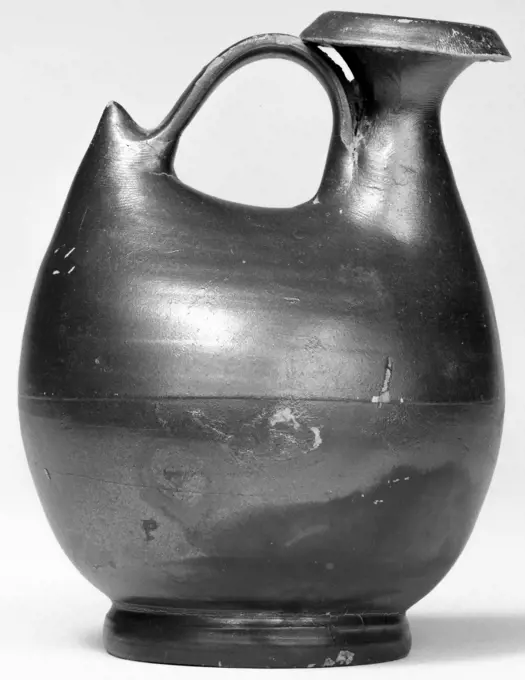
Campanian Black Duck Askos (medium-sized); Campania, South Italy, Europe; 323 - 31 B.C; Terracotta; 11.5 cm (4 1,2 in.)
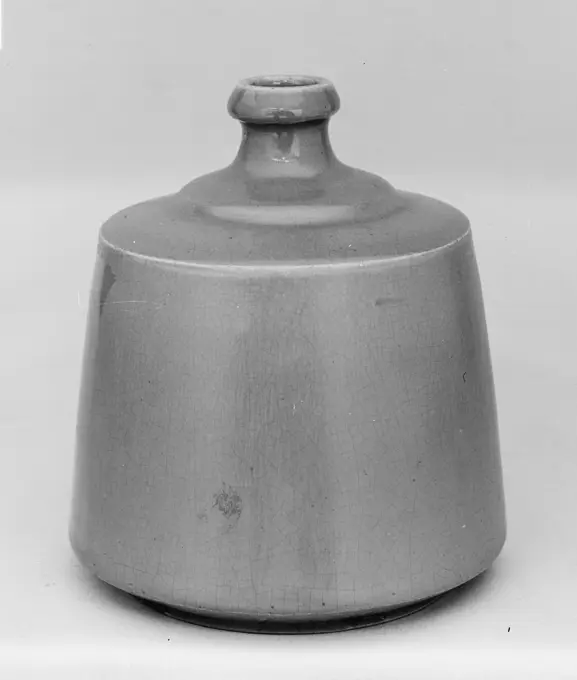
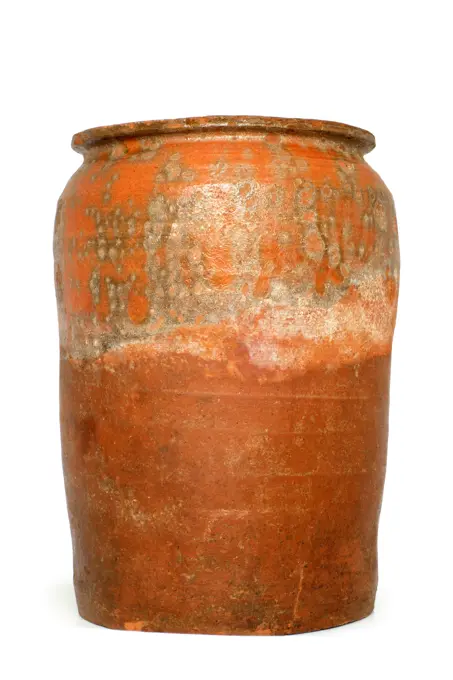
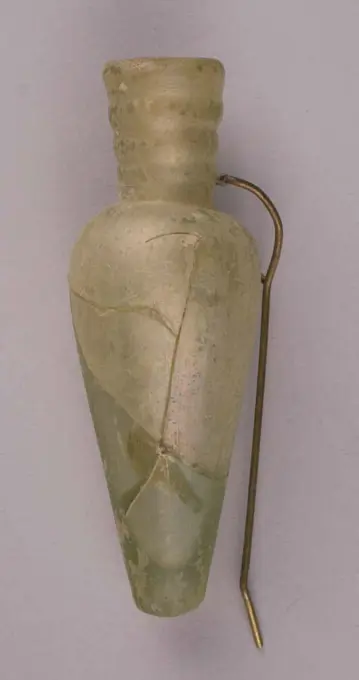
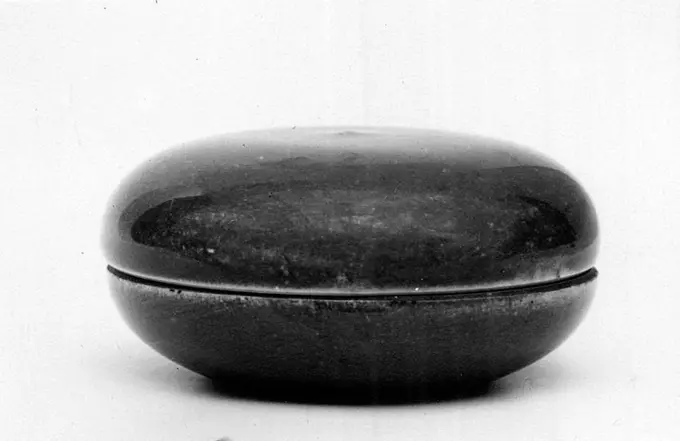
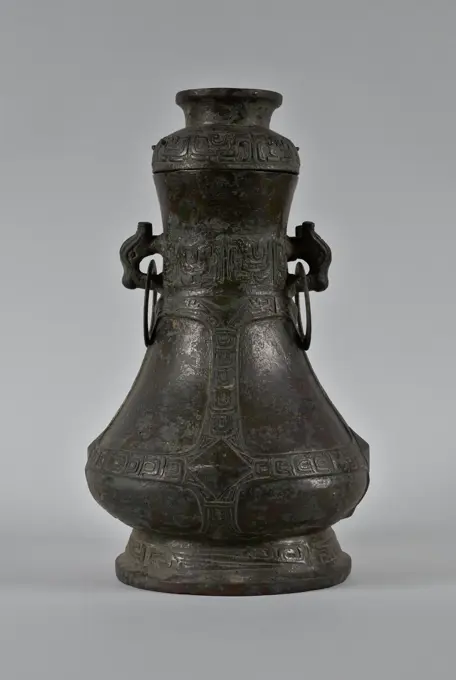
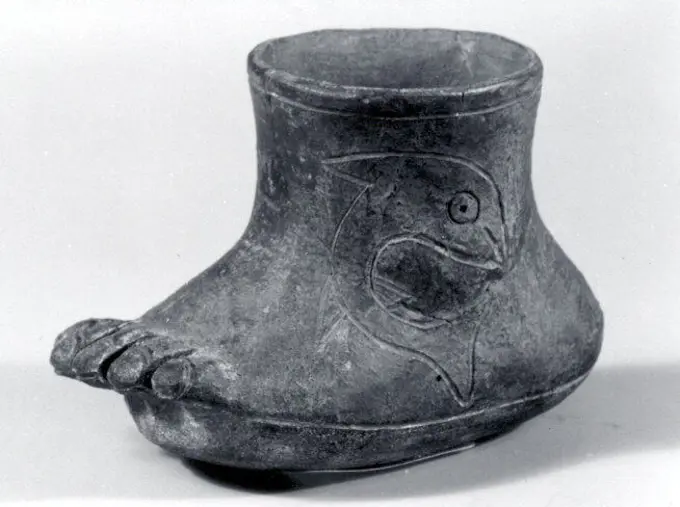
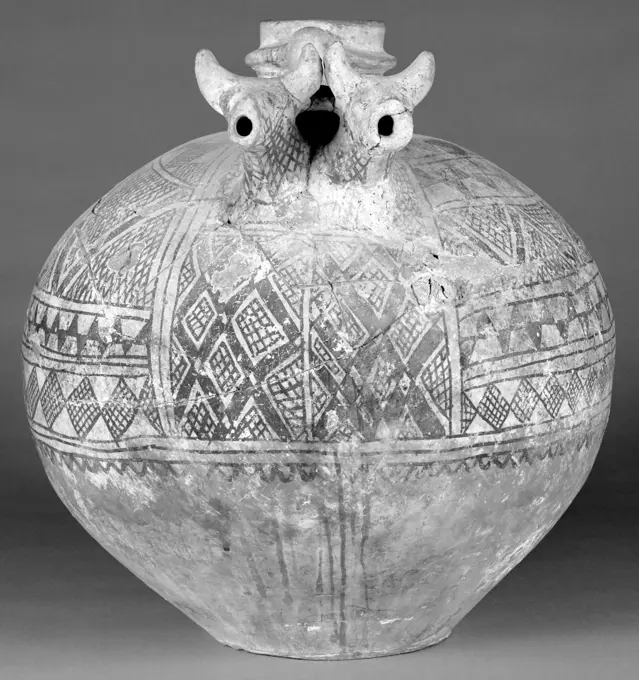
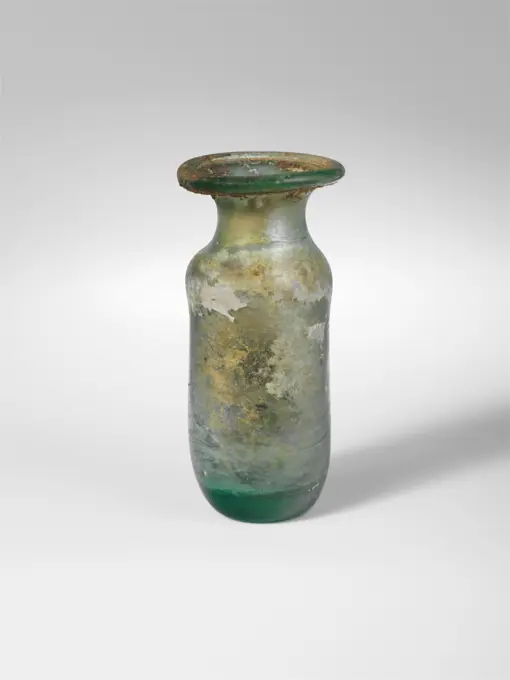
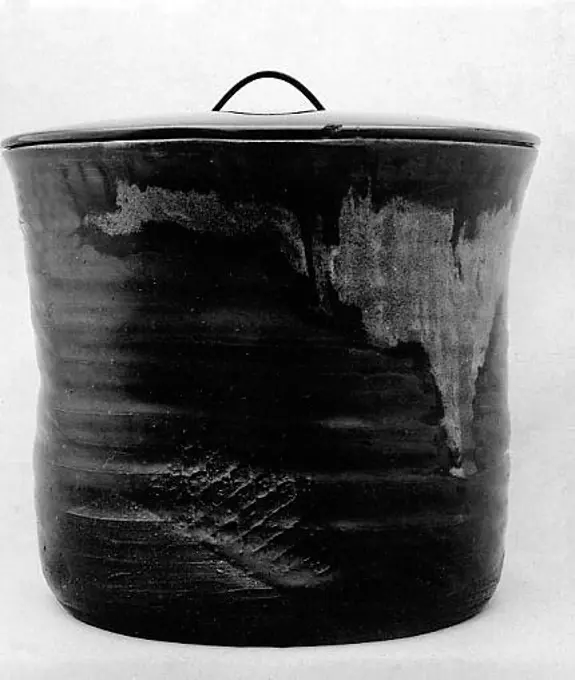
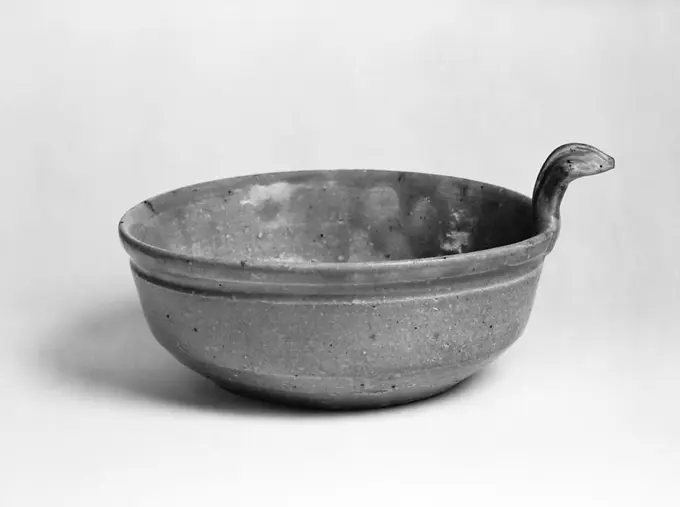
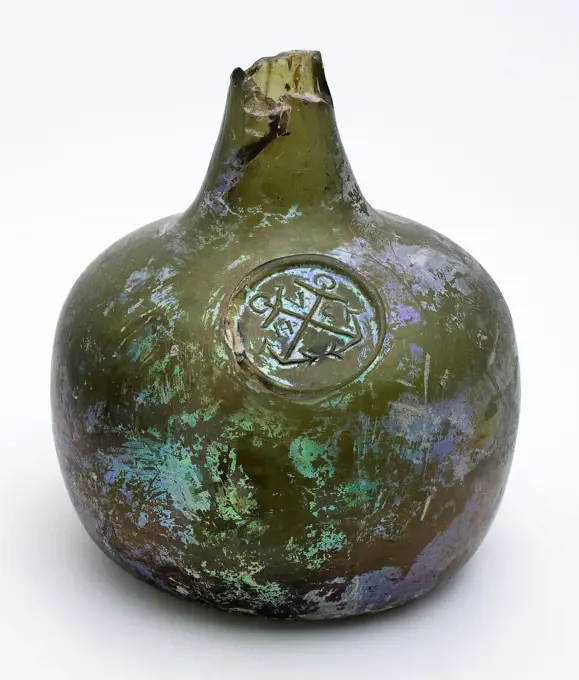
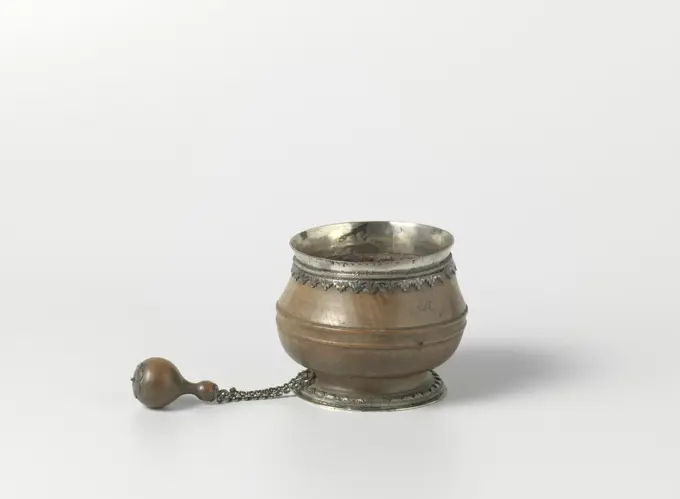
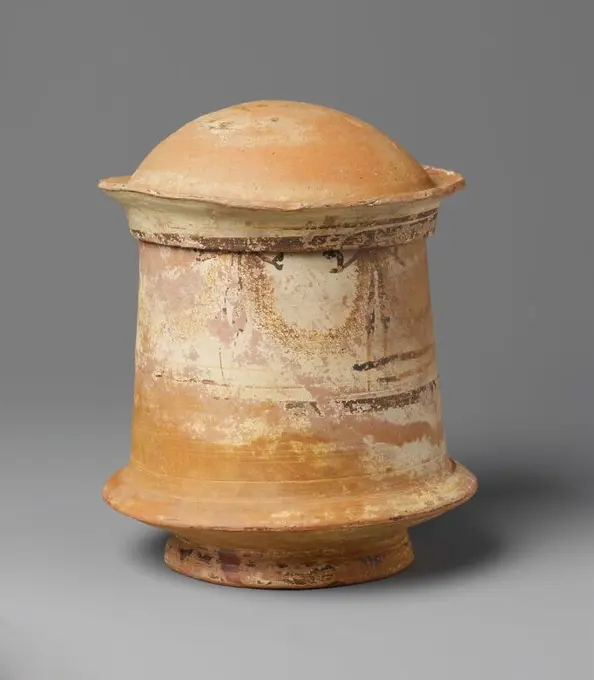
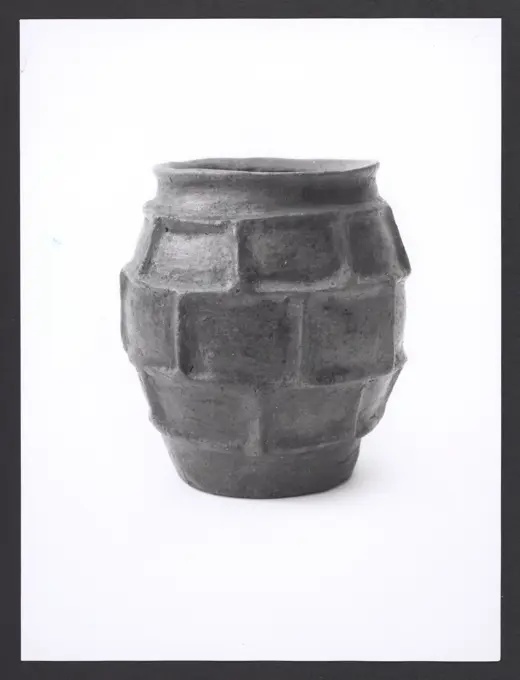
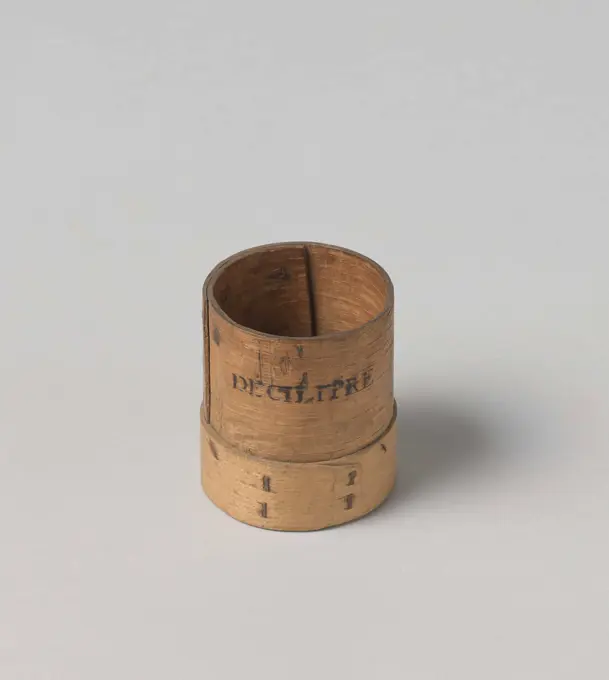
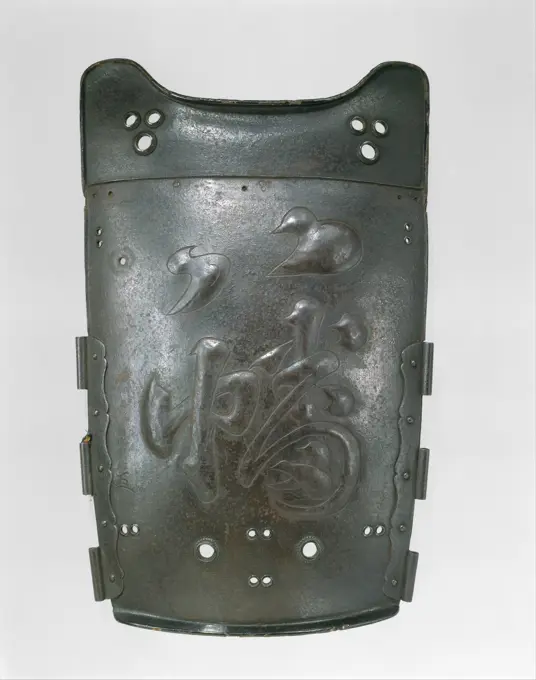
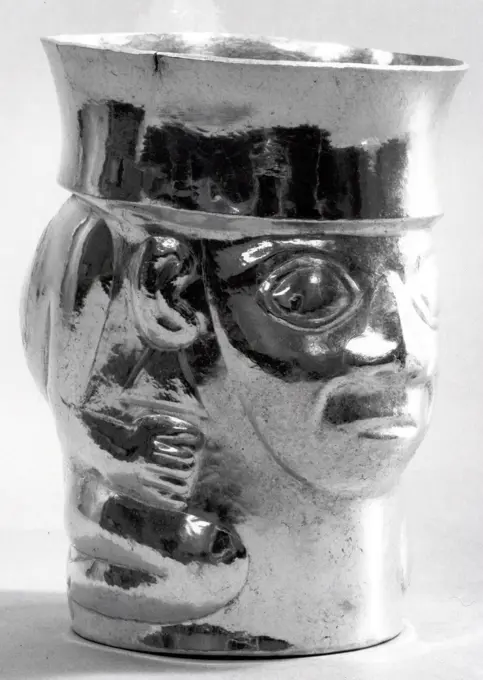
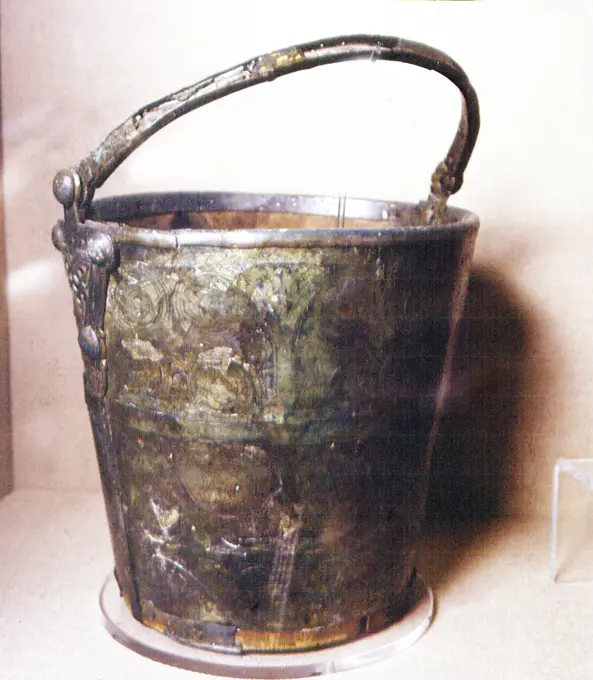
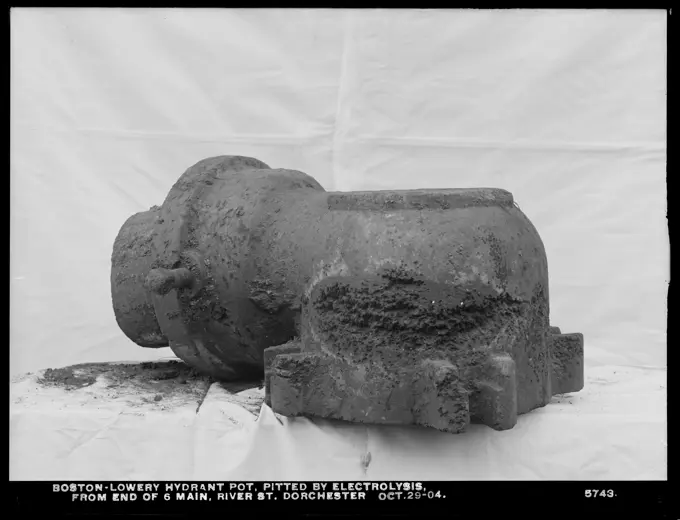
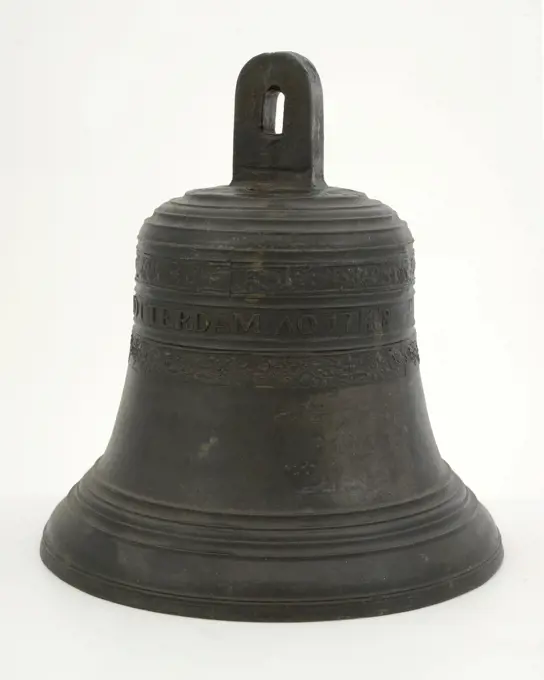
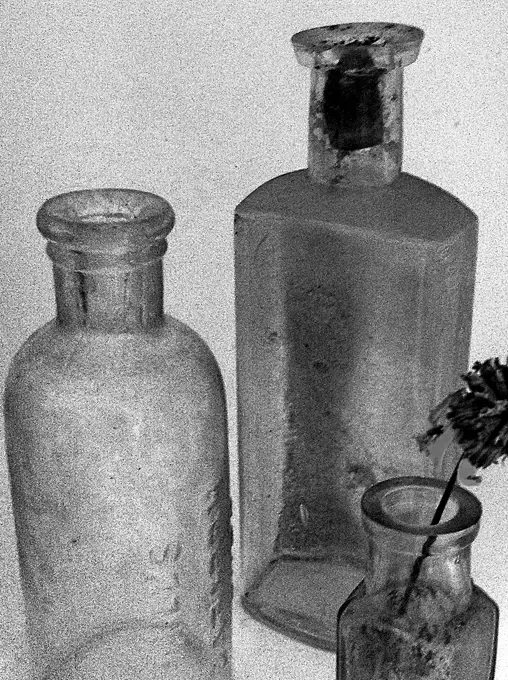
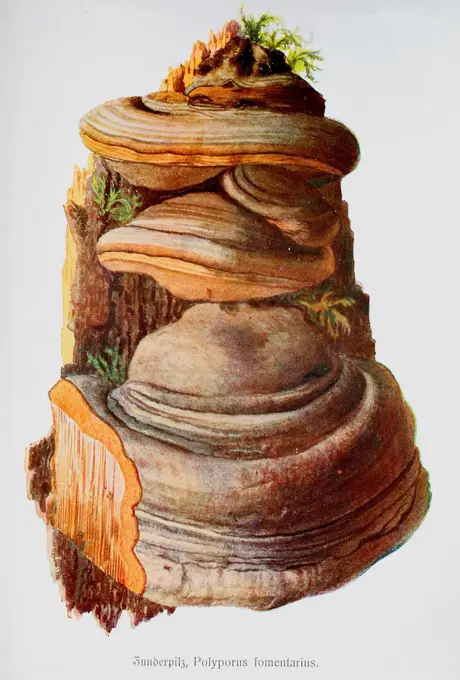
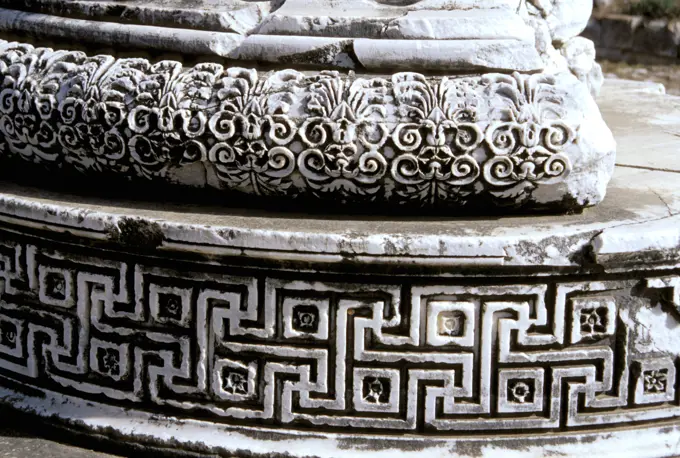
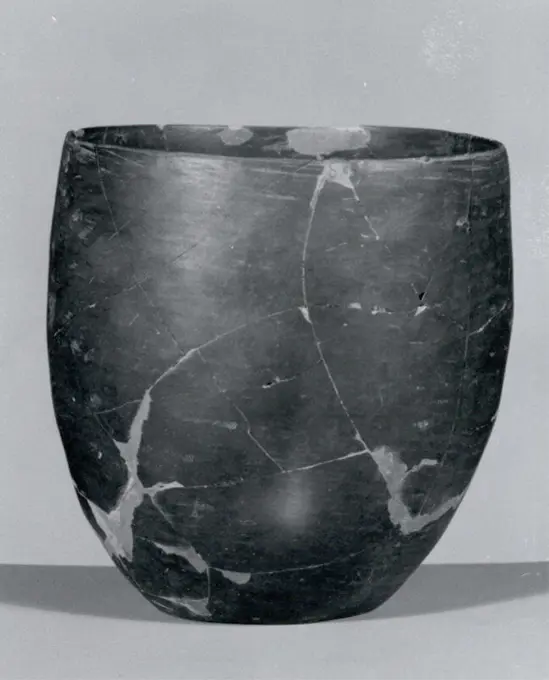
Beaker ca. 3000-2250 B.C. Iran This ceramic beaker has a flat base, gently sloping sides and a straight rim. It is made of gray clay and has been burnished. It was excavated at Yarim Tepe in northeastern Iran, six miles south of the modern town of Gonbad-e Kavus. Yarim Tepe was a small settlement, inhabited from the Neolithic to the Parthian period, with many interruptions. This beaker probably dates to the Bronze Age, when this region served as an important link between the emerging cities of Mesopotamia and Afghanistan, one of the few sources of both tin and lapis lazuli in the ancient Near East.. Beaker 325595Bottle 19th century Japan. Bottle. Japan. 19th century. Paste covered with a smooth glaze (Awata ware). Edo (1615-1868) or Meiji period (1868-1912). CeramicsCandlestick, four-piece candlestick, four-part consisting of a wide range of circular base decorated with egg list, a flat battle shape decorated with egg list, a baluster-shaped shaft above which a disc-shaped knot and a cylindrical candle holder with two round leak holes. Housewalk.Old crock Old crock on a white background Copyright: xZoonar.com/OlgaxPopovax 3681408Vase 1800 Japan. Vase. Japan. 1800. Faience covered with design in low relief and colored enamels (Kyoto ware). Edo period (1615-1868). CeramicsDrum. Culture: probably Mbala people. Dimensions: L.: 112.7 cm (44-3/8 in.); Head Diam.: 25.1 cm (9-7/8 in.). Maker: Mbala people. Date: 19th century. Museum: Metropolitan Museum of Art, New York, USA.Vase 1830-50 American. Vase 9207Bottle 9th-10th century This bottle was excavated at the site of Tepe Madrasaa site with the spatial attributes of a mosque and residential buildings that were thought to have originally been a school. This small elongated sphero-conical bottle made of greenish-white glass has four horizontal grooves that decorate its neck. Although we do not know what kind of contents it once held, its size and shape suggest that it might have been used to hold a medicinal or cosmetic substance. It is one of many objects excavated at Nishapur, Iran in 1938 and was acquired by the Museum through a division of finds with the Iranian government.. Bottle 449657Covered Seal-Ink Box 17th-18th century China. Covered Seal-Ink Box 52929Lazio Viterbo Viterbo Museo Civico66. Hutzel, Max 1960-1990 Views of paintings (Middle Ages through 18th c.), frescoes, a tabernacle, coffin, sculpture reliefs, portal fragments, busts, sculpture, tapestry found in the Pinacoteca, Second floor gallery and Second floor cloister sequences. Antiquities: Many views of Etruscan and Roman fragments, sculpture, sarcophagi, pottery, masks, jewelry and other objects found in the Storeroom sequence (inventory numbers on back of prints), and the Cloister, Second floor Cloister, Valle Giulia, Sala Romana and Sala Etrusca sequences. General Notes: There are eight separate numerical sequences for this location. The cloister as an architectural structure, rather than museum site, is documented in the record and file for S. Maria della Verita, Cloister, all views of which are stored in Medieval core collection. Five views from the Museo Civico Second floor cloister sequence are stored in Medieval. German-born photographer and scholar Max Hutzel (1911-Flask. UnknownOrnament with animal face 7th-8th century China. Ornament with animal face 48191Teabowl ca. 1845 Japan. Teabowl 63162Weight China. Weight 42908Anonymous, HU bottle (usual name), 1368. CERUNUSCHI Museum, Asia Museum of Asia in the city of Paris.Snuff Bottle late 19th century China. Snuff Bottle. China. late 19th century. Jasper. Qing dynasty (1644-1911), Qianlong period (1736-95). Snuff BottlesFoot Jar 2nd-1st century B.C. Paracas. Foot Jar 308476Snuff bottle with stopper 18th-19th century China. Snuff bottle with stopper 41151Emilia-Romagna Ferrara Ferrara Museo Civico di Schifanoia84. Hutzel, Max 1960-1990 General Notes: INCOMPLETE RECORD--NEGATIVES PROCESSED, PRINTS FILED German-born photographer and scholar Max Hutzel (1911-1988) photographed in Italy from the early 1960s until his death. The result of this project, referred to by Hutzel as Foto Arte Minore, is thorough documentation of art historical development in Italy up to the 18th century, including objects of the Etruscans and the Romans, as well as early Medieval, Romanesque, Gothic, Renaissance and Baroque monuments. Images are organized by geographic region in Italy, then by province, city, site complex and monument.Snuff Bottle China. Snuff Bottle 41292Bottle vase 19th century China. Bottle vase. China. 19th century. Stoneware with flambé glaze (Shiwan ware). Qing dynasty (1644-1911). CeramicsAnatolian Ceramic Vase with Geometric Decoration. UnknownGlass bottle 1st-2nd century A.D. Roman Translucent greenish blue.Broad rim, folded out, round, and in; flaring mouth; concave neck; sloping shoulder; cylindrical body with almost straight, vertical sides; thick, flattened bottom with circular pontil scar.Intact; some bubbles and blowing striations; deep pitting and iridescence on exterior, with thick gritty encrustation under rim, patches of black enamel-like weathering and some encrustation on interior.. Glass bottle 245214Lampka. unknown, author, Warsztat bizantyjski, workshopCentral America, Guatemala, Western Highlands, Lake Atitlan, Panajachel. Lake Atitlan Museum. Clay pottery vase found underwater in Lake Atitlan. (Editorial Usage Only)Rock Crystal Flask with Cross. Culture: Byzantine. Dimensions: 2 9/16 × 1 in. (6.5 × 2.5 cm). Date: 10th-12th century.This rock crystal flask is decorated in a relief carving centered on a double-armed cross standing on a three-stepped platform, an evocation of Golgotha where Christ was crucified. Each arm of the cross is attached to the upright by an "x" mark. Vines with carefully articulated trilobed leaves scroll upward from each end of the lowest step of the base; leaves flanking a cross were a popular motif in Byzantine art. On the reverse of the flask, outlines of a carefully carved lancet leaf appear in expanding repeats until they terminate into vertical bands on each side; the bands are elaborately detailed with striations and bead motifs. The decorated zone is set off above and below by two simple bands carved in relief. At the base, the area below the bands curves down into a slightly chipped, extended cylindrical foot. The chips suggest the foot was once attached to a mounBowl; Syria; late 2nd century; Hauran basalt; 17.3 × 29.5 cm (6 13,16 × 11 5,8 in.)Left Tasset (Thigh Defense) from a Boy's Costume Armor ca. 1532 Hans Seusenhofer Austrian This left thigh, along with a matching left shoulder also in the Metropolitan Museum's collection (acc. no. 29.158.121), is from an armor ordered in 1532 by Archduke Ferdinand (later Emperor Ferdinand I) for his five-year-old nephew, the future Philip II of Spain (reigned 1556-98).. Left Tasset (Thigh Defense) from a Boy's Costume Armor. Austrian, Innsbruck. ca. 1532. Steel, copper alloy, gold. Innsbruck. Armor Parts-Thigh and Leg DefenseWater Jar 18th century Japan. Water Jar. Japan. 18th century. Clay covered with glaze and a bright splash of Satsuma type (Takatori ware). Edo period (1615-1868). CeramicsHandled Bowl China. Handled Bowl 42334Belly bottle with glass seal on the shoulder, in which two crossed anchors and text, belly bottle bottle holder soil find glass forest glass 14.8, free blown glass application Belly bottle with raised bottom and pontilemark in clear green glass (forest glass) On the shoulder with glass seal in which two crossed anchors and three letters: VHS. Conically rejuvenated neckline text in glass seal: VHS archeology packaging transport store cellar wineBeggars Bowl with a Gourd, anonymous, c. 1566 bowl Onion-shaped wooden bowl on hollow base with silver foot ring decorated with cable and leaf motifs; A double profile edge over the middle, above a flared silver mouth edge decorated with cable and leaf motifs. At the foot a chain, on which a wooden gourd, on the top and bottom with a silver leaf motif. On the side of the Napje inscription: R .4, with pen and the rest of a paper label printed with red. Low Countries paper. wood (plant material). silver (metal). ink forging / engraving  NetherlandsCANTARO DE CUERPO REDONDO BOCA ANCHA Y CORTA - ARTE POPULAR - SIGLO XX. Location: ALFARERIA. TIÑOSILLOS. AVILA. SPAIN.Carbidlamp, J.C. Nienaber (possibly), 1940 - 1945 lamp Homemade carbide lamp consisting of three parts that fit together: a paint can; A piece of sink pipe where a round disk is soldered on one end, wider than the pipe, on which another iron rod with thread and two bolts; A slightly narrower zinc pipe, closed at one end with a round disk, which runs a tube in which the wick is. Inscription; On the bottom: Wehrm / 266. Amsterdam zinc. tin plate. iron (metal). cotton (textile) soldering  NetherlandsCovered Box. Culture: China. Dimensions: H. 1 3/8 in. (3.5 cm); Diam. 2 3/4 in. (7 cm). Museum: Metropolitan Museum of Art, New York, USA.Dinner pail with cover (Porte-dîner) probably 19th century Bouvier Family. Dinner pail with cover (Porte-dîner) 207860Gothic baptismal font (unknown town) unknownSnuff Bottle China. Snuff Bottle 41294Bell still bank, 20th century, 5 1/4 x 4 5/8 x 4 5/8 in. (13.34 x 11.75 x 11.75 cm), Ceramic, 20th centuryANFORA ROMANA HALLADA EN EL MAR - SAN ANDRES. Location: ARCHAEOLOGICAL MUSEUM. SANTA CRUZ DE TENERIFE. TENERIFFA. SPAIN.Terracotta pyxis (cosmetic box) with domed lid. Culture: Greek, Asia Minor. Dimensions: h. with lid 6 3/4 in. (17.1 cm); h. without lid 4 7/16 in. (11.4 cm). Date: 2nd-1st century B.C..The preserved decoration on this white-ground pyxis, which consists of stippled swags tied with bows of olive branches, is very similar to that on the flaring bowl nearby. Both pieces are painted in the style of Lagynos ware, examples of which have been found throughout the Mediterranean, but in especially great numbers around Pergamon. The simple form of this pyxis, with its tapering body, flanged base, and unadorned domed lid, is perhaps a regional variation of the shape from Asia Minor that serves as a more humble counterpart to the more ornate examples of the type, such as the Macedonian pyxis also in this case (1979.76a,b). Museum: Metropolitan Museum of Art, New York, USA.Lazio Roma Grottaferrata Museo91. Hutzel, Max 1960-1990 German-born photographer and scholar Max Hutzel (1911-1988) photographed in Italy from the early 1960s until his death. The result of this project, referred to by Hutzel as Foto Arte Minore, is thorough documentation of art historical development in Italy up to the 18th century, including objects of the Etruscans and the Romans, as well as early Medieval, Romanesque, Gothic, Renaissance and Baroque monuments. Images are organized by geographic region in Italy, then by province, city, site complex and monument.Distiller. UnknownAnefo photo collection. Romanian ambassador Dr. G. Elian opens exhibition Romanian folk art in Madurodam, Dr. G. Elian. August 24, 1971. The Hague, South HollandRitual bell, anonymous, after -482 Bronze bell decorated with tires and buttons in relief, with a frame in the form of two dragons on top. China bronze (metal) casting Bronze bell decorated with tires and buttons in relief, with a frame in the form of two dragons on top. China bronze (metal) castingVase with a plastic decor, vase with a plastically decorated edge and small painted vase with bird decorVase 19th century Japan. Vase 59815Situla 1450-1500 French or Netherlandish. Situla. French or Netherlandish. 1450-1500. Brass, iron. Metalwork-BrassFunerary Close Helmet Made 1600-1700 England. Steel and paint .Vase, anonymous, anonymous, c. 1700 - c. 1799 Narrow, irregularly shaped square vase of stoneware. The four walls in relief decorated with a sangi (mooring sticks) motif. BIBEN. Japan stoneware. glaze Narrow, irregularly shaped square vase of stoneware. The four walls in relief decorated with a sangi (mooring sticks) motif. BIBEN. Japan stoneware. glazeContent measure of 1 deciliter. Chain seam of 1 deciliter with wooden bottom edge. At the bottom of v.z.v. Orange wax seal with inscription. V.Z.V. Brands and stampsVase with cover 18th century China. Vase with cover. China. 18th century. Amethystine quartz. HardstoneSnuff bottle with stopper 18th-19th century China. Snuff bottle with stopper. China. 18th-19th century. Agate, glass. Qing dynasty (1644-1911). Snuff BottlesColumn Base late 12th century French. Column Base. French. late 12th century. Stone. Made in Languedoc, France. Sculpture-Architectural-StoneLazio Viterbo Vulci Excavation. Hutzel, Max 1960-1990 Antiquities: Views of excavated baths, villas, nymphaeum, temple. General Notes: Eleven prints stored in Antiquities, as noted on negatives. None in Hutzel section. German-born photographer and scholar Max Hutzel (1911-1988) photographed in Italy from the early 1960s until his death. The result of this project, referred to by Hutzel as Foto Arte Minore, is thorough documentation of art historical development in Italy up to the 18th century, including objects of the Etruscans and the Romans, as well as early Medieval, Romanesque, Gothic, Renaissance and Baroque monuments. Images are organized by geographic region in Italy, then by province, city, site complex and monument.Covered Vessel China. Covered Vessel 61222Lantern Kerosene Lamp, Kudal, Maharashtra, India copyright: xmadhusudanxtawde/dinodiaxphotoxGerrit Bakker, Bronze hatch bell with iron clapper, bell clock clock sound brass bronze, molded Inside the clock clapper Three friezes on the flank of which middle frieze with inscription Top frieze with winged angel's heads and tendrils lower frieze with leafwork and hanging bead edges In Latin majusels poured on the middle frieze: G BAKKER ROTTERDAM Ao 1785 metal casting communication soundBreastplaste Depecting Character Hachiman, God of War 18th century Myōchin Morisuke The symbolism conveyed by a representational helmet and face mask could be enhanced by the use of a detachable crest (maidate), usually mounted on the front of the helmet just above the brim. Crests are sometimes made of iron, but more frequently they combine delicate materials such as leather, paper-mché, or gilt and lacquered wood. Crest designs of the Edo period include a wide range of family heraldry (mon), naturalistic renditions of plants and animals, and sacred imagery. These same decorative themes are also featured on embossed iron breastplates of the period. The relatively broad surface of a breastplate afforded a skilled armorer ample room to display his talents as a metalworker and his inventiveness as an artist.This breastplate and crest (36.25.228) share a common sacred theme: the invocation of the war god Hachiman through the display of the characters representing his name. Hachiman, one Hunchback Figure Beaker 14th-15th century Chimú. Hunchback Figure Beaker 310623bong cannabis hand drawn vector. weed pipe, smoke glass, marijuana smoking water bong cannabis sketch. isolated color illustration. bong cannabis sketch hand drawn vectorParis (8th arr.), France The exhibition of decorative arts, vase in front of the Indochina pavilion , 1925 - International Exhibition of Modern Decorative and Industrial Arts Paris (French - Paris ( VIIIe arr. ) , France L' exposition des arts décoratifs , vase devant le pavillon de l' Indochine). Sculpture, painted decor, vase, decorative arts, ceramics, exhibition, exhibition of decorative arts, carved decor, ephemeral architecture, Art , Habitat , Architecture, France, Paris, Exhibition of decorative arts, vase in front of the Indo China PavonAustria, Durrnberg site, Helmet with white coral trimmings, bronzePail bucket VIKING.Electrolysis, Boston Water Works, Boston-Lowery hydrant pot, from end of 6-inch main River Street, showing electrolytic pittings, Dorchester, Mass., Oct. 29, 1904 , waterworks, pipes conduits, construction sites, electrolysisOtto Bakker, Bronze hatch bell with iron clapper, bell clock clock sound bronze bronze, cast Inside an iron clapper Three friezes on the top flank, the upper with bunches of grapes and leaf garlands lower frieze with winged angel heads and tendrils Middle frieze with inscription Casted in high relief: Otto Bakker Rotterdam ° 1748 metal casting communication soundGreen glas jug in oriental style in antique marketEmilia-Romagna Ferrara Ferrara Museo Civico di Schifanoia93. Hutzel, Max 1960-1990 General Notes: INCOMPLETE RECORD--NEGATIVES PROCESSED, PRINTS FILED German-born photographer and scholar Max Hutzel (1911-1988) photographed in Italy from the early 1960s until his death. The result of this project, referred to by Hutzel as Foto Arte Minore, is thorough documentation of art historical development in Italy up to the 18th century, including objects of the Etruscans and the Romans, as well as early Medieval, Romanesque, Gothic, Renaissance and Baroque monuments. Images are organized by geographic region in Italy, then by province, city, site complex and monument.Snuff bottle with stopper. Culture: China. Dimensions: H. 2 3/8 in. (6 cm). Date: 18th-19th century. Museum: Metropolitan Museum of Art, New York, USA.Three old bottles on a shelf one with a wilting flowerGolden weight, 1 kgDaraboukkeh. Culture: Arabian. Dimensions: H. 19.1cm x Head Diam. 12.7 cm (7 1/2 x 5 in.). Date: 19th century. Museum: Metropolitan Museum of Art, New York, USA.Mushroom, Tinder fungus, Polyporus fomentarius, Historical, digitally restored reproduction of an illustration by Emil Doerstling (1859-1940)Europe, Middle East, Turkey, Didyma. Detail of ornate column base relief, stone workSweden, Blekinge, Blekinge, Karlskrona, Karlskrona, external marina (depicted, town).Sweden, Blekinge, Blekinge, Karlskrona, Karlskrona, External War Gogs (depicted, City)