Ancient Artifacts Fragments

A series of ancient stone artifacts and fragments including inscriptions and decorative elements, showcasing historical craftsmanship from various periods.

Two fragments of a clay mould, anonymous, c. 1425 - c. 1450 Mal van Pijpaarde for the rear of a Maria with child. Utrecht pipe clay Mal van Pijpaarde for the rear of a Maria with child. Utrecht pipe clay
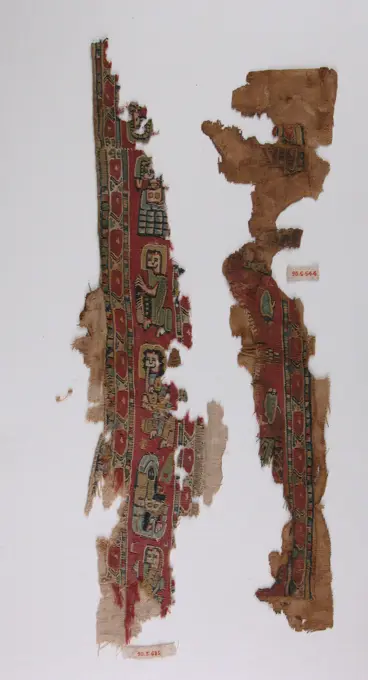
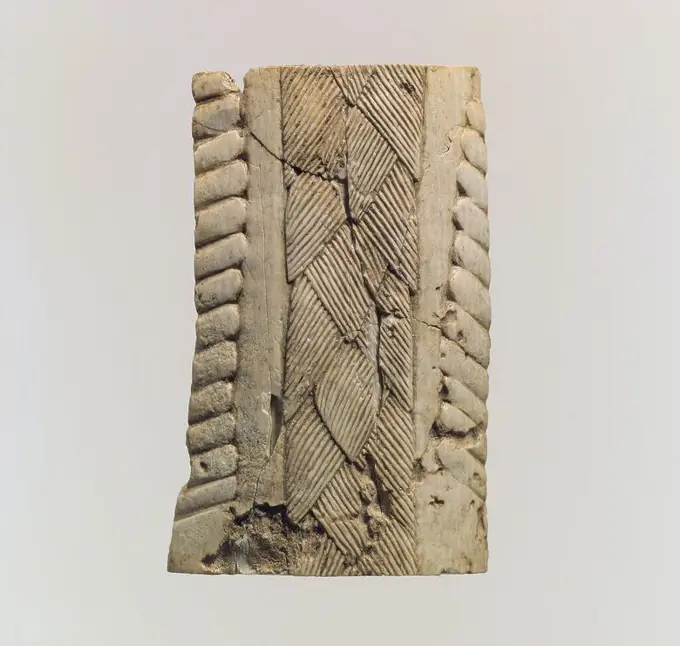
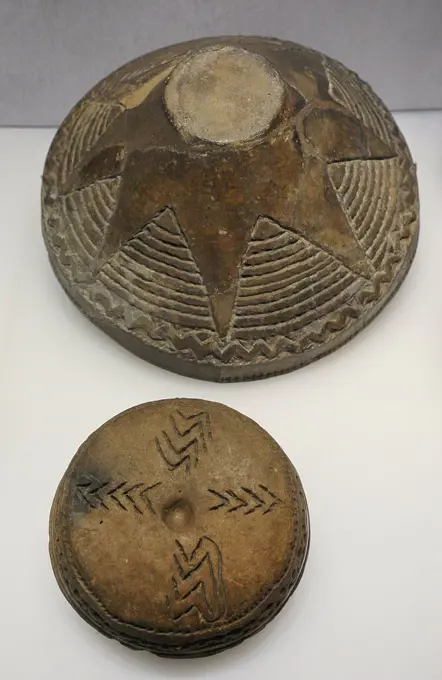
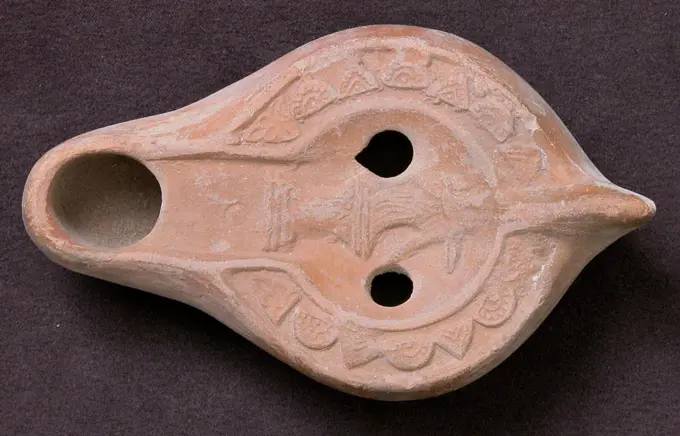
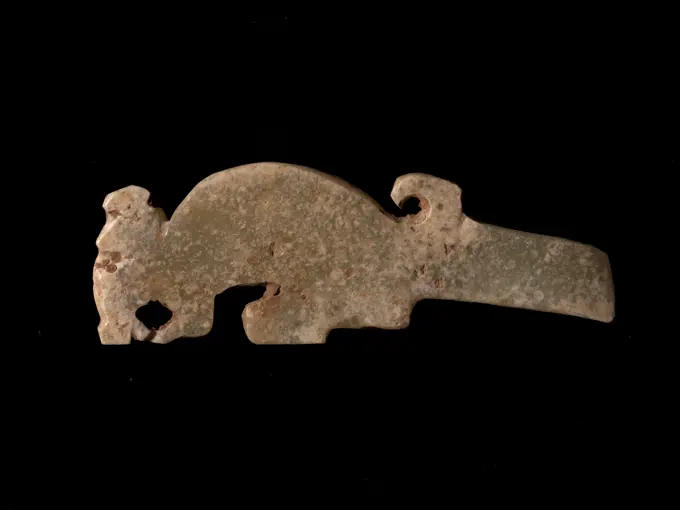
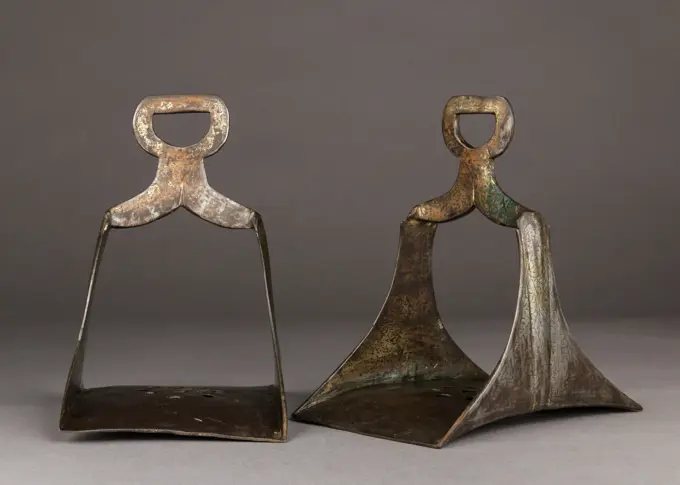
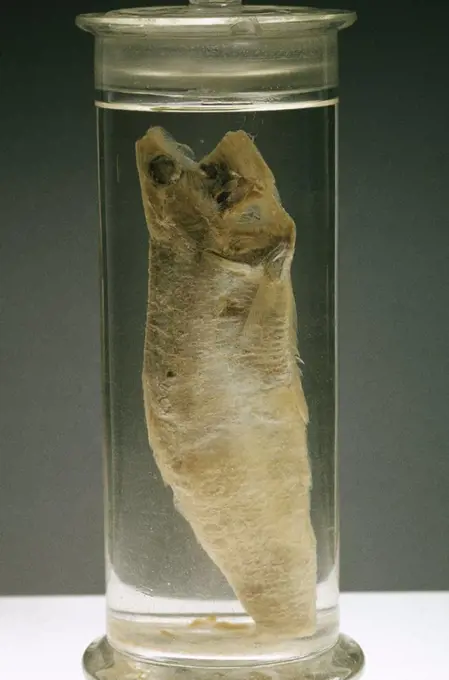
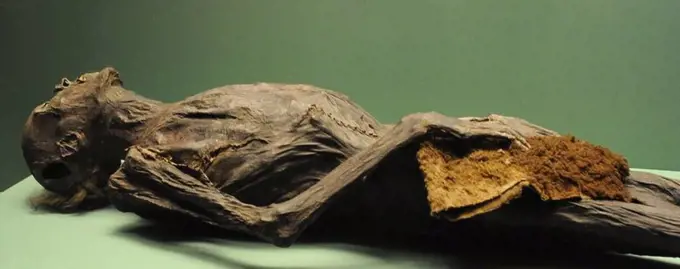
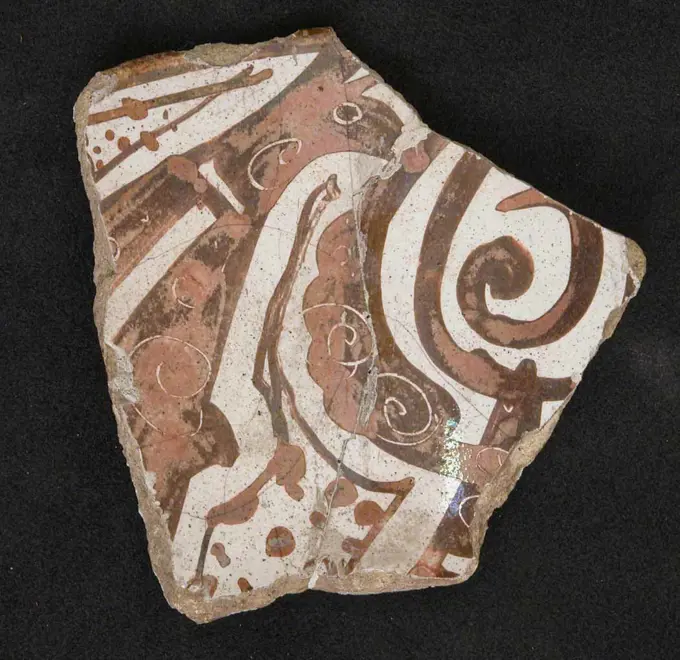
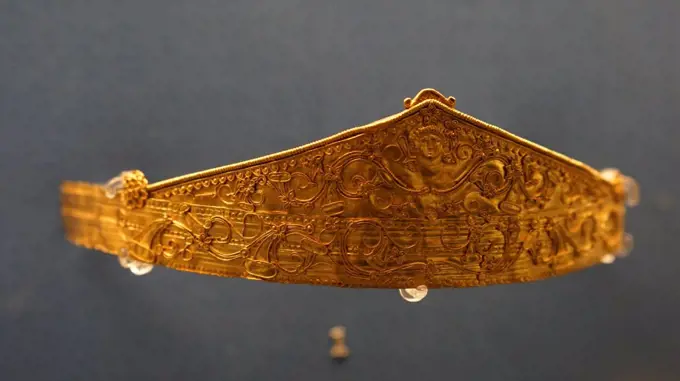
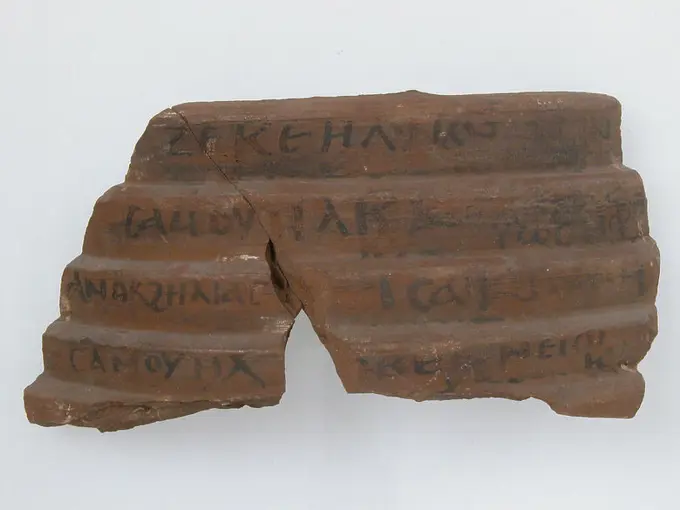
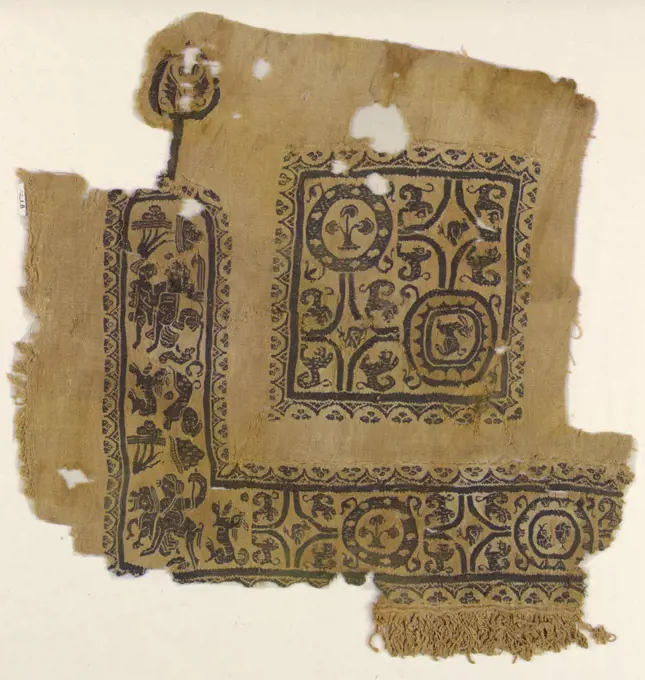
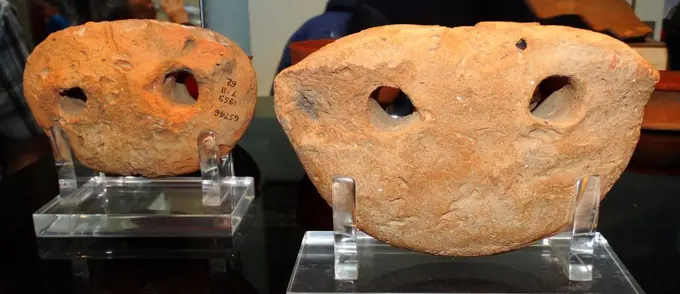
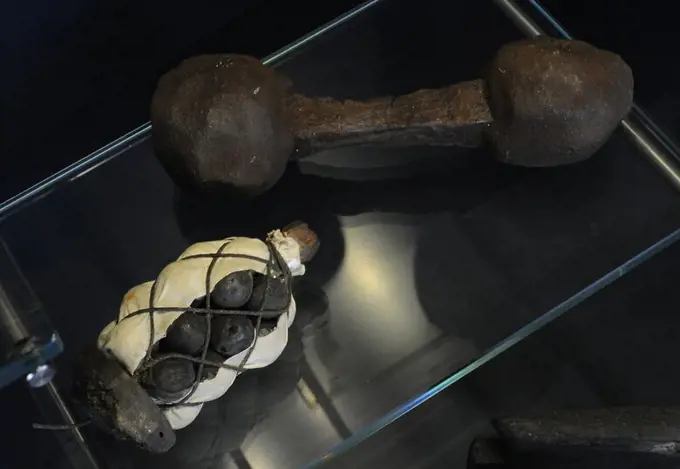
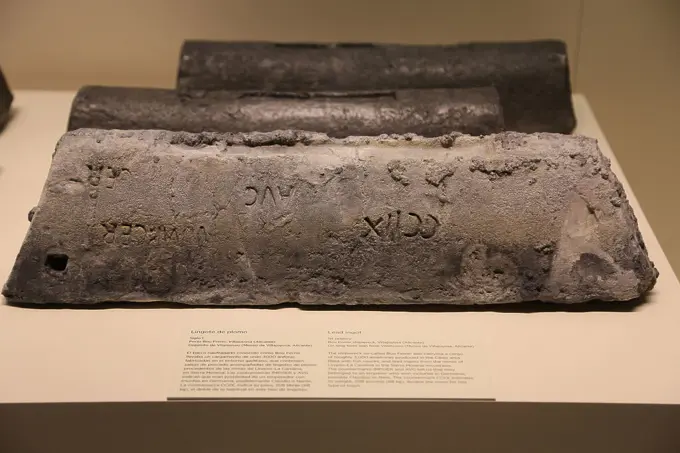
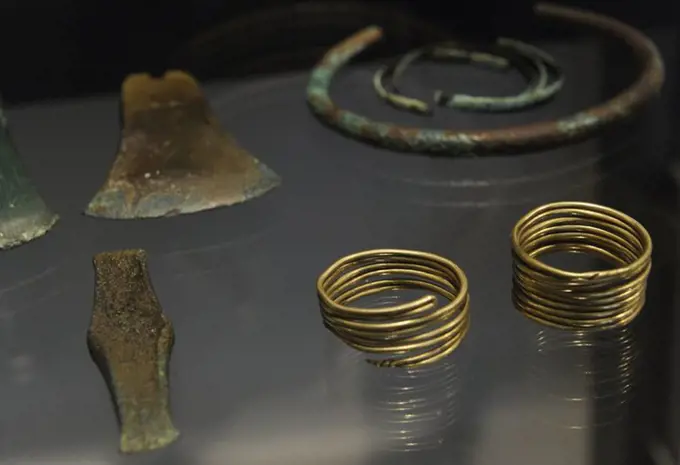
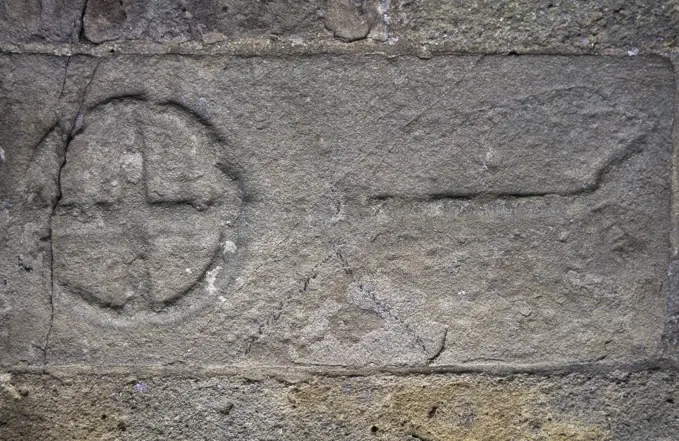
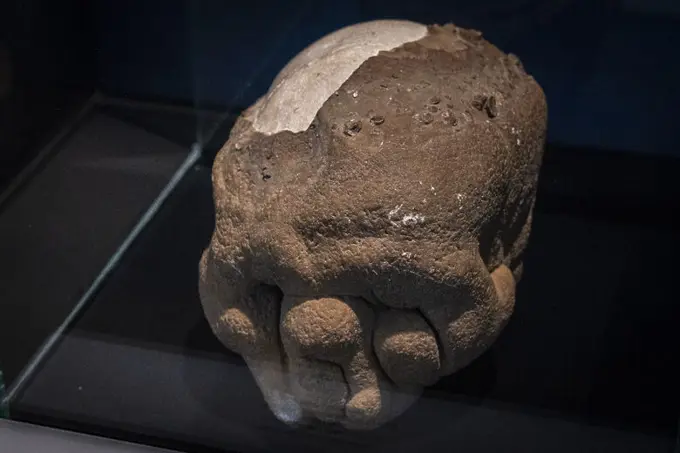
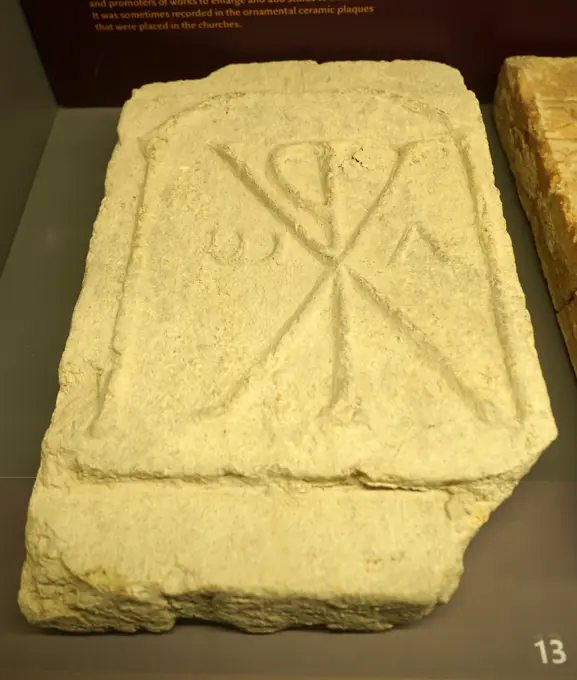
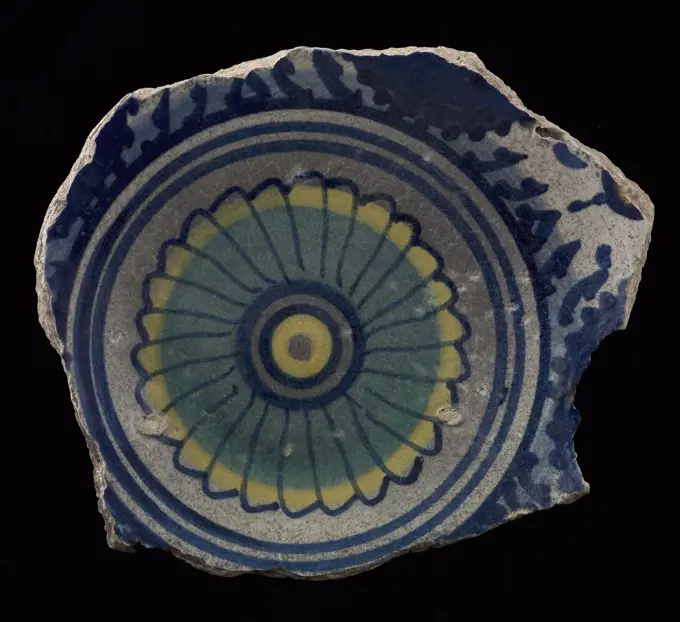
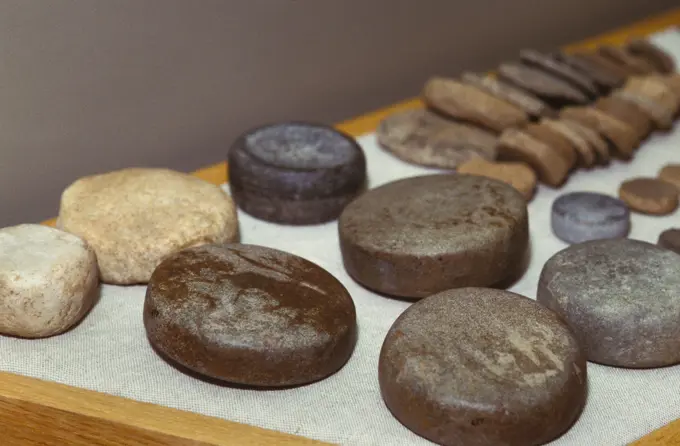
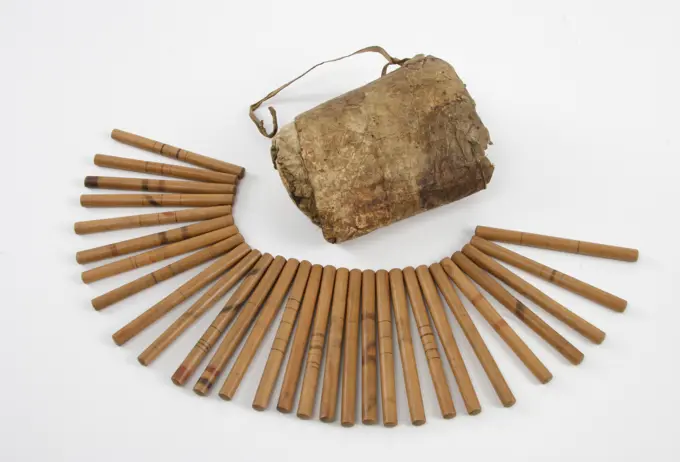
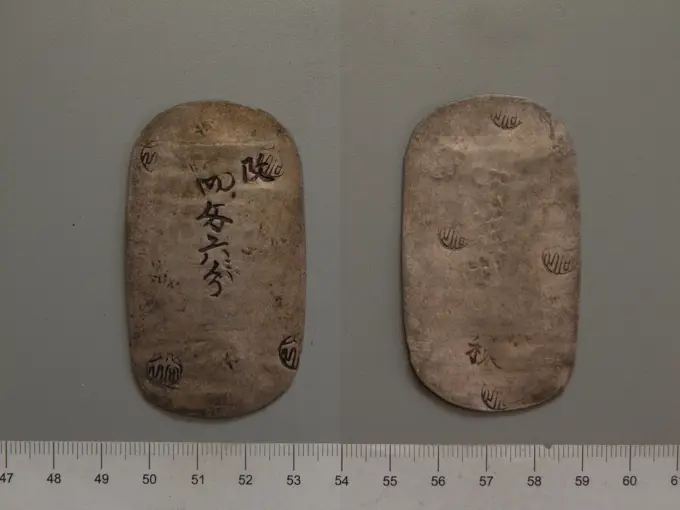
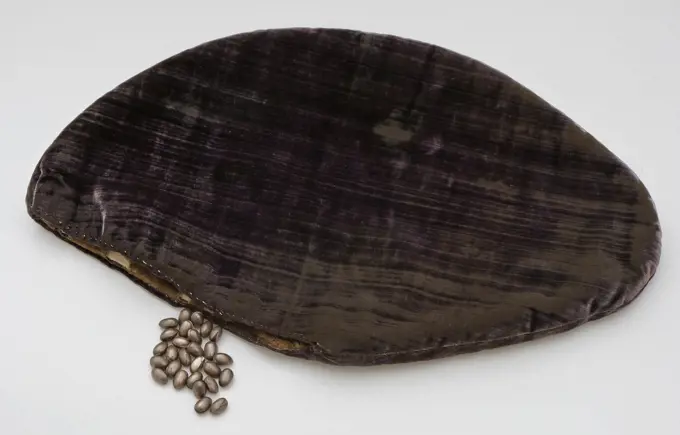
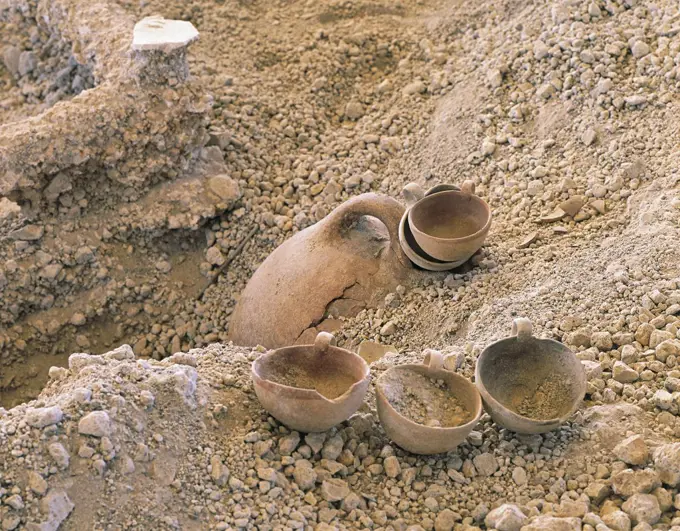
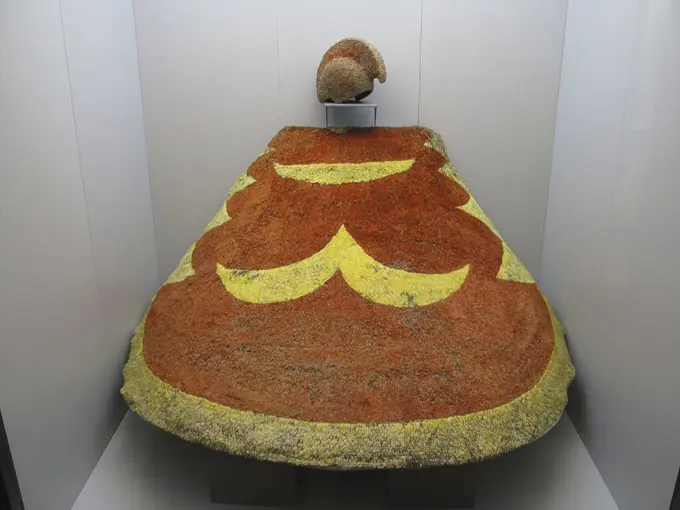
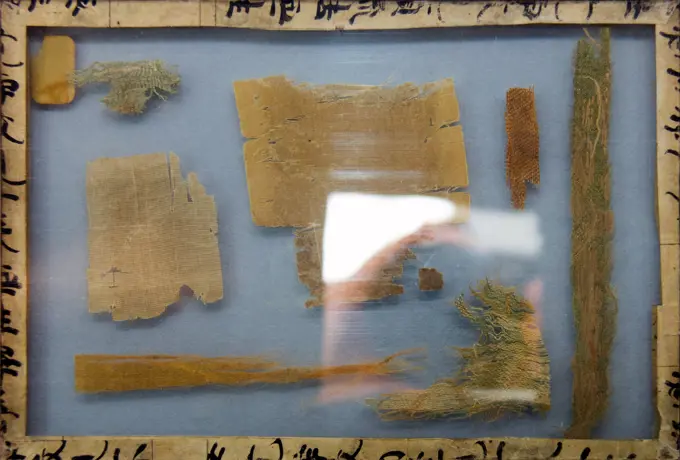
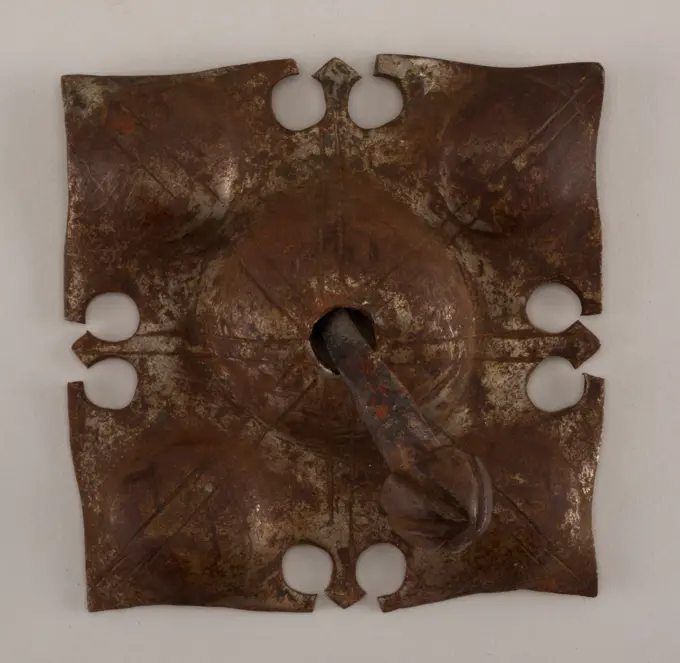
Decorative Door Boss And Nail; steel-plated wrought ironBell Cardinal (coat of arms of the Krakow chapter  mistakenly reversed!)  Zygmuntów Tower, Wawel Cathedral, Krakow B KOWSKI, J.Textile Fragment 5th-6th century. Textile Fragment 444030Greek imitation scyphus cup Greek imitation scyphus cup, Iberian culture, Archeological Museum. Úbeda, Jaén province, Andalusia, Spain Copyright: xZoonar.com/BartomeuxBalaguerxRotgerx 21702712Detail of a bronze stand, 17th century BC. Artist: UnknownIvory fragment. Culture: Assyrian. Dimensions: 3.27 x 2.09 x 0.63 in. (8.31 x 5.31 x 1.6 cm). Date: ca. 9th-7th century B.C..This plaque has a flat back and a raised surface, carved in relief with a central design resembling plaited hair or tufts of hair, bordered at each side with a plain strip and a fluted edge. It must have been part of another object such as a statue or piece of furniture, but was found as a fragment, making it difficult to reconstruct the original design. Carved ivory pieces such as this were widely used in the production of elite furniture during the early first millennium B.C. They were often inlaid into a wooden frame using joinery techniques and glue, and could be overlaid with gold foil or inlaid with colored glass or stone pieces to create a dazzling effect of gleaming surfaces and bright colors.Built by the Assyrian king Ashurnasirpal II, the palaces and storerooms of Nimrud housed thousands of pieces of carved ivory. Most of the ivories served as furnituPOT O BOTE CON DAMAS FORMANDO CORRO Y PARALELAS CON ESPIRAL - MANISES - SIGLO XV - MANGANESO Y DORADO. Location: INSTITUTO VALENCIA DE DON JUAN-COLECCION. MADRID. SPAIN.Fragment of a Bowl 14th-15th century. Fragment of a Bowl. 14th-15th century. Stonepaste; polychrome painted under transparent glaze. Attributed to Egypt. CeramicsEpitaaf or Memorie table, dug up in Utrecht at the old minor brothers monastery (fragments), Anonymous, c. 1400 - c. 1950 Four fragments in white sandstone with Dutch inscription in Renaissance capital letters. One of the fragments has a leaf edge and it bears the inscription: O. Adri. Fragment A is the largest piece. Dug up in Utrecht at the old Minderbroederklooster. Utrecht sandstone   Minderbroedersklooster Four fragments in white sandstone with Dutch inscription in Renaissance capital letters. One of the fragments has a leaf edge and it bears the inscription: O. Adri. Fragment A is the largest piece. Dug up in Utrecht at the old Minderbroederklooster. Utrecht sandstone   MinderbroederskloosterCeramic type Las Cogotas I. Final Bronze. 1200-1000 BC. From Castro de Las Cogotas (Carden_osa, province of Avila, Castile and Leon) and Cerro del Berrueco (between Avila and Salamanca, Castile and Leon). National Archaeological Museum. Madrid. Spain.minor tomb of Molinilla, middle ages, sandstone child sarcophagus, Vitoria-Gasteiz Museum of Sacred Art, María Inmaculada Cathedral, Álava, SpainFragments of sun-dried mudbrick used in ancient Egypt. Dated 12th Century BCANILLOS PENDIENTES Y BROCHES FENICIOS HALLADOS EN UNA TUMBA FENICIA - SIGLOS VIII-VII AC. Location: MUSEO DE CADIZ-ARQUEOLOGIA.Iron sheetLamp 5th-6th century Small earthenware lamps, made from double molds, were the most commonly used source of light during the Coptic period. A wick produced from plant fiber or linen fabric was placed in a reservoir filled with oil, generally castor or sesame oil, and illuminated. This light brown earthenware lamp depicts a draped figure on a pedestal, surrounded by a border decorated with chevrons, concentric semi-circles, and palmettes.. Lamp 447988SANDALIAS ENCONTRADAS EN EXCAVACIONES DE BAR KOKHBA.Prehistory, Malta, Neolithic. Terracotta figure known as the small Sleeping Lady. From Hal Saflieni Hypogeum.Bag with shards of earthenware from V.O.C. ship De 'Witte Leeuw', Anonymous, Before 1613  Bag with shards of red-baking and yellow-baking earthenware from V.O.C. ship the 'Witte Leeuw'. Fragments of ears, soils, covers and edges.  earthenware   Sint-HelenaBronze age red pottery from Cyprus, circa 1900-1600 BCFragments of an Inscribed Slab with a Rosette 6th-7th century. Fragments of an Inscribed Slab with a Rosette 456203Foult -shaped scraper. Jade. Shang dynasty (1765-1122 BC), China. Paris, Cernuschi museum. 101271-7 Asian art, Chinese art, art of extreme Orient, Shang dynasty, Yin dynasty, Shang, Felin, Gratoir, IIeme II 2nd 2 thousandaire, JadeHomreh ca. 3rd-7th century A.D. Sasanian. Homreh 323028Pair of Stirrups 19th-early 20th century Moroccan This shape of stirrups, with their square footplates and their wide flaring sides, is found in most of the Islamic world. This pair is decorated with plated silver, incised with vegetal scrolls and intricate geometrical interlaced bands, typical of Moroccan art.Traditionally, Moroccan riders take great pride in their horses and still frequently adorn them with shiny and colorful tack for parades and festivals. Wealthy riders would increase their prestige by covering their mount with luxurious material and equipping themselves with as luxurious matching accessories.. Pair of Stirrups. Moroccan. 19th-early 20th century. Iron, silver, copper. Equestrian Equipment-StirrupsTWO-HEADED ADULT SARDINE (1913). Maritime Museum of the Cantabrian Sea. Santander. Cantabria. Spain.Boxes containing beauty products, kohl and colored powder for eyelidsWall plaque with geometric design ca. 9th century B.C. Iran. Wall plaque with geometric design 325813Gold objects from Colombia, South America, 1100-1500ADSpear tips, Etxauri deposit, first iron age, Museum of Navarra, Pamplona, Navarra,Spain.Tiraz Tapestry; warp; linen. wefts; silkFresco Fragments (14). UnknownVASIJA. Location: ARCHAEOLOGICAL MUSEUM. LAS PALMAS. GRAN CANARIA. SPAIN.Porcelain Shards from V.O.C. ship De 'Witte Leeuw', Before 1613 lid. bowl Porcelain shards of a bowl and a lid from V.O.C. ship the 'Witte Leeuw'. Jingdezhen porcelain   Sint-HelenaPazyryk culture. Scythian Iron Age archaeological culture. 6th-3rd centures BC. Mummy of Pazyryk chief. Tattooed. 55 years old. V kurgan. Siberia. The State Hermitage Museum. Saint Petersburg. Russia.A Teponaztli drum from Central Mexico used by the Aztecs and related cultures. Dated 14th Centuryring in old drawer of rusty ironModel tableware (part of set of 71 objects) ca. 2465-2150 B.C. Old Kingdom. Model tableware (part of set of 71 objects) 577499Rectangular coffin with lid. Baked clay. Protodynastic-Early Dynastic period. 1st-2nd Dynasty (3300-2590). Gebelein. Egyptian Museum of Turin. Italy.Pendant 206 B.C.-A.D. 220 Chinese This collection of largely ethnographic jewelry includes examples from cultures in South America, North America, Europe, Asia, and Africa and dates from the Pre-Columbian period to the twentieth century. Owned by renowned art collector and fashion enthusiast Muriel Kallis Newman, the collection represents her knowledge and appreciation of a wide range of jewelry design and making traditions. Numerous items in her collection are composite artifacts made from various cultures and time periods reappropriated as modern jewelry creations by or for Muriel. It is important to note that Newman wore many of the pieces in the collection, interpreting them to suit and express her own singular, often avant-garde style.. Pendant 141700Caliper with stones on clothFragment of Dish 13th-14th century. Fragment of Dish 446515Pottery Mesopotamia tools, from Ur. Dated 15th Century BCMycenaean metal objects , Antiquities. Nicholas Catsimpoolas CollectionFragments of copper from the wreck of the East Indians Hollandia, 1700 - in Or Before 1743  Parts of artefacts; eroded fragments: materials; copper. Netherlands copper (metal)   SecondDecorative bronze sheaths. 12th-10th century BC.Sherd with incised decoration ca. late 3rd millennium B.C.. Sherd with incised decoration 326112Funerary urn from Lebak, province of Sultan Kudarat. Mindanao Island. Philippines, 6th century. Limestone. Museum World Cultures. Barcelona.Textile Fragments and braid 4th-7th century Coptic. Textile Fragments and braid 479781IDOLOS. Location: POBLADO DE LA HOYA. Laguardia. ALAVA. SPAIN.Gold diadem with elaborate filigree decoration. From the Santa Eufemia Treasure. Dated 340 BCAncient patternOstrakon. Culture: Coptic. Dimensions: 3 1/4 x 6 11/16 in. (8.3 x 17 cm). Date: 7th century. Museum: Metropolitan Museum of Art, New York, USA.Fragment, Technique: slit tapestry woven with supplementary wrapping, Part of a garment. Pattern of a square containing animals and floral forms. A right-angle band (clavus) with figures and the same animal and floral forms. A selvage preserved in one place. Attached wool fringe., Egypt, 4th-5th century, woven textiles, FragmentBlade or scraper ca. 4600-3600 B.C. Ghassulian. Blade or scraper 326563Pottery net-sinkers used in fishing. Middle Kingdom, about 1900-1800 BC From Buhen, EgyptMycenaean civilization, bronze shoulder covering part of an armor, from Dendera, EgyptShards from V.O.C. ship De 'Witte Leeuw', Anonymous, Before 1613  Shards Kraakporcelain from V.O.C. ship De 'Witte Leeuw'. Bag with shards of wine pots. One consisting of four fragments glued together. Jingdezhen bone china (material)   Sint-HelenaPlate with embossed decoration, 4th century, Roman villa of Carranque, Museum of the Councils and the Visigoth Culture, Church of San Román, Toledo, Castilla-La Mancha, Spain.Warships. Projectiles. Grapeshot "chewing tabacco pouch" and split shot. Norwegian Maritime Museum. Oslo. Norway.Fragment. Dimensions: L 4.5 cm x W 3.5 x H 2.5. Date: probably 8th-12th century. Museum: Metropolitan Museum of Art, New York, USA.Roman Hispania. Lead ingot. 1st century. Mines of Linares-La Carolina, Sierra Morena mountains, Spain. National Archaeological Museum, Madrid. Spain.Cecil Smith, Bullet Pouch and Powder Horn, c 1937 Bullet Pouch and Powder HornFragments. Possibly Nazca-Wari; Peru, south coast, Possibly Nazca Valley. Date: 700 AD-900 AD. Dimensions: . Origin: Peru. Museum: The Chicago Art Institute, Chicago, USA.Fragment of the mirror of monochrome majolica plate with Chinese, plate dish crockery holder soil find ceramics pottery glaze tin glaze lead glaze, majolica baked 2x glazed painted shard only mirror archeology decorate home interior serving serve chinaLocal made and imported objects from Skeldal, central Jutland. Bracelets, axes and necklaces. 2000-1700 BC. National Museum of Denmark. Copenhagen. Denmark.bronze votive offering bronze votive offering, Iberian sanctuaries of Collado de los Jardines and Castellar de Santisteban, Iberian culture, Archeological Museum. Úbeda, Jaén province, Andalusia, Spain Copyright: xZoonar.com/BartomeuxBalaguerxRotgerx 21702729Gravestone embedded in the church of Sankt Julian, Rhineland-Palatinate, Germany. Roman civilization.Stucco Fragment probably 8th-12th century. Stucco Fragment 741504Case (Inrō) with Design of Game Board Showing the Fifty-Three Stations of the Tokaidō 19th century Japan. Case (Inrō) with Design of Game Board Showing the Fifty-Three Stations of the Tokaidō 58592Glastablett Glastablett Copyright: xZoonar.com/BartomeuxBalaguerxRotgerx 22568736Protective leather mask used in laboratory work, France 1890christian heart room, Galatzo house, dry stone path, GR221, Calvia, Natural area of the Serra de Tramuntana., Majorca, Spain.human skull, bone, 3400-2200 BC, Peña Arias Montano, Alájar, Huelva Museum, Huelva, Andalusia, Spain.Fresco Fragment. UnknownFresco Fragment. UnknownFresco Fragment. UnknownMiniature Litter Section 11th-late 15th century Chimú or Chancay. Miniature Litter Section 309212Stone plaque with a monogram of Christ; found in the Roman city, at Baetica, Spain. 5th-7th Century AD. Hispania Baetica was one of three Imperial Roman provinces in Hispania, (modern Iberia).child burial from Civitas de Andelo, Mendigorria, Museum of Navarra, Pamplona, Navarra,Spain.Early Roman Period. Italic amphorae used for the transportation of wine (vinariae) between the 2nd and the 1st century BC. Found in 1961 at the site of a shipwreck during the 2nd century BC, at the mouth of Xlendi bay, Gozo Island. Gozo Museum of Archaeology. Cittadela of Victoria in Gozo. Malta.Large bronze bell, Shanghai Museum, China.Fragment majolica dish, polychrome, rosette in the middle, dish plate crockery holder soil find ceramic earthenware glaze, baked underside covered with clear lead glaze. Polychrome archeology Rotterdam serving food decorate Soil discovery Rotterdam 1940.anthropomorphic figurine head, Chalcolithic, fifth millennium BC, Bulgarian National Archaeological Museum, Sofia, Republic of Bulgaria, Europe.Cuenco con decoracion excisa. Edad de Bronce. Museum: MUSEO ARQUEOLOGICO, MADRID, SPAIN.State Museum for Archaeology ChemnitzIsrael, Negev, Sde Boker, Avedat (old incense caravan town), amphorasChunkey (chunky, chunkee) was a game or sport of the Southeastern Indians played with a stone disk and a pole having a crook at one end. the object is to throw the pole and trap the chunkey stone in its crook.Glass Fragments 4th-early 5th century Coptic. Glass Fragments 477089collar de cuentas de jade, museo de la plaza central, Chichicastenango ,municipio del departamento de El Quiché, Guatemala, Central America.Trade in the Mediterranean area. Different objects exported from Egypt to neighboring countries. In this case Crete. 13th c.B.C. New Kingdom. The State Hermitage Museum. St. Petersburg. Russia.Pair of EarringsGaming stick -4 Momme 6 Fun of Emperor Komei fromAkita. Ruler: K?mei, Emperor of Japan, Japanese, 1831-1867, ruled 1846-67 Mint: Akita Artist: UnknownBlack velvet tuning bag pocket, cushion in the shape of bean with opening on one side, ebony bag bag holder accessory velvet linen wool, silver voicemones (1-27) and black velvet cushioned beanbag in the shape of bean with opening on one side (28) Rotterdam board vroedschap elections vote politics 1600 - 1813Greece - Southern Aegean - Cyclades Islands - Santorini. Ancient Akrotiri. PotteryAsia, China, Yichang. Medicines for sale, seahorsesCAPA DE PLUMAS Y FIBRA VEGETAL PROCEDENTE DE OCEANIA - ISLAS HAWAI - 1701-1800 - 1,33x2 m - Nº DE INVENTARIO 13021. Location: MUSEO DE AMERICA-COLECCION. MADRID. SPAIN.HACHAS PULIMENTADAS NEOLITICAS. Location: ARCHAEOLOGICAL MUSEUM. Orense. SPAIN.Star-Shaped VotiveOfferingFragment 8th century Japan. Fragment. Japan. 8th century. Silk or linen or cotton / Woven. Nara period (710-794), Tempy (729-749). Textiles-WovenItalic Lamp Fragment. Unknown