Ancient Bronze Artifacts

Images of historical bronze artifacts, including fibulas, bracelets, and decorative pieces, showcasing ancient craftsmanship and cultural significance.
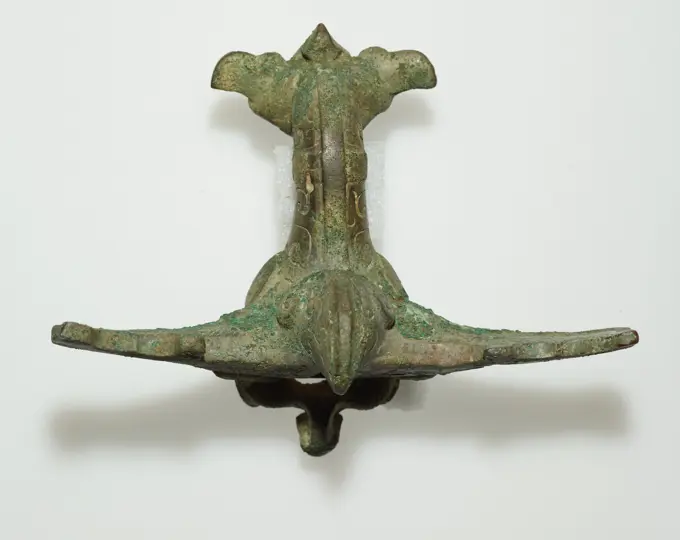
Bird, one of a pair, 7th-6th century BCE, 4 5/8 × 5 3/4 × 3 in., 0.9 lb. (11.75 × 14.61 × 7.62 cm, 0.4 kg), Bronze, China, 7th-6th century BCE, It is probable that these birds served as components of another object, such as a vase or a chariot. With their crests, ears, and horns, these are no ordinary birds, but rather magical animals. In their claws they clutch a snakelike beast with two bodies. They are further adorned with incised spirals, their shoulder lines emphasized by large comma shapes in rounded relief. The wings, spread flat, are bordered with striated bands and end in a flourish with double curves at the base of the birds breasts. The eyeballs are raised knobs with hollow centers. The bird motif is ubiquitous in Zhou art, suggesting an almost totemic significance. The birds were not only considered living beings but may have acted as intermediaries to help people communicate with the spirit realm.
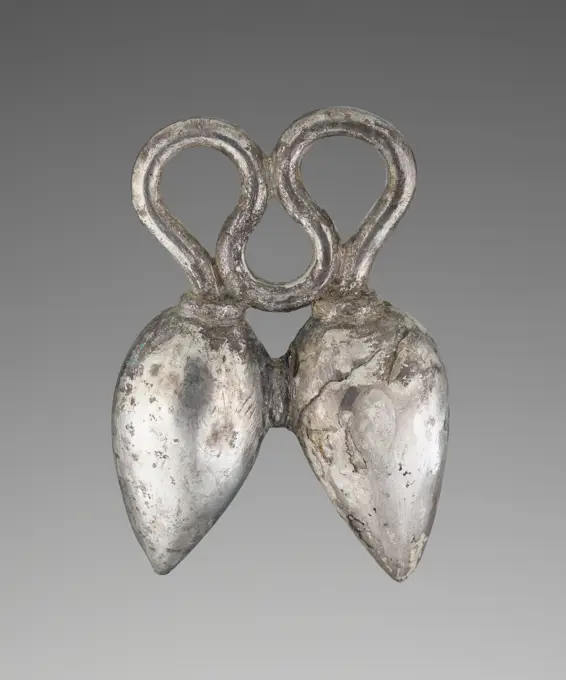
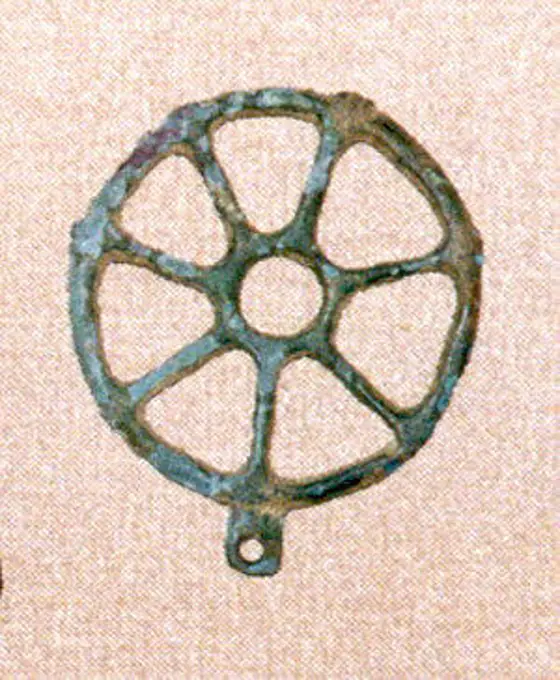
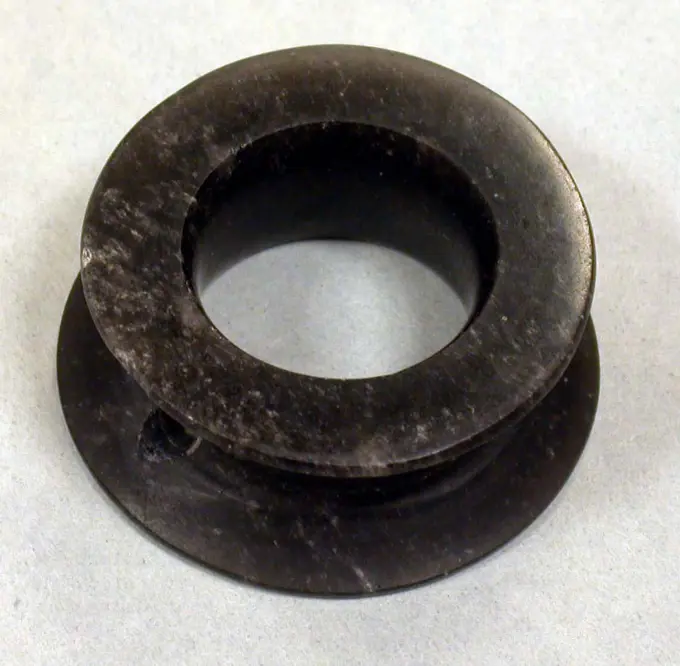
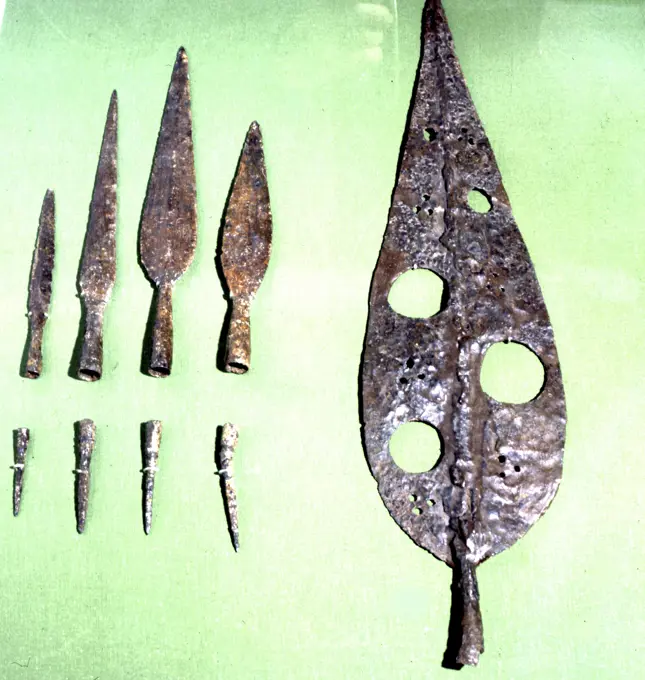
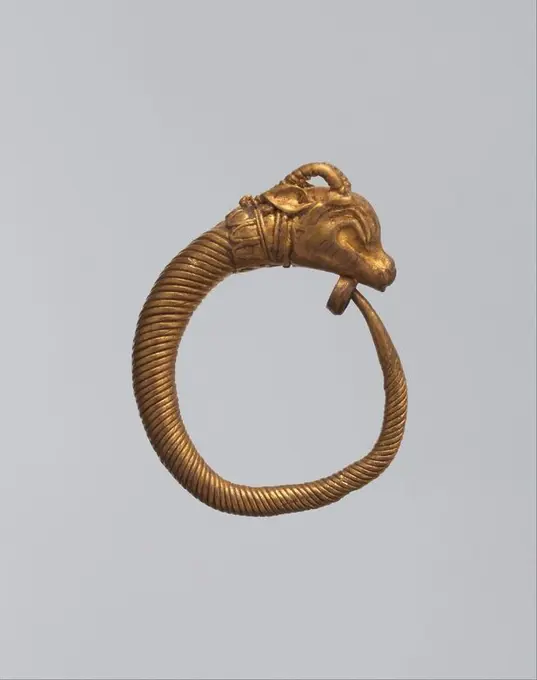
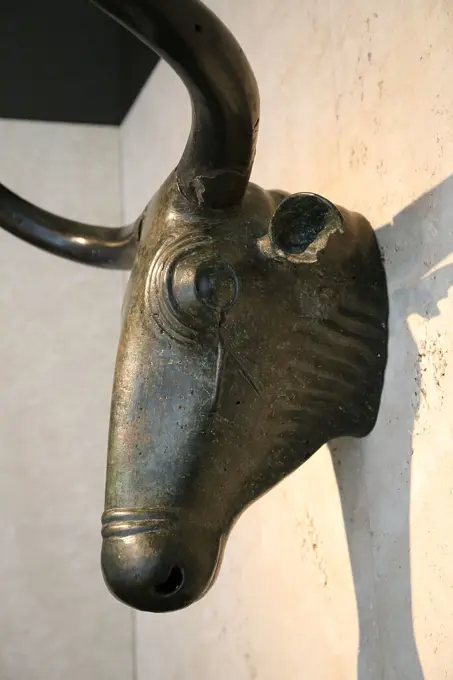
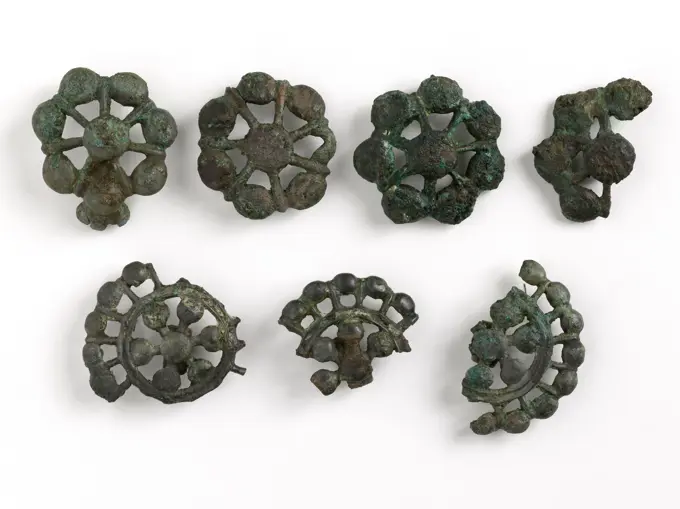
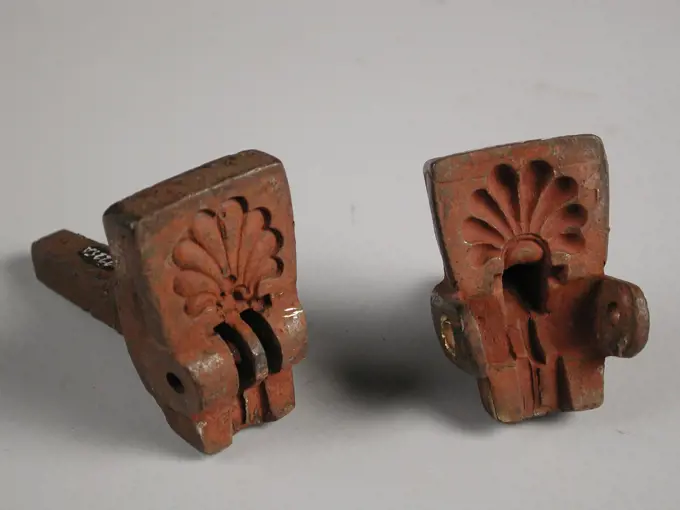
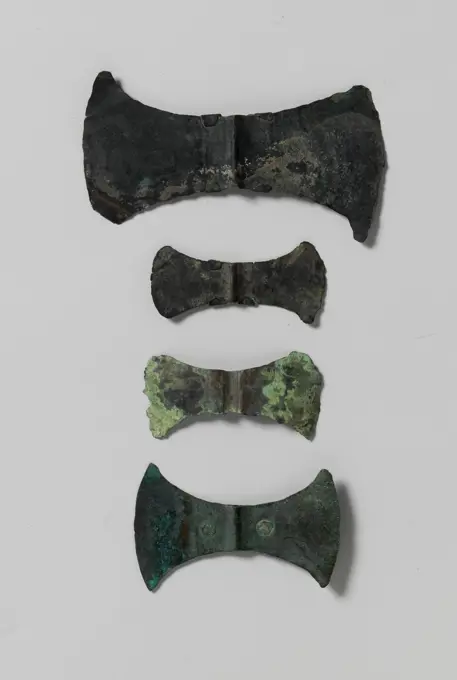
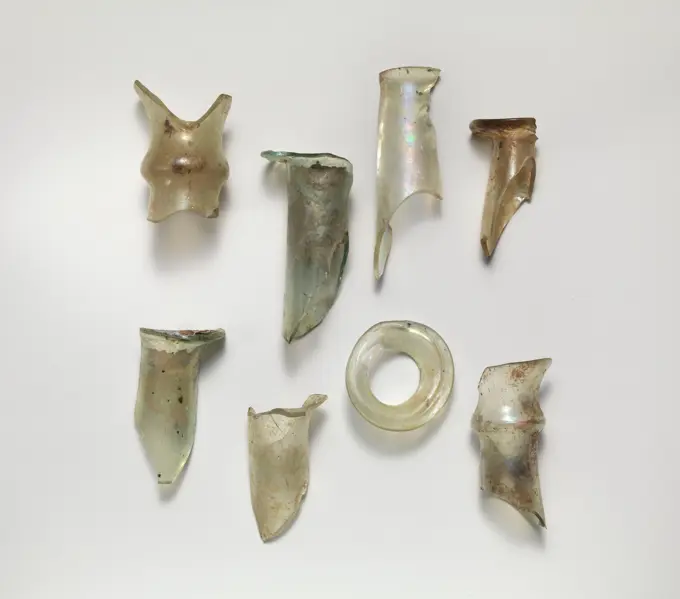
Old historical knight helmet Medieval historical helmet of a knight armor on white background Copyright: xZoonar.com/JFsPic Thielemannx 10943286Fragment of an Ornament 8th-12th century Indonesia (Central Java). Fragment of an Ornament 65104Necklace Clasp. UnknownWheel-shaped pendant ca. 7th-9th century A.D. Alanic. Wheel-shaped pendant 327578Ear Spool 15th-early 16th century Aztec. Ear Spool 317400Iron spearheads, Iron spear-butts. La Tene II. Celtic.Earring with ibex head. Dimensions: As Worn: H. 1.9 × W. 2 cm (3/4 × 13/16 in.). Date: 4th-3rd century B.C..Hoops formed of wound wire with animal head terminals are the commonest type of Hellenistic earring. The heads on these earrings have been referred to as those of gazelles, but is now thought more likely to be an ibex. Ibex-head earrings are well-known in Egypt, but also Asia Minor and Cyprus.The relatively simple decoration of these earrings points to an early Ptolemaic date. Museum: Metropolitan Museum of Art, New York, USA.Metallic Cross Metallic CrossHand Scale, 1700s. Europe, 18th century. overall: 9.5 x 18.2 cm (3 3/4 x 7 3/16 in.).Handle decorated with a Gorgon head, bronzeClose-up of a keyBulls from Costitx. 500 BC-200 BC. Iron age. Material: bronze. Shrine of Predio de Son Corro, Costitx, Majorca, Spain. National Archaeological Museum, Madrid. Spain.Pins, ornaments. Bronze. Caucasus. Second half of the 2nd millennium BC. Paris, Cernuschi museum. 35407-7 Spindle, bronze, ornamentTwo-piece bronze mold for thumb rest of pot or jug, mold casting tool tools base metal bronze, cast turned Two-piece bronze mold for casting thumb rest with shell motif and two-pivot hinge for pot or jug Rotterdam tin casting tin tin Meeuws Druy craft Forms come from the originally 18th century Rotterdam tinnegieter J Druy. The large molds that were not signed or dated were the property of the tinker guild and were rented to the small tin caster.Scythian riding outfit found in a tomb, 5th century BC. Artist: UnknownSeventy-Five Hammered Silver Plaques 8th-mid-16th century Peru; north coast (). Seventy-Five Hammered Silver Plaques 308947Bronze double-ax head ca. 1700-1450 B.C. Minoan The size and insubstantial construction of these objects makes it likely that they were dedications.. Bronze double-ax head 252402 Minoan, Bronze double-ax head, ca. 17001450 B.C., Bronze, Overall: 2 15/16 x 1 9/16 in. (7.4 x 3.9 cm). The Metropolitan Museum of Art, New York. Bequest of Richard B. Seager, 1926 (26.31.482)HACHA DE BRONCE DE TIPO TALONADO. Location: PRIVATE COLLECTION. SANTIAGO DE COMPOSTELA. A CORUÑA. SPAIN.Lily Pendant ca. 1390-1353 B.C. New Kingdom. Lily Pendant. ca. 1390-1353 B.C.. Faience. New Kingdom. From Egypt, Upper Egypt, Thebes, Malqata, Palace of Amenhotep III, MMA excavations, 1910-11. Dynasty 18Fragment European or Middle Eastern ca. 1150-ca. 1250 View more. Fragment. European or Middle Eastern. ca. 1150-ca. 1250. Glass, ceramic. Glass-VesselsFragment European or Middle Eastern ca. 1150-ca. 1250 View more. Fragment. European or Middle Eastern. ca. 1150-ca. 1250. Glass, ceramic. Glass-VesselsFragment European or Middle Eastern ca. 1150-ca. 1250 View more. Fragment. European or Middle Eastern. ca. 1150-ca. 1250. Glass, ceramic. Glass-VesselsFragment European or Middle Eastern ca. 1150-ca. 1250 View more. Fragment. European or Middle Eastern. ca. 1150-ca. 1250. Glass, ceramic. Glass-VesselsOne of a Set of Four Earrings 8th-12th century Indonesia (Central Java). One of a Set of Four Earrings 64357King symbol in the royal palace, Allada,  Benin.