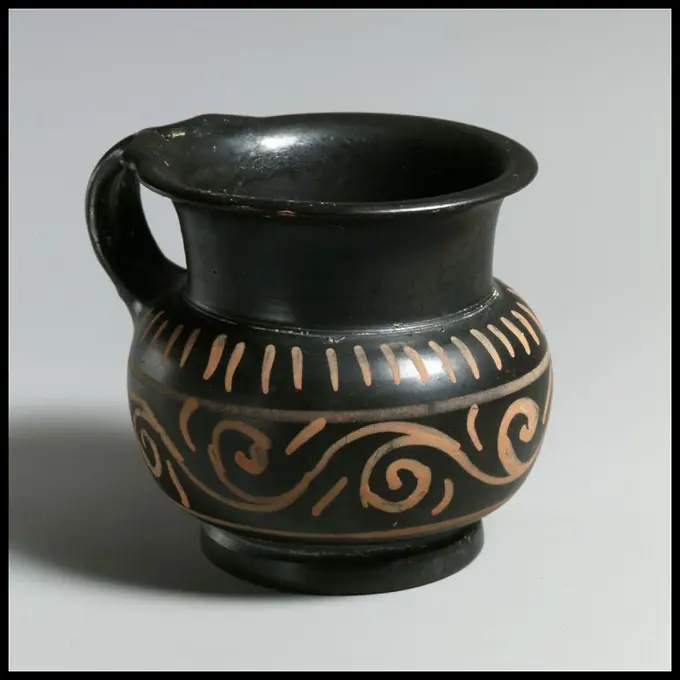
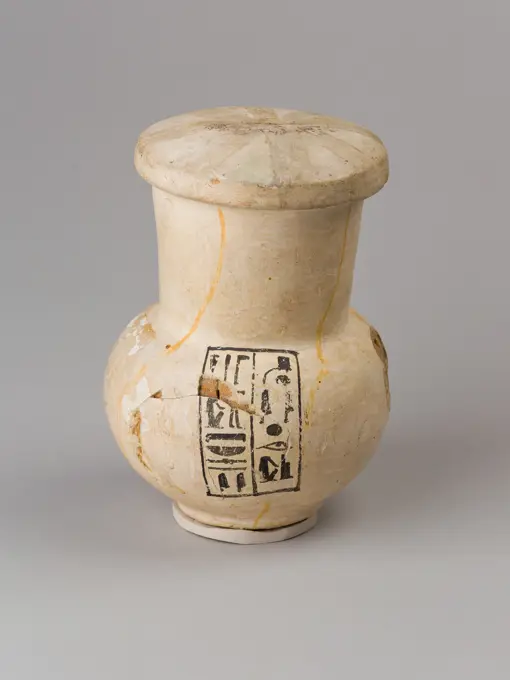
Ancient Ceramic Vessels

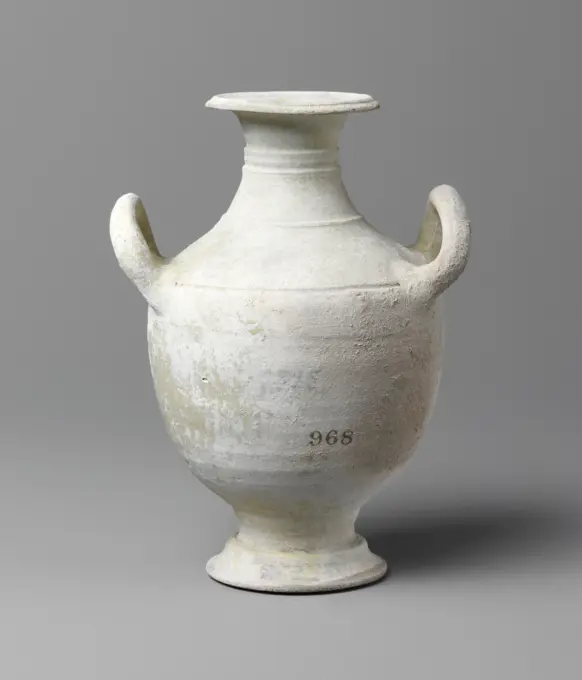
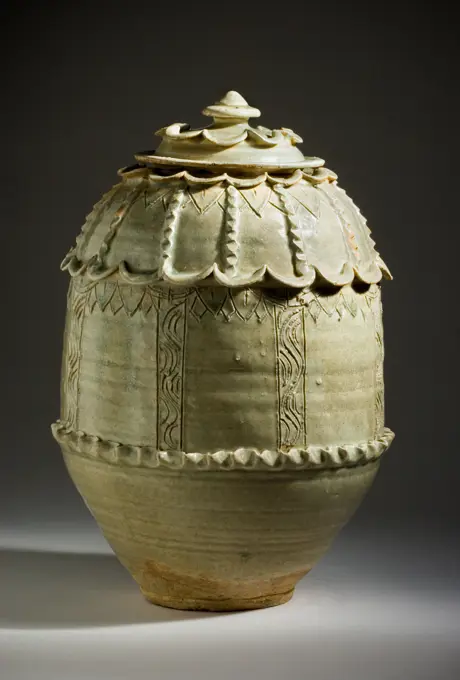
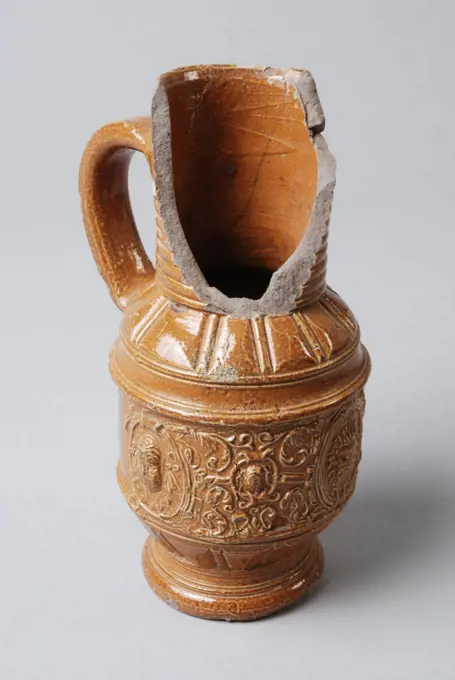
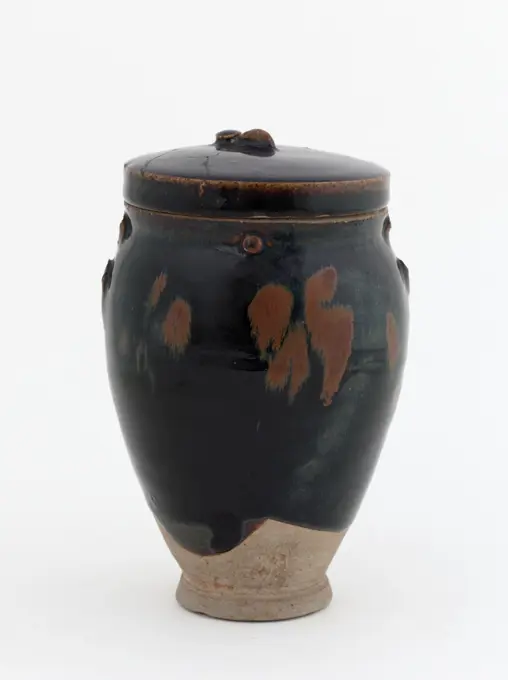
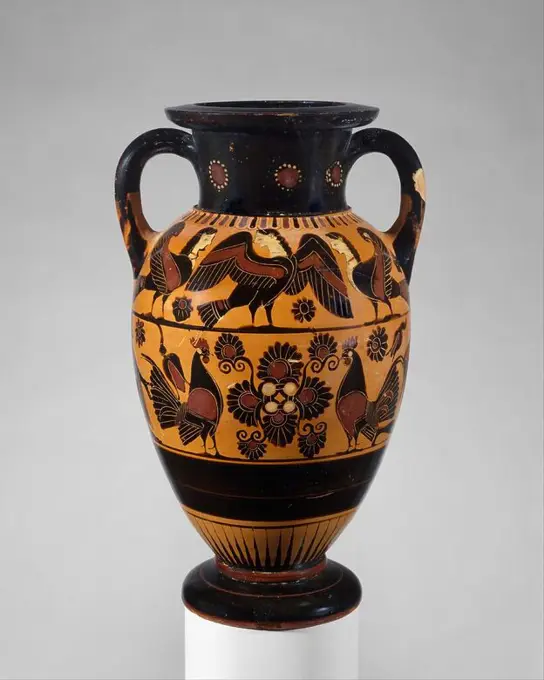
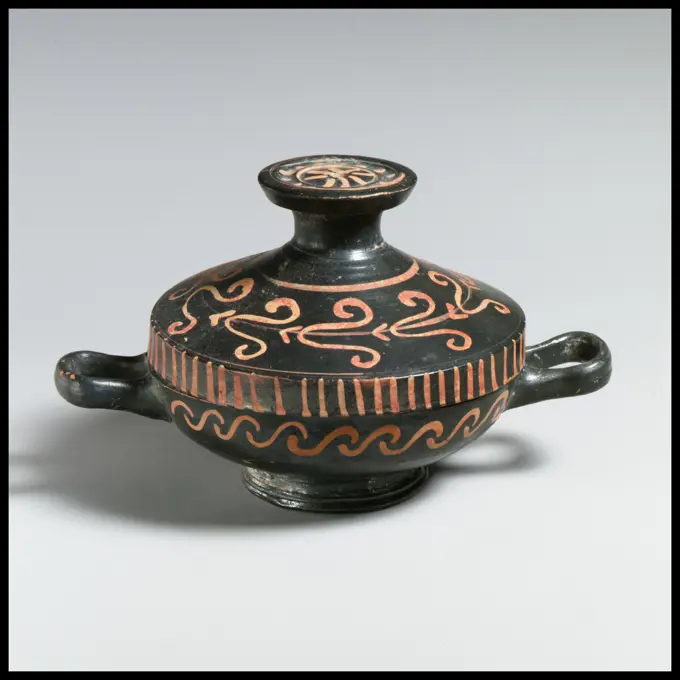
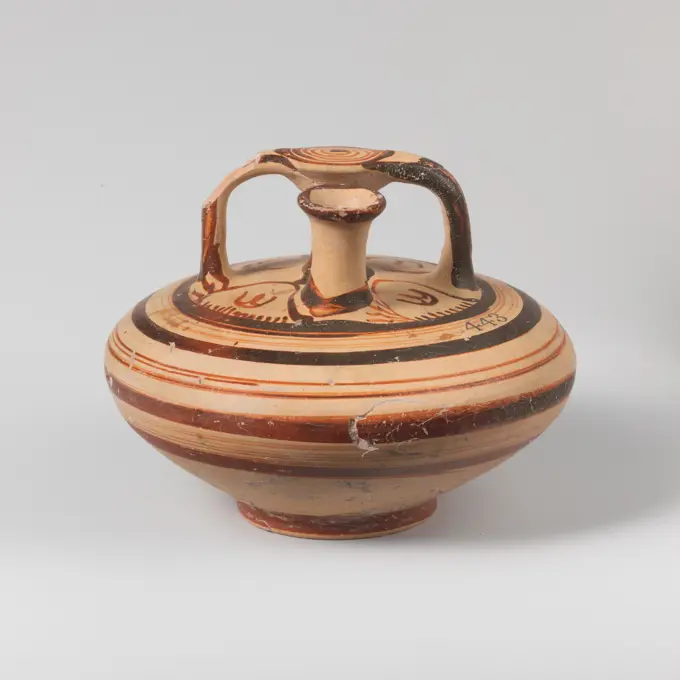
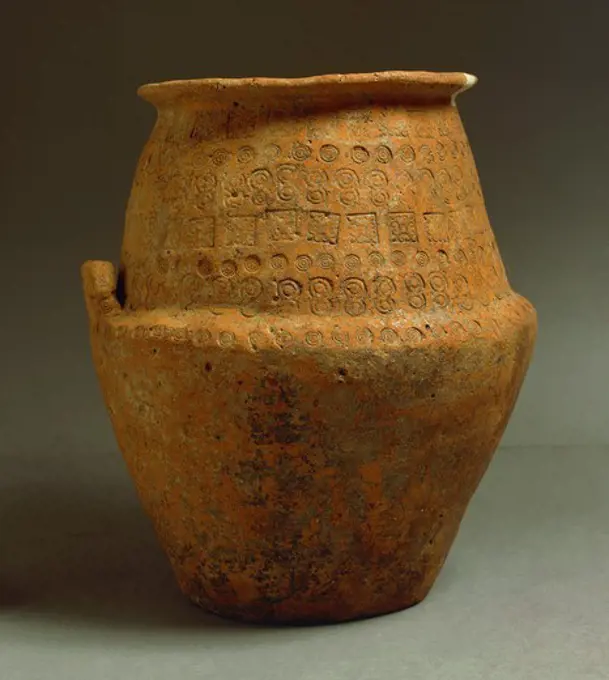
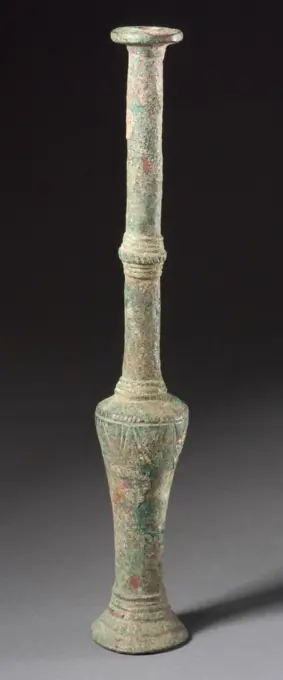
Various ancient ceramic jugs and jars, showcasing Greek and Roman designs, decorated with animal and floral motifs from different historical periods.
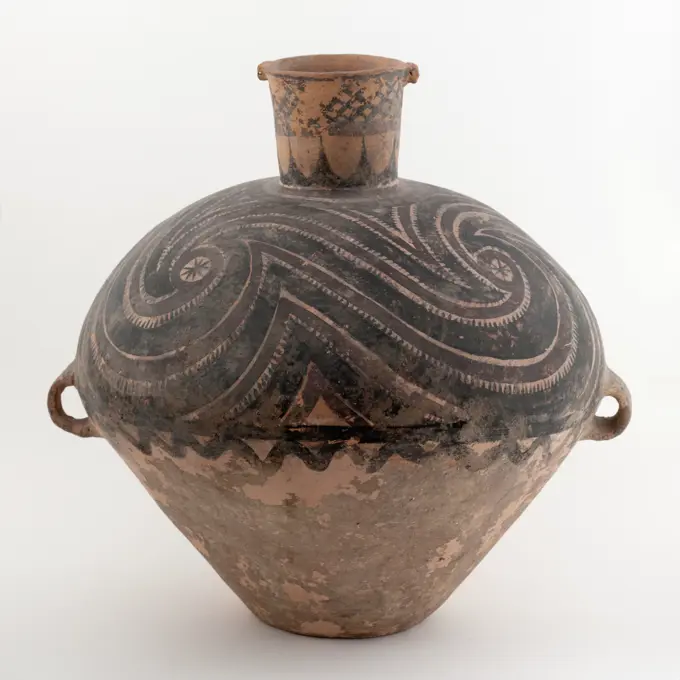
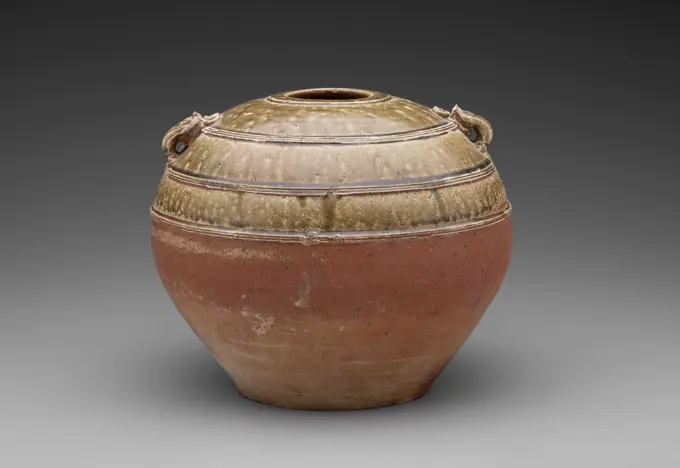
Jar ". Terracotta. China, Neolithic. Paris, Cernuschi museum. 74781-15 Chinese, ceramic, jar, neolithic, terracotta archeology
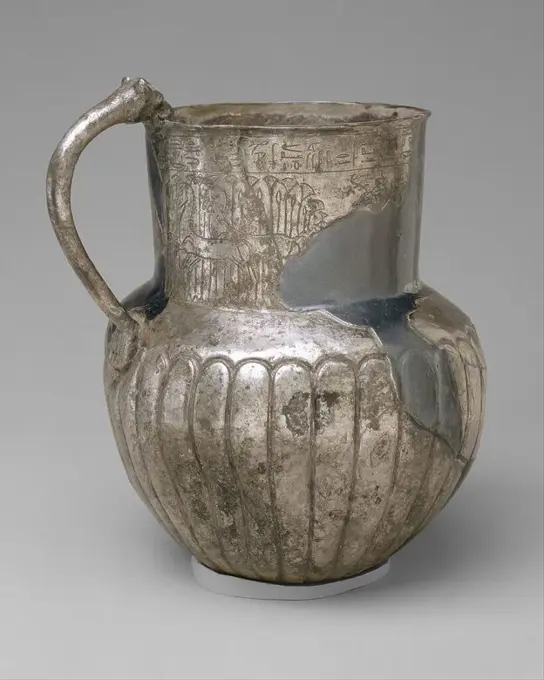
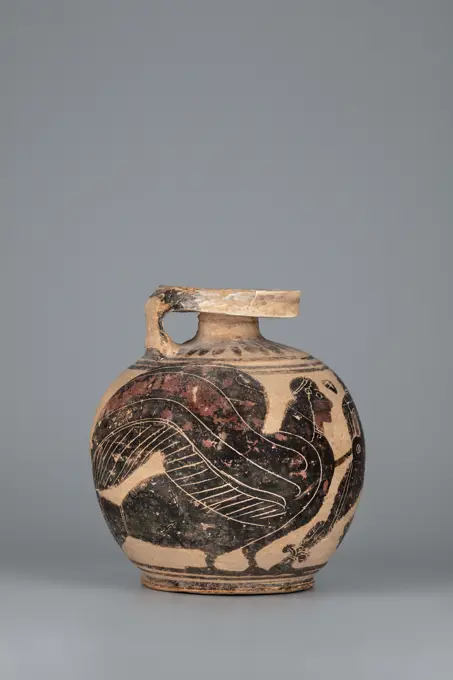
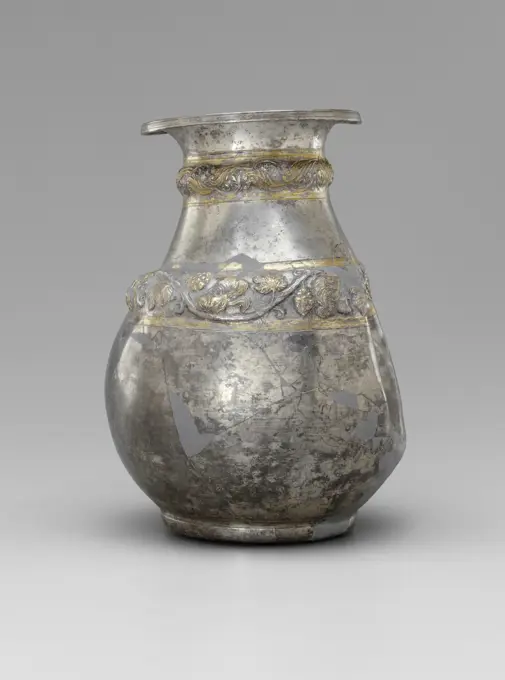
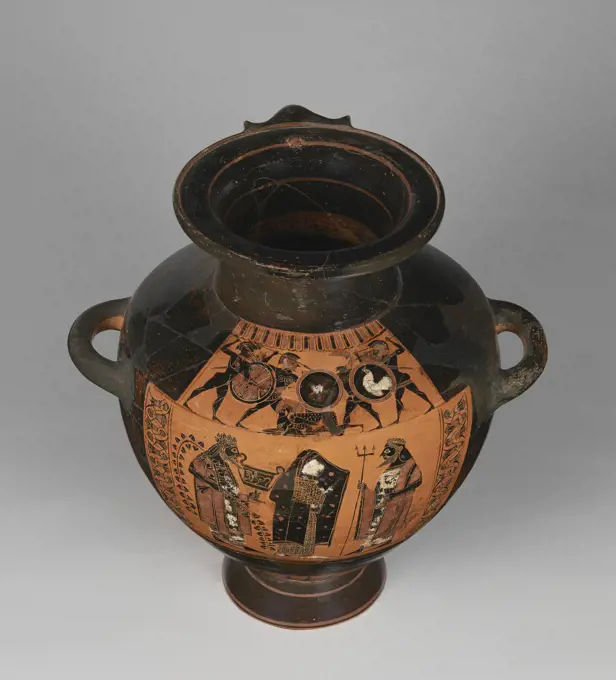
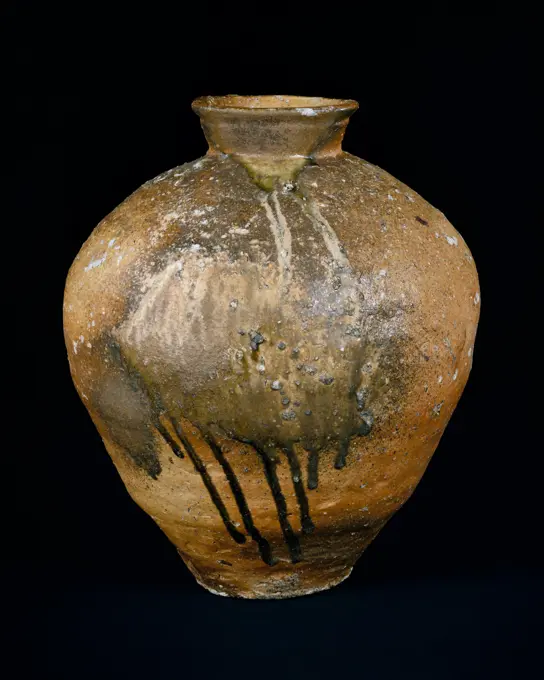
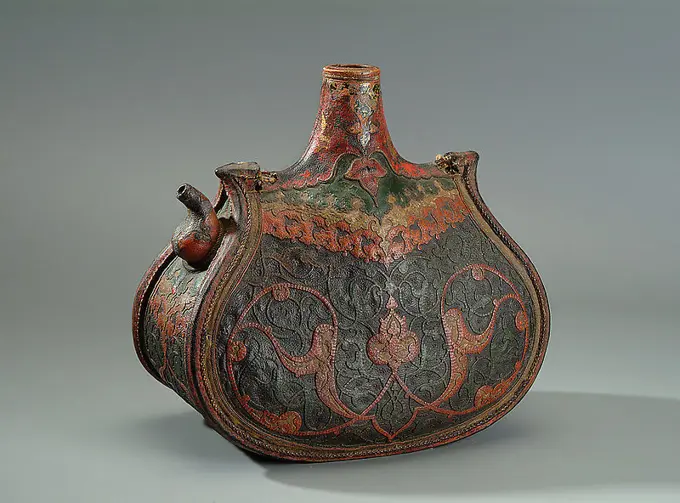
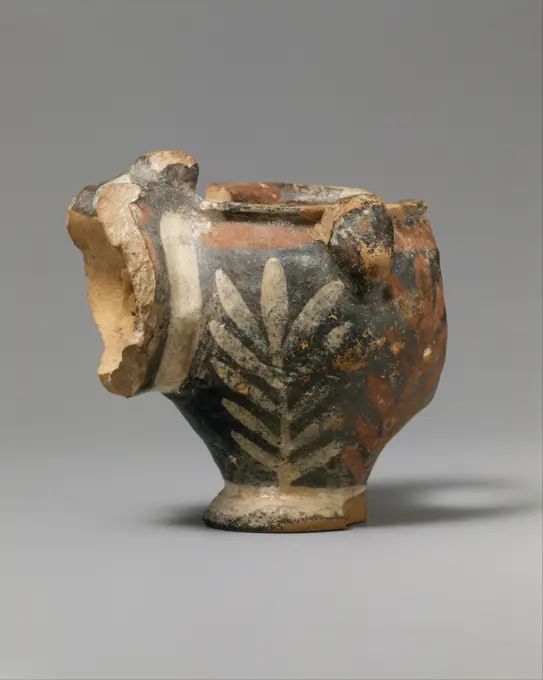
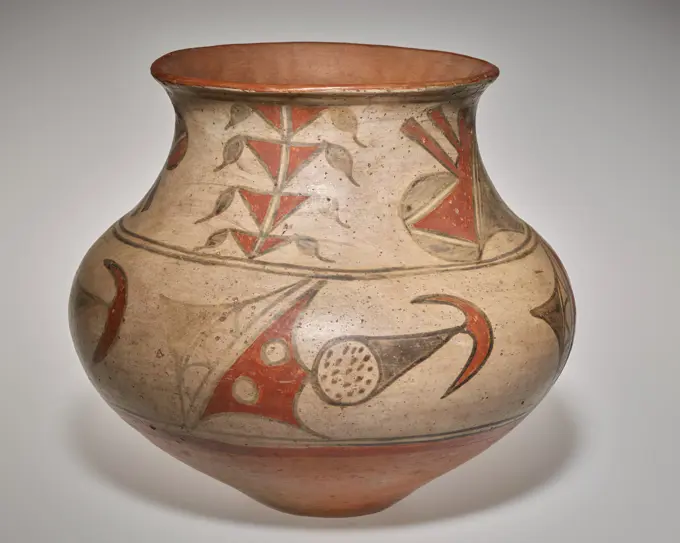
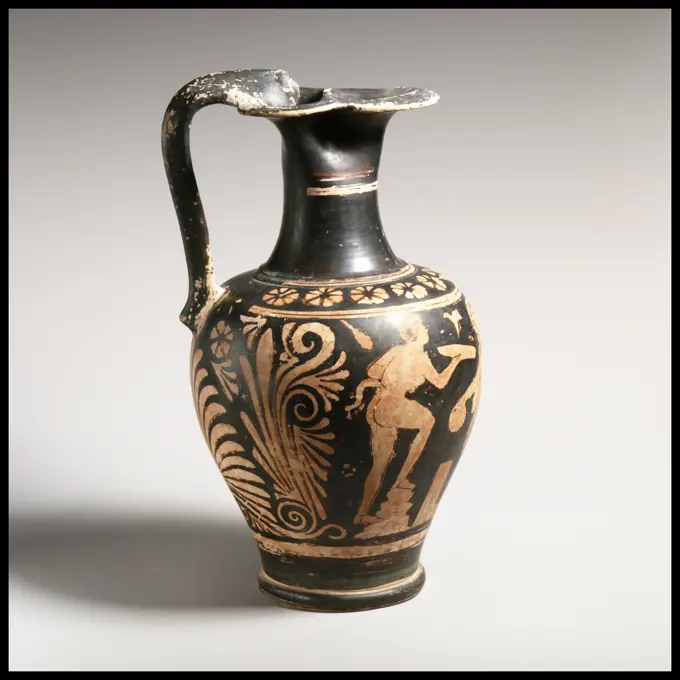
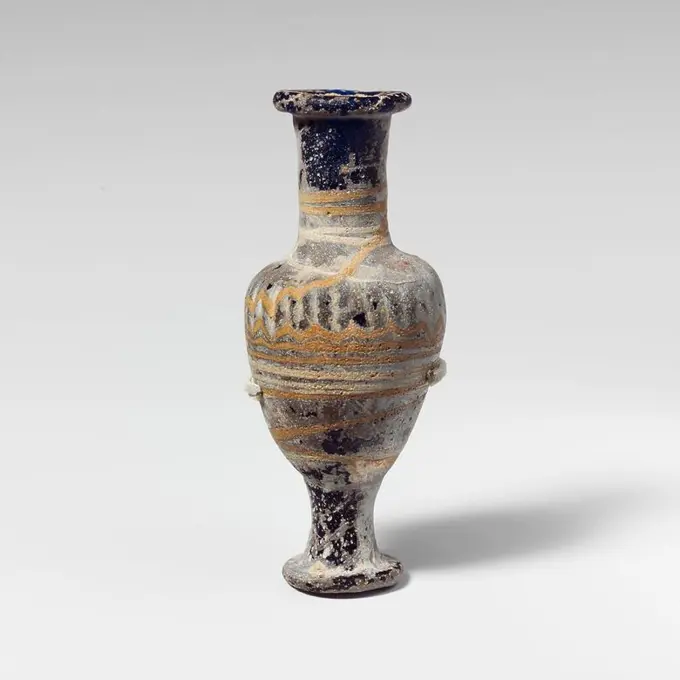
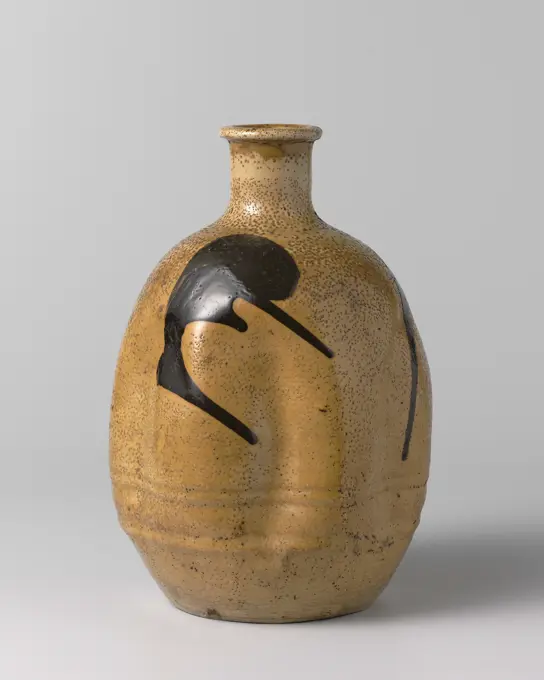
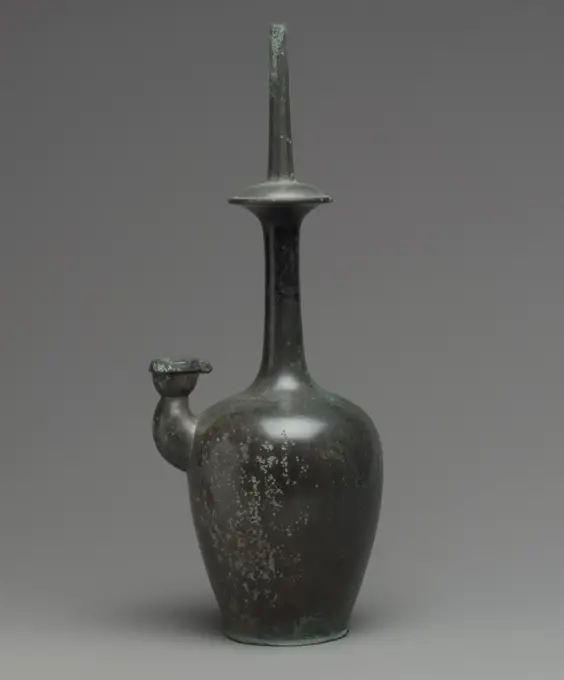
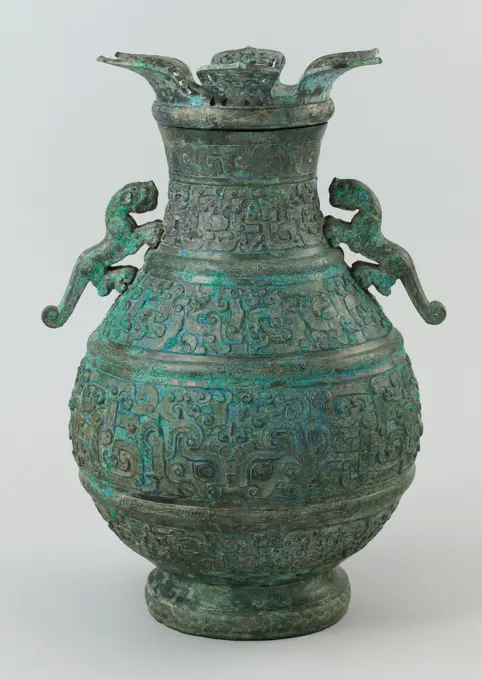
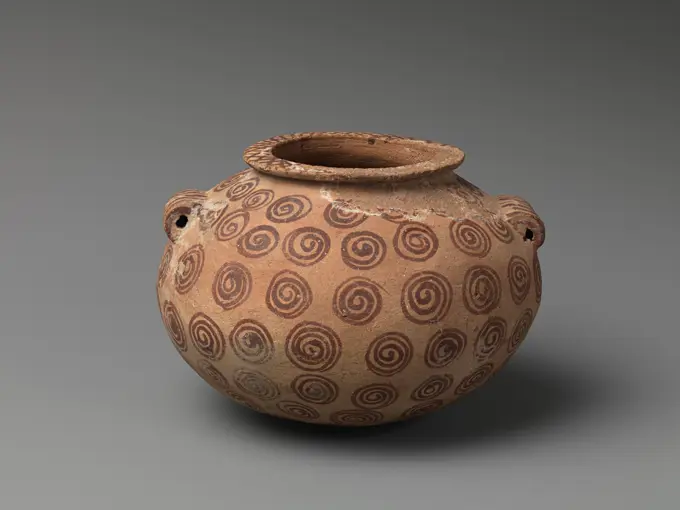
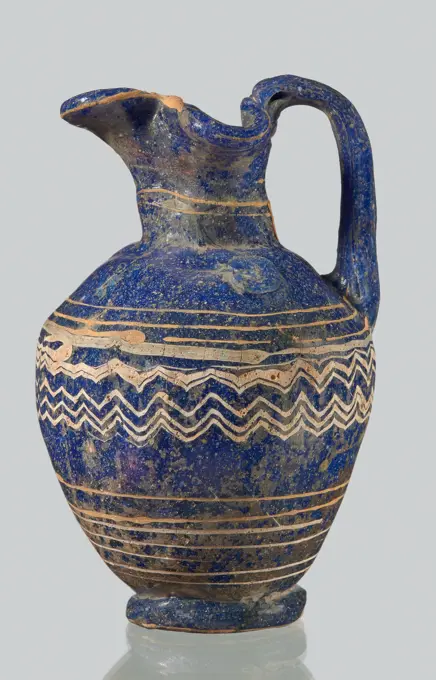
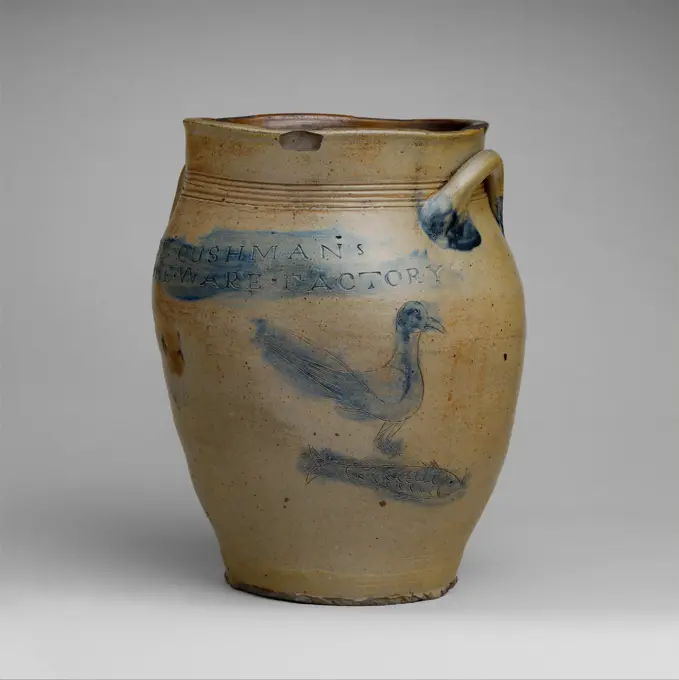
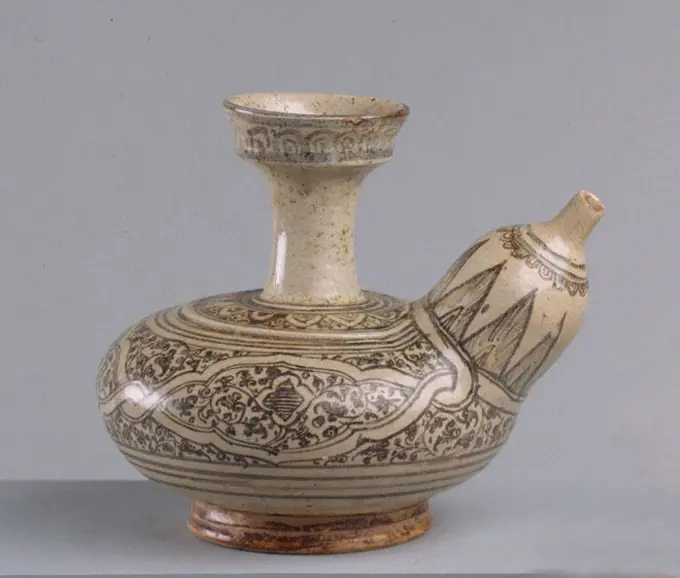
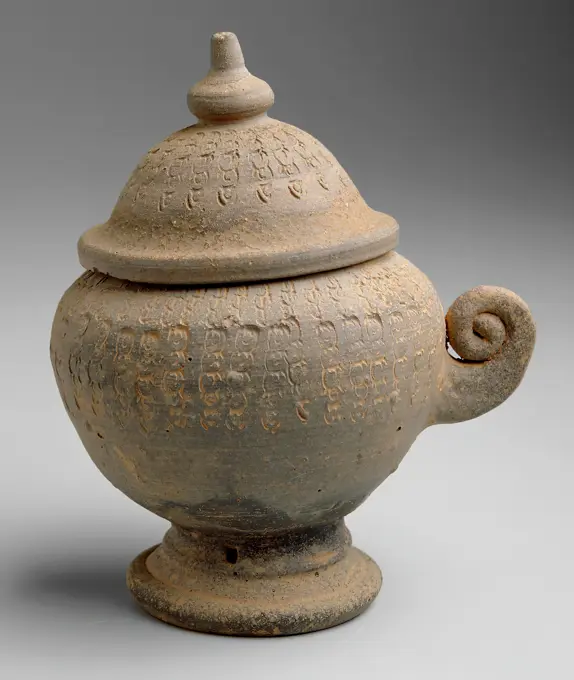
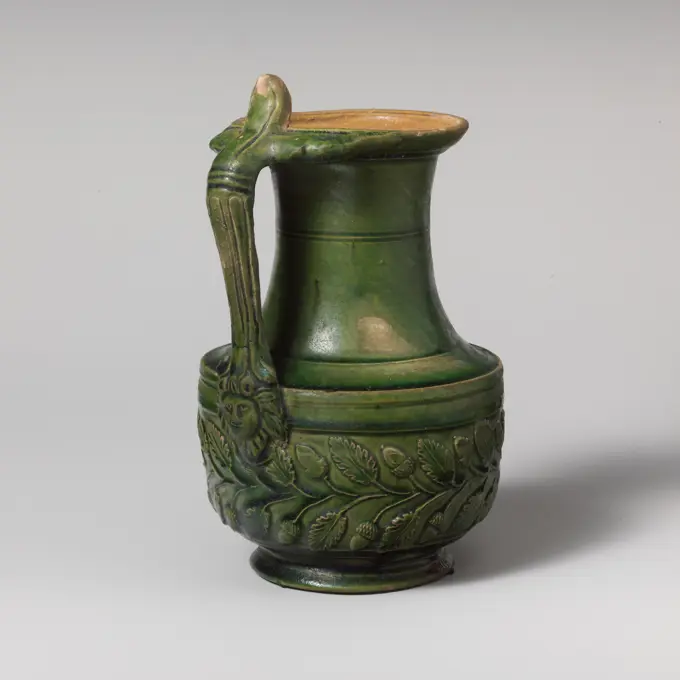
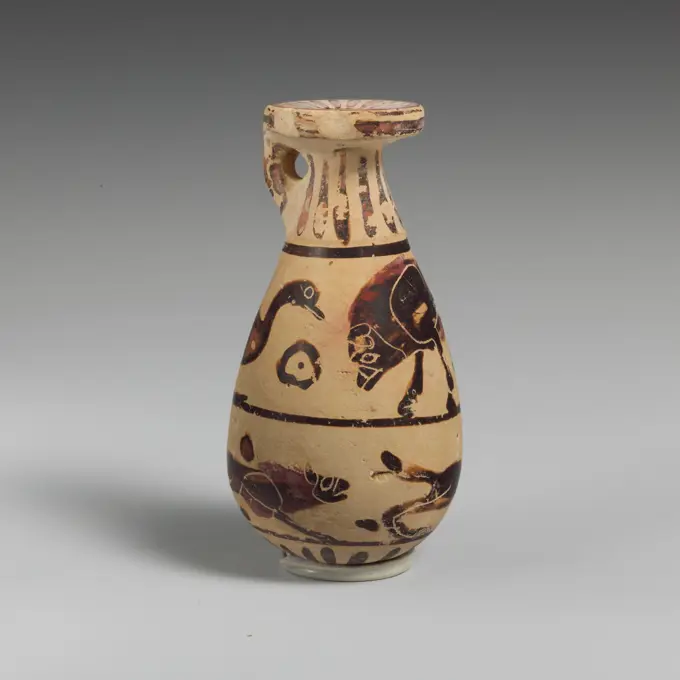
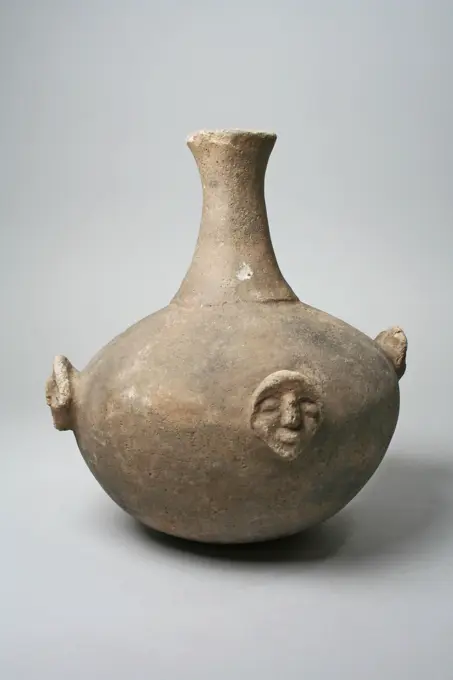
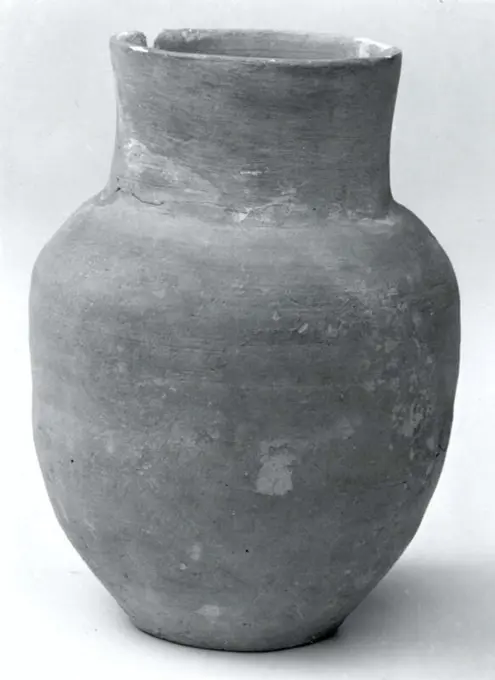
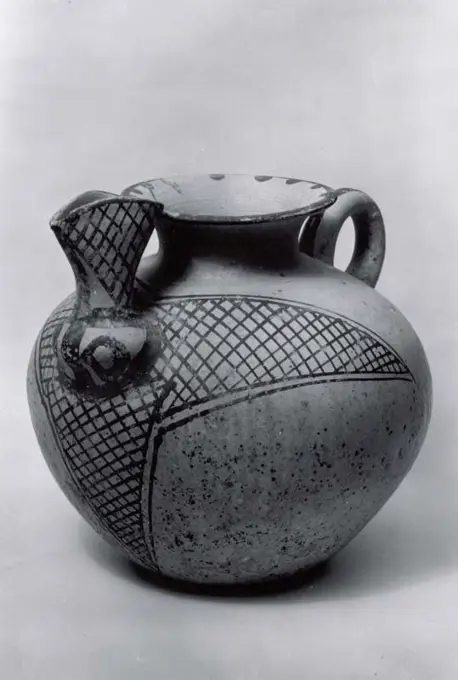
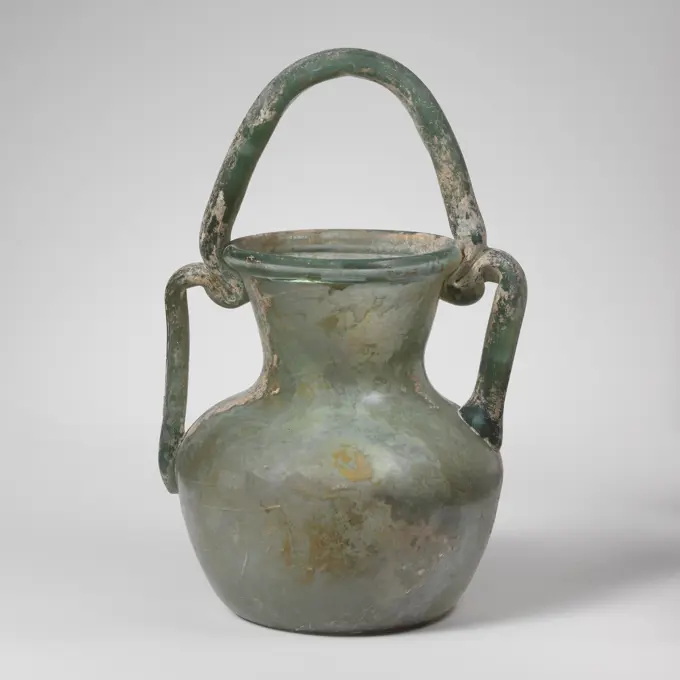
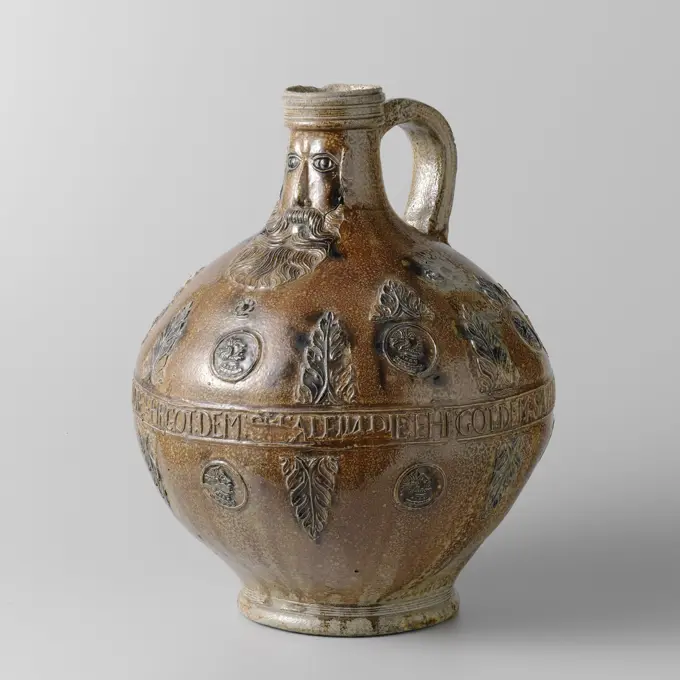
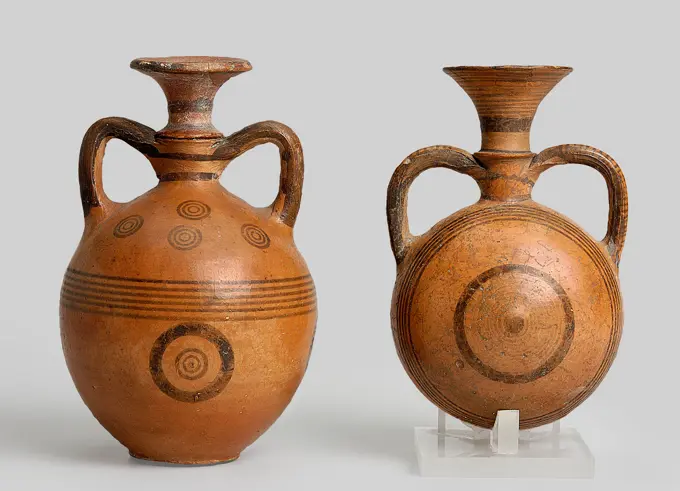
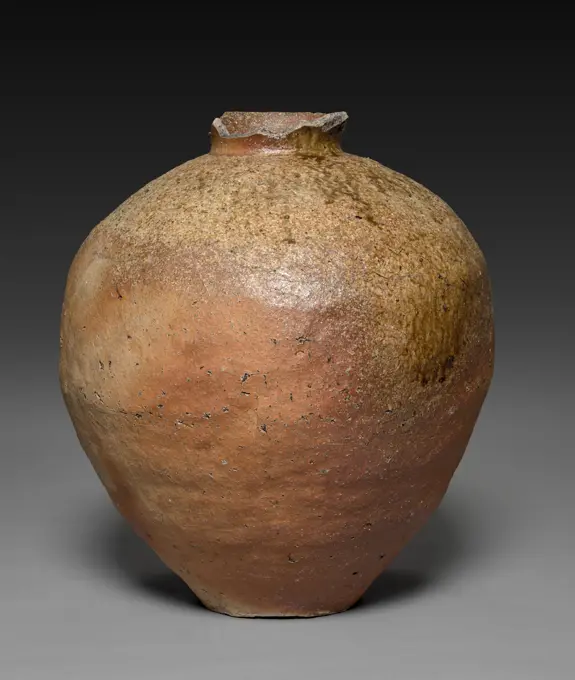
Storage Jar (Tsubo), 1400s. Japan, Muromachi period (1392-1573). Stoneware with natural ash glaze (Shigaraki ware); diameter: 47.5 cm (18 11/16 in.); overall: 53 cm (20 7/8 in.). This bulbous clay jar, with its expansive, dry orange-brown surface, white dots of feldspathic stone, and spidery crazing marks epitomizes one type of medieval ware from Shigaraki. This region east of Kyoto and north of the older cultural and religious center of Nara has long been known as a source of superior clay material. Shigaraki storage jars were crafted for strength and durability. The vessel's slightly lopsided shape shows precisely where its three lower clay sections connect with one another. The "stubble" on the upper shoulder sections is highlighted by dripping rivulets of dull-green ash glaze in one small area on the broken neck. The same natural glaze runs over the slope of the shoulder and also appears as a large splash of thin, glossy olive green where the shoulder joins the upper body.Terracotta jug 2nd half of the 1st century A.D. Roman Red-glazed jug with incised body and one handle.. Terracotta jug. Roman. 2nd half of the 1st century A.D.. Terracotta; red-glazed. Early Imperial. VasesRing-handled Jar. Thailand, Sawankhalok, circa 1300-1500. Furnishings; Serviceware. Stoneware with brown glazeOinochoe w stylu Dzikich Kozłów z przedstawieniami sfinksa oraz zwierząt. unknown, authorDecorated Jug with Feline-Head Handle naming Atumemtaneb. Dimensions: Diam. 12.9 × H. 15.9 cm (5 1/16 × 6 1/4 in.). Dynasty: Dynasty 19. Reign: Ramesses II. Date: ca. 1279-1213 B.C..Wine services do not seem to have a long history in Egypt, but appear to have been introduced in the New Kingdom when wine-drinking became a feature of elite society in the Ramesside Period. Most if not all of the vessels in Tell Basta find belonged to just such a wine service associated presumably with a temple festival.This pitcher was likely used to pour wine in celebration of a divinity - an Asiatic goddess to judge from other vessels belonging with this one. It is dedicated to the royal butler Atumemtaneb, who was also a royal envoy to all foreign lands. The decoration below the lip of the jug shows marsh scenes with cattle, horses, and goats nibbling trees; the base is embraced by petals; and the handle has a lioness-head at the join to the neck. Museum: Metropolitan Museum of Art, New York, USA.Flask. UnknownGlass amphoriskos (perfume bottle) late 6th-5th century B.C. Greek, Eastern Mediterranean Opaque white, with handles in same color but base-knob in translucent purple; trails in translucent purple and opaque white.Broad, inward-sloping rim-disk; tall, concave neck; rounded shoulder; elongated ovoid body; large circular base-knob with rounded edge and flat bottom; two vertical strap handles drawn up from shoulder, turned in, and pressed on to top of neck.One fine purple trail attached at edge of rim-disk; a thick layer of purple glass applied to body from shoulder to bottom and an opaque white trail applied over it and tooled into a zigzag pattern with deep vertical tooling indents around upper body; flattened blob of opaque white applied to bottom of knob-base.Complete but broken and repaired on one side of rim-disk with parts of trail missing; dulling, deep pitting, iridescence, and thick creamy weathering.. Glass amphoriskos (perfume bottle) 249988Pottery cooking jug, can be placed on three legs, low belly, twisted bottles, completely glazed, cooking jug kitchenware earth discovery ceramics earthenware glaze lead glaze, hand-turned glazed baked Large pottery cooking jug red shard entirely covered with lead glaze profiled bandor revolving around the neck and shoulder three legs. Double conical in shape with low belly. Protruding neck with lid slot. Restoration is reprocessed archeology Rotterdam City Triangle Bulgersteyn indigenous pottery cooking food preparation kitchen Soil discovery: Castle Bulgersteyn Rotterdam.Aryballos orientalizujący z przedstawieniem Hermesa () i syren. Malarz Otterlo (ok. 580-570 p.n.e.), authorDzbanuszek. unknown, authorTripod Food Container (Li). China. Date: 1500 BC-1400 BC. Dimensions: H. 19.8 cm (7 13/16 in.); diam. 12.8 cm (5 1/16 in.). Bronze. Origin: China. Museum: The Chicago Art Institute, Chicago, USA.SilverJarBan Chiang Archaeological Site is a prehistoric human habitation and burial site. It is considered by scholars to be the most important prehistoric settlement so far discovered in Southeast Asia, marking the beginning and showing the development of the wet-rice culture typical of the region. The site has been dated by scientific chronometric means which have established that the site was continuously occupied from 1495 BCE until c. 900 BCE making it the earliest scientifically-dated prehistoric farming and habitation site in Southeast Asia. Ban Chiang is considered the most important prehistoric settlement so far discovered in South-East Asia. It marks an important stage in human cultural, social and technological evolution. The site presents the earliest evidence of farming in the region and of the manufacture and use of metals. Ban Chiang was officially inscribed as a UNESCO World Heritage Site in 1992.Jar 12th-13th century. Jar 444480Water Jar with Dionysos and Poseidon; Attributed to Wider Circle of Lydos (Greek (Attic), active about 565 - 535 B.C.); Athens, Greece; about 550 B.C; Terracotta; 38.9 × 30.2 cm (15 5,16 × 11 7,8 in.)Olletta in bucchero, Abruzzo, Italy. Piceno Civilization, 9th-3rd Century BC.Terracotta amphora late 4th century B.C. Greek, Cypriot This diminutive amphora is in the "unpainted white ware" style, a descriptive term that calls attention to the plain light colored ground that lacks decoration. Excavation of tombs in Cyprus have brought to light numerous ceramic vessels in this style, suggesting that plain white ware was deemed especially appropriate for burial. Although this amphora is unpainted it exudes an aire of luxury; for its crisp potting, small scale, and smooth white surface may recall vessels made in alabaster, a popular medium in Cyprus.. Terracotta amphora 239989Terracotta mug mid-5th century B.C. Greek, Attic The mug was a versatile shape that could be used as a drinking cup, as a ladle, or as a measure. Rare examples are preserved in silver.. Terracotta mug 254415 Greek, Attic, Terracotta mug, mid-5th century B.C., Terracotta, H. 2 13/16 in. (7.2 cm). The Metropolitan Museum of Art, New York. Rogers Fund, 1941 (41.162.244)Lidded Funerary Urn (Tan)OLLA O CANTARO DE BOCA ANCHA DE DONDE SALE EL ASA-PARCIALMENTE VIDRIADO. Location: ALFARERIA. SPAIN.Jar with a spiraling pattern, anonymous, c. -3000 - c. -2000 Potty of pottery with a wide, flared neck and a round underside, painted in red. A spiral pattern on the belly and neck. Two chips in the edge. Ban Chiang earthenware painting Potty of pottery with a wide, flared neck and a round underside, painted in red. A spiral pattern on the belly and neck. Two chips in the edge. Ban Chiang earthenware paintingSmall, brown stoneware jug with fries over the belly, jug crockery holder soil find ceramic stoneware clay engobe glaze salt glaze, hand turned stamped glazed glazed baked Stoneware jug gray shard brown engobe and salt glaze bandoor with tail profiled neck on shoulder and bottom wall vertical cannelures archeology import pottery serve serve drink wine beerVase ". Ceramic. China, Dynasty of Song. Paris, Musée Cernuschi. 72685-23 Chinese art, ceramic, lid, Song dynasty, vaseTerracotta neck-amphora (jar). Culture: Greek, Chalcidian. Dimensions: Overall: 11 1/2 x 7 3/16in. (29.2 x 18.2cm)diameter of body 6 7/16in. (16.3cm)diameter of foot 4 1/16in. (10.3cm). Date: ca. 540 B.C..Obverse and reverse, on the shoulder, siren; on the body, cocks flanking a floral; under the handles, man runningThis type of very fine black-figure vase is found primarily in southern Italy and was probably made there. It is known as Chalcidian because some examples carry inscriptions in the script used at the city of Chalkis, on the island of Euboea. Museum: Metropolitan Museum of Art, New York, USA.PouJarStorage Jar 14th-15th century Japan This medieval storage jar, with its rugged surface and massive shape, was built up in several stages with coils of clay. Its compelling appearance reflects the drama of its creation in a large tunnel kiln, where hardwood ash settled onto its molten surface.. Storage Jar. Japan. 14th-15th century. Stoneware with natural ash glaze (Shigaraki ware). Muromachi period (1392-1573). CeramicsFlask with a spout (matara). unknown, craftsmanKamares jar ca. 1981-1640 B.C. Middle Kingdom This pot, made in Minoan Crete or perhaps imitated in Egypt, originally consisted of three joined vessels with a loop handle. Its designation derives from a Cretan cave sanctuary of that name where examples were first found.Link to a blog postMy Early Life with the Middle Kingdom. Kamares jar 545718Olla, c. 1910-15, 11 1/2 x 13 1/2 in. (29.21 x 34.29 cm), Ceramic, pigment, United States, 20th centurySprinkler or Dropper Bottle 201 CE-400 CE Syria. Glass, mold-blown technique . Ancient LevantineA pitcher with a lid Prosymiak, JanGlass perfume bottle. Culture: Roman. Dimensions: Overall: 3 7/16 in. (8.7 cm)Diam.: 7/8 x 5/8 in. (2.2 x 1.6 cm). Date: 1st-2nd century A.D..Colorless with pale blue green tinge.Uneven rim, folded out, over, and in, flattened on upper surface; cylindrical neck, tapering downwards, with deep tooled indent around base; elongated ovoid body; small, flat bottom.Intact; pinprick bubbles and blowing striations; dulling, pitting, and brilliant iridescent weathering on exterior, soil encrustation and creamy brown weathering on interior, with large lump of soil inside. Museum: Metropolitan Museum of Art, New York, USA.JARRO DE BRONCE TARTESICO PARA RITUALES PROCEDENTE DE ALCALA DEL RIO (SEVILLA) - SIGLO VII AC. Location: MUSEO ARQUEOLOGICO-COLECCION. Sevilla. Seville. SPAIN.Terracotta oinochoe (jug) ca. 320-310 B.C. Attributed to the Group of Zurich 2657 Seated Dionysos pouring a libation over an altar. He is flanked on the left by a satyr holding a platter and on the right by a maenad holding a tympanon and a thyrsos. Each attendant rests one foot on a rock.. Terracotta oinochoe (jug) 254629 : Attributed to the Group of Zurich 2657, Terracotta oinochoe (jug), ca. 320310 B.C., Terracotta, H. 9 5/8 in. (24.4 cm). The Metropolitan Museum of Art, New York. Gift of Mrs. Kate Roberts Smith, 1949 (49.93)Vase Pendant 4th-5th century Egyptian possibly. Vase Pendant 479633Glass unguentarium (perfume bottle). Culture: Greek, Eastern Mediterranean. Dimensions: Overall: 3 3/8 x 1 3/8in. (8.6 x 3.5cm). Date: 3rd century B.C..Translucent cobalt blue, with opaque yellow and white trails.Everted, horizontal rim disk with rounded outer lip; tall cylindrical neck; narrow, curving shoulder; ovoid body, tapering downwards; tall, applied foot, with concave sides expanding outward to rounded lip around bottom; flat but slightly uneven bottom with kick at center.White trail applied on shoulder and wound twice around base of neck, then in spiral down side of body, ending above foot; yellow trail applied over white, starting on neck and wound around twice, then drawn across shoulder and in spiral down body, and trailed off upwards again, ending midway up body; top of body tooled into numerous shallow, vertical ridges, creating a narrow band of zigzags in trails.Intact; dulling, pitting, and iridescent weathering. Museum: Metropolitan Museum of Art, New York, USA.. Egg-shaped sake bottle from stoneware with stuck walls, covered with a yellow glaze and painted in brown. Four brown spots on the belly. Old label on the bottom with 'W504'.Ceremonial Vessel, late 19th century, 14 5/8 x 9 13/16 in. (37.15 x 24.92 cm), Terracotta, wire, Democratic Republic of Congo, 19th centuryJug ca. 900-700 B.C. Iran This jug has a globular body, a flat base, and a narrow mouth. A loop handle, large enough for a single finger, connects the neck to the body. The jug is made of a buff clay with red painted decorations, including stripes around the rim and neck and on the handle, and rays descending from the neck to the body. Wheel lines on the interior indicate that it was made on a potters wheel.This jug was excavated at Tepe Sialk, near Kashan in central Iran. Sialk was the site of a fortified town, constructed in the early first millennium B.C. Several hundred yards from the town there was a large cemetery, called Necropolis B by the archaeologists who explored it between 1933 and 1937. The graves were pits covered with pitched roofs made of stone or clay, and in addition to the bodies of the dead they contained jewelry, weapons, leather armor, horse trappings and ceramic vessels, including many similar jugs. Possibly it was used in a funerary banquet or ritual before itLekythos. Culture: Greek, Attic. Dimensions: Diameter: 2 11/16 × 1 5/8 × 2 1/8 in. (6.8 × 4.1 × 5.3 cm)Height: 7 5/8 in. (19.4 cm). Date: 1st quarter of 5th century B.C.. Museum: Metropolitan Museum of Art, New York, USA.Vase with Elephant Heads and Cloud Designs. Culture: China. Dimensions: H. 10 in. (25.4 cm); Diam. 6 in. (15.2 cm).In the eighteenth century, the kilns at Jingdezhen began to make porcelains of a different material. Known as huashi, or "slippery stone," this expensive material, often called soft paste, was used to make thin vessels that frequently were decorated with incised or raised designs under glaze. While the reasons for its introduction remain unclear, it is worth noting that soft paste is easily carvable, and its use would have thus been akin to contemporaneous interests in the manipulation of other materials such as ivory and bamboo. The shape of this vase is loosely based on Bronze Age vessels whose handles were shaped like the heads of animals. Museum: Metropolitan Museum of Art, New York, USA.Water bottle (Kundika) Korea Distinctively shaped containers such as this example were traditionally used in Asia as water sprinklers for Buddhist purification rituals.. Water bottle (Kundika) 50446Inca aryballos. Characteristic element of the domestic trousseaus of the Inca elite. Ceramics. Inca civilization (1400-1533 AD). Cuzco, Peru. Museum of the Americas. Madrid, Spain.Hu "Boute". Bronze. Western Zhou Dynasty (1121-771 BC). Paris, Cernuschi museum. 144391-2 Asian art, Chinese art, Hu bottle, bronze, dance, western zhou dynasty, animalDecorated ware jar with spiral design ca. 3650-3500 B.C. Predynastic, Naqada II. Decorated ware jar with spiral design. ca. 3650-3500 B.C.. Pottery, paint. Predynastic, Naqada II. From EgyptOinochoe. warsztat wschodni, workshopJar 1805-33 Paul Cushman American This jar is one of the finest examples of the work of Paul Cushman, one of Albany's earliest potters. Typically, such utilitarian storage vessels were completely unadorned. This example, however, features exuberant incised decoration, a bird and a fish, each highlighted with cobalt blue.. Jar 17503Bottle with Stopper ca. 14th century Thailand. Bottle with Stopper 37454Sphinxes; Attributed to Fighting Rams Group (Greek, active about 670 - 630 B.C.); Greece (Corinth); about 670 - 630 B.C; Terracotta; 7 × 3.2 cm (2 3,4 × 1 1,4 in.)Kendi (Drinking Vessel) 14th-15th century Thailand (Si Satchanalai). Kendi (Drinking Vessel) 37481Lidded Jar with Handle, 9th century, Unknown Korean, 7 1/4 x 6 x 4 3/8 in. (18.42 x 15.24 x 11.11 cm), Earthenware, Korea, 9th century, During the Unified Silla period (668-935), the exaggerated shapes of ceramics made during the earlier Silla (57 BCE-585 CE) and Gaya (42-532) kingdoms gave way to more compact and contained forms. Potters produced a wide variety of tableware, ranging from completely unadorned pieces to cups, jars, and bottles elaborately decorated with stamped designs.Jar 13th-14th century French. Jar 465871 French, Jar, 13th14th century, Earthenware with slip decoration, Overall: 6 5/8 x 7 1/8 x 6 1/16 in. (16.8 x 18.1 x 15.4 cm). The Metropolitan Museum of Art, New York. Gift of J. Pierpont Morgan, 1917 (17.194.2184)Brown stoneware jug, round belly frieze with biblical scenes, the Christmas story, jug crockery holder soil find ceramic stoneware clay engobe glaze salt glaze, hand turned stamped glazed glazed baked stoneware jug gray shard brown engobe and salt glaze tail top fries: DEI: GRUS: MARIA: ENDE: ELEISSEBET: CHRIST: GEBURT: DI: HERDEN: HOMES: DI: H: DRI: KONIGEN: IOSIP: FLIT: IN: EGIPT archeology import pottery serving drink pouring remembering celebrate beer wine bible religion Maria Josef Elisabeth Jesus birth shepherd king flight Egypt Christmas ChristmasTerracotta jug 1st half of 1st century A.D. Roman, Asia Minor, Tarsus This jug is attributed to one of the workshops producing lead-glazed vessels at Tarsus in southeast Asia Minor. Most of the production was devoted to making drinking cups, and this is a rare example of a different shape that was clearly much influenced by contemporary metalwork.. Terracotta jug 254528 Roman, Asia Minor, Tarsus, Terracotta jug, 1st half of 1st century A.D., Terracotta, H. 6 1/2 in. (16.5 cm). The Metropolitan Museum of Art, New York. Rogers Fund, 1945 (45.11.6)Terracotta alabastron (perfume vase) ca. 630-615 B.C. Attributed to the Kerameikos Group Two animal friezes: bird and boar, coursing hounds. Terracotta alabastron (perfume vase) 244853White stoneware funnel beaker, with three appliqués in which two musicians play with tree, funnel beaker drinkware tableware holder soil find ceramic stoneware glaze salt glaze, hand turned stamped molded glazed baked Small stoneware funnel cup with ovoid belly and funnel neck. Pinched outstanding foot. Three large appliqués in which lute player and drummer in the middle bundled plants and flowers. Some fields of salt glaze. Small annular ear on the shoulder archeology import pottery drink serve wine beer musicAmphoriskos. UnknownJug;  X-XIII century (901-00-00-1300-00-00);gift (provenance)Bottle, Raised Faces on Body 11th-14th century Mississippian. Bottle, Raised Faces on Body 318600Votive Palm Column Capital, 30 BC-AD 395. Egypt, Early Roman Empire (). Pale turquoise faience; diameter: 9.1 cm (3 9/16 in.); overall: 10 cm (3 15/16 in.).Jar ca. 2600-2350 B.C. Sumerian. Jar 324073Spouted vessel ca. 9th-8th century B.C. Iran This pitcher has a squat body with a rounded shoulder, a short neck, and a flaring rim. A short spout emerges from one side of the body just below the shoulder and connects to the rim. A rounded handle connects the shoulder and the rim on the other side. The pitcher is buff, with painted reddish-brown decorations, including three rays with crosshatching surrounding the spout and dots on the rim. The combination of the spout and painted decorations suggest the form of a bird. The body and neck were made separately on a wheel, with the handle and spout added later.This pitcher was excavated at Tepe Sialk, near Kashan in central Iran. Sialk was the site of a fortified town, constructed in the early first millennium B.C. Several hundred yards from the town there was a large cemetery, called Necropolis B by the archaeologists who explored it between 1933 and 1937. The graves were pits covered with pitched roofs made of stone or clay, and in additGlass jar with basket handle 4th century A.D. Roman, Syrian Translucent blue green; handle in same color.Thick, outsplayed, tubular rim, folded over and in, and flattened into side of neck; funnel-shaped neck, curving out at base to join sloping shoulder; side of body tapers downwards; large, deep kick in bottom, with central pontil scar; thick, solid rod handle applied on shoulder at one side, drawn up and slightly outwards, tooled in with a fold onto top of neck and outer edge of rim, drawn up to form an arched basket handle, and then dropped down to form fold below rim and trailed off on upper body on opposite side.Intact; some bubbles and blowing striation; dulling, creamy weathering, and iridescence.. Glass jar with basket handle 256770Wine Flask (Bian Hu) 99 BCE-100 CE China. This unusual variation of the canteen-shaped container is lightly chiseled with a combination of geometric patterns, birds, and gazelle-like creatures. The distinctive technique and style of surface decoration seen on this vessel associate it with bronzes excavated in far southern China, near modern Vietnam. Under occupation by Han rulers, bronze foundries in this frontier area produced intriguing bronzes in which Chinese styles are blended with those of the native, non-Chinese tribes.. Bronze with incised decoration .Trefoil Oinochoe with Animal-Head HandleTerracotta mug. Culture: Etruscan. Dimensions: H. 4 13/16 in. (12.3 cm); width 4 5/8 in. (11.8 cm). Date: 4th century B.C..Mug with two handles and no decoration. Museum: Metropolitan Museum of Art, New York, USA.Oinochoe. unknown, authorKero early to mid-18th century Quechua. Kero 316852Jug (Bartmann jug) with portraits, leaves and an inscription, anonymous, c. 1530 - c. 1560 Beard fuse of stoneware on a high base with a spherical body and narrow neck. The C-shaped ear is attached to the neck and shoulder. Profiles on the neck and foot. Covered with a brown engobe and cobalt blue. On the belly in relief a printed and imposed decorative bond with the inscription 'Got dem sein that ehr', repeated four times. On either side of the inscription medallions with portraits and profil and leaf motifs. On the neck, continuously on the shoulder, a bearded man. Cologne/ Frechen. Cologne (possibly) stoneware. glaze. engobe. cobalt (mineral) vitrification Beard fuse of stoneware on a high base with a spherical body and narrow neck. The C-shaped ear is attached to the neck and shoulder. Profiles on the neck and foot. Covered with a brown engobe and cobalt blue. On the belly in relief a printed and imposed decorative bond with the inscription 'Got dem sein that ehr', repeated four tiBartmann jug, also called Bellarmine jug, with Bartmann jug, also called Bellarmine jug, mask and cuff collar around the neck, Bartmann juggeware tableware holder soil find ceramic stoneware clay engobe glaze salt glaze, hand turned stamped glazed glazed baked stoneware jug gray shard brown engobe and salt glaze under mouth rim thick ridge bandoor smooth profiled foot archeology import pottery drink pouring wine beerJARRA NAZARI DE CUERDA SECA CON TEMAS GEOMETRICOS Y ATAURIQUES - SIGLO XIV-XV. Location: INSTITUTO VALENCIA DE DON JUAN-COLECCION. MADRID. SPAIN.Bottle, cylinder;  1050-750 BC (-1050-00-00--750-00-00);Cesnoli-collection, Cyprus, Działyńska, Izabela (1830-1899), Działyński, Jan (1829-1880)Brown Bartman jug, also called Bellarmine jug, jar with matching stopper, Bartmann juggeruik tableware holder soil find ceramic stoneware clay engobe glaze salt glaze wood, surface 8.5 stop h 4.0 h with stopper 26.2 hand-turned baked glazed, Stoneware jug gray shard redbrown engobe local salt glaze profiled sausage ear with short flat tail two ridges under the mouth rim rotations at the bottom. Small Bartmann jug mask on the shoulder neck archeology import pottery drink pour keep conserveJug ca. 7th-9th century A.D. Sasanian or Islamic. Jug 322983Two Ceramic Pots Two old ceramic pots on isolated background Copyright: xZoonar.com/AndreyxSkatx 7790188Bronze pointed neck-amphora with stand. Culture: Greek. Dimensions: Total H. of amphora on stand 22 3/4 in. (57.8 cm)H. of amphora 19 in. (48.3 cm)H. of stand 6 3/4 in. (17.1 cm). Date: ca. 500-450 B.C..The gleaming golden color visible on the surface of these bronzes provides a rare glimpse of the original appearance of a bronze from classical antiquity. The quality of the chasing on the amphora is particularly fine; on the shoulder is a tongue pattern in shallow relief, below which are bands and running spirals with a chain of horizontal palmettes in between. The separately cast handles terminate at the shoulder with spotted feline heads fringed with flamelike tufts of hair. A terracotta pointed neck-amphora and its conical stand can also been seen in this gallery. Museum: Metropolitan Museum of Art, New York, USA.Corinthian vase for transport or storage (stamna). 7 century BC. Clay, black figure. Greek pottery. Corinth. Archaeological Museum, Barcelona.Askos; terra-cottaOinochoe Italic-Native, South Italian (Daunian). Oinochoe 255306Terracotta Nolan neck-amphora (jar) Attributed to the Group of the Floral Nolans ca. 480 BCE On the shoulder, palmette-lotos ornamentThe composition and execution of the nonfigural types of decoration on a vase are as important as the treatment of figural subjects. The stylistic ambient of the Berlin Painter included artists who specialized in vases decorated only with foliate and geometric motifs. A work such as this one demonstrates how effectively a band of florals adds an organic quality to the architectonic structure of the shape.Jar 17th century. Jar 444518VASO ALMOHADE CON DECORACION INCISA Y ESTAMPILLADA RECUBIERTA DE VIDRIADO - PROCEDE DE CORDOBA - SIGLO XIII. Location: MUSEO ARQUEOLOGICO-COLECCION. CORDOBA. SPAIN.Lekanis with lid 4th century B.C. Attributed to the Xenon Group. Lekanis with lid. Greek, South Italian, Apulian. 4th century B.C.. Terracotta. Late Classical. VasesBlown Glass jug Yellow. Barcelona. Spain 2013Terracotta stirrup jar ca. 1400-1050 B.C. Mycenaean Broad and narrow bands and degenerate floral ornament.. Terracotta stirrup jar 240355Miniature Jar with Textile Pattern or Abstract Fish Motifs. Inca; South coast or southern highlands, Peru. Date: 1450-1532. Dimensions: 6 × 10.5 cm (2 3/8 × 4 1/8 in.). Ceramic and pigment. Origin: Peru, southern. Museum: The Chicago Art Institute, Chicago, USA.Prehistory, Italy, Iron Age. Villanovan culture. Ossuary with geometric decoration.Jar: Brown ware, 9th-10th Century. China, Northern, Tang dynasty (618-907) - Five dynasties (907-960). Glazed pinkish-buff stoneware; diameter: 25.9 cm (10 3/16 in.); overall: 27.3 cm (10 3/4 in.).Bottle. Culture: Japan. Dimensions: H. 6 in. (15.2 cm). Date: 19th century. Museum: Metropolitan Museum of Art, New York, USA.Tubular Fitting. Luristan, about 1250-800 B.C.. Tools and Equipment. Cast bronzeJug 2500-1900 B.C. Cypriot Narrow-necked with handle and incised squares forming crosses.. Jug. Cypriot. 2500-1900 B.C.. Terracotta. Early Cypriot. VasesTerracotta amphora (storage jar) 1st century A.D. Roman This attractive fineware vessel imitates at a smaller scale the shape of the ubiquitous transport amphora, used principally for wine, oil and garum (fish sauce).. Terracotta amphora (storage jar). Roman. 1st century A.D.. Terracotta; red-glazed. Early Imperial. VasesJar, 19th century, 9 7/8 x 6 1/2 x 6 1/2 in. (25.1 x 16.5 x 16.5 cm), Glazed earthenware, United States, 19th centuryLazio Viterbo Viterbo Museo Civico85. Hutzel, Max 1960-1990 Views of paintings (Middle Ages through 18th c.), frescoes, a tabernacle, coffin, sculpture reliefs, portal fragments, busts, sculpture, tapestry found in the Pinacoteca, Second floor gallery and Second floor cloister sequences. Antiquities: Many views of Etruscan and Roman fragments, sculpture, sarcophagi, pottery, masks, jewelry and other objects found in the Storeroom sequence (inventory numbers on back of prints), and the Cloister, Second floor Cloister, Valle Giulia, Sala Romana and Sala Etrusca sequences. General Notes: There are eight separate numerical sequences for this location. The cloister as an architectural structure, rather than museum site, is documented in the record and file for S. Maria della Verita, Cloister, all views of which are stored in Medieval core collection. Five views from the Museo Civico Second floor cloister sequence are stored in Medieval. German-born photographer and scholar Max Hutzel (1911-Jug ca. 3rd-7th century A.D. Sasanian. Jug 322999Can. Can be made from stoneware with pewter lid. The belly is hexagonal.Decorated clay oil lamp, from PompeiMug. Culture: Greek, South Italian, Apulian. Dimensions: Diameter: 3 1/4 × 2 15/16 × 2 3/16 in. (8.2 × 7.4 × 5.6 cm)Other (width w/ handle): 3 1/16 × 3 11/16 in. (7.8 × 9.4 cm). Date: 4th century B.C.. Museum: Metropolitan Museum of Art, New York, USA.Model vase inscribed for Nebseny, First Prophet of Onuris ca. 1400-1390 BC New Kingdom. Model vase inscribed for Nebseny, First Prophet of Onuris 546101Pot