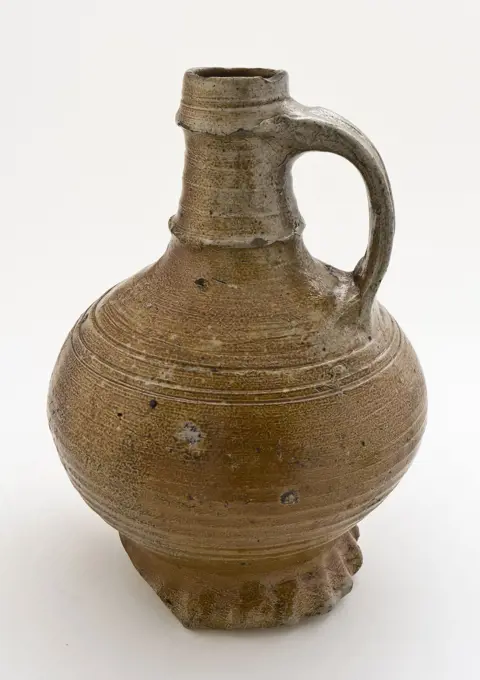
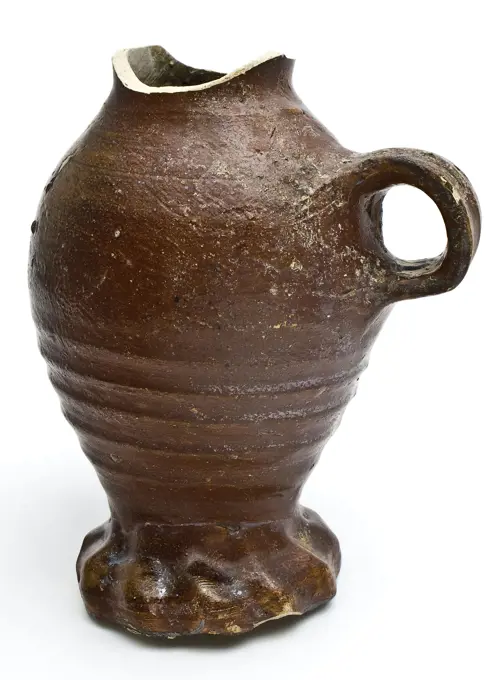
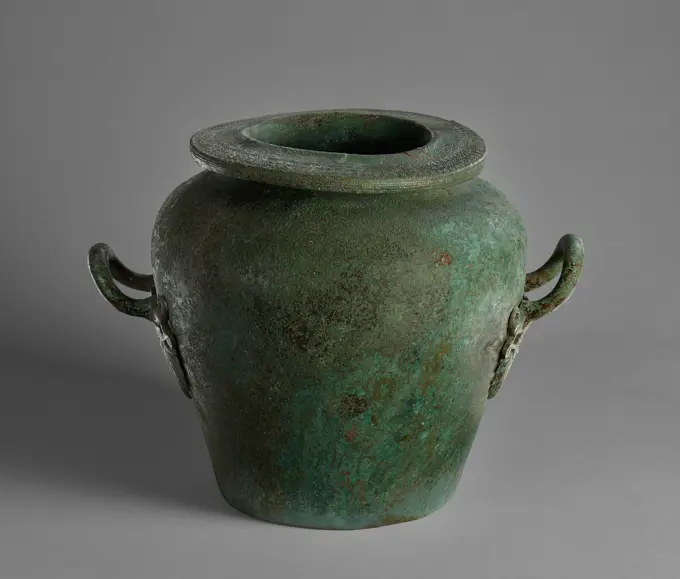
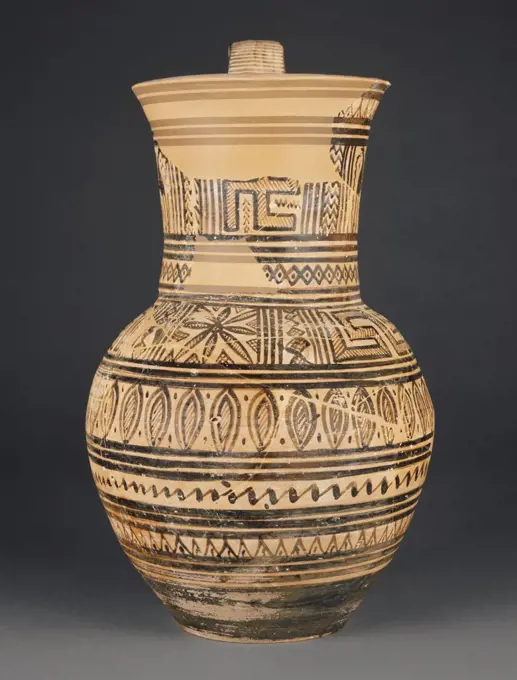
Ancient Ceramic Vessels

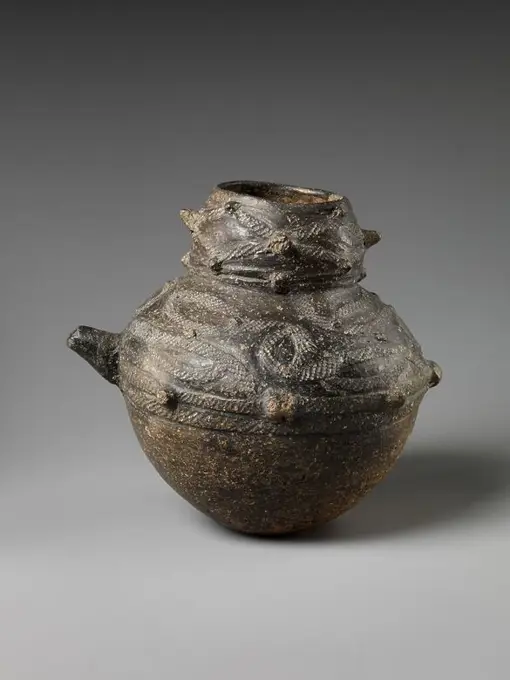
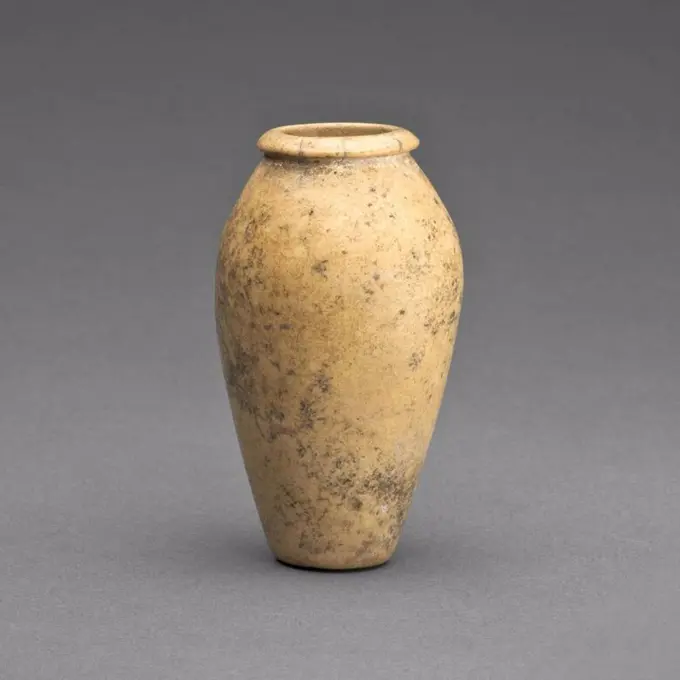
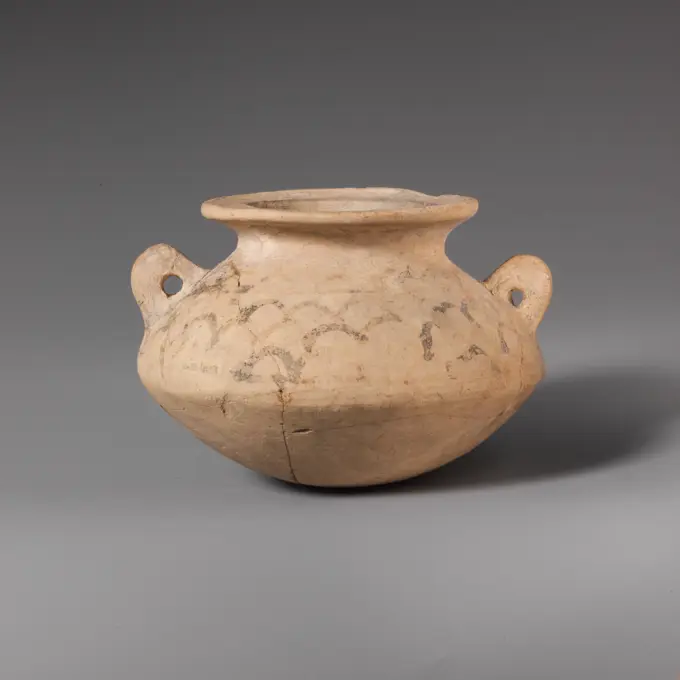
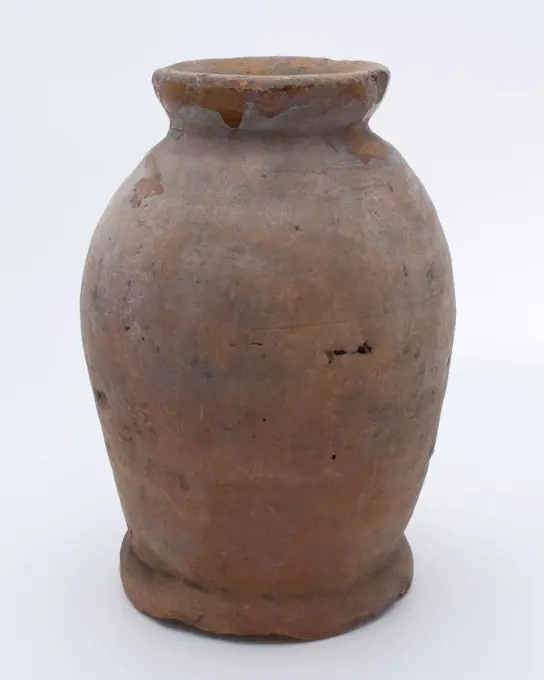
A collection of historical jugs and amphorae, showcasing various ancient styles and materials, including terracotta and glass, used for storing liquids.
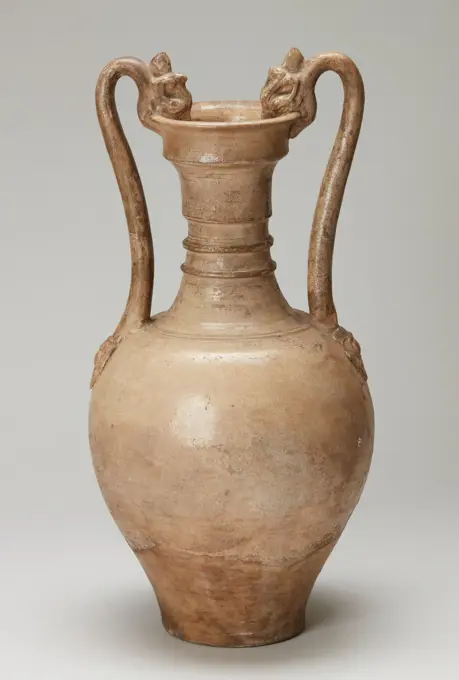
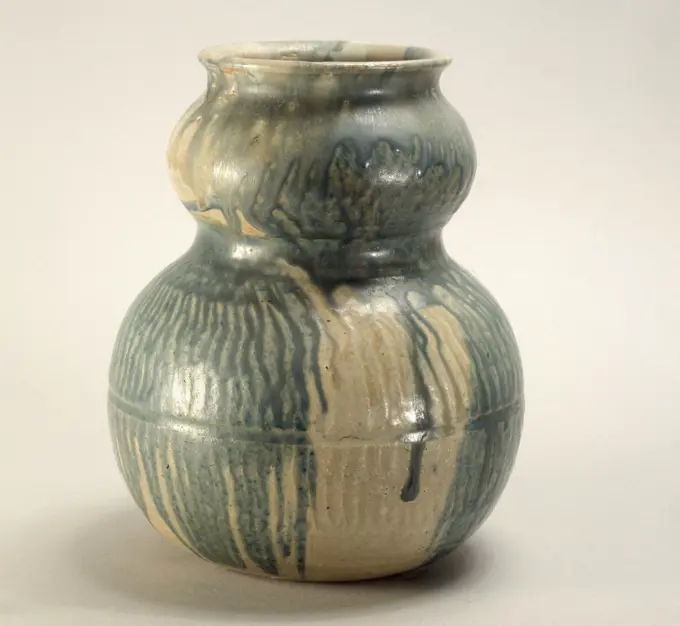
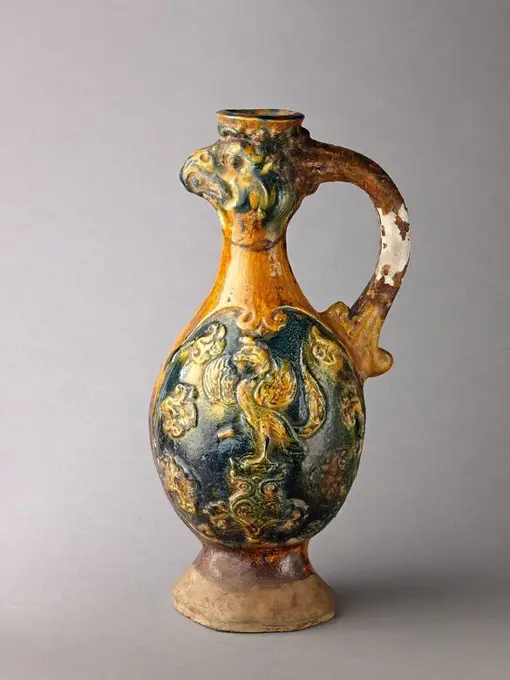
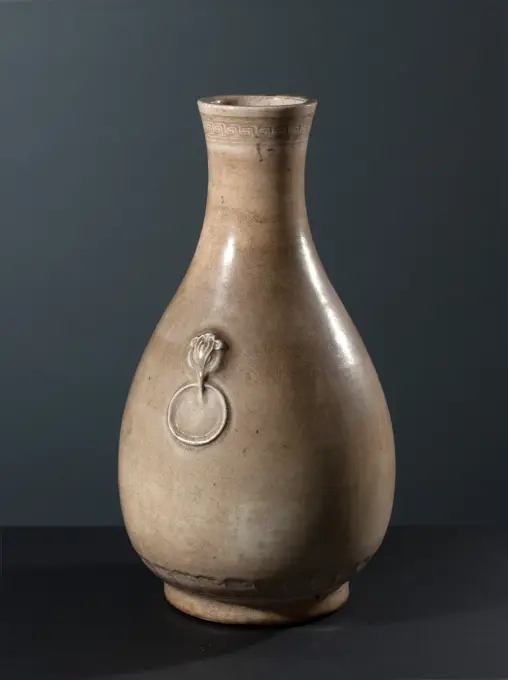
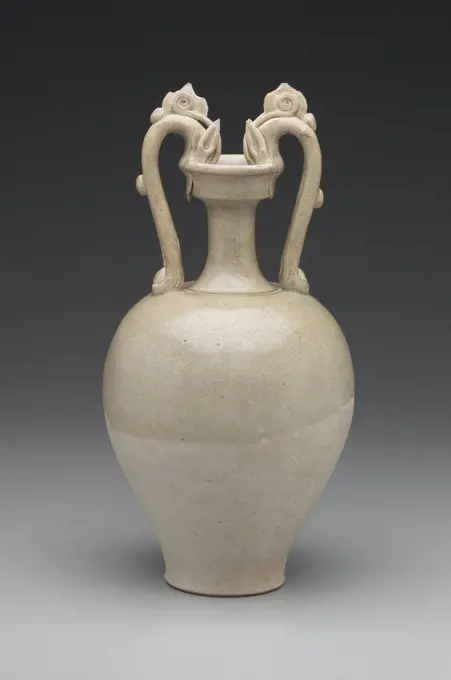
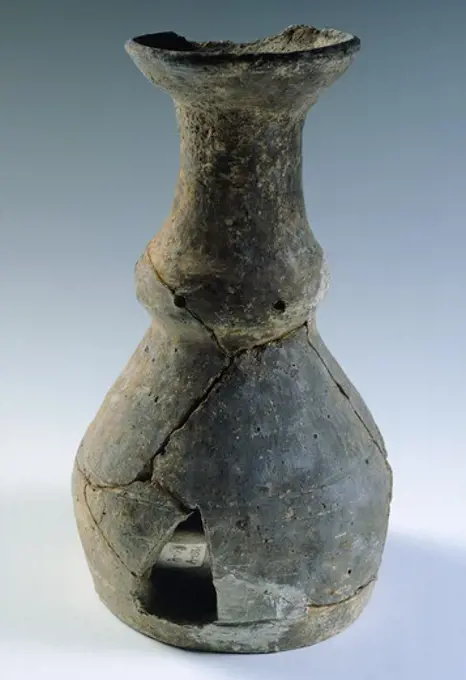
Funeral amphora, 7th-8th century, 18 in. (45.7 cm) (height), Hard grey ware, China, 7th-8th century
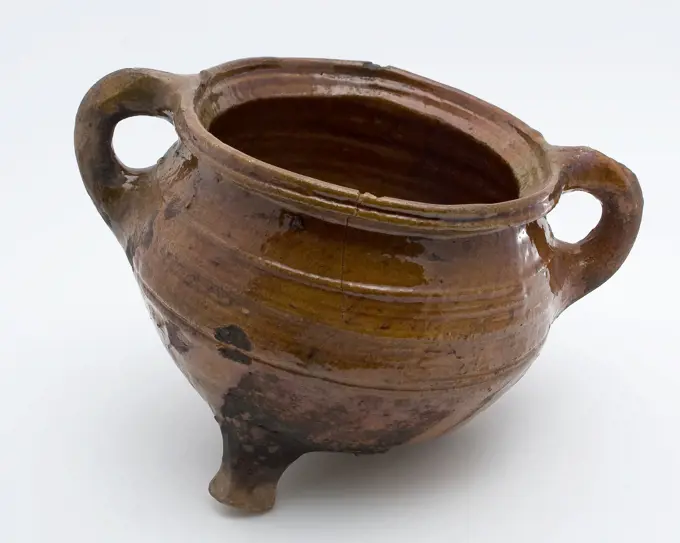
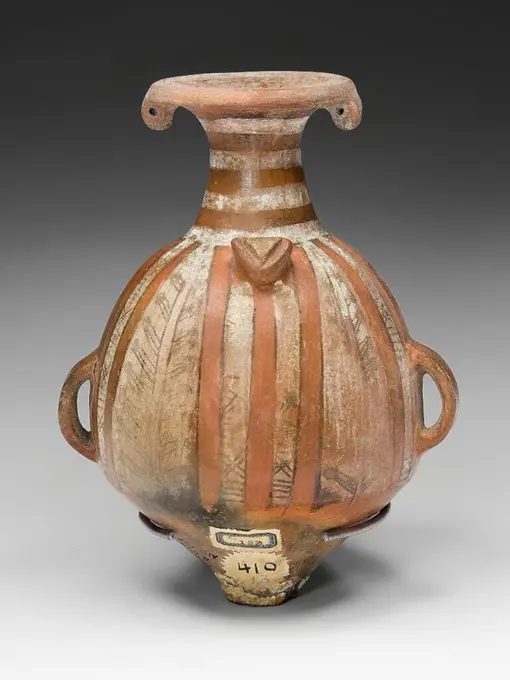
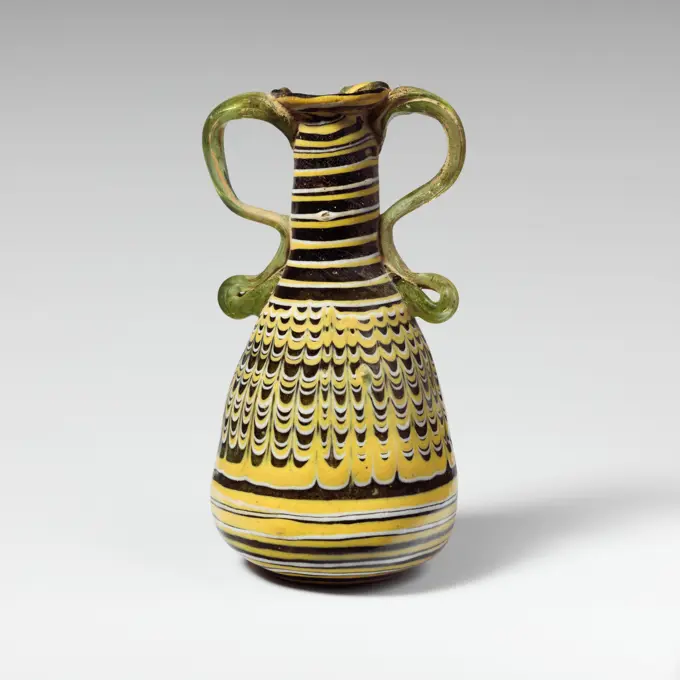
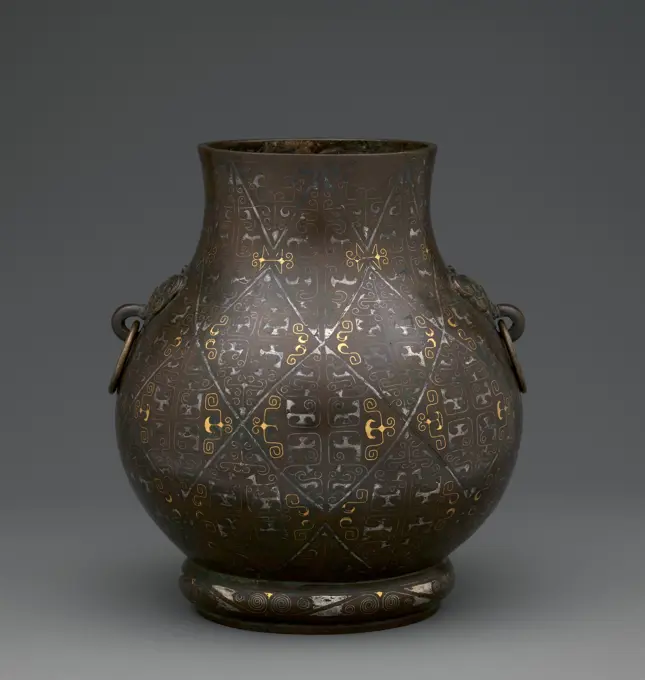
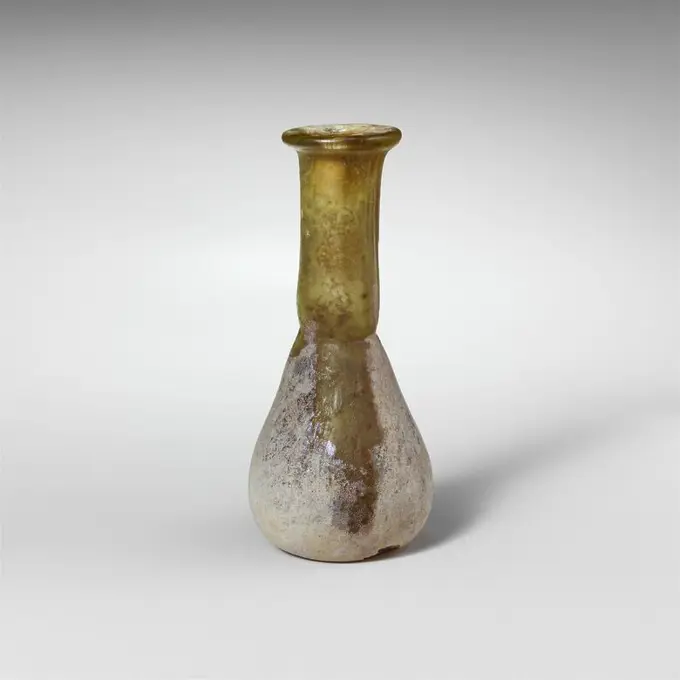
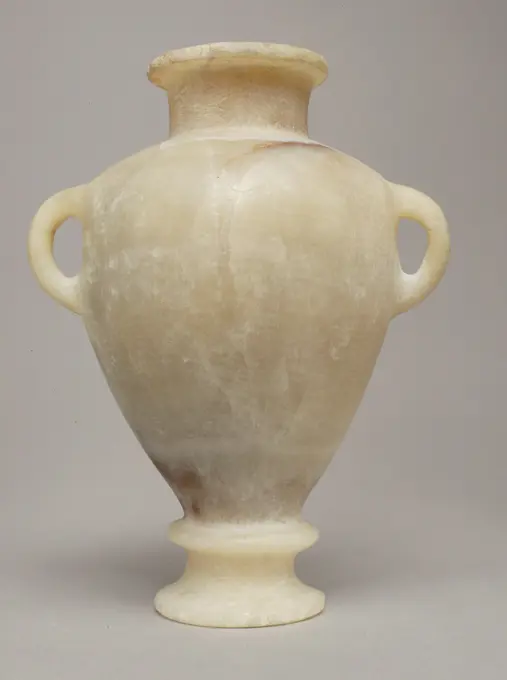
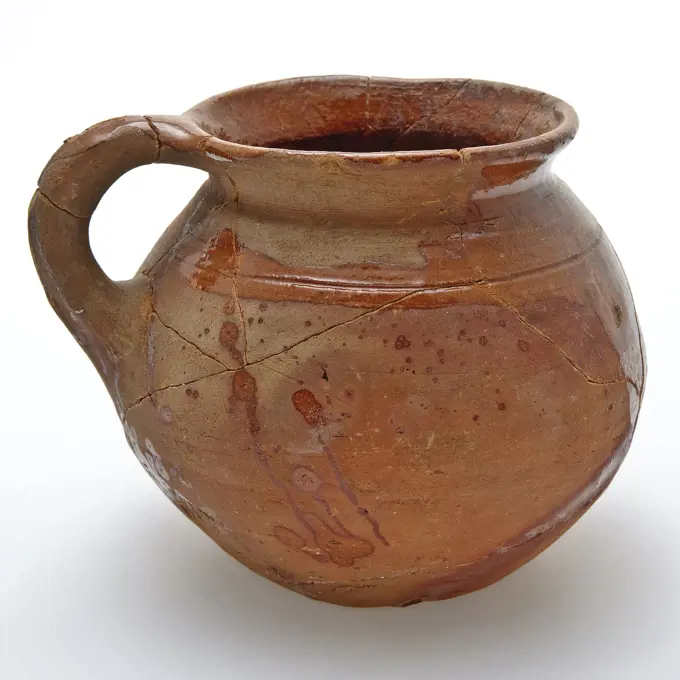
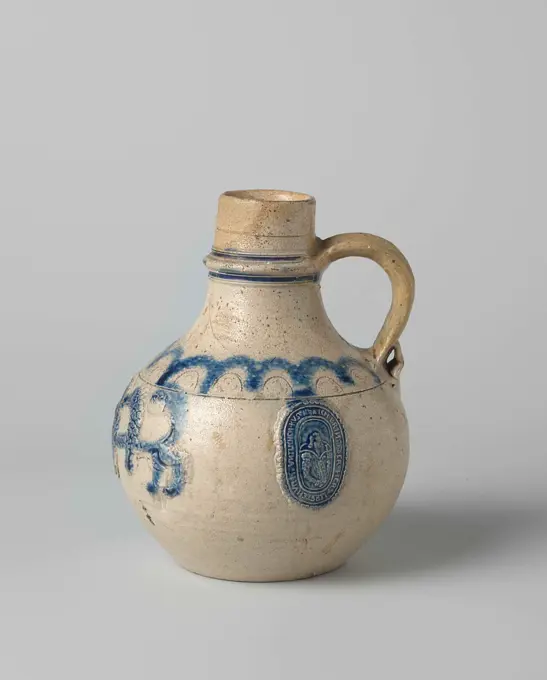
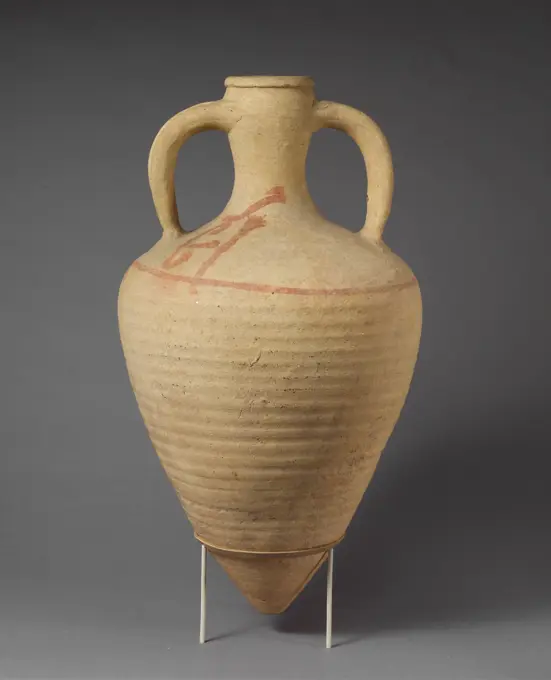
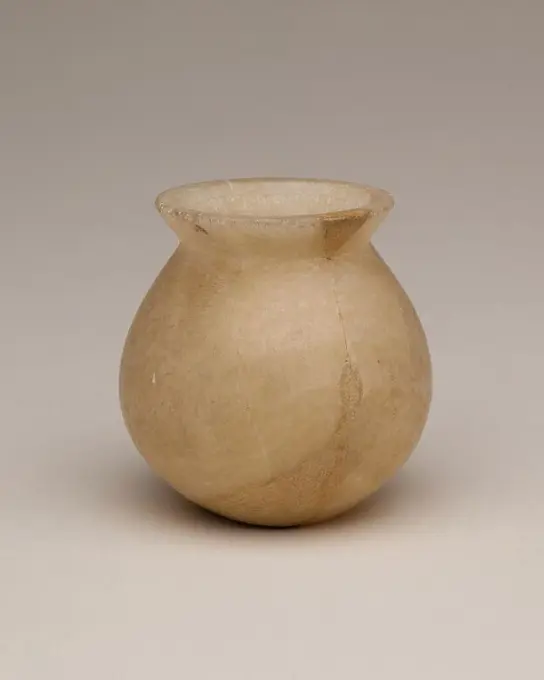
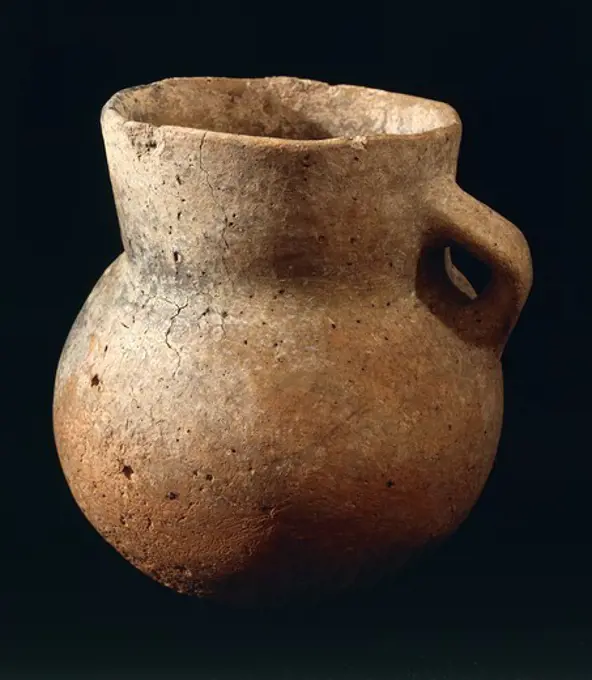
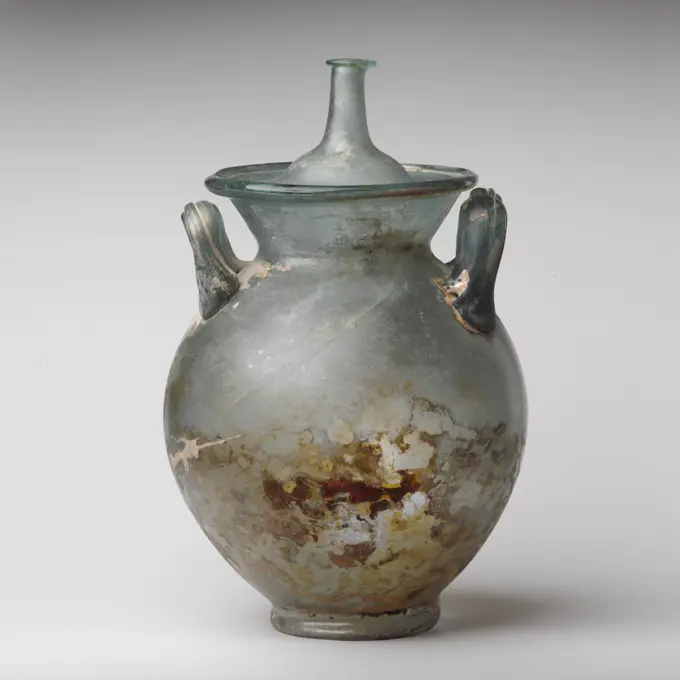
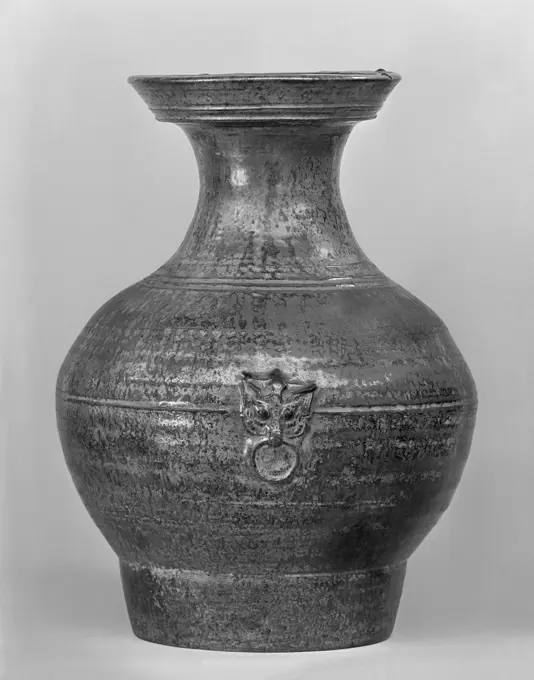
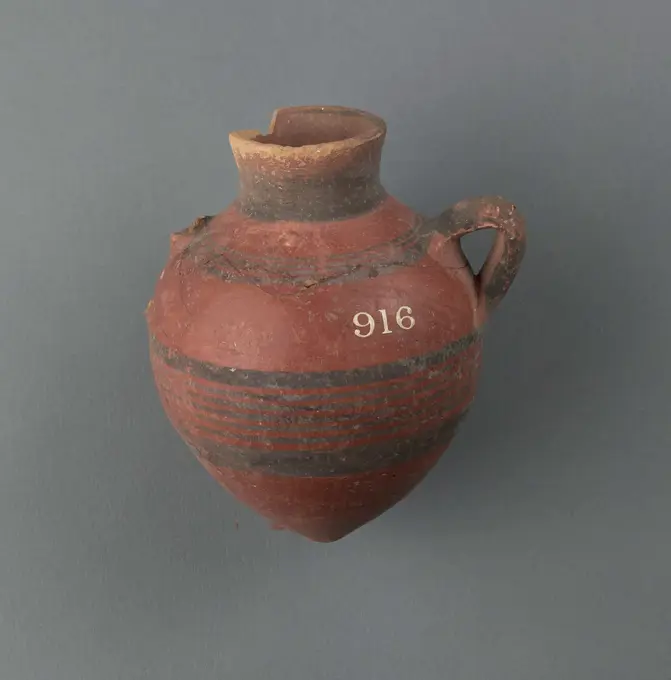
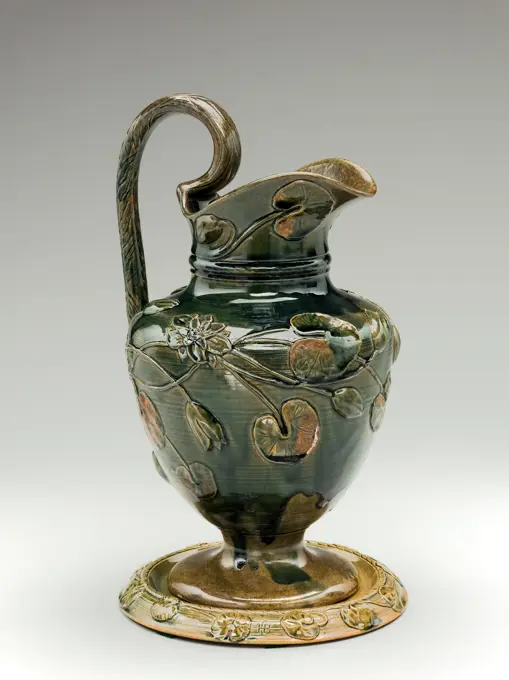
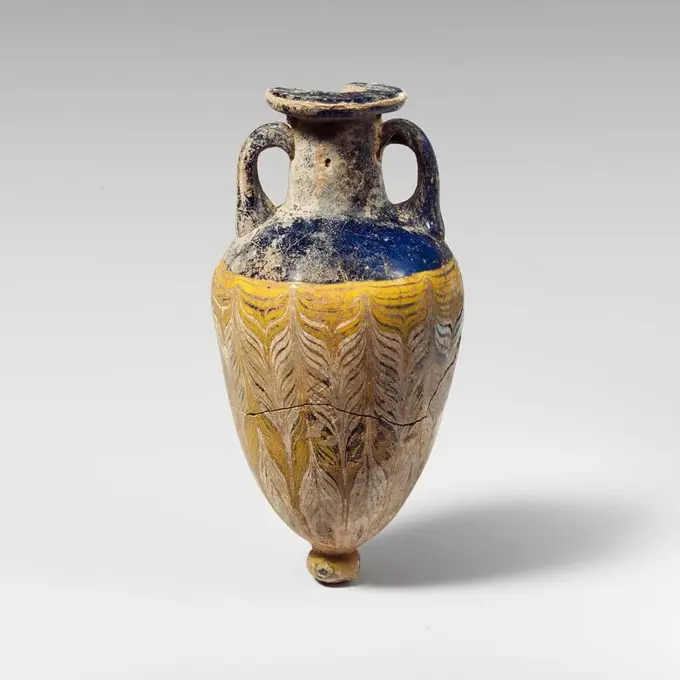
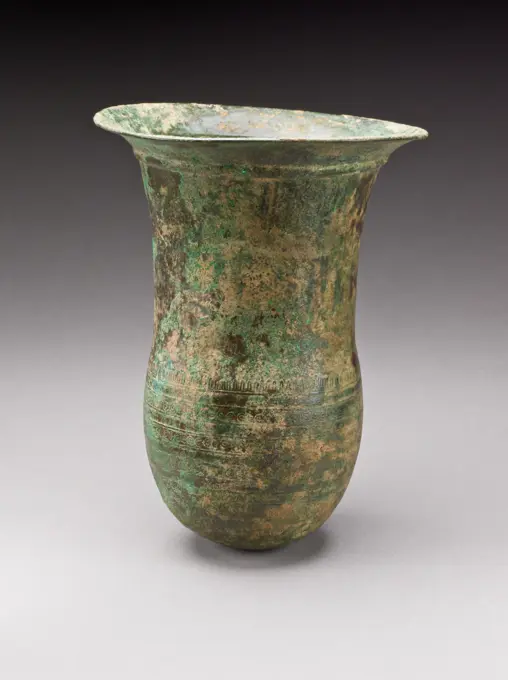
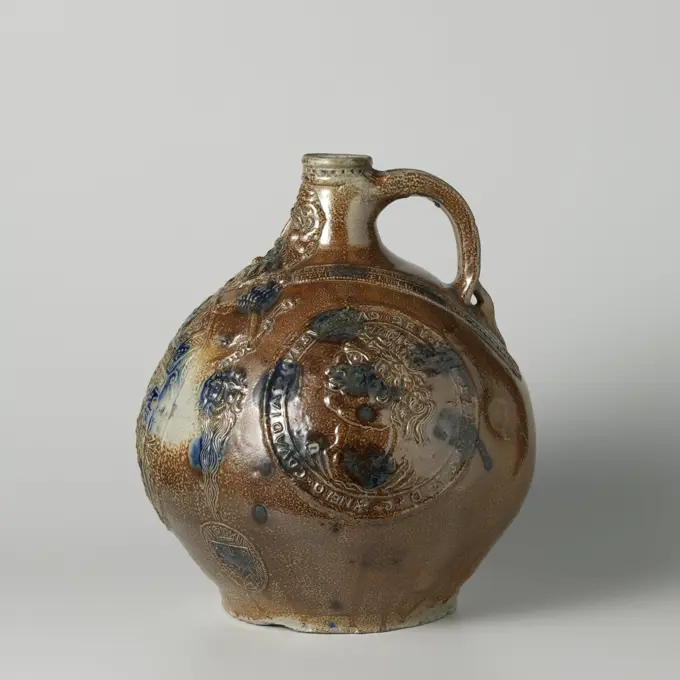
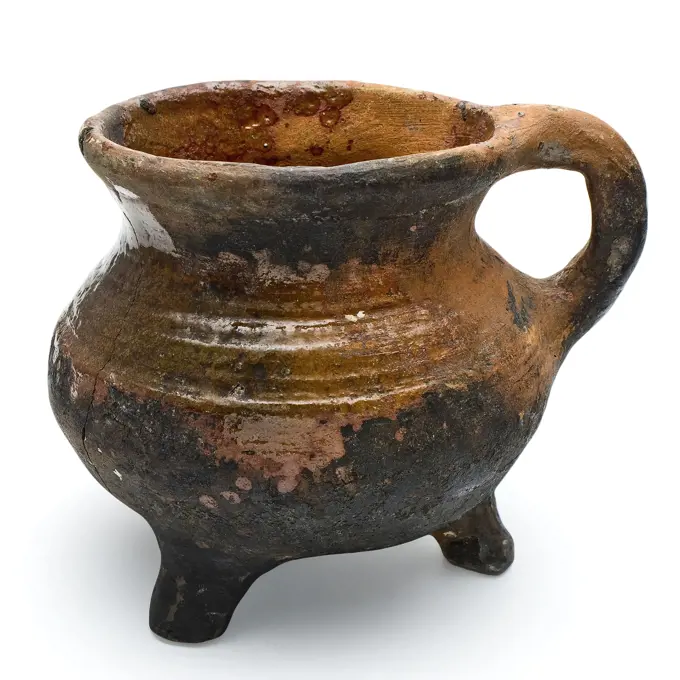
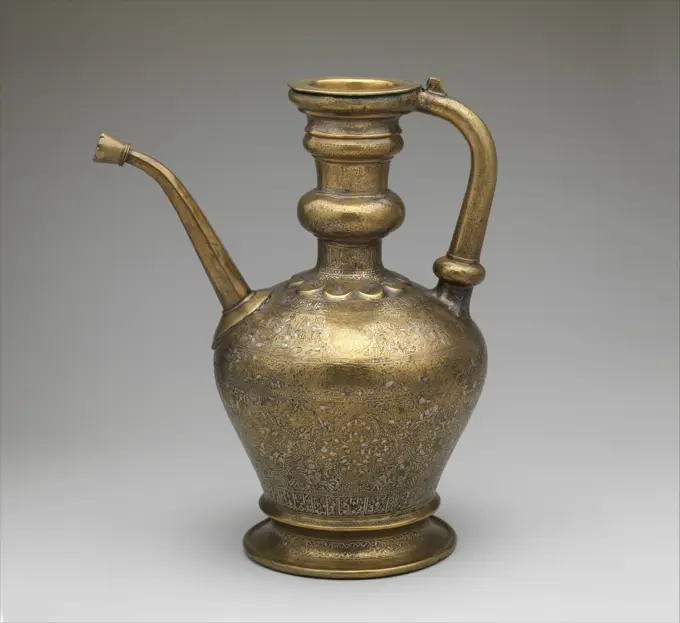
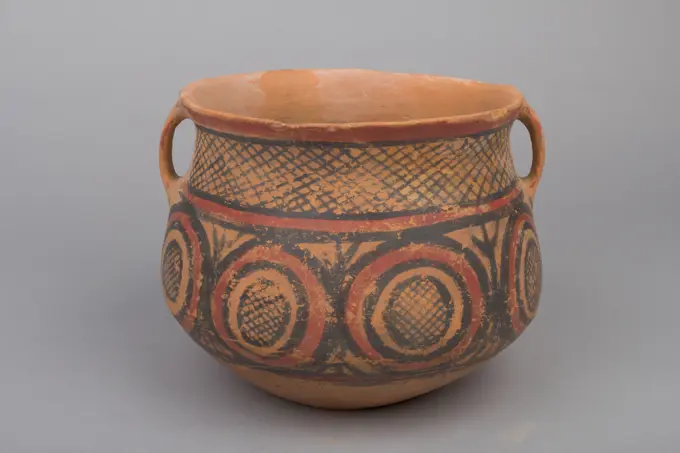
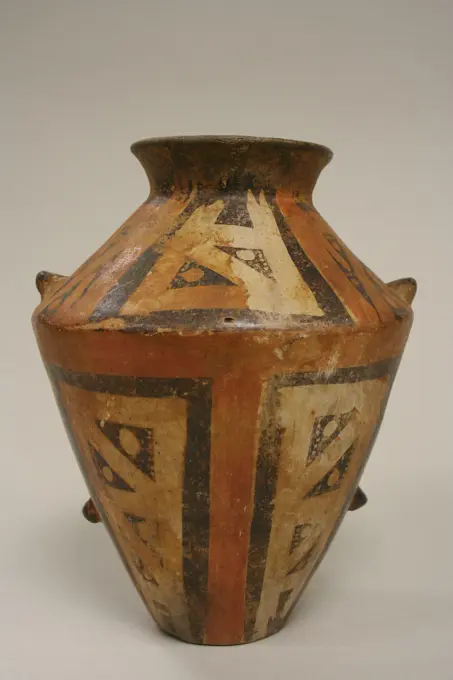
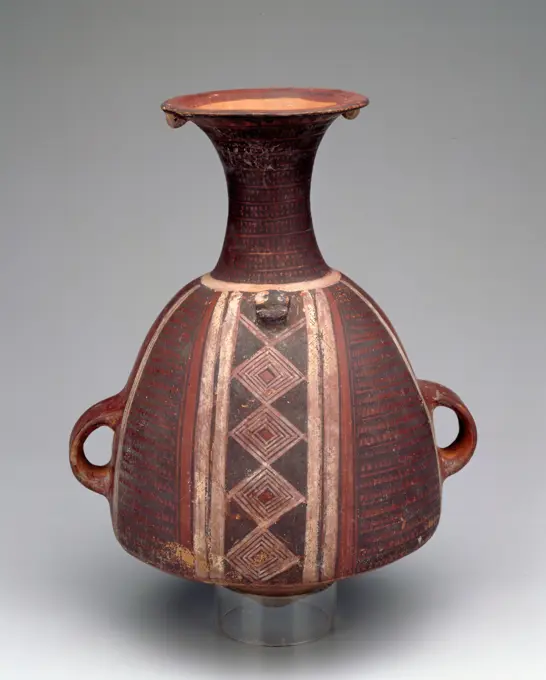
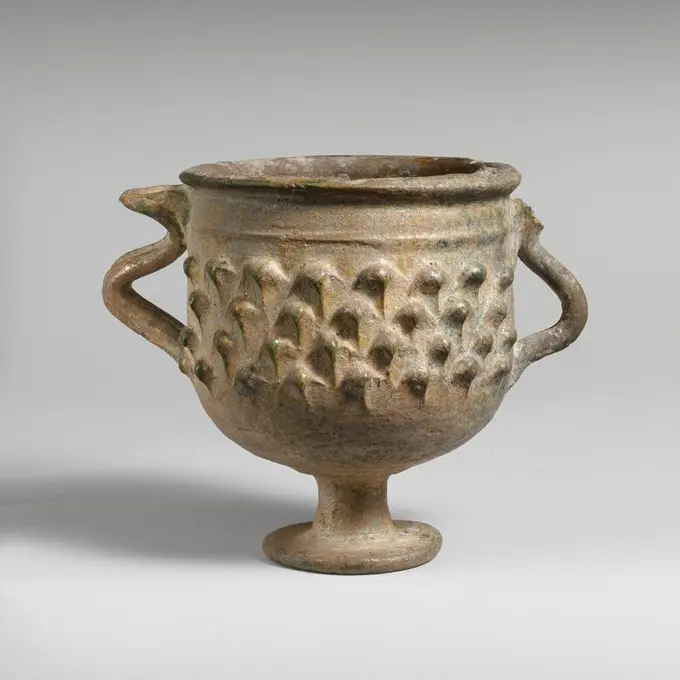
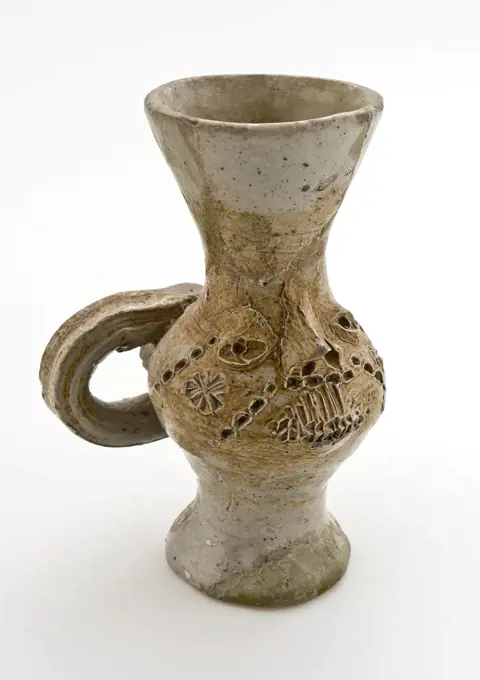
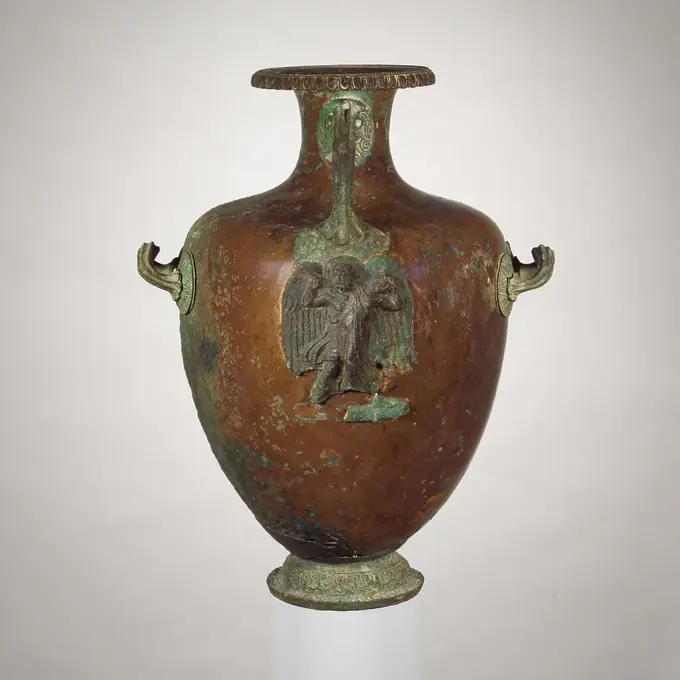
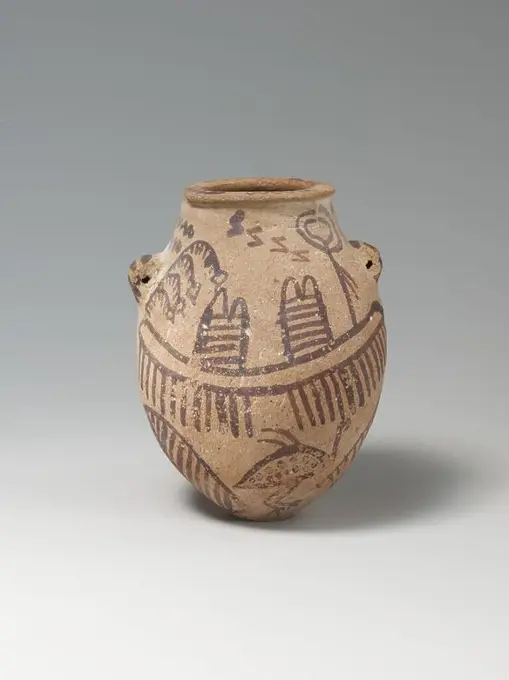
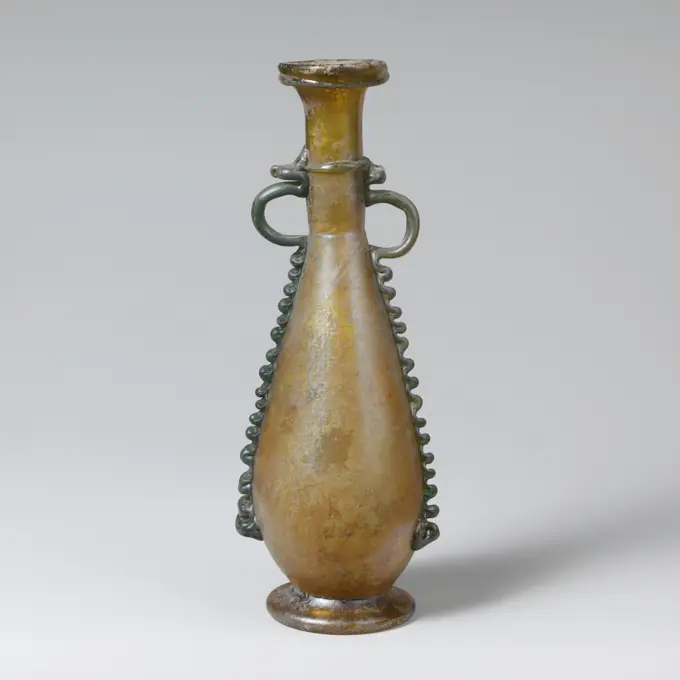
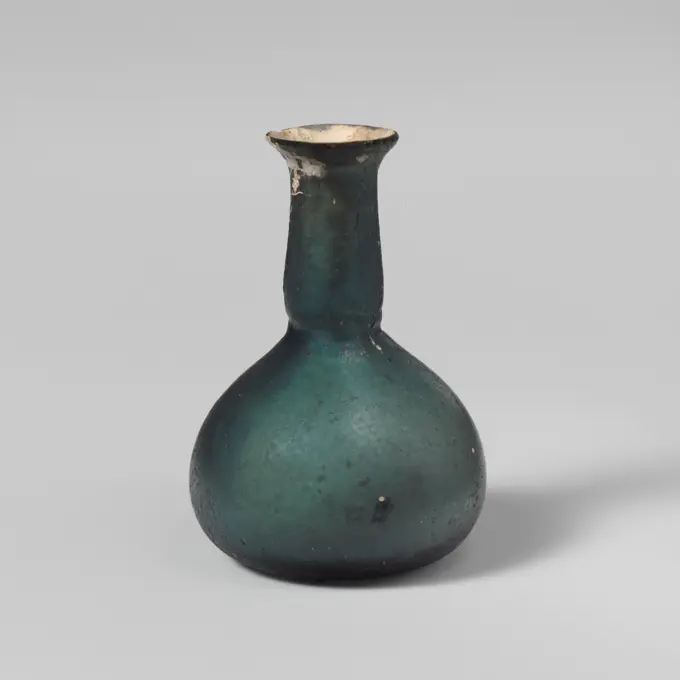
Glass perfume bottle 2nd-3rd century A.D. Roman Colourless.Rounded rim, folded out, down, over, and in, and smoothed into surface of flaring mouth; cylindrical neck; squat bulbous body; bottom with pushed-in center and traces of pontil mark.Intact; many pinprick, some large and elongated bubbles, and blowing striations; dulling, iridescence, and patches of thick creamy brown weathering, with some soil encrustation on interior.. Glass perfume bottle. Roman. 2nd-3rd century A.D.. Glass; blown. Mid Imperial. GlassJar with Loop Handle, AD 200s-300s. Korea, Baekje kingdom (18 BC-660). Earthenware; overall: 33.8 cm (13 5/16 in.); outer diameter: 27.4 cm (10 13/16 in.). Closed kilns built on hillsides became widely used for producing this type of pottery vessel in Korea during the Three Kingdoms period. Both its gray color and shimmering glaze are the result of the reduction of oxygen in the closed kiln chamber. The pounding technique (tanal in Korean) on the surface strengthened the clay body, leaving behind a geometric pattern.Pottery cooking pot, grape-model, red shard with lead glaze, two vertical sausages, on three legs, cooking pot tableware holder utensils earthenware ceramics earthenware glaze lead glaze, hand-turned glazed baked Pottery cooking pot grape-model red shard with lead glaze two at the top pinched sausages three legs underside unglazed and blackened black archeology indigenous pottery food prepare cooking food kitchenMiniature Ceremonial Vessel (Aryballos). Inca; South coast or southern highlands, Peru. Date: 1450-1532. Dimensions: H. 17.2 cm (6 3/4 in.). Ceramic and pigment. Origin: Peru. Museum: The Chicago Art Institute, Chicago, USA.Roman glass jug, 1st century AD. National Museum of Roman Art. Merida, province of Badajoz, Extremadura, Spain.Glass jug. Culture: Roman, Syrian. Dimensions: H.: 4 11/16 in. (11.9 cm). Date: 4th-6th century A.D..Translucent blue green; handle in same color; trails in translucent cobalt blue.Plain rim, with downward flange on one side; flaring mouth; cylindrical neck, expanding slightly downwards; slanting, rounded shoulder; funnel-shaped body; thick bottom with kick and small, central pontil scar; reeded strap handle attached unevenly to shoulder, drawn up and outwards in a curve, then attached to edge of rim and trailed back on itself.Narrow ribs extend in a tight spiral down from left to right from rim to lower body, in low relief at top but fading from shoulder downwards; a thick trail wound once round outer edge of rim; another thick trail applied on lower neck, wound round overlapping itself twice, then drawn in a spiral up neck and across underside of mouth ending as a fine line over trail on rim.Intact, except for part of trail on neck; many bubbles, some elongated, and a few black iGlass amphoriskos (perfume bottle) 2nd-mid-1st century B.C. Greek Translucent yellow green, appearing black; handles in translucent light green; trails in opaque yellow and opaque white.Inward-sloping oval rim-disk, with projecting jagged edge to mouth and tooling indent underneath; tall cylindrical neck; small sloping shoulder; conical body, expanding downwards, then turned in sharply to flat bottom; two s-shaped rod handles applied in a loop across shoulder and top of body over trail decoration, drawn up lower part of neck, and then looped out and in, forming large ears, and pressed onto top of neck and underside of rim-disk.Yellow trail applied around lip of rim and a white trail applied on underside of rim-disk, both then wound in a spiral around neck and shoulder to body, partly as alternating, partly as overlapping lines, then tooled into a close-set festoon pattern with thirty upward strokes on upper two-thirds of body, continuing in a plain spiral around lower part of body, andWine bottle from the wreck of the East Indies Hollandia, Anonymous, 1700 - in or before 1743  Wine bottle, continental production, onion-shaped, complete; (1) (17h, belly 15d, base 11d), f-string rim, tcs-kick-up. Netherlands .   SecondVessel; molded and burnished earthenwareGlass amphoriskos (perfume bottle). Culture: Greek, Eastern Mediterranean. Dimensions: H. 4 1/4 in. (10.8 cm)diameter 2 9/16 in. (6.5 cm). Date: late 6th-5th century B.C..Opaque white, with handles in same color; trails in translucent purple.Broad, inward-sloping rim-disk with radiating tool marks on upper surface and projecting uneven lip to mouth; cylindrical neck tapering upward; broad, sloping shoulder; elongated ovoid body tapering to a point; two vertical strap handles applied over trails, drawn up from top of shoulder, turned in, and pressed on to underside of rim-disk and top of neck.One trail attached at edge of rim-disk; another trail wound round in a spiral on shoulder; a third applied as a thick band around shoulder, at first wound round top of body in horizontal lines, then tooled into a zigzag pattern; finally a fourth, thinner trail applied to body, also tooled into a zigzag pattern and ending in an uneven spiral around bottom; long vertical tooling indents in alternArchaic-style Vase (hu) 15th-16th century China This exquisitely decorated bronze vase has a generous bulbous belly that sits on a short circular foot. Two ring handles with animal-faced bases are attached to its gently sloped shoulders, one on each side. Although the extensive geometric patterns of gold and silver inlays on its surface recall the decoration of ritual vessels of the late Warring States period (475-256 BC), its slightly squat shape and short neck show resemblance to the porcelain wares of the Song to Ming period, reflecting the taste of contemporary literati collectors. Having been in private collections for ages, it has acquired a mellow brownish patina that sets off well the sumptuous inlays of precious metals.. Archaic-style Vase (hu). China. 15th-16th century. Bronze. Ming dynasty (1368-1644). MetalworkVase. Culture: Roman. Dimensions: H. 10.49 cm..Brownish vase with stamp repeated fourteen times. Museum: Metropolitan Museum of Art, New York, USA.Black -functional alabastron;  End of the 4th-III century BC (-310-00-00--201-00-00);ancient oriental metal jug on dark background. antique bronze tableware. ancient metal utensilsVessel 1550 BCE-1069 BCE Egypt. Calcite . Ancient EgyptianSpouted Vessel. Culture: Japan. Dimensions: H. 6 1/4 in. (15.9 cm); Diam. 6 1/8 in. (15.6 cm); Diam. at spout 6 7/8 in. (17.5 cm). Museum: Metropolitan Museum of Art, New York, USA.Jug ca. 3200-1050 B.C. Cypriot. Jug. Cypriot. ca. 3200-1050 B.C.. Terracotta. Bronze Age. VasesJar. Egyptian. Date: 2707 BC-2219 BC. Dimensions: 7.6 × 4.5 × 4.5 cm (3 × 1 3/4 × 1 3/4 in.). Stone. Origin: Egypt. Museum: The Chicago Art Institute, Chicago, USA. Author: Ancient Egyptian.Sprinkler Flask; Eastern Mediterranean; 3rd - 4th century; Glass; 11.2 cm (4 7,16 in.)Terracotta alabastron (jar) ca. 1600-1050 B.C. Mycenaean Low body and two small handles.. Terracotta alabastron (jar) 244729Pottery pot on stand, baluster shape, used in the sugar industry, sugar bowl pot holder soil find ceramic earthenware glaze lead glaze, hand-turned glazed earthenware pot on stand. Baluster shape with round shoulder and narrow neck opening. Thick bulging neck edge. Red shard internally glazed Blurred spindles In this, sugar cones were made archeology indigenous earthenware sugar confectionery craft sugar industryJean Carriès (1855-1894). "Gourd at a large orifice". Enameled sandstone. Museum of Fine Arts of the City of Paris, Petit Palais. 24203-2 Ceramic, gourd, native gres, wide orificeJar 13th century. Jar 449078Glass perfume bottle. Culture: Roman. Dimensions: Overall: 2 5/16in. (5.9cm)Diam.: 1 x 5/8 in. (2.5 x 1.6 cm). Date: 1st-2nd century A.D..Translucent pale yellow green.Rim folded out, over, and in, flattened on top; cylindrical neck with tooling indent around base; conical body with sides rounded at base; flattened but slightly concave bottom.Intact; a few pinprick and some large and elongated bubbles; dulling and creamy white weathering with iridescence. Museum: Metropolitan Museum of Art, New York, USA.Small Pitcher of Neferkhawet ca. 1504-1447 B.C. New Kingdom. Small Pitcher of Neferkhawet 548879. Fabric tea bus or chair of stoneware with an ivory lid, partially covered with a green-brown glaze. The lower part of the bus is unglazed. Old label on the inside with 'Style Karatsu / 18th'. Karatsu.Black -function askos; Unknown Kampa workshop; After. III century a. C. (-360-00-00--340-00-00);Can. Hopper of Stoneware. The egg-shaped belly is separated from the funnel-shaped neck by a ring. High on the belly are 3 round medallions with a weapon and the year 1567. This is a fake of a Siegburger can be manufactured in the period 1860-1880.Amphora of Canaanite shape ca. 1479-1425 B.C. New Kingdom. Amphora of Canaanite shape. ca. 1479-1425 B.C.. Travertine (Egyptian alabaster). New Kingdom. From Egypt, Upper Egypt, Thebes, Wadi Gabbanat el-Qurud, Wadi D, Tomb of the Three Foreign Wives of Thutmose III. Dynasty 18Terracotta jar ca. 850-750 B.C. Cypriot Cypriot pottery is well formed and well fired. As this example demonstrates, the decoration capitalizes on the clean lines of the shapes and makes greater use of color than contemporary Greek fabrics. Such jars are found exclusively in tombs.. Terracotta jar 240062Pottery room comfort on curved floor with upright sausage ear and groove over the shoulder, pot holder sanitary soil find ceramic earthenware glaze lead glaze, hand turned glazed baked Pottery room pot on vaulted bottom. Belly model without neck Firm and standing sausage ear. Funnel-shaped upper edge. Red shard sparingly glazed One groove in the middle of the shoulder archeology inn The Heart Geervliet Bernisse indigenous pottery draining night sleeping room hygiene Soil discovery: Geervliet Dorpsplein 1 demolition Trouw put 5 city inn 't Hart 1985.Jug of stoneware. Jug of stoneware with three medallions and two lions in relief with blue glaze.Terracotta amphora ca. 3rd century A.D. Roman, Cypriot () Ribbed body and shoulder inscribed in red paint with Greek letters, perhaps indicating numbers.. Terracotta amphora. Roman, Cypriot (). ca. 3rd century A.D.. Terracotta. Late Imperial. Cesnola InscriptionsJug, c. 1800 - c. 1900 Spherical jug of yellow -gray pottery, with an ear. The jug has a stand ring and a wide, cylindrical neck. On the abdomen, a Frisian is brought in with four lying ellipses, cut horizontally by a band, which, as well as the space around the ovals, is filled with network.  earthenware Spherical jug of yellow -gray pottery, with an ear. The jug has a stand ring and a wide, cylindrical neck. On the abdomen, a Frisian is brought in with four lying ellipses, cut horizontally by a band, which, as well as the space around the ovals, is filled with network.  earthenwareKohl jar and lid. Dimensions: h. 5.3 cm (2 1/16 in); diam. 4 cm (1 9/16 in). Dynasty: Dynasty 12-13. Date: ca. 1981-1640 B.C.. Museum: Metropolitan Museum of Art, New York, USA.Vase Pendant 4th-5th century Egyptian possibly. Vase Pendant 479632Prehistory, Italy, Bronze Age. Castelluccio culture. Segesta style terracotta vase. From Sicily Region.Pot 4th-7th century Coptic. Pot. Coptic. 4th-7th century. Earthenware. Made in Kharga Oasis, Byzantine Egypt. CeramicsLight brown stoneware jug on pinched foot, pronounced ring around neck and under lip, jug crockery holder soil find ceramic stoneware clay engobe glaze salt glaze, hand turned glazed baked stoneware jug gray shard brown engobe and salt glaze bandoor Excellent ring top and bottom neck Rings and notched rings on neck and belly Pinched foot archeology import pottery pour serve serve save transport storeFunnel neck jug made of brown stoneware, funnel beaker cup drinking utensils tableware holder soil find ceramic stoneware clay engobe, hand turned baked convex belly one vertical ear small and annular. pinched foot Clear rotating lips. brown engobe ferrous incrustation of funnel-shaped neck is still present archeology Rotterdam rail tunnel donate serving drink Soil discovery: rail tunnel Rotterdam.Long-Necked Flask with Strap Handle, 1391-1353 BC. Egypt, New Kingdom, Dynasty 18 (1540-1296 BC), reign of Amenhotep III or later. Glass; diameter: 7.7 cm (3 1/16 in.); diameter of mouth: 4.6 cm (1 13/16 in.); overall: 10 cm (3 15/16 in.).Phoenix-head ewer, Tang sancai ware. Artist: Chinese , Tang Dynasty. Culture: Chinese. Dimensions: Height: 13 in (33 cm.). Date: late 7th century-first half 8th century. Museum: Metropolitan Museum of Art, New York, USA.Cypriot White Painted Ware Oinochoe. UnknownEtruscan Stamnos. UnknownGlass cinerary urn with lid mid-1st-2nd century A.D. Roman Urn: Translucent blue green; handles in same color.Everted, angular rim, folded over and in; funnel-shaped neck; ovoid body; splayed hollow foot; shallow concave bottom; two vertical, arched M-shaped handles, attached on opposite sides of upper body, each made of a thick trail, applied as a large circular pad, drawn across body from left to right, and trailed off back along top of handle.Complete, but cracks around base of one handle; some bubbles; dulling, limy encrustation, pitting, iridescence, and patches of brown weathering on exterior, brilliant iridescent weathering on interior.Stands unevenly and aslant.Lid: Translucent blue green.Slightly outsplayed, downturned rounded rim, with beveled outer edge; outer side concave, then dome-shaped; hollow cylindrical stem; flattened circular knob at top; small, irregular hole in center of knob.Intact; many pinprick bubbles; dulling, slight pitting, and small patches of iridescent wOld Arabic metal pitcher isolated on white backgroundWine container (hu) 1st-2nd century China. Wine container (hu). China. 1st-2nd century. Earthenware with lead green glaze. Eastern Han dynasty (25-220). CeramicsPanatheniac Amphora Lid. Attributed to the Nichomachos Group (Greek (Attic))Jar, miniature 750-600 B.C. Cypriot. Jar, miniature. Cypriot. 750-600 B.C.. Terracotta. Cypro-Archaic I. VasesJug of stoneware. Jug of stoneware, white glazed and decorated with stripe motifs and stylized leaf motif.Ewer on stand ca. 1875-80 Chelsea Keramic Art Works The Chelsea Keramic Art Works was the first American ceramics firm to designate itself an "art pottery." It was founded in Chelsea, Massachusetts, by members of the Robertson family, all of whom had honed their skills in the ceramics industry in Britain before coming to this country. This unusually large ewer has a somewhat classically inspired shape, a form typical of English and American metal, ceramic, and glass of the 1870s. The decoration of applied water lilies and leaves, however, is more naturalistic. Hugh Roberston, the artistic head of the firm, was clearly conversant with and worked in several modes simultaneously.This vase is from the Robert A. Ellison Jr. Collection of American art pottery donated to the Metropolitan Museum in 2017 and 2018. The works in the collection date from the mid-1870s through the 1950s. Together they comprise one of the most comprehensive and important assemblages of this material known.. Ewer on Glass amphoriskos (perfume bottle). Culture: Greek, Eastern Mediterranean or Italian. Dimensions: H.: 4 3/8 in. (11.1 cm). Date: 4th-3rd century B.C..Translucent cobalt blue, with handles and base-knob in same color; trails in opaque yellow and opaque white.Broad horizontal rim-disk with rounded edge; cylindrical neck, expanding slightly downwards; broad, sloping shoulder; elongated ovoid body, tapering sharply downwards; applied small circular base-knob with uneven bottom; two strap handles applied to shoulder and drawn up, turned in, and pressed on to neck.One fine white trail attached at edge of rim-disk; a yellow trail applied to top of body and wound spirally, at first in a horizontal line, then tooled into a feather pattern, with alternating upward and downward strokes, the former making slightly raised knobs, the latter shallow indents around top of body; a second trail in white added around upper body, forming alternating bands with the yellow trail; both trails continuing t15th century jug 15th century jug, Archeological Museum. Úbeda, Jaén province, Andalusia, Spain Copyright: xZoonar.com/BartomeuxBalaguerxRotgerx 21702862Beaker. Western Iran, circa 1000-650 B.C.. Furnishings; Serviceware. Bronze, hammeredJug (Bartmann jug) with coat of arms and portraits, anonymous, c. 1607 Jug (beard fancier bush) of stoneware on standing surface with a spherical body and narrow, short neck. The C-shaped ear is attached to the neck and shoulder. Profiles on the neck. Covered with a brown engobe and cobalt blue. On the abdomen three times printed and imposed medallion in relief. The middle medallion shows a weapon with the date '1607'. On either side of this a medallion with a portrait of a emperor, each with a different, illegible, border script. About the shoulders the inscription 'Drinck: vnd: est: godes: nit: forgests: nit: goddes: gentlemen: vert.blibet in.evick ammen' and on the neck, continuously on the shoulder, a beard man. Frechten. Cheek stoneware. glaze. engobe. cobalt (mineral) vitrification Jug (beard fancier bush) of stoneware on standing surface with a spherical body and narrow, short neck. The C-shaped ear is attached to the neck and shoulder. Profiles on the neck. Covered with a brownPottery cooking jug, grape-model, sparingly glazed, sausage ear, on three legs, cooking pot crockery holder utensils earthenware ceramics earthenware glaze lead glaze, hand-turned glazed baked Pottery cooking jug grape model with sausage ear Sparely glazed Three legs. Spinning threads on the shoulder Smear marks on the underside archeology Capelle aan den IJssel House in Capelle castle indigenous pottery cooking kitchen food food preparation Soil discovery: Huis te Capelle 1966.Ewer with Inscription, Horsemen, and Vegetal Decoration dated A.H. 623/ A.D. 1226 `Umar ibn al-Hajji Jaldak This lavishly decorated object is inscribed around the neck: "Made by 'Umar ibn al-Hajji Jaldak, the apprentice of Ahmad al-Dhaki al-Naqqash al-Mawsili in the year 623 1226 A.D.." Ahmad al-Mawsili, originally from Mosul in Upper Mesopotamia, was a famous metalworker who had a number of pupils.. Ewer with Inscription, Horsemen, and Vegetal Decoration 444586JarJar with Spiral Decoration and Cross Hatching Machang type (ca. 2350-2050 B.C.) China. Jar with Spiral Decoration and Cross Hatching. China. Machang type (ca. 2350-2050 B.C.). Earthenware with pigment. Neolithic (ca. 3300-2500 B.C.) Majiaoyao phase (3200-2650 B.C.). CeramicsStirrup Spout Vessel with Bird Head Design Made 100 BCE-500 CE North Coast. Ceramic and pigment . MocheJar, 1900s. Guinea Coast, Nigeria, Nupe, 20th century. Terracotta; diameter: 35.7 cm (14 1/16 in.); overall: 36.9 cm (14 1/2 in.).Miniature Stirrup Jar. Unknown 1550-1295 B.C.Earthenware cooking pot, red shard, largely glazed, two vertical sausages, on three legs, cooking pot crockery holder kitchenware earth discovery ceramics earthenware glaze lead glaze, hand-turned glazed baked Pottery cooking pot grape-model red shard largely covered with lead glaze with greenish spots two sausages three-legged spurs on the bottom archeology native pottery food prepare cooking food cuisineJar, Geometric Pattern 9th-14th century Quimbaya. Jar, Geometric Pattern 318291Glass flask 4th century A.D. Roman Colorless with slight greenish tinge.Plain rounded rim; concave funnel neck; globular body, tapering downwards; kick in bottom with pontil scar; low tubular base ring.Complete but one repaired crack in side of body; many pinprick bubbles and blowing striations; traces of soil encrustation, patches of whitish weathering, and iridescence.. Glass flask 245226Prehistory, Italy, Bronze Age. Cinerary urn. From Leporano, province of Taranto.Pyxis (Container for Personal Objects) 699 BCE-501 BCE Etruria. terracotta . Ancient EtruscanJug; Egyptian workshop; VI-IV century BC () (-600-00-00--301-00-00);Vessel, 15th century, 13 1/2 in. (34.3 cm), Clay, pigments, Peru, 15th century, Urpu, a distinctively Inka vessel shape, is characterized by a pointed base, bulbous body, low handles, long, slender neck, and flaring rim. The pointed bottom helped balance the vessel in a depression in the earth. Rope was threaded through the handles and around the lug, then strapped onto porters' backs for transport. Rather than adopting the word urpu from the local Quechua language, early archaeologists called this type of vessel aryballos, a name borrowed from an ancient Greek vase form illustrated here in a line drawing. Urpu were produced in and around the Inka capital of Qosqo (Cuzco) for use in making, storing, and transporting food and beverages, in particular chicha or fermented maize beer.Lead-glazed stemmed cup. Culture: Roman. Dimensions: H. 3 13/16 in. (9.7 cm); diameter 3 3/8 in. (8.6 cm). Date: 3rd century A.D..This footed, two-handled cup is typical of the glazed pottery produced in the Rhône valley in Gaul (modern France) during the later imperial period. Museum: Metropolitan Museum of Art, New York, USA.Pitcher (France); Made by Ernest Chaplet (French, 1935 - 1909); stoneware, slip decorationPart of stoneware tripod cup on stand foot, drinking jug with pointed nose and stamped rosettes, cup drinking utensils tableware holder soil find ceramic stoneware glaze salt glaze, hand turned stamped decorated glazed baked Stoneware triplet cup Small drinking jug originally consisting of three cups with one joint ear interconnected by tube Funnel neck and stand Foot completely covered with salt glaze gray with brown speckles. Decorated with beautiful pointed nose molded mouth nose and eyes stamped rosettes on the cheeks and slanting lines of compressed wells Pressurized standing ribbon ear archeology Rotterdam IJsselmonde indigenous pottery import drink serve beer party drink lag Soil discovery: Castle IJsselmonde well southwest tower put 3 Rotterdam 1972.Dish;  around 2055 1650 BC ; Medium Pa (-2055-00-00--1650-00-00);Jug of stoneware. Egg-shaped jug of stoneware covered with green glaze. The jug is on a foot, has a cylindrical neck and a C-shaped ear. The belly is in a relief decorated with a Frisian of soldiers under around arches, connected by Hermstutten and at the lower left of the year 1601. The neck is in reliefs decorated with a frieze in which coupled degrees fabached animals between Satyrmaskers in a medallion.Miniature alabaster amphora (jar) late 4th-3rd century B.C. Cypriot Pointed base and small handles.. Miniature alabaster amphora (jar) 244012Pot 4th-7th century Coptic. Pot 476299Bronze hydria (water jar). Culture: Greek. Dimensions: H. 19 1/16 in. (48.4 cm). Date: ca. 375-350 B.C..The relief under the handle shows Boreas, the north wind, abducting Oreithyia, the daughter of Erechtheus, legendary king of Athens. Museum: Metropolitan Museum of Art, New York, USA.Bowl; terra-cottaJar Decorated with Boats. Dimensions: H. 12.4 cm (4 7/8 in.); Diam. 4.2 cm (1 5/8 in.). Date: ca. 3450-3350 B.C.. Museum: Metropolitan Museum of Art, New York, USA.Pottery pot on stand, baluster shape, was used in the sugar industry, sugar bowl pot holder soil find ceramic earthenware glaze lead glaze, hand-turned glazed earthenware pot on stand. Baluster shape with round shoulder and narrow neck opening. Thick and round bulging neck edge Neck oval and wavy distorted. Blurred turnings over the shoulder. Made of relatively dry clay Red shard internal glazed long glaze over the foot. In it sugar cones were made archeology indigenous pottery sugar confectionery craft sugar industryFalse-necked jar ca. 1050-900 B.C. Cypriot. False-necked jar. Cypriot. ca. 1050-900 B.C.. Terracotta. Iron Age. VasesCANTARO O BOCALEJA DE DOS ASAS - CUELLO CILINDRICO Y ESTRECHO - SIN VIDRIAR. Location: ALFARERIA. JIMENEZ DE JAMUZ. LEON. SPAIN.Glass flask with six handles. Culture: Roman. Dimensions: Overall: 3 11/16in. (9.4cm). Date: 4th-5th century A.D..Translucent blue green; trail and handles in translucent deep turquoise green.Plain rounded rim; flaring mouth; cylindrical neck, expanding downwards; squat bulbous body; splayed tubular foot, made by folding; pushed-in bottom with pontil mark at center; five (originally six) rod handles attached in pads to upper body, drawn up vertically, then turned in and down, and folded onto upper neck over trail decoration.Trail applied to lower neck and wound round twenty times in a spiral, covering all of neck and underside of mouth.One large hole in upper body and most of one handle missing, internal cracks in foot ring; few bubbles; dulling, creamy brown weathering, and iridescence. Museum: Metropolitan Museum of Art, New York, USA.Sprinkler Flask. UnknownEarthenware jug, ball model with narrow neck and two curled ears, jug holder earth discovery ceramic earthenware, hand-turned baked earthenware jug red shard and coarse pottery unglazed comparatively very narrow neck with cuff-shaped mouth rim two bandors With number of loose fragments (parts of the ears) archeology indigenous pottery import keep drink packagingGlass flask 4th century A.D. Roman, Syrian Translucent yellow green; handles and trails in translucent green.Rim folded over and in, and smoothed into flaring mouth; slender cylindrical neck, with horizontal tooling indent around base; elongated piriform body, with horizontal tooling around base; tubular splayed base ring, made by folding; bottom with central knob and pontil scar; two handles applied as trails to lower body, drawn up side to just below base of neck, then drawn up, up, and in, forming loops, and trailed off upwards over decoration around neck.Single horizontal trail wound once around underside of mouth; another trail wound once around neck just below mid-point; handle trails notched fifteen times along length.Intact; some bubbles, elongated in neck; dulling and iridescent weathering, with some soil encrustation on interior.Flasks with two loop handles, each with a long pincered trail down the side of the body, form a distinctive group of late Roman glassware from the EaVase. Porcelain, white broken White irrigated with a fine network of cracks, Ming dynasty (1368-1644) or Qing dynasty (1644-1912). Provenance: China. Paris, Cernuschi museum. 78846-13 Asian art, Chinese art, art of living, ceramic, fine ceramic, Ching dynasty, Qing dynasty, tsing dynasty, porcelain, container, vaseVase with DragonHandles, 7th centuryc.e., Stoneware with white slip and glaze, 13 3/8 × 6 in. (34 × 15.2cm), This vase was used to transport wine, and its shape echoes that of amphorae made throughout the eastern Mediterranean. The dragon handles and the flat bottom, however, attest to the adaptation of this vessel inChina. , China, Chinese, Sui (581-617 c.e.) or Tang dynasty (618-907 C.E.), Containers -CeramicsGlass perfume bottle 1st century A.D. Roman Small perfume bottleTranslucent turquoise greenish blue.Unworked, plain rim; flaring mouth; slightly funnel-shaped neck, tooled in around base; squat piriform body; slightly concave bottom with traces of a large, circular pontil mark.Intact, except for small chip in rim; pinprick bubbles; dulling, some pitting, and patches of creamy iridescent weathering on interior.. Glass perfume bottle 239755Oil-lamp, Crimea. Bulgarian Civilization, 8th-10th Century BC.Jug ca. late 8th-7th century B.C.. Jug. ca. late 8th-7th century B.C.. Ceramic, paint. Iron Age II. Levant, Lachish (modern Tell ed-Duweir)Ewer withLotusesStoneware ease of use or chamber pot with ear, two blue piping, stamped rosettes, pot holder sanitary soil find ceramic stoneware glaze salt glaze, hand rotated stamped glazed baked stoneware room pot gray shard with salt glaze profile rings around the neck and bottom of the trunk archeology import pottery drains night sleeping room hygieneJar. Culture: Japan. Dimensions: H. 9 1/4 in. (23.5 cm); W. 9 1/4 in. (23.5 cm). Date: 9th century. Museum: Metropolitan Museum of Art, New York, USA.Vase with Arabesque Design early 16th century Syrian (Damascus), Persian, or Egyptian (Cairo). Vase with Arabesque Design 460468Vase in Shape of Archaic Bronze Vessel 18th century China The shape, the two stylized elephants heads supporting the rings at the sides, and the decoration carved into the surface allude to the forms and designs found in some of Chinas earliest bronze vessels, produced during the Shang (ca. 1600-1050 B.C.) and Zhou (ca. 1050-256 B.C.) dynasties. These early vessels, which were used in court and ancestral rituals, were re-created in porcelain and other media for centuries.. Vase in Shape of Archaic Bronze Vessel. China. 18th century. Soft-paste porcelain (Jingdezhen ware). Qing dynasty (1644-1911), Qianlong mark and period (1736-95). Ceramics. Wooden plug of egg-shaped sakefles from stoneware.BUIRE. Blue monochrome and golden decor covered porcelain. Paris, Cernuschi museum. 78837-14 Asian art, Chinese art, bun, porcelain, containerAttic Geometric Oinochoe; Unknown; Athens, Greece, Europe; 750 - 700 B.C.; Terracotta; Object (body): Diam.: 22.9 cm (9 in.), Object (rim): Diam.: 17.8 cm (7 in.)Marble vase with high foot and four lug handles ca. 3000-2800 B.C. Cycladic High foot and lug handles.. Marble vase with high foot and four lug handles 253500 Cycladic, Marble vase with high foot and four lug handles, ca. 30002800 B.C., Marble, H. 8 15/16 in. (22.7 cm). The Metropolitan Museum of Art, New York. Fletcher Fund, 1935 (35.11.23)