Ancient Ceramic Vessels

A collection of diverse ancient ceramic vases and jars, showcasing various shapes and textures, from terracotta to stone, highlighting historical craftsmanship.
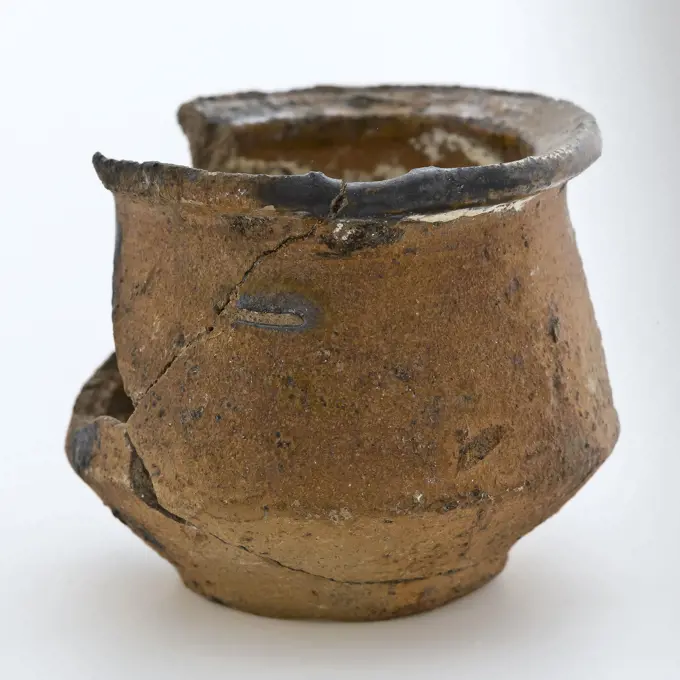
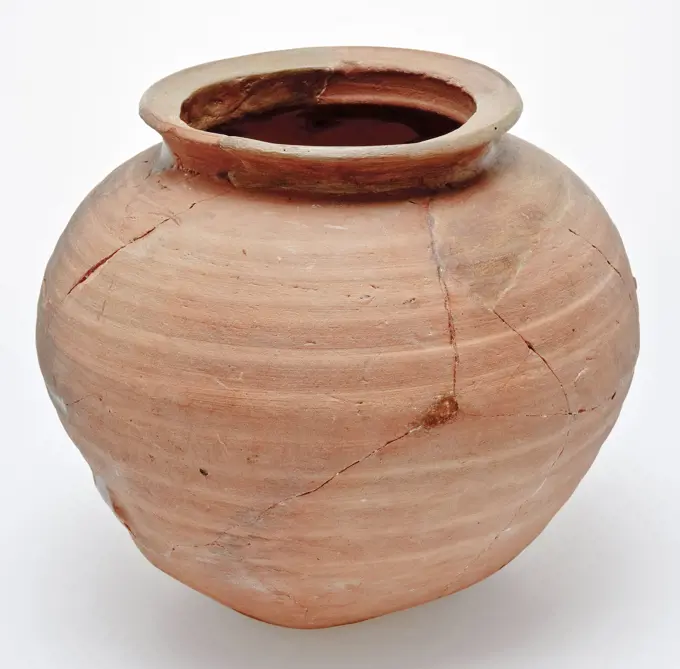
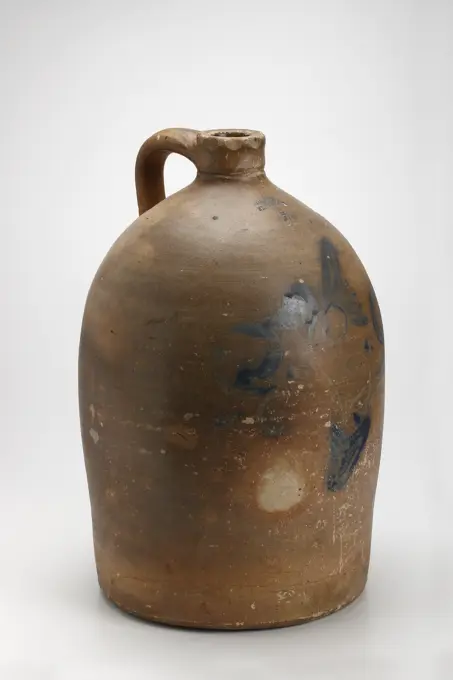
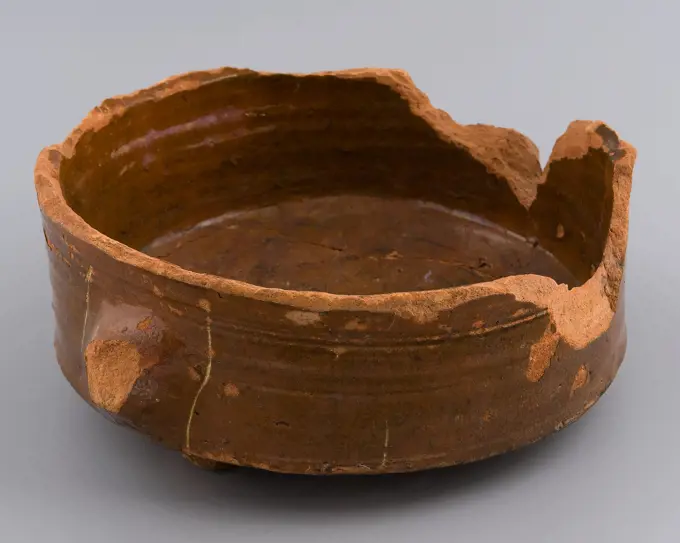
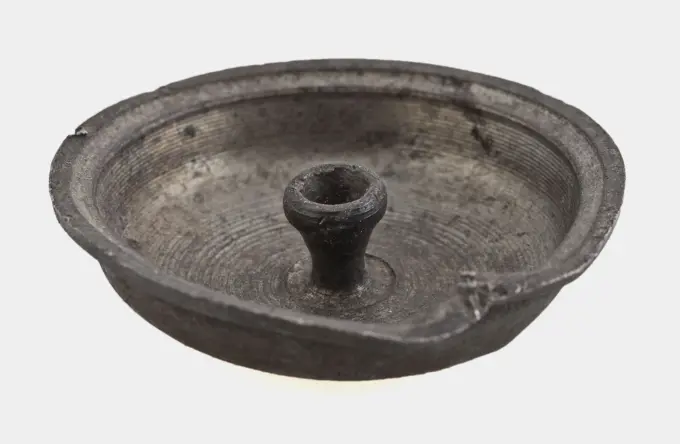
Earthenware ointment jar, double conical model with outstanding top edge, ointment jar pot holder soil find ceramic earthenware glaze lead glaze, hand turned glazed baked Pottery ointment jar. Double conical model with low abdomen Position plane Outwardly directed upper edge. Red shard internal glazed archeology Rotterdam IJsselmonde health care indigenous earthenware ointment care medication medicine packaging pharmacy handicraft Soil discovery: IJsselmonde Castle well 2 Rotterdam 1972.
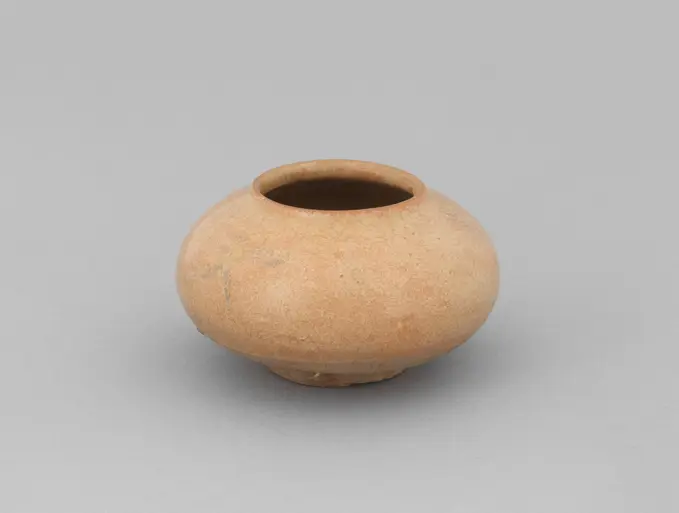
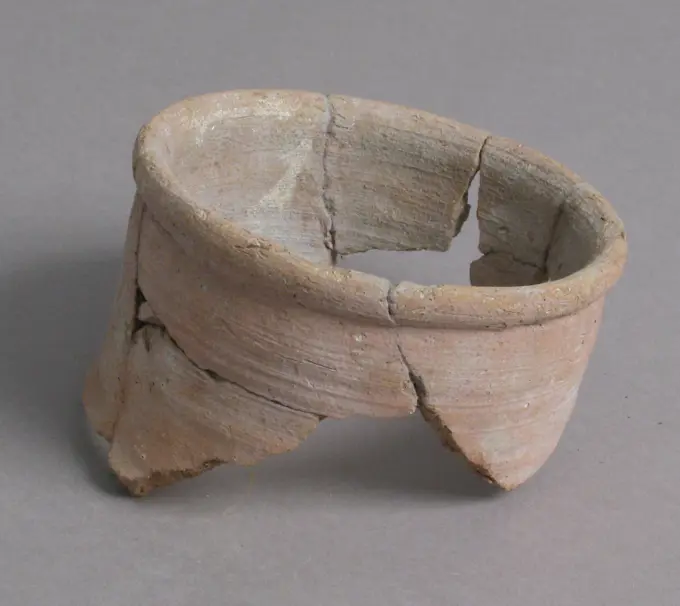
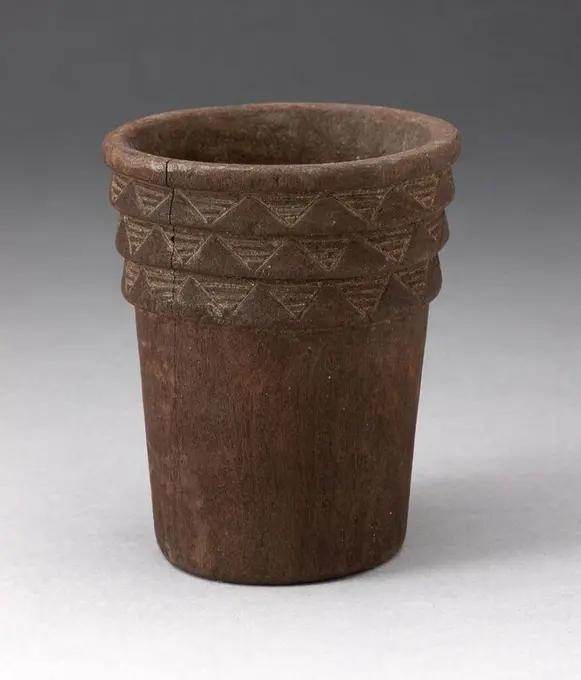
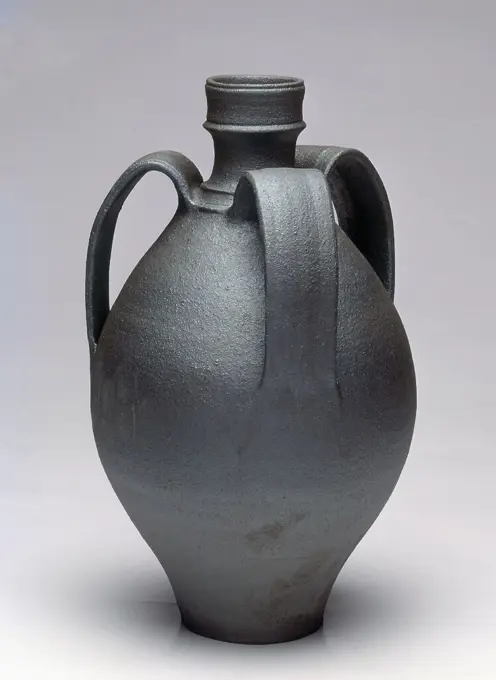
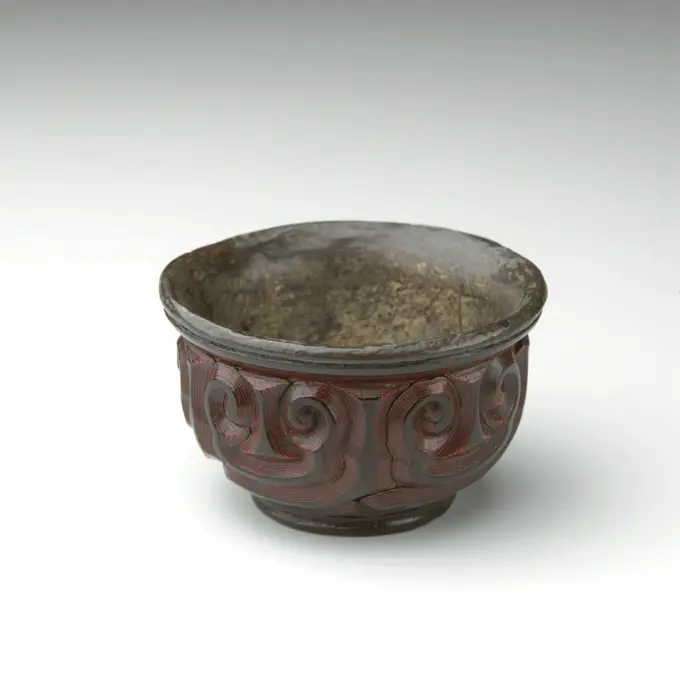
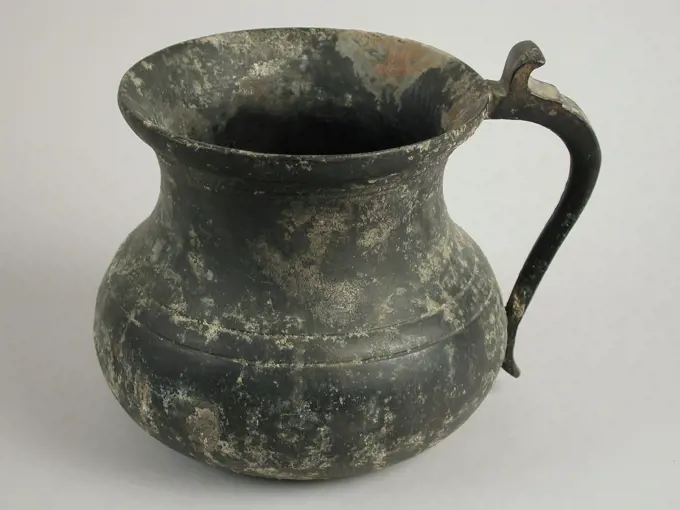
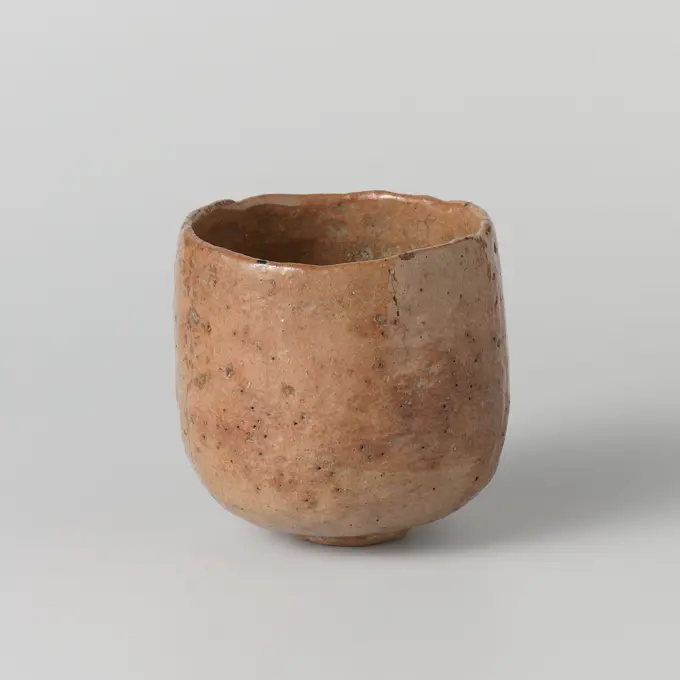
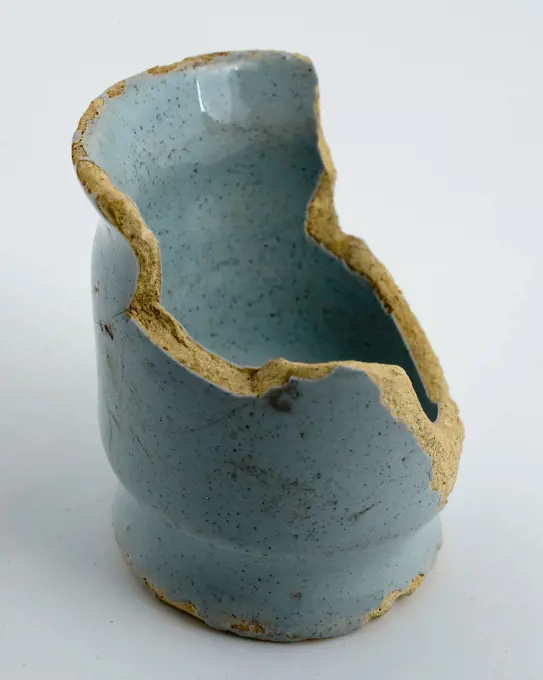
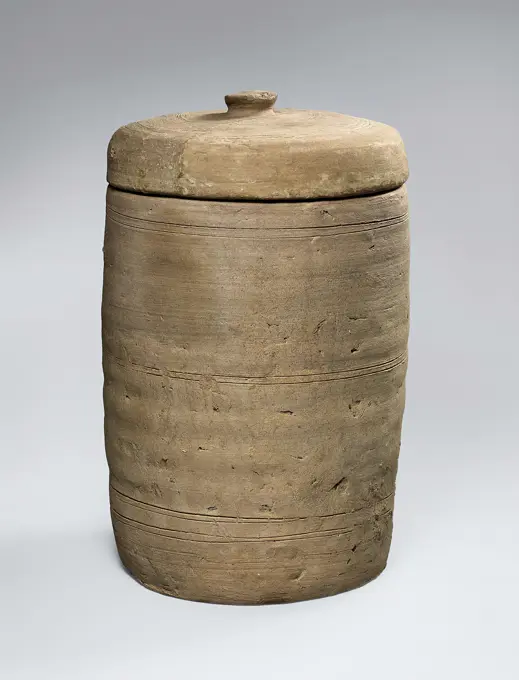
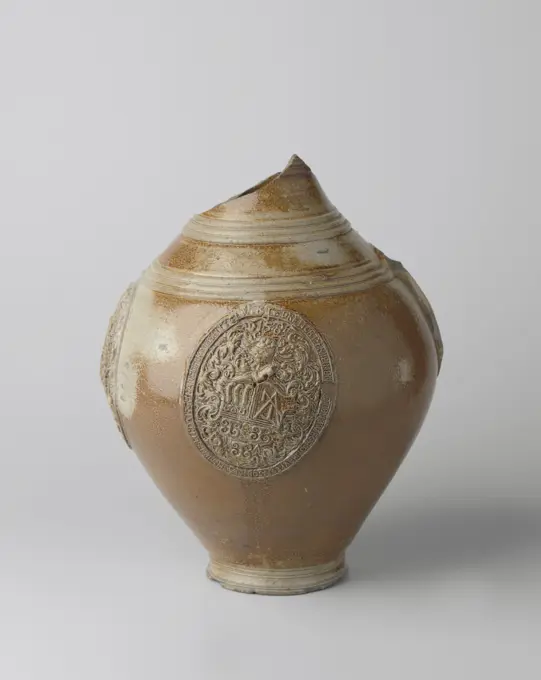
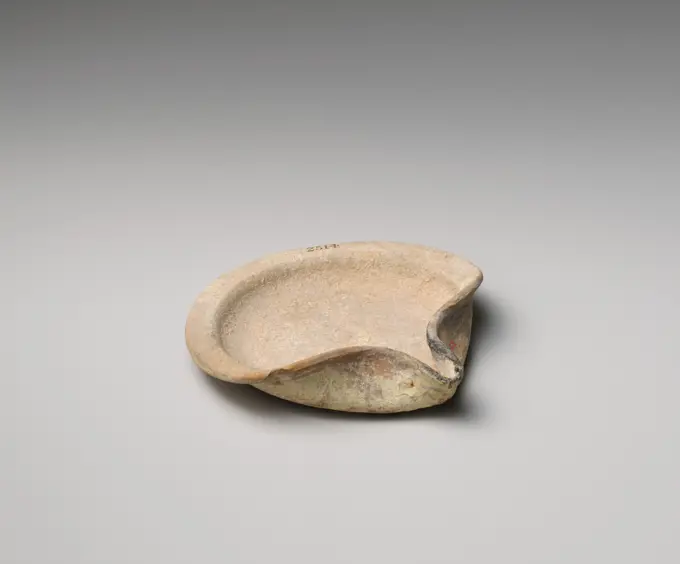
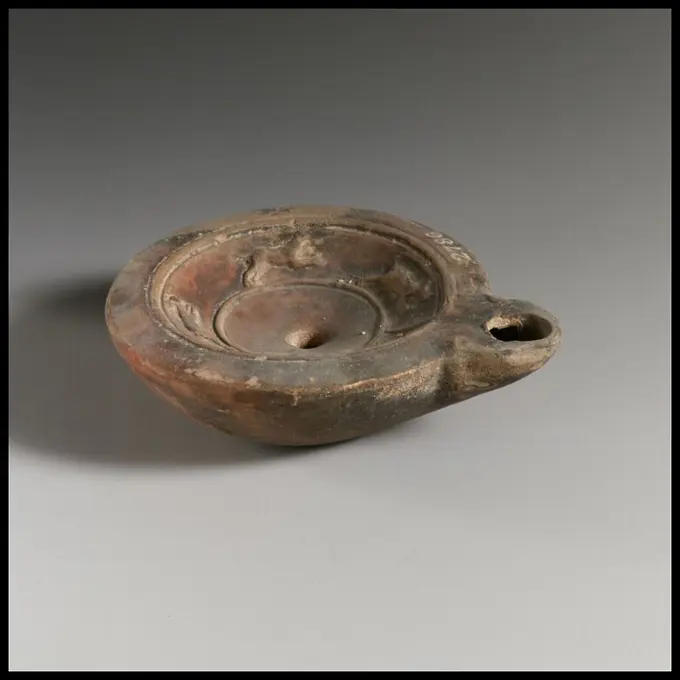
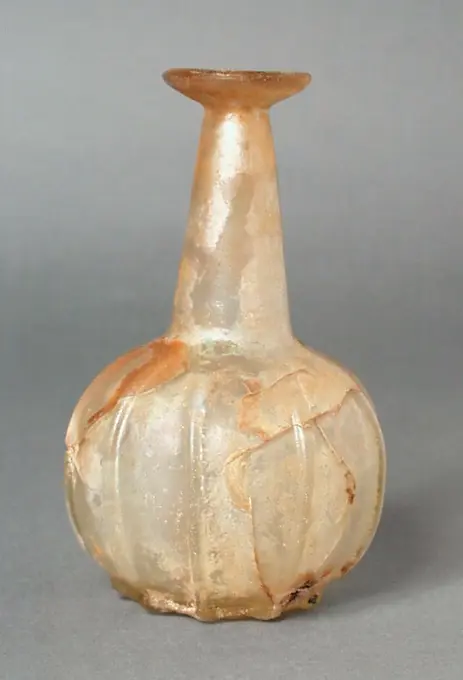
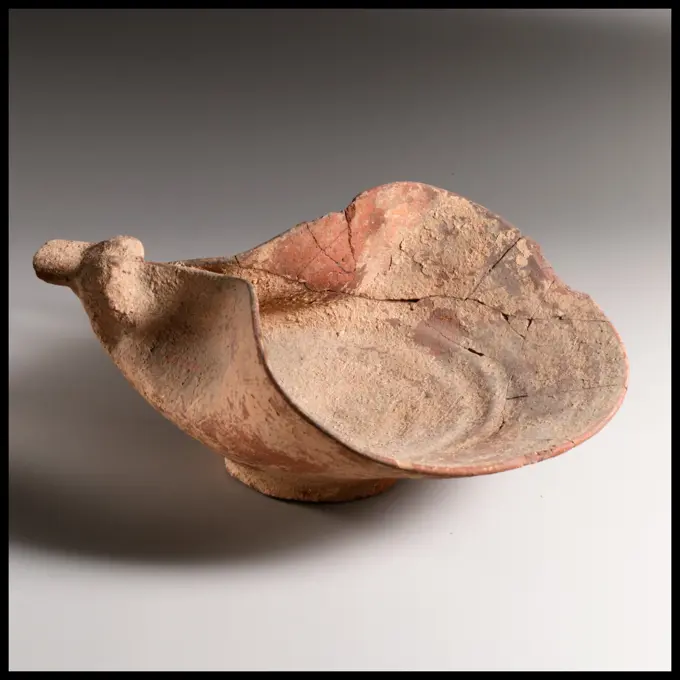
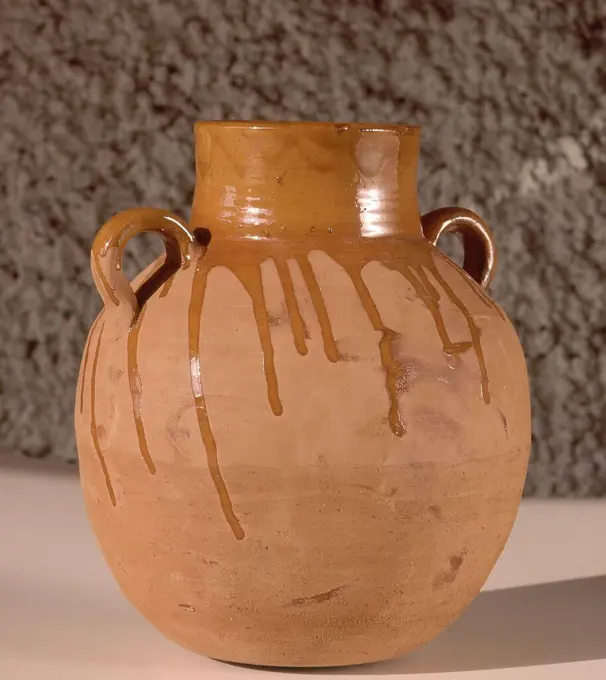
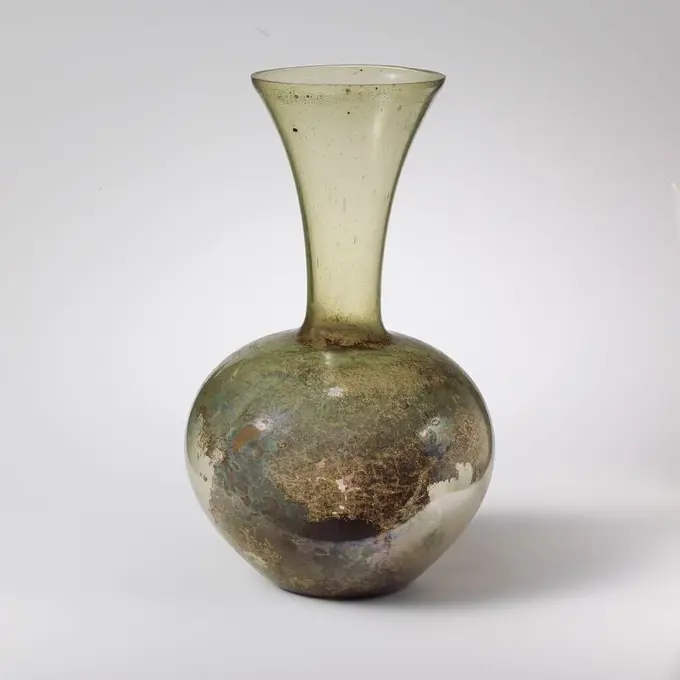
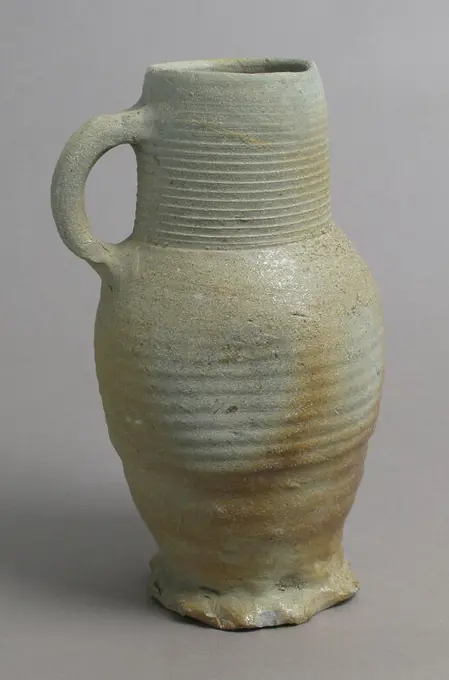
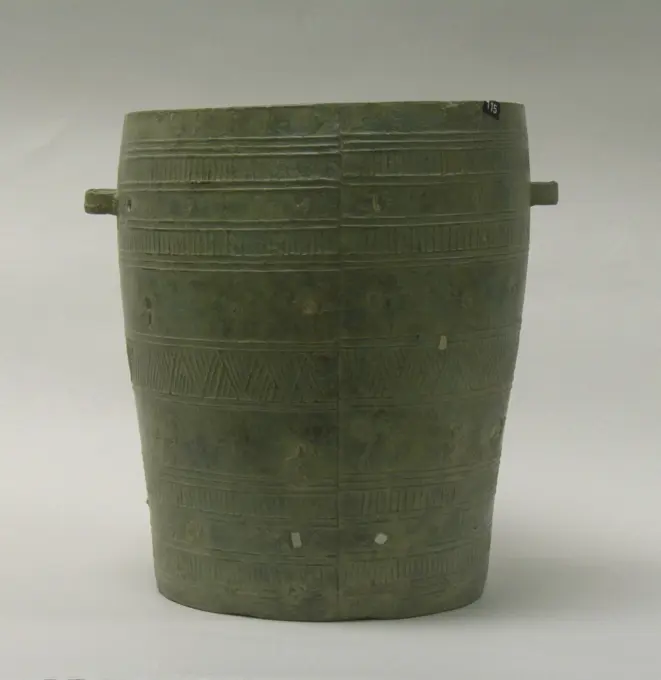
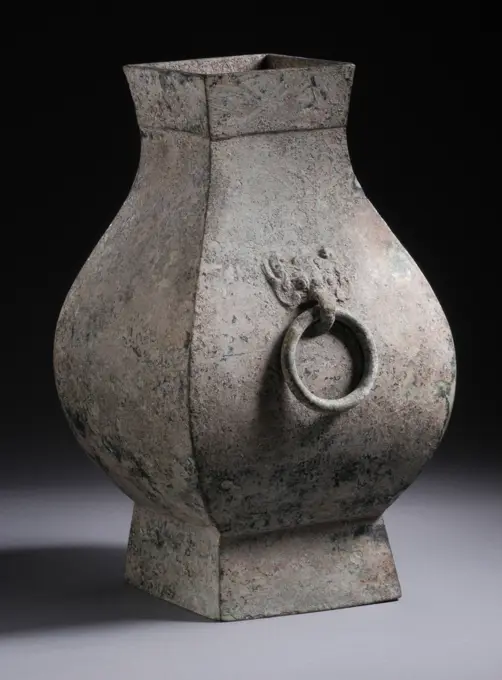
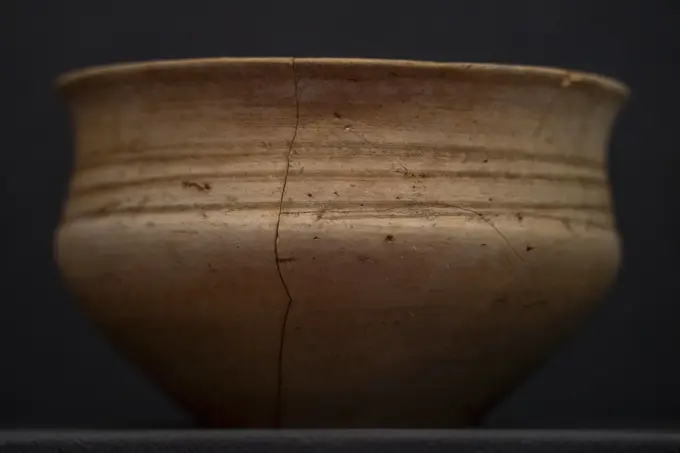
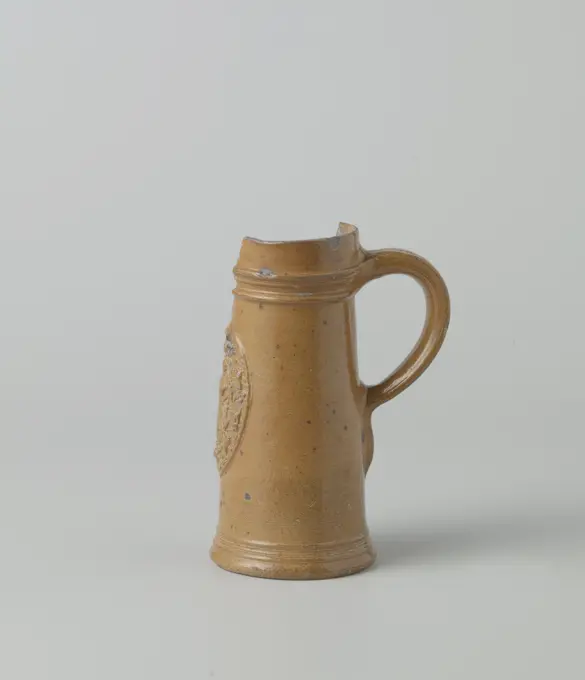
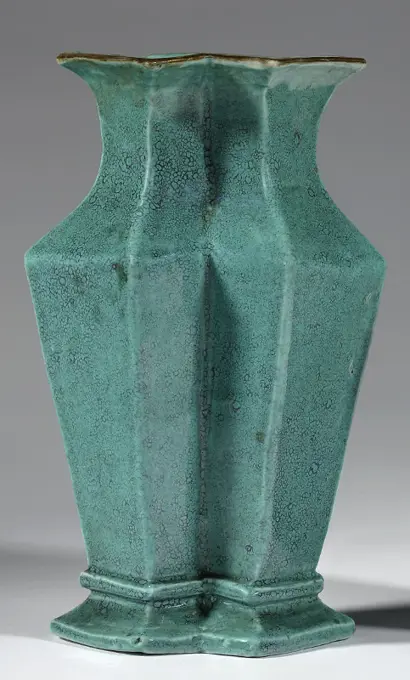
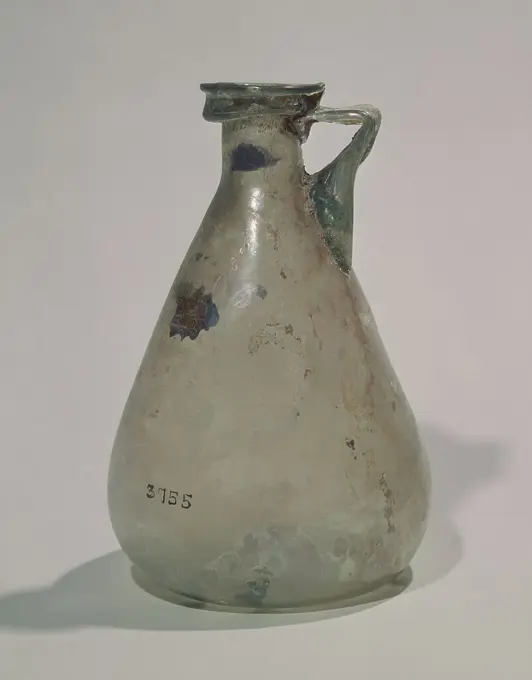
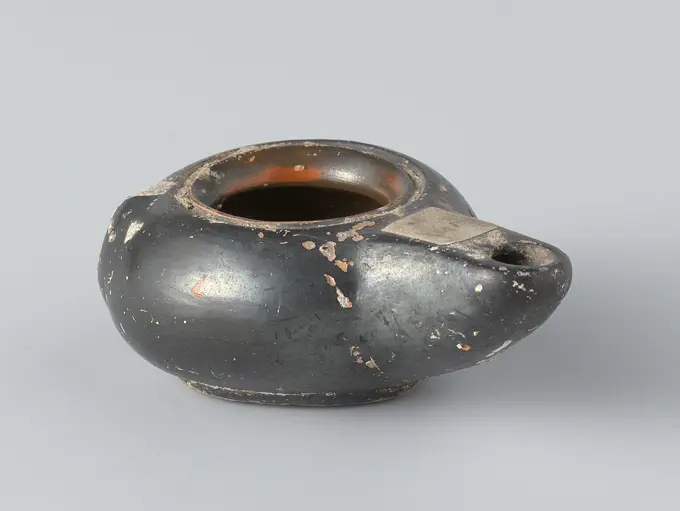
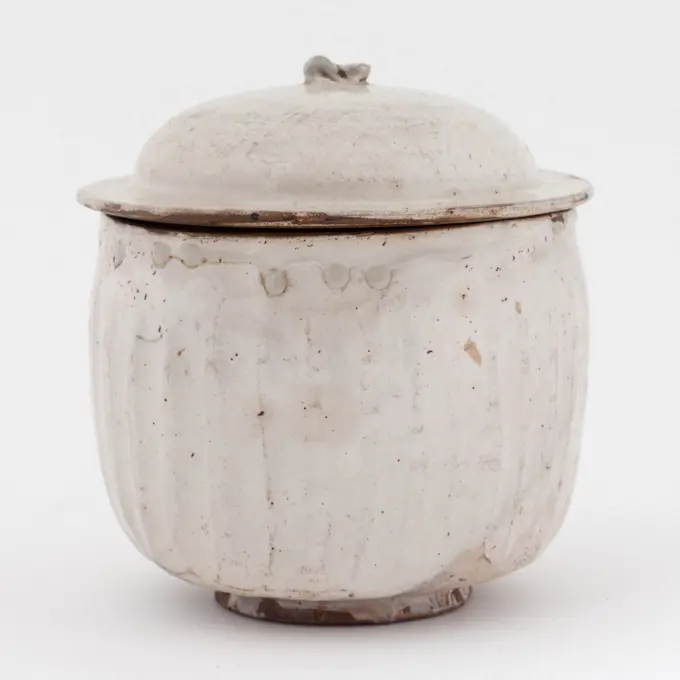
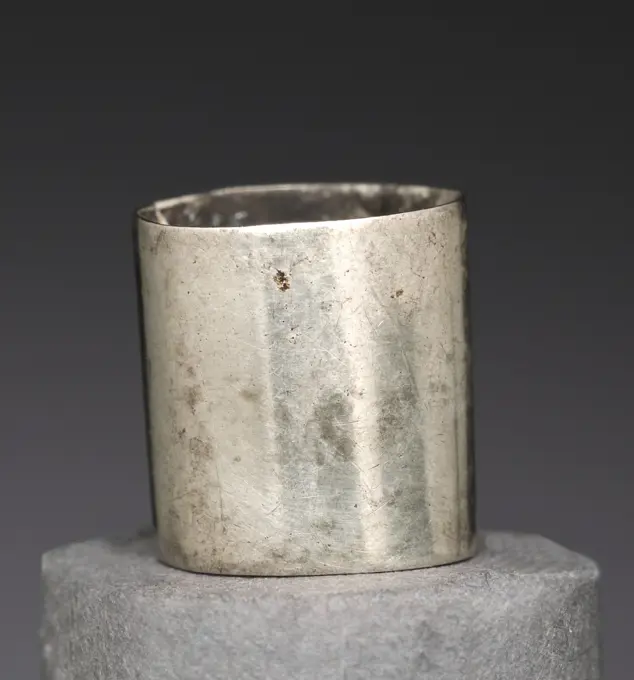
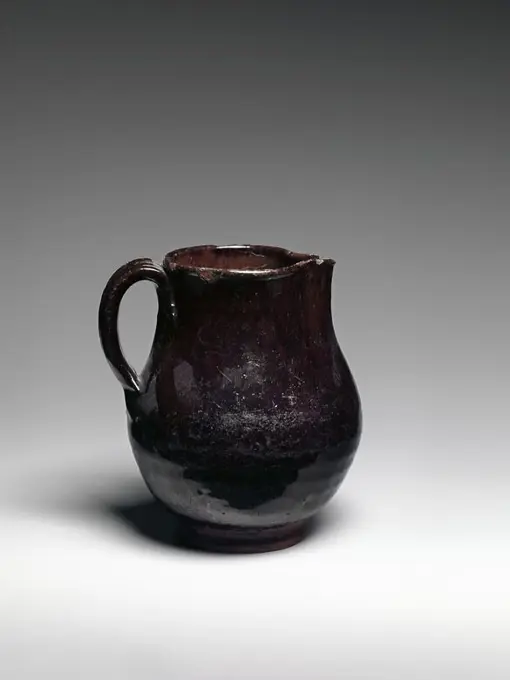
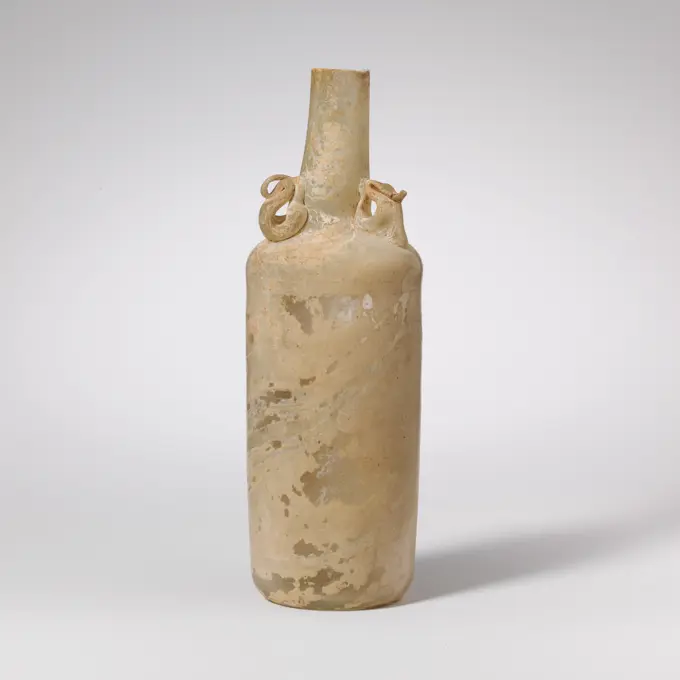
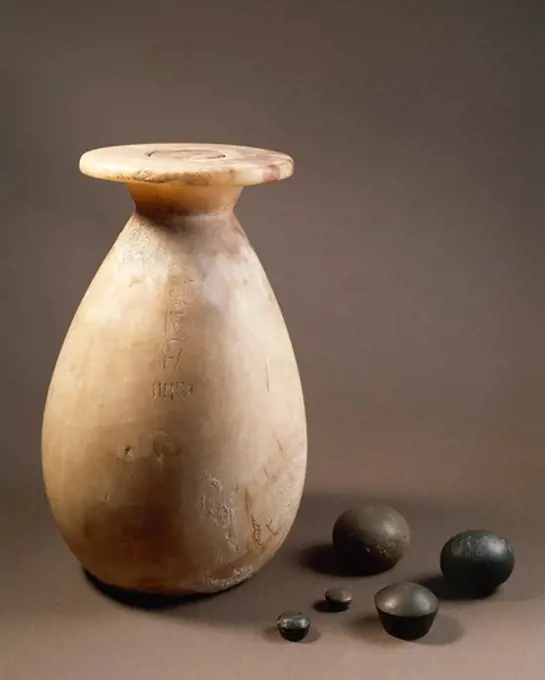
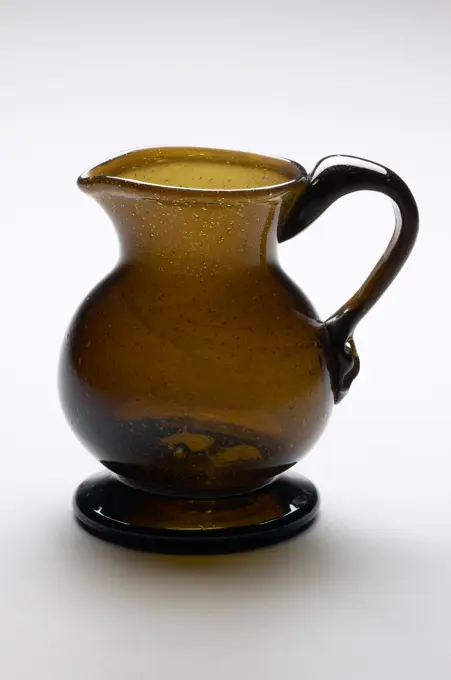
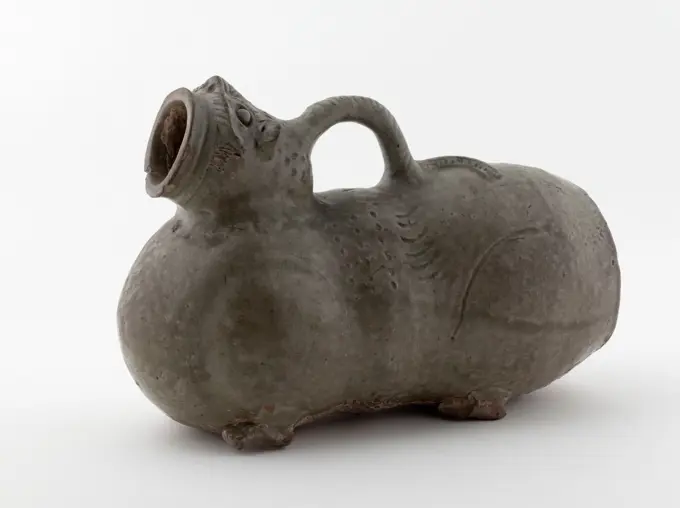
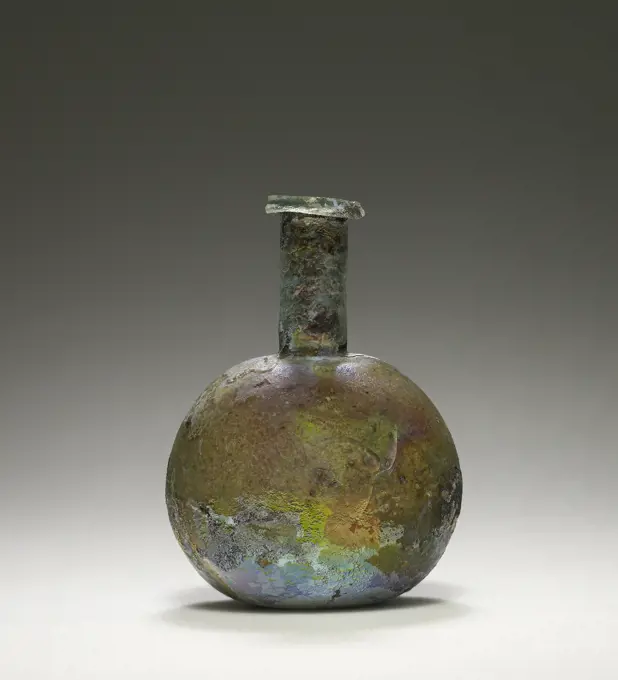
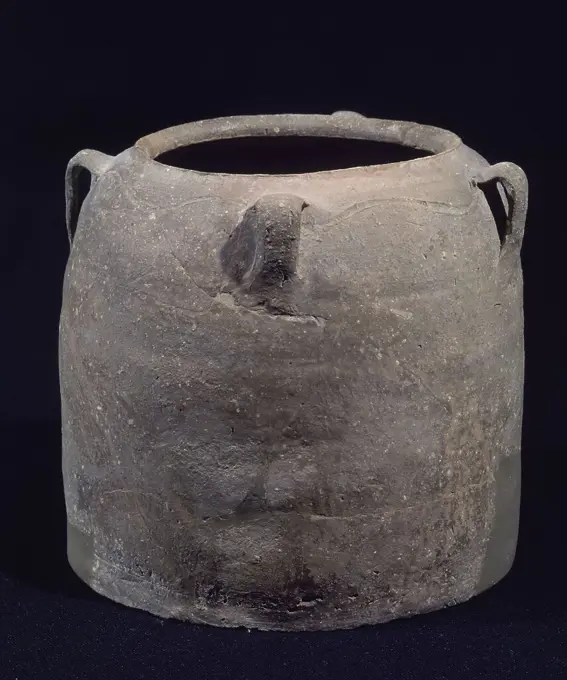
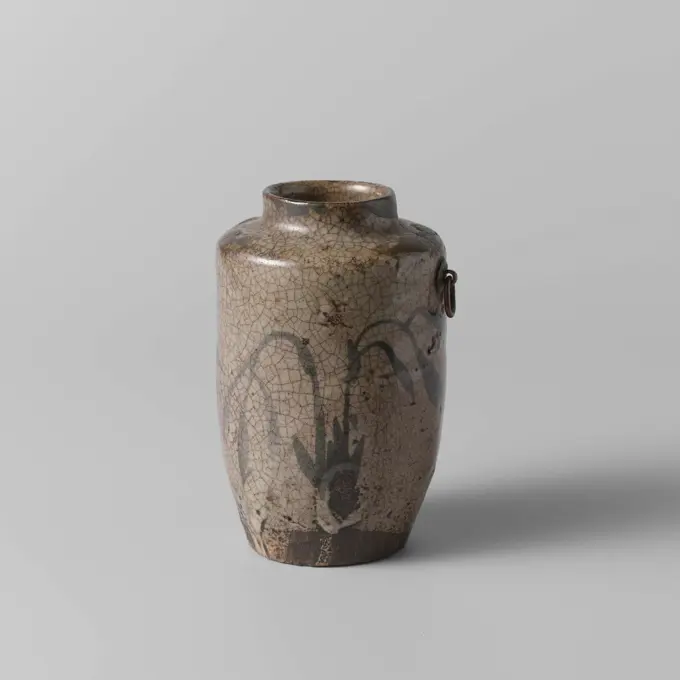
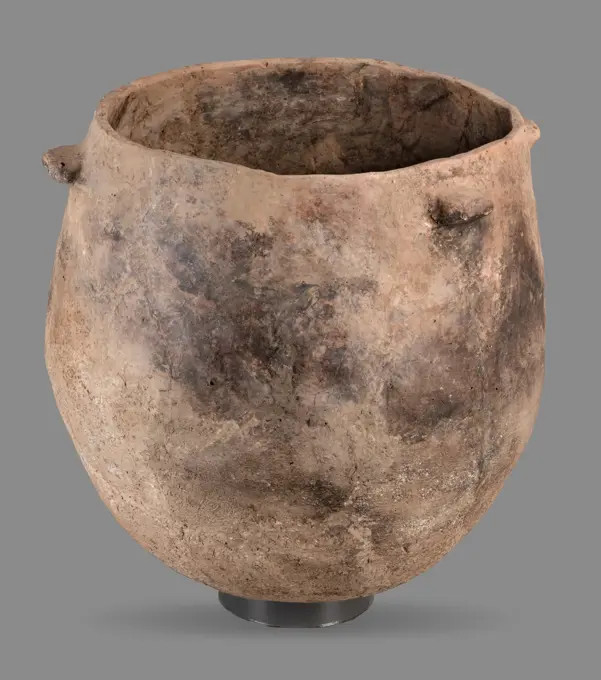
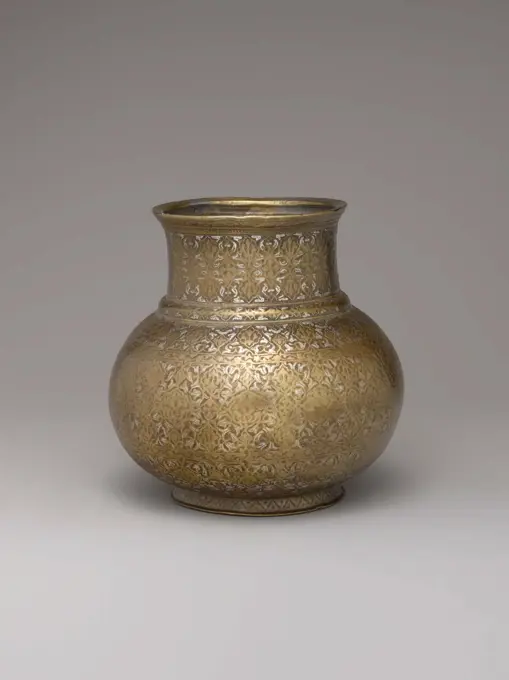
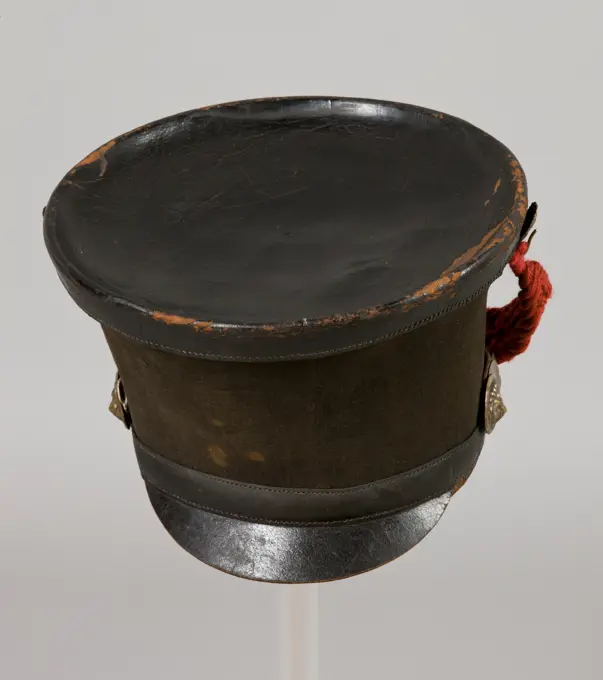
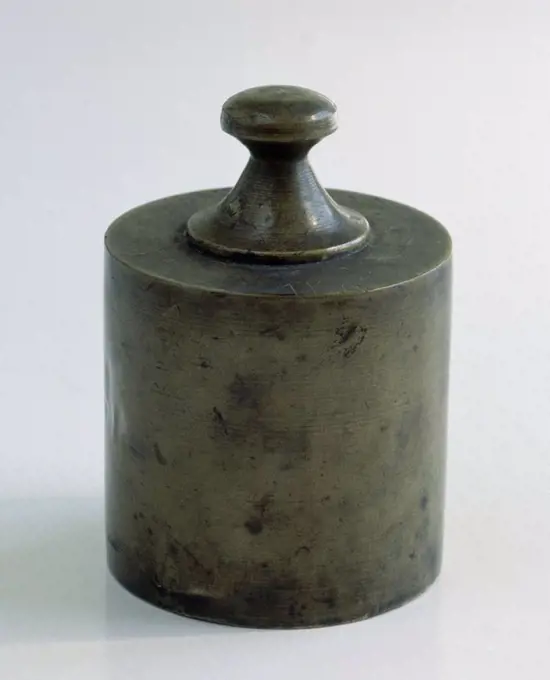
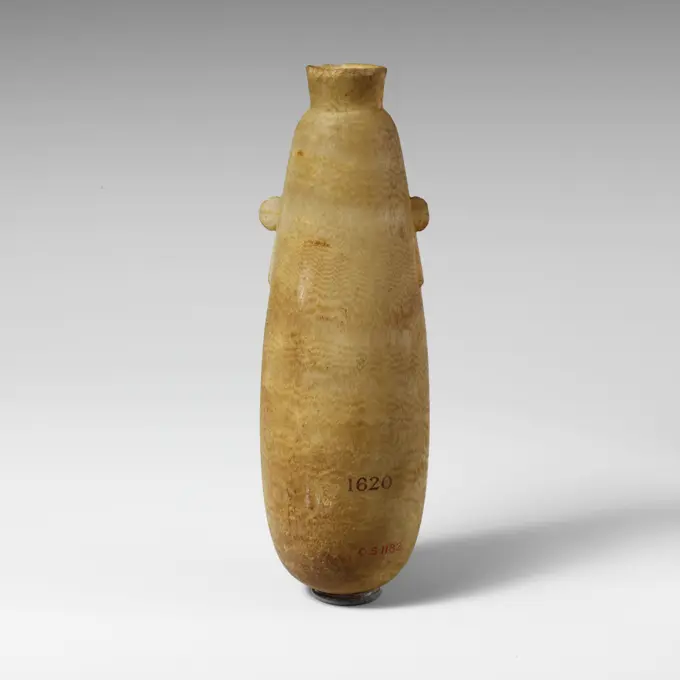
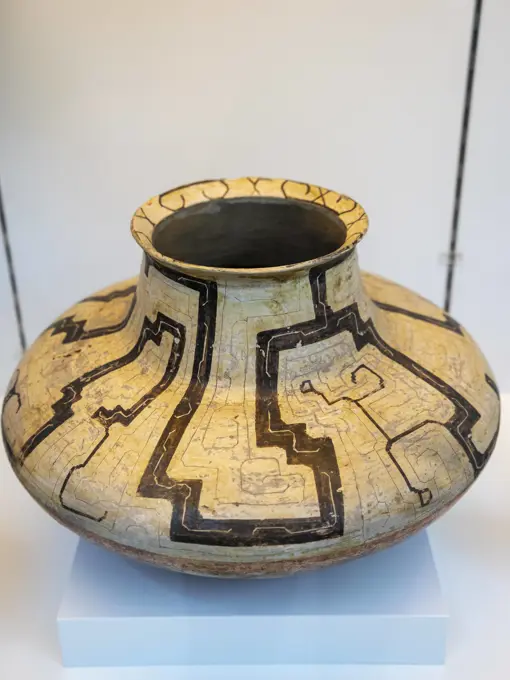
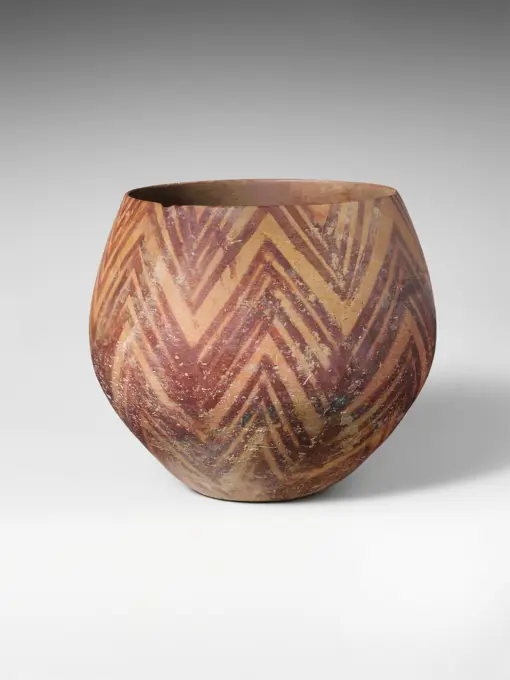
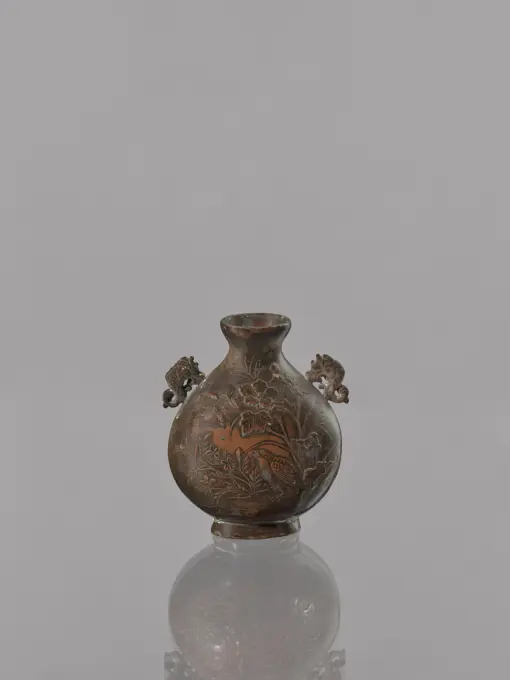
Vase with handles in the shape of Shachi;  19th/20th century (1890-00-00-1910-00-00);Yu water pot (usual name). Covered Green-Jaune Rosé (Céladon). Cernuschi Museum, Asia Museum of Asia in the city of Paris.Bridge and Spout Bottle with Bird Head. Culture: Paracas. Dimensions: Overall: 7 1/4 in. (18.42 cm)Other: 6 7/8 in. (17.5 cm). Date: 6th-3rd century B.C.. Museum: Metropolitan Museum of Art, New York, USA.Terracotta bowl ca. 1450-1200 B.C. Cypriot High foot with strap handle, no decoration.. Terracotta bowl. Cypriot. ca. 1450-1200 B.C.. Terracotta. Late Cypriot II. VasesALCUZA VIDRIADA EN VERDE Y ROJO (OXIDO DE COBRE Y MANGANESO). Location: ALFARERIA. JAEN. SPAIN.Storage jar on lens base, rotating, unglazed, storage jar pot holder soil find ceramic earthenware, hand-turned baked stock pot on lens base Short neck with cuff. Draairillen archeology Geervliet Bernisse indigenous pottery import store store cellar Soil discovery Geervliet or Spijkenisse found during the construction of the marina of Geervliet along the Hartelkanaal.Fragment of a Pot Neck 4th-7th century Coptic. Fragment of a Pot Neck 478741Wide-Bottomed Flask 201 CE-300 CE Eastern Mediterranean Region. The iridescent sheen on this flask, an artificially created effect sought after by 19th-century glassmaking innovators such as Louis Comfort Tiffany, was not actually intended by or known to their makers. Because of their association with luxury and precious oils and perfumes, these vessels were often buried with their owners in tombs, the chemical conditions of which, over time, have caused the surfaces to deteriorate, resulting in the shimmering, often opalescent, hues that appeal to the modern eye.. Glass, blown technique . Ancient RomanDrinking Vessel (Kero) with Incised Geometric Pattern. Inca; South coast or southern highlands, Peru. Date: 1450-1532. Dimensions: 9.5 x 7.9 cm (3 3/4 x 3 1/8 in.). Wood. Origin: Peru, southern. Museum: The Chicago Art Institute, Chicago, USA.Jar with Stylized Florets. China. Date: 960 AD-1279. Dimensions: H. 11.6 cm (4 9/16 in.); diam. 13.1 cm (5 3/16 in.). Stoneware with underglaze molded decoration and brown glaze. Origin: China. Museum: The Chicago Art Institute, Chicago, USA.Dzban. unknown, authorPottery ointment jar, cylindrical model with constrictions, glazed entirely gray white, ointment jar pot holder soil find ceramic earthenware glaze tinglaze, hand-turned baked glazed High form with smooth transitions at the constrictions at foot and shoulder. Low round top edge with lip. Gray-white interior and exterior glazed. Cream-colored shard. Stand archaeology health care indigenous pottery packing pharmacy store sell medicine drug craftJARRITA DE LA NECROPOLIS DE PALENCIA. Location: MUSEO ARQUEOLOGICO NACIONAL-COLECCION. MADRID. SPAIN.Jug - Farrar Pottery  Farrar PotteryPottery ointment jar, conical model, red shard, internally glazed, ointment jar pot holder soil find ceramic earthenware glaze lead glaze, hand-turned glazed baked Pottery ointment jar conical model red shard internal glazed Thick and wide obliquely inwardly directed wide top edge Inclined rotors on the inside Stand area archeology indigenous pottery pharmacy keep selling craftModel of a Counterweight (Quan or Huanzhen) 400 BCE-201 BCE China. Glazed buff stoneware with incised and impressed decoration .Cup 15th century French. Cup. French. 15th century. Earthenware. CeramicsBARBON O CANTARO DE CERAMICA NEGRA CON 3 ASAS - ARTE POPULAR S XX. Location: ALFARERIA. FARO. ASTURIAS. SPAIN.Small Cup, 14th century, 1 9/16 x 2 1/2 x 2 1/2 in. (4 x 6.4 x 6.4 cm), Carved black, red, and yellow lacquer (ti-hsi) with gilt copper liner, China, 14th century, Carved in the ti-hsi (guri), or marbled technique, this petite cup exhibits five pommel scrolls (chian-huan) around its exterior. Built up in layers of two or more contrasting colors, ti-hsi lacquer, carved with pommel scrolls was developed by the Sung dynasty (thirteenth century) and this small vessel shows traits of dating near the beginning of this early category of carved lacquer. These rare, early pieces all have a top layer of lustrous, black lacquer, the alternating color layers include black, red, and yellow. The cutting is deep and at a sharp angle with v-shaped troughs. The area of the top surface left intact is small compared with the carved areas. Variations of this basic 'marbled' technique, in combination with the pommel scroll motif may date from as early as the fifth century. The style remained popular well iEngraved vessel, from grave at Skarpsallino (Alborg)Tinsmith: IJsbrand Fransz 'van de Tin' Halling, Tin chamber pot with vertical soldered seam, pot holder sanitary soil find tin, cast Flat bottom down sagging body merges smoothly into board question mark-shaped ear with downward narrowing thumb rest and vertical soldered seam. Profile edges under bottom belly and board gold patina over whole pot present on bottom in ring: drain metalworker archeologyAn image of ceramic jug on a white backgroundBol romano procedente del yacimiento arqueológico de Can Modolell. Can Serra Museu de Mataró.Lamp. UnknownVase fragment East Greek/Sardis, Lydian. Vase fragment 252826 East Greek/Sardis, Lydian, Vase fragment, Terracotta, Overall: 2 15/16 x 1 3/8in. (7.5 x 3.5cm). The Metropolitan Museum of Art, New York. Gift of The American Society for the Excavation of Sardis, 1926 (26.199.262)ceramic vessel with slip decoration, Iberian period three hundred and fifty to fifty BC, Huesca museum, Aragon community, Spain.Teabowl with an orange red glaze, anonymous, anonymous, c. 1750 - c. 1799 Theekom van Steengoed, covered with an orange -red glaze. A crack in the wall has been repaired with gold lacquer (kintsugi). Raku (red). Japan stoneware. glaze vitrification Theekom van Steengoed, covered with an orange -red glaze. A crack in the wall has been repaired with gold lacquer (kintsugi). Raku (red). Japan stoneware. glaze vitrificationFragment of pottery ointment jar with two constrictions, blue-white glazed, ointment jar holder soil find ceramic earthenware glaze tin glaze, hand-turned baked glazed baked High model ointment jar of delftware or faience Two constrictions. Funnel-shaped top edge Fully glazed except the bottom of the bottom. Light blue tinted glaze. Stand area with subtraction traces archeology underground pit Rotterdam City Triangle Oostplein health care indigenous pottery packing ointment medicine drug care pharmacy craft Soil discovery: underground pit Oostplein from dirty layer 16061976.Sutra container, 12th century, Unknown Japanese, 12 3/4 × 8 × 8 in. (32.39 × 20.32 × 20.32 cm), Sanage ware; stoneware, Japan, 12th century, This cylindrical container was an outer case for another container that held a sutra, or Buddhist scripture. The inner case was probably bronze, similar to the example displayed beside it here. Sutras were copied by hand and buried in sutra mounds in order to accumulate merit for the burier as a type of good deed. Now worn down, the round and slightly pointed knob on top of the lid originally took the shape of a hōju, the sacred 'wish-fulfilling jewel' often seen in Buddhist imagery.Fragment of a jug with coats of arms and horizontal borders, anonymous, c. 1585 - c. 1600 Fragment of a jug of stoneware on stand ring with an egg -shaped body. The neck, the ear and the soil are missing. Profiles closely. Partly covered with a brown Engobe. On the belly three oval medallions with weapons. In the middle weapon the inscription 'L: V: P: M'en the date' 1585 '. The other two weapons differ from the first and carry the edge script 'drenckt: fri: einen: Great teuge: unsprested: soe: Mach: Sen: Sen: that: ghi: an: dei: can: seit: region' and the date 1585 Raeren. Rae stoneware. glaze. engobe vitrification Fragment of a jug of stoneware on stand ring with an egg -shaped body. The neck, the ear and the soil are missing. Profiles closely. Partly covered with a brown Engobe. On the belly three oval medallions with weapons. In the middle weapon the inscription 'L: V: P: M'en the date' 1585 '. The other two weapons differ from the first and carry the edge script 'drenckt: fri: einCooking pot on three legs, reused as food bowl, cooking pot crockery holder kitchen utensils earthenware ceramics earthenware glaze lead glazing w 20,6, hand-turned hand-formed glazed fried Remnants of pot with three pots. Cylindrical top edge. Two standing ears. What bowl-shaped bottom Rotating lips over the outside wall. Completely worn Completely glazed archeology Rotterdam City center Stadsdriehoek Oudehaven indigenous pottery reuse cooking feeding dog pet Soil discovery Old Port Rotterdam.Terracotta saucer-shaped lamp 4th century B.C. Cypriot Wheel-made with edge folded in to form a narrow wick rest; horizontal rim, with rounded lip; broad, shallow, open body; undefined, flat base.Complete, except for one chip in left edge of rim and crack down front of nozzle. Sooting around nozzle.. Terracotta saucer-shaped lamp. Cypriot. 4th century B.C.. Terracotta. Late Classical. TerracottasLamp. Culture: Roman. Dimensions: Length: 3 3/8 in. (8.6 cm)Height: 15/16 in. (2.4 cm). Date: 2nd century A.D.. Museum: Metropolitan Museum of Art, New York, USA.Serpentine bowl with spout and handle ca. 1600-1450 B.C. Minoan Spout and handle.. Serpentine bowl with spout and handle 252352 Minoan, Serpentine bowl with spout and handle, ca. 16001450 B.C., Serpentine, H.: 5 7/8 in. (14.9 cm). The Metropolitan Museum of Art, New York. Bequest of Richard B. Seager, 1926 (26.31.430)Wine vessel (Tsun). bronze. Western Chou. 11-10 cent. BC. Zhou Period.Tea jar 18th century Japan. Tea jar. Japan. 18th century. Pottery (Bizen ware). Edo period (1615-1868). CeramicsMiniature Bowl 3rd-8th century Teotihuacan. Miniature Bowl 316878An ancient Greek open work with geometric and floral decoration. Barcelona. Spain 201335mm originalTerracotta ladle-saucer or shovel 4th century B.C. Cypriot Open, wheel-made. Rounded rim to deep, flaring body, pinched together on one side into a projection, to which is added a solid handle with uneven join. Raised base ring, and uneven, flat base.Broken and repaired, with two chips in rim and most of handle missing.. Terracotta ladle-saucer or shovel. Cypriot. 4th century B.C.. Terracotta. Late Classical. Terracottasthin-walled glass thin-walled glass Copyright: xZoonar.com/TOLOxBALAGUERx 22568982OLLA CON VIDRIADO EN EL INTERIOR- S XX - ARTE POPULAR. Location: ALFARERIA. MARRATXI-PORTOL. MALLORCA. SPAIN.Czarka na stopce. nieznany warsztat północno mezopotamski, workshopGlazed Spouted Pot 4th-7th century Coptic. Glazed Spouted Pot 478711Limestone strainer Cypriot The strainer consists of a small bowl perforated with holes.. Limestone strainer 244033Monochrome earthenware pot decorated with geometric patternsGlass bottle. Culture: Roman. Dimensions: 7 1/4in. (18.4cm). Date: 4th century A.D..Translucent light green.Slightly uneven rim, cracked off and ground; funnel-shaped neck; broad, globular body, tapering downwards; concave bottom.Decorated with bands of faint wheel-abraded horizontal lines: one immediately below rim, four more bands on upper body.Intact; many pinprick and a few large bubbles, and blowing striations, with some black inclusions in neck; faint dulling and iridescence on exterior, large patches of soil encrustation, weathering, and brilliant iridescence on interior.Bottle with flaring mouth and long neck. Museum: Metropolitan Museum of Art, New York, USA.Jug. Culture: German. Dimensions: Overall: 9 1/8 x 5 1/2 x 4 3/4 in. (23.1 x 13.9 x 12.1 cm). Date: late 1300s or early 1400s.Stoneware, a specialty of medieval German potters, is a hard, nonporous ceramic. As it is both strong and impervious to liquids, it was ideally suited for domestic purposes. Museum: Metropolitan Museum of Art, New York, USA.Situla 500 B.C.-A.D. 300 Vietnam (North). Situla. Vietnam (North). 500 B.C.-A.D. 300. Bronze. Bronze and Iron Age period. MetalworkTerracotta oil lamp 2nd century A.D. Roman Loeschcke Type 8. Mold-made. Concave discus: a single, central filling hole; one raised circle midway between filling hole and edge, and another around edge. Shoulder: impressed large ovules. Heart-shaped nozzle. Faint incised base ring, and slightly concave base.Intact, except for one tiny hole in shoulder near back.. Terracotta oil lamp. Roman. 2nd century A.D.. Terracotta. Mid Imperial. Terracottasrecipiente de ceramica con forma de estrella, Museo arqueologico Son Fornes, sala de época postalayótica, Montuiri, Comarca de Es Pla, Mallorca, Spain.Square Wine Jar (Fanghu). China, Western Han dynasty, about 206 B.C.-A.D. 25. Furnishings; Serviceware. Cast bronzeURNA CINERARIA (VIDRIO ROMANO). Location: MUSEO DE CADIZ-ARQUEOLOGIA. Cadiz. SPAIN.Vaccean Graburne Vaccean funerary urn, necropolis of the Ruedas, Padilla de Duero, Valladolid Museum - Provincial Museum of Antiquities, Autonomous Community of Castile and Leon, Spain Copyright: xZoonar.com/TOLOxBALAGUERx 22539265Jar 9th-10th century. Jar 446083Ribbed tankard, anonymous, c. 1560 - c. 1580 Beer mug of stoneware with a cylindrical, spreading body and C-shaped ear. Covered with a brown Engobe. A wide, ribbed band under the edge and above the foot. Raeren. Rae stoneware. glaze. engobe vitrification Beer mug of stoneware with a cylindrical, spreading body and C-shaped ear. Covered with a brown Engobe. A wide, ribbed band under the edge and above the foot. Raeren. Rae stoneware. glaze. engobe vitrificationPurse with masks, tide and pearls. The cast round mortar has a foot, nosed at the top, and a rounded out-knit edge, which is decorated with a fries of acanthus leaves interspersed with stilt three leaves. The slightly diabolographed wall, which is closed at the top and bottomed by a profiled rib, has at the top of a decoration of eighteen six-leaf florets, of which are connected to nine through swinging pearl edges. Below there is three times the motif repeated from a mask, which is connected to two symmetrical volutes ending in stylized flowers. On the transition to co-needed foot twelve six-leaf roses.Fragment of a tankard with a music playing lady, anonymous, c. 1583 - c. 1600 cup. fragment Fragment of a beer pules made of stoneware with a cylindrical, slightly tapered body and C-shaped ear. Profiles under the edge and above the foot. Covered with a brown Engobe. On the body in relief a printed and imposed medallion with a richly decorated edge. In the medallion a woman playing on a musical instrument with the date '1583'. The pul is a small variant of the 'Schnelle'. Raeren. Rae stoneware. glaze. engobe vitrificationCANTARO DE BOCA ENTRECHA Y CORTA CON UNA SOLA ASA - ARTE POPULAR S XX. Location: ALFARERIA. Guadalajara. SPAIN.Small angular vase. unknown, craftsmanJARRA DE VIDRIO ROMANO. Location: MUSEE D'ARTS DECORATIFS. MADRID. SPANIEN.Tea caddy 17th century Japan. Tea caddy 52206Oil lamp with a red brown glaze, c. 1000 - c. 1199 oil lamp Pottery oil lamp, with a red -brown glaze. The ear is missing. A sticker with the number 102 on the stomach and spout. Iran earthenware. glaze vitrificationBowl and its lid ". Sandstone, white slip under transparent cover. Northern China, Cizhou. Paris, Cernuschi Museum. Asian art, Chinese art, bowl, Chinese ceramic, cizhou, container, cover, container, terracottaElement of Wig Decoration , 1980-1801 BC. Egypt, Middle Kingdom, Dynasty 12. Silver; average: 1 cm (3/8 in.).Pitcher. Culture: American. Dimensions: 4 3/4 x 4 1/2 x 4 in. (12.1 x 11.4 x 10.2 cm). Date: 1800-1830. Museum: Metropolitan Museum of Art, New York, USA.Glass bottle with dolphin handles 3rd-early 4th century A.D. Roman, Rhenish Colorless with pale greyish blue green tinge; handles in same color.Uneven, cracked-off rim; cylindrical neck, expanding downwards with horizontal tooled indent around base; sloping shoulder with rounded slightly overhanging edge; cylindrical body, tapering slightly downwards and curving in to concave bottom; two small "dolphin" handles dropped onto bottom of neck, drawn down over shoulder, then up and in, forming loop, and trailed off above.On body, bands of faint horizontal wheel-cut lines, one below shoulder, another halfway down side, and possibly a third near bottom, each comprising two parallel lines.Body complete, but broken at rim and neck with some losses; bubbles and striations; dulling, creamy white weathering, and iridescence.Colorless cylindrical bottle with handles in the form of dolphins.. Glass bottle with dolphin handles 249432Lazio Roma Subiaco Monastery of S. Scolastica Archaeological Museum2. Hutzel, Max 1960-1990 Antiquities: Views of antiquities in museum, including sarcophagi, plates, vases, coins. General Notes: Hutzel guide says we have negatives, but we cannot find them. German-born photographer and scholar Max Hutzel (1911-1988) photographed in Italy from the early 1960s until his death. The result of this project, referred to by Hutzel as Foto Arte Minore, is thorough documentation of art historical development in Italy up to the 18th century, including objects of the Etruscans and the Romans, as well as early Medieval, Romanesque, Gothic, Renaissance and Baroque monuments. Images are organized by geographic region in Italy, then by province, city, site complex and monument.Stone weights and alabaster vase used as a measure instrument for liquidsPitcher with aBall. Maker, possibly by: East Hartford Glass Works, American, 1783-1830Grain Vessel (Gui). China. Date: 1100 BC-1000 BC. Dimensions: H. 17.5 × diam. 23 cm (6 3/4 × 9 1/8 in.). Bronze. Origin: China. Museum: The Chicago Art Institute, Chicago, USA.Campania Napoli Naples S. Lorenzo Maggiore82. Hutzel, Max 1960-1990 Medieval: Sculpture, architecture, architectural sculpture (including Roman spolia) 13-14th century Chapter house; sarcophagi, gravestones; wall painting. Fragment of mosaic; sculptural fragments in the Sala Capitolare. Post-medieval: Architecture, architectural sculpture, ceiling painting fresco cycle; prints depicting Venice c. 1845 (4), sculpture; life-size creche figures dressed in original Neapolitan costume Church restored in 1882, 1926, 1944; excavations under the transept undertaken between 1958-1962, and in the cloister in 1976, have revealed remains of a Roman macellum (market), street, and the paleochristian basilica of the 6th c. AD. Antiquities: Pottery: black-glazed, archaic banded, domestic wares, bucchero; architectural terracottas, statuettes, lamps, sculpture fragments Object Notes: 3 color negatives with no prints at the end. General Notes: Most objects/paintings/frescoes unidentified. Three batches Vase. Terracotta with celadon covered. China, period of the 6 dynasties. Paris, Cernuschi museum. 72687-8 Asian art, ceramic, ancient ceramic, covered, email, animal figure, glacure, iIieme IIIe III 3rd 3rd 3rd century, 4th 4th 4th 4th 4th century, animal motif, Chinese object, Chinese pottery, terracotta, terracotta emaillee, head Animal, vase, Veme Ve V 5th 5th 5th century, Vieme VIE VI 6th 6th 6th centuryKroes of stoneware. Cylindrical crust of stoneware, with a C-shaped ear. The crucible runs out of below and is decorated with two wide horizontal ribbed tires.VASOS CELTIBERICOS PINTADOS PROCEDENTES DE SOTO DE MEDINILLA (AVILA). Location: ARCHAEOLOGICAL MUSEUM. Valladolid. SPAIN.Ointment Flask; Eastern Mediterranean; 1st century; Glass; 8 x 5.7 cm (3 1,8 x 2 1,4 in.)Bottle 10th-11th century This glass bottle was excavated at the site of Tepe Madrasa in Nishapur.  Nishapur was a vital city in the early and middle Islamic periods, located along one of the main trajectories that connected Iran and West Asia Islamic lands with Central Asia and China. These itineraries are often referred by the term Silk routes’ but were in fact crucial to the movement of constellations of materials and objects, as well as people and ideas. The diverse population of Nishapur and its surroundings, from the better-researched elite groups of merchants, land-owning aristocracy, and literates, to the less-known artisans, farmers, miners, and servants, were instrumental in adapting global cultural trends to create their own distinctive visual languages. This is seen in the material remains of everyday life in medieval Nishapur — from pots and pans to lighting devices, inkwells, textiles and trimmings, jewelry, games and toys, talismanic devices, weapons, coins, and architecTerracotta oil lamp Roman 2nd half of 1st century CE Loeschcke Type 4. Mold-made. Discus: myrtle wreath; a single filling hole at center, with a band of lines and grooves toward edge. Volutes flanking nozzle. Base ring, encircled by two grooves, and a flat base.Intact. View more. Terracotta oil lamp. Roman. 2nd half of 1st century CE. Terracotta; mold-made. Early Imperial. TerracottasModiolus - drinking dish;  1st century (1-00-00-100-00-00);RECIPIENTE DE CERAMICA CON CUATRO ASAS - SIGLO XI. Location: MEDINA AZAHARA / MADINAT AL-ZAHRA-MUSEO-CERAMICA. PROVINCIA. CORDOBA. SPAIN.. Large fabric tea bus or chair of stoneware to which a bronze ear is attached just below the shoulder, partially covered with a cream-colored glaze and painted in underglaze blue. A plant twice on the wall. Some restorations on the edge and shoulder. Old label on the inside and underside with 'e-Karatsu / 17th'. E-Karatsu.Lazio Roma Grottaferrata Museo90. Hutzel, Max 1960-1990 German-born photographer and scholar Max Hutzel (1911-1988) photographed in Italy from the early 1960s until his death. The result of this project, referred to by Hutzel as Foto Arte Minore, is thorough documentation of art historical development in Italy up to the 18th century, including objects of the Etruscans and the Romans, as well as early Medieval, Romanesque, Gothic, Renaissance and Baroque monuments. Images are organized by geographic region in Italy, then by province, city, site complex and monument.Kitchen pot; Unknown Night -Tamanian workshop; 1. PO. 3 thousand BC ; Early period D Azira III (-3000-00-00--2501-00-00);Al -Jazira (Geographical Land - Syria - Iraq - Mesopotamia), kitchen pots, dishes, early period of Dżazira III (approx. 2600 -ok. 2350 BCCopy of the Włocławek Spell Nosek, the BietaOval Tube, 722-481 BCE, 5 7/8 x 3 3/4 in. (14.92 x 9.53 cm), Mottled green jade with white clouds, China, 8th-5th century BCEInlaid Ewer late 15th- first quarter 16th century The potbellied form of this brass ewer is found in jade, metal, and ceramic objects from Iran, Central Asia, and China during the late medieval period. Produced under Timurid rule, this ewer was cast and turned before being inlaid with silver and a black compound, much of which has since been lost. The presence of floral interlace and vine scrolls, as well as the cross-hatching in the background, is typical of Timurid metal objects from the early fifteenth century onward.. Inlaid Ewer 444610Gold Cup with two handles, from the treasure of Valci Tran, Pleven Region, Bulgaria. Goldsmith art. Thracian Civilization, 8th Century BC.Grenadier capPESA DE 1 KILOGRAMO.Czarka; Unknown Night -Tamanian workshop; approx. 2600 2350 BC ; Early period D Azira III (-2600-00-00--2350-00-00);thin-walled glass, Roman Hispania, Valladolid Museum, Community of Castile and Leon, Spain.Lamp 9th century. Lamp 449861Vijzel with inscription Ian Vanden Ghein Me Fecit MCCCCCCLIII, Jan van den Ghein (II), 1553 The cast round mortar extends upwards and has a high -protruding profiled edge and a profiled foot. On the edge in Latin Majuskels the opo -script Ian Vanden Ghein Me Fecit MCCCCCCLIII with one punctuation in the form of a four -leaf rose. Around the center of the wall a Frisian with a ramkop between two masks and one vase held by two griffins (repeated three and half times). Mechelen bronze (metal) casting The cast round mortar extends upwards and has a high -protruding profiled edge and a profiled foot. On the edge in Latin Majuskels the opo -script Ian Vanden Ghein Me Fecit MCCCCCCLIII with one punctuation in the form of a four -leaf rose. Around the center of the wall a Frisian with a ramkop between two masks and one vase held by two griffins (repeated three and half times). Mechelen bronze (metal) castingAlabaster alabastron (perfume vase) 5th-4th century B.C. Cypriot The elongated alabastron has two vertical lugs above a short trapezoidal tab in low relief. The neck flares out. The lip is convex.. Alabaster alabastron (perfume vase). Cypriot. 5th-4th century B.C.. Calcite (alabaster). Classical. Miscellaneous-Stone VasesLamp. Unknownyuca chicha vessel yuca chicha vessel, Shipibo culture, Peruvian Amazon, collected in 1933-34, clay, natural pigments and varnish, Anthropology National Museum, Madrid, Spain Copyright: xZoonar.com/BartomeuxBalaguerxRotgerx 21997636Vessel ca. 5000-4500 B.C. Iran This squat, round vessel has a narrow, flat base and a wide mouth. It is made of a pale orange clay with reddish brown painted decorations in a zigzag pattern. It was made by hand, and perhaps finished on a slow potters wheel. Less than half of the entire vessel survives; the missing portions have been restored with plaster and paint.This vessel was excavated at Dalma Tepe in northwestern Ian in 1961. Since the excavations were very brief, it is difficult to say much about the site, but it appears to have been a settlement during the Chalcolithic period (ca. 5000-4500 B.C.). The flat base of this vessel suggests it was intended to be placed on a surface, like a table or a floor. The size (the rim is more than five inches in diameter) makes it somewhat too large to be a cup, but perhaps it was intended for use with a straw. Alternatively, it might have been a small bowl, used for solid food.During the first half of the fifth millennium B.C., pottery of thSmall Jug sealed with Cloth ca. 1492-1473 B.C. New Kingdom This small pottery jug was sealed with a piece of linen cloth. It was found in the tomb of Hatnefer inside a basket that is now in the Egyptian Museum, Cairo. This basket also contained a razor, a necklace, another sealed jar, and a linen sheet.. Small Jug sealed with Cloth. ca. 1492-1473 B.C.. Pottery, linen, mud. New Kingdom. From Egypt, Upper Egypt, Thebes, Sheikh Abd el-Qurna, Tomb of Hatnefer and Ramose (below TT 71), inside Basket "L", MMA excavations, 1935-36. Dynasty 18, earlyTerracotta oil lamp 2nd century A.D. Roman Loeschcke Type 8. Mold-made. Concave discus: a single small central filling hole; one raised circle midway between filling hole and edge, and another around edge. Shoulder: impressed ovules. Heart-shaped nozzle. Faint incised base ring, and flat base.Intact.. Terracotta oil lamp 241525Small tin lid, lid closure soil found metal tin, molded tin lid. Curved flat and protruding edge In the middle at the bottom funnel-shaped protrusion function unknown. Clear rings of the mold. Unnoticed archeology Rotterdam Stadscentrum Stadsdriehoek Oudehaven close inkpot Soil discovery: Oude Haven Rotterdam.