Ancient Ceramics

Variety of historic ceramic vessels including Minoan, Roman, and Chinese designs, highlighting ancient art and pottery techniques from different cultures.
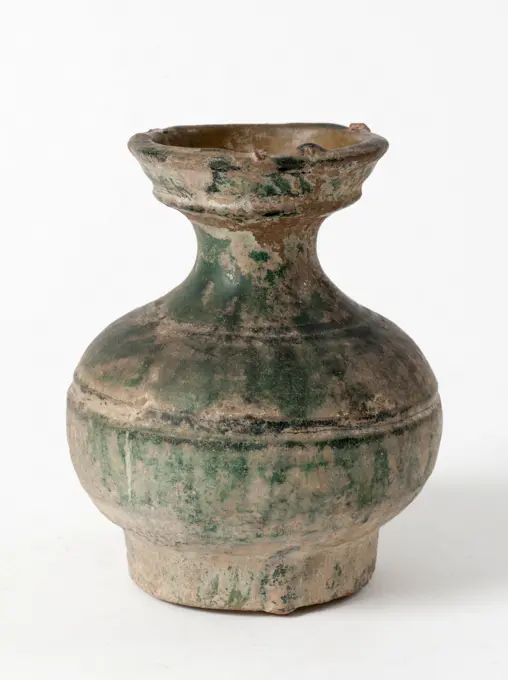
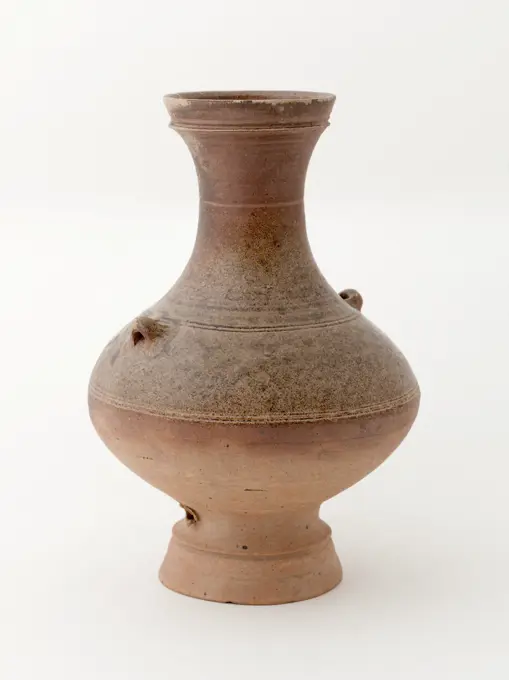
Vase Hu ". Terracotta with green lead glaze. Han dynasty (206 BC J.-220). Paris, Cernuschi museum. Chinese art, Chinese ceramic, han dynasty, green lead, terracotta, hum
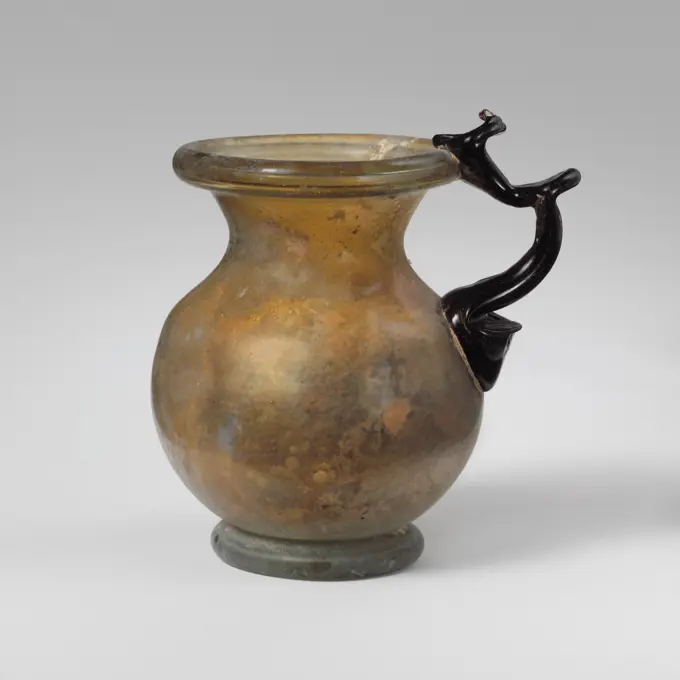
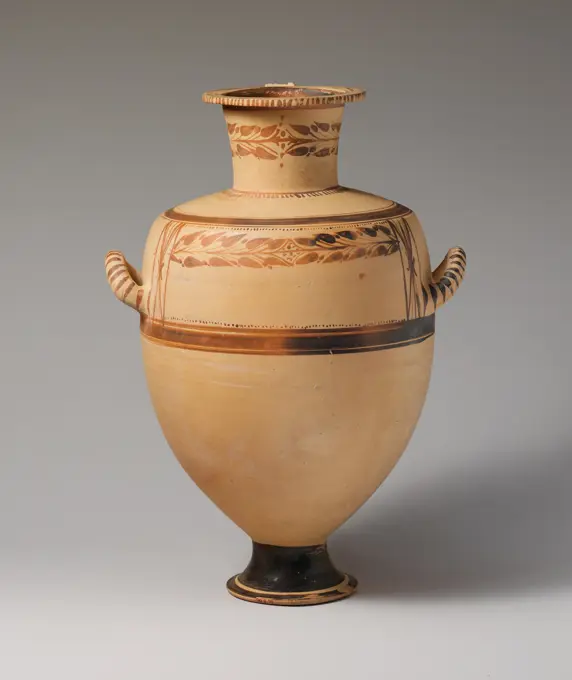
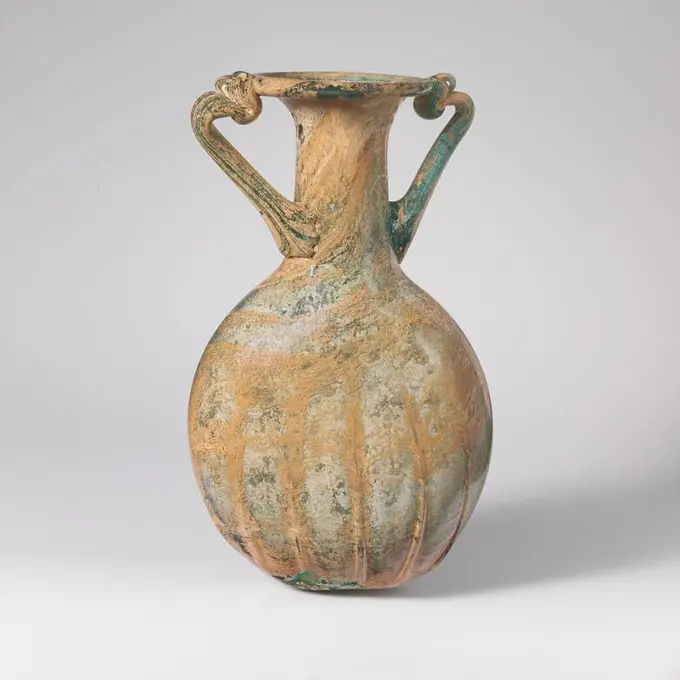
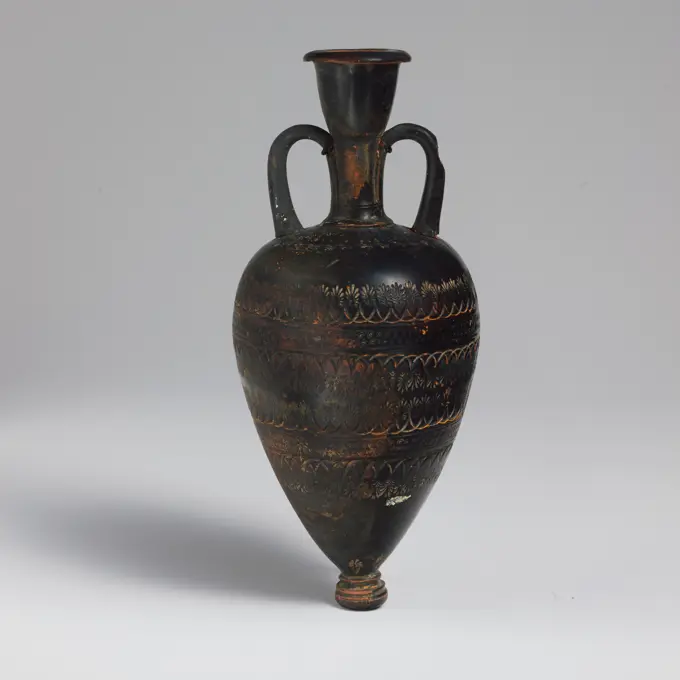
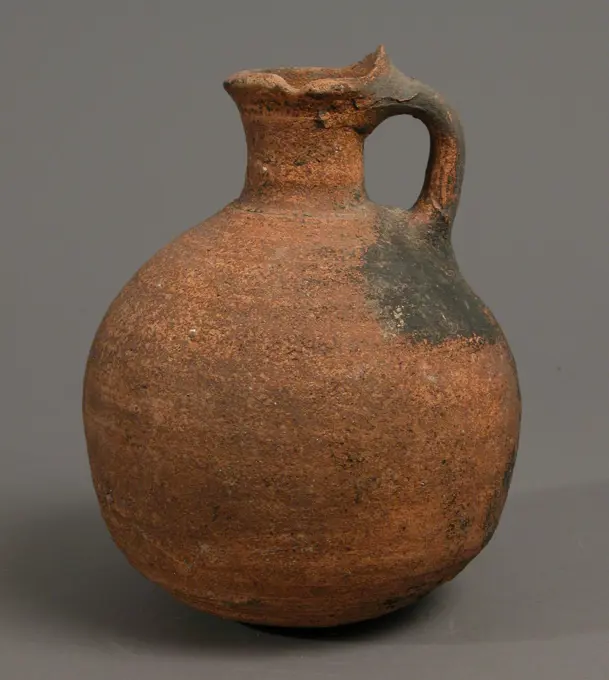
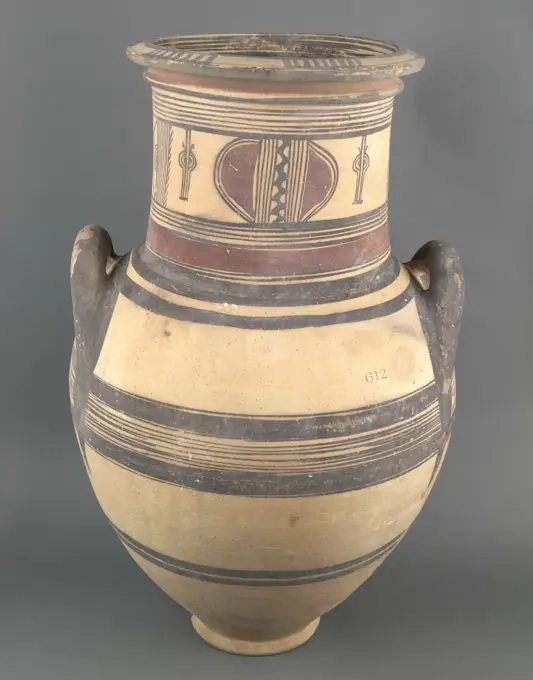
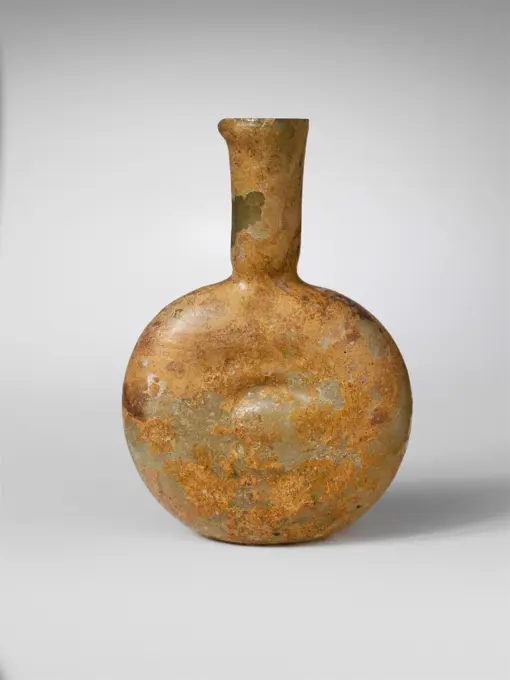
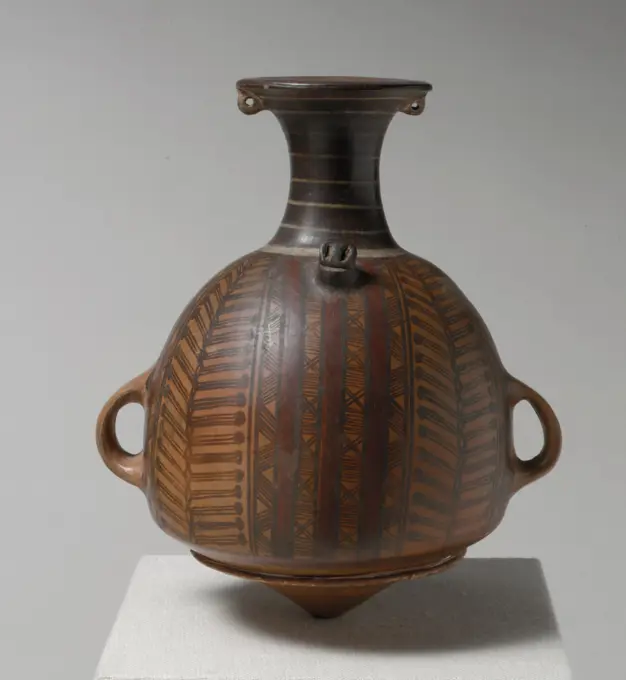
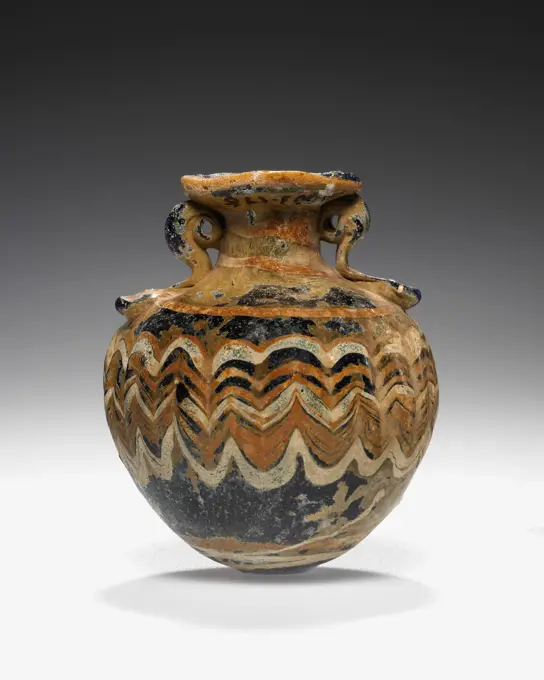
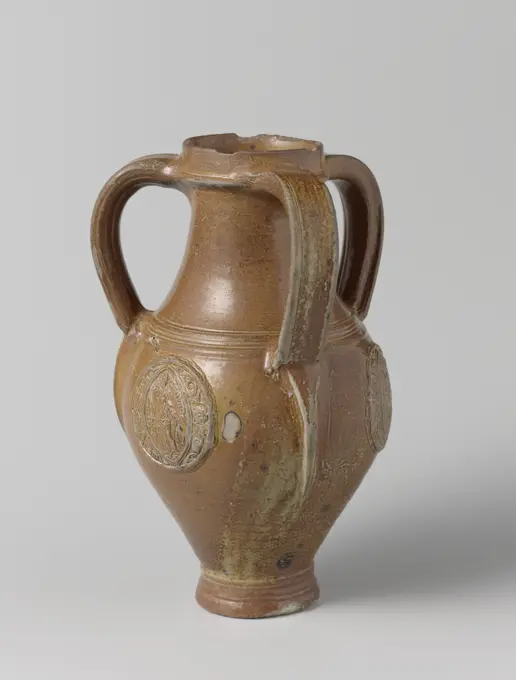
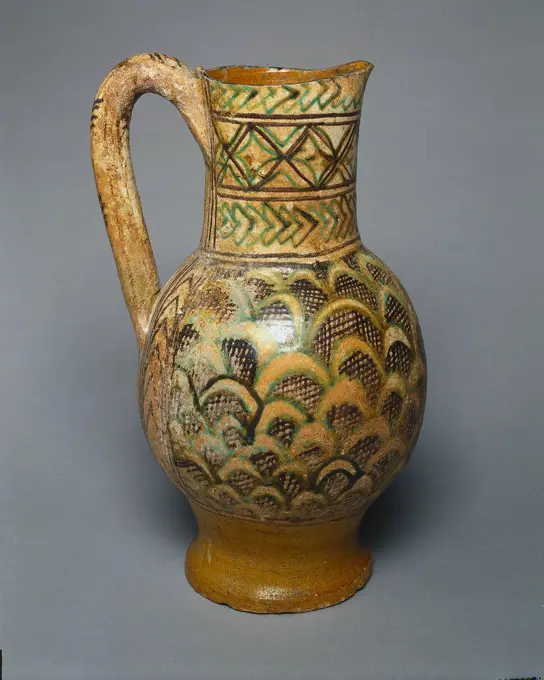
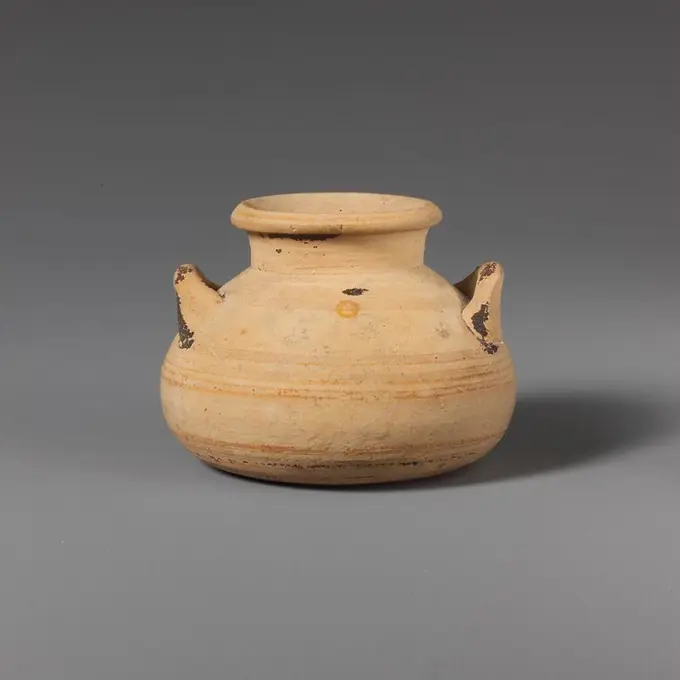
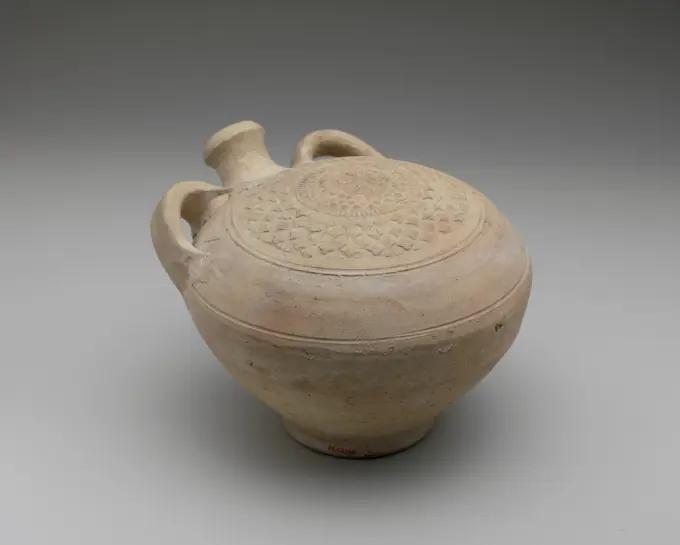
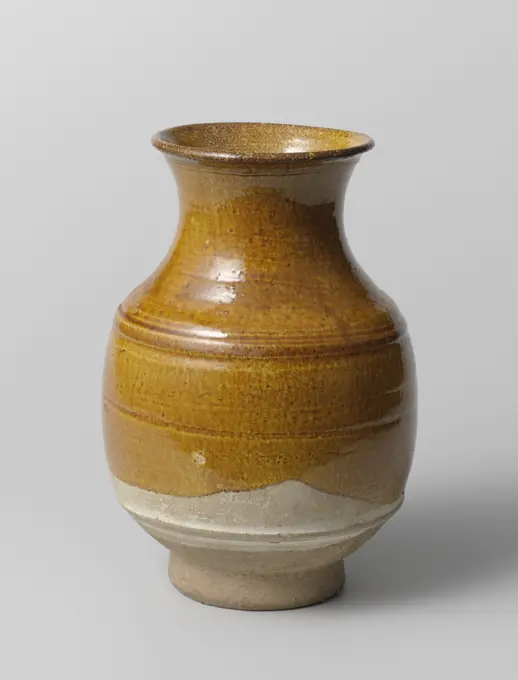
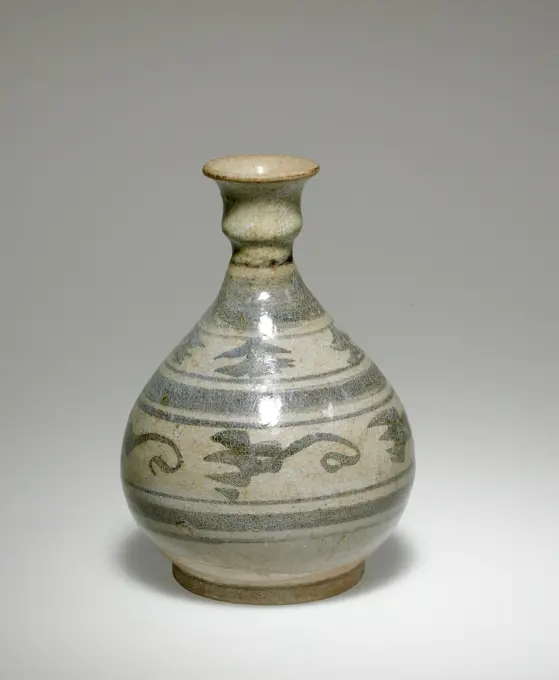
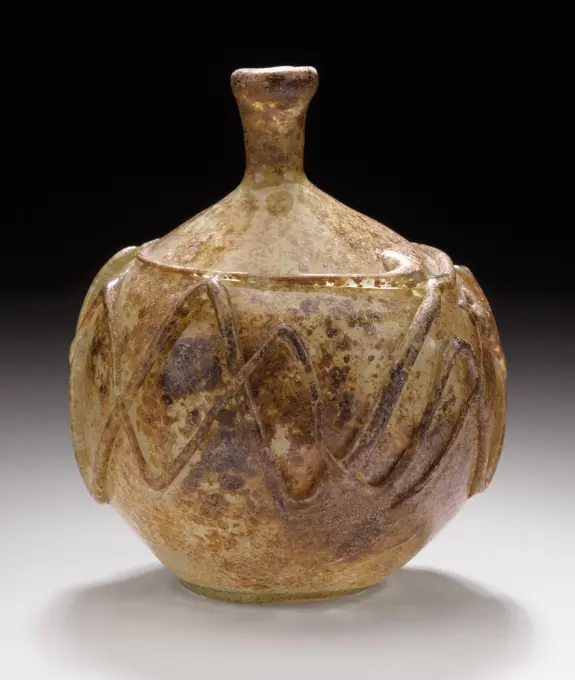
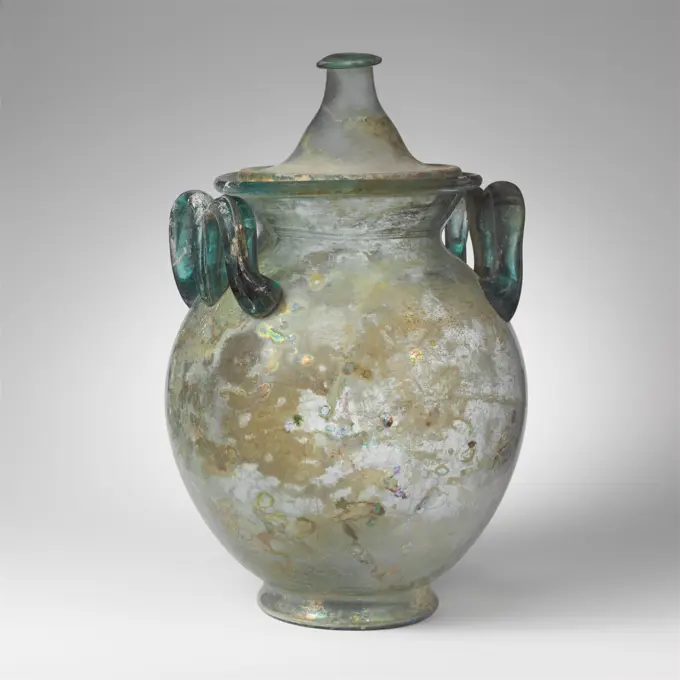
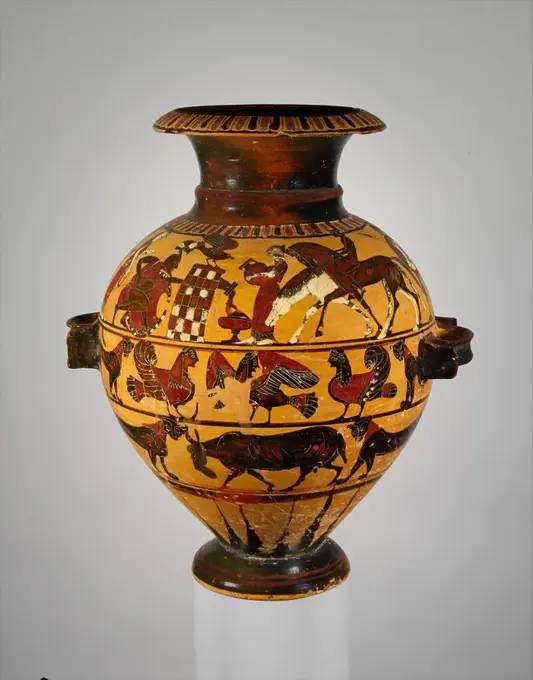
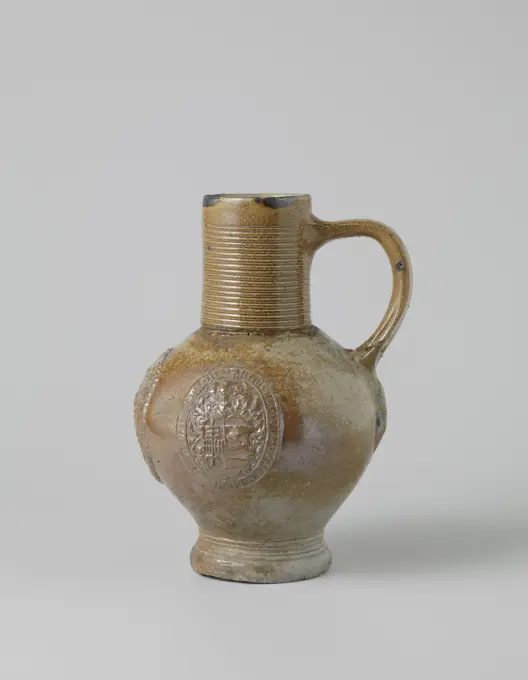
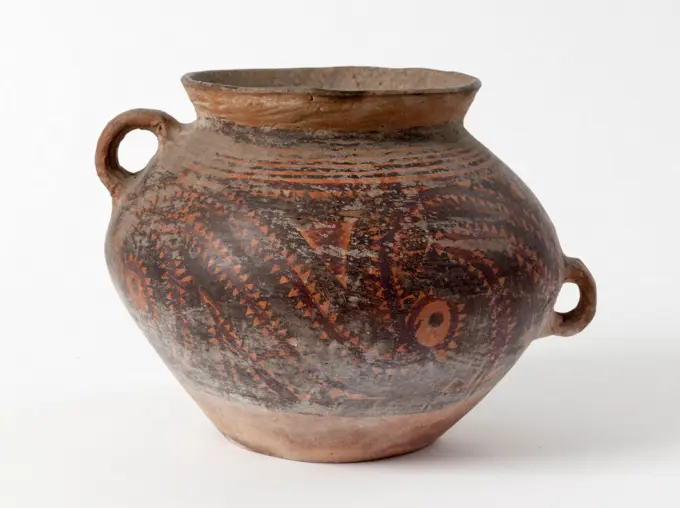
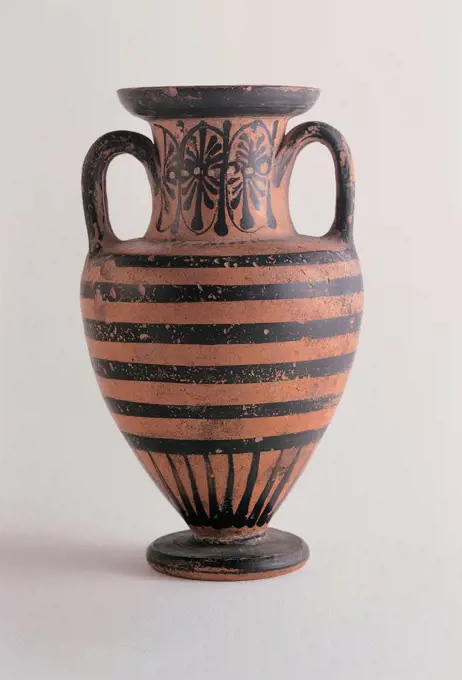
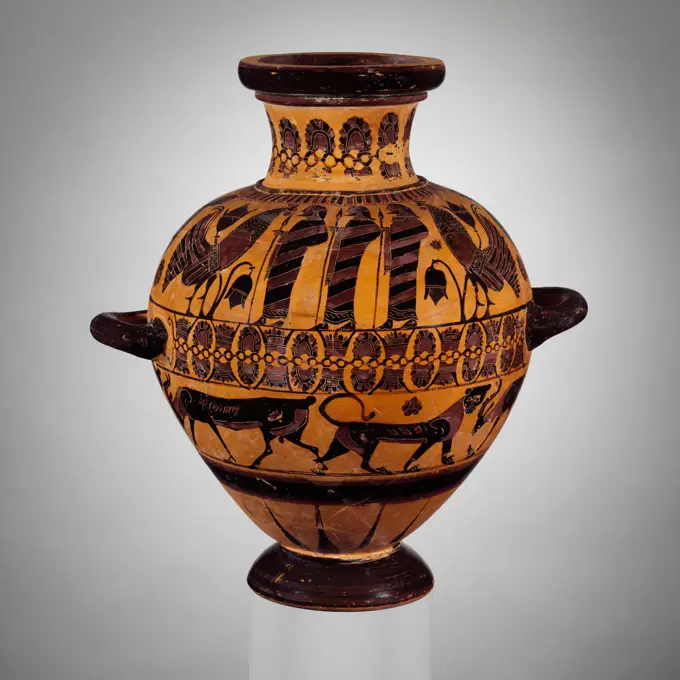
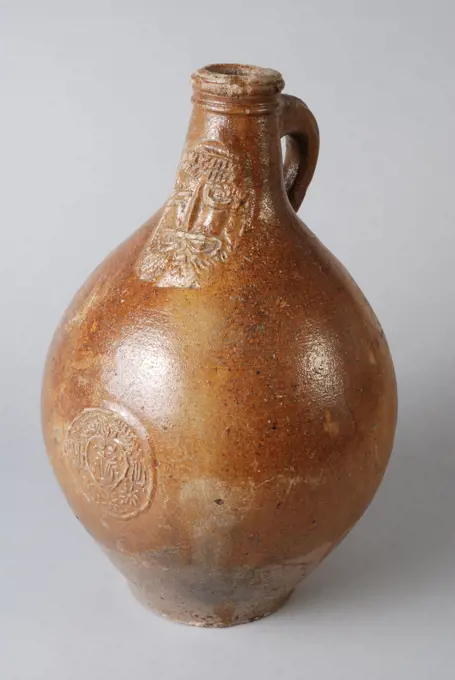
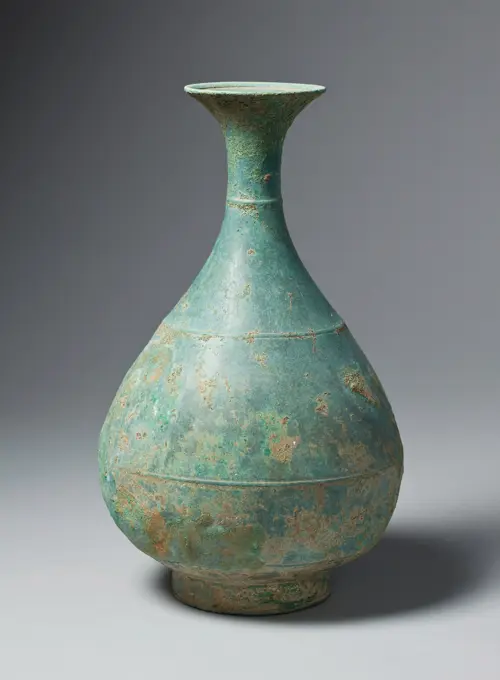
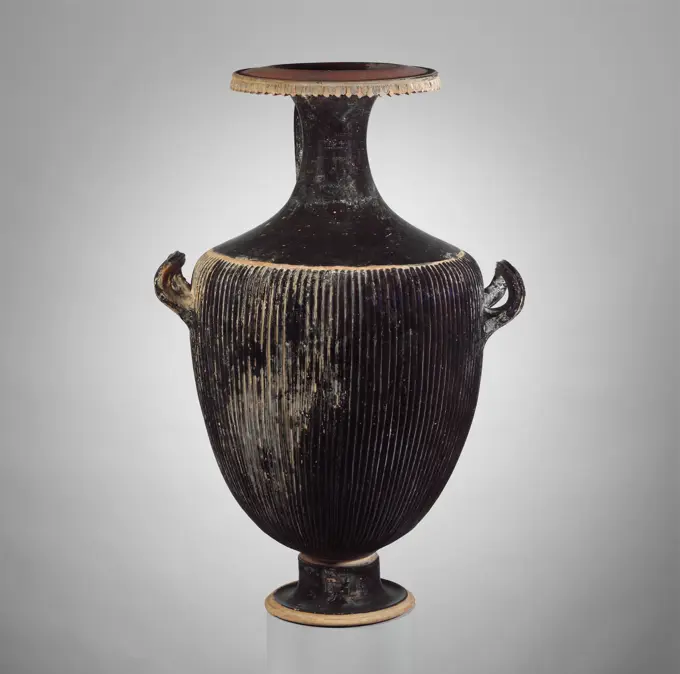
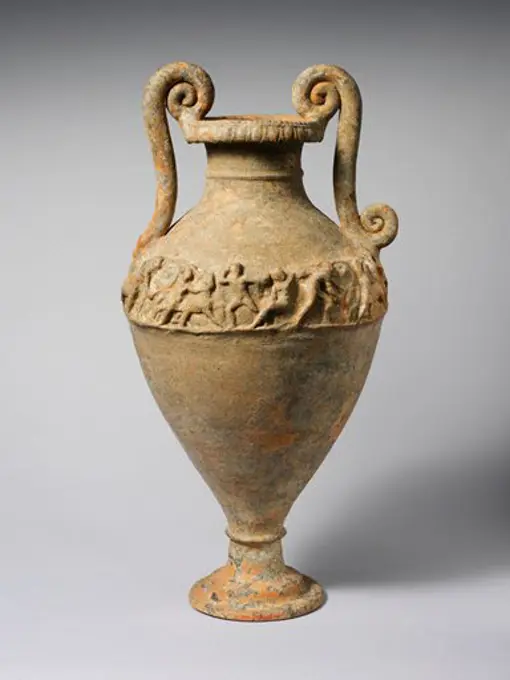
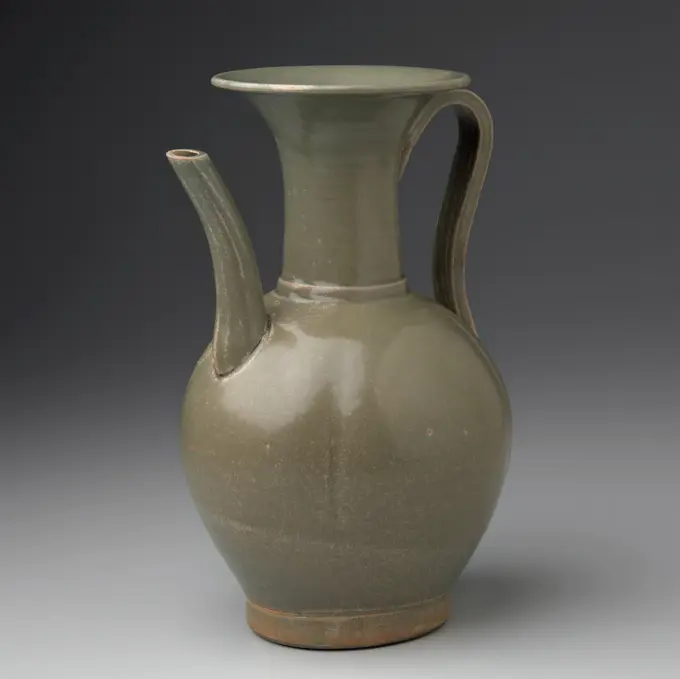
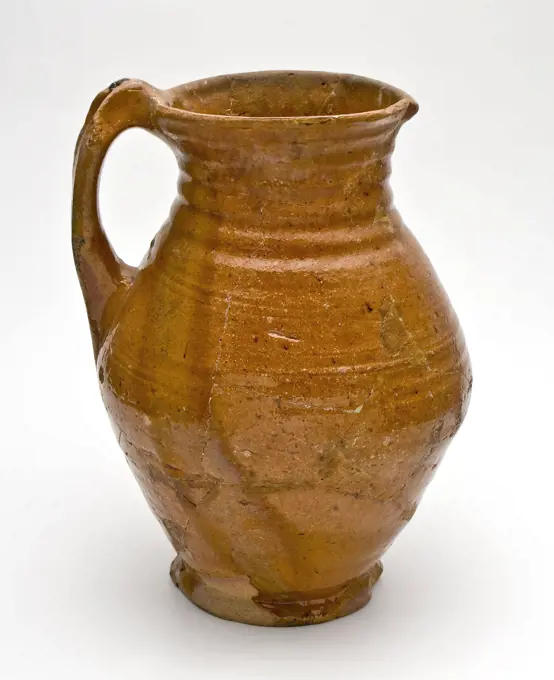
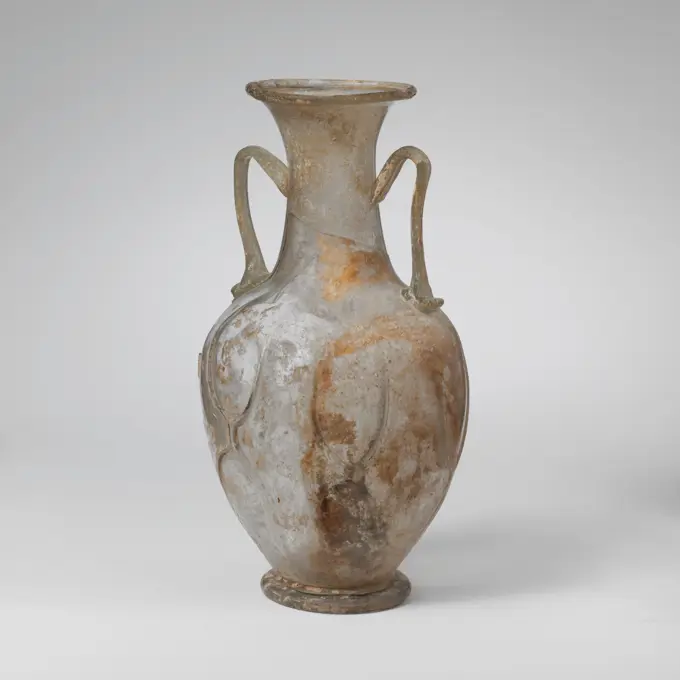
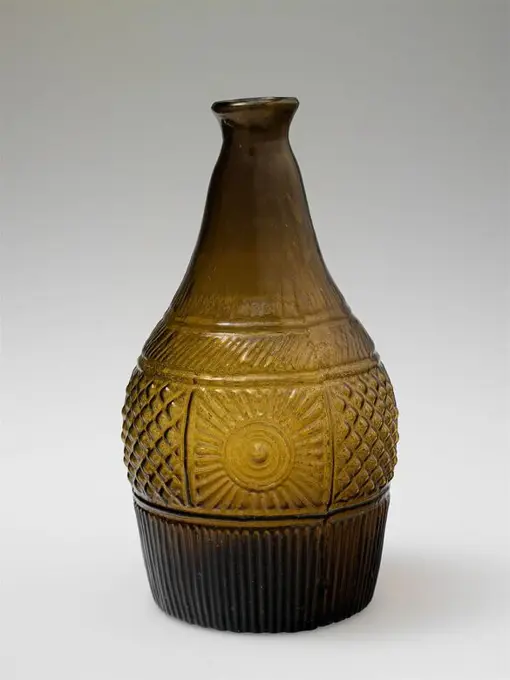
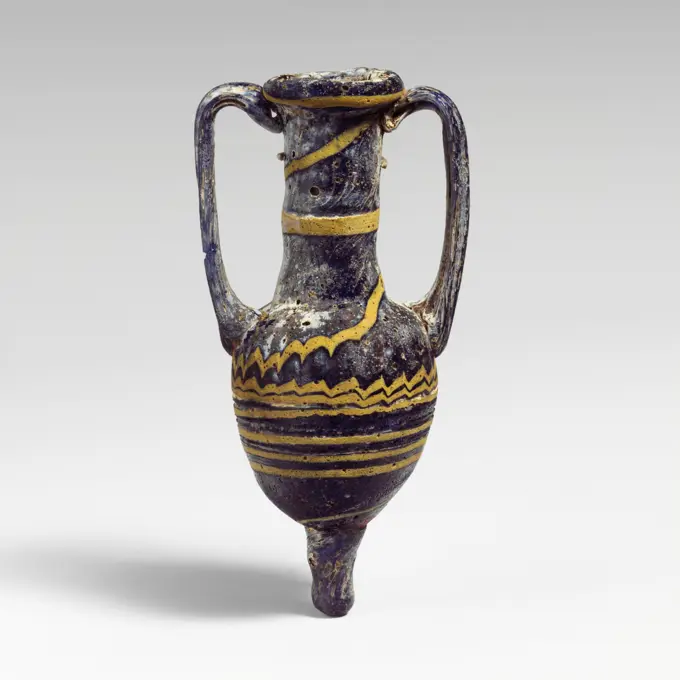
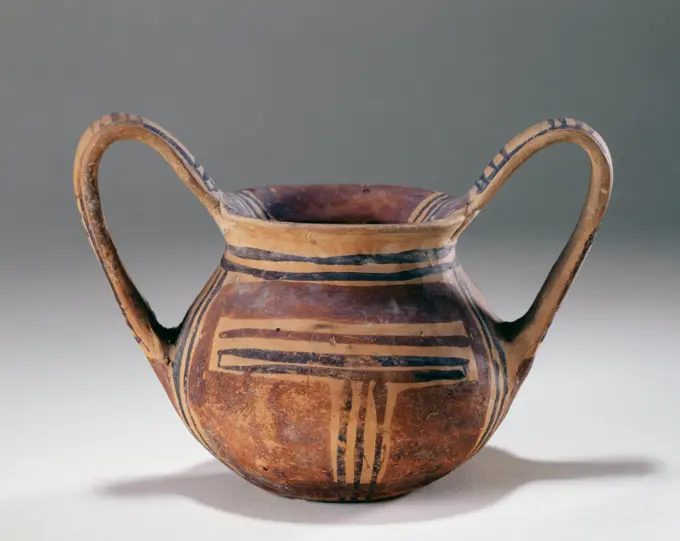
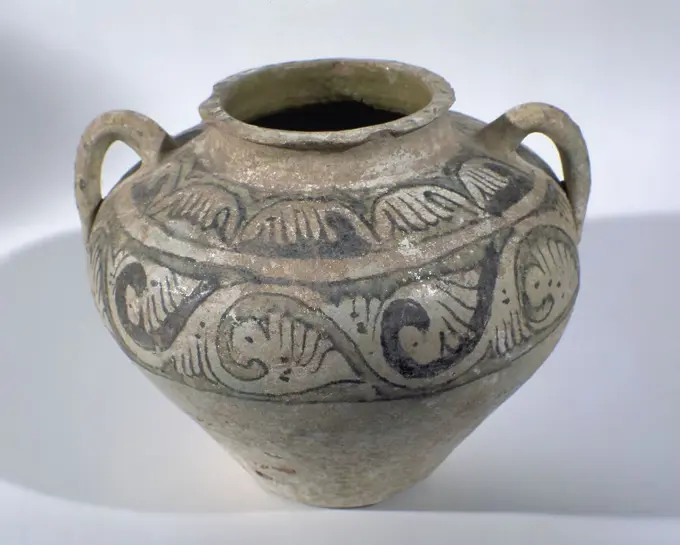
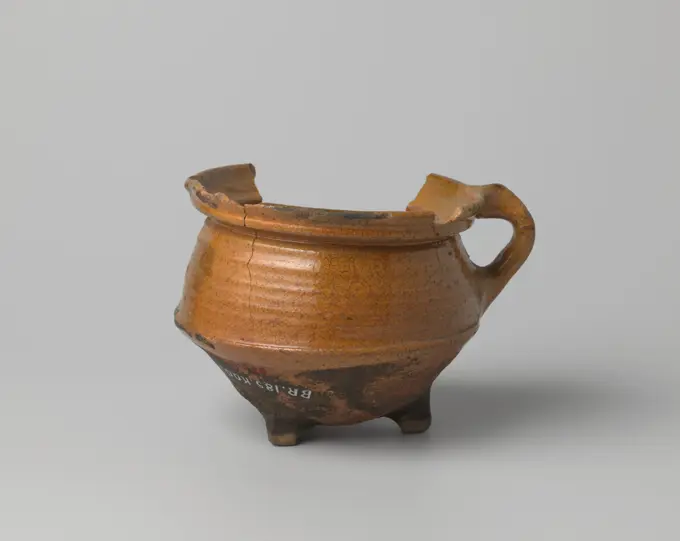
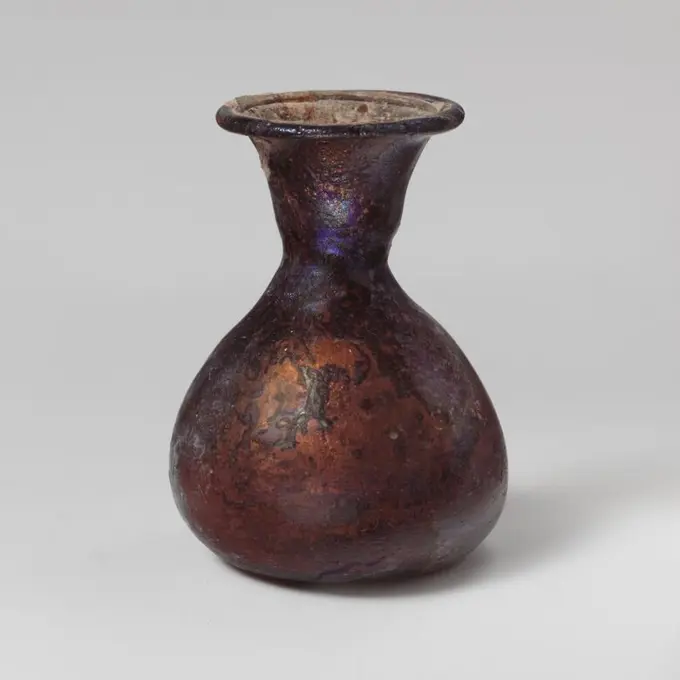
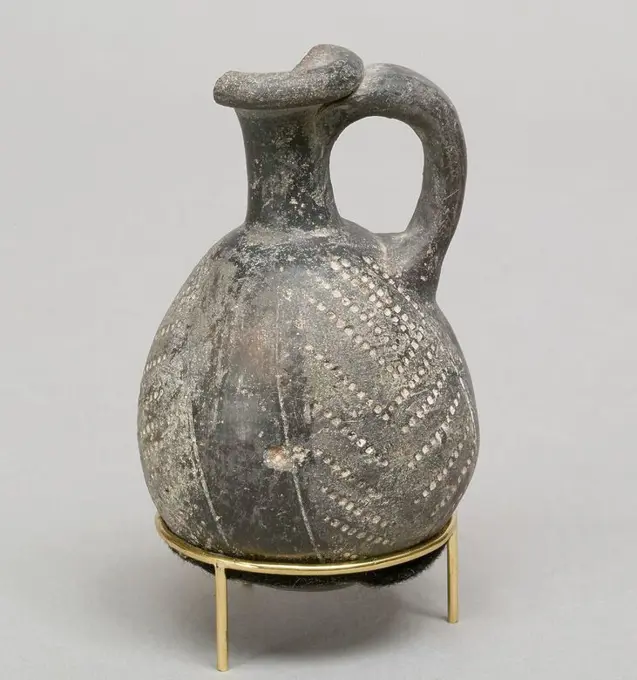
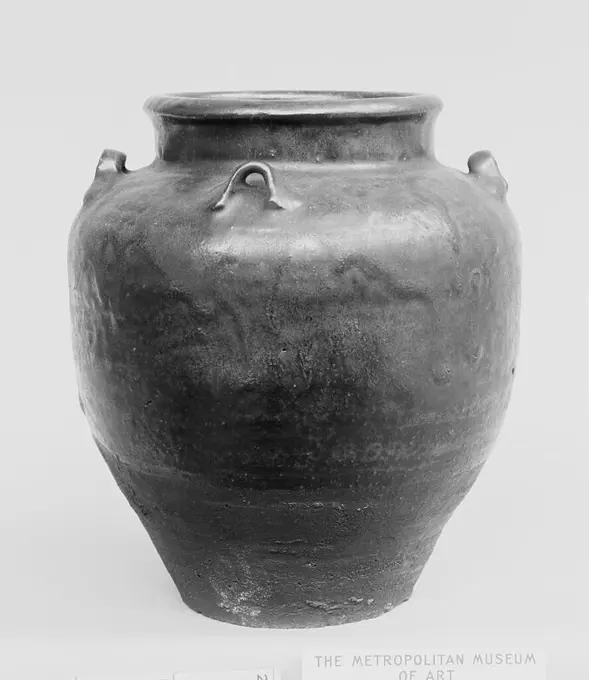
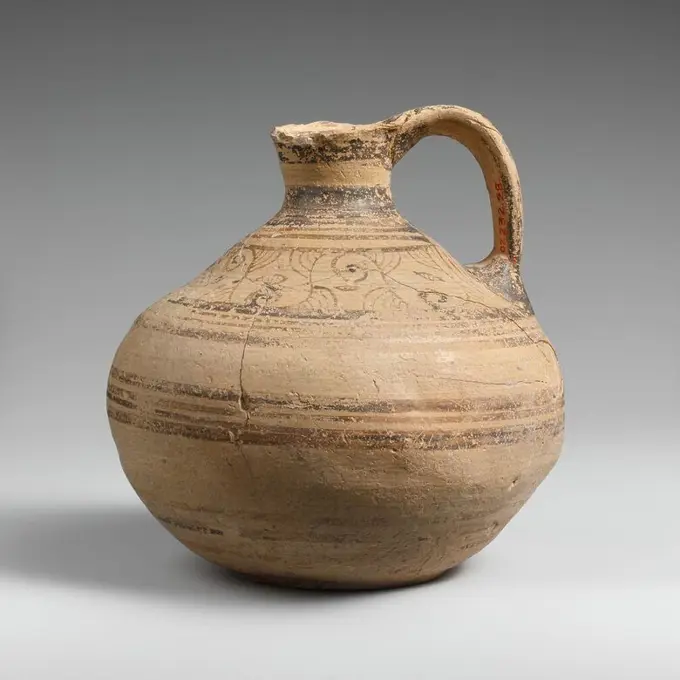
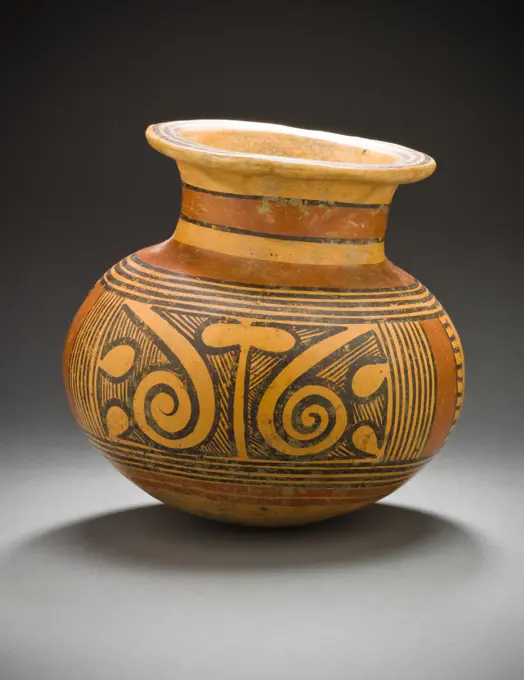
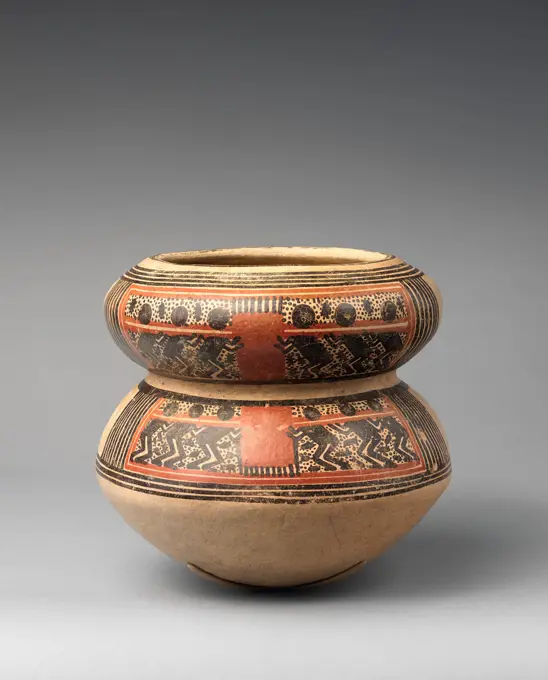
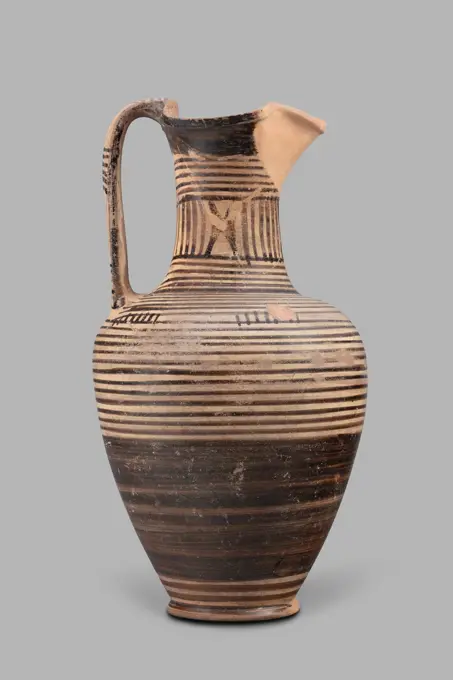
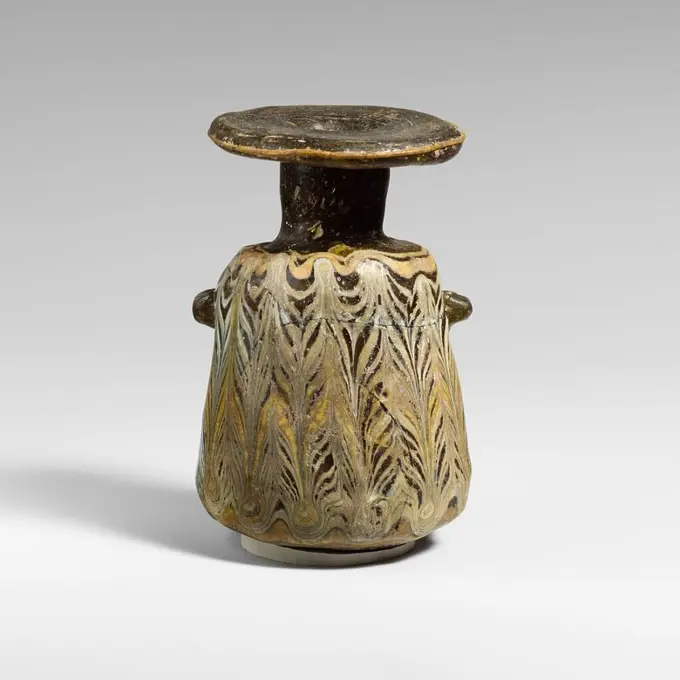
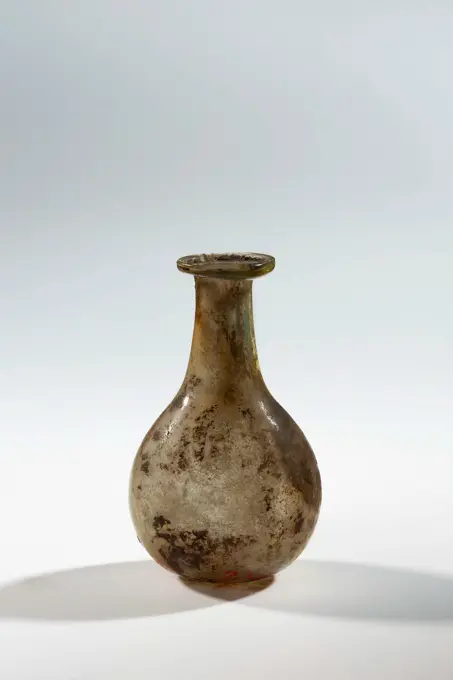
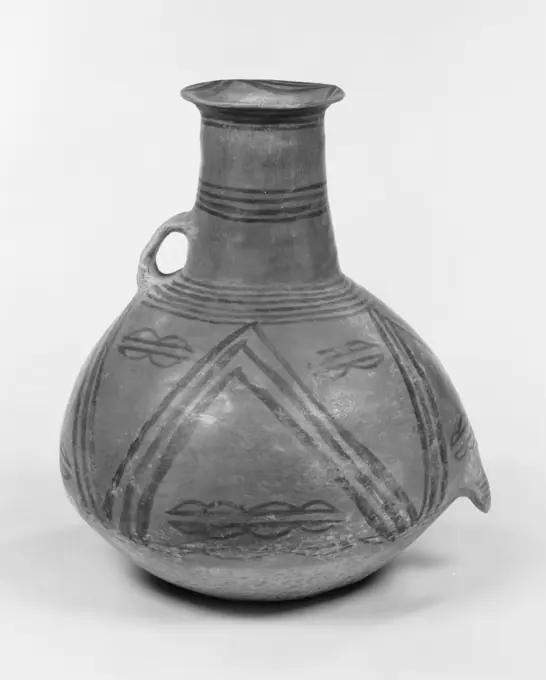
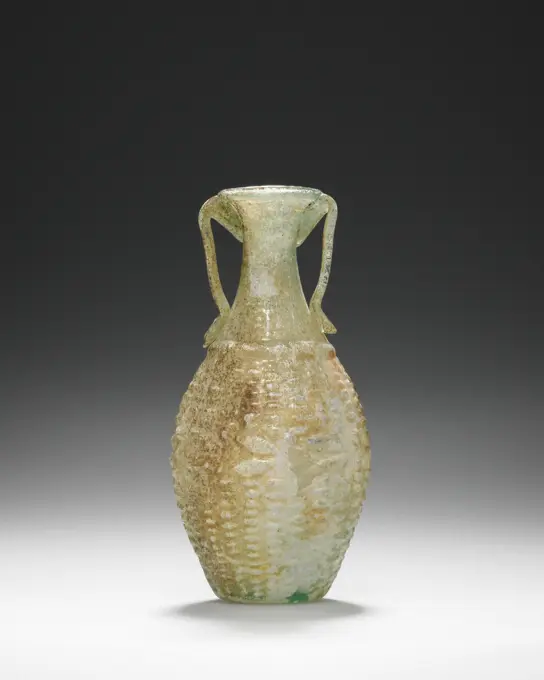
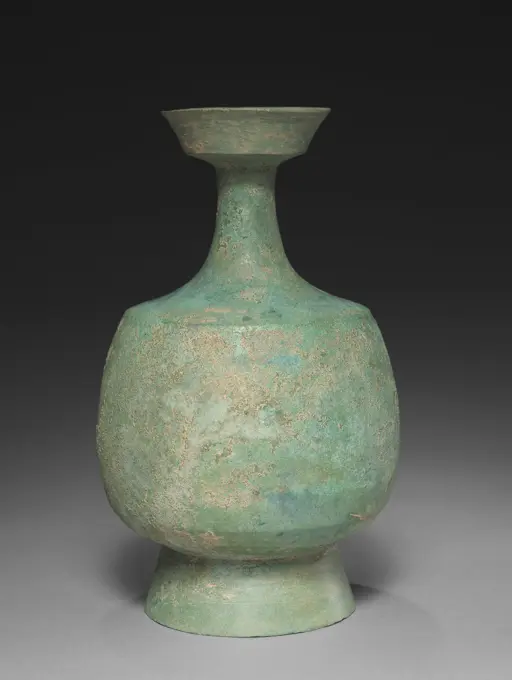
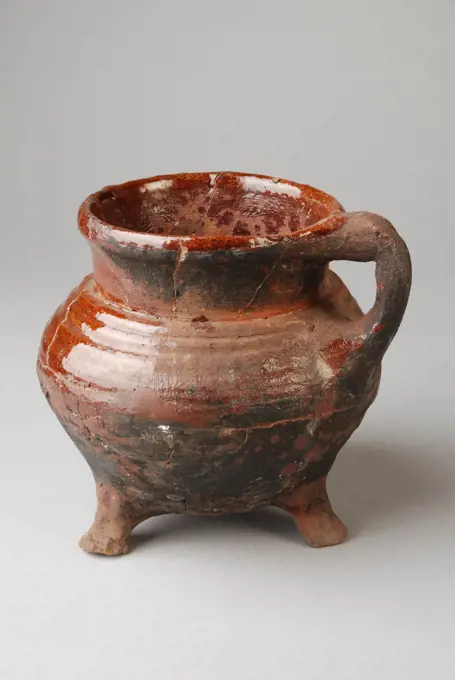
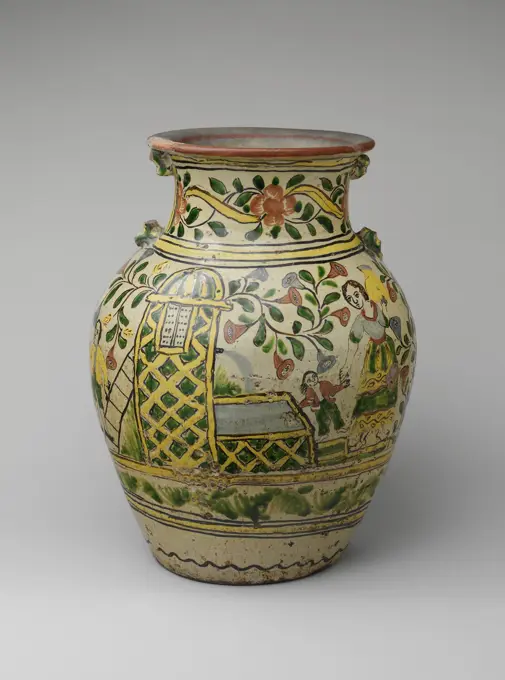
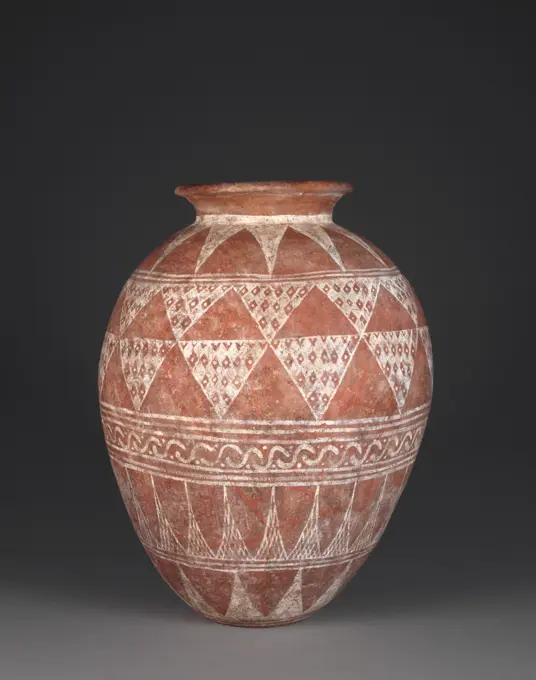
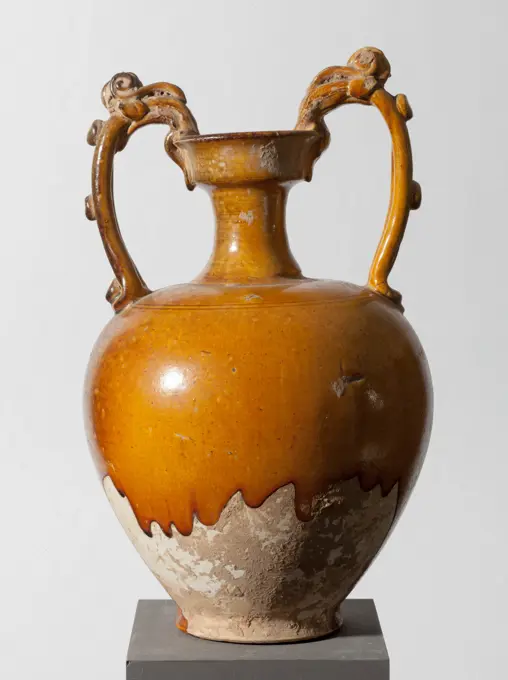
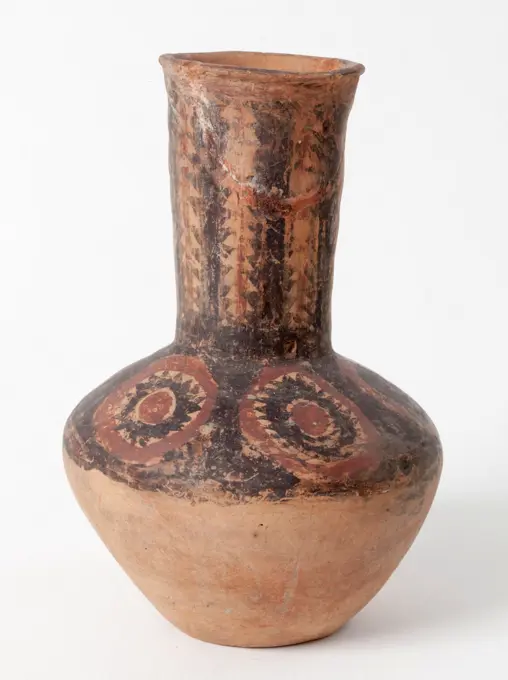
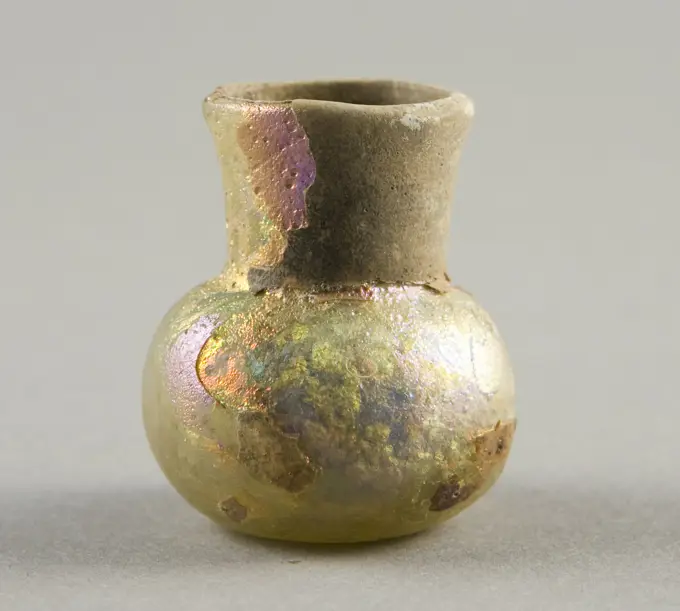
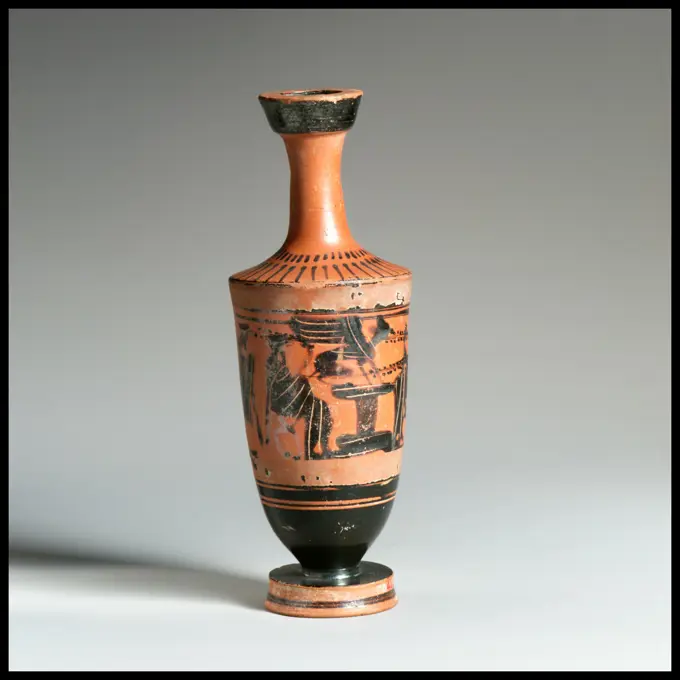
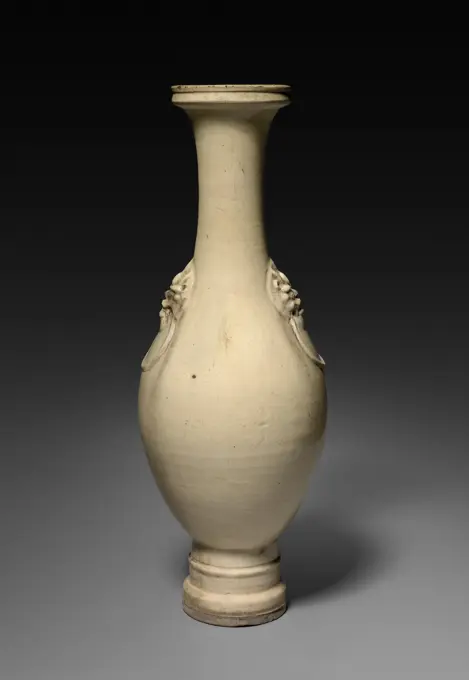
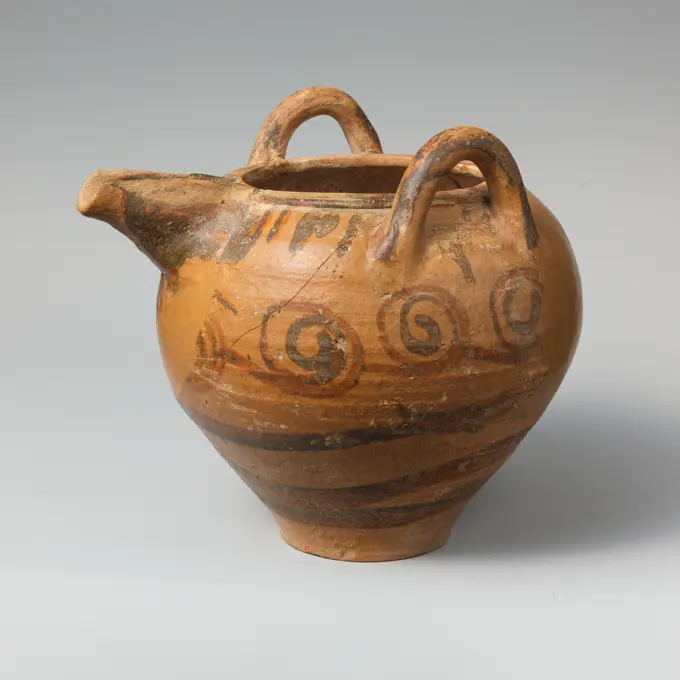
Terracotta bridge-spouted jar ca. 1600-1450 B.C. Minoan Bridge spout, sprials and sketchy bands, drip around rim, dark-on-light ware.. Terracotta bridge-spouted jar 247642Red ware.Bottle, ca. 323 B.C.-A.D.256, Terracotta, 9.4 × 5.3 cm (3 11/16 × 2 1/16in.), Yale-French Excavations atDura-Europos, Excavated in Dura-Europos, Syria, Syrian,Dura-Europos, Greco-Roman orParthian, Containers -CeramicsGlass jug 4th-5th century A.D. Roman Small one-handled jugTranslucent pale bluish green, with translucent deep purple handle.Rounded tubular rim folded out, over, and in to flaring mouth; short, concave neck; globular body; integral tubular base ring; flat bottom with small central indent; rod handle applied to upper body in a large pad with tooling indent, drawn out and up, tooled in to flat projection, then turned in and trailed on to rim, with another tooled projection above.Intact; some pinprick bubbles and glassy inclusions in body; dulling, iridescence, and weathering on body.. Glass jug 239722Vase Hu ". Terracotta with green lead glaze. Han dynasty (206 BC J.-220). Paris, Cernuschi museum. Chinese art, Chinese ceramic, han dynasty, green lead, terracotta, humTerracotta Hadra hydria (water jar) late 3rd century B.C. Greek, Ptolemaic, Cretan Laurel wreaths, such as those that decorate this hydria, are a common motif on Hadra vases. The sepulchral connotations of these painted wreaths, which surround the neck and appear draped across the body, are reinforced by the discovery of bronze hydriae encircled by actual golden wreaths found in Macedonian tombs.. Terracotta Hadra hydria (water jar) 245551Glass lentoid bottle with two handles. Culture: Roman, Syrian. Dimensions: H. without handles 7 3/4 in. (19.7 cm). Date: 4th century A.D..Translucent blue green; handle in same color.Thick, outsplayed, tubular rim, folded over and into shallow flaring mouth; cylindrical neck; lentoid body with rounded sides; thick, narrow oval bottom, slightly concave, with central pontil scar; two rod handles applied as large claw-like pads on lower neck, twisted round, up and outwards, tooled in with a downward fold, attached to edge of rim, and tooled off above.On body, twelve irregular vertical ribs, made by tooling.Intact; many pinprick bubbles and some blowing striation; dulling, pitting, creamy weathering, and iridescence, with soil encrustation on interior. Museum: Metropolitan Museum of Art, New York, USA.Terracotta amphoriskos (oil flask) 4th century B.C. Greek, Attic With stamped patterns.. Terracotta amphoriskos (oil flask) 250804 Greek, Attic, Terracotta amphoriskos (oil flask), 4th century B.C., Terracotta, H. 7 3/8 in. (18.8 cm). The Metropolitan Museum of Art, New York. Rogers Fund, 1919 (19.192.72)Bronze jug late 1st-2nd century A.D. Roman One-handled.. Bronze jug 246537Jug 4th-7th century Coptic. Jug 477283Amphora 750-600 B.C. Cypriot Bands, panel ornament on neck.. Amphora. Cypriot. 750-600 B.C.. Terracotta. Cypro-Archaic I. VasesGlass lentoid bottle 2nd-3rd century A.D. Roman Colorless.Knocked-off rim, slightly folded out, over, and in on one side; funnel-shaped neck, tooled in around base; globular, flattened body; small, flat bottom, with trace of pontil scar.On one side, indented, eliptical grooves.Intact; pinprick bubbles; dulling, slight iridescence, and brownish enamel-like weathering.. Glass lentoid bottle 239652Storage Jar (Aryballos) 15th-early 16th century Inca One of the most distinctive Inca ceramic forms developed in the Cuzco area is the so-called Cuzco bottle, also known as an aryballo because of its similarity to the Greek form. Ranging in size from four to forty-five inches, aryballos (or urpus in Quechua) have big globular chambers, pointed bases, and tall necks with a flared rim. Large urpus were used for the production, storage, and transportation of chicha, a fermented corn beer, as well as other foods. The pointed base of urpus allowed large ones to be set into the earth for stability. On the shoulder of the chamber is usually a central lug, often in the shape of a stylized animal head, as seen here. Ropes were pulled through the handles and secured around the lug for carrying on the backs of porters. Most Cuzco bottles are embellished with polychrome geometric slip designs in black and red on a cream-colored background; representational motifs are rare. On this example, the froAryballos. UnknownGlass jar Roman 3rd-4th century CE Translucent pale blue.Rounded and slightly thickened rim; funnel-shaped mouth; short neck, expanding downwards; squat, globular body; pushed-in bottom with pontil mark.Body decorated in relief with ten ribs that spiral down from left to right, fading towards bottom.Intact; some bubbles; dulling, pitting, iridescence, limy encrustation, and weathering. View more. Glass jar. Roman. 3rd-4th century CE. Glass; blown in a dip mold. Late Imperial. GlassJug with three handles and Lady Justice, Baldem Mennicken (attributed to workshop of), c. 1550 - c. 1599 Jug of stoneware on high foot with an egg -shaped body and wide neck. Three C-shaped ears are attached to the neck and shoulder. Profiles on the neck, shoulder and foot. Covered with a brown Engobe. The basis of the ears extends in an increasingly narrower profile vertically to halfway through the abdomen. Between these profiles in relief, a printed and imposed medallion with Lady Justitia and the inscription 'Bitigei ...' in a mandorla surrounded by curl. Raeren. Rae stoneware. glaze. engobe vitrification Jug of stoneware on high foot with an egg -shaped body and wide neck. Three C-shaped ears are attached to the neck and shoulder. Profiles on the neck, shoulder and foot. Covered with a brown Engobe. The basis of the ears extends in an increasingly narrower profile vertically to halfway through the abdomen. Between these profiles in relief, a printed and imposed medallion with LadyJug, c. 1350. Italy, Siena, 14th century. Tin-glazed earthenware (maiolica); overall: 26.9 x 10 cm (10 9/16 x 3 15/16 in.).Terracotta trefoil oinochoe (jug) ca. 550 B.C. Etruscan Trefoil lip, with a frieze of three horses' heads and two lions' heads in relief.. Terracotta trefoil oinochoe (jug). Etruscan. ca. 550 B.C.. Terracotta; bucchero pesante. Archaic. VasesTerracotta alabastron (jar). Culture: Mycenaean. Dimensions: H. 1 3/4 in. (4.5 cm.). Date: ca. 1600-1050 B.C..Low body and two small handles. Museum: Metropolitan Museum of Art, New York, USA.Flask with Molded Decoration 12th-13th century The shape of this flask indicates that it rested flat on a surface and was tipped to empty its contents. Most of the ceramic vessels for household use from Nishapur were unglazed utilitarian wares, but some were enlivened through molded decoration. This piece, one of the more elaborately decorated examples of the type, features in its central medallion the head of a simurgh, a mythical creature with a doglike head found throughout Iranian art.. Flask with Molded Decoration 449357Vase with a ochre yellow glaze, anonymous, c. 907 - c. 1125 Vase of stoneware with a spherical body and a wide, spreading neck, covered with a white sludge and partly with an ocher yellow enamel. The belly is closed off by a modeled tire on the top and bottom. The foot is unglazed. China earthenware. glaze vitrification Vase of stoneware with a spherical body and a wide, spreading neck, covered with a white sludge and partly with an ocher yellow enamel. The belly is closed off by a modeled tire on the top and bottom. The foot is unglazed. China earthenware. glaze vitrificationVase, 1st century BCE - 1st century CE, 6 3/16 x 4 5/16 x 4 5/16 in. (15.72 x 10.95 x 10.95 cm), Glazed ceramic, Thailand, 1st century BCE - 1st century CEBottle. Eastern Mediterranean, 8th-9th century. Glass. Free-blown and tooled, with applied and trailed thread decorationTerracotta alabastron (perfume vase) ca. 575-550 B.C. Greek, Corinthian Pair of confronted roosters.. Terracotta alabastron (perfume vase) 254224 Greek, Corinthian, Terracotta alabastron (perfume vase), ca. 575550 B.C., Terracotta, H. 9 1/8 in. (23.2 cm). The Metropolitan Museum of Art, New York. Rogers Fund, 1941 (41.162.57)Jar 3rd quarter of the 5th century Korea. Jar 39499Glass cinerary urn with lid mid-1st-2nd century A.D. Roman Urn: Translucent blue green; handles in same color.Everted rim, folded over and in, and smoothed into side of mouth; funnel-shaped neck; ovoid body; splayed hollow foot; almost flat bottom; two vertical, arched M-shaped handles, attached on opposite sides of upper body, each made of a thick trail, applied as a large circular pad, drawn across body from left to right, and trailed off back along top of handle.Intact; few bubbles, black streaks in handles; slight dulling, pitting, iridescence, and some limy encrustation on exterior, large patches of brilliant iridescent weathering on interior.Lid: Translucent blue green.Slightly outsplayed, downturned rounded rim, with beveled outer edge; outer side concave, then cone-shaped, extending into short, hollow cylindrical stem; circular knob at top with downturned projecting flange.Intact; a few pinprick bubbles; severe dulling and slight pitting on exterior, with brilliant iridescent wTerracotta hydria (water jar). Culture: Greek, Attic. Dimensions: Overall: 15 13/16 x 13 7/8in. (40.1 x 35.2cm)diameter 11 3/8in. (28.9cm). Date: ca. 560-550 B.C..On the shoulder, Achilles waiting to ambush Troilos and PolyxenaThe ambush depicted with verve and eloquence is one of the crucial episodes of the Trojan War. Troilos and Polyxena were children of Priam, the king of Troy. Achilles' stature is indicated by his height in relation to the fountain house and by the scale of his weapons. The raven foretells Troilos's imminent death. The youth appears lithe and lanky. His two noble horses will not save him from his fate. Museum: Metropolitan Museum of Art, New York, USA.Jug with the coat of arms of Amsterdam and the d'Ombret family, Jan Emens Mennicken (attributed to workshop of), c. 1590 - c. 1620 Jug of stoneware on a high base with a spherical body and wide, ribbed neck. The C-shaped ear is attached to the neck and shoulder. Profiles closely. Covered with a brown Engobe. On the belly in relief three printed and imposed medallions with a weapon. In the middle the crowned weapon of Amsterdam with the inscription 'Amsterdam' and 'EE 85'. On either side of this the coat of arms of the D'Ombret (Liège) with the edge script 'Iendrn+POVR+DEVER+DEIDERRICH+DOMBRE+ANO: 1589'. Raeren. Rae stoneware. glaze. engobe vitrification Jug of stoneware on a high base with a spherical body and wide, ribbed neck. The C-shaped ear is attached to the neck and shoulder. Profiles closely. Covered with a brown Engobe. On the belly in relief three printed and imposed medallions with a weapon. In the middle the crowned weapon of Amsterdam with the inscription 'Amsterdam' and 'Jar ". Terracotta with polychrome paint. Neolithic period (around 8000 BC). Paris, Cernuschi museum. Anse, Chinese art, Chinese Ceramic, container, oval form, jar, decorative motif, neolithic period, container, terracottaPot 4th century B.C.-4th century A.D. Coptic. Pot. Coptic. 4th century B.C.-4th century A.D.. Earthenware. Made in Kharga Oasis, Byzantine Egypt. CeramicsBlack-figured amphora from Cerveteri, 4th Century, ceramic,Terracotta hydria (water jar) ca. 560 B.C. Attributed to the Ptoon Painter On the shoulder of this beautifully decorated vase, three men wrapped in brightly colored cloaks are flanked by large roosters and flowers as well as a siren and a swan. Below the floral band stroll panthers, goats, and a swan.. Terracotta hydria (water jar) 254886 : Attributed to the Ptoon Painter, Terracotta hydria (water jar), ca. 560 B.C., Terracotta, H. 15 15/16 in. (40.5 cm) diameter of mouth 6 in. (15.2 cm) diameter of foot 5 11/16 in. (14.5 cm). The Metropolitan Museum of Art, New York. Fletcher Fund, 1956 (56.171.28)Ovoid jar with a pseudo-inscription and ornamental borders, anonymous, c. 1200 - c. 1299 Egg-shaped jar of quartz fritry chips painted in blue and brown with a wide band with a collapsed cord and narrower tires with ingrift pseudo-writing. is the earthenware. glaze. cobalt (mineral) painting / engraving / vitrification Egg-shaped jar of quartz fritry chips painted in blue and brown with a wide band with a collapsed cord and narrower tires with ingrift pseudo-writing. is the earthenware. glaze. cobalt (mineral) painting / engraving / vitrificationGreat beard man, ovoid belly with mask on the neck and medallion on the belly, Bartmann juggeruik tableware holder soil find ceramic stoneware glaze salt glaze, hand turned set baked glazed Gray brown shard. Square beard Belly imposed medallion. brown glazed. Above the foot some brown tears glaze. In the cartouche three floral motifs, two leafy branches and two tulip or harp motifs In the middle heart-shaped blazon containing stylized flower archeology import pottery drink store wine beer store save Rotterdam education Academy of Fine Arts and Technical Sciences Cool Coolvest Dijkzigt G.J. de Jonghweg City Triangle Blaak Academy of Fine Arts and Technical Sciences Rotterdam.Bottle, 15th-16th century, Unknown Korean, 11 3/8 × 6 7/8 × 6 7/8 in. (28.89 × 17.46 × 17.46 cm), Bronze, Korea, 15th-16th centuryDouble Spout and Bridge Bottle with Bird 5th-2nd century B.C. Paracas. Double Spout and Bridge Bottle with Bird 308647Terracotta hydria (water jar) ca. 330-300 B.C. Greek, South Italian, Apulian A wreathnow almost lostcircles the neck.. Terracotta hydria (water jar) 248184Terracotta neck-amphora (jar) ca. 200 B.C. Attributed to the Bolsena Group The modeled frieze depicting the Battle of Greeks and Amazons consists of seven figures repeated as the scene circles the vase. Identical friezes appear on at least six other amphorae from Orvieto or Bolsena. Several of the groups are derived from Greek relief sculptures such as those found inside the Temple of Apollo at Bassae, which are from a long frieze now in the British Museum.. Terracotta neck-amphora (jar) 247415Can with the seven liberal arts and seven virtues. Uneven light brown can. Decorated with a lion mask and a frieze on the middle piece of the belly on which the 7 liberal arts and the 7 virtues are depicted.Ewer, 9th century, 8 3/4 x 5 3/4 x 5 5/16in. (22.2 x 14.6 x 13.5cm), Porcelaneous stoneware with celadon glaze Yue ware, China, 9th century, This elegant, melon-shaped ewer has the hard grey body and opaque green glaze that typifies Yue ware of the late Tang dynasty. Celadon ware seems to have declined during the Sui and early Tang periods (6th-8th centuries) with the advent of pure white, high-fired wares. However, the popularization and spread of the custom of tea drinking during Tang helped bring celadon ware back into favor. The tea classic, Cha Qing, written by the late Tang author, Lu Yu, extols the virtues of Yue ware for drinking tea. The jadelike colors of Yue ware were considered the most complimentary to the newly cultivated taste for green tea.Reddish-brown pottery jug clipped with skin clip and top of the ear, jug crockery holder soil find ceramic earthenware glaze lead glaze, hand-turned glazed baked Pottery jug with high scalloped ear and shank. Stand ring Pivot braces around the neck. Pear-like with slightly bulging neck edge. Red shard Fully glazed except for the bottom of the soil archeology Heenvliet Bernisse indigenous pottery drink serve pour water beer Soil discovery Heenvliet burner.Two-handled Vessel, 1st-5th century, 2 3/4 in. (6.99 cm), Glass, Roman / Near Eastern, 1st-5th centuryWine bottle with cork from the wreck of the East Indians Hollandia, Anonymous, 1700 - in Or Before 1743  Wine bottle, continental production, onion-shaped, complete; eroded, vs-string rim, tcs-kick-up. Netherlands cork (bark)   SecondGlass amphora (two-handled bottle) 4th century A.D. Roman Colorless with pale green tinge; handles and trails in same color.Rounded rim, folded out, over, and in; flaring mouth; cylindrical neck, expanding downwards; sloping shoulder; piriform body, tapering downwards; integral, tubular base ring; pushed-in bottom with off-center pontil scar; handles applied in a tooled pad to shoulder, drawn up vertically, turned in and down at an acute angle, and trailed onto neck.Trails applied to body in six pairs of wavy vertical lines and one extra single line, forming irregular X-shaped patterns; fire-rounded but in relief on both exterior and interior.Badly broken and cracked around neck and upper body, with one large hole; few pinprick bubbles; dulling, slight pitting, and iridescent weathering, with small patches of limy encrustation on interior.. Glass amphora (two-handled bottle) 239731Wine Vessel (hu or zhong) Artist's working dates 206 BCE-9 CE China. Gilt bronze .Scale Amphora. Attributed to Scale Group (Etruscan) 630-600 B.C.Decanter. Culture: American. Dimensions: H. 7 in. (17.8 cm). Manufacturer: Probably Keene Glass Works (1815-41). Date: 1815-41. Museum: Metropolitan Museum of Art, New York, USA.Stirrup Vessel with one Side Painted with Textile-Like Stepped Motif Made 100 BCE-500 CE Peru. Ceramic and pigment . MocheRelief-Blue Jar with Dots. UnknownTerracotta jar with barbotine decoration 2nd-3rd century A.D. Roman Rough gray urn with barbotine leaf and line decoration on shoulder.. Terracotta jar with barbotine decoration 250097Glass amphoriskos (perfume bottle) 3rd-2nd century B.C. Greek, Eastern Mediterranean Translucent cobalt blue with same color handles and base-knob; trails in opaque yellow and opaque white.Uneven horizontal rim-disk with rounded edge; tall cylindrical neck; sloping shoulder; small ovoid body; large coiled base-knob applied to pointed bottom; two vertical strap handles applied to top of body in pads, drawn up and slightly outward, then turned in and attached to top of neck and underside of rim-disk.A yellow trail attached at edge of rim-disk and wound spirally over neck and shoulder, tooled into a narrow zigzag band with close-set vertical indents around top of body, then wound spirally down body in five turns, ending underneath base-knob; a white trail is added on neck and wound spirally, mingling with the yellow trail to lower part of body.Intact; most of white trail completely weathered, leaving only a linear impression in body; dulling, pitting, and iridescent weathering.. Glass ampGlass oinochoe (perfume jug) late 6th-5th century B.C. Greek, Eastern Mediterranean Translucent cobalt blue, with handle and foot in same color; trails in opaque yellow and opaque turquoise blue.Applied broad trefoil rim-disk with narrow cylindrical mouth; cylindrical neck, slanting forward; broad sloping shoulder; large ovoid body; applied outsplayed foot with uneven concave bottom; handle attached to top of body, drawn up, turned in at right angle above rim-disk, dropped down and pressed on to back of neck below rim.Yellow trail attached at edge of rim-disk; a second yellow trail wound horizontally once around middle of neck; a thick yellow trail begun on shoulder and wound spirally, at first in horizontal lines, then tooled into an inverted festoon pattern; halfway down pattern a turquoise blue trail is added, mingling with yellow, and tooled into a close-set zigzag pattern; immediately below this, a broad yellow trail and a thinner turquoise blue trail wound horizontally once arounPitcher 500 BCE-401 BCE Egypt. Glass . Ancient EgyptianJug with a lion's head and roundels, anonymous, c. 1580 - c. 1620 Can be made of stoneware on high foot with an egg -shaped body and spreading neck with a raised edge with pinched spout. The C-shaped ear is attached to the edge and the shoulder. Profiles on the neck and foot. On the front of the abdomen a compartment with a pattern of entry tires with stamped rosettes in between. On the neck a printed and imposed lion's head in relief. Frechten. Cheek stoneware. glaze vitrification Can be made of stoneware on high foot with an egg -shaped body and spreading neck with a raised edge with pinched spout. The C-shaped ear is attached to the edge and the shoulder. Profiles on the neck and foot. On the front of the abdomen a compartment with a pattern of entry tires with stamped rosettes in between. On the neck a printed and imposed lion's head in relief. Frechten. Cheek stoneware. glaze vitrificationTerracotta goblet. Culture: Minoan. Dimensions: H. 3 5/16 in. (8.4 cm.)Diameter 3 in. (7.6 cm.). Date: ca. 2100-1950 B.C..Decorated with white band on a dark slip. Museum: Metropolitan Museum of Art, New York, USA.Terracotta lydion (perfume jar). Culture: Lydian. Dimensions: H. 4 1/8 in. (10.5 cm). Date: 6th century B.C..Great numbers of these jars have been found at Sardis as well as around the Mediterranean. Because they seem to have been a specialty of Lydia, modern scholars call this type of vase a lydion. Such jars probably contained baccaris, a perfume for which Sardis was noted in antiquity. Museum: Metropolitan Museum of Art, New York, USA.Anonymous. "Canthare". Ceramics, clay, hand -shaped. 6th century BC .. Museum of Fine Arts of the City of Paris, Petit Palais. 99939-3 Antiquity, clay, ceramic, VIEM LIFE VI 6th 6th 6 CENTURY BEFORE AV. JC, ancientORZA VIDRIADA EN VERDE SOBRE BLANCO-S X-XI. Location: MEDINA AZAHARA / MADINAT AL-ZAHRA-MUSEO-CERAMICA. PROVINCIA. CORDOBA. SPAIN.Glass perfume bottle. Culture: Roman. Dimensions: 2 3/8in. (6cm)Other: 1 1/16in. (2.7cm)Diam. of rim: 3/4 in. (1.9 cm). Date: 2nd half of 1st century A.D..Translucent amber yellow, with opaque white trail.Rim folded out, over, and in; flaring mouth; short, slender cylindrical neck, expanding at base to join imperceptibly with elongated piriform body; convex but slightly flattened bottom.Single trail applied in large pad at base of neck and drawn down in a spiral in nine turns, ending on bottom; top half of trail is in relief, the rest is marvered into body.Intact; pinprick bubbles; creamy weathering and iridescence, with some pitting. Museum: Metropolitan Museum of Art, New York, USA.Roman Art. Spain. Small cylindrical terracotta pot. It comes from Empuries. Date unknown. Episcopal Museum. Vic. Catalonia.Pot of red -baking clay, with colorless lead glaze on the inside and outside, damaged, anonymous, 1500 - 1799   earthenware. lead glaze   earthenware. lead glazeGlass perfume bottle. Culture: Roman. Dimensions: 1 11/16 x 1 1/4in. (4.3 x 3.2cm)Diam. of rim: 7/8 in. (2.3 cm). Date: 3rd-4th century A.D..Small flaskTranslucent purple.Rim folded out, round, and in; funnel-shaped neck, with tooling marks around base; squat piriform body with convex sides; kick in bottom.Intact; bubbles and blowing striations; dulling and iridescence on exterior; enamel-like weathering on interior. Museum: Metropolitan Museum of Art, New York, USA.Tell el-Yahudiya-ware juglet. Dimensions: h. 9 cm (3 9/16 in). Dynasty: Dynasty 13, mid. Date: ca. 1750-1700 B.C.. Museum: Metropolitan Museum of Art, New York, USA.Tea Jar. Culture: Japan. Dimensions: H. 5 1/2 in. (14 cm). Date: 17th century. Museum: Metropolitan Museum of Art, New York, USA.Terracotta globular jug. Culture: Minoan. Dimensions: H. 5 3/4 in. (14.6 cm.). Date: ca. 1300-1200 B.C..One-handled, on shoulder delicate curvilinear design, dark-on-light ware. Museum: Metropolitan Museum of Art, New York, USA.Jar with Geometric Designs. Panama, Tonosi, 400-500 CE. Ceramics. Slip-painted ceramicStorage Jar 7th century The painted patterns on this large storage jar are arranged to emphasize the swelling shape of the vessel. The animal, bird, and plant motifs are closely related to those found on contemporary textiles.Double-Tiered Jar 3rd-4th century Tonosí style Despite colonial descriptions of rich indigenous ceremonial life, ancient depictions of Caribbean ceremonies are exceedingly rare. Here, the artists painted two scenes with multiple humans carrying an object. The stylized painting is difficult to interpret, but the subtle differences in the scenes indicate movement or transition. This image could depict a leader being moved in a palanquin or perhaps the delivery of a funerary bundle to a necropolis.. Double-Tiered Jar. Tonosí style. 3rd-4th century. Ceramic, pigment. Panama. Ceramics-ContainersOinochoe;  End of the VIII century BC (-710-00-00--700-00-00);Majewski, Erazm (1858-1922), Majewski, Erazm (1858-1922)-collections, message (provenance)Glass squat alabastron (perfume bottle). Culture: Eastern Mediterranean or Italian. Dimensions: H.: 4 1/16 in. (10.3 cm). Date: late 4th-early 3rd century B.C..Translucent light greenish yellow, with handles in same color; trails in opaque yellow, opaque white, and opaque turquoise blue.Very broad, thick slanting rim-disk, made as a spiral coil around top of neck; cylindrical neck with convex sides; uneven shoulder, almost horizontal on one side and concave on the other; bell-shaped cylindrical body; convex lop-sided bottom, with indent along one side; on upper body, two solid handles, tooled into angular knobs, applied over trail pattern.A yellow trail attached at edge of rim-disk; on body, alternating bands of yellow, white, and opaque turquoise blue, tooled from top of body to undercurve at bottom into a close-set feather pattern in thirteen vertical panels with alternating upward and downward strokes, forming large round loops at bottom and bottom.Broken and repaired around bodJar Iran ca. 19th-16th century BCESmall bottle. unknown, craftsmanJar, 1-200. Parthian, 1st-2nd Century. Earthenware with weathered glaze; overall: 14.3 cm (5 5/8 in.).Pitcher (Hu) Machang phase (ca. 2350-2050 B.C.) China. Pitcher (Hu) 44688Basket Amphoriskos. Attributed to the Workshop of the Floating Handles (Roman)Wide-Mouthed Bottle, 1100s. Korea, Goryeo period (918-1392). Bronze; diameter of mouth: 8.6 cm (3 3/8 in.); overall: 26.3 cm (10 3/8 in.).Cooking jug, grape-model, red pottery, sparingly glazed, grape cooking pot crockery holder kitchen utensils earthenware ceramics earthenware glaze lead glaze, turned glazed baked Cooking jug grape-model red pottery sparingly glazed outstanding neck little thickened round edge coarse rotations on the shoulder three legs of which one in plaster. Funnel shaped neck archeology Capelle aan den IJssel House in Capelle castle crockery tableware cooking food preparation nutrition kitchen Soil discovery: Capelle aan den IJssel.Jar ca. 1800 Mexican These two jars, which were probably used to store water, are decorated with lively scenes centered on the public fountains that provided water for daily use. Subjects include popular types like the water carrier, burdened by his characteristic chochocol, a large earthenware jar used to deliver water. In another scene, a bloody brawl between two water carriers has broken out. The treatment of these subjects belongs to the literary and pictorial tradition of "costumbrismo," which highlights the customs, occupations, and dress of a particular place.. Jar 4475Vase Hou Protocéladon, prov. Dong-son ". Terracotta. Vietnam-Xe-Xive s. Paris, Cernuschi museum. 72186-33 Dong-Son, Hou, Vietnamese object, Protoceladon, Terracotta, VaseEarthenware grape with two ears, on three legs, grape cooking pot tableware holder utensils earthenware ceramic earthenware glaze lead glaze, hand-turned glazed baked Large earthenware grape or cooking pot on three legs. Two ears double cone belly. Partly covered with lead glaze archeology inn Het Hart Geervliet Bernisse indigenous pottery cooking nutrition kitchen food preparation Soil discovery: Geervliet Dorpsplein 1 demolition Trouw put 5 city inn 't Hart 1985.Skyphos ca. 350-300 B.C. Greek, South Italian, Apulian. Skyphos 244852Jug 1602 German, Raeren This tankard is an excellent example of the stoneware produced in Raeren in the years around 1600. The jugs pewter lid is attached to the simple ear-shaped handle. The low-relief molded decoration features an arcade at the middle containing the seven electors of the Holy Roman Empire.. Jug. German, Raeren. 1602. Salt-glazed stoneware, pewter. Ceramics-PotteryGlass reliquary bottle. Culture: Possibly Frankish. Dimensions: Overall: 2 15/16 in. (7.5 cm)Diam.: 2 1/8 x 1 1/16 in. (5.5 x 2.8 cm). Date: ca. 7th-8th century A.D..Translucent green.Thick, everted rim, folded over and in to oval, flaring mouth; cylindrical neck, expanding slightly downward; globular body; small bottom with shallow kick and pontil scar.Engraved decoration on body: on one side, christogram flanked by A (alpha) and W (omega), with crossed leafy fronds below and pair of flying birds (doves ) holding wreath between them in their beaks; on other side, large wreath surrounding Latin inscription: M / VRSV/LA / F.Intact; very bubbly; dulling and scratching on exterior, iridescent weathering on interior. Museum: Metropolitan Museum of Art, New York, USA.Jug with rilling, anonymous, c. 1400 - c. 1599 Jug of stoneware on a wavy foot with an egg -shaped body and wide neck. The C-shaped ear is attached to the neck and shoulder. The jug is decorated with turning, where the shoulder is smoothed out and a profile has been created on the abdomen. Germany stoneware. glaze vitrification Jug of stoneware on a wavy foot with an egg -shaped body and wide neck. The C-shaped ear is attached to the neck and shoulder. The jug is decorated with turning, where the shoulder is smoothed out and a profile has been created on the abdomen. Germany stoneware. glaze vitrificationAmfora z przedstawieniami amfor, kwiatów lotosu i delfinów. unknown, authorJug Cypriot Jug with spout, and body painted, in white, as a face with eyes.. Jug. Cypriot. Terracotta. Hellenic. VasesJug, c. 2000-1800 BC. Cyprus, Early Cypriot III-Middle Cypriot I. Red ware; diameter: 12.5 cm (4 15/16 in.); overall: 22.8 cm (9 in.).Water Jug; terracottaDouble Spout and Bridge Bottle with Bird 5th-2nd century B.C. Paracas. Double Spout and Bridge Bottle with Bird 308646Trefoil Oinochoe. UnknownJar with ear and squeezed spout, decorated with blue with gray ornaments and vertical lines. Pear-shaped jar of stoneware. The jug has a c-shaped ear and a squeezed spout. The belly walks down narrow in the foot. The jug is decorated in blue with gray ornaments and vertical lines. On the foot and along the neck, horizontal lines are between which gray rosettes.BetelContainerPithos. Workshop of the Calabresi Urn (Etruscan, active 650 - 625 B.C.)Bowl Decorated with a Procession of Women ca. 5th-6th century Pakistan (Bajaur Valley) The figural and decorative black painting was done when the slip was still wet, giving a distinct, slightly blurry effect that is characteristic of ceramic ware produced at this time in the Bajaur Valley, at the Afghanistan border. Bajaur terracottas of this type are usually embellished with animals or with rows of women making offerings.. Bowl Decorated with a Procession of Women 51169Glass oinochoe (perfume jug). Culture: Greek, Eastern Mediterranean or Italian. Dimensions: H.: 4 15/16 in. (12.5 cm)Diam.: 2 3/8 x 2 13/16 in. (6.1 x 7.1 cm). Date: mid-4th-early 3rd century B.C..Translucent cobalt blue, with handle and pad-base in same color; trails in opaque yellow and opaque white.Applied large trefoil rim-disk; cylindrical neck; broad rounded shoulder; slightly convex sides to body with downward taper; applied low circular pad-base with uneven concave bottom; strap handle attached in pad to outer edge of shoulder, drawn up and round in a loop, and pressed onto back of rim-disk and top of neck.A fine yellow trail attached at edge of rim-disk; another unmarvered yellow trail wound spirally five and a half times around neck; on body, alternating bands of yellow and white trails wound round from edge of shoulder to pad-base and tooled into a close-set feather pattern in sixteen vertical panels with alternating upward and downward strokes, creating long tails at boVase with dragon-shaped handles "terracotta with amber glaze. China, Tang dynasty (618-907). Paris, Cernuschi museum. Anse Dragon, Chinese art, container, tang dynasty, oval shape, Chinese porcelain, container, terracotta, vaseJar ". Terracotta with polychrome paint. Neolithic period (around 8000 BC). Paris, Cernuschi museum. Chinese art, Chinese ceramic, containing, extended shape, jar, decorative motif, neolithic period, container, terracottaJar 201 CE-400 CE Syria. Glass, blown technique . Ancient RomanPing wine vase with garlic shaped mouth, 3rd-2nd century BCE, 16 1/4 x 8 7/8 x 8 7/8 in. (41.28 x 22.54 x 22.54 cm), Bronze, China, 3rd-2nd century BCELekythos 1st quarter of 5th century B.C. Attributed to the manner of the Haimon Painter Oeidpus (), sphinx and two men.. Lekythos. Greek, Attic. 1st quarter of 5th century B.C.. Terracotta; black-figure. Late Archaic. VasesJar, T'u Ting yao, 1368-1644. China, Ming dynasty (1368-1644). Porcelain; diameter: 27 cm (10 5/8 in.); overall: 76.8 cm (30 1/4 in.).