Ancient Ceramics and Vases

Various antique vessels including bronze and terracotta pieces from different cultures, highlighting intricate details and historic significance.
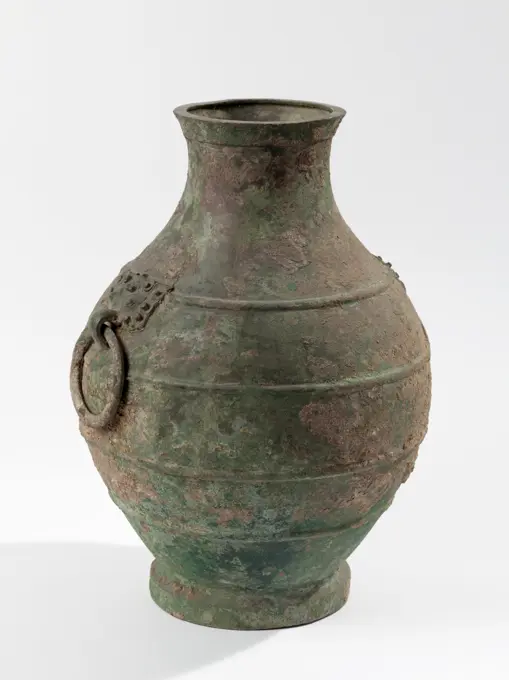
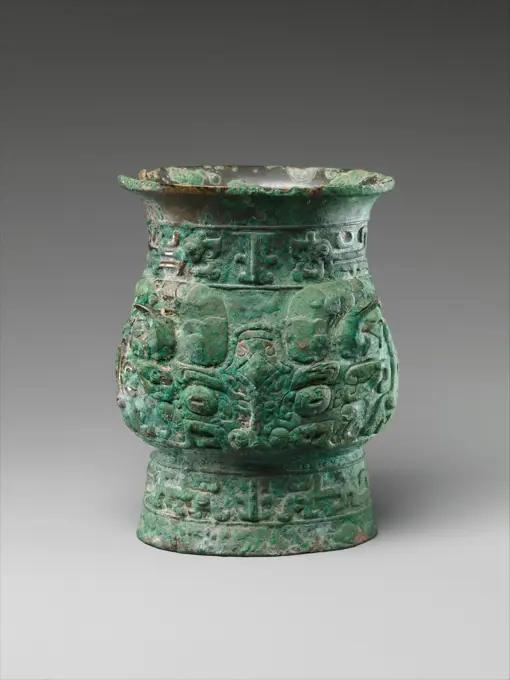
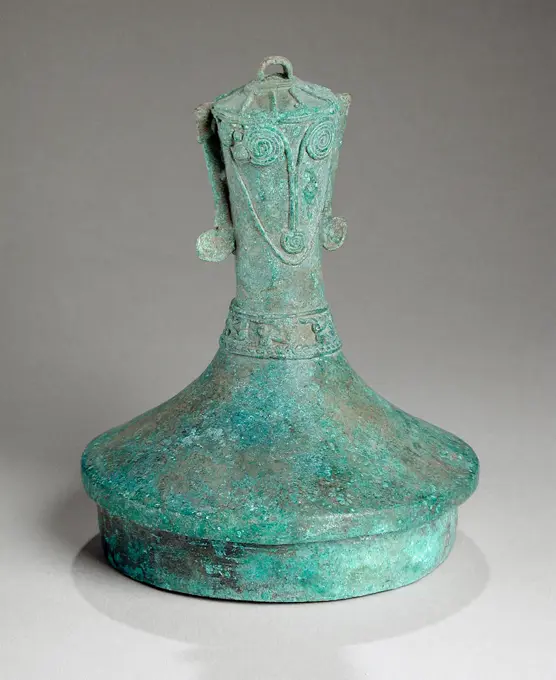
Hu ". Bronze, green patina. China, Han. Paris dynasty, Cernuschi museum. 72359-8 Hu bottle, bronze, han dynasty, green patina
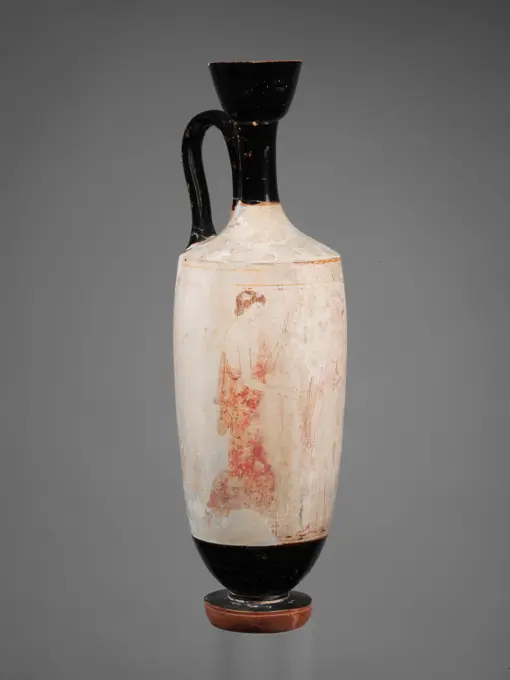
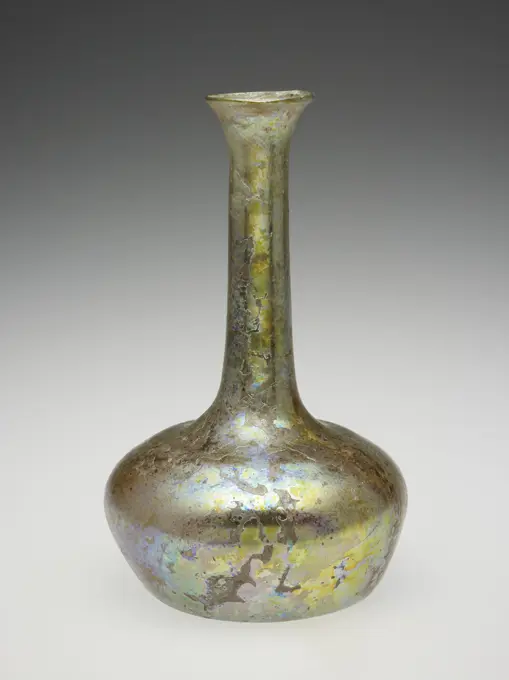
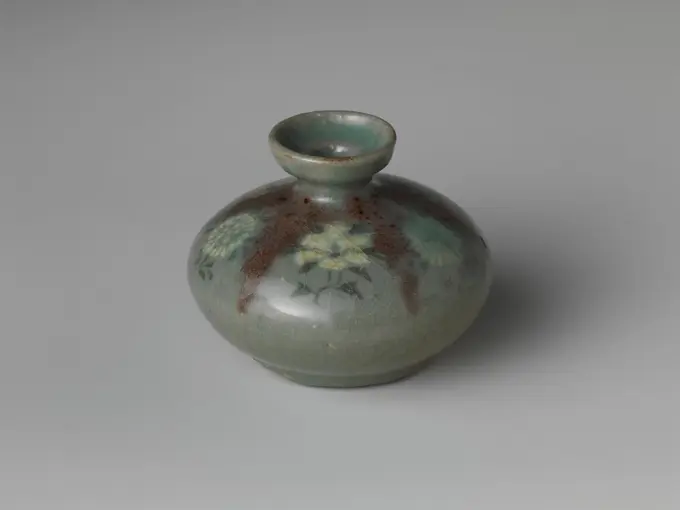
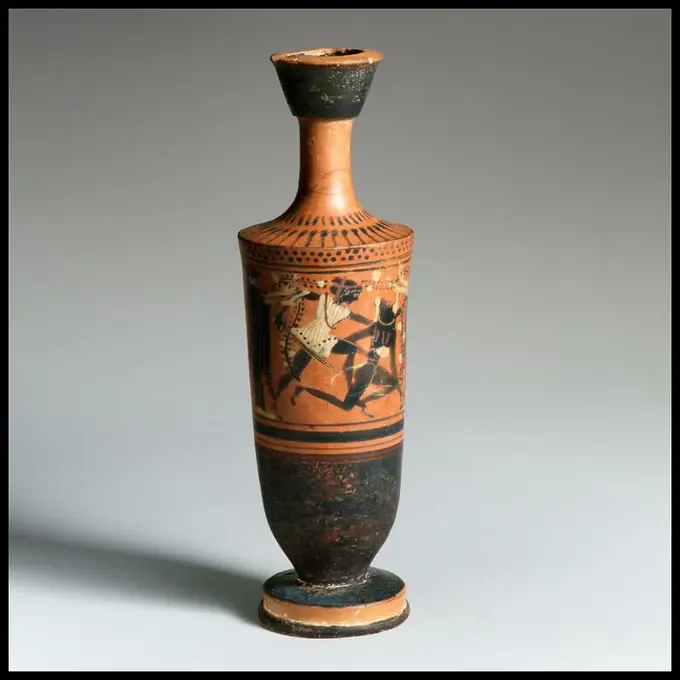
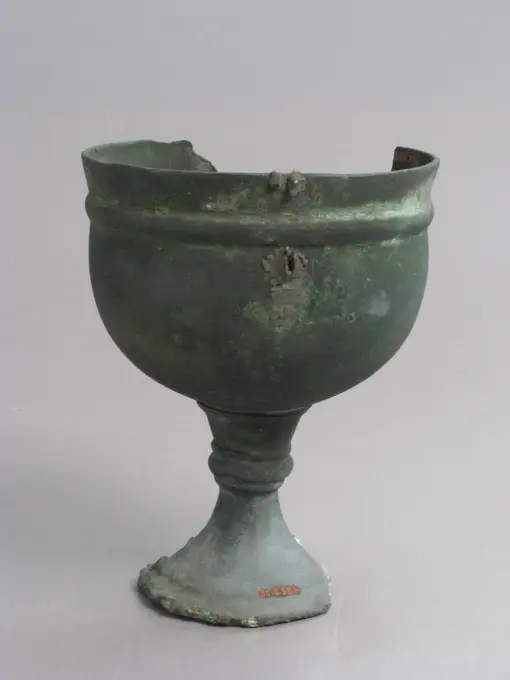
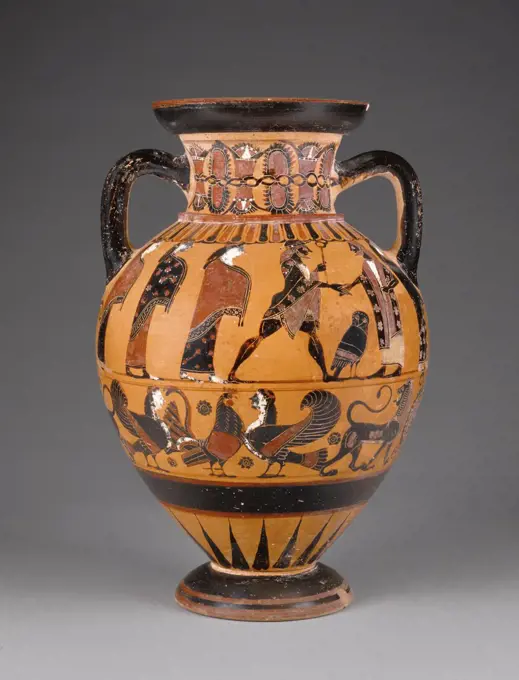
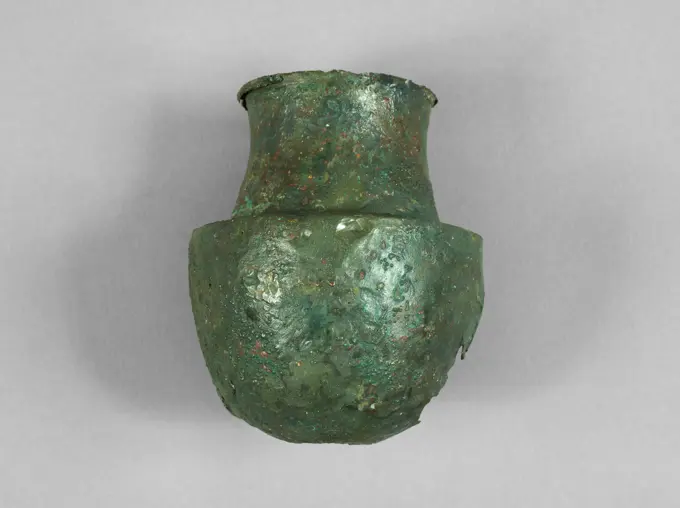
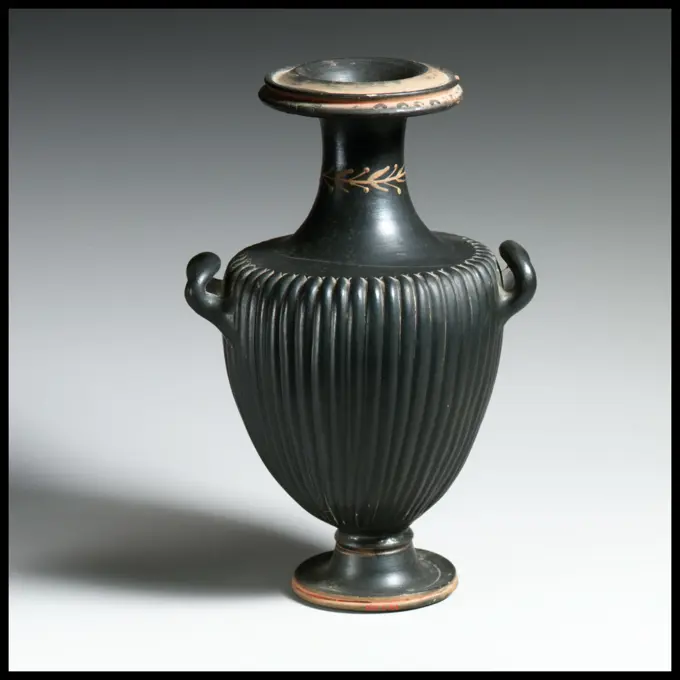
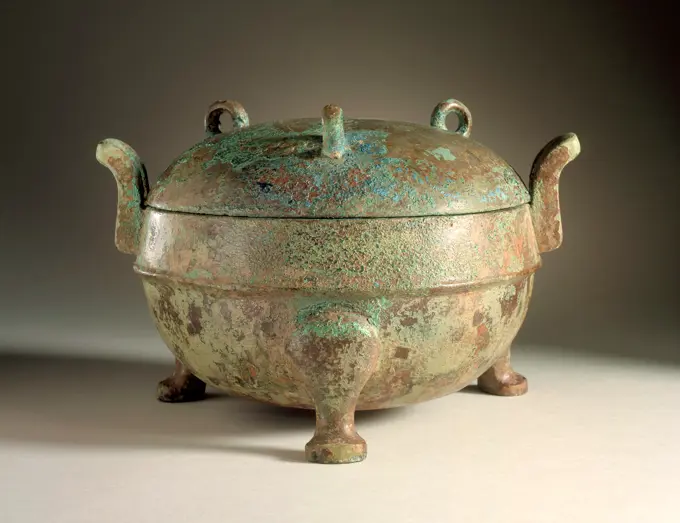
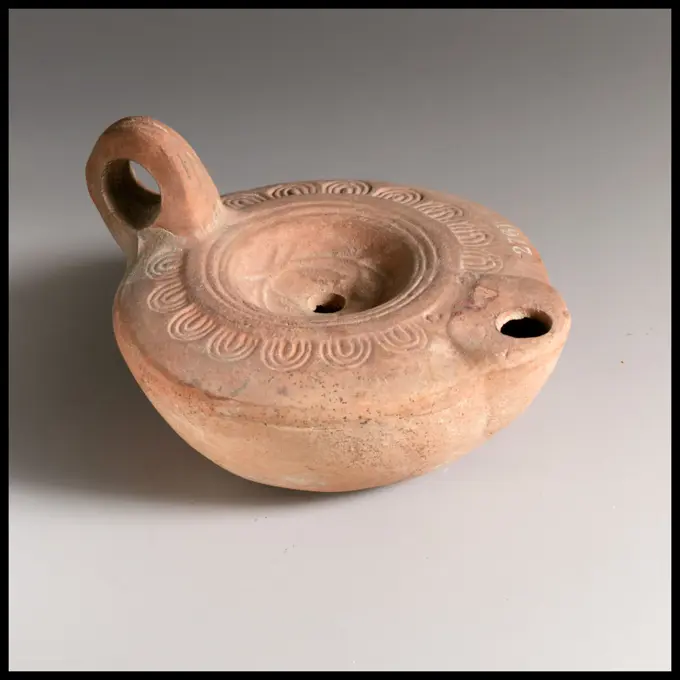
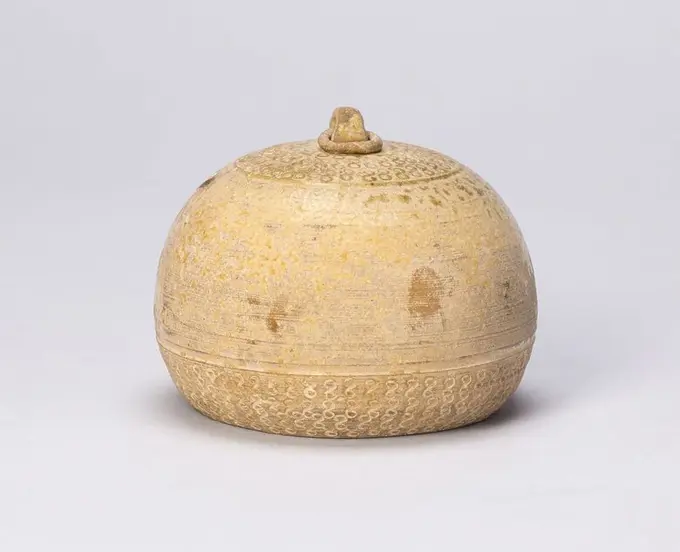
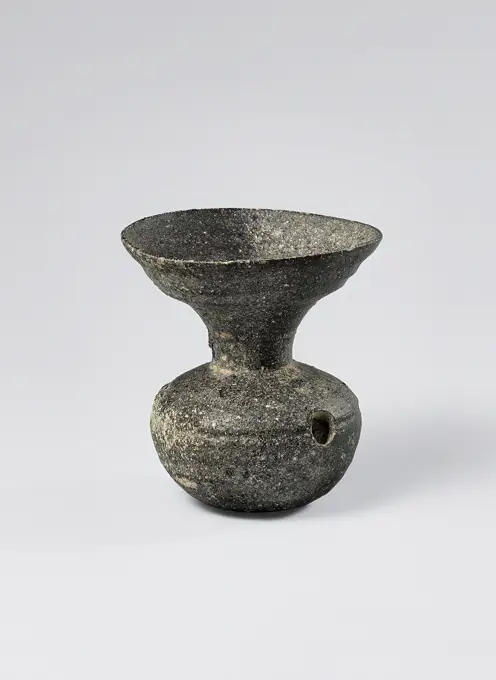
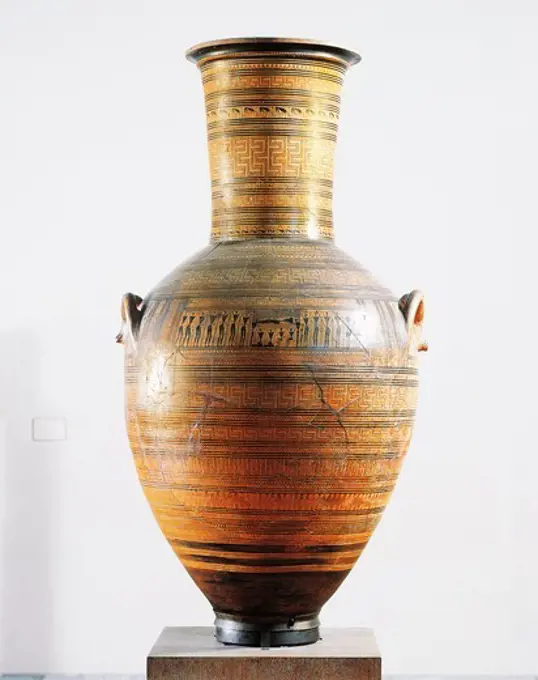
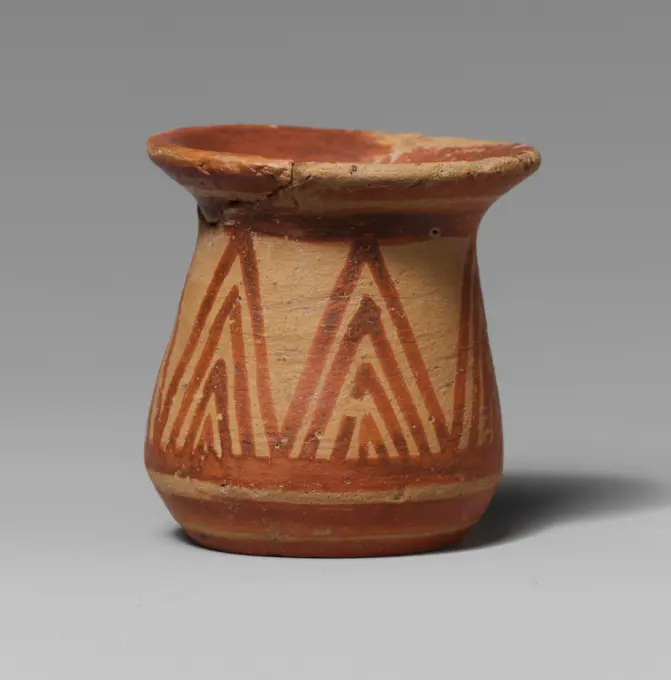
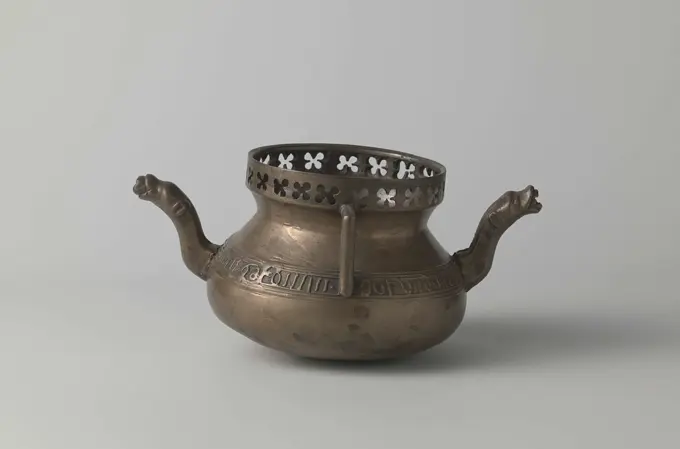
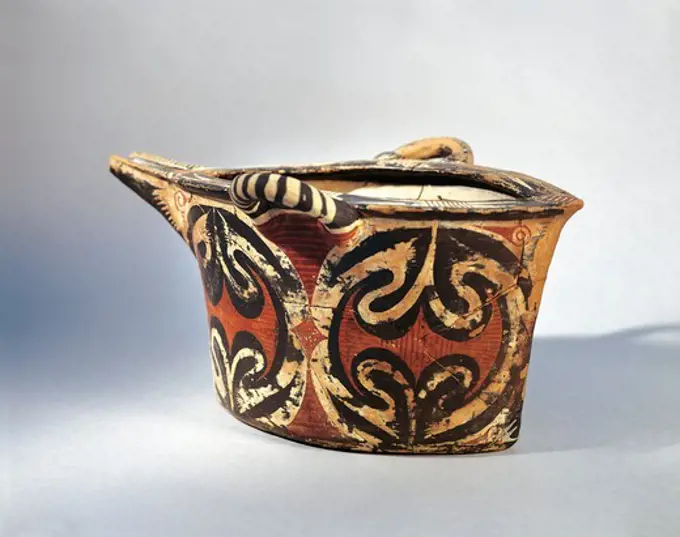
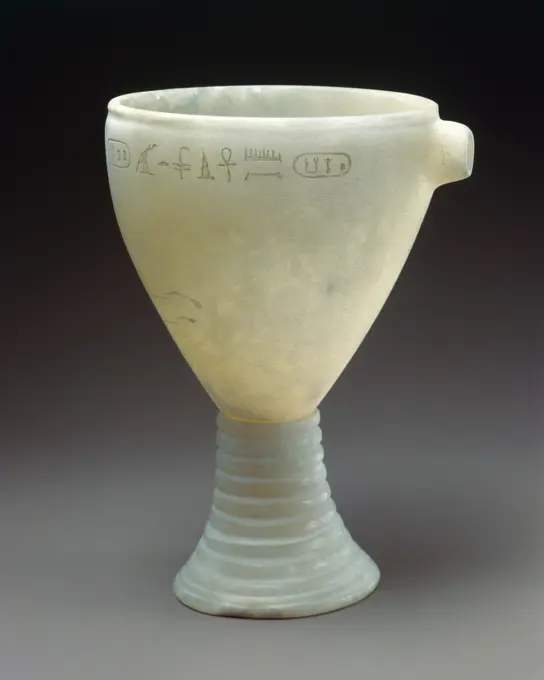
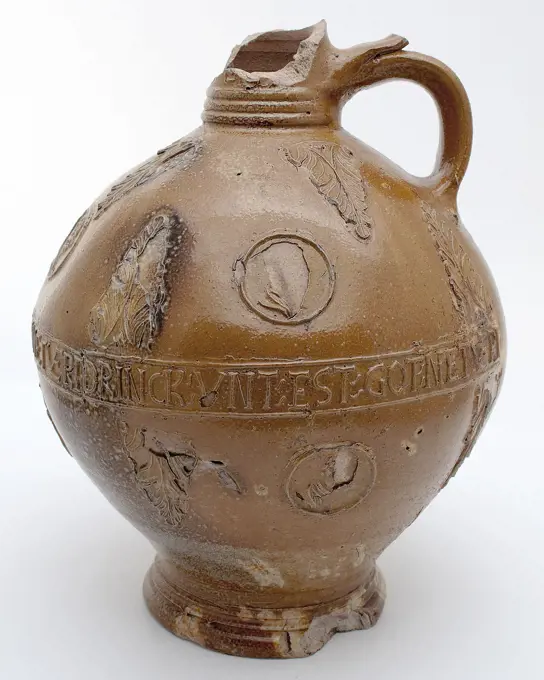
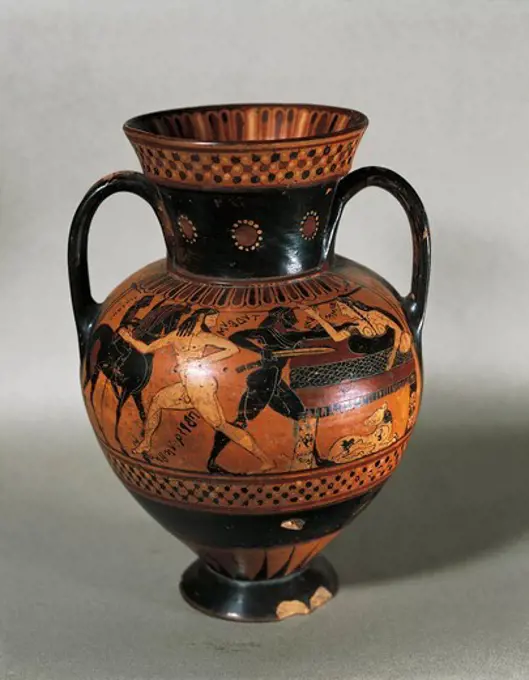
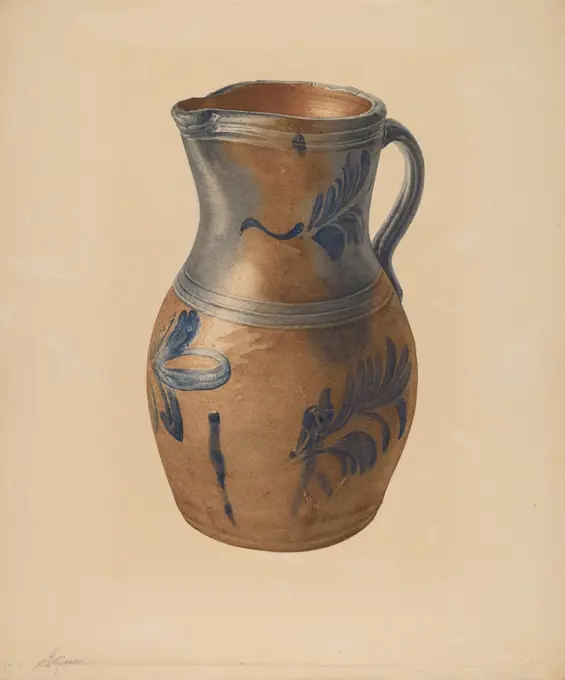
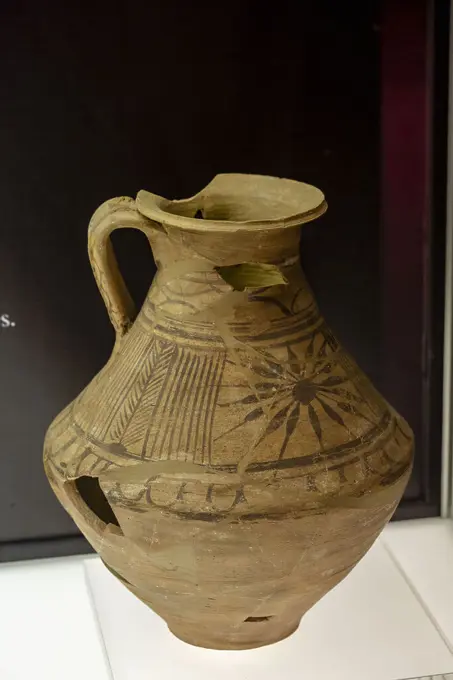
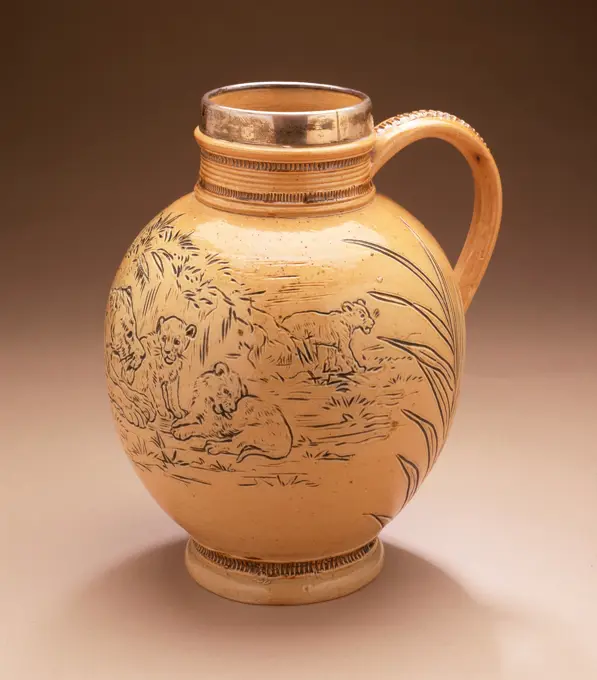
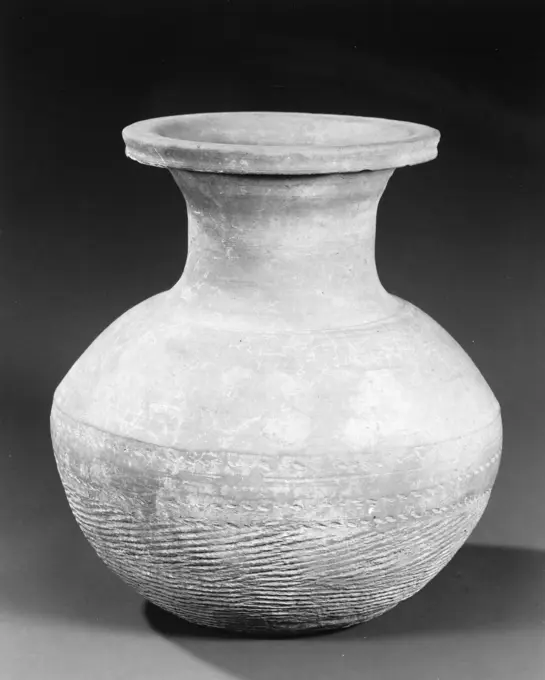
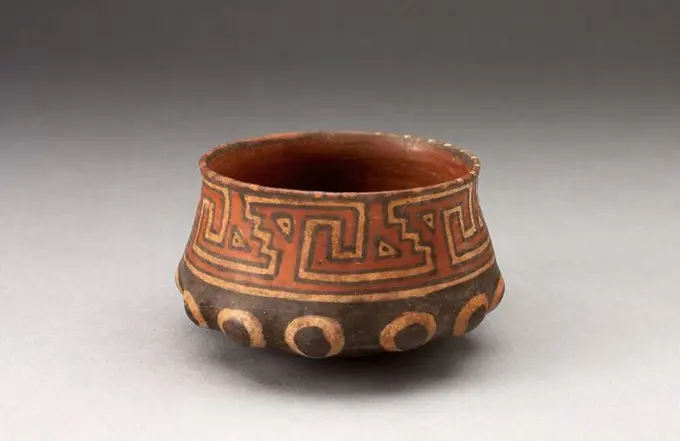
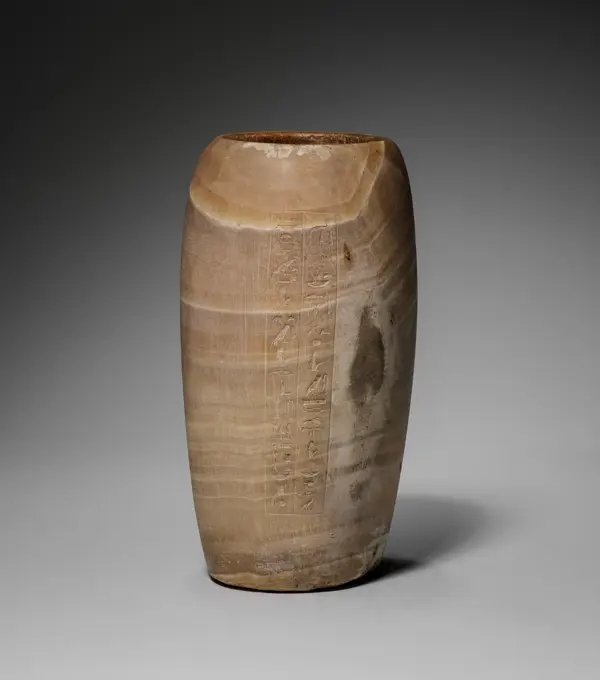
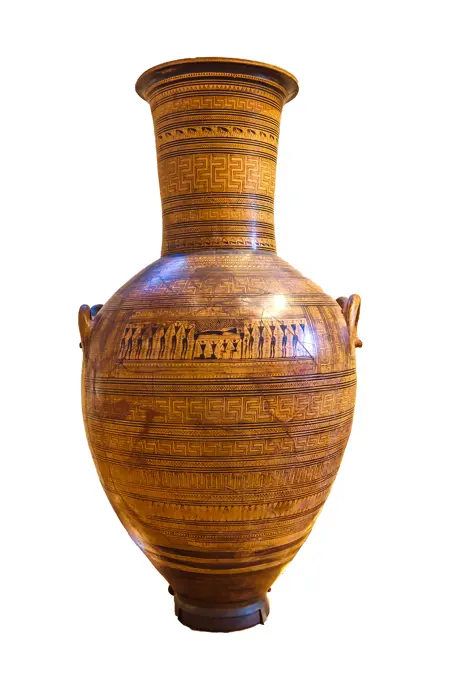
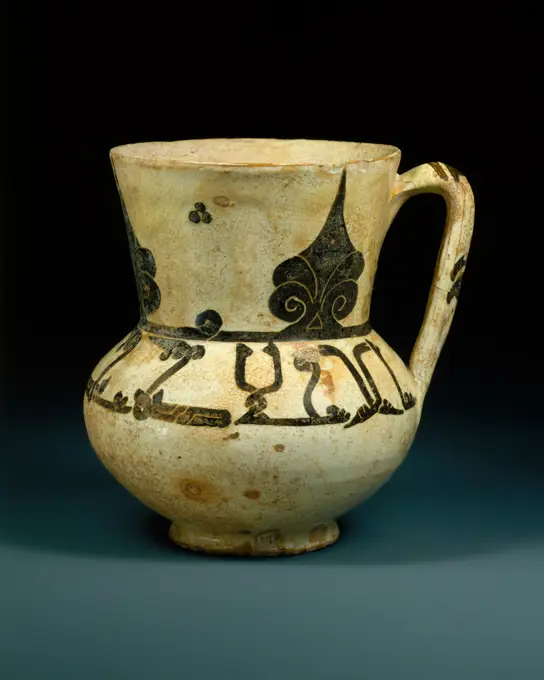
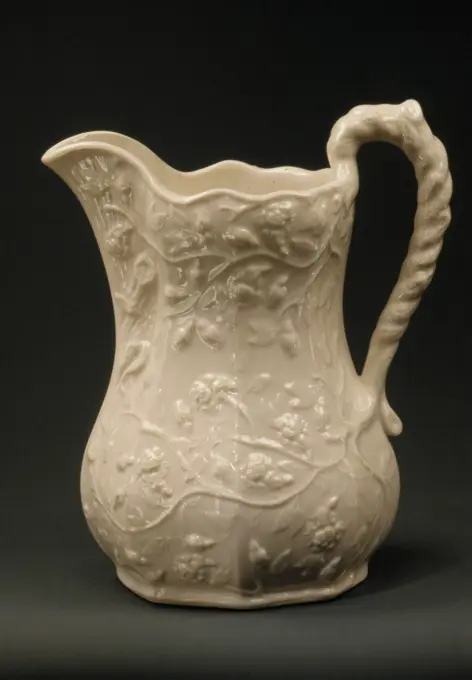
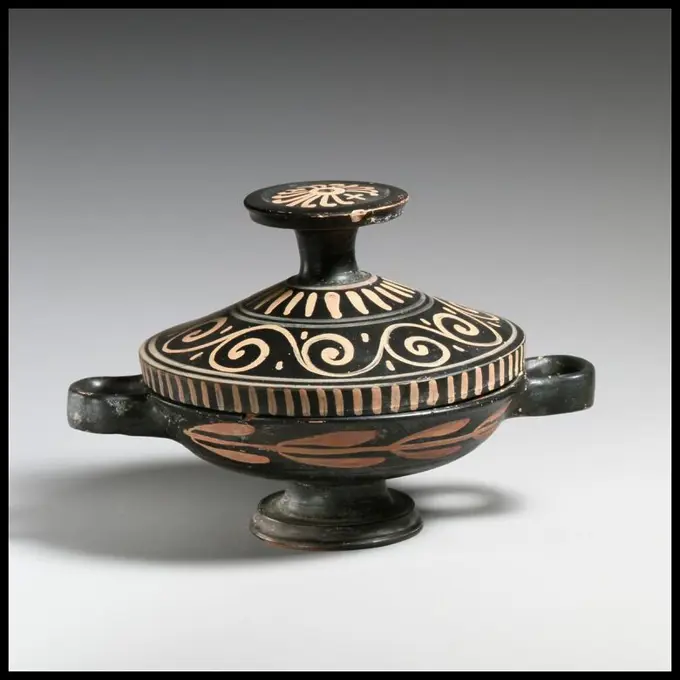
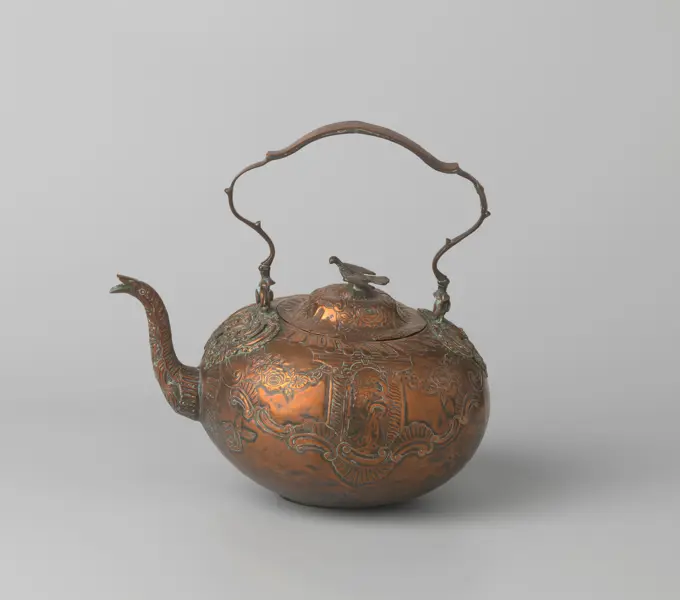
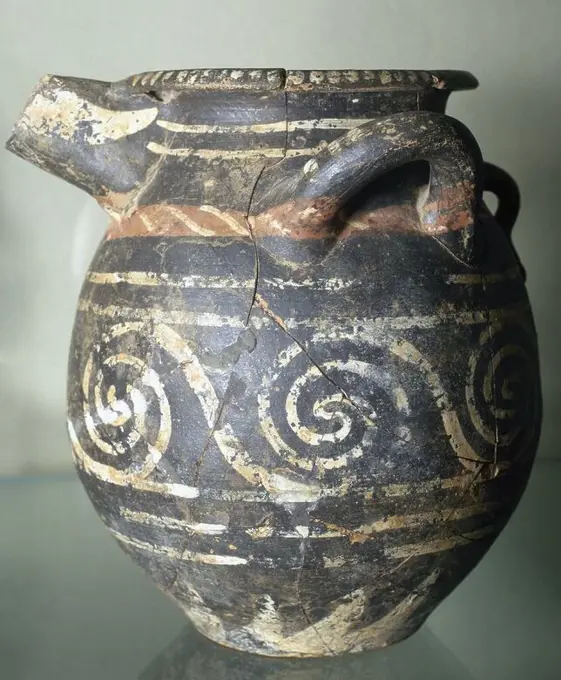
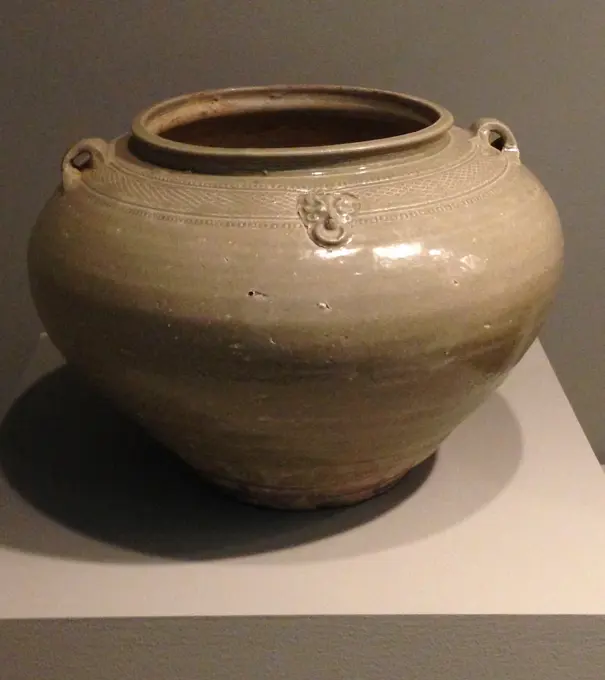
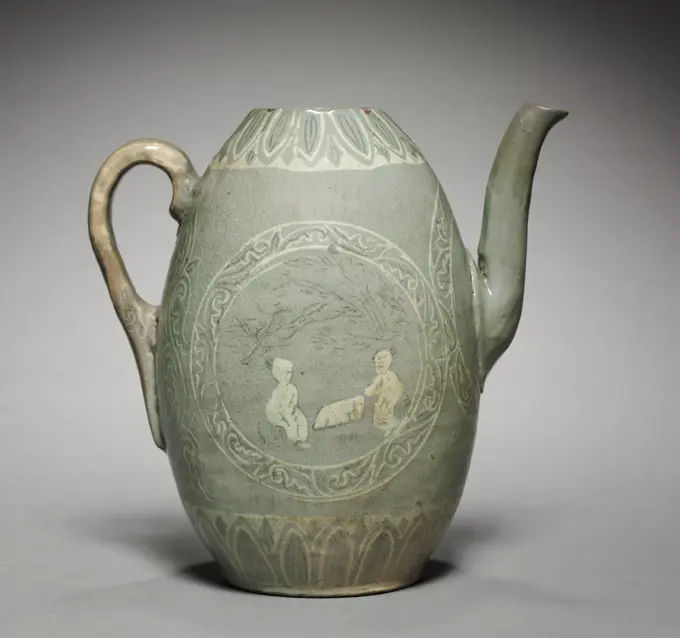
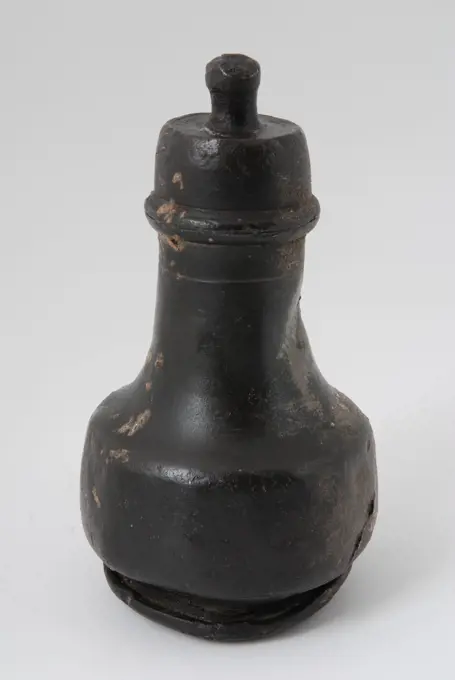
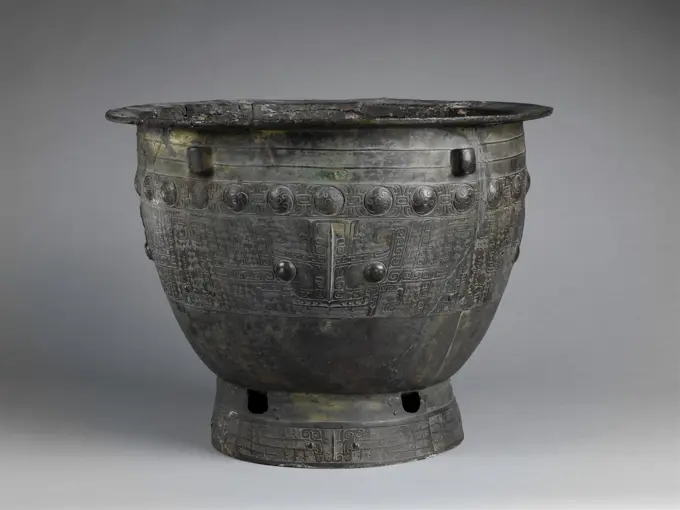
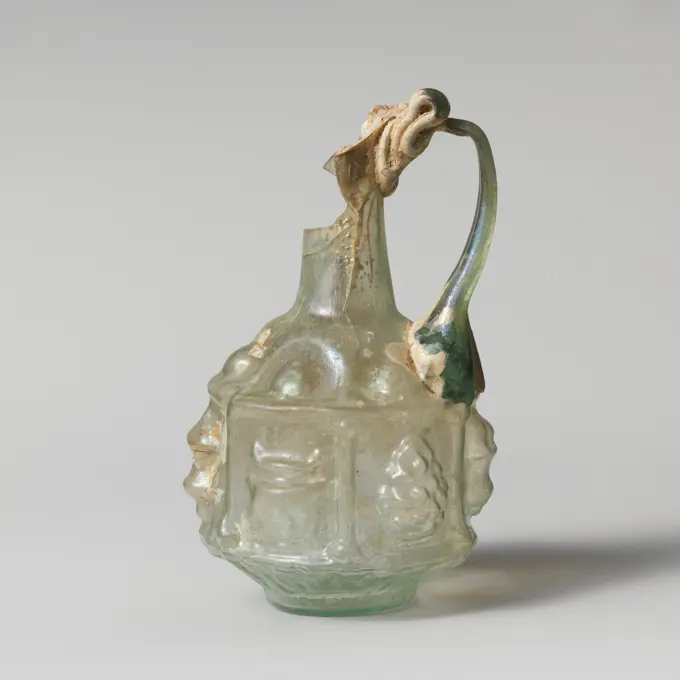
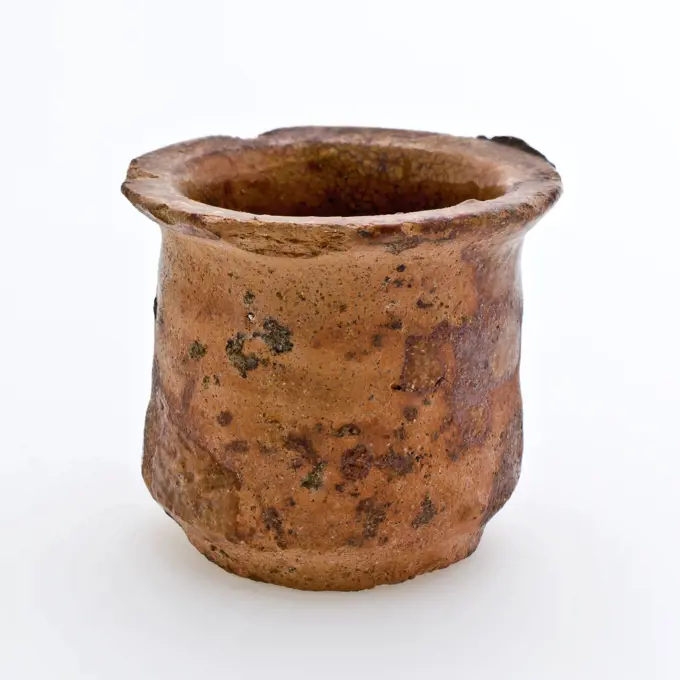
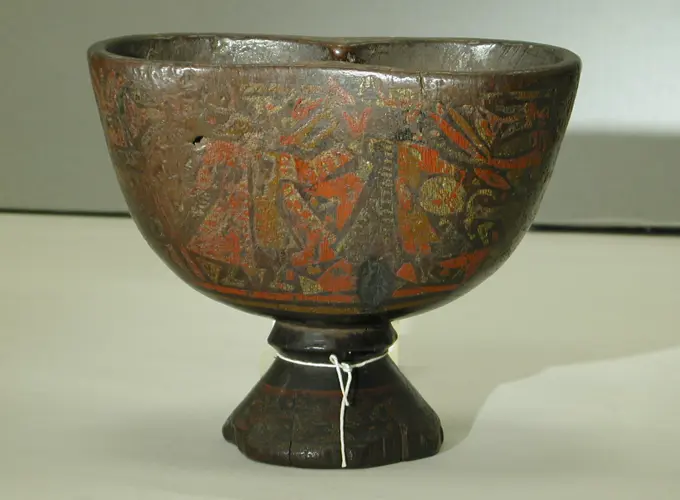
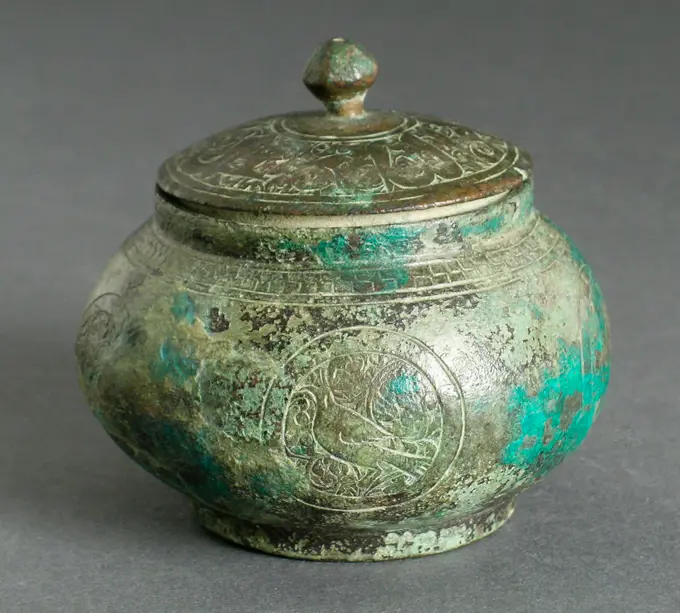
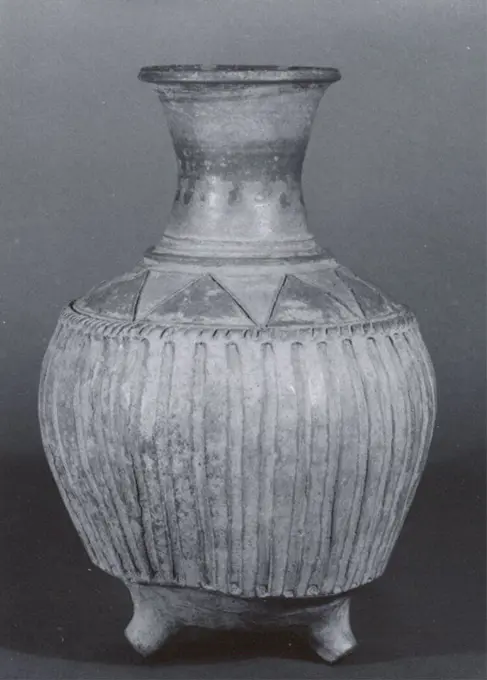
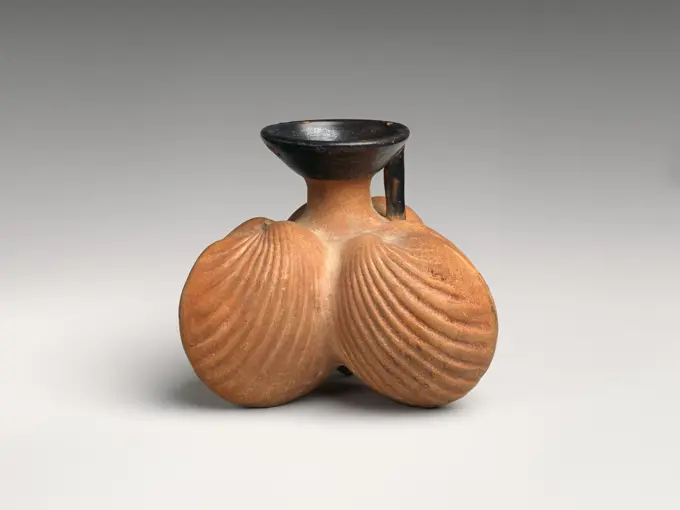
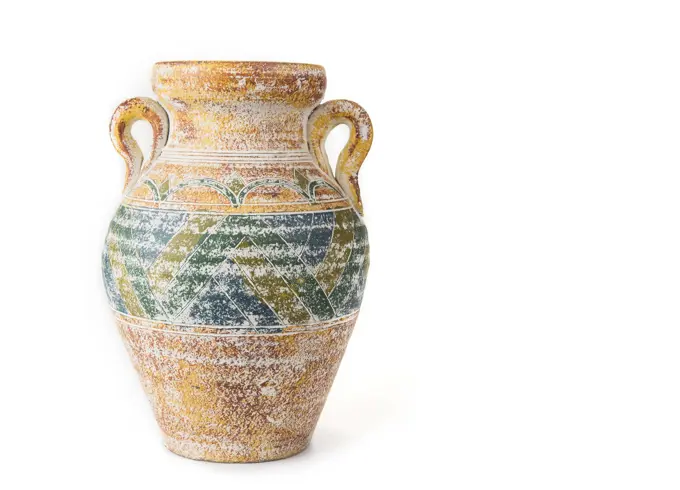
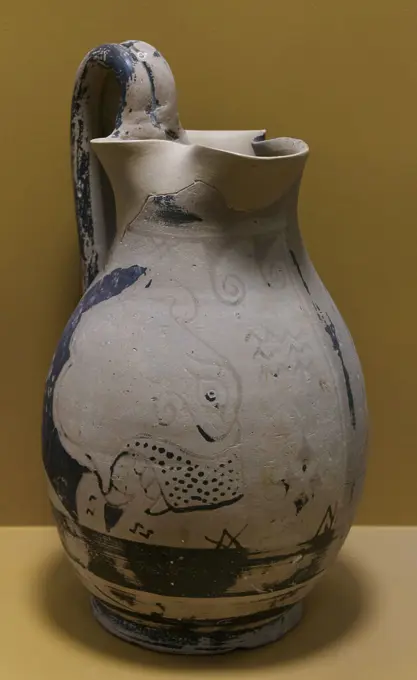
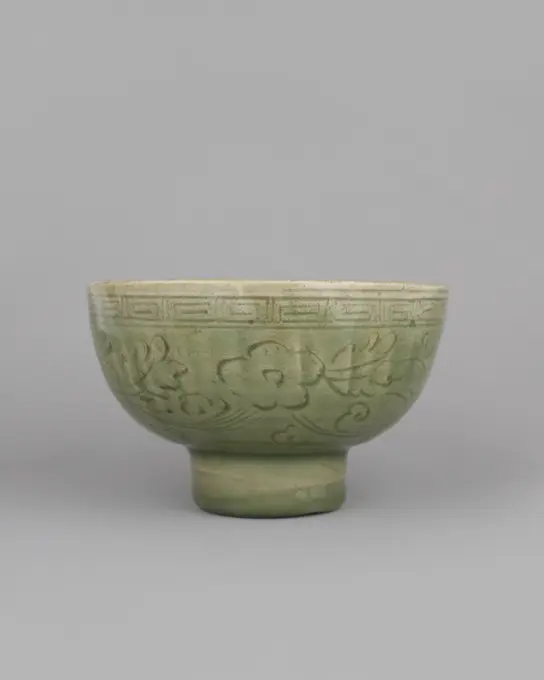
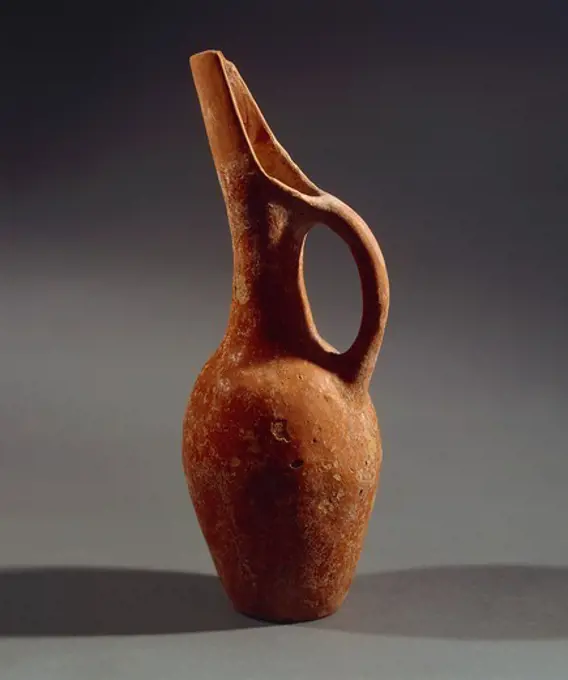
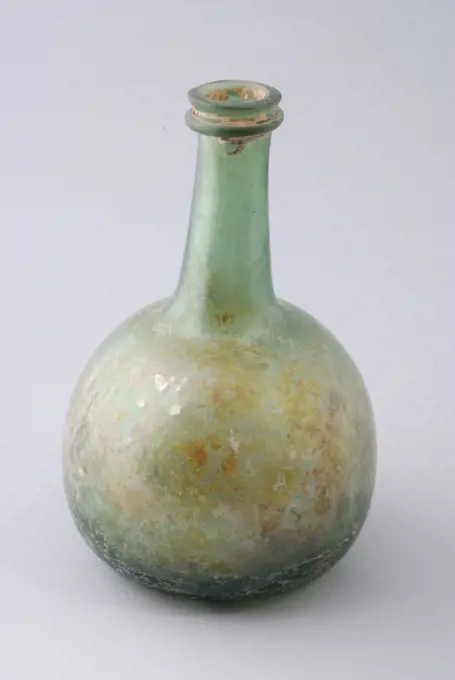
. Egg-shaped can of quartz frying with a wide neck covered with a turquoise glaze. On the shoulder a budget decoration.Bowl ca. 9th century B.C. Iran. Bowl 325015Glass jug with trefoil rim 4th-5th century A.D. Roman Translucent pale green; handle and trails in same color.Broad trefoil rim with plain rounded lip; flaring mouth; short, cylindrical neck, expanding downwards; conical body with bulbous side; deep kick in bottom with central pontil scar; rod handle applied in an irregular pad to top of body, drawn up and outwards in an angular curve, and trailed off on back of rim over trail.Trail applied below rim and wound round four and a half times in a spiral.Intact; some bubbles; dulling, pitting, weathering, and iridescence, mainly on one side of body, around rim, and on handle.. Glass jug with trefoil rim. Roman. 4th-5th century A.D.. Glass; blown and trailed. Late Imperial. GlassTerracotta lekythos (oil flask) ca. 420 B.C. Greek, Attic Woman between two youthsThe youth at the left and the woman are clasping hands, a rare subject on funerary lekythoi. Indeed, while the tenor of the scenes is solemn and still, displays of emotion are unusual.. Terracotta lekythos (oil flask). Greek, Attic. ca. 420 B.C.. Terracotta; white-ground. Classical. VasesANAFE U HORNILLO CON PUCHERO VIDRIADO-ARTE POPULAR S XX. Location: ALFARERIA. Toledo. SPAIN.Bottle 1 CE-200 CE Roman Empire. The iridescent sheen on this bottle, an artificially created effect sought after by 19th-century glassmaking innovators such as Louis Comfort Tiffany, was not actually intended by or known to their makers. Because of their association with luxury and precious oils and perfumes, these vessels were often buried with their owners in tombs, the chemical conditions of which, over time, have caused the surfaces to deteriorate, resulting in the shimmering, often opalescent, hues that appeal to the modern eye.. Glass, blown technique . Ancient RomanCup 15th-16th century Korea. Cup 57440Oil bottle decorated with peonies and chrysanthemums 13th century Korea Volatile copper-red pigment was successfully controlled during this bottles firing to produce splashes of deep crimson against the black-and-white inlay and green glaze—a technique that was likely an innovation of Goryeo potters.. Oil bottle decorated with peonies and chrysanthemums 42293Terracotta cup ca. 800-750 B.C. Greek, Attic Cup with flaring rim, decorated with wavy lines and dot rosettes and one handle.. Terracotta cup. Greek, Attic. ca. 800-750 B.C.. Terracotta. Geometric. VasesTerracotta lekythos (oil flask). Culture: Greek, Attic. Dimensions: H. 7 11/32 in. (18.8 cm.). Date: ca. 500 B.C..Depicted on the vase, between two women, is Theseus slaying the Minotaur. Museum: Metropolitan Museum of Art, New York, USA.Chalice 5th-6th century Coptic. Chalice 468972Euboean Black-Figure Neck Amphora; Unknown; Greece, Euboea, Europe; about 570 - 560 B.C.; Terracotta; Object: H: 35.6 x Diam.: 23.2 cm (14 x 9 1/8 in.)Skyfos (mug) with duck performances;  725-700 (-725-00-00--700-00-00);Thin -walled ceramics, geometric ceramics, images of birdsSuction cup (usual name), -276. Hammered copper alloy. Carnavalet museum, history of Paris.Terracotta hydria (water jar) ca. 350-300 B.C. Greek, South Italian, Apulian On the neck is a laurel wreath.. Terracotta hydria (water jar) 246935Lidded Food Cauldron (Ding). China, Western Han dynasty, 206 B.C.-A.D. 25. Furnishings; Cookware. Cast bronzePottery cooking jug, grape-model, red shard with lead glaze, shank, sausage ear, on three legs, cooking jug be found in the earthenware ceramics earthenware glaze lead glaze, hand turned glazed baked Pottery cooking jug grape-model red shard with lead glaze pouring cliff sausage ear three legs archeology indigenous earthenware food prepare cooking eat cuisinePottery belly model ointment jar, red shard, internally glazed, ointment jar pot holder soil find ceramic earthenware glaze lead glaze, hand turned glazed baked Pottery belly model ointment jar red shard internal glazed Slanted inwardly directed top edge Surface coarse finish Narrowed up over the foot Spinning curves on the inside of the bottom archeology health care indigenous pottery pharmacy store sell craftTerracotta oil lamp 2nd century A.D. Roman Mold-made, with ring handle. Small discus: a wreath around a single central filling hole, and surrounded by a band of lines and grooves. On the broad, sloping shoulder, a row of large impressed ovules. Large, rounded nozzle. Irregular vertical incised lines along front of handle. Base ring, and a raised, slightly convex base. The front of the handle added and joined to back that forms part of the molded body.Intact, but one small hole in base ring towards the nozzle. Terracotta oil lamp. Roman. 2nd century A.D.. Terracotta. Mid Imperial. TerracottasModel of a Counterweight (Quan or Huanzhen). China. Date: 400 BC-201 BC. Dimensions: H. 7.5 cm; diam. 9.5 cm. Glazed buff stoneware with incised and impressed decoration. Origin: China. Museum: The Chicago Art Institute, Chicago, USA.Jug. Culture: British. Dimensions: Overall: 6 3/4 x 4 1/16 x 3 1/4 in. (17.1 x 10.3 x 8.2 cm). Date: late 13th-early 14th century. Museum: Metropolitan Museum of Art, New York, USA.Jar with flared mouth, 5th century, Unknown Japanese, 4 9/16 × 4 3/8 × 4 1/8 in. (11.59 × 11.11 × 10.48 cm), Sue ware; stoneware, Japan, 5th century, Long-necked jars like this one, which features an opening on the side, have been excavated from sites that are generally dated to the prehistoric Kofun period (250-650). The opening was probably used as a spout for pouring liquids. This type of vessel originated in Korea and likely was adopted in Japan between 300 and 400 CE.Lazio Viterbo Viterbo Museo Civico29. Hutzel, Max 1960-1990 Views of paintings (Middle Ages through 18th c.), frescoes, a tabernacle, coffin, sculpture reliefs, portal fragments, busts, sculpture, tapestry found in the Pinacoteca, Second floor gallery and Second floor cloister sequences. Antiquities: Many views of Etruscan and Roman fragments, sculpture, sarcophagi, pottery, masks, jewelry and other objects found in the Storeroom sequence (inventory numbers on back of prints), and the Cloister, Second floor Cloister, Valle Giulia, Sala Romana and Sala Etrusca sequences. General Notes: There are eight separate numerical sequences for this location. The cloister as an architectural structure, rather than museum site, is documented in the record and file for S. Maria della Verita, Cloister, all views of which are stored in Medieval core collection. Five views from the Museo Civico Second floor cloister sequence are stored in Medieval. German-born photographer and scholar Max Hutzel (1911-Bottle 100 BCE-100 CE Syria. Glass, blown technique . Ancient RomanTerracotta jug with lid ca. 575-550 B.C. Etruscan A moulded human face below lip; a frieze of monsters about body.. Terracotta jug with lid 246157Greek civilization, Geometric style pottery, Amphora 804 by Dipylon Master,From Dipylon necropolis at Athens, Greeceoriental antique jug ceramic on a black background closeup. oriental antique ceramic pitcherVase or pot, baluster -shaped and multi -colored painted, anonymous, c. 1575 - c. 1600 Balus -shaped vase of multicolored painted Majolica. Horizontal lines are painted on the foot and along the top edge and fruits and blades on the belly. The colors used are green, yellow and blue. Netherlands earthenware. tin glaze. lead glaze majolica Balus -shaped vase of multicolored painted Majolica. Horizontal lines are painted on the foot and along the top edge and fruits and blades on the belly. The colors used are green, yellow and blue. Netherlands earthenware. tin glaze. lead glaze majolicaTerracotta juglet 8th century B.C. Greek, Attic From the Hymettos deposit (see 30.118.1). Terracotta juglet 253171 Greek, Attic, Terracotta juglet, 8th century B.C., Terracotta, H. 1 1/2 in. (3.8 cm). The Metropolitan Museum of Art, New York. Gift of the Greek Government, 1930 (30.118.38)Ritual Wine Cup (Zhi) late 11th century B.C. China This elaborate set of wine vessels provides an idea of the splendor of Shang and early Zhou ritual ceremonies. The set is said to have come from a tomb uncovered in 1901; shortly thereafter, it entered the collection of Duan Fang, a senior Manchu official and one of the preeminent antiquarians of the late Qing period. The pieces vary in style and execution. Although eleven of the vessels are inscribed, only one grouping shares identical inscriptions: the two wine containers, or you (nos. 2, 3) and the tall wine container, or zun (no. 4). A second grouping has largely comparable inscriptions: the spouted water vessel, or he (no. 5) and one cup, or zhi (no. 11).A partial reconstruction of the sets arrangement in the tomb may be established from corrosion outlines on the three principal vessels—the two wine containers, or you, and the central tall wine container, or zun—that were etched onto the surface of the altar table. The diagram shCANTARO SIN VIDRIAR CON PITORRO DOS ASAS Y CUELLO ANCHO - SIGLO XX - CERAMICA POPULAR. Location: ALFARERIA RUBIO. SPAIN.Lavabo with four passes and religious text. The object has been poured into two halves. The boiler has a somewhat flatbolle shape, the upper part with the hollow neck in diameter makes a blunt angle. The vertical collar is perforated with four-passes, and has a sloping edge inward. The two curved cross-section hexagonal spouts are placed in each other's extension. The ends have the form of animal heads. Perpendicular to it there are the rectangular handle on the abdominal wall and the transition from neck to collar. On the abdominal wall, an incomprehensible expressive text has been broken by spouts and handle deposits.Vase with spout in ceramic by Kamares with polychrome decoration, from Palace of FestosSnuff Bottle, 1644-1911. China, Qing dynasty (1644-1911). Glass; overall: 7 cm (2 3/4 in.).Brewer's Vat of Queen Mother Ankhenes-Pepi ca. 2246-2152 B.C. Old Kingdom This miniature spouted basin on a stand is copied from a large pottery brewer's vat that would have rested on a woven reed stand. It was probably part of the funerary equipment of Queen Mother Ankhnes-Pepi or of her son Pepi II. Beer was a staple of the Egyptian diet, and this small basin would have magically provided it to the deceased throughout eternity.. Brewer's Vat of Queen Mother Ankhenes-Pepi. ca. 2246-2152 B.C.. Travertine (Egyptian alabaster). Old Kingdom. From Egypt; Probably from Memphite Region, Saqqara, South Saqqara. Dynasty 6Stoneware jug, round belly frieze with text above and below portrait medallions and leaf motif, jug crockery holder soil find ceramic stoneware glaze salt glaze, hand turned stamped glazed glazed baked Stoneware jug gray shard yellow brown and partly brown brindled salt glaze double bandoor profiled neck and foot. Substrate traces on the bottom Text in frieze: DRINCK: UNT: EST: GOT: NETVER ... (trinckt and esst Gott nicht vergesst) three times archeology Rotterdam City Center Stadsdriehoek Spaansekade inn import pottery serving drink pouring beer wine Soil discovery: renovation Hotel Weimar Spaansche Kade corner Haringvliet North side (opposite the Admiraliteitshuis). Formerly the distinguished inn Het Schildt van Vranckrijck or Het Wapen van Vranckrijck.Urn. Thailand, Ban Chiang culture, 4th-3rd century B.C.. Furnishings; Accessories. Earthenware with painted decorationJuglet ca. 1st century A.D. Nabataean. Juglet 325904Italy, Rome, Cerveteri, Black-figure pottery amphora with mythological scenes depicting Tideo killing IsmeneTerracotta lekythos (oil flask). Culture: Greek, Attic. Dimensions: H. 3 5/16 in. (8.4 cm). Date: 2nd half of the 6th century B.C..Theseus slaying the MinotaurThe lekythos is decorated in Six's technique, in which the background is in black glaze and the figures appear with incised contours through the black glaze or with applied white, red, or brown paint. Museum: Metropolitan Museum of Art, New York, USA.Ritual wine vessel, anonymous, c. -1046 - c. -256  China bronze (metal)  China bronze (metal)Water pot ca. 1625 Japan The potter achieved the deformed, asymmetrical shape of this water jar by altering the soft clay after forming the basic shape on a potter's wheel. Such an effect was purposefully created to coincide with an aesthetic associated with the tea ceremony which favored somewhat imperfect forms. The lacquer lid was custom-made for the oddly shaped vessel. Lacquer was a precious substance in Japan, and the contrast between the glossy black lid and the earthy body of the vessel would have been much appreciated within the context of the tea room. In the tea ceremony, this vessel was used as a mizusashi, a container that holds fresh water to rinse the tea bowls or fill the kettle.. Water pot. Japan. ca. 1625. Bizen pottery; lacquer cover. Edo period (1615-1868). CeramicsTerracotta juglet ca. 1900-1725 B.C. Cypriot Lime, used to fill the grooved decoration, enhances the contrast between the surface of the vessel and the linear decoration.. Terracotta juglet 240827Giacinto Capelli, Pitcher, c 1940 Pitcherjarra de cerámica pintada de tradicion indigena, Necrópolis de Carratiermes, siglo I d.C. museo del Yacimiento arqueológico de Tiermes, Soria, comunidad autónoma de Castilla y León, Spain, Europe.Mug. Doulton & Co. (England, London, Lambeth, founded 1815-1956 and Straffordshire, Burslem, 1877-present)Hannah Barlow (England, 1850-1916). England, London, 1873, silver mount added 1888. Furnishings; Serviceware. Salt-glazed stoneware, silverJar (Hu) 5th-3rd century B.C. China. Jar (Hu). China. 5th-3rd century B.C.. Earthenware with cord markings. Eastern Zhou dynasty, Warring States period (475-221 B.C). CeramicsLazio Viterbo Viterbo Museo Civico67. Hutzel, Max 1960-1990 Views of paintings (Middle Ages through 18th c.), frescoes, a tabernacle, coffin, sculpture reliefs, portal fragments, busts, sculpture, tapestry found in the Pinacoteca, Second floor gallery and Second floor cloister sequences. Antiquities: Many views of Etruscan and Roman fragments, sculpture, sarcophagi, pottery, masks, jewelry and other objects found in the Storeroom sequence (inventory numbers on back of prints), and the Cloister, Second floor Cloister, Valle Giulia, Sala Romana and Sala Etrusca sequences. General Notes: There are eight separate numerical sequences for this location. The cloister as an architectural structure, rather than museum site, is documented in the record and file for S. Maria della Verita, Cloister, all views of which are stored in Medieval core collection. Five views from the Museo Civico Second floor cloister sequence are stored in Medieval. German-born photographer and scholar Max Hutzel (1911-Miniature Bowl with Shaped Base and Geometric Motifs. Inca; South coast or southern highlands, Peru. Date: 1450-1532. Dimensions: 7.5 x 10.5 cm (2 5/16 x 4 1/8 in.). Ceramic and pigment. Origin: Peru, southern. Museum: The Chicago Art Institute, Chicago, USA.Dark ceramic stirrup spout vessel engraved with geometric patterns, Peru, Chavin cultureCanopic Jar with Man's Head, 664-525 BC. Egypt, Late Period, Dynasty 26. Travertine; diameter: 16.6 cm (6 9/16 in.); diameter of mouth: 9 cm (3 9/16 in.); overall: 38.8 cm (15 1/4 in.). In the process of mummification, the liver, lungs, stomach, and intestines were removed, separately embalmed, and stored in specialized jars known as canopic jars (after a sailor in Greek mythology, who died at the town of Canopus in the Nile Delta and was worshipped there in the form of a human-headed jar). Each organ was identified with one of four funerary deities collectively known as the Sons of Horus: the liver with Imsety (man's head), the lungs with Hapy (baboon's head), the stomach with Duamutef (jackal's head), and the intestines with Qebehsenuef (falcon's head). It was their duty to protect the deceased and restore to him his body parts in the hereafter.Trozzella', Messapian amphora with geometric decoration, from Apulia Region, ItalyJar 301 CE-500 CE Mediterranean Region. Glass . Ancient Eastern MediterraneanCeramic Greek Art Ceramic greek art isolated on white background photo Copyright: xZoonar.com/DanielxFerreira-LeitesxCiccarinox 17036081Covered Box with Floral Scrolls. Thailand, Sawankhalok, circa 1400-1600. Furnishings; Accessories. Wheel-thrown stoneware with cream slip, underglaze brown painted decoration, and pale blue glazeLazio Viterbo Viterbo Museo Civico75. Hutzel, Max 1960-1990 Views of paintings (Middle Ages through 18th c.), frescoes, a tabernacle, coffin, sculpture reliefs, portal fragments, busts, sculpture, tapestry found in the Pinacoteca, Second floor gallery and Second floor cloister sequences. Antiquities: Many views of Etruscan and Roman fragments, sculpture, sarcophagi, pottery, masks, jewelry and other objects found in the Storeroom sequence (inventory numbers on back of prints), and the Cloister, Second floor Cloister, Valle Giulia, Sala Romana and Sala Etrusca sequences. General Notes: There are eight separate numerical sequences for this location. The cloister as an architectural structure, rather than museum site, is documented in the record and file for S. Maria della Verita, Cloister, all views of which are stored in Medieval core collection. Five views from the Museo Civico Second floor cloister sequence are stored in Medieval. German-born photographer and scholar Max Hutzel (1911-Lime Container with Anthropomorphic Lid. Indonesia, Dongson Culture, circa 100 B.C.-A.D. 300. Furnishings; Accessories. Copper alloyEwer with Arabic Proverb, "Devotion Fortifies Action" 10th century Slip-painting, the technique employed to decorate this ewer, was developed in Khurasan and Central Asia in the 10th century. It consists of diluting the pigment of the desired color in a slip (liquid clay), and of painting designs with the mixture: the adherence of the slip-painted designs to the surface of the vessel makes for a neat design, that does not run under the glaze. In this case, fine incisions of the black slip give definition to the design.The black slip-painting outlines a continuous motif of palmettes connected by a band with loops and an inscription in Kufic script. The text, typical of slip-painted vessels of this type, is an Arabic proverb and reads "devotion fortifies action".. Ewer with Arabic Proverb, "Devotion Fortifies Action". 10th century. Earthenware; white slip with black slip decoration under transparent glaze. Probably from Iran or present-day Uzbekistan, Nishapur or Samarqand. CeramicsPitcher 1850-53 United States Pottery Company. Pitcher 5867Two Glass Inkwells 9th century. Two Glass Inkwells 447641Jar orbeakerJug with the coat of arms of Amsterdam, anonymous, c. 1594 - c. 1610 Jug of stoneware on a high base with a spherical body and a tapered neck. The C-shaped ear (missing) is attached to the neck and shoulder. A wide bond with lines on the neck, profiles closely. Covered with a brown Engobe. On the belly three times printed and imposed medallion with the crowned weapon of Amsterdam in relief. On the weapon the inscription 'AM' and the date '1594'. Raeren. Rae stoneware. glaze. engobe vitrification Jug of stoneware on a high base with a spherical body and a tapered neck. The C-shaped ear (missing) is attached to the neck and shoulder. A wide bond with lines on the neck, profiles closely. Covered with a brown Engobe. On the belly three times printed and imposed medallion with the crowned weapon of Amsterdam in relief. On the weapon the inscription 'AM' and the date '1594'. Raeren. Rae stoneware. glaze. engobe vitrificationLekanis. Culture: Greek, South Italian, Apulian. Dimensions: Other (width w/ handles): 4 1/2 × 2 13/16 in. (11.4 × 7.1 cm)Diameter: 5 1/8 × 2 7/8 × 2 7/16 in. (13 × 7.4 × 6.1 cm). Date: 4th century B.C.. Museum: Metropolitan Museum of Art, New York, USA.Glass oinochoe mid-4th-early 3rd century B.C. Greek Translucent blue, with same color handle; trails and blobs in opaque yellow and pale turquoise; yellow appliqué at base of handle.Trefoil rim with slightly irregular shape to spout and tooling marks on upper surface around mouth and on underside of rim; cylindrical neck, slanting slightly forward; top of shoulder almost horizontal, then sloping and rounded; tall, ovoid body, tapering down to broad base pad with thick, rounded edge; hollow bottom; large rod handle applied to top edge of body, drawn up in a curving loop, turned in, and pressed on to back of rim.Turquoise trail around lip of rim, with one area of poorly applied yellow on one side; unmarvered fine yellow trail wound in a spiral 5½ times around neck; row of large blobs on shoulder, five in yellow, then five in turquoise; yellow trail around top edge of body in a spiral but coalescing in one area to form a broad single band; yellow and turquoise trail down sides of body, toStand 10th century. Stand 449393Slip-painted storage vessel with raised decoration 1974Covered Cylinderical Jar 11th century Cambodia. Covered Cylinderical Jar. Cambodia. 11th century. Stoneware. Angkor period. CeramicsFrom a selection of stone vessels and other items from Kabri, Wadi Rabah culture from 7,500 years ago.Boiler with rocaille ornament and flowers, anonymous, c. 1725 - c. 1775 The object consists of the following largely driven parts: the pot, the spout, the lid and the button, the two ornaments around the handle and the handle. The pot, spout and the lid have driven rocaille ornament and flower garlands. The lid button has the shape of a bird. The cast ornaments around the attachments consist of a mask surrounded by rocailles and a mask surrounded by flower garlands. The accolade -shaped handle has been restored in a few places. The pot has a renewed bottom, the wall, the spout and the handle are dented. France (possibly) copper (metal) casting The object consists of the following largely driven parts: the pot, the spout, the lid and the button, the two ornaments around the handle and the handle. The pot, spout and the lid have driven rocaille ornament and flower garlands. The lid button has the shape of a bird. The cast ornaments around the attachments consist of a mask surrounded by rMinoan Civilization. Bronze Age. Island Crete. Kamares ware jar with bands and interconnected spirals. Ancient Palaces Period. 1900-1700 BC. Heraklion Archaeological Museum. Crete. Greece.PUCHERO PARA HACER HUMO Y ALEJAR LAS ABEJAS EN LA RECOGIDA DE LA MIEL. Location: ALFARERIA. QUART. GERONA. SPAIN.Gulla (cylinder), bowl, spherical vessel, fart  Student (Zekier), necklace, two arrowheads;  IV-VI century; Postmeroic period (301-00-00-600-00-00), III-1. after. 4th century; Meroicki (201-00-00-350-00-00), IV-VII century; Postmeroic period (301-00-00-700-00-00), III-VII century; Postmeroic period (201-00-00-700-00-00);Egyptian ceramics, archery rings, message (provenance), rescue excavations, IV Qatract (Sudan)Prehistory, China, 3rd millennium b.C. Red ceramic tripod jug. From Weifang.Jar (guan), 3rd century, 8-1/16 x 11-1/2 x 11-1/2 in. (20.5 x 29.2 x 29.2 cm), High fired stoneware with impressed decor under a celadon glaze, China, 3rd century, Guan jars of similar shape, impressed decoration, and subtle pale green celadon glaze are generally associated with Western Qin tombs. The best works are evenly potted, wheel thrown vessels with restricted decor, like the present jar.Bronze lamp ca. 4th century A.D. Roman The lamp has a deep socket in its base that fits the pricket on the stand (01.17.2).. Bronze lamp 246975Pitcher with Inlaid Figure and Willow Design, 1200s. Korea, Goryeo period (918-1392). Celadon ware with inlaid white and black slip decoration; diameter: 14.3 cm (5 5/8 in.); overall: 20.4 cm (8 1/16 in.).Tinsmith: Johannes van Rethy, Bottle with pear-shaped body and screw cap, feeding bottle utensils equipment soil found tin, cast Flat bottom high stand ring pear shaped body removable cap with pipe. Profile edges at rim of bottle and cap under bottom mark: rose with crown with IVR metal casting archeologyRitual Water Container (Yu) 13th-12th century B.C. China This large water container was used for ablution during the sacrificial rituals of ancient China. Whereas most contemporary water containers have loop handles, this rare example features four holes in its foot and four lugs on its neck through which ropes can be attached for carrying. The incised decoration on its surface consists of four masks of an imaginary animalknown as taotiemeant to inspire deference and awe among participants of the rituals.. Ritual Water Container (Yu) 61117FuneraryJarKaramono-Style Basket 19th century Japan or China. Karamono-Style Basket. Japan or China. 19th century. Bamboo and rattan. Edo (1615-1868) or Meiji (1868-1912) period. BasketryGlass jug 1st half of 1st century A.D. Roman Translucent pale blue green, with same color handle.Everted rim, folded down, round, and in; flaring mouth; tall neck expanding downwards; sloping, slightly convex shoulder; squat body with hexagonal sides; low base with flat bottom; bifurcated handle attached to shoulder, drawn up and out in a curve, then turned in horizontally and trailed on to edge of rim and top of neck in several folds.Decoration in relief in three registers: on shoulder, six arches, each containing an unidentified domed object; on body, six square panels, divided by columns with capitals and bases, each containing an object: 1, a footed bowl; 2, a pine cone; 3, a footed jar with rounded objects (fruit ) emerging from its rim; 4, a footed jug with long S-shaped handle; 5, another pine cone; 6, a handled vase with conical lid; below, continuous band of twenty-two radiating upturned tongues; on bottom, raised broad circle around edge and dot at center.Broken, with most oOrnamental Finial, late 1700s. France, late 18th century. Bronze; overall: 7.7 x 4.5 cm (3 1/16 x 1 3/4 in.).Pottery ointment jar, conical model, red shard, internally glazed, ointment jar pot holder soil find ceramic earthenware glaze lead glaze, hand turned glazed baked Pottery ointment jar conical model red shard internal glazed Flat wide top edge. Narrowing of the boiler above the stand Surface coarsely finished Rotating beads on the bottom and the boiler on the inside archeology health care indigenous pottery store pharmacy sell craft medicine drug packagingKero 16th-18th century Quechua. Kero 316853Lidded Bowl. Iran, 12th century. Metal. Bronze, cast(), and incisedTINAJA ROMANA PROCEDENTE DE CAÑOS DE MECA - S I. Location: MUSEO DE CADIZ-ARQUEOLOGIA. Cadiz. SPAIN.Twin-spouted vessel ca. 7th-6th century B.C. Iran. Twin-spouted vessel 325837Lazio Viterbo Tarquinia Palazzo Vitelleschi28. Hutzel, Max 1960-1990 Exterior views of Palazzo and museum as well as interior courtyard views and interior views of vaulting. 15th cent. gothic architecture (1436-39, 1460-90). Inside palazzo is the Cappella gentilizia, 15th century, and the antecappella, with frescoes of the story of Lucrezia alternating with the cardinal virtues. Antiquities: Phoenician: faience. Etruscan: sarcophagi; pottery; bronze implements (weapons, vessels, mirrors, candelabra). Gold jewelry. Terracotta masks, statuettes and votive objects. Roman: marble statues, bronze vessels, pottery. Object Notes: Hutzel photo campaign dates: February 15, 1984 and November 9, 1985. It appears that there may have been another campaign for which there are no notes. Palazzo Vitelleschi houses the Museo Nazionale Tarquiniese, antiquities prints are located in antiquities section. Only a few of the antiquities prints are matched to negatives. However, the NNP numbers follow the higTerracotta aryballos (oil flask) in the form of three cockleshells 4th century B.C. Greek, Attic Handle and mouth in dark glaze.. Terracotta aryballos (oil flask) in the form of three cockleshells. Greek, Attic. 4th century B.C.. Terracotta. Late Classical. VasesEwer late 12th-13th century. Ewer 445281Glass jar with basket handle. Culture: Roman, Syrian. Dimensions: Overall: 7 1/2in. (19.1cm). Date: ca. 5th century A.D..Translucent blue green; handles in same color.Everted rim, folded over and in, and pressed into side of neck; funnel-shaped neck; squat, globular body; broad kick in bottom with large pontil mark; four rod handles applied in large claw pads to upper body; two drawn up and outwards, then turned in at angle, and trailed onto edge of rim; the other two handles drawn up more vertically to edge of rim, and another handle applied over one of these handles and inside of rim, drawn up in a large loop, and trailed off over the other handle on the opposite side of vessel.Broken, with several large cracks and one large hole in rim and neck; bubbles and blowing striations, with some black, streaky impurities in handles; dulling, slight pitting, creamy weathering, and iridescence. Museum: Metropolitan Museum of Art, New York, USA.Ritual wine barrel. Ritual wine barrel with lid; Handle and lid are missing. The decoration consists of dragons and taotie motifs in relief at Leiwen-Fond, fifth style.Chinese ceramic amphora vase on the white background Chinese ceramic amphora vase on the white background Copyright: xZoonar.com/OttoxxPleskax 19548788Protoattic Pottery. Olpe with depiction of a lion head, ca. 675 BC. Museum of the Ancient Agora. Athens, Greece.Bowl 4th-7th century Coptic. Bowl 477342Bowl (common name). Sandstone, molding, celadon, molded and incised decor. Cernuschi Museum, Asia Museum of Asia in the city of Paris.CONJUNTO DE VASOS. ALTAR DE SACRIFICIOS. LEKITOS Y LIDION. GRIEGO CERAMICA. (DEPOSITO: MUSEO ARQUEOLOGICO NACIONAL).Prehistory, Cyprus, Bronze Age. Terracotta vessel. From Philia.Beaker. Culture: Chimú. Dimensions: Overall: 2 3/16 x 2 3/8 in. (5.48 x 5.99 cm)Other: 2 3/8 in. (5.99 cm). Date: 12th-15th century. Museum: Metropolitan Museum of Art, New York, USA.Small belly bottle with conical neck, bottle bottle holder soil found glass glass, free blown Small belly bottle in clear green glass (forest glass). Stuffed bottom with pontilemark Conical slightly rejuvenated neck Narrow convex glass thread under the neckline. The contents of this bottle is about third to quarter of regular bottle transporting archeology packaging