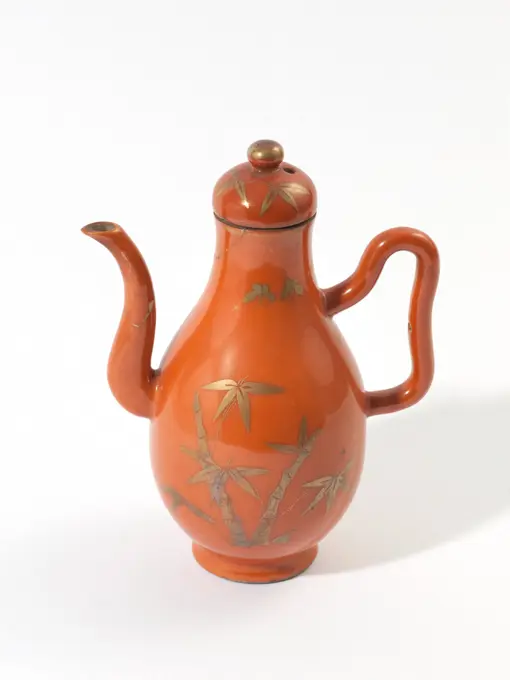
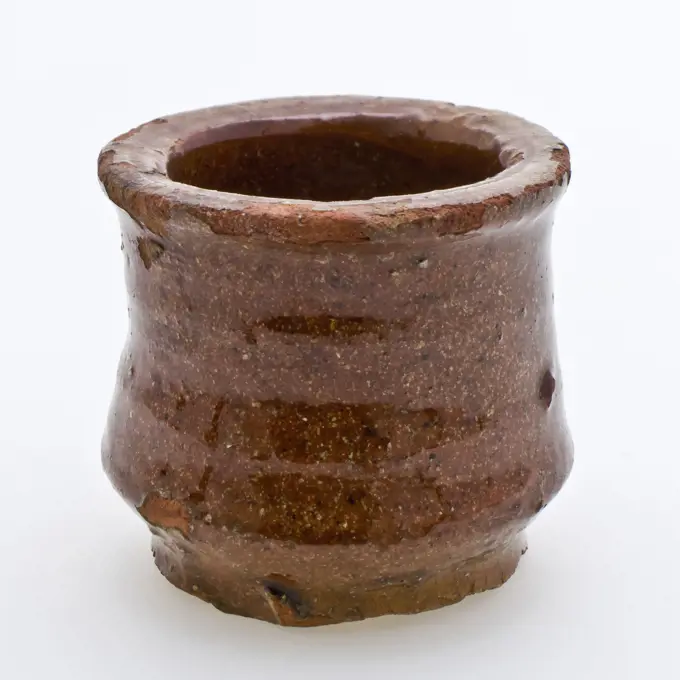
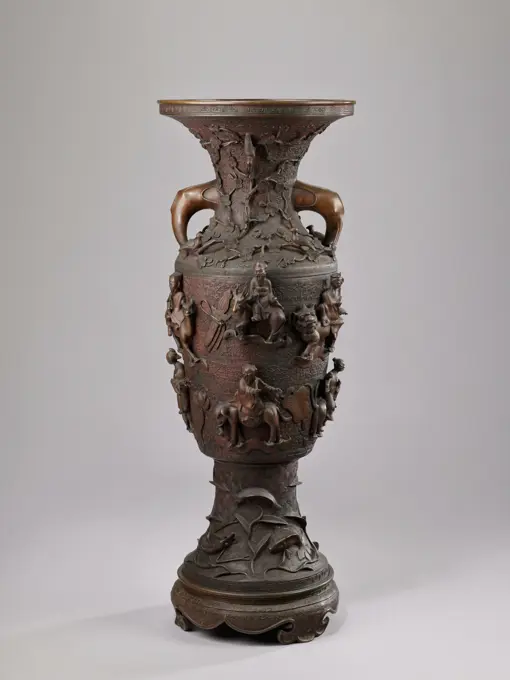
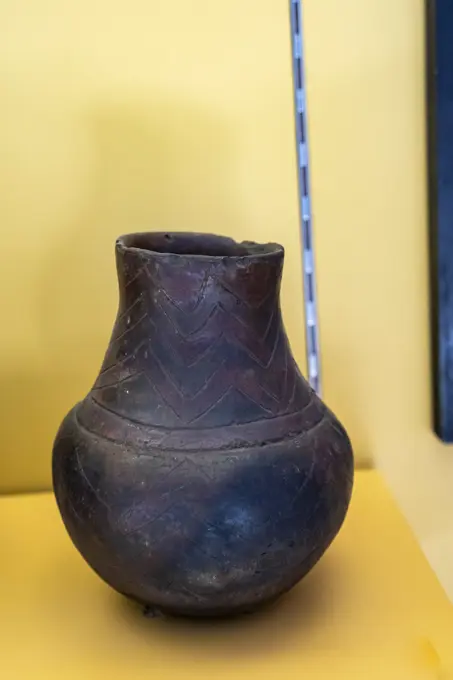
Ancient Ceramics and Vases

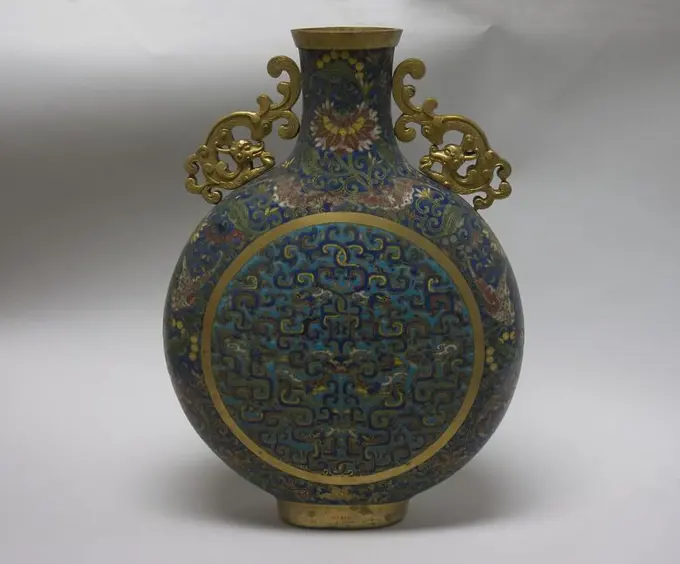
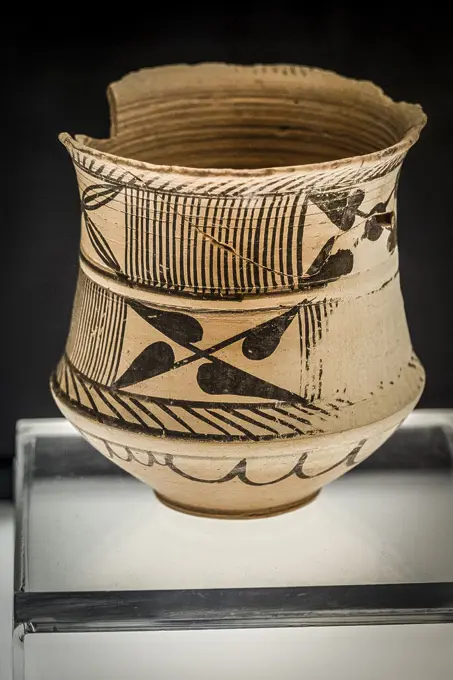
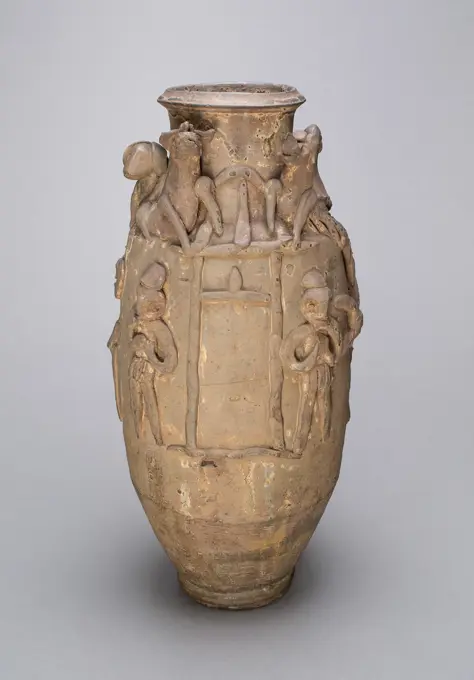
Various antique vessels including bronze and terracotta pieces from different cultures, highlighting intricate details and historic significance.
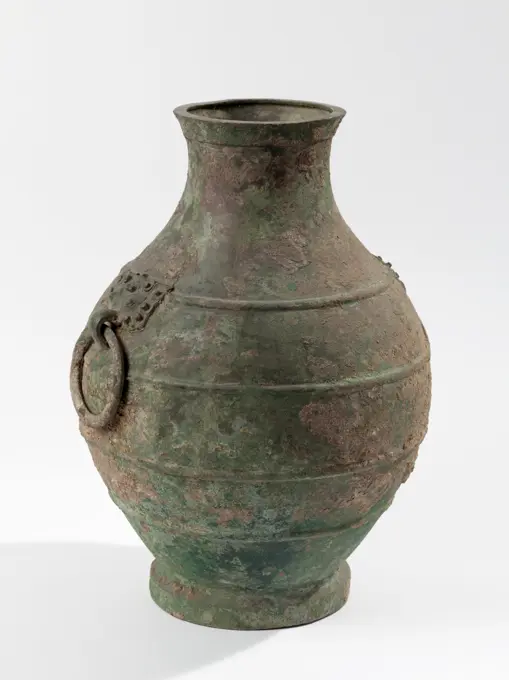
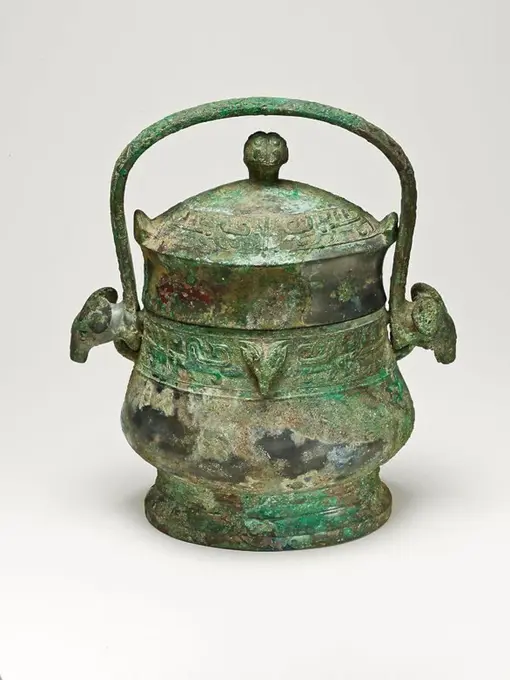
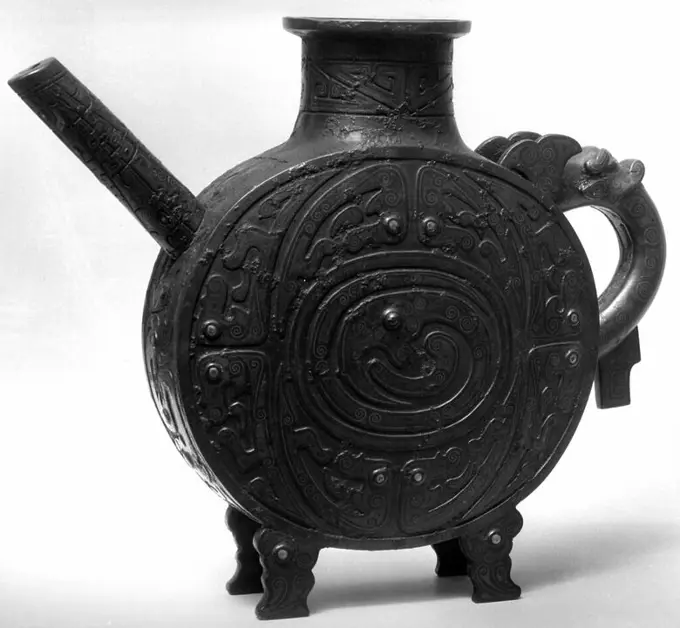
Hu ". Bronze, green patina. China, Han. Paris dynasty, Cernuschi museum. 72359-8 Hu bottle, bronze, han dynasty, green patina
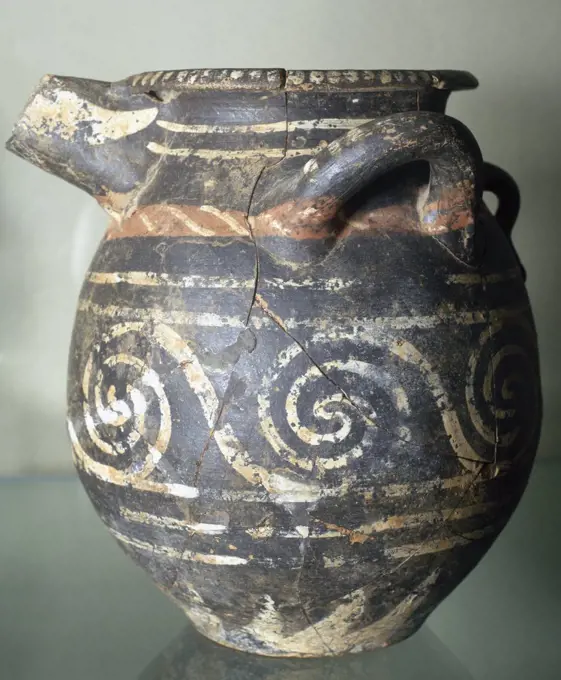
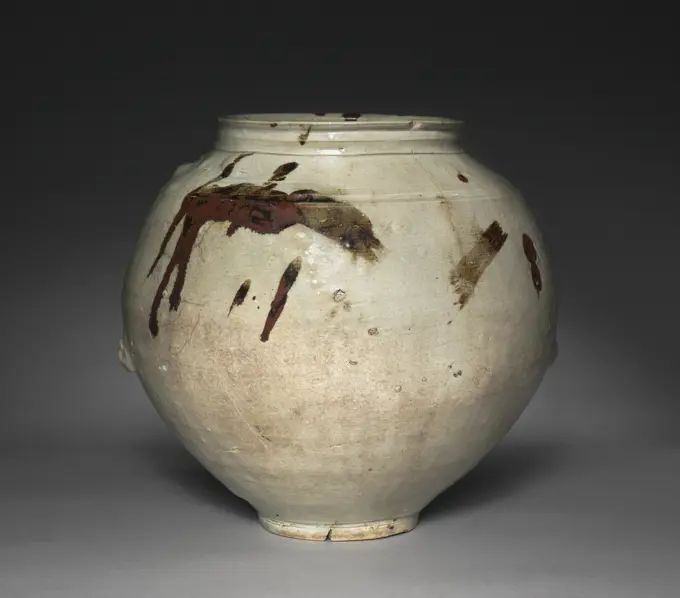
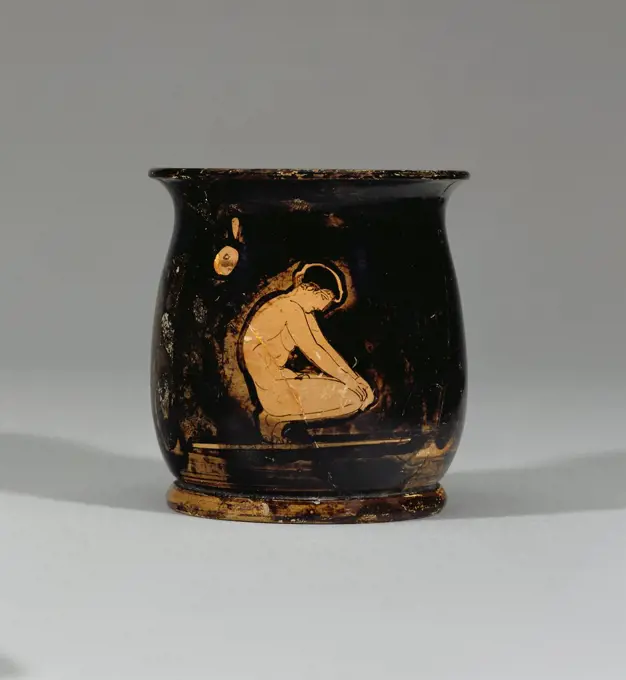
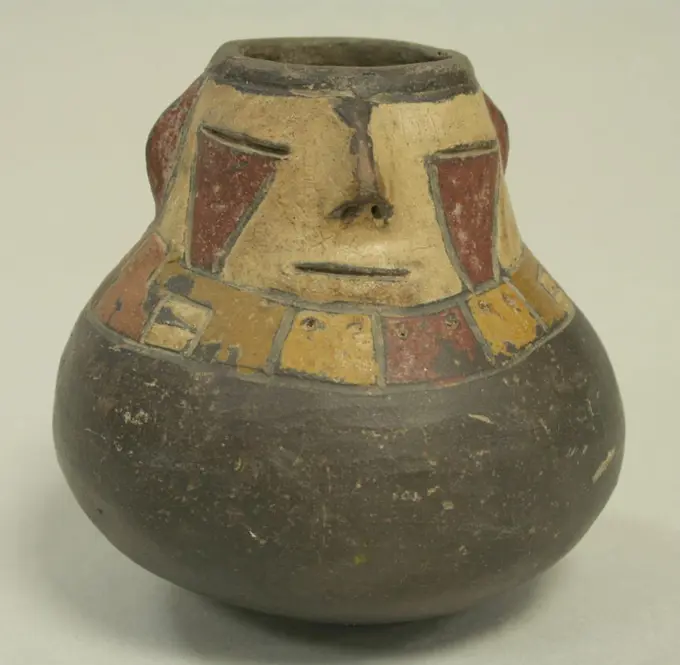
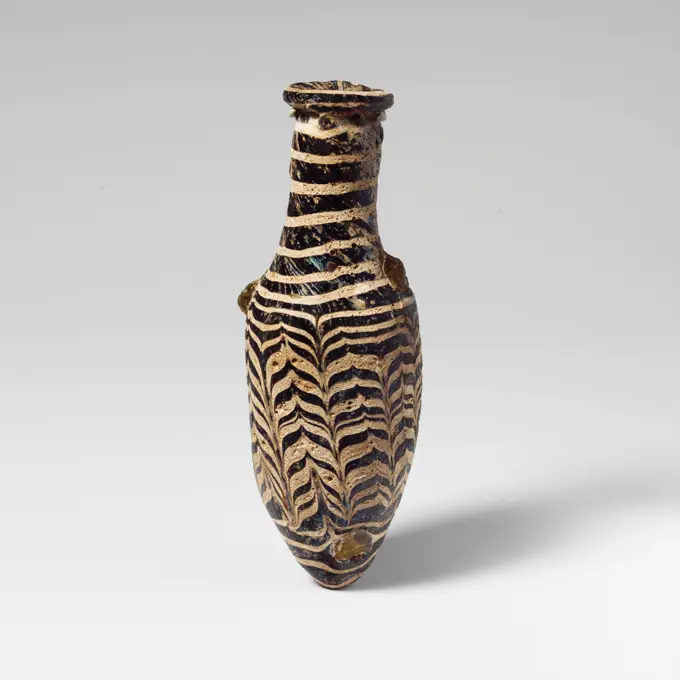
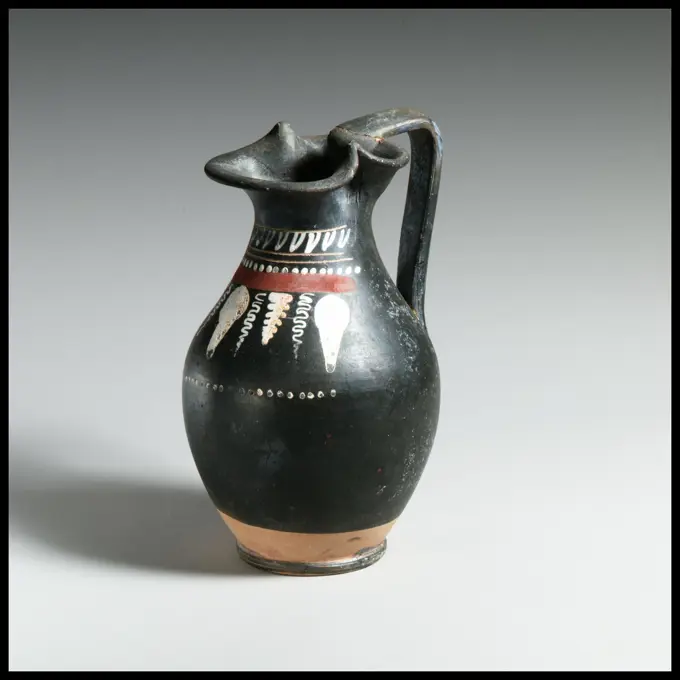
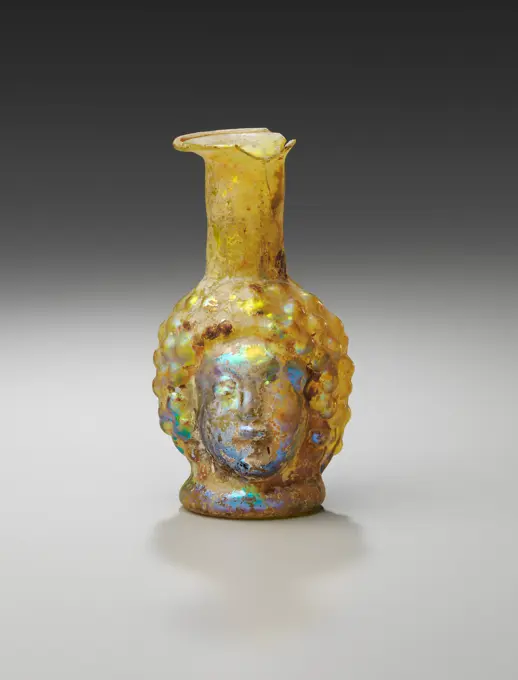
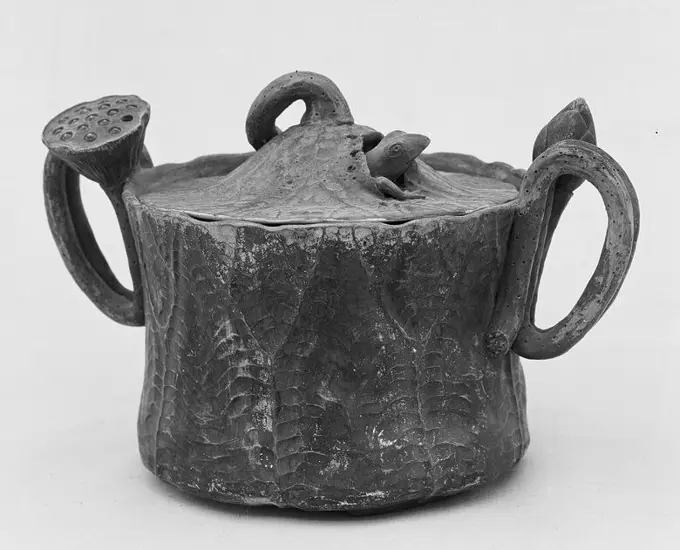
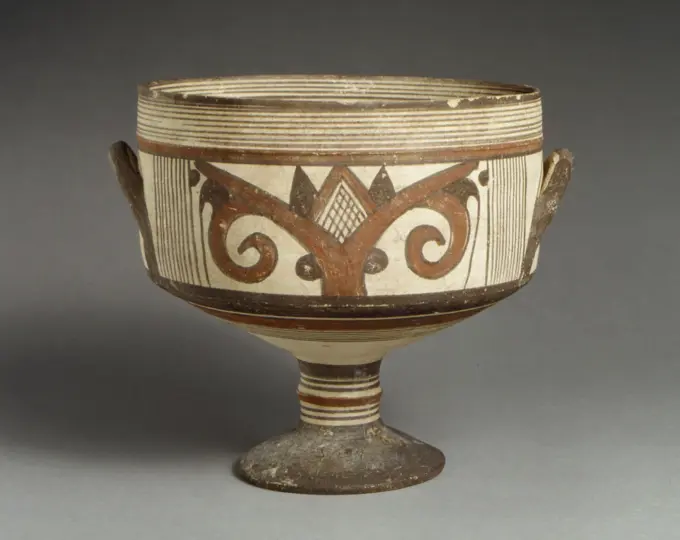
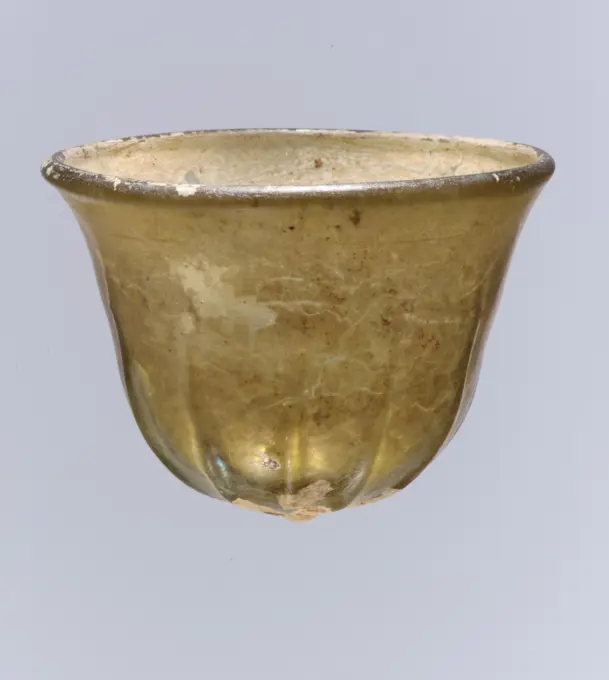
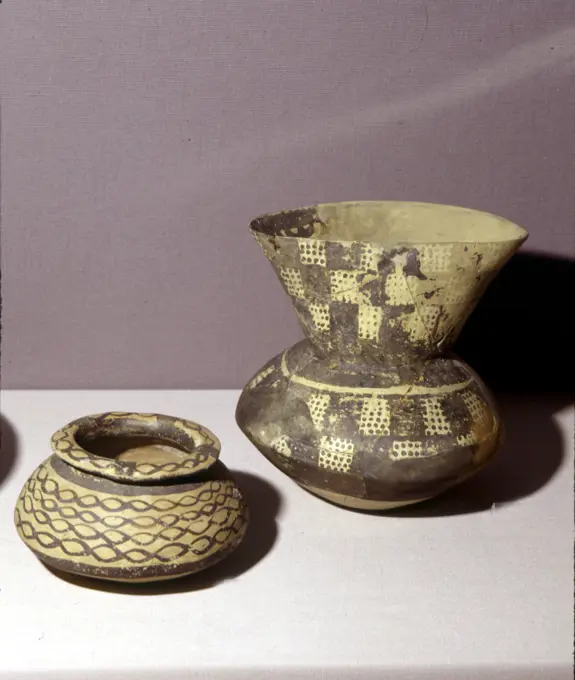
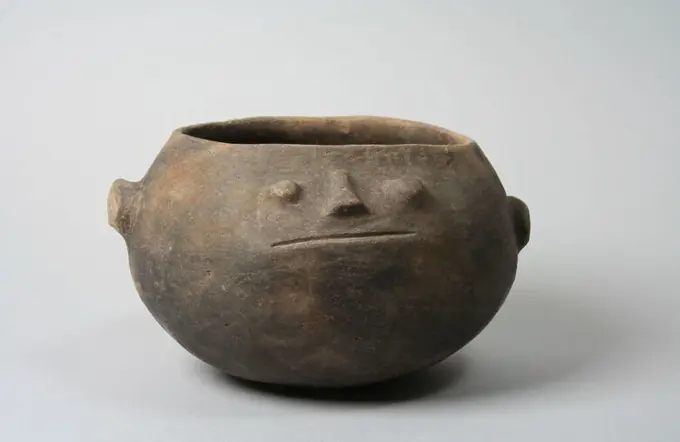
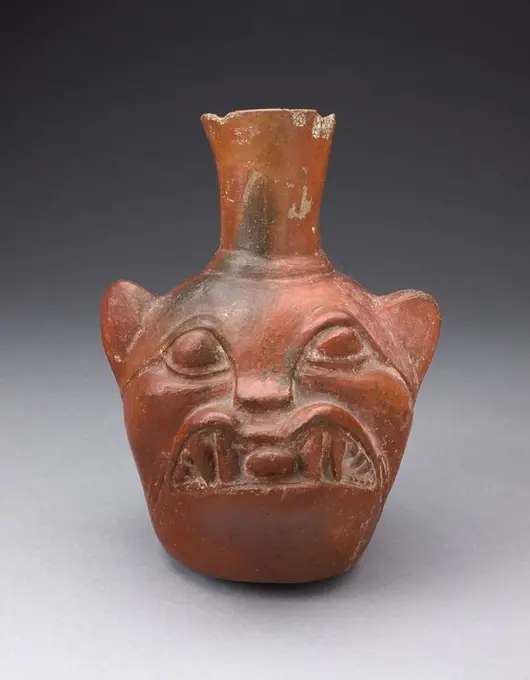
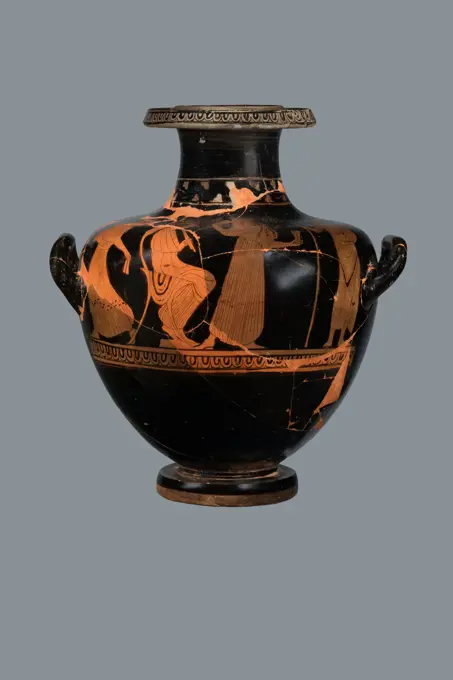
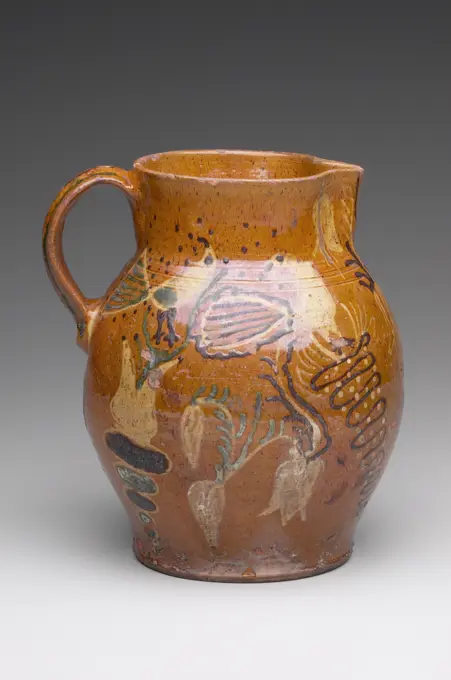
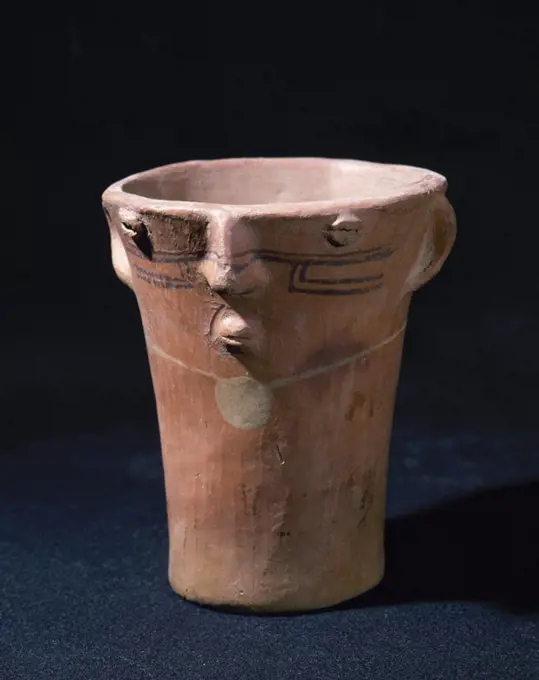
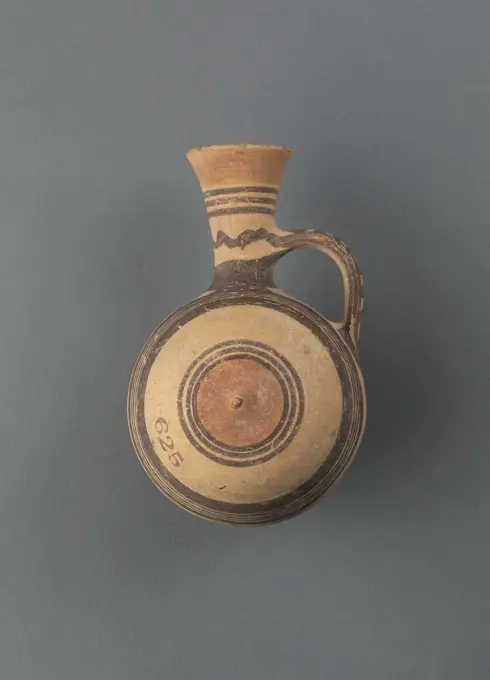
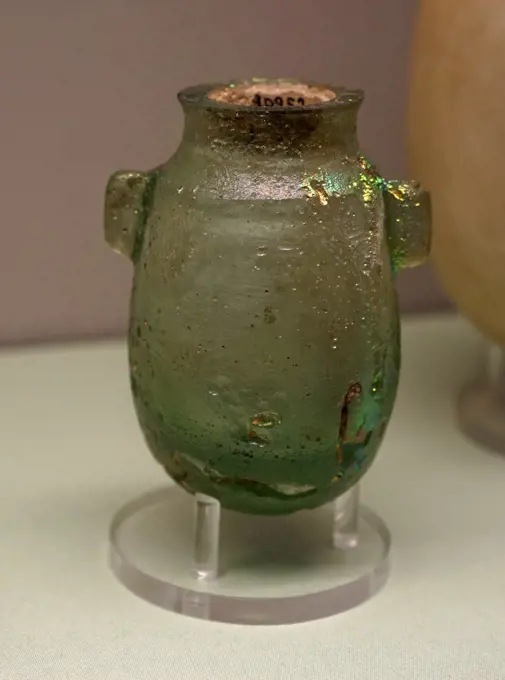
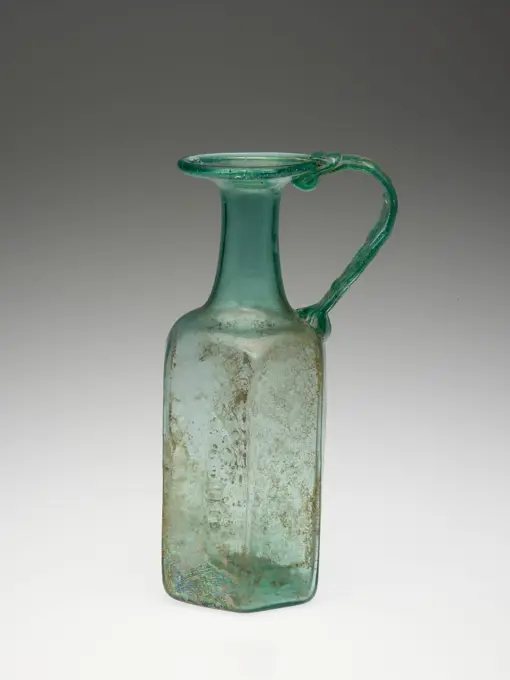
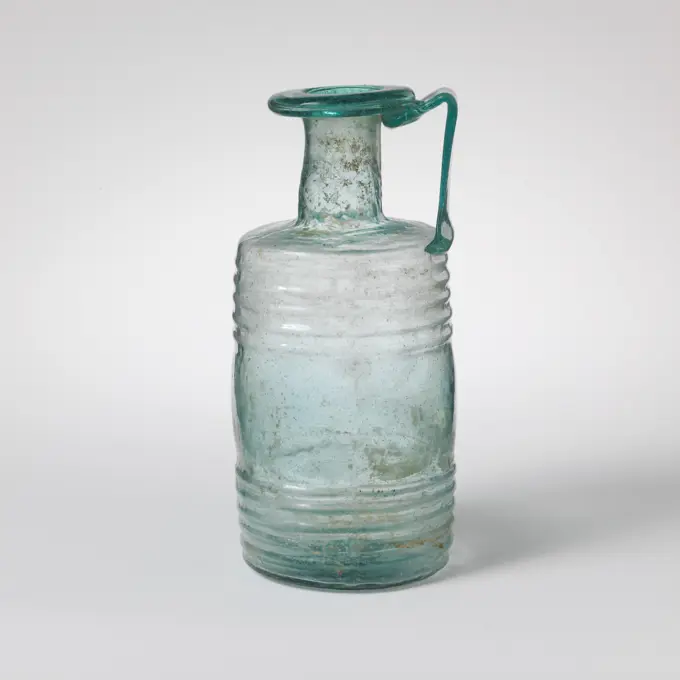
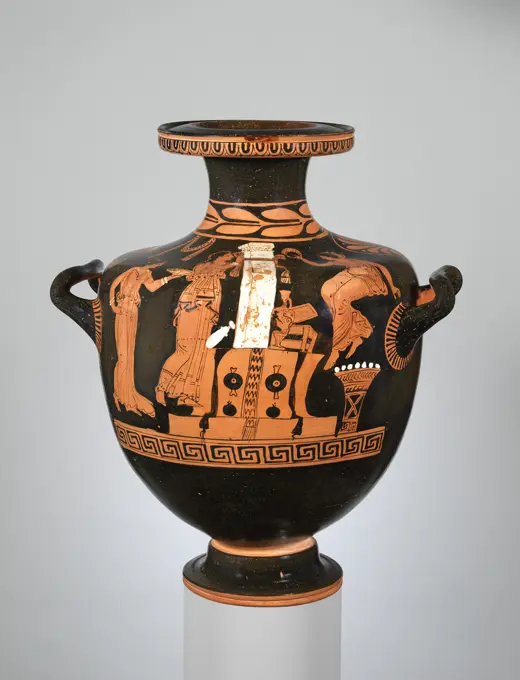
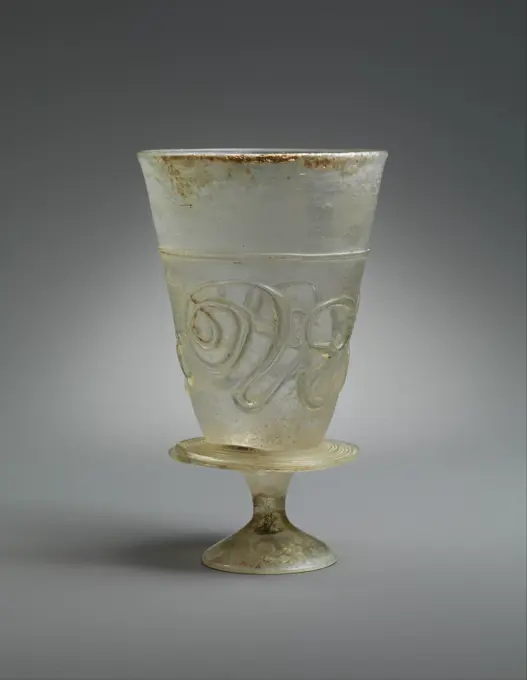
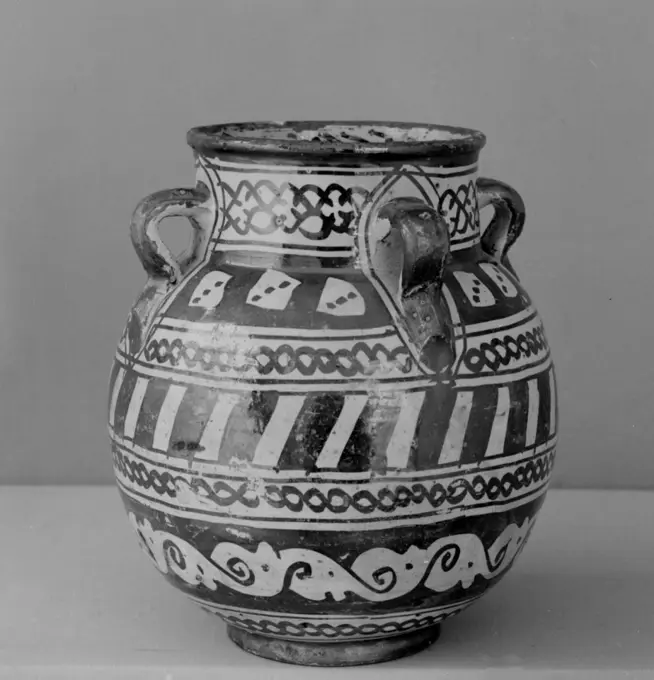
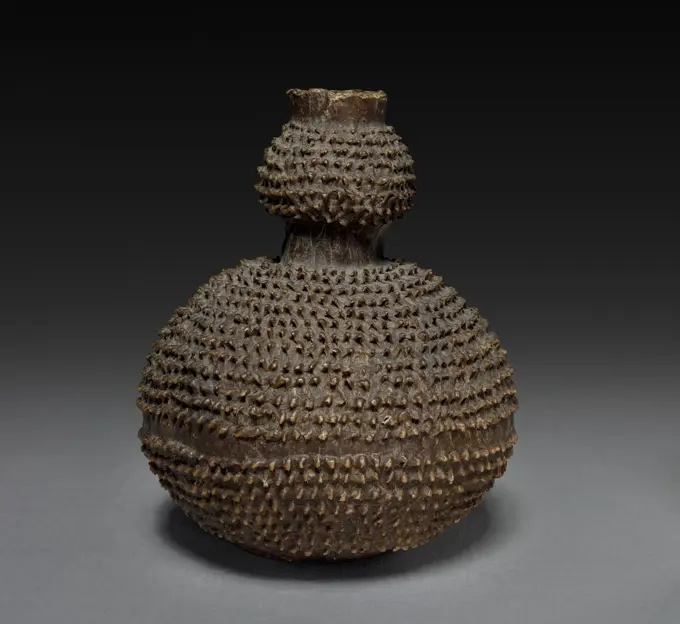
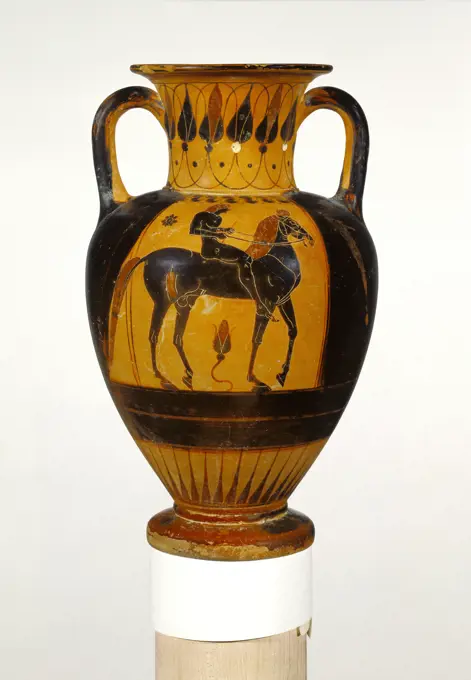
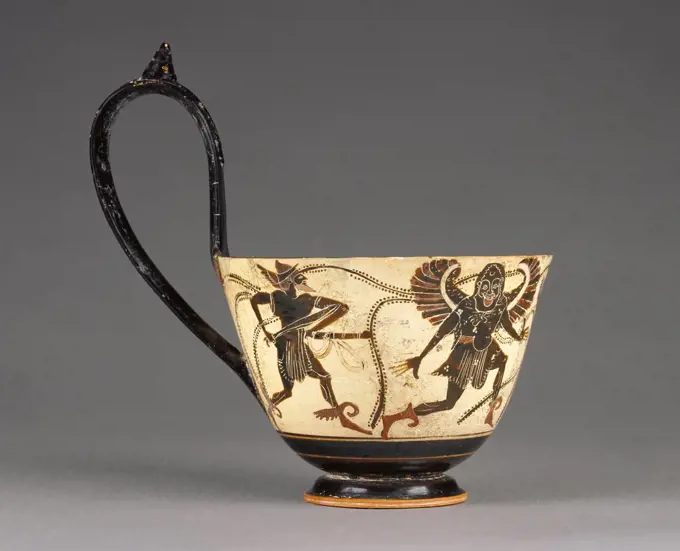
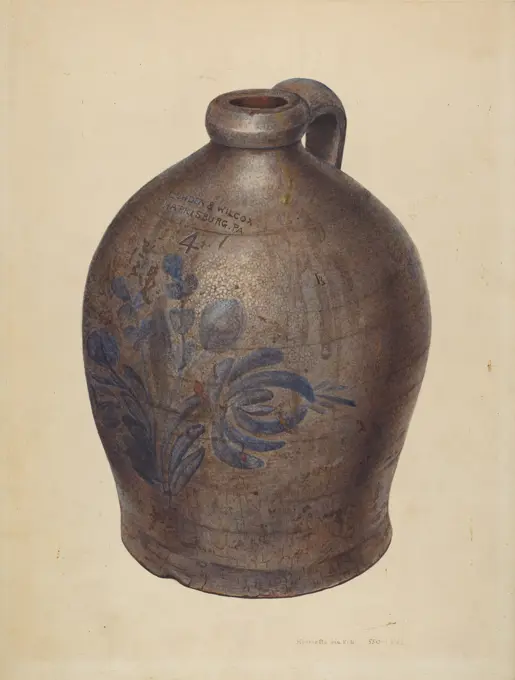
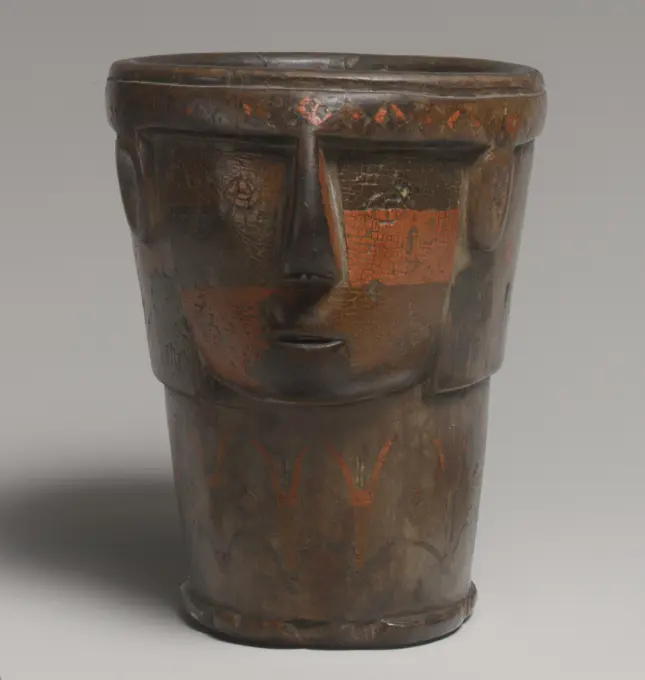
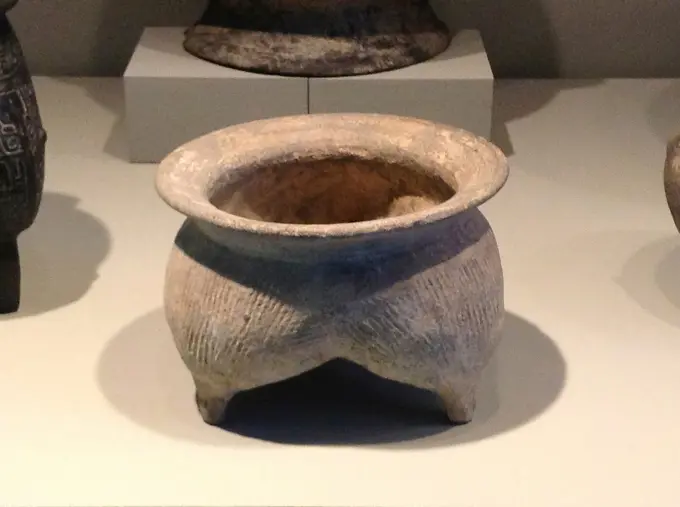
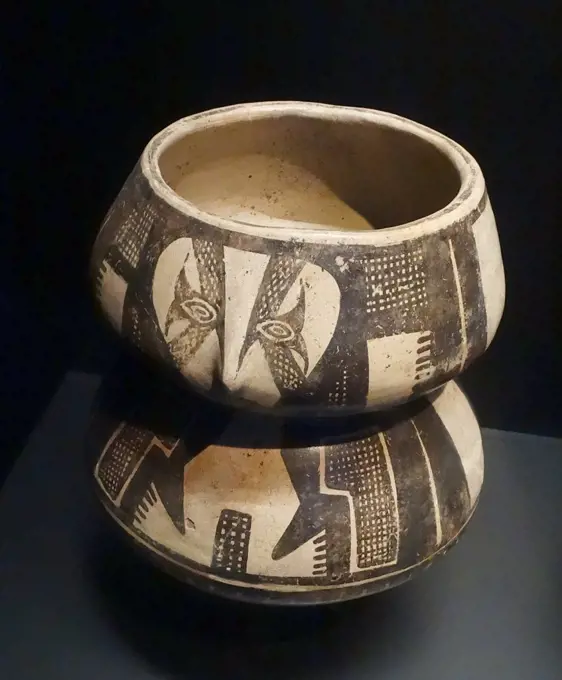
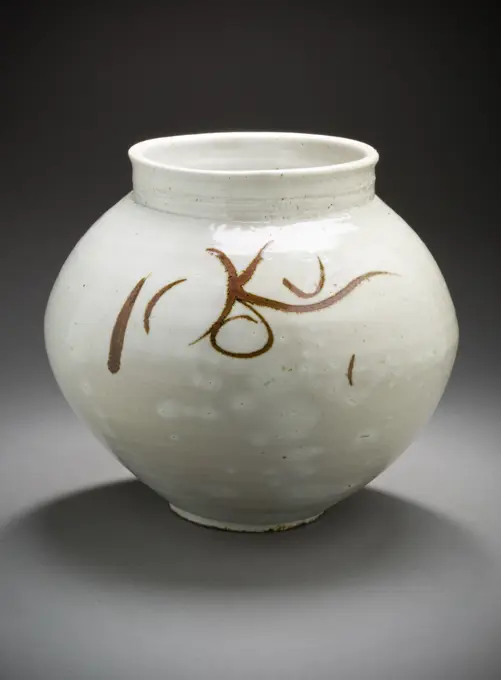
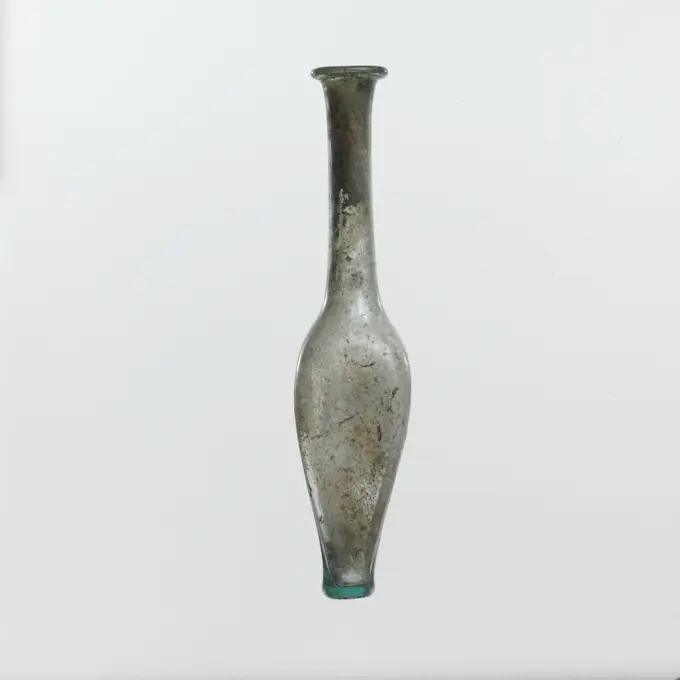
Glass bottle with indented side 2nd-3rd century A.D. Roman Translucent blue green.Everted, tubular rim, folded over and in; tall, slender neck with slightly concave profile; steeply sloping shoulder; side of body tapers downwards to outsplayed ridge around base; small, thick, diamond-shaped bottom with pontil scar.On body, four deep vertical indents, forming a roughly square shape in section with projecting, rounded corners.Intact; pinprick and some elongated bubbles, and glassy inclusions; faint dulling and iridescence on exterior, patches of thick soil encrustation and iridescent weathering on interior.Greenish, with indented sides.. Glass bottle with indented side. Roman. 2nd-3rd century A.D.. Glass; blown and tooled. Mid to Late Imperial. GlassMinoan Civilization.  Bronze Age. Island Crete. Kamares ware jar with bands and interconnected spirals. Ancient Palaces Period. 1900-1700 BC. Heraklion Archaeological Museum. Crete. Greece. JARRITA DE LA NECROPOLIS DE PALENCIA. Location: MUSEO ARQUEOLOGICO NACIONAL-COLECCION. MADRID. SPAIN.olla decorada con friso de animales, , siglo I a.C. Procedente de Numancia, Garray, museo Numantino de Soria, Soria, Comunidad Autónoma de Castilla, Spain, Europe.Jar with Design in Underglaze Iron, 1800s-1900s. Korea, Joseon dynasty (1392-1910). Porcelain with underglaze iron; outer diameter: 34.2 cm (13 7/16 in.); overall: 33 cm (13 in.).Jug 18th century German, Westerwald (Grenzau or Grenzhausen). Jug 194595Attic Red-Figure Oinochoe; Eretria Painter, Greek (Attic), active 440 - 410 B.C.; Athens, Greece, Europe; 430 - 420 B.C.; Terracotta; Object: H: 8.7 x Diam. (body): 8.3 cm (3 7/16 x 3 1/4 in.), Object (mouth): Diam.: 8.4 to 8.5 cm (3 5/16 to 3 3/8 in.), Object (foot): Diam.: 7.3 cm (2 7/8 in.)Libation Vessel ca. 1279-1213 B.C. New Kingdom, Ramesside This spouted libation vessels was near the top of the sand that filled the colonnade and entrance corridor of a Middle Kingdom tomb at Dendera. It was found with a metal incense burner and another spouted libation vessel that was inscribed with the cartouches of Ramesses II. The excavator, W.M.F. Petrie, surmised that the three ritual objects had been stolen from one of the temples and hidden in the tomb which lies about 400 yards (ca. 365 meters) south of the enclosure wall that surrounds the Temple of Hathor.. Libation Vessel. ca. 1279-1213 B.C.. Bronze. New Kingdom, Ramesside. From Egypt, Northern Upper Egypt, Dendera, Tomb of Antefoker, in sand filling the colonnade, EEF excavations, 1898. Dynasty 19Miniature Effigy Vessel 3rd century B.C. Paracas This Paracas miniature effigy vessel has a stylized human head with bulbous lower body. Three horizontal incisions indicate closed eyes and mouth. A thin nose and subtly rounded red triangles on either side represent ears. Post-fire resin paint highlights facial features on a cream background. Black paint highlights the bridge of the nose and indentations for nostrils. Extending below each eye is a deep red triangle. Closed eyes and red triangles below suggest the individual depicted is deceased. The red triangle may represent cinnabar, a mineral bright red in color that is often applied to funerary masks and artifacts found in the graves of high-status individuals in the Andes. Below the head is a row of incised geometric shapes alternating in red, yellow, and green colors suggestive of a decorative collar. In ancient cultures, deceased individuals were often interred wearing fine jewelry and clothing. The production of such a vibrant sGlass amphoriskos (perfume bottle) 2nd to mid-1st century B.C. Greek, Eastern Mediterranean Translucent blue; handles in translucent greenish yellow; trail in opaque white.Uneven, slanting rim-disk, with thick rounded edge and sloping inward; thick cylindrical neck, with tooling indents around top; narrow angular shoulder; elongated ovoid body; pointed bottom; vestiges of two vertical handles applied in pads at different heights on shoulder, trailed up neck, and pressed on to top neck; a marvered blob of translucent greenish yellow glass applied over trail on lower body.Trail applied to rim-disk and wound spirally down, tooled into a feather pattern on body in nine irregular panels of alternating upward and downward strokes, then continuing on lower body in a spiral and ending on pointed bottom.Body complete, but most of handles missing; dulling, pitting, iridescence, and small areas of milky white weathering.. Glass amphoriskos (perfume bottle) 253089 Greek, Eastern Mediterranean, GlOinochoe ca. 350-300 B.C. Attributed to the Knudsen Group. Oinochoe 255317Vase.. Prints. 1912. The Miriam and Ira D. Wallach Division of Art, Prints and Photographs: Art & Architecture CollectionGong PouringVesselGlass beaker 4th century A.D. Roman Translucent pale blue green.Everted, rounded rim; vertical side to body, then tapering in to splayed base with folded tubular foot ring; small kick in bottom, with pontil scar.Intact; many pinprick bubbles and blowing striations; pitting, iridescence, and some milky weathering under rim and bottom on exterior, thick creamy brown weathering and brilliant iridescence on interior.. Glass beaker 245243Etruscan vase with human faces, from Spina, Emilia Romagna Region, ItalyTerracotta rhyton (vase for libations or drinking). Culture: Greek, South Italian, Apulian, Tarentine. Dimensions: H.: 6 1/8 in. (15.6 cm). Date: late 4th-early 3rd century B.C..The head is that of an Italic variety of Maltese dog. These rhyta began to be made about the middle of the fourth century B.C. and were glazed black, with red-figure decoration on the cuff. The latest pieces in the series were unglazed and articulated with paint. Museum: Metropolitan Museum of Art, New York, USA.Jar 17th-18th century. Jar 446946Amphora decorated with snakes and eyes, black-figure pottery. Greek Civilization.Double headflaskTeapot. Culture: Japan. Dimensions: H. 4 3/4 in. (12.1 cm); W. 5 1/8 in. (13 cm). Date: 19th century. Museum: Metropolitan Museum of Art, New York, USA.Vase; Kinkôzan, Sôbei VII (1867-1927); around 1900-1905 (1896-00-00-1905-00-00);Jar, 1600s-1800s. Japan, Edo period (1615-1868). Pewter; overall: 21.6 cm (8 1/2 in.).Kylix ca. 750-600 B.C. Cypriot Angular form with bands and a bold lotus design in black and red. The decoration and shape of this kylix exemplify Cypriot ceramics from the Cypro-Archaic I period.. Kylix 240053Hot water jug ca. 1775-80 British, Sheffield. Hot water jug 191282Glass Palm Cup 7th-8th century Frankish. Glass Palm Cup 465671 Frankish, Glass Palm Cup, 7th8th century, Glass, Overall: 2 1/2 x 3 7/16 in. (6.4 x 8.7 cm). The Metropolitan Museum of Art, New York. Gift of J. Pierpont Morgan, 1917 (17.193.334)Caddy with a lidBottle with Incised Designs 5th-2nd century B.C. Paracas. Bottle with Incised Designs 308586Halaf pottery, 5500-5000 BC. from Arpachiya. MESOPOTAMIA.Stonepaste Bowl with Blue and Black Underglaze Painting late 12th century. Stonepaste Bowl with Blue and Black Underglaze Painting 450580CASTAÑERA O "PUCHEIRO DAS CASTAÑAS" CON AGUJEROS Y TAPA. Location: ALFARERIA. Coruña. SPAIN.CANTARO DE ARCILLA ROJA VIDRIADO Y PINTADO - PROCEDE DE BADAJOZ. Location: MUSEO DEL PUEBLO ESPAÑOL. MADRID. SPAIN.BUIRE. Porcelain with enamel decor, Qing dynasty (1644-1912). Provenance: China. Paris, Cernuschi museum. 78839-22 Asian art, Chinese art, art of living, bun, fine ceramic, jug, ching dynasty, Qing dynasty, tsing dynasty, fine porcelain, container, dishesGarnek kuchenny. nieznany warsztat północno mezopotamski, workshopPottery ointment jar, conical model, red shard, internally glazed, ointment jar pot holder soil find ceramic earthenware glaze lead glaze, hand turned glazed baked Pottery ointment jar conical model red shard internal glazed Flat top edge. Narrowing of the boiler above the stand Platform with light soul archeology Rotterdam Oude Plantage health care indigenous pottery store pharmacy sell craft Soil discovery: Oude Plantage Rotterdam 1956.Wedding Jar, 1900. Southwest, Pueblo, Santa Clara, Post-Contact, 20th century. Ceramic; overall: 15.5 x 21.5 cm (6 1/8 x 8 7/16 in.).Storage Jar. United States, New Mexico, Zia Pueblo, Zia, circa 1900. Furnishings; Serviceware. Earthenware and pigmentsTerracotta vase with figures, Greek ArtVase. unknown, craftsmanDouble Chambered Whistling Jar with Parrot. Culture: Peru; north coast (). Dimensions: Overall: 5 3/4 x 7 7/8 in. (14.61 x 19.99 cm)Other: 7 7/8 in. (19.99 cm). Date: 2nd century B.C.. Museum: Metropolitan Museum of Art, New York, USA.Zulu culture jar, South Africa, 19th century, clay, Anthropology National Museum, Madrid, SpainBowl with Face. Culture: Mississippian. Dimensions: H. 4 in. x Diam. 6 3/8 in. (10.2 x 16.2cm). Date: 11th-14th century. Museum: Metropolitan Museum of Art, New York, USA.Pitcher, 12th century, 7 3/4 x 7 1/2 in. (19.69 x 19.05 cm), Ceramic, pigment, United States, 12th centuryTerracotta vase with two handles. Etruscan civilization.Jar in the Form of a Jaguar Head. Tiwanaku-Wari; Costal Peru or highland Bolivia. Date: 700 AD-1000. Dimensions: H. 14.3 cm (6 5/8 in.). Ceramic and pigment. Origin: Peru, southern. Museum: The Chicago Art Institute, Chicago, USA.. .Hydria czerwonofigurowa. Malarz Nauzyki, authorJARRA DE PICO DE CIGÜEÑA-VIDRIADA Y PINTADA AL MODO ISLAMICO DEL S XV. Location: ALFARERIA. SPAIN.PitcherFragmentary Stamnoid Krater. UnknownPre-Columbian art. Pre-Incan. Cashaloma Culture. Anthropomorphic ceramic vessel. 13 x 10 cm (diameter). From Ecuador. Private collection.Anonymous Toledo / "Tinaja Toledana", Towards 1500, Ceramic (Terracotta stamped and partially glazed), 40 x 46 x 27 cm.Juglet 850-750 B.C. Cypriot. Juglet. Cypriot. 850-750 B.C.. Terracotta. Cypro-Geometric III. VasesEwer 12th-13th century. Ewer 445269Serving Vessel(Gui)Glass and alabaster jars belonging to the ancient Assyrian King Sargon II. Dated 8th Century BCRitual Flask 501 CE-700 CE Syria. Glass vessels were part of the luxurious domestic decoration displayed in wealthy households in both urban villas and rural estates in the later Roman and early Byzantine eras (about 300ñ725). Glass vessels were used for a variety of purposes, including cosmetic containers. In the kitchen and for dining, pitchers served water and wine, and small cups were used for drinking. Glass was also used for lamps to light the home.Byzantine glass craftsmen improved upon the techniques, forms, and decorative motifs they had inherited from their Roman predecessors. An imperial edict of 337 exempted glassworkers from personal taxes and attested to their relative status in society; it remained in effect for several centuries. These artisans would, in turn, pass on their craft to successive generations, including those who worked under Islamic rule after the important Byzantine provinces of Egypt, Palestine, and Syria were conquered in the seventh century.. Glass, moVase. Culture: China. Dimensions: H. 17 1/8 in. (43.5 cm); W. 12 1/2 in. (31.8 cm); Diam. 5 in. (12.7 cm). Date: 19th century. Museum: Metropolitan Museum of Art, New York, USA.Painted ceramic vessel of indigenous tradition, Carratiermes Necropolis, 1st century BC - 1st century AD, Tiermes Archaeological Site Museum, Soria, autonomous community of Castilla y León, Spain.Pair of light blue glass balm-pots, from PompeiBowl 13th century. Bowl 447181Glass barrel jug 3rd century A.D. Attributed to Frontinus Translucent blue green; handle in same color.Tubular rim, folded out, round, and in, and flattened on top; slightly uneven cylindrical neck; broad, slightly sloping shoulder; cylindrical body with slightly convex sides; flat bottom, slightly pushed-in at center, with small round pontil mark; broad, flat strap handle attached to top edge of body, drawn up vertically, then turned in and down, and trailed on to underside of rim and top of neck. Body blown into a three-part mold of two vertical sections, extending to base of neck, joined to a disk-shaped base section.Body shaped and decorated like a barrel with three horizontal bands of roughly equal width: a central plain band flanked above and below by bands comprising six continuous horizontal ribs; on bottom, a faint circle around center with indistinct marking outside it, perhaps vestigial lettering.Intact; many pinprick bubbles; small patches of weatehring and faint iridescencBeaker Depicting Rows of Abstract Human Heads 180 BCE-500 CE Nazca Valley. Ceramic and pigment . NazcaMagic Bottle, 2300-2124 BC. Egypt, Late Old Kingdom, Dynasties 5-6, 2647-2124 BC. Quartz crystal; diameter: 2 cm (13/16 in.); overall: 4.2 cm (1 5/8 in.).Lazio Roma Rome SS. Giovanni e Paolo, Museum73. Hutzel, Max 1960-1990 Medieval: Ceramic fragments, sculptural fragments, fresco fragments, inscribed tomb markers. Houses one of the best collections of Malagan medieval ceramics for casting wall monuments, copies of which are housed in campanile. Specific Location: Museum Antiquities: Ceramic fragments, sculptural fragments, architectural fragments Object Notes: Basilica has separate record and is filed separately. German-born photographer and scholar Max Hutzel (1911-1988) photographed in Italy from the early 1960s until his death. The result of this project, referred to by Hutzel as Foto Arte Minore, is thorough documentation of art historical development in Italy up to the 18th century, including objects of the Etruscans and the Romans, as well as early Medieval, Romanesque, Gothic, Renaissance and Baroque monuments. Images are organized by geographic region in Italy, then by province, city, site complex and monument.Ovoid Jar with Animals and Figures 206 BCE-221 CE China. Earthenware with molded relief decoration .Terracotta hydria (water jar) ca. 375-350 B.C. Attributed to the Workshop of the Iliupersis Painter Woman at a tombAlthough funerary scenes abound in South Italian vase-painting, few depict activities at a grave site. In a rare exception, this vase shows a woman tying a fillet around the pillar-shaped monument while the two others pour a libation and prepare to place a wreath. The type of grave marker and the dedications are comparable to those associated with Athenian lekythoi (oil jars) and stelai, except for the prominent pomegranates here.. Terracotta hydria (water jar). Greek, South Italian, Apulian. ca. 375-350 B.C.. Terracotta; red-figure. Late Classical. VasesGoblet with Applied Decoration 11th-early 12th century This goblet and matching goblet 2000.279.1 are each formed by a conical cup attached to a small, solid, and splayed stemmed foot by a circular flange applied around the base of the cup. They are made of yellowish colorless glass that contains many small bubbles. Both cups are decorated with an unbroken applied trail in the same yellowish color, which forms a horizontal line about two-thirds of the height and continues below to create a fanciful, abstract pattern of curly designs around the cup. The decoration can be read more clearly when the cup is filled with wine. The flange around the base of the cup, also in the same color, is formed by a single trail wound in a spiral to create a protruding disk.This unique matching pair of goblets probably belonged to a single set, since they share the same construction, profile, and decoration. The elegant and well-proportioned profile, probably derived from conical beakers in cut glass witCANDIL DE PIQUERA CORTA. Location: ALHAMBRA-MUSEO-CERAMICA. GRANADA. SPAIN.Bartmann jug, also called Bellarmine jug, with weapon and 1615, beardmug tableware holder soil find ceramic stoneware glaze salt glaze, hand-turned laid glazed baked Light brown glazed here and there blue glaze spots. Twisted ear rings on neck Gray shard initial: CJ archeology drink heraldryJar, miniature 5th-4th century B.C. Etruscan Black glaze and no decoration.. Jar, miniature. Etruscan. 5th-4th century B.C.. Terracotta. VasesStoneware Crock. Dated: 1935/1942. Dimensions: overall: 56.9 x 41.8 cm (22 3/8 x 16 7/16 in.). Medium: watercolor, graphite, and colored pencil on paper. Museum: National Gallery of Art, Washington DC. Author: Mary Fitzgerald.CERAMICA IRANI-JARRO. Location: MUSEO ARQUEOLOGICO NACIONAL-COLECCION. MADRID. SPAIN.Pitcher (Hu) ca. 2500 BC China. Pitcher (Hu) 44465Cap 10th-14th century Arica. Cap 316957Water pot 1840 Japan. Water pot. Japan. 1840. Pottery covered with glaze; decorated in high relief (Soma ware). Edo period (1615-1868). CeramicsFour-handled vase 18th century Spanish, Valencia Tin-glazed earthenware, of which lusterware is one type, was developed in the Middle East in the ninth and tenth centuries to imitate the porcelains produced in China. The opaque white glaze concealed the clay body, which could range from pale buff to brick red, allowing for brilliant effects created by painting the white surface with metal oxides that fired to a range of colors. This technique, as well as the use of metallic lusteran iridescent, coppery painted glazespread throughout the Muslim world, arriving among the potters of Valencia in the thirteenth century. The so-called Hispano-Moresque lusterware, with its fusion of Islamic and Gothic styles and motifs, often in shaped imitating those of metal vessels, was treasured by the elite in Spain during the fifteenth century and exported to the courts of Europe. The Valencian industry declined in the late sixteenth century, as colorful Italian Renaissance maiolica gained in populariFlakon. warsztat wschodniGrain Serving Vessel (Dou) 5th-3rd century B.C. China. Grain Serving Vessel (Dou) 61328Bucket with Swing Handle. China. Date: 1000 BC-950 BC. Dimensions: 30.8 × 25.1 cm (12 1/6 × 9 7/8 in.). Bronze. Origin: China. Museum: The Chicago Art Institute, Chicago, USA.Snuff Container, late 1800s or early 1900s. Africa, Southern Africa, South Africa, Xhosa-style maker. Hide, earth, and blood; Snuff containers made from a mixture of hide, earth, and blood constitute a very rare type of object in the artistic production of southern Africa. The specific gourdlike shape is an even more unusual occurrence. Its materials and purpose refer to the communication between animals and humans.VASO ROMANO DE VELILLA. Location: MUSEUM OF FINE ARTS. SARAGOSSA. Saragossa Zaragoza. SPAIN.Prehistory, Spain, Neolithic. Decorated pottery jar. From Cova de l'Or, Beniarres.Storage Jar; Attributed to Phineus Painter (Greek (Chalcidian), active about 530 - 510 B.C.); Rhegion, South Italy; about 520 - 510 B.C; Terracotta; 32.6 × 20.1 cm (12 13,16 × 7 15,16 in.)fine arts, stone age, neolithic, pottery, foot bowl, clay, Lebo, Hungary, Theiss culture, 2800 - 2500 BC, Hungarian National Museum, Budapest,Black-Figure Kyathos; Attributed to near the Theseus Painter, Greek (Attic), active about 510 - about 490 B.C.; Athens, Greece, Europe; about 510 - 500 B.C.; Terracotta; Object: H (handle knob): 14.7 x Diam. (rim): 7.8 to 7.9 cm (5 13/16 x 3 1/16 to 3 1/8 in.), Object (foot): 5.3 cm (2 1/16 in.)Amphora atica. Geometric period. Upper fringe decorated with horses. C. 8th century BC. National Archaeological Museum of Athens. Greece.Ewer. Culture: China. Dimensions: H. 11 5/8 in. (29.5 cm); W. 14 1/4 in. (36.2 cm). Museum: Metropolitan Museum of Art, New York, USA.Henrietta S Hukill, Gray Stone Crockery Jug, c 1939 Gray Stone Crockery JugLower part of furniture leg with lion feet and frustrum. Dimensions: H. 10.7 cm (4 3/16 in.); W. 8.4 cm (3 5/16 in.); D. 6 cm (2 3/8 in.). Date: 664-30 B.C..This is the lower part of a lion furniture leg like 1977.170, made to slot onto another piece of furniture probably of wood. The fine modeling of the lion's foot and the contrast of the turquoise and dark blue colors convey the fine quality of the original piece.Furniture legs formed from the body and head of a lion conveyed an exalted status in Egyptian tradition. Here the fragile material and form indicate the piece may have adorned a low funerary bed on which the coffin or mummy of a deceased rested, or perhaps a stool intended to hold funerary items in the tomb. Museum: Metropolitan Museum of Art, New York, USA.Red -purital hydria;  330-320 BC (-330-00-00--320-00-00);Kero 17th-18th century Quechua The painted faces on keros of this type indicate that they are meant to represent the forest-dwelling Anti. The eastern slopes of the Andes, descending to the tropical forest of the great river basins, were populated by this ethnically separate group, also called Chunchos and considered savages by the inhabitants of the Inkan empire in the high plateaus and the Pacific coast. Despite their resemblance to face beakers of the Precolombian era, keros shaped in the form of human heads are widely believed to have evolved in a later colonial phase.Unlike the Museum's other head-shaped kero with its narrative frieze (1994.35.26), the back of this kero is simply decorated with traditional Andean floral devices.. Kero 316855Li tripod, 13th-12th century BCE, 3 3/4 x 5 1/4 x 5 1/4 in. (9.53 x 13.34 x 13.34 cm) (diameter at mouth), Earthenware with cord markings, China, 13th-12th century BCE, Hand-built from common clay, this straightforward utilitarian 'cord marked' tripod, like its Neolithic predecessors, was designed to expose a large surface to the cooking fire. At this early point in time, bronze ceremonial vessels were being influenced by Neolithic ceramic shapes such as this one. The situation would soon reverse itself, however, and by the late Bronze Age a majority of ceremonial ceramics were made in imitation of more expensive bronze vessels.Lekythos. Culture: East Greek/Sardis, Lydian. Dimensions: 5 11/16in. (14.4cm). Museum: Metropolitan Museum of Art, New York, USA.Pitcher, c. 1900, Pierre-Adrien Dalpayrat, French, 1844-1901, 16 x 7 x 9 in. (40.64 x 17.78 x 22.86 cm), Stoneware with incised decoration and 'rouge Flambe' glaze, France, Art NouveauVASIJA POLICROMADA DEL NEOLITICO SUPERIOR-CIVILIZAC CUCUTENI-TRIPOLLE.Dish;  around 1550 1069 BC ; New PApre-Colombian terracotta jar from EcuadorIberian ceramics, from Castellones de Ceal, Iberian culture, Archeological Museum. Úbeda, Jaén province, Andalusia, Spain.Jar with Arabesque Scroll Design in Underglaze Iron. Korea, Joseon (1392-1910), 19th century. Furnishings; Serviceware. Wheel-thrown porcelain with iron painted decoration under clear glazeceramic vase isolated on white