Ancient Ceramics and Vessels

A selection of historical ceramics, including terracotta jars and glass perfume bottles, featuring intricate designs from ancient cultures, showcasing craftsmanship.
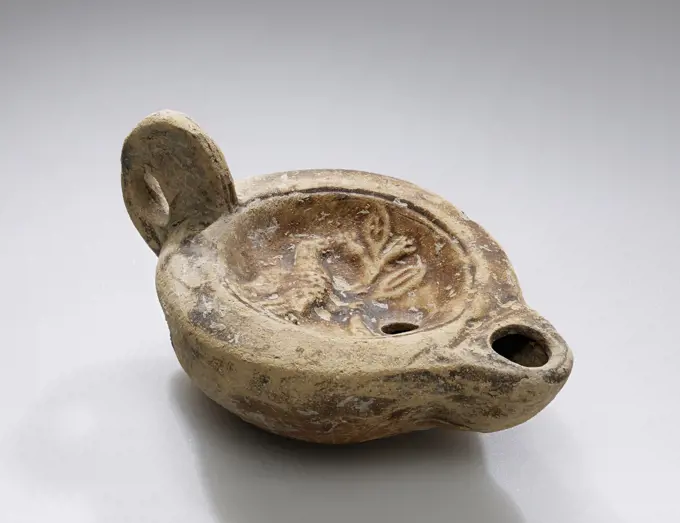
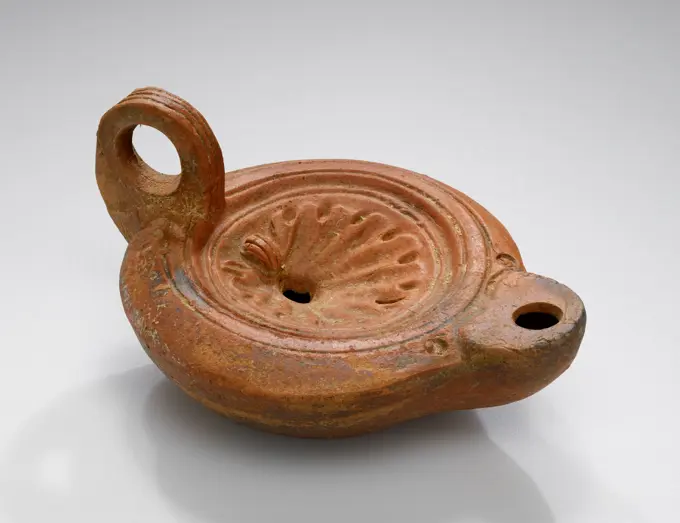
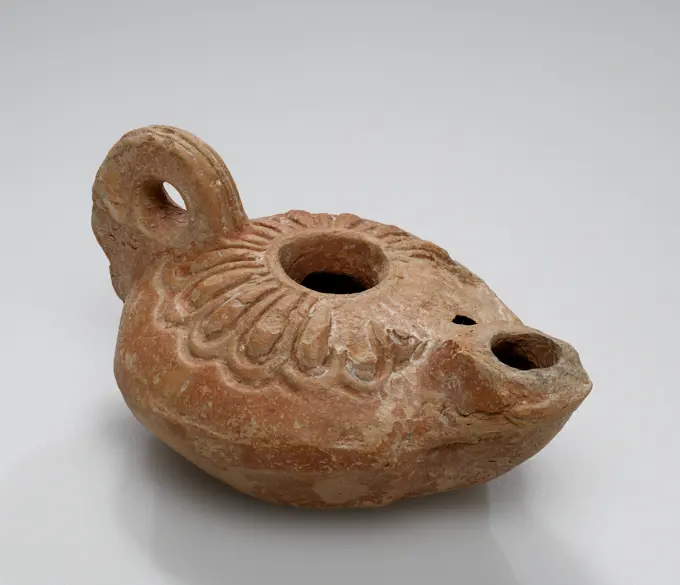
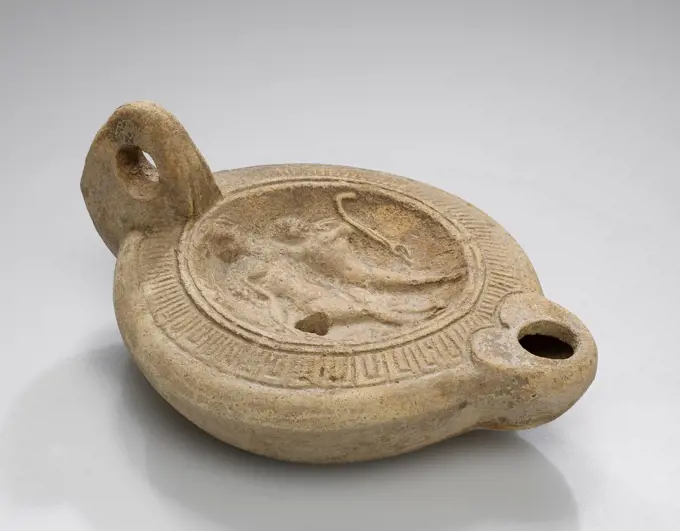
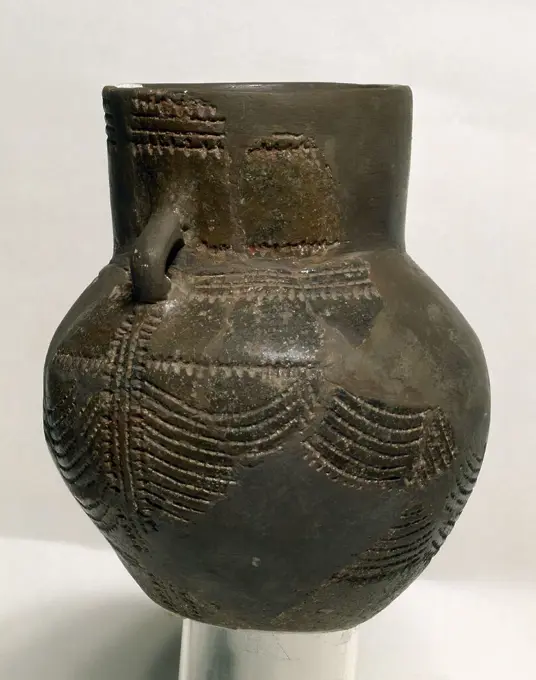
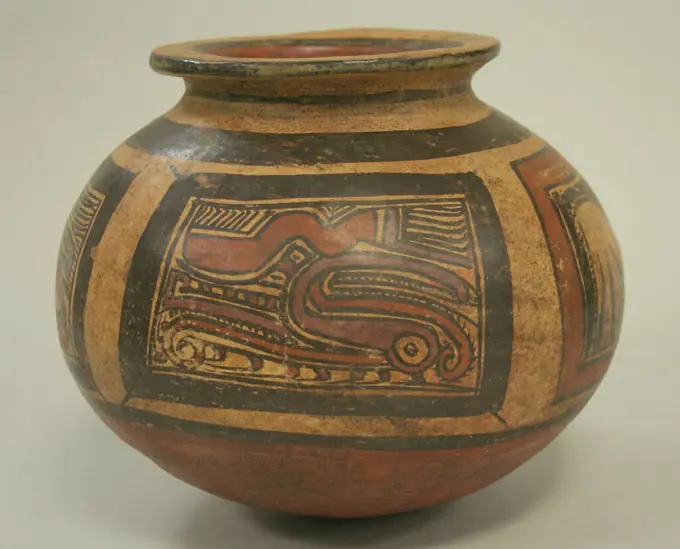
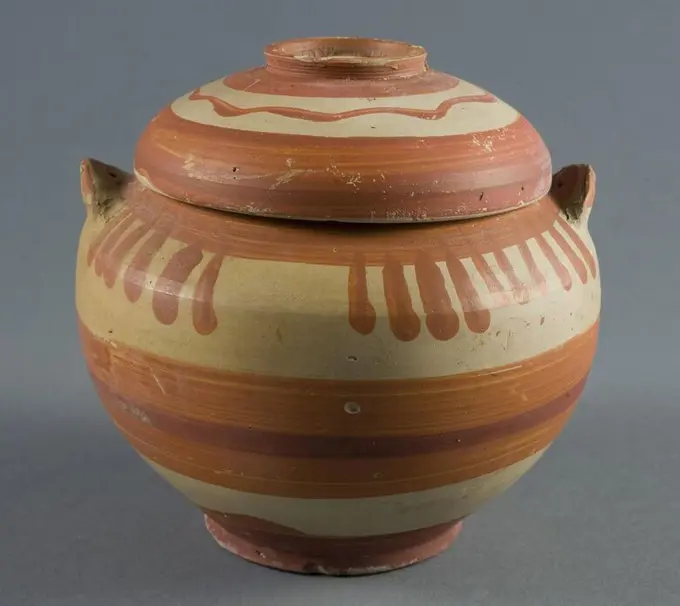
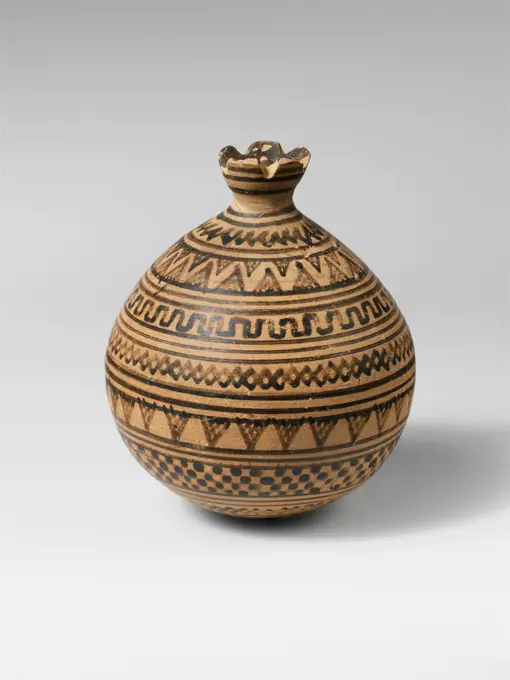
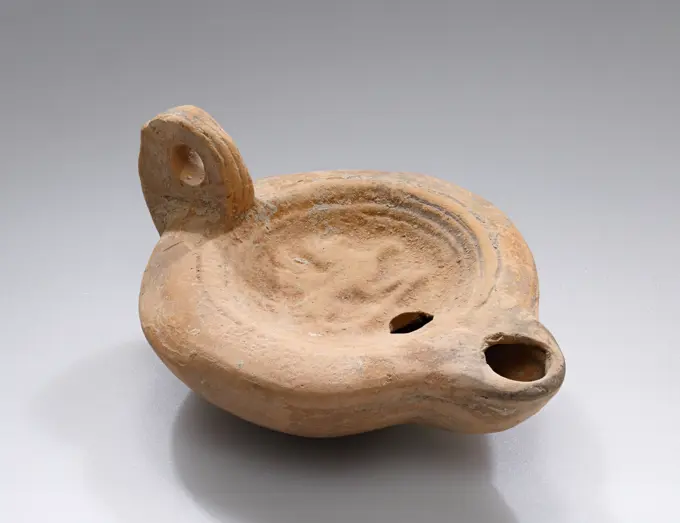
Lamp; Italy; late 1st - early 2nd century; Terracotta; 4.2 × 5.6 × 8.4 cm (1 5,8 × 2 3,16 × 3 5,16 in.)
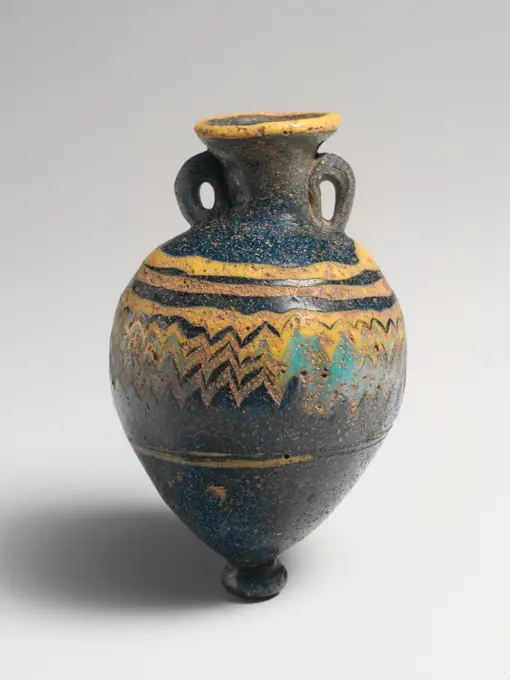
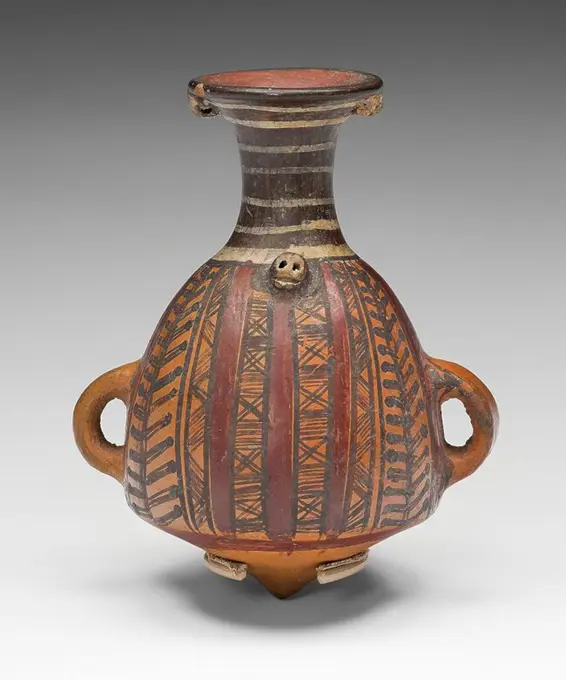
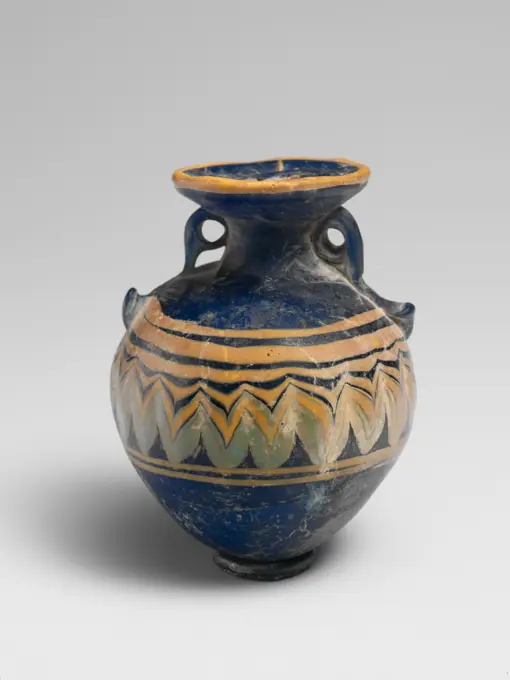
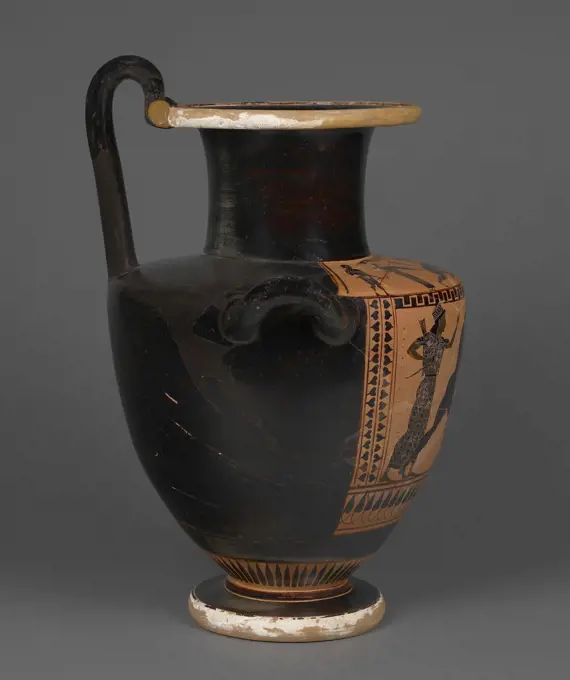
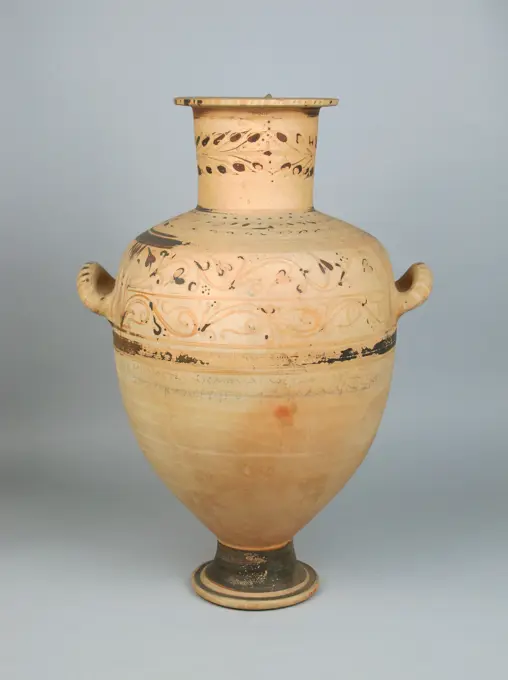
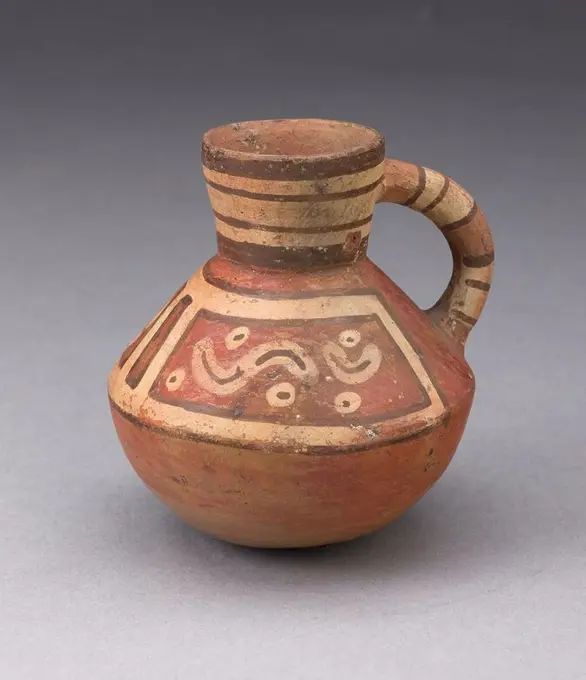
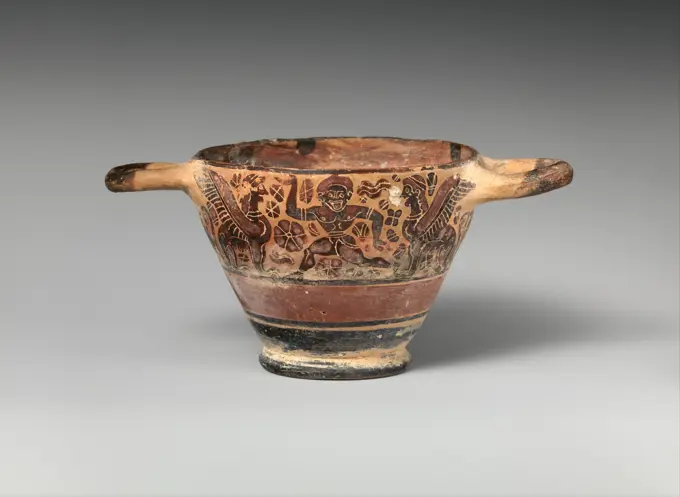
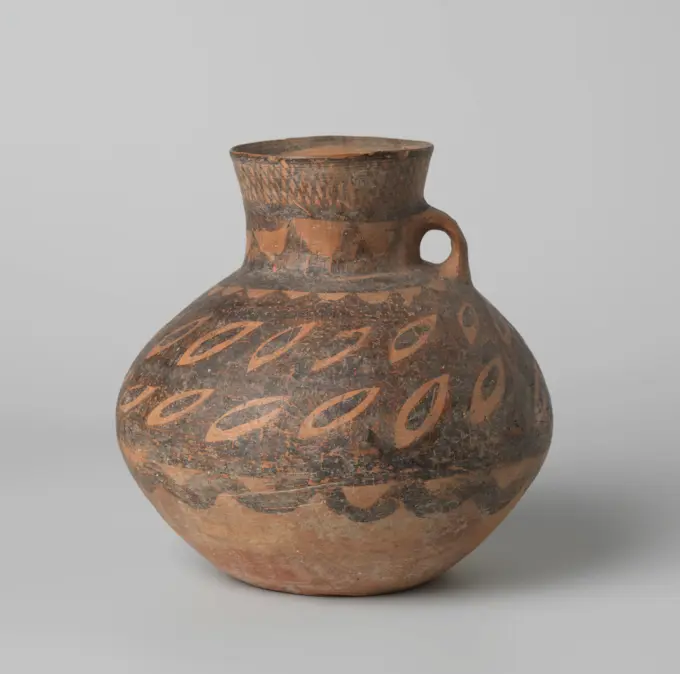
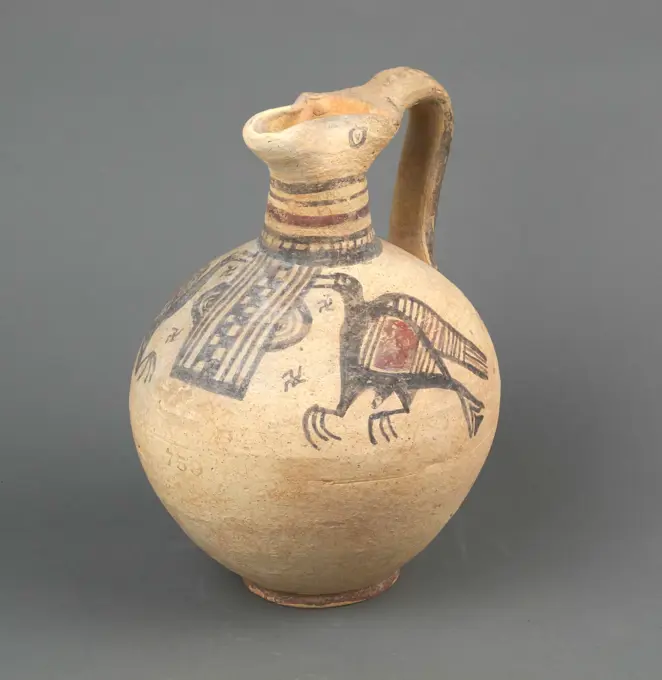
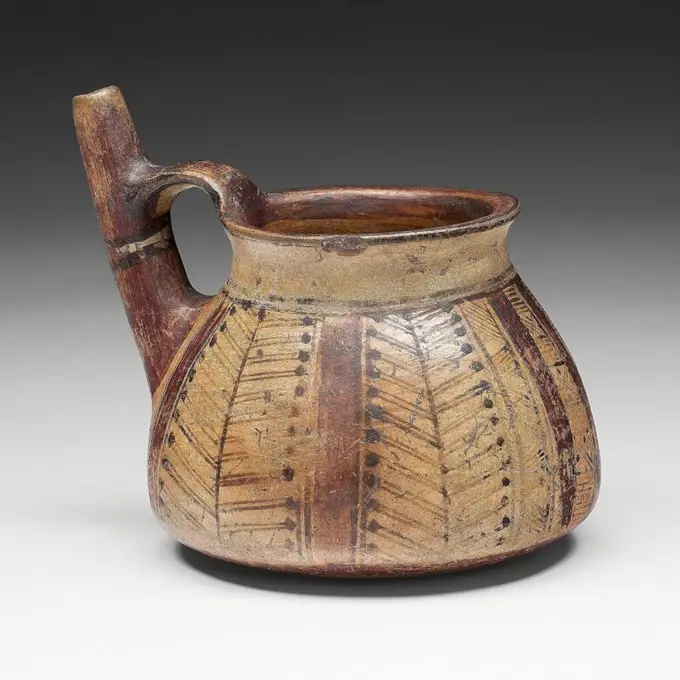
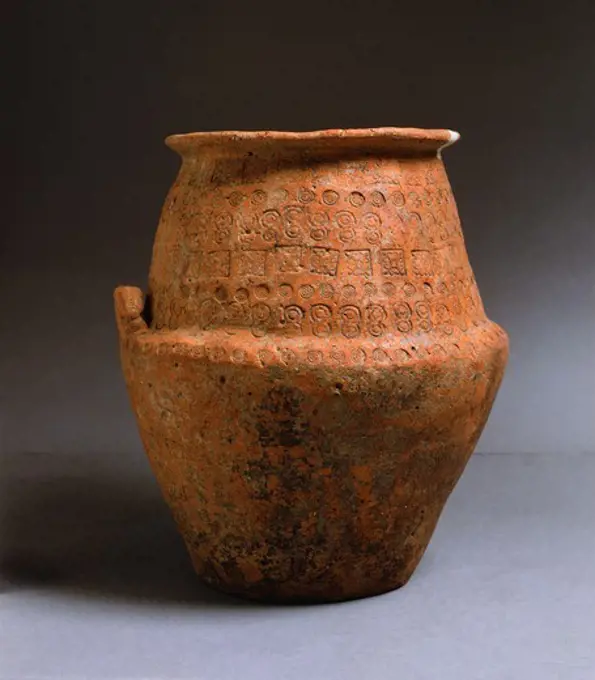
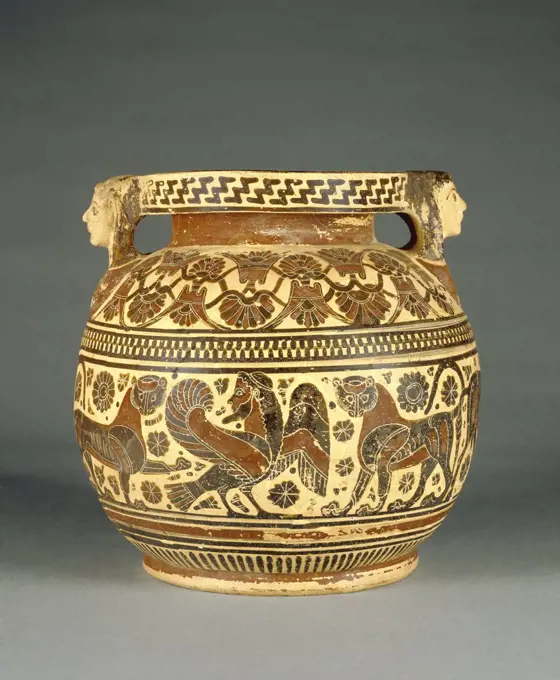
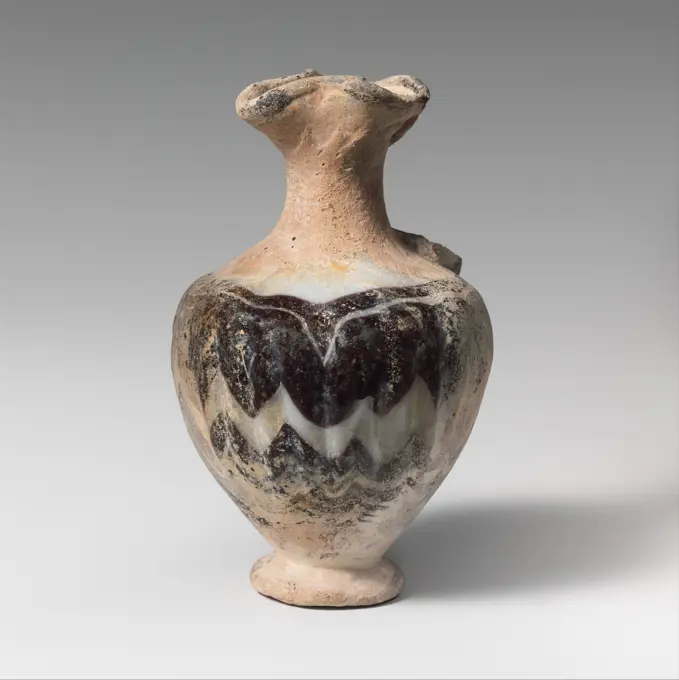
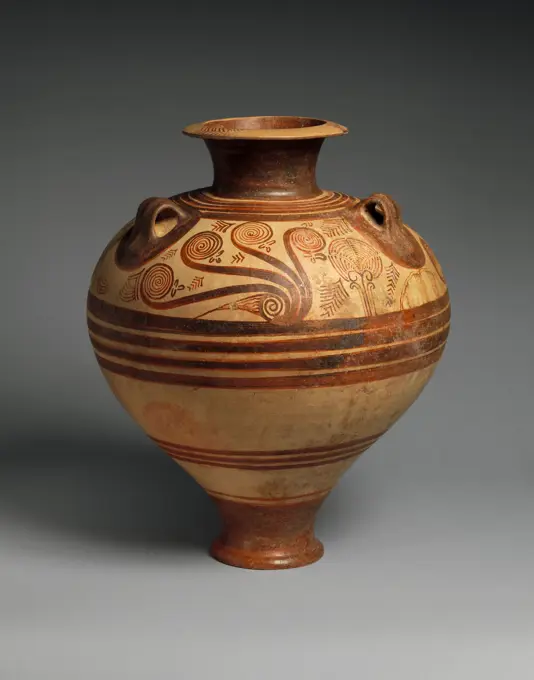
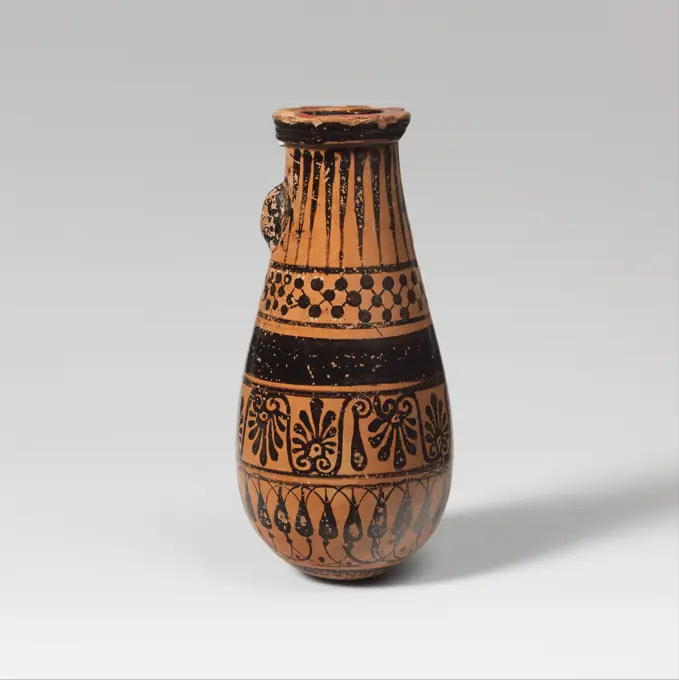
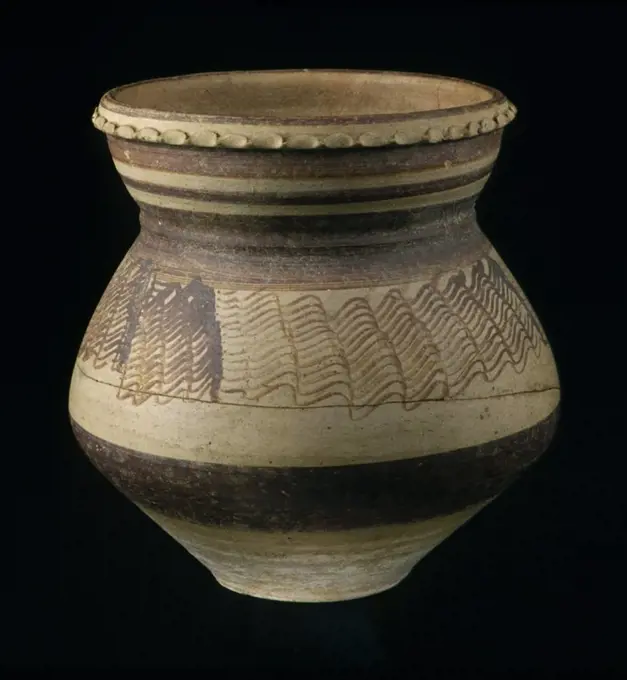
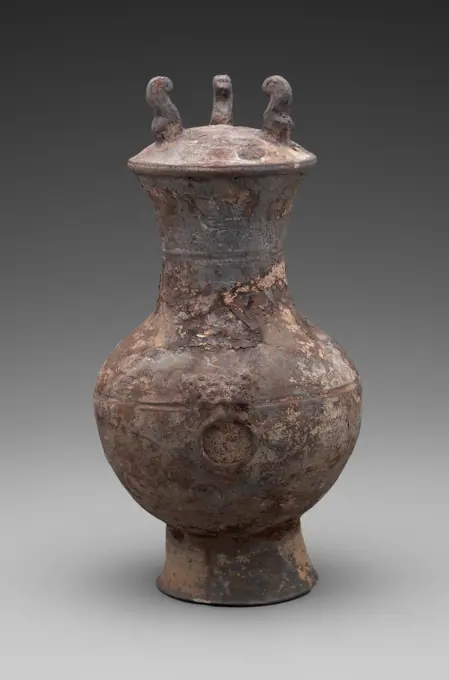
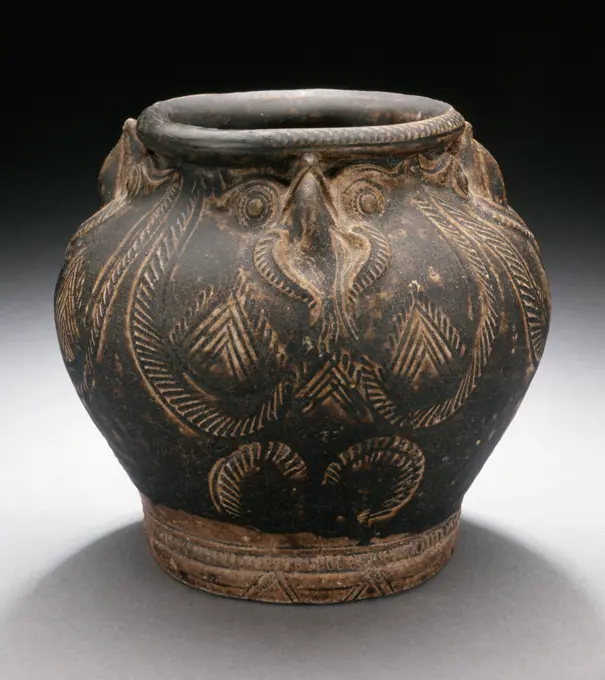
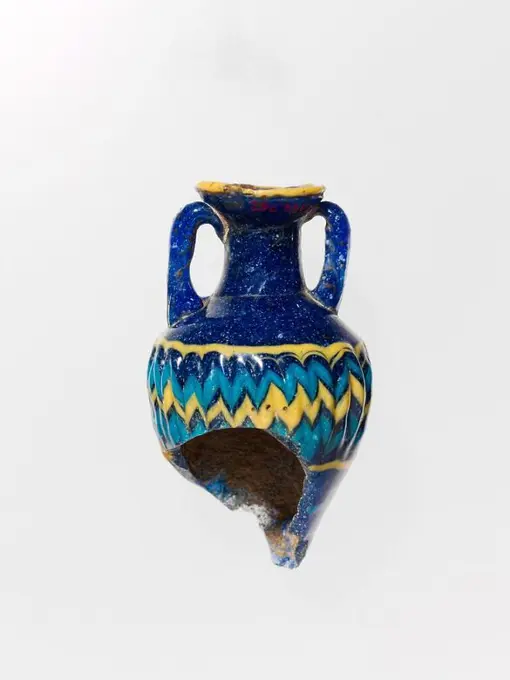
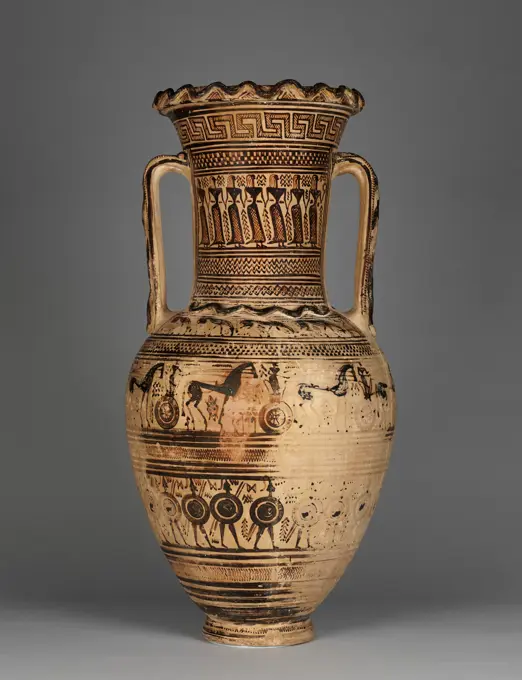
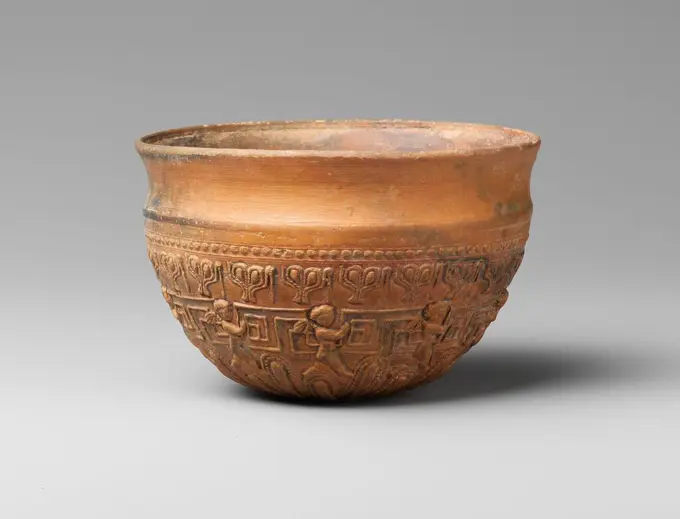
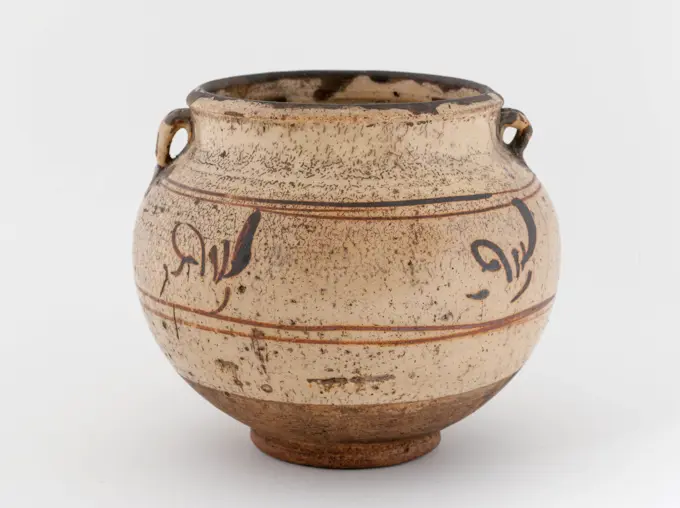
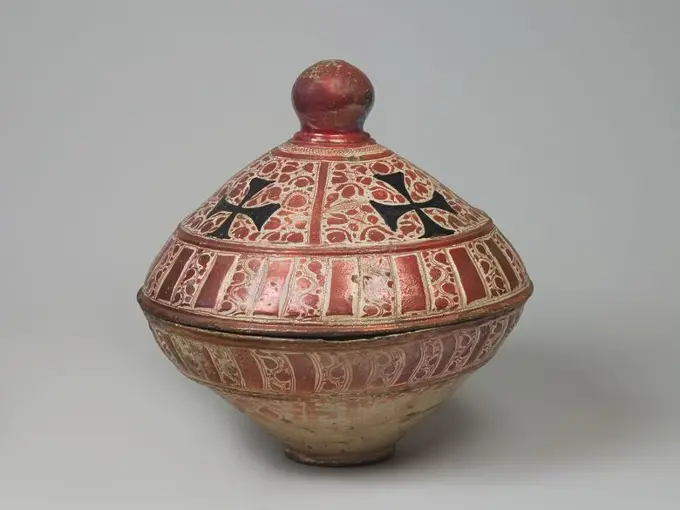
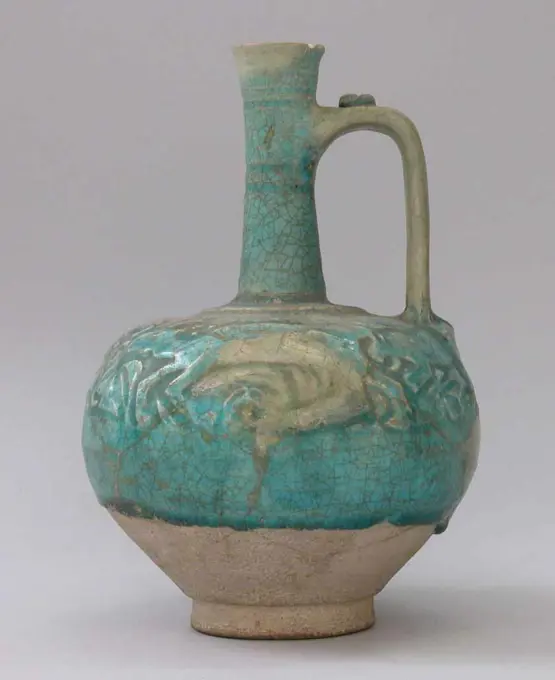
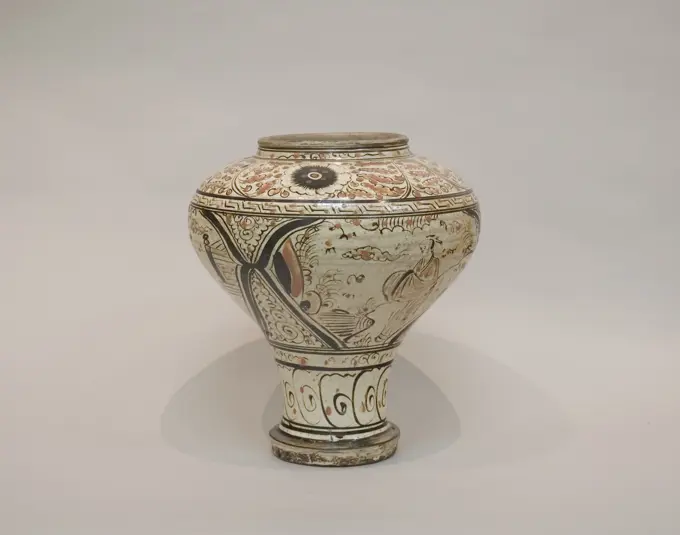
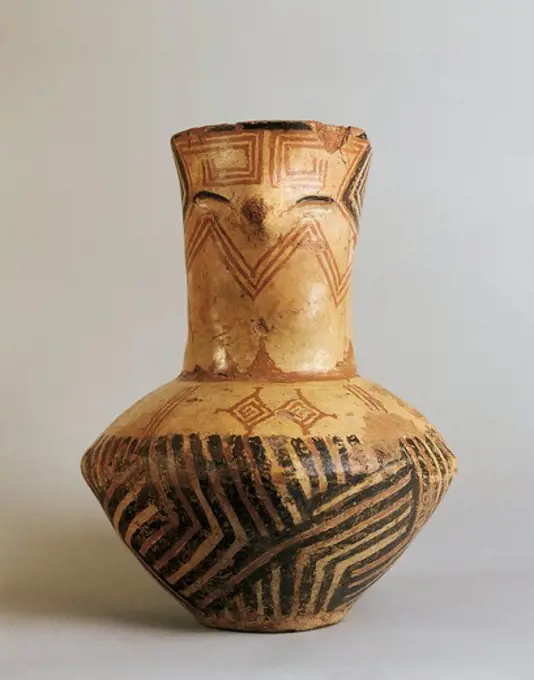
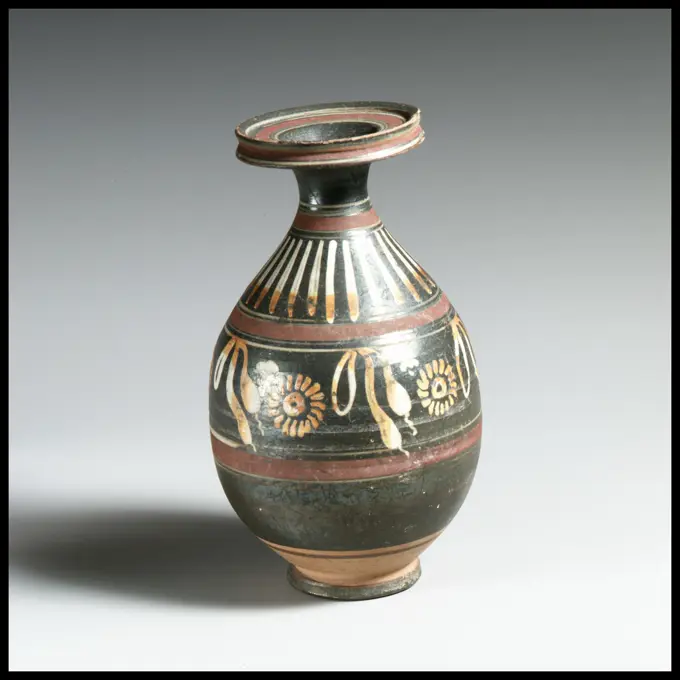
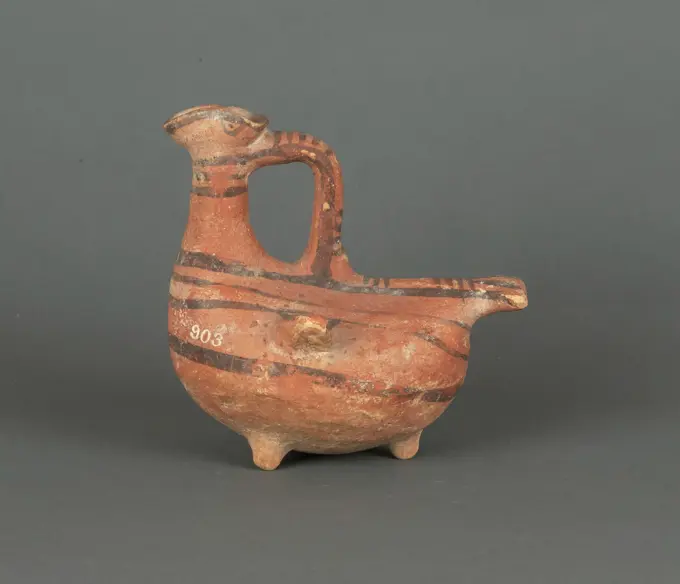
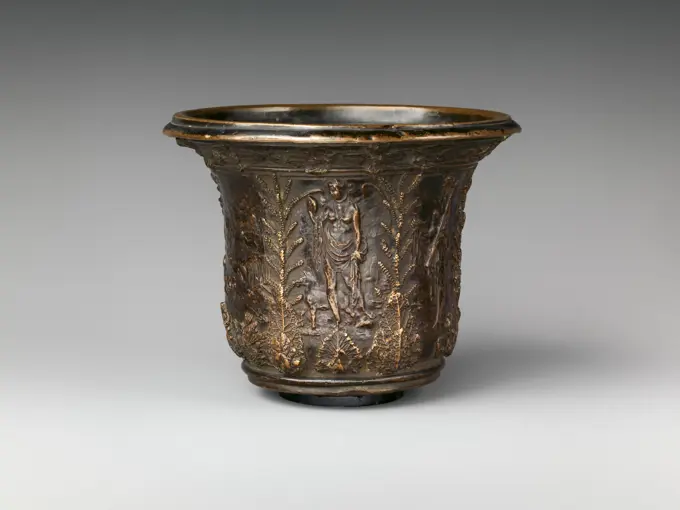
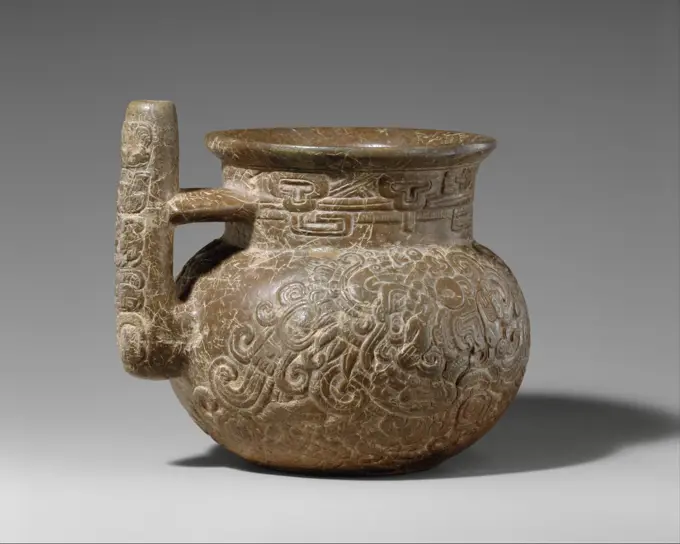
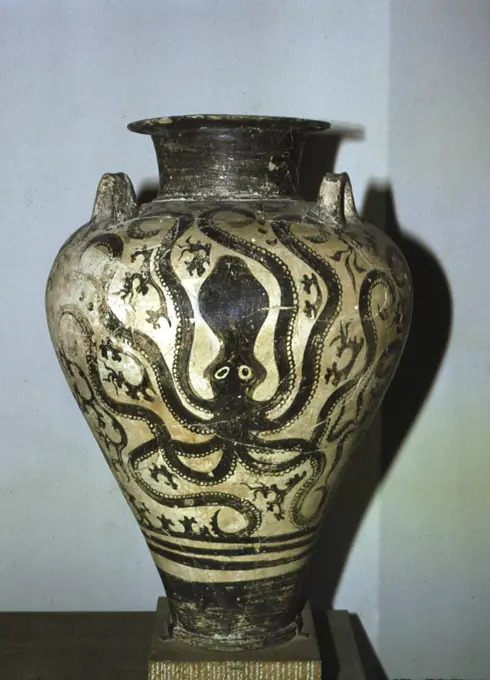
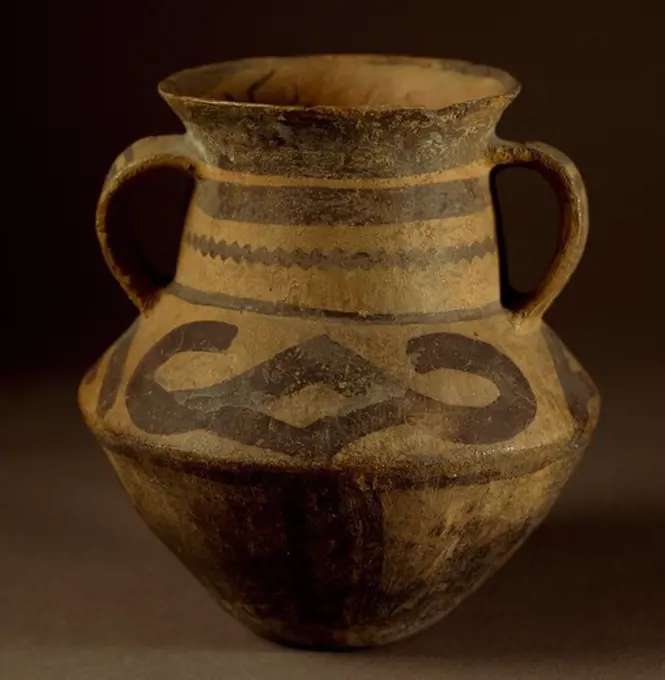
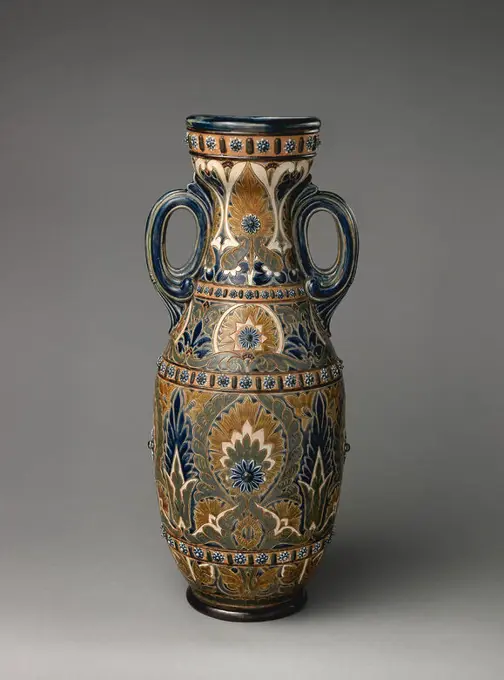
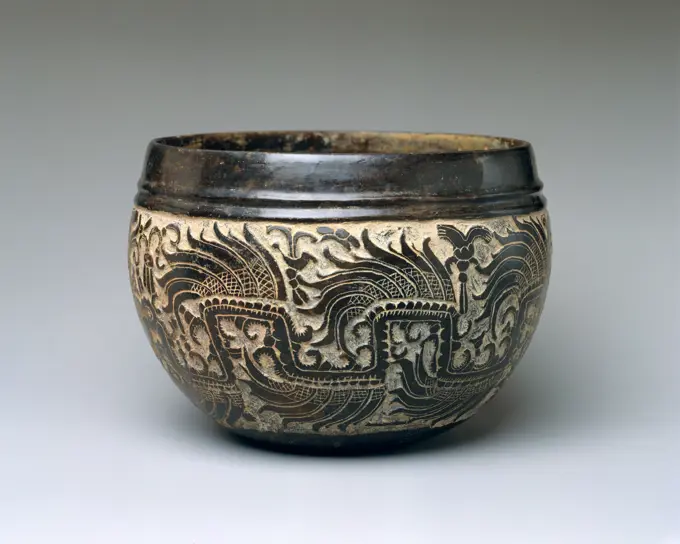
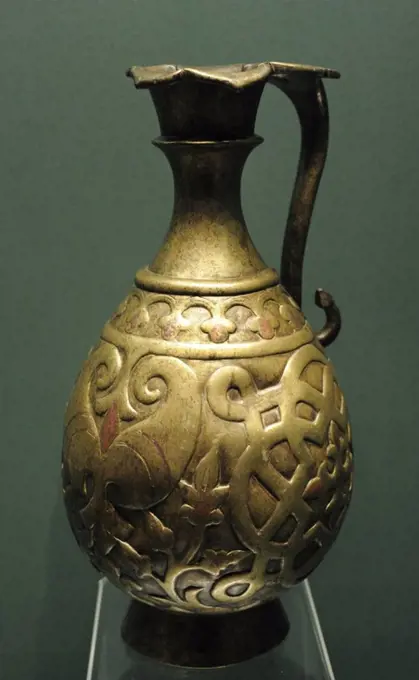
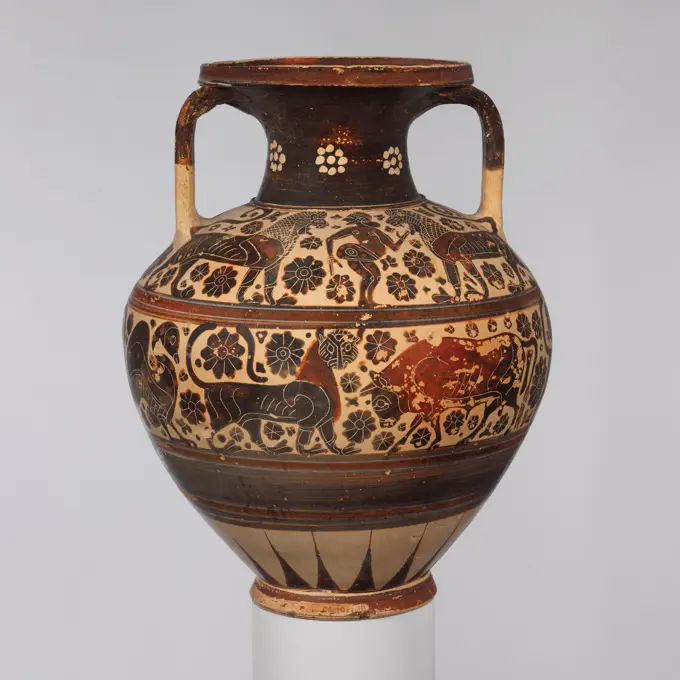
Lamp; Italy; late 1st - early 2nd century; Terracotta; 4.2 × 5.6 × 8.4 cm (1 5,8 × 2 3,16 × 3 5,16 in.)Terracotta neck-amphora (storage jar) ca. 620-590 B.C. Greek, Corinthian Corinthian potters and painters invented a technique of silhouetted forms that would evolve into the black figures of Athenian vase painting. Typically, their vessels, like this neck amphora, are decorated with tapestry-like patterns of small animals and plant motifs. A variety of animals- bulls, lions, birds and goats march around the belly of this vase, and multiple rosettes fill the background. Above the queue of exquisite animals is a padded dancer, who stands between two lions.. Terracotta neck-amphora (storage jar). Greek, Corinthian. ca. 620-590 B.C.. Terracotta; black-figure. Early Corinthian. VasesRed -andech oinochoe; Pennsylvania painter TORCOP; 2. PO. 4th century BC - III century BC (-350-00-00--201-00-00);Glass amphoriskos (perfume bottle) late 6th-5th century B.C. Greek, Eastern Mediterranean Translucent light blue, with handles in same color; trails in opaque yellow and opaque turquoise blue.Uneven, inward-sloping rim-disk; slanting cylindrical neck; rounded shoulder; ovoid body; circular base-knob with flat bottom; two vertical ring handles applied to shoulder, drawn up, and pressed onto neck.A yellow trail attached at edge of rim-disk; a thick yellow trail applied in a spiral around shoulder and top of body, then tooled into an uneven close-set zigzag pattern on central part of body, where a turquoise blue trail is added, mingling with the yellow; below, a third, fine yellow trail wound horizontally once around body.Intact; bubbles and gritty white impurities; dulling, pitting, and faint iridescent weathering.. Glass amphoriskos (perfume bottle). Greek, Eastern Mediterranean. late 6th-5th century B.C.. Glass; core-formed, Group I. Classical. GlassMiniature Ceremonial Vessel (Aryballos). Inca; South coast or southern highlands, Peru. Date: 1450-1532. Dimensions: 11.6 × 9.5 cm (4 9/16 × 3 3/4 in.). Ceramic and pigment. Origin: Peru. Museum: The Chicago Art Institute, Chicago, USA.Lamp. UnknownTerracotta jug. Culture: Cypriot. Dimensions: H. 7 1/8 in. (18.1 cm). Date: ca. 1725-1600 B.C..The shape and engraved decoration is probably inspired by Tell el-Yahudieh jugs. Museum: Metropolitan Museum of Art, New York, USA.OLYMPUS DIGITAL CAMERAFlask 400 BCE-301 BCE Egypt. Glass . Ancient EgyptianGlass aryballos (perfume bottle) late 6th-5th century B.C. Greek, Eastern Mediterranean Translucent cobalt blue, with same color handles; trails in opaque yellow and opaque turquoise blue. Broad inward-sloping rim-disk with uneven upper surface; short concave neck; uneven angular shoulder; almost spherical body; convex pointed bottom; two large ring handles with knobbed tails, applied over trail decoration, extend from shoulder to neck and underside of rim-disk.A yellow trail applied to outer edge of rim-disk; another yellow trail applied to outer edge of shoulder and wound down in spiral, at first in horizontal lines, then tooled into an irregular close-set zigzag pattern around central section of body, formed by uneven, shallow vertical tooling indents; a second trail in turquoise blue added to zigzag, mingling with the yellow trail; below, a yellow trail wound horizontally twice round body; a short unmarvered yellow trail applied to bottom.Intact, but some small internal cracks in sBlack-Figure Hydria; Lykomedes Painter; Athens, Greece; about 520 - 510 B.C; Terracotta; 37 × 33 × 25.2 cm (14 9,16 × 13 × 9 15,16 in.)Terracotta Hadra hydria (water jar) 220-219 B.C. Greek, Egypt, Alexandria-Hadra On body, ivy branch and vine pattern; on shoulder, foliage; on neck, laurel sprays.. Terracotta Hadra hydria (water jar). Greek, Egypt, Alexandria-Hadra. 220-219 B.C.. Terracotta. Hellenistic. VasesTerracotta jar with barbotine decoration 2nd century A.D. Roman Barbotine vase with brown mottled glaze; laurel leaves.. Terracotta jar with barbotine decoration. Roman. 2nd century A.D.. Terracotta; Lower Rhineland color-coated ware. VasesMiniature Handled Bottle with Abstract Motifs. Tiwanaku-Wari; South coast, Peru. Date: 600 AD-1000. Dimensions: 7.6 x 7.3 cm (3 x 2 7/8 in.). Ceramic and pigment. Origin: South Coast. Museum: The Chicago Art Institute, Chicago, USA.Terracotta skyphos 6th century B.C. Etruscan, Etrusco-Corinthian Obverse and reverse, running figure between sphinxes.. Terracotta skyphos 623024Jug with a representation of the electors, Jan Baldems Mennicken (manner of), c. 1590 - c. 1620 Jug of stoneware on high foot with a cylindrical body, round shoulder and wide neck. The C-shaped ear is attached to the neck and shoulder. Profiles on the neck, the body and the foot. Partly covered with cobalt blue and brown. On the belly in relief a printed and laid bond with arches. A Elector with his respective weapon is depicted under each bow. The lower part of the abdomen runs slanted to the foot and is covered with Canelures. On the shoulder Canelures interspersed with a lot of cut. The neck with a band roll work interrupted by medallions with a mask. Raeren. Rae stoneware. glaze. cobalt (mineral) vitrification Jug of stoneware on high foot with a cylindrical body, round shoulder and wide neck. The C-shaped ear is attached to the neck and shoulder. Profiles on the neck, the body and the foot. Partly covered with cobalt blue and brown. On the belly in relief a printed and laid bond wLamp. UnknownLamp. UnknownLamp. UnknownFlask. Eastern Mediterranean. Date: 400 BC-301 BC. Dimensions: 8.9 × 7.6 × 3.5 cm (3 1/2 × 3 × 1 3/8 in.). Glass. Origin: Egypt. Museum: The Chicago Art Institute, Chicago, USA. Author: Ancient Egyptian.Two Jars, anonymous, c. -3300 - c. -2050 Pass jug with an ear of red pottery, painted in black with, among other things, a silk cocone motif and wavy Garlande. The lower part is not painted. Themselves earthenware painting Pass jug with an ear of red pottery, painted in black with, among other things, a silk cocone motif and wavy Garlande. The lower part is not painted. Themselves earthenware paintingEwer 16th century Italian, Venice. Ewer 193604Collared Jar of the Grotta-Pelos Group. UnknownJug 750-600 B.C. Cypriot Geometric panel-ornament supported by two birds.. Jug. Cypriot. 750-600 B.C.. Terracotta. Cypro-Archaic I. VasesGlass jar with marvered trails. Culture: Roman, Syro-Palestinian. Dimensions: H.: 3 1/4 in. (8.3 cm). Date: 5th century A.D. or later. Museum: Metropolitan Museum of Art, New York, USA.Terracotta amphoriskos (oil flask) ca. 540-500 B.C. East Greek, Milesian, Fikellura White slip, ivy leaves on shoulder, meander on neck and net pattern on body.. Terracotta amphoriskos (oil flask). East Greek, Milesian, Fikellura. ca. 540-500 B.C.. Terracotta. Archaic. VasesJug (Bartmann jug) with a roundel in a medallion, anonymous, c. 1625 - c. 1749 Jug (beard fancier) of stoneware on the standing surface with an egg -shaped body and narrow neck. The C-shaped ear is attached to the neck and shoulder. Profiles on the neck. Covered with a brown Engobe. On the abdomen in relief a printed and imposed medallion with a star -shaped rosette. On the neck, continuously on the shoulder, a bearded man. Frechten. Cheek stoneware. glaze. engobe vitrification Jug (beard fancier) of stoneware on the standing surface with an egg -shaped body and narrow neck. The C-shaped ear is attached to the neck and shoulder. Profiles on the neck. Covered with a brown Engobe. On the abdomen in relief a printed and imposed medallion with a star -shaped rosette. On the neck, continuously on the shoulder, a bearded man. Frechten. Cheek stoneware. glaze. engobe vitrificationMiniature Vessel. Inca; South coast or southern highlands, Peru. Date: 1450-1532. Dimensions: 9.4 × 11.1 cm (3 11/16 × 4 3/8 in.). Ceramic and pigment. Origin: Peru. Museum: The Chicago Art Institute, Chicago, USA.Dipper, 100 B.C. - A.D. 700. Peru, North Highlands, Recuay, 100 B.C. - A.D. 700. Ceramic, slip; diameter: 10 x 17.5 cm (3 15/16 x 6 7/8 in.); overall: 9.6 cm (3 3/4 in.).Lamp. UnknownAnimal-Spouted Pitcher 9th-10th century Although this is the only known buff ware pitcher with an animal-headed spout, the type occurs among differently glazed ceramic and metal pitchers of the same period. The decoration on the body of the pitcher includes a field of birds, perhaps peacocks, and other scattered motifs, as well as the yellow and green glazes typical of buff ware.. Animal-Spouted Pitcher 449457Ewer 11th-12th century. Ewer 447292ARTE GRIEGO. SIGLO V a. C. ANFORA con dos asas. Decoración roja y negra separada en dos partes; en la superior, una pantera y rosetas, y en la parte central, leones ciervos y rosetas. Tiene 150 mm de altura y 100 mm de diámetro. Proviene de Corinto (Grecia). Museo del Perfume. Barcelona. Cataluña.Bottle, Falcon 4th-3rd century B.C. Paracas. Bottle, Falcon 308297Covered Box. Thailand, Sawankhalok, 16th century. Furnishings; Accessories. Stoneware with brown and white glazeTerracotta askos (flask with spout and handle over top). Culture: Greek, South Italian, Apulian, Gnathian. Dimensions: Height: 4 1/4 in. (10.8 cm). Date: ca. 340-320 B.C..These two flasks, 2015.641 and 2015.642, undoubtedly for oil, have been known since the early 1880's, when they were purchased by the noted British archaeologist Augustus Henry Lane Fox Pitt-Rivers. They remained with his descendants until 1992. Documentation indicates that they were found together at Capua, a major center in the Italian region of Campania. However, the technique of decoration, in which color is applied onto the vase, points to neighboring Apulia as the place of production. The simple motifs are adapted with exceptional sureness to the irregular surfaces of the respective shapes. Under the spout, the askos additionally shows a suspended theatrical mask between ribbons and ivy leaves, popular details associated with the wine god, Dionysos. Museum: Metropolitan Museum of Art, New York, USA.Attic kalpis with red figures, V Century, 470-450, cm 32 diamentro orlo 13 cm - piede 12 cmTwin-conical ossuary, showing impressed decorations, Emilia-Romagna, Italy. Villanova Civilization, 10th-8th Century BC.Corinthian Round-Bodied Pyxis; Perhaps by the Chimaera Painter, Greek (Corinthian), active 600 - 575 B.C.; Greece (Corinth); about 570 B.C.; Terracotta; Object: H: 21.7 x Diam.: 22.2 cm (8 9/16 x 8 3/4 in.), Object (rim): Diam.: 15.2 cm (6 in.)Glass oinochoe (perfume jug) late 6th-5th century B.C. Greek, Eastern Mediterranean Opaque white, with handle and foot apparently in opaque white and translucent purple; trails in translucent purple.Applied broad, trefoil rim-disk with radiating tool marks on upper surface; cylindrical neck with concave sides; broad, sloping shoulder; convex sides to body curving in to flattened bottom; applied outsplayed foot, with uneven underside; handle applied on shoulder over trails and pressed on to underside of rim-disk and top of neck.One trail attached at edge of rim-disk; another trail applied to edge of shoulder, wound round in a spiral, then tooled into an irregular zigzag pattern, and ending on lower body; vertical tooling indents in alternating upward and downward strokes, forming prominent rounded ribs around body; a marvered circular blob applied to side of lower body.Complete, except for most of handle and chip in rim-disk, both with weaathered breaks; some pitting, most of surfaces cAmphoriskos; Eastern Mediterranean; 6th - 4th century B.C; Glass; 7.1 cm (2 13,16 in.)Amphora 600-480 B.C. Cypriot Bands and a wavy line in black; red band about lip.. Amphora. Cypriot. 600-480 B.C.. Terracotta. Cypro-Archaic II. VasesTerracotta jar with nautiluses ca. 1400-1300 B.C. Helladic, Mycenaean Bands, scrolls and nautiluses in setting of rocks and plants.. Terracotta jar with nautiluses 248912Terracotta aryballos (oil flask) ca. 575-550 B.C. Greek, Corinthian Frieze of hoplites.. Terracotta aryballos (oil flask) 254328 Greek, Corinthian, Terracotta aryballos (oil flask), ca. 575550 B.C., Terracotta, H. 2 3/16 in. (5.6 cm). The Metropolitan Museum of Art, New York. Rogers Fund, 1941 (41.162.157)Terracotta alabastron (perfume vase) ca. 520 B.C. Greek, Attic On the bottom, gorgoneion (head of Medusa)The alabastron is unusual in both its shape and decoration. The body is sack-like, widening distinctly toward the bottom, and the mouth is small and thick. The succession of ornaments ends in the tondo with a gorgoneion. This area of an alabastron is often specially decorated, suggesting that the objects hung freely or were handled rather than being immobilized in a stand.. Terracotta alabastron (perfume vase). Greek, Attic. ca. 520 B.C.. Terracotta; black-figure. Archaic. VasesVASO BICONICO CON DECORACION PLASTICA EN EL BORDE PROCEDENTE DE TOYA. IBERICO CERAMICA. (DEPOSITO: MUSEO ARQUEOLOGICO NACIONAL).Jar(hu)Bottle. Egyptian. Date: 1505 BC-1202 BC. Dimensions: 10.3 × 8.0 × 5.5 cm (4 × 3 1/8 × 2 1/8 in.). Glass, core-formed technique. Origin: Egypt. Museum: The Chicago Art Institute, Chicago, USA. Author: Ancient Egyptian.Jar with Four Owls. Cambodia, Khmeran, Khmer, circa 1000-1200. Furnishings; Serviceware. Coil-built and wheel-thrown stoneware with carved and incised decoration and brown glazeJug ca. 1050-900 B.C. Cypriot. Jug. Cypriot. ca. 1050-900 B.C.. Terracotta. Iron Age. VasesGlass amphoriskos (perfume bottle). Culture: Greek, Eastern Mediterranean. Dimensions: Overall: 2 3/4 x 1 1/2 in. (7 x 3.8 cm). Date: late 6th-5th century B.C..Translucent cobalt blue, with handles in same color; trails in opaque yellow and opaque turquoise blue.Inward-sloping rim-disk, with radiating tooling marks on upper surface; cylindrical neck, expanding downwards with fine tooling line around base; sloping shoulder; top-shaped body; two vertical strap handles applied to shoulder, drawn up and in, and pressed onto underside of rim-disk and top of neck.A fine yellow trail attached at edge of rim-disk; another thick yellow trail applied on edge of shoulder, tooled into a close-set zigzag pattern on upper half of body, where a turquoise blue trail is added, mingling with the yellow, forming vertical ridges in sides; below, a yellow and a turquoise blue trail wound horizontally around body.Broken with part of lower body and all of base-knob missing, and one small weathered chip iLamp, North Africa; 1st - 4th century; Terracotta; 2.6 x 7.5 x 10.5 cm (1 x 2 15,16 x 4 1,8 in.)Funerary Amphora with Scenes of Mourning. Attributed to the Philadelphia Painter (Greek (Attic))Beacker (trichterhalsbecher) with a coat of arms, anonymous, c. 1560 - c. 1590 Cup (funnel neck cup) of stoneware on high foot with an egg -shaped body and funnel -shaped neck. The C-shaped ear is attached to the shoulder. On the belly in relief a printed and imposed medallion with a weapon and the inscription 'H. ... M von Linsenicherch '. Siegburg. Siegburg stoneware. glaze vitrification Cup (funnel neck cup) of stoneware on high foot with an egg -shaped body and funnel -shaped neck. The C-shaped ear is attached to the shoulder. On the belly in relief a printed and imposed medallion with a weapon and the inscription 'H. ... M von Linsenicherch '. Siegburg. Siegburg stoneware. glaze vitrificationTerracotta Megarian bowl. Culture: Greek, probably Asia Minor. Dimensions: h. 3 1/16 in. (7.8 cm); d. 4 3/4 in. (12 cm). Date: ca.165-100 B.C..This finely made bowl is decorated in relief with a lesbian-leaf molding (a vegetal motif named for the island of Lesbos) banded by a row of small beads and a raised ridge. Below, meanders serve as a backdrop to a procession of Erotes, who step between jeweled long petals of alternating lengths that surround an exceptionally ornate triple rosette foot-medallion. Notable on this bowl are the long petals, which are normally of uniform length, and the highly unusual pairing of this ornament with figural decoration. Although it is believed that the long petal motif was introduced to mold-made ceramics around 165 B.C. by Corinthian potters, the particular style of the lesbian-leaf molding on this bowl associates it with Ionian workshops in Asia Minor where it appears to have been a popular variant. Museum: Metropolitan Museum of Art, New York, USA.Jar ". Sandstone with slip -in -brown cream under transparent cover. Paris, Cernuschi museum. Chinese art, Chinese Ceramic, GRES, JARREBowl with Cover. Culture: Spanish. Dimensions: 15 1/2 × 15 5/16 in. (39.3 × 38.9 cm)Other (Bowl): 6 5/8 × 15 1/4 in. (16.9 × 38.7 cm)Other (Lid): 9 × 15 5/16 in. (22.8 × 38.9 cm). Date: third quarter 16th century.The form of this deep, covered bowl is similar to the tagines famously used in North African cuisine today. Cooking pots of that type were first recorded in the ninth century, and it is likely this vessel served the same household function, notwithstanding its overtly religious decoration. The lusterware technique seen here involves the use of a copper oxide that, when painted on in the desired patterns and fired separately, produces a metallic sheen in tones ranging from pale gold to deep reddish copper, depending on the proportions of the mixture. Museum: Metropolitan Museum of Art, New York, USA.Stoneware jug be decorated with shovel clip and ear, with carved and stylized floral decor, jug crockery holder soil find ceramic stoneware glaze salt glaze, hand-turned baked glazed Large stoneware jug gray shard with salt glaze and brownish places schenklip large sausage ear profile rings around neck and foot. Stylized flowers leaves and stems cobalt blue decoration archeology indigenous pottery import serving serve drinking beer wine waterEwer 12th-13th century. Ewer 446269Jar with human figures and crane late 15th century China. Jar with human figures and crane. China. late 15th century. Stoneware painted in overglaze polychrome enamels (Cizhou ware). Ming dynasty (1368-1644). CeramicsGeometric Oinochoe. UnknownVASO NEOLITICO DE ARCILLA PROCEDENTE DE LA CUEVA DE LA CARIGÜELA - PIÑAR GRANADA - 4000-3500 AC. Location: MUSEO ARQUEOLOGICO-PREHISTORIA.Vessel. Culture: Panama. Dimensions: H. 7 11/16 x Diam. 9 1/4 in. (19.5 x 23.5 cm). Date: 6th-11th century. Museum: Metropolitan Museum of Art, New York, USA.Pyxis (Container for Personal Objects). Etruscan. Date: 699 BC-501 BC. Dimensions: a (jar): 9.6 × 12 × 12 cm (3.80 × 4.75 × 4.75 in)b (lid): 2.6 × 9.6 9.5 cm (1.06 × 3.79 × 3.77 in). Terra-cotta. Origin: Etruria. Museum: The Chicago Art Institute, Chicago, USA. Author: Ancient Etruscan.Turkey Vessel, c. 1000-1550. Costa Rica, Southern Nicoya region, Pataky Polychrome style, 11th-16th century. Ceramic, slip; diameter: 26.3 x 20.3 x 18.4 cm (10 3/8 x 8 x 7 1/4 in.); diameter of mouth: 8.3 cm (3 1/4 in.); average: 26.2 x 18.1 cm (10 5/16 x 7 1/8 in.).Terracotta jug ca. 750-600 B.C. Cypriot The front of the jug is decorated with the head of a man wearing a horned helmet. Male figures, probably deities, with horns are familiar in Cypriot art from late prehistoric times, about the thirteenth and twelfth centuries B.C. It is unclear whether the head here refers to a later manifestation of a similar god or whether it represents a contemporary Cypriot warrior.. Terracotta jug 240095Vase 12th-13th century. Vase 451431Buk AK (Matara);  2. PO. 16th century (1551-00-00-1600-00-00);Terracotta vase in the form of a pomegranate 8th century B.C. Greek, Attic The pomegranate occurs with some frequency in early Greek art and mythology. Because of its large edible seeds, the fruit is associated with life and rebirth.. Terracotta vase in the form of a pomegranate. Greek, Attic. 8th century B.C.. Terracotta. Geometric. VasesOinochoe. UnknownBulgaria, Sofia, Calcolithic, Natsionalen Istoritcheski Muzej, Terracotta vase from GradesnicaTerracotta bottle late 4th-early 3rd century B.C. Greek, South Italian, Apulian, Gnathian Pattern of bows and rosettes.. Terracotta bottle 246561Large Sealed Storage Jar ca. 1492-1473 B.C. New Kingdom This alabaster jar was found in the tomb of Hatnefer (36.3.1), the mother of Senenmut (36.3.252). The jar lid was held in place with a piece of linen cloth tied with a length of linen cord secured with a stamped mud seal.. Large Sealed Storage Jar 543959Etruscan olpe, from Veii, Rome Province, Italy, 7th Century B.C.Aryballos (perfume vase) with trefoil opening Late Period 6th century B.C. This jug has the charcteristics of East Greek production, and may have been made in Rhodes. The term East Greek applies to the mingled culture of an area of Greek islands and Ionia. View more. Aryballos (perfume vase) with trefoil opening. 6th century B.C.. Faience. Late Period. From Egypt. Dynasty 26Askos in the form of a bird 750-480 B.C. Cypriot. Askos in the form of a bird. Cypriot. 750-480 B.C.. Terracotta. Cypro-Archaic I. VasesMortar ca. 1550 Wenzel Jamnitzer Wenzel Jamnitzer was the preeminent Mannerist goldsmith in the German-speaking area of the Holy Roman Empire. He became a master of the Nuremberg goldsmiths guild in 1534 and established one of the most important workshops in this great center for luxury goods in the 16th century. Much of Jamnitzers fame is based on his virtuoso casting of animals and plants after nature. The mortar is decorated with such sculptural ornaments, including the life-casts of medicinal herbs and a lizard. According to legend this reptile could rejuvenate by shedding its skin and growing new tails. It was also believed to regenerate in fire and was therefore interpreted as a symbol of immortality and unchanging logic. This alchemical connotation befitted the use of a mortar to grind the ingredients for medicines. The healing herbs include sprays of wolfs foot, clary sage and cowslip leaves. The allegorical figures are based on plaquettes by Peter Flötner (ca. 1490-1546).. MMashrabe (Jug). Iran, Timurid, 1400-1500. Metal. Copper, originally tinnedSpouted Jar mid-1st century B.C.-A.D. 1st century Maya This spouted vessel is one of the most elegantly sculpted stone containers in the corpus of Maya art. Its form with the vertical spout parallel to the central axis of the main chamber is known from the late 1st millennium B.C. and is especially related to chocolate consumption. The ancient Maya would inject air into the spout so that the bubbling effect would produce a frothy spume on the surface of the savory chocolate drink. Carved from indurated (compacted) limestone, the vessel is a rare example of such a spouted container in stone. The neck of the vessel contains a sky-band,” a motif in Maya art indicating a celestial location, that has t-shaped hieroglyphs deciphered as IK, wind” separated by diagonal lines. The globular body of the vessel is perfectly symmetrical and the bottom of the chamber is leveled off for ease of storage. On either side of the spout on the body of the vessel are ornate deities floating in smoky volutMycenaean Octopus Vase, Bronze Age, GREECE.Terracotta skyphos (drinking cup). Culture: Lydian. Dimensions: H. 3 3/16 in. (8.1 cm)diameter 3 7/8 in. (9.9 cm). Date: 6th century B.C..White slip, with zigzag, and crosses and dots in squares. Museum: Metropolitan Museum of Art, New York, USA.Lamp. UnknownPottery Vessel 1000 A.D. Huaxtec. Pottery based on a turtule. Sin Tien-style vase, painted ceramics, China. Chinese Civilisation, 1st millennium BC.Vase LIDING ". Bronze. China, Zhou Dynasty. Paris, Cernuschi museum. 72360-4 Chinese art, bronze, zhou dynasty, tripod, three feet, vase lidingTerracotta skyphos (drinking cup) 6th century B.C. Lydian White slip, with zigzag, and crosses and dots in squares.. Terracotta skyphos (drinking cup). Lydian. 6th century B.C.. Terracotta. Archaic. VasesPyx with Greek myths, orientalizing pottery. Etruscan civilization, 7th Century BC.Jug with foliate scrolls in panels, anonymous, c. 1800 - c. 1899 Can of stoneware on high foot with a pear -shaped body and wide neck with a pinched spout. The C-shaped ear is attached to the neck and shoulder. A few profiles and lines in the foot and neck. The front of the can with a professional decoration formed by entered lines. The courses are filled with blue with leafed leaves or crosses. Blue lines on the foot and neck. Westerwald. Westerwald (possibly) stoneware. glaze vitrification Can of stoneware on high foot with a pear -shaped body and wide neck with a pinched spout. The C-shaped ear is attached to the neck and shoulder. A few profiles and lines in the foot and neck. The front of the can with a professional decoration formed by entered lines. The courses are filled with blue with leafed leaves or crosses. Blue lines on the foot and neck. Westerwald. Westerwald (possibly) stoneware. glaze vitrificationLamp. UnknownVase. Culture: British, Lambeth, London. Dimensions: Overall (confirmed): 19 1/2 × 8 3/16 × 8 1/16 in. (49.5 × 20.8 × 20.5 cm). Maker: Frank A. Butler (British). Manufactory: Doulton Manufactory (British). Date: 1879.Determined that pottery vessels should be regarded as true works of art, avant-garde ceramicists in France in the last decades of the nineteenth century transformed their craft into an intellectual and emotional endeavor. The pioneers of this revival were Jean Carriès, Ernest Chaplet, Théodore Deck, and Auguste Delaherche. These revolutionary artist-potters embraced artisanal traditions while pursuing lost techniques through exhaustive experimentation. Reacting to what they viewed as an excessive and improper use of ornament, they celebrated the simplicity and sincerity of their medium, following the tenets of the Art Nouveau style taking place in Europe. Based on the principles of the British Arts and Crafts movement, Art Nouveau artists sought to reform the decorative aCarved Bowl 6th century Maya This magnificent high-gloss blackware bowl is decorated with carved and incised feathered serpents. Profile human figures are seated in front of their bearded jaws. The bodies of the serpents undulate with regularity around the circumference of the vessel. The figures are perhaps emerging from the underworld as the bearded, feathered serpent is thought to be a personification of that fearsome place. On the inner rim of this bowl is a series of bars and dots that, if intended as a Maya date, would correspond with 539 A.D.. Carved Bowl. Maya. 6th century. Ceramic. Guatemala or Mexico, Mesoamerica. Ceramics-ContainersLamp. UnknownVessel Depicting a Spotted Frog 100 BCE-500 CE Peru. Ceramic and pigment . MocheTerracotta oil lamp. Culture: Roman. Dimensions: Overall: 2 x 3 3/4 in. (5.1 x 9.5 cm). Date: ca. 5th-7th century A.D.. Museum: Metropolitan Museum of Art, New York, USA.Cup ca. 2600-2500 B.C. Sumerian. Cup. Sumerian. ca. 2600-2500 B.C.. Ceramic. Early Dynastic IIIa. Mesopotamia, NippurSacrificial Wine Vessel (Zun). Culture: China. Dimensions: H. 12 1/2 in. (31.8 cm); W. 8 3/4 in. (22.2 cm). Museum: Metropolitan Museum of Art, New York, USA.Painted Jar 4th-6th century Nasca. Painted Jar. Nasca. 4th-6th century. Ceramic, pigment. Peru. Ceramics-ContainersLate Sasanian - Early Islamic era. Ewers. Bronze (brass), copper; cast, forged, engraved and inlaid. Iraq (). 8th-9th centuries. The State Hermitage Museum. Saint Petersburg. Russia.Romania, Mangalia, Callatis, Perfume jar decorated with vegetable motives, terracottaOinochoe; terra-cotta