Ancient Ceramics

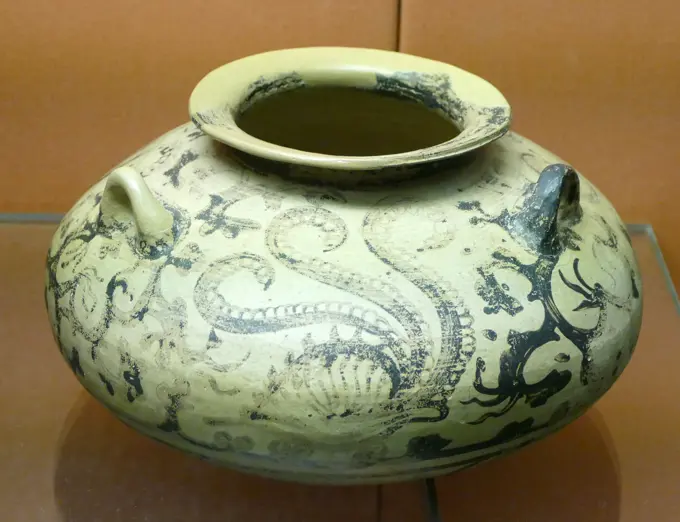
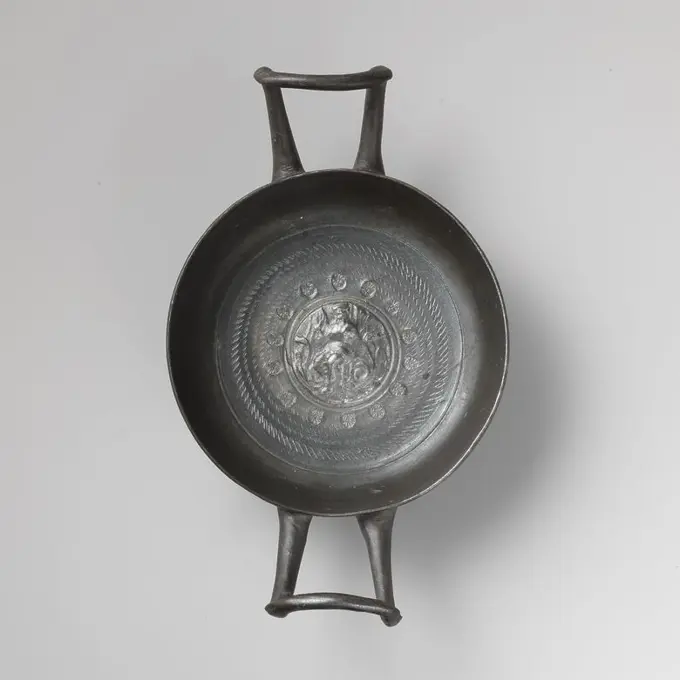
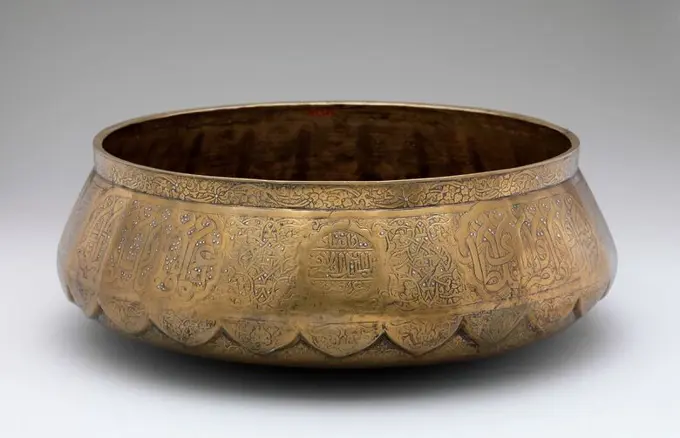
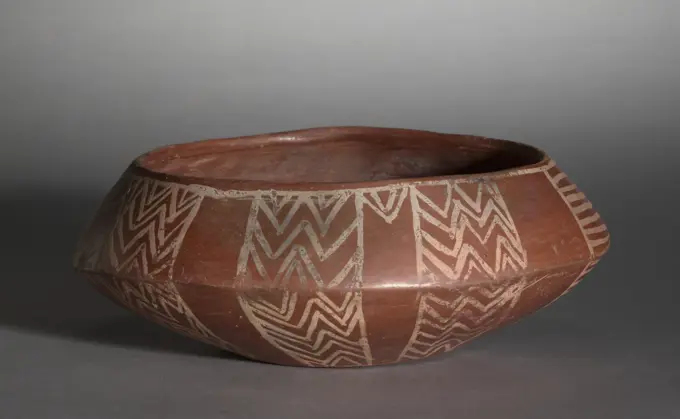
Variety of bowls and containers made from terracotta and stoneware, showcasing intricate glazes and historical designs from different cultures.

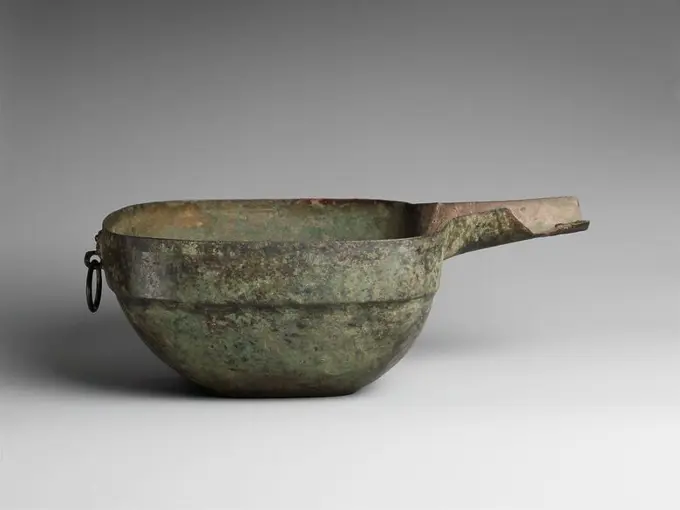
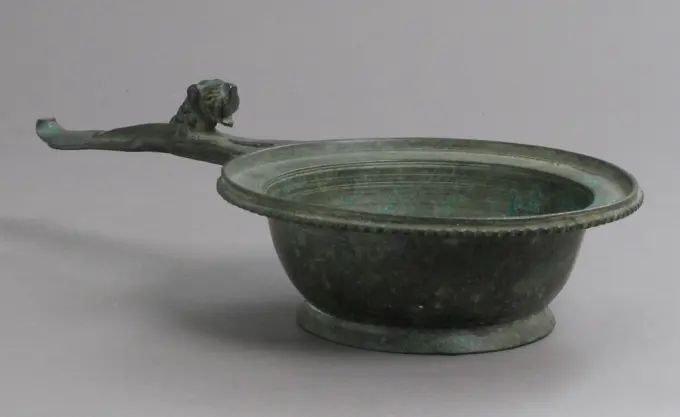
Pottery saucepan on three legs, with pouring spout and slantingly pointed handle, saucepan cooking pot crockery holder kitchenware soil find ceramics earthenware glaze lead glaze, hand turned molded glazed baked Pottery saucepan Convex bottom on three legs. Schenklip and upwardly directed stem. Red shard internal glazed Slightly receding upper edge Roetsporen at the top archeology Valckensteyn Poortugaal Albrandswaard indigenous pottery cooking kitchen food nutrition food preparation Soil discovery: canal at kitchen castle Valckensteyn at Poortugaal now Albrandswaard 1961.
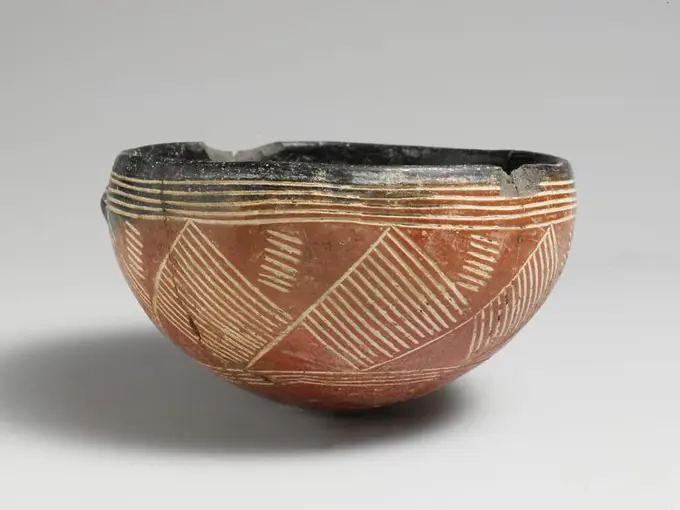
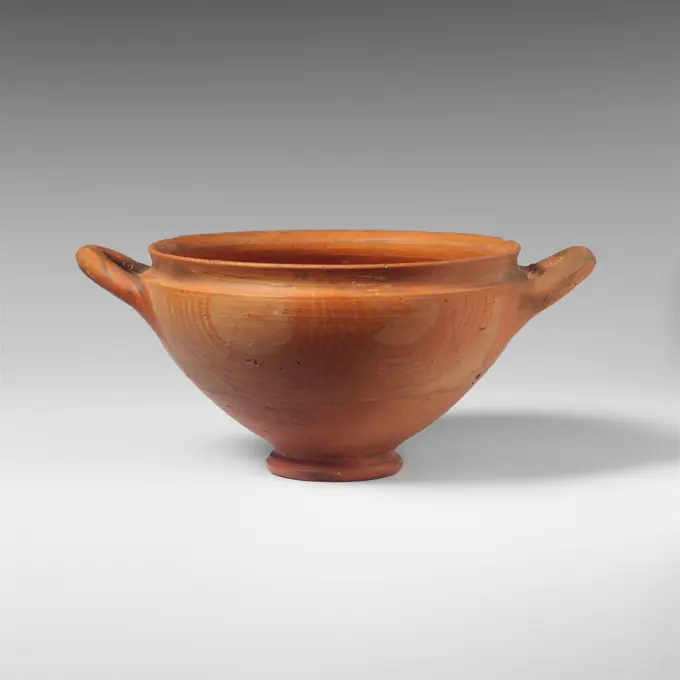
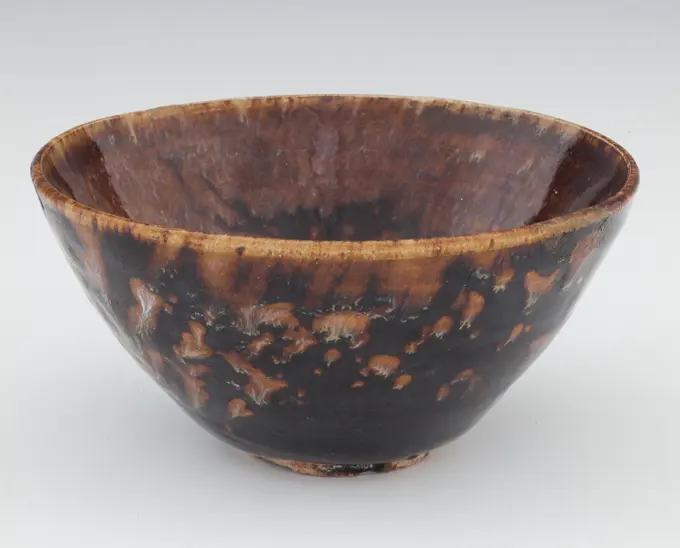
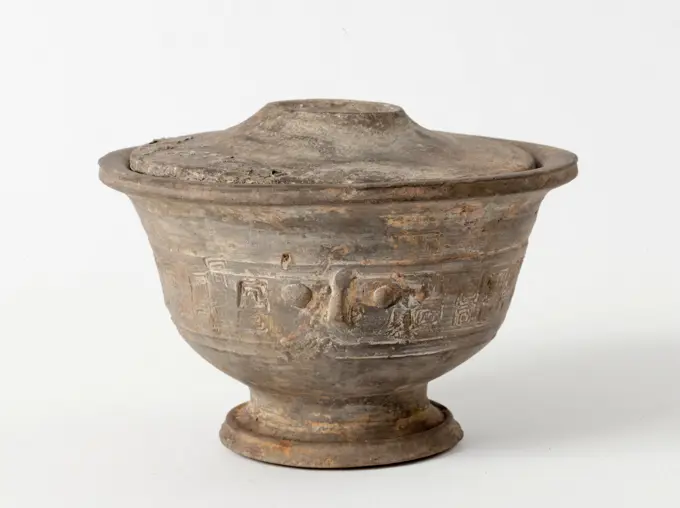
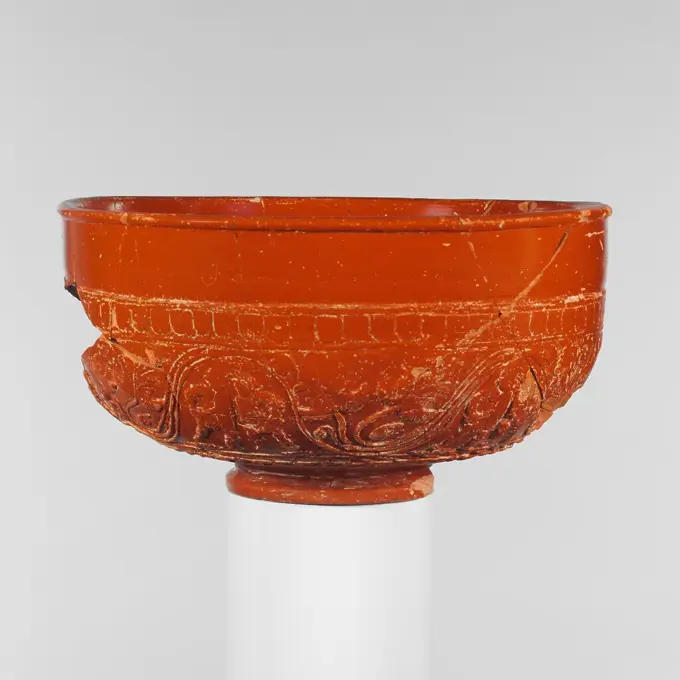
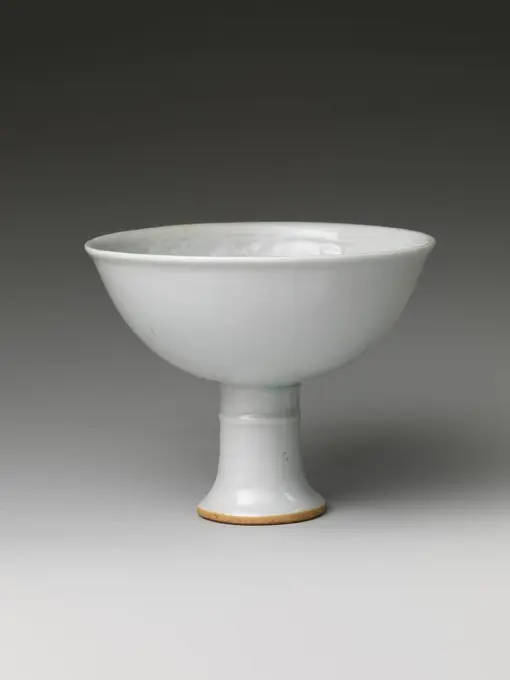
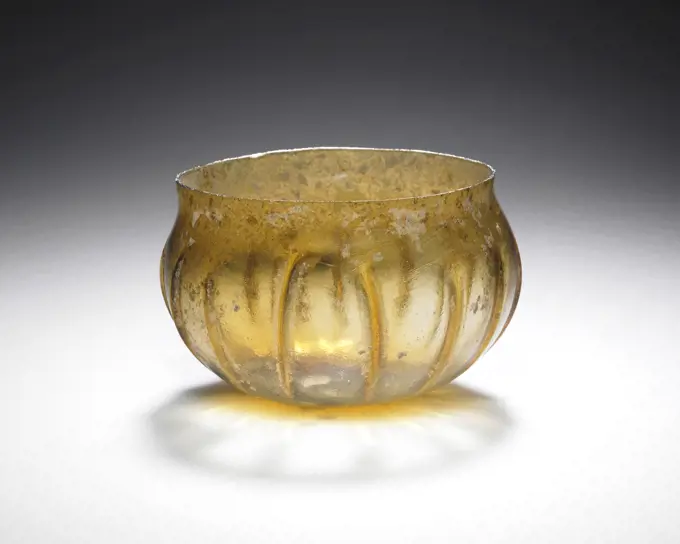
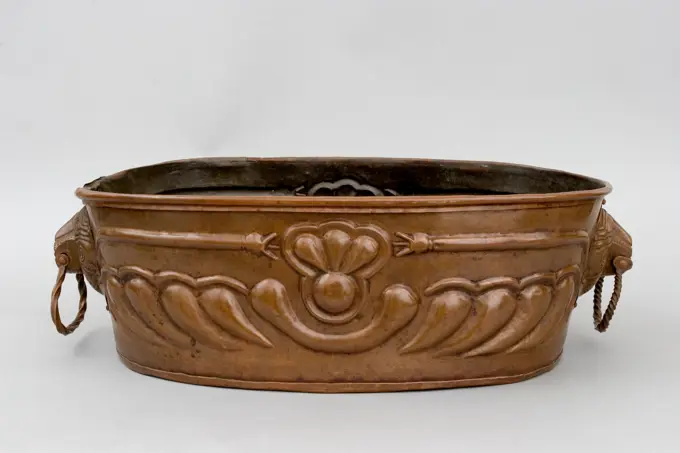
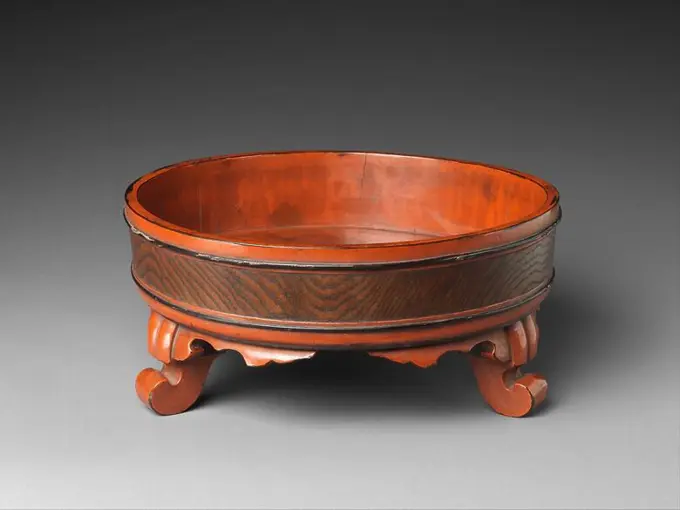
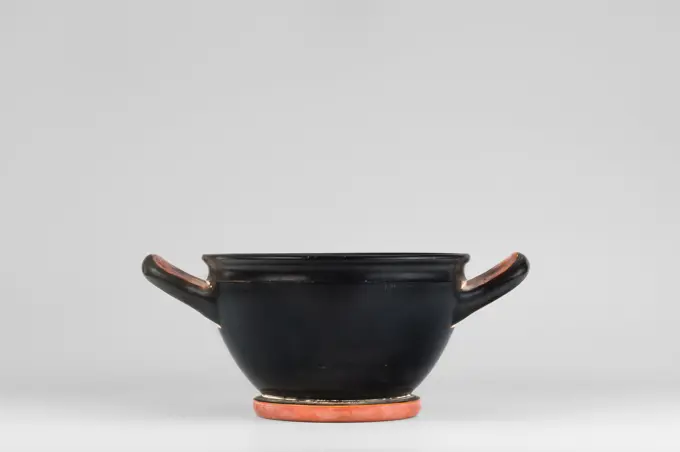
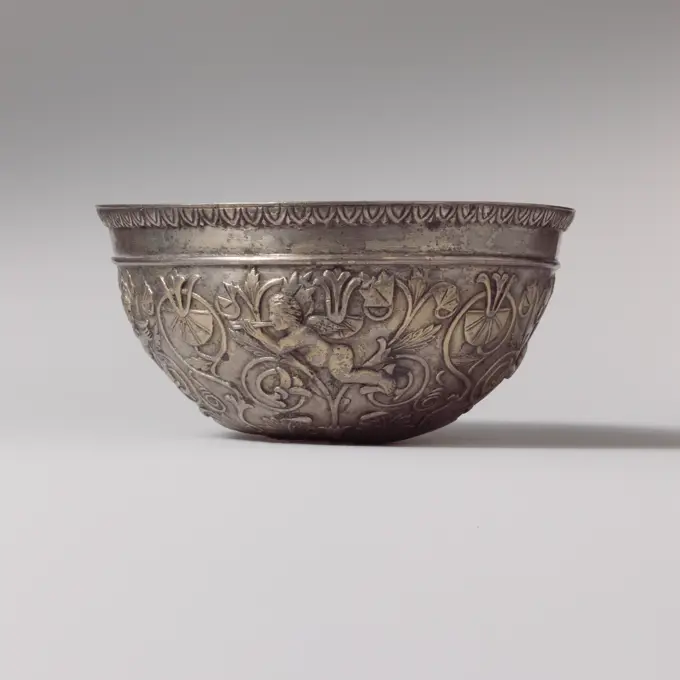
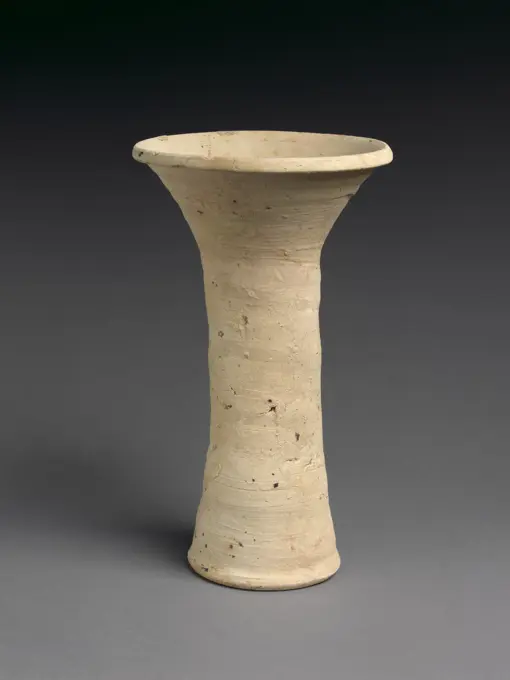
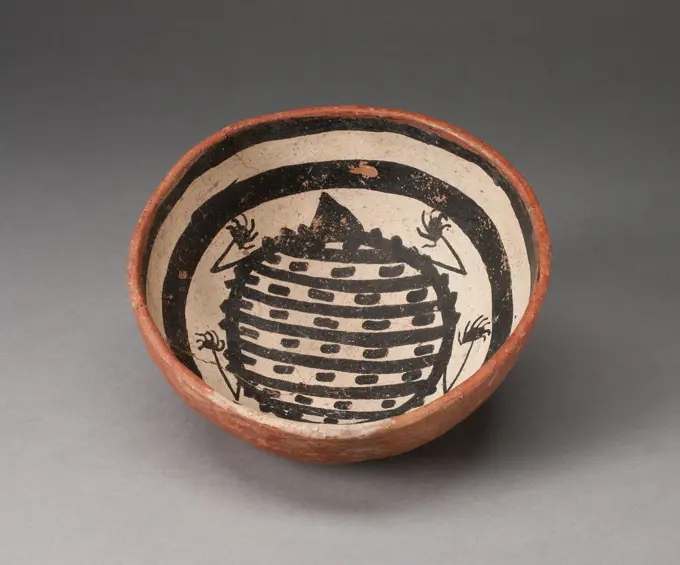
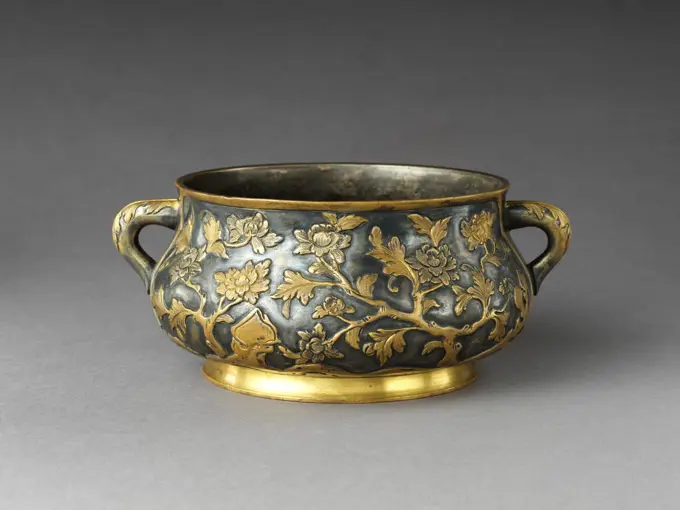
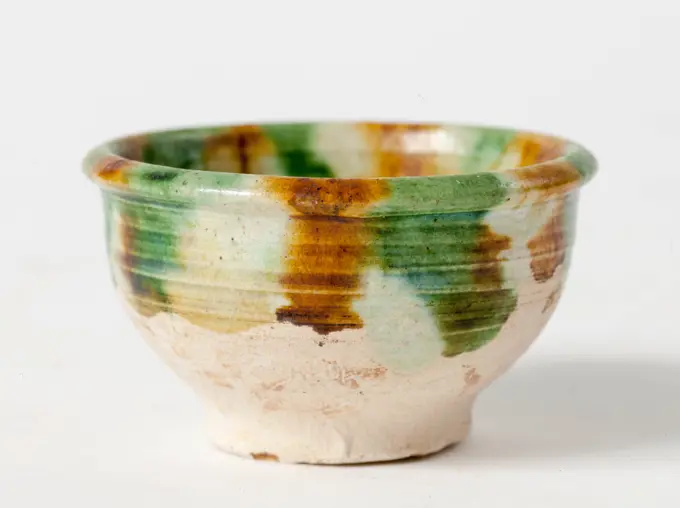
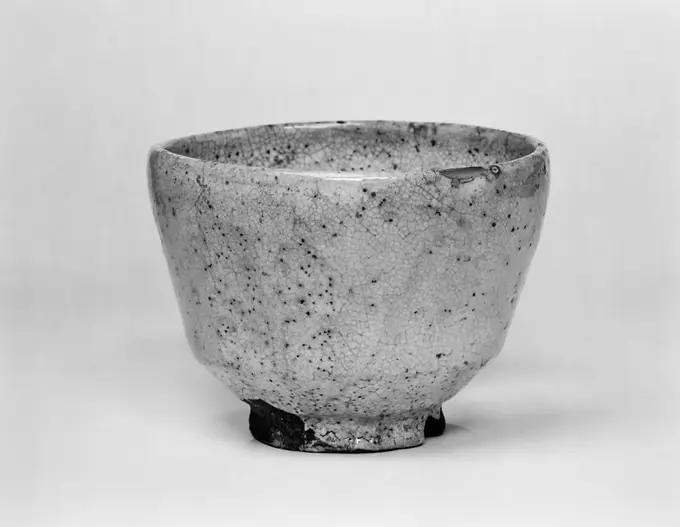
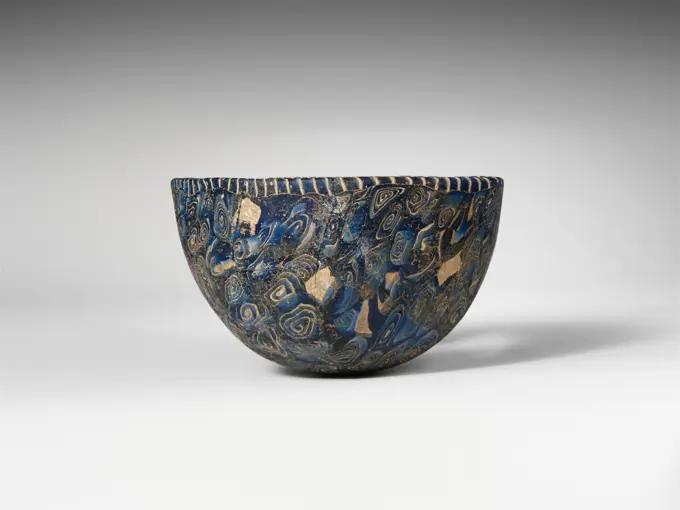
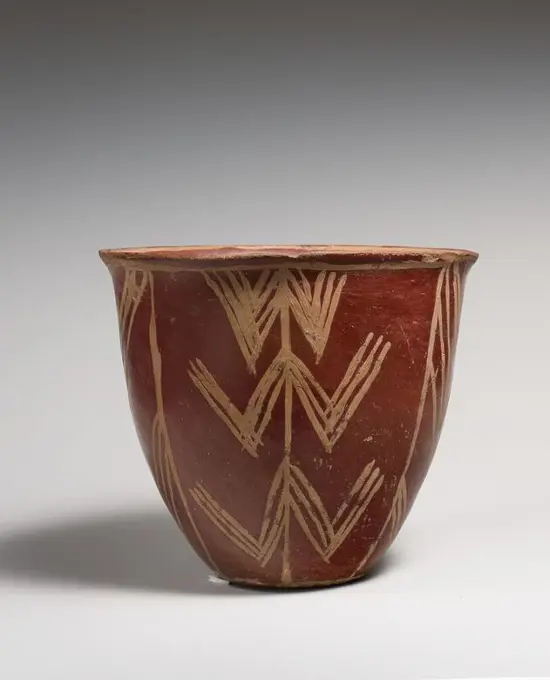
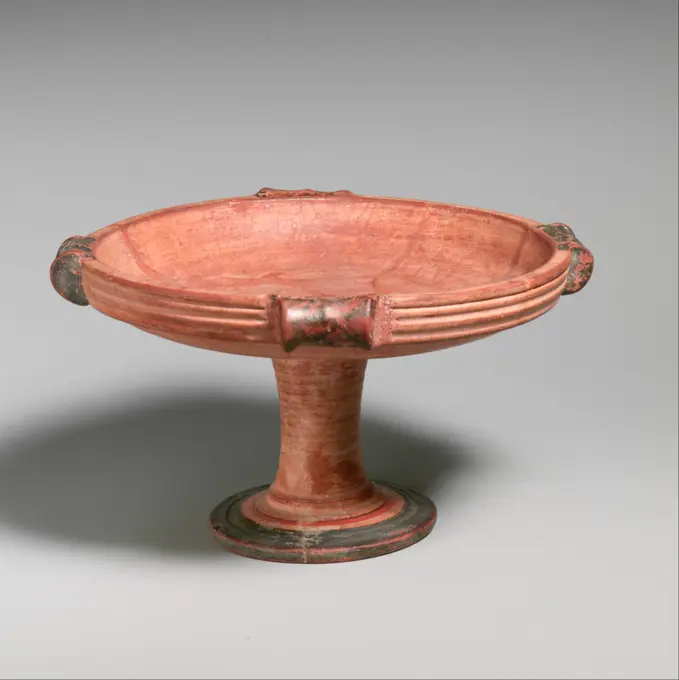
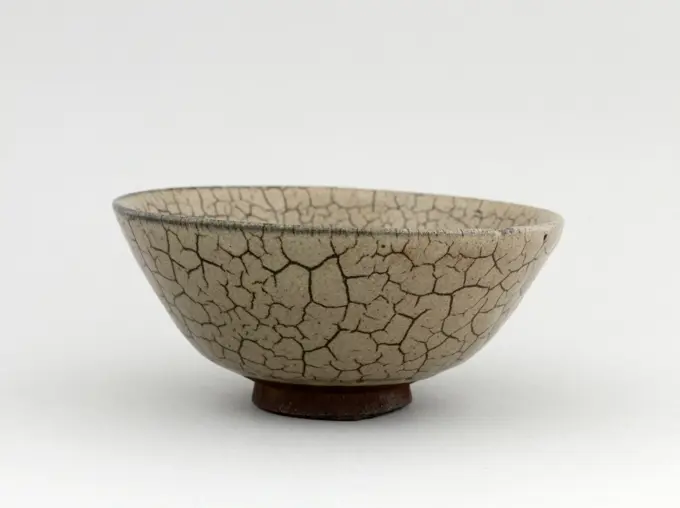
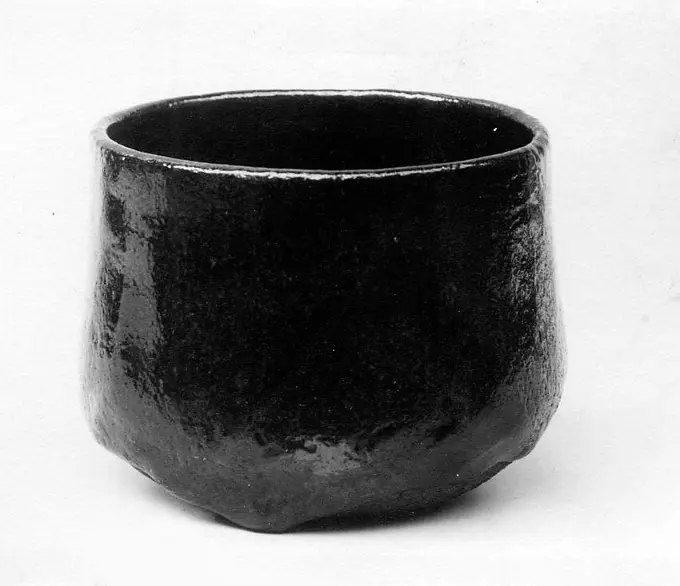
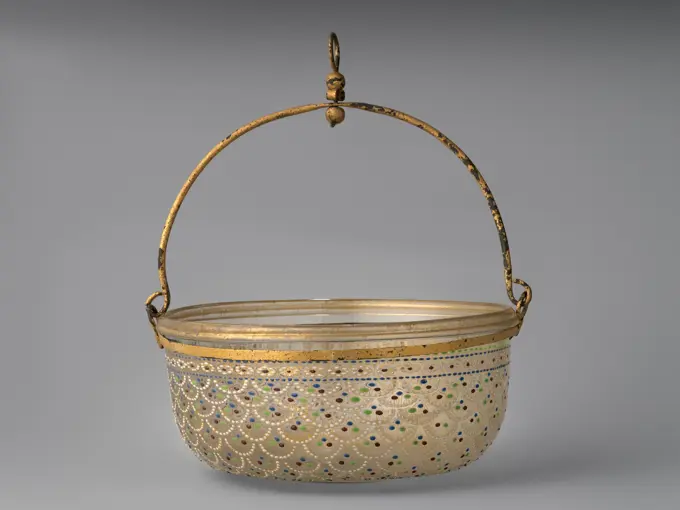
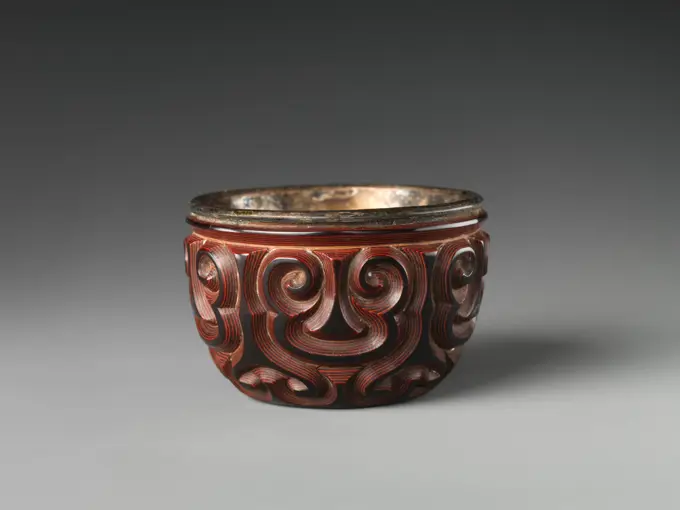
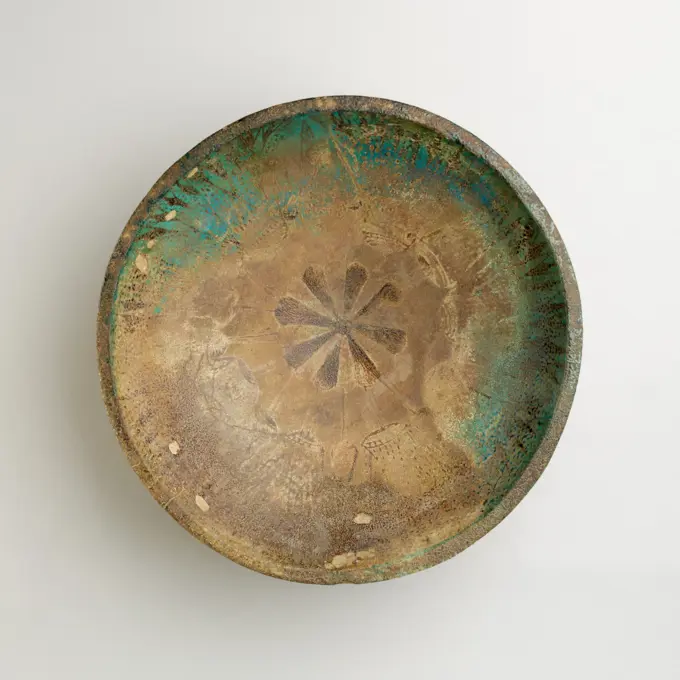
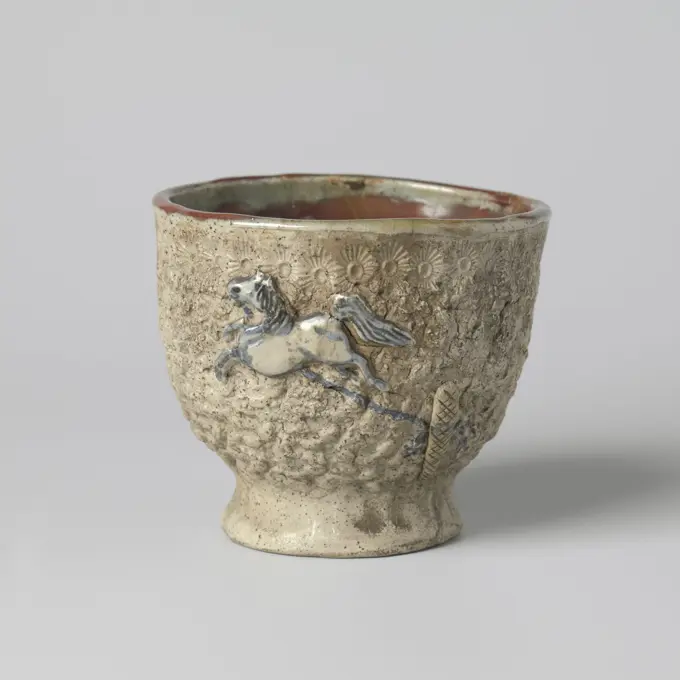
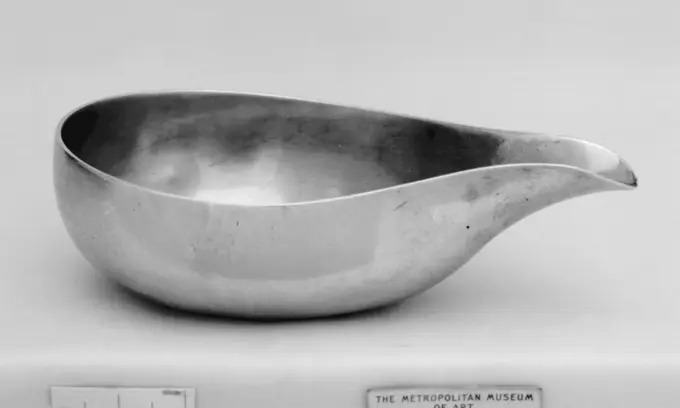
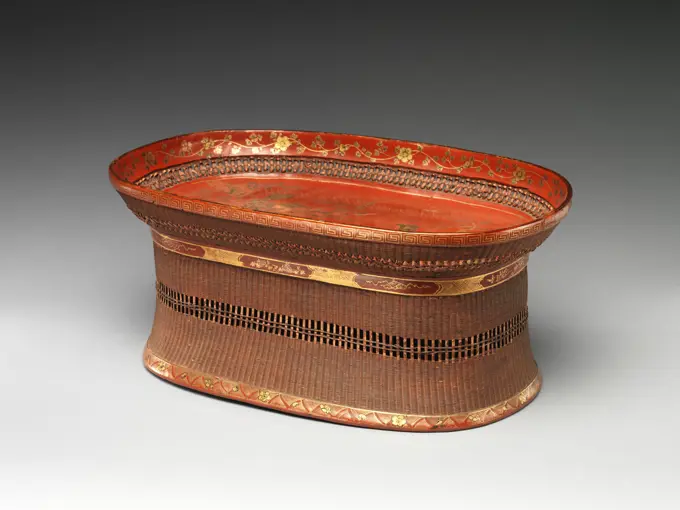
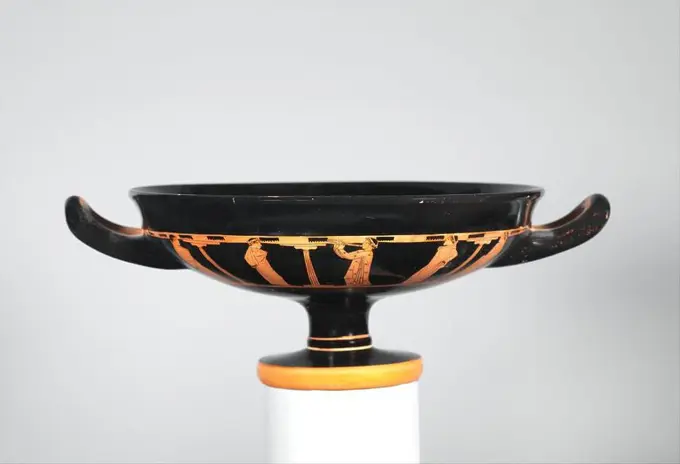
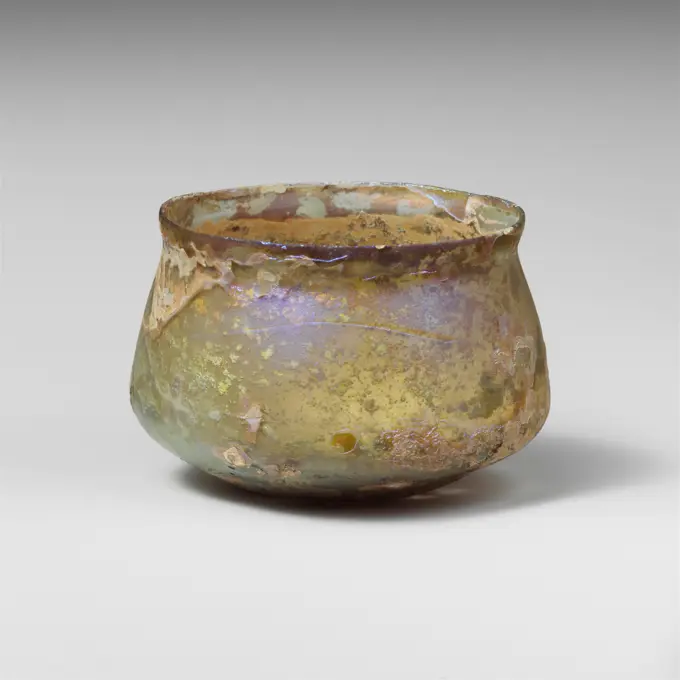
Glass cup 2nd-3rd century A.D. Roman Uncertain, probably colorless with pale blue green tinge.Knocked-off, uneven rim; slightly bulging collar below rim; sides expanding downward, then angled in to join bottom with uneven pushed-in center.A single wheel-abraded horizontal line around neck below collar and a band of faint lines on body above angle.Intact; many pinprick bubbles; dulling, deep pitting, and brilliant iridescent weathering on exterior; thick creamy weathering on interior.Stands aslant on base.. Glass cup 244609Terracotta bowl. Culture: Cypriot. Dimensions: H. 2 9/16 in. (6.5 cm); diameter 4 3/16 in. (10.6 cm). Date: ca. 2500-1900 B.C..Hemispherical bowl with elaborate incised decoration. Museum: Metropolitan Museum of Art, New York, USA.Lotus bowl 30 B.C.-A.D. 364 Roman Period This bowl, of Egyptian alabaster (travertine) glazed in green, is carved to represent a lotus flower, with the wide, flat rim ornamented with ivy and incised rosettes. A seated figure in relief dominates the interior.. Lotus bowl. 30 B.C.-A.D. 364. Glazed travertine (Egyptian alabaster). Roman Period. From EgyptBowl, 222-650. Iran, Sasanian Period, 3rd-7th Century. Earthenware;Bowl. England, Staffordshire. Date: 1825-1835. Dimensions: H. 8.9 cm (3 1/2 in.). Earthenware with copper lustre decoration and yellow ground. Origin: Staffordshire. Museum: The Chicago Art Institute, Chicago, USA.Terracotta skyphos (deep drinking cup) 1st half of 8th century B.C. Greek, Euboean Unpretentious though they are as objects, skyphoi with pendant semicircles are of considerable archaeological importance for their diffusion throughout the Mediterranean world. Euboea was active in trade and in the establishment of colonies during the eighth and seventh centuries B.C. The distribution of these skyphoi indicates Euboean presence.. Terracotta skyphos (deep drinking cup) 240179Basalt mortar ca.1600-700 B.C. Cypriot The mortar has three short legs.. Basalt mortar. Cypriot. ca.1600-700 B.C.. Basalt. Late Bronze Age or Geometric. Miscellaneous-Stone VasesTea bowl unknownRitual vase with lid ". Terracotta. China, Zhou dynasty (approx. 1050-256 BC). Paris, Cernuschi museum. Chinese art, Chinese ceramic, container, lid, zhou dynasty, zhou time, container, terracotta, ritual vaseCovered Box. Thailand, Sawankhalok, 16th century. Furnishings; Accessories. Stoneware with underglaze brown painted decorationSmall Cup. China. Date: 1200-1234. Dimensions: H. 4.1 cm (1 5/8 in.); diam. 8.8 cm (3 7/16 in.). Jun ware; stoneware with opaque pale-blue and crimson-splashed glaze. Origin: China. Museum: The Chicago Art Institute, Chicago, USA.Bowl 19th century Objects like this bowl were typically displayed in open niches in reception rooms of upper-class Syrian residences during the Ottoman period. Bowl 444987Terracotta bowl. Culture: Roman, South Gaulish. Dimensions: Other: 4 7/8 x 9 3/4 in. (12.4 x 24.8 cm). Date: ca. A.D. 90.Exterior, in relief, groups of warriors, with vine leaves between. Museum: Metropolitan Museum of Art, New York, USA.Dish. Culture: Japan. Dimensions: H. 4 in. (10.2 cm); Diam. 8 in. (20.3 cm). Date: 19th century. Museum: Metropolitan Museum of Art, New York, USA.Tea bowl with a cream glaze, anonymous, anonymous, c. 1750 - c. 1799 Teaom van Steengoed, covered with a cracked, cream -colored glaze. The bowl has been broken and repaired with gold lacquer. Old label on the bottom with 'W682'. Kyoyaki. Japan stoneware. glaze vitrification Teaom van Steengoed, covered with a cracked, cream -colored glaze. The bowl has been broken and repaired with gold lacquer. Old label on the bottom with 'W682'. Kyoyaki. Japan stoneware. glaze vitrificationStem Cup with Chrysanthemum Scroll. Culture: China. Dimensions: Diam. 5 1/8 in. (13 cm). Date: 14th century.Briefly produced in the fourteenth century, small white porcelains such as this are often cited as an intermediary step between the Qingbai celadons and the fabled blue-and-white wares of Jingdezhen. Ceramics of this type are often catalogued as Shufu ware because the two Chinese characters shu and fu are found in the interiors. These translate as "privy council" and indicate that such ceramics were intended for official use. Museum: Metropolitan Museum of Art, New York, USA.Rippenschale; Eastern Mediterranean; second half of 1st century B.C; Glass; 4.4 x 8.3 cm (1 3,4 x 3 1,4 in.)Pottery ointment jar, low model, wide top edge, two constrictions, white glazed, ointment jar pot holder soil finds ceramic earthenware glaze tin glazing, hand-turned baked 2x glazed earthenware ointment jar low model with outstanding upper edge Two necking. Diameter of top edge is larger than diameter of side wall and bottom. Stand with light soul. White glazed dark discolored by staying in the soil. Delftware archeology health care indigenous pottery packing pharmacy store sell medicine drug craftBowl late 11th-early 12th century Korea. Bowl 52082Incised Bowl. Culture: Paracas. Dimensions: Overall: 2 1/4 in. (5.72 cm)Other: 6 1/8 in. (15.54 cm). Date: 7th-4th century B.C.. Museum: Metropolitan Museum of Art, New York, USA.Water containerFragment lid from V.O.C.-ship De 'Witte Leeuw', Before 1613 lid Fragment lid from V.O.C. ship the 'Witte Leeuw'. Jingdezhen porcelain   Sint-HelenaRitual wash basin. Culture: Japan. Dimensions: H. 5 3/4 in. (14.6 cm); D.13 in. (33 cm). Date: 16th century.This round, three-legged basin is lacquered red inside and out except for a wide band of richly grained wood around the outside, between two raised rims that recall the metal or wood strips used to bind wooden buckets or barrels. Known as a fusatsu darai, it is one of the most important forms of Negoro lacquer, the functional, undecorated ware made by coating red lacquer over black, originally for the use of monks at the Negoro Temple in Kishu, present-day Wakayama Prefecture. Unlike a number of Negoro forms that also had secular use, this water basin had a specific religious function in a Buddhist communal ceremony of expiation known as fusatsu-e, held on the fifteenth day of the month, in which the monks washed their hands as part of their ritual self-purification. Museum: Metropolitan Museum of Art, New York, USA.Skyfos czarnofirnisowany. unknown, authorSilver-gilt bowl 2nd-1st century B.C. Greek The decoration on the bowl is in repoussé. Within a floral setting, a pair of Erotes fly toward each other on each side of the bowl. One Eros holds a stemmed cup, while the other plays a double flute.. Silver-gilt bowl. Greek. 2nd-1st century B.C.. Gilt silver. Late Hellenistic. Gold and SilverGlass cantharus (drinking cup) ca. A.D. 40-80 Roman Translucent cobalt blue; handles in same color.Flaring, rounded rim, with folded solid flange below; bell-shaped body, carving in sharply to solid, short stem; low, splayed foot, formed from a separate gather with knocked-off and ground outer edge; uneven, flat bottom; low kick at center of inside of body; strap handles attached to lower sides of body in pads, tooled flat above, drawn up and outwards, then curved round and down in a loop above rim, and applied to lip and underside of rim.Complete, but repaired on rim at junction of both handles, with one small chip and rim and one larger chip on underside of edge of foot; some bubbles, elongated horizontally around rim; dulling, some pitting of surface bubbles, iridescent weathering, and small patches of limy encrustation.This is an early type of wineglass and would have graced the table of a wealthy Roman at a dinner or drinking party. Most surviving examples are recorded from sites Fruit stand ca. 2600-2350 B.C. Sumerian. Fruit stand 325425BurlBowlBowl Cypriot Small deep bowl with broad bands.. Bowl. Cypriot. Terracotta. Iron Age. VasesBasin 14th century The shape of this basin, both in metal and glass, was popular in the Ayyubid and Mamluk periods. The surviving examples in glass, however, are only from the Mamluk period and therefore may have been produced in imitation of earlier Ayyubid metal shapes.. Basin 444711Small Bowl with an Abstract Insect or Animal Painted in Interior 950 CE-1150 Arizona. Ceramic and pigment . MimbresIncense burner with floral pattern 17th-18th century China This incense burner is an unusual example of how Chinese works were sometimes modified when they came to Europe. The censors form is a typical Chinese archaistic reinterpretation of an ancient food vessel, but its decoration—Chinese tree peonies in a landscape setting—was most likely chased from the vessels original surface by a European metalsmith. A mark on the base (“ALPH GIROUX PARIS”) reveals that the vessel was once in the collection of Alphonse Giroux (1775/76-1848), a French dealer in luxury goods. It is most likely that the cold-work surface decoration was added in his workshop, reflecting the hybrid nature of Chinoiserie in eighteenth-century Europe.. Incense burner with floral pattern. China. 17th-18th century. Copper alloy with parcel-gilding. MetalworkTerracotta kylix (drinking cup) mid-6th century B.C. East Greek The shape is derived from Attic Little Master cups, specifically lip cups.. Terracotta kylix (drinking cup) 240950Terracotta cup. Culture: Roman. Dimensions: H. 1 11/16 in. (4.3 cm); diameter 4 in. (10.2 cm). Date: ca. A.D. 70-150.This small cup is decorated with a combination of applied masks and barbotine floral designs. Both techniques came to be used extensively by the producers of Gallic sigillata from the late first century A.D. onward. Museum: Metropolitan Museum of Art, New York, USA.Bowl 10th-15th century Mexican. Bowl 315732Incense Burner, 1736-1795. China, Qing dynasty (1644-1911), Qianlong reign (1736-1795). Green jade; overall: 7.8 x 14.4 cm (3 1/16 x 5 11/16 in.).Stone Bowl with Inlays. Culture: Moche. Dimensions: H. 2 11/16 x W. 4 3/8 in. (6.8 x 11.1 cm). Date: 1st century B.C.-A.D. 7th century. Museum: Metropolitan Museum of Art, New York, USA.Bake with crushed ornament and email decoration, F.J. Kloek, c. 1915 Pap and pottery bin, low model, decorated with a crushed ornamental decor, with thick-running enamel in dark and light blue. Inside glazed. So-called carduus pottery. Amsterdam earthenware. Pap and pottery bin, low model, decorated with a crushed ornamental decor, with thick-running enamel in dark and light blue. Inside glazed. So-called carduus pottery. Amsterdam earthenware.Cup ". Terracotta with brown, green and white glaze (Sancai). China, Tang dynasty (618-907). Paris, Cernuschi museum. Chinese art, Chinese ceramic, container, cup, tang dynasty, container, terracottaJug Roman  One-handled jug with traces of greenish glaze.. Jug 250230 Roman, Jug, Terracotta, H. 6.91 cm.. The Metropolitan Museum of Art, New York. Gift of J. Pierpont Morgan, 1917 (17.194.1765)Teabowl 17th century Japan. Teabowl 63936Water ewer (Yi). Culture: China. Dimensions: H. 4 3/4 in. (12.1 cm); W. 10 in. (25.4 cm); D. 13 in. (33 cm). Museum: Metropolitan Museum of Art, New York, USA.Glass mosaic hemispherical bowl 2nd-mid-1st century B.C. Greek Translucent blue and opaque white.Vertical, squared-off rim; convex curving side; convex bottom.Composite mosaic pattern formed from irregular circular sections of a single cane in a blue ground with a white spiral, interspersed with a small number of angular segments of a cane in solid white; a blue network cane wound spirally with a white trail is attached as a rim.Broken and repaired with one large hole in side and another in rim; dulling, pitting, and creamy weathering with faint iridescence.. Glass mosaic hemispherical bowl 245785White cross-lined ware bowl with geometric patterns. Dimensions: No measurement. Date: ca. 3700-3650 B.C.. Museum: Metropolitan Museum of Art, New York, USA.Small bowl China. Small bowl 49205Skyphos. Culture: Greek, South Italian, Apulian. Dimensions: H. 8.20 cm.. Date: ca. 350-300 B.C.. Museum: Metropolitan Museum of Art, New York, USA.Red -andened kylix; Painter London E 122 (approx. 440-430 BC); around 430 BC (-435-00-00--425-00-00);Terracotta stemmed dish late 7th-early 6th century B.C. Lydian The edge of the lip is articulated with horizontal grooves and with four spools or rotelles. The rotelles in particular give a metallic impression, for they typically serve on metal vases for the attachment of swinging handles.. Terracotta stemmed dish 248835Mycenaean Pottery alabastron (Ointment Jar), with depictions of Argonauts and seaweed. 1500-1450 BC. Mycenaean Greece (or Mycenaean civilization) was the last phase of the Bronze Age in Ancient Greece (c. 1600-1100 BC). It represents the first advanced civilization in mainland Greece, with its palatial states, urban organization, works of art and writing systemKom, anonymous, c. 1600 - c. 1900 Driven silver bowl without soil. Indonesia silver (metal) Driven silver bowl without soil. Indonesia silver (metal)Saucer, 1100s. China, Jin dynasty (1115-1234). Glazed grayish-white porcelain, Ding ware; diameter: 9.9 cm (3 7/8 in.).Terracotta stemless kylix (drinking cup). Culture: Greek, South Italian, Campanian, Calenian. Dimensions: H.: 2 x 4 7/8 in. (5.1 x 12.4 cm). Date: late 4th-3rd century B.C..Silver cups with medallions in low relief on the interior were favored luxury items in antiquity. Terracotta versions such as these suggest their appearance. One tondo shows the Eleusinian god Triptolemos in his snake-drawn chariot. The other cup features the head of Arethusa, taken from the reverse of a celebrated coin of Syracuse in Sicily. "Arethusa cups" were made and found principally in Campania. Museum: Metropolitan Museum of Art, New York, USA.Incised Painted Bowl 5th-3rd century B.C. Paracas. Incised Painted Bowl 308614Basin of Sultan Qaytbay. Dimensions: H. 5 in. (12.7 cm)Diam. 14 1/2 in. (36.8 cm). Date: ca. 1468-96.The reign of Sultan Qaitbay (1468-96), the last great Mamluk sultan, briefly revitalized the declining metalwork industry, but not to the heights of fourteenth century production. The repoussé work that creates the lobed petal-like form is typical of the late Mamluk period, as are the pincerlike termini of the vertical letters in the inscription. Museum: Metropolitan Museum of Art, New York, USA.Bowl with Inicised Animals 5th-4th century B.C. Paracas. Bowl with Inicised Animals 308490Handled Cup. China. Date: 618 AD-907 AD. Dimensions: H. 4.8 cm (1 7/8 in.); diam. 8.5 cm (3 3/8 in.). Slip-coated and glazed stoneware. Origin: China. Museum: The Chicago Art Institute, Chicago, USA.Water boiler with standard, Jan EisenLoeffel, c. 1900 - c. 1910 Teapot from brass, inside Tell, belonging to a tea set. On the low base, a wide -ranging can, with very slightly curved top with round opening, which can be closed with lid. The top edge of the pot, as well as the edge around the opening is decorated with profiled tires. The flat lid is also in the middle and on the edge decorated with profiled tires and has a round, wooden button in the middle. On the top of the pot, an angular handle is applied in the middle with reeds. The pour out has been shut off and is flat at the top. Netherlands brass (alloy). tin (metal). wood (plant material) cutting / engraving Teapot from brass, inside Tell, belonging to a tea set. On the low base, a wide -ranging can, with very slightly curved top with round opening, which can be closed with lid. The top edge of the pot, as well as the edge around the opening is decorated with profiled tires. The flat lid is also in the middle and on the edgeAttic Black-figurePalmette-KylixBronze Bowl 1260 B.C. EgyptLazio Viterbo Viterbo Museo Civico59. Hutzel, Max 1960-1990 Views of paintings (Middle Ages through 18th c.), frescoes, a tabernacle, coffin, sculpture reliefs, portal fragments, busts, sculpture, tapestry found in the Pinacoteca, Second floor gallery and Second floor cloister sequences. Antiquities: Many views of Etruscan and Roman fragments, sculpture, sarcophagi, pottery, masks, jewelry and other objects found in the Storeroom sequence (inventory numbers on back of prints), and the Cloister, Second floor Cloister, Valle Giulia, Sala Romana and Sala Etrusca sequences. General Notes: There are eight separate numerical sequences for this location. The cloister as an architectural structure, rather than museum site, is documented in the record and file for S. Maria della Verita, Cloister, all views of which are stored in Medieval core collection. Five views from the Museo Civico Second floor cloister sequence are stored in Medieval. German-born photographer and scholar Max Hutzel (1911-Bowl. Byzantine, 11th-12th century. Furnishings; Serviceware. CeramicWhite Cross-Lined Bowl with Turtle and Sun, c. 4000-3400 BCs. Egypt, early Predynastic Period, Naqada I-IIa period. Nile silt pottery; diameter: 18.1 cm (7 1/8 in.); diameter of mouth: 13.7 cm (5 3/8 in.); overall: 6.7 cm (2 5/8 in.).Bowl. Culture: Nasca. Dimensions: H x W x D 3 3/8 x 5 1/2 x 7 3/4 in. (8.6 x 14 x 19.7 cm). Date: 2nd-4th century.Although finely decorated Nazca vessels were made in specialized workshops, recent discoveries in small habitation sites show that the use of painted plates and open bowls was not limited to people living in monumental sites. These vessels were widely distributed among the population and used in households of any socioeconomic status. Plates and bowls were probably obtained during feasts, which gave opportunities to elites to enhance their own status by displaying and distributing prestigious crafts among the population. This bowl shows large raptorial birds decapitating human beings. The white background is filled with spears, zoomorphic heads, and circular objects interpreted as sling stones. The Nazca had a headhunting cult; caches of several trophy heads with carrying ropes have been discovered occasionally by archaeologists. The frequent depiction of severed heads is Basket Bank (Smooth)' still bank, c. 1902, Charles A. Braun; Manufacturer: Victor M. Grab & Co., Chicago, 2 3/4 x 3 1/2 x 3 1/2 in. (6.99 x 8.89 x 8.89 cm), Steel, United States, 19th-20th centuryTerracotta conical cup ca. 2200-1900 B.C. Minoan From Knossos, Crete. Terracotta conical cup. Minoan. ca. 2200-1900 B.C.. Terracotta; Dark monochrome fine ware. Middle Minoan I. VasesVessel, c. 1400-1600. Southwest, Arizona, Anasazi, Sikyatki style, 15th-16th century. Ceramic, slip; overall: 21.2 x 38.8 cm (8 3/8 x 15 1/4 in.).Coiled Storage Basket with Serrated-line Design 1880-1890 California. Natural vegetable fibers with pigment . PomoTeabowl mid- to late18th century Style of Ogata Kenzan Japanese. Teabowl 56158Straight Sided Rimmed Bowl. Egypt, Roman Period (30 BCE - 395 CE) or later. Furnishings; Serviceware. BronzeStem Tray, 14th century, 6 7/16 x 12 7/8 in. (16.35 x 32.7 cm), Sawankalok ware Stoneware with underglaze brown decor, Thailand, 14th centuryCovered tea bowl known as "white scorpion" (shirojakatsu-yu). Ceramic. Satsuma (Japan), late 18th century. Paris, Cernuschi museum. 59522-7 Asian art, bowl, ceramic, covered, late 18th century, container, white scorpion, shirojakatsu-yu, theBowl with Scale Medallion and Tendril Frieze. UnknownFooted Bowl with Design of Tiny Butterflies. Kumeno Teitarō (attributed to) (Japan, 1865 - 1939). first quarter of the 20th century. Furnishings; Accessories. Cloisonné enamelRibbed Cup. Egypt, Roman Period (30 BCE - 395 CE) or later. Furnishings; Serviceware. BronzeJar (Guan). China, middle Tang dynasty, about 700-800. Furnishings; Serviceware. Mold-blown blue glassBrazier with RoastingCicadasUrns. Vietnam. Paris, Muse Cernuschi. Urns Asian art, art of extreme orient, art of Vietnam, Vietnamese art, dishesBronze lebete urn with moveable double-handles looped through crosses, from the Tomb of the Studded Vases discovered in 1974 in Padua, Veneto, Italy. Paleoveneti Civilization, 8th-7th Century BC.Patera 5th century Byzantine (). Patera 468587Teabowl ca. 1630 Attributed to Honnami Kuchu Japanese. Teabowl 63173Situla early 16th century Italian, Venice (Murano) Influenced by Islamic craftsmen, Venetian glassblowers began making gilt and enameled vessels as early as the fifteenth century. The decorative scales on this situla resulted from a multi-step process, which entailed reheating the piece a second time after the vessel was blown. The crudely finished handle is most likely not original.. Situla. Italian, Venice (Murano). early 16th century. Glass, enameled and gilt. GlassLobed Cup and Stand with Floral Sprays and Lotus Leaves. Korea. Date: 1135-1165. Dimensions: Cup: h. 5.1 cm (2 in.); diam. 7.4 cm (2 15/16 in.); stand: h. 4 cm (1 9/16 in.); diam. 10.3 cm (4 1/16 in.). Celadon-glazed stoneware with underglaze molded, carved, and incised decoration. Origin: Korea. Museum: The Chicago Art Institute, Chicago, USA.Dish with Incised Design of a Rider on a Mule, c. 1600. Japan, Momoyama period (1573-1615). Buff stoneware covered with copper-green glaze (Mino ware, Oribe type); diameter: 16.7 cm (6 9/16 in.).Bowl with Parrot and FishGuri lacquer cup 1271-1368 China. Guri lacquer cup. China. 1271-1368. Carved black lacquer with red layers (tixi). Yuan dynasty (1271-1368). LacquerMugMarsh-Bowl of Ruiu ca. 1504-1447 B.C. New Kingdom The burial of Ruiu was found in the tomb of her father, Neferkhawet, which was excavated by the Museums Egyptian Expedition in 1935. Between Ruiu's coffin and that of her husband, Baki, was a basket containing two faience bowls. The glaze and painted decoration of both bowls had been badly damaged by the damp atmosphere in the tomb. The decoration on the inside of this bowl is centered on a rosette from which sprout lotus buds and flowers.. Marsh-Bowl of Ruiu. ca. 1504-1447 B.C.. Faience. New Kingdom. From Egypt, Upper Egypt, Thebes, Asasif, Tomb of Neferkhawet (MMA 729), east chamber, Burial of Ruiu (IV), in large basket by coffin, MMA excavations, 1934-35. Dynasty 18, earlyTeabowl ca. 1780 Japan. Teabowl 63151Bowl 1st century B.C.-A.D. 4th century Nasca. Bowl 313299Tea bowl with a running horse, anonymous, anonymous, c. 1800 - c. 1900 Theekom van Steengoed, partially covered with a green enamel and painted in underlaze blue. The outside of the bowl is with structure on which a pole with a rope with a galloping or flying horse is applied. Somayaki. Japan stoneware. glaze. cobalt (mineral) painting / vitrification Theekom van Steengoed, partially covered with a green enamel and painted in underlaze blue. The outside of the bowl is with structure on which a pole with a rope with a galloping or flying horse is applied. Somayaki. Japan stoneware. glaze. cobalt (mineral) painting / vitrificationPap boat 1764-65 British, London. Pap boat 192103Footed Tray with Figures in a Landscape early 17th century Japan (Ryky Islands) During the Edo period, luxury basketry items sometimes received rich lacquer decoration, as with this rare red-lacquer footed tray. Made in Ryky (Okinawa) and embellished with a Chinese landscape, it indicates an extensive artistic exchange between the Ryky Islands and China.. Footed Tray with Figures in a Landscape. Japan (Ryky Islands). early 17th century. Basketry and red lacquer with gold and litharge painting. Momoyama period (1573-1615) or Edo period (1615-1868). LacquerLazio Viterbo Viterbo Museo Civico45. Hutzel, Max 1960-1990 Views of paintings (Middle Ages through 18th c.), frescoes, a tabernacle, coffin, sculpture reliefs, portal fragments, busts, sculpture, tapestry found in the Pinacoteca, Second floor gallery and Second floor cloister sequences. Antiquities: Many views of Etruscan and Roman fragments, sculpture, sarcophagi, pottery, masks, jewelry and other objects found in the Storeroom sequence (inventory numbers on back of prints), and the Cloister, Second floor Cloister, Valle Giulia, Sala Romana and Sala Etrusca sequences. General Notes: There are eight separate numerical sequences for this location. The cloister as an architectural structure, rather than museum site, is documented in the record and file for S. Maria della Verita, Cloister, all views of which are stored in Medieval core collection. Five views from the Museo Civico Second floor cloister sequence are stored in Medieval. German-born photographer and scholar Max Hutzel (1911-Cooling vessel with a blank coat of arms surrounded by four godrewres on the long sides. With the exception of the rings made from rods, the object consists of the following parts driven out of plate: the bin that makes the impression of one plate made; The bustled two lion heads, the viet legs, to which four plates are roamed to the bottom. The bin has a driven decor with a blank coat of arms in the middle in the middle, which is styled tendrils, and left and right surrounded by four godrinks. The raised edge has a string border and a hollow egg list. The upper protruding barrel has and decor with studs and punched stimers. The edge reinforced with iron wire is decorated as a cord. The wall is soldered with lead or tin here and there. In the edge there are three closed holes on both short sides.Terracotta kylix (drinking cup). Culture: Greek, Attic. Dimensions: H. 4 1/4 in. (10.8 cm); diameter 9 1/8 in. (23.2 cm). Date: ca. 480-470 B.C..Interior, youth before unexplained structureExterior, obverse and reverse, colonnade with flute player flanked by youthsThe structure in the tondo is clearly of wood, but its function remains unknown. The scenes on the exterior have been interpreted as a chorus of young men training for a public performance. Museum: Metropolitan Museum of Art, New York, USA.Small Bowl 12th-13th century China. Small Bowl 42471Vessel, 20th century, 9 x 6 1/2 x 6 1/2 in. (22.86 x 16.51 x 16.51 cm), Ceramic and pigment, United States, 20th centuryTripod Plate with Supernatural BirdPewter bleeding bowl, graduated, no handle, 18th to 19th century.Cup. 1800 -1200 BC. Argaric culture. Bronze Age. Decorative Arts. SPAIN. CATALONIA. BARCELONA. Barcelona. Archaeology Museum of Catalonia. Proc: SPAIN. VALENCIAN COMMUNITY. ALICANTE. Callosa del Segura.