Ancient Ceramics

Variety of bowls and containers made from terracotta and stoneware, showcasing intricate glazes and historical designs from different cultures.

Pottery saucepan on three legs, with pouring spout and slantingly pointed handle, saucepan cooking pot crockery holder kitchenware soil find ceramics earthenware glaze lead glaze, hand turned molded glazed baked Pottery saucepan Convex bottom on three legs. Schenklip and upwardly directed stem. Red shard internal glazed Slightly receding upper edge Roetsporen at the top archeology Valckensteyn Poortugaal Albrandswaard indigenous pottery cooking kitchen food nutrition food preparation Soil discovery: canal at kitchen castle Valckensteyn at Poortugaal now Albrandswaard 1961.
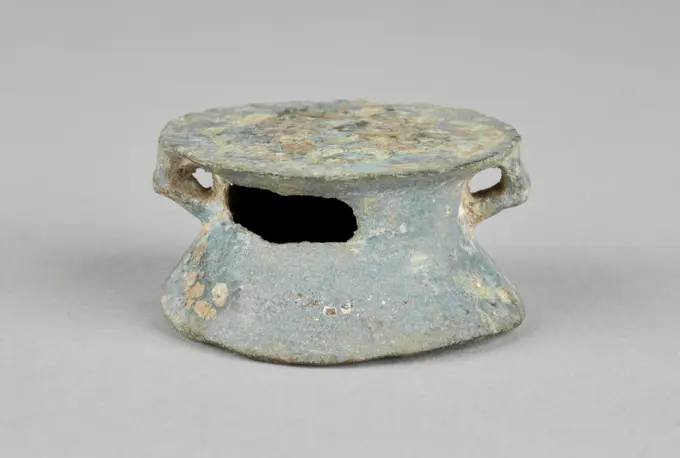
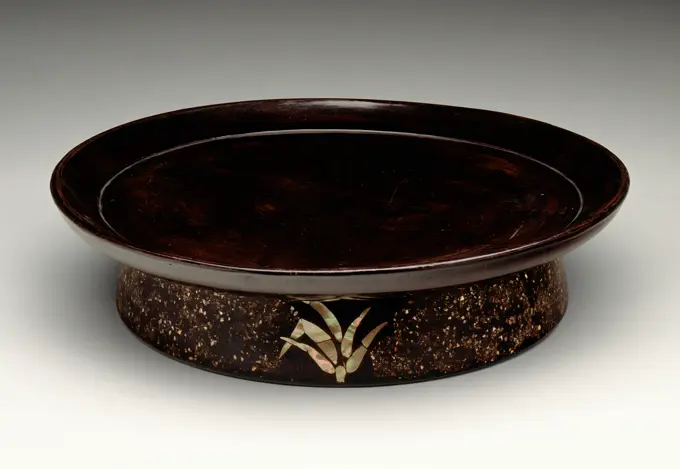
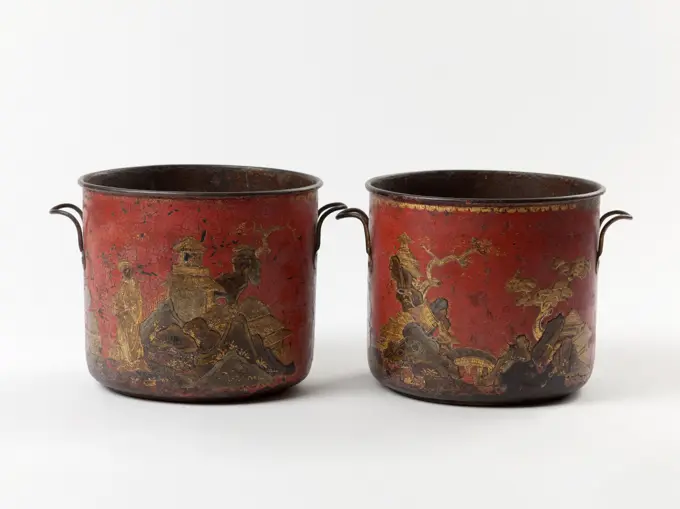
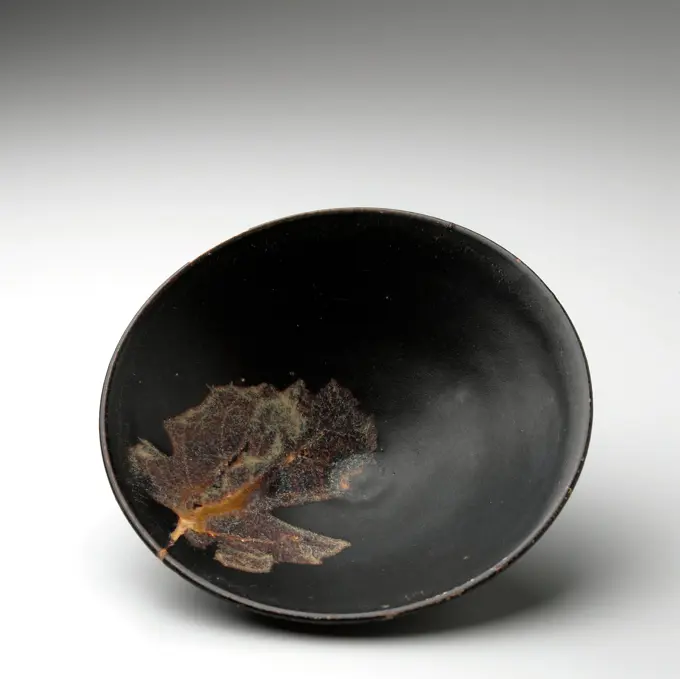
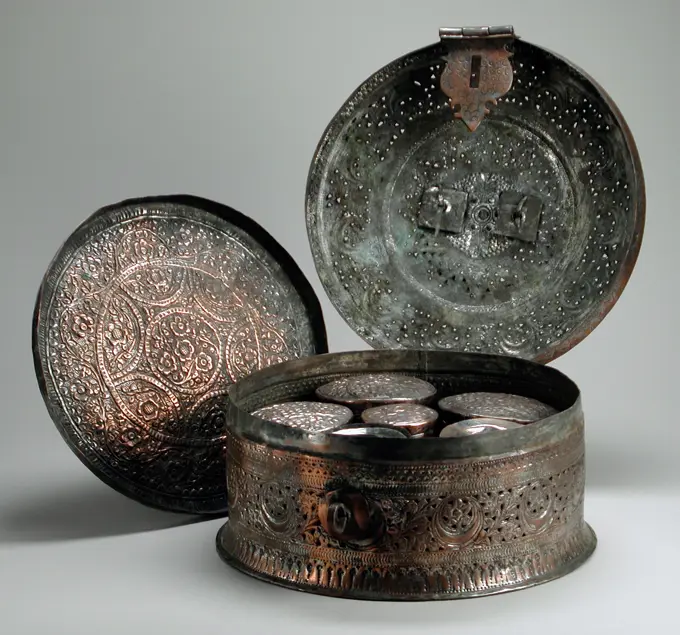
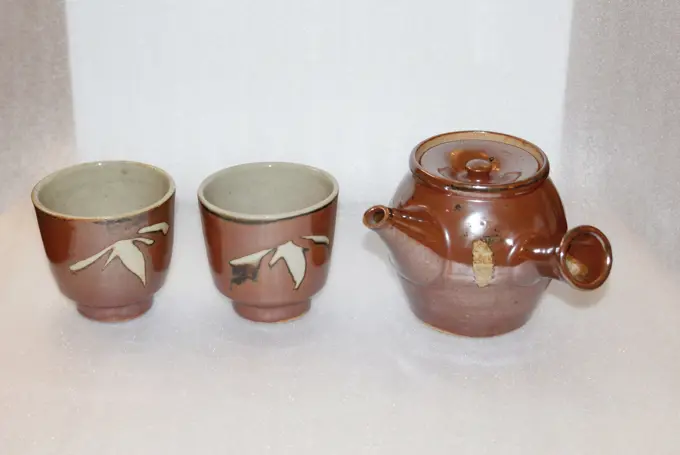
Bowl China. Bowl 52571Dish 1761-81 Frederick Bassett. Dish. American. 1761-81. Pewter. Made in New York, New York, United StatesTeapot stand ca. 1750-60 Style of Whieldon type. Teapot stand. British, Staffordshire. ca. 1750-60. Lead-glazed earthenware. Ceramics-PotteryTable Offering. Egypt, 5th Dynasty or later (2494 - 2345 BCE). Sculpture. GraniteAbruzzo Chieti Chieti Museo Nazionale di Antichita3. Hutzel, Max 1960-1990 Exterior views of part of the former Villa Frigeri, which along with a neighboring palazzo, houses the Museo Nazionale di Antichita. Views also of the gardens, fountain (17th century) and the restored interior. The so-called "Capestrano Warrior" (5th century B.C.) is found in the Antiquities core collection under Men, Youths, Warriors--Stone--Etruscan, Italic. Hutzel views include statues, funerary monuments, portrait busts and mosaics, many of which were excavated from Alba Fucens. Hutzel paid particular attention to the colossal statue of Hercules (late Hellenistic); the funerary temple reliefs of Lucius Storax; various nudes, torsos and heads, including the portrait bust of Agrippina Minore and the sepulchral portrait relief of Lucius Poditius (1st century A.D.); gravestones with inscriptions and bas-reliefs; Roman coins; bronze figurines (mainly warriors); and bronze vessels, utensils, helmets and ornaments.Bowl 18th century China. Bowl. China. 18th century. Porcelain with dappled glaze. Qing dynasty (1644-1911), Kangxi period (1662-1722). CeramicsSmall Bowl. Culture: Japan. Dimensions: H. 2 7/8 in. (7.3 cm); Diam. 3 3/8 in. (8.6 cm). Date: 19th century. Museum: Metropolitan Museum of Art, New York, USA.Anonymous, miniature drum. Bronze. Cernuschi Museum, Asia Museum of Asia in the city of Paris.Begging Bowl dated A.H. 1247/ A.D. 1831-32. Begging Bowl 451161Earring, from a collection of six, 11th-16th century, 2 x 2 1/2 x 3/4 in. (5.08 x 6.35 x 1.91 cm), Gold, Ecuador, Pre-ColumbianTray on a High Foot with Bamboo and Flowers. Ryukyu Islands, about 1400-1500. Furnishings; Serviceware. Black lacquer on wood core with mother-of-pearl inlayAnonymous. Bucket. Painted and iron sheet, around 1750. Paris, Carnavalet museum. 77641-4 Anse, Louis XV time, iron, painted, container, bucket, Louis XV style, toleCup and Saucer Made 1815-1825 Paris. Hard-paste porcelain, polychrome enamels, and gilding . Denuelle Porcelain Manufactory (Manufacturer)VASIJA. Location: ARCHAEOLOGICAL MUSEUM. LAS PALMAS. GRAN CANARIA. SPAIN.Teabowl with Leaf Decor, 12th-13th century, 1 7/8 x 5 3/4 in. (4.76 x 14.61 cm), Chi-chou ware Stoneware with brown glaze, China, 12th-13th century, Leaf pattern bowls rank amongst the rarest and most celebrated products of the Jizhou kilns in Hubei province. The decoration was apparently achieved by affixing a leaf to the interior of the bowl before immersing it in the iron-rich slurry used to create the dark brown glaze used at Jizhou. In the heat of the kiln, the natural chemicals in the leaf react with the glaze, rendering it nearly transparent. It is assumed that the many Chan (Zen) monks who must have used such vessels found the naturalism of the decor especially to their liking.Dish China. Dish. China. Porcelain. Ming dynasty (1368-1644), Xuande period (1426-35). CeramicsBetel Set. India, Delhi, circa 1800-50. Furnishings; Accessories. Tinned copper, repoussé and chasedMilk Pan. Dated: c. 1936. Dimensions: overall: 21.6 x 28.8 cm (8 1/2 x 11 5/16 in.) Original IAD Object: 7" High 12" Dia.(top) 9 1/2" Dia.(bot). Medium: watercolor, colored pencil, and graphite on paperboard.. Museum: National Gallery of Art, Washington DC. Author: Gertrude Semnene.Mashiko sencha tea set, late 20th century, Unknown Japanese, 4 7/8 × 6 1/4 × 5 3/4 in. (12.38 × 15.88 × 14.61 cm), Stoneware, Japan, 20th centuryRoman art. Mirror. 3rd-2nd C. BC. National Roman Museum. Palazzo Altemps. Rome. Italy.Bowl