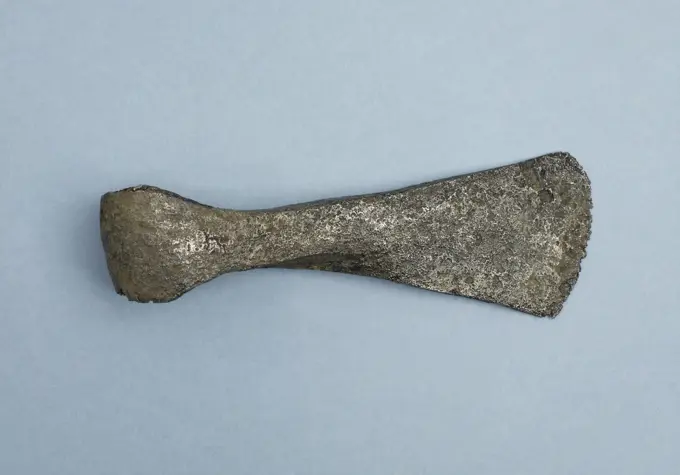
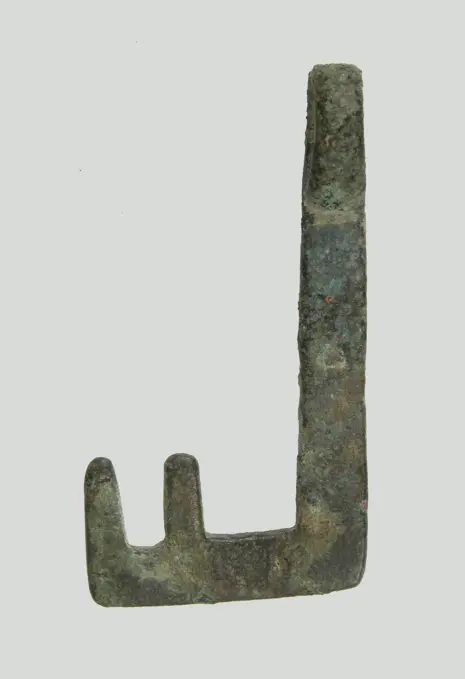
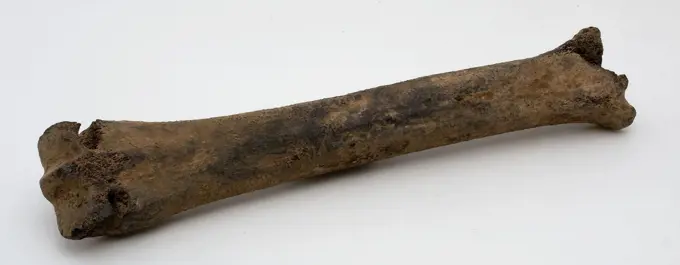
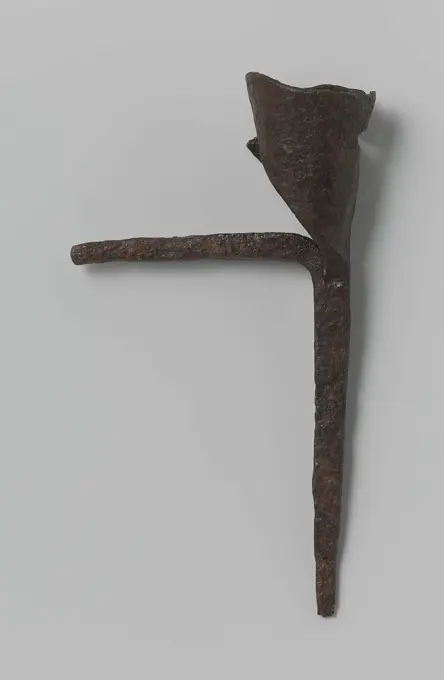
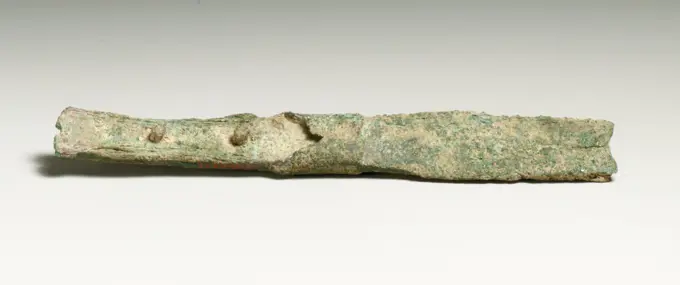
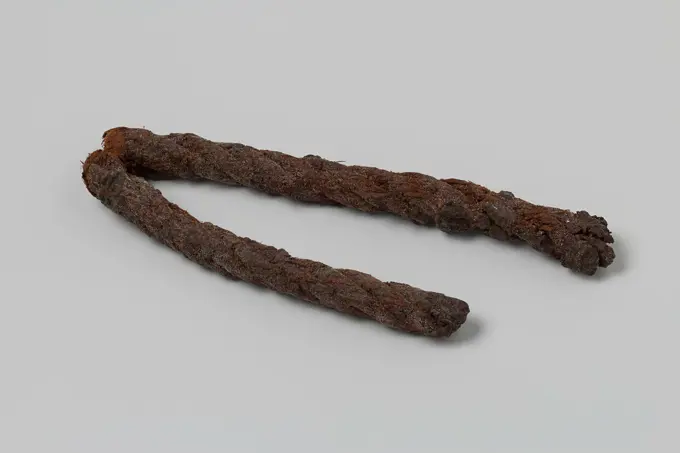
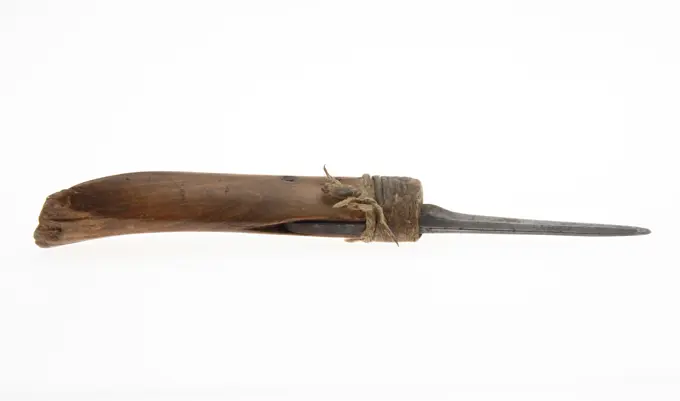
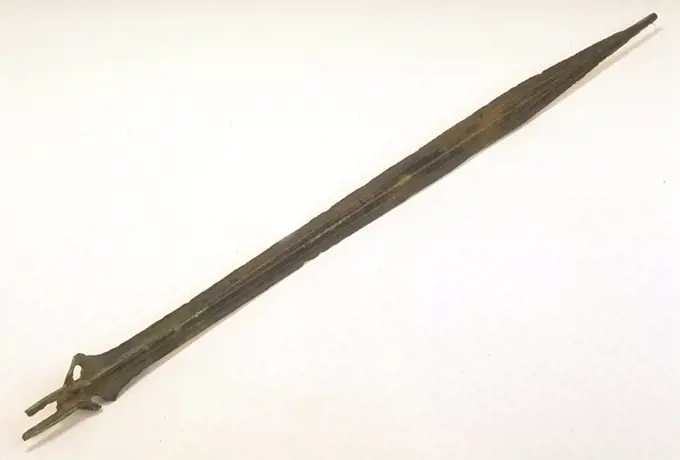
Ancient Cutting Tools

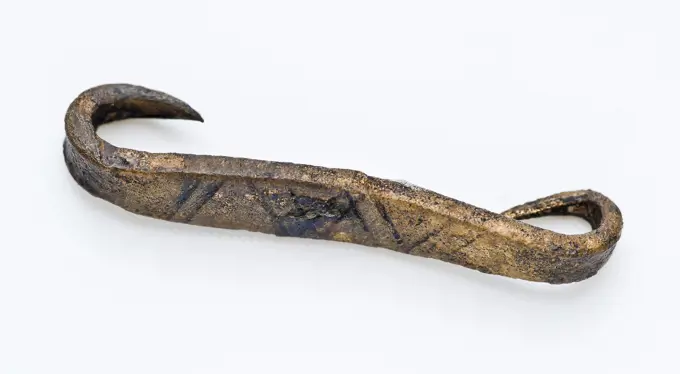
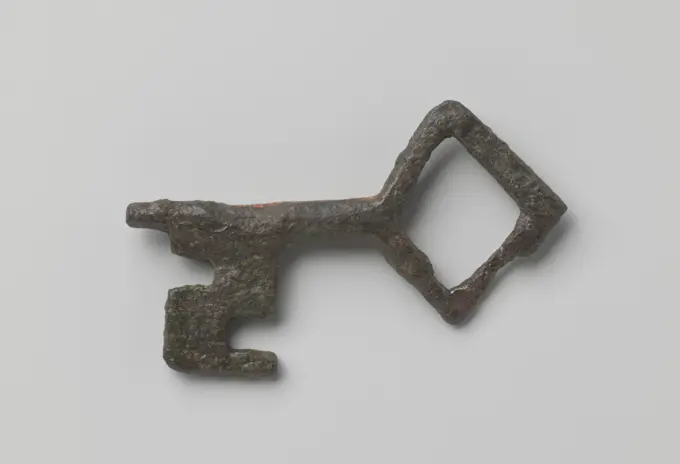
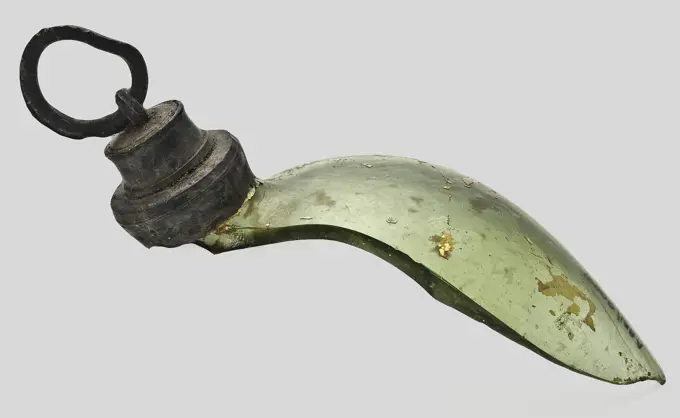
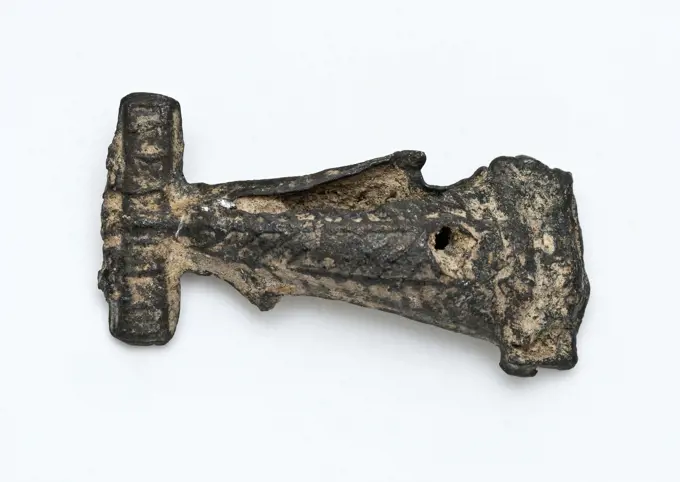
Various archaeological metal tools, including scissors and knives, showcasing historical craftsmanship found in soil.

Fork with four teeth and the stem with rounded end, fork cutlery soil find tin metal, Fork with four tines rounded handle end node stalk double archaeology Rotterdam rail tunnel food Soil discovery: rail tunnel Rotterdam.
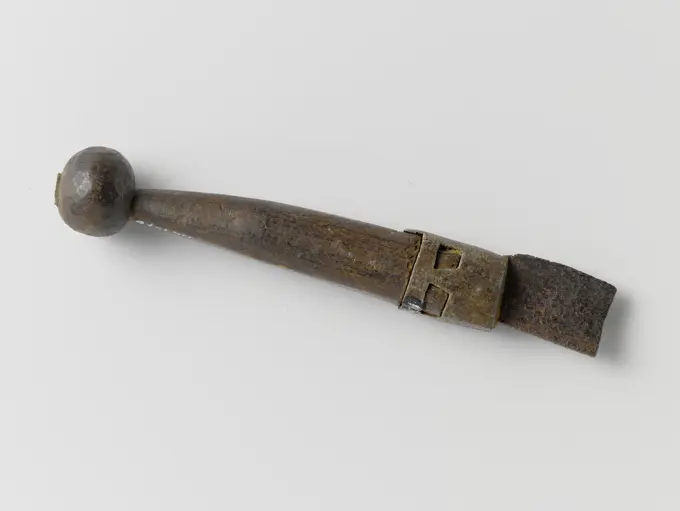
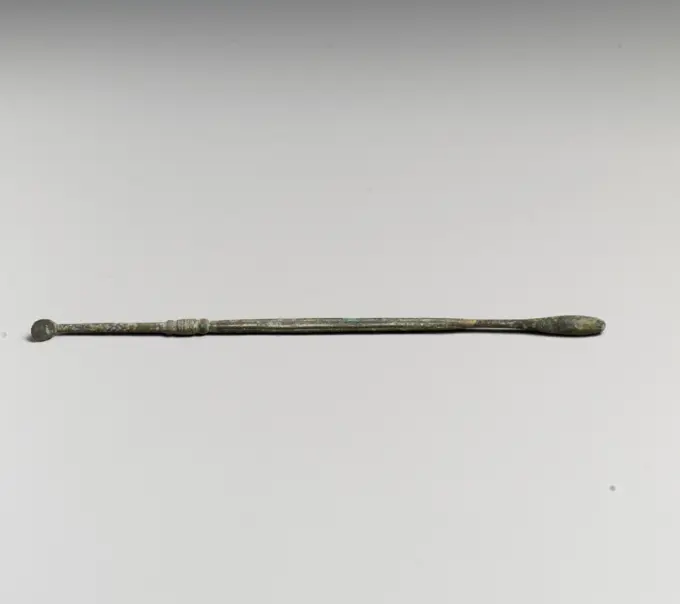
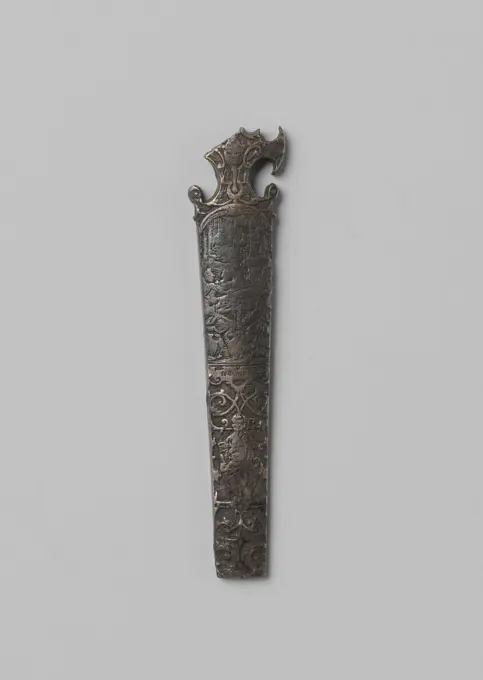
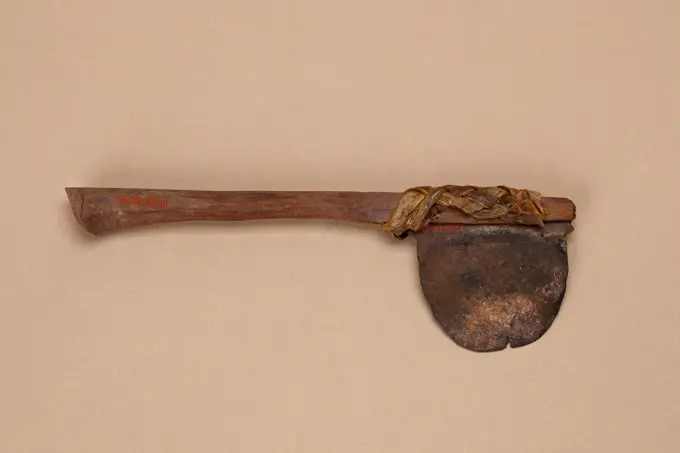
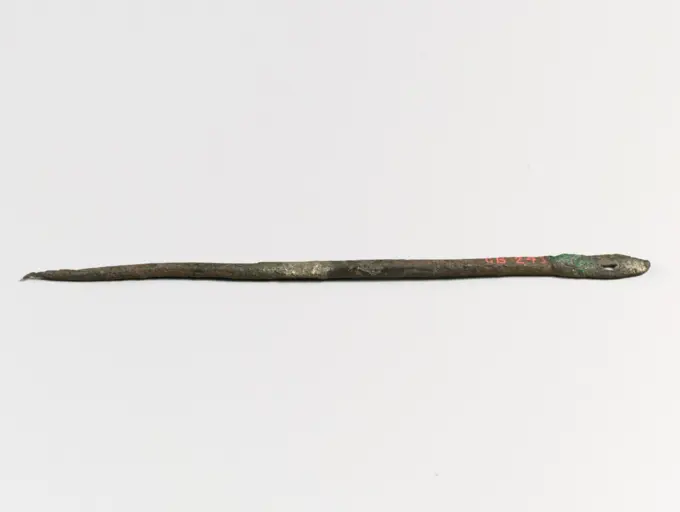
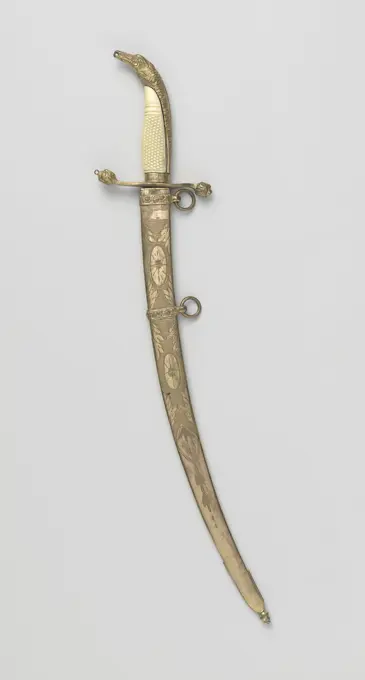
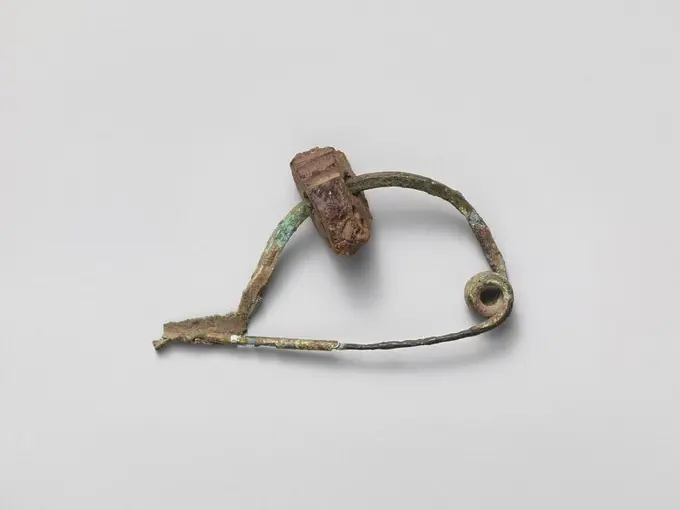
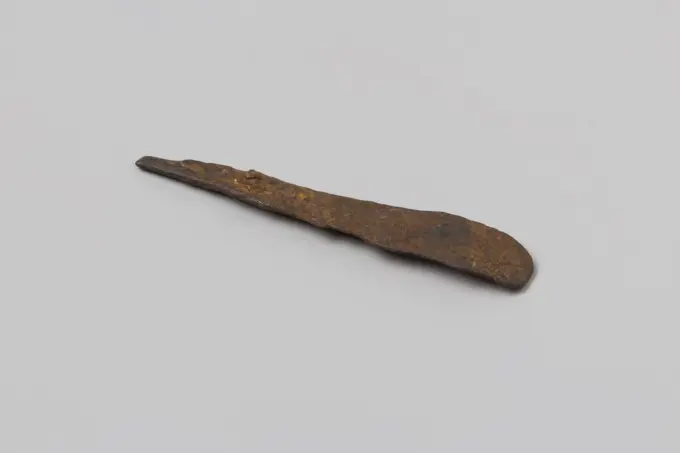
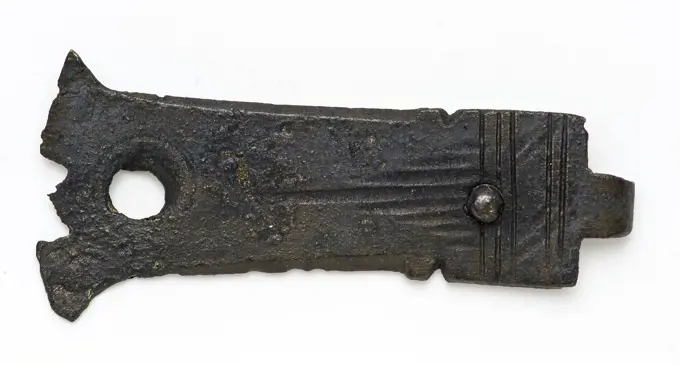
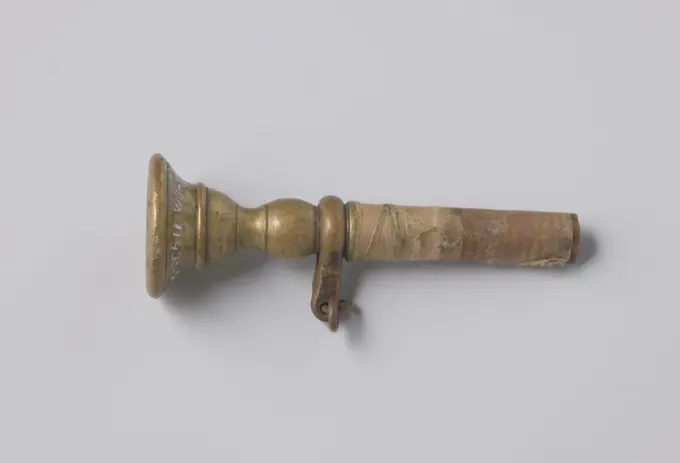
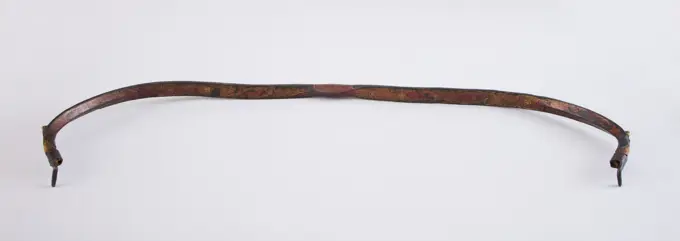
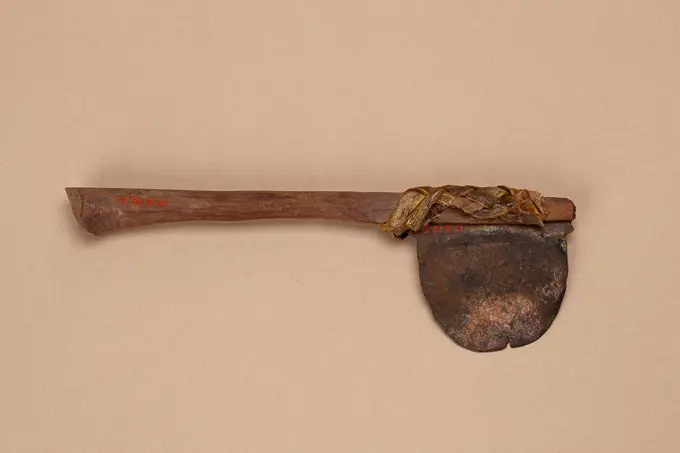
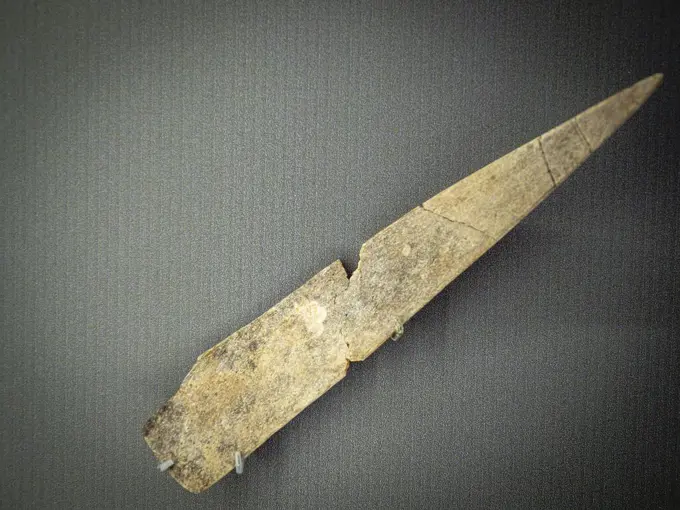
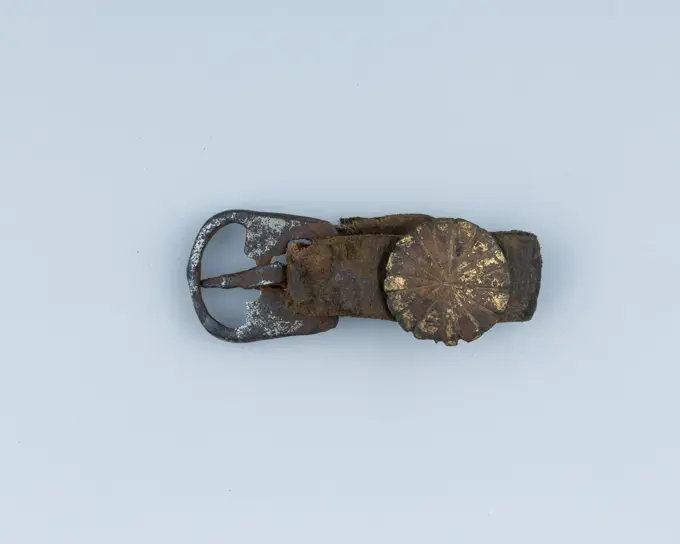
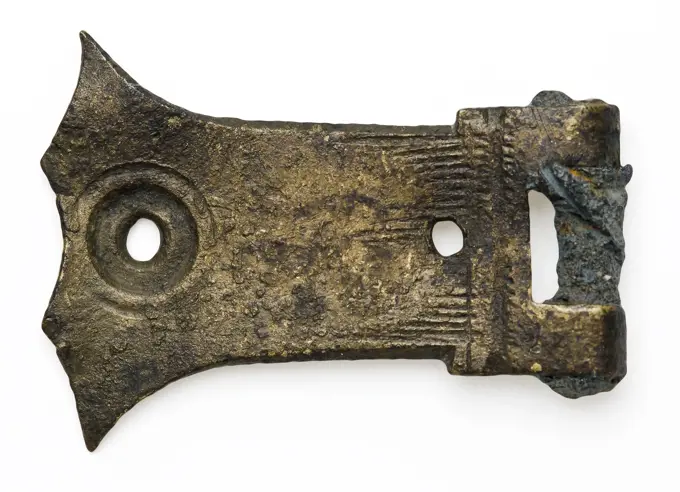
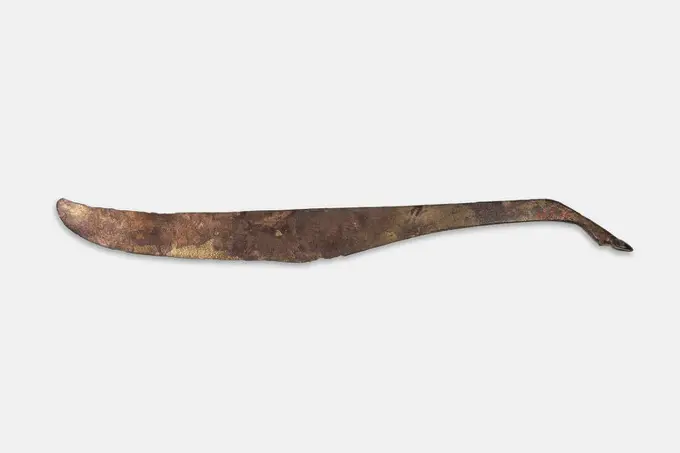
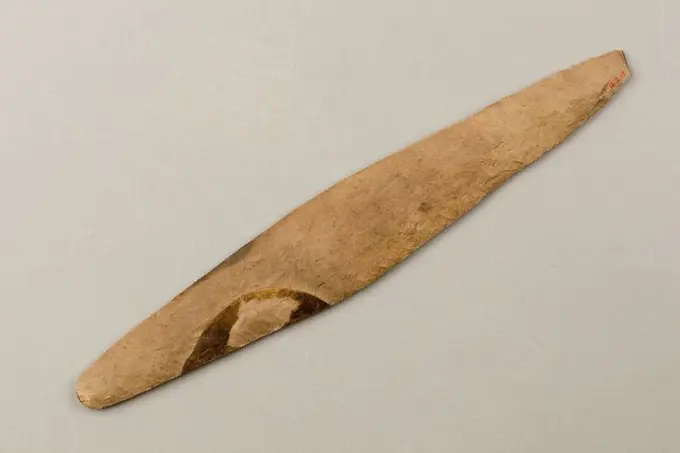
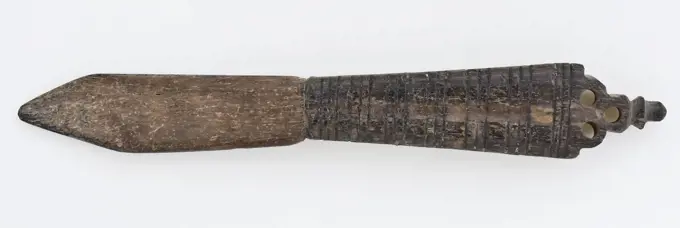
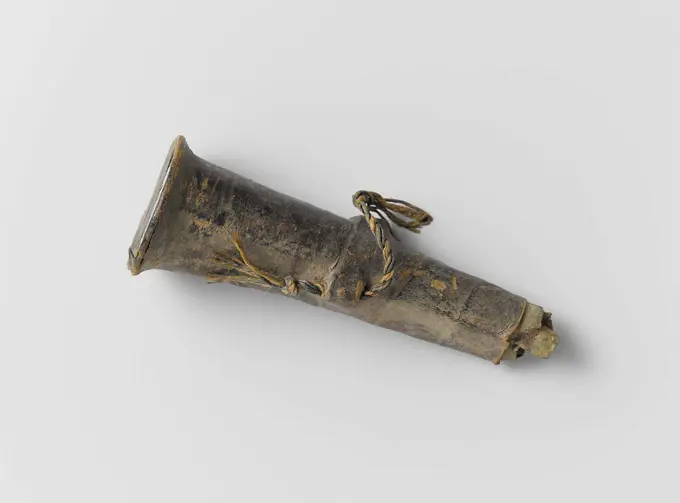
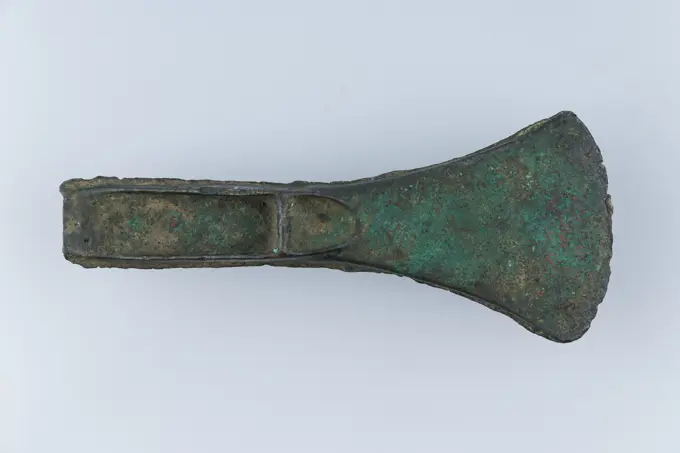
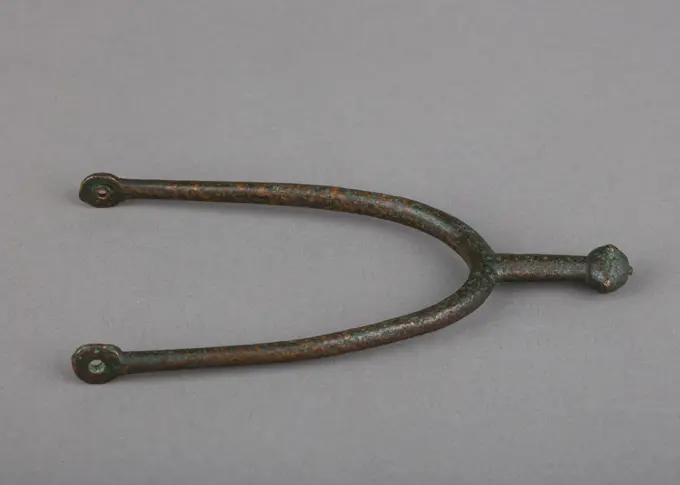
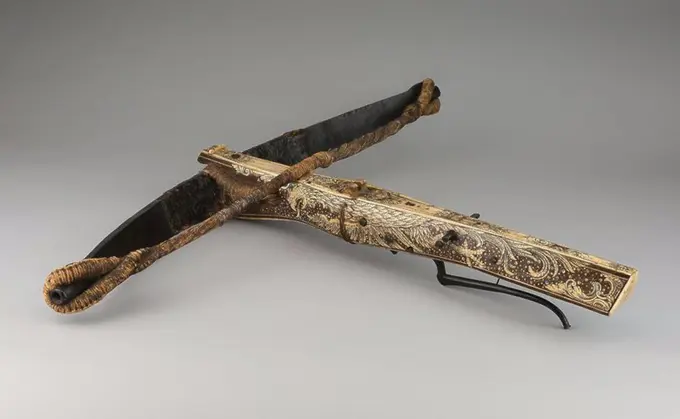
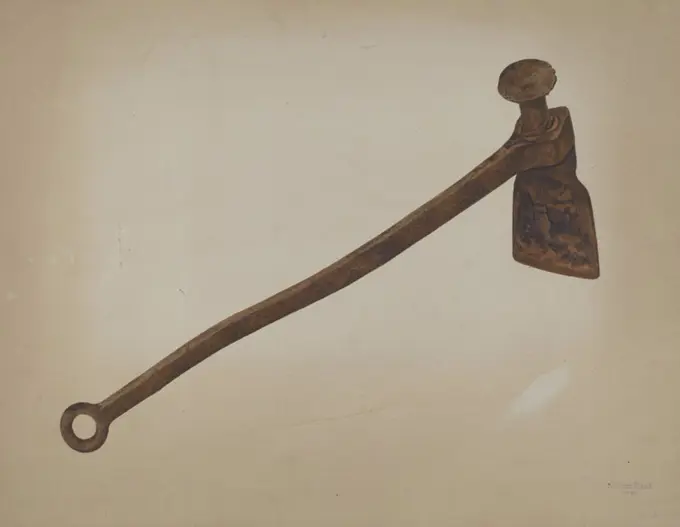
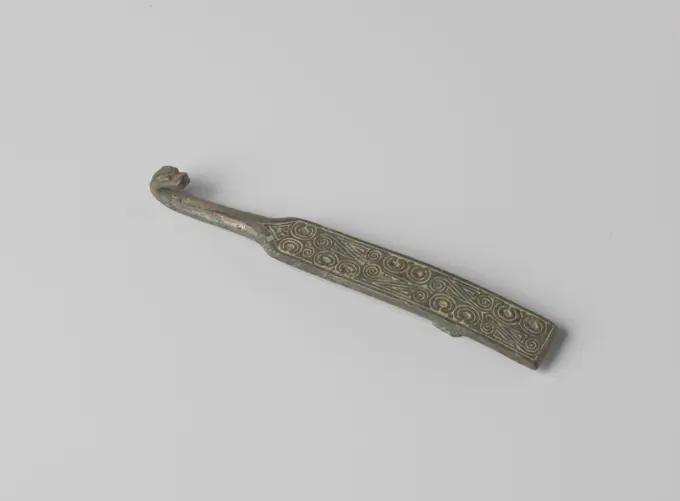
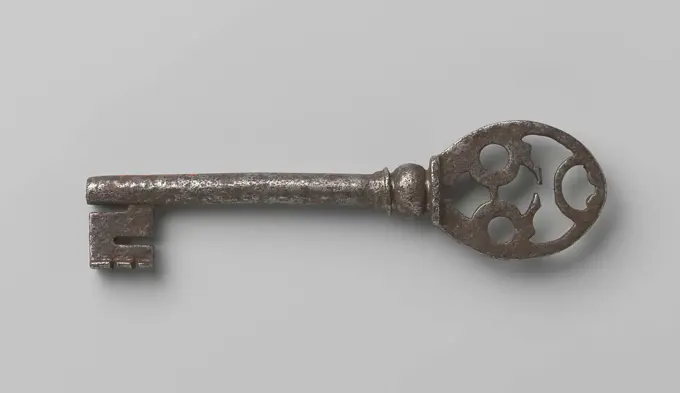
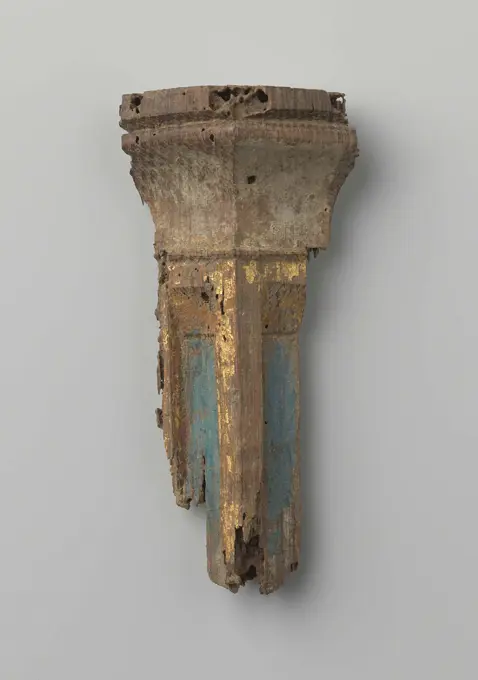
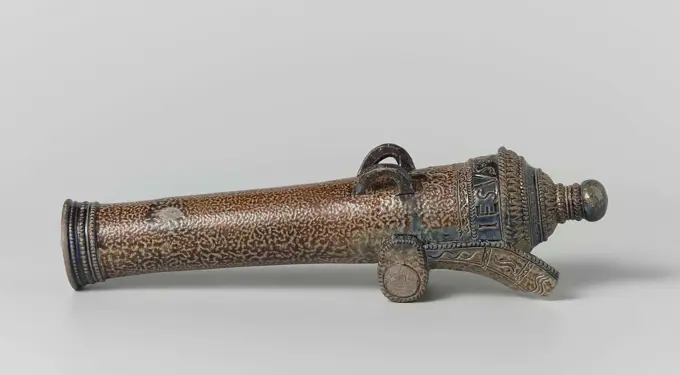
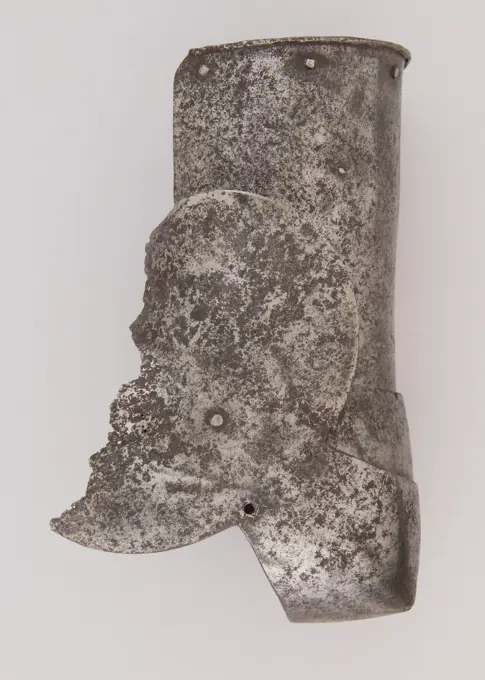
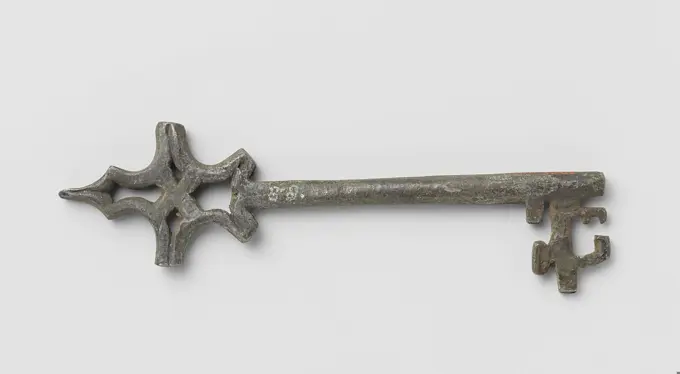
Pinch cutter with two pointed blades and oval eye, pinch cutter scissor cutting tool soil find iron metal, two circles in which wheel arch archeology Rotterdam cut rail tunnel Soil discovery rail tunnel Rotterdam.Handle from wood, rushing with a spherical button at the end, anonymous, c. 1590 - c. 1596 knife (tool) Round wooden, peaked, with a spherical button at the end. A large part has disappeared from the blade. The end of the handle has been reinforced by means of an iron lifting protector.  wood (plant material). iron (metal) cutting / forging  Nova Zembla. Saving HuysKnife with narrow, pointed blade and legs with carved decoration, knife cutlery soil find tin bone metal, archeology Rotterdam City Triangle Delftsevaart cutting food Excavated and found at the partial draining of the Delftse Vaart from here for the purpose of making the lift over the Vaart in the summer of 1928.Bronze specillum (probe) 1st-2nd century A.D. Roman Article for extracting salves from ointment boxes.. Bronze specillum (probe) 250625 Roman, Bronze specillum (probe), 1st2nd century A.D., Bronze, Other: 5 1/8 in. (13 cm). The Metropolitan Museum of Art, New York. Rogers Fund, 1917 (17.230.98)Bronze forceps or tweezers ca. 1st century A.D. Roman The instrument has long arms, unlike those of the standard type of Roman depilation tweezers, indicating that it may have been used by a doctor for minor surgical operations. Similar objects also have been found among ancient sets of medical instruments.. Bronze forceps or tweezers 244314Nail. Nail 244257Hifts. Half of a scilated iron knife lift, in the form of the Z.G.N. Silver blades of the slurry.Fork with four teeth and the stem with rounded end, fork cutlery soil find tin metal, Fork with four tines rounded handle end node stalk double archaeology Rotterdam rail tunnel food Soil discovery: rail tunnel Rotterdam.Awl Cypriot. Awl. Cypriot. Bronze. BronzesWooden Weaving Tool before 16th century Peruvian. Wooden Weaving Tool 309273Snow knife -Iron knife with bronze handle and engraved scabbard depicting animals, Etruscan civilization, 6th century b.c.White clay pipe, unnoticed, with smooth handle, clay pipe smoking equipment smoke floor pottery ceramics pottery, hand-formed baked White clay pipe unnoticed with smooth handle. Pipe is coarsely finished on heel and underside stem is the press seam still present archeology smoking tobaccoFragment pin from the wreck of the East Indieschief Hollandia. Tools and Instruments, Sewing and Sailmaking, PIN; Fragm or Shaft With Bow, ID. NG 1980-27H3265, eroded.Alexander Anderson, Straw Knife, 1939 Straw KnifeModel ax ca. 1981-1802 B.C. Middle Kingdom. Model ax. ca. 1981-1802 B.C.. Copper, wood, animal hide. Middle Kingdom. From Egypt, Middle Egypt, Asyut (Lykopolis), Tomb of Ankhef (Tomb 9), Khashaba excavations. Dynasty 12Caugus of excavationsL-Shaped Key 6th-7th century () Late Roman. L-Shaped Key 464919 Late Roman, L-Shaped Key, 6th7th century (), Copper alloy, Overall: 2 1/4 x 1 3/16 x 9/16 in. (5.7 x 3 x 1.5 cm). The Metropolitan Museum of Art, New York. Gift of J. Pierpont Morgan, 1917 (17.191.218)Key ca. 6th-8th century A.D. Sasanian or Islamic. Key 322936Legs glis, skate of bone with drilled hole for confirmation, glis ice skate skate means of transport means soil find leg, drilled Legs glis or skate made from the leg of cattle. Elongated leg with clear joint lobes In the lump horizontal hole is drilled to pull ropes or laces to secure the skate. Clear wear on the holes due to friction of the binding. On the other side small drilled hole on the side. Almost completely flat bottom archeology Poortugaal Albrandswaard indigenous product skating winter ice Soil discovery: Poortugal wood angle at heavy piles of middle section.Corner slip from the wreck of the East Indiescher Hollandia. Corner-fitting; Strip, right-angled in Middle, Vertical Sides, Semicircular Pierced Ends.Rusty pick axe head Dagger, 1910-1930, 17 3/8 x 2 5/8 x 1 1/4 in. (44.13 x 6.67 x 3.18 cm), Metal, wood, Democratic Republic of Congo, 20th centuryCandle holder consisting of a sleeve for a candle and two perpendicular pins. Candle holder consisting of a sleeve for a candle and two perpendicular pins. A piece of the candle sleeve has broken down.Needle Cypriot. Needle. Cypriot. Bronze. BronzesPrestige Axe, 19th-20th century, 10 1/2 x 1 1/2 x 16 1/2 in. (26.67 x 3.81 x 41.91 cm), Wood and metal, Malawi or Zimbabwe, 19th-20th centuryPoniard of Justus Klinkhamer, presented to Jan van Speijk, Before 1832 poniard Ponjaard mounted in gold -plated yellow buyer, ivory grip. The blade is etched with leaf vines and blewy and gilded. The weapon, which, according to an inscription on the Schede, was donated by the family of his fallen arms brother Lieutenant at Sea J. Klinkhamer. Netherlands (possibly) iron (metal). copper (metal). ivory. gilding (material)Bronze fibula (safety pin) with amber segment. Culture: Etruscan. Dimensions: Other: 2 3/4 in. (7 cm). Date: 7th century B.C..Segment of amber on the bow. Museum: Metropolitan Museum of Art, New York, USA.Nail 15th-16th century European. Nail. European. 15th-16th century. Iron. Metalwork-IronHandle with gear ..Steel with oval section and a spherical and rectangular end. Steel with oval section, at one end spherical and at the other end rectangular. Is it a handle of a mokerSteel van Fork or Spoon from the wreck of the East Indians Hollandia, Anonymous, 1700 - in or before 1743 spoon Cutlery, fragment: stem of fork or spoon; fragm, end, eroded, sim. NG 1980-27H1220. Netherlands silver (metal)   SecondSweight spearhead. Bronze Age. Copper alloy, cast iron. Coming from: Lit de la Seine. Paris, Carnavalet museum. Bronze age, copper alloy, weapon, cast iron, socket lance, tip, protohistory, protohistoricBrass book fittings, simple linear decoration, decorative fittings soil found copper brass metal, cut engraved Part of engraved book hinge with rivet hole archeology Rotterdam City Triangle book close adorn Schielandshuis Short High Street confirm Soil discovery: Gallery garden Schielandshuis spring 1985.Messenheft uit het wrak van de Oost-Indiëvaarder Hollandia. Knife-handle, straight-sided: tapering; eroded, rectangular in section, tapering, flat upper end, edges ribbed, ferrule.Pin from the wreck of the East Indies Hollandia, Anonymous, 1700 - in Or Before 1743  Tools and instruments, sewing and sailmaking, pin; fragm of shaft with bow, id. NG 1980-27H3265. Netherlands copper (metal)   SecondMusket size of brass with a leather sleeve and leather ears. Musket size of brass with a leather sleeve and leather ears. The musket size only has brass at the bottom.Keyed bugle mouthpiece, anonymous, c. 1830 - c. 1850 Mouthpiece of copper valve horn  German silver. copper (metal) Mouthpiece of copper valve horn  German silver. copper (metal)Key 306-30 B.C. Ptolemaic Period. Key. 306-30 B.C.. Iron. Ptolemaic Period. From Egypt, Upper Egypt, Thebes, Dra Abu el-Naga, Carnarvon/Carter excavationsKey. UnknownThe old metal hammer with the wooden handle lies on a white backgroundKey 13th century German. Key 468877Sheath for a Kris 18th-19th century Philippine. Sheath for a Kris. Philippine. 18th-19th century. Wood, cane (rattan). KrissesEastern reflex recurve bowModel ax. Dimensions: L. 4.5 cm (1 3/4 in). Dynasty: Dynasty 12. Date: ca. 1981-1802 B.C.. Museum: Metropolitan Museum of Art, New York, USA.Rifle bayonet with a capson lock (M/1840)Fragment van een tabakspijp..A fragment of a small white tobacco pipe. Signature: Mh. Note: Fired.Raises anonymous, c. 1590 - c. 1596  Handers from a knife whose button is decorated with incisions and the end with a cut represent of, presumably, human figures. The handling is possible of northern European origin. Europe wood (plant material) cutting  Nova Zembla. Saving HuysFlat copper coat pin, cloak with linear decoration, closure clothing accessory clothing ground find copper metal, cast engraved archeology Rotterdam City Triangle Botersloot Inner rotte dress close Soil discovery deposit Binnenrotte backside Botersloot (savings bank) from the Middle Ages.Fragment pipe from the wreck of the East Indians Hollandia, 1700 - in or before 1743 pipe Pipe, Bowl, Heelmark Illegible; Fragm, 1HSM3. Glued. Netherlands pipe clay   SecondHatche to socket (attributed title). Bronze. Carnavalet museum, history of Paris.Key, c. 1400 - c. 1500 Key with diamond -shaped eye. The short shaft ends under the beard in a blunt point.  iron (metal) Key with diamond -shaped eye. The short shaft ends under the beard in a blunt point.  iron (metal)Blade with forged lifting guard and narrowed sting with button at the end, blade knife cutlery ground find iron metal, Blade with forged lifting guard narrowed angel with on the underside knob in connection with the fastening of the handle archaeological Rotterdam rail tunnel cutting food Soil discovery: rail tunnel Rotterdam.Two neck fragments of bottles with pewter closure, bottle holder soil find glass tin, w 5,1 free blown molded Two fragments of glass bottles with pewter closure Green tinted glass with scaling irisation archeology Capelle aan den IJssel House to store Capelle castle drink store save transport Soil discovery: House in Capelle 1612-1797 cesspool north side Capelle aan den IJssel 1963.Tin flute or artefact with simple relief decoration, artifact soil find tin metal, cast Pointed object of tin. Decorated in relief. Two outstanding wing parts at the tip. Small hole in the middle archeology Rotterdam rail tunnel Soil discovery Willemsspoor.Ge (Dagger-Axe), 400-301 BCE, 9 3/16 × 4 13/16 × 1/4 in., 0.7 lb. (23.4 × 12.3 × 0.6 cm, 0.3 kg), Bronze, China, 4th century BCEestilete de cuerna, cueva de Lumentxa, Lekeitio, Arkeologi Museoa, museo aqueologico, Bilbao, Bizkaia, Pais Vasco, Spain.Buckle 15th-17th century European. Buckle. European. 15th-17th century. Steel. Miscellaneous-Buckles & OrnamentPalstave, Middle Bronze Age. A palstave is a type of early bronze axe. It was common in the middle Bronze Age in northern, western and south-western Europe.Brass book fittings with part closure, decorative fittings soil found brass copper metal, whipped engraved Single horseshoe with at the end part of hinge Other end fanned out into two dots Two holes archeology Rotterdam rail tunnel close book adorn Soil discovery: trajectory Rotterdam rail tunnel.Scribe's Knife from the Burial of Amenemhat. Dimensions: L. 18.3 cm (7 3/16 in.); W. 1.8 cm (11/16 in.); Greatest thickness of blade 0.2 cm (1/16 in.); Diam of hoof 0.8 cm (5/16 in.). Dynasty: Dynasty 18, early. Reign: reign of Thutmose I-early sole Thutmose III. Date: ca. 1504-1447 B.C.. Museum: Metropolitan Museum of Art, New York, USA.Dagger blade Cypriot. Dagger blade. Cypriot. Bronze. Late Bronze Age. BronzesFlat copper coat pin, cloak with linear decoration, clothing accessory clothing Soil discovery copper metal, cast engraved archeology Rotterdam City Triangle Botersloot Closing inside rims soil founding pouring Inner rump back Botersloot (savings bank) from the Middle Ages.Pipe key, c. 1500 - c. 1600 Pipe key made of a piece forged. On the shaft that is wider, there is a quadrangular beard with two notches. The round eye is flat.  iron (metal) Pipe key made of a piece forged. On the shaft that is wider, there is a quadrangular beard with two notches. The round eye is flat.  iron (metal)Fragment of a rope from the wreck of the East India Flying Heart. Piece of rope, brown, pretty thin, consisting of four strands, broken at 14 cm. Rope.Crooked knife -ESPADAS HALLADAS EN LA RIA DE HUELVA. BRONCE AJUAR. (DEPOSITO: MUSEO ARQUEOLOGICO NACIONAL).Knife. Date: ca. 3850-2960 B.C.. Museum: Metropolitan Museum of Art, New York, USA.Fragment crane from the wreck of the East Indians Hollandia, Anonymous, 1700 - in Or Before 1743  tap, part of tap; Fragm, End, ID. ng 1979-521H. Netherlands copper (metal)   SecondSpatula, one side flat, other side stem with knob, spatula tool kit ground find iron metal, forged Iron spatula with wider flat surface and knob. Function and application of unknown archeology Rotterdam City Triangle Groenendaal underground pit archaeological find in the soil Rotterdam underground pit Groenendaal 1977.. Most of the implements found on Nova Zembla are carpentry and shipbuilding tools. The (surgeons) saw is the exception and was probably used to perform amputations.Needle. UnknownDecorative batter from the wreck of the East India Hollandia. Fitting, decorative fitting or fragment; Tapering Peg With Flower-Head On Upper End.Legs cut from one piece in the style of Jan de Brij, knife cutlery soil find bone, archeology Rotterdam Kralingen-Crooswijk Kralingche Bos Kralingse Plas Soil discovery: collected in 1972 at the Kralingse Plas from sprayed dredge: metal detector finds and sight finds.Table knife with decorated handle of Hoorn, Anonymous, 1590 - 1596  Profiled horns. Filmed angel with profiled eagle clank in the handle. Long pointed blade with wide back. It has cracks, the shape of the blade is intact. Netherlands iron (metal). wood (plant material). horn (animal material) cutting  Nova Zembla. Saving HuysMusketmaat without cap, with earphones, bottom of brass and leather and piece of rope. Musketmaat without cap, with earphones, bottom of brass and leather and piece of rope.Ax of the Palstave Type ca. 1400-1200 B.C. British. Ax of the Palstave Type. British. ca. 1400-1200 B.C.. Bronze. MiscellaneousSpring Device 13th century possibly French, possibly German. Spring Device. possibly French, possibly German. 13th century. Bronze. MiscellaneousPrick Spur 11th-12th century possibly British The prick spur was the first type of spur to be invented, and it consists of a goad or prick, more or less pointed, connected to side arms or a heel plate. The earliest spurs were probably simple thorns attached at the back of the heel, before they started to be made out of metal in antiquity. Prick spurs were the main type of spurs used in the Middle Ages until the mid-14th century, when they were supplanted by rowel spurs, which appeared in Europe a century before and with which they had cohabitated for a time. As a knights status was closely related to his horse, spurs became one of the symbols of chivalry, and one of the tokens given to him during his knighting.. Prick Spur. possibly British. 11th-12th century. Copper alloy. Equestrian Equipment-SpursTweezers, 1600s. Europe, 17th century. overall: 11.5 x 2.9 cm (4 1/2 x 1 1/8 in.).Finial. Unknownobject on white - tool Axe close upArrowhead ca. 9th century B.C. Iran. Arrowhead 325193Steel from fork or spoon from the wreck of the East Indiesman Hollandia. Cutlery, fragment: voice or fork or spoon; Flat, Widening Towards Wavy End, On Underside Inscription at Upper End c.k.d.m., 2 Marks HK, (?) K.Fragment bracket of an hilt from the wreck of the East Indians Hollandia, Anonymous, 1700 - in Or Before 1743  Hilt, grip; (1) squashed; bulbous centre part, straight ends, hollow, oval in section (8.6l, 3-1.9w), engraved decoration of scroll and shell motifs, (ass. guard NG 1980-27H588, NG Netherlands copper (metal)   Secondkey iron value foundations iron metal, forged archeology Rotterdam City Triangle Oostplein underground pit close theft prevention property Soil discovery Rotterdam underground pit Oostplein found 18061976.Key 1st-7th century Roman. Key. Roman. 1st-7th century. Copper alloy. Metalwork-BronzeCrossbow. German. Date: 1730-1750. Dimensions: 11.4 × 73.7 × 88.3 cm (4 1/2 × 29 × 34 3/4 in.)Wt. 21 lb. 2 1/2 oz. Steel, fruitwood, staghorn, leather, and hemp. Origin: Germany. Museum: The Chicago Art Institute, Chicago, USA.Attic Red-Figure Oinochoe Fragment; Athens, Greece, Europe; 5th century B.C; Terracotta; 8.4 cm (3 5,16 in.)Hawsing Iron. Dated: 1939. Dimensions: overall: 35.3 x 45.5 cm (13 7/8 x 17 15/16 in.). Medium: watercolor, graphite, and colored pencil on paperboard. Museum: National Gallery of Art, Washington DC. Author: William Frank.Belt hook. The elongated rectangular portion is decorated with spirals, in sharp corners ending.Pijpsleutel.Pipe key with flat, openwork, oval handle. This is placed on a bullet that turns into the shaft after a profiling.Fragment (from the altar cabinet); (possibly) belonging to the Retable of Soest. .Fibula "A drago";  950-750 B.C./4. Ekw. VIII-VII century BC (-950-00-00--601-00-00);Fragment stem from fork or spoon from the wreck of the East Indiesman Hollandia. Cutlery, fragment: voice or fork or spoon; Fragm, flat, widening.Wager cup in the shape of a cannon. A wager cup (also termed a drink-up’) is so-called because the user could not set it down when it was fulland thus had to drain it. Wager cups came in all shapes and forms. The one here is shaped like a cannon; the mount, or carriage, is missing. The cup is embellished with the name of Jesus; the salvation of one’s soul was paramount, even during a drinking-bout.Seat Hook, Anonymous, -500 --200 The wide part is decorated with three spirals that are symmetrically placed compared to the length axis. China bronze (metal) The wide part is decorated with three spirals that are symmetrically placed compared to the length axis. China bronze (metal)Upper Arm Defense (Rerebrace) and Elbow Defense (Couter) ca. 1430-40 Italian This is part of a large find of medieval armor discovered in 1840 in the ruins of the fortress of Chalcis, on the Greek island of Euboea (then a Venetian colony called Negroponte). The fortress had been captured and destroyed by the Turks in 1470. Now divided largely between the Ethnological Museum, Athens, and The Metropolitan Museum of Art, the Chalcis hoard contains many rare and unusual elements of fourteenth- and fifteenth-century armor. Of particular importance are the variety of headpieces and the many fragments of brigandines (armor for the torso constructed of small plates riveted to layers of fabric), some of which retain portions of their original velvet covering. The Chalcis armor provides a unique picture of the armament used in the Aegean, one of the easternmost military outposts of the Venetian empire.. Upper Arm Defense (Rerebrace) and Elbow Defense (Couter) 23182The Amsterdam apothecary and art collector Emmanuel Vita Israël. He donated his collection, comprising keys dating from Roman antiquity to the 19th century, to the Koninklijk Oudheidkundig Genootschap (Royal Antiquarian Society) in 1937. Vita Israël claimed that his key collection had grown more or less by accident: being one of the few collectors of keys, dealers automatically made their way to him.Amulet, leg ca. 2649-2030 B.C. Old Kingdom-First Intermediate Period. Amulet, leg. ca. 2649-2030 B.C.. Carnelian. Old Kingdom-First Intermediate Period. From Egypt. Dynasty 6-11